Birding the Inlet at Ocean City, Maryland

I spent this past Saturday birding two Atlantic Ocean coastal inlets with the bird club.  It was windy and cold, and rain was due by mid-afternoon.

We started at the inlet at Ocean City, Maryland.  There we found small numbers of Scoters, Buffleheads, Common and Red-throated Loons, Red-breasted Mergansers, and Long-tailed Ducks.  With our scopes, we could see the Razorbills, nice.  We had hoped for a Dovekie sighting but no luck on that one.

Getting focused photos were difficult with the winds, but I did manage a few.  This first photo was important…. a lifer!

Purple Sandpipers, waaaay on the other side of the inlet, but there they are! – Lifer #317

.

Sanderling

.

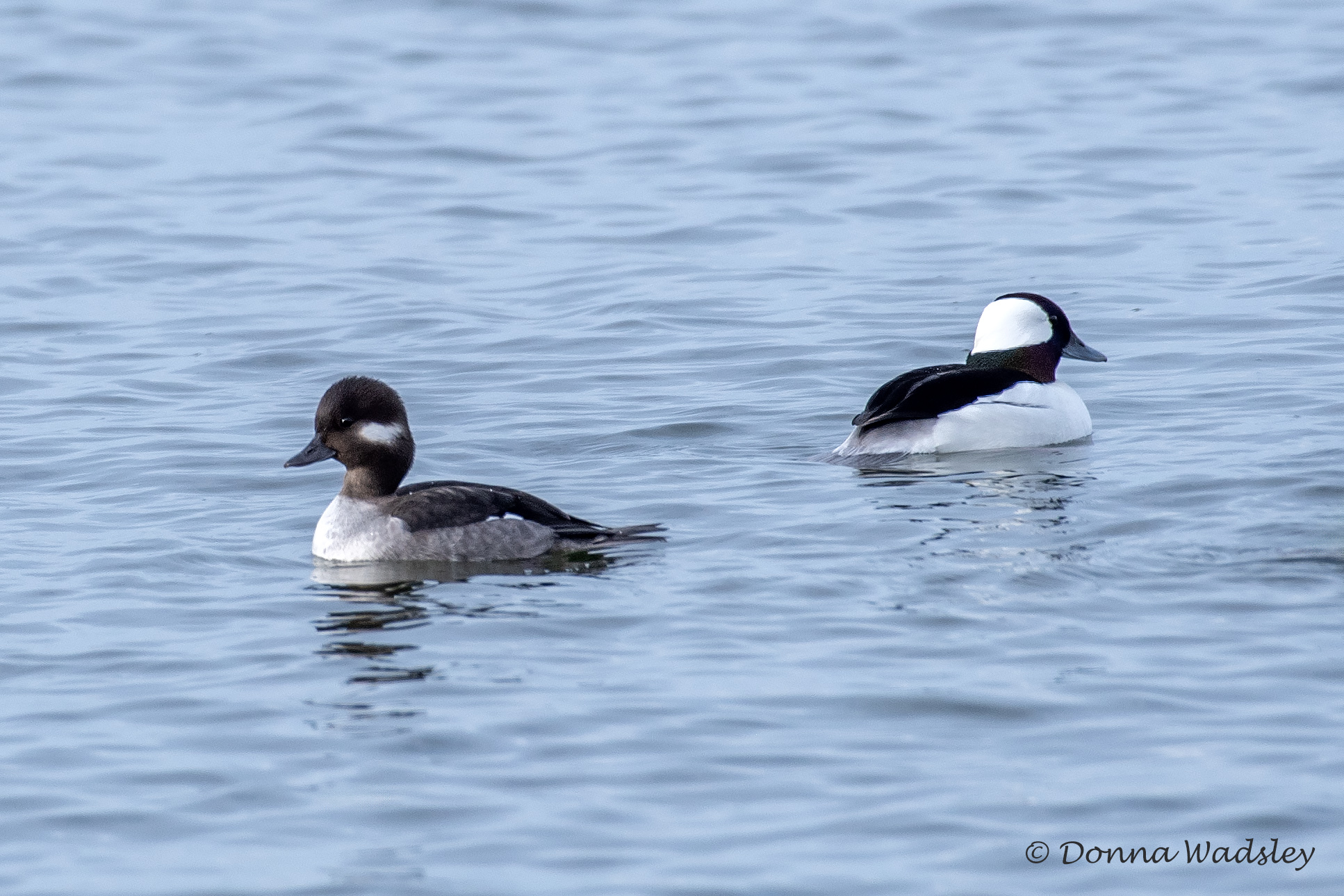
Bufflehead (female)

.

White-winged Scoters

.

We left the inlet and before heading to the second one, we made a stop at Ocean City’s Rt. 50W causeway, to scope Skimmer Island.  I got a few shots there.

Brants (total was 150+)

.

Bufflehead (female)

.

Bald Eagle

.

And then we made a quick stop at a strip mall’s water management pond known for Black-Crowned Night Herons to see if they were there.  They were, eight of them!

.

Black-crowned Night Heron (adult)

.

As one parent watched from the tree, others circled over us in flight.  It was quite thrilling!

.

Black-crowned Night Heron (immature)

.

Black-crowned Night Heron (immature)

.

Black-crowned Night Heron (adult)

.

With Elliott’s Pond next door, we quickly finished up with all the ducks and birds there.

At this point and time, we had a half hour drive and rain to start in 2-3 hours.  We jumped in our vehicles and got moving, heading to Indian River Inlet, for what was to be a thrilling birding bonanza!  More to come….

.

Birds at Blackwater NWR

After leaving those gorgeous Great Blue Herons on Middle Hoopers Island last Sunday, heading back home luckily passes back through vast marsh remoteness that includes Blackwater National Wildlife Refuge.  Although there wasn’t much in bird activity, I did manage to get a few photos I liked passing along the way.

Northern Pintail

.

Snow Geese (both white and blue morph) with a few Northern Pintails in the mix

.

Bald Eagle

.

Bald Eagle nest at the end of the auto wildlife drive

.

Bald Eagle

.

Northern Harrier

And I’ll end with this amazing encounter of eight Bald Eagles, grouped together at a field puddle.

Bald Eagles (6 adult, 2 immatures)

.

More Snow Means More Snow Birds

From Tuesday afternoon through the wee hours of Wednesday morning, we were walloped with 8-9″ of snow.  When I got up, my backyard birds were already busily looking for the buried food that I had put out on the ground and in branch crevices in ‘their’ tree just before the snow began.  I stepped out on my back porch and took some photos of the birds against the winter landscape.

Northern Cardinal (male)

Northern Cardinal (female)

Tufted Titmouse

Dark-eyed Junco

Northern Cardinal (female)

I thought pretty!

A little bit later and this time properly dressed for outdoors, I was back outside and shoveled a path to the tree, cleared around it, and put out more bird seed.  The birds were very happy.  I know this because they were part of my entertainment that day!

.

Wading Birds – #2

This past Sunday was cold and blustery on the remote Hooper Islands in the Chesapeake Bay in lower Dorchester County.  Where the road starts coming to the end on Middle Hooper Island, there were several Great Blue Herons who had found refuge in an interior wetland area.  They gave me such beautiful compositions to share with you.

.

1-2-3 Cute As Can Be – #35

Can I charm you with some more of my daily adorable little birds?  Four sparrows and one warbler, then ending with a surprise last bird.

.

Savannah Sparrow

.

Dark-eyed Junco

.

Song Sparrow

.

White-throated Sparrow

.

Yellow-rumped Warbler

.

And the surprise last bird is a rare Maryland sighting of a female Rufous Hummingbird!

You may know, the Rufous is a western North American hummingbird.  Ebird records for the last one in our county was in 2016.  Her location is a secret, and she is being taken well care of by the homeowner who has an awesome setup with four feeders heated with lamps.

And, she is a lifer for me! 🤗💃😊

.

Rufous Hummingbird (female)
My Lifer #315

.

I wasn’t allowed to approach the residence, so I photographed her from the street from my car window.  It was a stretch, whew; but I saw her AND got several photos for my records.  Woot!

.

Icy Bay and River Scenes

Not too often does ice build up on the Chesapeake Bay and its tributaries.  But it did just that two weeks ago, when much of our country was dealing with brutal cold, worse than normal.

There were reports of ice being 2-5 inches thick.  Thankfully, it has since melted!

Here are some of my scenes taken two weeks ago.

Chesapeake Bay from Black Walnut Point, Tilghman Island
(diving ducks are waaaayyy out there, usually right up to the shoreline)

.

Claiborne Landing Cove

.

Knapps Narrows

.

Turkey Creek

.

Immature Bald Eagles in center of Choptank River

.

On January 27, the U.S. National Ice Center released the following analysis of the ice concentration on the Chesapeake Bay, with ice 2-5 inches thick from the middle of the bay to the north.

Maryland’s DNR ice cutters were quite busy, trying to keep as many veins of water open.  The U.S. Coast Guard reported at least 23 navigational aids were destroyed or off-station.

.

One of our famous local photos recircling was taken during our winter freeze 1976-1977 where people actually walked and ice skated under the Chesapeake Bay Bridge.  Some people at narrower bay locations were able to walk all the way across!

.

Chesapeake Bay ice skating
(credit unknown)

I know I wouldn’t have chanced it too far out!

.

Woodpecker Wednesday

The Yellow-bellied Sapsucker is a North American woodpecker that breeds in Canada and upper northern U.S. from the east to the mid-west, and migrates to the east coast and lower mid-west and into Central America for its winter.  I enjoy their fall to spring visit with us.

While out birding by car down a favorite dead-end back road last week, I stopped for this handsome fella working a tree.

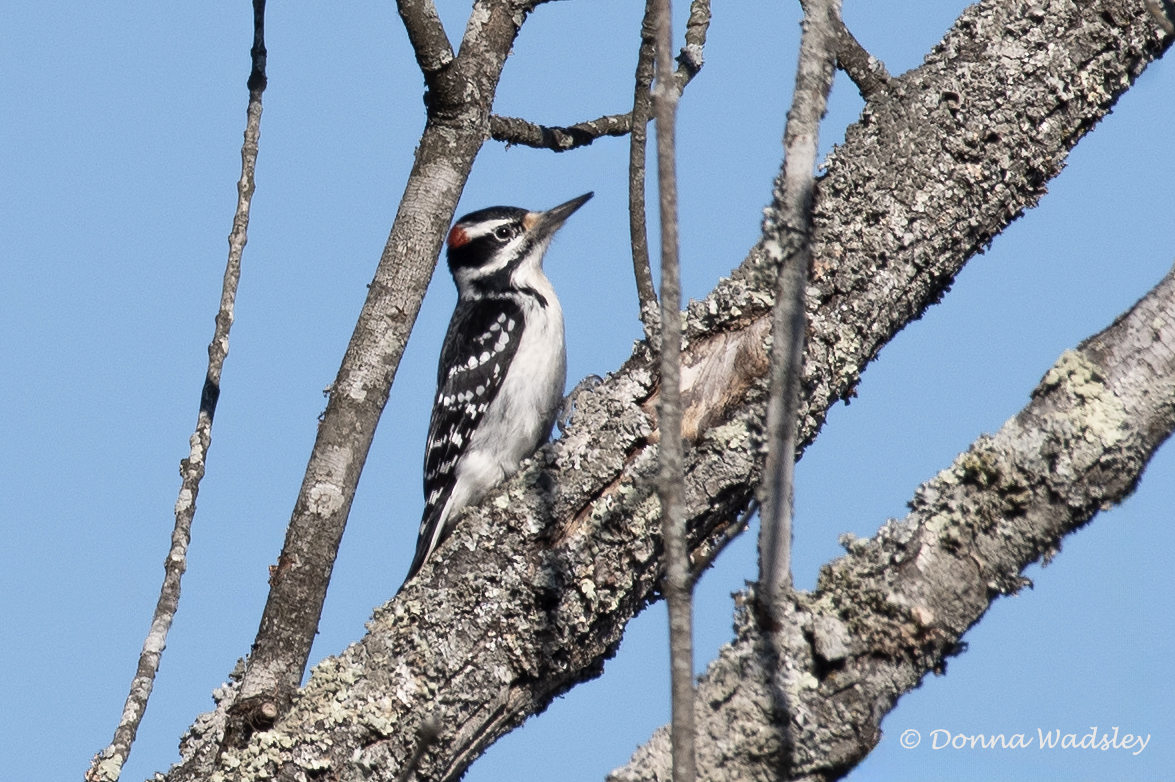
The Yellow-bellied Sapsucker is sized inbetween our Downy and Hairy Woodpeckers.  The male is designated by a red throat.

It’s similar counterpart is the Red-naped Sapsucker who resides from the Yellow-bellied Sapsucker’s western region reach and west from there, with regions overlapping between the two species.

Length: 7.1-8.7 in (18-22 cm)
Weight: 1.5-1.9 oz (43-55 g)
Wingspan: 13.4-15.8 in (34-40 cm)

I enjoy their pop of color in our drab winter landscape!

.

Five On The Wire – #17

Many of you know I am a fan for a bird on a wire or metal contraption, so my need for this series, ha!  Here we go again, with five raptors taking advantage of their big 360 degrees view.

.

Red-shouldered Hawk (adult)

.

Red-shouldered Hawk (immature)

.

Red-tailed Hawk (adult)

.

Bald Eagle (immature)

.

American Kestrel (male adult)
(looking cold!)


Duck Duck Goose – #2

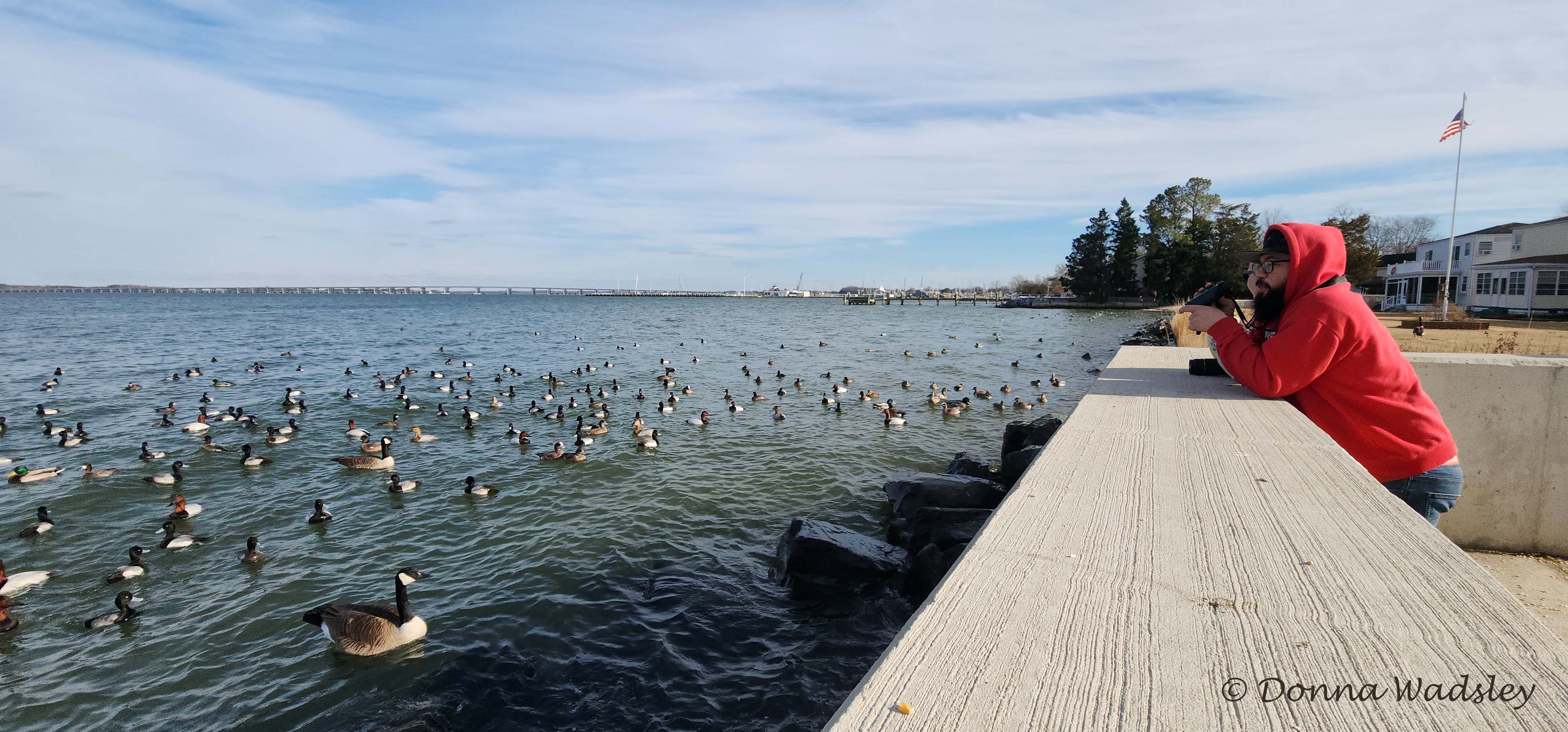
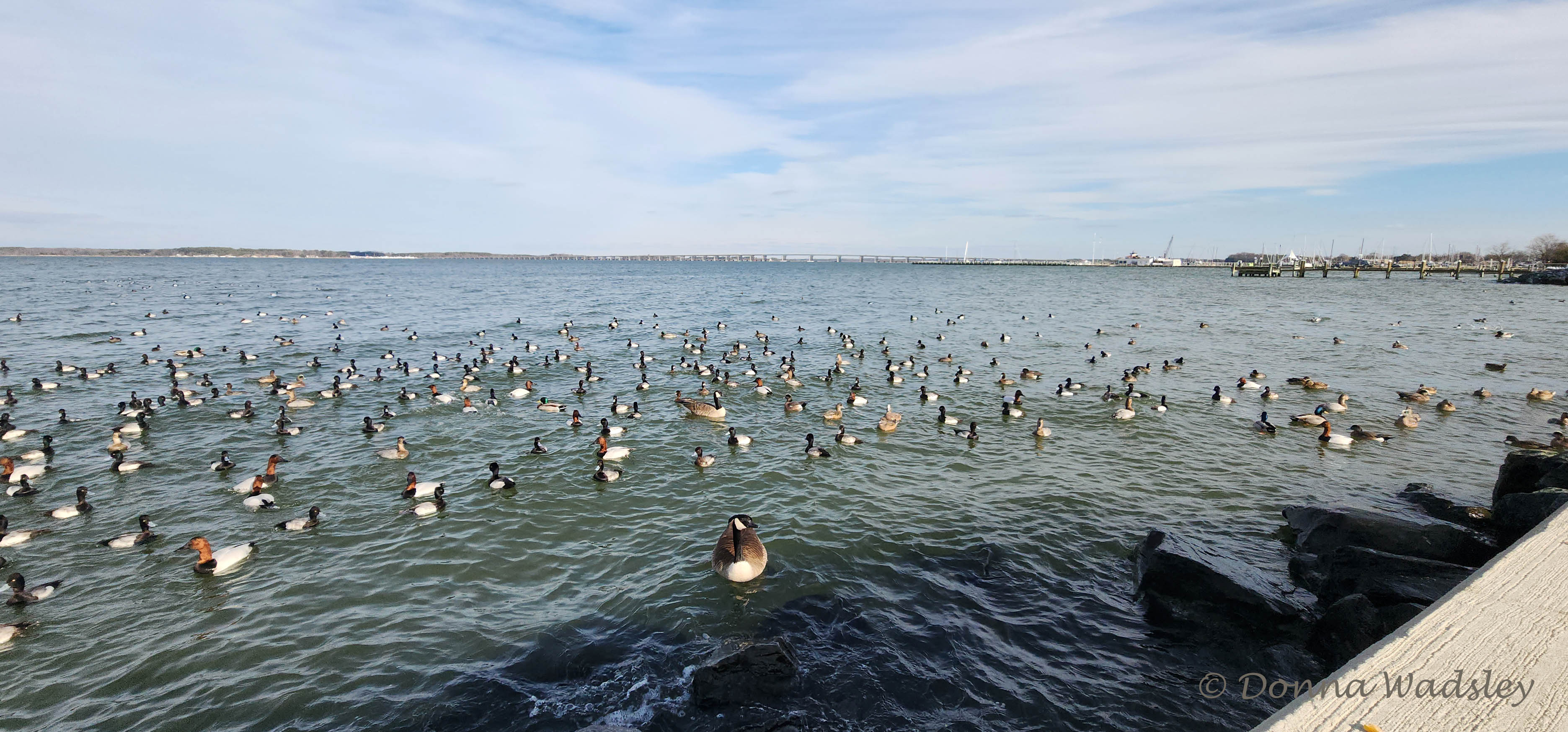
Ready to play?  It’s cold out there!

Mallards

.

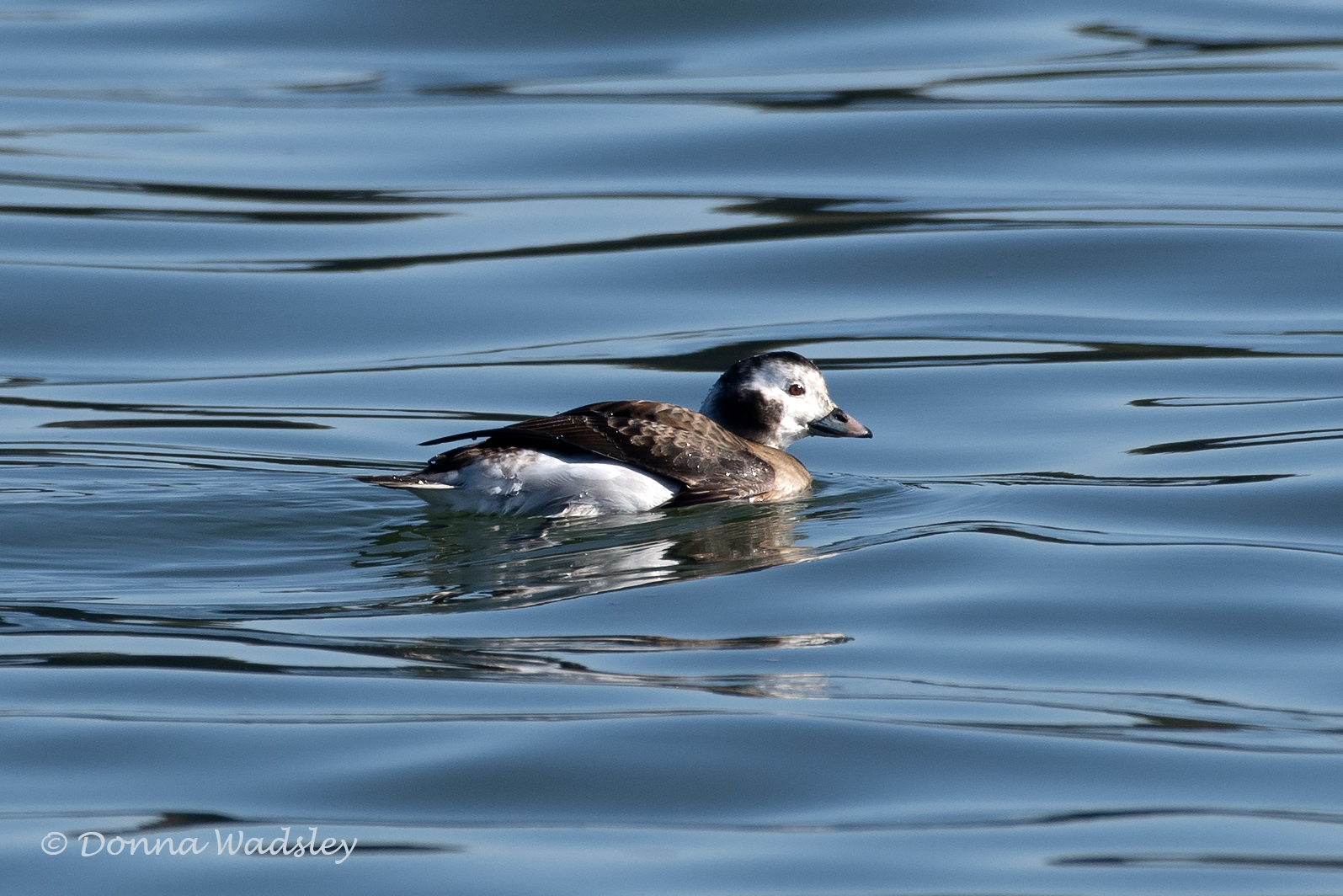
Long-tailed Duck

.

Canada Geese

.

Black Scoter

.

Surf Scoter

.

Cackling Goose (center) with Canada Geese

.

Redheads

.

Lesser Scaup

.

Bufflehead

.

Hooded Mergansers

.

Finally, the ending goose!

Considered a rare sighting anywhere up and down the east coast, I happened upon a pair of Greater White-fronted Geese mixed in with a flock of Canada Geese while cutting across the back roads on my way home few days ago.  What a treat!

.

Greater White-fronted Geese

.

.

Greater White-fronted Goose

.

Duck duck goose!  You’re it!

.

1-2-3 Medium Bird Jubilee – #23

Our snow is quickly melting to almost gone, so I’ll tie in the theme of a little snow in the scene with some more recent shots of those lovely medium-sized birds.

The last photo is the scene from this past Saturday of frozen-over Tuckahoe Creek where the bird club and I began our day before heading out to roam and scan the vast farm fields in Caroline County for larks and pipits.

.

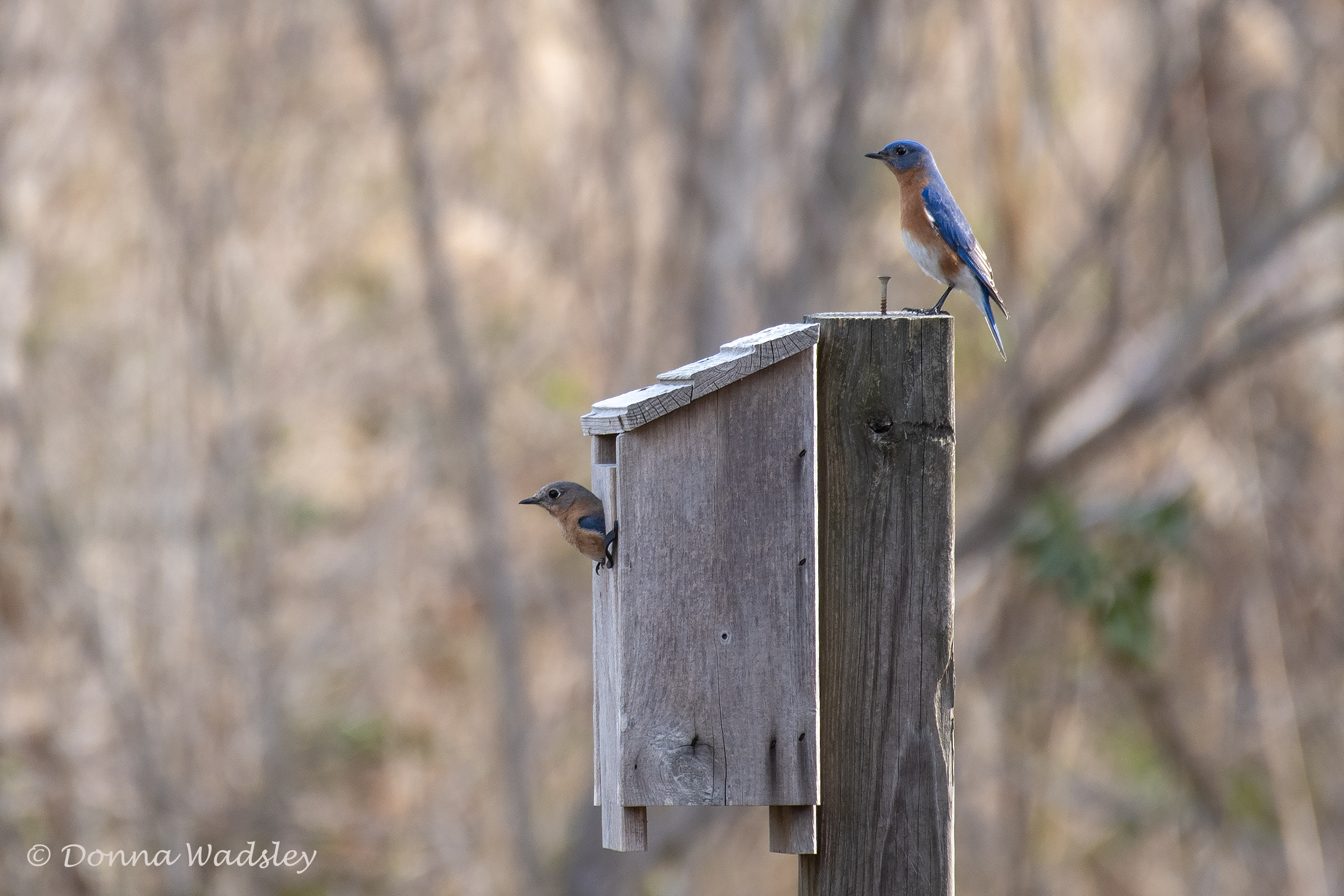
Eastern Bluebird

.

American Robin

.

Hermit Thrush

.

Eastern Meadowlarks

.

American Pipit

.

Horned Lark

.

And here’s where the bird club and I began our field trip last Saturday.

Sunrise at Tuckahoe Creek, Tuckahoe Creek State Park

.
.