
A Killdeer and Horned Larks
.
I was looking for Horned Larks further out in a corn field, not knowing there was a Killdeer right in front of me. Silly bird, it had to call out.
Not the prettiest setting, but I thought the purple flowers might help the scene work. Of course, the Killdeer turned away.
.
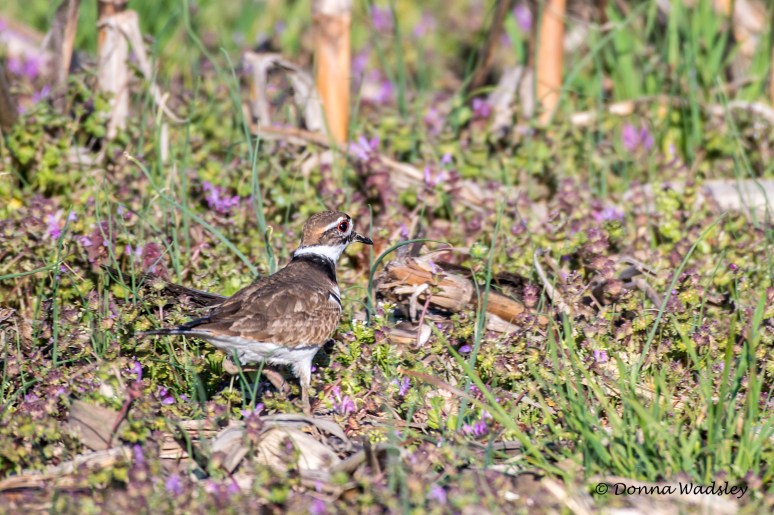
Killdeer in a corn field
.
Then the Killdeer went into flight. And that became my two lucky shots.
.

Killdeer in flight
.

Killdeer in flight
.
The Horned Larks? I did find them in a different farm field close by. Here’s a couple photos of them.
.
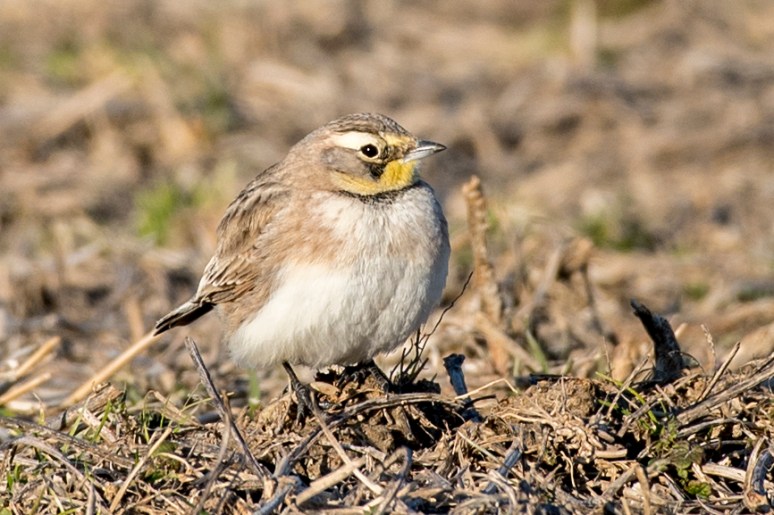
Horned Lark (immature)
.
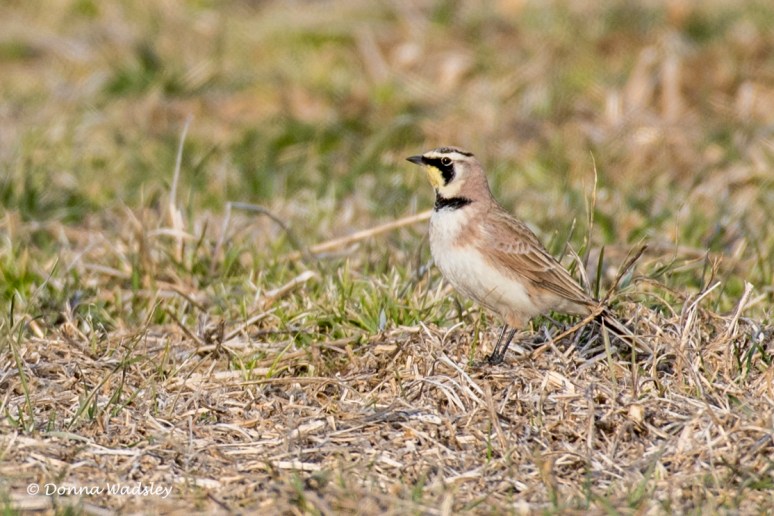
Horned Lark (male)
.
Here’s my best shot of a pair in flight at the same field several weeks ago.
.
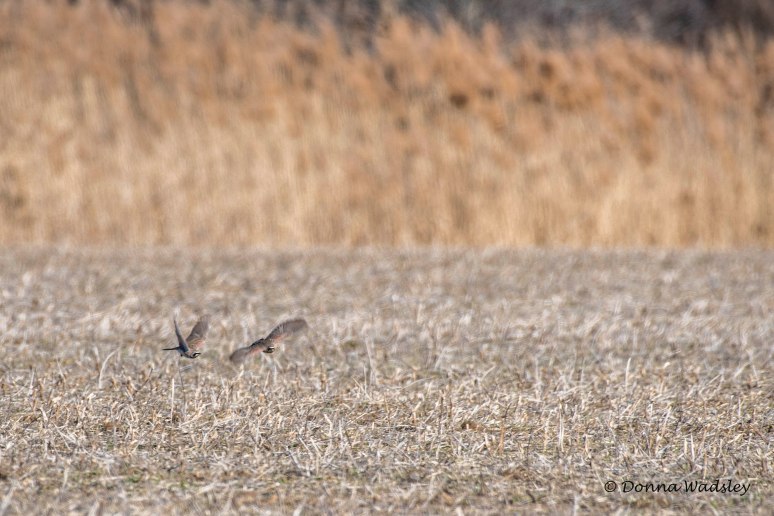
Horned Larks in flight
.
Yesterday, I had ten minutes and returned to the same field and spotted six Horned Larks foraging after a light rainfall. I was able to get a shot of one looking adorably cute and wet. 😊
.
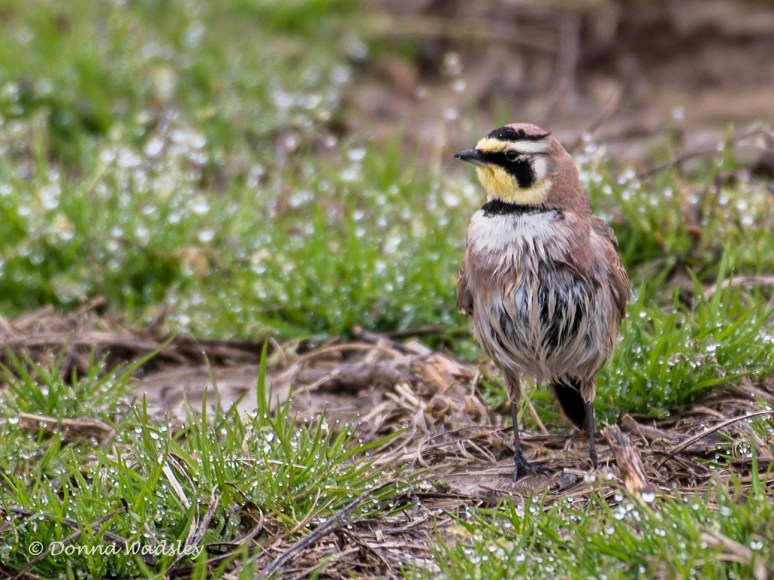
Horned Lark showing off one of his little head feather ‘horns’
.
.
1-2-3 Cute As Can Be – #14
.
Here’s another addition to my series of three smaller bird species with the cuteness factor going on. 😊
.
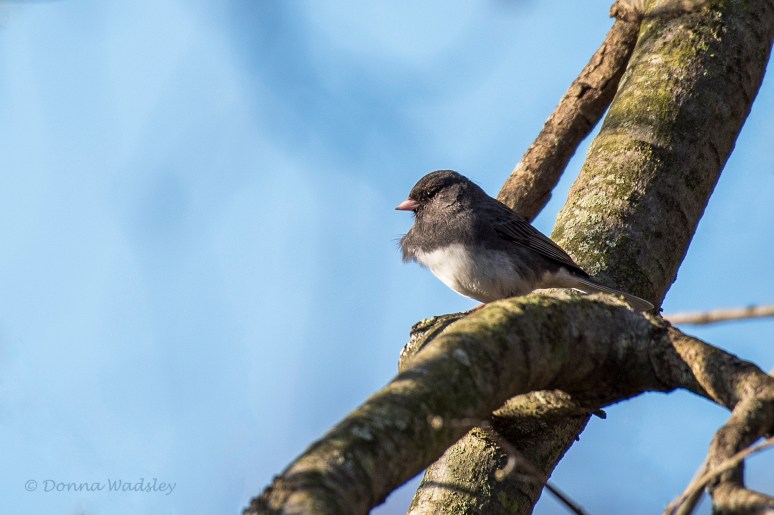
Dark-eyed Junco
Length 5.5-6.3 inches (14-16 cm)
Weight 0.6-1.1 oz (18-30 g)
Wingspan 7.1-9.8 inches (18-25 cm)
.
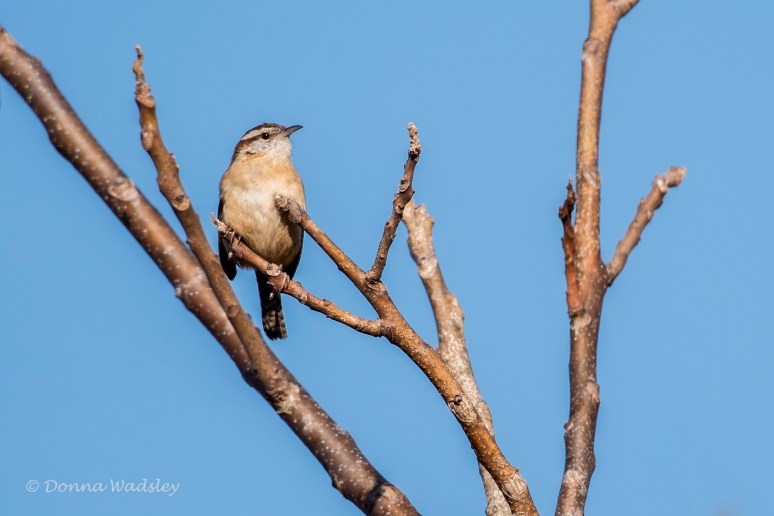
Carolina Wren
Length 4.7-5.5 inches (12-14 cm)
Weight 0.6-0.8 oz (18-22 g)
Wingspan 11.4 inches (29 cm)
.
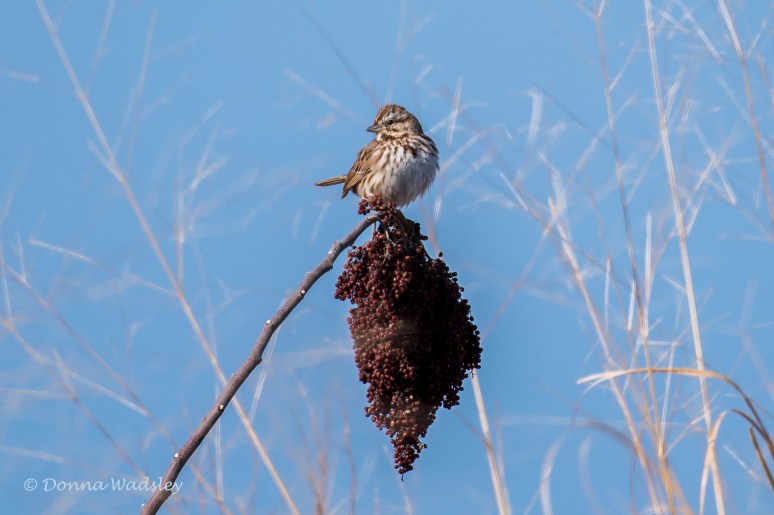
Song Sparrow
Length 4.7-6.7 inches (12-17 cm)
Weight 0.4-1.9 oz (12-53 g)
Wingspan 7.1-9.4 inches (18-24 cm)
.
(All photos taken mid-March, 2022; Junco in my backyard, Carolina Wren & Song Sparrow at Eastern Neck NWR)
.
.
Encountering Eagles Along The Road
.
I had a crazy-cool encounter occur while driving through Eastern Neck NWR a few days ago. Directly in front of me, two Eagles were in hot pursuit of a third Eagle with a fish.
While reaching for my camera, I watched the fish fall from the sky down alongside the telephone pole. My two windshield shots! 😉
.

Bald Eagle landing to get the fish dropped
(Tubby Cove Boardwalk parking lot entrance to left)
.
The other two Eagles landed in the trees above us to watch.
.

Bald Eagle contemplating its next move
.
As I jumped out of my car, the Eagle took flight with the fish.
My first two shots were blurry but I got lucky with my final shot as the Eagle flew directly at me and whooshed over my head!
.

Bald Eagle with fish
.
The Eagle continued down the road behind me and then took a sharp left turn into the woods.
Up in the trees, here’s the two Eagles who missed their chance.
.

Bald Eagle (immature)
.

Bald Eagle (adult)
.
Wonder what they were thinking….. 😉
.
.
Close-ups of a Red-tailed Hawk
.
After posting my Osprey close-ups, I remembered another recent close encounter with a different raptor I’d not shared.
Early March I came up on this Red-tailed Hawk perched alongside the country back road I was traveling, looking gorgeous. I was already going slow, and easily angled my car to photograph it from my car window.
.

Red-tailed Hawk
.
By the looks I was receiving, I knew I was not invited for a photo shoot and could see the hawk positioning to take flight.
.
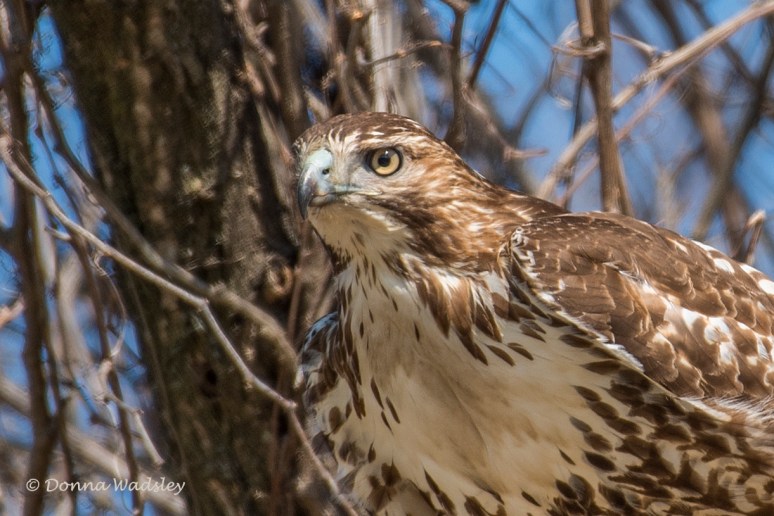
Red-tailed Hawk
.
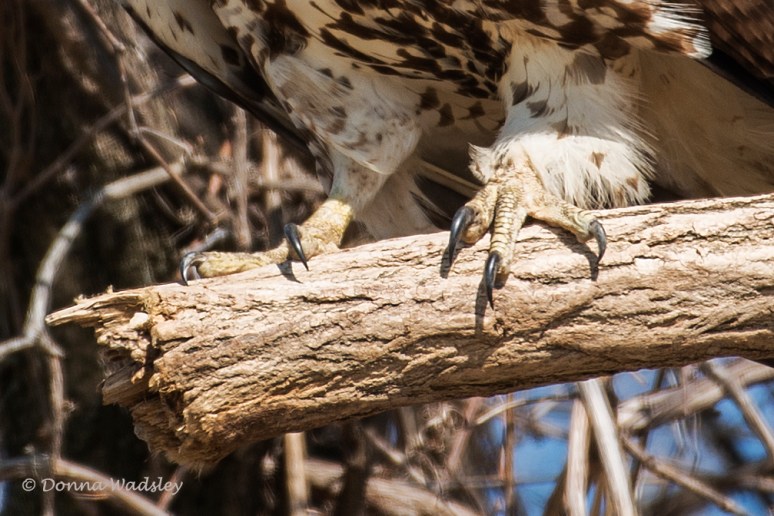
Red-tailed Hawk re-positioning those sharp talons
.

Red-tailed Hawk take-off
.
The hawk flew to a tree further back from the road and landed. I apologized out loud (I really do this lol) and continued in my travels. I came back past this spot over an hour later and the hawk was still in the distant tree, which made me feel better for some reason. 🙂
.
.
Close-ups of an Osprey
.
This handsome fella was keeping a watchful eye (and a deaf ear) on the surroundings near his nest platform where his mate was loudly demanding attention for more nesting materials.
.
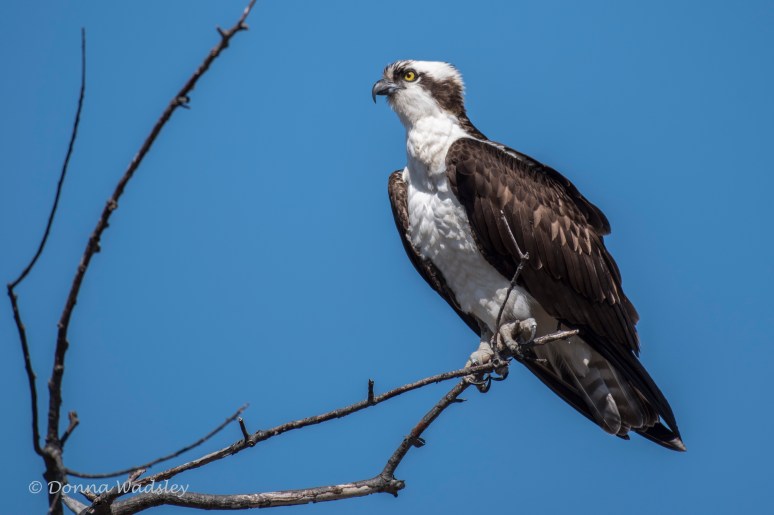
Osprey (male) on watch
.
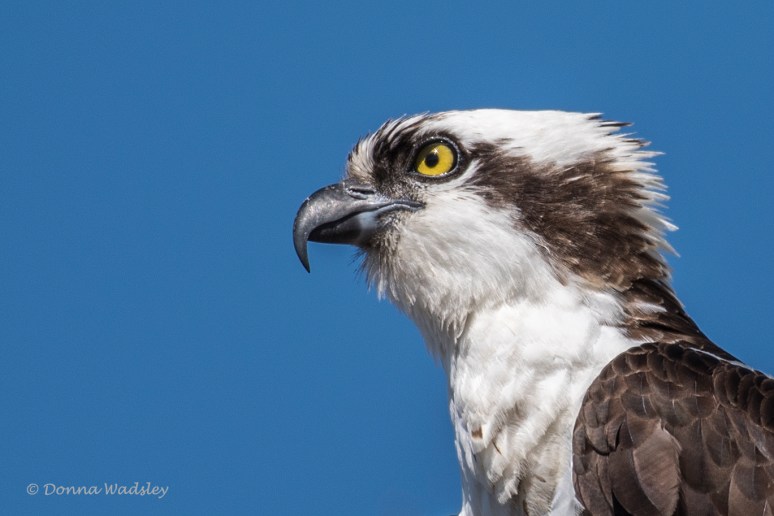
Osprey Close-up
.
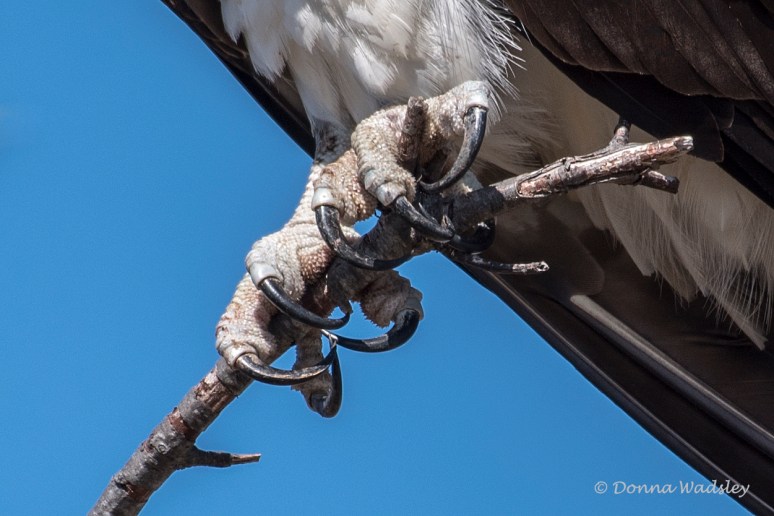
Osprey Talons
.
All raptors have four long talons, three in the front and one in the back.
But only the Osprey has specialized talons. When it plunges to seize a fish, the Osprey’s outer front talon rotates to the rear, giving the Osprey two grasping talons front and back. Each talon is also lined with tiny spines on the bottom to help the Osprey hang on to their slippery prey.
A truly skilled fisherman!
.
.
Tree Swallows and Eastern Bluebirds
.
The Tree Swallows have also returned. I found a couple dozen swooping the farm fields at Eastern Neck NWR, with a few trying to take control of a nesting box, much to the dismay of a pair of Eastern Bluebirds.
.
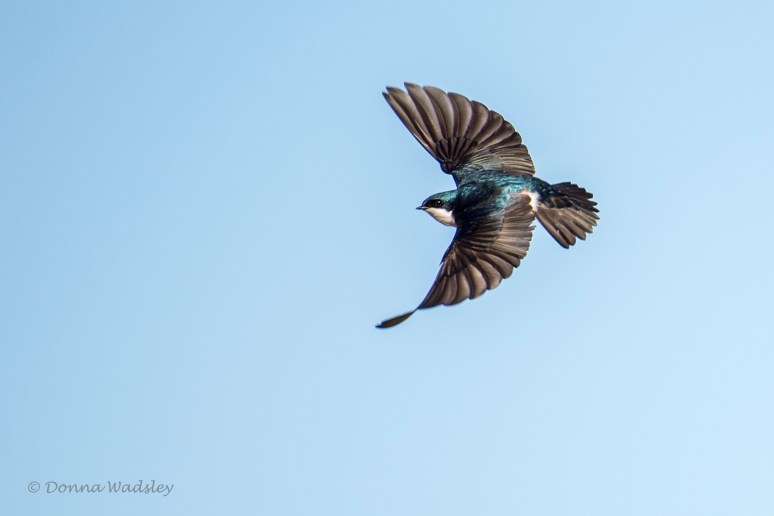
Tree Swallow (male)
.
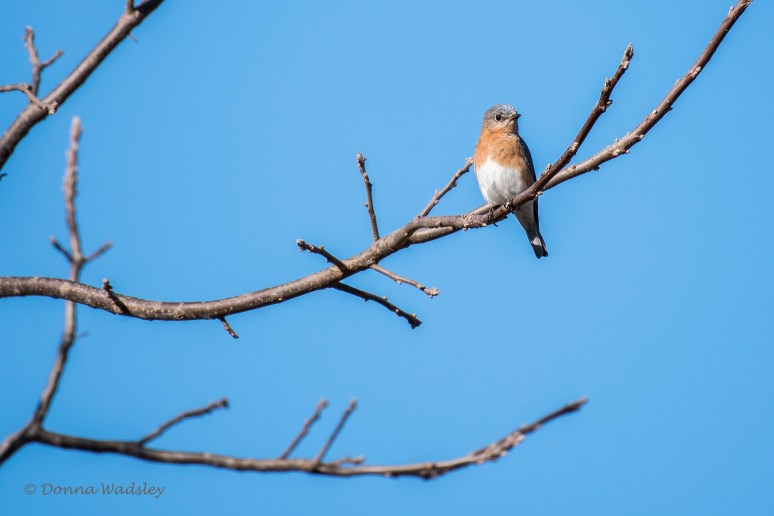
Eastern Bluebird (female) not too happy with the Tree Swallows
.
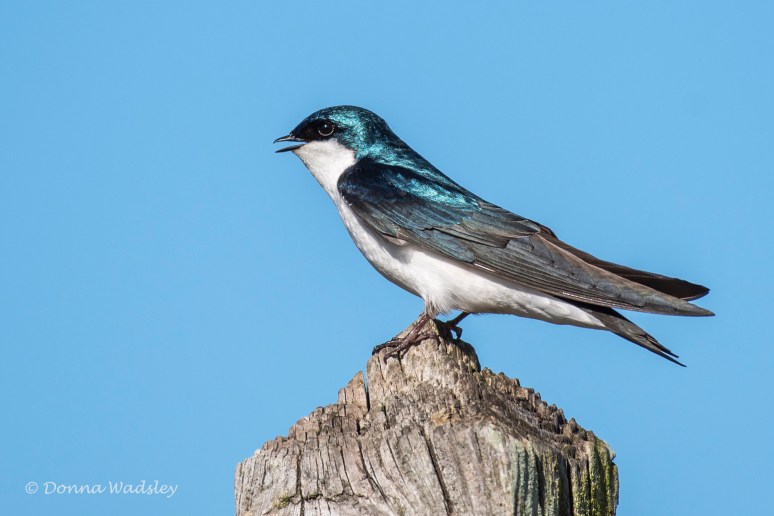
Tree Swallow (male) on top of nesting box post
.
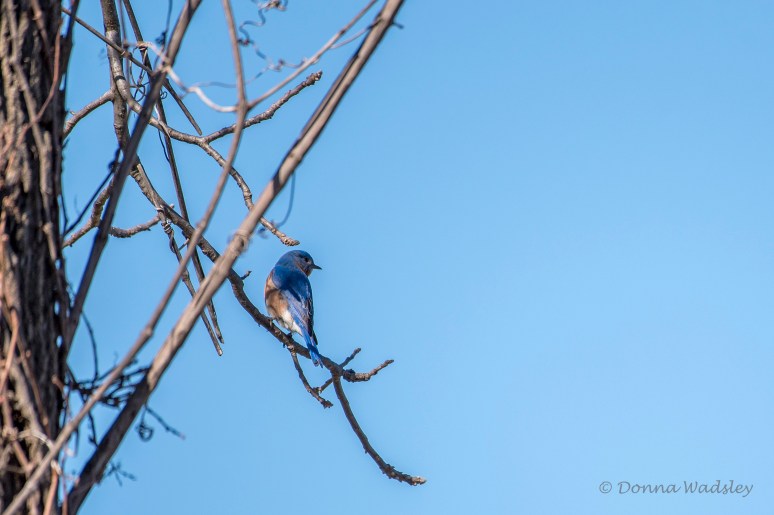
Eastern Bluebird (male) contemplating his next attack
.

Tree Swallow (male) telling off a Bluebird
.
Hopefully the bluebirds are back in control today; they were there first and the box is for them. 🙂
(Photos taken at Eastern Neck NWR March 21, 2022)
.
.
Eastern Phoebes Are Back!
.
After leaving the causeway and venturing into Eastern Neck NWR, one of the birds I was very excited to see and hear was the Eastern Phoebe. They are one of Maryland’s earliest returning migrants.
.

Eastern Phoebe
.
I stayed still for a bit to watch its behavior and listen to its name-sake “fee-bee” call. The curiosity of me flushed out two more!
.

Eastern Phoebe
.

Eastern Phoebe
.
I was a Phoebe — nothing more —
A Phoebe — nothing less —
The little note that others dropt
I fitted into place —
I dwelt too low that any seek —
Too shy, that any blame —
A Phoebe makes a little print
Upon the Floors of Fame —
— Emily Dickinson
.
(Photos taken at Eastern Neck NWR March 21, 2022)
.
.
Birds at the Causeway
.
I visited Eastern Neck National Wildlife Refuge this past Monday morning and first stopped at the causeway to the refuge’s entrance to see what might be there.
Off in the distance there were 24 Tundra Swan, they made me smile. A few stragglers still or maybe these had stopped at the refuge while enroute north for home.
No ducks. Just a few Ring-billed Gulls in the sky, along with three Osprey and an Eagle.
I continued my way into the refuge for two hours and then stopped again at the causeway on my way out.
A couple dozen Ring-billed Gulls were hanging around the mudflats area in the water, waiting for the tide to finishing lowering so they could scout the mud for food.
.

“Hey, this is my spot. Move on!”
Ring-billed Gulls
.
A single gull caught my eye as being different.
Welcome to my bird lifer list #256 Bonaparte’s Gull! 🤗💃😊
.
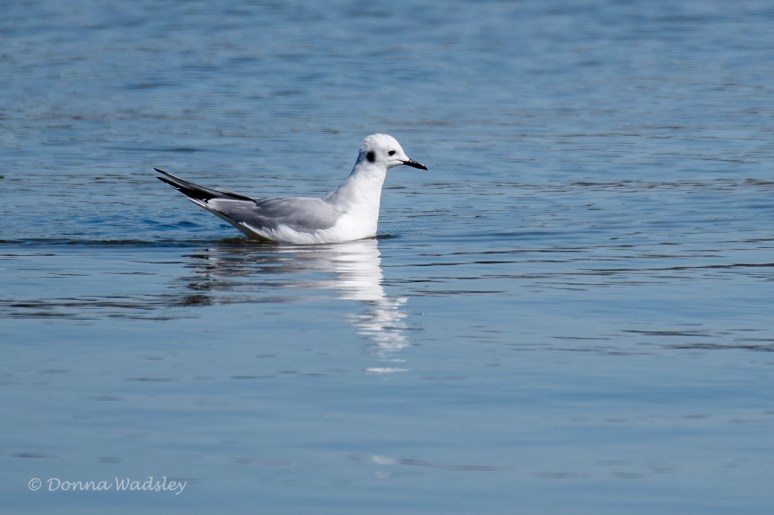
Bonaparte’s Gull (nonbreeding adult)
.

Bonaparte’s Gull (nonbreeding adult)
.
Also wading in the water was a handsome Greater Yellowlegs.
.
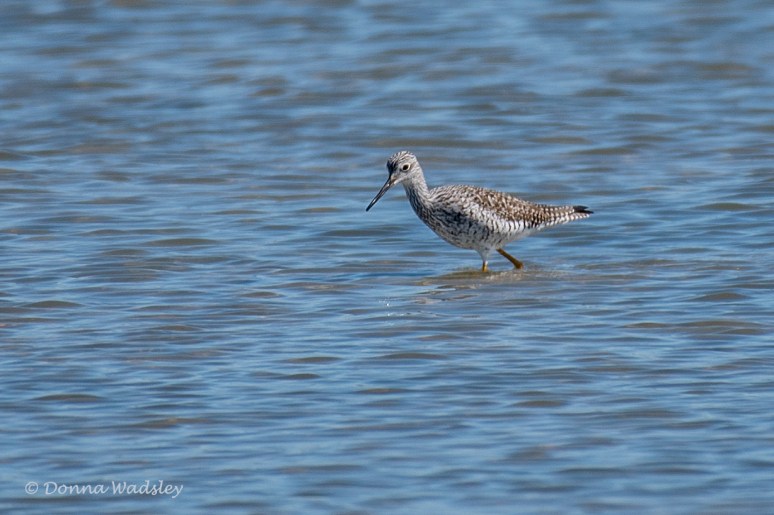
Greater Yellowlegs
.
While searching the other side of the causeway, I heard the Greater Yellowlegs calling as they do when taking flight and luckily spun around to get some flight shots.
.
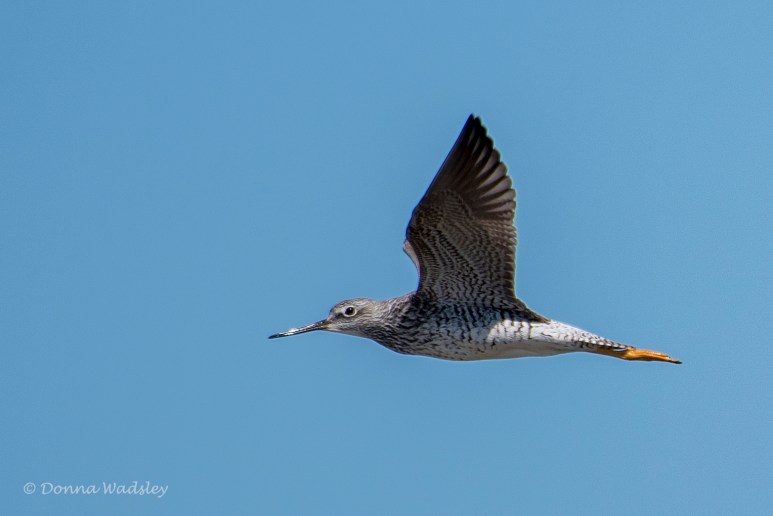
Greater Yellowlegs
.
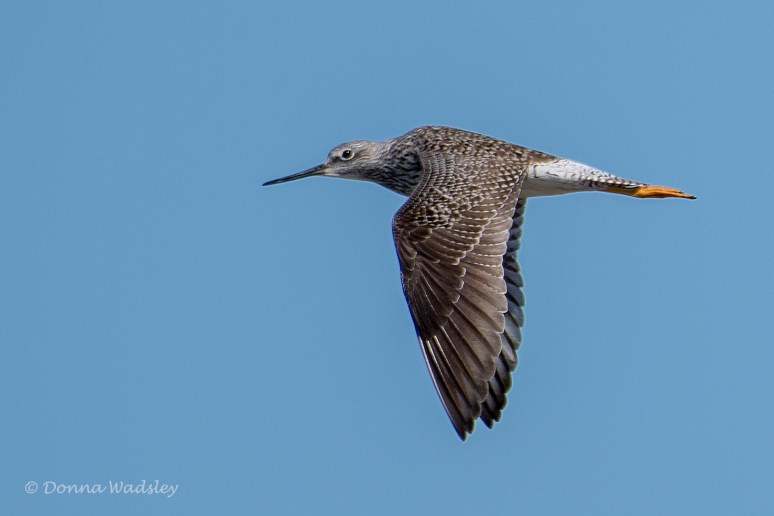
Greater Yellowlegs
.
She was there again, a Belted Kingfisher, sitting on a pole alongside the water’s edge. Pretty gal!
.

Belted Kingfisher (female)
.
And, luckily, this time an Osprey was perched on the nesting platform that was empty when I first arrived.
Note the Osprey’s heavily frayed feathers that took a beating getting here from South America. New ones will be on the molting agenda this season!
.
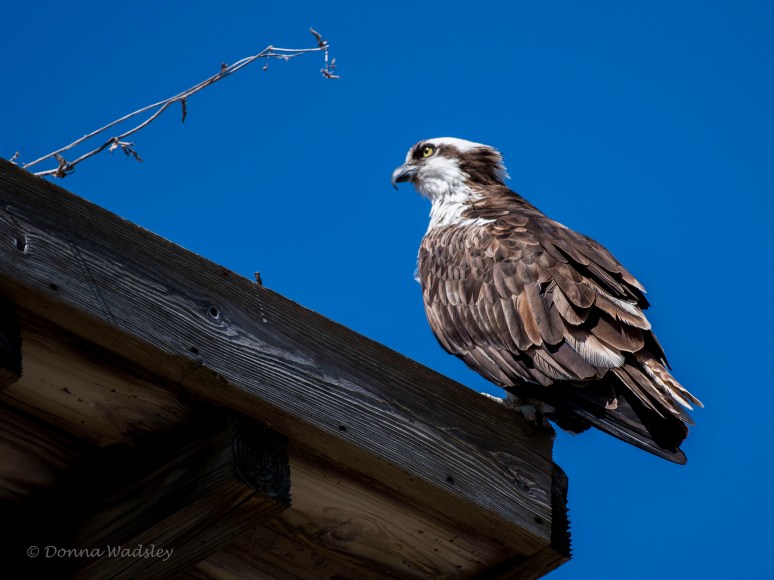
Osprey on a man-made nesting platform
.
It was an awesome visit. I saw, with most getting photographed, a total of 39 bird species. I’ll share some of my favorites of those next post!
.
(Side note: I made some changes to my blog a week ago, and it seems to have caused some of you a problem with not being able to comment and/or like one of my posts. I’ve made some more adjustments again before this post. If you are still having a problem, would you please email me at bayphotosbydonna@gmail.com so I can accumulate the issues to go back to WP. Thank you so much, I’ve been very frustrated with this, trying to get it fixed!)
.
.
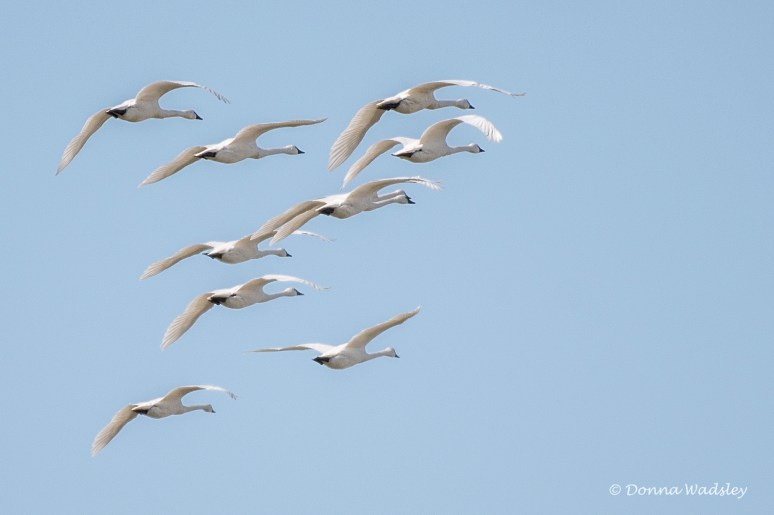
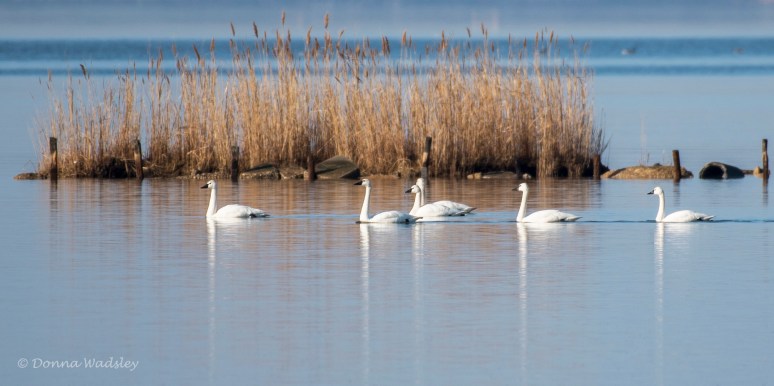
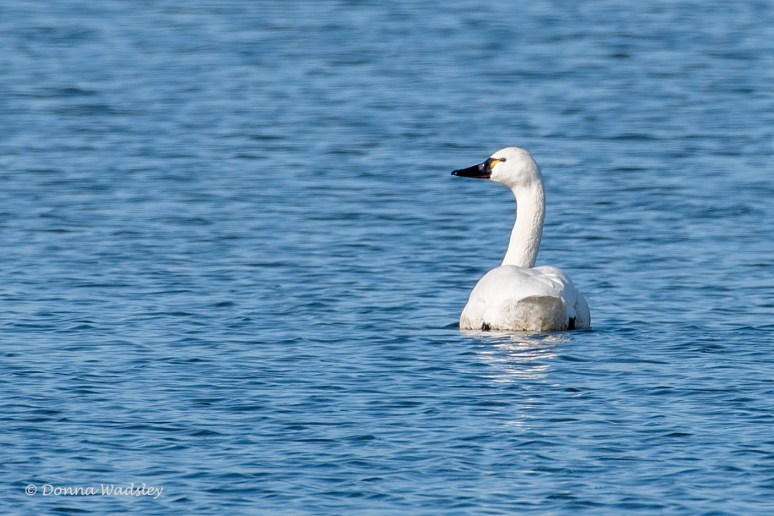
Tundra Swans
The arrival of our Chesapeake Bay Osprey concurs with the departure of our winter birds, including the graceful, elegant Tundra Swans.
As they make their way back home to the Arctic tundra to breed, here are some final fave photos I wanted to share.
.

.

.

.

.

.
.
.

.

.
.

.

Tundra Swan and Buffleheads
.
Wishing them safe travel back to the Arctic!
.
.
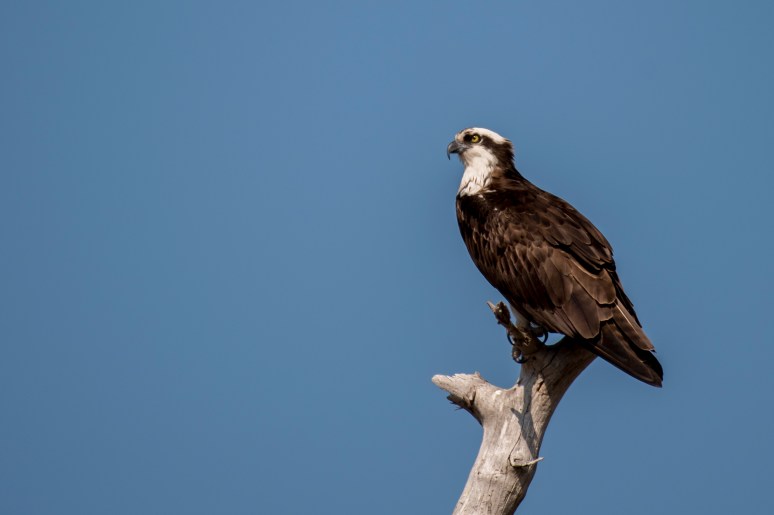
Welcome Back, Chesapeake Bay Osprey
Early to mid March is the ‘official’ time the first Osprey return to the Chesapeake Bay, after spending their winter in South America. By April, they are everywhere, vying for prime nesting locations.
My first sighting greeted me on my arrival to Eastern Neck NWR on March 11th. Last two days, I saw six each day.
.

 Bay Photos by Donna