Another Visit to Blackwater NWR – Part 1
Another grand time at Blackwater National Wildlife Refuge in Cambridge, Maryland!
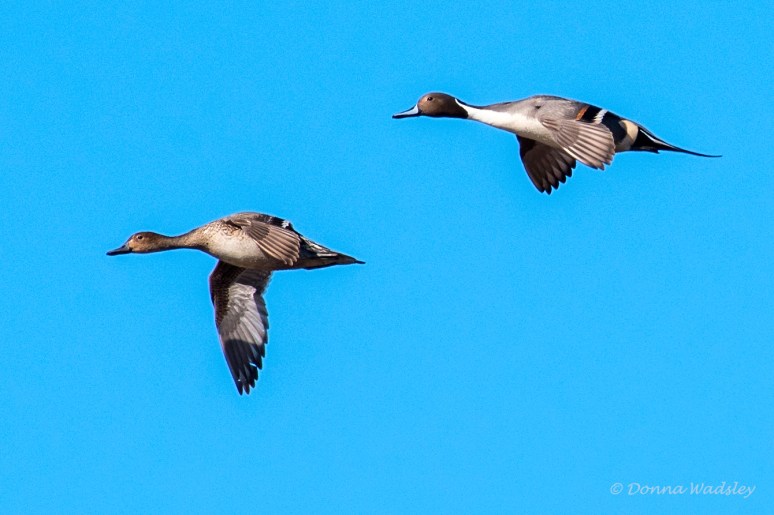
I’ll start this post with photos of the primary winter duck wintering there, the gorgeous Northern Pintail. The refuge’s official waterfowl survey has shown there’s been anywhere from 1500-2800 counted at a single time on the refuge since December.
I settled in at a nice spot where some had congregated and more began to land.

Northern Pintails landing

They are so pretty!
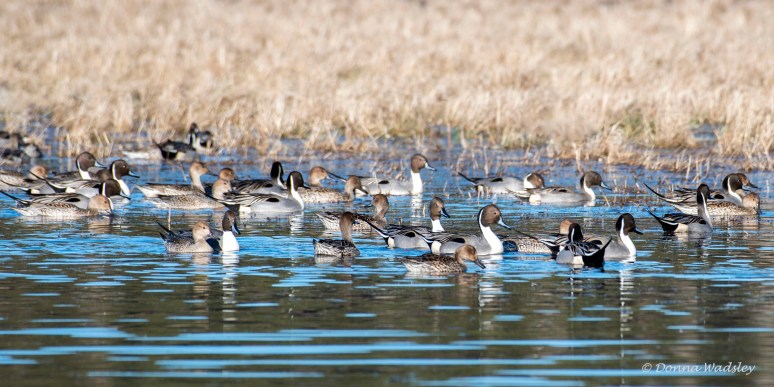


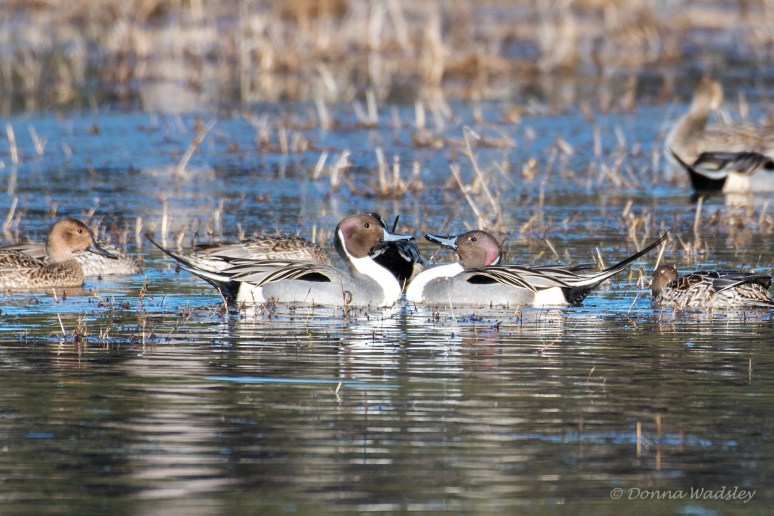
There were the expected American Black Ducks and Mallards in the mix of Northern Pintails, but it was exciting to spot a Green-winged Teal who had probably gotten separated from its own flock.
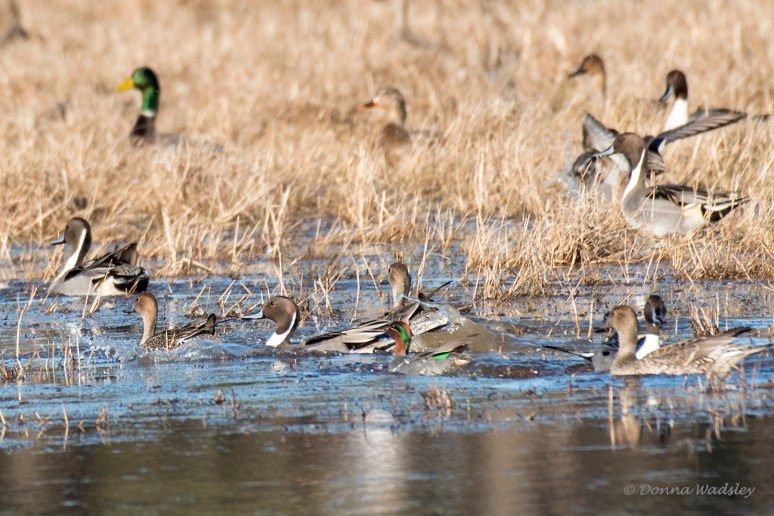
A Green-winged Teal (male) seeking refuge with the Northern Pintails
There were still a few Ring-necked Ducks in another pool area still quite a distance from the wildlife drive.

Ring-necked Duck (male)
Another bird mixed in with the ducks were yellowlegs. There were a few of both Greater and Lesser Yellowlegs tiptoeing around.

Greater Yellowlegs
Something in the sky in the distance caught my eye and I was thrilled to see a large flock of American White Pelicans in a thermal, spiraling away from the wildlife drive. I wasn’t sure if I’d get any shots that I’d surely have to crop, and I did! I counted 135, wow!

American White Pelicans

American White Pelicans
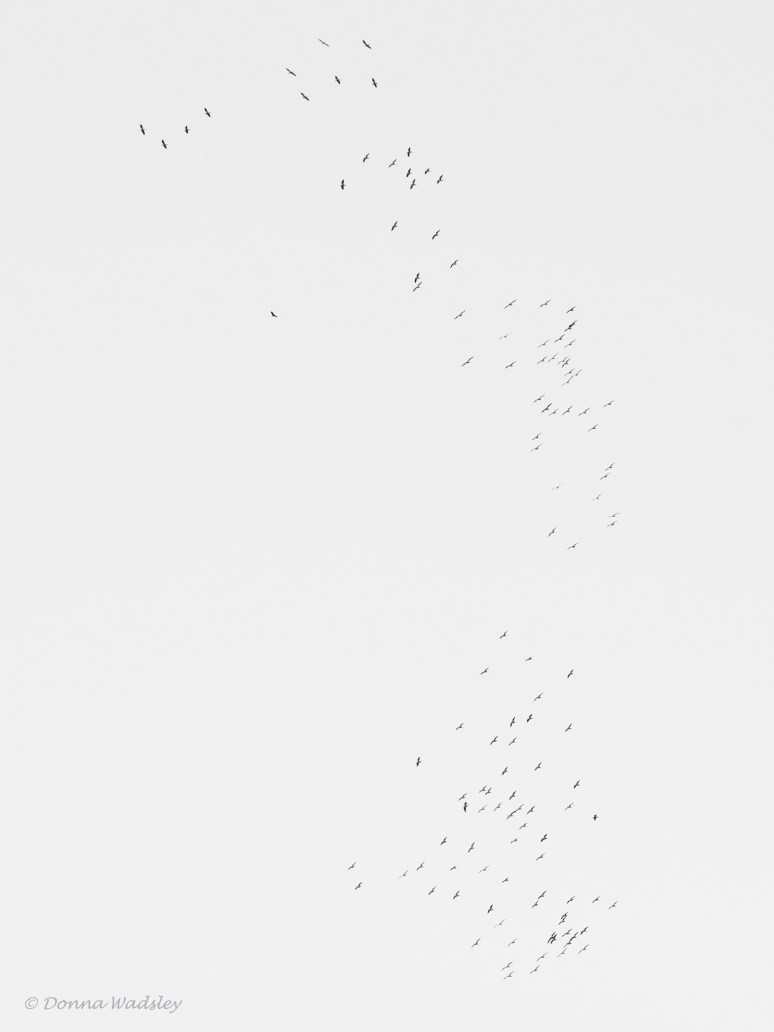
American White Pelicans in a thermal
Also in the sky, there were four Forster’s Terns hunting over the waters, presumably rare at this time.

Forster’s Tern
With already a slew of shots this post, I’ll end with the beautiful Tundra Swans still gracing the refuge.
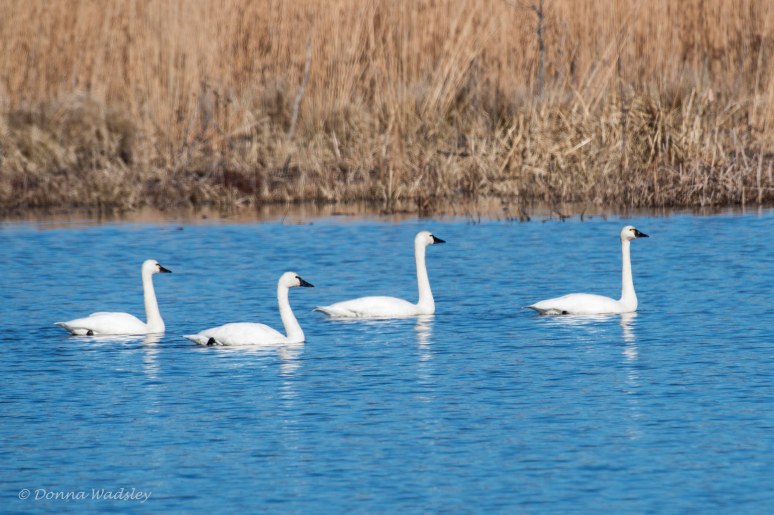
Tundra Swans

More to come with “Part 2″…..
More Winter Ducks and a Loon
Black Walnut Point on Tilghman Island is a great location to sit in your car and directly overlook the Chesapeake Bay from a large parking lot. Having 20-25 mph winds this one day, I knew it’d be difficult to see any ducks but I wanted to check out the waves.
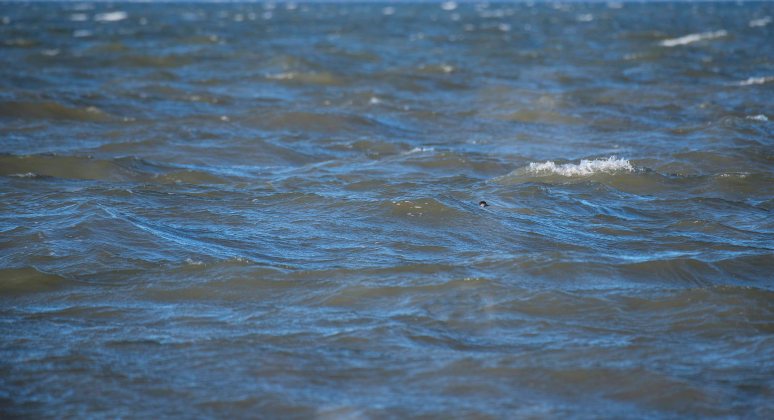
Black Scoter (1st winter) pops up behind a wave
Far out and constantly diving, there were just a few Black and Surf Scoters. If there had been no winds, you may see rafts of them. But with today’s direct winds here, most likely they were around the tip and back side of the island and mouth of the Choptank River.
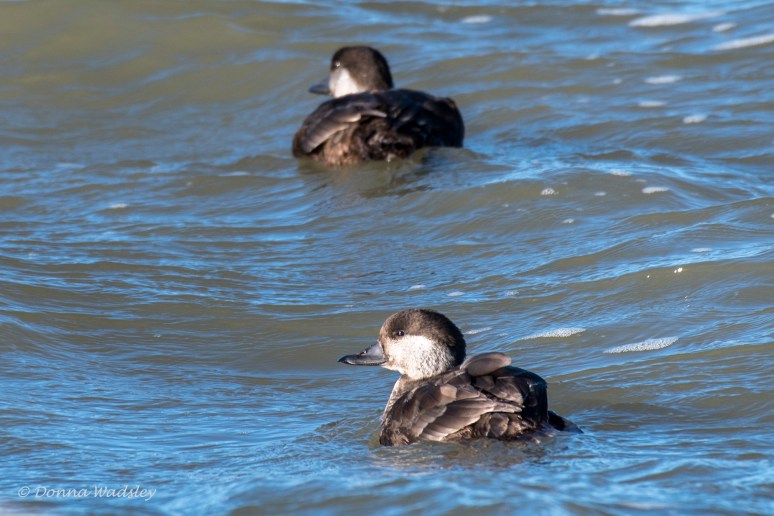
Black Scoters (1st winter)
Migrates from upper Canada and Alaska
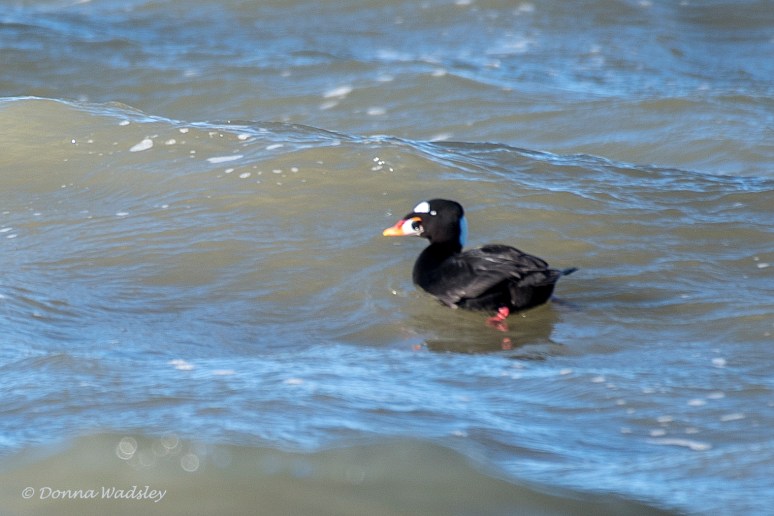
Surf Scoter (adult male)
Migrates from upper Canada and Alaska
That was a blurry shot but I wanted to share that gorgeous beak and show comparison to the next shot of a transforming immature Surf Scoter.
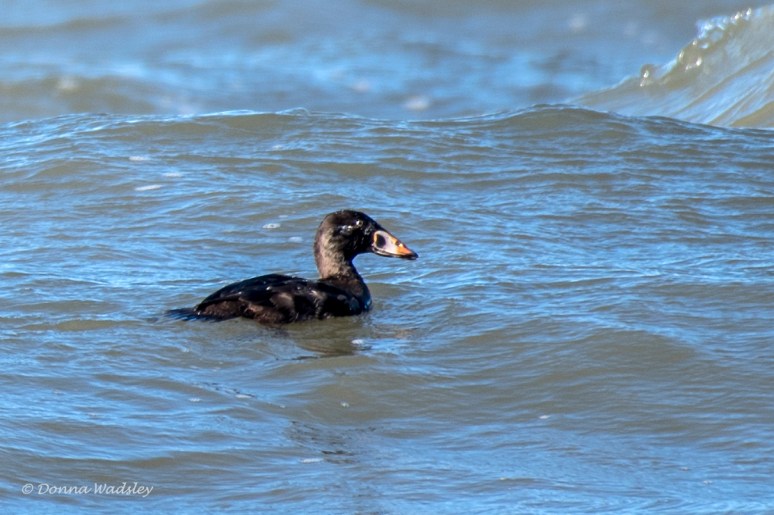
Surf Scoter (1st winter male)
Some more winter ducks on other days and locations and, yay. no winds.
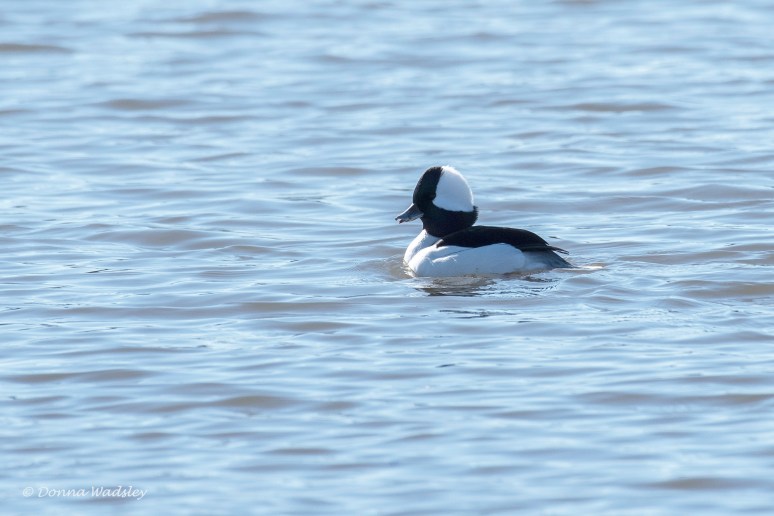
Bufflehead
(migrates from Canada)
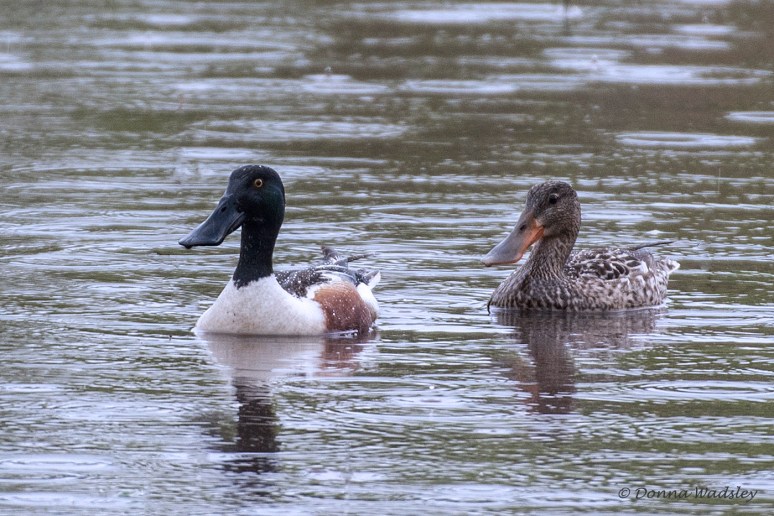
Northern Shovelers
Migrates from northern U.S. and Canada
Northern Shovelers are monogamous and remain together longer than pairs of most other dabbling ducks
Loons are actually not a duck species but classified in a different line of waterbird. But they appear here with the winter ducks and when we get to enjoy them.
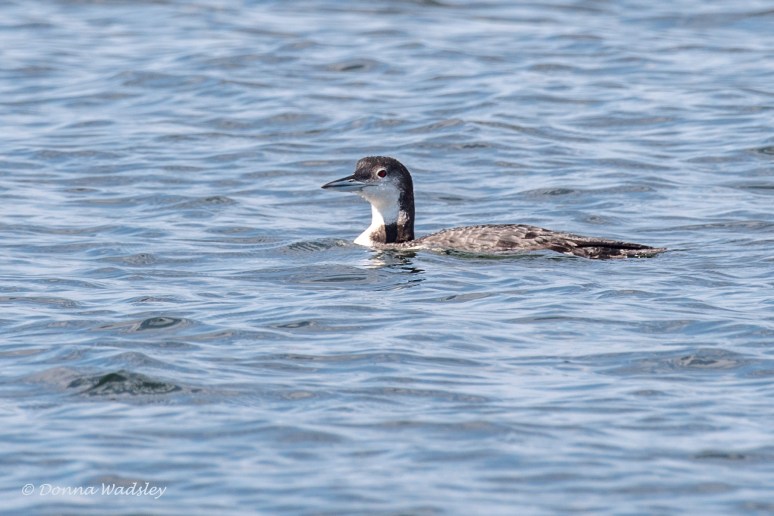
Common Loon
Migrates from northern U.S. and Canada
One final duck shot, for fun! 🙂
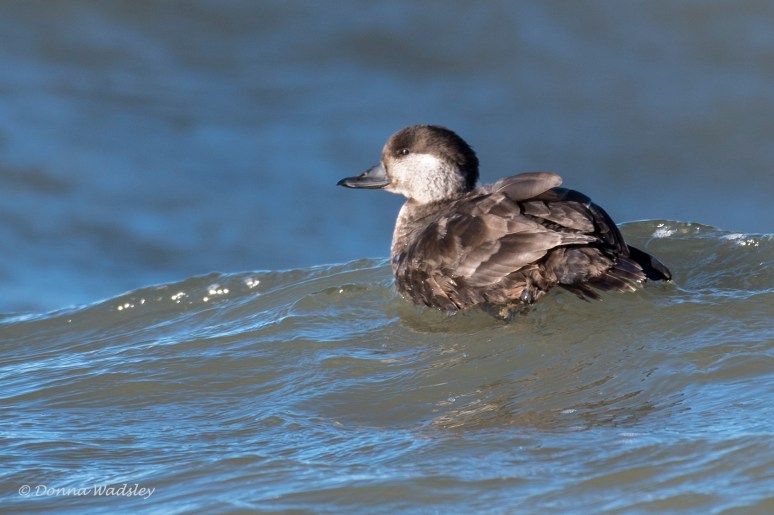
Whee!
Winter Ducks
In downtown Cambridge, Maryland, there are several waterfront parks and street ends that overlook the Choptank River where you can go to view winter ducks.
I swung by the location at the end of Oakley Street to find a raft of mostly nappers.

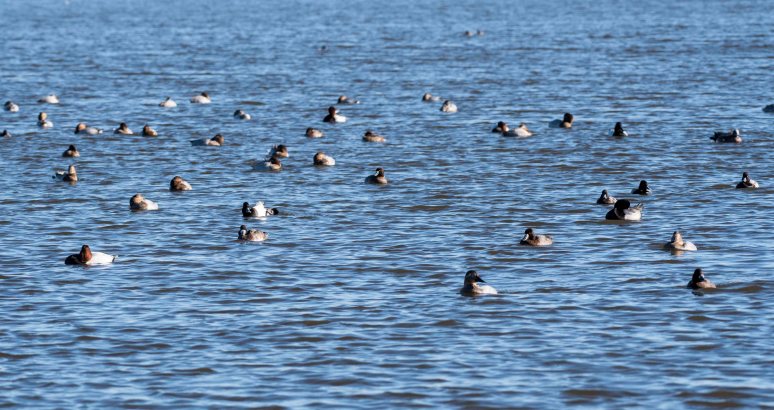
There were seven duck species from my viewpoint. Four species were near the water’s edge, so I focused on them to capture their lovely colors and pattern details.

Mallard (male)
Yep, I forgot to photograph the female mallard!
But for these next three ducks, I did capture and am sharing both the male and female for their comparisons.

Lesser Scaup (male)
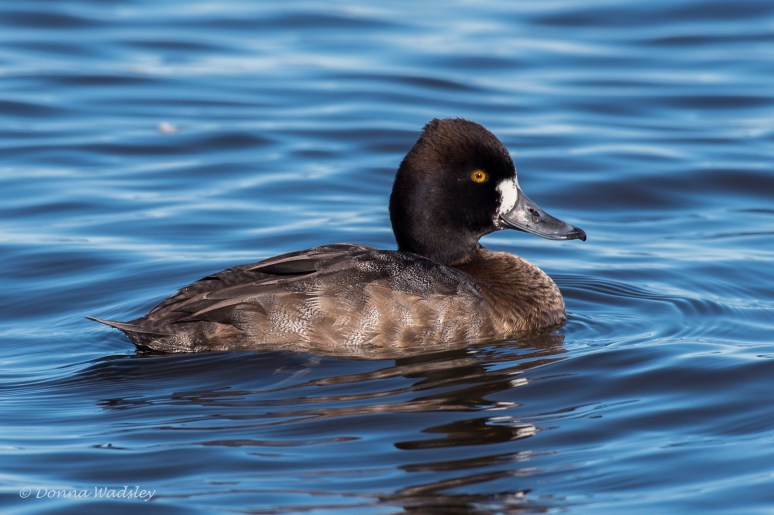
Lesser Scaup (female)

Lesser Scaup (male)

Canvasback (male)
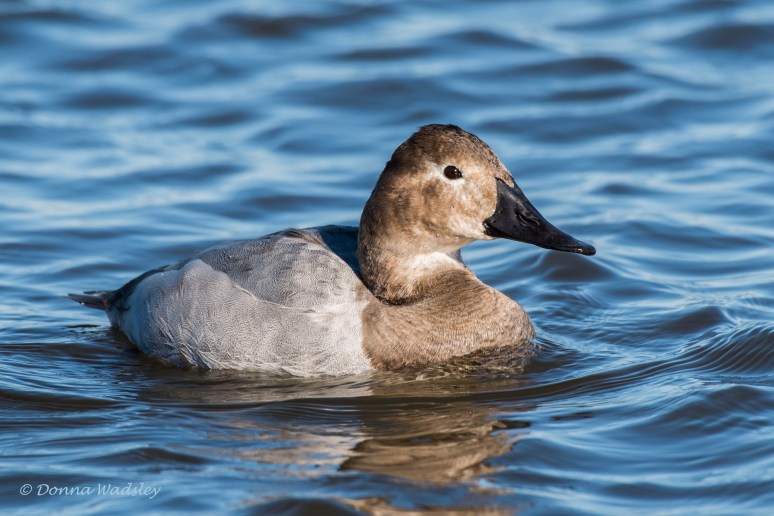
Canvasback (female)

Canvasback (male)

American Wigeon (male)

American Wigeon (female)

American Wigeon (male)
There were not as many ducks as I’d seen in years’ prior. Here’s a scene from 2019 to show you another day I visited, wow!
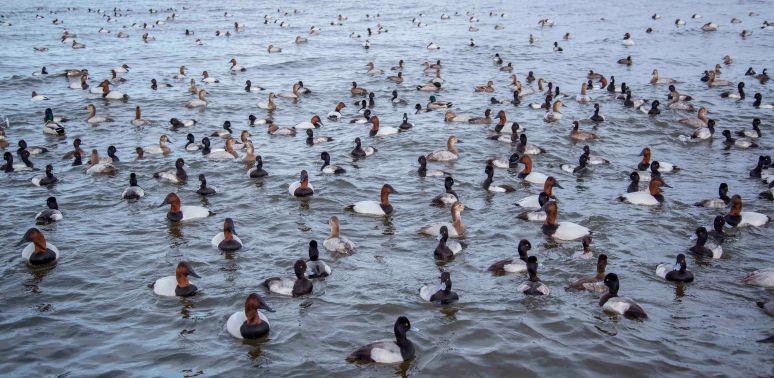
Duckmania at Oakley Street, February 2019
Back to my visit a couple weeks ago, my final photos sharing two happy ducks.

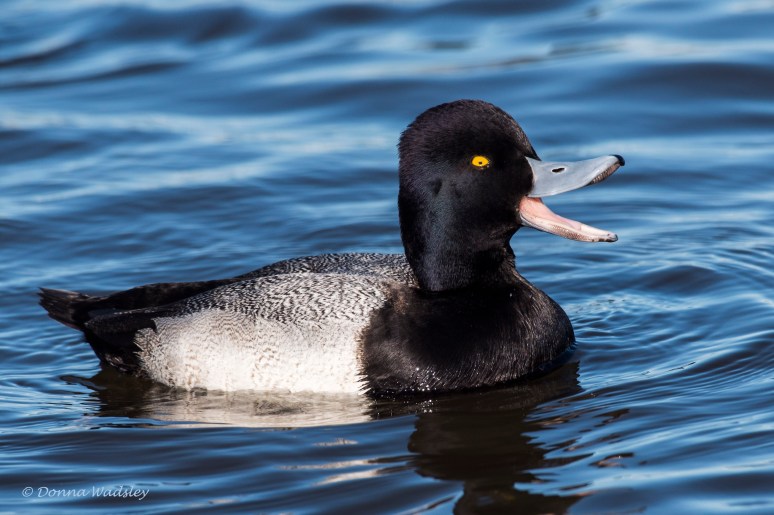
For my friends up in the north U.S. and Canada, you can see they are happy happy here this winter!
1-2-3 Birds and Berries – #10
The birds continue to enjoy the bounty of native berries, or at least posing nicely for me around them.

Northern Mockingbird

Common Grackle

Field Sparrow
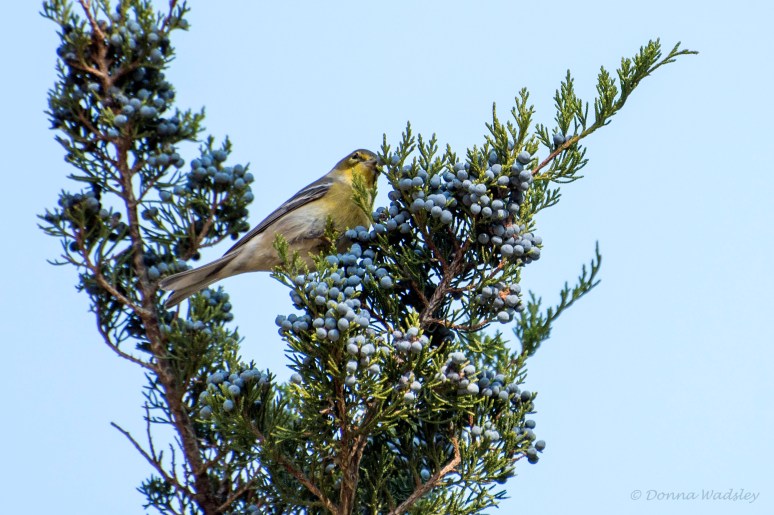
Pine Warbler
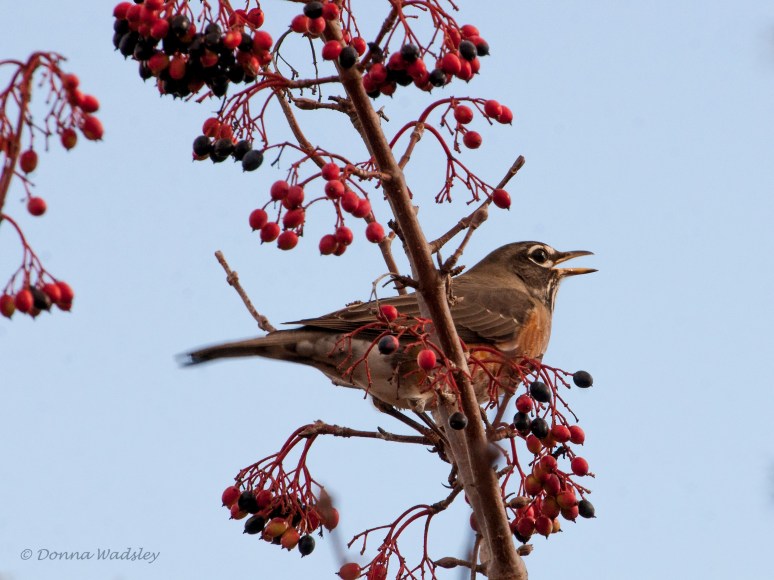
American Robin

Yellow-rumped Warbler

Carolina Chickadee
Handsome Red Fox
First, a WP issue. Again. I want to mention that I have been submitting comments at many of your blogs for past weeks/month, but they are not showing up. Even hitting the ‘like’ button has to be done numerous times to make it work, but I usually succeed with that issue. But if I was a frequent commenter on yours and you’ve noticed I haven’t been lately, now you know why. Sorry! I still keep trying, but it’s very frustrating to not see it load, and so where did it go? I’ve learned some bloggers do not know they have an administration comments section to check or it’s not checked often. Could my comments be in your spam or pending comments admin folder awaiting your review?
——————————–
Okay, on with this beauty!
We continue to have fox sightings on our property as they make their way back and forth into the marsh behind us.
I was already tucked away shooting birds and saw this one coming, unaware of me. When I started clicking, it stopped to look for me, totally in the wrong direction at first.

Red Fox
Scanning, it took the fox a bit to zone in on me, and that’s when I snapped the eye contact.

Someone’s sporting a healthy winter coat to stay warm
Fingers crossed I get the chance to see little ones in the Spring. Photographing them would be a bonus!
Sitting in the Rain
These two birds are definitely not singing in the rain, but are definitely getting wet perched just a few trees apart from each other a couple days ago.
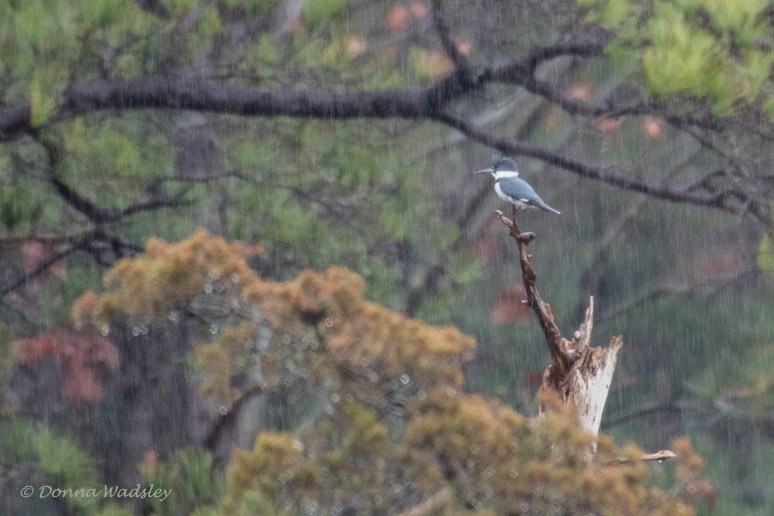
Belted Kingfisher showing he doesn’t mind the rain
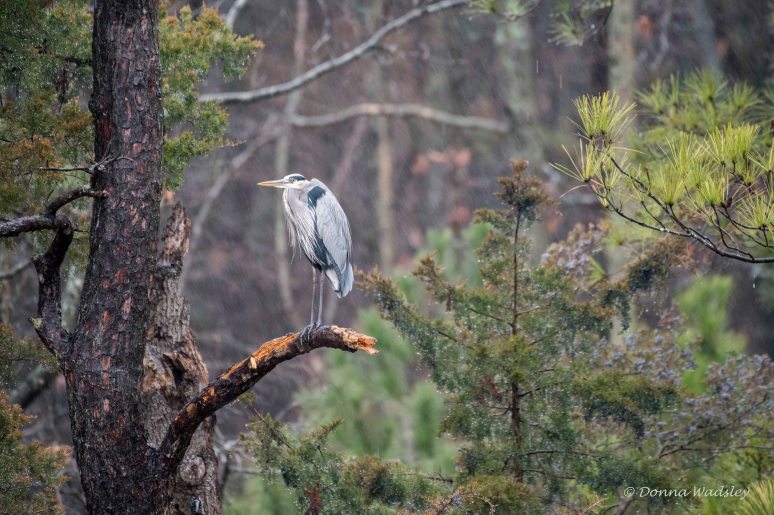
Great Blue Heron begs to differ, preferring to use the unseen upper tree canopy for its umbrella
Me? I was sitting in my car keeping dry while shooting out my window. 😏
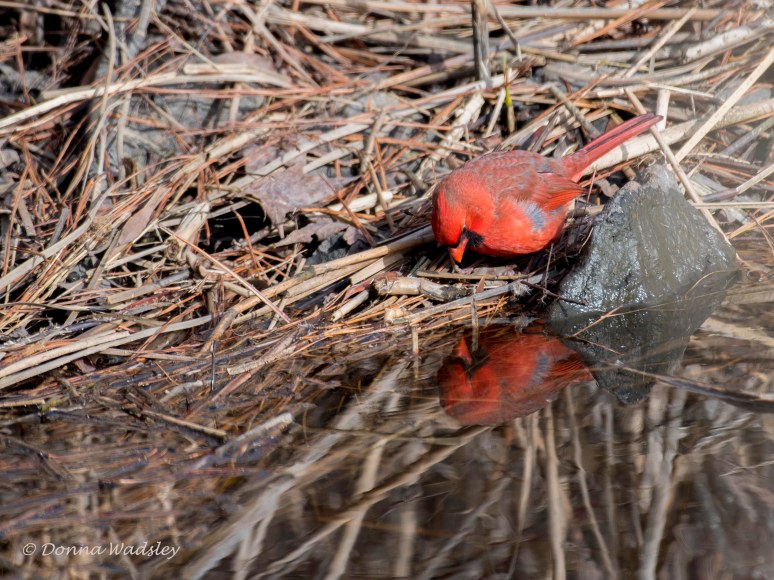
A Cardinal Reflection
Oopsie! I was so tickled with this three-photo series from my visit to Blackwater NWR last week, then filed them in the wrong folder for posting. Didn’t realize until after my previous “Part 2” post went live.
No worries, I am happy to give this Northern Cardinal it’s own special share. Northern Cardinals are one of my favorite birds, and I’m not sure if I’ve ever gotten any decent water reflections with one. Until last week!


A Grand Day At Blackwater NWR – Part 2
Continuing with my visit to Blackwater National Wildlife Refuge, here’s the rest of the whole shebang! Can you pick a favorite? Whew, I cannot!
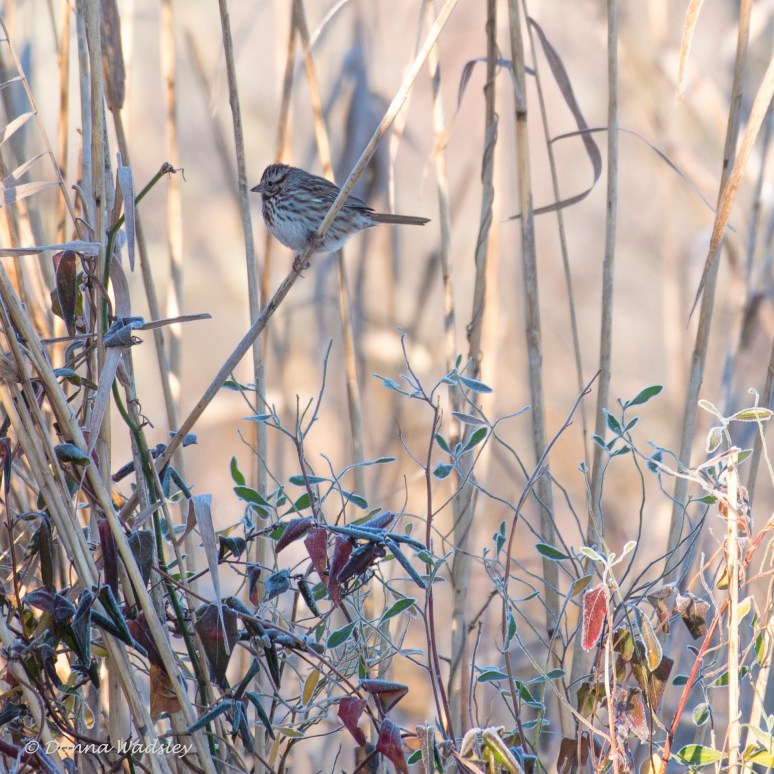
Song Sparrow

Mourning Dove
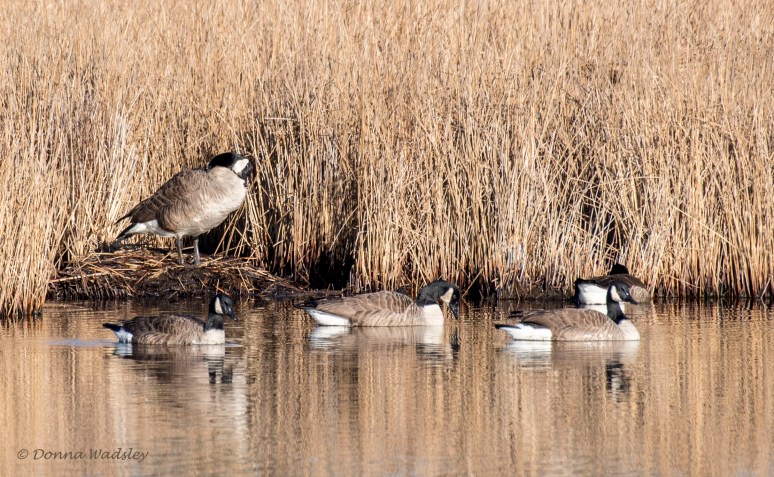
Canada Geese

Great Blue Heron
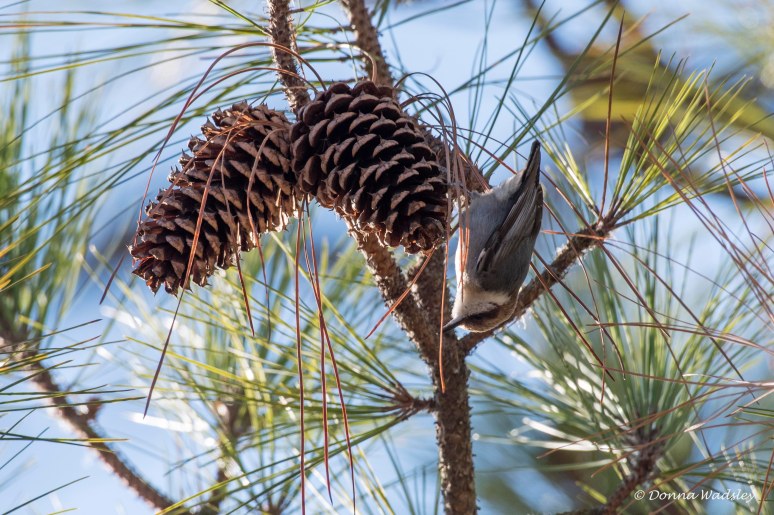
Brown-headed Nuthatch
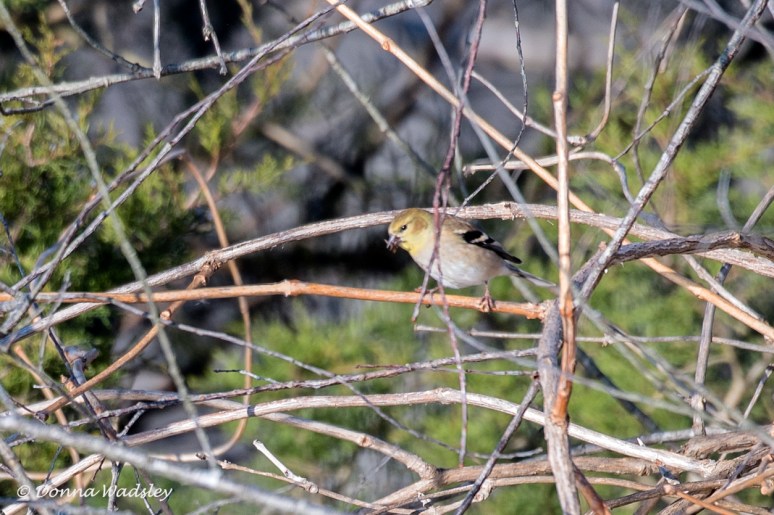
American Goldfinch
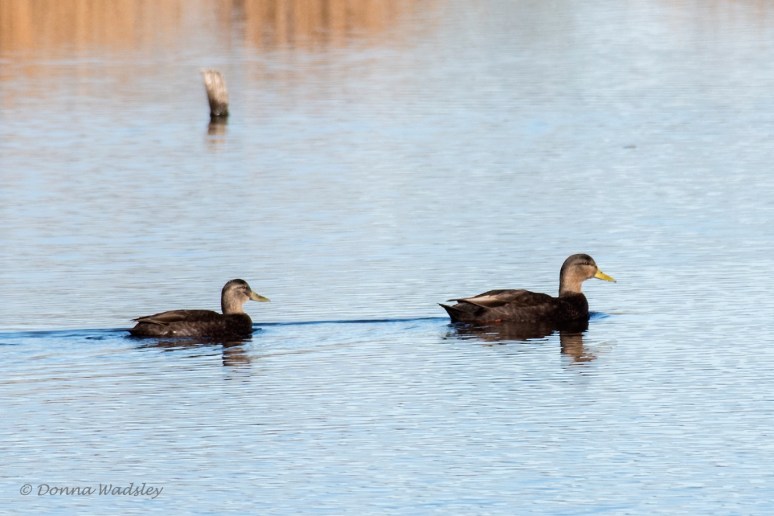
American Black Ducks
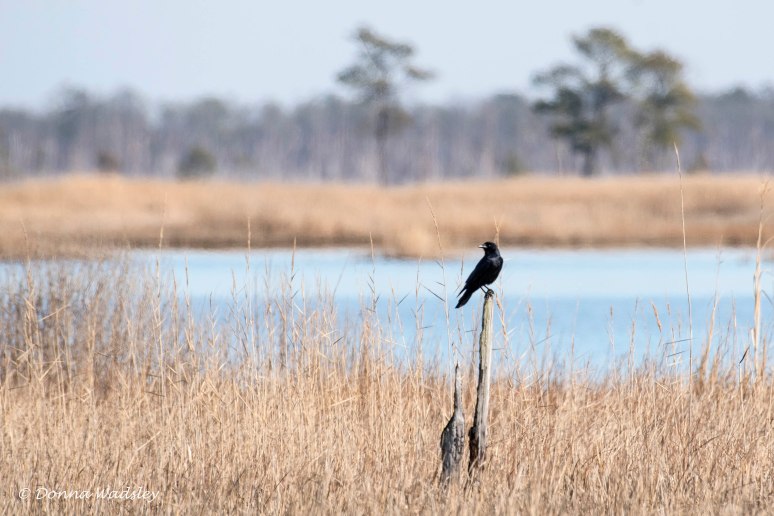
American Crow
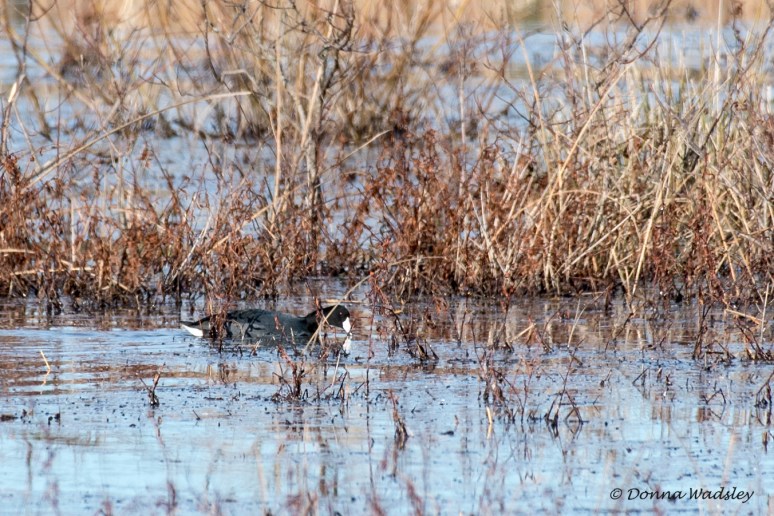
American Coot
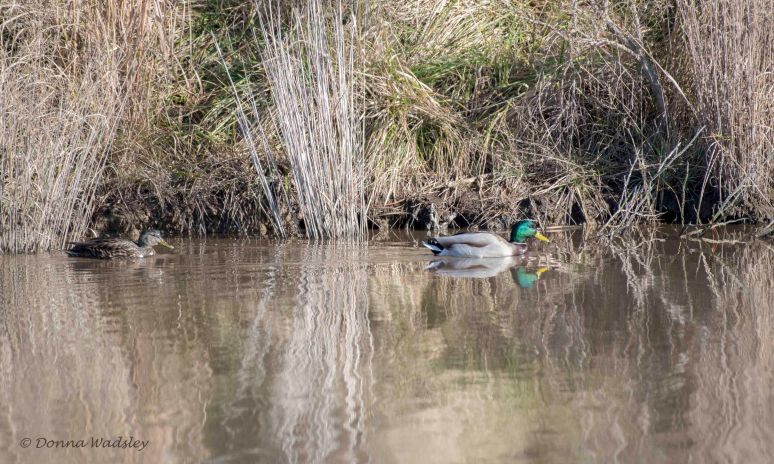
Mallards
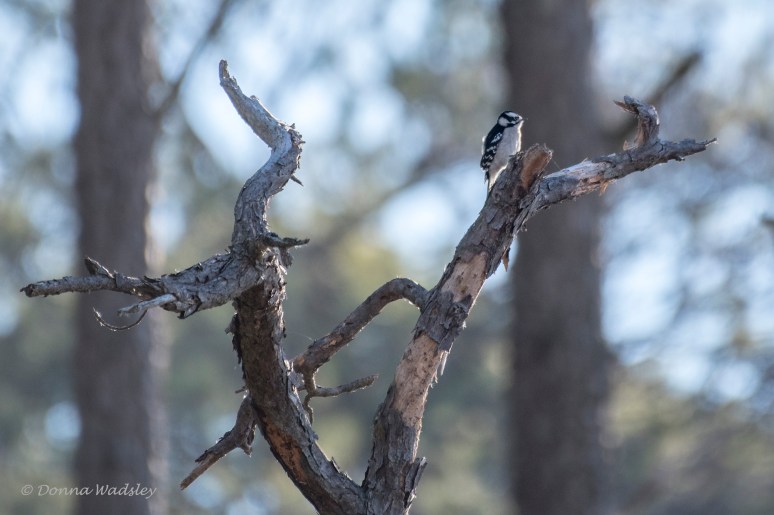
Downy Woodpecker
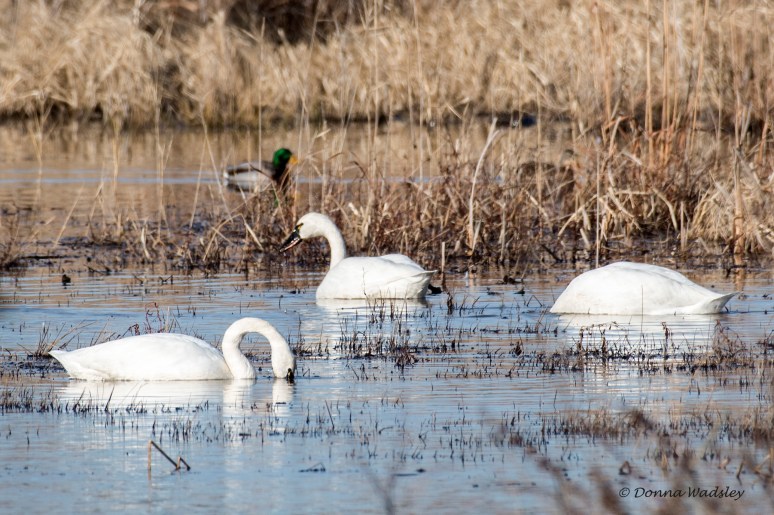
Tundra Swans
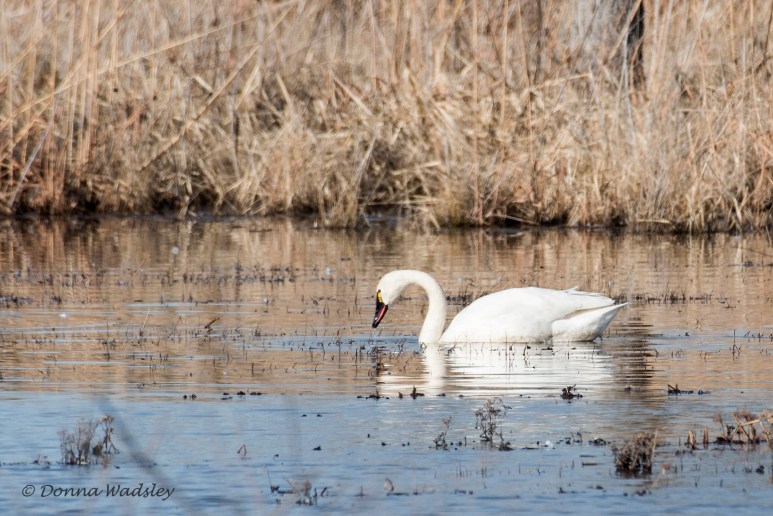
Tundra Swan
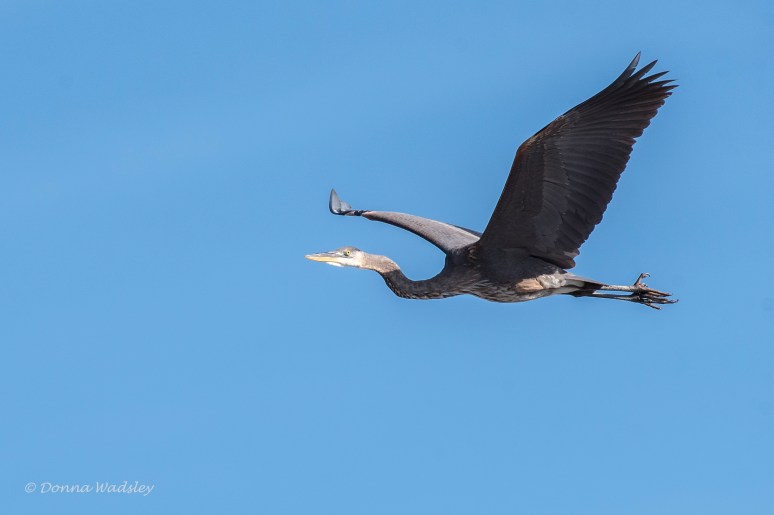
Great Blue Heron
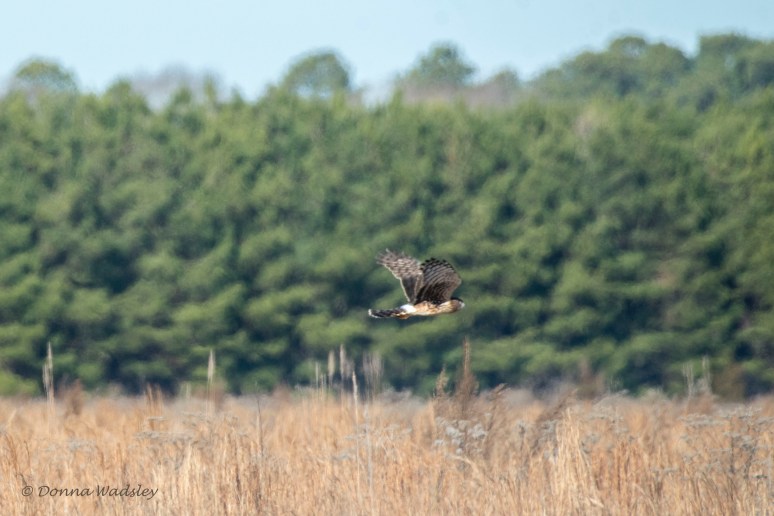
Northern Harrier
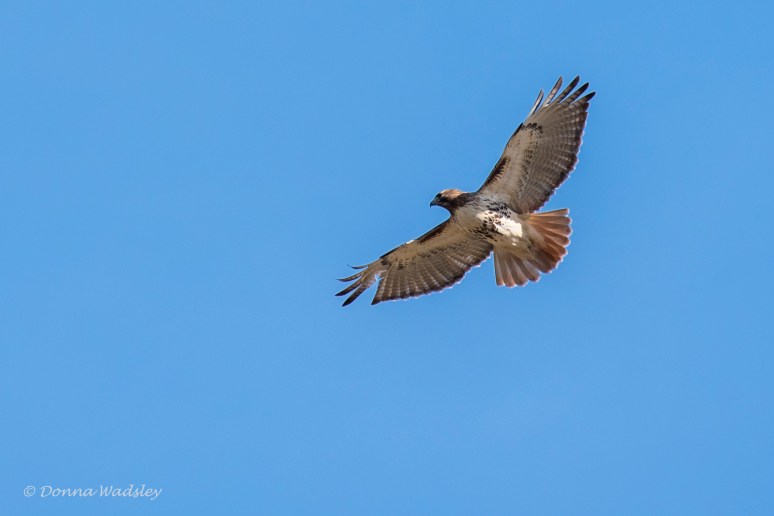
Red-tailed Hawk
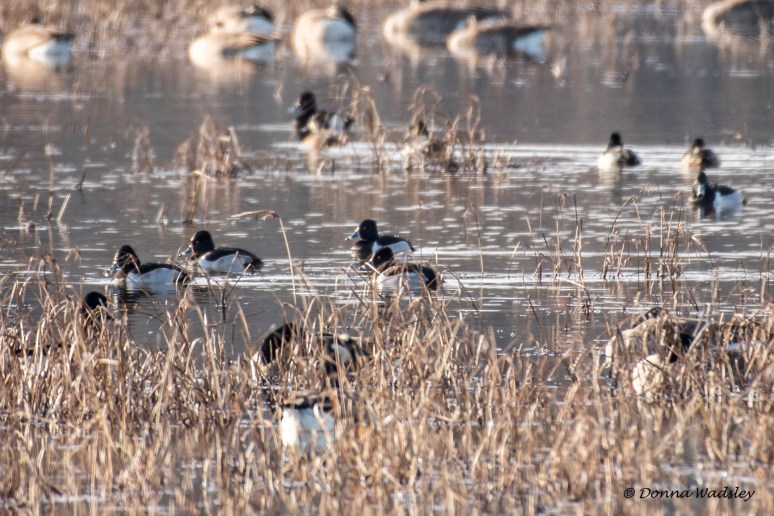
Ring-necked Ducks
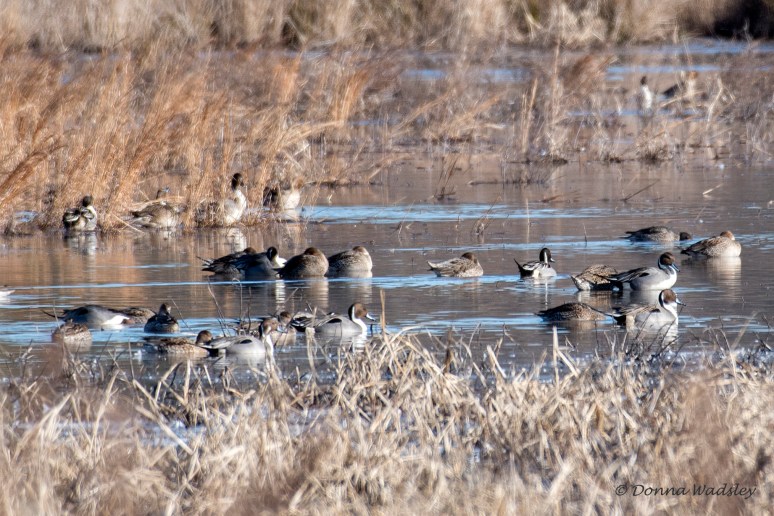
Northern Pintails
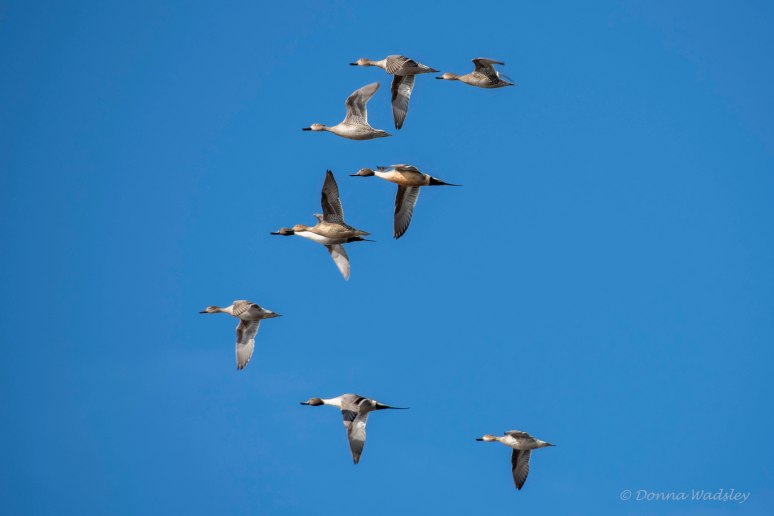
Northern Pintails

Northern Pintails
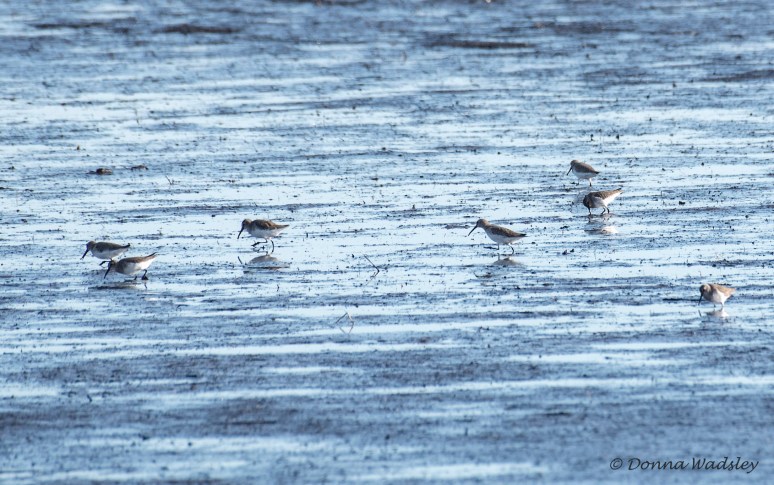
Dunlins


Eagle Nests
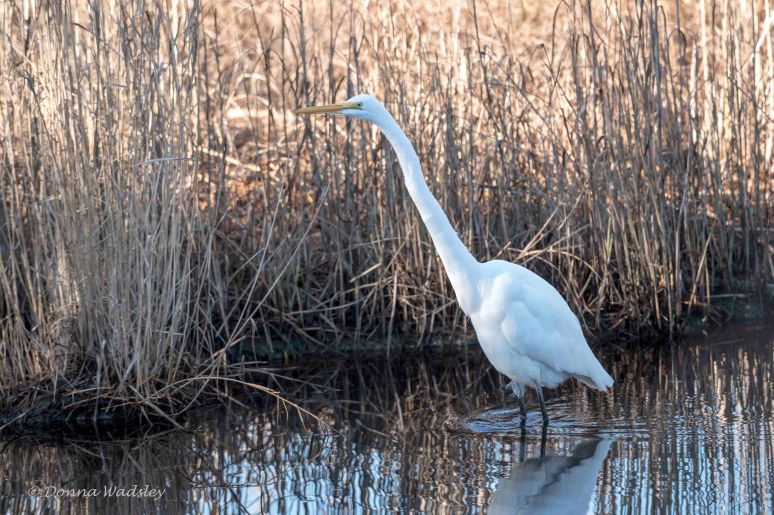
Great Egret
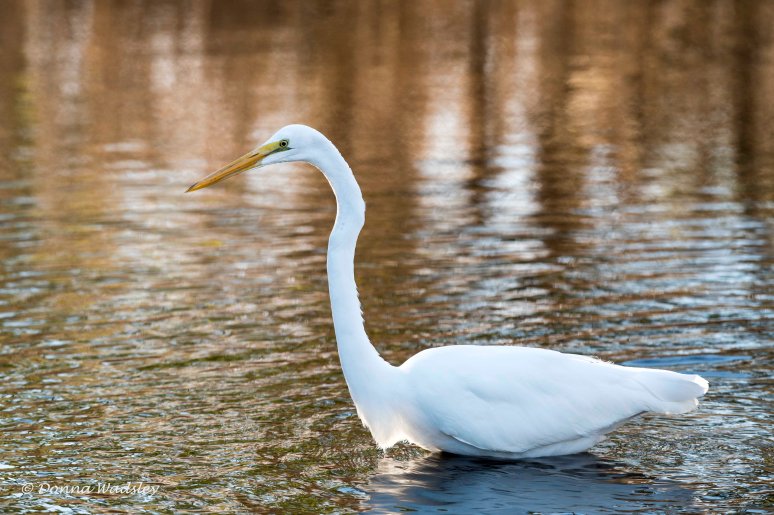
Great Egret

Great Egret
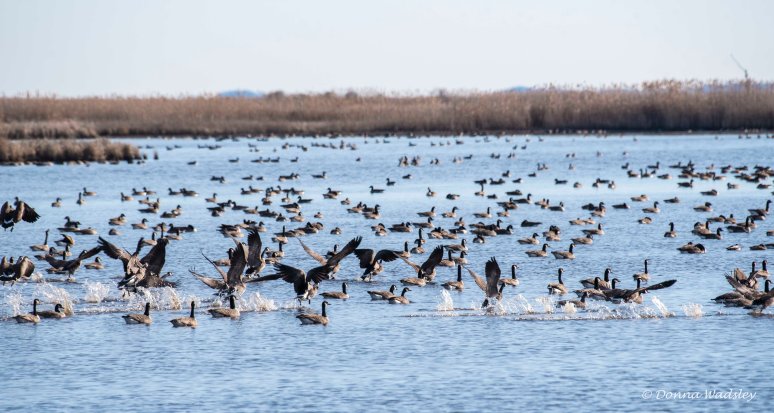
Canada Geese
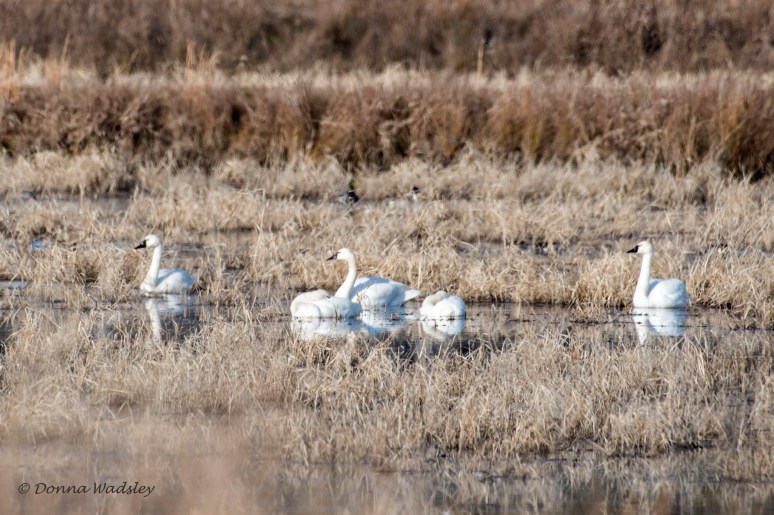
Tundra Swans
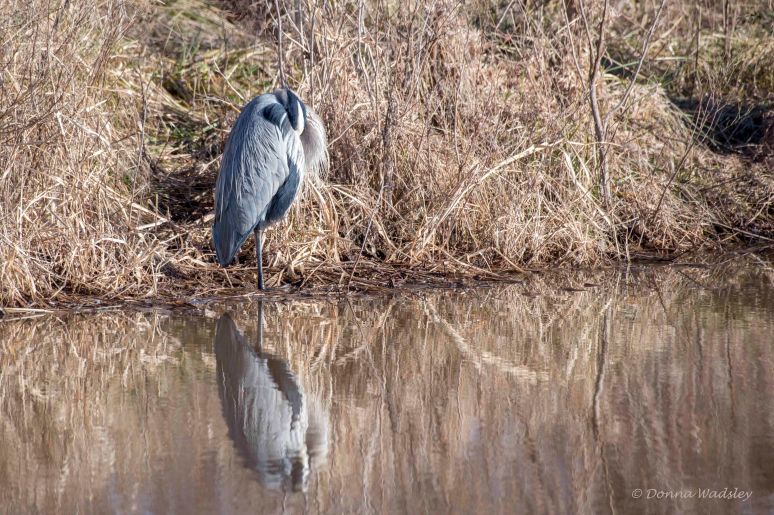
Great Blue Heron napping
I’m guessing the Great Blue Heron fell asleep from too many photos… 😉
A Grand Day At Blackwater NWR – Part 1
A few days ago, I visited Blackwater National Wildlife Refuge in Cambridge, Maryland.
It’d been almost three years since my last visit. I’m luckily now living much closer at only an hour away and have been itching to go for the past couple months.
I’m still processing photos but wanted to get this show started with a three-bird species sneak-peek.
First up, the two photos of this first bird are not great quality, but they’re still fantastic to me for good reason. This hawk is considered rare for our region, plus is a lifer. Woot! 😊
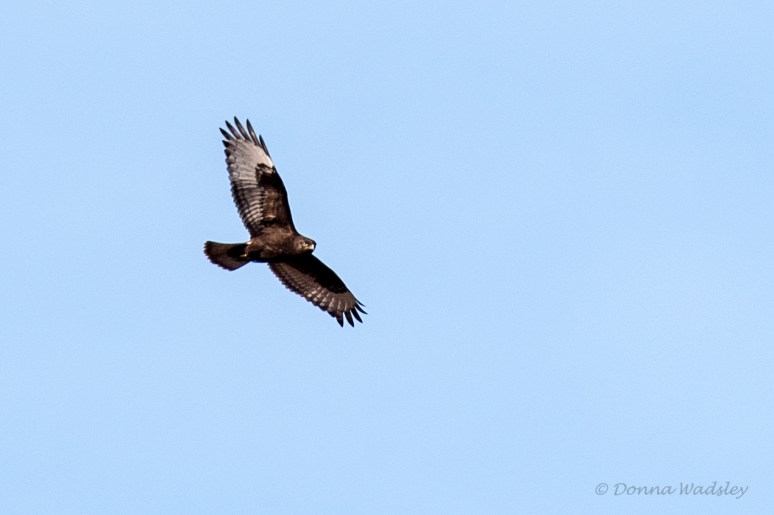
Rough-legged Hawk (dark-morph) – lifer!
Lives and breeds under continuous sunlight in the Arctic tundra
Migrates to southern Canada and the U.S. (primarily West/mid-West) for the winter
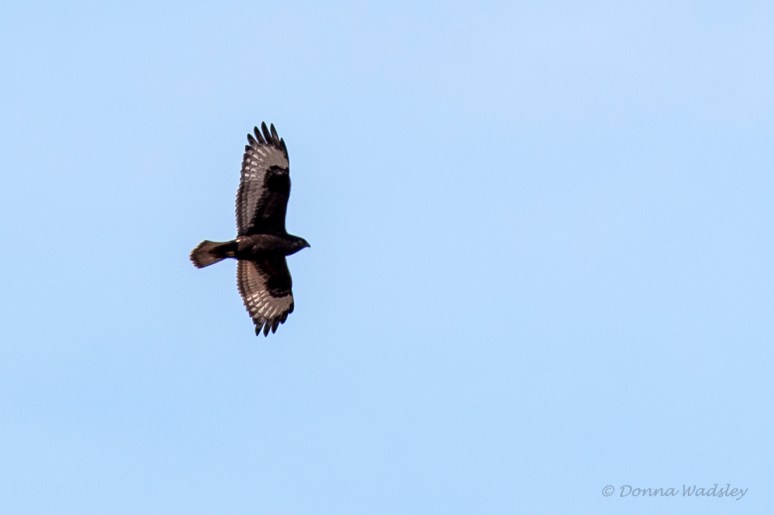
Rough-legged Hawk (dark-morphed)
Another sighting considered rare for our region, the American White Pelican. That being said, there is a small flock that arrives and winters at the refuge every winter. They stay well-hidden and are usually difficult to find/see because of the vast marsh unreachable by the public.
I luckily found the flock way out in the distance from Maple Dam Road. Again, not so great photo heavily cropped, BUT there they are! I counted 36.
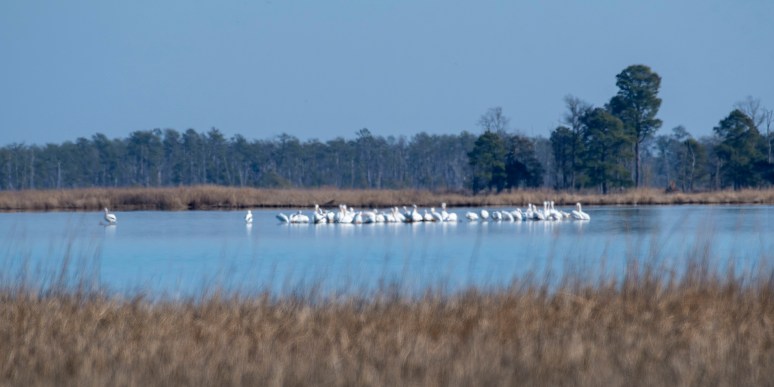
American White Pelicans (36+ count)
I know, my photo quality is slipping here. Let me make up for them with these next two. 😉
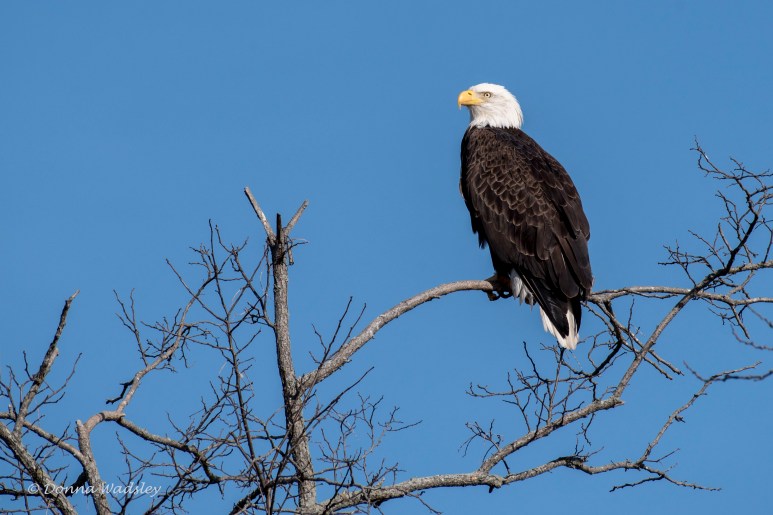
Bald Eagle
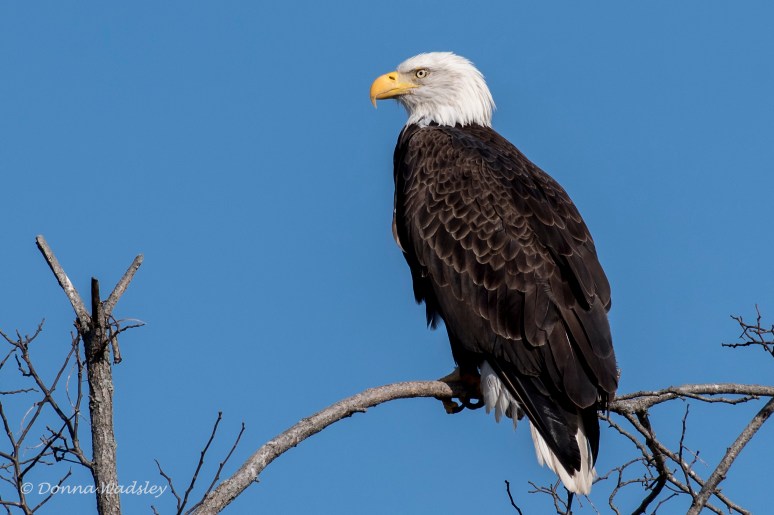
Bald Eagle
Now that was a perfect photo op that couldn’t have been any better!
More to come from this refuge……
Comparing Bird Couples – #1
It’s intriguing that with some bird species, you cannot tell the difference so easily, or if at all, between the male and female. Whereas, others have subtle, distinct or bold differences between the gender.
This new bird series will showcase photos of both a male and female to compare their species’ differences. Sometimes it amazes to see the female looking nothing like her mate!
Let’s start with the Northern Cardinal, a favorite species for many, that has obvious big differences.
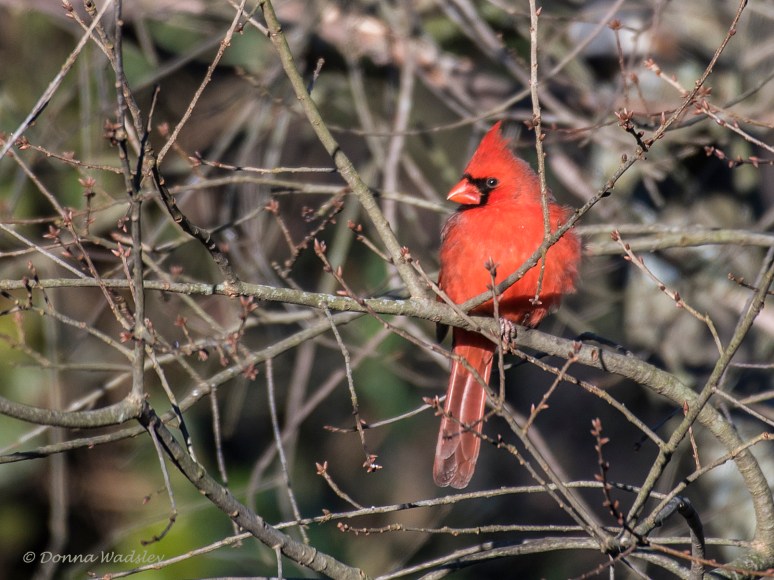
Northern Cardinal – male

Northern Cardinal – female
Yet, with the Eastern Bluebird, comparing the female to her mate, she does have the same coloring but it’s much lighter/paler.
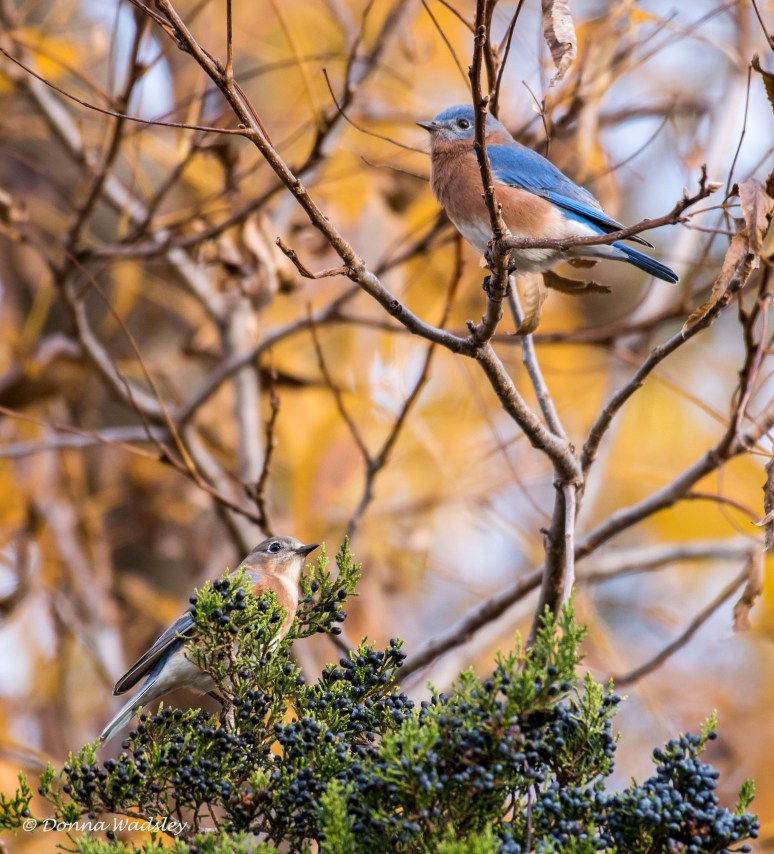
Eastern Bluebirds – male at top, female at bottom
The females may not always be the brightest or most colorful, but they do have their own distinct beauty in their color patterns as we’ll discover along the way. 😊