
Close-ups of a Red-tailed Hawk
.
After posting my Osprey close-ups, I remembered another recent close encounter with a different raptor I’d not shared.
Early March I came up on this Red-tailed Hawk perched alongside the country back road I was traveling, looking gorgeous. I was already going slow, and easily angled my car to photograph it from my car window.
.

Red-tailed Hawk
.
By the looks I was receiving, I knew I was not invited for a photo shoot and could see the hawk positioning to take flight.
.
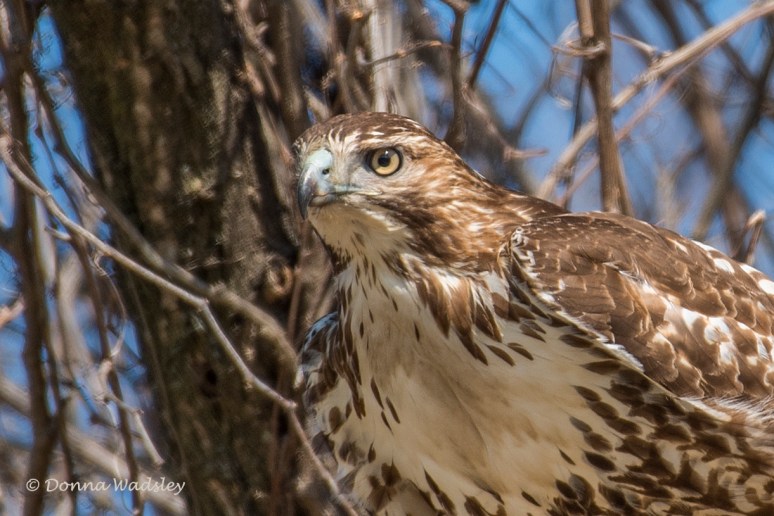
Red-tailed Hawk
.
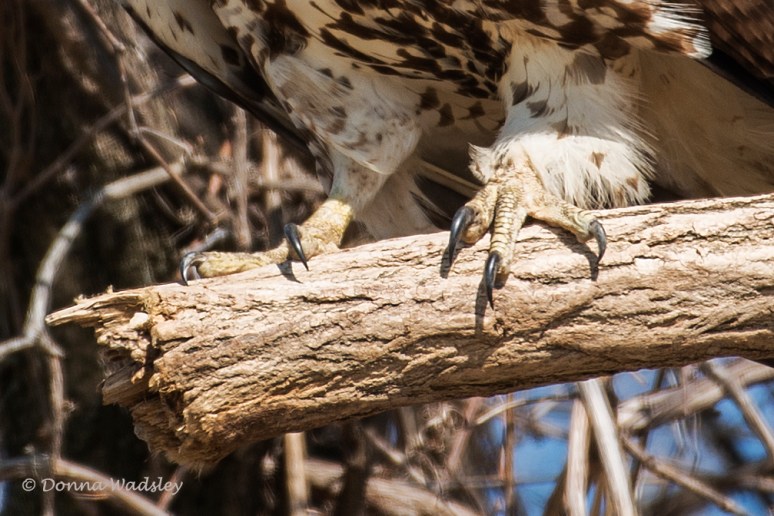
Red-tailed Hawk re-positioning those sharp talons
.

Red-tailed Hawk take-off
.
The hawk flew to a tree further back from the road and landed. I apologized out loud (I really do this lol) and continued in my travels. I came back past this spot over an hour later and the hawk was still in the distant tree, which made me feel better for some reason. 🙂
.
.
Close-ups of an Osprey
.
This handsome fella was keeping a watchful eye (and a deaf ear) on the surroundings near his nest platform where his mate was loudly demanding attention for more nesting materials.
.
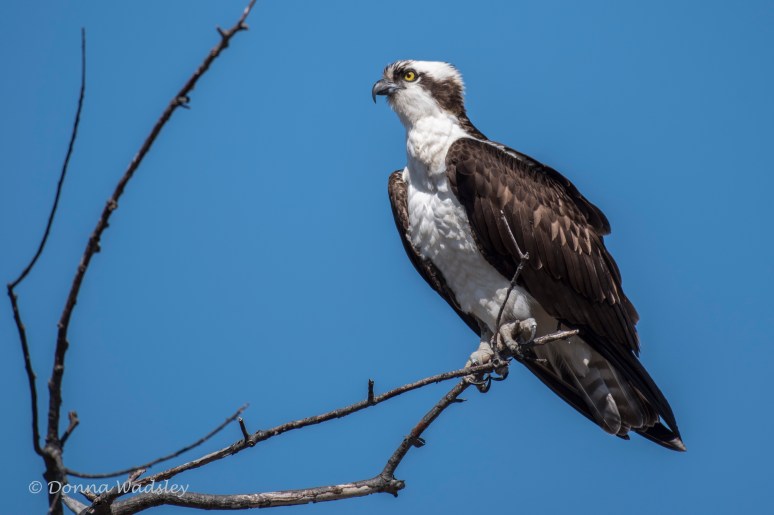
Osprey (male) on watch
.
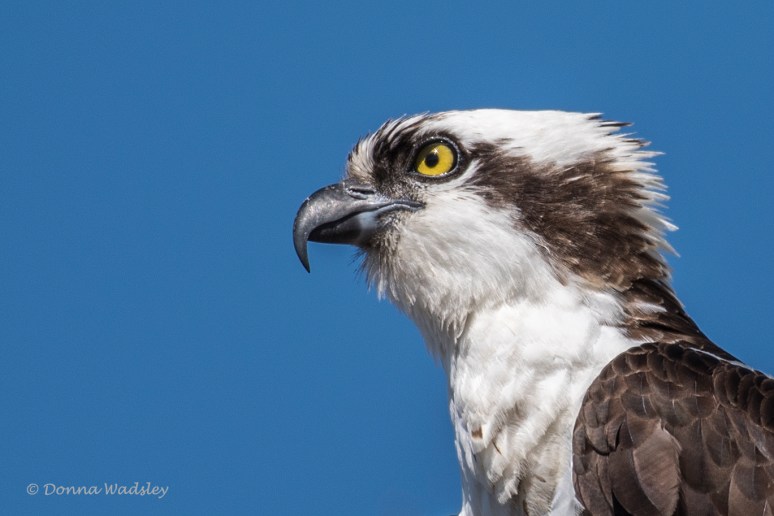
Osprey Close-up
.
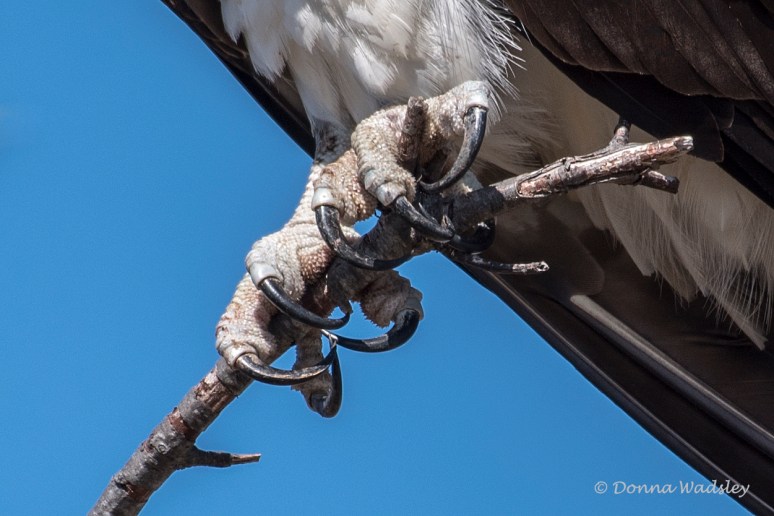
Osprey Talons
.
All raptors have four long talons, three in the front and one in the back.
But only the Osprey has specialized talons. When it plunges to seize a fish, the Osprey’s outer front talon rotates to the rear, giving the Osprey two grasping talons front and back. Each talon is also lined with tiny spines on the bottom to help the Osprey hang on to their slippery prey.
A truly skilled fisherman!
.
.
Tree Swallows and Eastern Bluebirds
.
The Tree Swallows have also returned. I found a couple dozen swooping the farm fields at Eastern Neck NWR, with a few trying to take control of a nesting box, much to the dismay of a pair of Eastern Bluebirds.
.
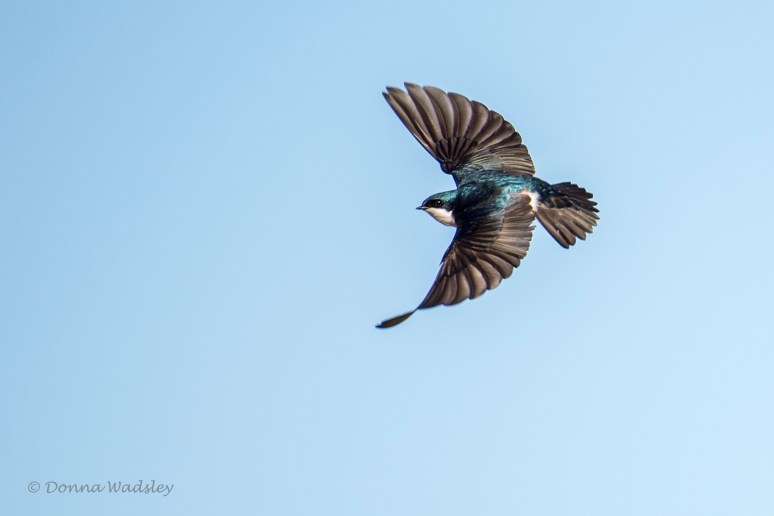
Tree Swallow (male)
.
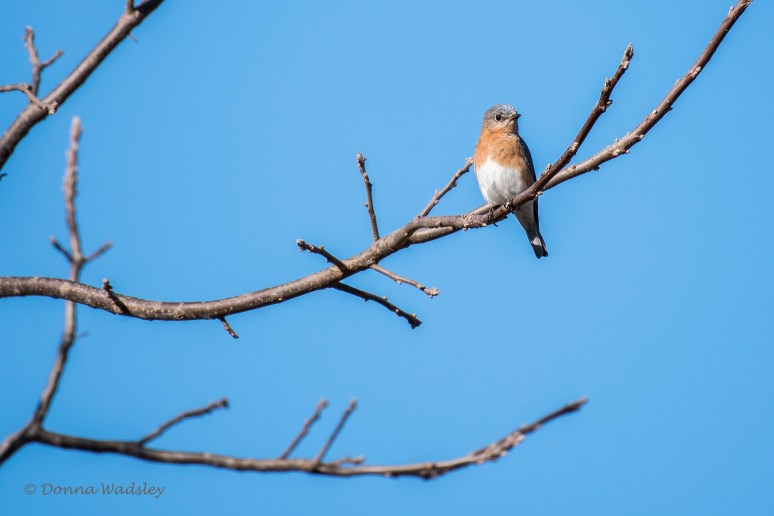
Eastern Bluebird (female) not too happy with the Tree Swallows
.
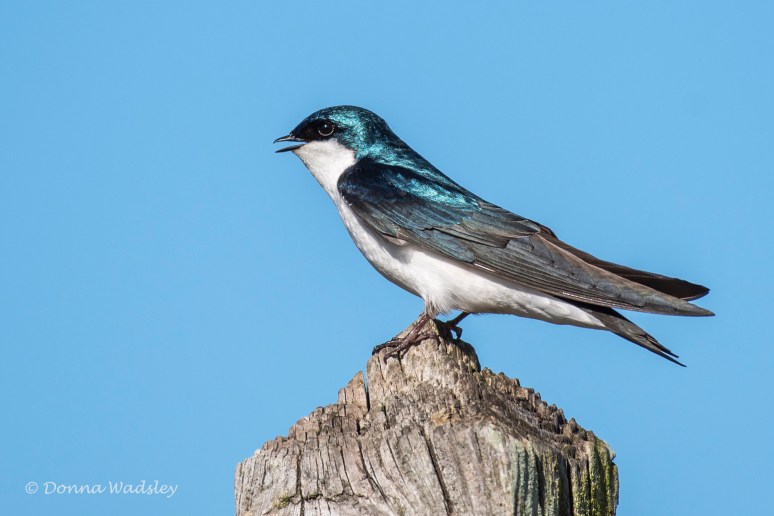
Tree Swallow (male) on top of nesting box post
.
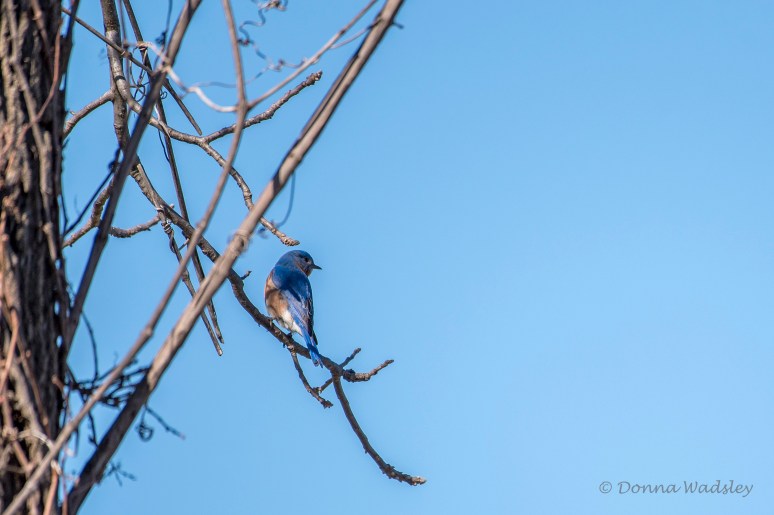
Eastern Bluebird (male) contemplating his next attack
.

Tree Swallow (male) telling off a Bluebird
.
Hopefully the bluebirds are back in control today; they were there first and the box is for them. 🙂
(Photos taken at Eastern Neck NWR March 21, 2022)
.
.
Eastern Phoebes Are Back!
.
After leaving the causeway and venturing into Eastern Neck NWR, one of the birds I was very excited to see and hear was the Eastern Phoebe. They are one of Maryland’s earliest returning migrants.
.

Eastern Phoebe
.
I stayed still for a bit to watch its behavior and listen to its name-sake “fee-bee” call. The curiosity of me flushed out two more!
.

Eastern Phoebe
.

Eastern Phoebe
.
I was a Phoebe — nothing more —
A Phoebe — nothing less —
The little note that others dropt
I fitted into place —
I dwelt too low that any seek —
Too shy, that any blame —
A Phoebe makes a little print
Upon the Floors of Fame —
— Emily Dickinson
.
(Photos taken at Eastern Neck NWR March 21, 2022)
.
.
Birds at the Causeway
.
I visited Eastern Neck National Wildlife Refuge this past Monday morning and first stopped at the causeway to the refuge’s entrance to see what might be there.
Off in the distance there were 24 Tundra Swan, they made me smile. A few stragglers still or maybe these had stopped at the refuge while enroute north for home.
No ducks. Just a few Ring-billed Gulls in the sky, along with three Osprey and an Eagle.
I continued my way into the refuge for two hours and then stopped again at the causeway on my way out.
A couple dozen Ring-billed Gulls were hanging around the mudflats area in the water, waiting for the tide to finishing lowering so they could scout the mud for food.
.

“Hey, this is my spot. Move on!”
Ring-billed Gulls
.
A single gull caught my eye as being different.
Welcome to my bird lifer list #256 Bonaparte’s Gull! 🤗💃😊
.
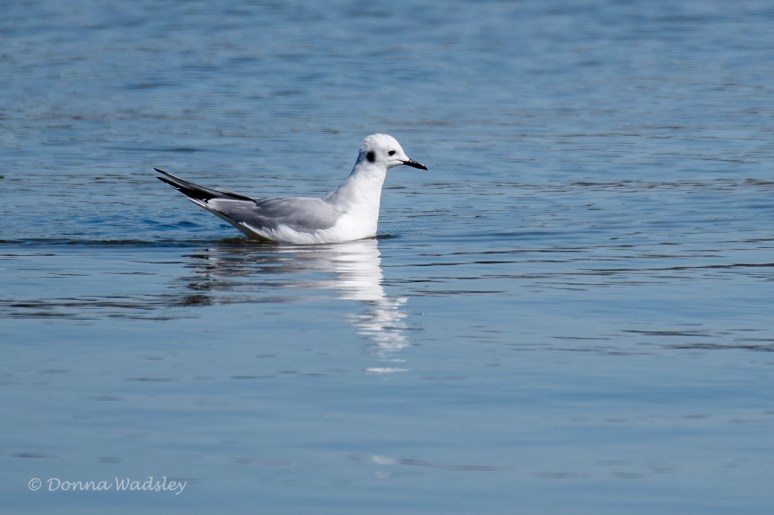
Bonaparte’s Gull (nonbreeding adult)
.

Bonaparte’s Gull (nonbreeding adult)
.
Also wading in the water was a handsome Greater Yellowlegs.
.
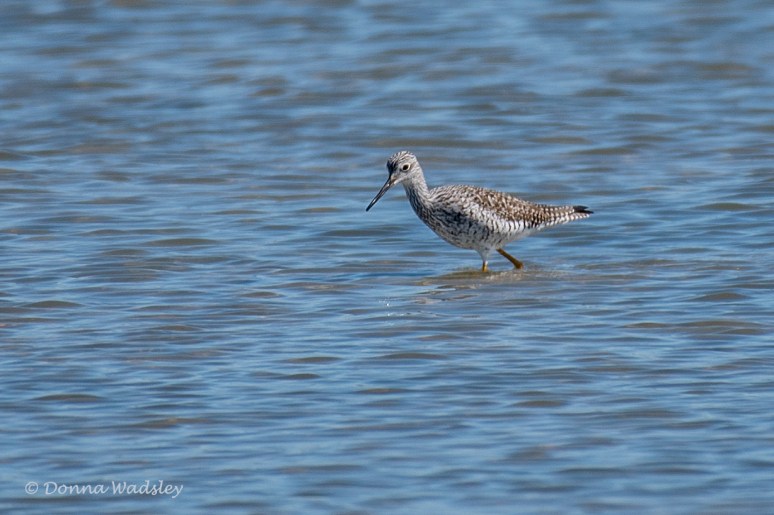
Greater Yellowlegs
.
While searching the other side of the causeway, I heard the Greater Yellowlegs calling as they do when taking flight and luckily spun around to get some flight shots.
.
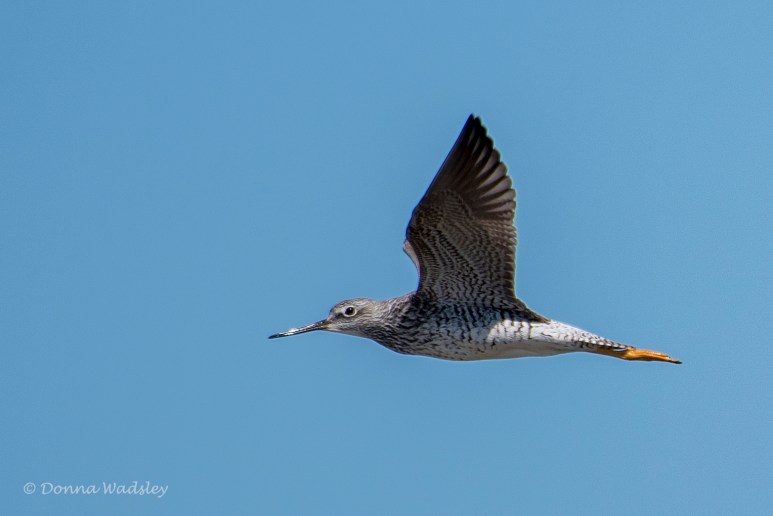
Greater Yellowlegs
.
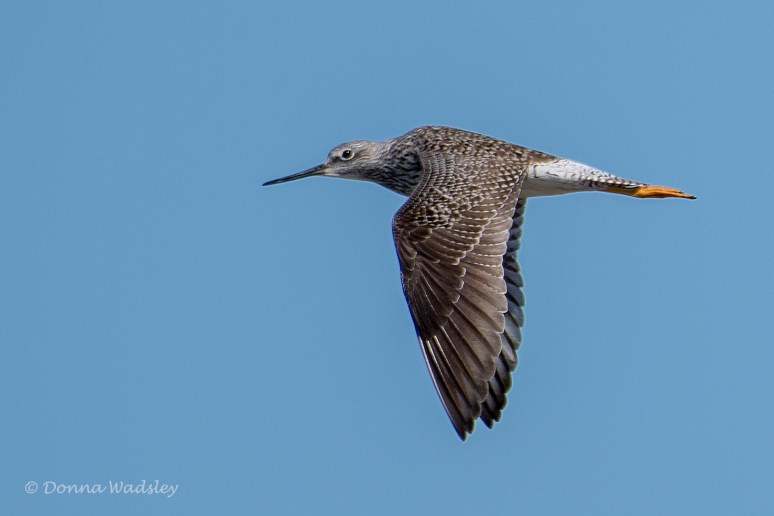
Greater Yellowlegs
.
She was there again, a Belted Kingfisher, sitting on a pole alongside the water’s edge. Pretty gal!
.

Belted Kingfisher (female)
.
And, luckily, this time an Osprey was perched on the nesting platform that was empty when I first arrived.
Note the Osprey’s heavily frayed feathers that took a beating getting here from South America. New ones will be on the molting agenda this season!
.
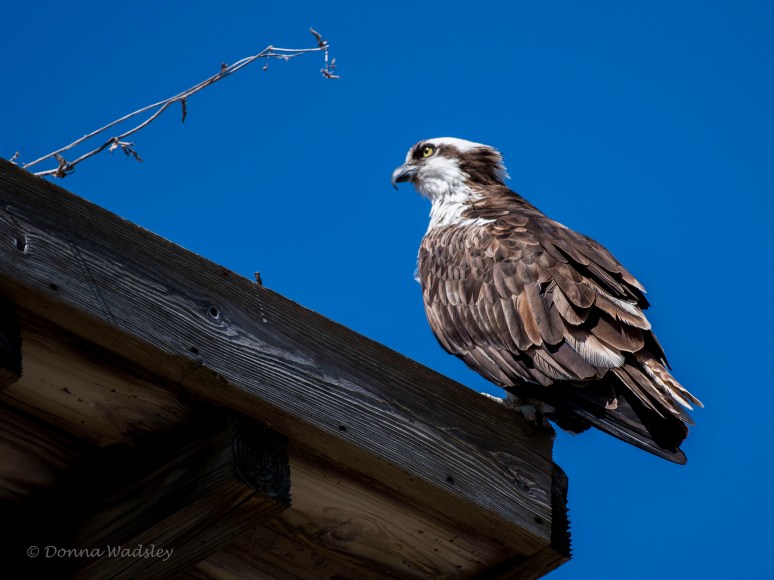
Osprey on a man-made nesting platform
.
It was an awesome visit. I saw, with most getting photographed, a total of 39 bird species. I’ll share some of my favorites of those next post!
.
(Side note: I made some changes to my blog a week ago, and it seems to have caused some of you a problem with not being able to comment and/or like one of my posts. I’ve made some more adjustments again before this post. If you are still having a problem, would you please email me at bayphotosbydonna@gmail.com so I can accumulate the issues to go back to WP. Thank you so much, I’ve been very frustrated with this, trying to get it fixed!)
.
.
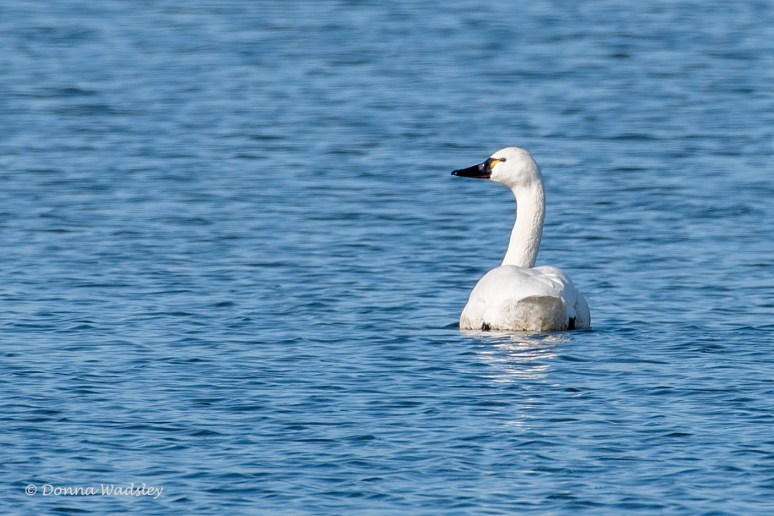
Tundra Swans
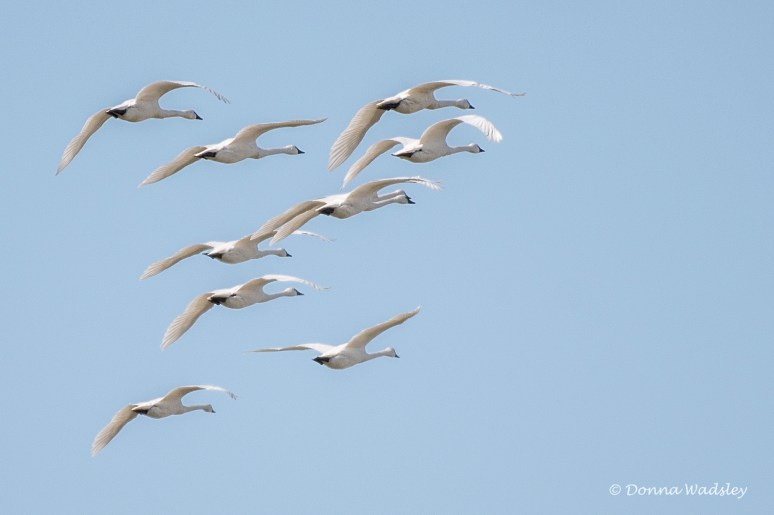
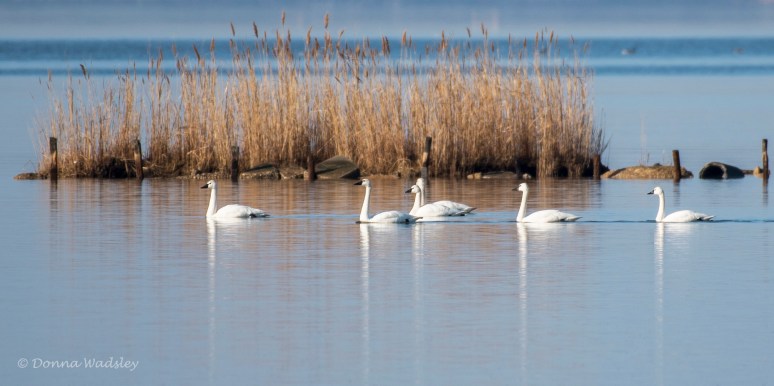
The arrival of our Chesapeake Bay Osprey concurs with the departure of our winter birds, including the graceful, elegant Tundra Swans.
As they make their way back home to the Arctic tundra to breed, here are some final fave photos I wanted to share.
.

.

.

.

.

.
.
.

.

.
.

.

Tundra Swan and Buffleheads
.
Wishing them safe travel back to the Arctic!
.
.
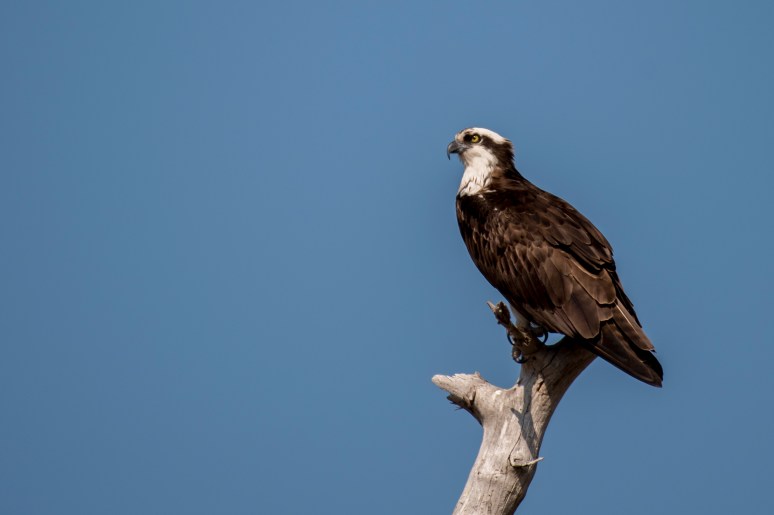
Welcome Back, Chesapeake Bay Osprey
Early to mid March is the ‘official’ time the first Osprey return to the Chesapeake Bay, after spending their winter in South America. By April, they are everywhere, vying for prime nesting locations.
My first sighting greeted me on my arrival to Eastern Neck NWR on March 11th. Last two days, I saw six each day.
.
Osprey
.
Approximately one-quarter of all Osprey in the contiguous United States nest in the Chesapeake Bay region.
The Center for Conservation Biology estimates the Chesapeake Bay’s current osprey population at eight to 10,000 breeding pairs. The world population of Osprey is estimated at fewer than 100,000 birds.
Welcome home, Chesapeake Bay Osprey, we have missed you!
.
.
Robins and Berries Bonanza
I wondered when and pondered who would be devouring my three American holly trees’ prized red berries. I knew someone was going to enjoy them.
Just over two weeks ago, it happened and took me by surprise!
It was American Robins in three days. The first day was just a few Robins, the second day, a bit more. That night the word was out. The third day, it was a chaotic, hungry mob!
Warning: Photo overload promised if you make it to the end of this post…. 😉
.

American Robin #01
.

American Robin #02
.

American Robin #03
.

American Robin #04
.
All those berries required lots of water breaks!
.
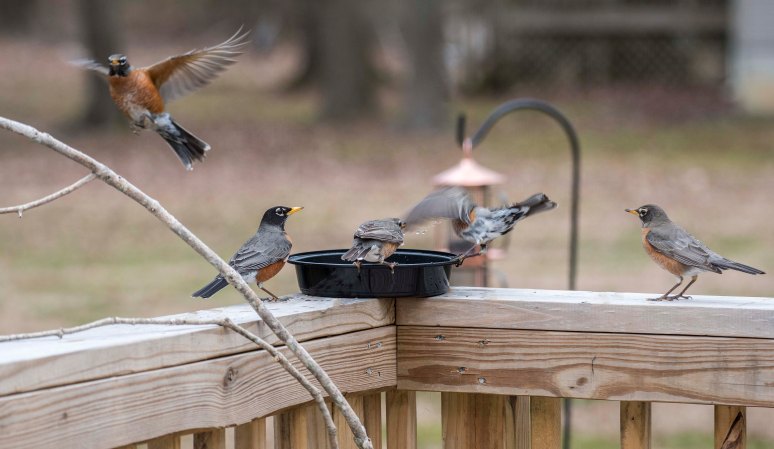
American Robins #05
.

American Robin #06
.
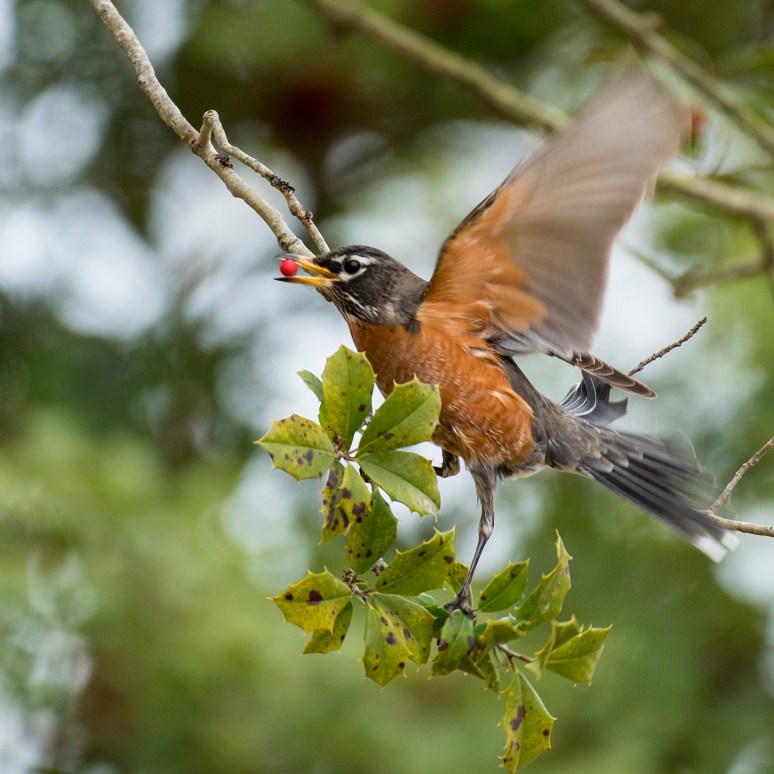
American Robin #07
.
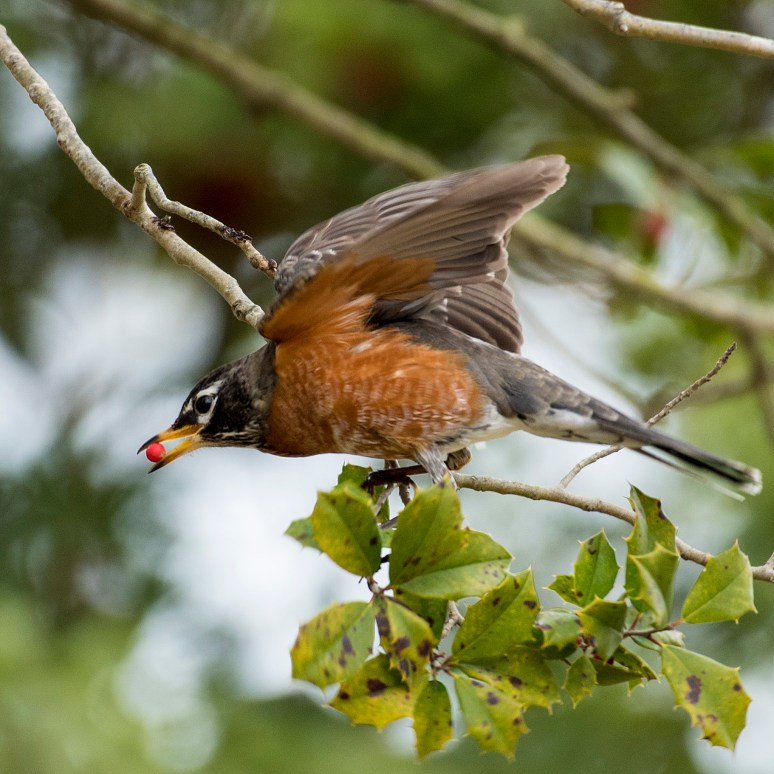
American Robin #08
.

American Robins #09
.

American Robins #10
.

Ten American Robins #11
.
While the trees were invaded, the ground was also covered with Robins eating all the berries that were falling to them.
.

American Robins #12
.

American Robin #13
.
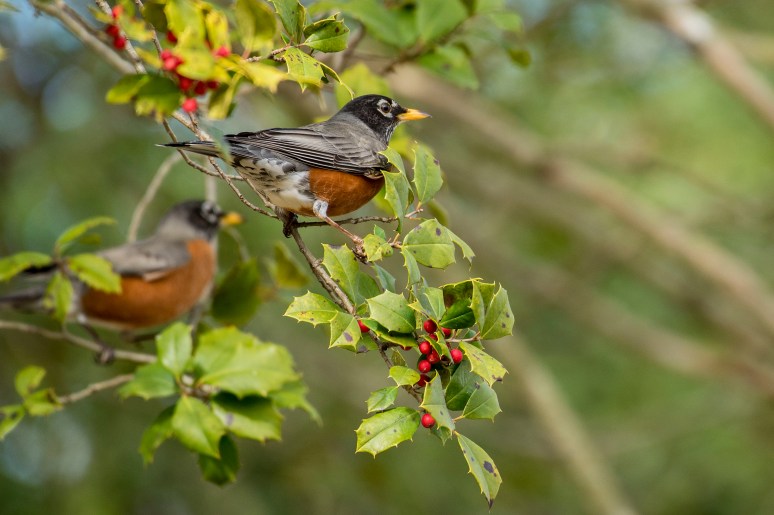
American Robins #14
.

American Robin #15
.
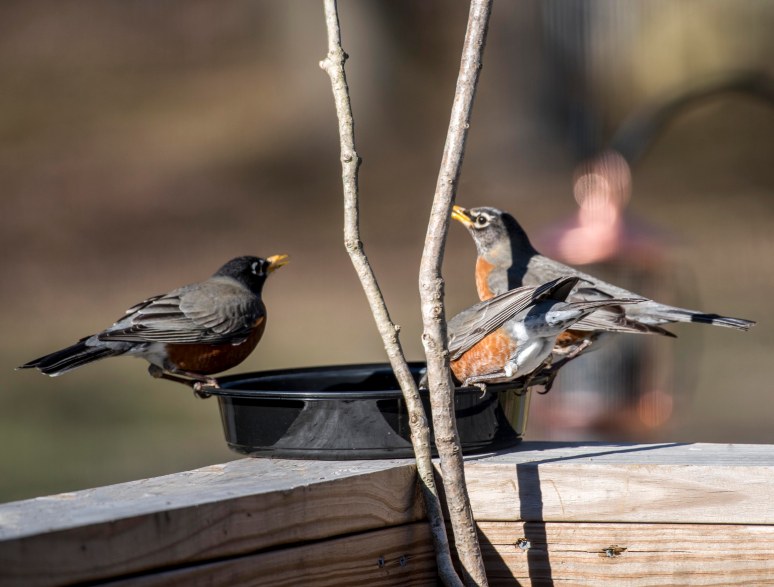
American Robins #16
.

American Robin #17
.

American Robin #18
.

American Robin #19
.

American Robins #20
.
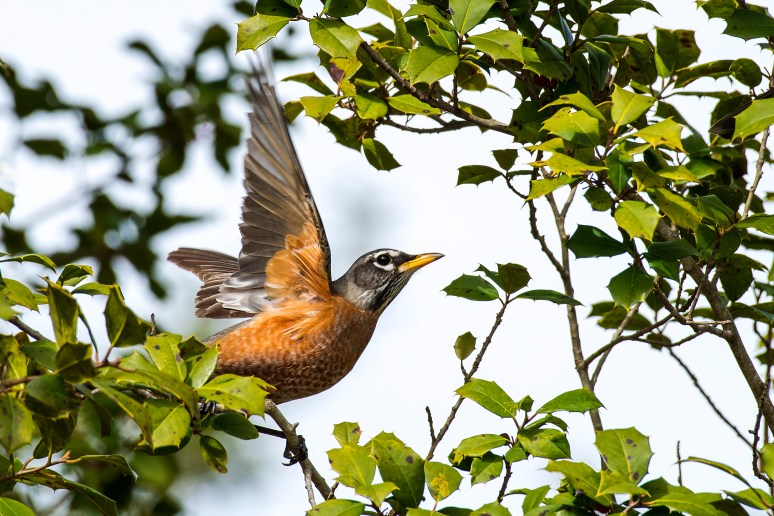
American Robin #21
.
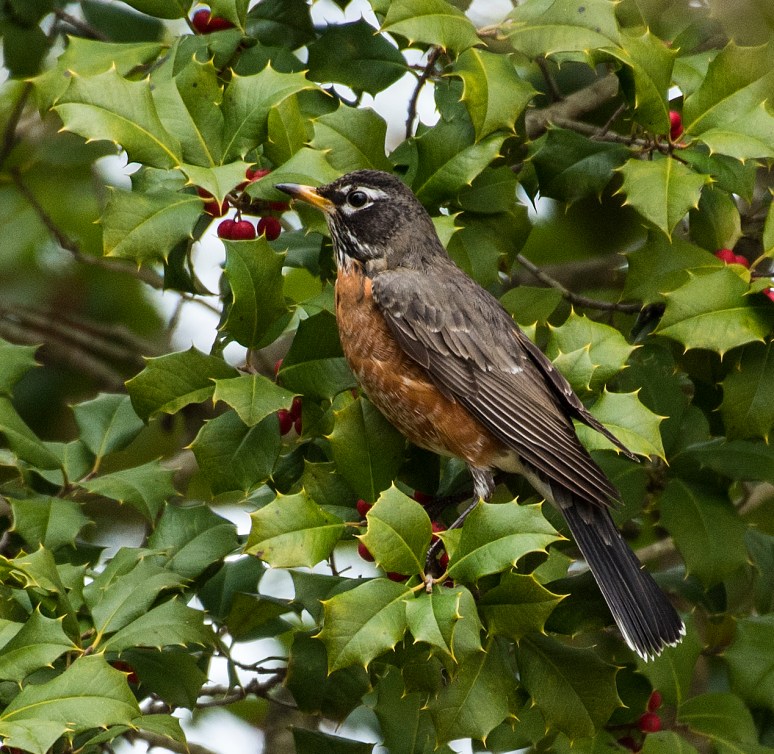
Portrait #22
.

Now You See It #23
.

Gulp #24
.

Black & White Edit #25
.
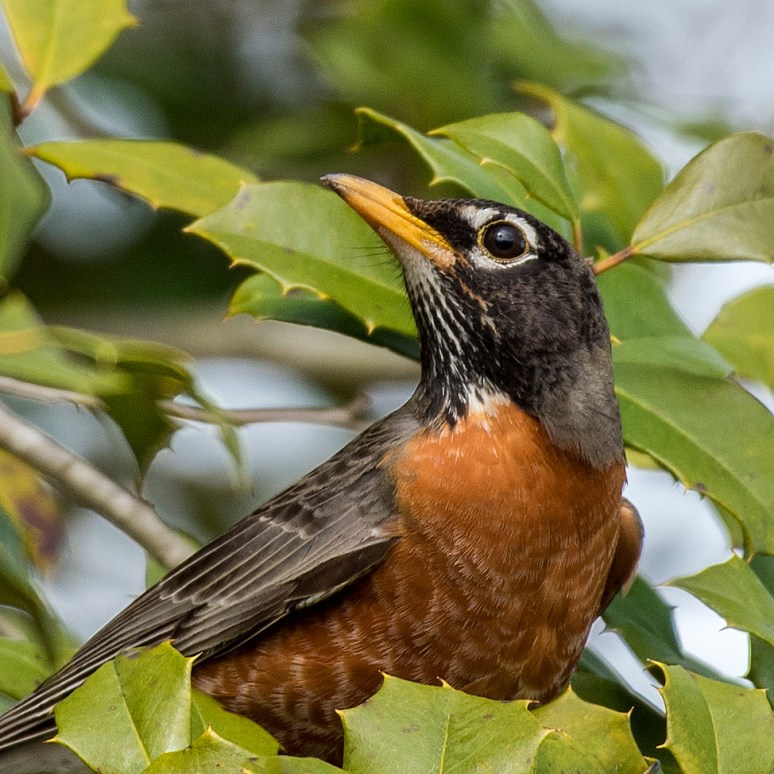
Close-Up #26
.
Yay, you made it to the end, thank you!
Whew, that was a crazy number of photos, and that’s just a sampling of what I took. I was fortunate the berries tasted good, allowing me a clicking bonanza.
I numbered each photo in case there was one you’d like to comment on. 😉
.
.
Eagle On My Lawn
.
Two days ago, as I heard a loud “whoosh” and saw all the birds at the feeders and in the trees scatter in flight; my husband hollered, “Eagle!” from the other end of our house, and I heard him hurrying down the hallway.
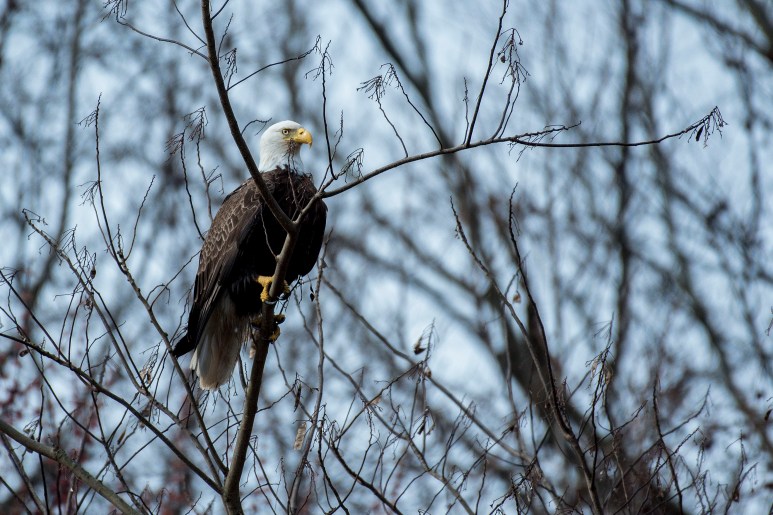
I jumped up, grabbed my camera, and we went out the back door and watched an immature Bald Eagle swoop down and back up over an adult Bald Eagle sitting on our lawn, eating a 10:00 a.m. meal. 😲
Click click click! I shot off quite a few. I felt good with them, so now I needed to get closer.
I ran back in and through our house to the garage, then back out the side door, and slipped behind my husband’s truck, putting me much closer to the Eagle.
I held my breath and clicked off even better photos.
(Note: To keep from being too squeamish, I removed part of the meal image at processing.)
.
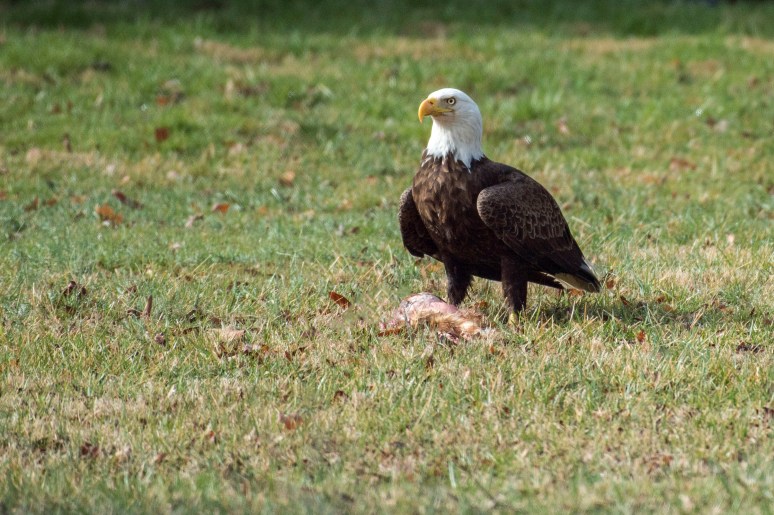
Bald Eagle on our lawn
.
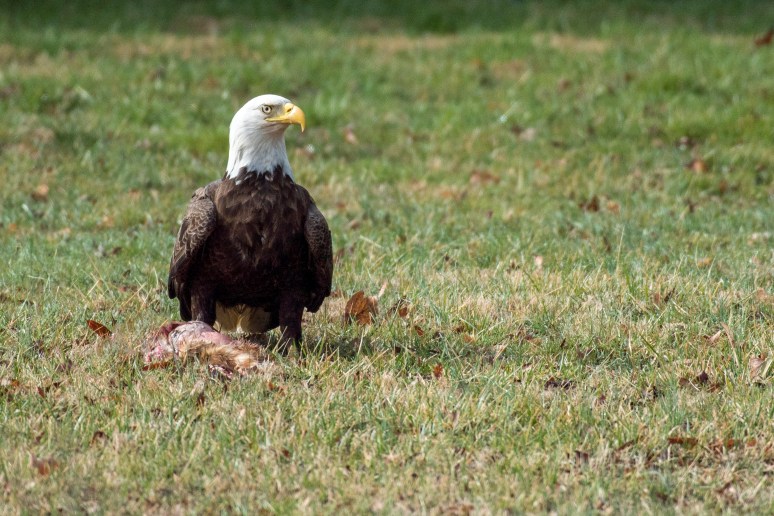
Bald Eagle
.
By the way, did I mention this Eagle was on our lawn? 🤔 😁
.

Bald Eagle stare-down
.
Well, you can imagine my excitement had the Eagle on alert. It took off, but surprisingly left the meal. I stepped out to see where the Eagle flew and then spotted the immature Eagle up in a tree, where it had been watching the adult eat. The immature Eagle took flight and followed the adult Eagle.
I kept an eye on the meal from inside the house. Within ten minutes, a Turkey Vulture arrived and began finishing it up. I went back behind the truck to take more photos. Just as quick, the adult Bald Eagle reappeared and flew to a tree overlooking the meal, causing the vulture to go into flight empty-handed.
.
Bald Eagle returns to our yard
.
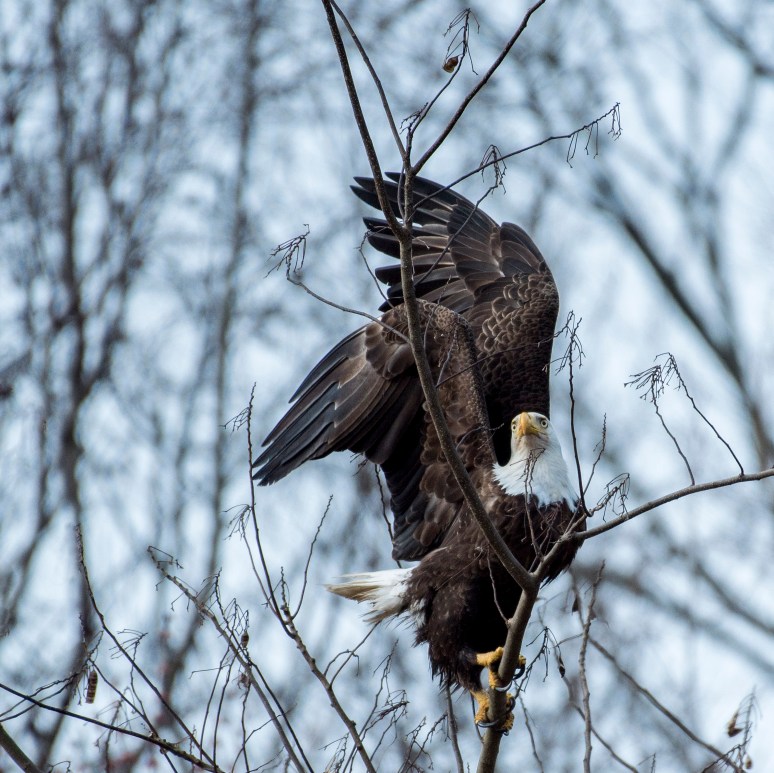
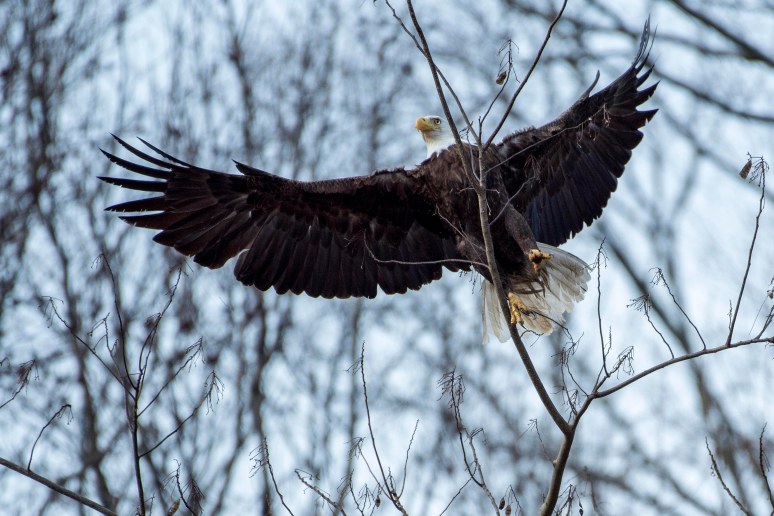
The eagle had to be back for that meal. I didn’t move, ready to click for the take-off.
Sure enough, the eagle went into flight.
.
Bald Eagle going in flight
.
Bald Eagle going into flight
.
With trees in the way, I lost focus on the eagle, as it swooped down. The eagle acted as if it was going to grab what was left but didn’t, just swooped back up and left.
I kept watching off and on. A Turkey Vulture finally had the nerve to return and was able to finish it safely.
I think it is safe to say my husband and I will certainly never forget this eagle encounter!
.
.
Eastern Bluebirds
.
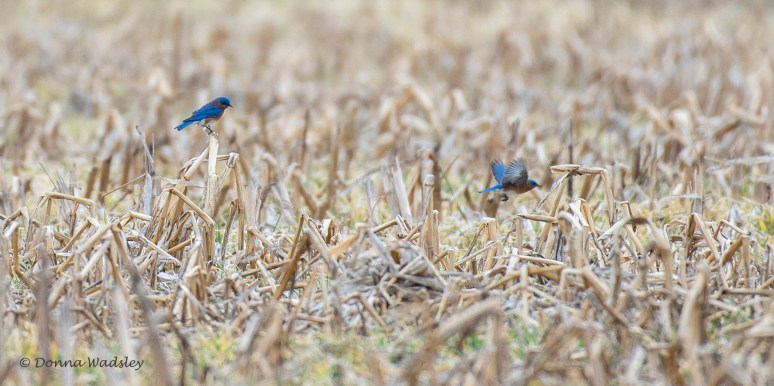
A gallery of Eastern Bluebirds to brighten your day!
.

Eastern Bluebird (female) perched on an Osprey platform
.
Playing in the Corn Fields
.

Sittin’ in the Wind
.

Viewing the Sunset
.

Blending In
.

Going Places
.
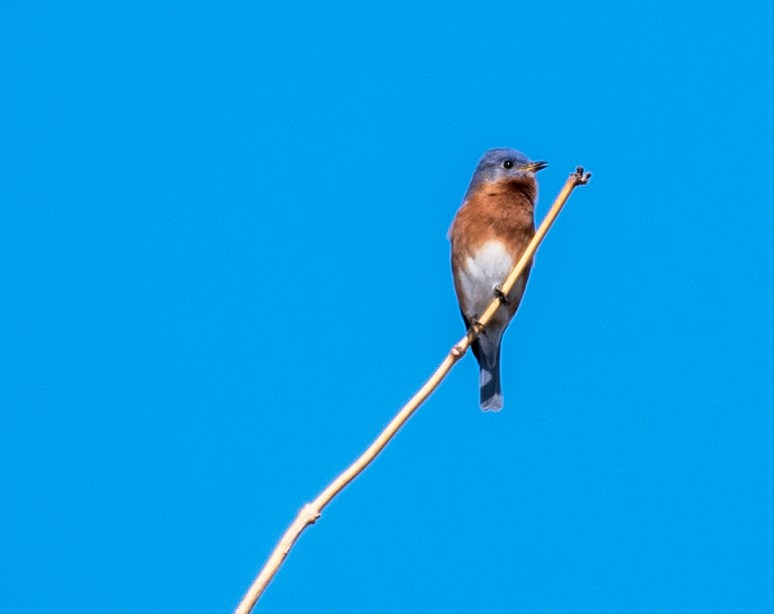
Singing A Song
.


 Bay Photos by Donna