
Ruddy Turnstones
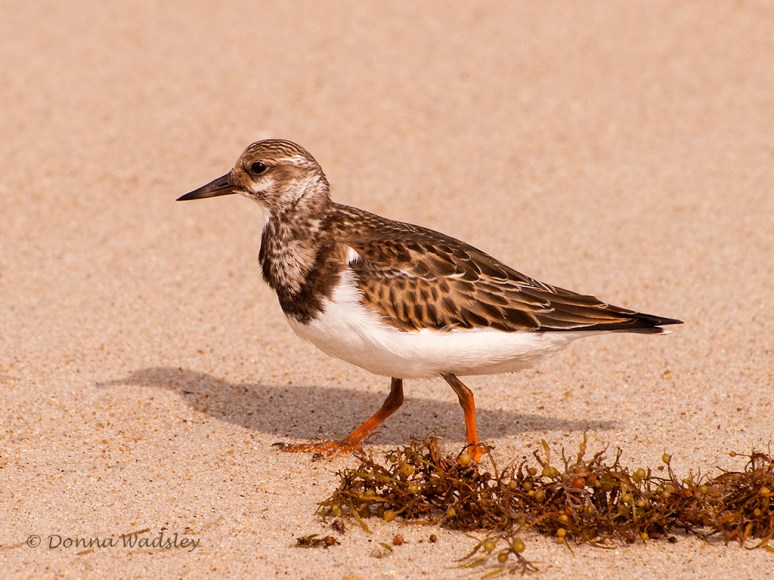
A medium-sized colorful sandpiper, Ruddy Turnstones are easily identifiable with their bright orange legs and back’s rufous-color pattern that looks similar to that of a calico cat.
Ruddy Turnstones are one of the most northerly-breeding shorebird species, breeding during the summer across the Arctic Tundra, from Alaska to Greenland, on Svalbard, and from Scandinavia to Siberia.
These long-distance migrants then spend their winters along the coastlines of the United States, Central America, South America, Australia, Western Europe, Africa, and South Asia.
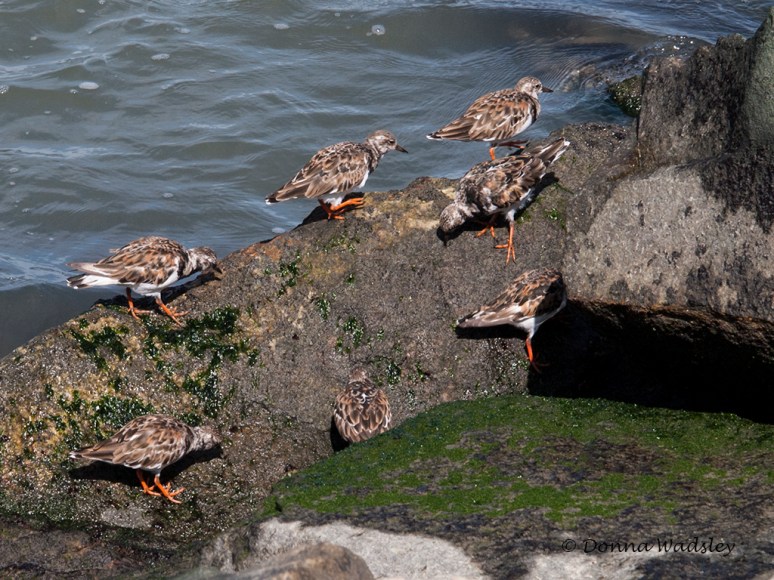
To cover those vast distances between their breeding and nonbreeding grounds, Ruddy Turnstones need to fly very fast, and average between 27-47 miles per hour.
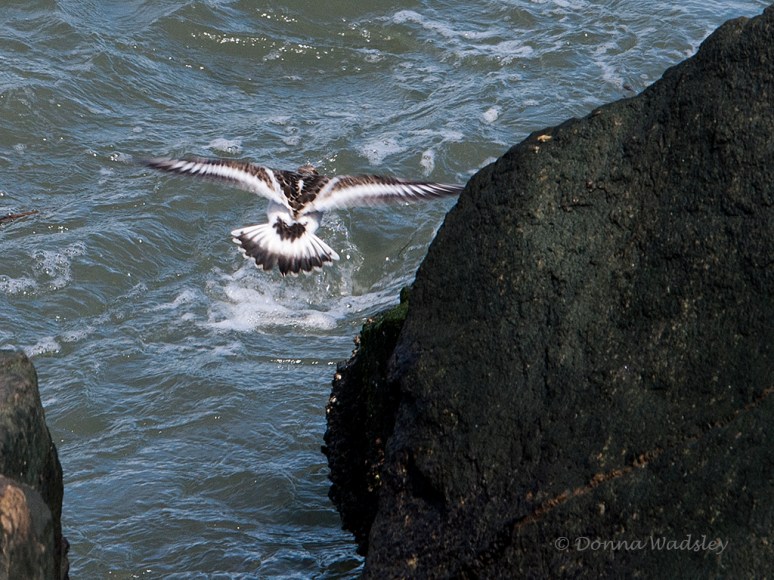
Ruddy Turnstone juveniles need to grow up and learn to fly quickly. They take their first flight when they are about 19-21 day old. Two days later, they begin their thousands of miles’ migration. Not much time!
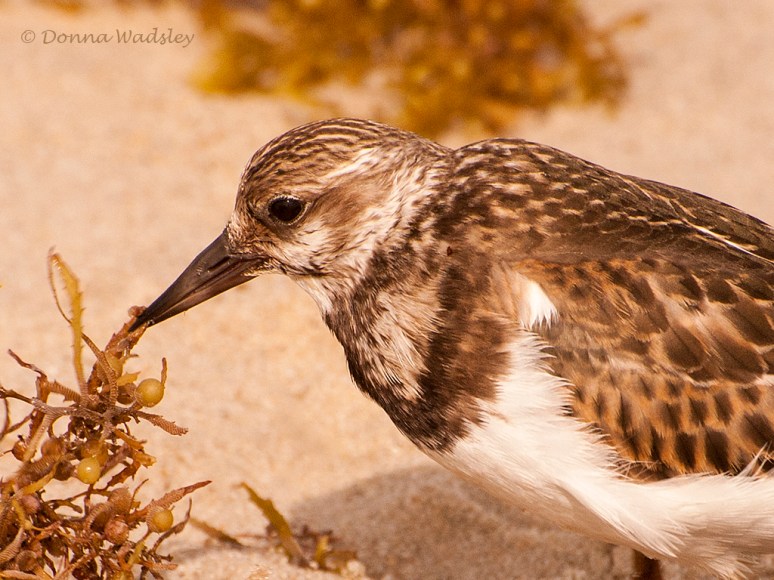
As their name suggests, they use their slightly upturned bill to flip over stones and other objects to find insects and small crustaceans.
Ruddy Turnstones have special feet that are somewhat spiny, with short, sharply curved toenails that help them hold on to the slippery rocks.

I knew there was a reason why they weren’t slipping!
The Ruddy Turnstone is one of two Turnstone species. The second is the Black Turnstone, limited to the Pacific coastline from Alaska to South America.

 Bay Photos by Donna