
Curved Train Tracks
.
Along one of our hikes to see Kootenai Falls, we crossed a bridge over a pair of railroad tracks rounding a curve. It was heavily fenced so no one could throw anything from the bridge. It also prevented taking any photos.
After departing the bridge, I saw a ‘window’ through the heavy vegetation, and it was literally a stretch on my tippy-toes to try to frame the tracks. Smoky skies cover the distant Montana mountains.
.

Train tracks rounding a curve near Libby, MT
.
There’s something intriguing about train track rails with their lines and curves!
Did you know it takes clever geometry to keep train wheels on the tracks around a curve? An article in Popular Mechanics, helps explain.
Train wheels aren’t perfect cylinders. They’re beveled to make them wider on the inside. This means that when the train shifts left or right on the track, the diameter of the wheels can change. But because the wheels are connected by an axle, they still spin at the same rate. Effectively, this means that the wheels will travel different distances per revolution.
The wheel bevels are specifically designed so that when the train goes around a corner it stays on the tracks. The wheels that have to travel a greater distance have a greater diameter, and everything stays aligned. The end result is a train that stays on the tracks.
So this proves all that geometry in school was good for something! 😏
We trekked on past the railroad tracks down to Kootenai Falls which were absolutely stunning. You’ll see, next post!
.
.
Heavens Peak, Glacier NP
When traveling east on the Going-to-the-Sun Road in Glacier NP, one of the first mountains that dominates the skyline for miles and miles is Heavens Peak. It is located in the Livingston Range with an elevation of 8,991 feet (2,740 m).
For those capable, Heavens Peak provides several hiking routes that involve a long day of strenuous climbing to get to the summit.
It’s said each of these routes provide their own version of hell that you must conquer to make it, in addition to keeping an eye out for bear and moose, both who roam in large numbers in the area.
But once you get to the summit, the views are heavenly in all directions.
.

Heavens Peak
.
Heavens Peak has year-round snow. During our end of July visit, the sun’s glare with the smoky skies gave a spectacular sheen to the icy glacier walls. So much prettier than I could capture below. I can only imagine this scene without the smoke and haze.
.

Heavens Peak from a closer viewpoint
.
Dutch explorer Louie Meyer, a member of Lieutenant Colonel George Ahern’s 1890 U.S. Army expedition, is credited with giving Heavens Peak its name. This same peak is called “Red Bird” by the Kootenai tribe, and “Where God Lives” by the Blackfeet tribe.
.
.
Five On The Wing – #14
.
How about some more birds in flight? Here’s another of my series of five birds in flight, all captured this past July in Montana.
.

Cliff Swallow
.
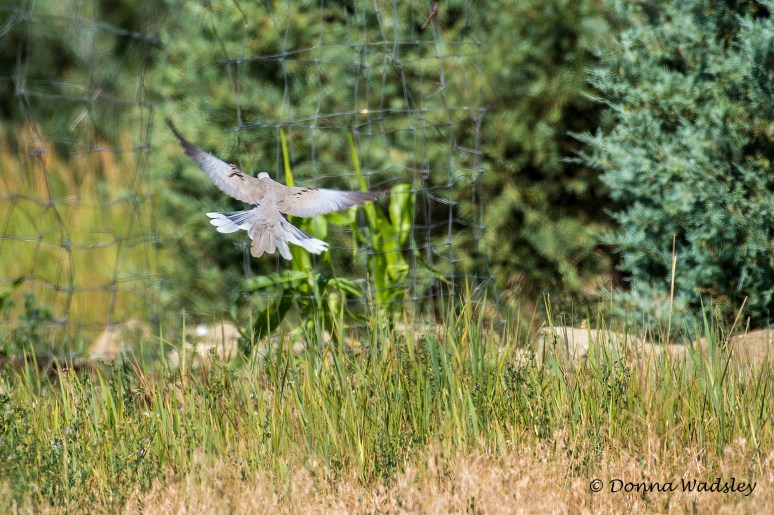
Eurasian Collared-Dove
.
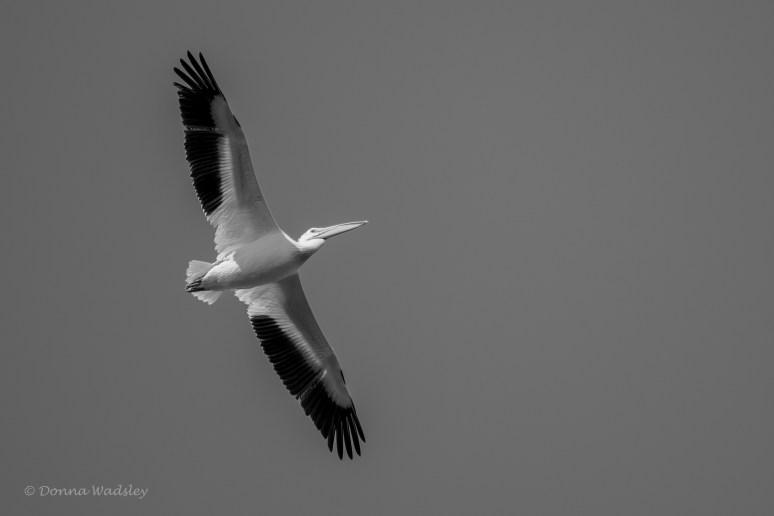
White Pelican
.
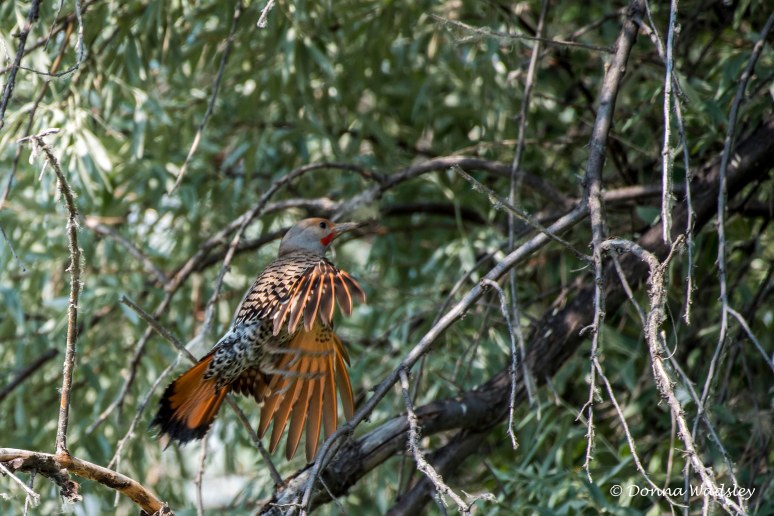
Northern Flicker (Red-shafted)
.

Black-billed Magpie
.
.
Immature Bald Eagle
.
Birds, in general, will look like their adult version by the end of their first year.
However, Bald Eagles take approximately five years to fully acquire their adult plumage. Between birth and adult, they have their ‘dirty-look’ years.
Last week I clicked off several shots of this immature Bald Eagle cruising across the sky. This eagle is either a 1.5 or 2.5 year old. During this year-span, their mottled-look can be quite different from eagle to eagle. Our Chesapeake Bay resident eagles hatch late February through March.
.

Immature Bald Eagle
.

Immature Bald Eagle
.
(Photos taken in Rock Hall, Maryland)
.
.
Three Engine Strong
.
There are several salt-based mineral licks used by wildlife in Glacier NP, but none receive as much use by the mountain goats than the aptly named gulch called Goat Lick, found along Hwy. 2 that winds through the south-end of Glacier NP.
Long ago, a river’s current cut deeply into the easily eroded soil in this area, creating steep drop offs and exposing a mass of gray clay containing gypsum, kieserite and other sulfates craved by mountain goats and other wildlife.
Glacier NP’s mountain goats travel as far as four miles to get to Goat Lick, while others from more widely dispersed areas in the Flathead National Forest travel several times that distance. Approximately 115-165 mountain goats use Goat Lick year-round, with primary use April through August.
.

Goat Lick with the Middle Fork of the Flathead River running through it’s base
.
To the left of the above image is the Goat Lick Trestle Bridge and smoky skies.
.
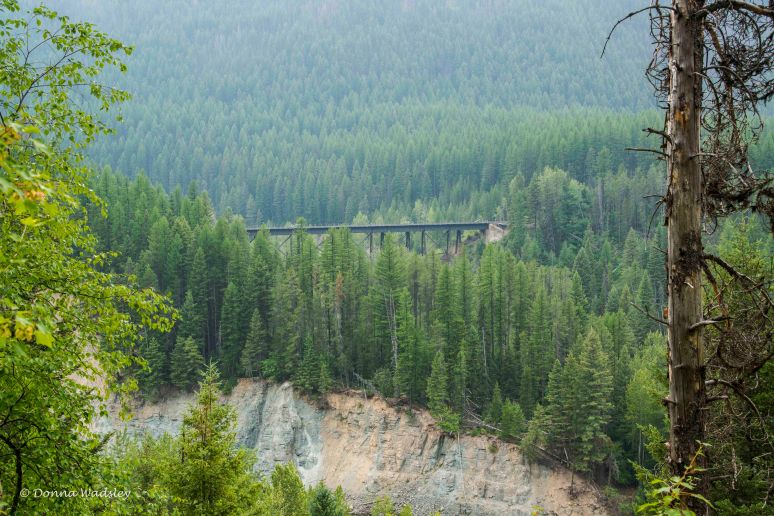
Goat Lick Trestle Bridge crossing Sheep Creek
(You can see better here the exposed gray clay containing those minerals the goats seek)
.
Having the overlook pathway almost to ourselves, we hung around for a while, hoping to spot a mountain goat, but didn’t see any. In the distance though, I heard a faint train whistle and an increasing rumbling sound getting closer…..and closer…..I kept my lens on the trestle bridge.
.
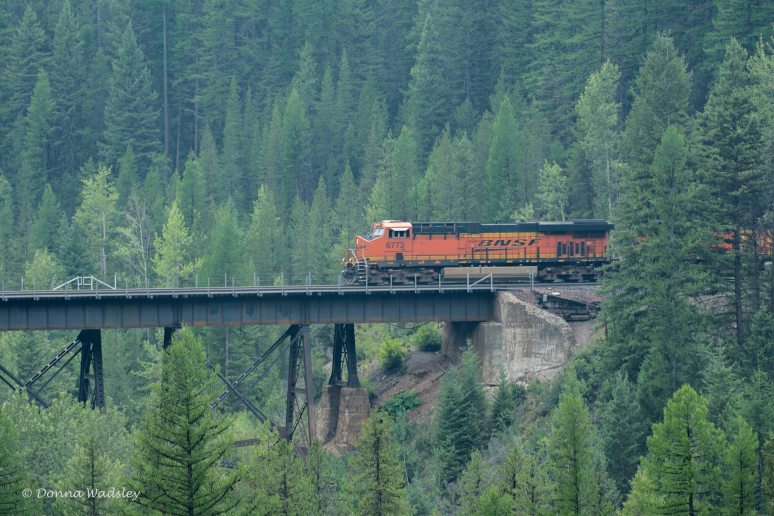
One Engine….
.

Two Engine….
.
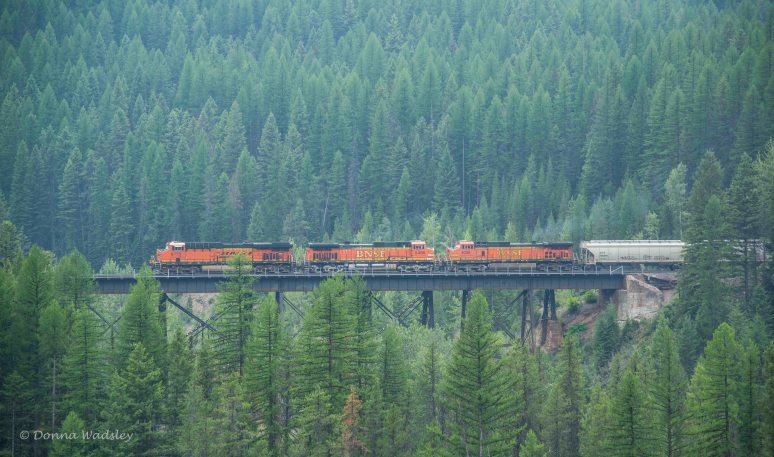
Three Engine Strong!
.
That was a cool ending to our visit here. Right place, right time for sure! 😊
.
.
Somewhere in Kansas
.
Actually, I know where we were in Kansas, a small remote town called Russell, for an overnight stop. We had a nice pull-thru away from others, and me with clear view of a few Chipping Sparrows flitting around from the trees to a puddle of water out my window.
Seemed to be a perfect time to stretch my legs! 😉
Alas, no bath-time shots, but I got a cool shot I love of one of the Chipping Sparrows perched on a chain-link fence.
.
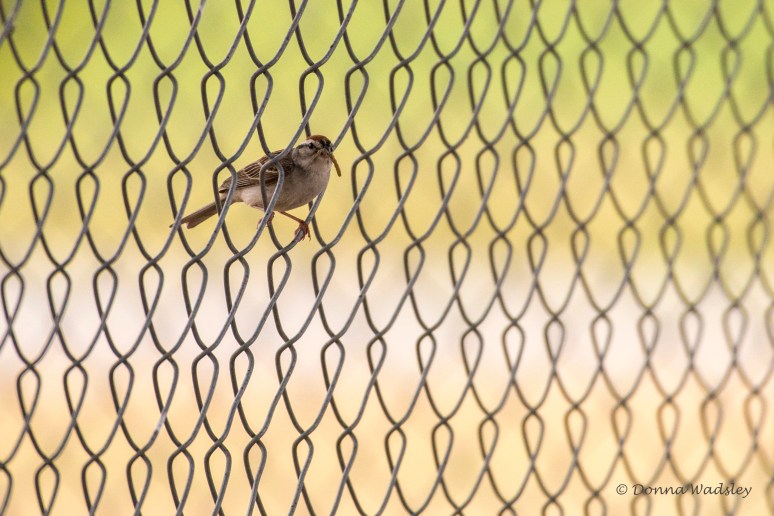
Chipping Sparrow with a caterpillar for dinner
.
Thank goodness those Chipping Sparrows enticed me outside! I heard an unfamiliar bird call and looked up to see the bird crossing the sky.
Welcome to my bird lifer list #241 Mississippi Kite! 🤗 🤗
(I’ve finally hit a snag with me using the classic editor for everything, it’s not allowing me to change my side bar count. Bummer. I’ll work on that. 🧐 )
.

Mississippi Kite – Lifer #241
.
What was even more awesome, the kite landed in a nearby tree, much to the chattering delight (or scolding!) from another Mississippi Kite already perched there.
I couldn’t get any clear shots of both in one frame nor could I see a nest; but there was some serious discussions going on.
Then just as quickly, the landing kite went into launch mode and was back in flight.
.
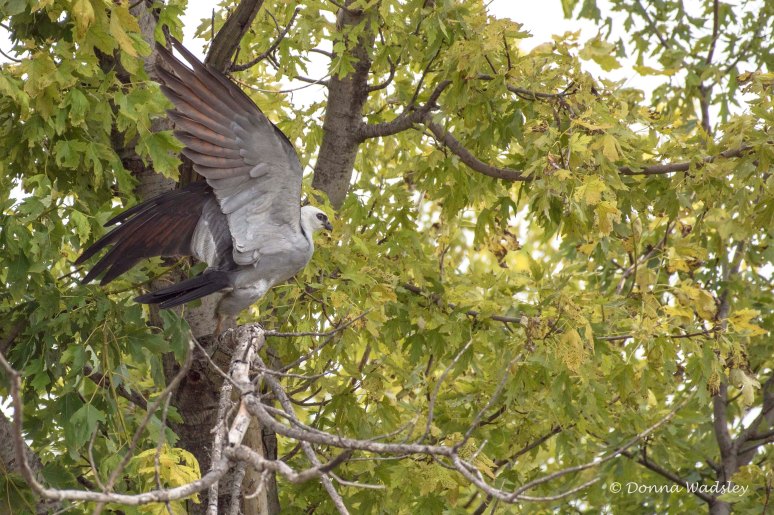
Mississippi Kite
.

Mississippi Kite (my favorite shot!)
.
It flew to another tree further away. Maybe where it was more quiet? 😉
.

Mississippi Kite relocating to another tree
.
I left them be and was headed back to our site to get our dinner going when I heard one of the kites back in the air and watched it land on a wire closer to me. Awesome!
.

Mississippi Kite
.

“What’s with this lady? You’d think she’d never seen the likes of me before.”
.
This small raptor is quite the beauty, isn’t it?!!
Hey, you may have noticed my blogging slowdown. Hopefully, you’ve missed me! 😉 We’re back home in Maryland; and, oh boy, I’ve been busy with a long list of catching up to do.
I still have some summer travel photos to post, but I thought I’d share a few cool facts for those that followed along.
We journeyed 16 weeks through 16 states for about 12,000 miles (RV 7,000; car 5,000) from sea level to 10,947 feet and back.
AND I cannot forget….counting this kite, I added 21 new lifers to my bird list! Woohoo!! 💃🤗😊
Thank you so very much for tagging along on our summer adventure seeing some of our beautiful country. Your likes and comments have been absolutely wonderful and very much appreciated! Thank you!
.
.
Glacier National Park – A Little Wildlife
.
I had hopes of seeing and photographing my first ever bear at Glacier National Park.
Unfortunately, it wasn’t meant to be. It turned out it wasn’t easy finding much wildlife at all during our smoky visits.
While walking around Logan Pass, I kept my eye on a gentleman off alone, intently scanning the distant elevations with what looked like an expensive pair of binoculars. I figured if he locked on something, there was something to see. 😉 But he kept moving on, walking the paths.
I finally met up and asked him if there were any bears out there. He grinned and said bears was exactly what he was looking for; but he’s been quite disappointed not seeing any recently there, they were probably starting to shelter from the incoming smoke, or heading out along the river areas looking for clearer air while staying fed. He said, “Bears are smart.” I agreed.
So what did I see and capture besides the American Robin two posts back?
One butterfly…..
.

Compton Tortoiseshell
.
One squirrel…..
.

Columbian Ground Squirrel
.
and three deer…..
.

White-tailed Deer (doe)
.

White-tailed Deer (doe)
.

“Well, hello there!”
.
With the conditions and too many people every where we went, I felt fortunate to find these! 🤗
.
.
Scenes Along Going-to-the-Sun Road, Glacier National Park
.
During our Glacier National Park entrance reservation time frame for last week of July and first week of August, we had disappointing smoky skies from the distant wildfires. Here’s two of the days’ conditions.
.

Glacier NP – August 3, 2021

Glacier NP – August 4, 2021
.
Thankfully, our first day into the park on July 27th was the best day, and the day we drove the famous Going-to-the-Sun Road to Logan Pass and back. One way distance was 31 miles.
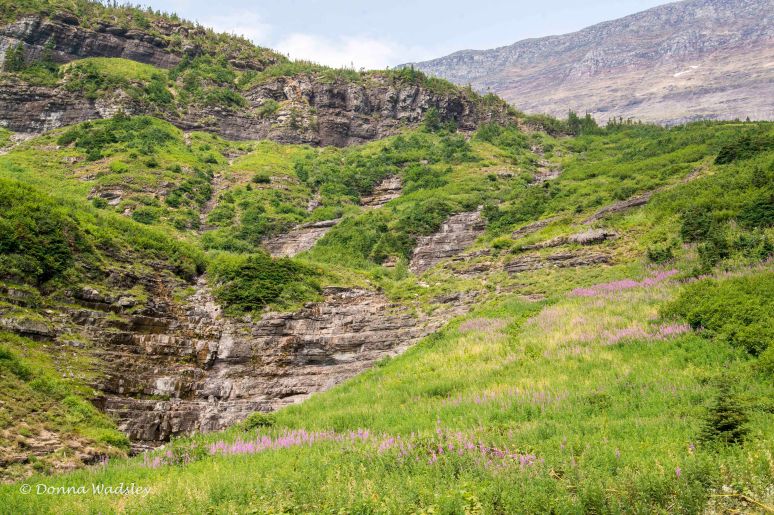
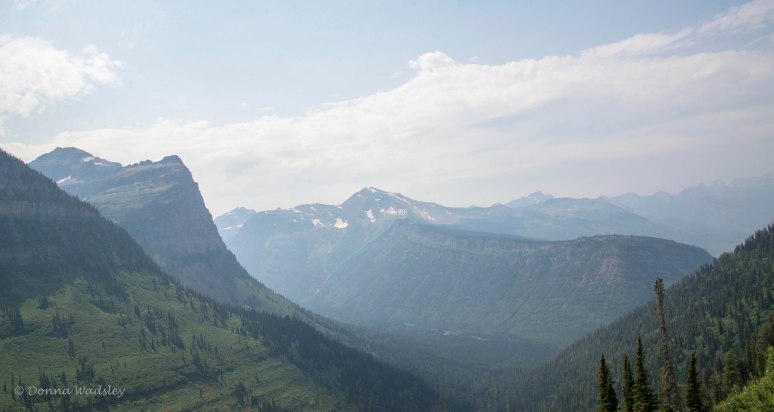
Here’s my series of photos of scenes in the order as shot as we road the side of the mountains and gained elevation into some clearer skies at Logan Pass. Sorry for so many, it was hard to cut down to these! 😏
Enjoy the ride!
.
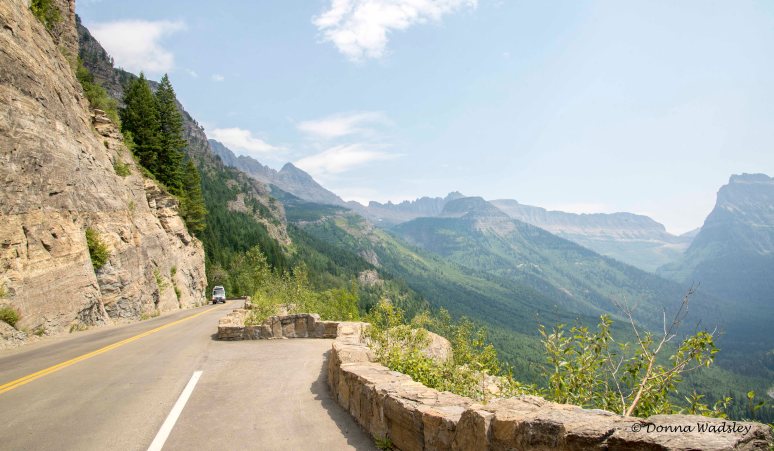
Here we go, we’ve already climbed some elevetion!
.

Heavens Peak (elevation 8,986 ft / 2,739 m)
.
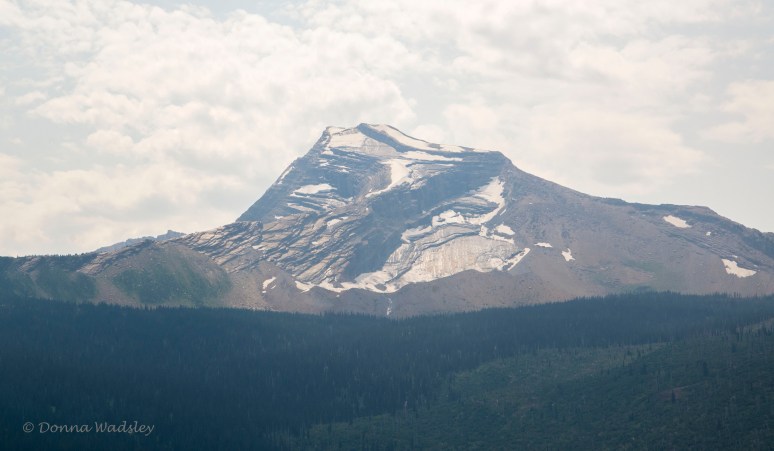
Heavens Peak close-up
.
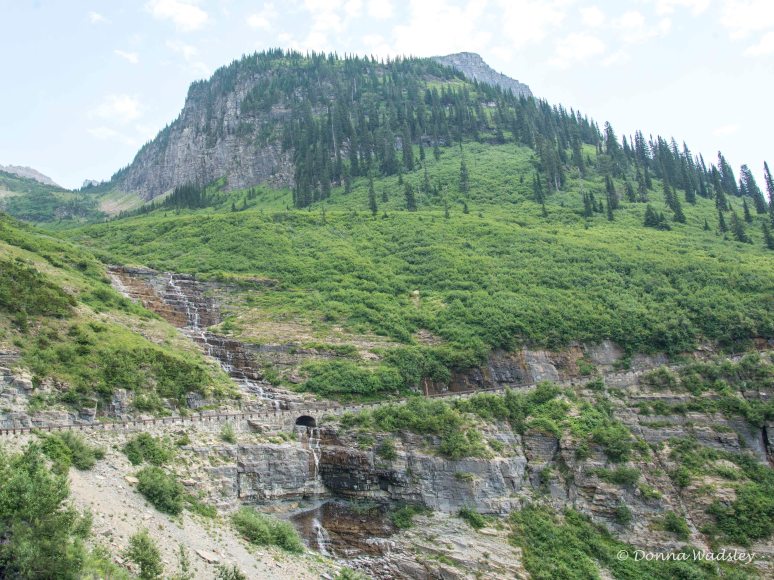
Haystack Creek Falls that we are getting ready to drive pass
(a close-up further down)
.
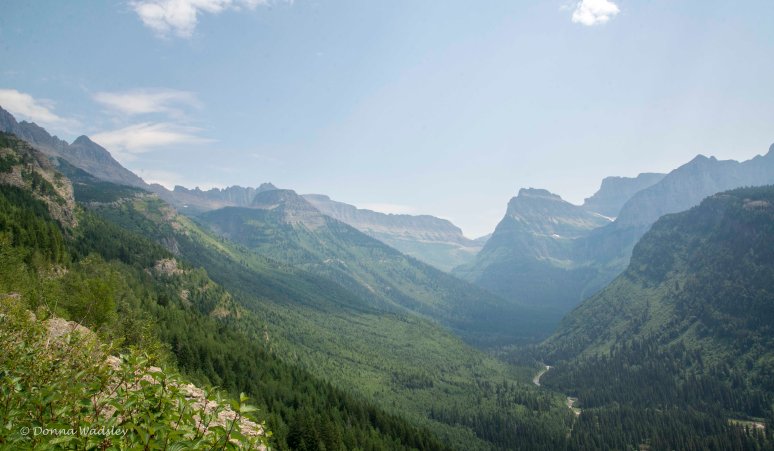
.
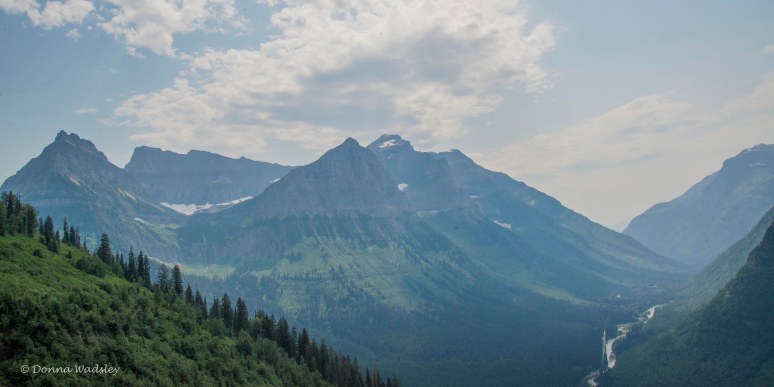
Mount Oberlin and Mount Cannon surrounding a glacier remnant that feeds Bird Woman Falls faintly visible falling between them
(bottom right is a river, not the waterfall)
.
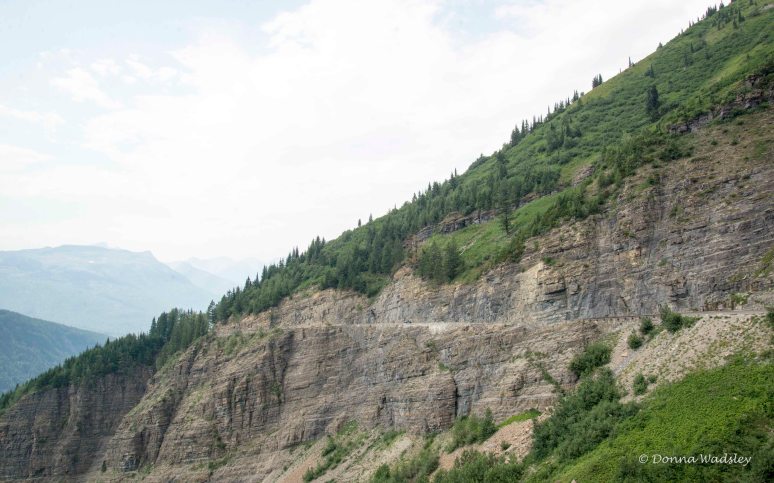
Looking back at the on-the-edge road we just traveled
.

.
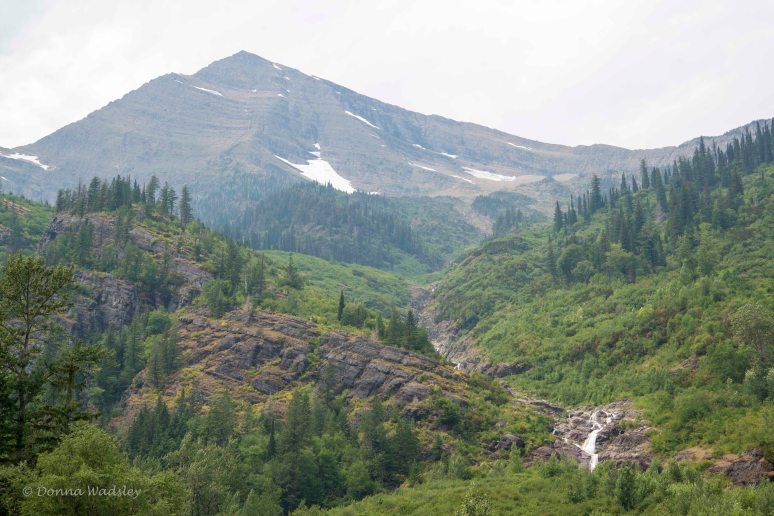
Towards the top of the Bird Woman Falls (shot with my telephoto lens)
.
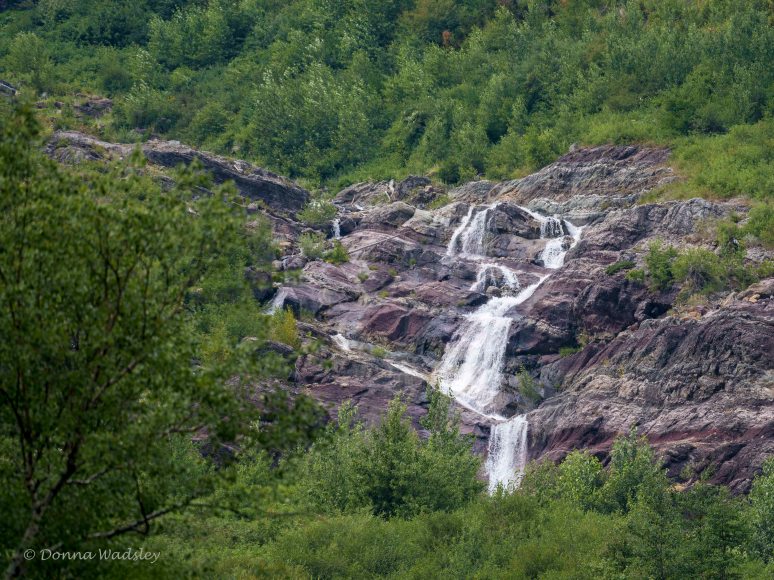
Zoomed in further a small section of the Bird Woman Falls
(I sure do like that name! 😉)
.

.
.
.
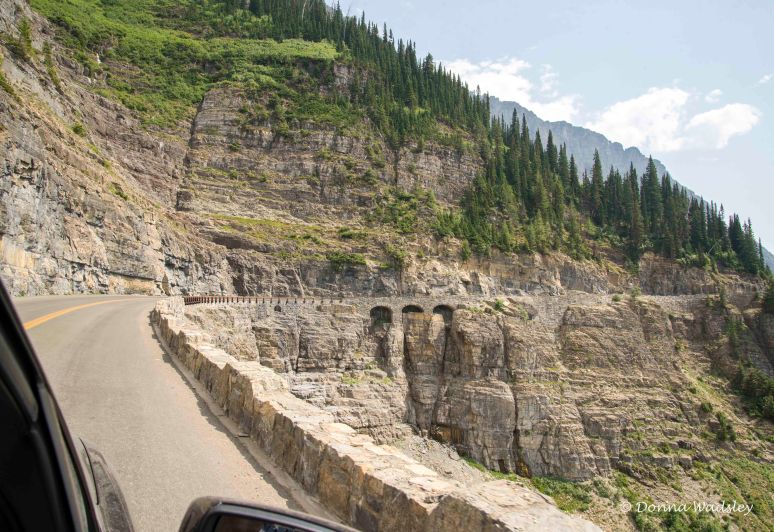
Cruising along, approaching the Triple Arches Bridge
(This three-span, sixty-five foot long bridge was designed in 1927 as an alternative to a large retaining wall. It is constructed of reinforced concrete and was built to span deep rifts in the mountainside where the Going-to-the-Sun Road traverses the continental divide, known locally as the Garden Wall.)
.
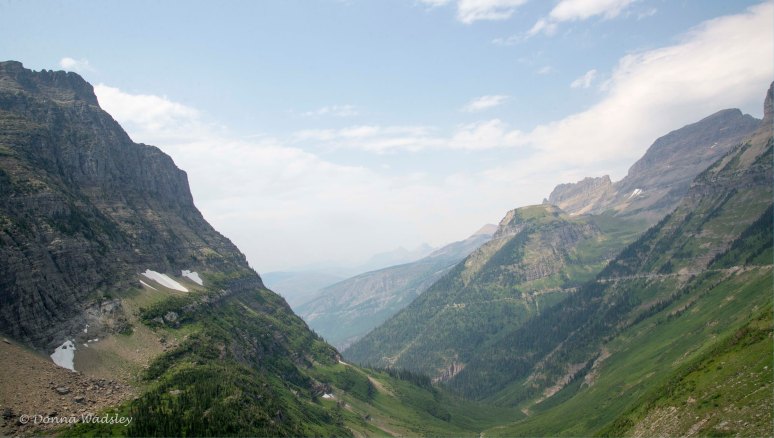
Going-to-the-Sun Road behind us, crossing on right
.
We’ve reached Logan Pass! Elevation 6,646 ft (2,025 m).
.
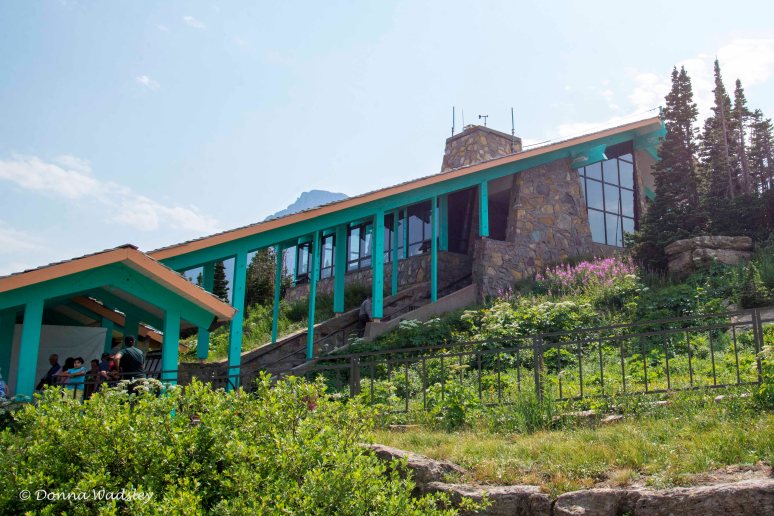
Logan Pass Visitor Center
.
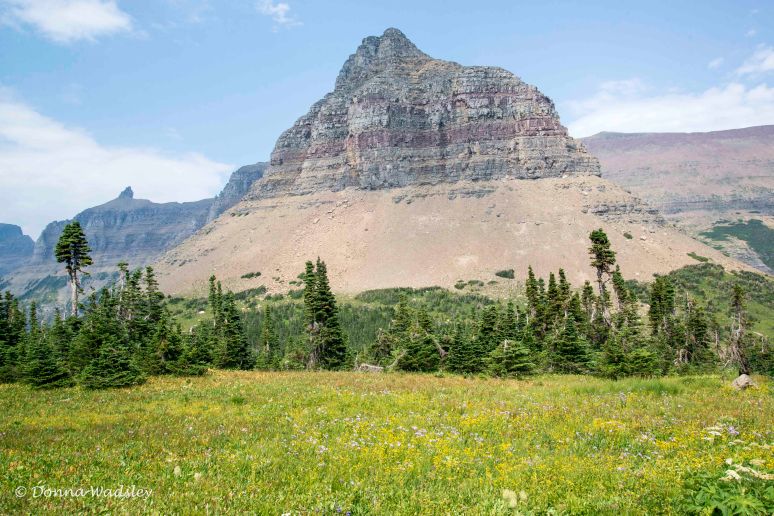
.
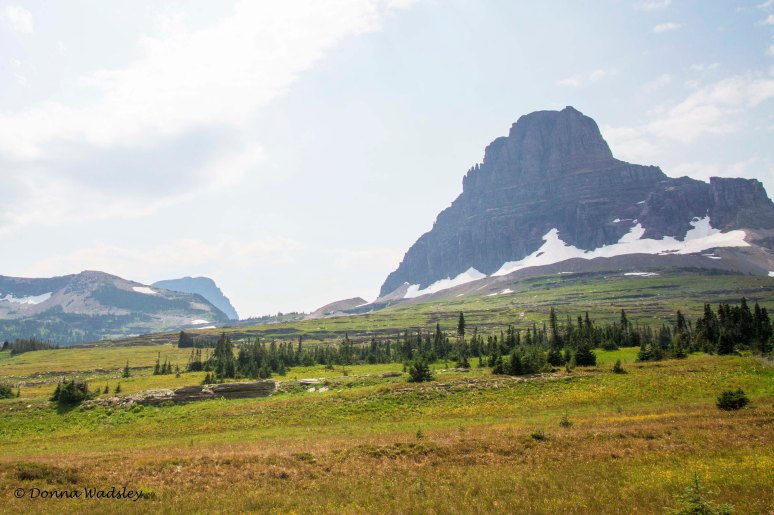
Clements Mountain (8,760 ft / 2,670 m)
.
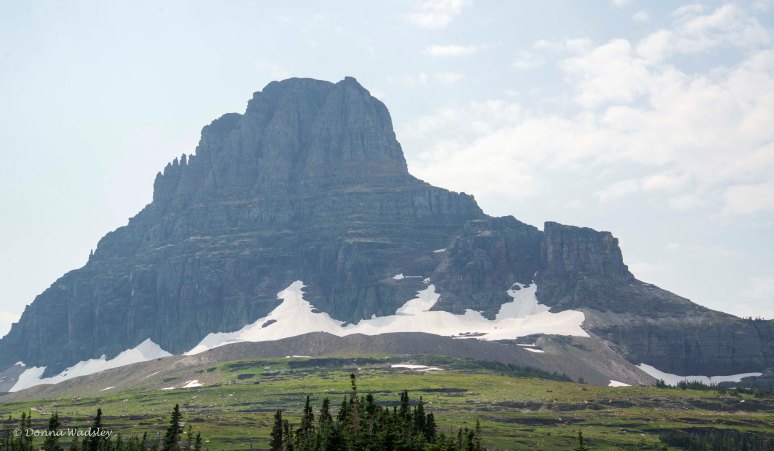
Clements Mountain (8,760 ft / 2,670 m)
.

Reynolds Mountain (9,124 ft / 2,781 m)
.
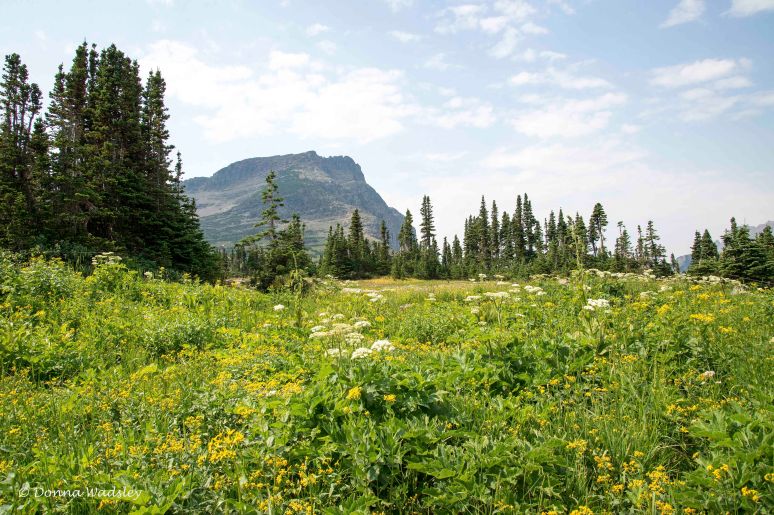
.
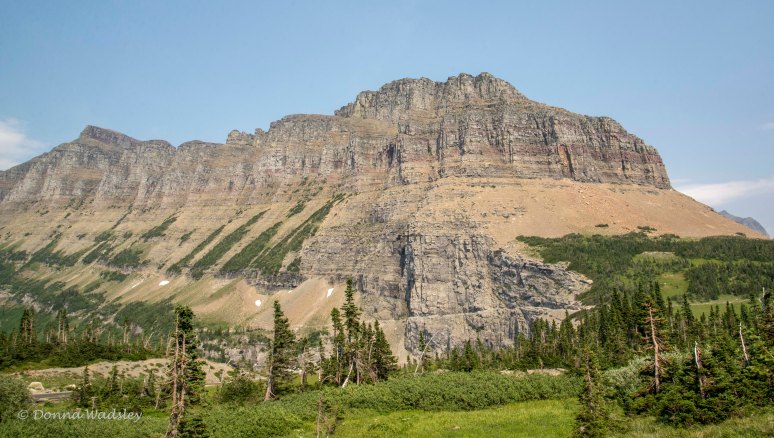
Garden Wall (and part of the Continental Divide through Glacier National Park)
.
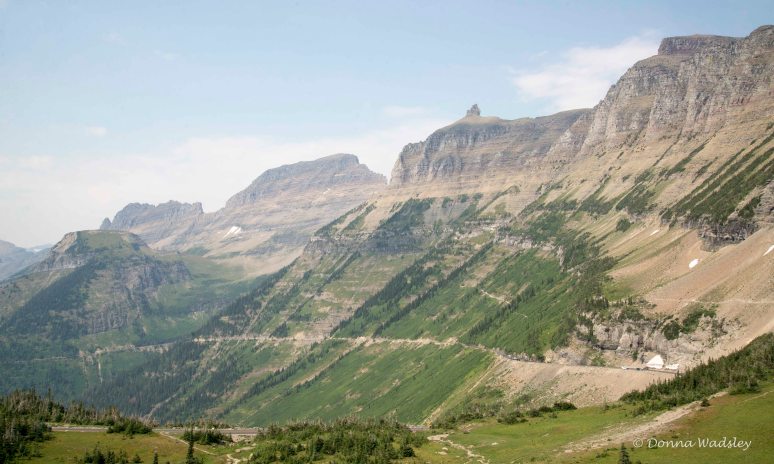
Time to follow back the roads we just cruised, shown here along the Garden Wall.
(Note that white pile of snow; we passed it already but it wasn’t on my side of the car…)
.
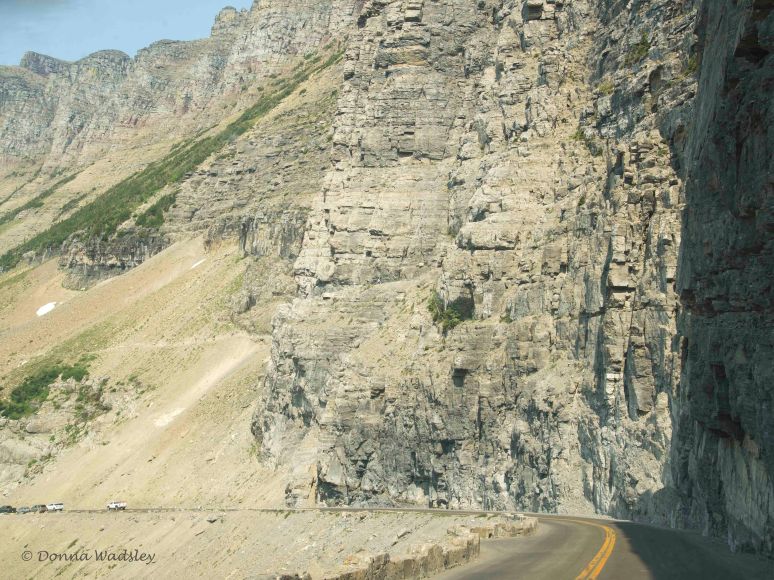
One-third up this photo, note the faint line of a trail across left to right.
Now see next photo…..
.

There’s eleven people walking along that trail in this photo! Yikes!
.
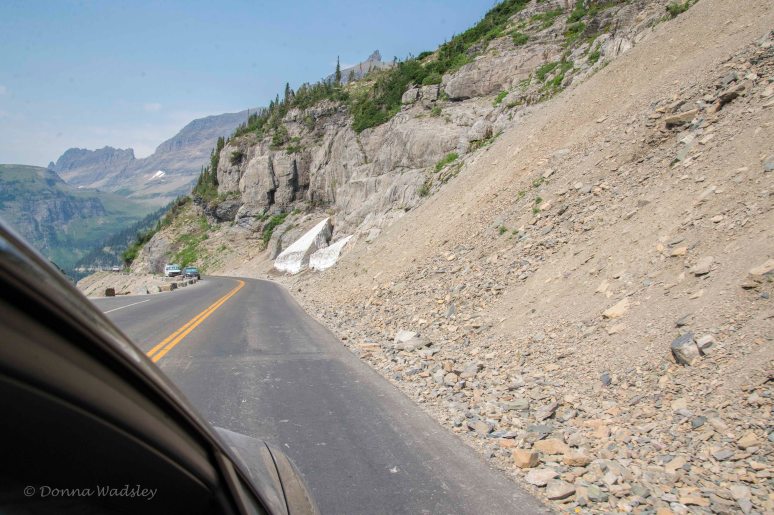
Here comes that piece of glacier I mentioned above that broke off and slid down to the road
.
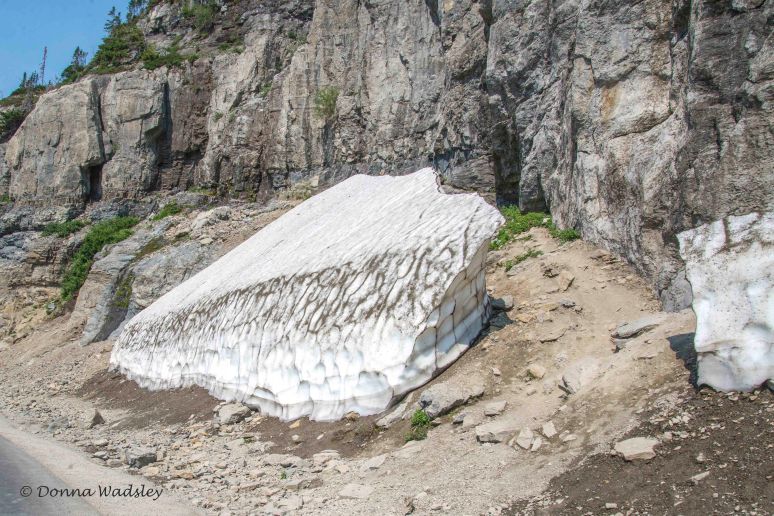
Still melting end of July
.
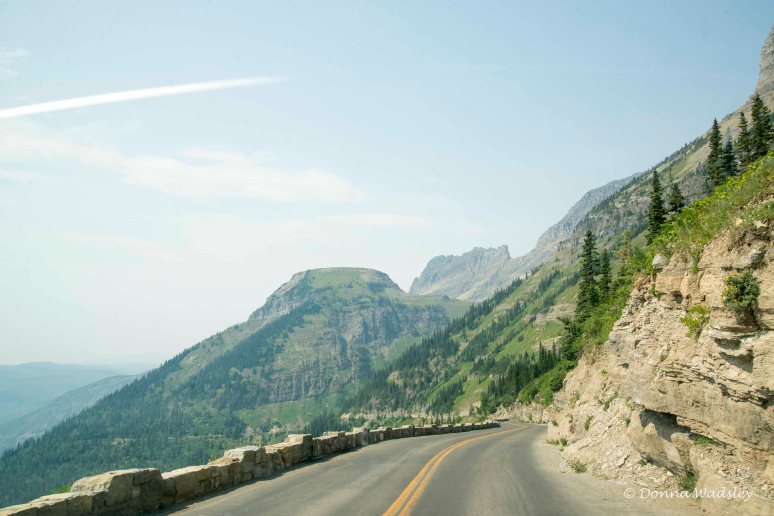
Cruising back to the west entrance
.
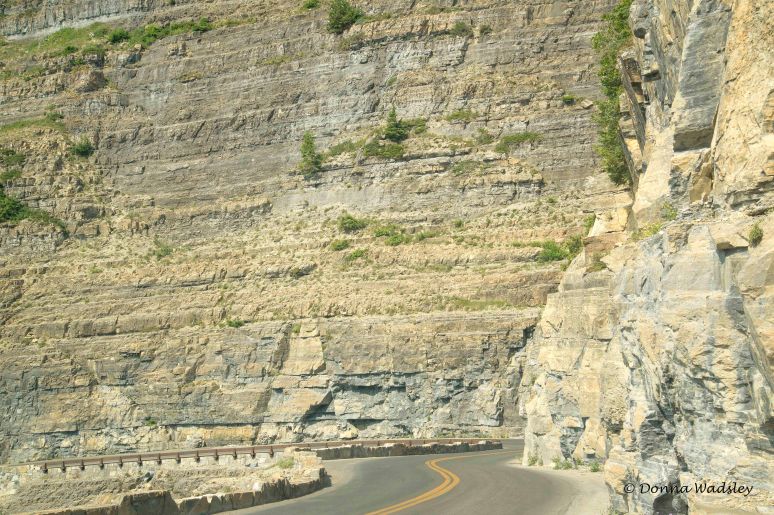
Some of the road was twisting and tight!
.
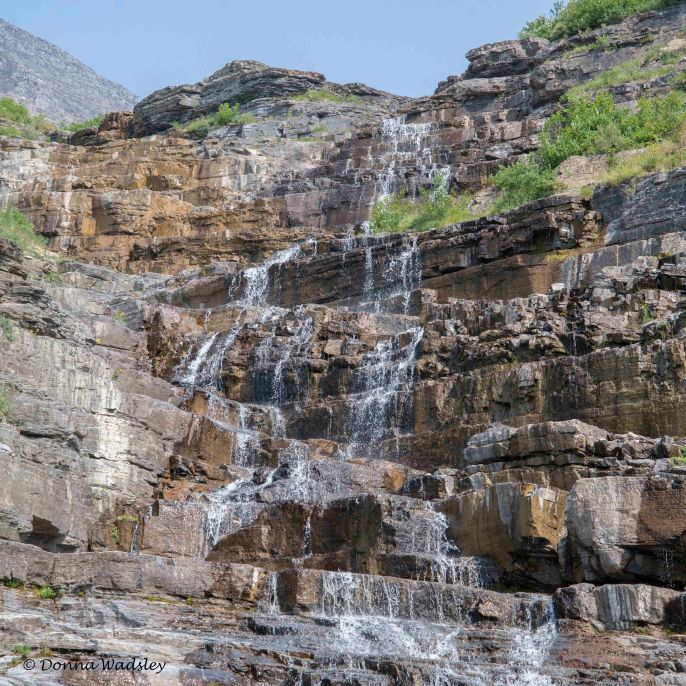
Haystack Creek Falls close-up
(on my side of the road this time!)
.
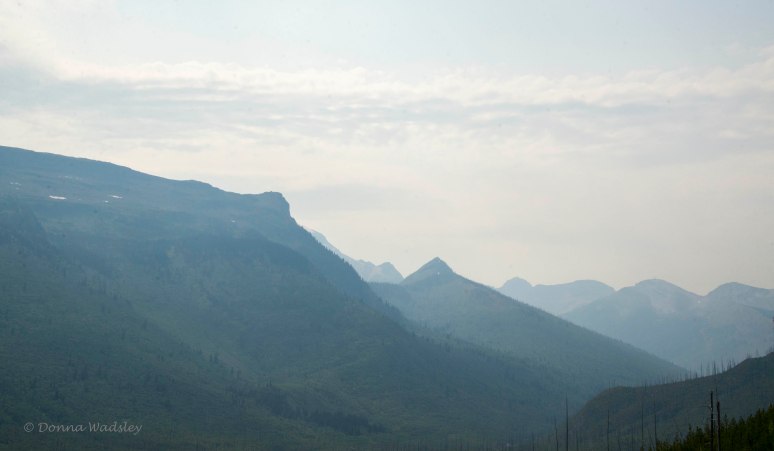
Back down the elevation and into the smoke
.
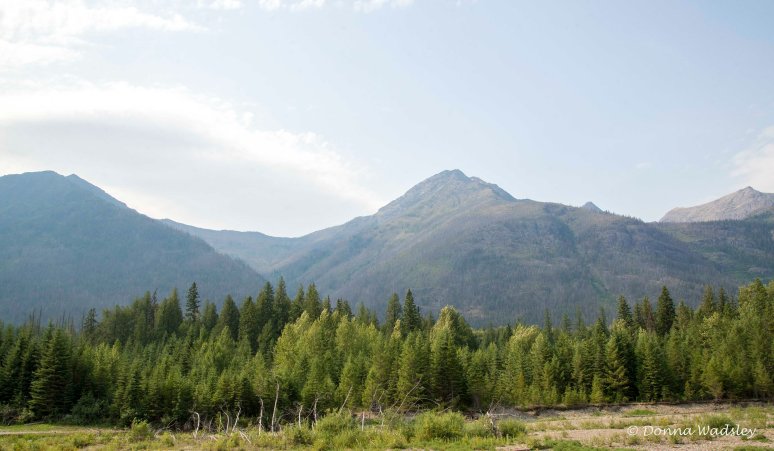
.
The Going-to-the-Sun Road was a beautiful drive, even a little white-knuckling at times!
.
More Glacier National Park posts to come……wildflowers and some small wildlife!
.
.
American Robin at Logan Pass
.
Wildlife sightings in Glacier National Park were scarce for me, including birds. I imagine they were sheltering as necessary to avoid the smoke.
Throughout the entire park, my only bird capture was at Logan Pass’ 6,646 ft (2025 m) of an American Robin foraging amongst the wildflowers in the distance.
I’ll be honest, I surely wasn’t expecting a robin!
.
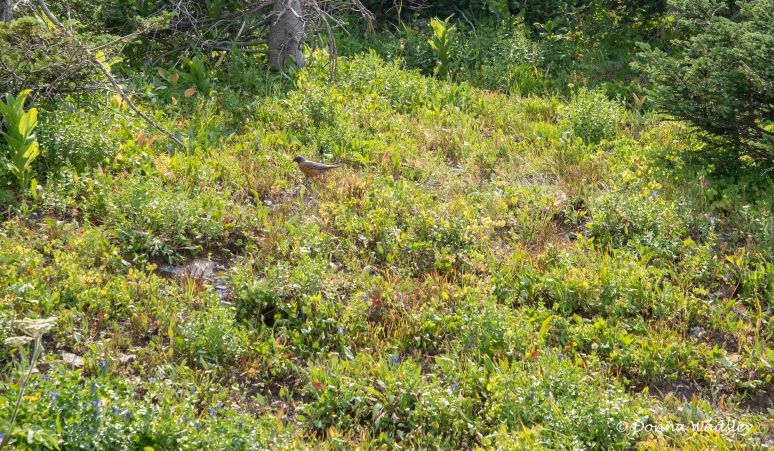
American Robin
.
After finding something ‘good’, the robin took flight, probably to head back to a hungry youngster nearby. 😊
.
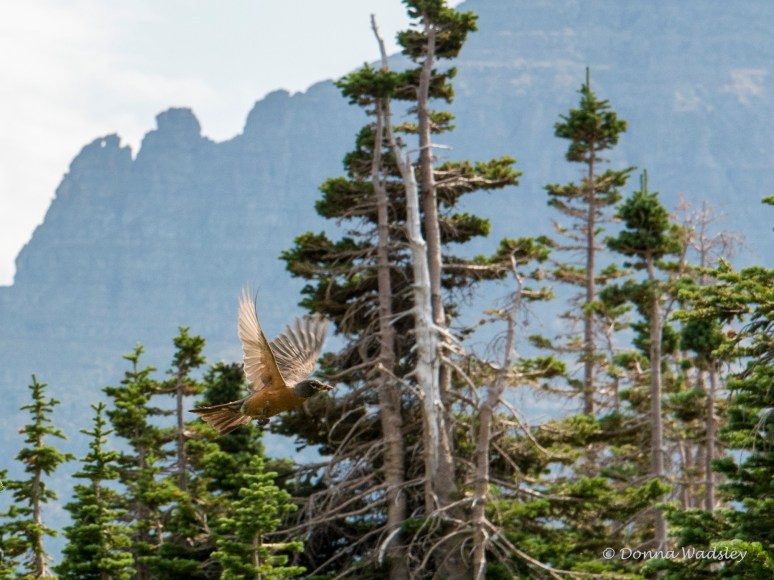
American Robin
.
More of Glacier National Park to come!
P.S. My posts and blog reading is sporadic now as we’re on the road again! A recent massive mudslide onto I-70 that crosses the Rocky Mountains has closed a 46-mile stretch on the interstate indefinitely, thwarting our next two destination plans to Grand Junction and Colorado Springs. Trying to reschedule dates is impossible last minute, everywhere is booked. So we’ve decided to take our time and make our way home over the next couple weeks. I know getting home earlier than previously planned will make three grandboys real happy! Post cards and videochats with Grammy just isn’t the same…. 😉
.
.
Going-to-the-Sun Mountain
.
Time to start sharing Glacier National Park! For our two weeks’ entrance passes, there was only one day that provided some clearing of the smoke in the park. From that day, it went from bad to worse with heavy smoke and air quality alerts, and we quit going in. It was disheartening to know why there was smoke in the first place, they’re saying this year’s wildfires for the U.S. have been the worse ever.
Thankfully, we drove the park’s famous Going-to-the-Sun Road that clearer day, and found Logan Pass the clearest. Logan Pass is located along the Continental Divide in Glacier National Park and is the highest point on the Going-to-the-Sun Road at 6,646 ft (2025 m).
Here is the famous Going-to-the-Sun Mountain, as seen from Logan Pass looking east. This mountain is 9,642 ft (2939 m).
.
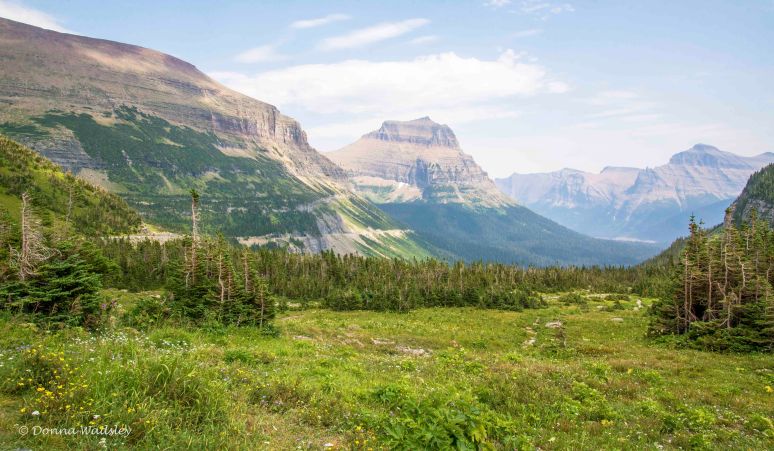
Going-to-the-Sun Mountain (center)
.
This is one of the most famous and sacred mountains in the park. The Blackfoot Indians tell the story of Napi, their Sun God, “who actually came down to earth to help his people during a period of great misfortune. When his work was done, Napi began to climb Going-to-the-Sun Mountain, and he was last seen on the upper cliffs as he disappeared back into the sun.“
.

 Bay Photos by Donna