
Badlands National Park – Prairie Dogs
.
On the Sage Creek Rim Road, a fun area to see is Robert’s Prairie Dog Town, where a colony of prairie dogs live in a complex underground “town” of entrances, tunnels, sleeping chambers, storage areas, and back door escapes.
The largest ever recorded prairie dog town located in Texas encompassed a 100 mile by 250 mile area and contained an estimated 400 million prairie dogs. That’s 25,000 square miles – an area greater than the state of West Virginia. 😲
.

Just a small view of Robert’s Prairie Dog Town
.
Prairie dogs are members of the squirrel family and are only found in North America.
.

Prairie Dogs
.
The prairie dog species found in the Badlands is the black-tailed prairie dog, the most common prairie dog of the five species.
.

Prairie Dog Pups
.
Prairie dogs were once a major part of the American landscape, originally ranging from Canada to Mexico. Before 1800, it was estimated over 5 billion prairie dogs roamed the American plains. Today, it’s estimated there’s a healthy return of 10-20 million prairie dogs roaming. What happened?
In the 1800s, homesteading settlers viewed prairie dogs as disease carriers and grazing area destroyers for their cattle. We now know these assumptions to be untrue. Regarded as vermin, settlers killed prairie dogs in large quantities with poison and by recreational shooting. How sad.
.
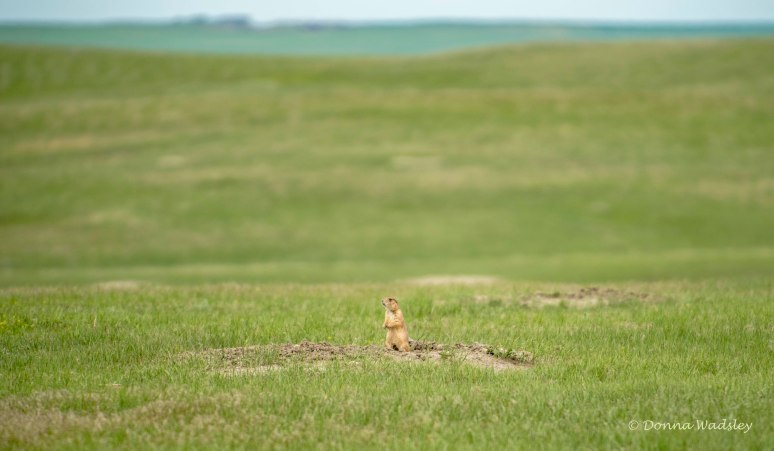
Prairie dog on the look-out
(“Now where did those kids go?”)
.
Prairie dogs are about 14-17 inches long and weigh 1-3 pounds. They eat most all species of plants with an occasional insect.
Prairie dogs serve as a keystone species so their survival is important to many other species of wildlife. That includes them being a major prey for a large array of predators that include golden eagles, hawks, fox, coyotes, badgers, and the endangered black-footed ferrets.
Fortunately, prairie dogs can run up to 35 mph at short distances to one of their many entrances for a hopeful escape.
.

Prairie Dog nibbling grasses
.
In addition, prairie dogs communicate to each other what predator is the threat!
Scientists believe that prairie dogs have one of the most complex animal languages ever decoded. The prairie dog’s “bark” is a simple squeak or yip, but it means much more to a prairie dog’s ear.
On a basic level, prairie dogs can signal different threats. For example, they can communicate the difference between a coyote and a domestic dog. In fact, scientists think that prairie dogs may have developed such complex language from a need to respond to a diverse array of predators, all with different hunting strategies.
In addition to identifying specific threats, prairie dogs can further communicate size, shape, color, and speed. A prairie dog can say so much more than, “A human is approaching!” They can get as specific as, “A tall human in a blue shirt is approaching rapidly!”
.

Prairie Dogs
.
And for sure, they are so darn adorably cute too!
More wildlife to come from Badlands National Park……the fast pronghorn!
.
.
Badlands National Park – American Bison Part 2
.
Have you ever heard of bison wallowing? Or maybe you’ve seen bison rolling from side to side in the dirt? Yep, that ‘dust bath’ is called wallowing.
There are actually several explanations on why bison do wallowing. Not only does it give relief to biting insects, it helps bison shed their heavy winter fur.
Wallowing is also sometimes seen as a social behavior associated with play, group cohesion, and male-male conflict.
During mating season, sexually mature males will urinate in the wallow before rolling on the ground to advertise their scent and strength.
Here’s a series of close-up shots of a bison wallowing, shot from my car window.
.

“Are you ready?”
.

American bison wallowing
.

American bison wallowing
.
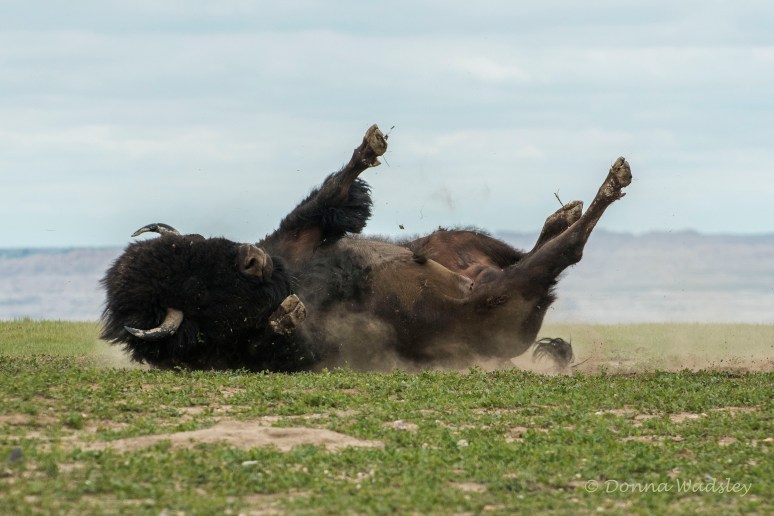
American bison wallowing
.

American bison wallowing
.

American bison wallowing
.

“A little dirt doesn’t hurt!”
.
More wildlife to come from Badlands NP…..prairie dogs next!
.
.
Badlands National Park – American Bison Part 1
.
It was super-rewarding that we were able to take the unpaved Sage Creek Rim Road off of the Badlands NP scenic loop. That is where the park states the best wildlife sightings could be found, including the American bison. You could stop anywhere along this road; in fact, several times we had to stop to allow wildlife to cross the road in front of our car!
In prehistoric times, it is estimated 60-70 million bison roamed North America. By the early 1800s, there were roughly 30 million. Horrifying, by the late 1800s, the European settlers hunted them almost to extinction to fewer than 1,000 bison.
.

American Bison
.
Badlands National Park played an important role in the recovery program of the bison. In the 1960s, 50 bison were introduced to Badlands National Park; in the 1980s, 20 more were added. Today, there are about 1,200 bison freely roaming the plains within the Park.
.

American Bison heading to a herd
.
Bison are the largest mammal in North America. Males (called bulls) weigh up to 2,000 pounds at 6 feet tall, females (called cows) weigh up to 1,000 pounds at 4-5 feet tall.
.

American Bison (male and female)
.

American Bison close-up (male and female)
.
They are not only big, but bison are also fast; they can run up to 35 mph (56 kmh).
.

“Running Wild, Running Free”
.
Bison primarily eat grasses, weeds and leafy plants, typically foraging for 9-11 hours a day. Their average lifespan is 10-20 years. These photos show bison shedding their winter fur.
.

American Bison
.
As bison wander through the grasslands feeding, they stir up insects. Several bird species will follow the bison, eating the exposed insects. Some may even land on a bison to look for insects there too.
.

“Hitching a Ride”
.

“The Gang’s All Here”
(bison, birds, prairie dog)
.
The history of bison and Native Americans are intertwined. Bison have been integral to tribal culture, providing them with food, clothing, fuel, tools, shelter and spiritual value.
.
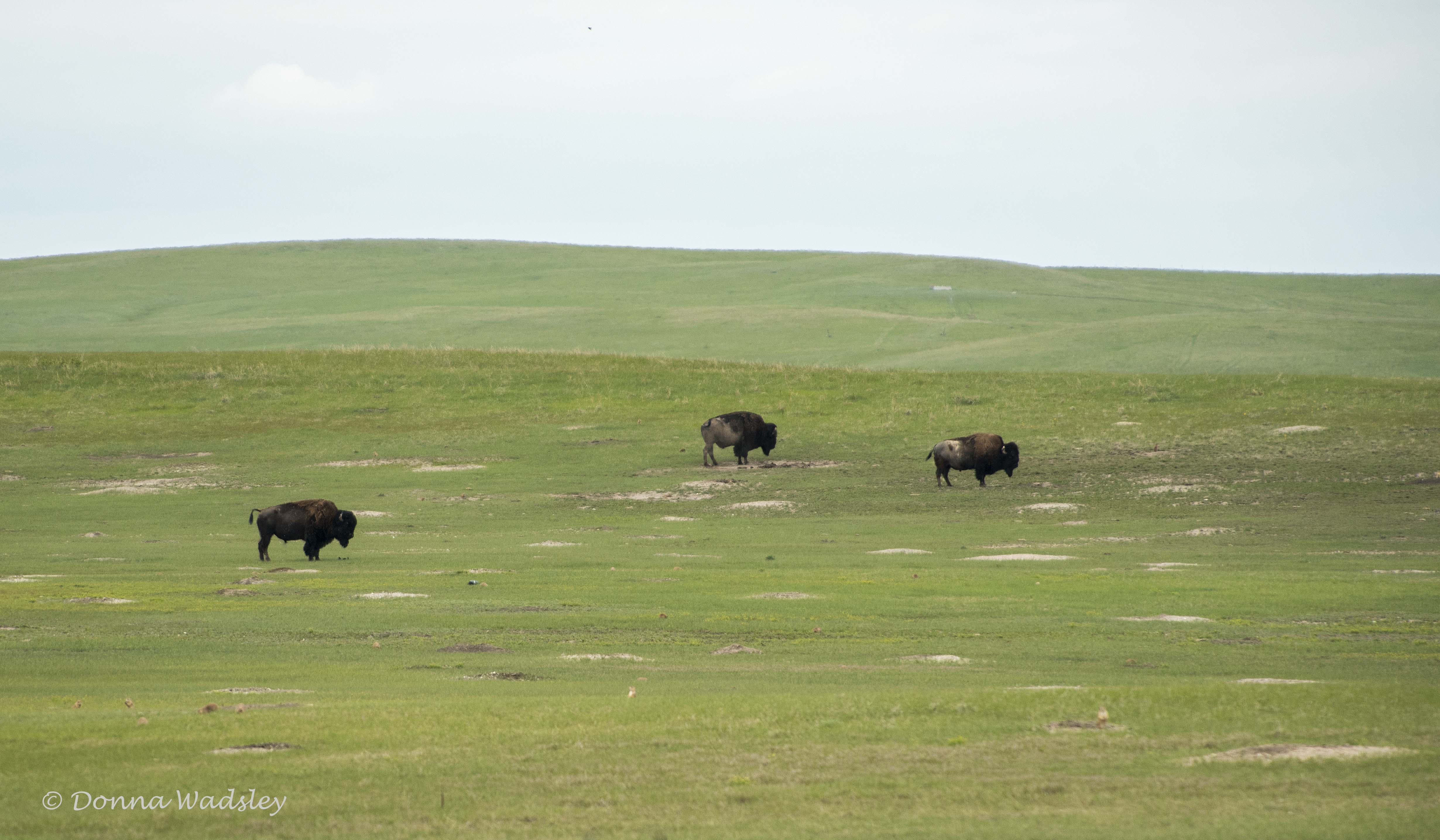
American bison grazing a prairie dog town
.
The American bison was named the national mammal of the United States on May 9, 2016.
Although many people interchange the two species, the American bison is not a buffalo; and they are not closely related. Old World “true” buffalo (Cape buffalo and water buffalo) are native to Africa and Asia. Bison are found in North America and Europe.
.
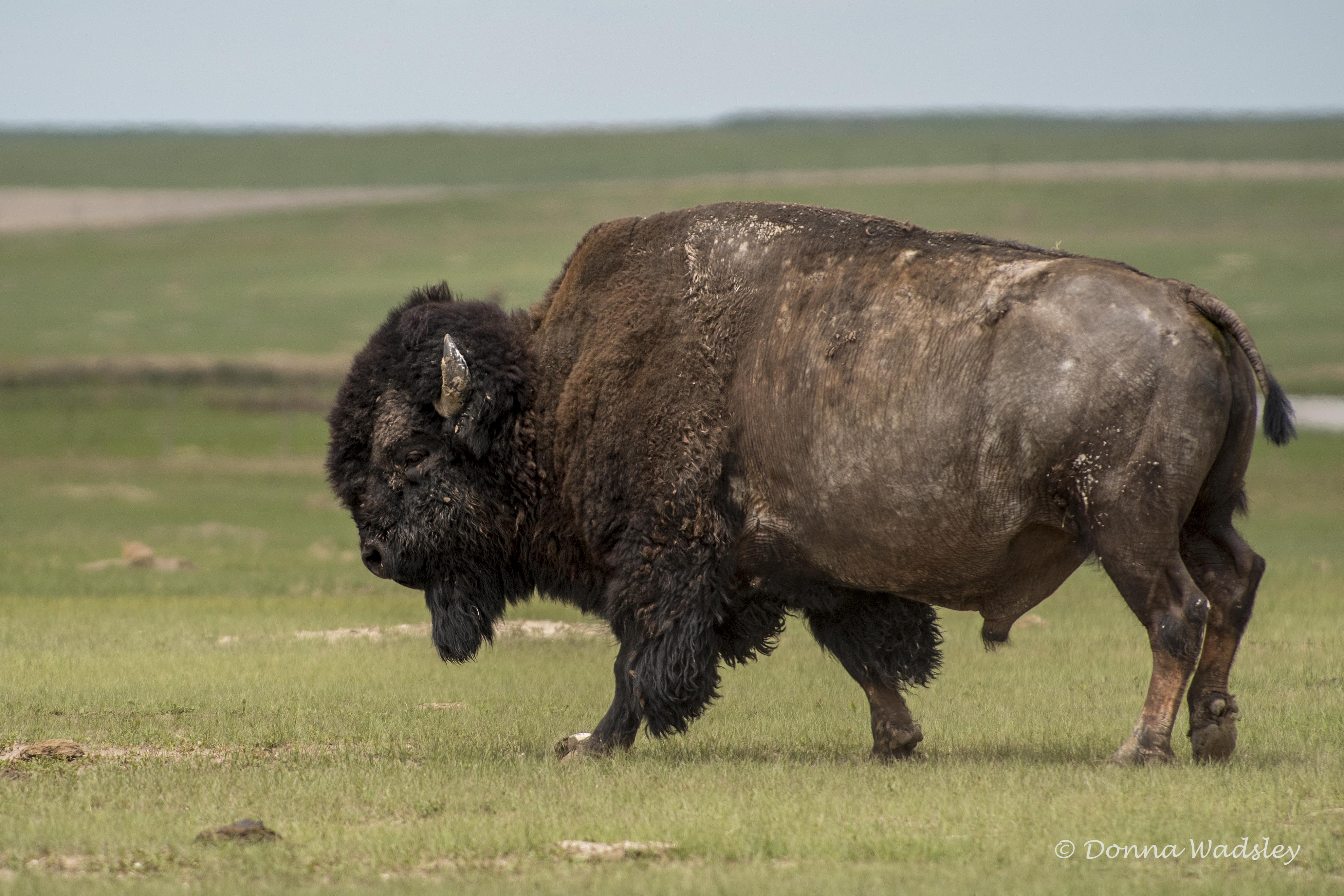
American bison walking amongst prairie dog home entrances
.

American bison close-up
.
Advice from a Bison:
Stand your ground.
Have a tough hide.
Roam wild and free.
Have a strong spirit.
Let the chips fall where they may!
.
More to come on….Badlands NP, American Bison Part 2….
.
.
Badlands National Park – Birds
.
Our primary purpose was to drive and enjoy the Badlands National Park’s scenic loop with stops at all twelve overlook points for photos, and hopefully be able to transverse the unpaved Sage Creek Rim Road side road. There were also several trailheads, but we opted to stop at only a couple of the shorter hikes.
That being said, I wasn’t really expecting to see much in birds, let alone photograph any.
So I felt pretty lucky to capture three birds. And, dare I say, two are new lifers? Yes! 💃
As we entered the park and stopped at the immediate first overlook point, I saw my first new lifer, a Western Meadowlark, singing its heart out on a post away from the crowd. S/he gave me so many awesome photos, I was tickled yellow!
.
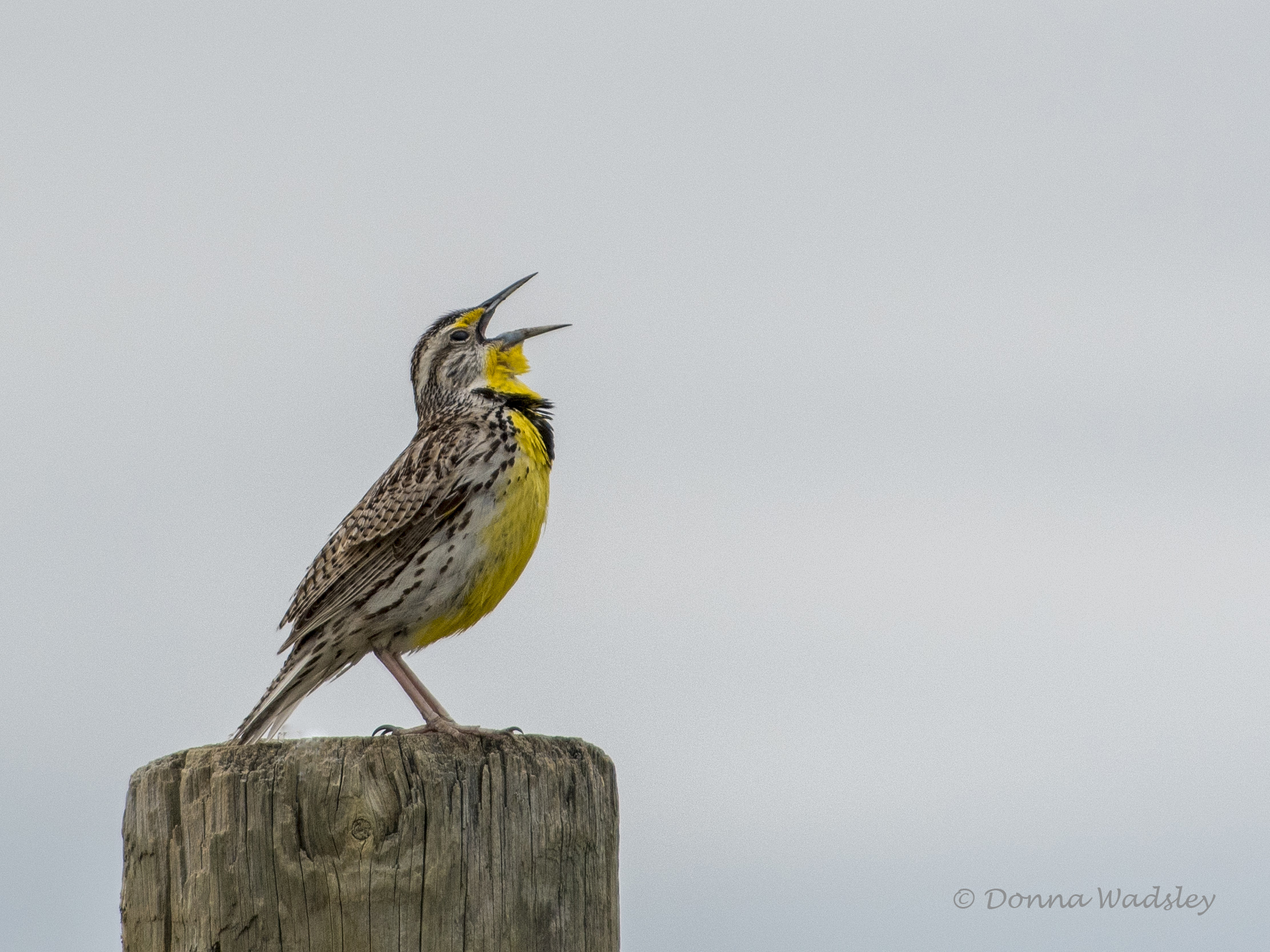
Western Meadowlark (Lifer #230)
.
That was just too easy, I happily thought!
I photographed another Western Meadowlark perched on a stop sign in a windy breeze as we departed another overlook point.
.
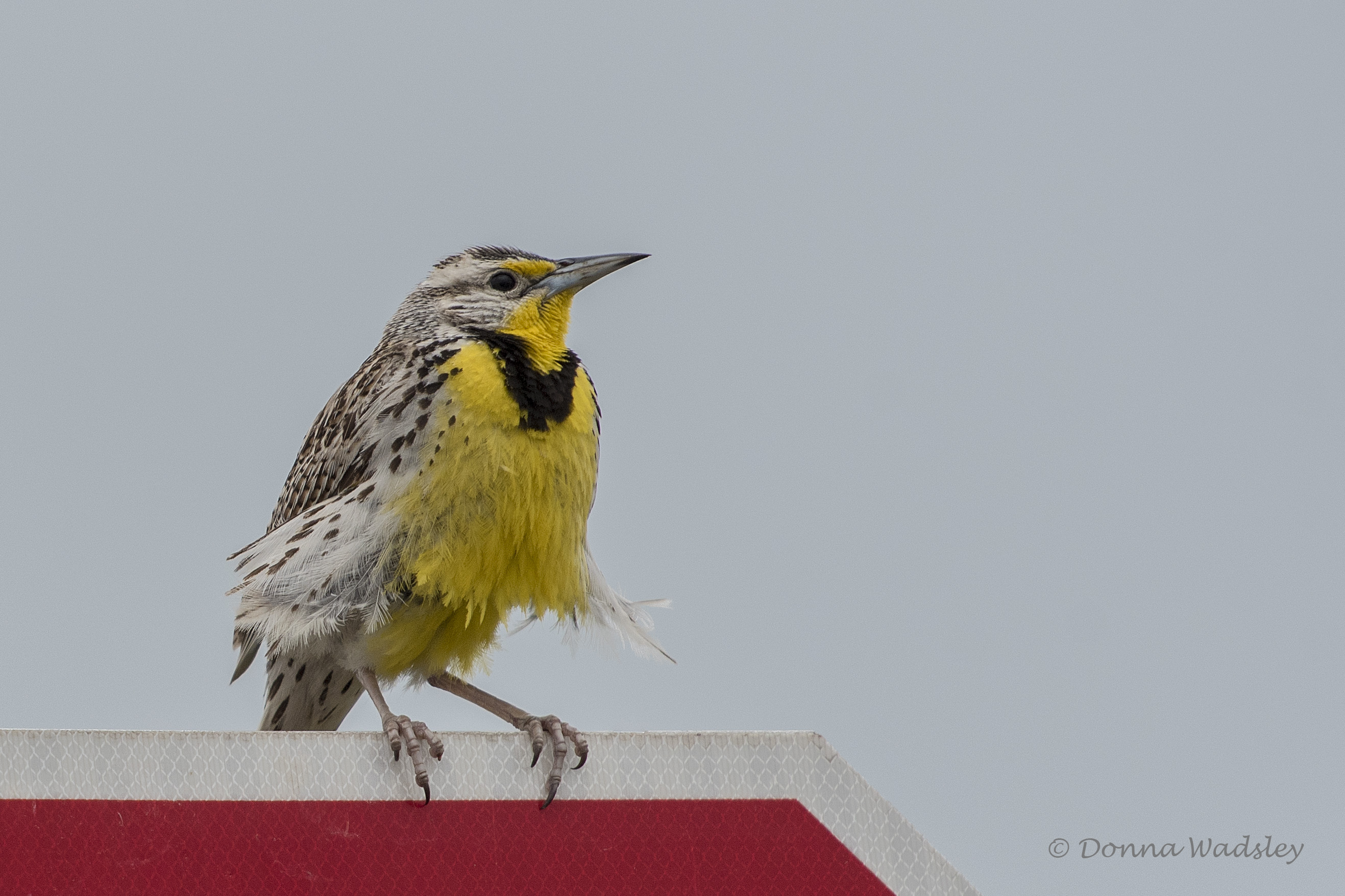
Western Meadowlark shot from my car window
.
I was hoping one of those would have flown to the ground for a habitat shot. But they both were too busy with singing. There were so many meadowlarks, we could see and hear them out our windows as we continued our drive.
A few more overlooks, and I scored my only Western Meadowlark habitat shot.
.
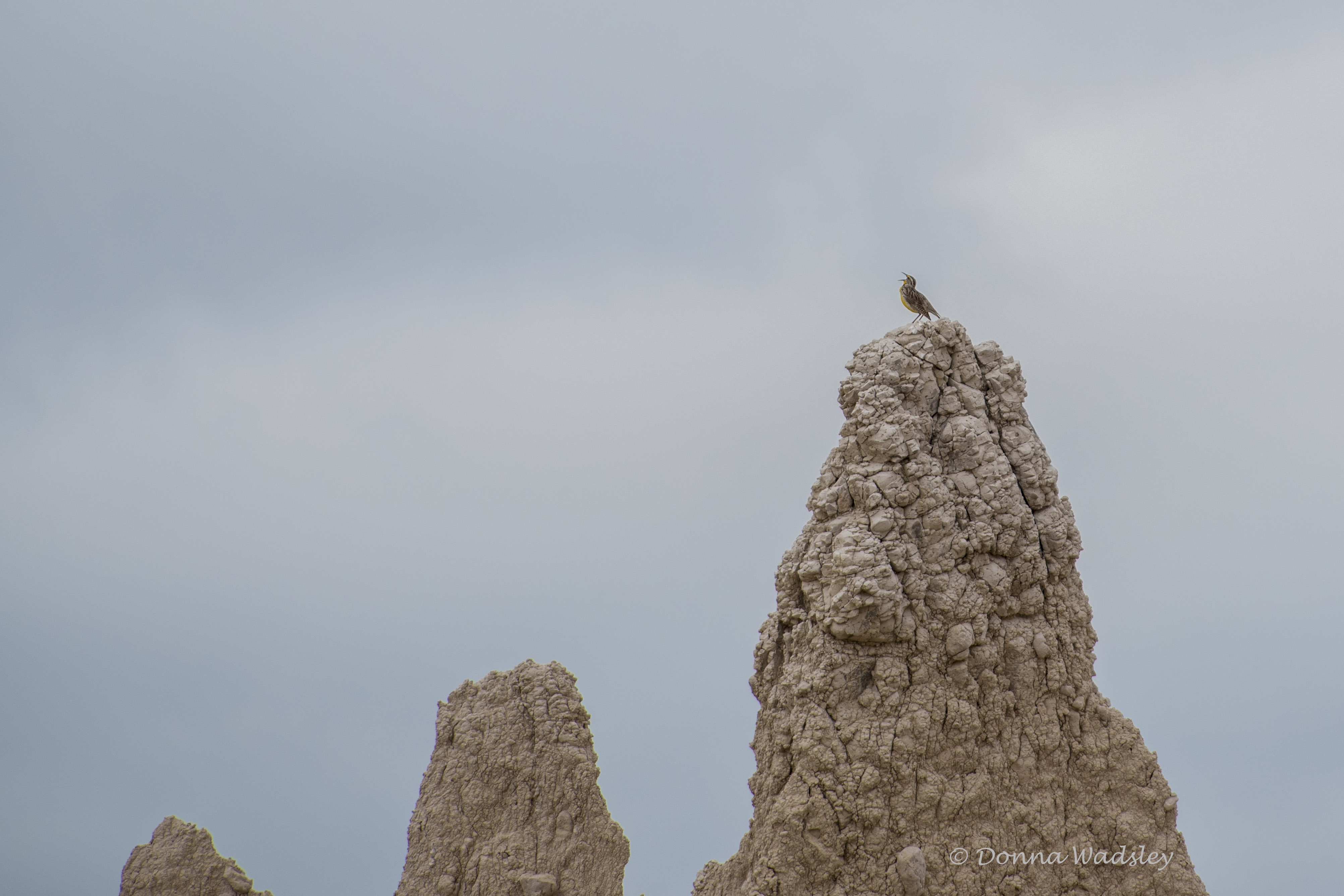
Western Meadowlark
.
At another overlook with trailhead, I spotted down the hill my next new lifer, a pair of Lark Sparrows.
.
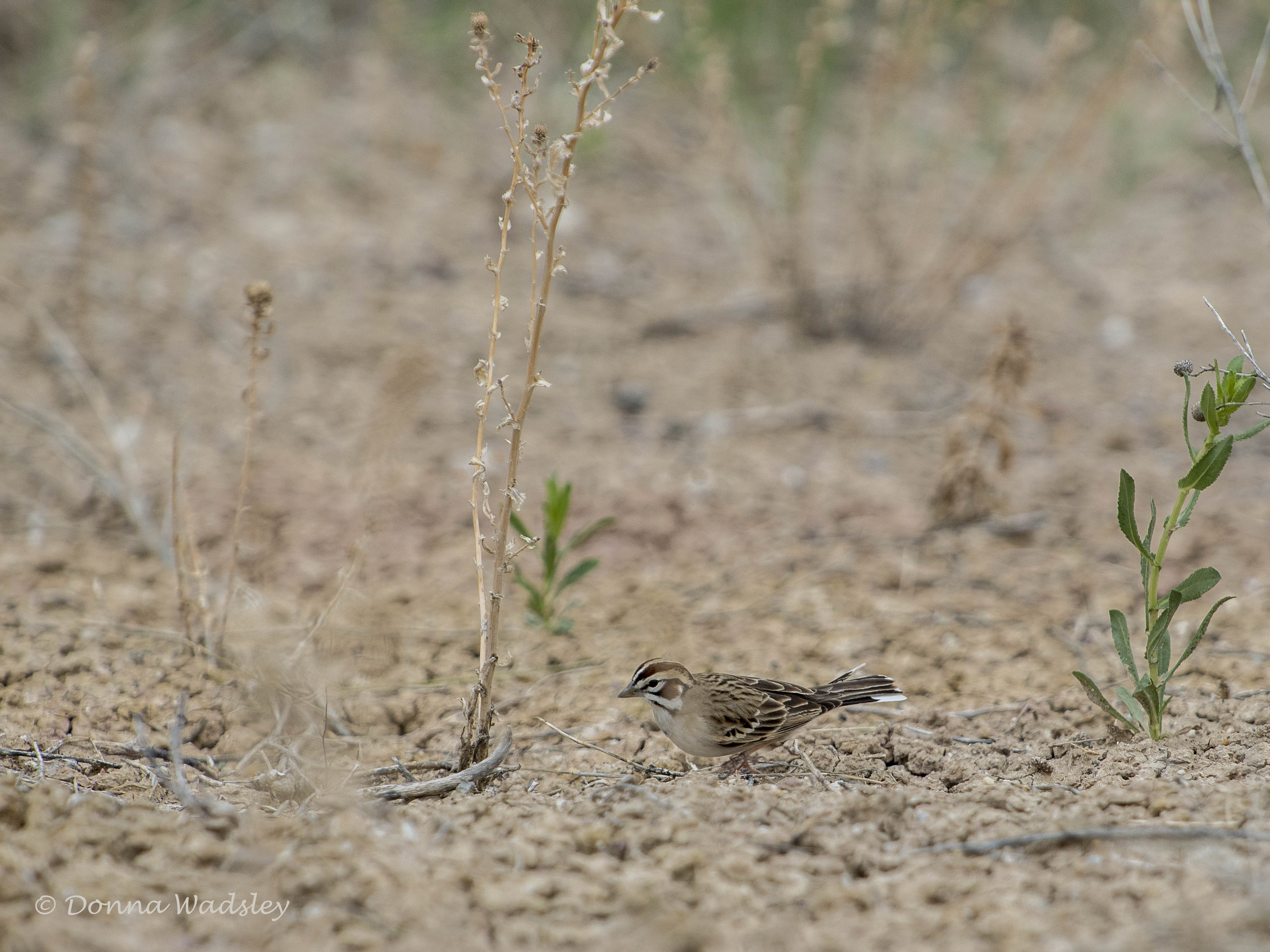
Lark Sparrow (Lifer #231)
.
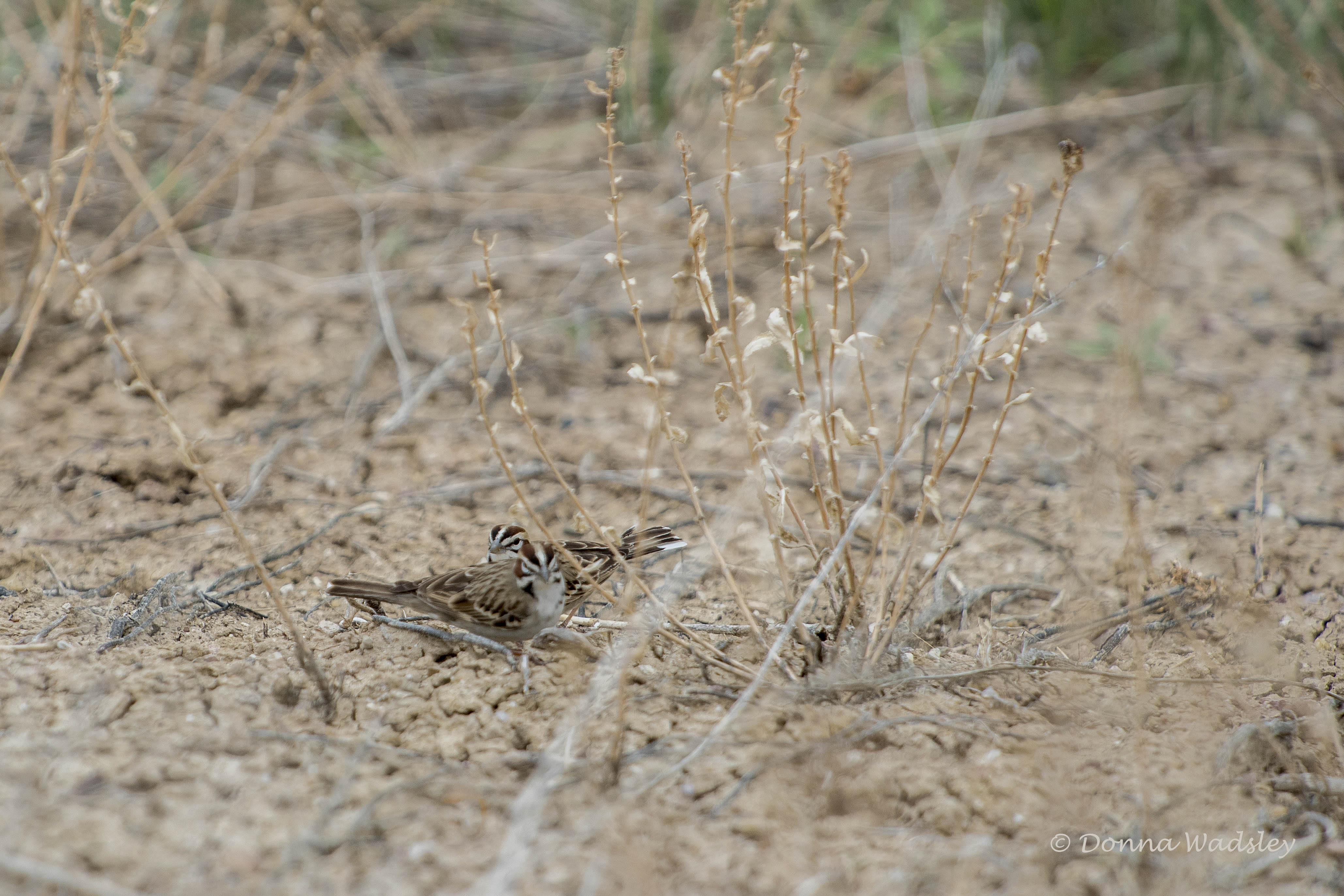
Lark Sparrows
.
By this point, I was indeed a happy birding gal!
For the third bird, it was at yet another viewpoint. While walking back, I spotted a flash of blue in the tree above our car. That was pretty special!
.
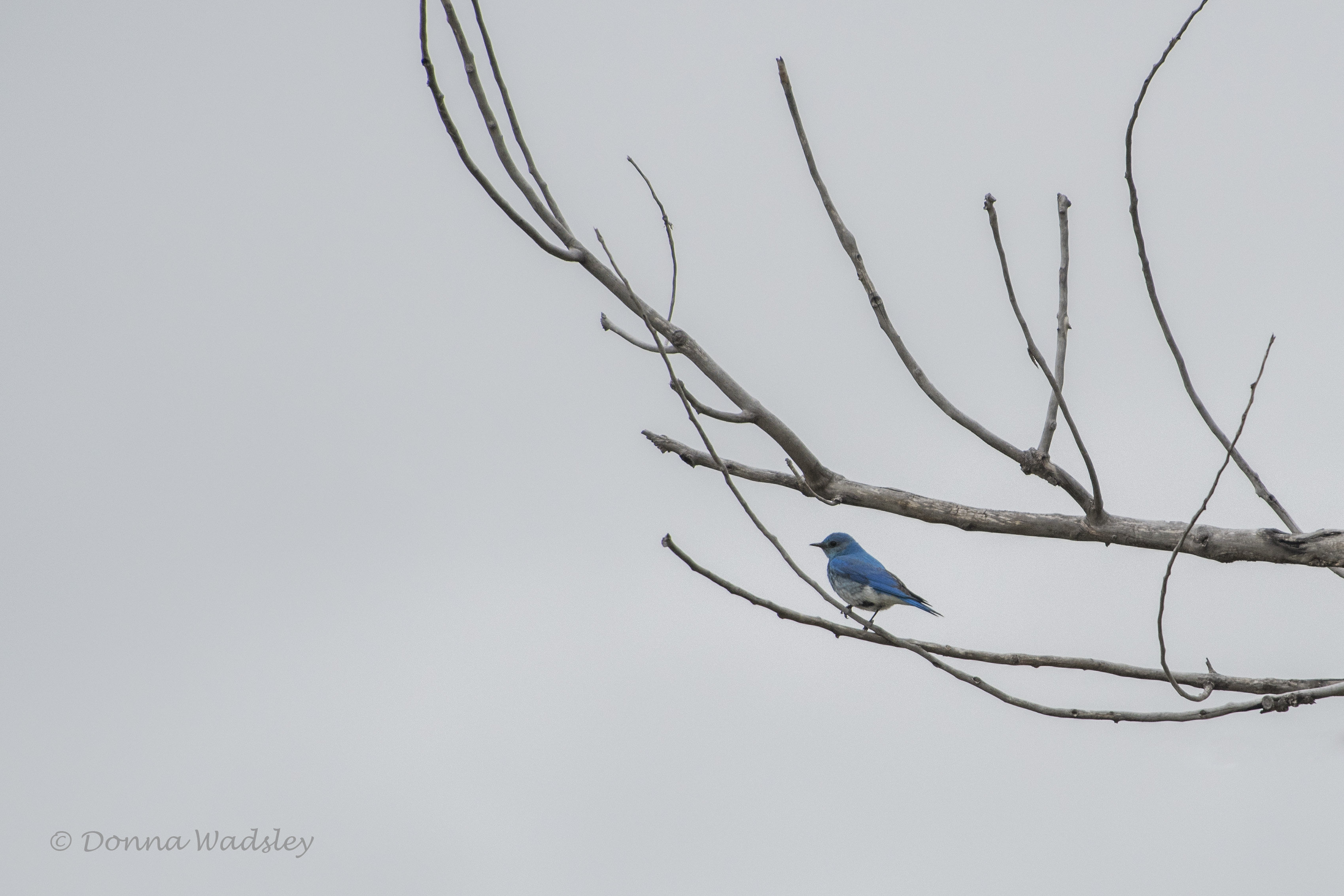
Mountain Bluebird
.
It was definitely a win-win birding day for me…..for just a planned scenic drive. 😊
More wildlife to come from the Badlands National Park….bison next!
.
.
Badlands National Park – Landscapes
.
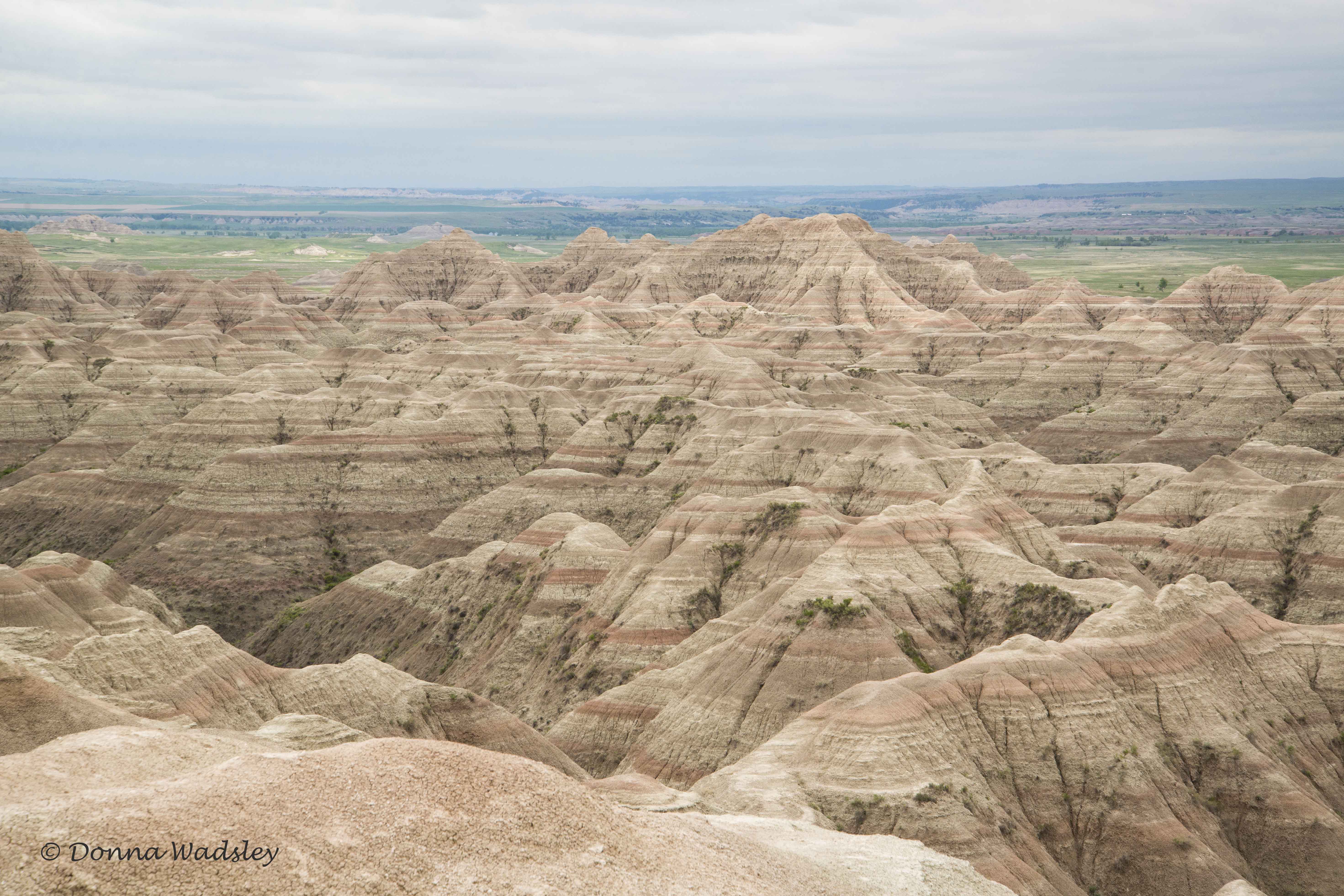
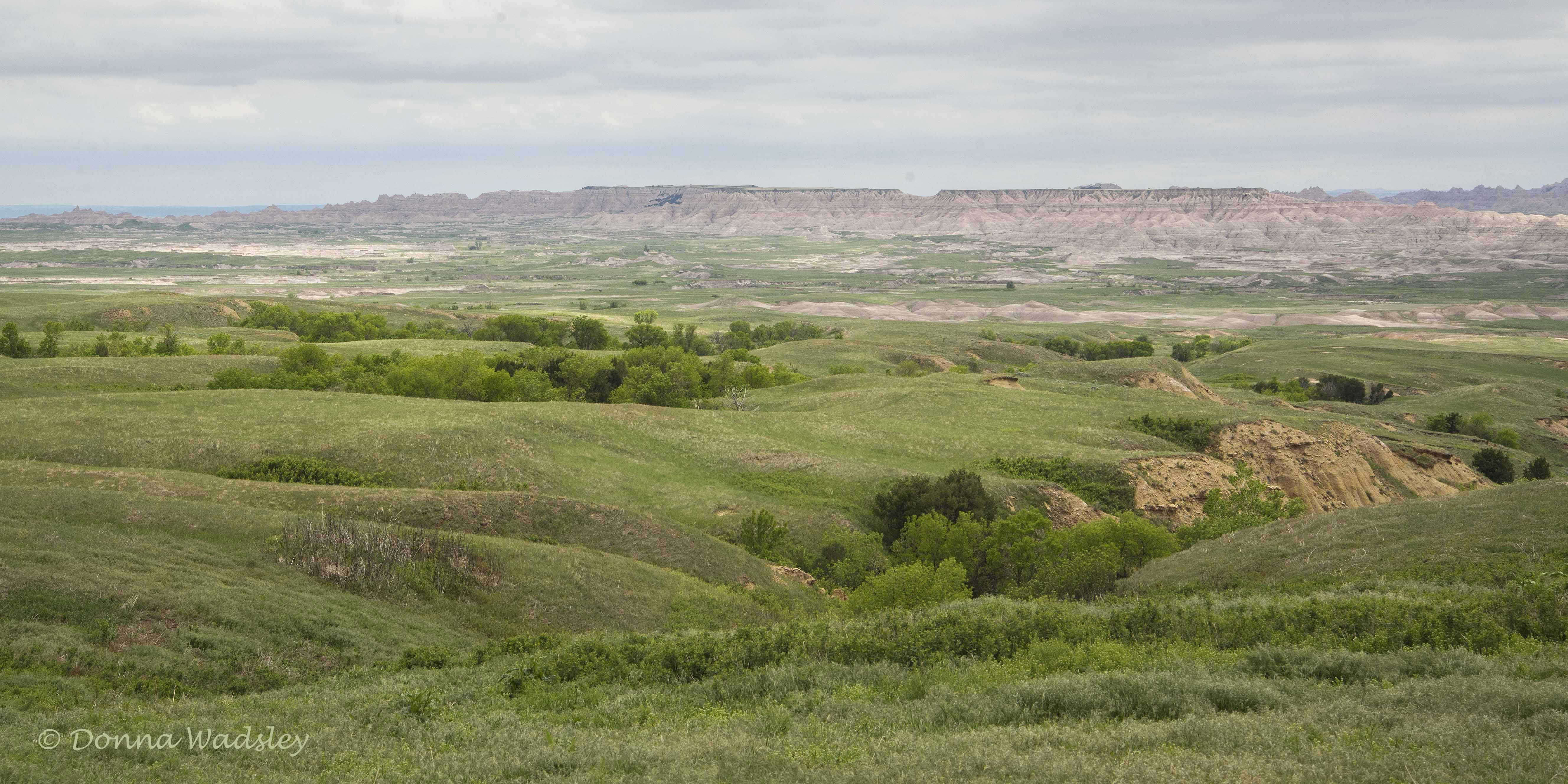
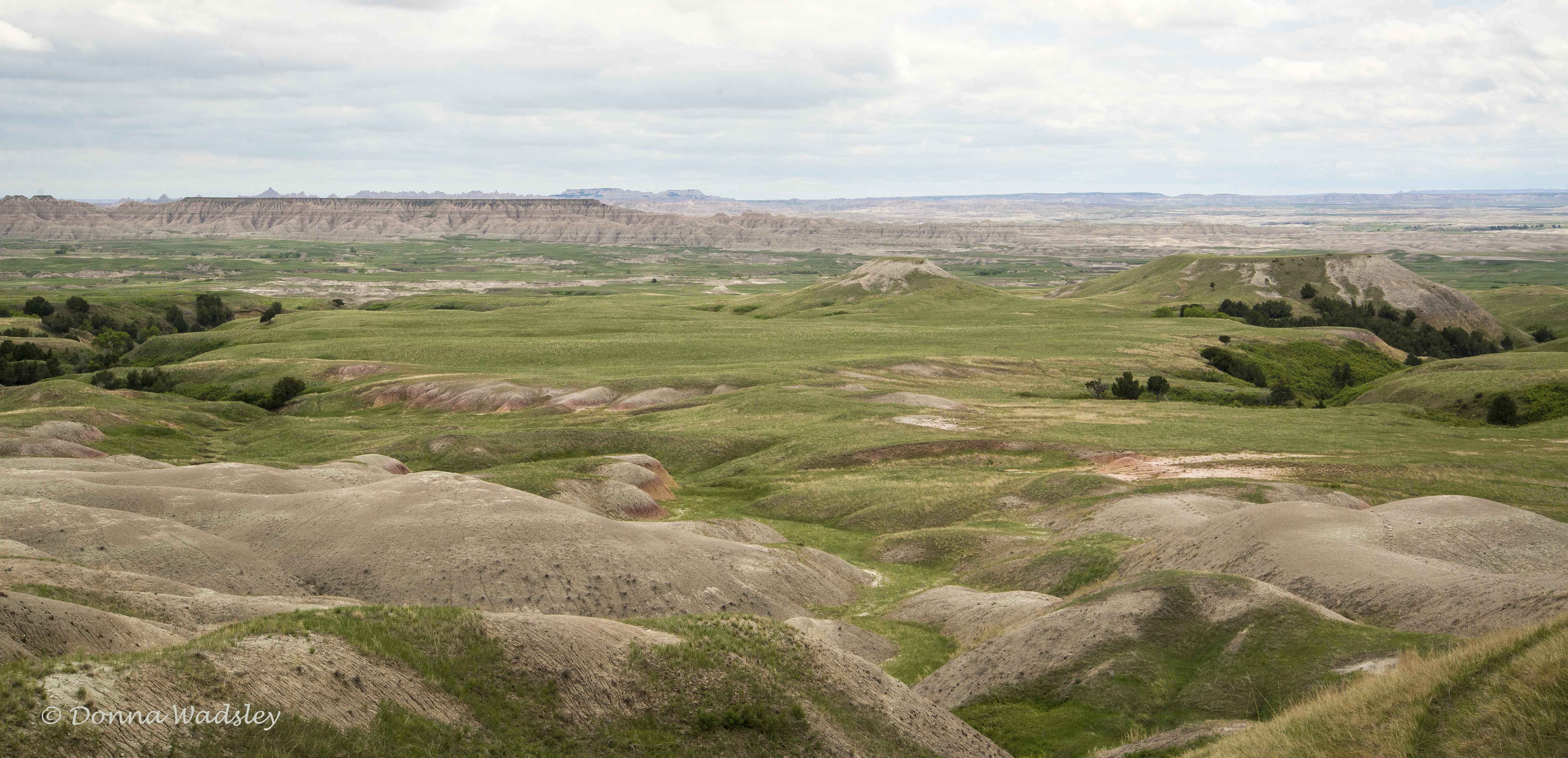
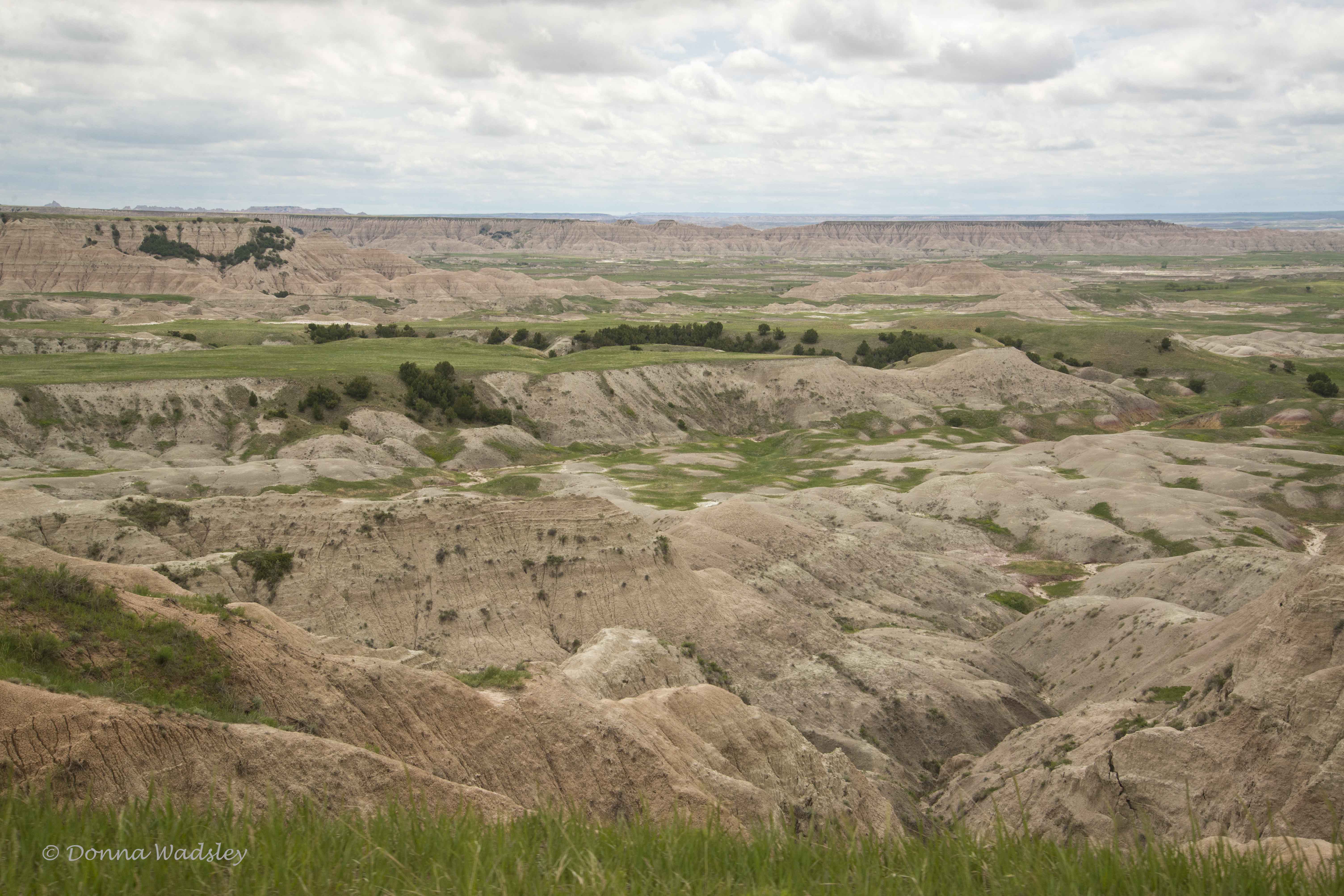
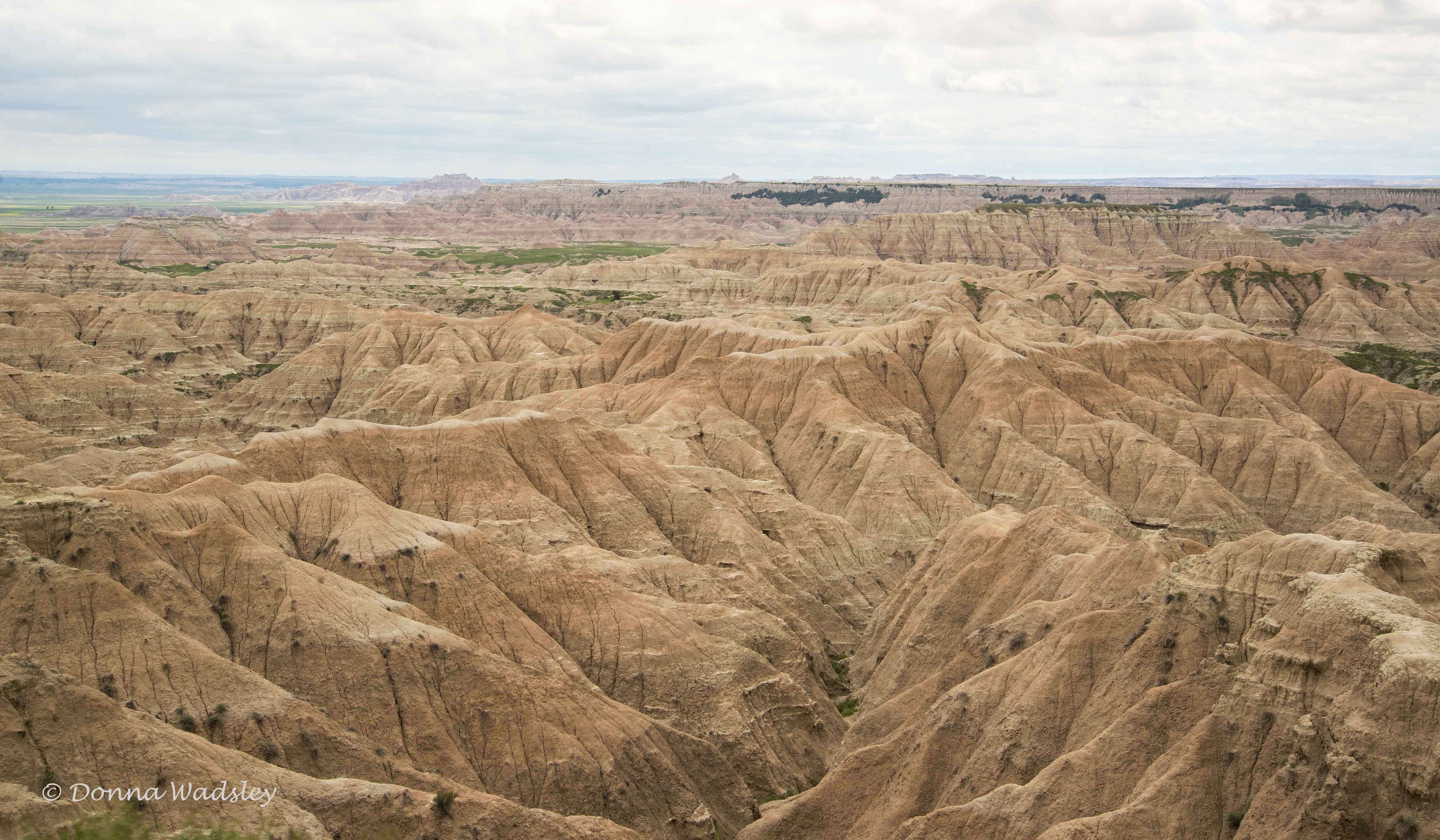
We’ve rolled into South Dakota for a stopover to visit the Badlands National Park. It had rained the night before and was cloudy during our visit. But that didn’t deter our enjoyment of the surrounding beauty as we drove the park’s Highway 240 scenic loop that offered many pullovers for incredible views.
.
.
“I’ve been about the world a lot, and pretty much over our own country; but I was totally unprepared for that revelation called the Dakota Bad Lands. What I saw gave me an indescribable sense of mysterious elsewhere….a distant architecture, ethereal….an endless supernatural world more spirited than earth but created out of it.” — Frank Lloyd Wright, 1935
.
.
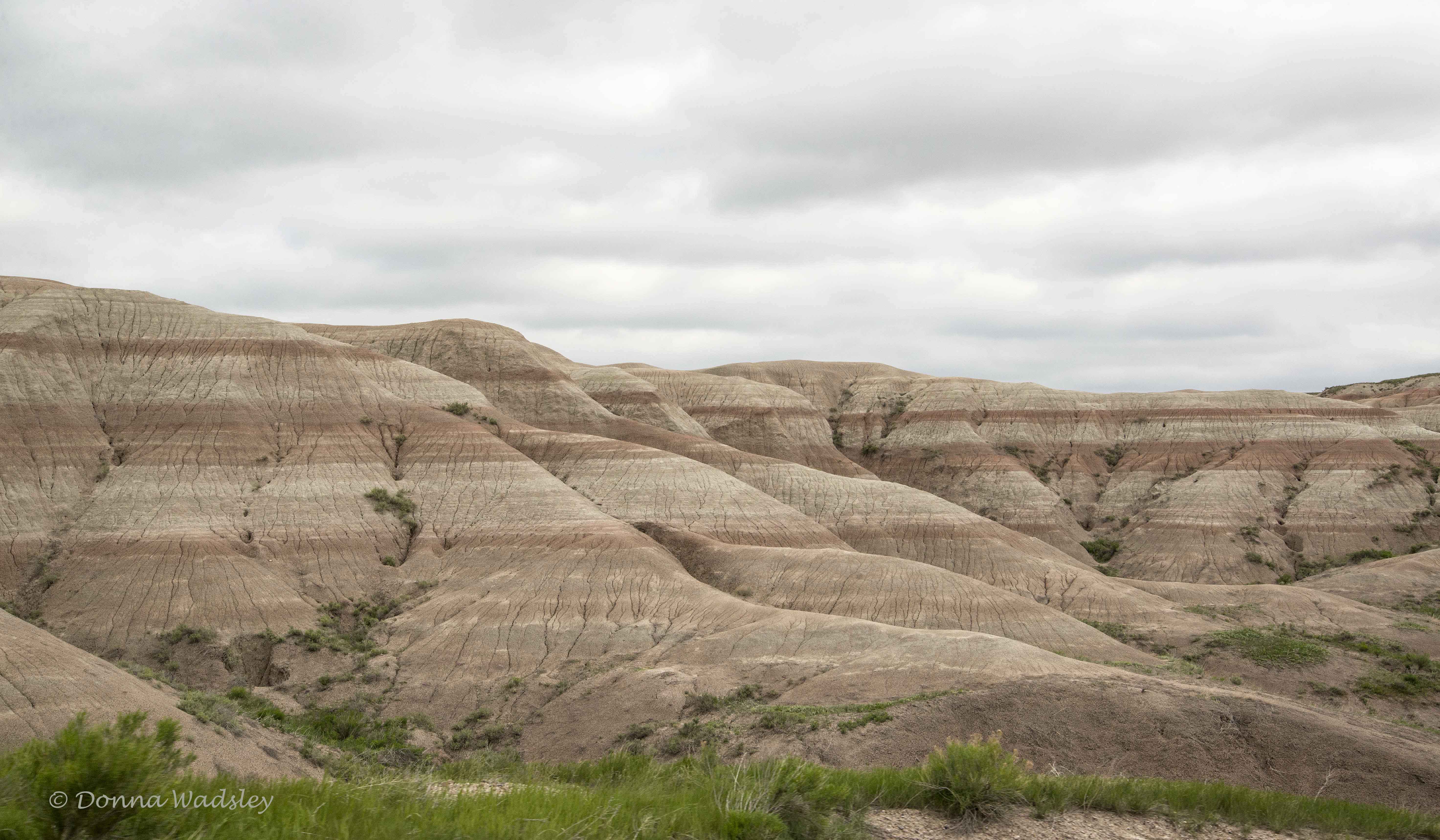
The Oglala Lakota people were the first to give the site of modern-day Badlands National Park a name.
They called it “mako sica“, which translates to “land bad”, because its rocky terrain, lack of water, and extreme temperatures made it difficult to traverse.
.
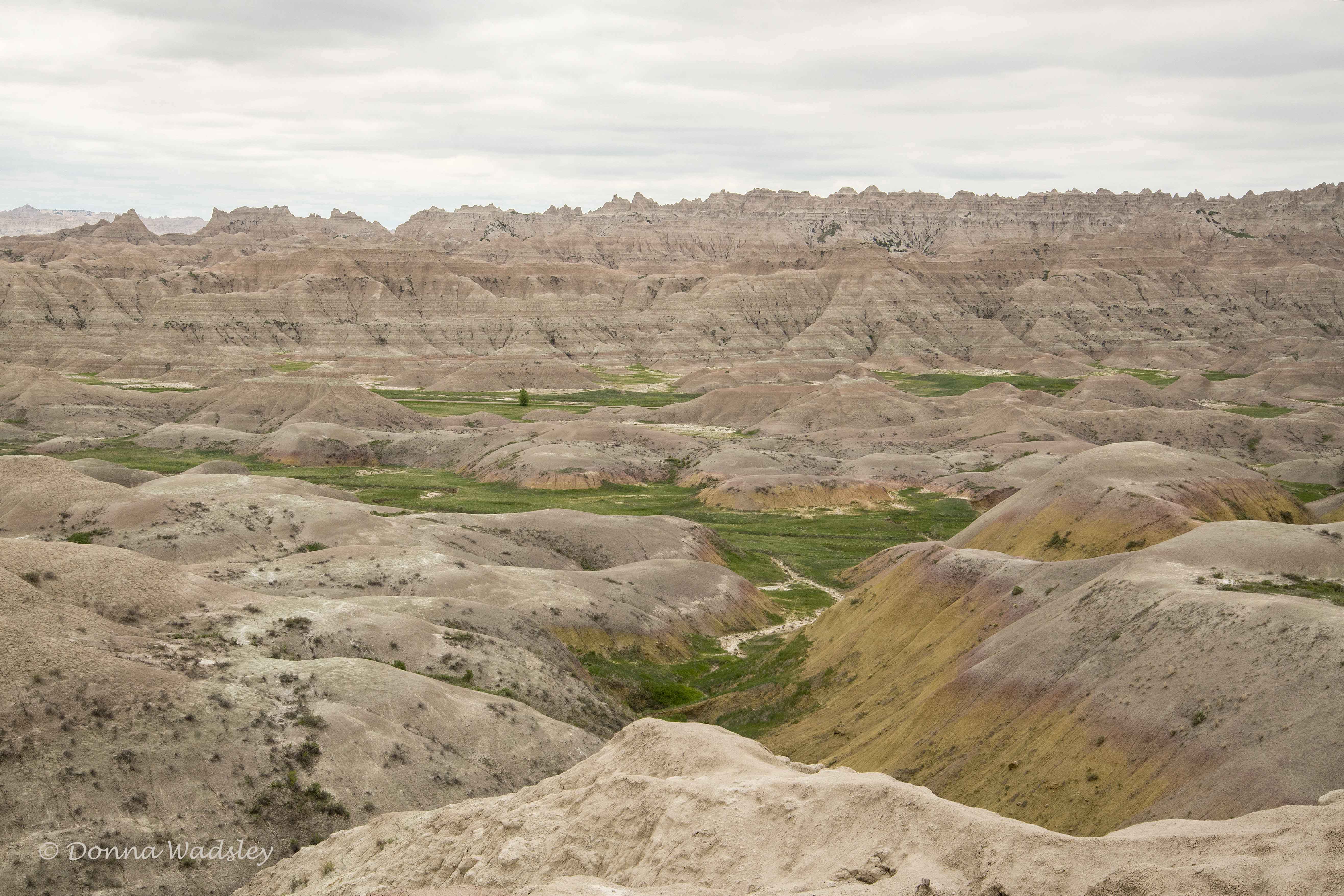
.
The Badlands striking geologic deposits contain one of the world’s richest fossil beds. The saber tooth cat once roamed these lands.
.
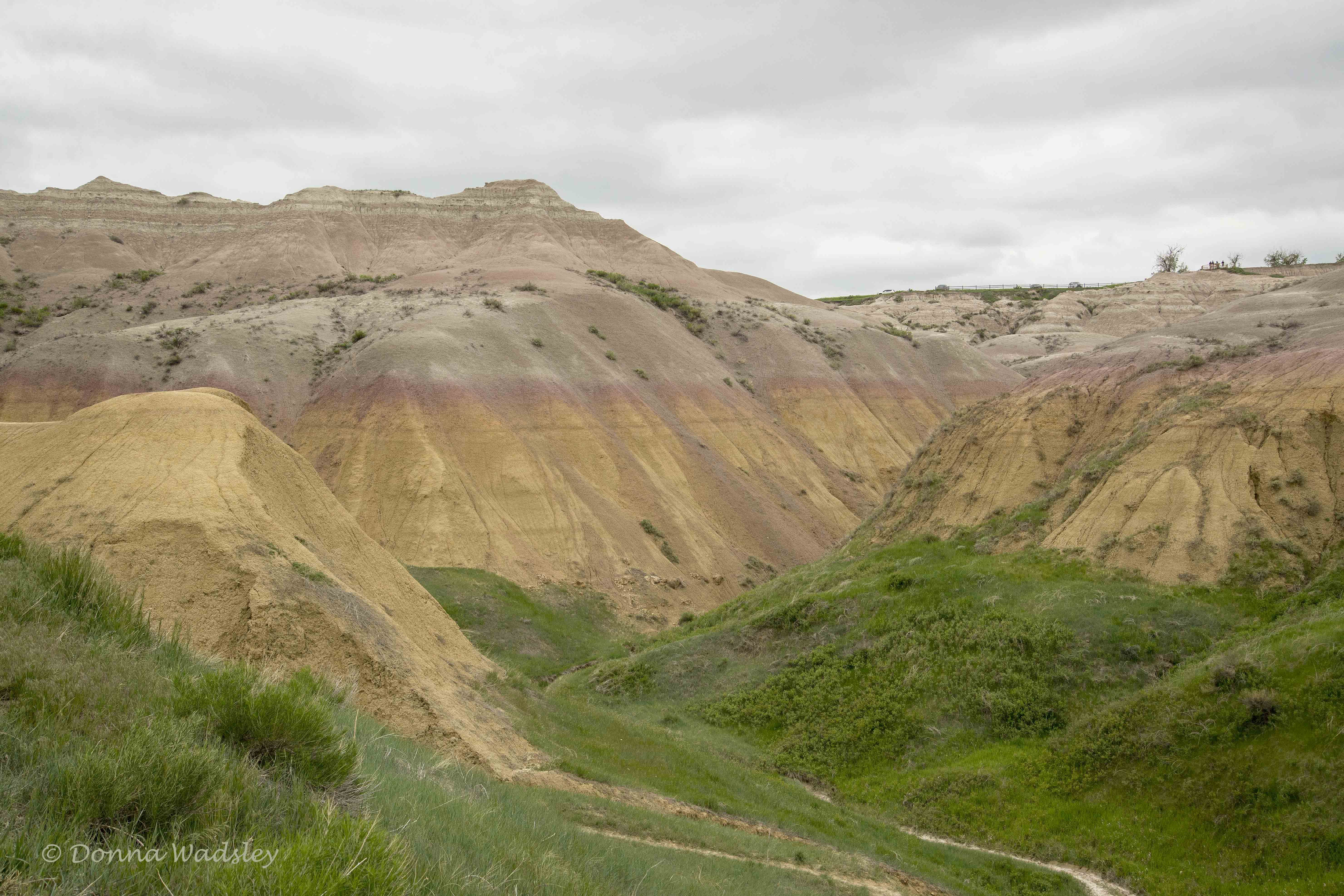
.
Every twist and turn along the scenic loop afforded striking landscapes.
.
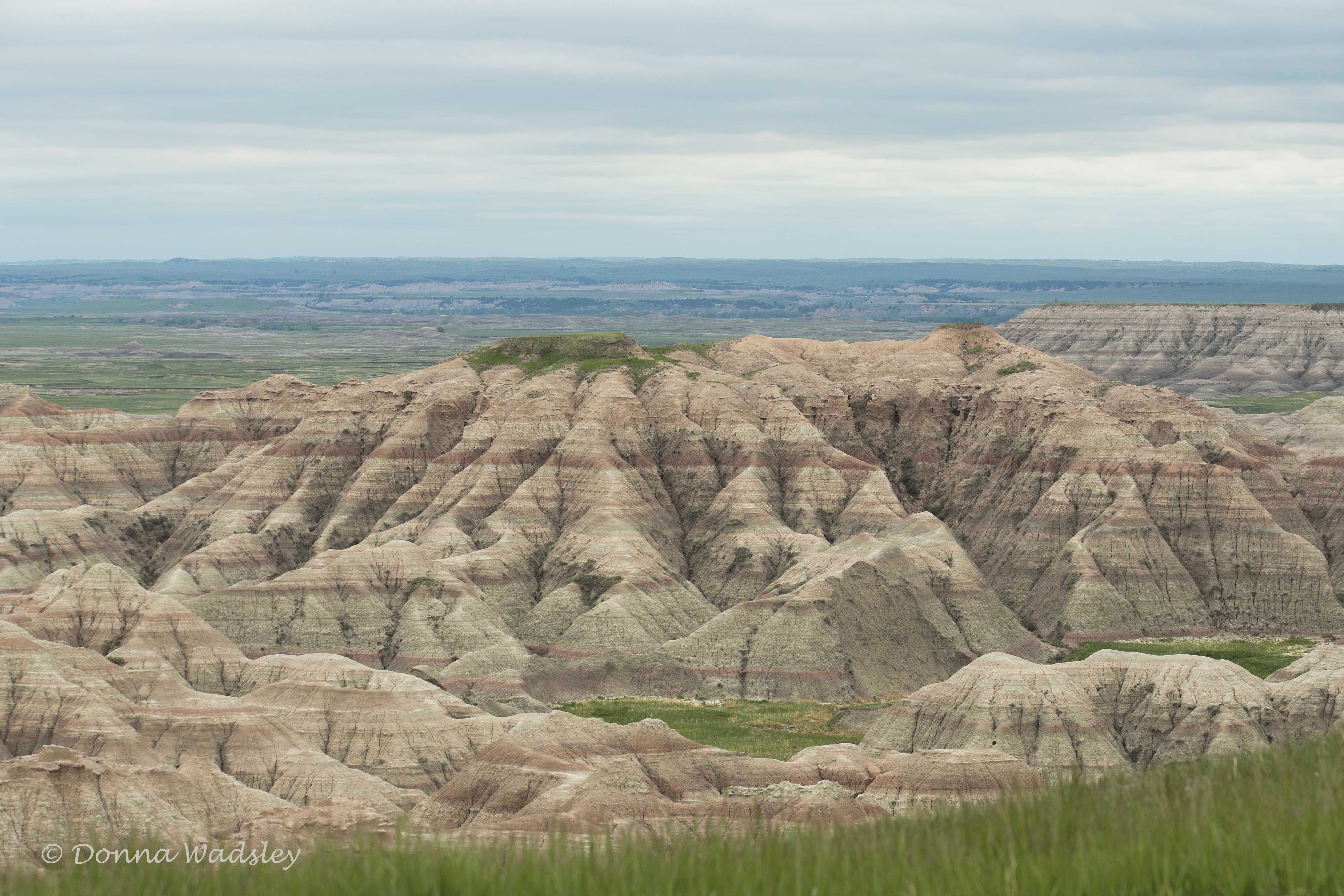
.
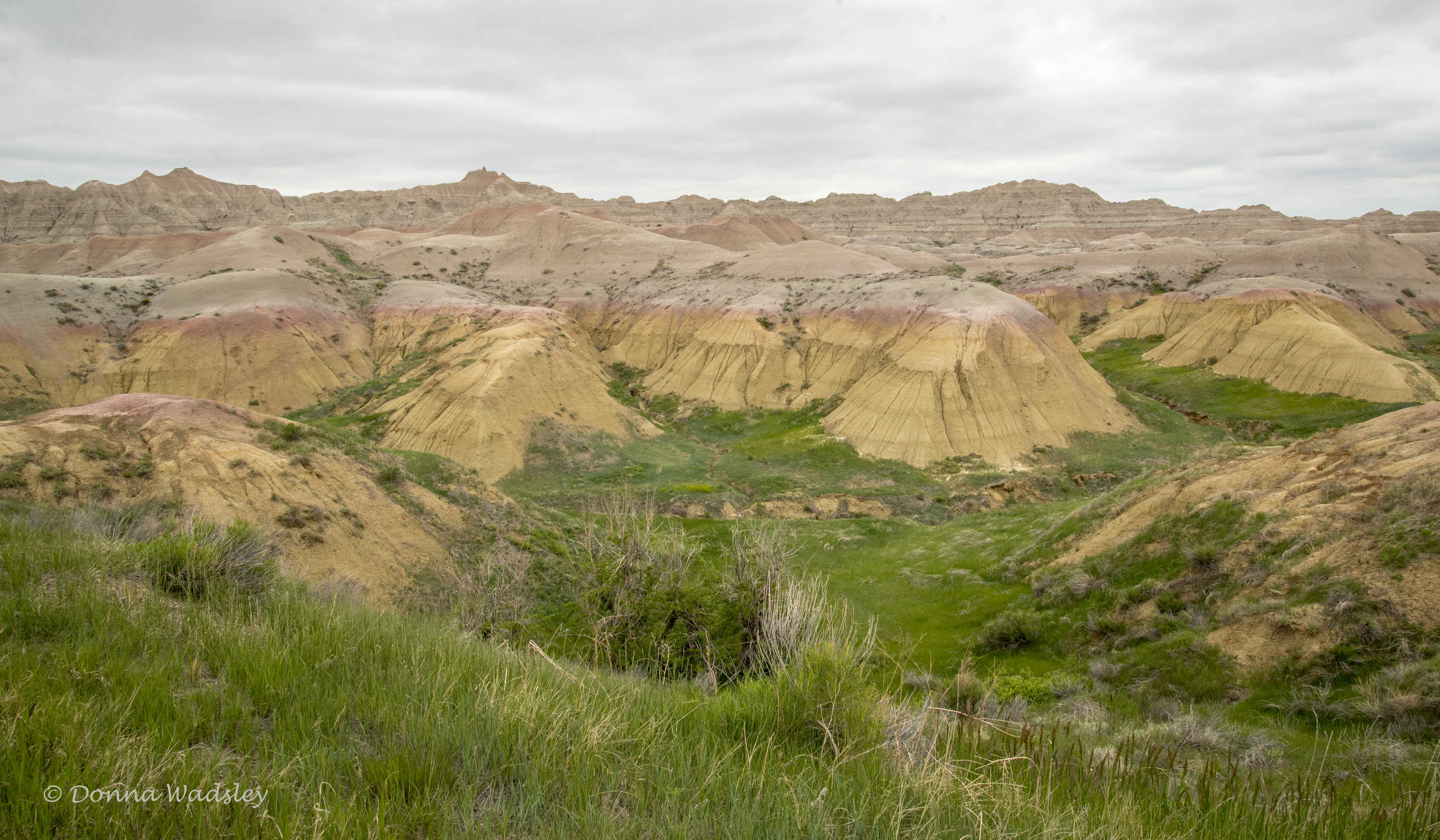
.
For wildlife lovers, it is suggested to take the park’s Sage Creek Rim Road (gravel road) off the main scenic loop, which was towards the end of our drive. Wildlife did not disappoint.
These next photos were taken from Sage Creek Rim Road.
.
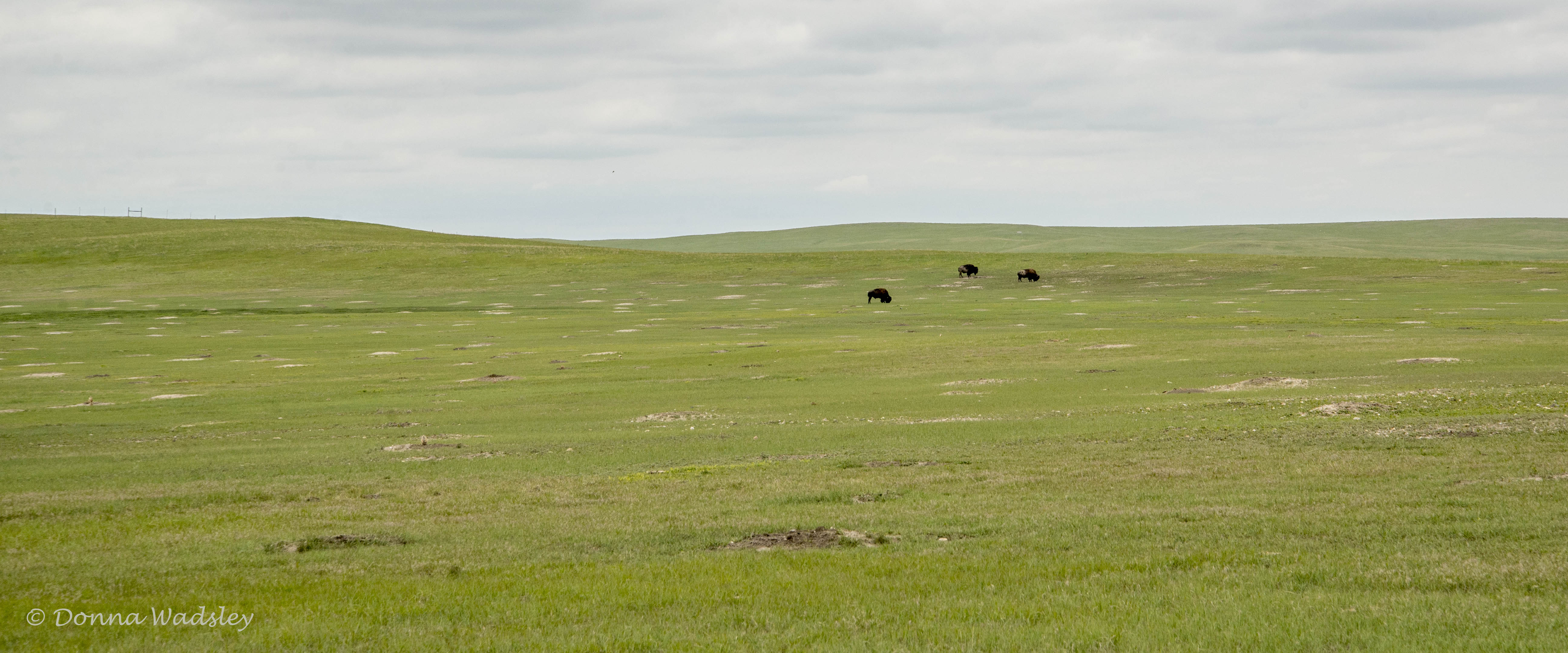
Bison roaming the prairie, “tan” spots are Prairie Dog home entrances
.
.
.
.
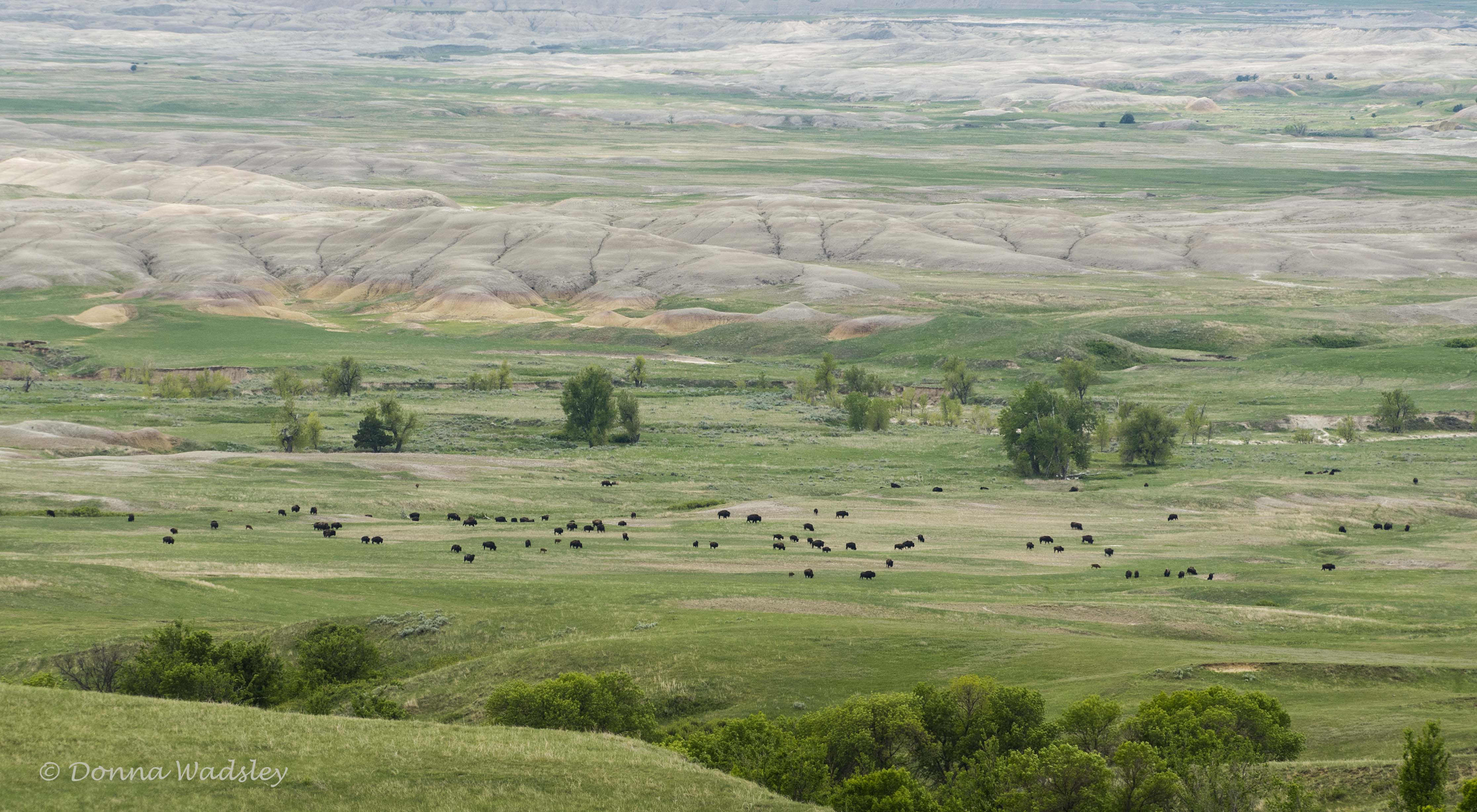
Herd of Bison
.
.
.
There is also a southern unit of Badlands National Park located on the Pine Ridge Reservation and managed in cooperation with the Oglala Sioux Tribe. Due to Covid-19, it was still closed in accordance with Oglala Sioux Tribe ordinances.
More to come from the Badlands NP…..the wildlife!
.
.
Wandering Wooded Trails
.
I pretty much had the several acres of campground trails running through woods and following along the Big Sioux River to myself every visit during the week, so I can imagine I was a surprise to all the birds and wildlife each time. I know they were all enjoyable surprises to me!
I’ve got lots of bird favorites from those trails, the campground and it’s lake, so here’s an overloaded post. Hopefully, a photo catches your eye as cool, unique, or endearing too.
And included as the first photos, two birds that I had put aside to try to ID and have learned I picked up another two lifers! 💃 😊
.
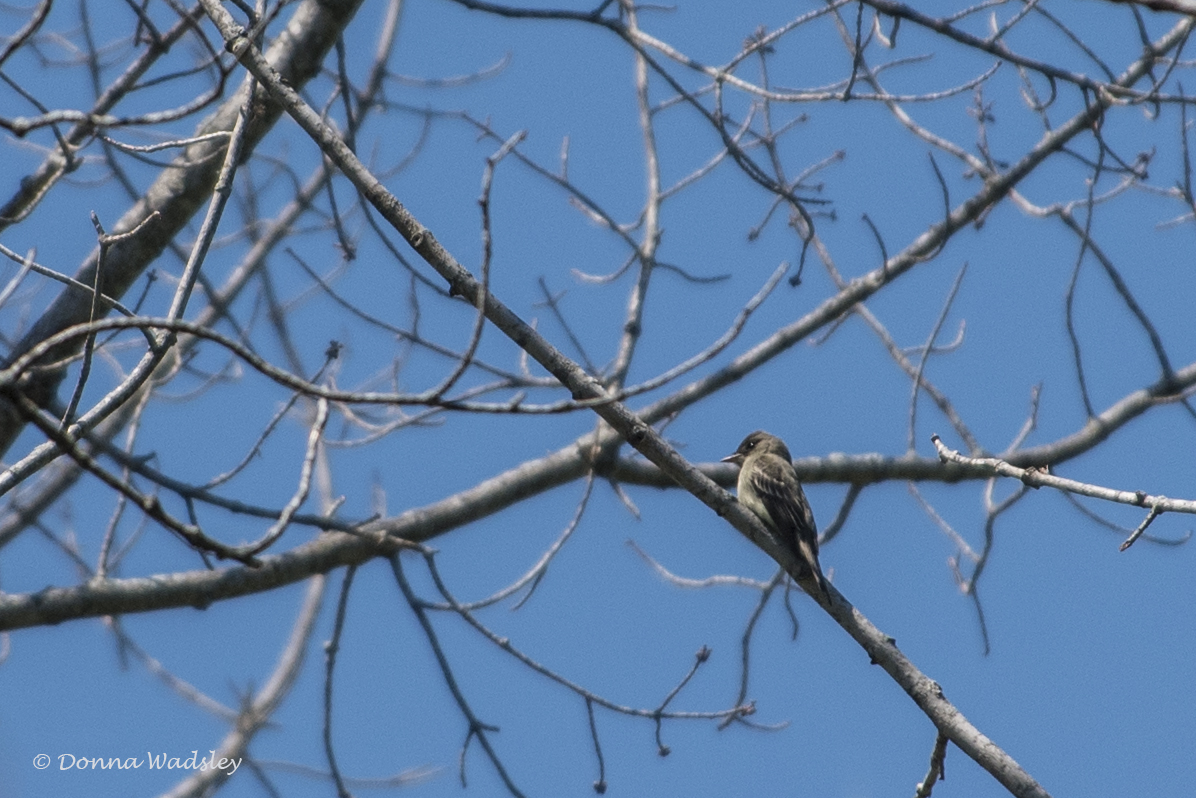
Western Wood-Pewee (Lifer #228)
.
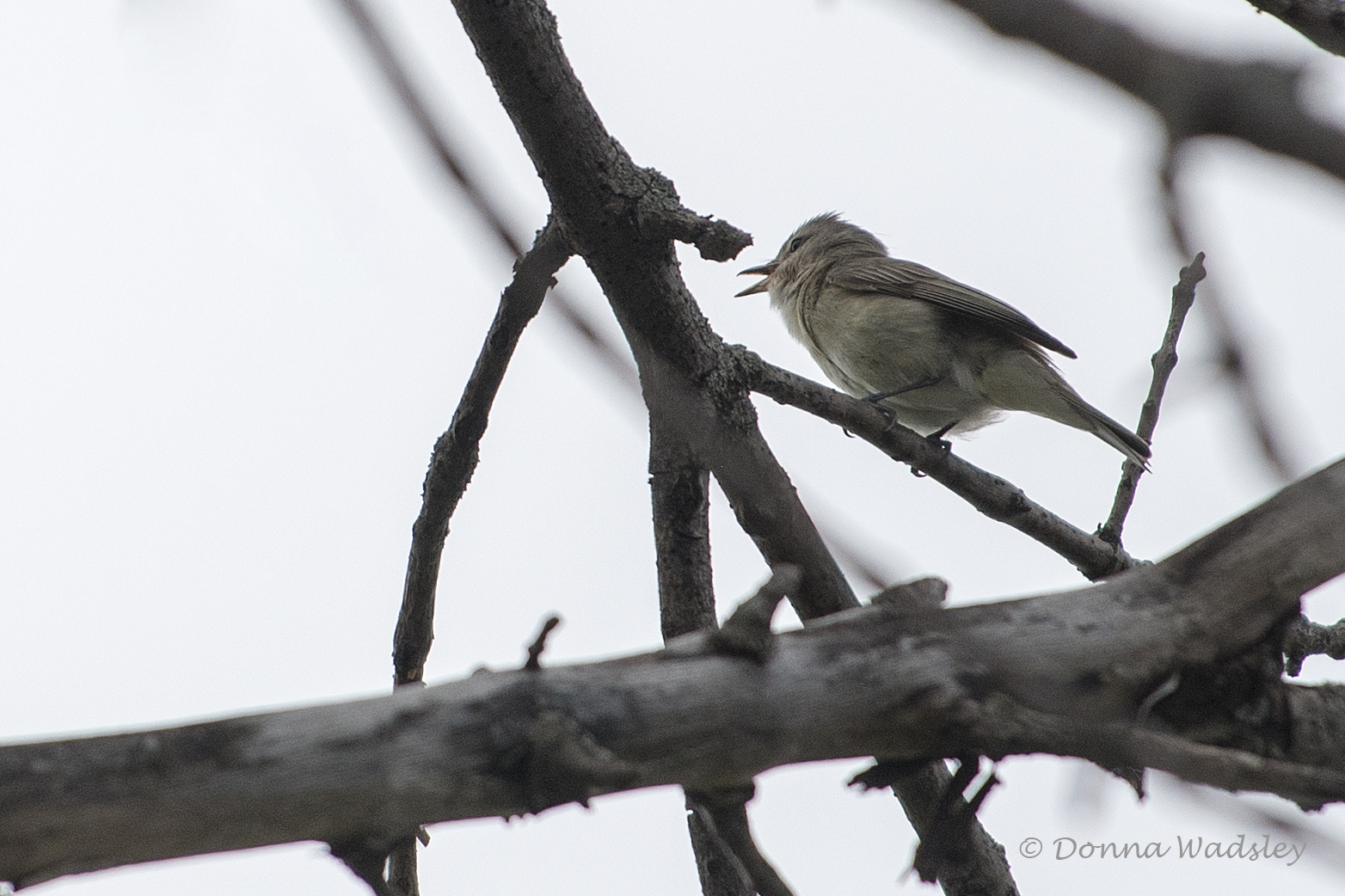
Great Pewee (Lifer #229)
(Thank you, HJ (Avian101), for your expertise on ID help!)
.
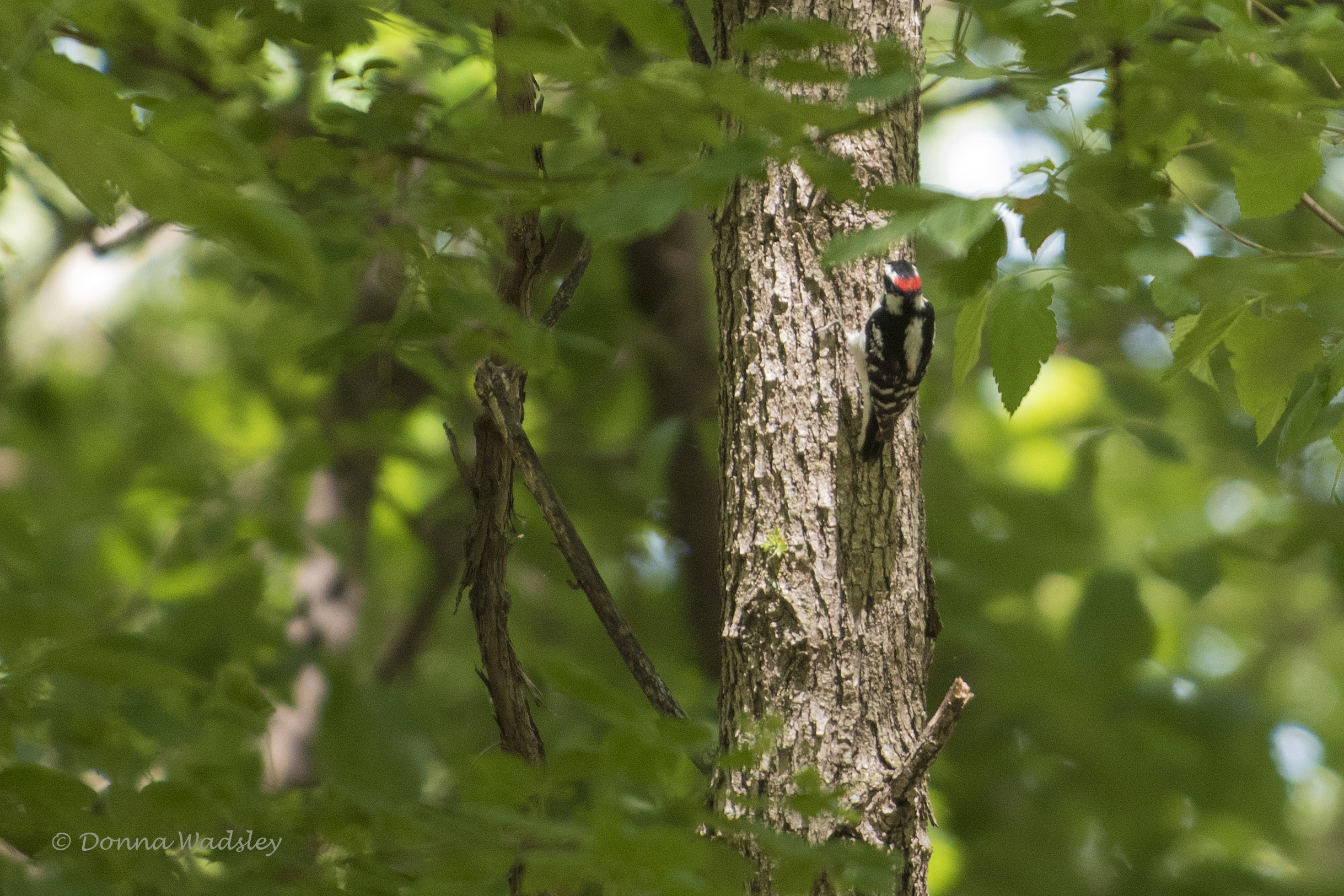
Downy Woodpecker (male)
.
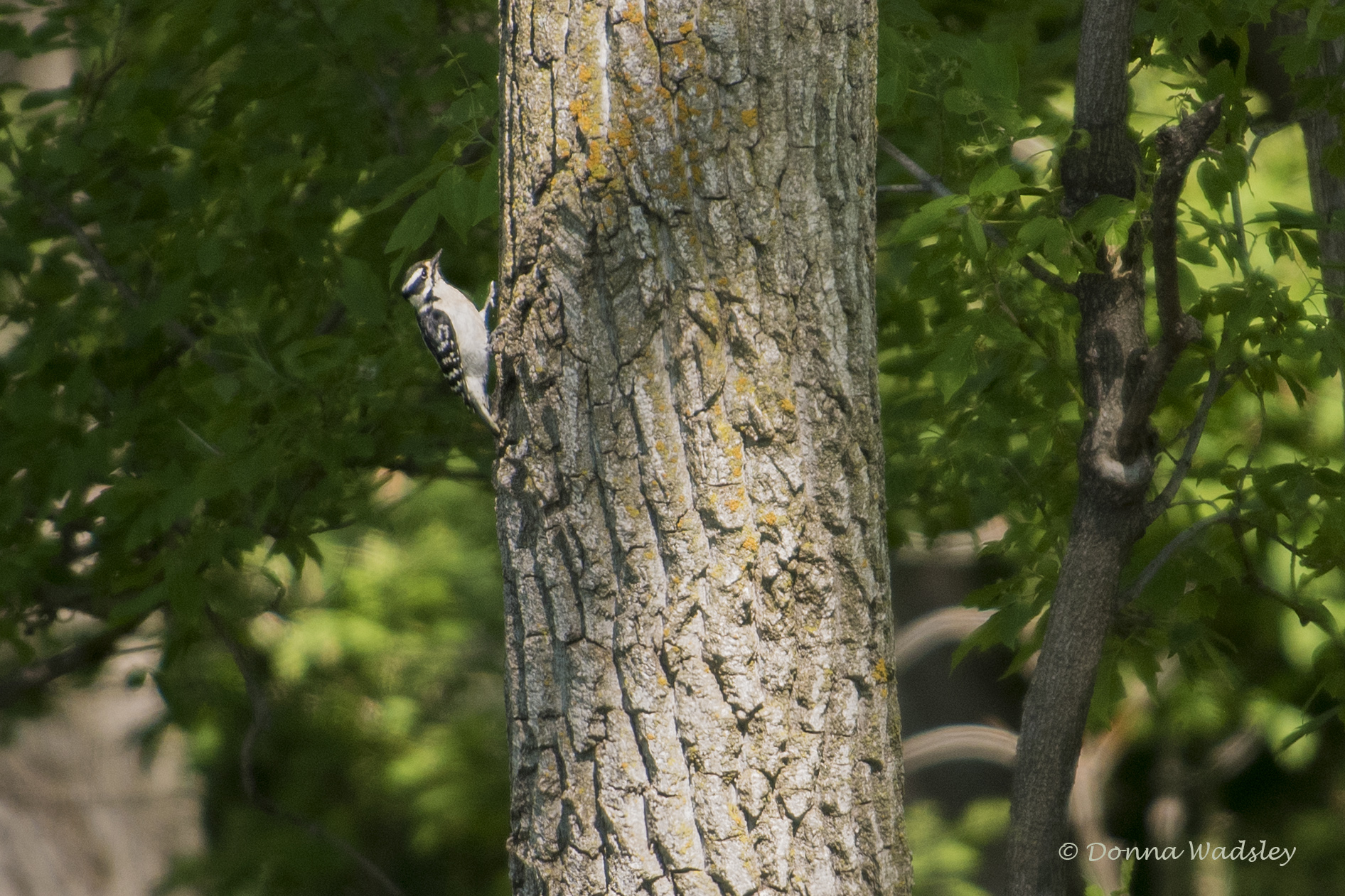
Downy Woodpecker (female)
.
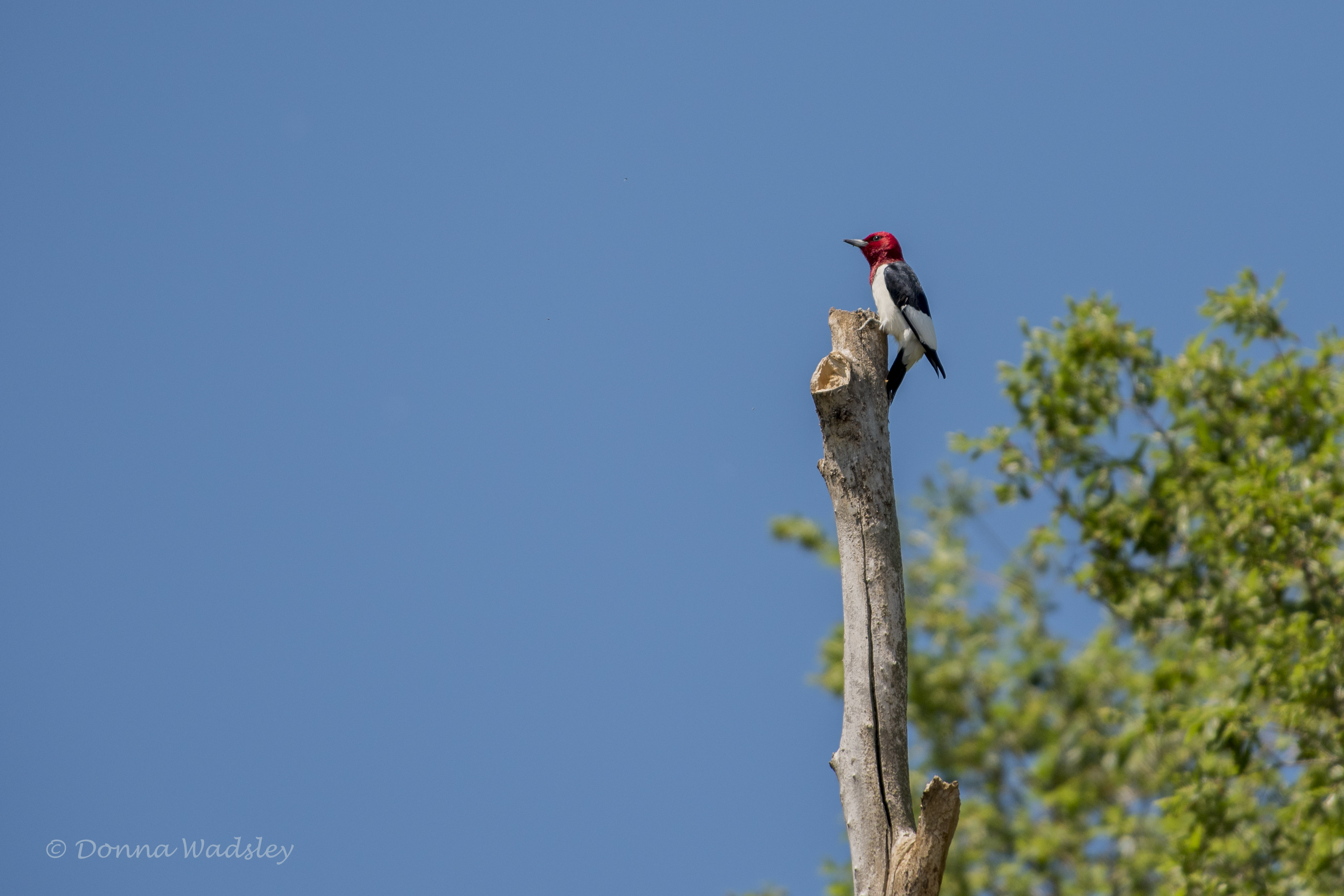
Red-headed Woodpecker
.
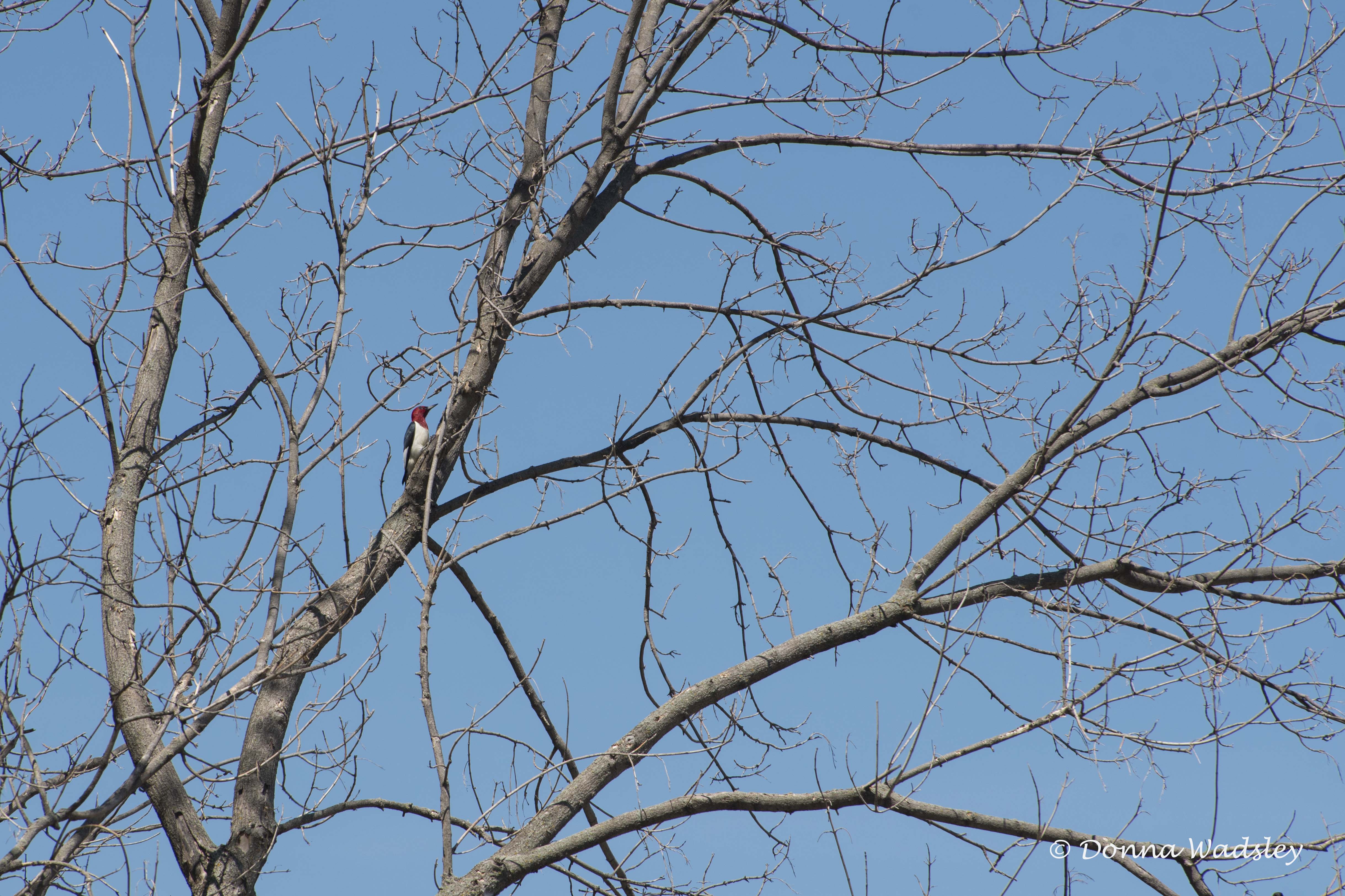
Red-headed Woodpecker
.
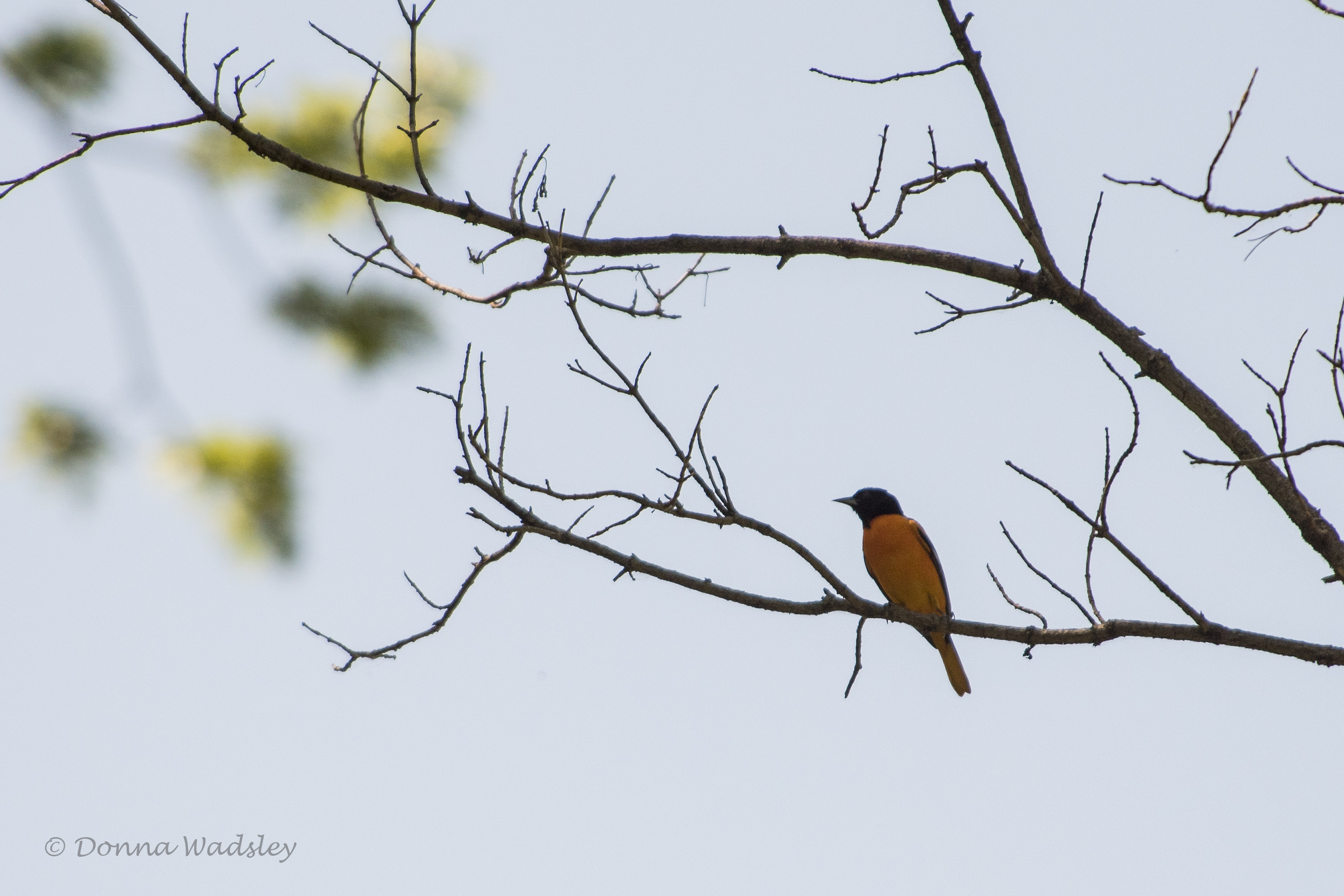
Baltimore Oriole (male)
.
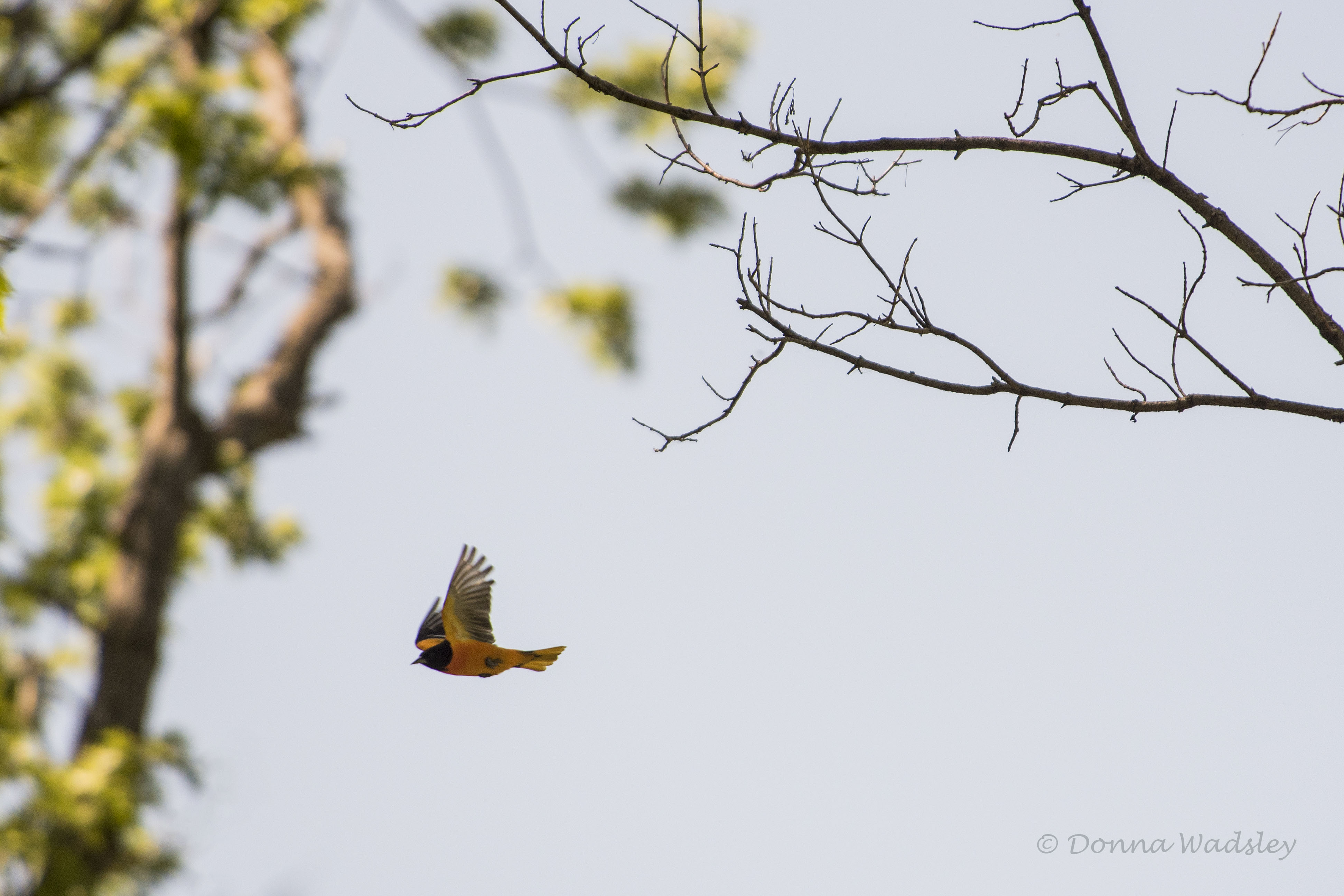
Baltimore Oriole
.
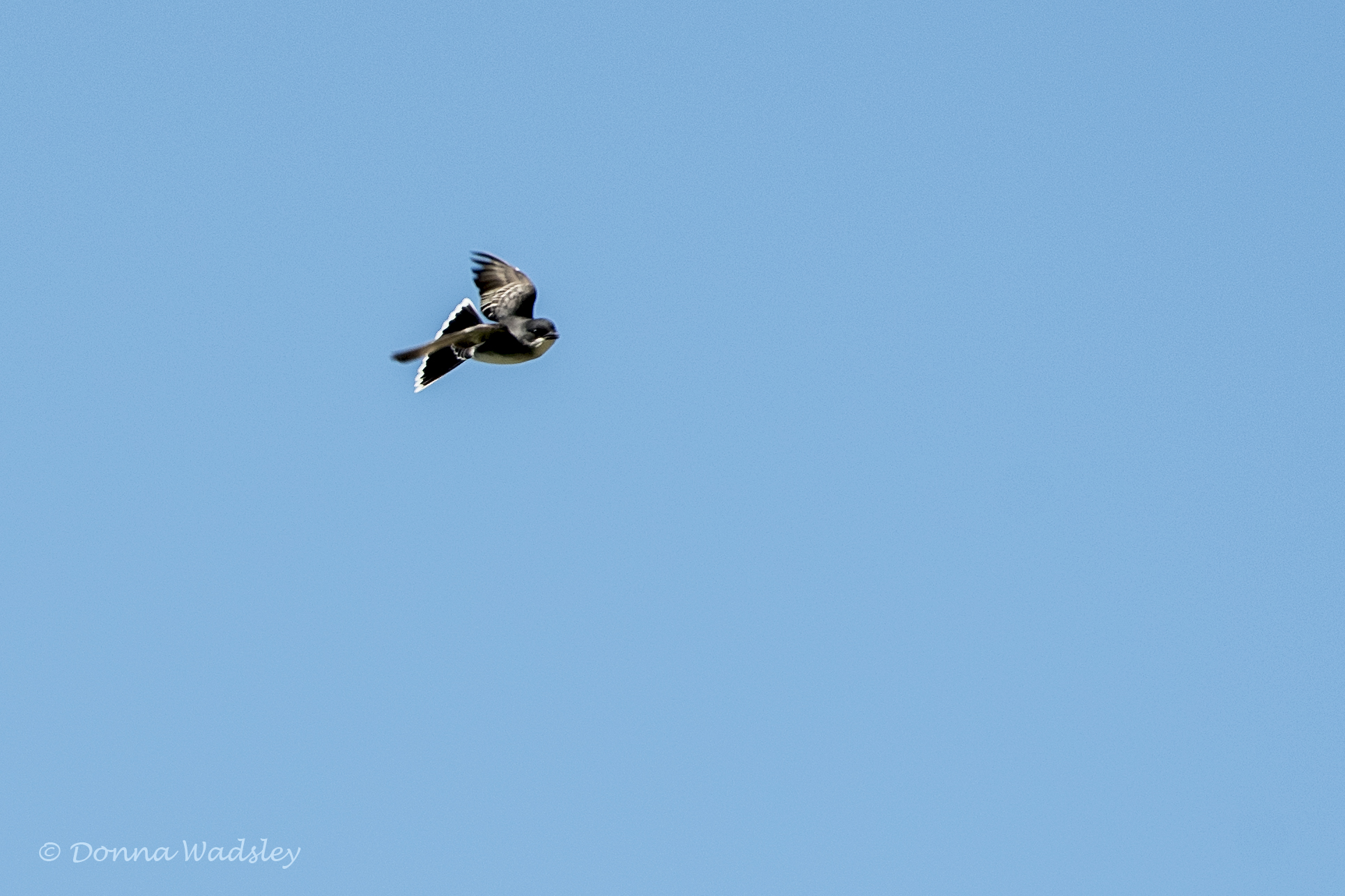
Eastern Kingbird
.
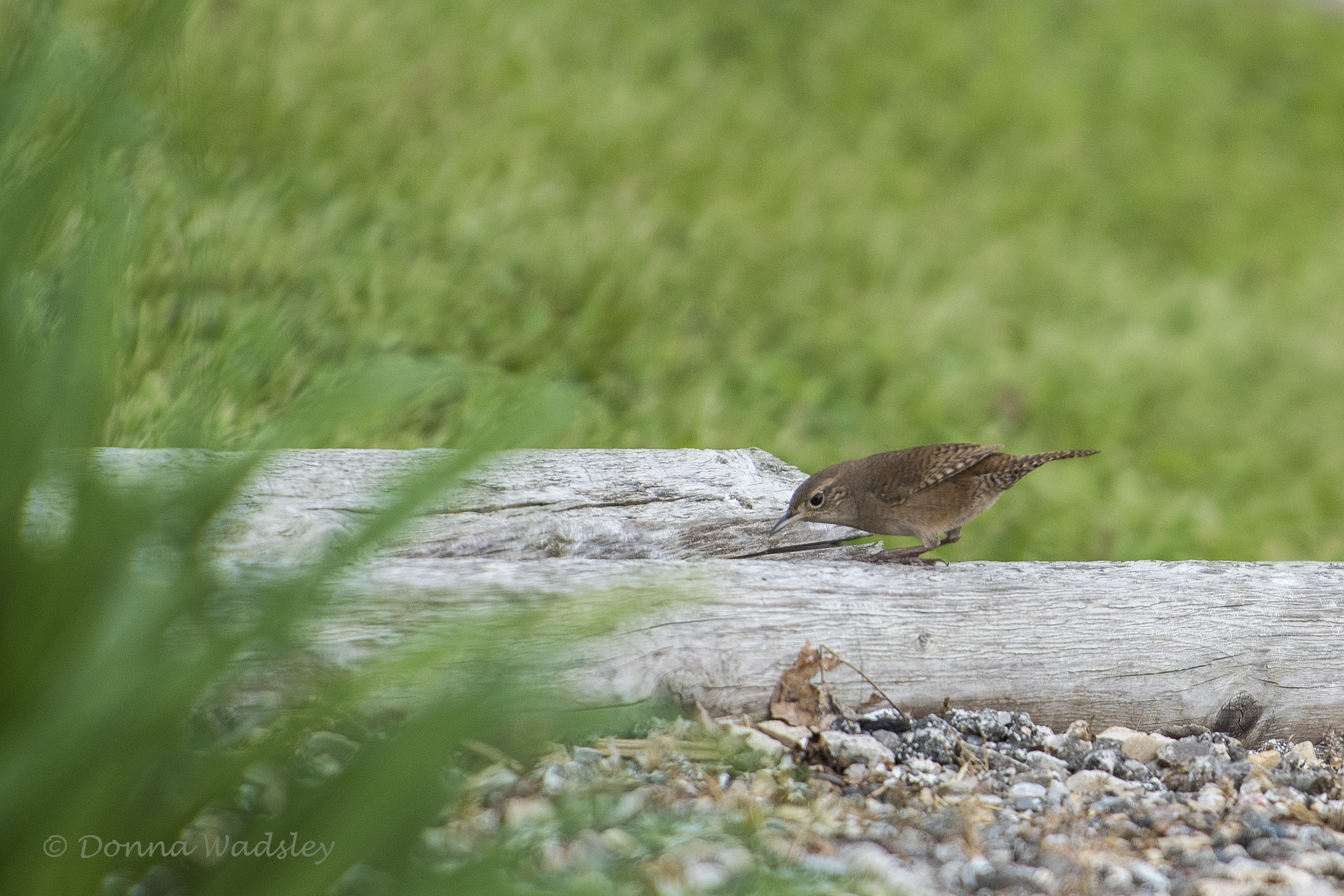
House Wren
.
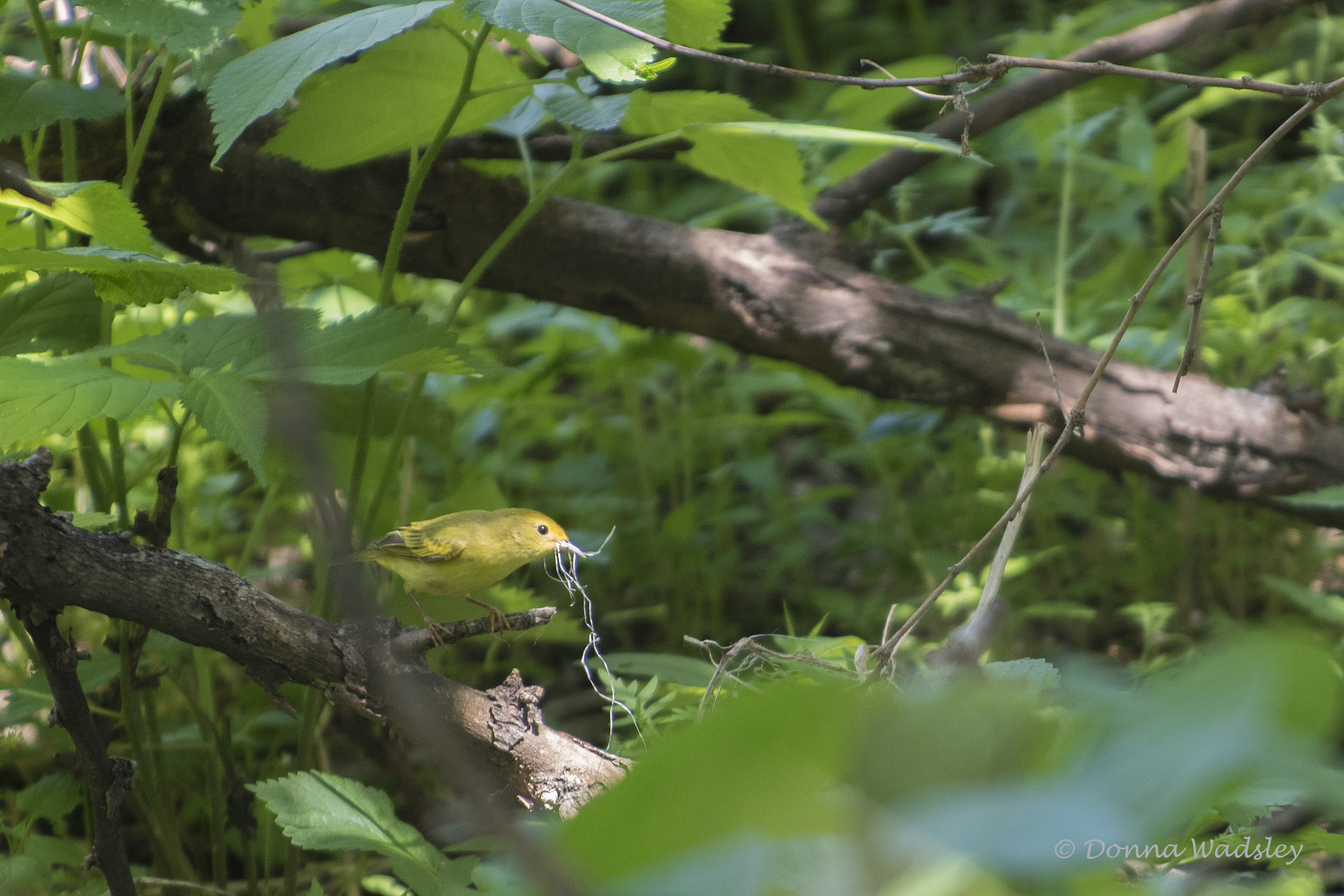
Yellow Warbler (female) collecting nesting material
.
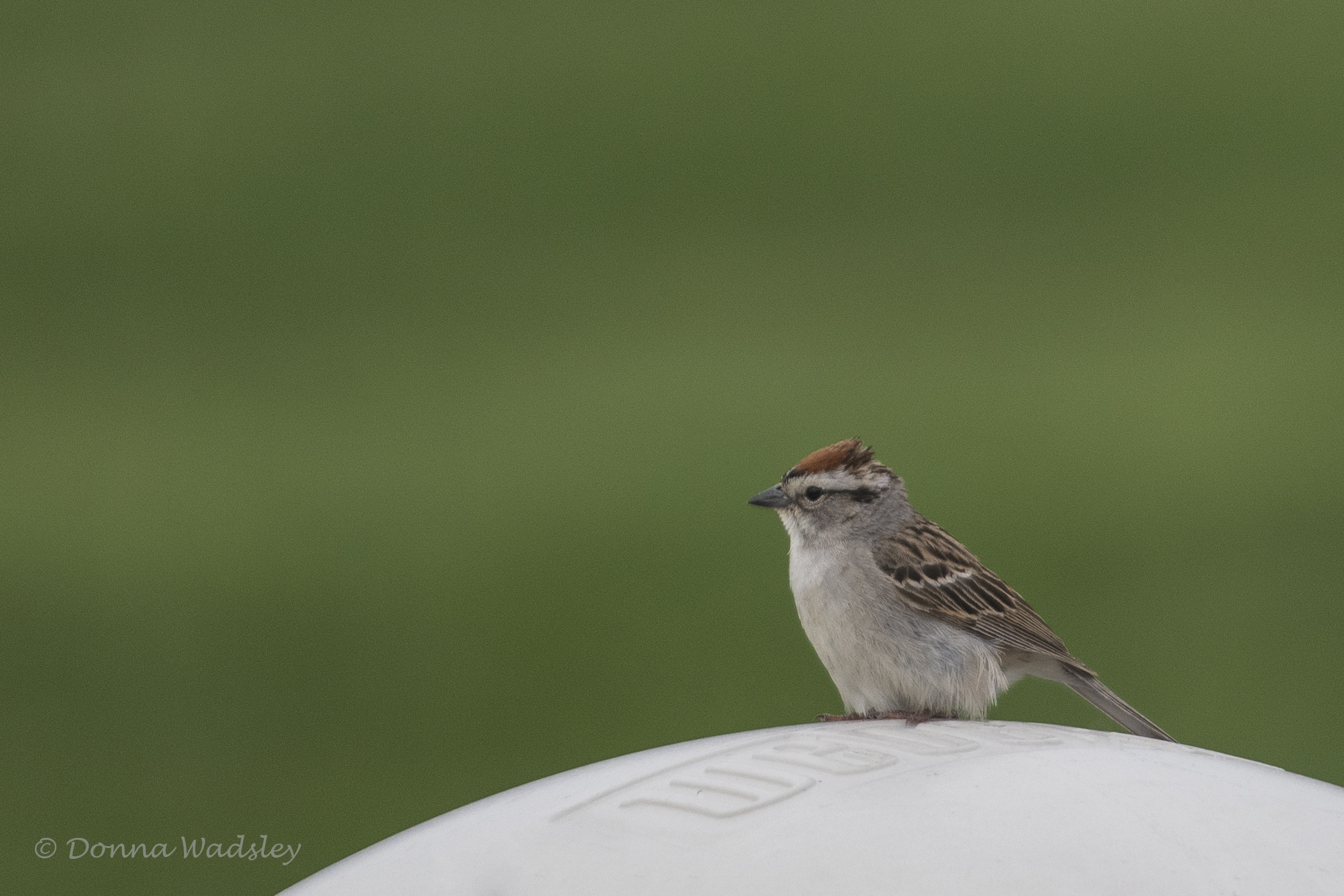
Chipping Sparrow (on our grill cover)
.
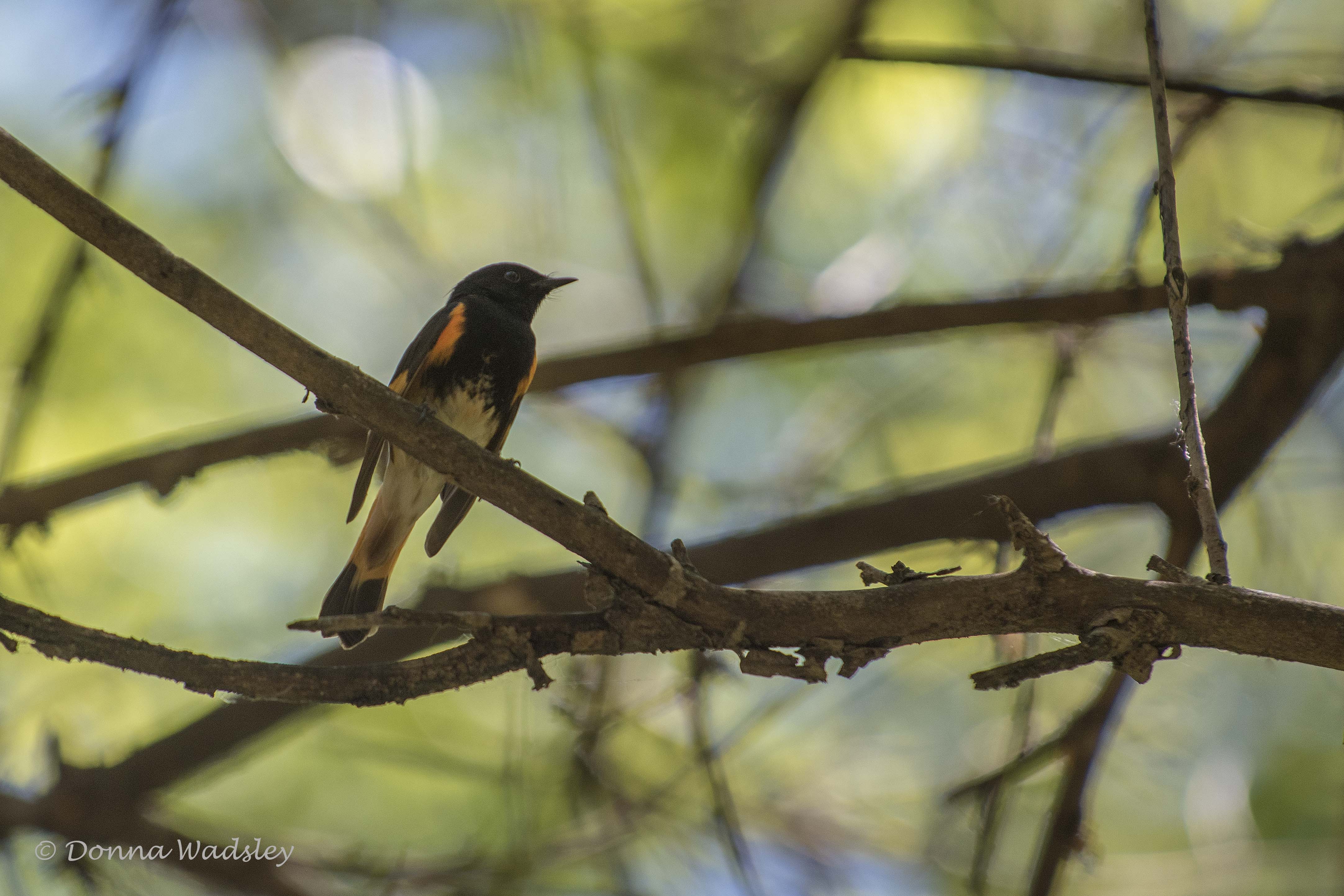
American Redstart (male)
.
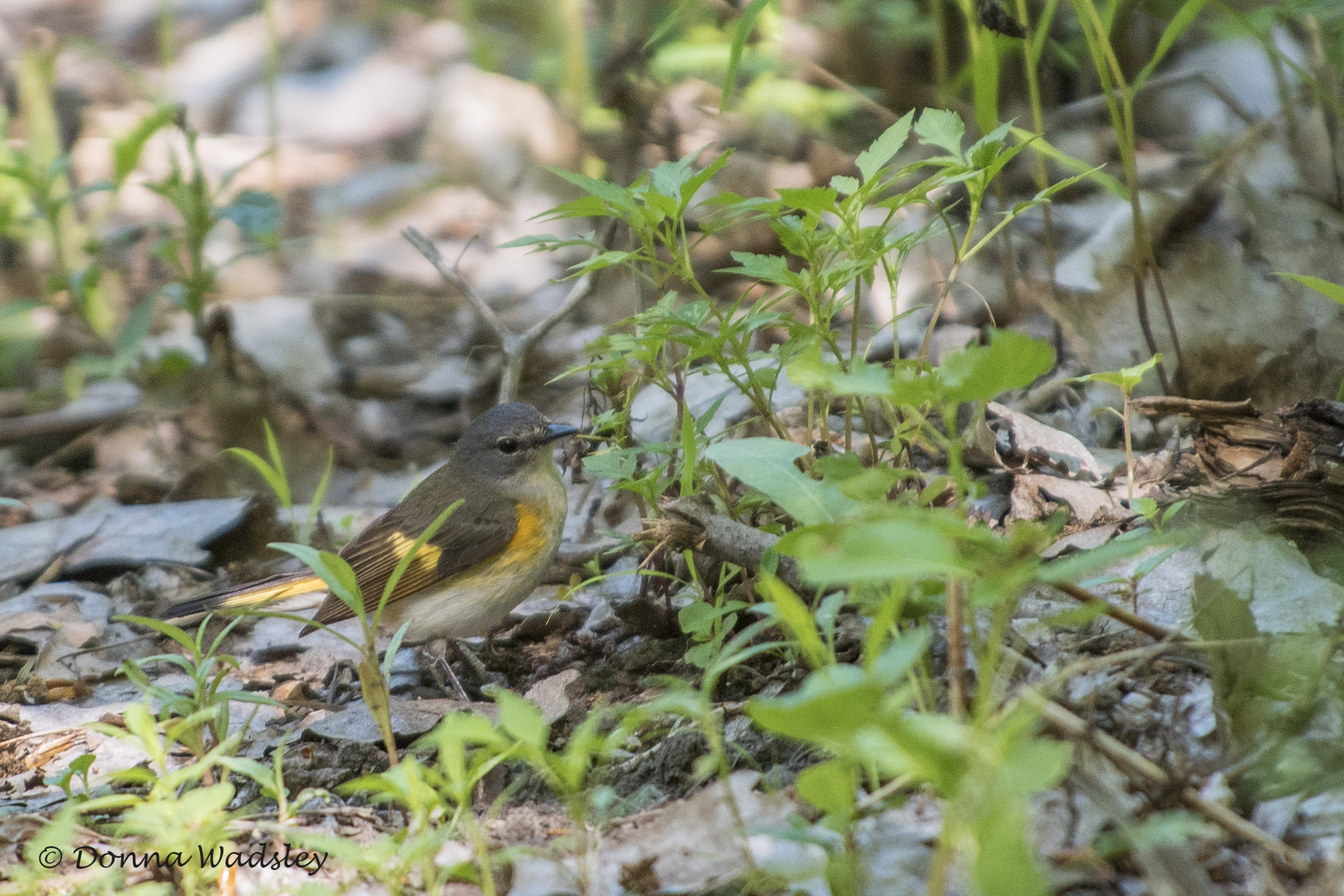
American Redstart (female)
.
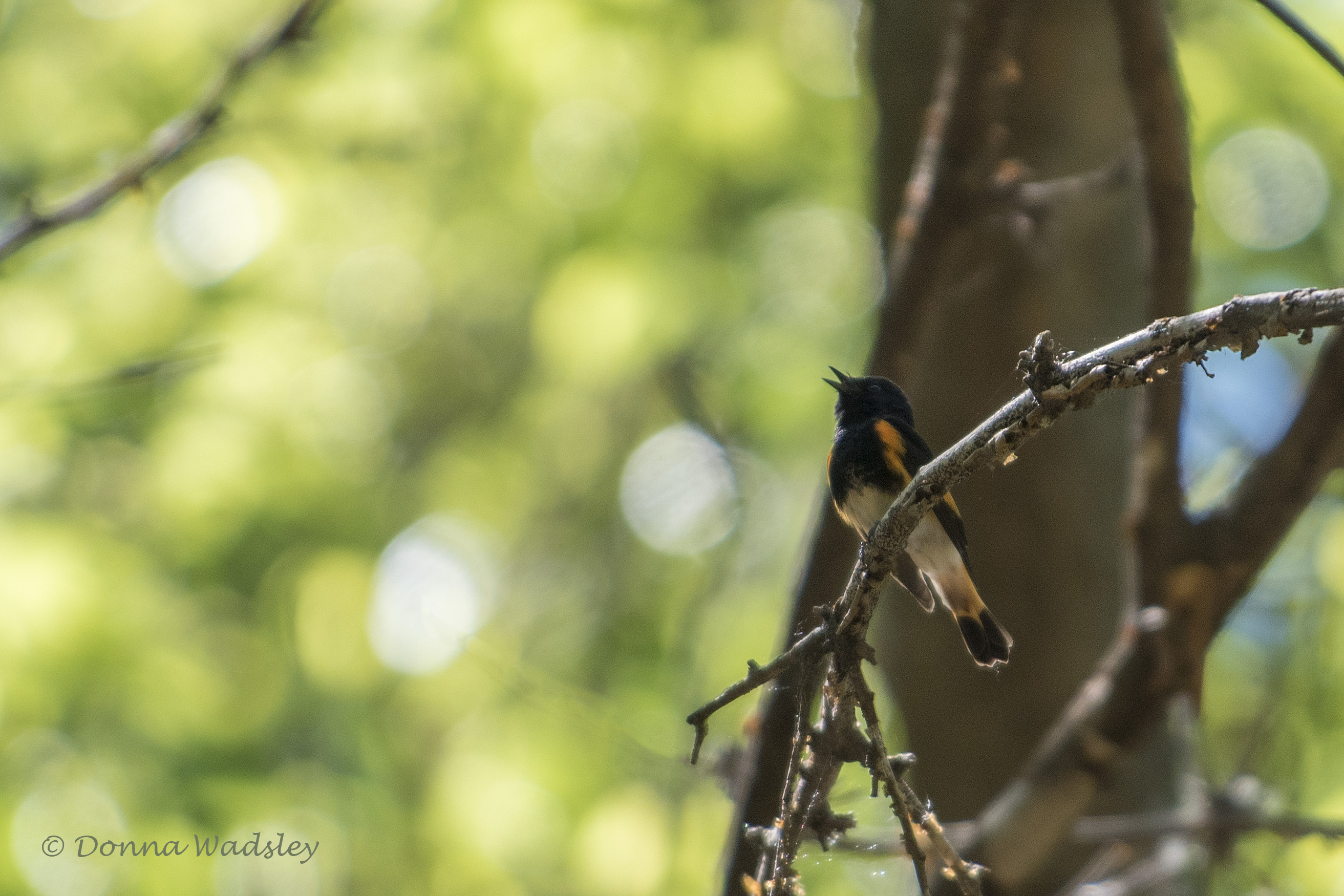
American Redstart (male)
.
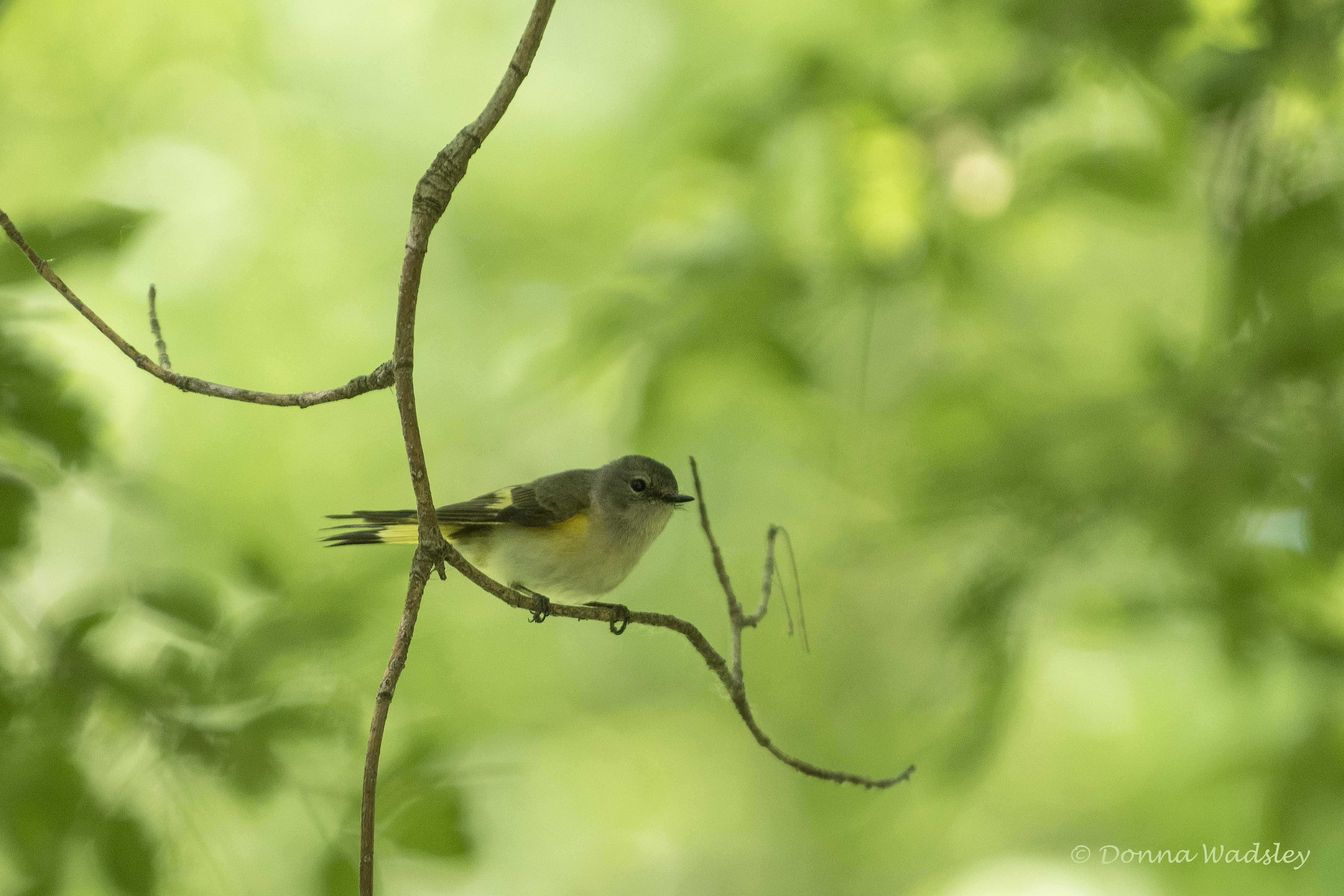
American Redstart (female)
.
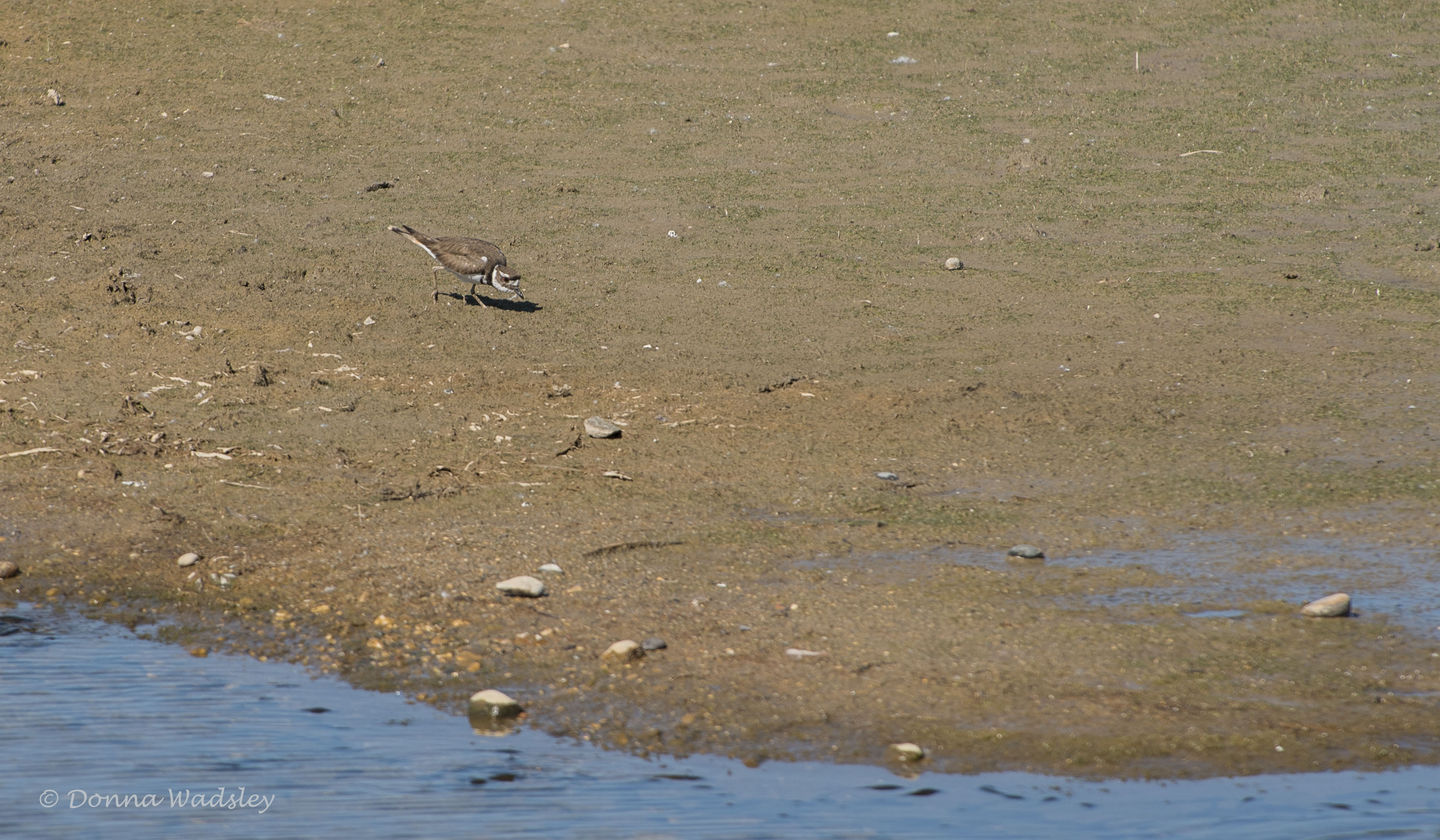
Killdeer
.
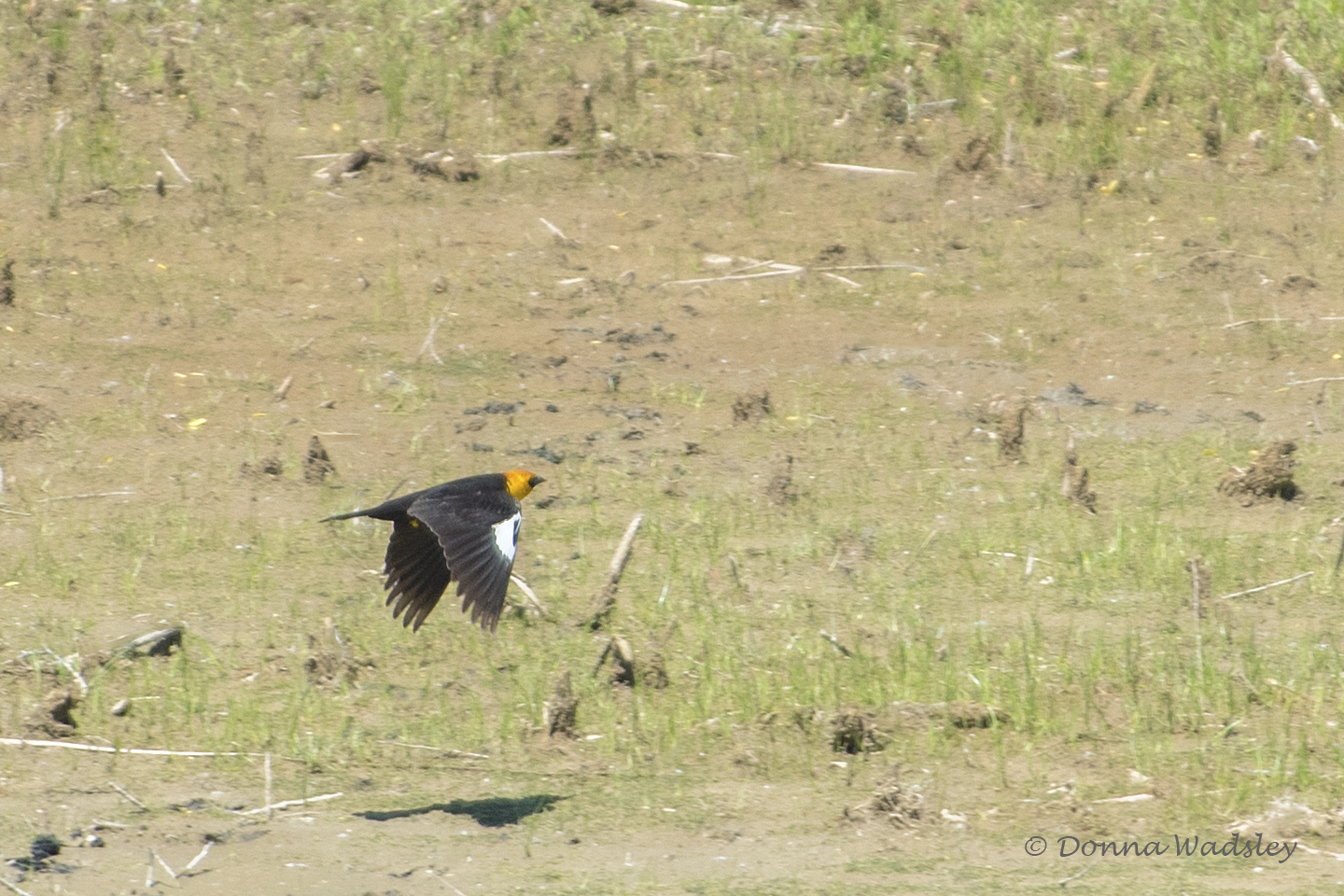
Yellow-headed Blackbird
.
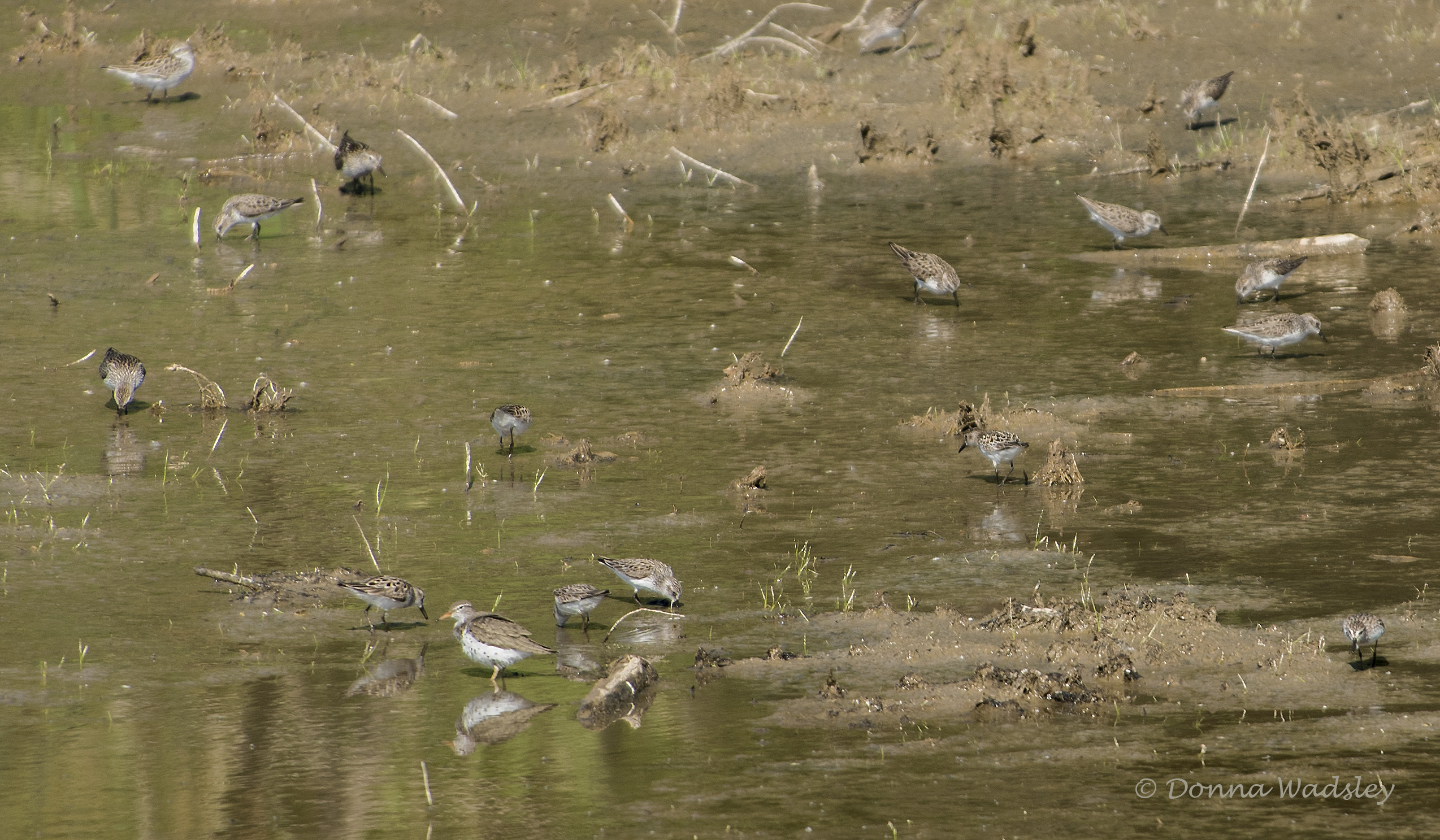
Spotted Sandpiper surrounded by Least Sandpipers
.
A few other things caught my eye as well.
.
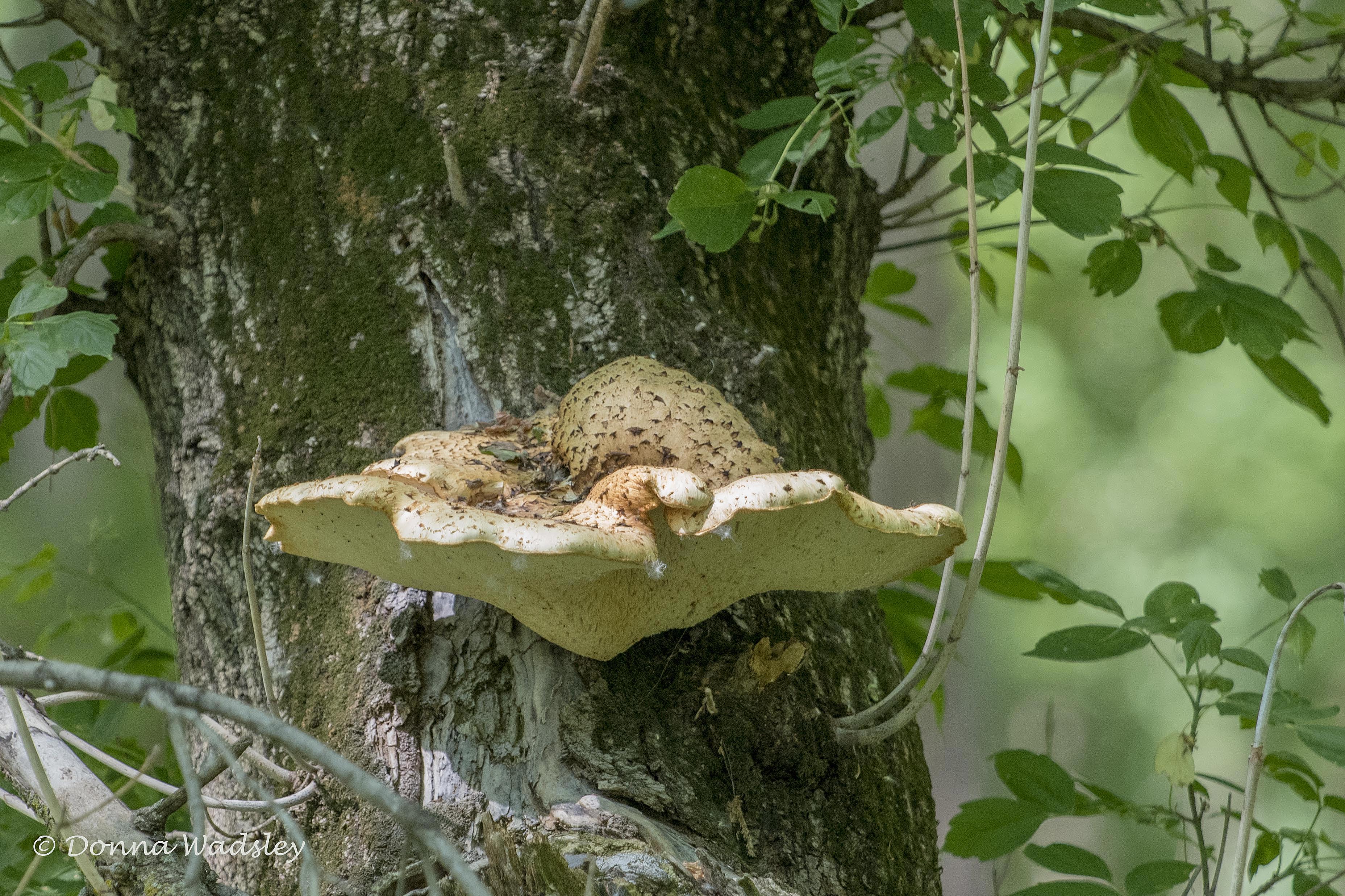
Shelf Fungi
.
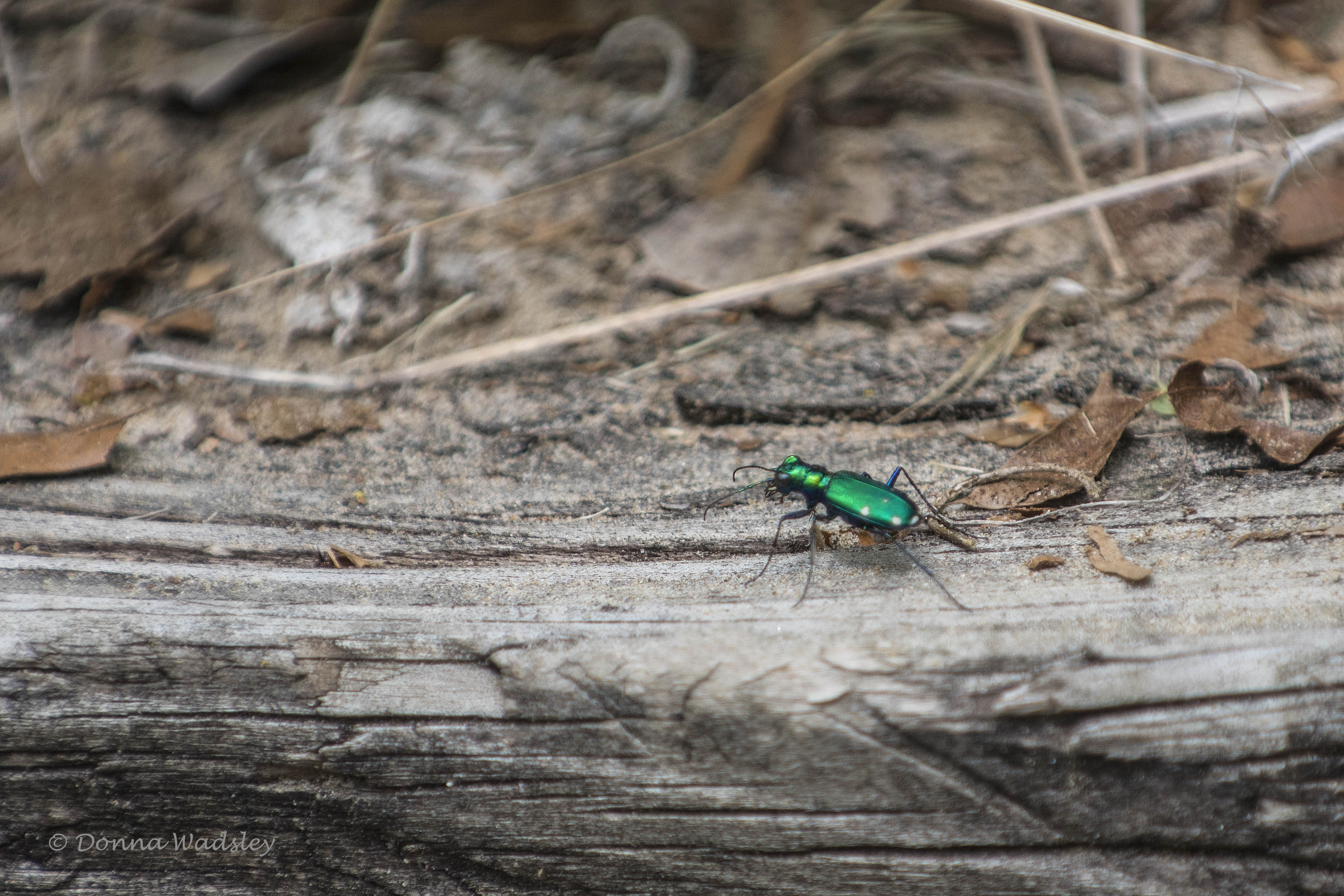
Six-spotted Tiger Beetle
.
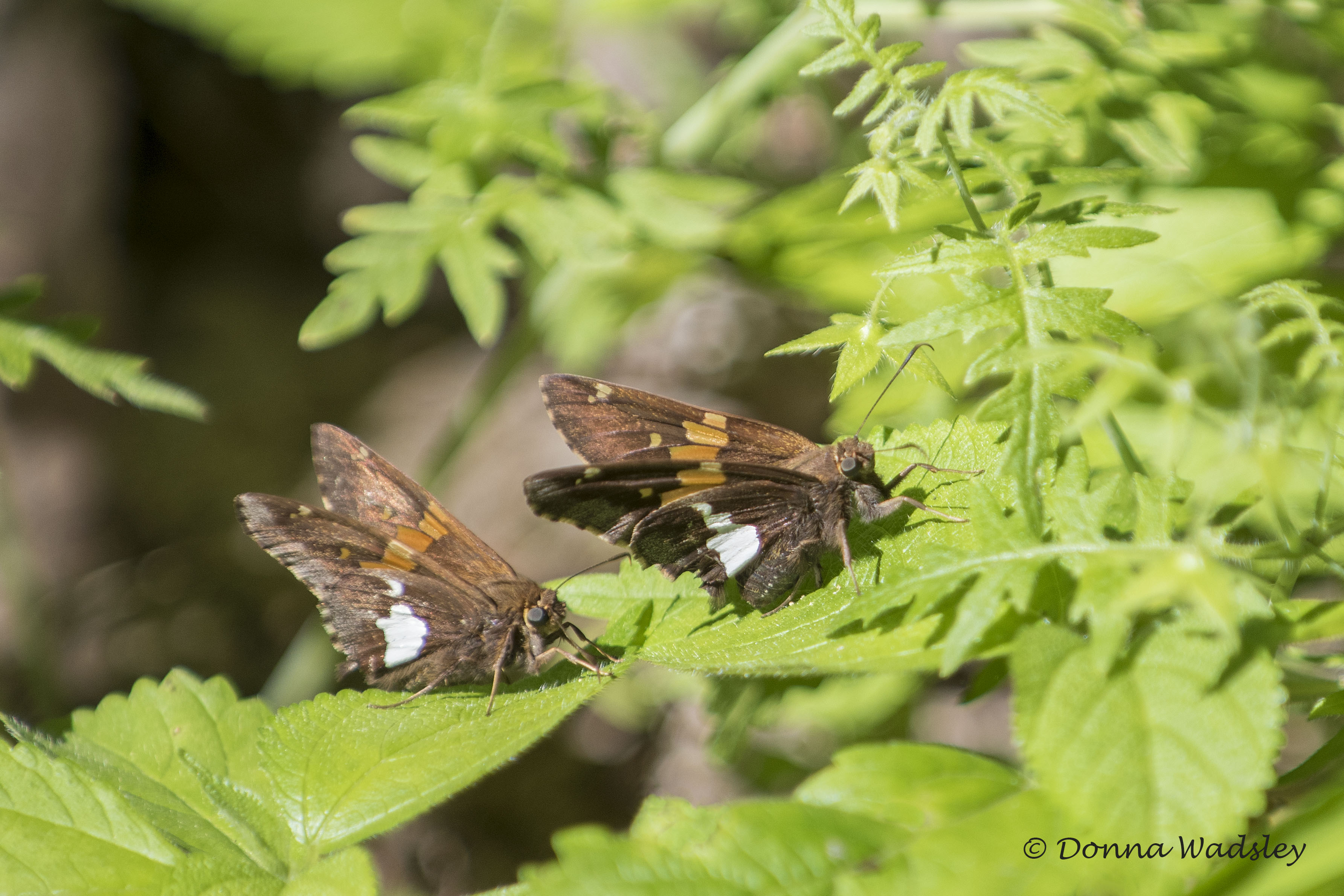
Silver-spotted Skippers
.
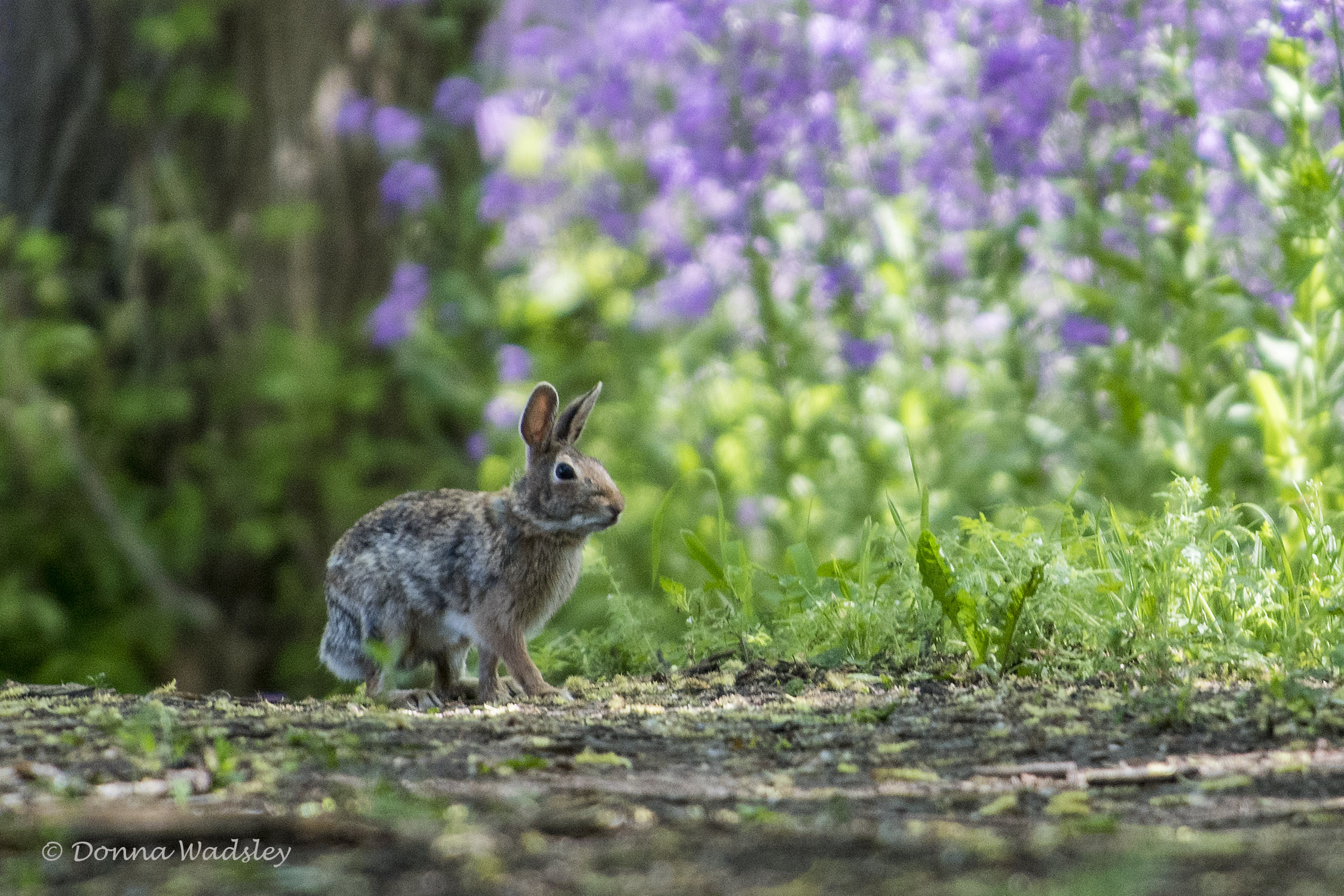
Cotton-tail Rabbit
.
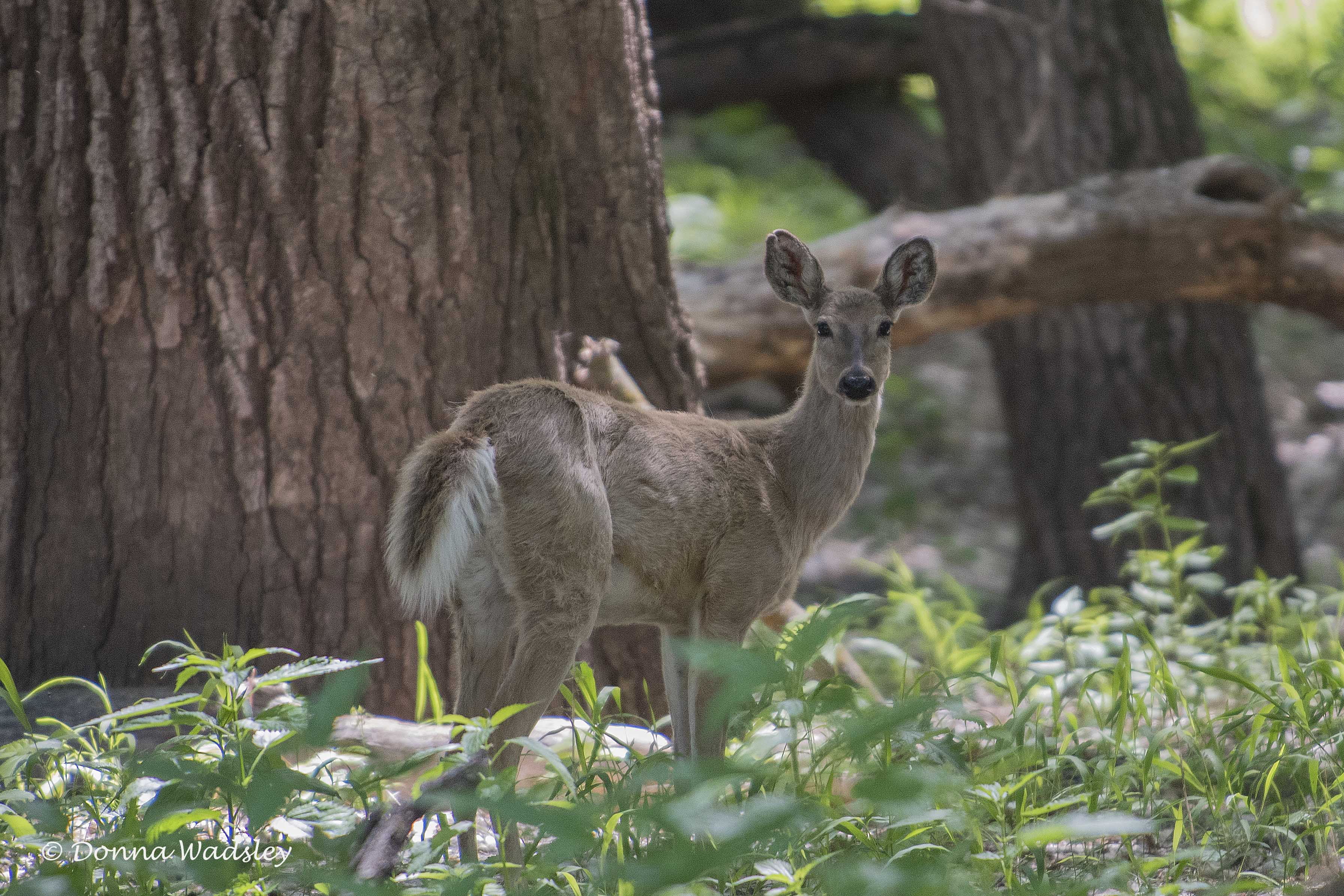
White-tailed Deer (female)
.
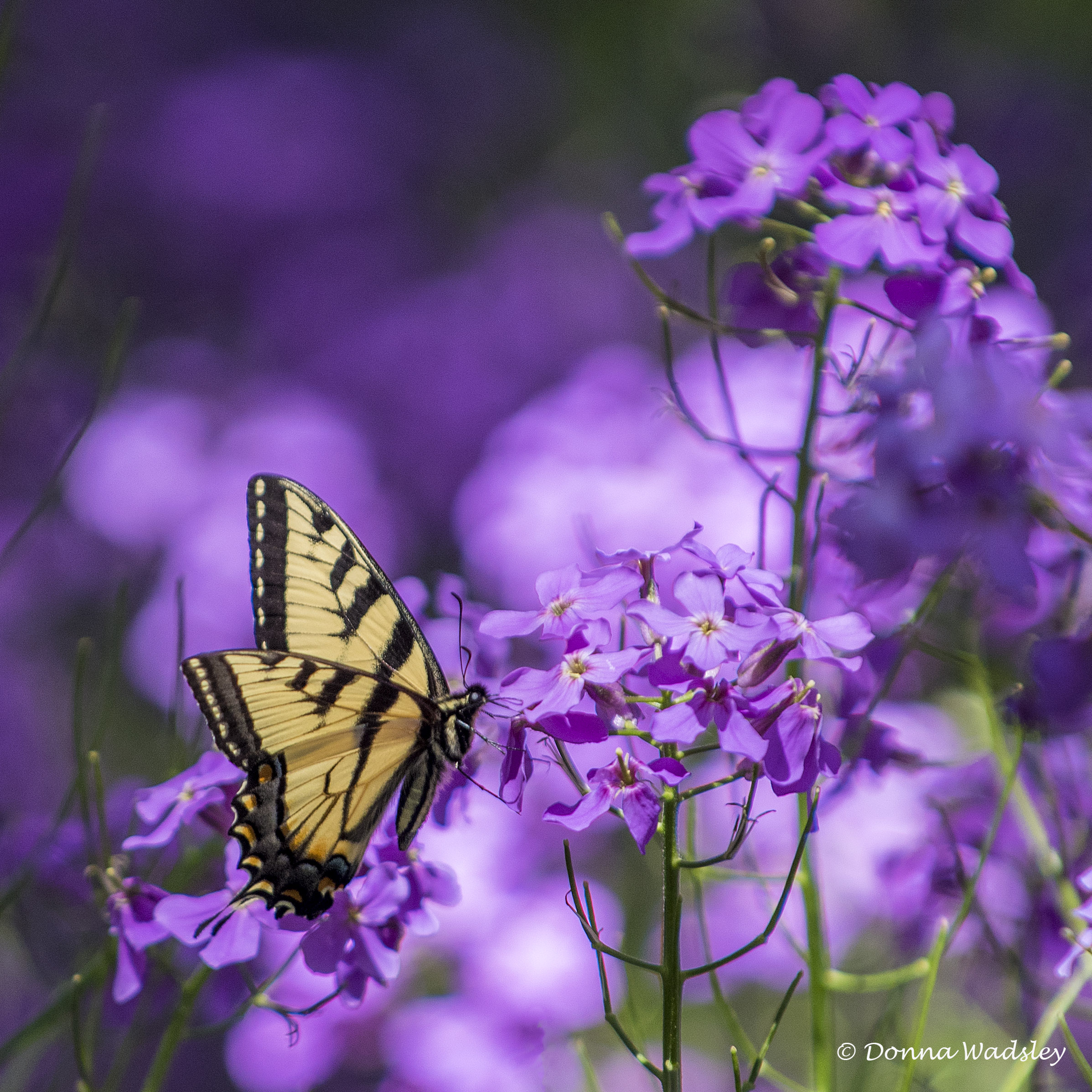
Eastern Tiger Swallowtail
.
Thanks so much for hanging in there through all those!!
I’ll wrap up with a family portrait. 😊
.
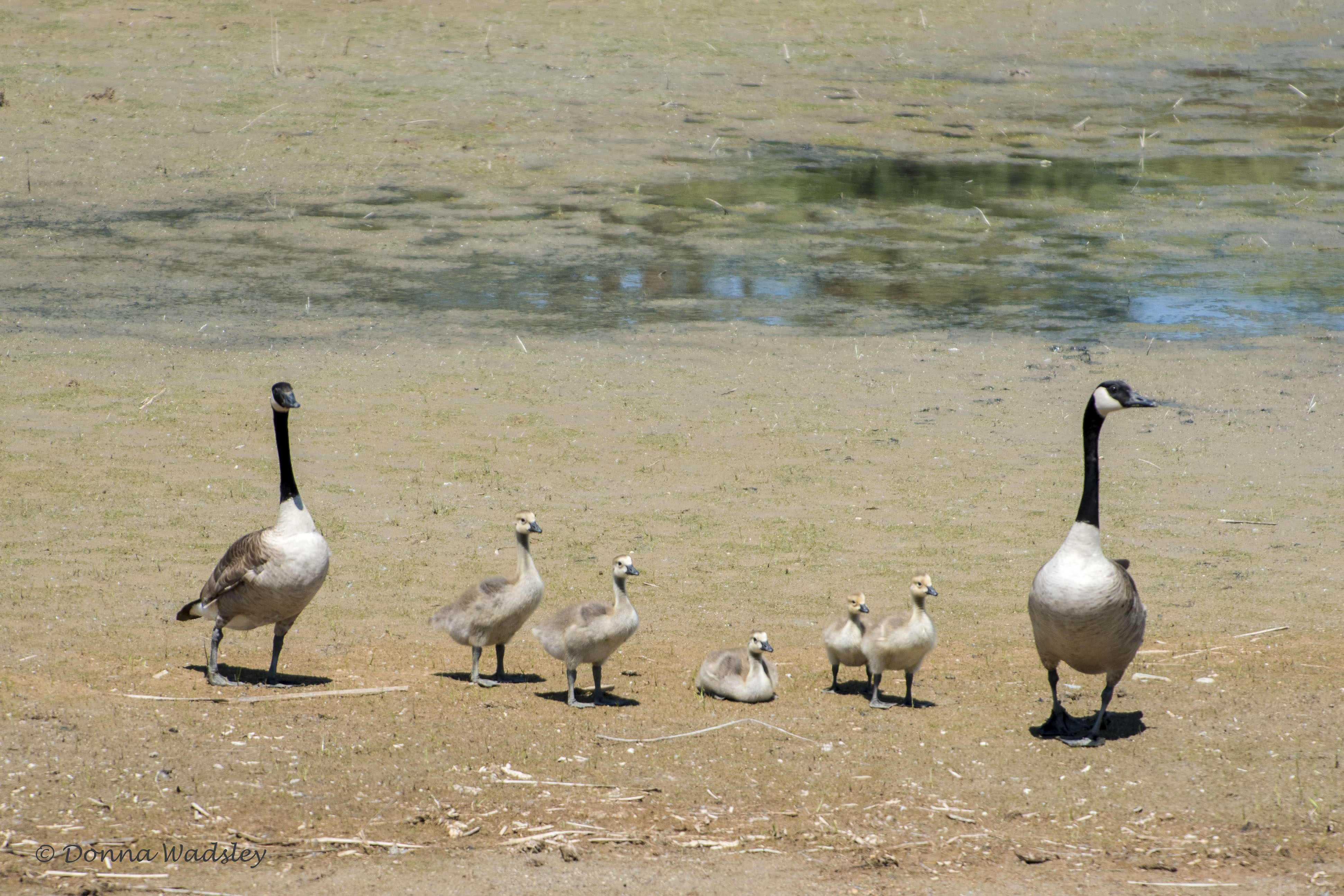
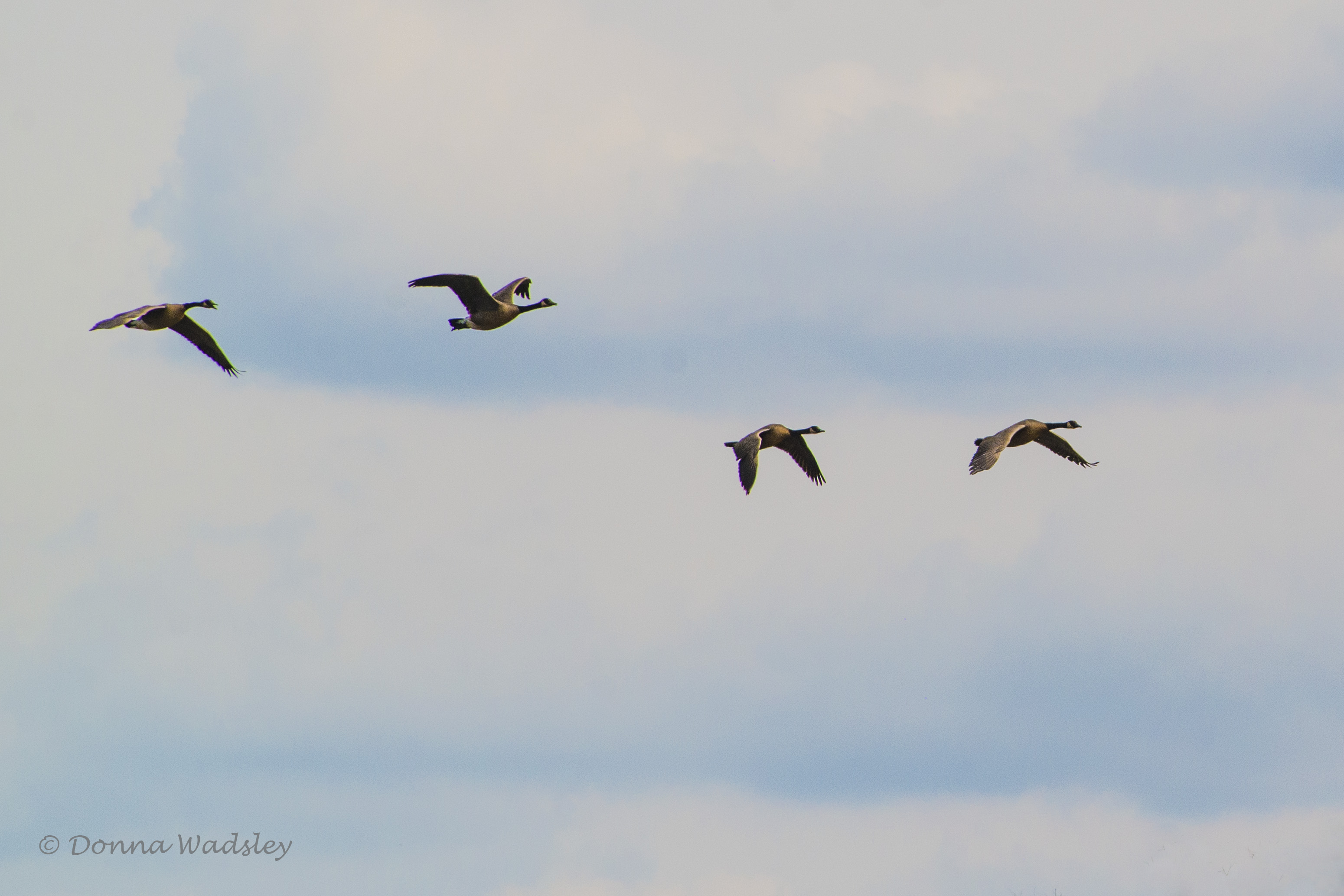
Canada Geese family portrait
.
Our RV wheels have rolled, where are we next and what birds & wildlife have I seen? 😉
.
.
Three Birds – Three Lifers
.
My campground selection for our week’s stay in Iowa was spot-on awesome. Not only were the sites spacious and surrounded a pretty lake, there were also wonderful nature trails directly on the campground’s massive property.
And those nature trails were definitely inviting…..
.
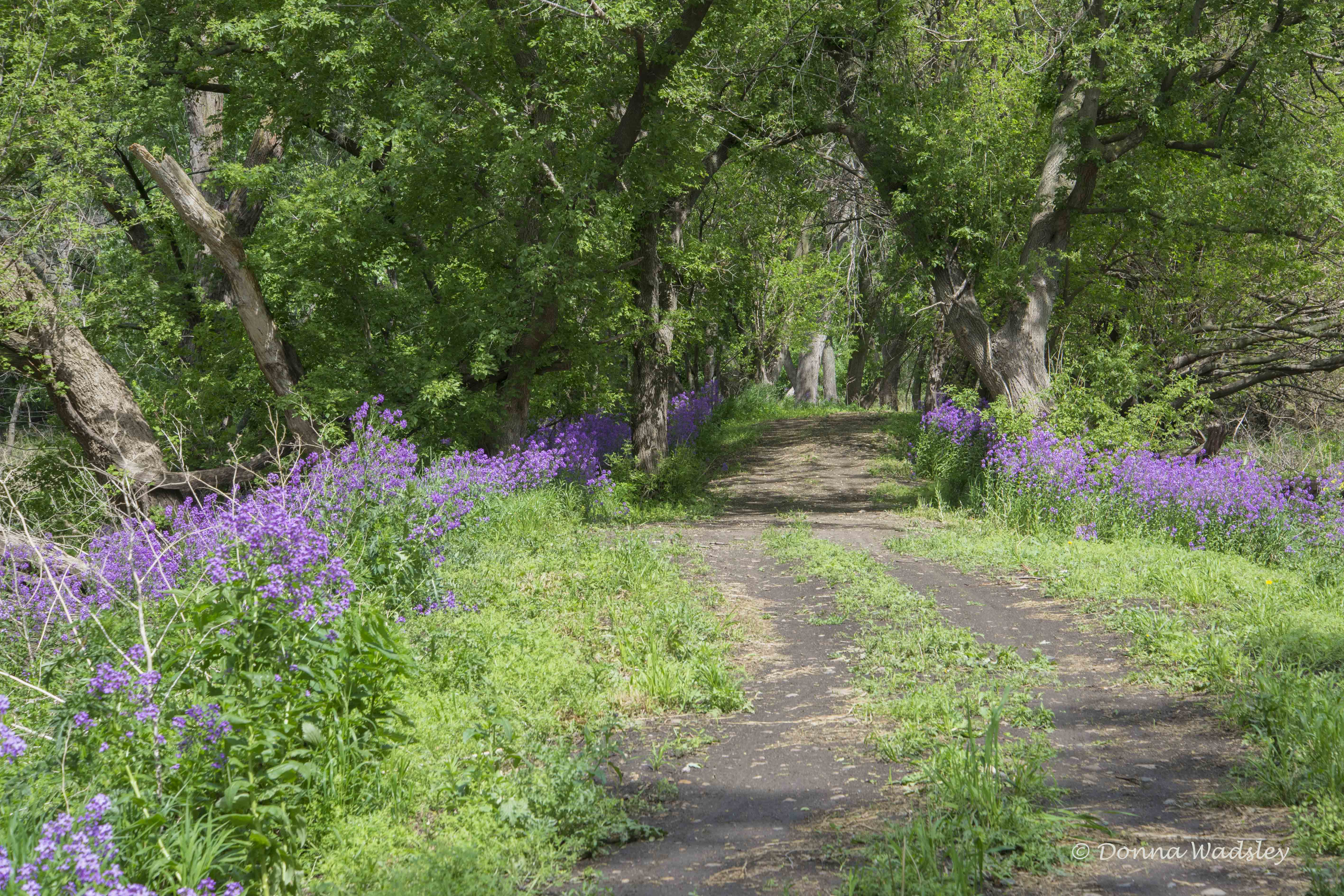
Campground trail entrance
.
To fulfill my excitement to share 😉, this post is of three birds, all new lifers for me, that I captured my first day on these trails, which was the day after photographing my ‘new’ Dickcissel (last post).
I wish my photos were better on the first two, but they’re clear enough to ID these birds, so good enough for my lifer list personal prerequisite. Woot woot!
.
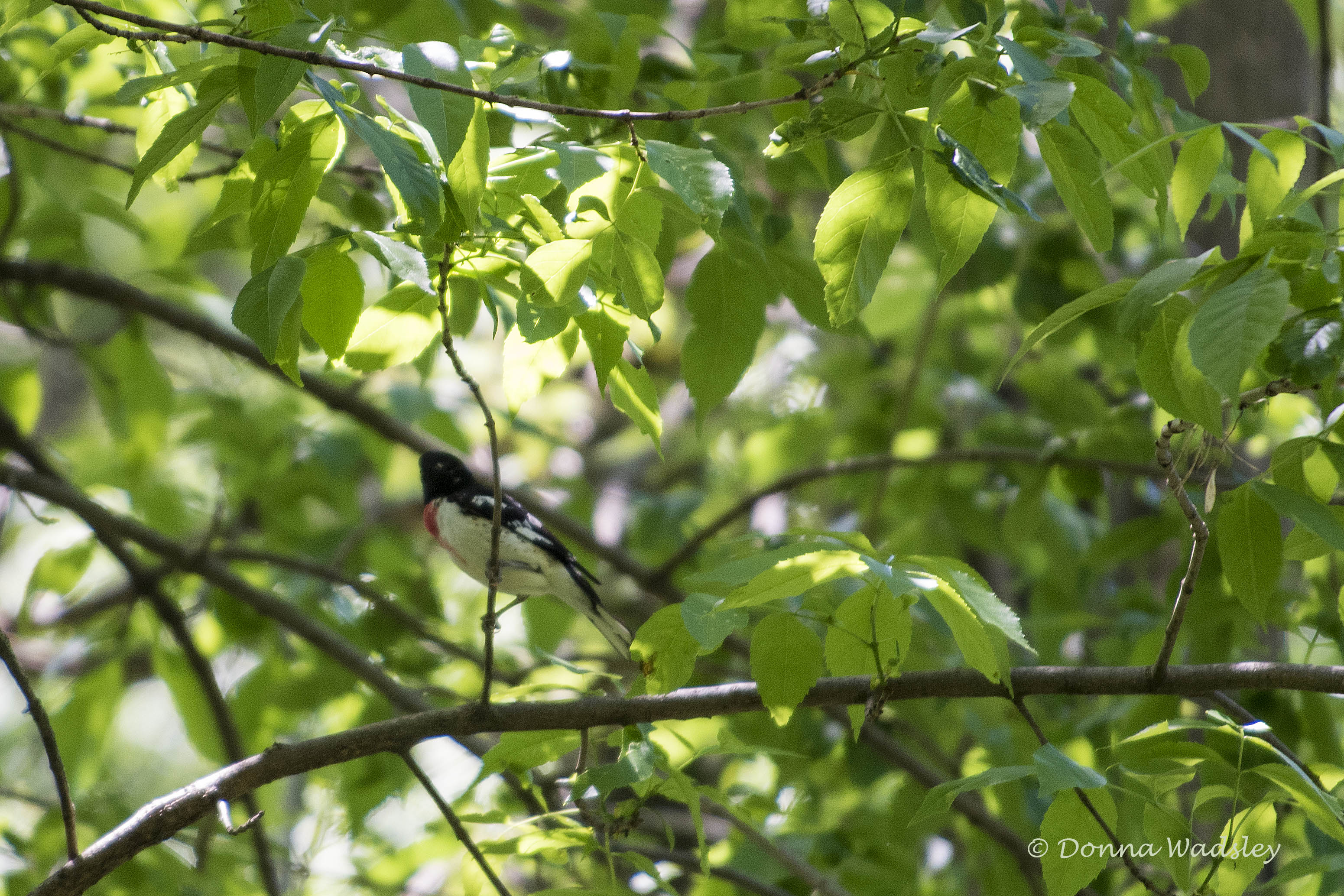
Rose-breasted Grosbeak, Lifer #225
.
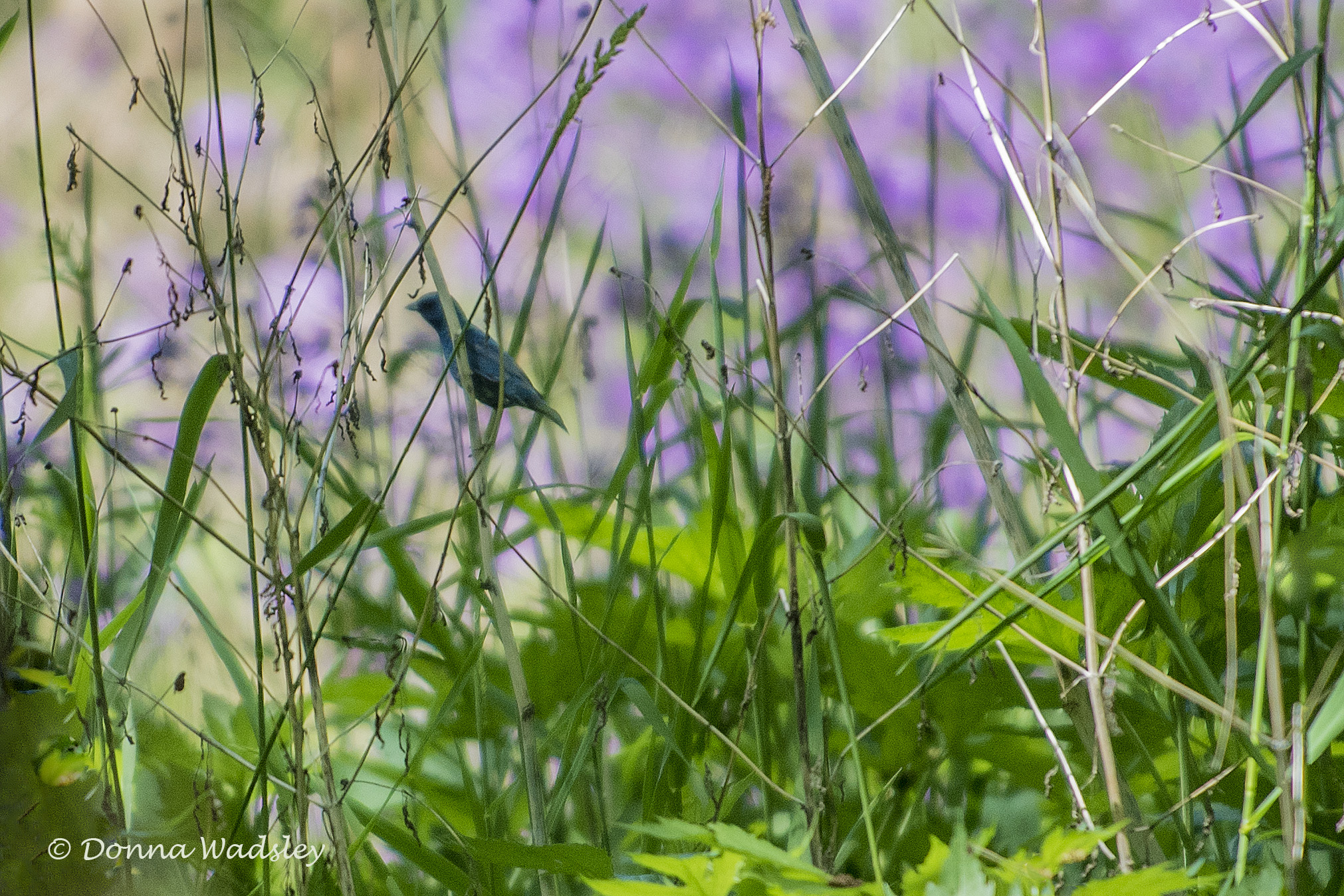
Indigo Bunting, Lifer #226
.
The funny thing about the above two birds, I’ve seen both of these several times in past years back home in Maryland at Blackwater NWR; but I was never successful in getting a decent photo. Who knew I needed to go to Iowa to finally score. 😏
There is also a small wetlands area around the lake where I found my next new lifer. And for this bird, I did have to go West to capture; we don’t see it along the East Coast.
.
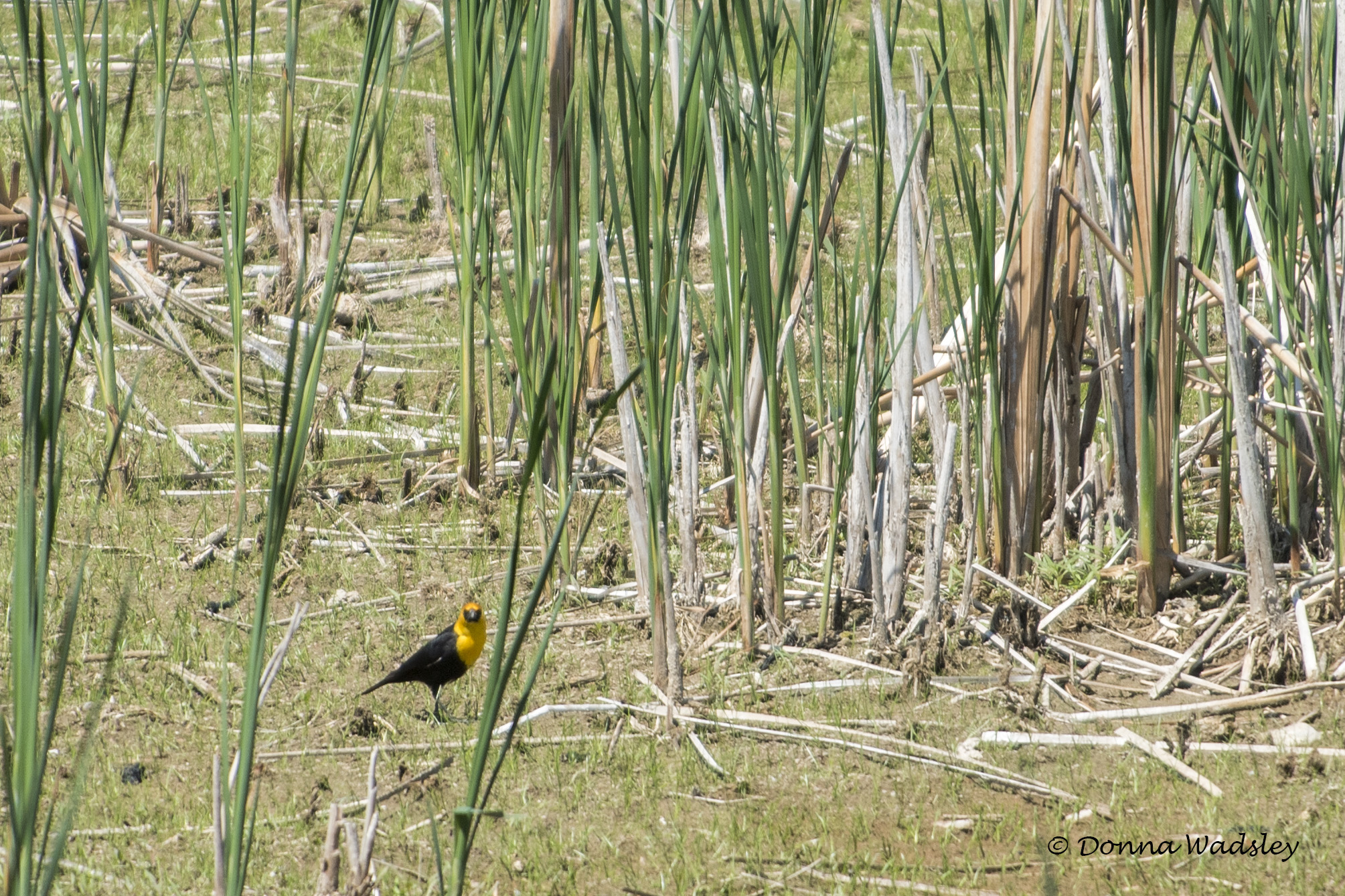
Yellow-headed Blackbird, Lifer #227
.
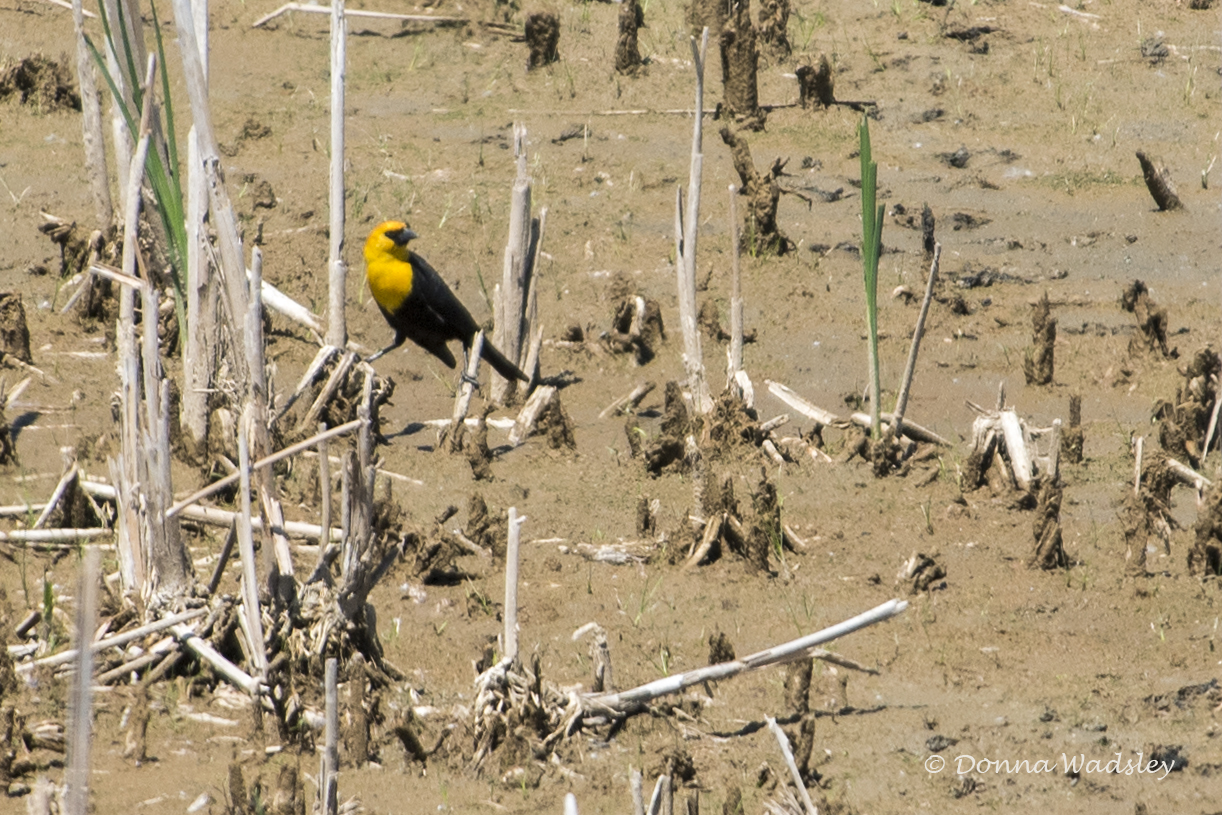
Yellow-headed Blackbird
.
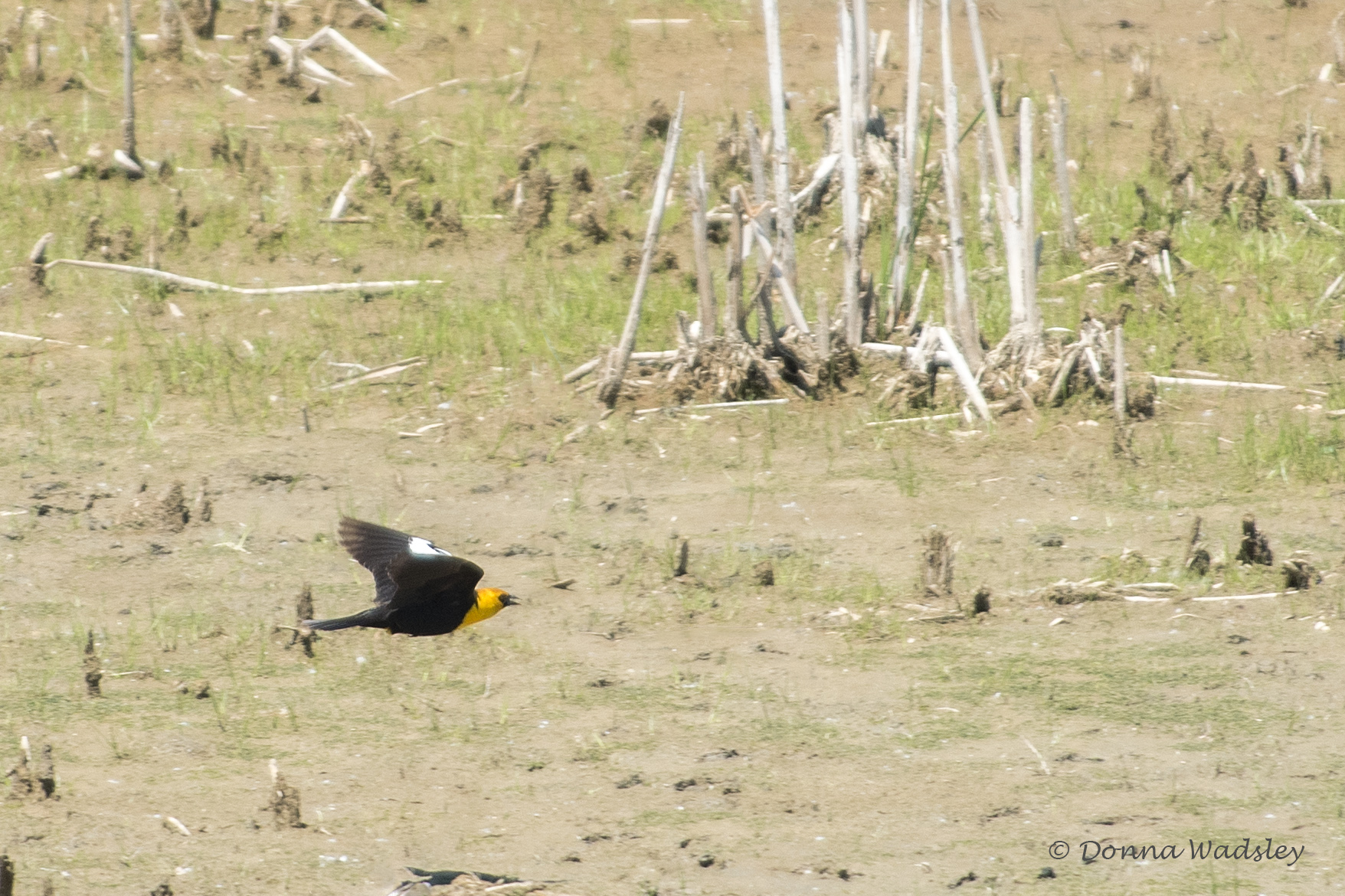
Yellow-headed Blackbird
.
I sure have enjoyed being on Cloud 9 lately! 😊
More to come from Iowa…..
.
.
Dickcissel Delight
.
Another day of travel and we’ve arrived at the northwest corner of Iowa for a week’s stay. The next day, we visited the Broken Kettle Grasslands Preserve, Iowa’s largest remaining prairie and home to over 200 bison.
We had hoped but didn’t sight any bison. Exciting though, I was able to capture a Dickcissel singing beautifully out on the prairie. A new lifer #224 for me! 💃
.
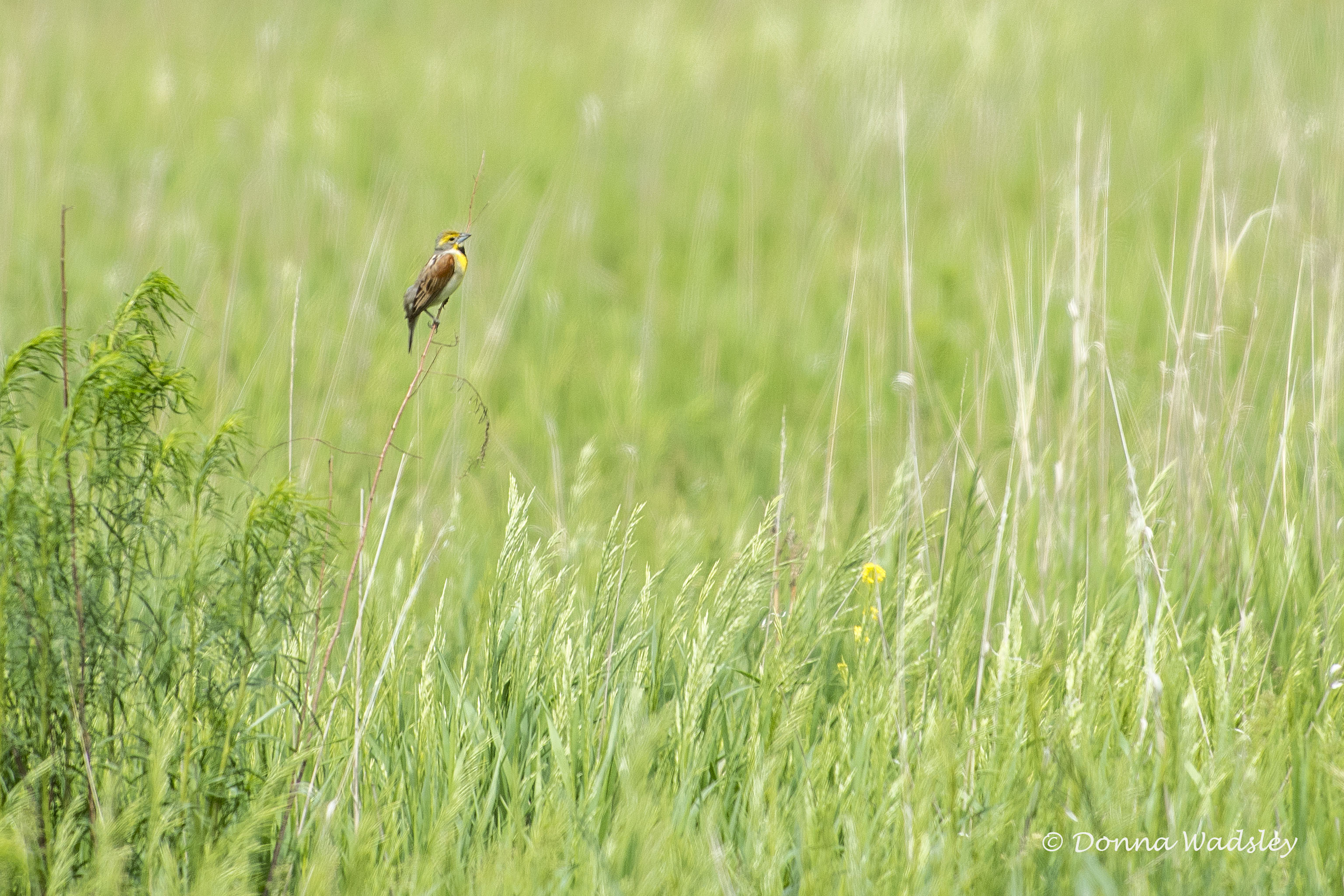
Dickcissel (male)
.
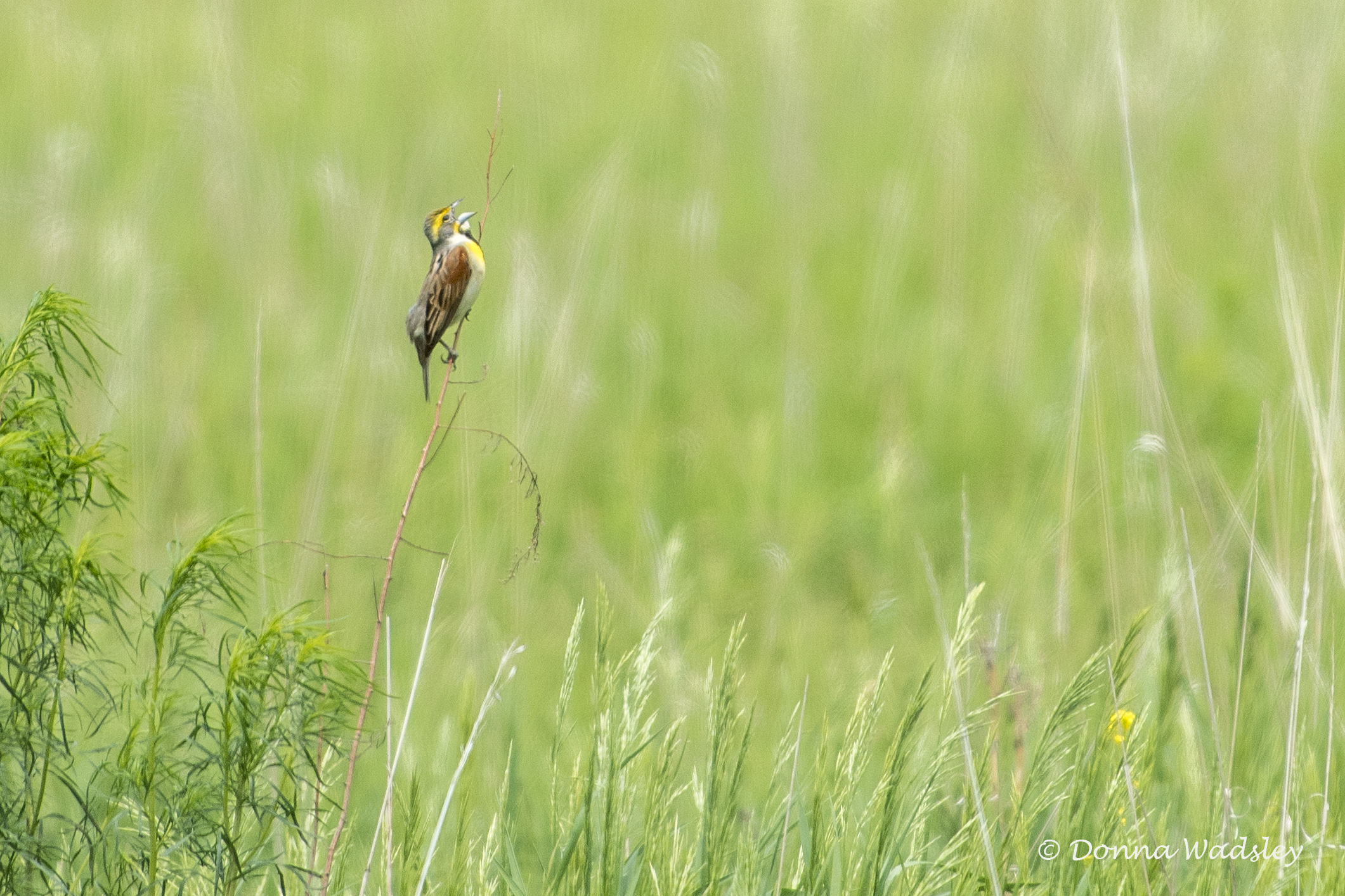
Dickcissel (male)
.
.
American Robin Fledgling Learning To Fly
.
Our first night stopover was in Iowa. We lucked out with an end campsite, so I had a great open view where I got to watch an American Robin fledgling run around and attempt flight practices under Mama’s supervision.
.
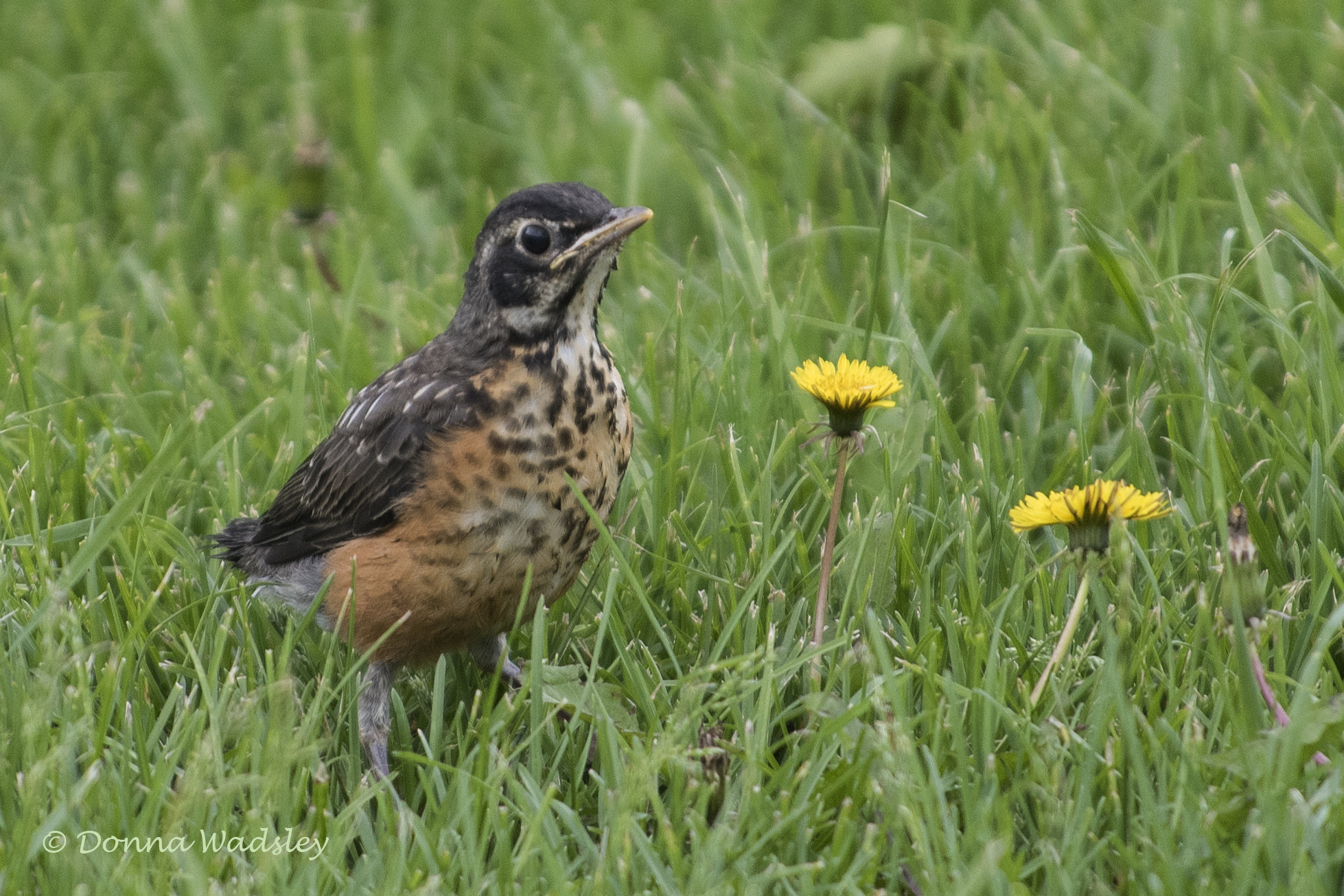
American Robin fledgling
,
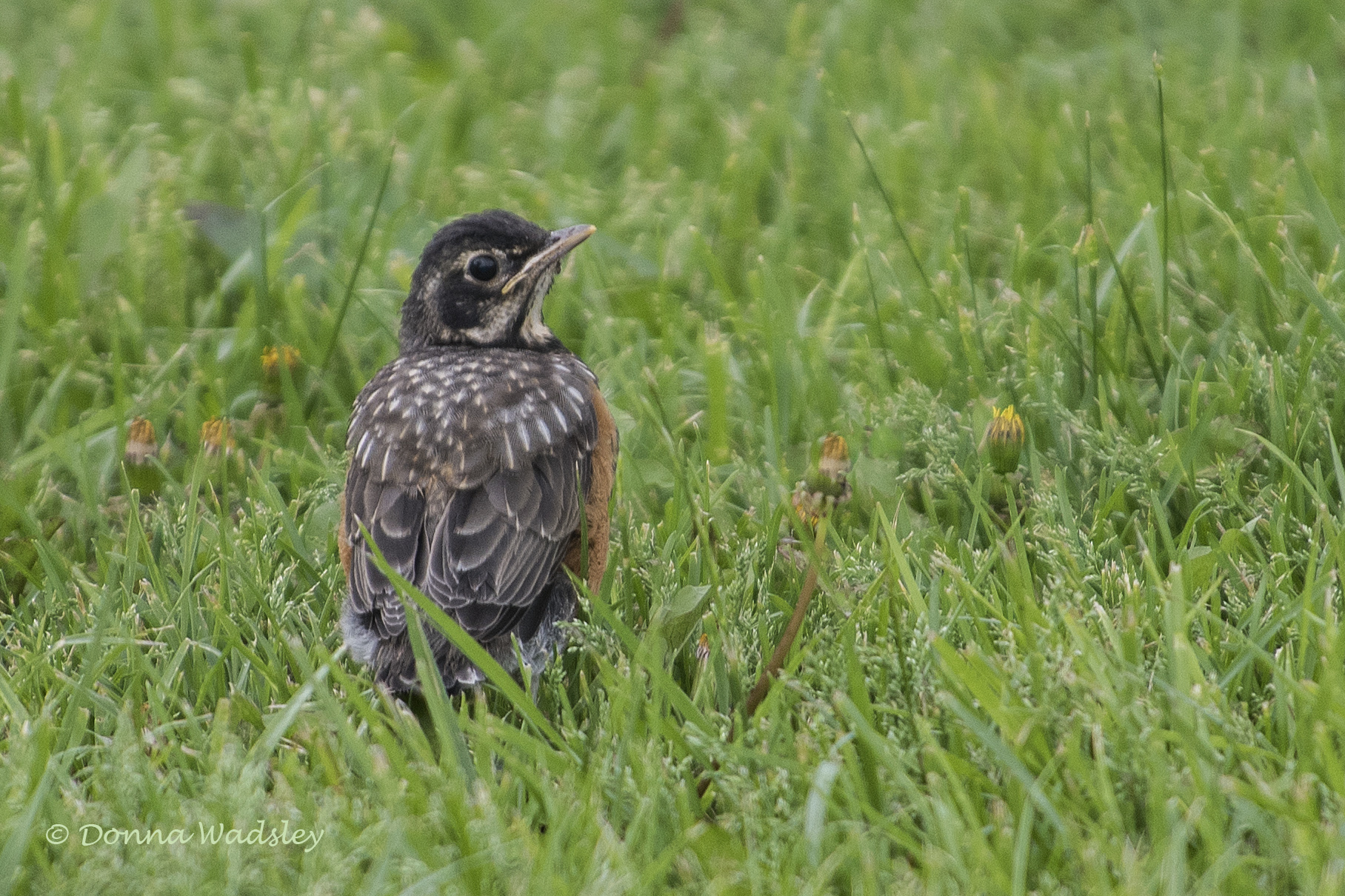
American Robin fledgling’s pretty backside
.
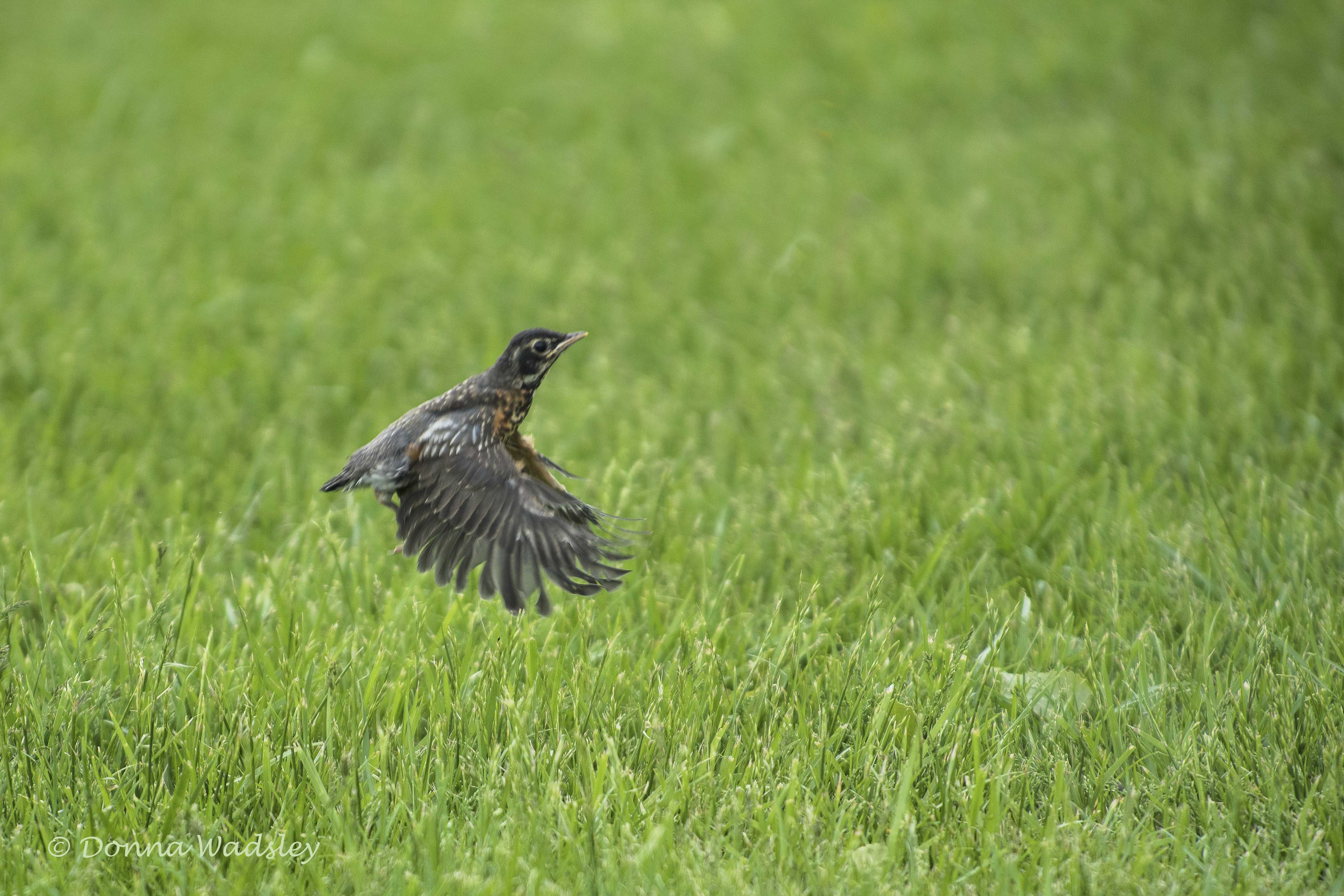
“Flight Practice”
.
The fledgling could gain air but not much altitude before dropping back to the ground.
Mama Robin even gave a lesson by flying down to the fledgling, then flying back up to her tree branch. Here’s the fledgling attempt to meet Mama on the branch she was sitting!
.
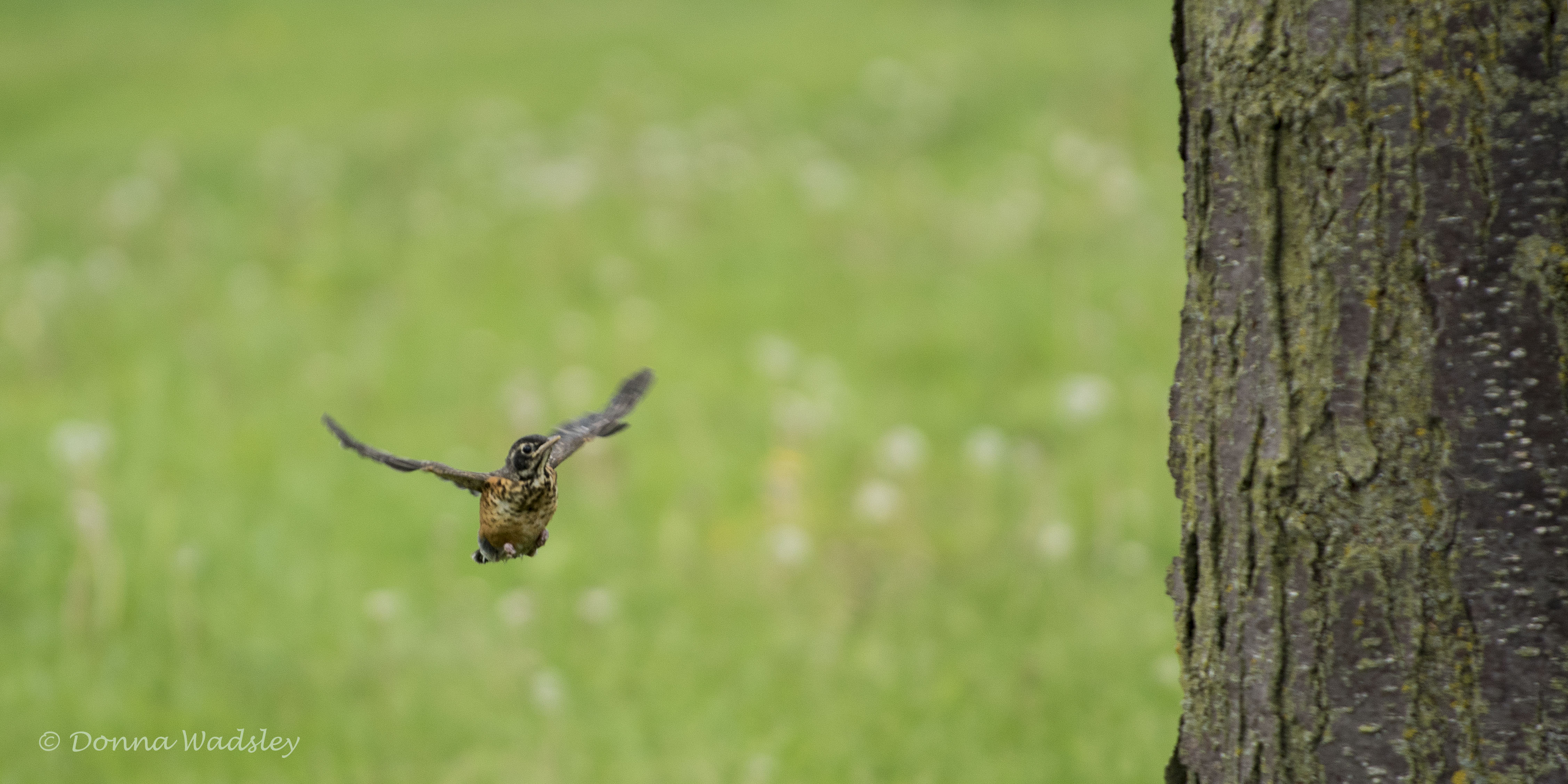
“Heading up, up, up, here I come, Mama!”
.
An awesome effort! Unfortunately, the fledgling only made it to the tree trunk just underneath the branch but still tried to ‘land’.
.
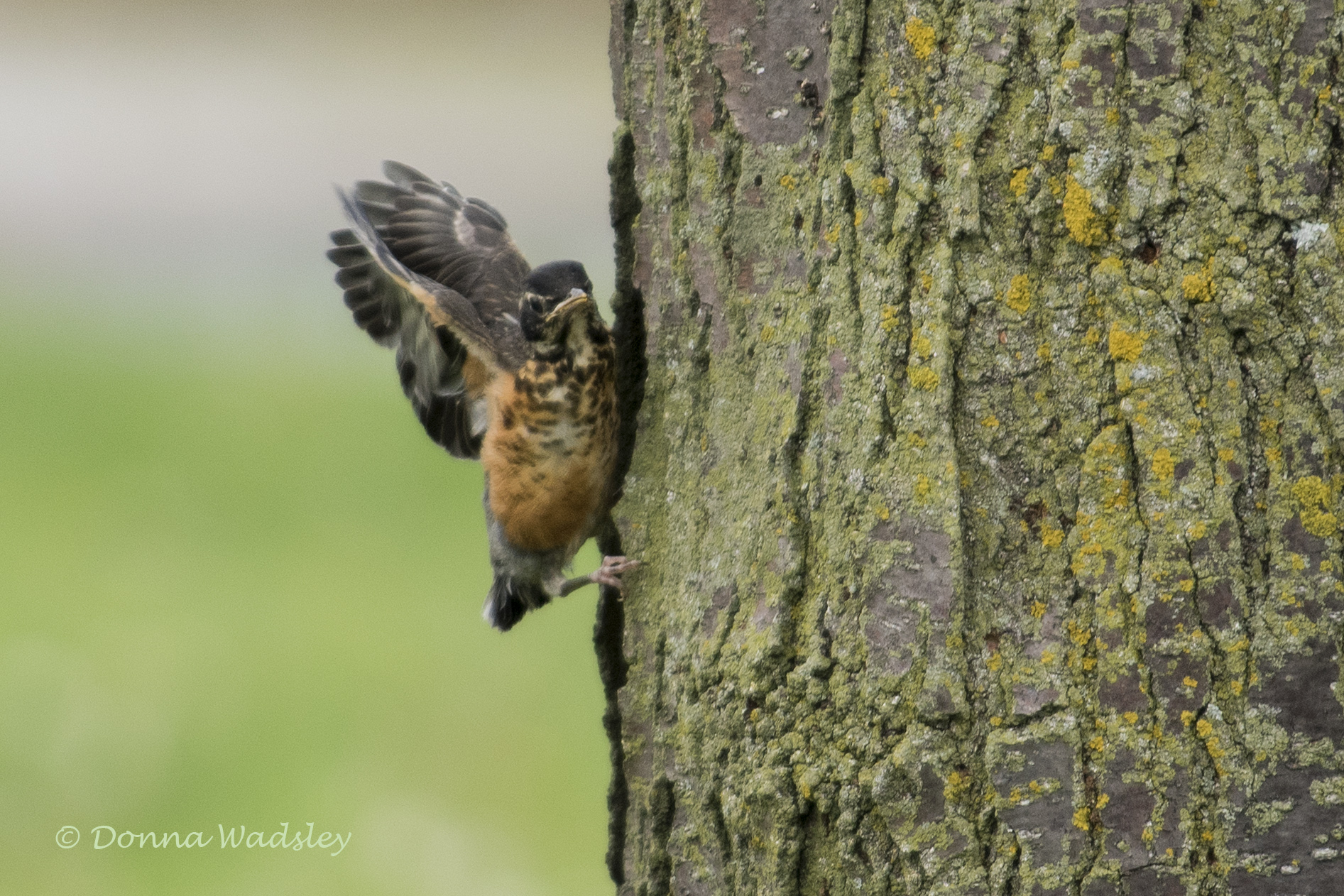
“Trying to hang on to the tree truck landing.”
.
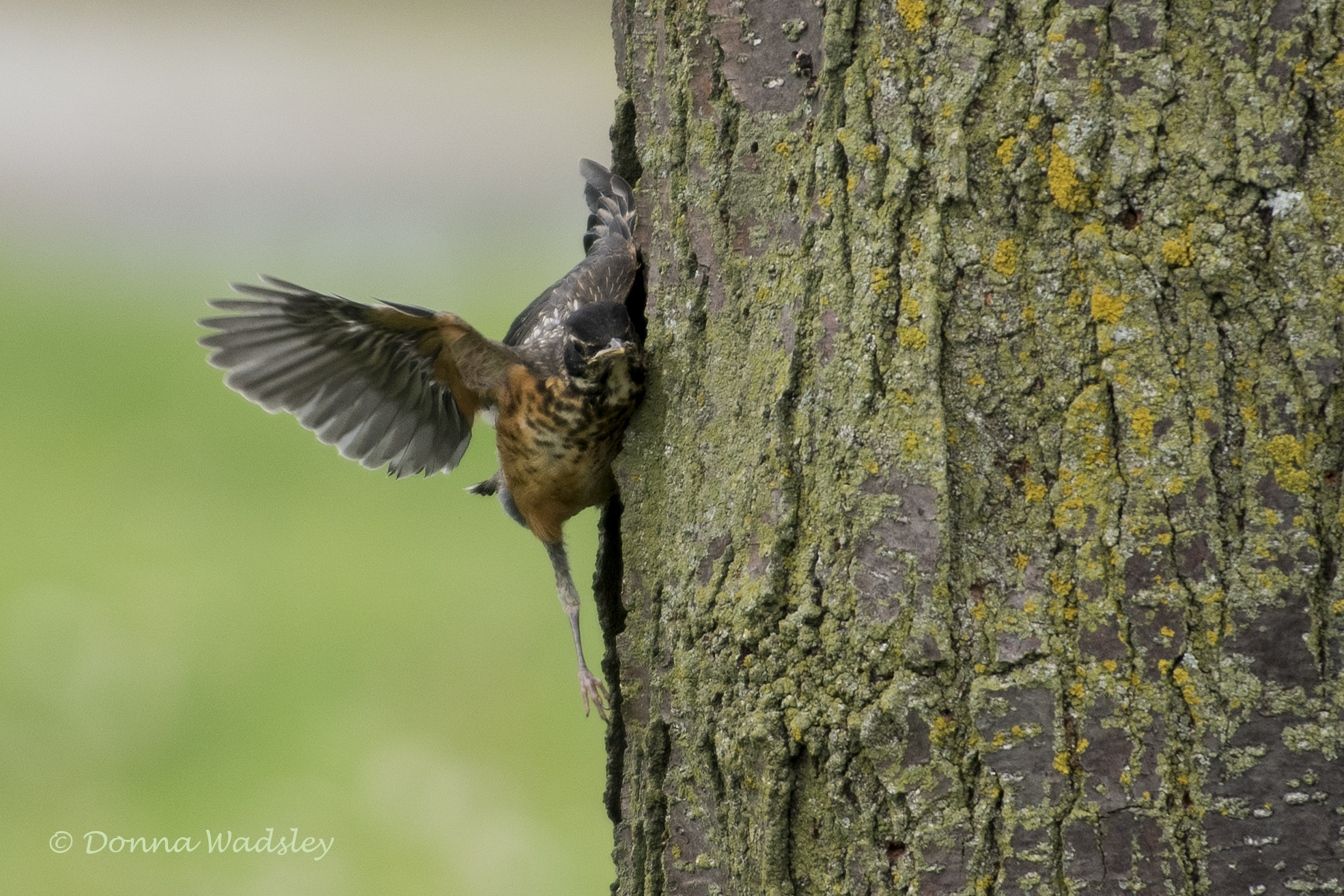
“Oops, not working!”
.
Quickly, the fledgling started to fall from the tree trunk. It saved itself with this next comical shot.
.
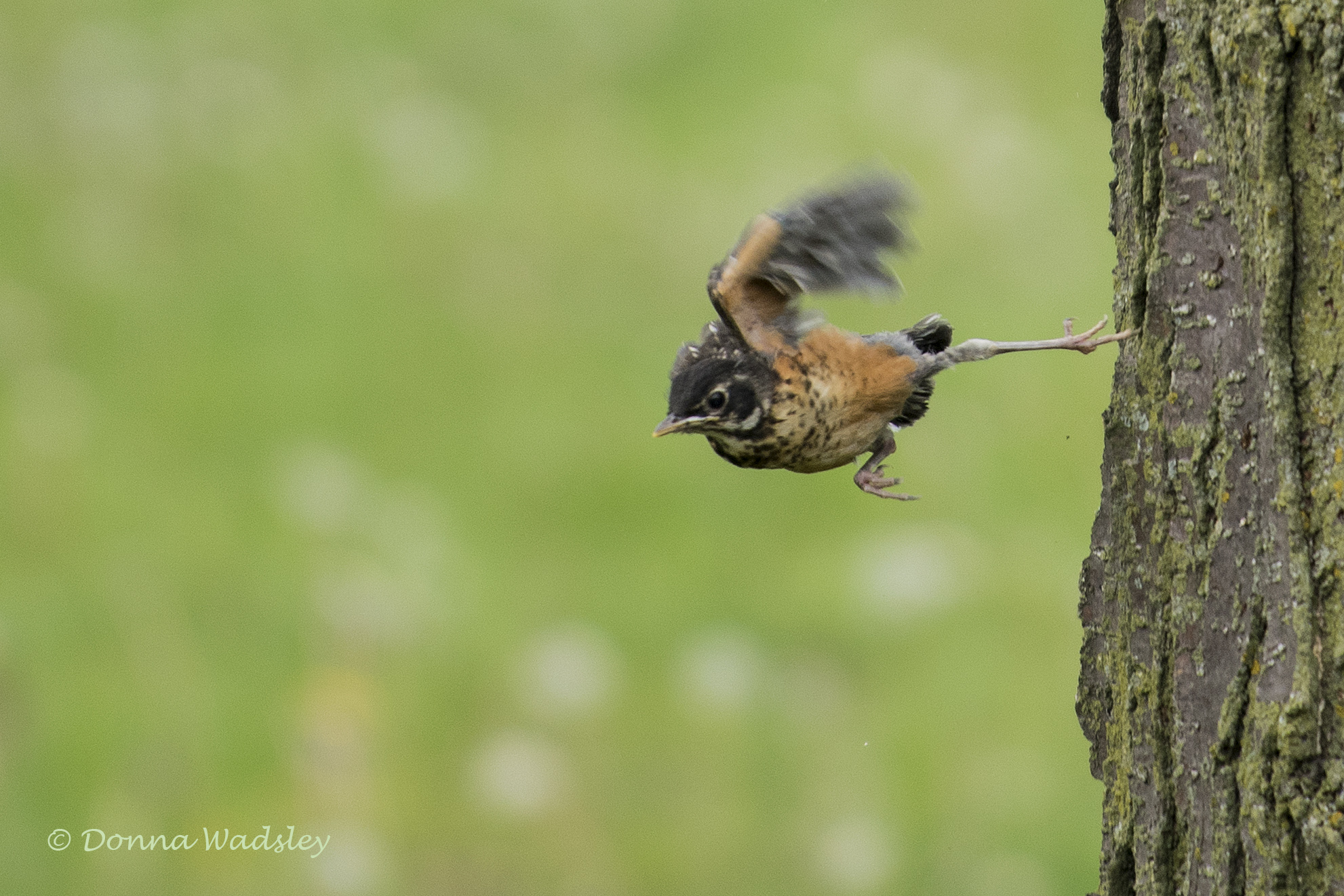
“Exit, Stage Right!”
.
That was enough for the fledgling for a while. Surely it’s now sitting next to Mama on the branch proud of itself!
.
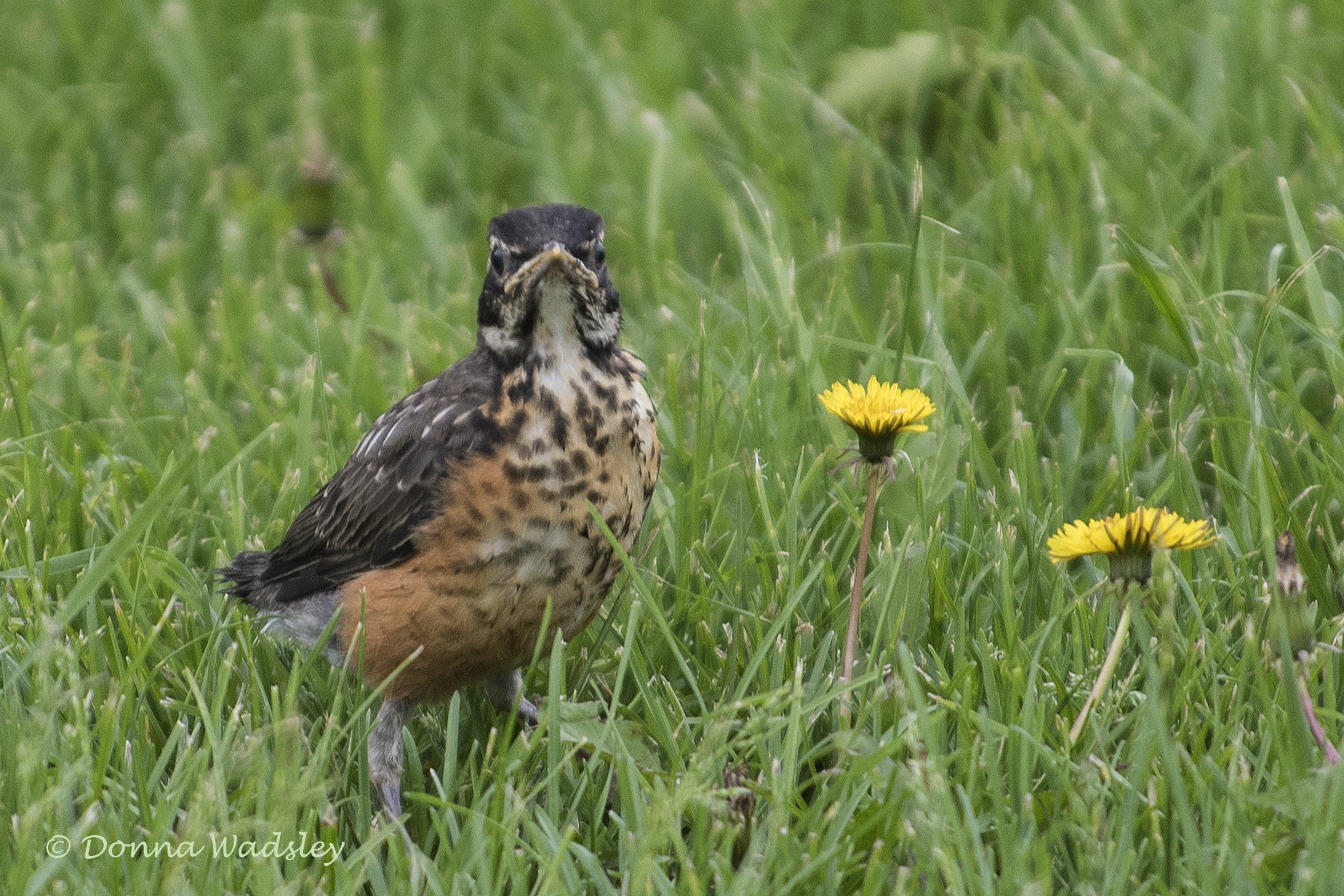
“I do not smile for the camera”
😉
.
.

 Bay Photos by Donna