Two Mountain Carvings in the Black Hills
.
There are two mountain carvings within 17 miles of each other in the Black Hills National Forest that are famous and amazing to see. We’ve visited both before and wanted to again.
The first is Mt Rushmore National Memorial.
.

Mt Rushmore National Memorial
.

.

.

.

.
The U.S. Presidents’ heads are approximately 60 feet tall.
.

George Washington

Thomas Jefferson

Theodore Roosevelt

Abraham Lincoln
.
Mt Rushmore was carved with government funding and completed on October 31, 1941. Overall, the project cost $989,992.32 and took 14 years to finish.
The second mountain carving was started in 1948 and is still under construction, the Crazy Horse Memorial. It is privately funded and the cost to date has not been disclosed.
.

Crazy Horse Memorial
.
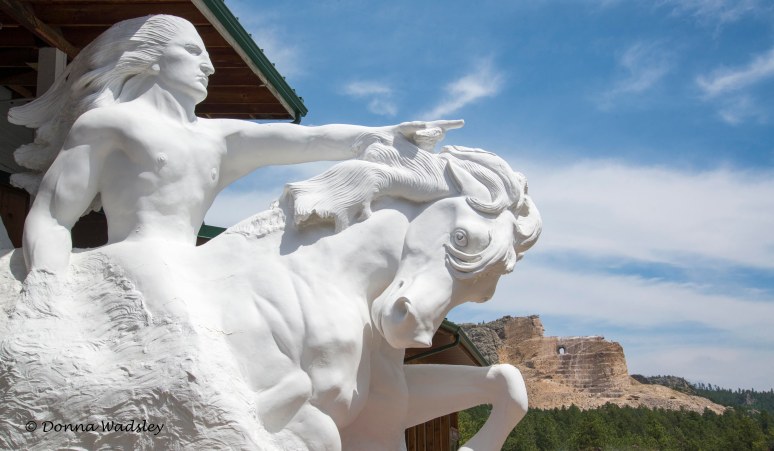
Original sculpture being carved into the mountain
.
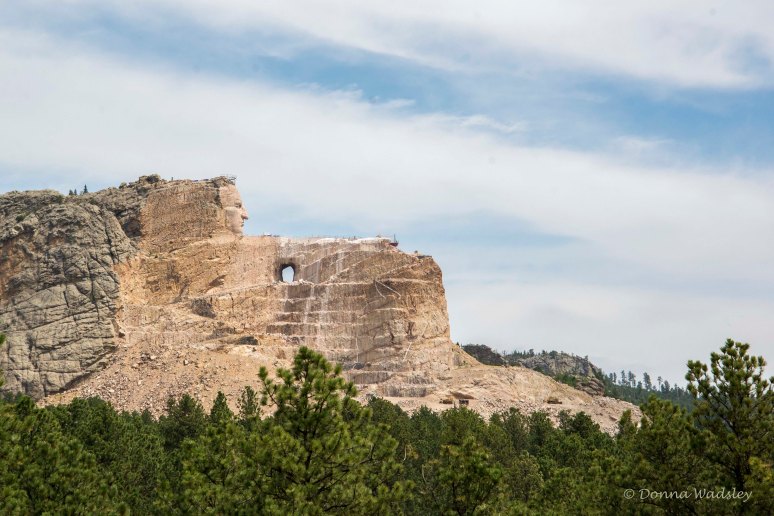
.
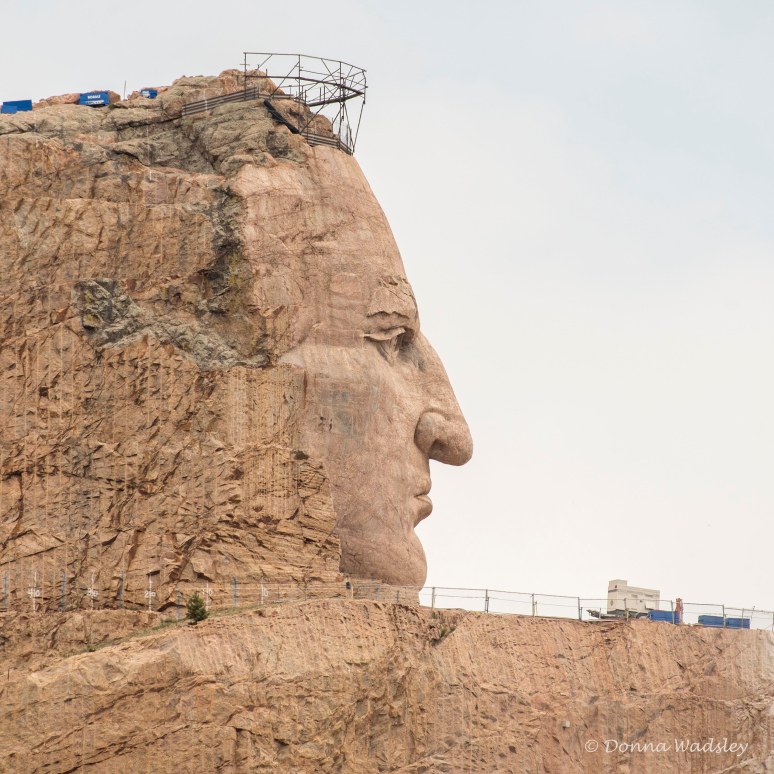
Crazy Horse’s head is 87 feet tall
.
If you’re interested in reading the history, visit the Crazy Horse Memorial website here.
.
This beautiful gate is at the Crazy Horse Memorial, also created by the Korczak Ziolkowski family, depicting 219 animals (past and present) that are indigenous to South Dakota. It is beautiful, my photos don’t do it justice.

.

.
.
Patriotic Barn
.
I captured this a late afternoon a few weeks ago during one of our scenic drives.
.
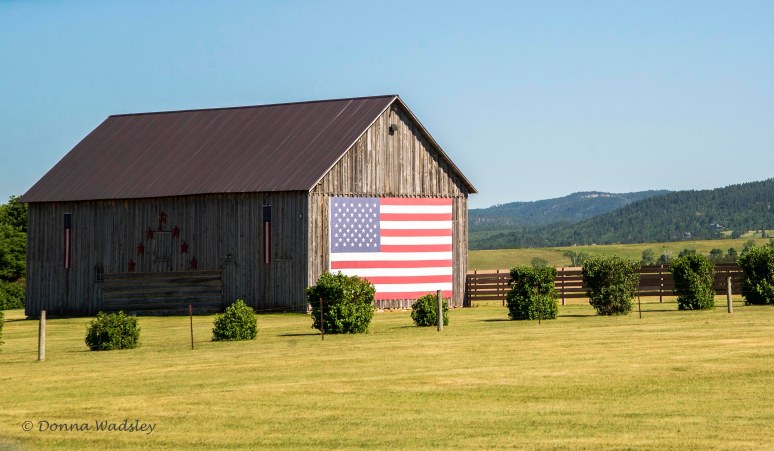
Patriotic Barn, Centennial Valley, South Dakota
.
Have a safe, enjoyable 4th of July weekend celebration!
.
.
Spearfish Canyon
.
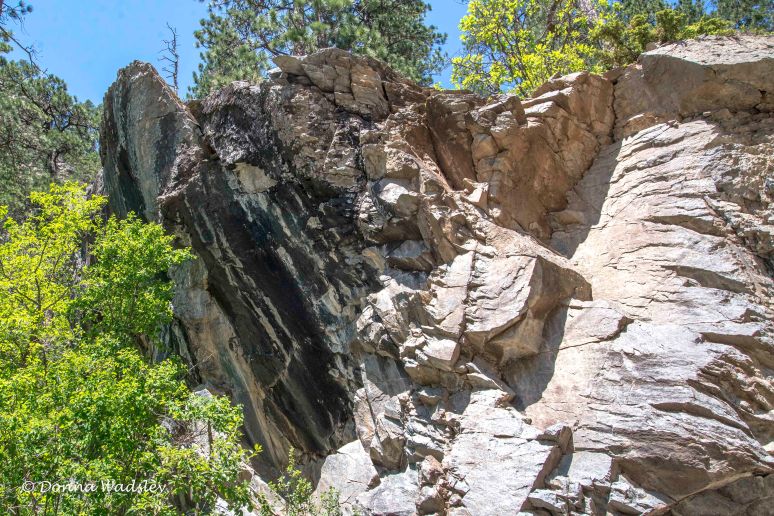
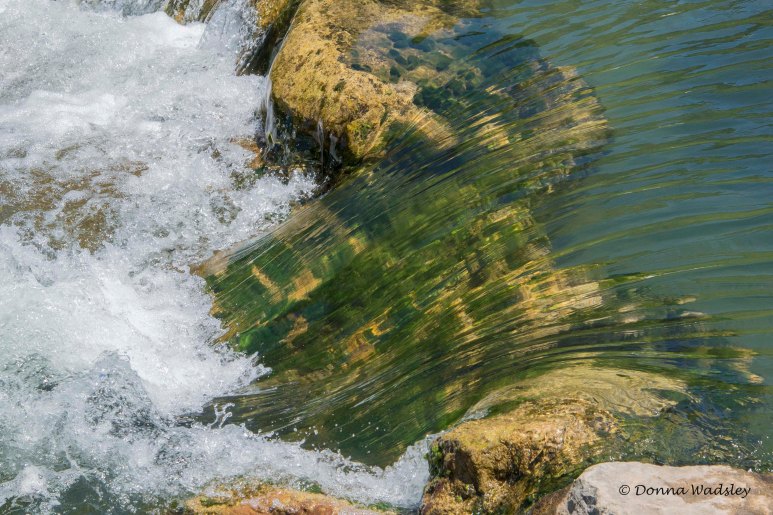
One of the scenic byways in the Black Hills follows the canyon bottom of Spearfish Canyon. Towering limestone cliffs, a waterfall, and a rushing mountain stream keep you company along the 19-mile drive.
Here’s some of the beauty I captured along the way from our cruises through the canyon.
.

.
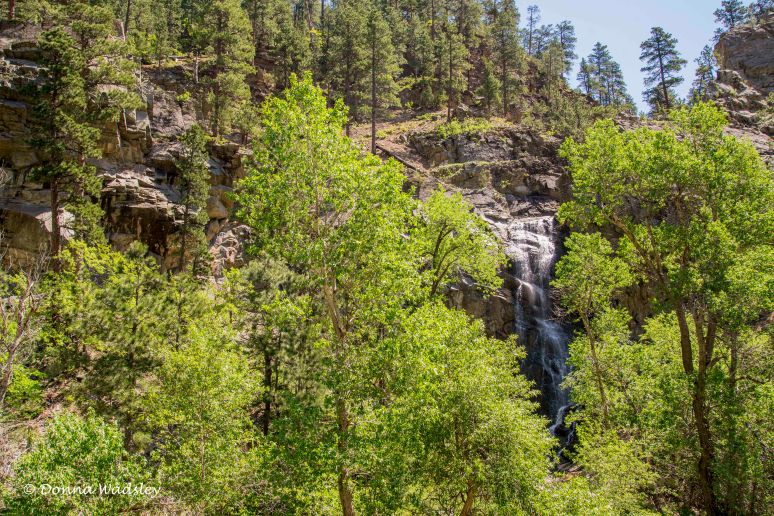
Bridal Veil Falls
.
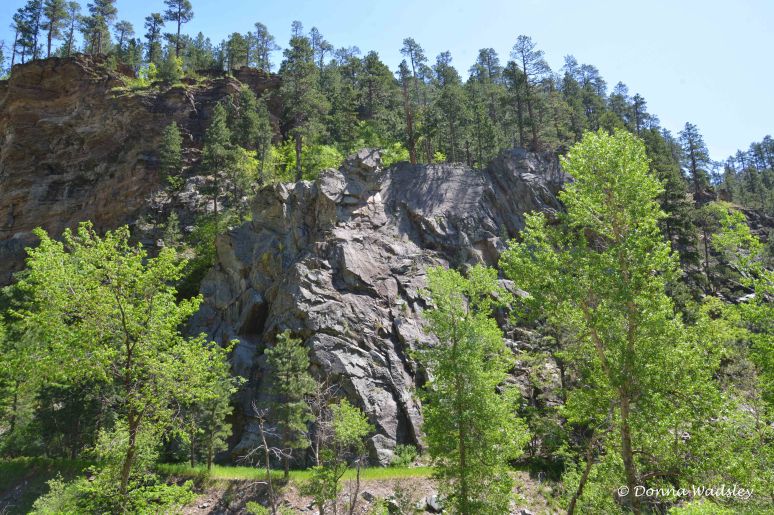
.
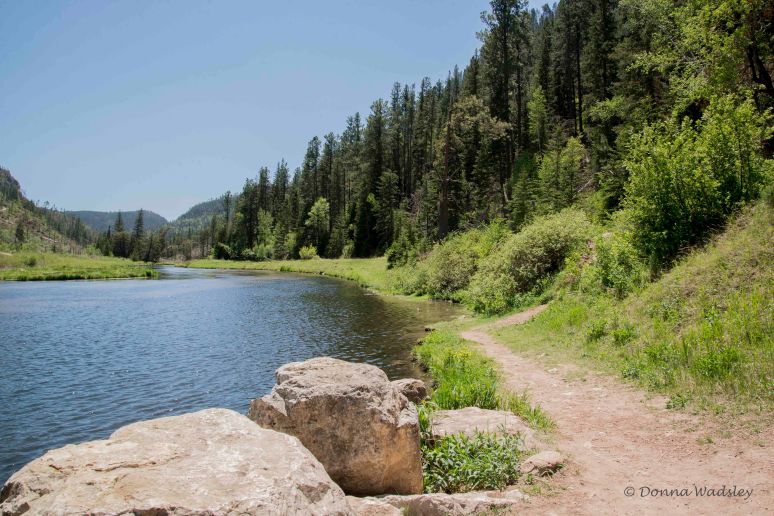
Spearfish Creek
.
Spearfish Creek is a fly fishing paradise and holds one of the best populations of wild rainbow trout in the Black Hills.
.

.

.
.
.
.
Wildflowers Along The Way
.
Sharing a gallery of wildflowers I’ve discovered while exploring South Dakota’s Badlands and Black Hills.
I did my best to ID most of the flowers, and had help from Tom and Eliza in my comments, thanks! Please correct any I may have identified incorrectly, I appreciate it!
.

#1 Gumbo Lily (Badlands)

#2 Shaggy Fleabane (Badlands)

#3 Narrowleaf Milkvetch (Badlands)

#4 – Field Pennycress (Badlands)

#5 Scarlet Globemallow (Badlands)

#6 – Scarlet Gaura (Badlands)

#7 Spreading Dogbane (Black Hills)

#8 Lady bugs covering Spreading Dogbane (Black Hills)

#9 Prairie Milkvetch (Black Hills)

#10 – Cinquefoil (Potentilla spp.) (Black Hills)

#11 Woods Rose (Black Hills)

#12 – Potentilla (Black Hills)

#13 – Rubus (Black Hills)
.
.
Five On The Wing – #12
.
Another post to add to my Five On The Wing series!
I photographed four of these birds in flight here in South Dakota, but I’ve got to include a bird species in flight from the spring so I can post this with ‘five birds’…..
Why the need to dig in my spring files? Because there is a lifer I just captured in the four South Dakota birds that needs sharing! 😁
.

Male Bobolink (new lifer #234 for me 💃)
.

Red-headed Woodpecker
.
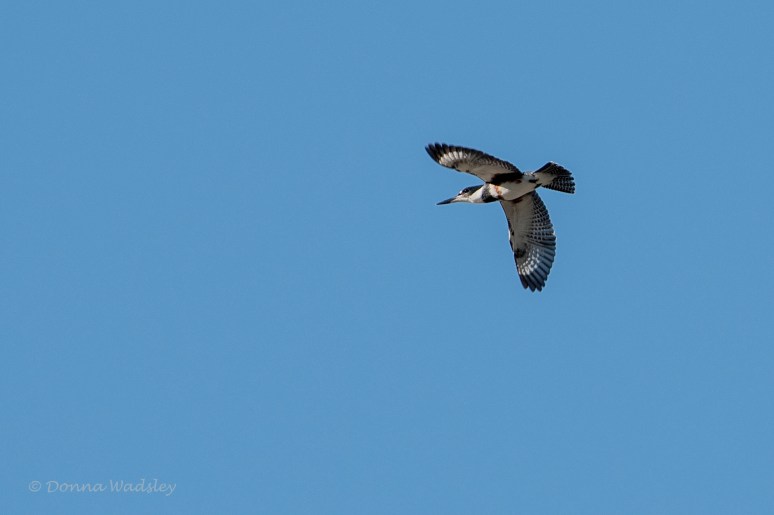
Belted Kingfisher (female)
.

Common Nighthawk
.
And my bird in flight from back home in Maryland….
.
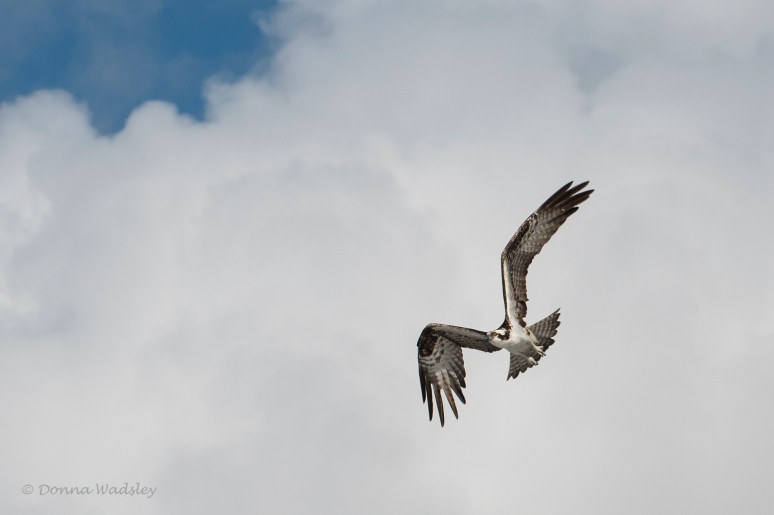
Osprey (male)
.
.
Black Hills Bighorn Sheep Rams
.
It was exciting to see a herd of bighorn sheep females and their lambs up close (shared here) during our recent Badlands NP visit, but it was a far distance on the herd of rams seen. No real chance to see those massive horns they are famous for.
Since arriving to the Black Hills region, I’ve had my eye out for bighorn sheep that also roamed here in the wild.
While out cruising on one of the scenic roads in Custer State Park, it was my husband who luckily spotted and quickly stopped for me to photograph six rams tucked in the shade and tall grass.
.

Bighorn Sheep Rams
.
The ram’s massive horns can weigh up to 30 pounds each for a total of 60 pounds on its head!
The horns are a general indicator of the ram’s age. The longer the horn, the older the ram.
.
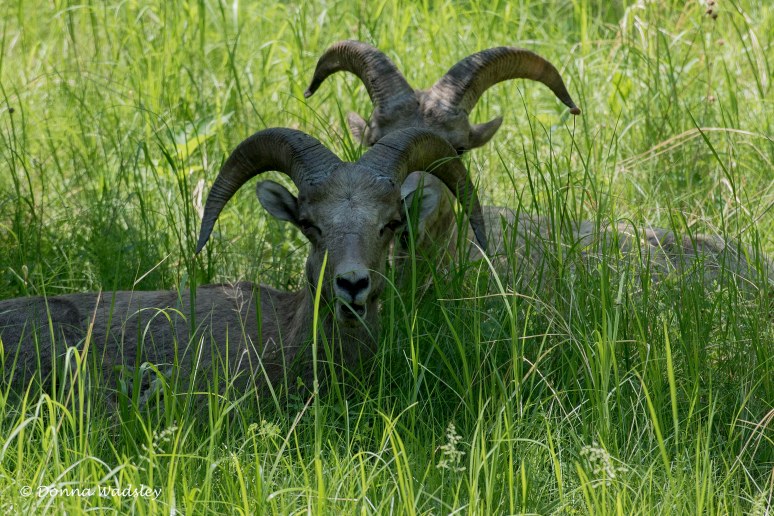
Bighorn Sheep Rams
.
These horns play a big part during “rut” season. During these displays, two rams will run towards each other, horns first, at speeds up to 40mph, and butt heads. The sound of this collision can be heard from up to a mile away!
The ritual repeats until one ram gives up and the other wins the right to mate. This can last up to 20 hours.
Today scientists are studying bighorn sheep to try to make better football helmets.
.
.
Grasshopper Sparrow
.
After Eric locked the gate behind us departing the Frawley Ranch bison (previous post), he continued driving to take us to our car, when suddenly I saw a bird perched out my truck window.
Me being me when I see a bird of importance 😏, I shouted (hopefully not too loud! Sorry, Eric!) along the lines of “stop, can you stop…. back up…. back up…. little more….. right there!” And then me…..click click click click click!
Welcome to my bird lifer list #233 Grasshopper Sparrow! 💃
.

Grasshopper Sparrow
.
It became a double bonus when the little sparrow went into song!
.
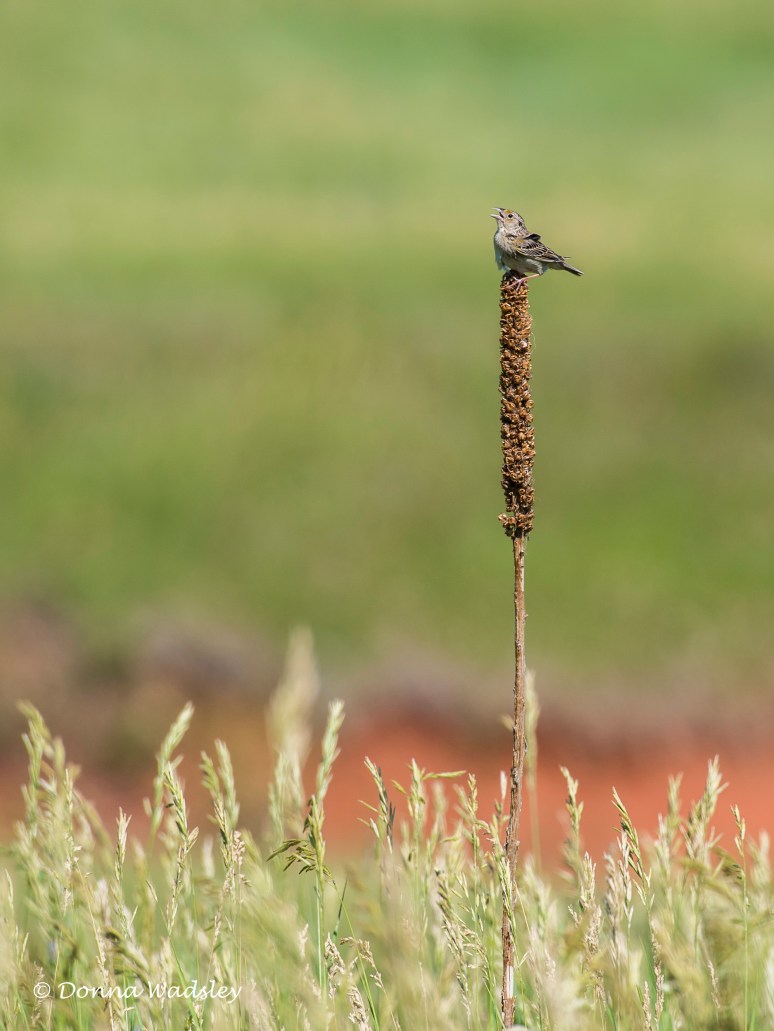
Grasshopper Sparrow
.
Thank you, Eric, for a fabulous bison tour as well as being a champ and helping me score this lifer, you rock!
I remember hearing my husband telling Eric while he was backing up, “This is what she does to me all the time.” 😂 😘
.
.
Frawley Ranch Bison – Up Close and Personal
.
Just north of Deadwood and the Black Hills National Forest is Centennial Valley and location of the 4,750 acre Frawley Ranch (estab. 1880), the largest and most successful cattle ranch in western South Dakota.
Today Frawley Ranch is one of only two National Historic Sites in the entire state of South Dakota. (more on the interesting history of Frawley Ranch here)
Frawley Ranch provides a glimpse into pioneer life with restoration of the historical buildings and their natural environment, while incorporating modern development for the future that now includes the Elkhorn Ridge Golf Course, “Upper Ranch” Courthouse Barns venue for weddings, real estate development, and the Elkhorn Ridge RV Resort (where we’ve been camping for the past few weeks).
To add historical authenticity, Frawley Ranch includes a small herd of bison. Today the herd contains approximately 30 bison, including the calves born this past spring. The herd takes care of themselves. The ranch does provide a huge bale of hay during the harsh winters to assist their survival.
I found out we were able to take a private tour to go out to see these bison on the prairie. This would include feeding them. 😲
We met ranch hand Eric at the Courthouse Barns and climbed into a ranch vehicle for the ride. I rode in the back seat along with a five gallon bucket of bison ‘treats’.
.

Frawley “Upper” Ranch Courthouse Barns (now also a wedding venue)
.
Heading out onto the prairie, the herd of bison was spread out and could be seen grazing.
.

Frawley Ranch bison out on the prairie
.
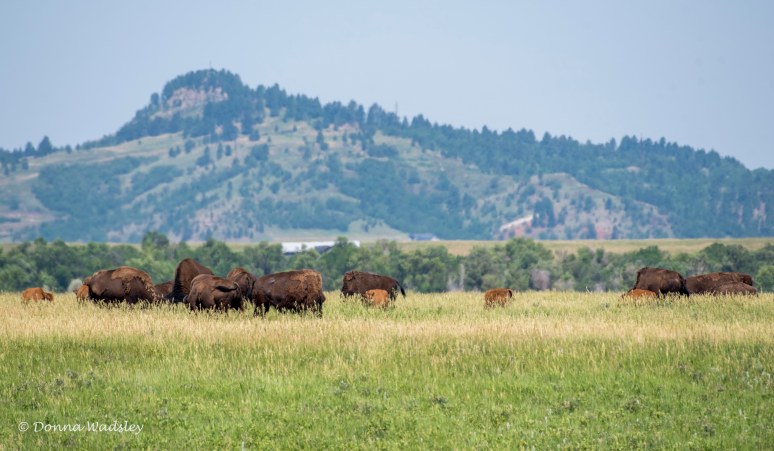
Frawley Ranch bison
.
Eric told us once the herd saw us, they would come running. Sure enough, they did!
.

Bison cows and calves running after us
.
They wasted no time in getting right up to our windows, looking for a treat.
.

Treat please!

You have a treat for me too?

Me too!!

(sniff sniff) I smell a treat!
.

My husband feeding a treat
.
With their impressive size and strength, it was incredible to be up close & personal and see their gentle side. There was no aggressiveness because we did not provoke them.
.
Did you know bison have blue tongues?
.


Bison’s blue tongue
.
The females (cows) were the first to the truck to beat the picking order. There are two bulls in the Frawley Ranch herd. We watched the massive young bull take his time meandering to the truck. All the females and calves quickly got out of the way as he approached us.
.

Young Bull

Young Bull
.
The young bull was getting his share of treats, but he was also getting wary of another approaching bull. The head bull of the herd.
.

Head Bull “Pig” making a grand entrance
.

Head Bull “Pig”

Head Bull “Pig”

Head Bull “Pig”
.
Photo close-ups….bison eyes….
.

.
“When you look a wild animal in the eye, it’s like catching a glimpse into the soul of nature itself.” — Paul Oxton
.

.
Bison fur….
.

.

.
Oh, the adorable calves! These calves (also nicknamed “red dogs” in some parts of the country) were born this past April/May….
.

.

.

.
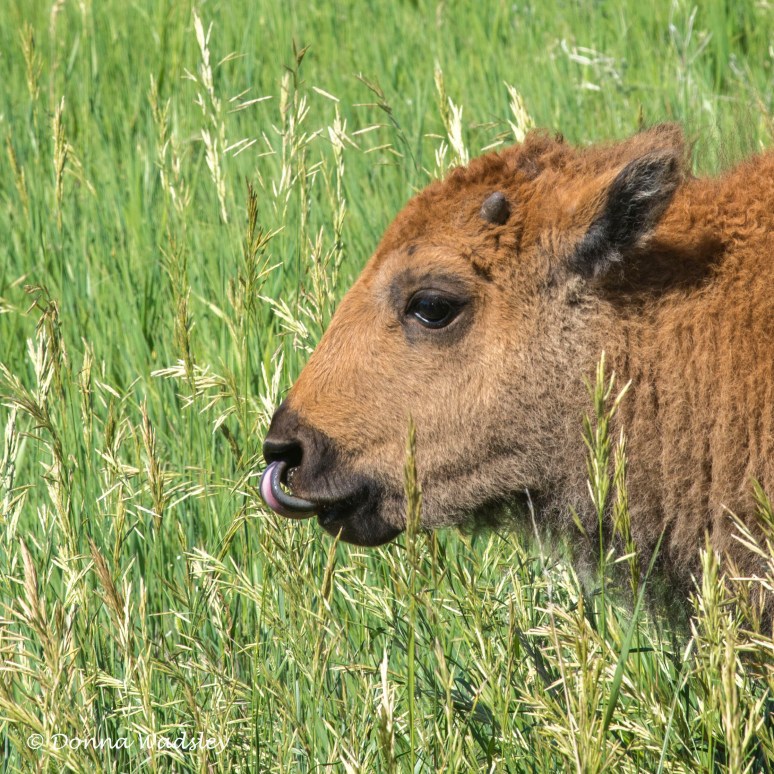
Little blue tongue
.
This calf is a year old, born Spring 2020.
.

Calf a year old, born Spring 2020
.

Calf with its Mama
.
Of course, all good things come to an end! Eric maneuvered the truck away from the bison for our departure.
.

.
But we had one Mama bison and her calf that decided to escort us back, it was awesome as they ran alongside us.
.
.
As we crested over the prairie hill to head back down to the ranch gates, the female and calf stopped and watched us. Precious!
,

“We enjoyed your visit, come back again!”
.
It is obvious the bison are well cared for with love and respect. And though we were in very close proximity to them, there is no real safe way to approach these dangerous wild animals. If they feel threatened, they will charge and bite.
Thank you, Eric, for your tour, it was a thrilling experience we will not forget! (Another thank you to Eric in the next post too! 😉)
.
.
Black Hills Bison
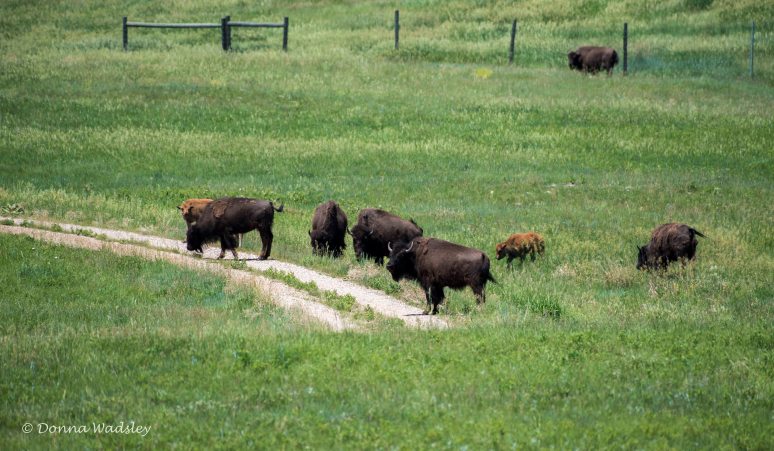
.