
Comparing Bird Couples – #2
With some birds, it appears there’s almost no way of telling which is male and female by looks alone. Some may have just slight, maybe hardly noticeable differences. And for others, it’s quite obvious between the two sexes. The reasons for this are simple.
The male and female of a bird species that looks different (sexual dimorphism) is because of their mating, behavior, and survival pressures. The males develop bright plumage and songs to attract females and fight rivals, while females are drab for camouflage while nesting and brooding. These birds usually do not mate for life.
Bird species where both sexes look alike (monomorphism) often share high nesting duties with nest building, incubating eggs and protecting territory as well as hunting, making camouflage equally important for both sexes. They will also mate for life.
When birds sexes do look different, we often associate the bird with the male’s look and gorgeous coloring. Learning the females can be difficult sometimes as they look no way near like their mate. However, when they look alike, learning what is the slight difference that tells you it’s a female is the ID key.
Compare for yourself!


Northern Cardinals
(male left, female right)


Red-bellied Woodpeckers
(male has red on head/nape, female only on nape)
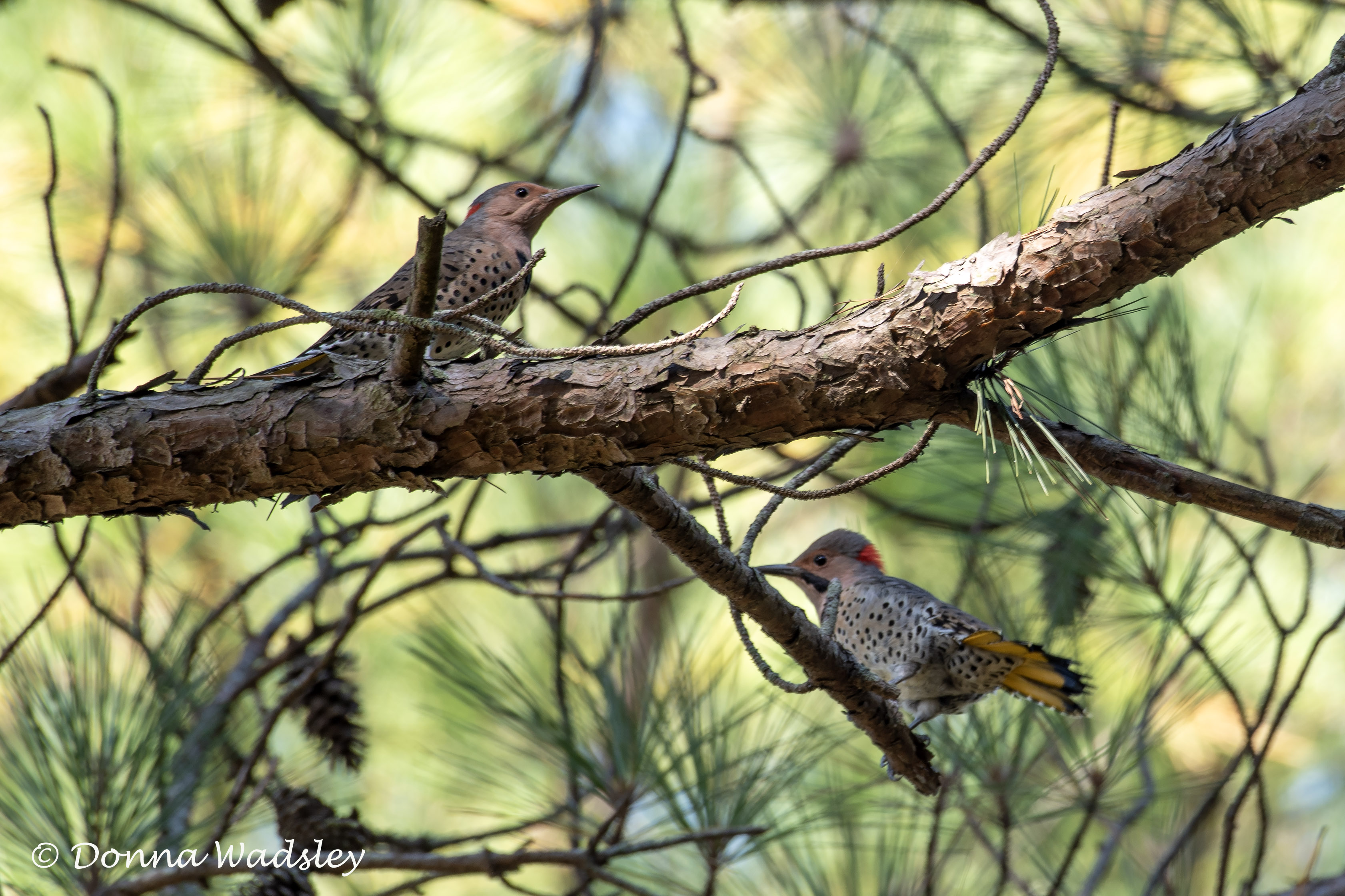
Northern Flickers, Yellow-shafted
(male has black ‘mustache’, female not)


Eastern Towhee, Red-eyed
(male on left, female on right)
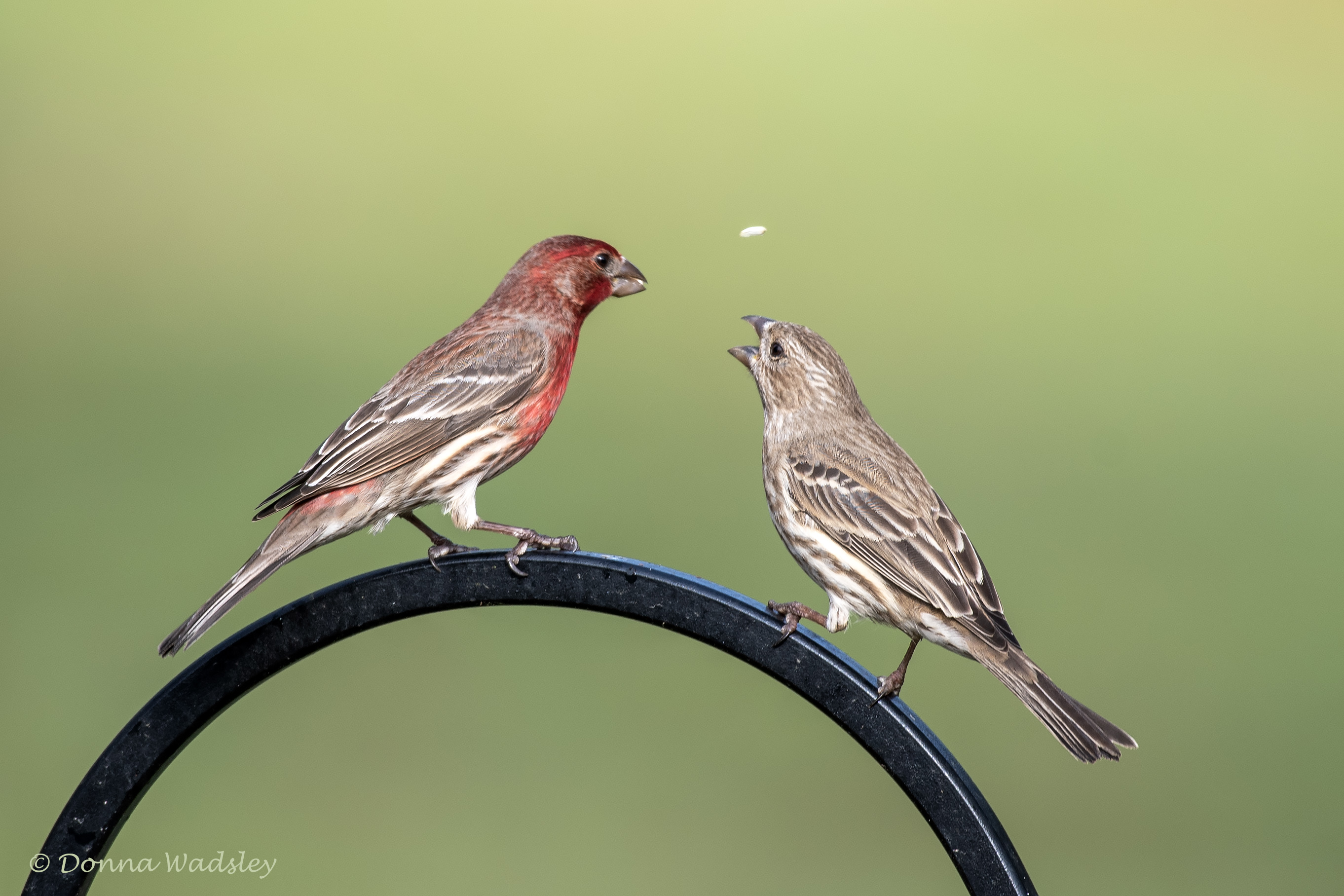
House Finches
(male on left, female on right)
 Bay Photos by Donna
Excellent comparisons, Donna!
Great photos and info, Donna. I learned something new! 👍🏼
Interesting to learn that birds that look alike mate for life. Lovely comparison photos!
Very beautiful
How fascinating that male and female birds who look different do not usually mate for life while the ones who do look alike are lifelong partners!
I’ve been reading An Immense World: How Animal Senses Reveal the Hidden Realms Around Us by Ed Yong. He notes that scientists have discovered that many male and female birds that look the same to us have ultra-violet light patterns in their feathers that make them look different to each other, including barn swallows and mockingbirds. Their eyes can see UV light.
PS – Love that house finch couple!