
Plunge-Diving Pelicans & What’s With That Pouch?
My two previous posts presented the Brown Pelicans in flight and in portrait. The hardest challenge with them has been their sudden plunge-dives when foraging for food. Here’s my best shots, albeit not totally in focus. But, wow, how fun the challenge!
Plunge-diving Brown Pelicans are quite entertaining to watch. They use their acute eyesight to hunt for schools of small fish from the air at heights as much as 60 feet above the surface.
When food is sighted, the Brown Pelican plunge-dives head first into the water at high speed, tucking and twisting his neck to the left to protect the trachea and esophagus from the impact.
The Brown Pelican’s body is also padded with air sacs just under the surface of the skin that cushion the force of impact when it strikes the water.

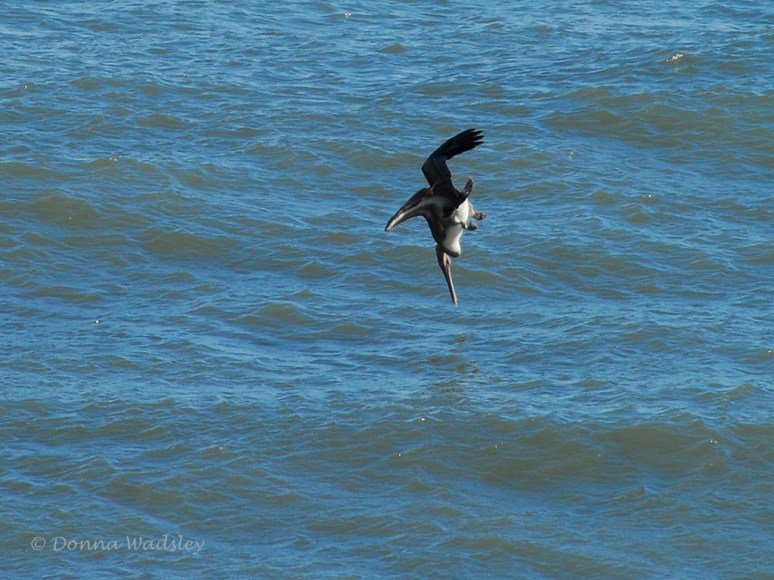
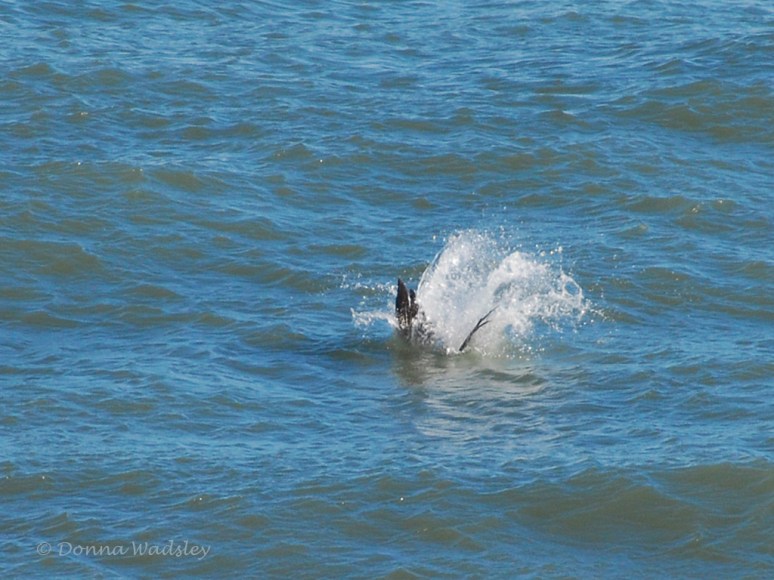
Another dive……
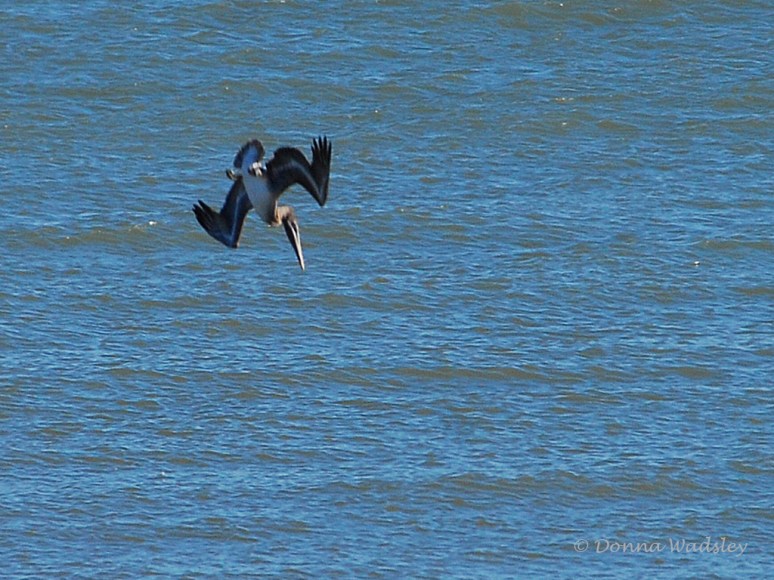

And another……

Brown Pelicans consume up to 4 pounds of fish per day.

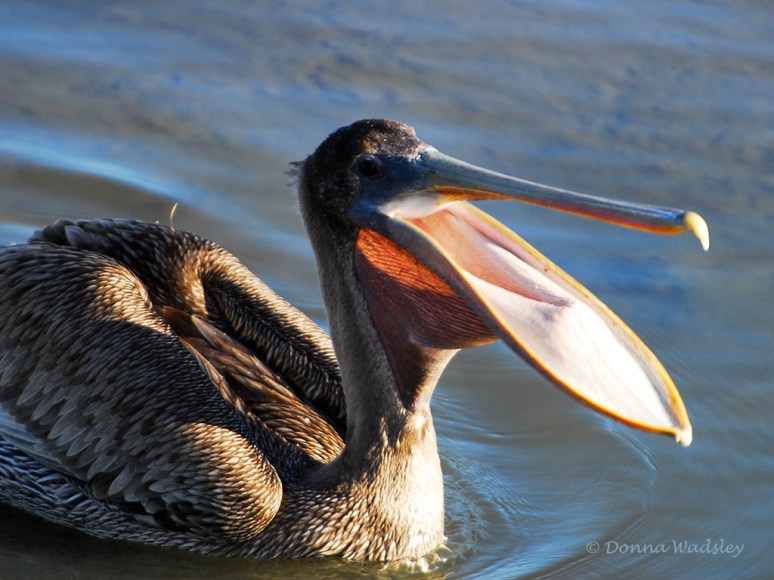
As the Brown Pelican plunges into the water, its fleshy throat pouch, called the gular pouch, expands like a net to scoop the fish while also filling with up to 2-3 gallons of water.
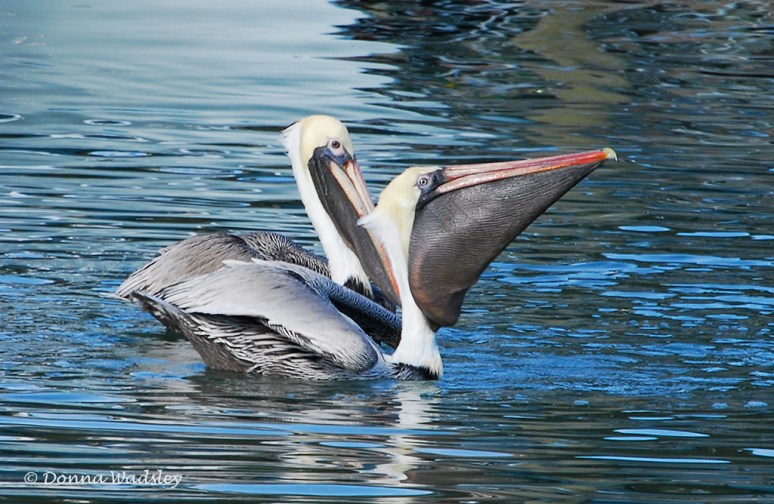
Once the gular pouch is full, the Brown Pelican tips his head back, with beak to the sky, allowing the openings at the back of his beak drain the water away, leaving only the captured fish.
The Brown Pelican will then turn the fish in order to swallow them head first to prevent the fins from catching in his throat.
Sometimes they try to steal a meal from others as well. This poor Cormorant didn’t have a chance when he surfaced with a nice size fish. The Pelicans were immediately in the water and one successfully stole that fish. The Cormorant just looked on in disbelief.
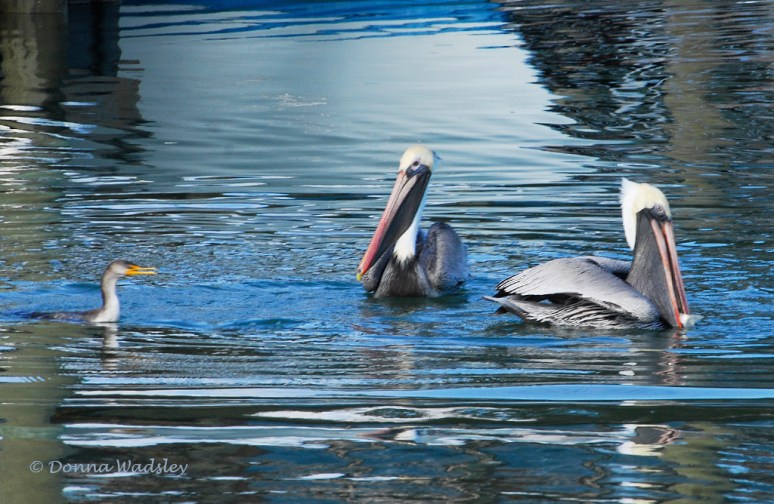
You can see the fish outlined in the Brown Pelican’s pouch.
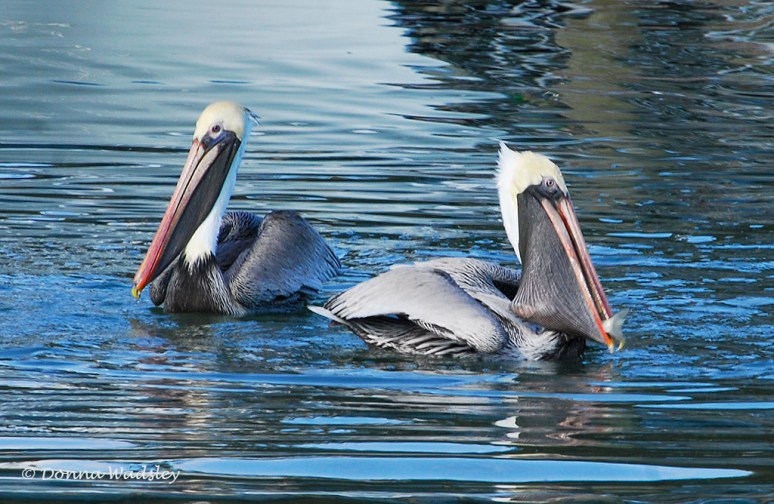
Tip up that beak and down it goes!

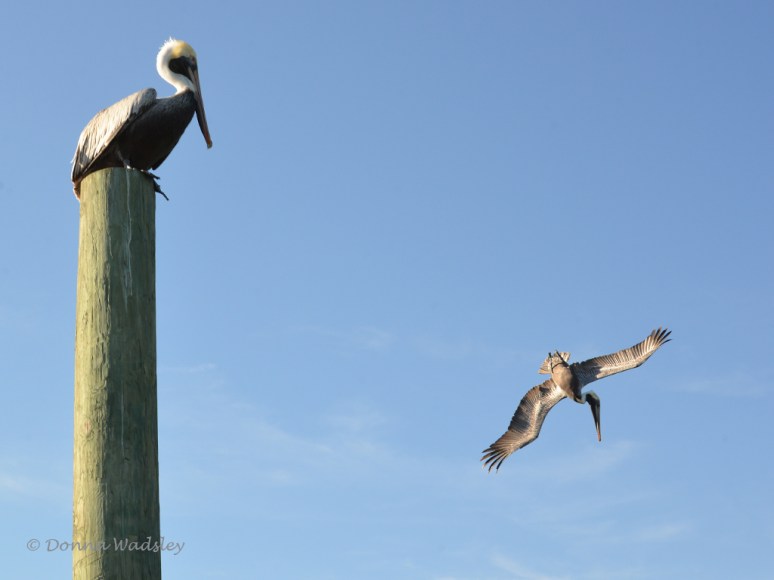
Brown Pelicans will perch and watch another ‘take the plunge’. For sure to see if they themselves have a chance in stealing the meal or snatch up what is missed.
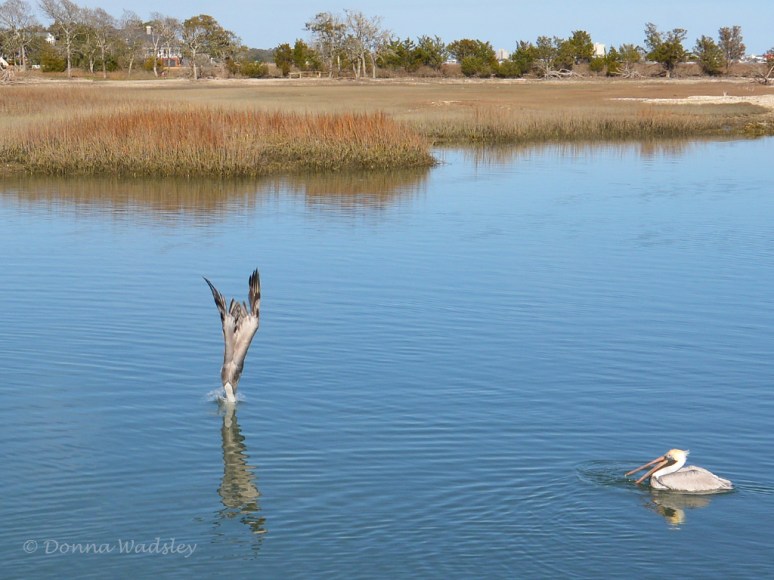
In the next three-photo series, the Brown Pelican in the water seems to be chanting on the plunging Pelican! Go! Go! Go! 🙂


In addition to the Brown Pelican’s gular pouch being used as a fish net, it is also an aide in mate attraction as well as a cooling device. When the Brown Pelican gets too hot, it opens its bill and flutters the sides of its pouch.
A closer look at that gular pouch…..

When he turned his head, the gular pouch was back-lit for an interesting shot.

Say, Ahhhhhh……..
And again……
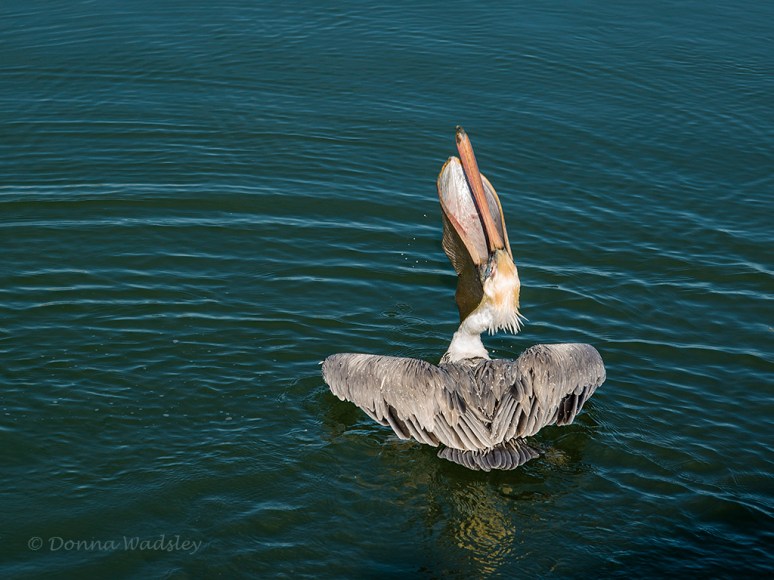
I’ve always admired the comical, gawky Brown Pelican from others’ photos or during our short Florida trips in past years. I enjoyed getting to spend so much time with them these last few weeks, giving me the chance to study them, and learn and share the Brown Pelican with you.
Brown Pelican Profiles
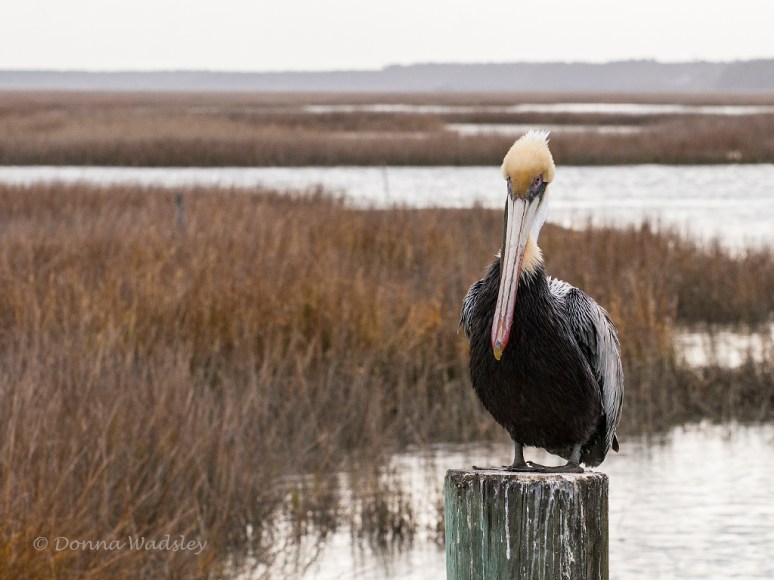
Brown Pelicans are one of those birds that will perch for long periods of time; and if around water, they enjoy the top of a pier. As long as they are out of our reach, they seem content. Great for us on photography practice.

Though sometimes something moving in the water below catches the Brown Pelican’s acute eyesight and he comes to attention.

I was excited with the set-up of the next photo opportunity but it was a cloudy day. The color result wasn’t exciting, so I tried editing it in black & white and found I liked it better.

Cloudy days don’t provide the best of photos; but I did like this next one, he posed so nicely. I think we had a moment. 🙂
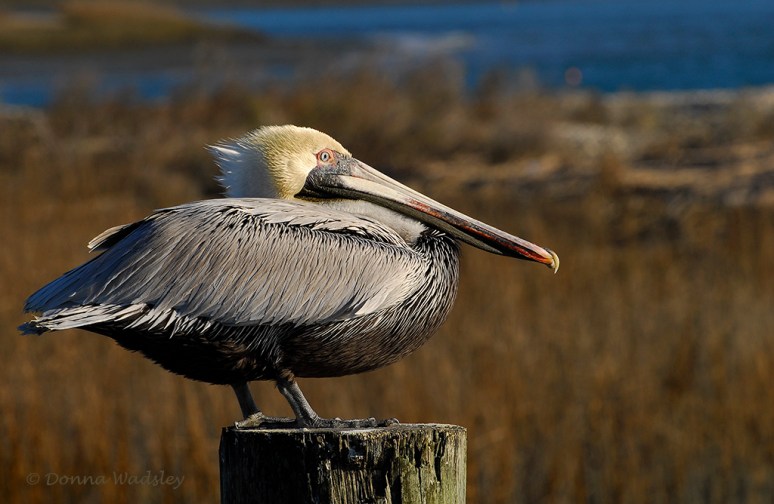
The tooth-like formation at the tip of the Brown Pelican’s bill is used as an “egg tooth” to open its egg and, after hatching, serves as a tool for preening their feathers.
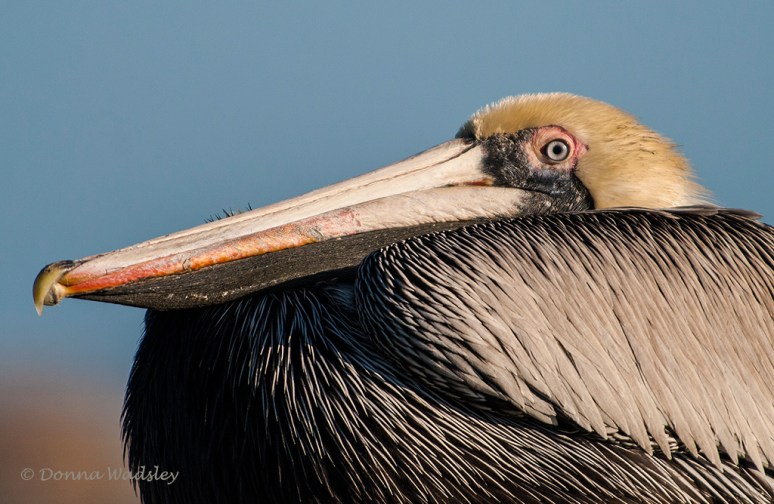
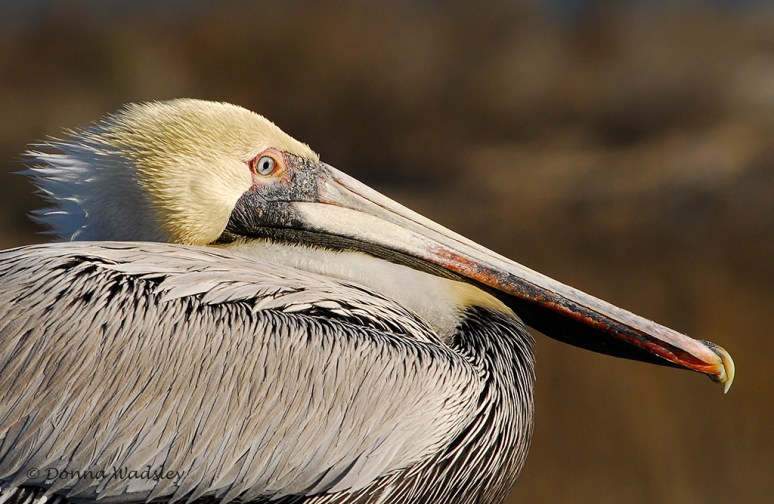
Their “egg-tooth” along with the 12″ long beak and flexible neck allows the Brown Pelican to really clean those feathers and reach that itch.


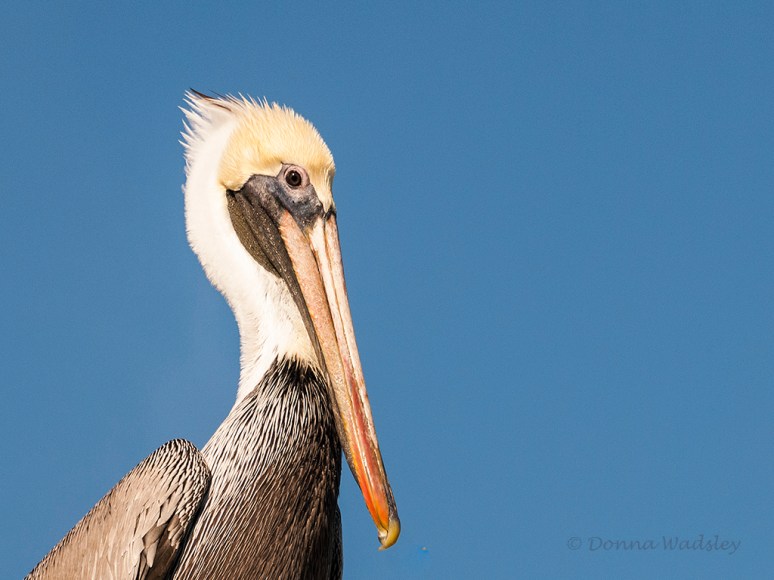
And, boy, sometimes the Brown Pelican can really throw you a uniquely beautiful “look”, as in this last photo.
Fun times with the Brown Pelicans!
Brown Pelicans On The Wing
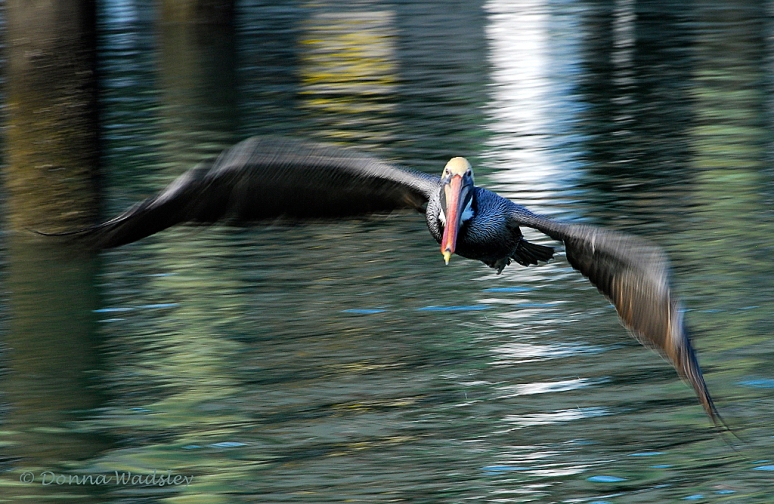
I’ve been working on the challenge of Brown Pelicans in flight. Here’s some of my favorites from the last few weeks.


Brown Pelicans, the smallest of all Pelican species, weigh approximately 8 pounds, have a wingspan of almost 7 feet, and live up to 40 years.


It was 37 to 65 million years ago during the Paleocene and Eocene periods when birds first took to the air. Scientists have concluded Pelicans were there during that time period. It is documented that the pelican’s fossil record has barely changed in 30 to 40 million years.

Many people commonly mistake the Pterodactyl as a relative of the Pelican species but this is not true; the Pterodactyl was a flying reptile so it never developed feathers, the important ingredient to becoming a bird.

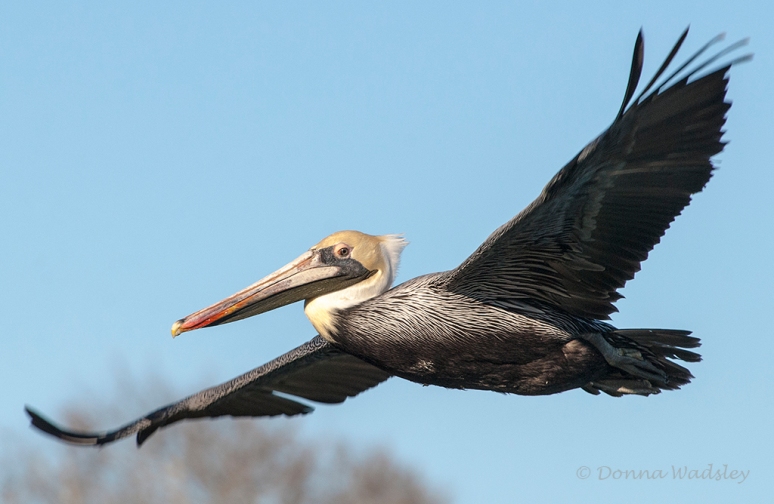
I’ve enjoyed photographing the local Brown Pelicans in great length. More on profiles and dives to follow….
Chattering Carolina Wrens
From the parking lot for a trail to a marsh boardwalk, I immediately heard a fierce chatter between a pair of Carolina Wrens. Their squabble was occurring less than 15 feet from the trail, so I took a peak and shot a few photos while they seemed to be preoccupied with themselves.
 Carolina Wren (male)
The one above, which I presumed the male, was taking most of the heat and finally flew off with a huff while the other, presumably the female, up and flew to their nest within the same tree.
 Carolina Wren Nest
The female didn’t stay long in the nest, flying back out and onto a nearby branch. Apparently, proud of herself, don’t you think?
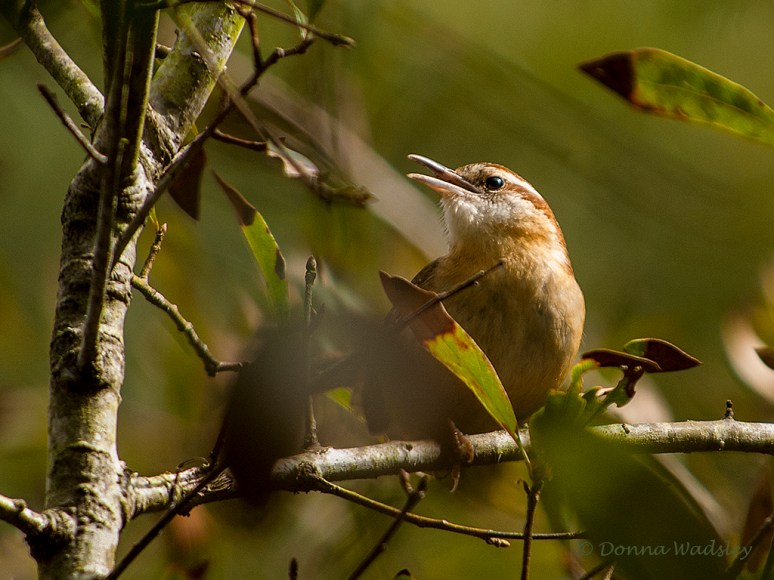 Carolina Wren (female)
Most likely, the female was demanding nesting material or food from the male. What a treat to see this action between the Carolina Wren pair so easily in just a couple minutes.
Nature is wonderful!
An American Oystercatcher Times Two
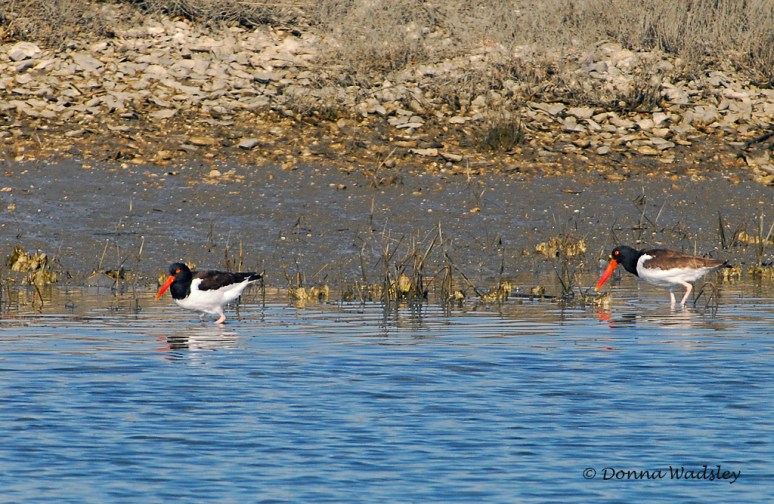
With their bright orange/red bills and matching eyes, along with their dull pink legs, I easily caught sight of two American Oystercatchers foraging around the Murrell’s Inlet salt marsh for a snack.

American Oystercatchers feed almost exclusively on shellfish and other marine invertebrates including mussels and clams of many varieties, limpets, oysters, sea urchins, starfish, crabs, and worms.
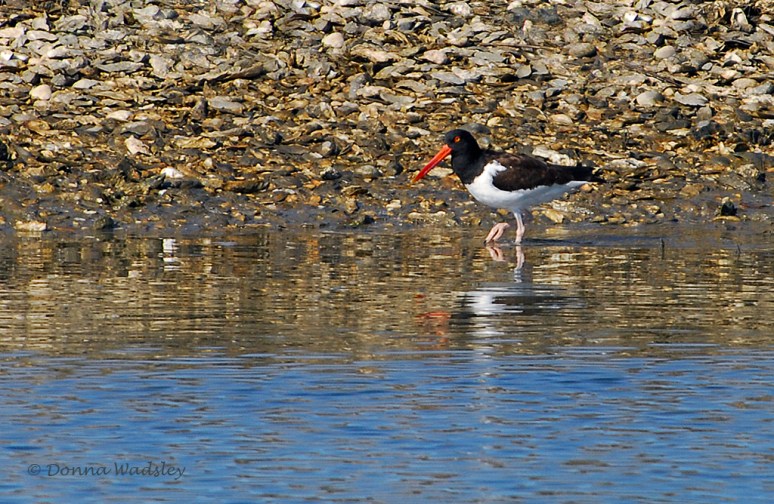
The pair finally got close enough to each other for me to get both in one frame. Yay!
A Great Egret Goes Fishing
While the Great Blue Heron in my last post patiently fished a specific spot, this Great Egret fished on the move. I photographed him from a fishing pier across a canal at low tide for less than five minutes.
Early in the breeding season adults grow long, ornamental plumes (feathers) on their backs, which they raise in beautiful courtship displays.
Notice this Great Egret’s breeding plumes, now in the stage of growth as he/she is changing from non-breeding to breeding.

A strike…..but no luck.

The Great Egret continued its mission and came across the canal towards me, stalking around several old piers.


At this point, the Great Egret was approaching to pass right below me. It cared less about me and more about finding something to eat.
Pity the prey that gets attacked by that dagger beak!

These next two close-ups show another breeding change occurring with this Great Egret. Notice the beak and loral skin is in the beginning stages of changing from yellow to the full-breeding neon green.


To show you how beautiful the above Great Egret will soon be, I’m sharing the next photo I took a few year’s ago of a Great Egret’s full facial change when it reaches full-breeding plumage.

How beautiful and unique most birds of our world change in color and plumage for breeding. It’s an added gift from our Creator for us to watch and enjoy that much more of our birds, all while these breeding changes serve the birds’ purpose to mate and reproduce.
A Great Blue Heron Fishing
Driving by a man-made water canal connected directly to the ocean, I spotted this gorgeous Great Blue Heron. We rode back around the block and dropped me off for these quick captures.
The Great Blue Heron never looked at me; but he did fluff up his wings and gorgeous feathers, I assumed because of my presence. He knew I was there.
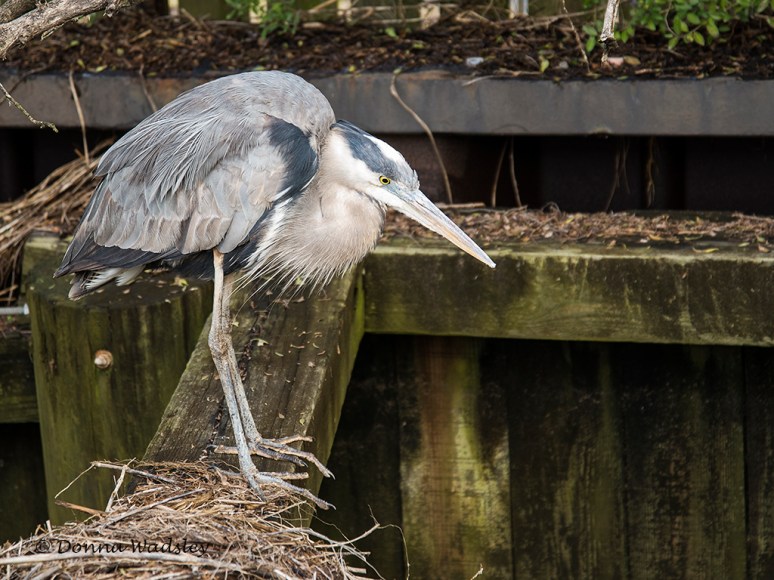
Those wings and feathers settled back down as his eyes targeted something below in the water. He stretched out and down.
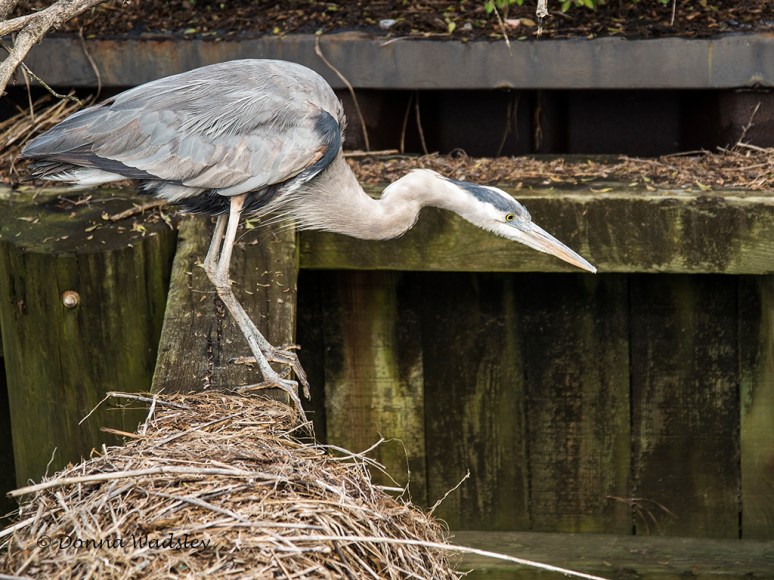
The water level was about 4-5 feet below the Great Blue Heron. I knew he couldn’t reach that far without diving down. Because of the odd situation, I knew he’d most likely fished here before, but at high tide, not the present low tide.
I turned to leave him be and walked back behind him to the car when the Great Blue Heron pulled back and curled up tight, fluffing those wings and beautiful feathers again.
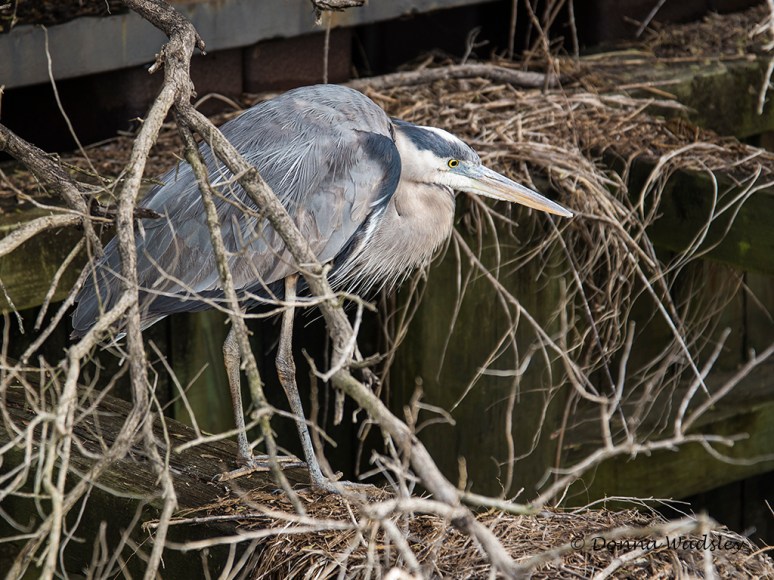
I am sure he was glad I was leaving. Or maybe the Great Blue Heron was thinking twice about diving down and getting those gorgeous feathers wet and dirty. 🙂
Semipalmated Plover
A common Plover that migrates from Canada and Alaska to both the Atlantic and Pacific shorelines and mudflats during our winter months is the Semipalmated Plover.
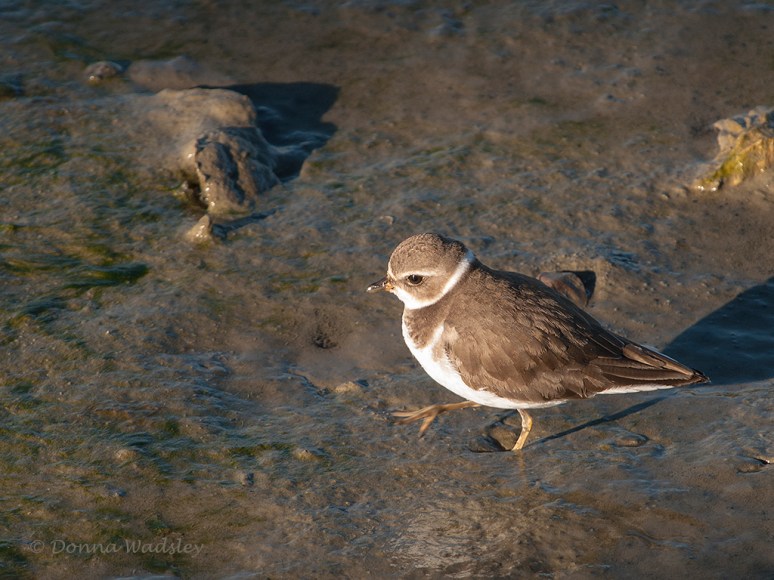
Small at 6 1/2 to 7 1/2 inches (17-29 cm) in length and only 1.7 oz (47 g) in weight, this stocky little Plover forages tidal mudflats and salt marshes in search of insects, crustaceans, and worms.
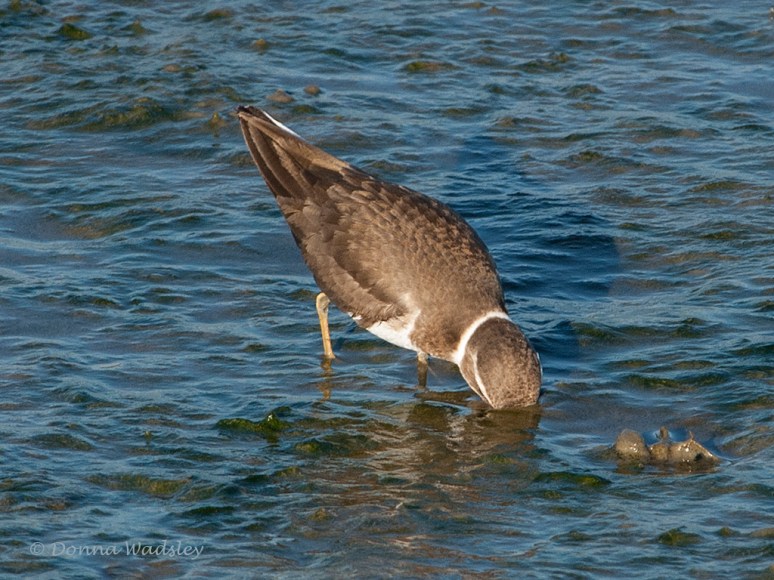
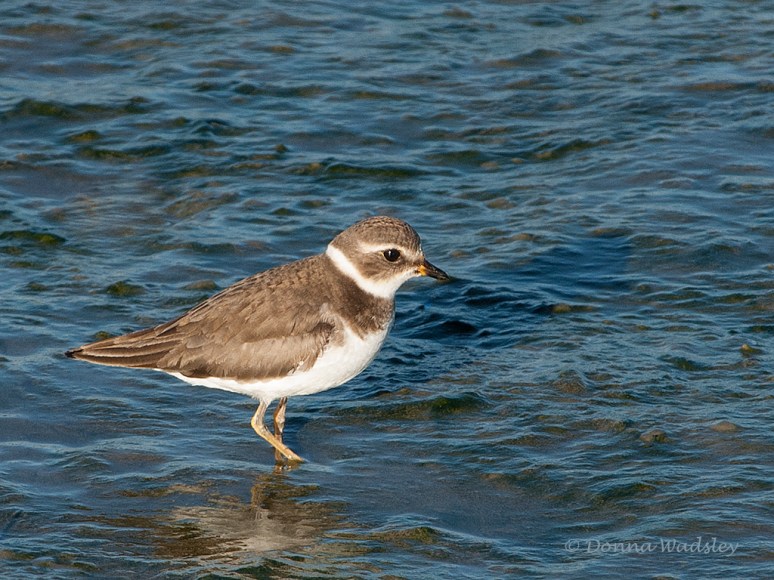
After foraging the area close to me, this Semipalmated Plover flew over the channel to a different spot and immediately into a squabble with a Killdeer who loudly made it known “this is my area, not yours”.
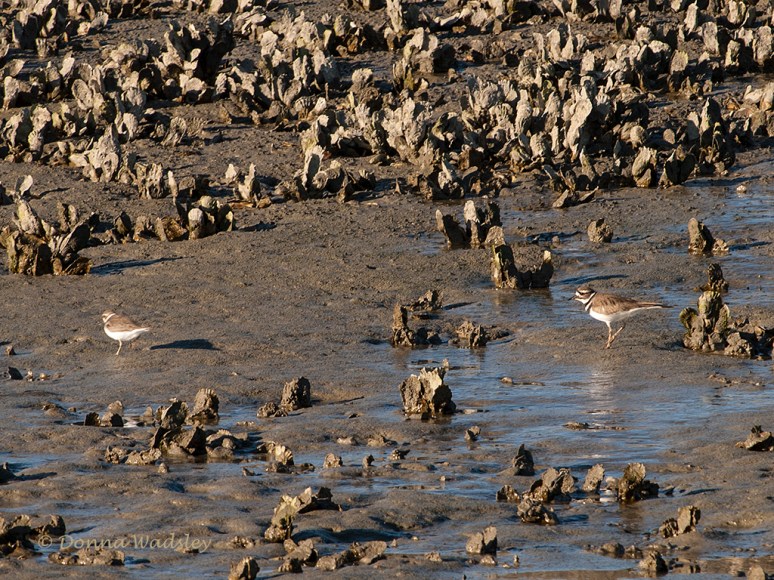 Semipalmated Plover (left), Killdeer (right)
The Killdeer ran at, then flew to attack the Semipalmated Plover, forcing him to take flight, and then my little Plover was gone.
Double-crested Cormorant
Several days ago at Murrell’s Inlet fishing pier, I spotted this Double-crested Cormorant sunning…..
….and preening.


His beak was covered with feather down from the preening. Can you see his gorgeous blue eye? Interestingly, the inside of their mouth is also blue.

After photographing him, a gentleman approached me to ask what kind of bird he was, he had seen the bird here for three days, and it’s wing was injured. The Cormorant never stretched so I couldn’t tell. I told the gentleman this was a diving, swimming bird that fed on fish and hoped he was able to take care of & feed himself.
And so guess what? I later worried a little bit about that young Cormorant too.
I returned yesterday and found the Cormorant still there, and this time he was diving & feeding in the high tide waters. I felt a little better.
The Cormorant gave me a nice profile before another quick dive. I didn’t stay with him, because I didn’t want to discourage his feeding. My ‘new’ gentleman friend was also there walking the pier, and he was so excited to see the Cormorant fishing.

When I later came back pass the Cormorant, he was back up on his perch. He stretched his wings to sun himself, and I saw the end half of his right wing was missing. Poor fella.
I’ll be looking for him on my returns to the fishing pier.
Leaping Dolphins
Any time is a happy time when you watch Bottlenose Dolphins gracefully swimming along the coastline in small pods, breaching the water every so often. Sometimes quite close to the shore.
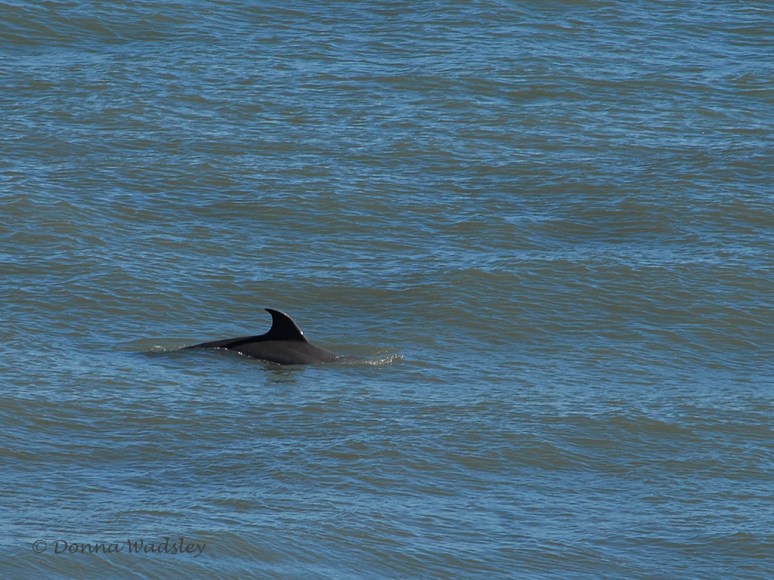
Watching from my balcony, there was a day a few seemed to be having some fun, leaping as they moved along. They kept doing it, so I decided to grab my camera and see if I could anticipate the next location of a leap.
(Photos are heavily cropped and definitely not my best….but are fun!)
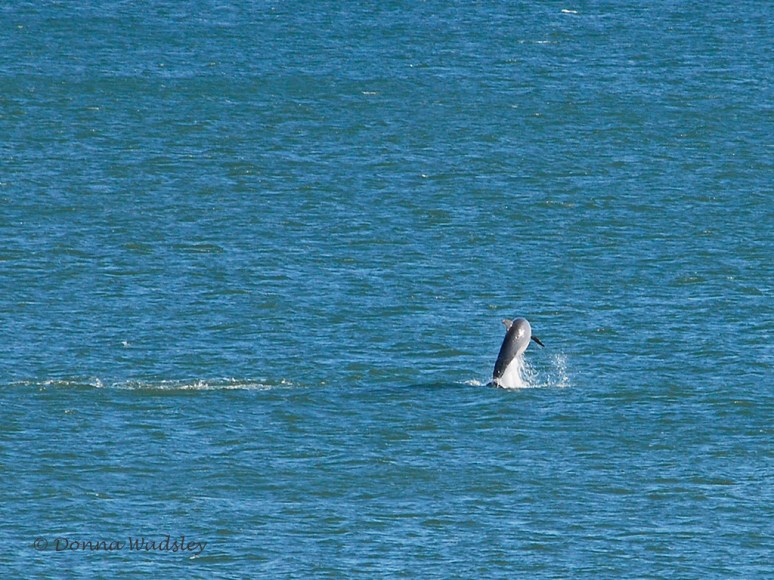
Adult Bottlenose Dolphins average 10-14 feet long and about 1100 lbs.
They can reach speeds 20-22 mph and can breach up to 20 feet out of the water, landing with a splash.
Here we go!
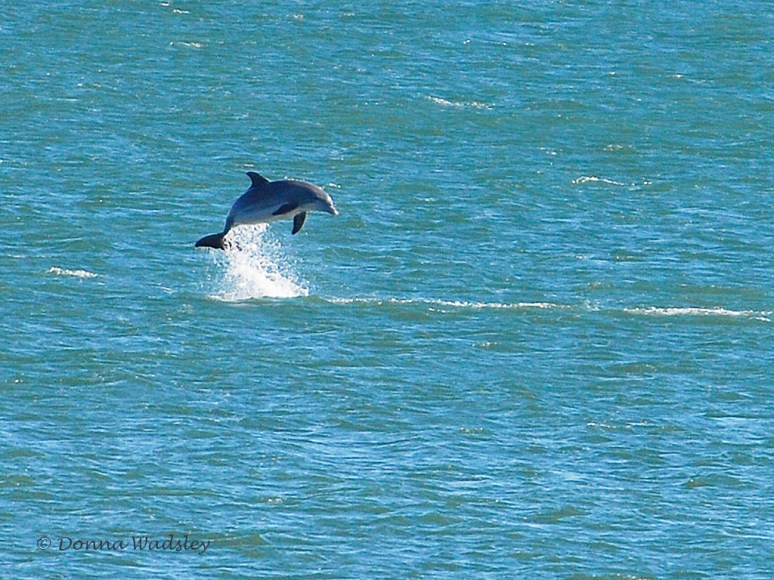
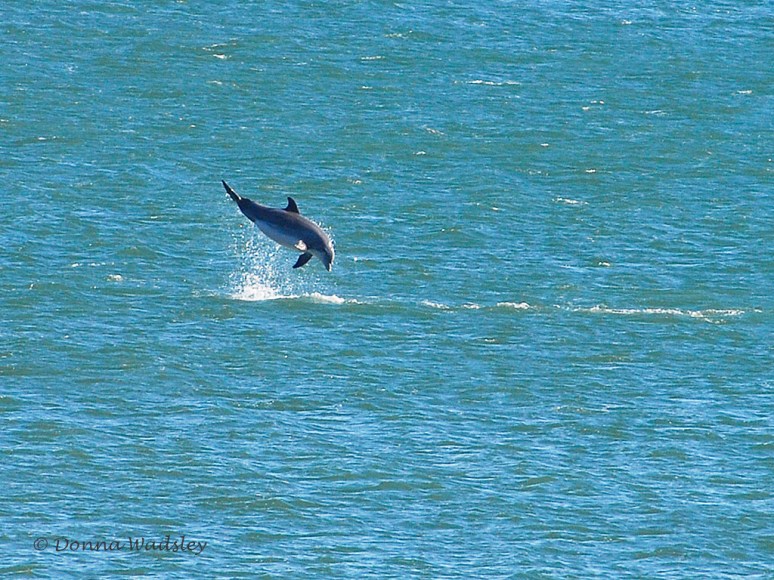
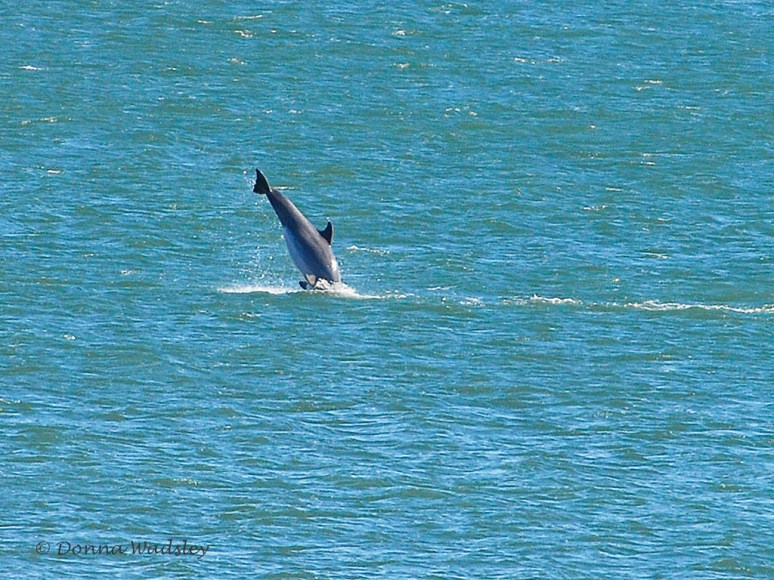
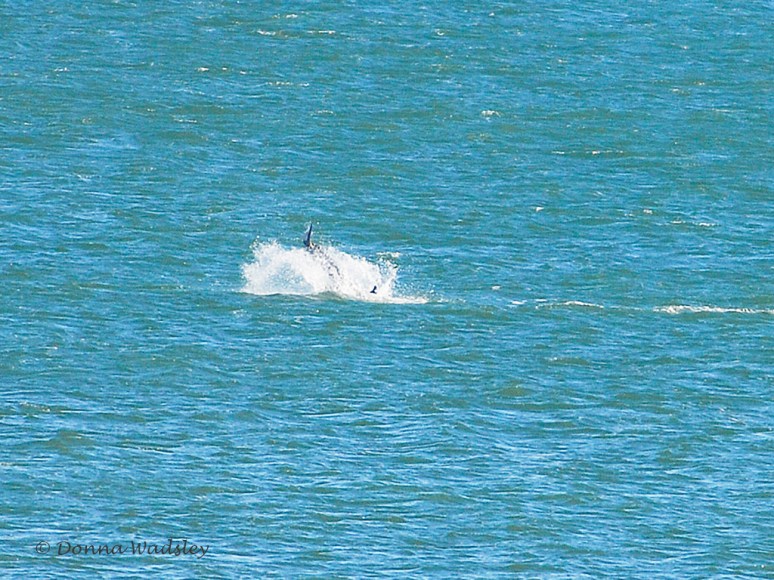
That sure looked like fun to me!
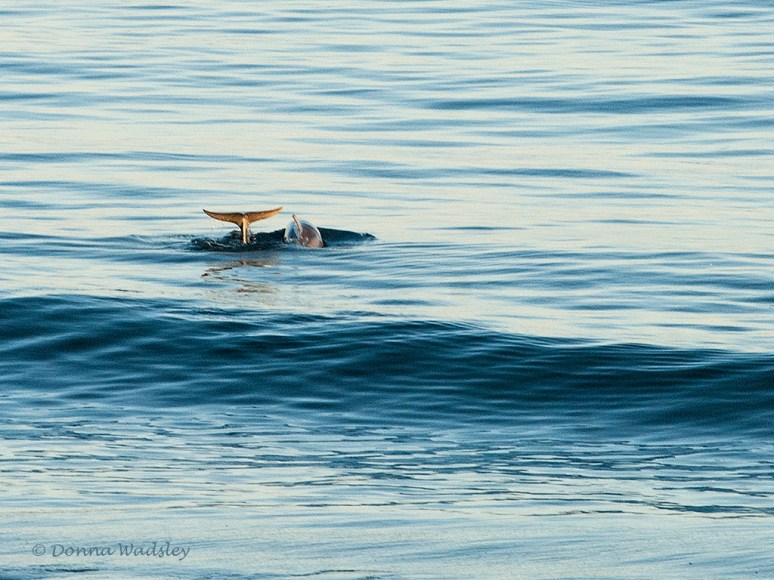
You can’t help but smile and feel happy after watching Bottlenose Dolphins enjoying life and freedom.

 Bay Photos by Donna