
Time Flies When You’re Having Too Much Fun
My post title truly says it!

Ruby-throated Hummingbird (male)
.
Five months have past since my last post, I apologize! I’ve had an amazing summer filled with good excuses. 😉 Birding, gardening, boating, fishing, crabbing, and lots of visits & adventures with the grandboys, leaving me little time and energy for blogging.
.

Chesapeake Bay Bridge
.

My buddies eager to chauffeur Grammy around whenever and wherever I wanted to go!
.
Our Ruby-throated Hummingbirds are on the migration move. All of mine have left except one, and I know it’s any day. What entertainers! We will surely miss them. I even achieved success with holding their feeder outstretched, and they would land and feed. What a special treat! 😍
(click on photos to enlarge for better detail)
.

Ruby-throated Hummingbird

Ruby-throated Hummingbird

Ruby-throated Hummingbird

Ruby-throated Hummingbird
.
I gained another five bird lifers💃this summer, one being discovered shortly after taking the above bridge photo a few weeks ago.
Perched on two channel marker buoys and flying around was an exciting rare seabird species, the Brown Booby. These beauties are usually found in tropical oceans around the world. There were a total of 14!
.

Brown Booby (adult)
.

Brown Boobies

Brown Boobies
.
I found another lifer also off-course in its coastal migration, the Hudsonian Godwit.
.
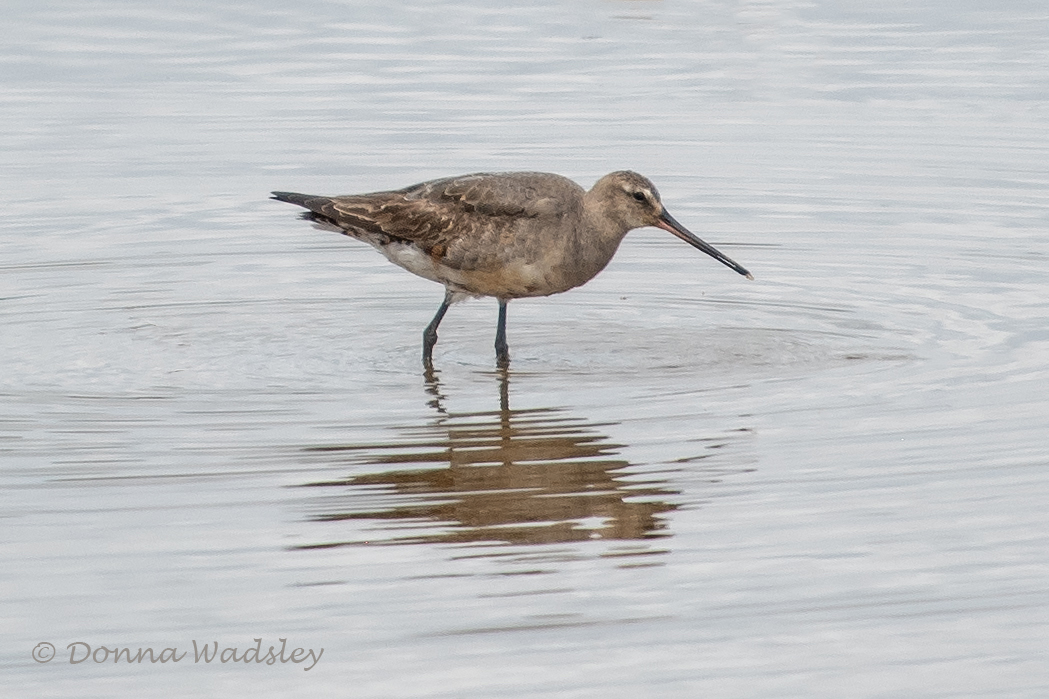
Hudsonian Godwit
.
And yet another off course, the small Black Tern.
.

Black Terns
.
Two more lifers seen but not photographed were the Western Sandpiper and Barred Owl. Next time, I gotta got those photos!
My beloved Osprey are migrating now as well, our local residents are all but gone and transients from the north are passing through.
It was not a good summer for our Chesapeake Bay Osprey.
Research findings just released a few days ago stated the following, “Ospreys nesting at multiple sites around the Chesapeake Bay this year failed to produce enough young to sustain their numbers, new data shows. The scientists collecting the data say many chicks apparently starved in areas where the birds subsist mainly on Atlantic menhaden for food.”
The disheartening full article is here.
.

Osprey stare-down!

Female Osprey

Male Osprey

Juvenile Osprey learning to land
.
Just too many bird favorites, how about a pretty collage….
(click to enlarge)
.

Blue Grosbeak (juvenile)

Red-winged Blackbird (male)

Eastern Kingbird

Brown Thrasher

Gray Catbird

Cedar Waxwing

Blue Grosbeak (male)

Yellow-breasted Chat

American Robin

Great Crested Flycatcher

Eastern Bluebird
.
Another one of my favorite birds sittin’ pretty, the Northern Cardinal.
.
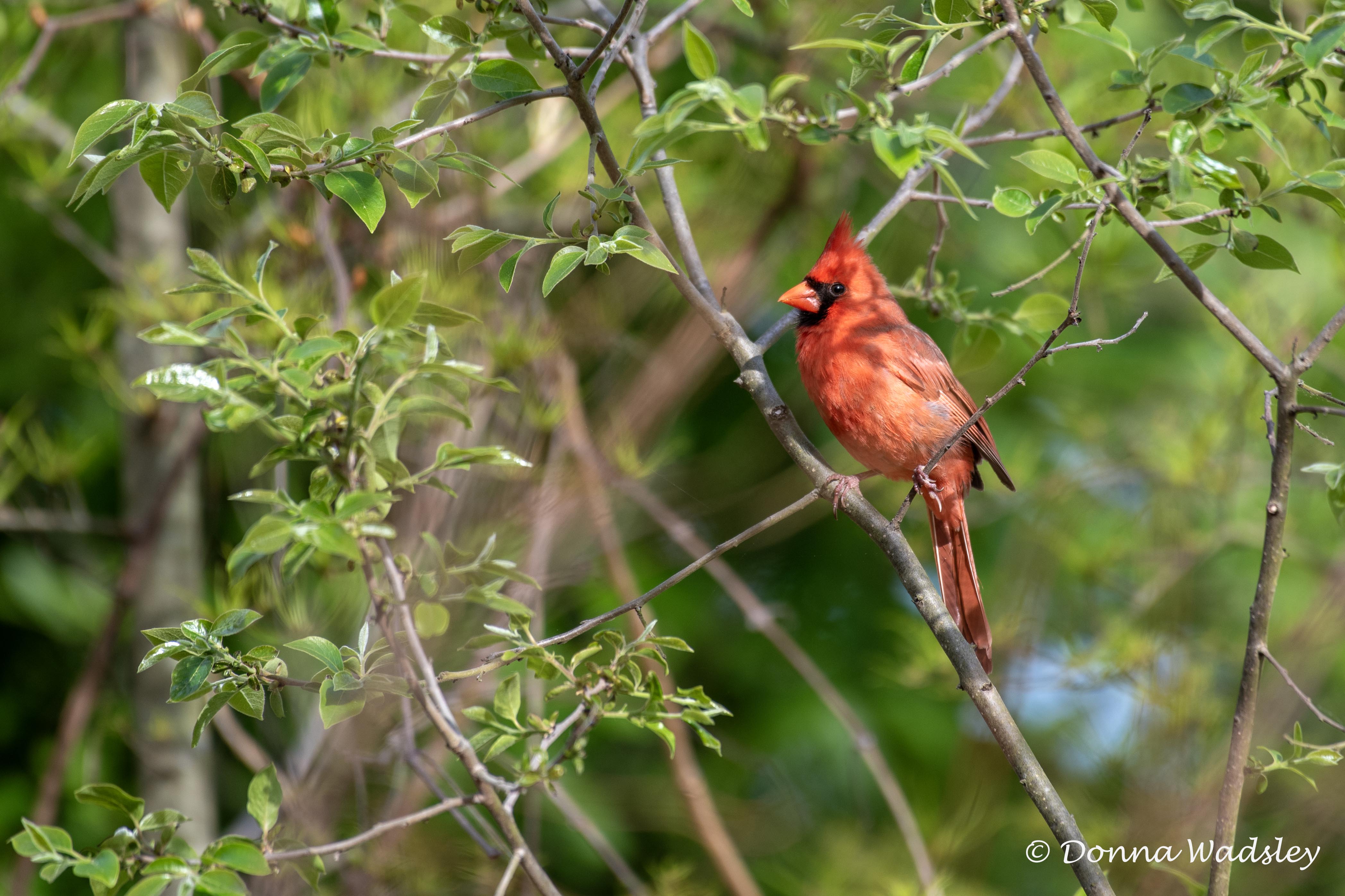
Northern Cardinal (male)
.
A summer day’s beautiful ending….
.

.
The migrating warblers are next!
.
.
Poplar Island Birding
Poplar Island is a successful clean-dredge spoil restoration project in the Chesapeake Bay for migratory birds traveling the mid-Atlantic fly-way that began in 2001.
In 1847, the human-inhabited island was 1,140 acres with a village and forests.
In 1996, the island had eroded to less than five acres.
Today, Poplar Island’s restoration footprint is complete at 1,715 acres. It’s interior is now being finished to include several types of habitat for nesting.
.

Poplar Island, aerial June 2022
(courtesy http://www.poplarislandrestoration.com)
To date, highlights include 262 identified species of birds, with 38 nesting species, such as the Bald Eagle, Osprey, Short-eared Owl, American Oystercatcher, Glossy Ibis, Snowy Egret, Least Tern, and Common Tern. Winter bird censuses have reported over 36,000 birds in one day.
Through lottery reservations, the island was opened with limited birding trips to the public. My first visit to Poplar Island was in 2019, and I’ve returned several times since including last fall, and recently two times just a few weeks ago.
We ride the Terrapin over to the island, then jump on a tour bus and ride around to points where we can safely disembark away from construction, stopping along the way for anything we can watch from inside the bus.

The Terrapin

Welcome to Poplar Island

Poplar Island bus tour
Yes, I lucked out on going twice a week apart a few weeks ago! One visit, the weather tried to turn foul with winds and rain (43 species seen), and the other with some sun (48 species seen).
Here is a sampling of my collection from those the two days.
.

Short-eared Owl (Lifer #309)
(These owls migrate to Canada in the spring; last summer, a pair stayed
and nested on the island, fingers crossed they continue to stay)
.

Short-eared Owl
(I was disappointed I didn’t get it’s face but I’ll take the shots!)
.

Horned Grebe
.

Common Loon
.

Ruddy Ducks, Canvasback, Lesser Scaup
.

American Avocets (top), Dunlins (bottom)
.

American Avocets (top), Dunlins (bottom)
.

Least Sandpipers
.
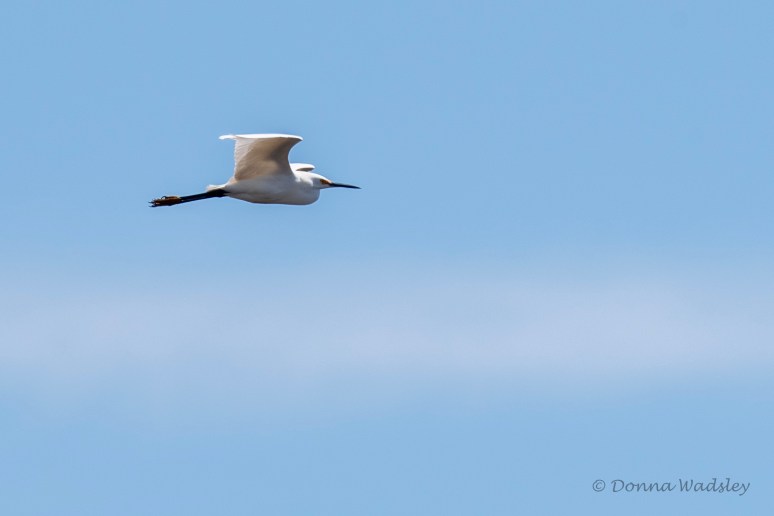
Snowy Egret
.

Bald Eagle nest
(photographed through bus window)
.

Above photo cropped….yes, an Eaglet!
There are actually two Eaglets in the nest.
.

Ruddy Duck (male)
.

Brown Pelican
(exciting sighting and for it to fly right by us!)
.
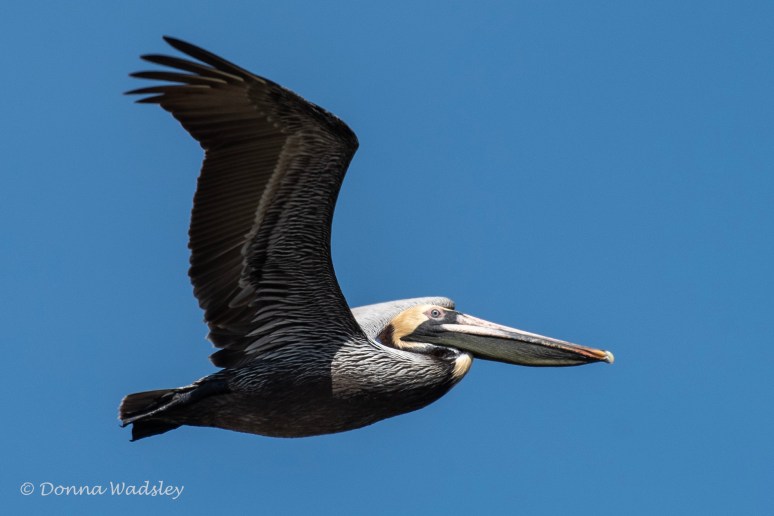
Brown Pelican
.

Tree Swallow
.

Black-necked Stilt
.
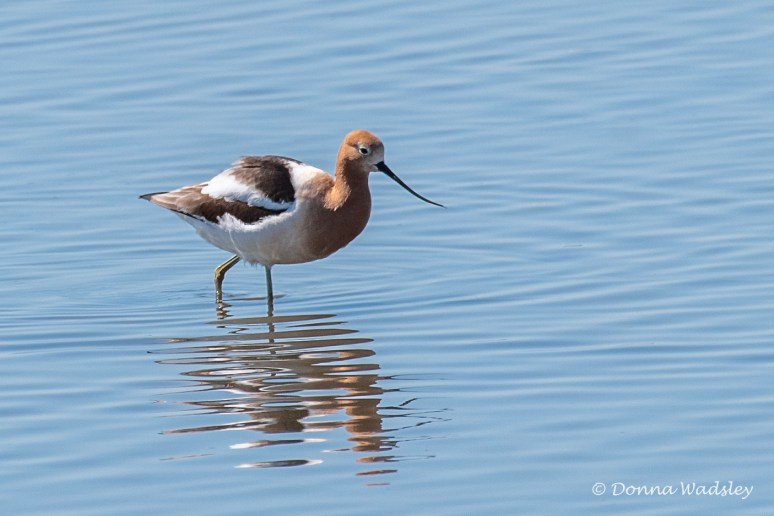
American Avocet
.
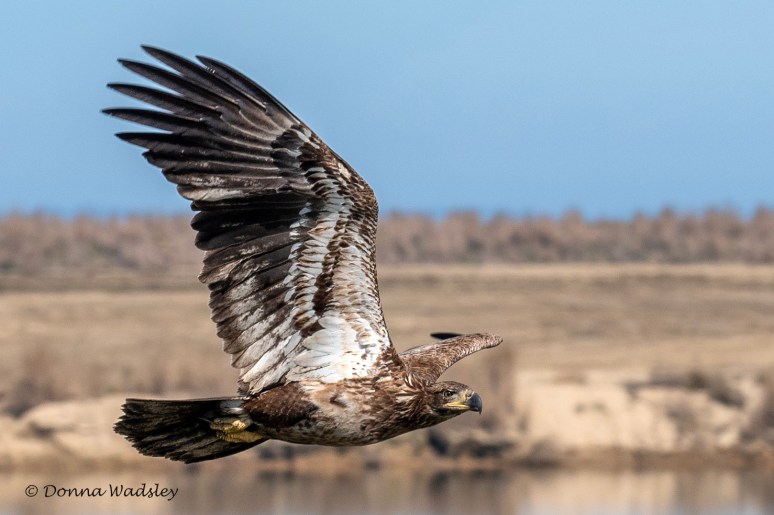
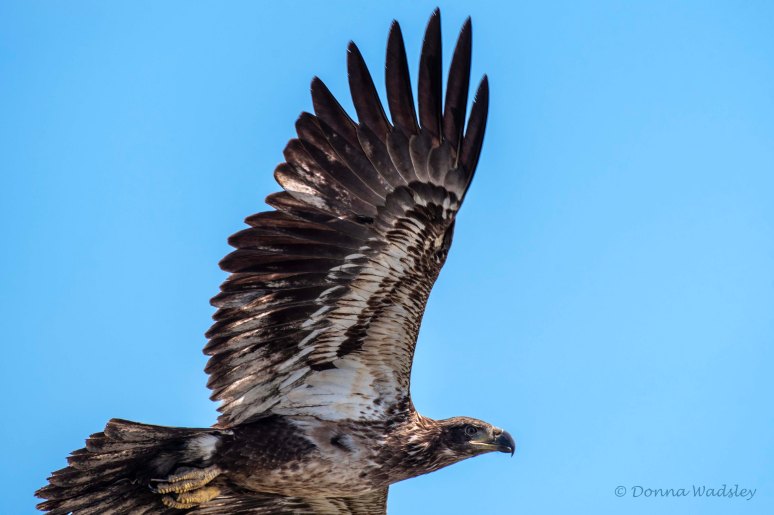
Bald Eagle (immature) Fly-By
.

.
.

Osprey
.
If you live within a few hours of Tilghman Island where the boat departs for Poplar Island, see more information on the bird tours here.
.
Wordless Wednesday
.

Cedar Waxwing
.
.
Swan, Heron and Goslings
.
A week ago, I planned an early morning quick stop to check a small cove where I have been lucky with birding.
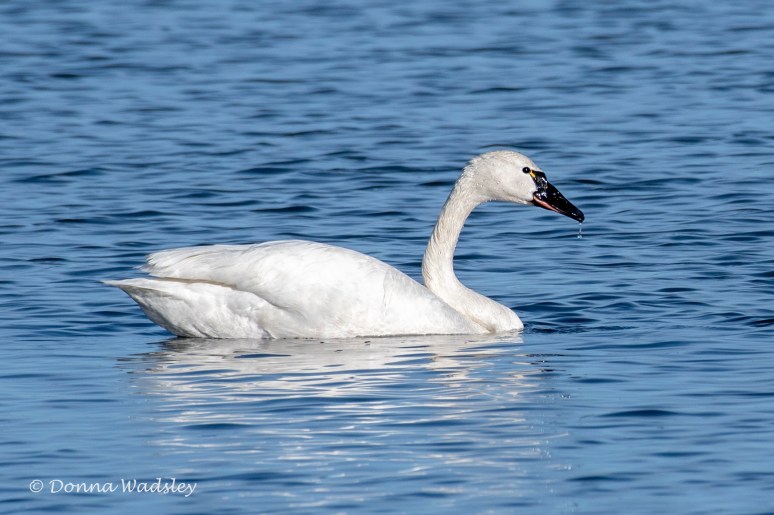
Lo and behold, I found a beautiful Tundra Swan foraging! For the most part, these winter swans departed the Chesapeake Bay in March to head back to the Arctic.
.

Tundra Swan on April 8th
.

Bottoms up!
.
.
I noted no wing injury and it looked quite healthy. Fingers crossed it’s moved on and connected with maybe a flock of migrating Canada Geese and heading north for its Arctic home. Safety in numbers!
And what do we have here? As I was photographing the swan, alongside me a family of Canada Geese was foraging the grass.
.

Canada Geese

.
What again? Alongside me in the other direction was a heron fishing, and trying to get away from my lens.
.
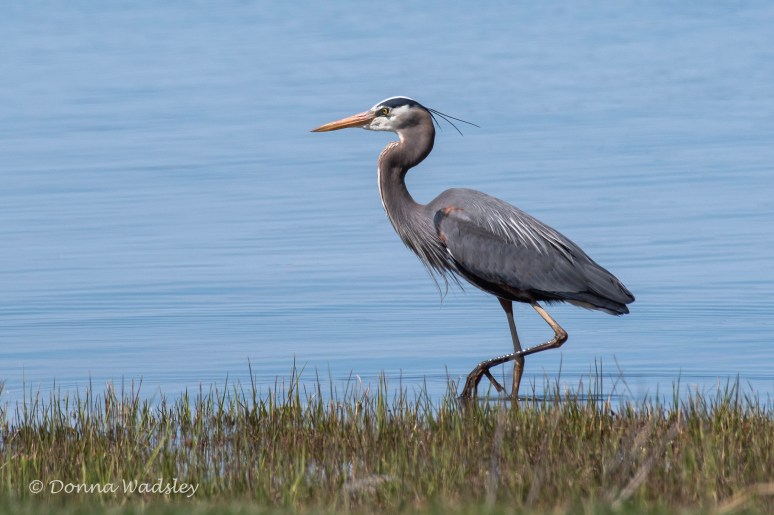
Great Blue Heron
.
So exciting but I was on a timed visit; I had to go!
It was just the beginning of my day’s thrill after thrill. I was enroute to catch a boat for a birding tour on Poplar Island in the Chesapeake Bay. That post (may take two!) is forthcoming…. 🙂
.
1-2-3 Cute As Can Be – #32
.
My recent little-bird favorites, doing that cute thing!
From the year-rounds….
.

Carolina Wren
.
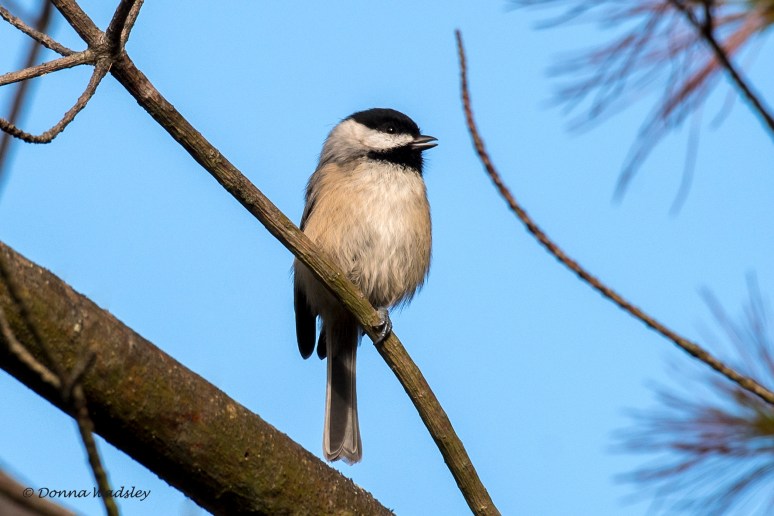
Carolina Chickadee
.

Tufted Titmouse
.
to the early Spring returners…..
.
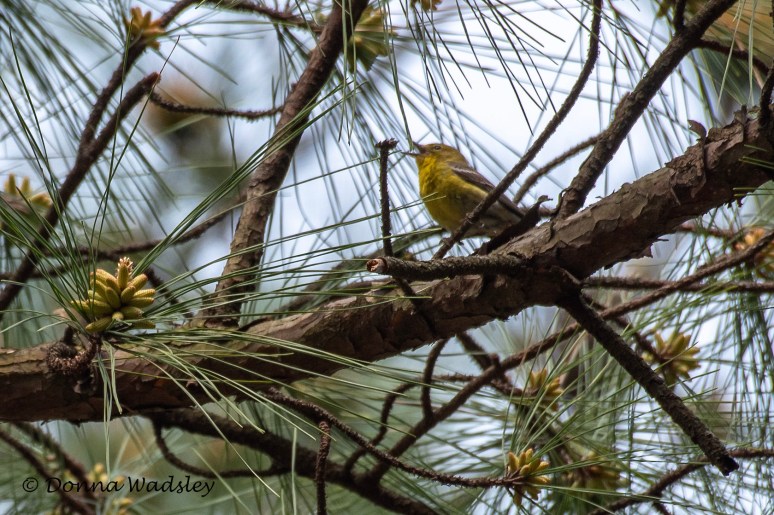
Pine Warbler
.

White-breasted Nuthatch
.

Eastern Phoebe
.
to the soon-to-depart.
.
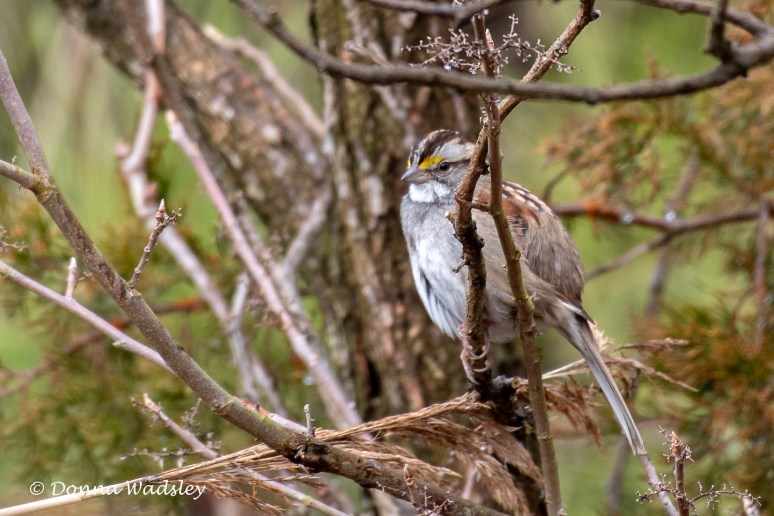
White-throated Sparrow
.
We get flocks of White-throated Sparrows all winter, and they are one of the last of the winter sparrows to leave us. With the trees budding a bit early this year, it was nice to get some pretty captures of one with the buds before *poof* they’re gone too!
.

White-throated Sparrow
.

.
.
Turkey Surprise
.
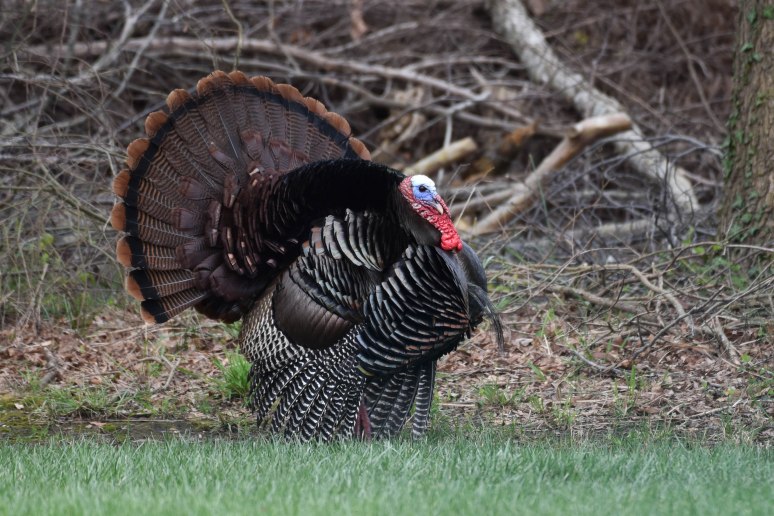
Never did I expect this sighting in our backyard.
Yesterday, my husband hollered, “TURKEY”!
I came a-running through the house 😂 grabbing my camera along the way. From our kitchen bay window, we watched a tom meandering through the bordering tree line and marsh behind us. I sneaked outside onto our back porch, and waited to see if it would come out for some photos.
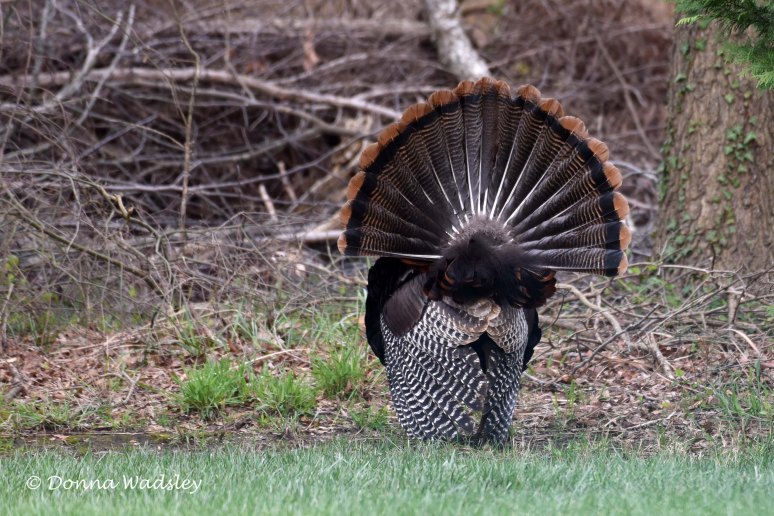
He did, and proudly too!
.

Wild Turkey (tom/male)
.
.
.
After that strutting display, the tom began walking to the left and disappeared behind my flowerbed. I spotted a hen hidden in the thicket and moved slowly out of my hiding spot to try to see where the tom went. He had turned back, caught sight of me darn it, and took off running to our trees on the side of the house. To my surprise, he was followed by four fast-running hens!
Fact: If a Wild Turkey is spooked, it can reach a running speed of 20-25 mph (32-40 km/h)!
.

Wild Turkey (two of the hens/females)
.

Handsome fella!
.
1-2-3 Birds and Berries – #13
The winter berries are all but gone, except for the lingering American holly berries.
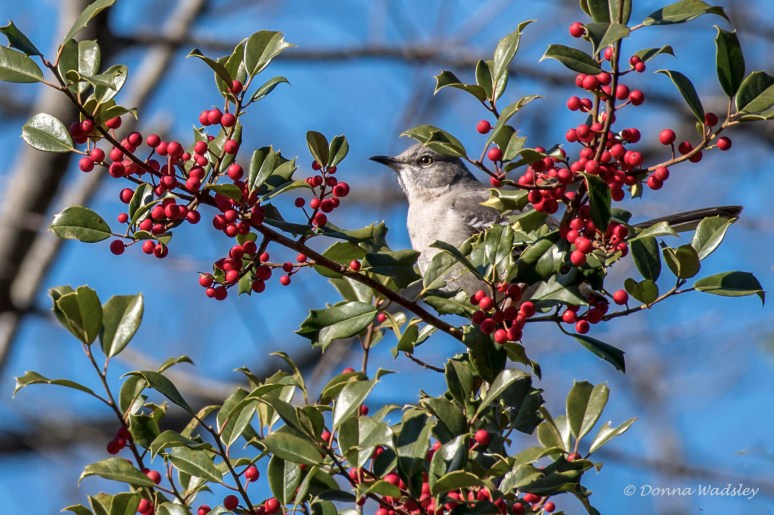
Northern Mockingbird
.
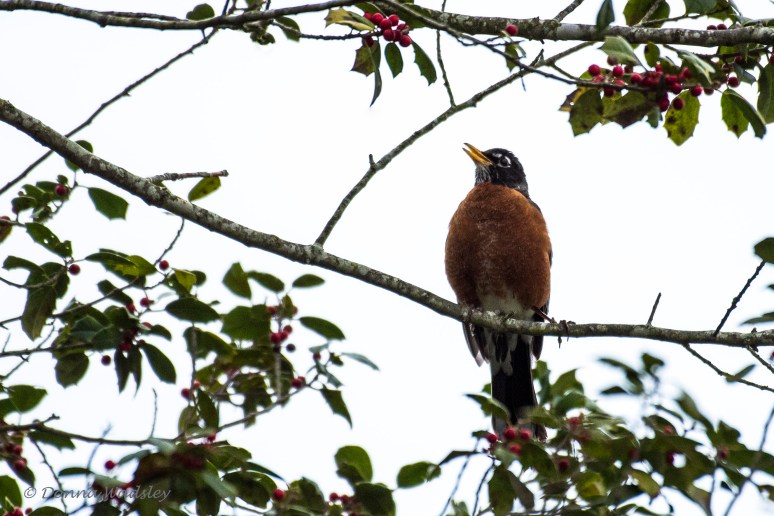
American Robin
.
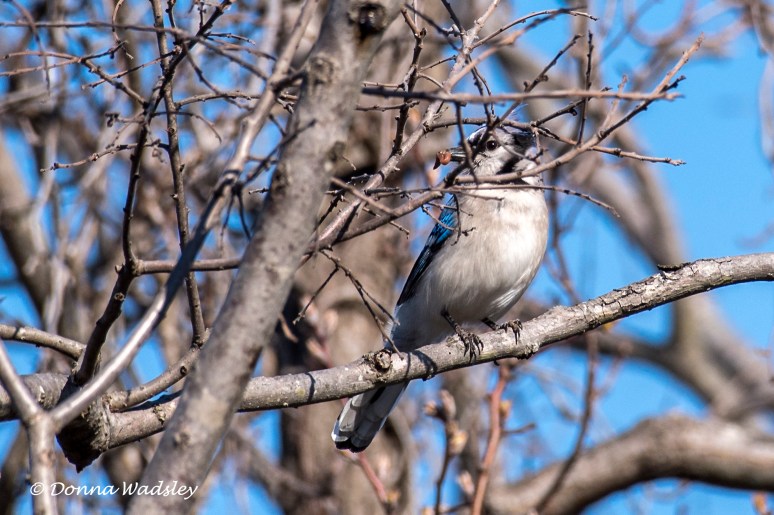
“Phooey to the berries, I’ll take a tasty spring worm over them any day!”
Blue Jay
.
.
Happy Easter


Wishing you a beautiful Easter Sunday!
.
Critter Time!
.
Who’s been coming out of their winter hiding?
.

Eastern Cottontail
.
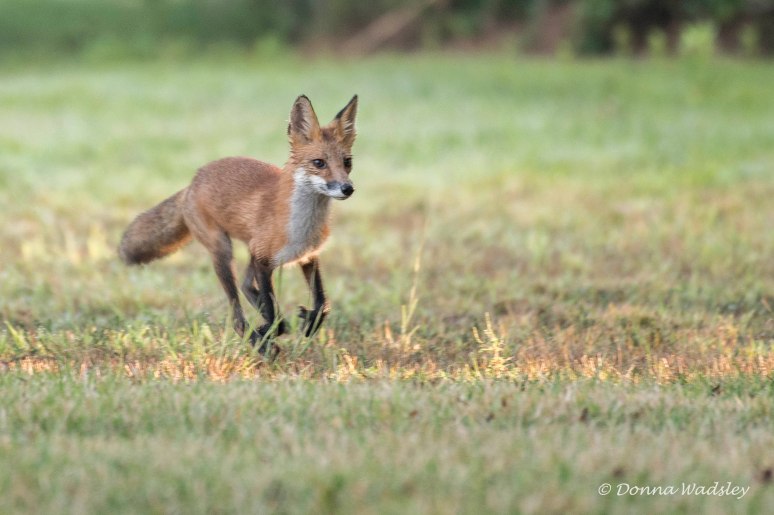
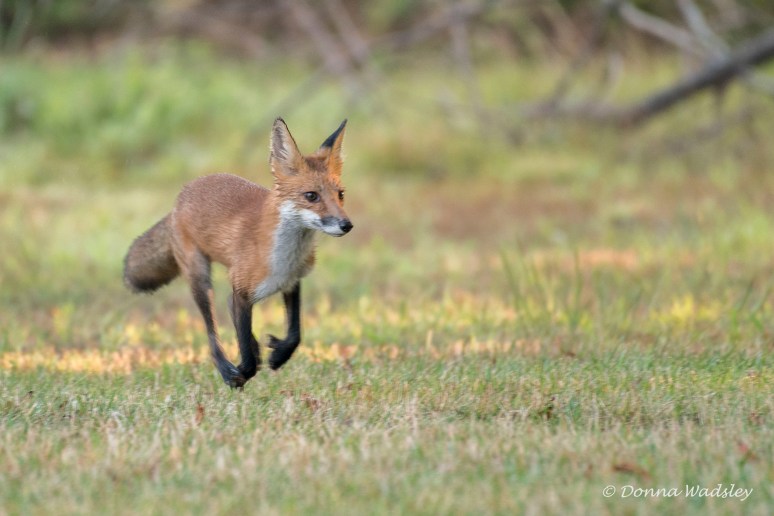
Red Fox on the run
.
.

.

White-tailed deer buck and part of his herd
.

Rest of his herd that includes two piebalds
The piebald anomaly is a genetic variation (defect) that produces the piebald condition in white-tailed deer, and is not from parasites or diseases as some may think. In addition, the defect can also have issues with bone development.
Many piebald deer may still be able to live a long, healthy life. This genetic condition is rare with typically less than one percent of white-tailed deer being affected in Maryland. (courtesy Maryland DNR Wildlife website)
.

Gray Squirrel nibbling on a snack
.
Spring is waking everyone and everything up!
.
1-2-3 Medium Bird Jubilee – #20
I have some nice shots to share of the bigger and bolder medium-sized birds who gave me a chance at catching their winter beauty!
An added note, these are all year-round birds for me so none of these are leaving for migration, yay!

Blue Jay
Length 9.8-11.8 inches (25-30 cm)
Weight 2.5-3.5 oz (70-100 g)
Wingspan 13.4-16.9 inches (34-43 cm)
.

Brown Thrasher
Length 9.1-11.8 inches (23-30 cm)
Weight 2.1-3.1 oz (61-89 g)
Wingspan 11.4-12.6 inches (29-32 cm)
.

Northern Cardinal (male)
Length 8.3-9.1 inches (21-23 cm)
Weight 1.5-1.7 oz (42-48 g)
Wingspan 9.8-12.2 inches (25-31 cm)
.

Fish Crow
Length 14.2-15.8 inches (36-40 cm)
Weight 6.9-11.6 oz (195-330 g)
Wingspan 33.1 inches (84 cm)
.
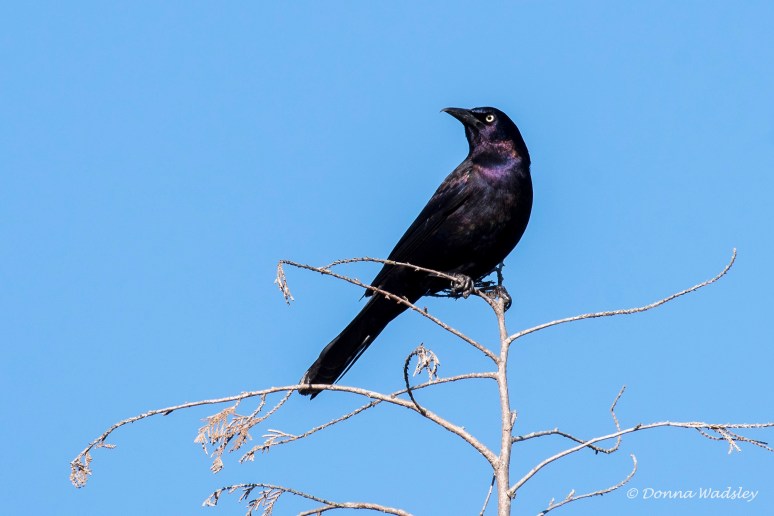
Common Grackle
Length 11.0-13.4 inches (28-34 cm)
Weight 2.6-5.0 oz (74-142 g)
Wingspan 14.2-18.1 inches (36-46 cm)
.

Red-winged Blackbird (male)
Length 6.7-9.1 inches (17-23 cm)
Weight 1.1-2.7 oz (32-77 g)
Wingspan 12.2-15.8 inches (31-40 cm)
.

Eastern Towhee (male)
Length 6.8-8.2 inches (17.3-20.8 cm)
Weight 1.1-1.8 oz (32-52 g)
Wingspan 7.9-11.0 inches (20-28 cm)
.
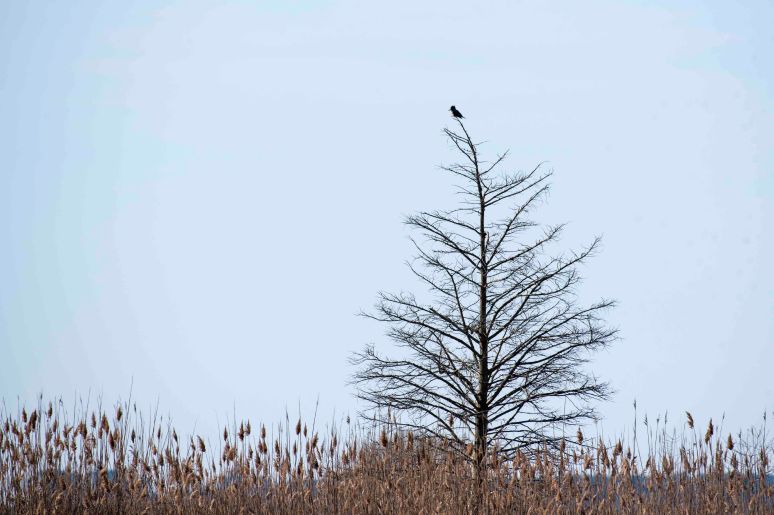
Belted Kingfisher
Length 11.0-13.8 inches (28-35 cm)
Weight 4.9-6.0 oz (140-170 g)
Wingspan 18.9-22.8 inches (48-58 cm)
.

Eastern Bluebird (male)
Length 6.3-8.3 inches (16-21 cm)
Weight 1.0-1.1 oz (28-32 g)
Wingspan 9.8-12.6 inches (25-32 cm)
.

American Robin
Length 7.9-11.0 inches (20-28 cm)
Weight 2.7-3.0 oz (77-85 g)
Wingspan 12.2-15.8 inches (31-40 cm)
.

 Bay Photos by Donna