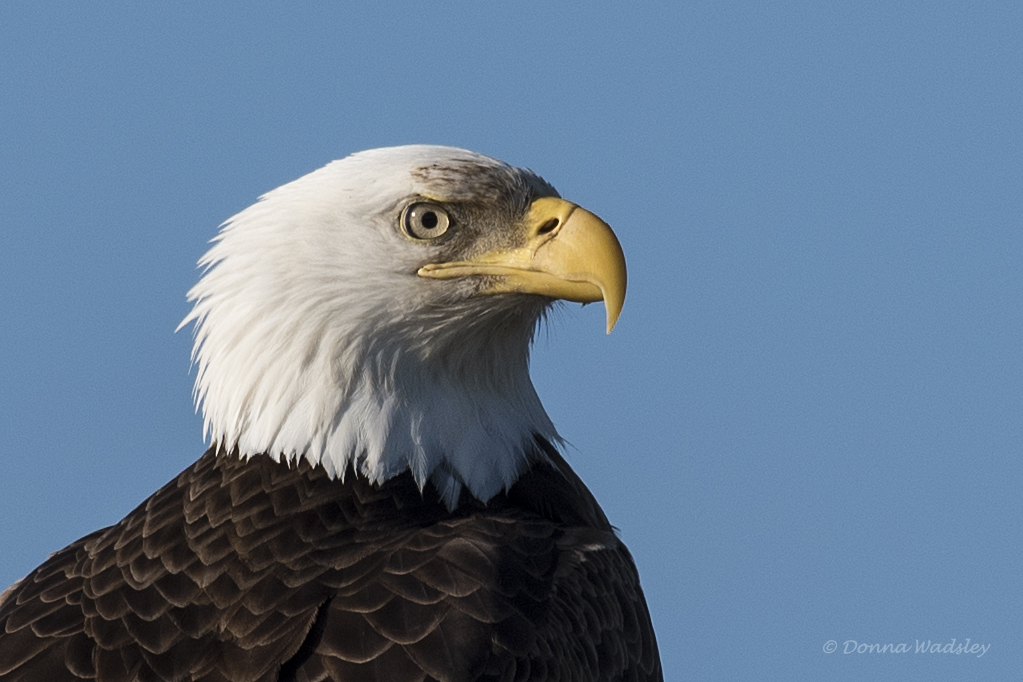
Delmarva Fox Squirrel
Fox squirrels are the largest tree squirrels in the western hemisphere.
The Delmarva fox squirrel is one of 10 subspecies of the fox squirrel.
Before the 1900’s, the Delmarva fox squirrel’s original range was Delaware, Maryland, and Virginia, with stretches into southeastern Pennsylvania.
By 1900, the Delmarva fox squirrel was found only in Maryland.
By the mid-1960’s, only small pockets of populations were found in just four Maryland eastern shore counties; Kent (mine), Queen Anne’s, Talbot, and Dorchester. That is less than 10% of its former range. Conservation efforts showed dwindling success as habitats continued to decline.
In 1967, the Delmarva fox squirrel was federally listed as an endangered species.
Immediately, Maryland put forth more money and stronger conservation plans, but it wasn’t so easy. Plans failed and had to be revised numerous times, all while trying to gain wider support and more devoted efforts.
It wasn’t until 2015 that success in stable populations was achieved in small pockets on private properties around Maryland’s eastern shore counties, and in December 2015, the Delmarva fox squirrel was delisted.
In 2020, Maryland translocated small populations (15-20) to southern Delaware and Virginia’s eastern shore in private areas in hopes of reestablishing them there once again, after previous failed attempts. They will know in a couple more years if good pocket populations were created successfully in those two states as well.
Quite shy and elusive, the last time I saw a Delmarva fox squirrel was in 2018 at Blackwater NWR in Dorchester County, 75+ miles south of me where Maryland has the largest, thriving pocket population.
So you can imagine my thrill when a month ago I saw one for the first time in my Kent County, just a five miles from home at Chesapeake Farms on their wildlife tour!
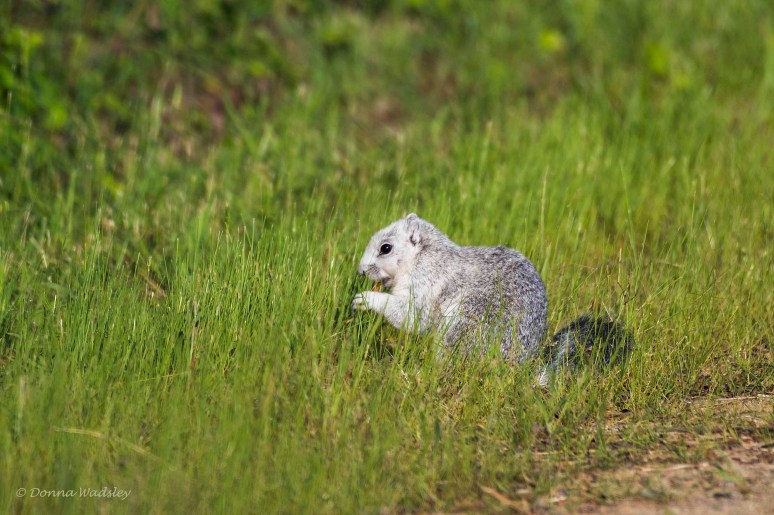
Delmarva fox squirrel
(twice as large as a gray squirrel)
Of course, s/he scurried away but first watched me curiously for a bit while munching. I loved it!
And then, guess what? Two weeks later, another birding trip through the farm, about 3/4’s mile from my first sighting, I saw another one.
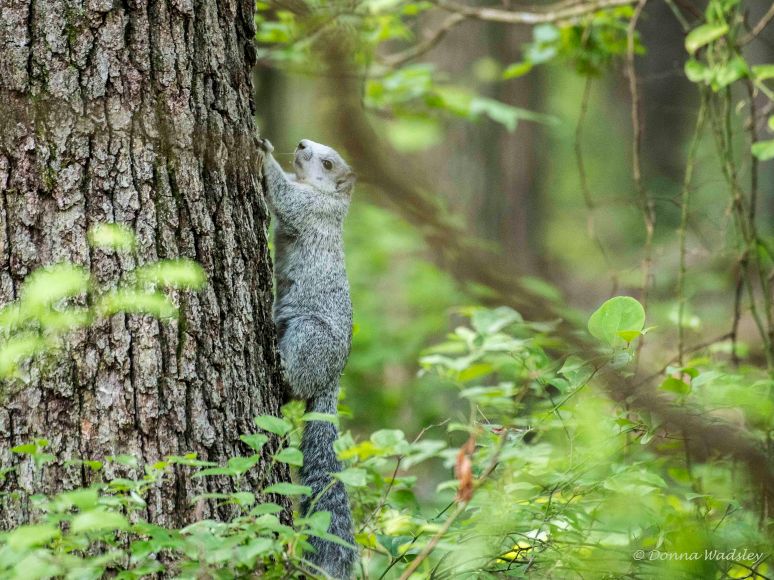
Delmarva fox squirrel
15″ (38cm) body length + 15″ (38cm) tail
After a quick disappear, it popped out again to check me out.

Delmarva fox squirrel
And then gone! 🙂
Chesapeake Farms’ auto wildlife tour is about five miles of winding through a diversified 3,300-acre dedicated wildlife management agricultural area on a dirt road. It is truly a perfect location for the Delmarva fox squirrel to thrive where they will be provided a beautiful, private habitat for expansion and life.
Duck Duck Goose
I think you know where this post is going! 😉
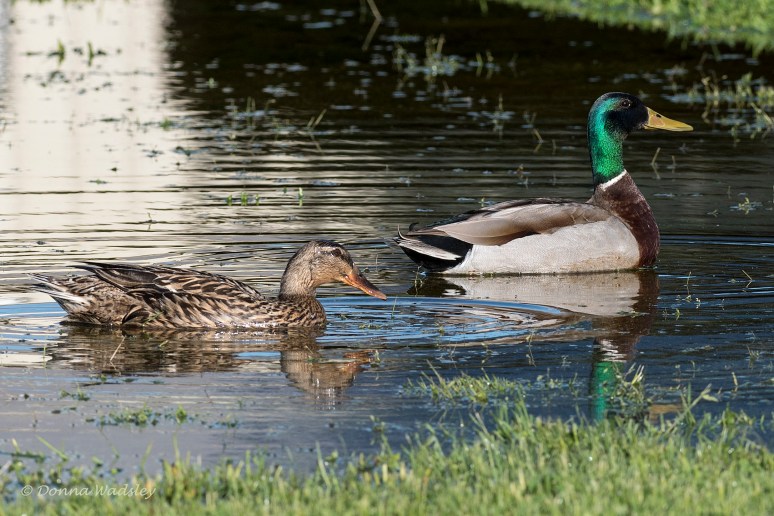
Mallards


Green-winged Teal
(a surprise to find this pair early May!)
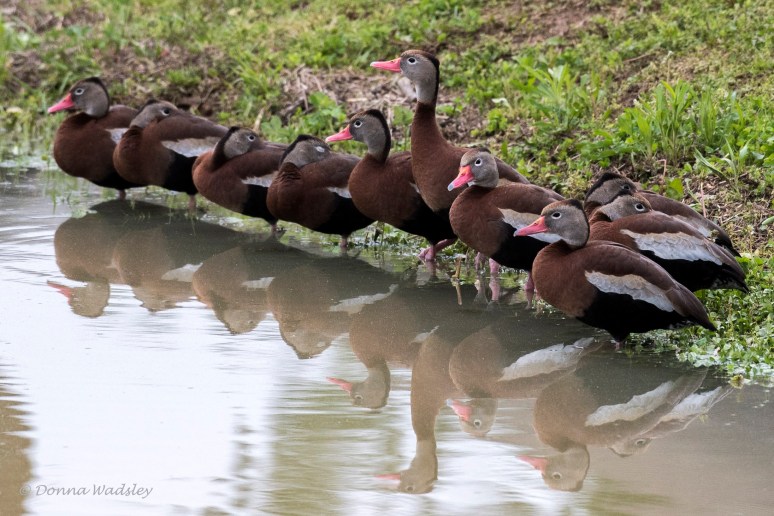
Black-bellied Whistling Ducks
(Rare for our mid-Atlantic region, returning for a 3rd year
to a nearby residential retention pond in Clayton, Delaware)

Wood Ducks and home

Red-breasted Merganser (female)

Canada Goose

Northern Shovelers
(a surprise to find this pair mid-May!)
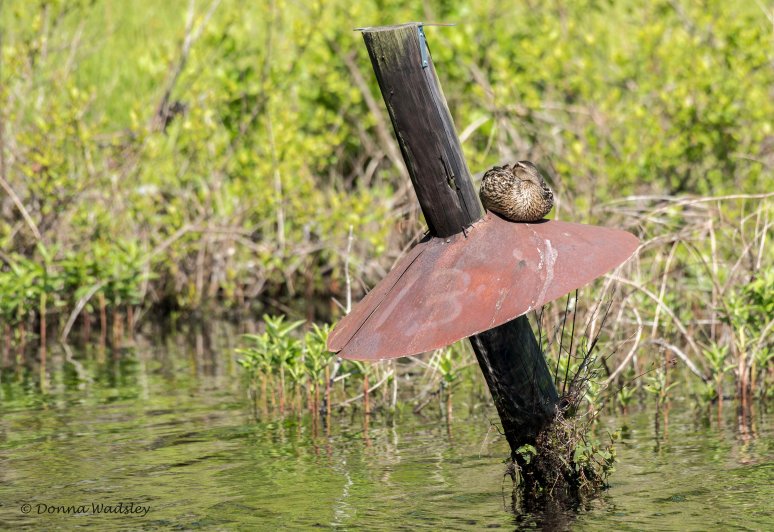
Mallard (female)

Black -bellied Whistling Ducks

Common Mergansers
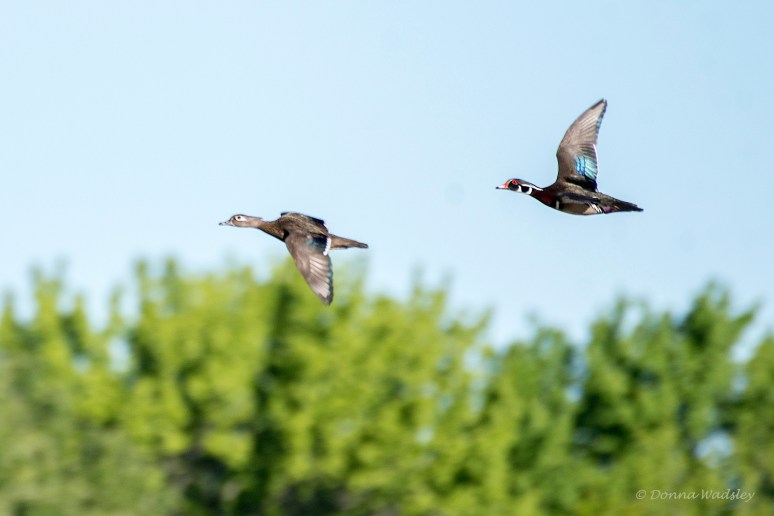
Wood Ducks
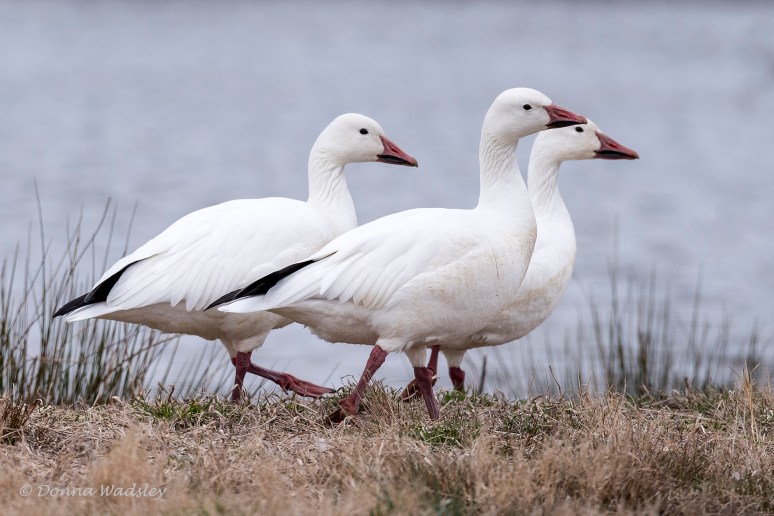
Snow Geese
(one of my last sightings in March before they migrated)

Black-bellied Whistling Ducks

Common Mergansers
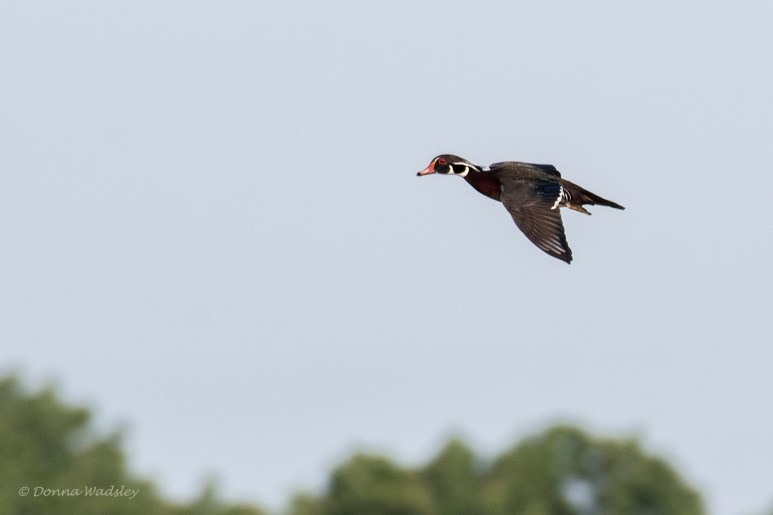
Wood Duck (male)

Canada Goose
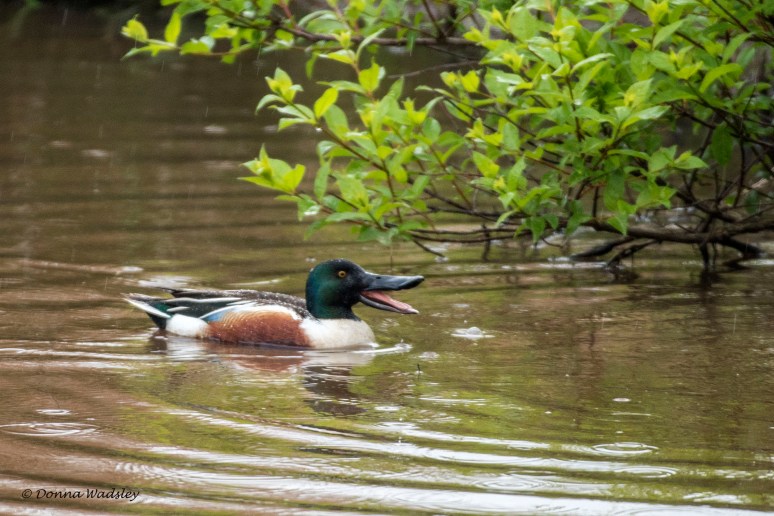
Northern Shoveler
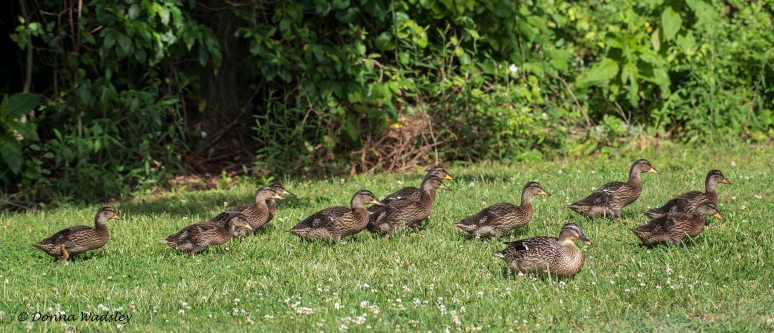
Momma Mallard and her Spring babies who are already big!
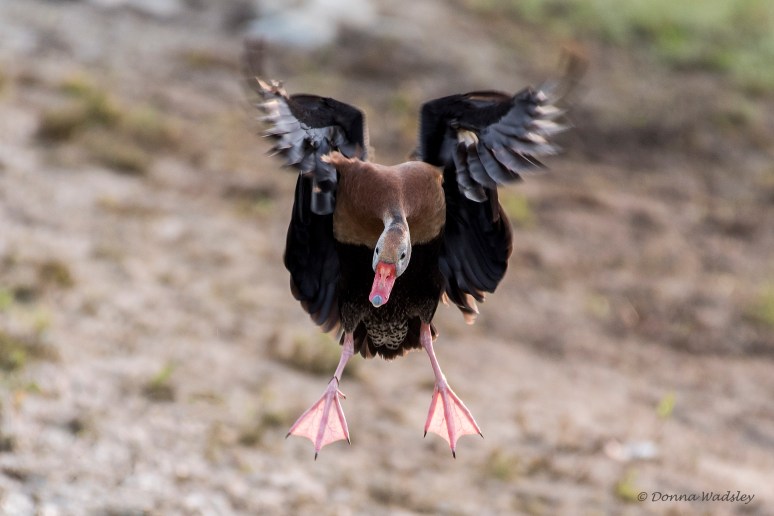
Black-bellied Whistling Duck

Canada Geese on a nest
Thank you for playing along and letting me catch up my duck and geese photos!
1-2-3 Medium Bird Jubilee – #16
As the birds get a little bigger, they get a littler easier on snapping a shot before they take flight. Here’s a series of my lucky favorite shots of some medium-sized birds from the past couple months.
First, some side-by-side comparisons of a male and female in a species.
(click on side-by-side images for more details)


Northern Cardinals

Eastern Bluebirds


Red-winged Blackbirds


Brown-headed Cowbirds


Blue Grosbeaks
This next bird species, the Dickcissel, was considered a rare sighting for our area. We had a flock come through, I was able to hear at least eight of them singing from their hidings. This one finally popped up way out in the field.

Dickcissel
A few more birds!

Northern Mockingbird
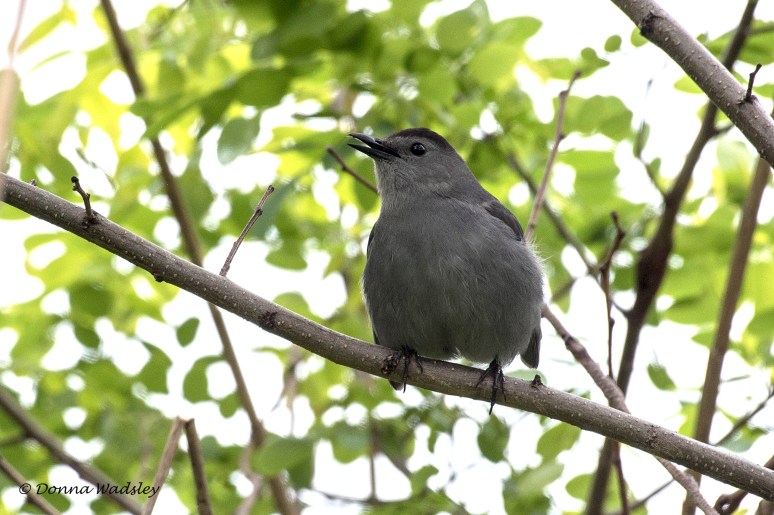
Grey Catbird

American Robin

Mourning Dove
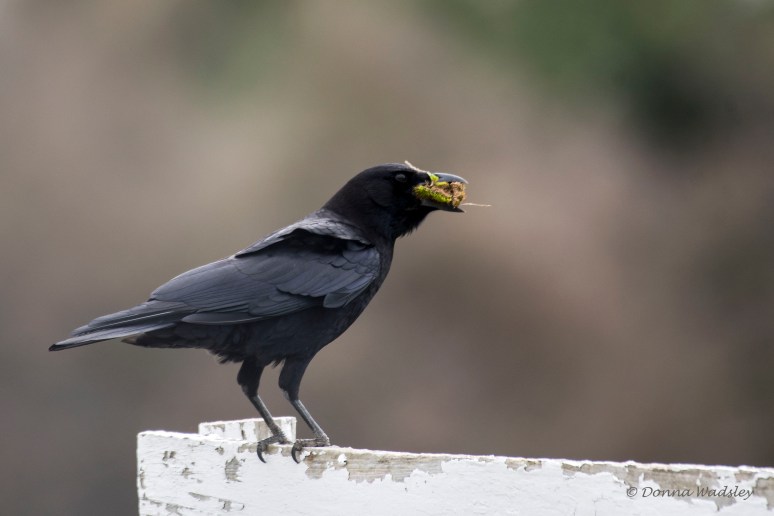
American Crow

Baltimore Oriole

Orchard Oriole
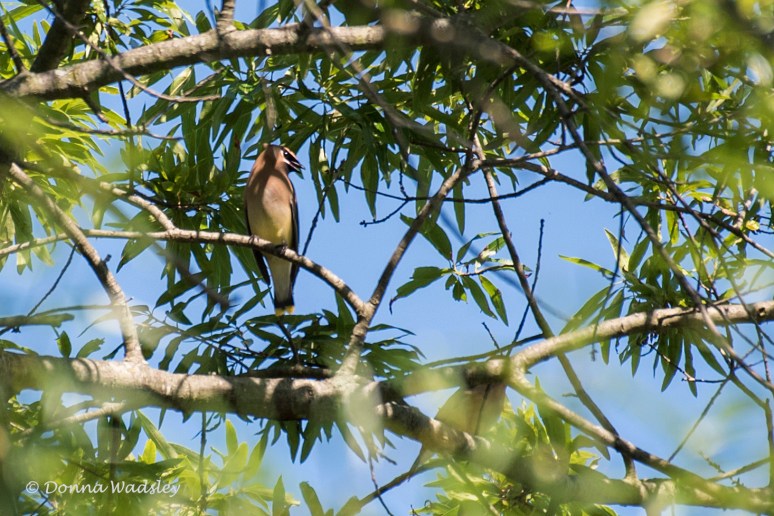
Cedar Waxwing

Yellow-breasted Chat

Killdeer
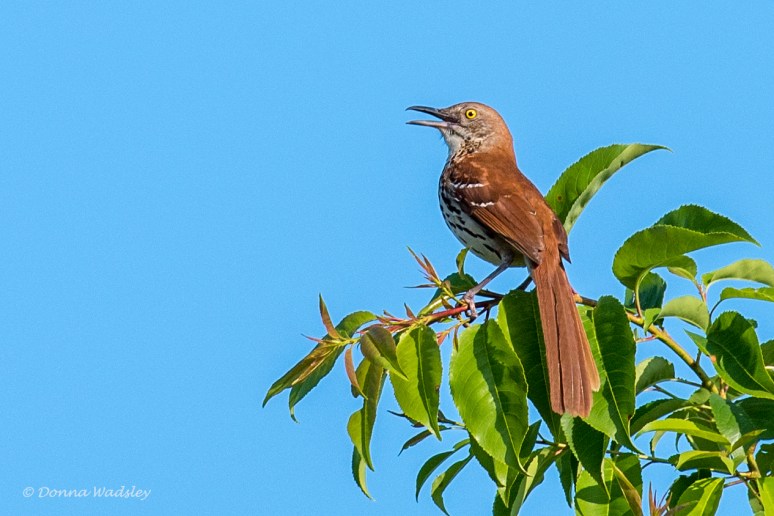
Brown Thrasher

Blue Jay

Eastern Kingbird
Whew, that was a lot of medium-sized birds, thank you for viewing!
1-2-3 Cute As Can Be – #28
Playing catch-up with Spring migration, here’s a nice selection of more little birds who gave me a moment of their time in the past couple months!
(hover over a bird to see it’s name or click on an image to scroll through with bird names)


U.S. Navy Blue Angels 2023
On May 24th, the Blue Angels performed an amazing show over the Severn River in Annapolis for the Naval Academy Commissioning week.
We were able to listen to the announcements, commentary, and the “Top Gun” music during the entire performance on our boat radio, it was pretty cool!
The show opened with the appearance of the Blue Angels tactical transport aircraft, a C-130J Super Hercules affectionately known as “Fat Albert”.
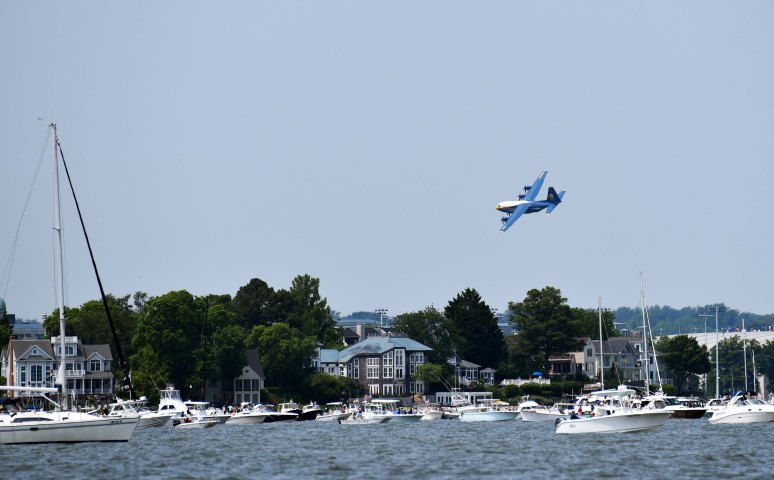


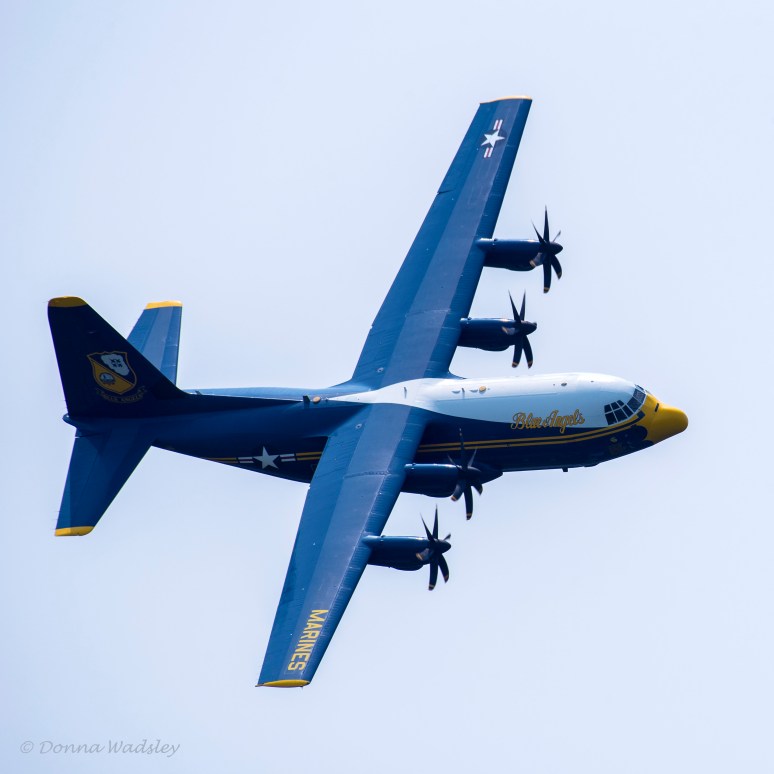
“Fat Albert” made his huge presence known, then flew off and disappeared.
Several Osprey were fishing or trying to get their catch to their local nests around us, oblivious to what was to come. (yep, slipping in my bird shots! hehe)


Scanning the horizon around us while the music started, we then saw them coming, six Boeing F/A-18 Super Hornets screaming into the scene at speeds throughout the performance of up to 700 mph, WOW!

(Click on any of next images to see enlarged)


We were anchored in the mouth of the Severn River and the Blue Angels performed all around us, it was hard to keep track of where they all were at times. It felt like we were smack dab in the middle of aerial combat, wowza!
As the show ended with a Delta formation, the Blue Angels flew out of the river and passed us.

As the Blue Angels banked behind us, I happened to get this next shot of an Osprey still busy fishing with all the commotion.

Osprey still fishing….or…..trying to be part of the Blue Angel formation 😉

Thank you, Blue Angels, for another thrilling performance, you guys rock!
The Blue Angels Mission:
The mission of the Blue Angels is to showcase the teamwork and professionalism of the United States Navy and Marine Corps through flight demonstrations and community outreach while inspiring a culture of excellence and service to country.
This year marks the 77th anniversary of the U.S. Navy Blue Angels!
Osprey vs Eagle
At Eastern Neck NWR, another Osprey is busy fishing at sunrise!

Excellent catch, Mr Osprey!
Now to get it back to the nest for the Mrs to enjoy!
But a set of eyes from a distant tree watched the Osprey’s hard work and ultimate prize. 😕
A Bald Eagle decided it wanted that fish and engaged in high pursuit to try to harass and force the Osprey to drop it. The Eagle’s plan would then be to quickly drop to snatch the fish easily from the water’s surface.
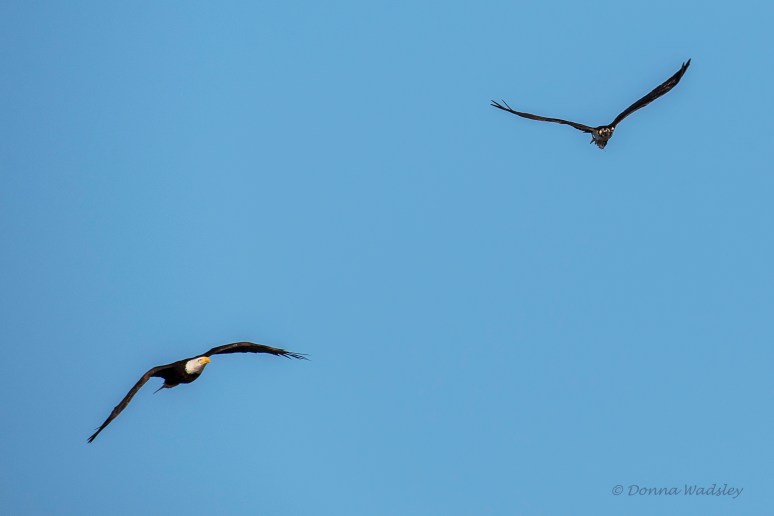

Both species are fast flyers.
The bigger and stronger Bald Eagle can fly at top speeds of 30 mph.
But Osprey have a slight edge on being smaller and lighter, performing quick maneuvers much easier, and can reach top speeds up to 40 mph.
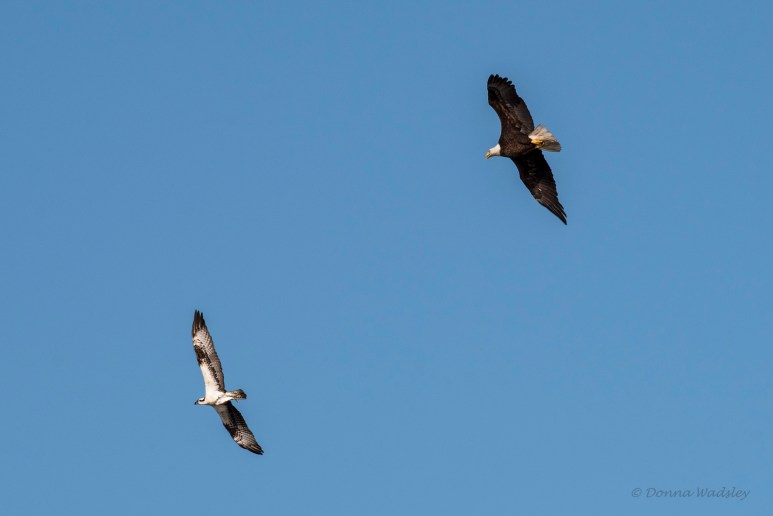
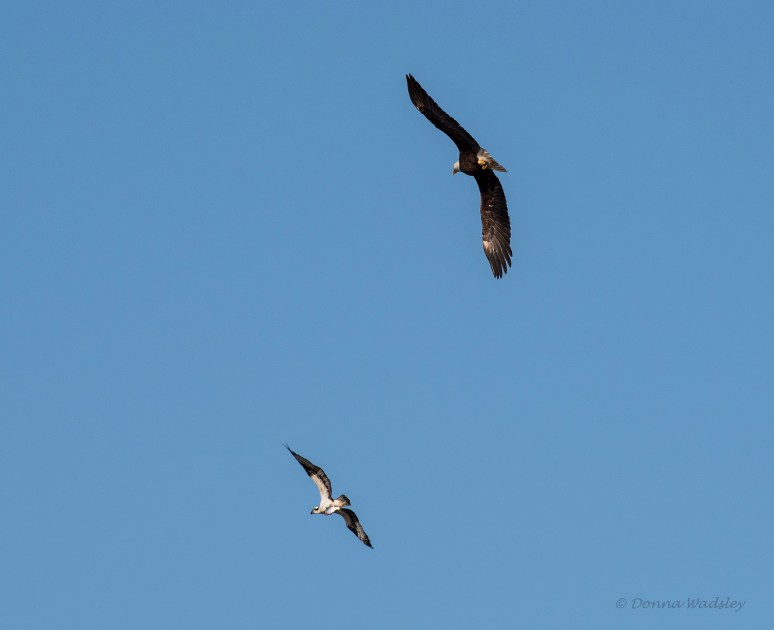
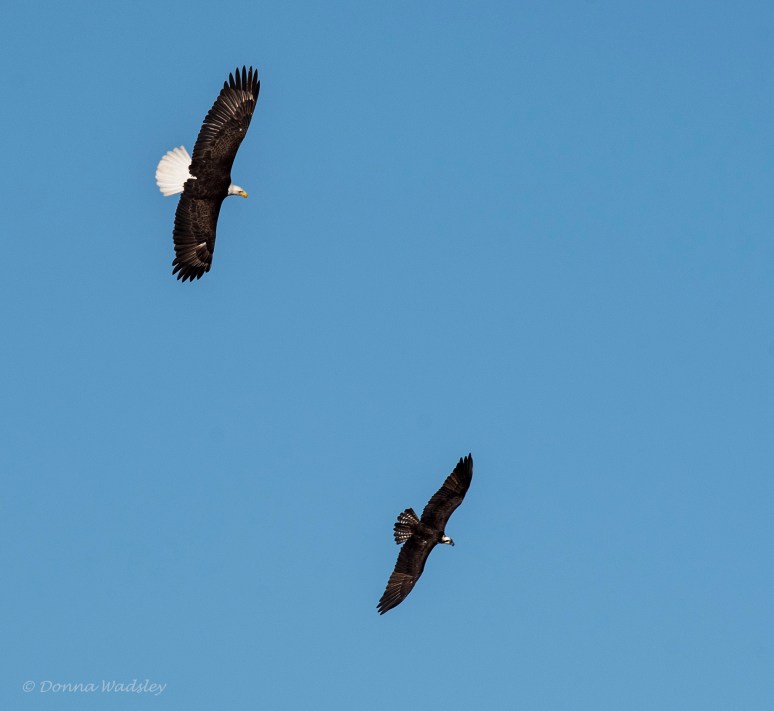
Both can dive even faster. The Osprey can reach up to 80 mph, whereas the heavier Eagle can reach up to 100 mph.
So in the chase, the Osprey can possibly out-fly an Eagle; but if a ‘diving’ maneuver occurs, the Eagle may catch up quickly.
This Osprey proves it will not give up its fish so easily in this two-minute chase!


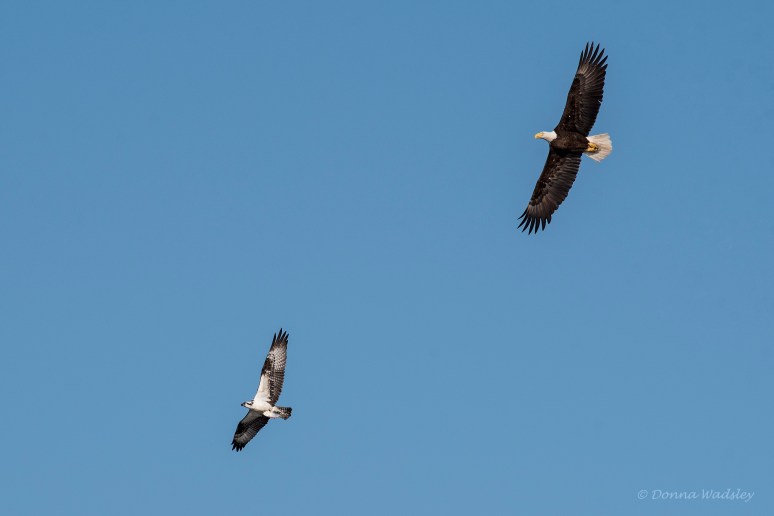


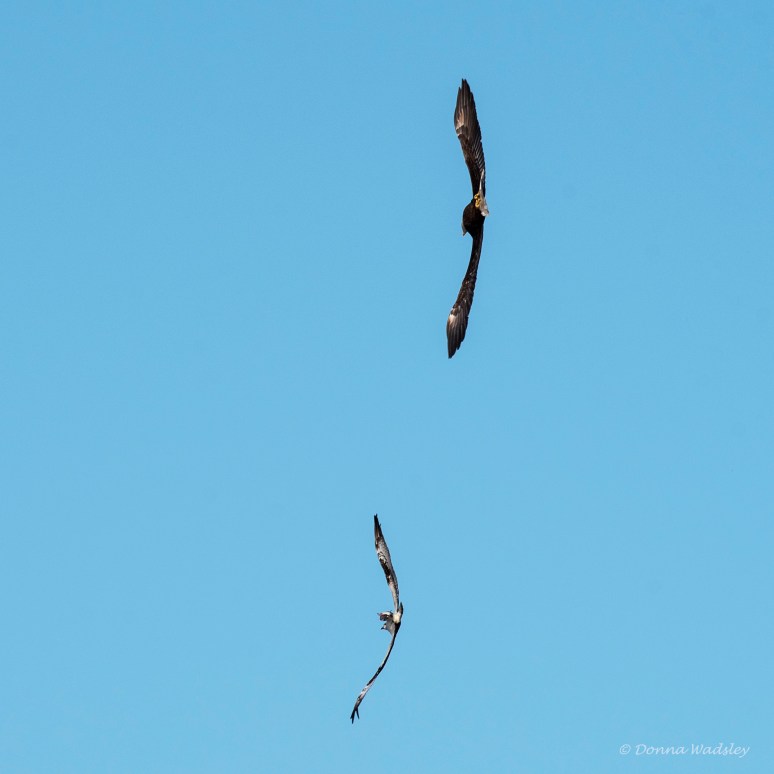
The Osprey dives and the Eagle catches up!
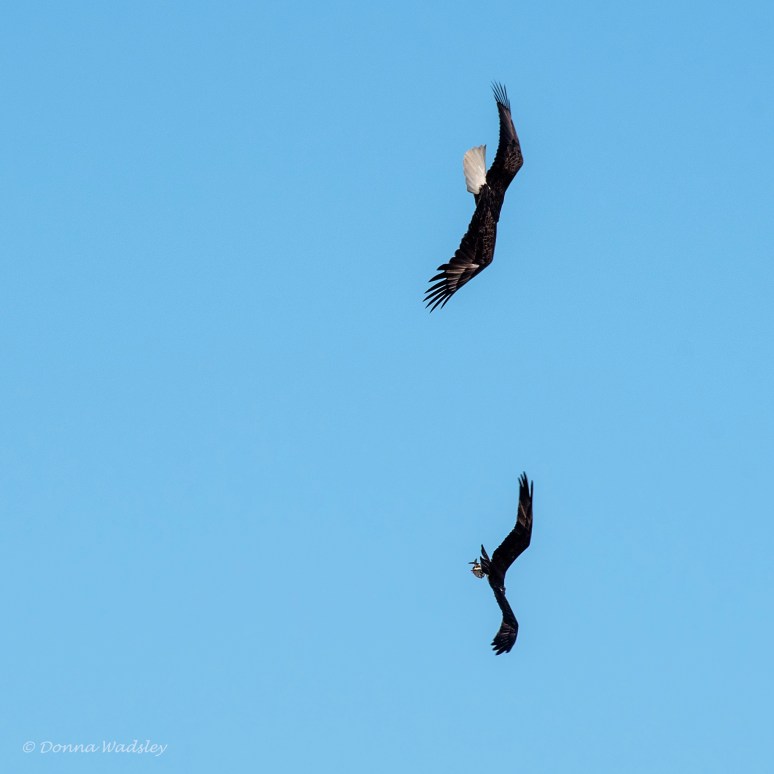
(You are going to love the next three photos!)
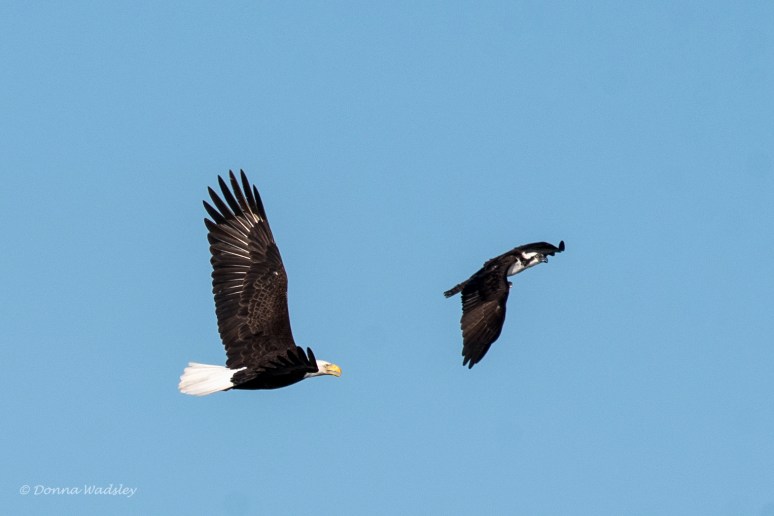
As the Eagle closed in quickly on the Osprey, the Osprey pulled an awesome maneuver, turning and pulling up; and the surprised Eagle passed underneath, unable to make that quick, flexible turn!

Eagle catching up to the Osprey
Just as the Eagle is on its tail, the Osprey pulls up hard
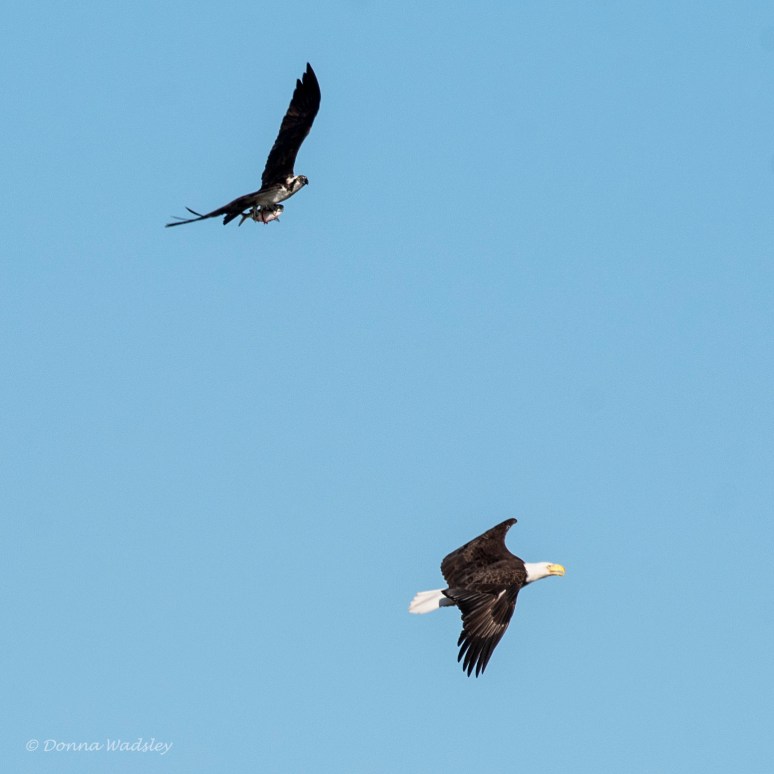
The Eagle cannot make the upturn and passes underneath.
Well done, Mr Osprey!
And that was the Osprey maneuver that ended the two-minute chase! The exhausted Eagle gave up, flew off and out of sight.
With his fish still intact, the Osprey circled around to ensure the Eagle was done his chase.


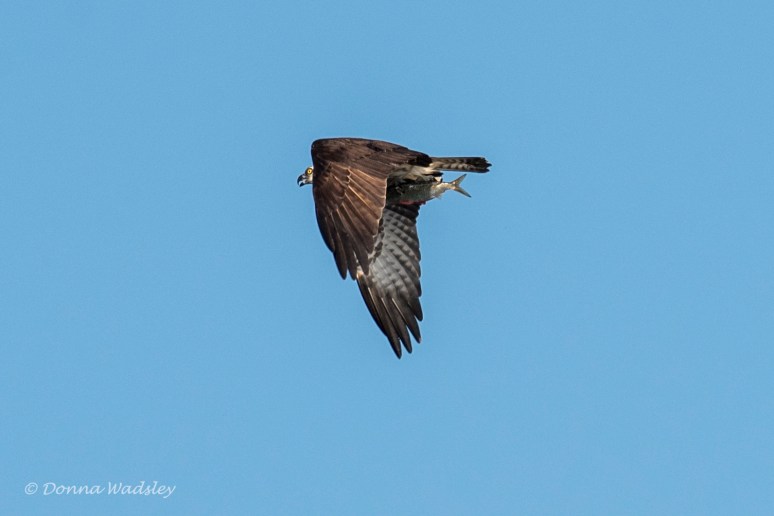
He then reverted back to his original mission and direction for home and his waiting lady, passing by me.
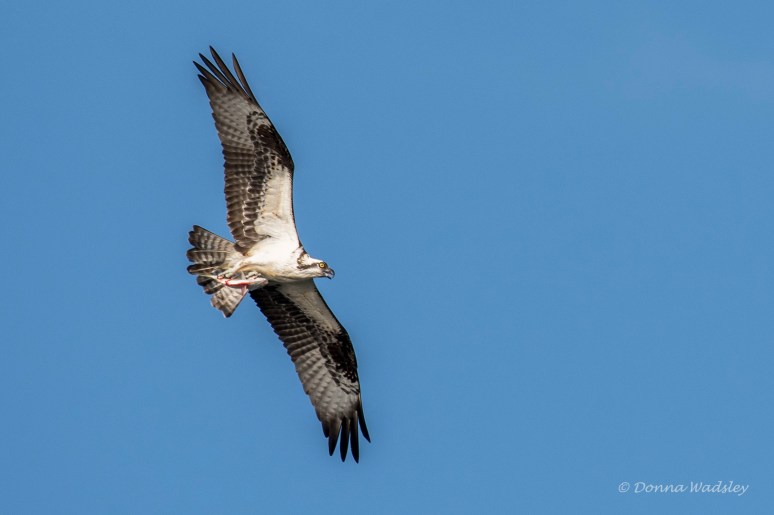
Get the table ready, breakfast is coming!
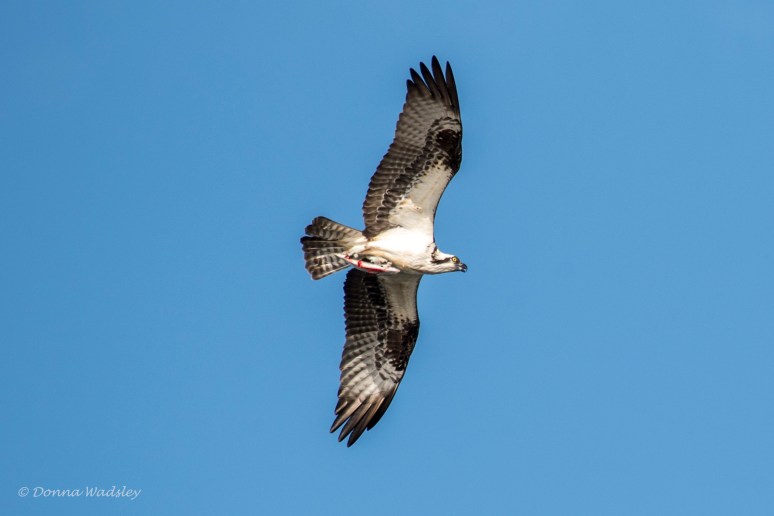
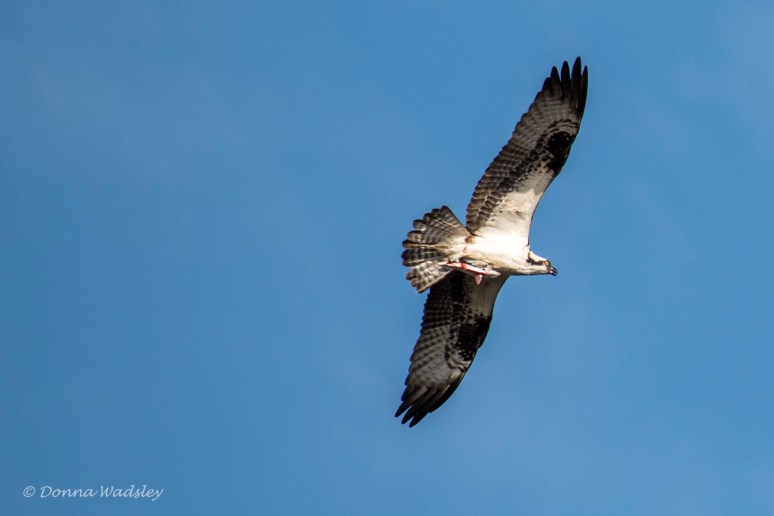
The Osprey really do work hard for their catch, especially when there are nearby lazy Eagles, waiting for a possible easy meal.
Bonus, here’s the above chase in slideshow format to click through, if it works with your connection. Go Osprey!
Osprey Goes Fishing
.
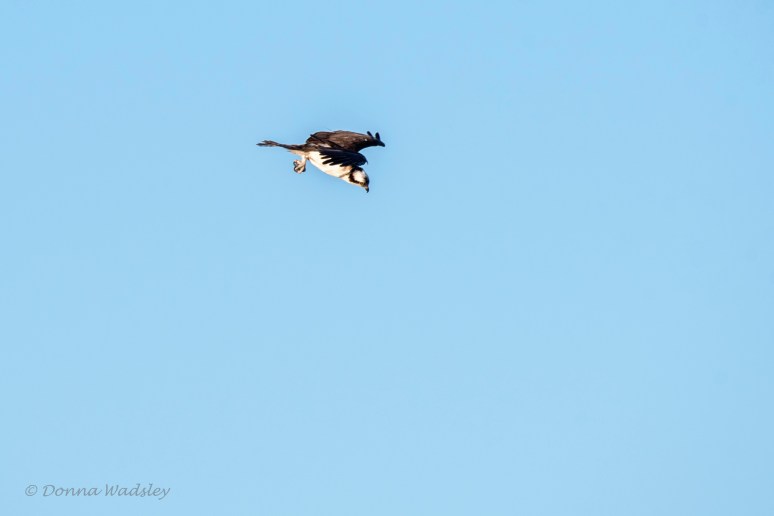
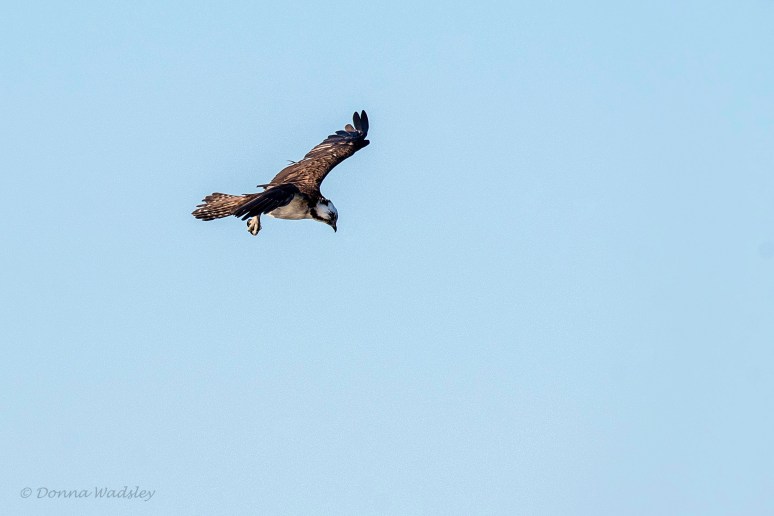
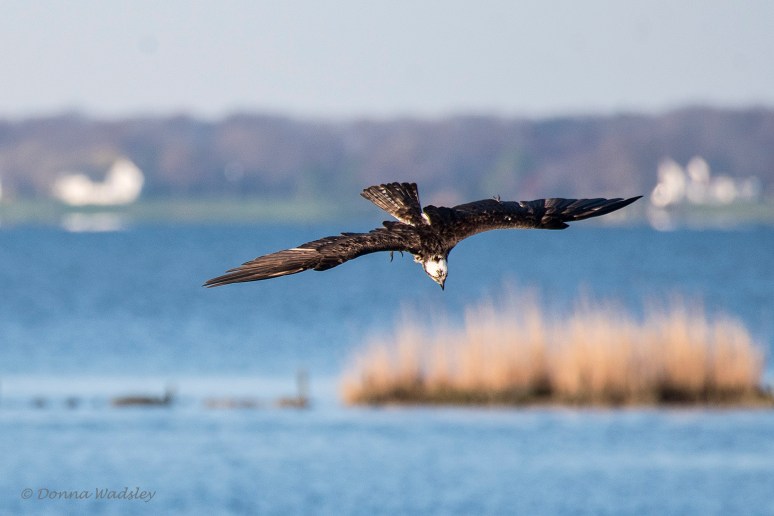
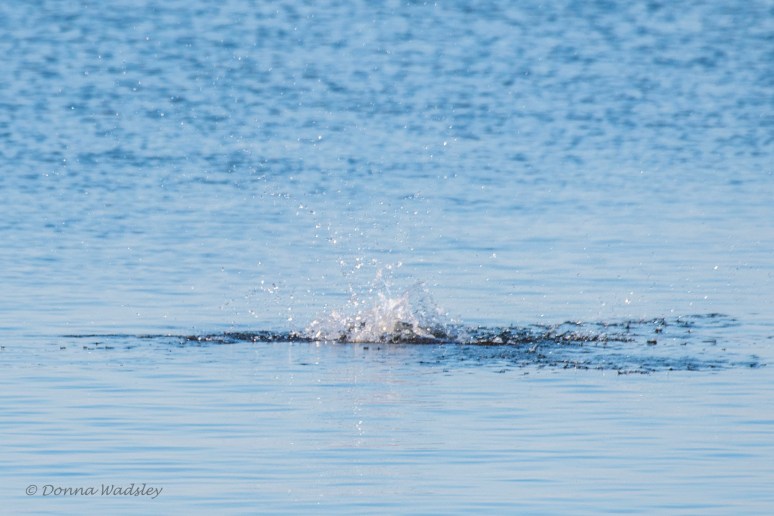
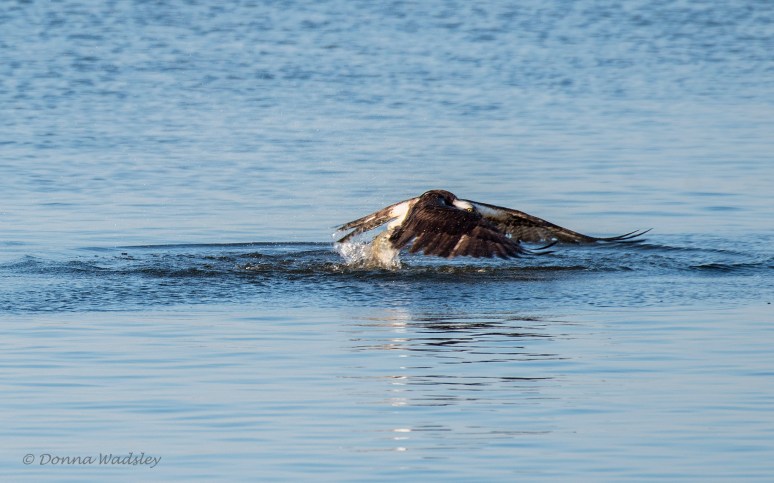
As is the norm now, this male Osprey is already busy at sunrise at Eastern Neck NWR.
Gotta go fishing!
Will he be successful?
.
.
.

.
.

.
.

.

.
.

.

“Honey, get the table ready, breakfast is coming!”
.
Ospreys are excellent anglers. Per AllAboutBirds.org, over several studies, Ospreys caught fish on at least 1 in every 4 dives, with success rates sometimes as high as 70 percent! The average time they spent hunting before making a catch was about 12 minutes—something to think about next time you throw your line in the water. 😂
But the job is not done just yet. Now the Osprey has the added feat of getting that fish home before a possible nearby watching Eagle decides it wants it. 😕 Next post….
.
Chesapeake Bay Osprey
Our beautiful Osprey have been back for two months now and are in abundance everywhere around the Chesapeake Bay.
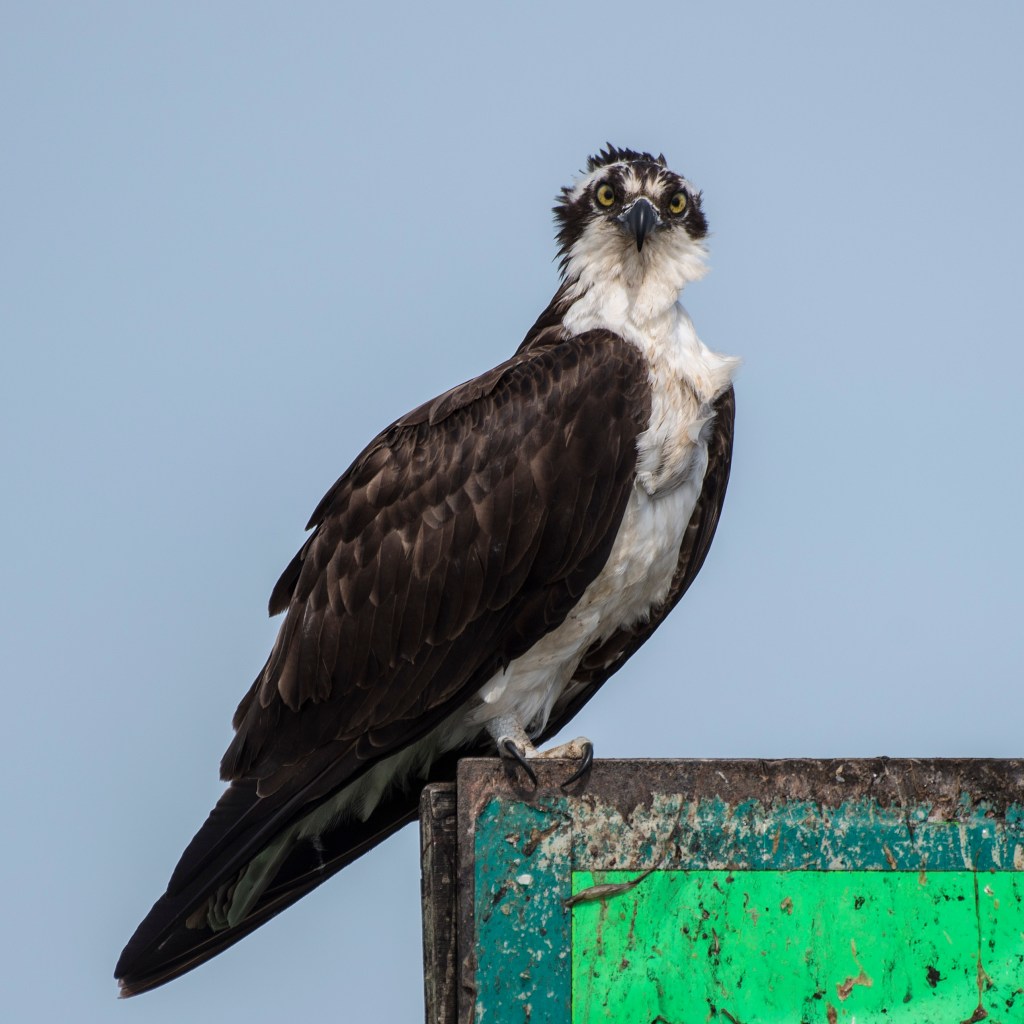
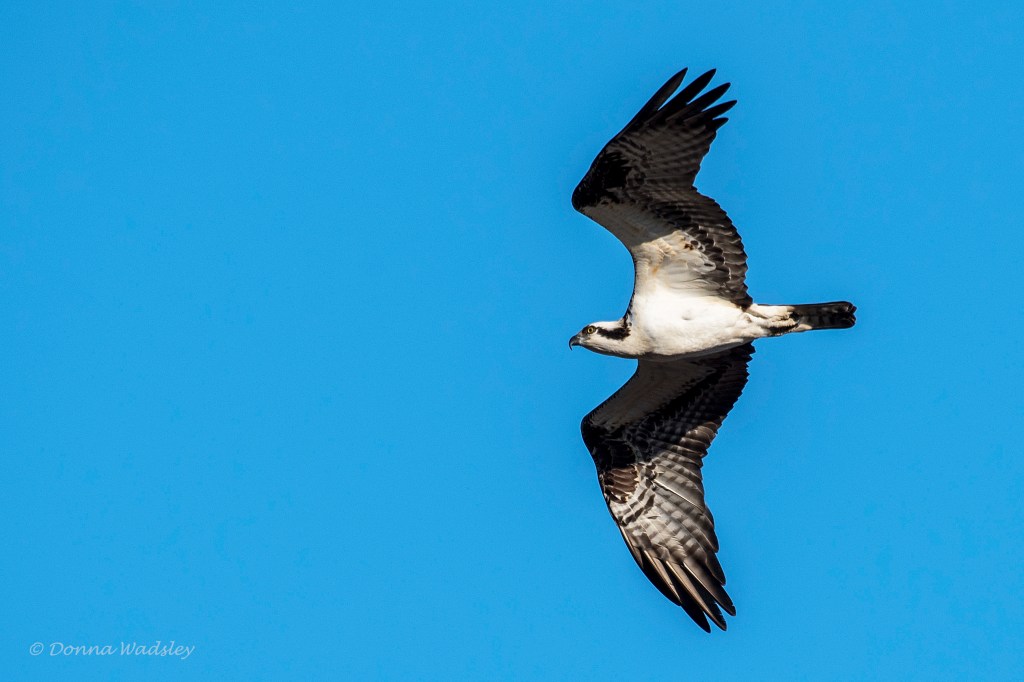
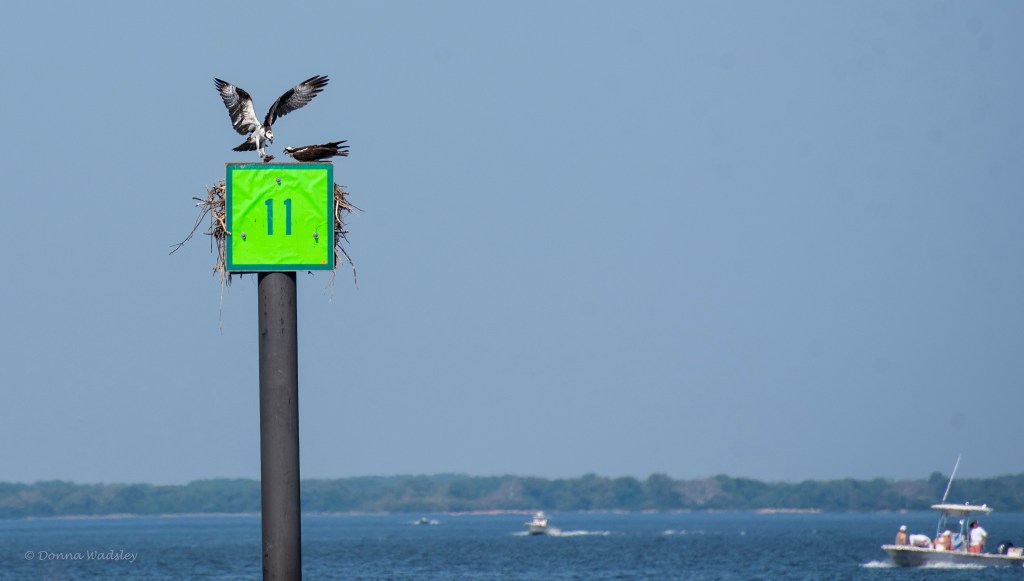
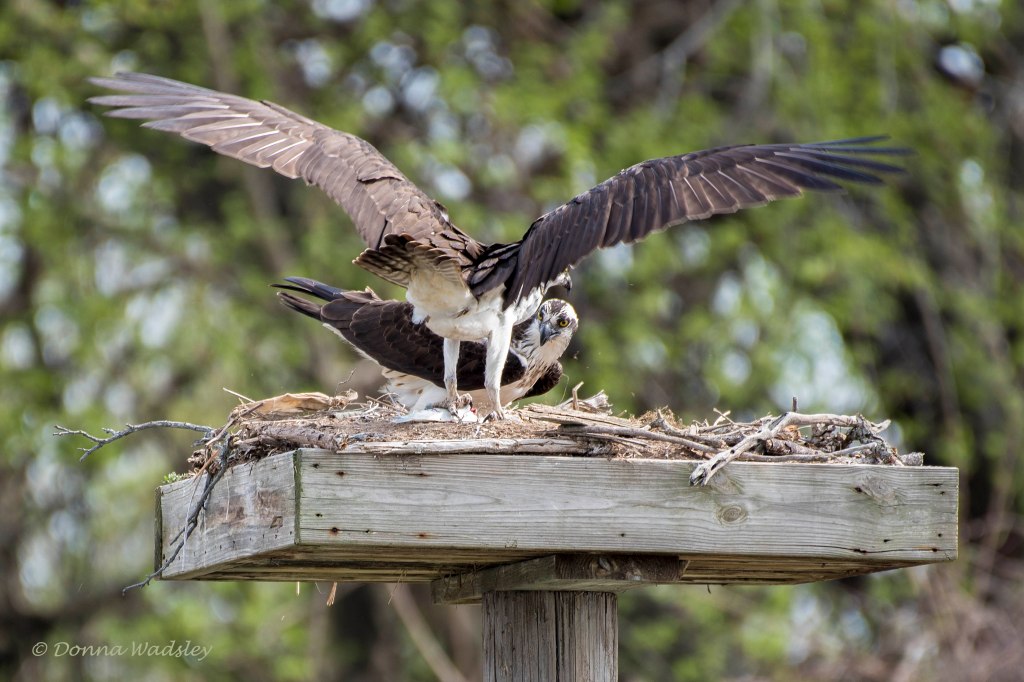
Old nests are renovated and new ones constructed, wherever they could find suitable real estate near or over water. Here are just a few of my local nests.
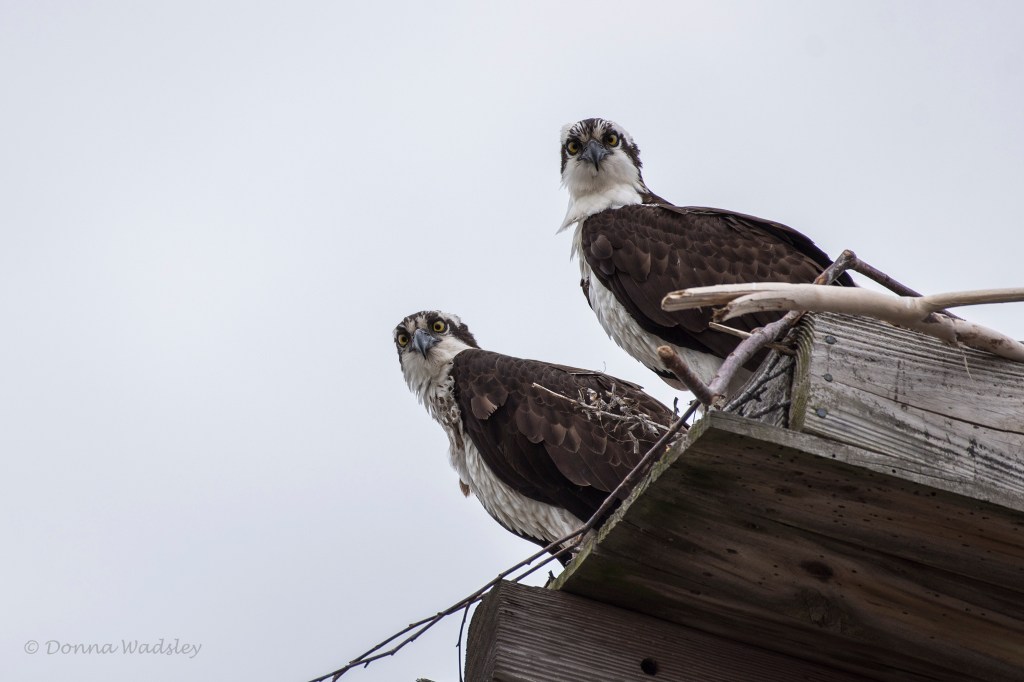
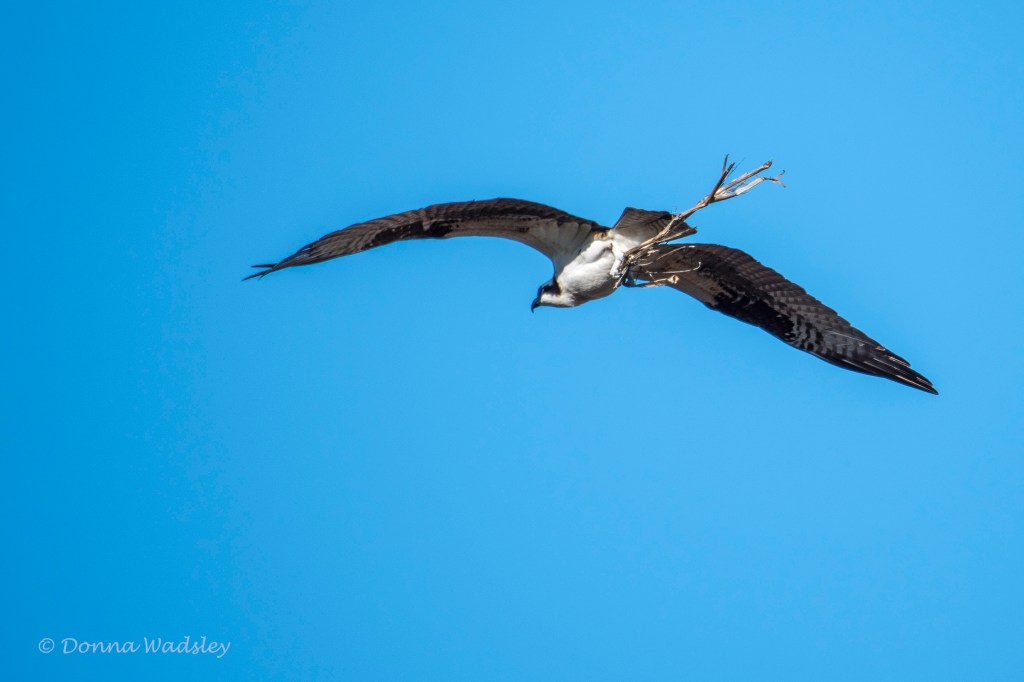

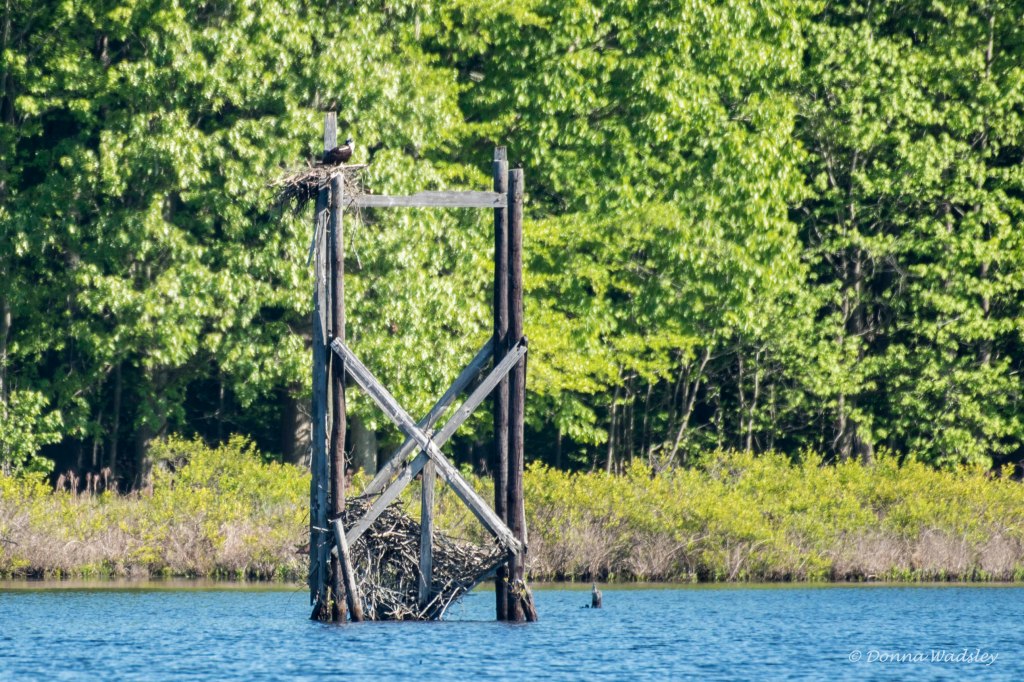
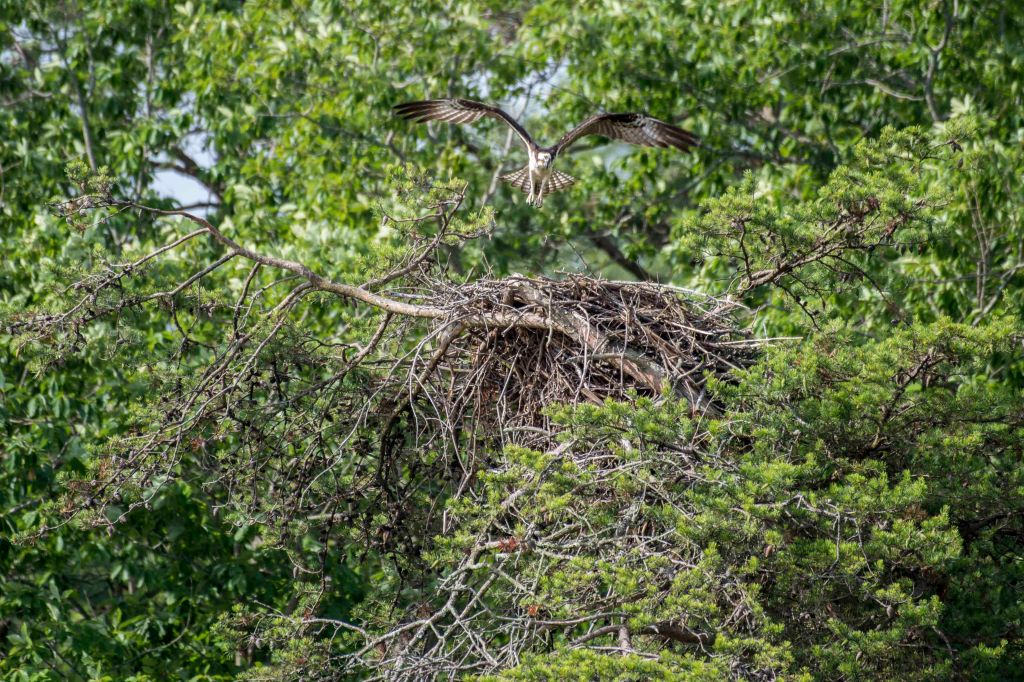
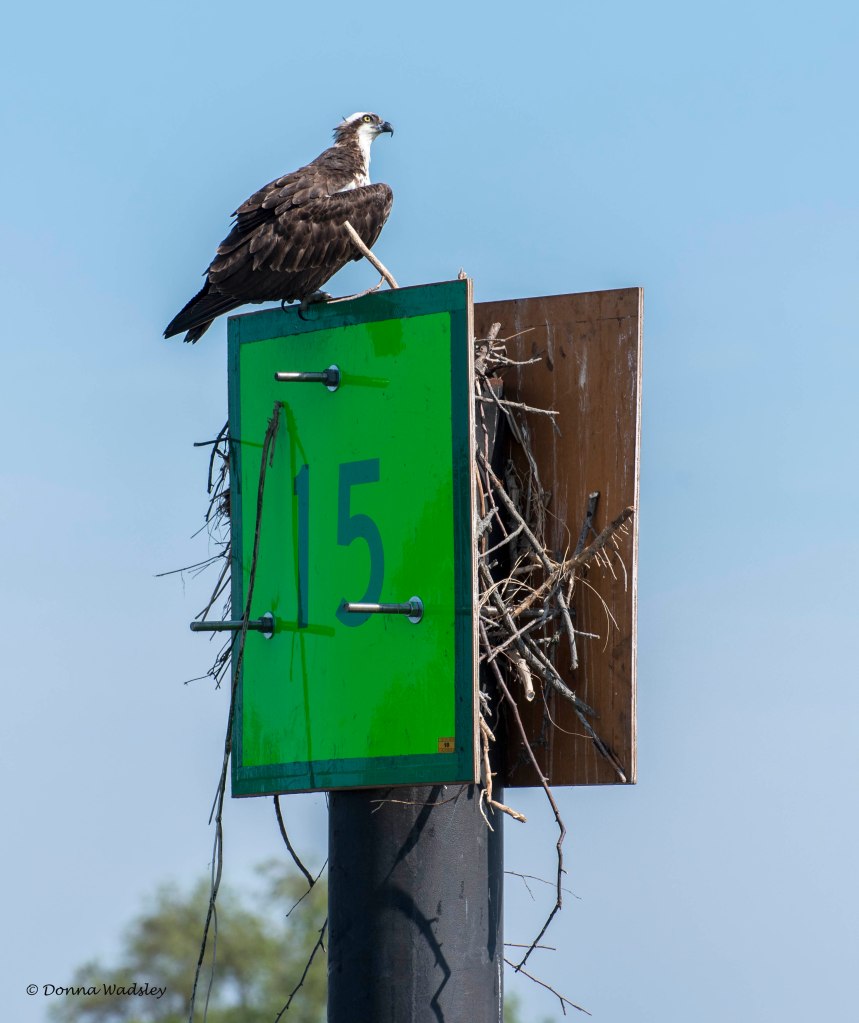
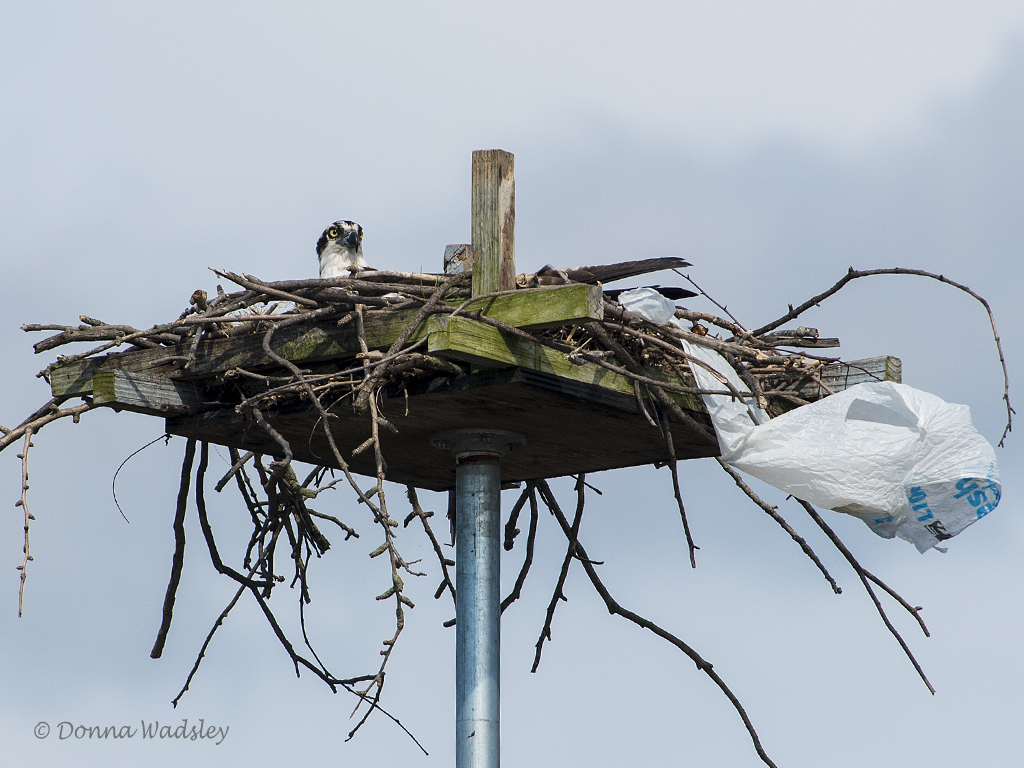
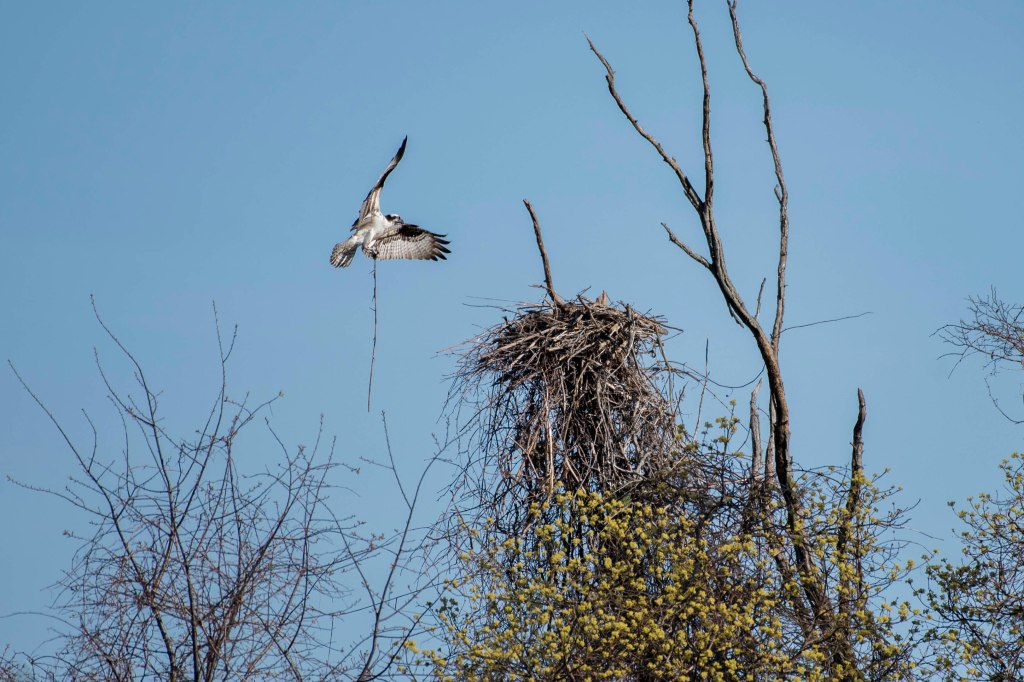
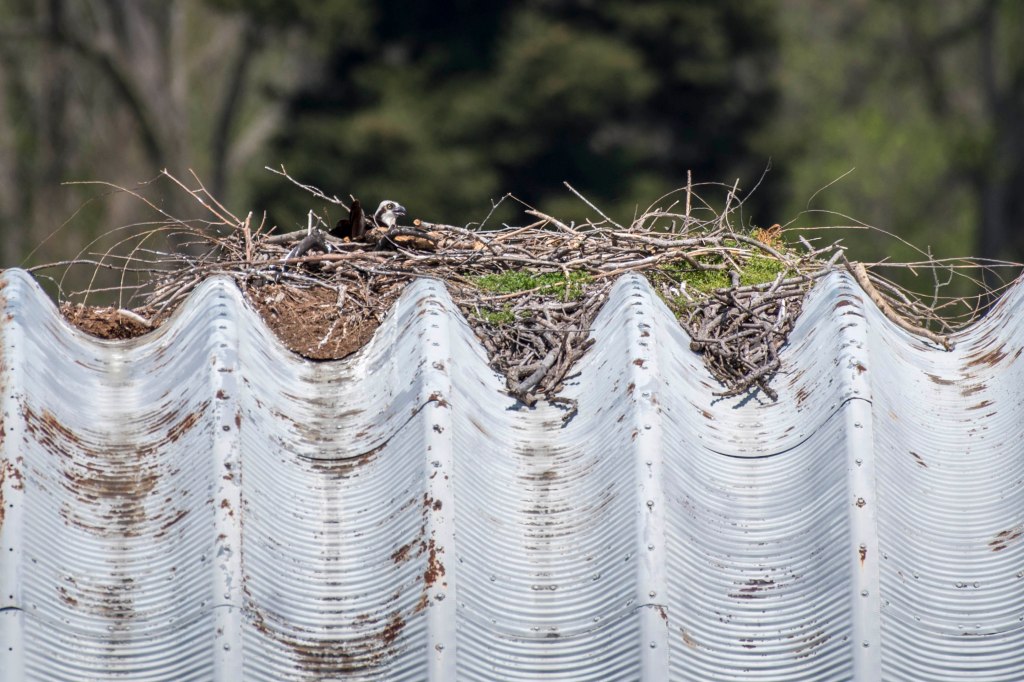
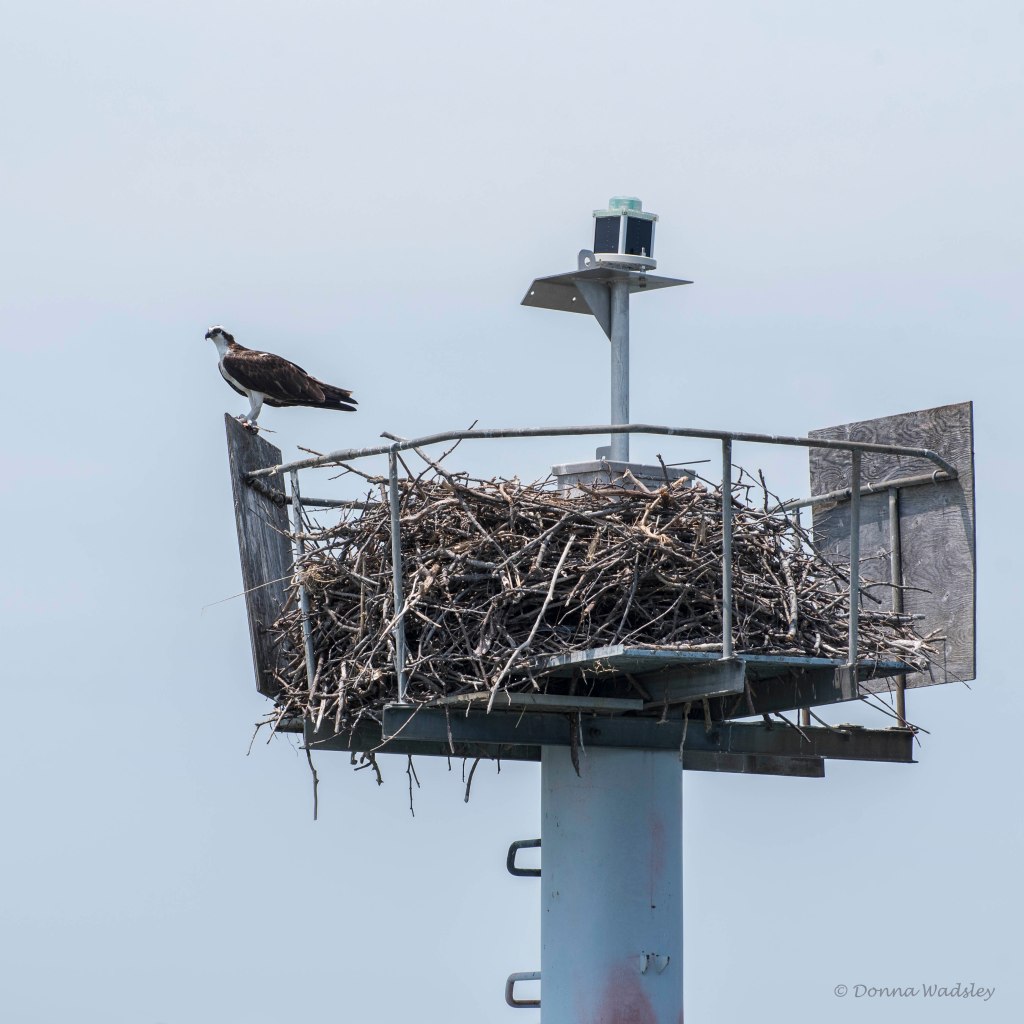
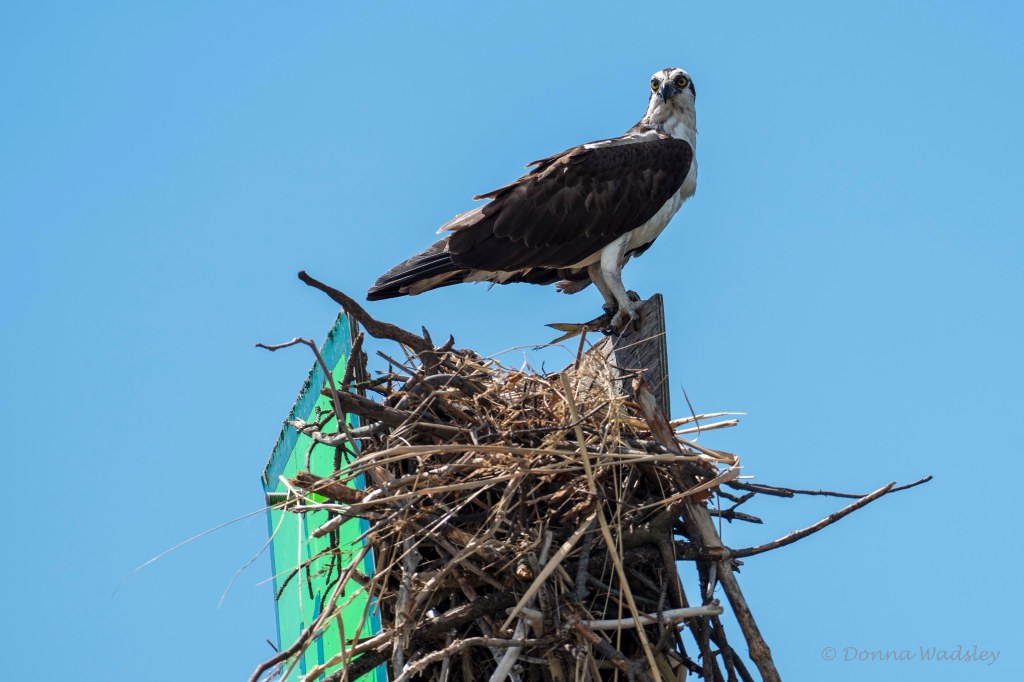
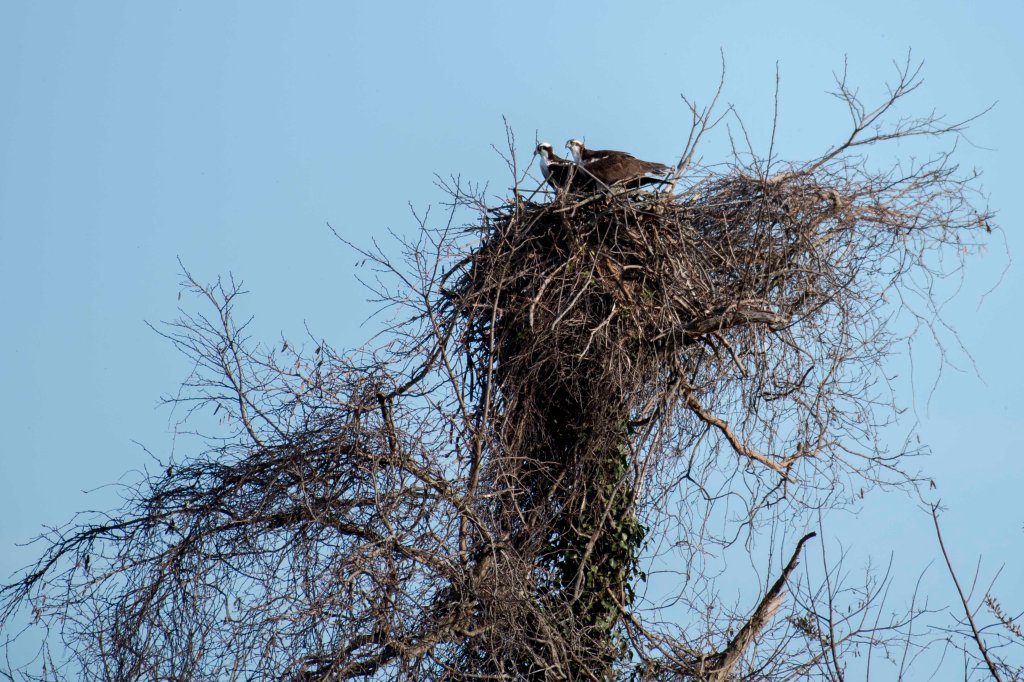
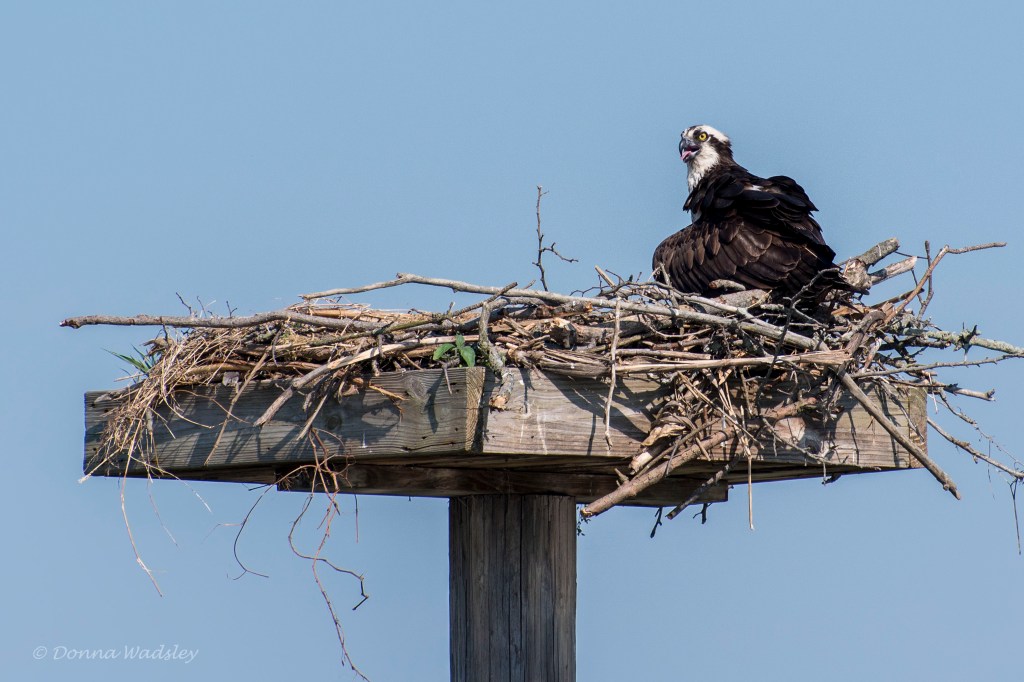
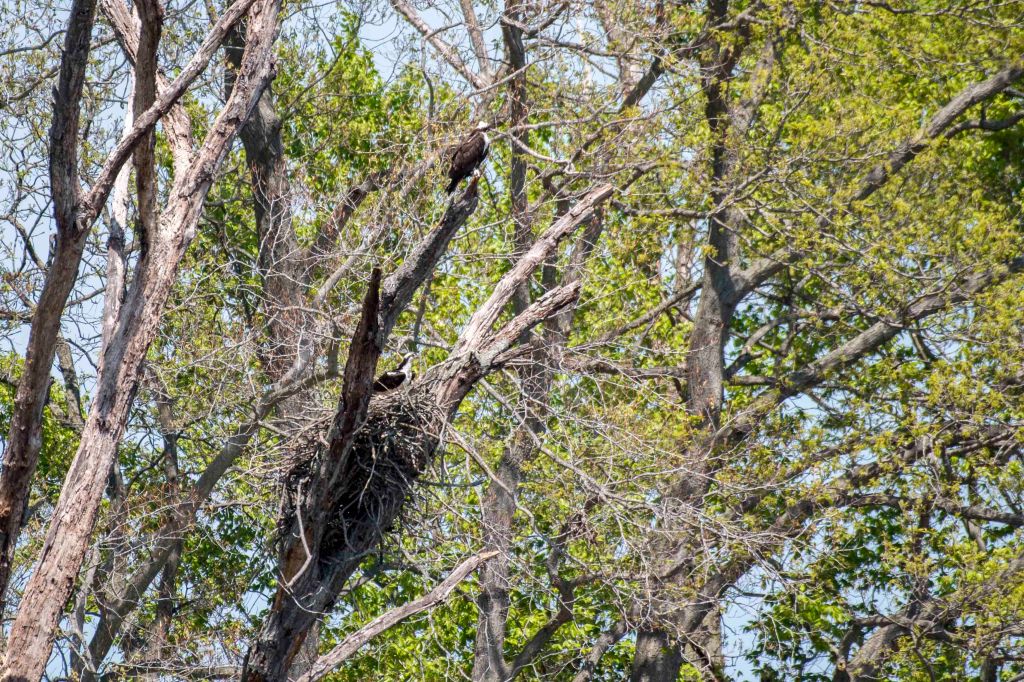
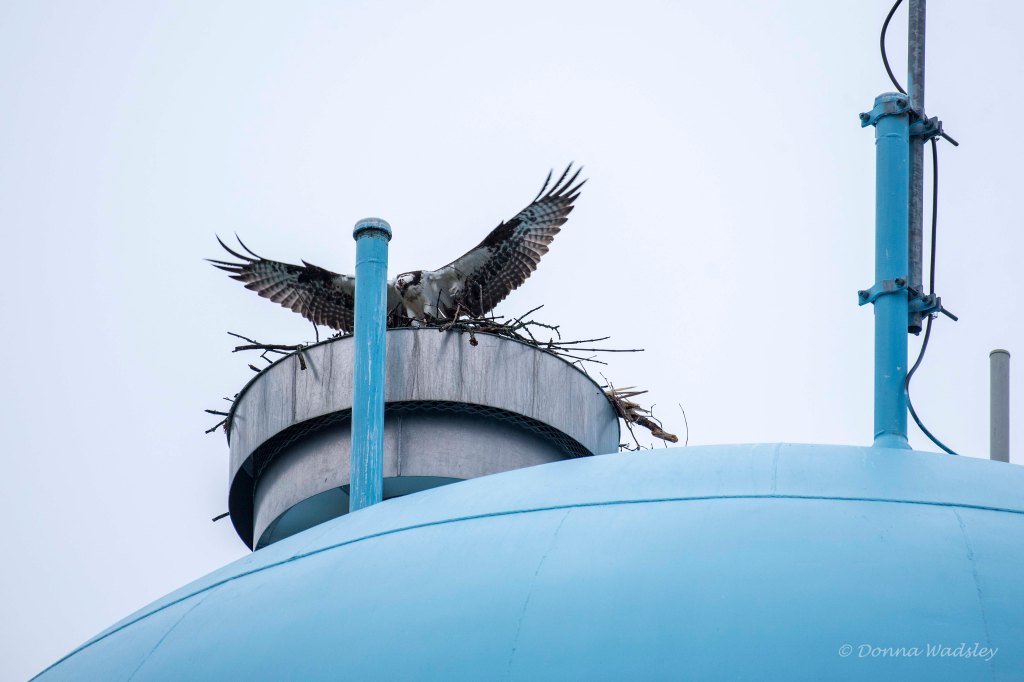
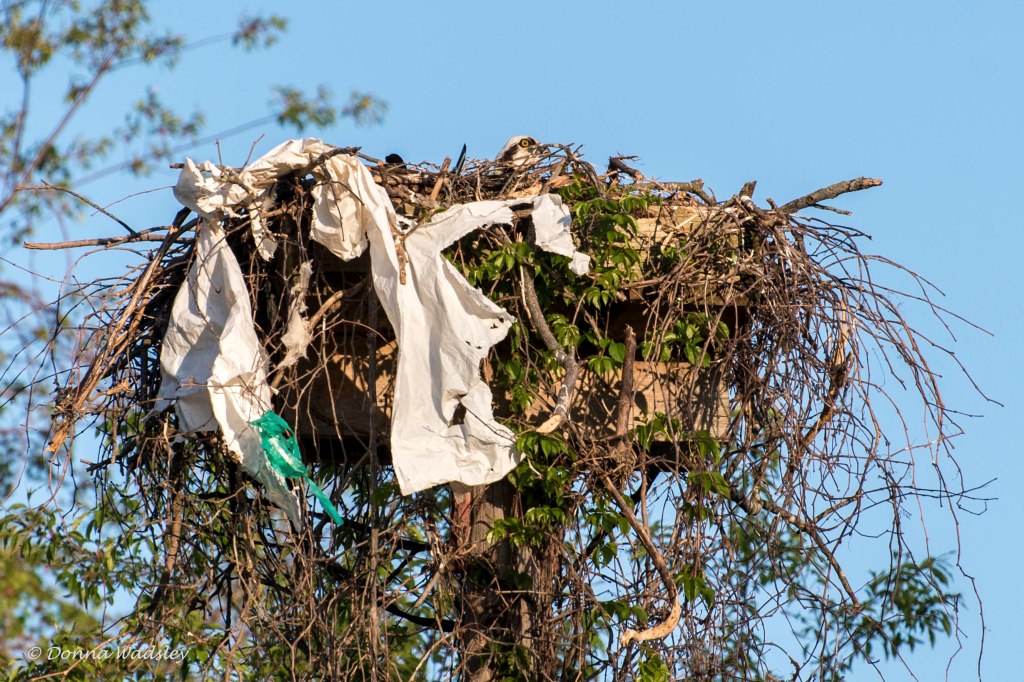
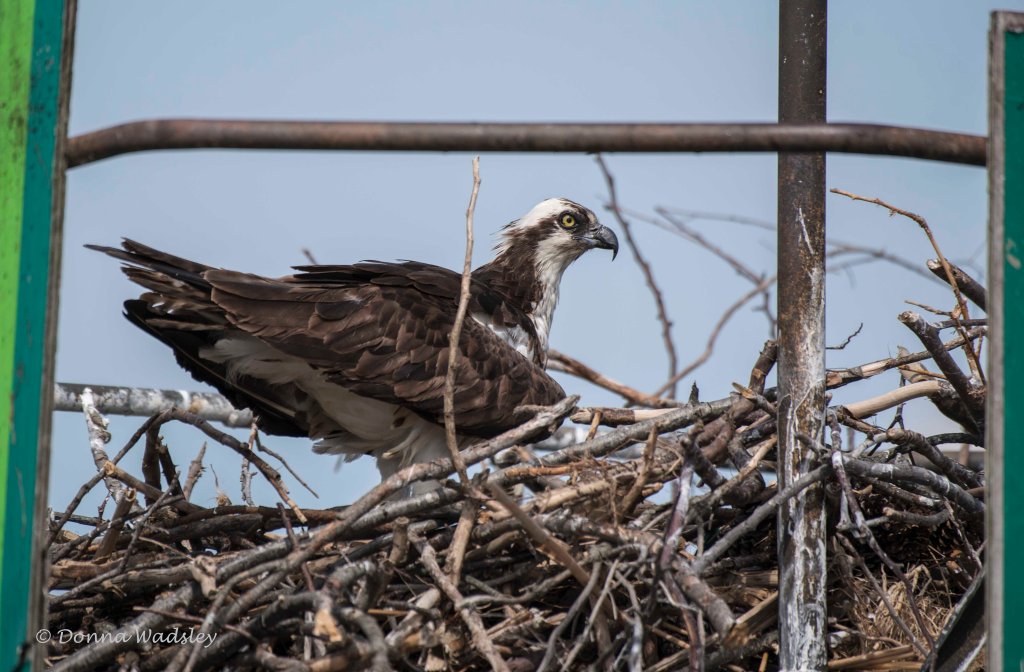
Osprey do get creative with their nests!
Usually by the end of April, the Chesapeake Bay Osprey have laid 2-4 eggs; so it is now brooding time, which is the female’s primary job.
The male will continue to bring materials to strengthen the nest. In addition, he needs to ramp up his fishing skills to bring home the bacon…..er…..fish for his lady in waiting and upcoming family.
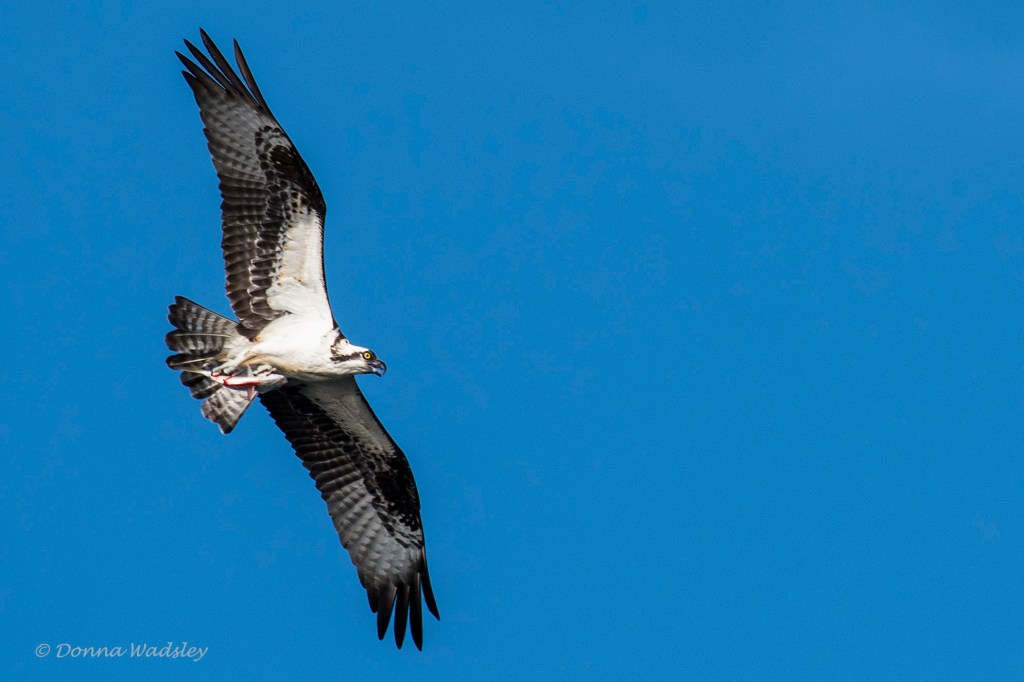
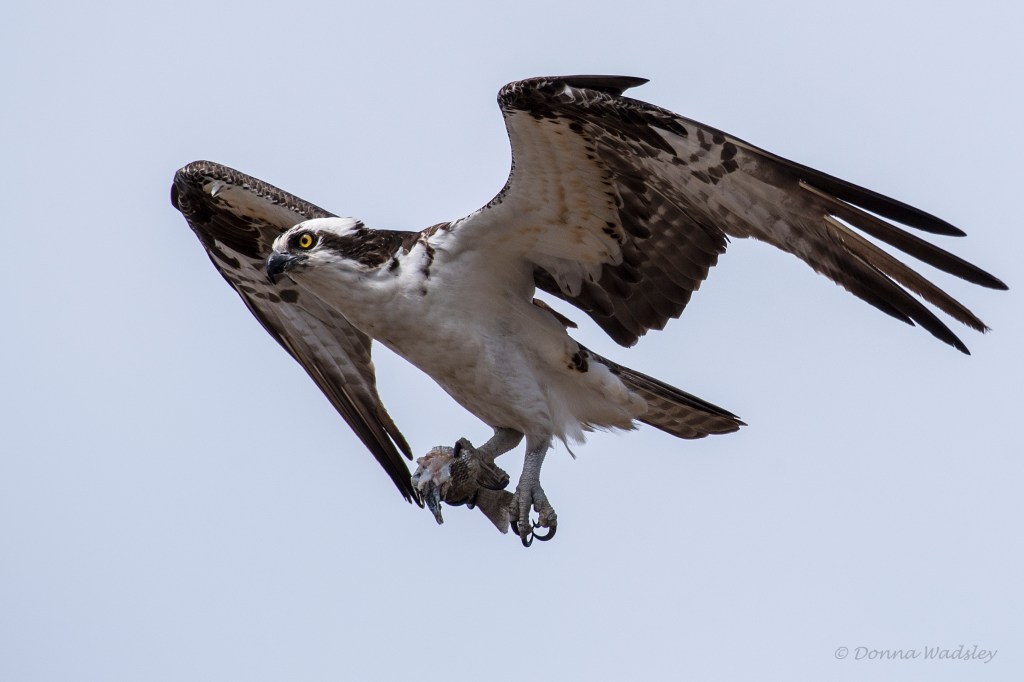
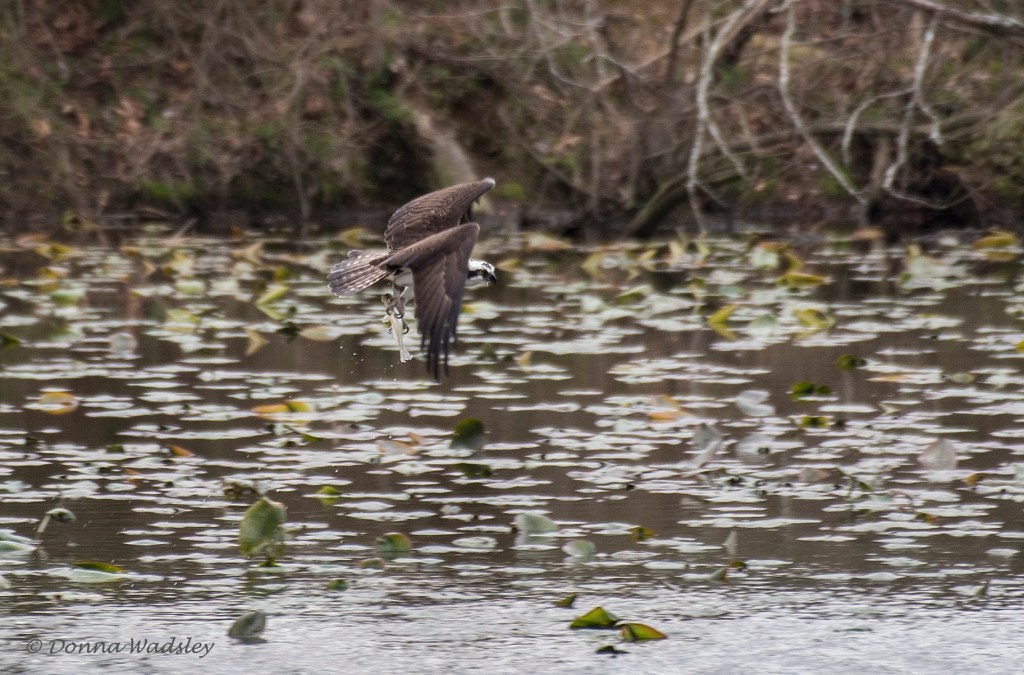
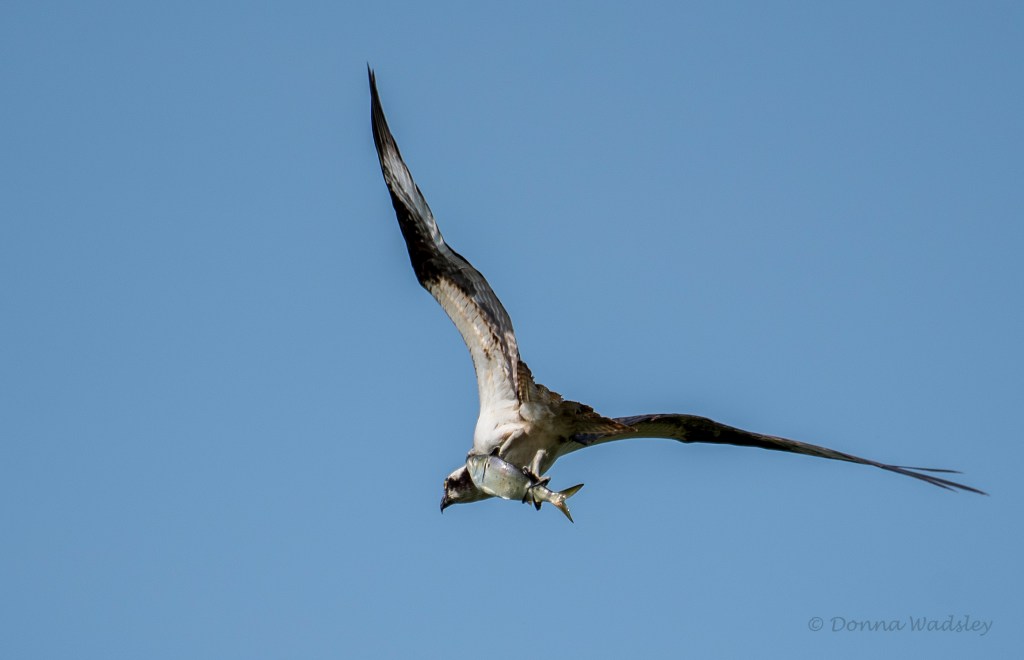
Oh, Mr Osprey, you better do better than that or the Mrs will not be happy!
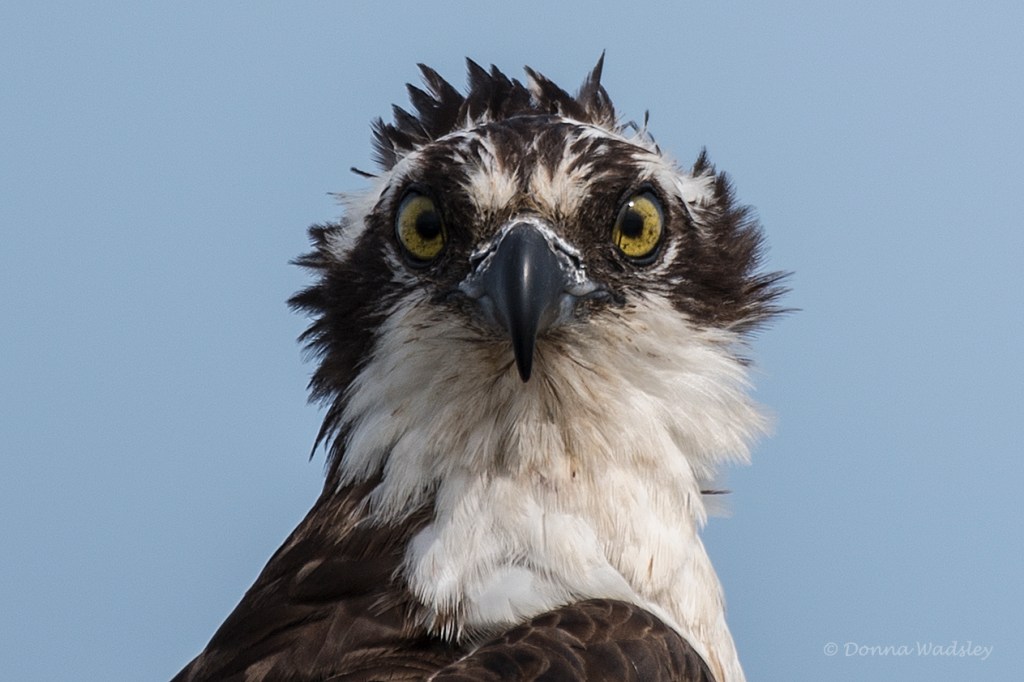
Huh?
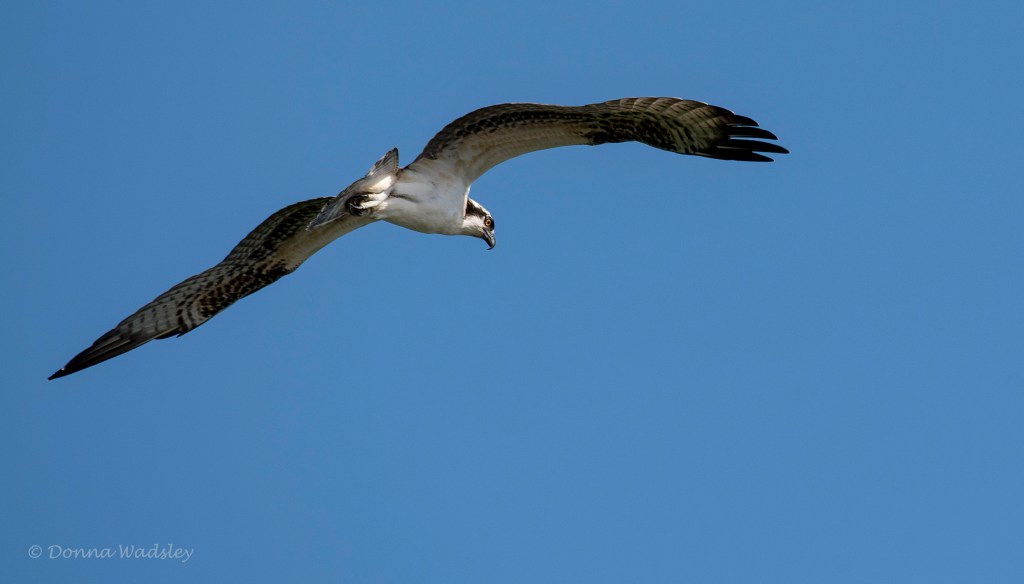
Mr Osprey is back at it, fishing!
Next post I’ll share an Osprey in fishing action!
Wilson’s Phalarope and King Rail
Oops, I did it again, didn’t mean to disappear!
I’ve been doing a lot of birding the past few weeks during our region’s Spring songbird migration. Yep, I kinda got caught up in it. 😉
The fun, chase, and challenge gained me five new lifers (Wilson’s Warbler, Canada Warbler, Gray-cheeked Thrush, Wilson’s Phalarope, and King Rail). In addition, I was able to capture two of the five which are featured here.
The first of the two is the Wilson’s Phalarope. This beautiful shorebird stayed at a local pond at Chesapeake Farms for about a week to the thrill of many birders. Photos were a bit tough to achieve with it always hanging at the back of the pond, but I got ’em!

Wilson’s Phalarope (lifer #299, photographed #275)
The Wilson’s Phalarope usually migrates through the central to western United States to South America, and returns the same route to breed in the upper parts of the central to western U.S. and Canada. There are some known breeding areas in the New England states, this one may have been headed to its home there. Lucky for us locals with its week stopover to refuel, wherever it was headed!
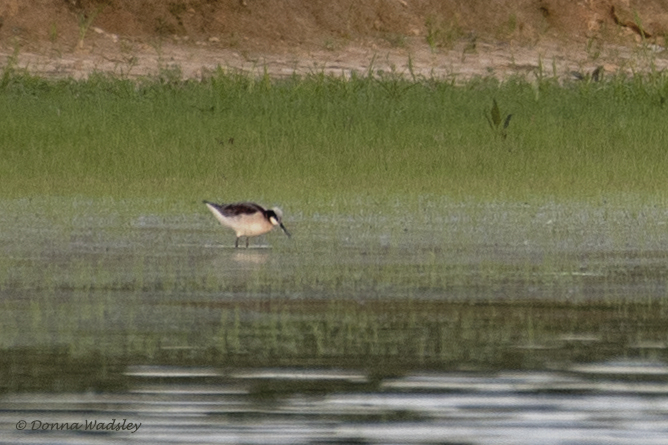
Wilson’s Phalarope
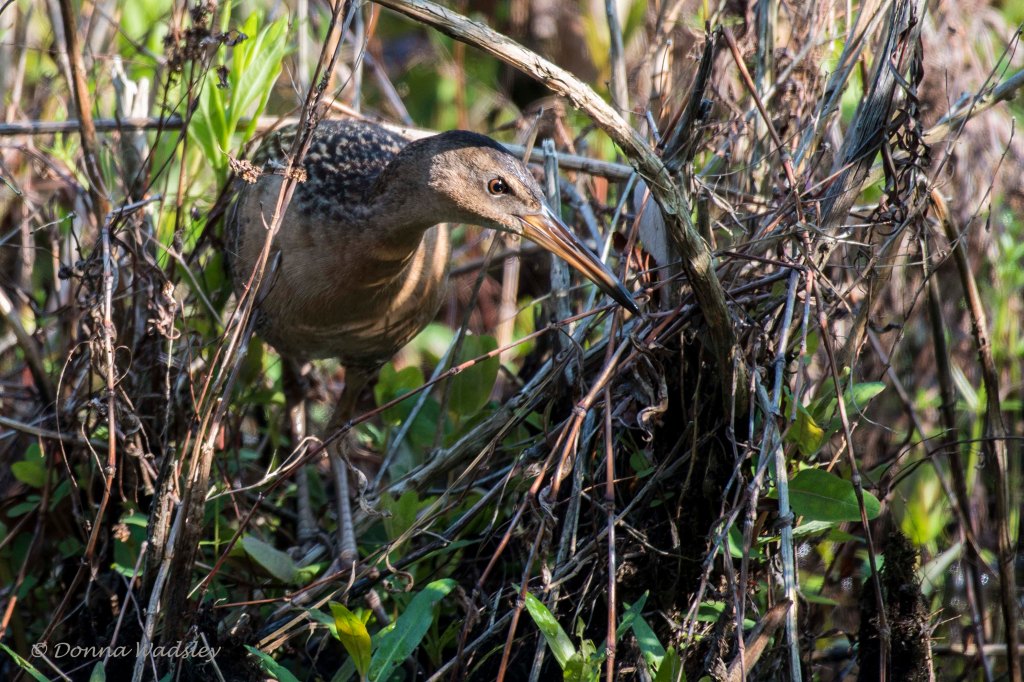
The second photographed lifer was a super thrill, the elusive King Rail. I found it also at Chesapeake Farms in their 40-acre Hill Reservoir marsh.
The King Rail is a secretive bird. I was told that mine is the official third sighting for Kent County, Maryland, and farthest north on the Eastern Shore of Maryland. The first was recorded back in 1891, the second heard in 2019 at Eastern Neck NWR. So I get to toot my little horn, right? 💃
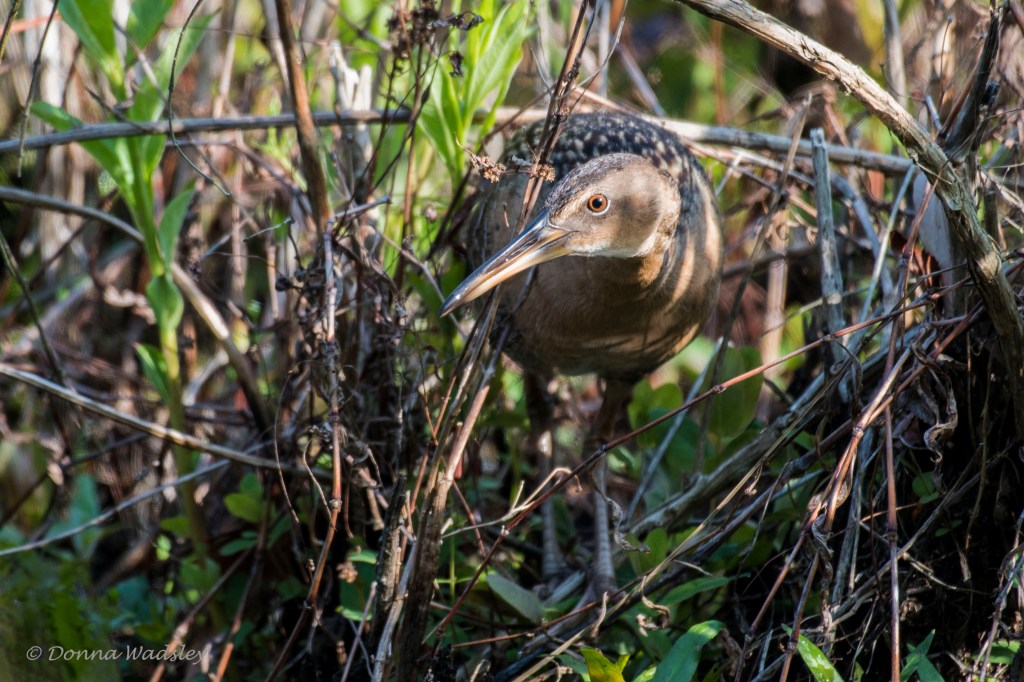
King Rail (lifer #300, photographed #276)

King Rail
On a serious note, I feel extremely fortunate to have sighted this King Rail. King Rail populations have declined in all areas surveyed in North America, overall by an estimated 4.5% per year since 1966 according to the North American Breeding Bird Survey, indicating a cumulative decline of 90% over that period. Partners in Flight estimates the global population at 70,000 birds, rates the species a 15 out of 20 on the Continental Concern Score, and includes it on the Yellow Watch List for declining populations. The IUCN classifies King Rail as a “Near Threatened” species. Long-term declines in populations are mostly related to the massive loss of wetlands across North America. (courtesy AllAboutBirds.org)

King Rail’s Map Range
King Rail
I’ve taken a galore of bird photos in the past few weeks, I just need to sit still long enough to pick through them to process and share. 😉
Next up, a three-post series on my beloved Osprey that I’d been previously working on!
P.S. During my few week hiatus and restart, Word Press changed my format, forcing me now to use the Block editor (I’ve been using Classic for 10+ years). So that has been a huge negative getting restarted, I had to learn it to do this post. If it’s a little ‘out of whack’, you know why!
Bald Eagle Up Close
.
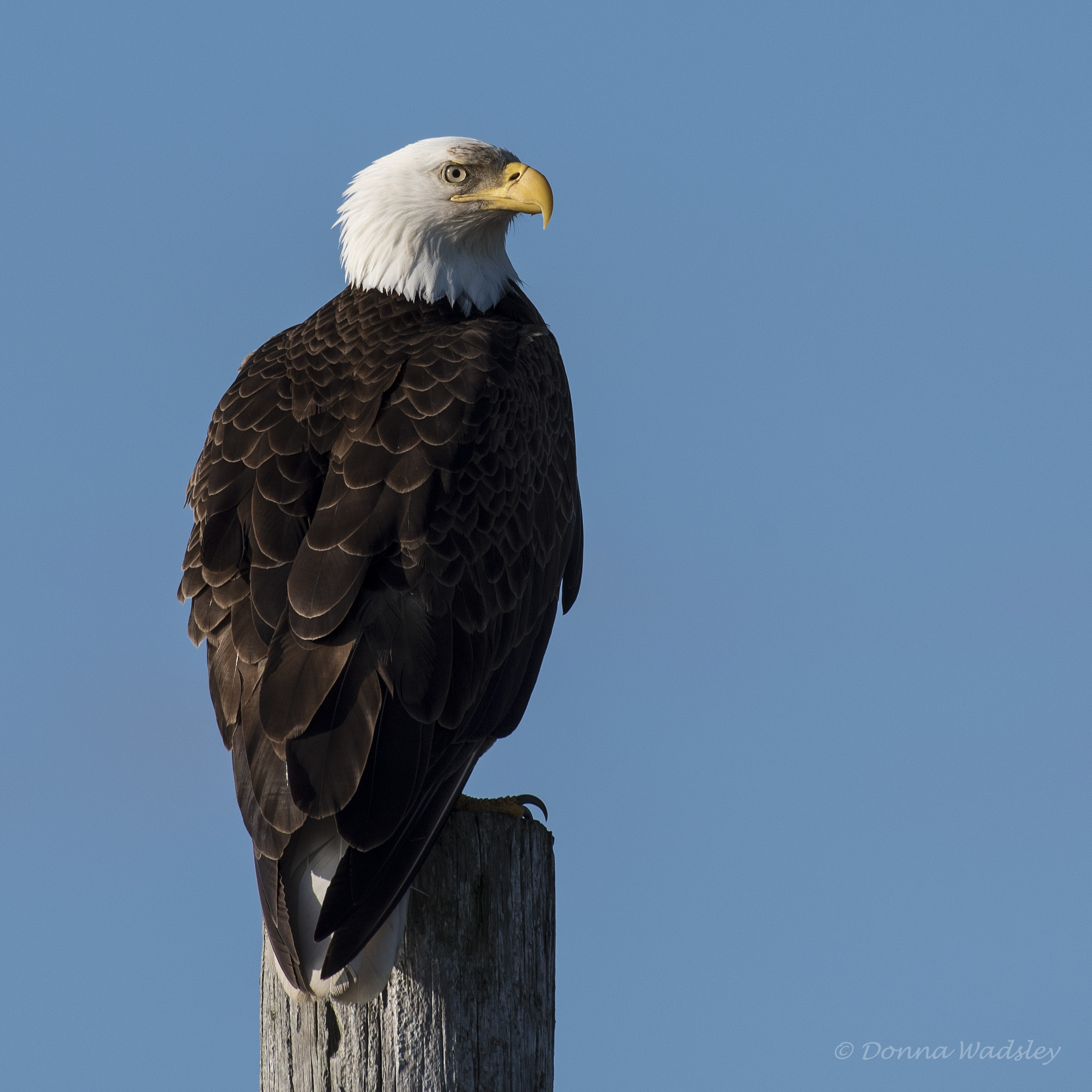
Cannot get much closer than this in the wild! This Bald Eagle stayed put as I pulled up alongside it, giving me an opportunity of a lifetime to take as many photos as I wanted.
.
Bald Eagle
.