
Snow Goose Snow Globe
I could see a white-out lifting up in the air ahead of me. I quickly pulled over and started shooting.
Something had disturbed a huge flock of Snow Geese and they were going……

going…..

and gone. Much to my disappointment.

No wait! They turned and started circling back. I took some more photos. Not sure when I got out of my car lol, but I wanted them to reland so I jumped back in and watched.
Not sure why (maybe me?) but they didn’t even attempt to land, they just started coming directly at and over me. I was suddenly in a Snow Goose Snow Globe!
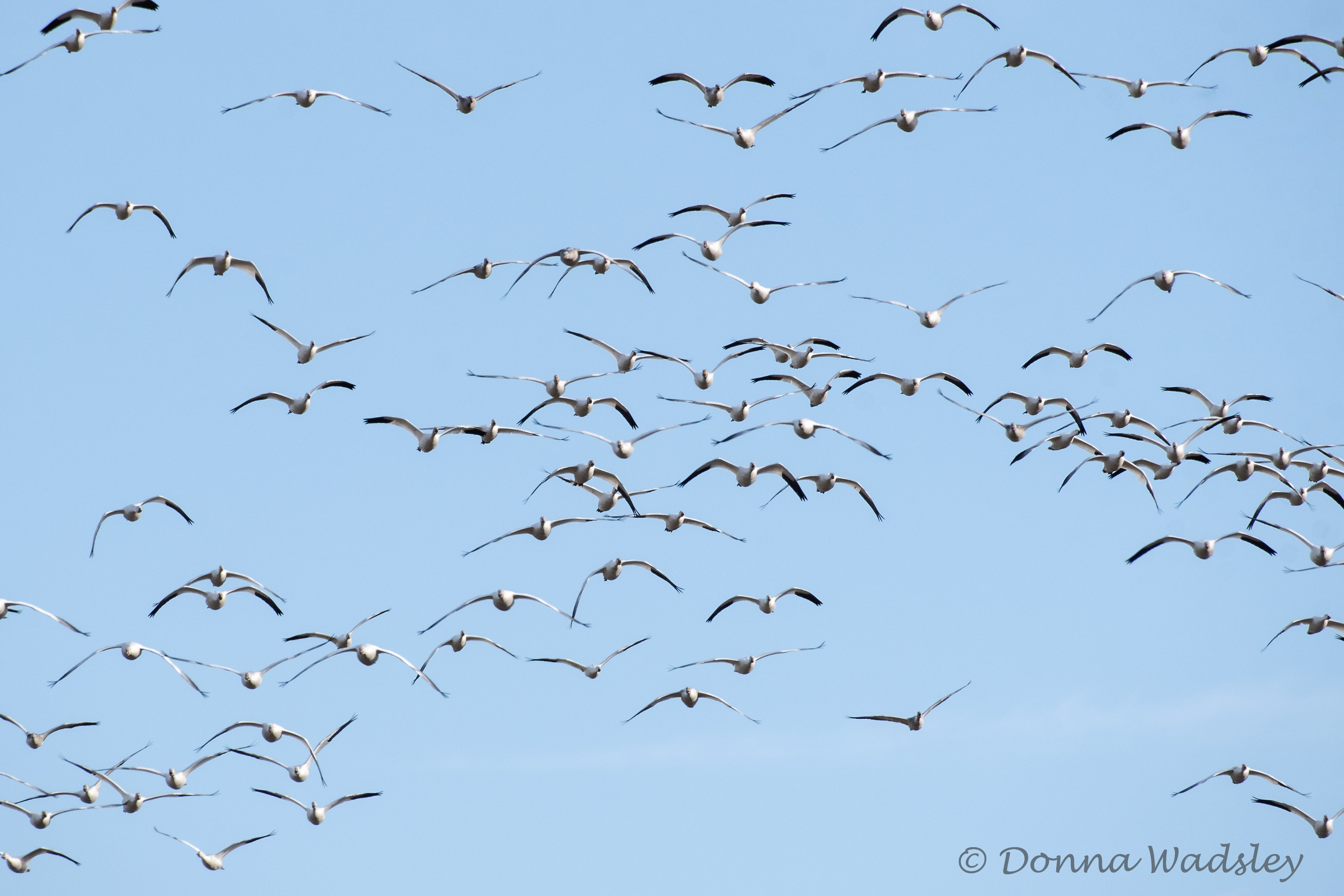
The beautiful sound was deafening!
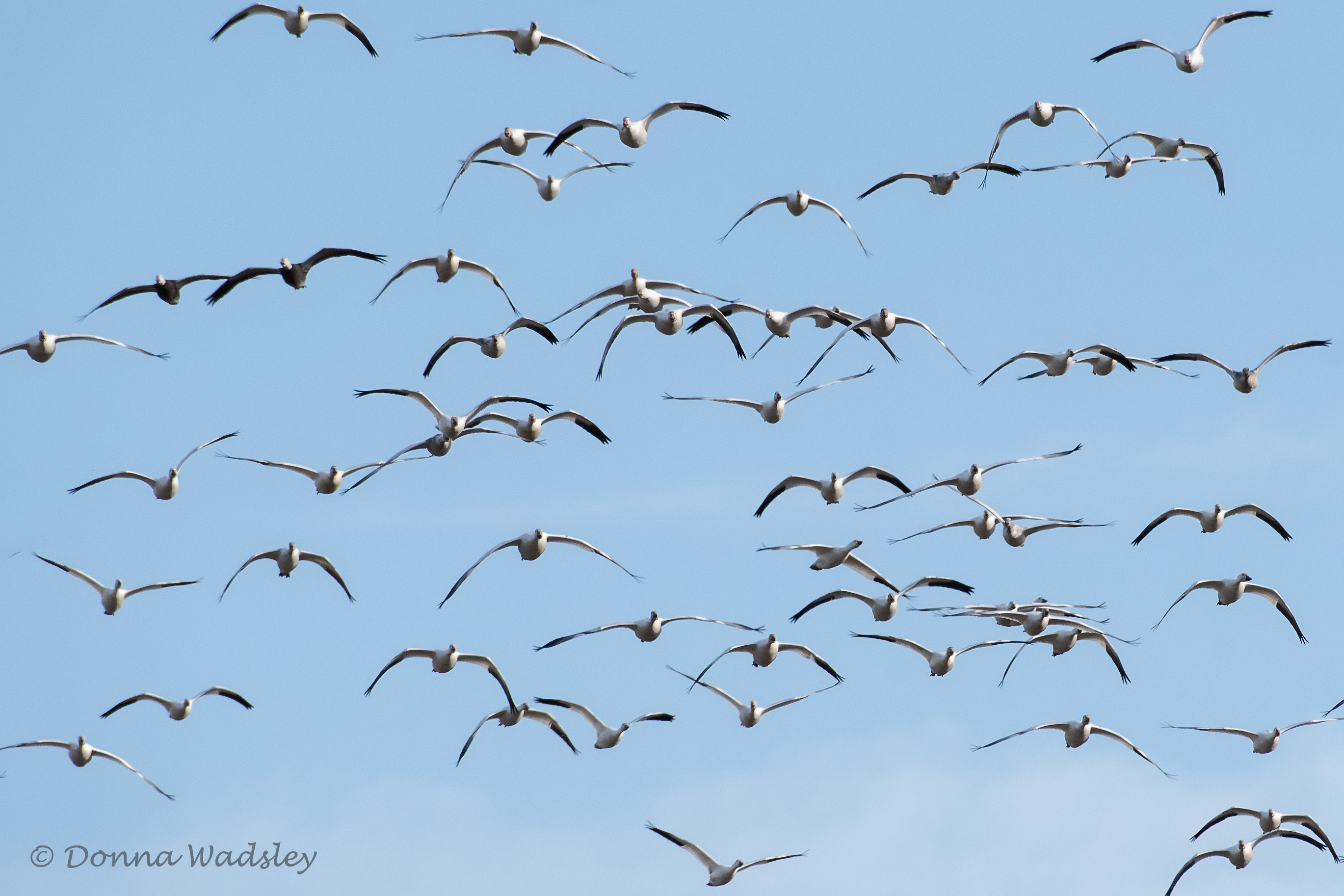
In above top left, there is a pair of ‘dark-morph’ or ‘blue’ Snow Geese in the flock.

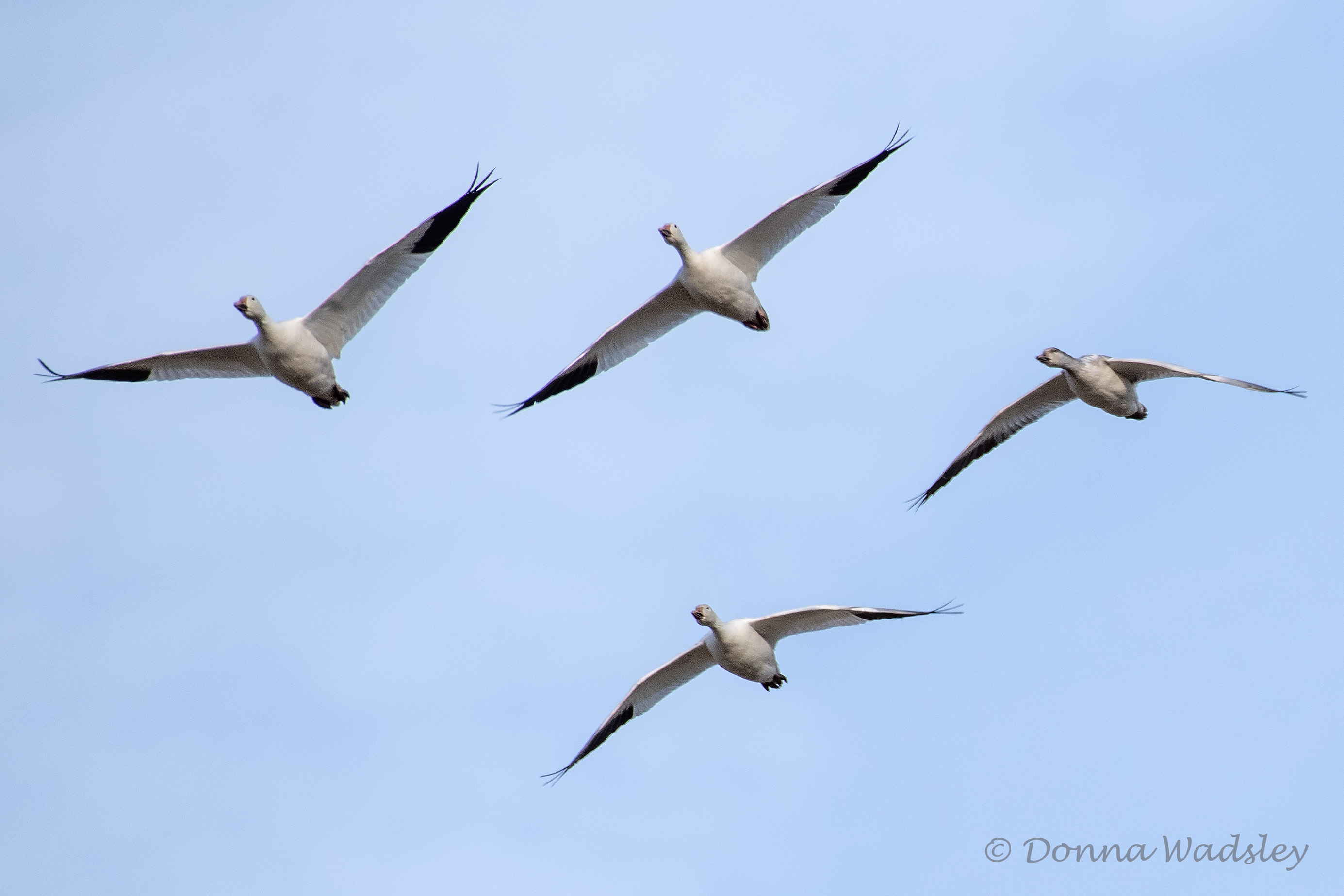
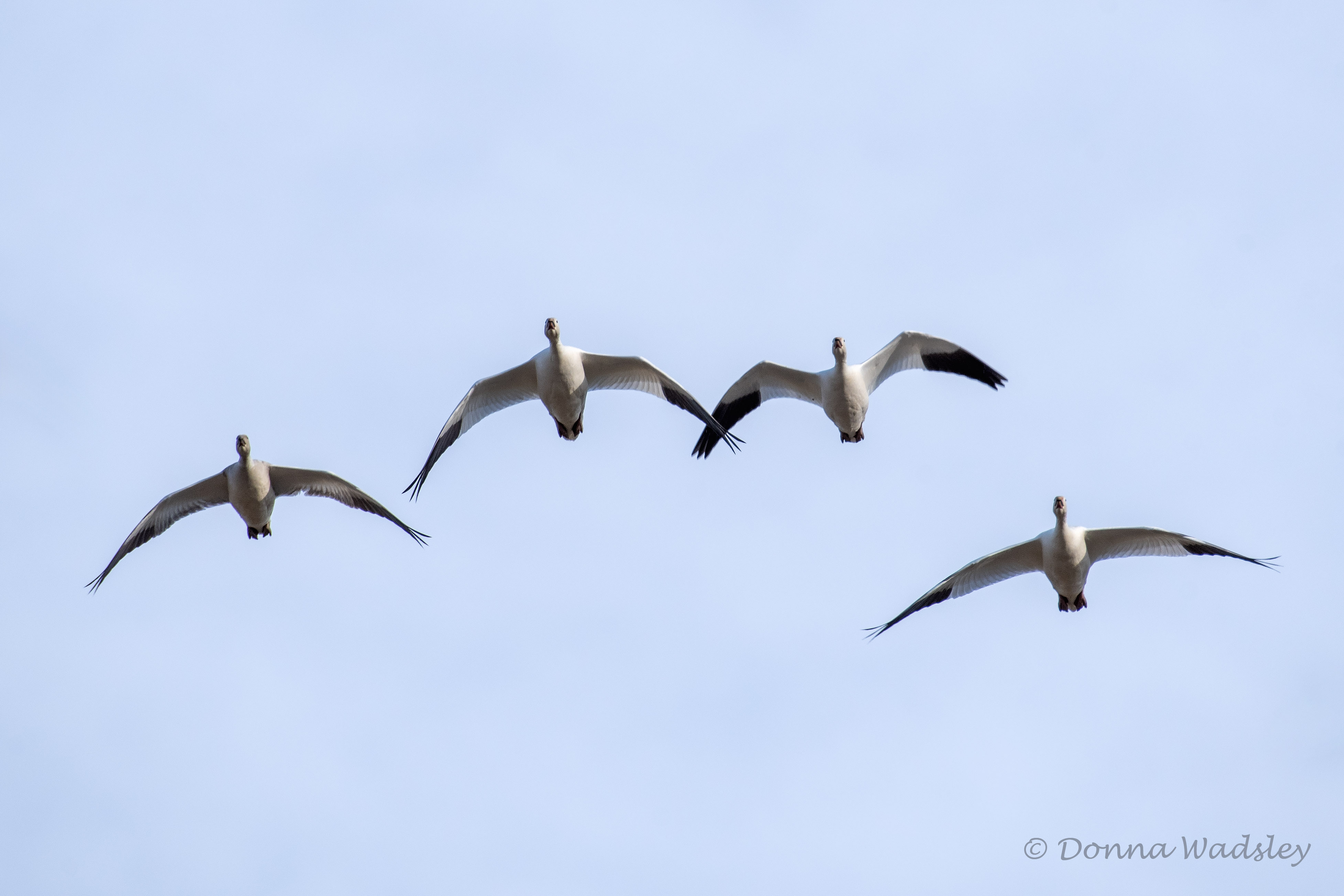

As they went over my car, I could hear splats hitting the ground and road. Lucky lucky me, they missed my car.
As I looked out my passenger window, the flock continued and then started landing in the field behind the Tundra Swans.
Yep, this huge Snow Goose flock and my last post of the huge Tundra Swan flock were both on the same vast open fields at the same time, February 28 at 4 pm.
It was a good ride home with a big smile and a great memorable two-fer sighting!
.
Whistling Tundra Swans
Our Tundra Swans are quickly departing the Chesapeake Bay region for their long migration back to their breeding grounds in the remote arctic of North America.

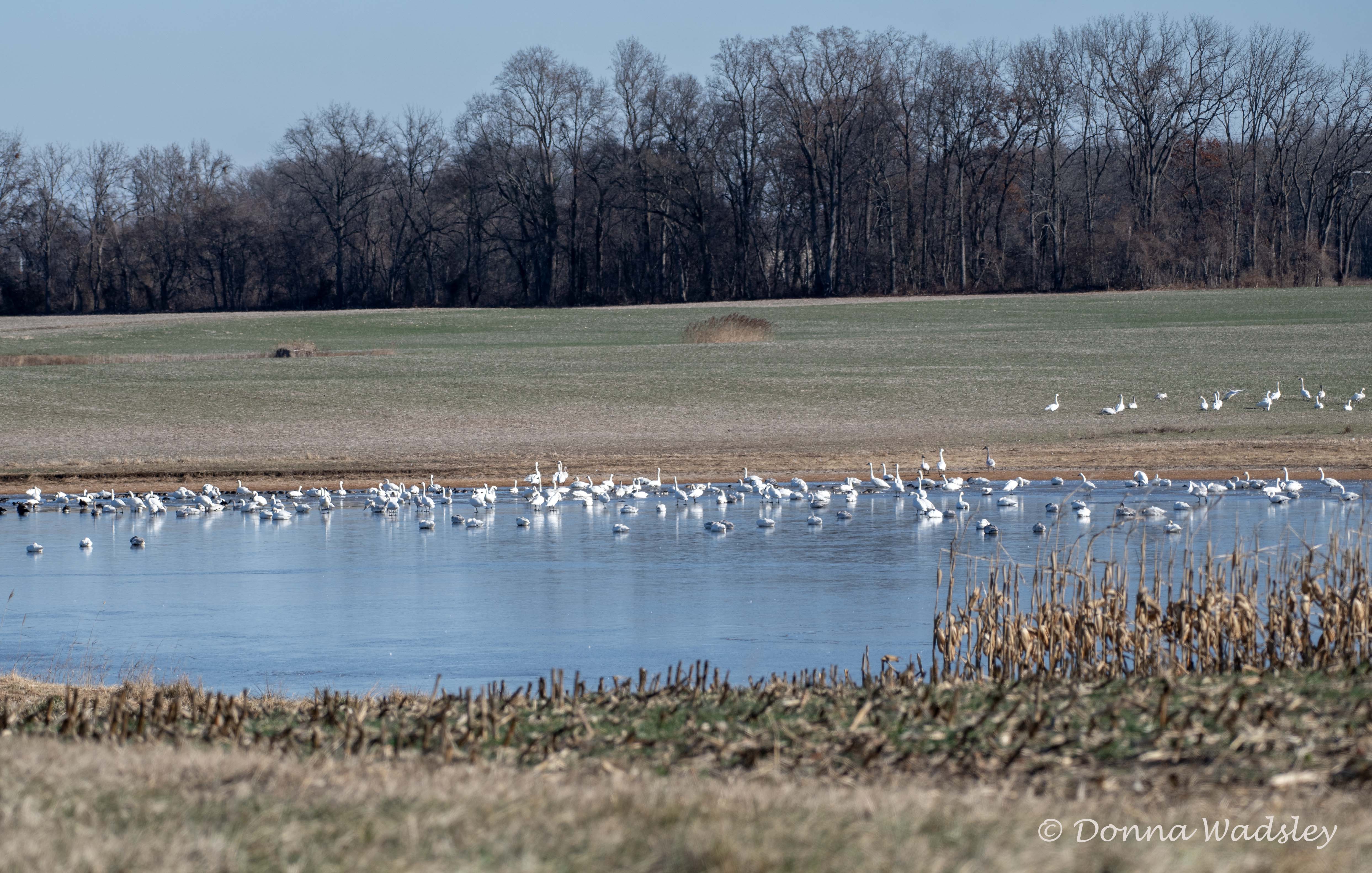
Late afternoon few days ago, I drove through a humongous flock that was settling in for the night. They were spread out a 1/4 mile across both sides of a huge open farm field. To be there, it was quite the thrill!

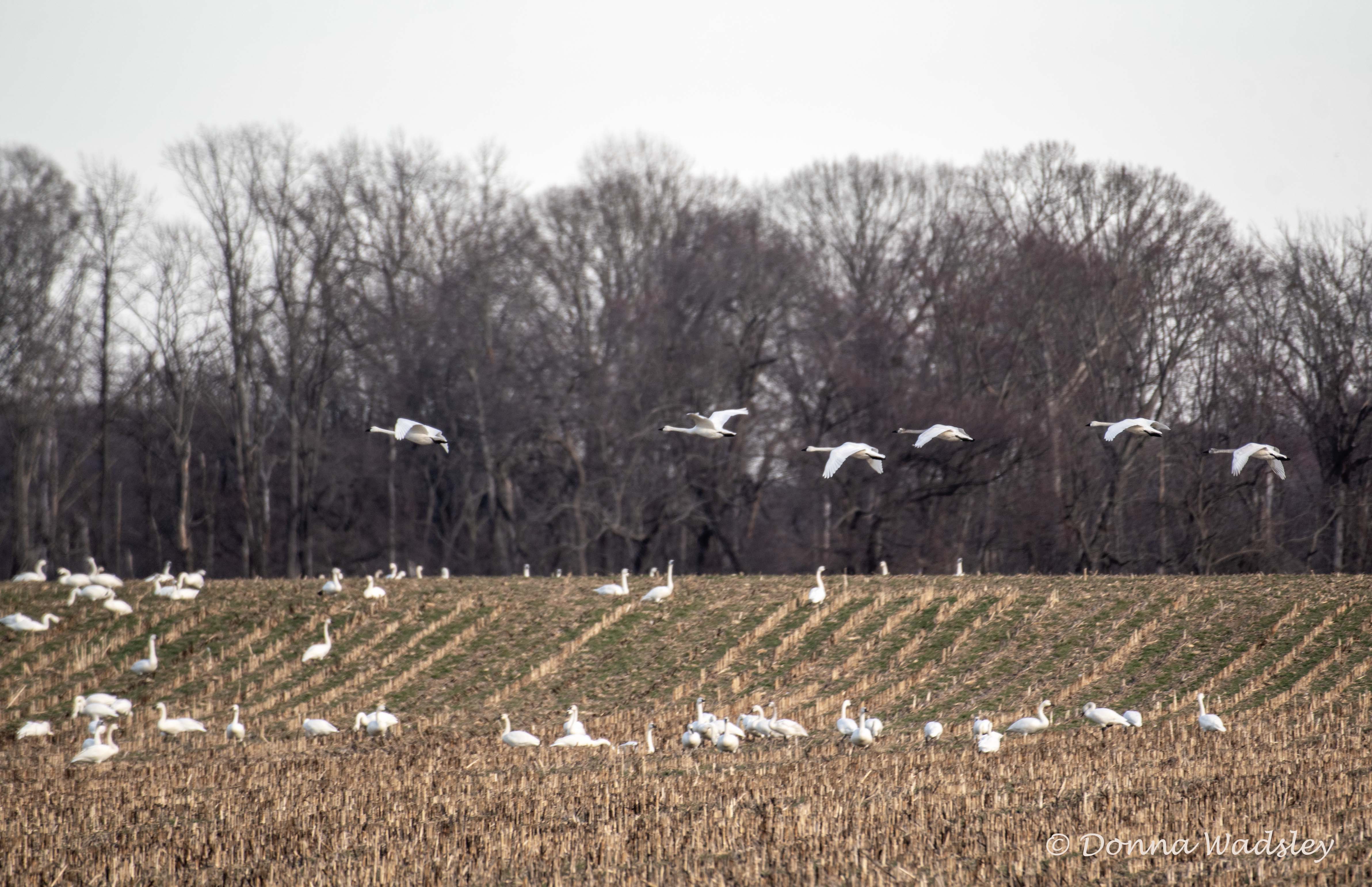


As I moved further down the road, they were closer to the road.
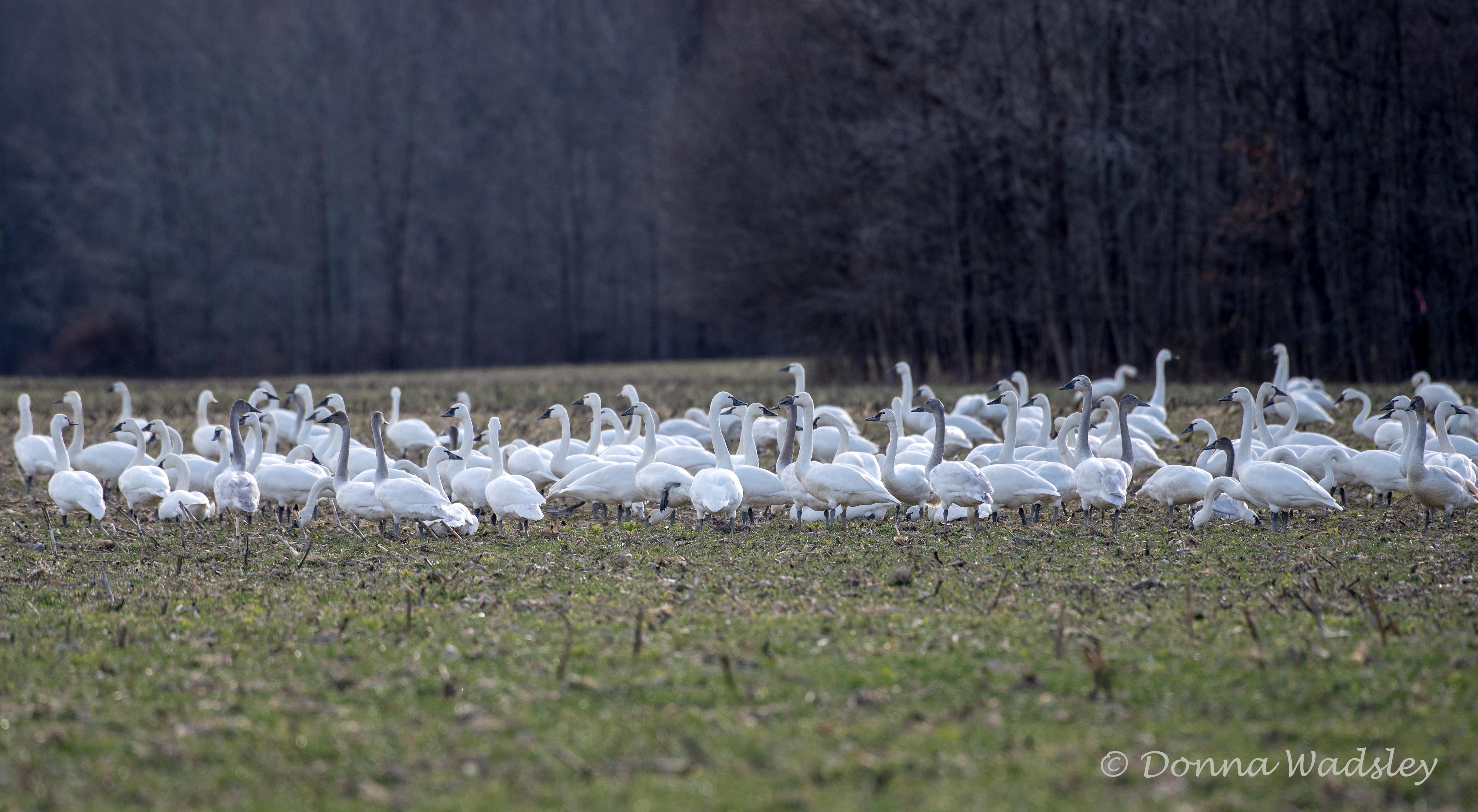
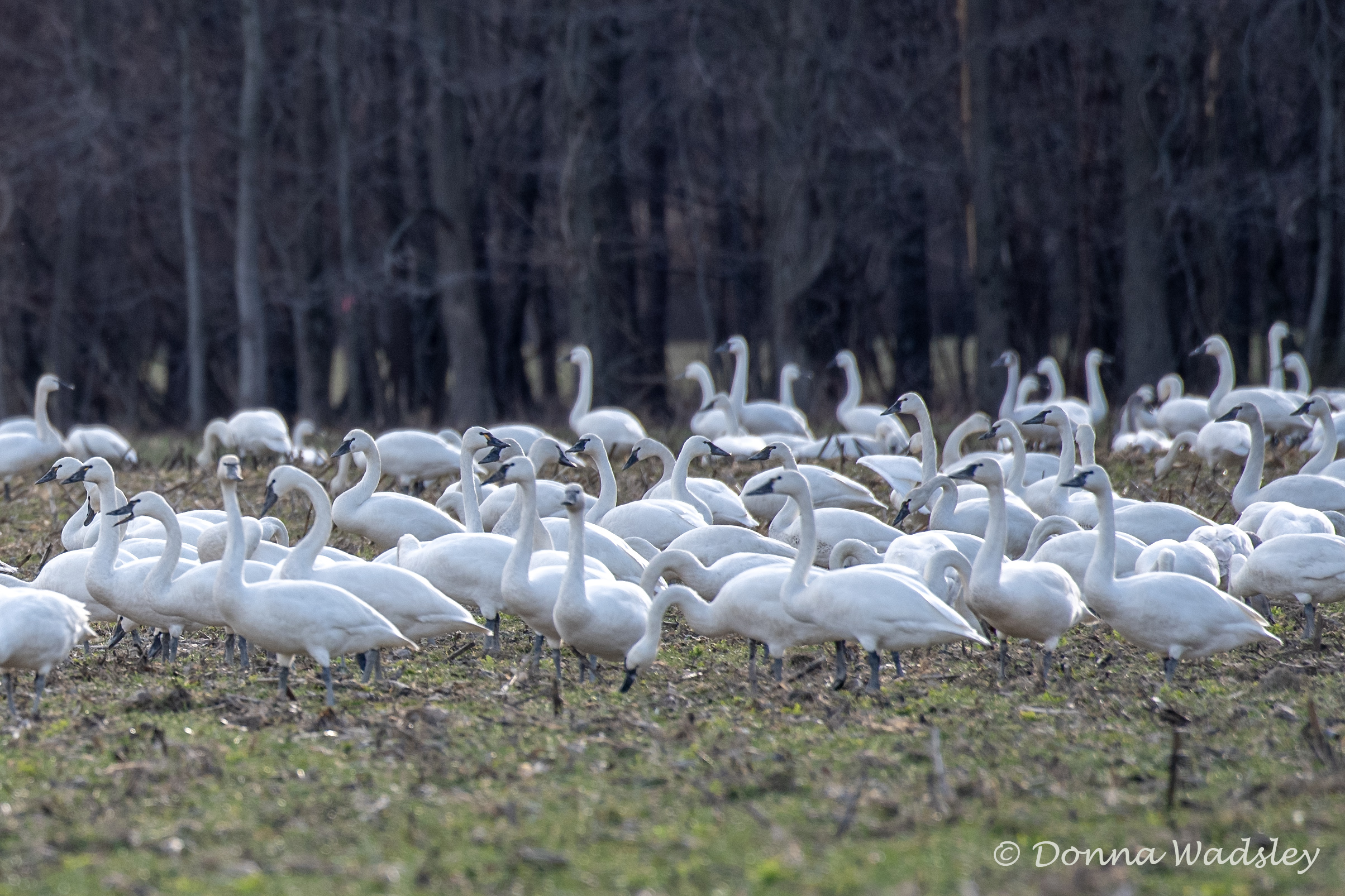
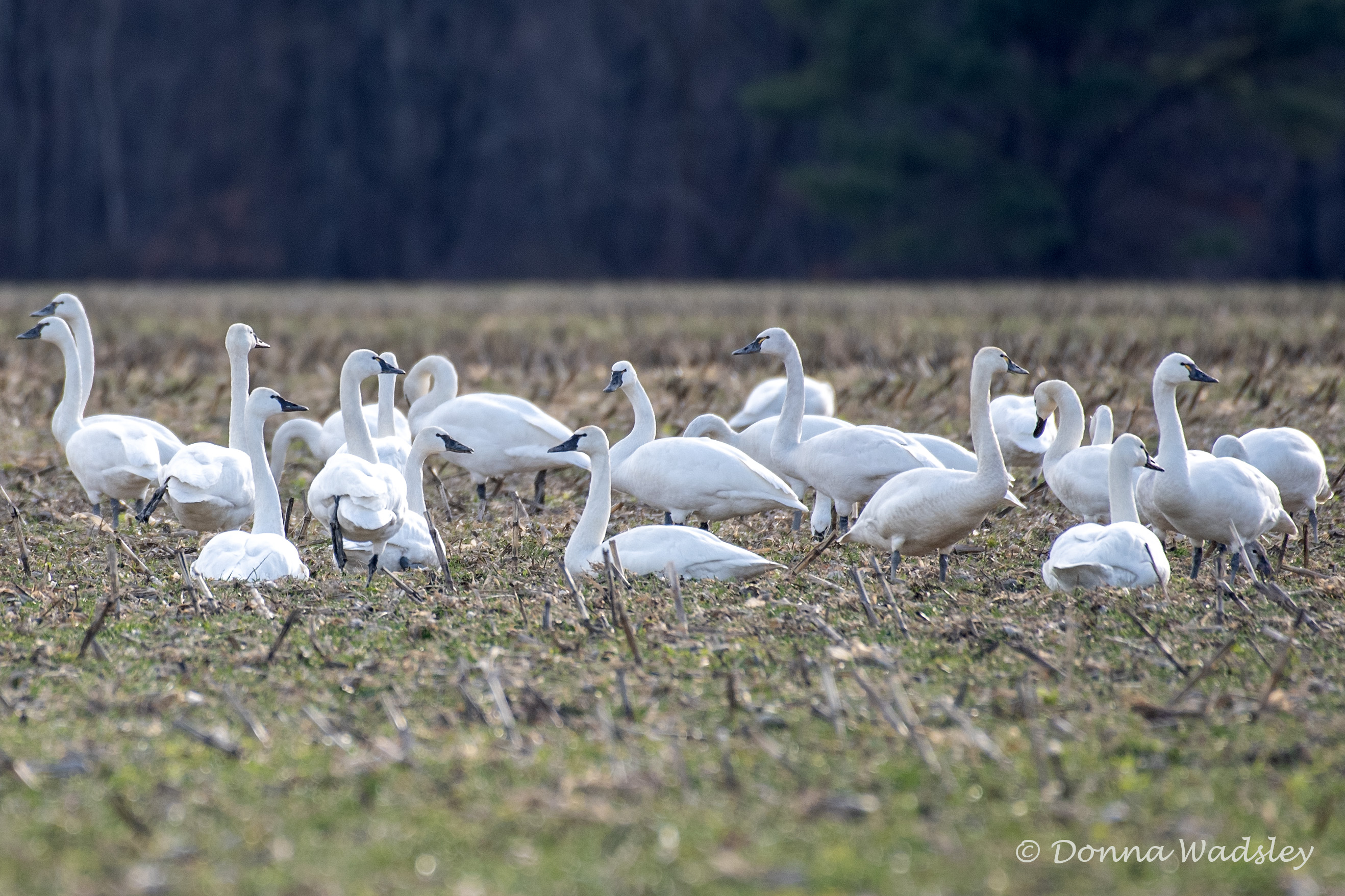


The Tundra Swan has two subspecies, the American race is the Whistling swan, and the Eurasian race, the Bewick’s swan. Their difference is distinguished by the large yellow patches on the face of the Bewick’s swan that our Whistling swan lacks.
.
1-2-3 Medium Bird Jubilee – #24
Some more of those good-looking medium birds I locked eyes with recently!
I’m excited for my backyard Eastern Bluebird pair. They’ve been around all winter; but in past weeks, they are actively keeping tabs on their nest box. This old snag is behind the nest box, where right now they like to perch and swoop at any other bird coming near. No nest building yet.

Eastern Bluebirds
.
Some more…..also waiting for Spring!
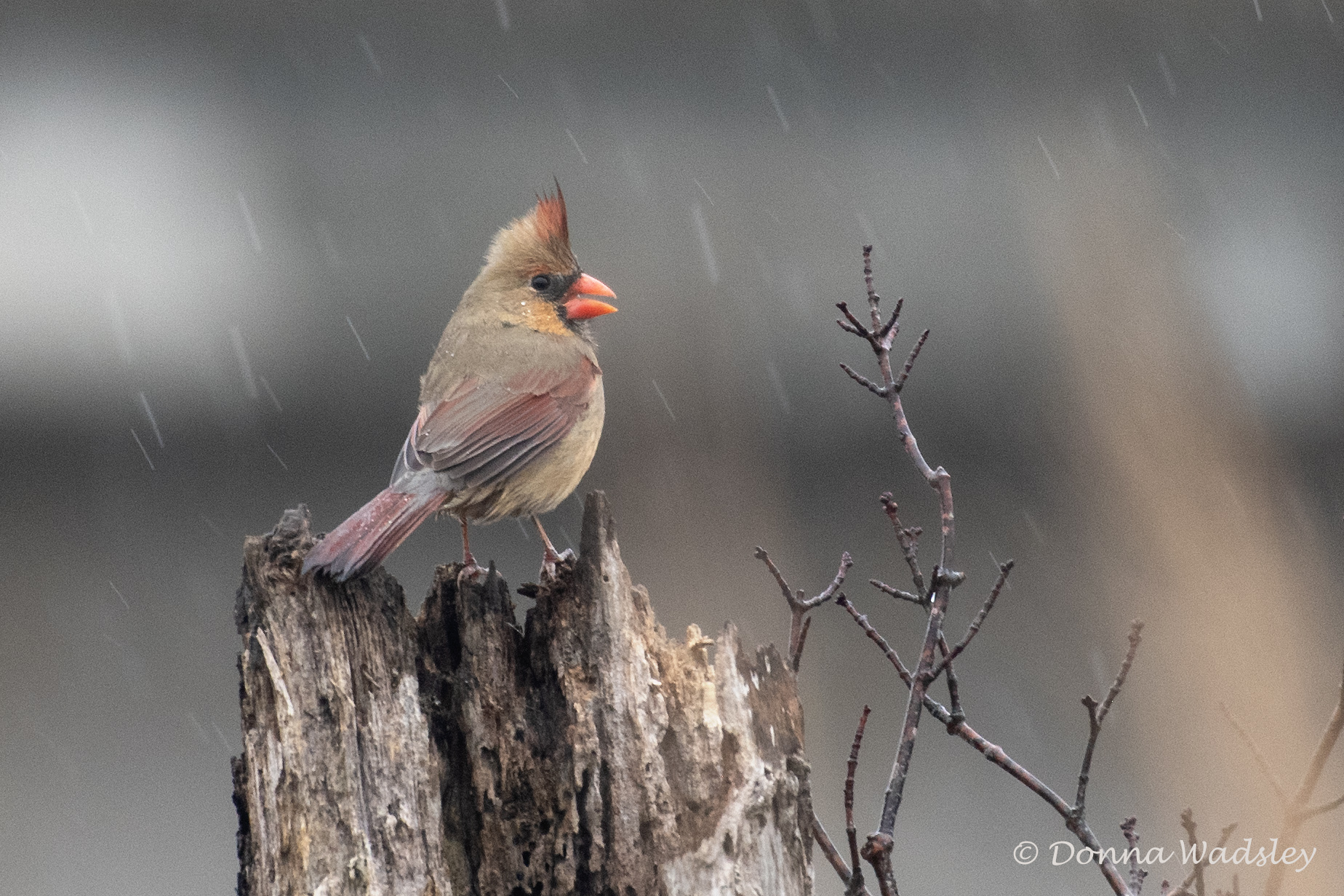
Female Northern Cardinal in the cold rain
.

Horned Lark
(you can see it’s little ‘horns’)
.

American Pipit
.
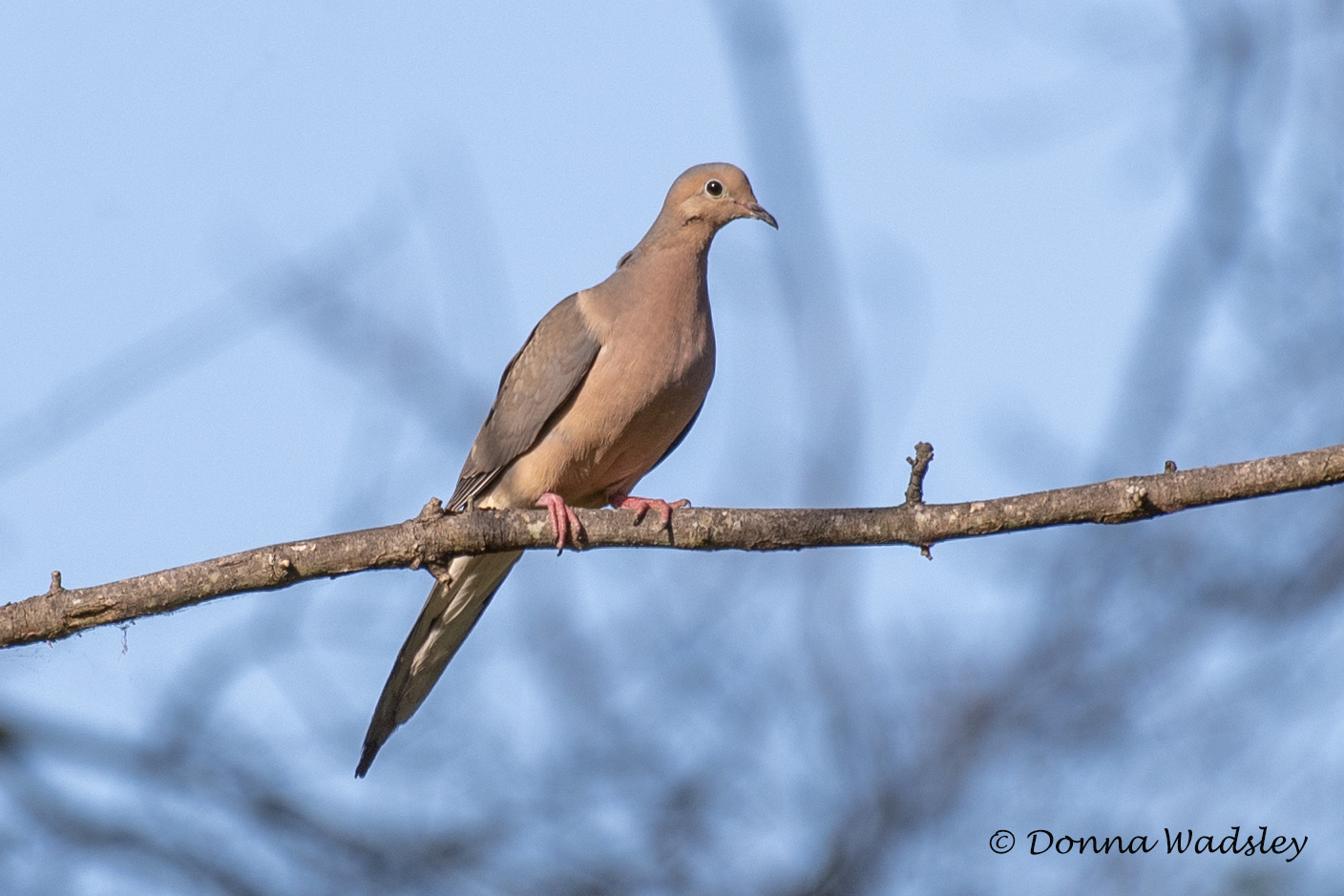
Mourning Dove
.
.
Five On The Wire – #18
The winter raptors are easy to spot and photograph on wires, but it’s always nice to catch someone different. Yep, I’ve been looking lately!
So here you go, five bird species perched on a wire, taking in that big ‘ole 360 degree view.
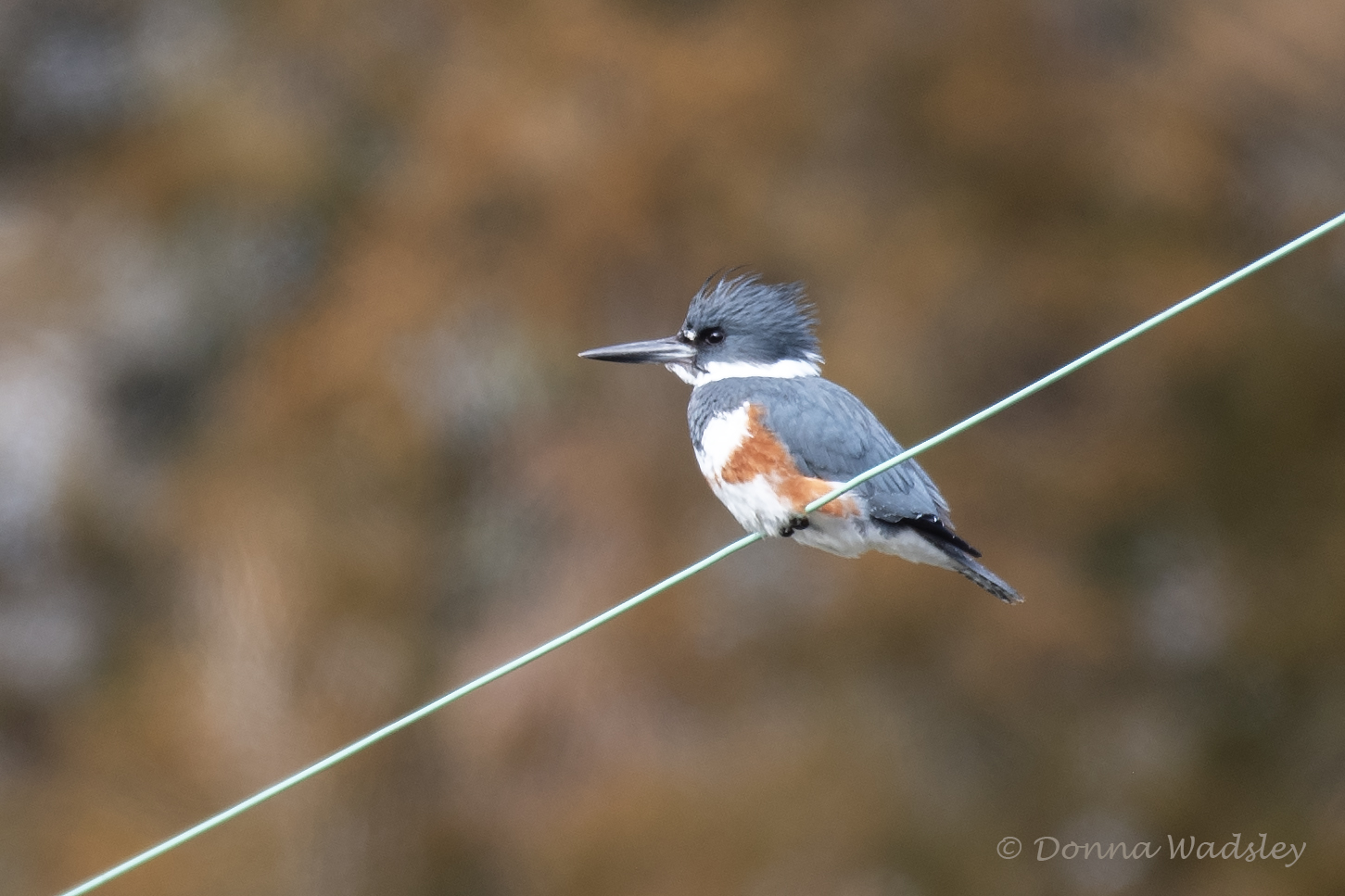
Belted Kingfisher (female)
.
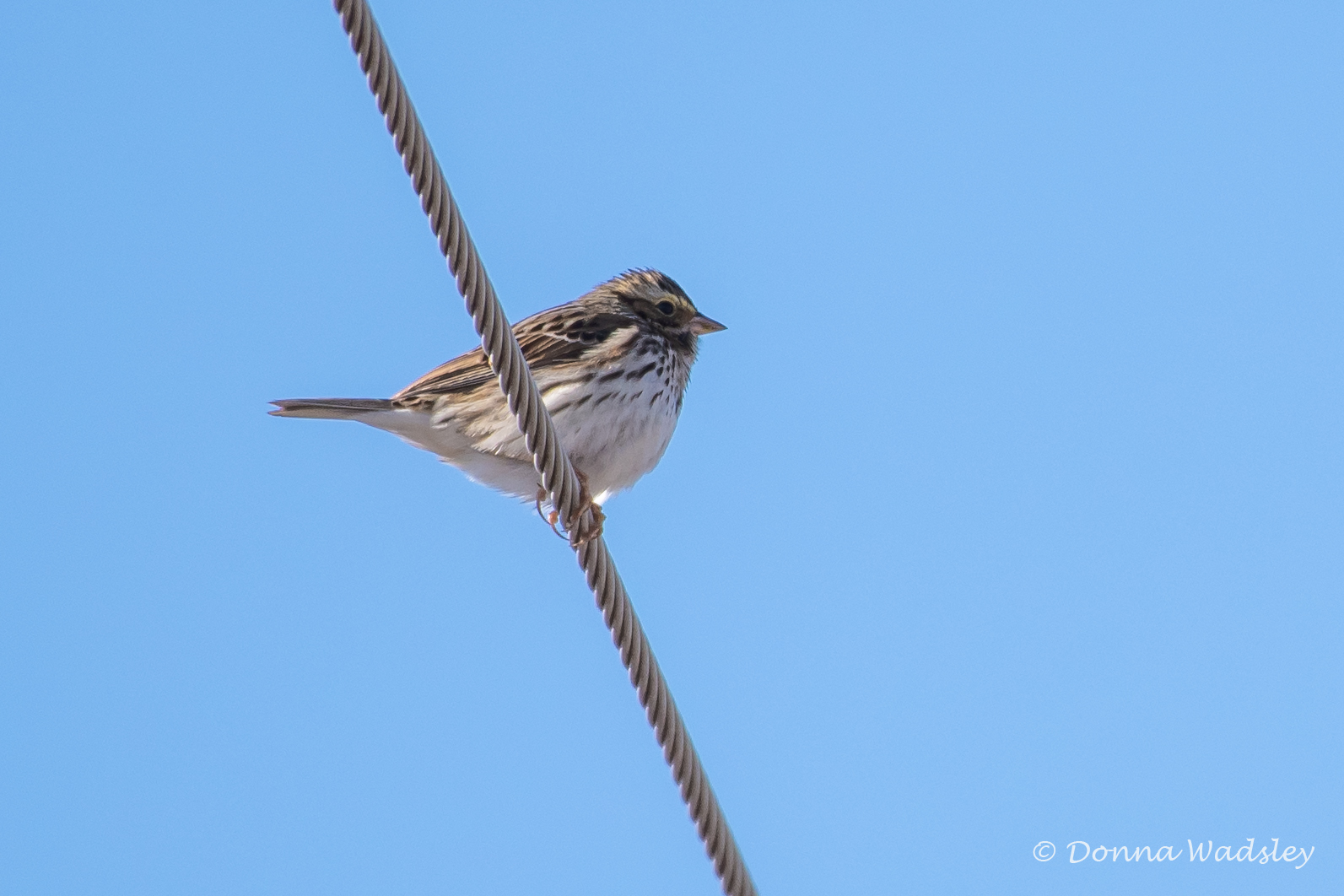
Savannah Sparrow
.

Mourning Doves
.
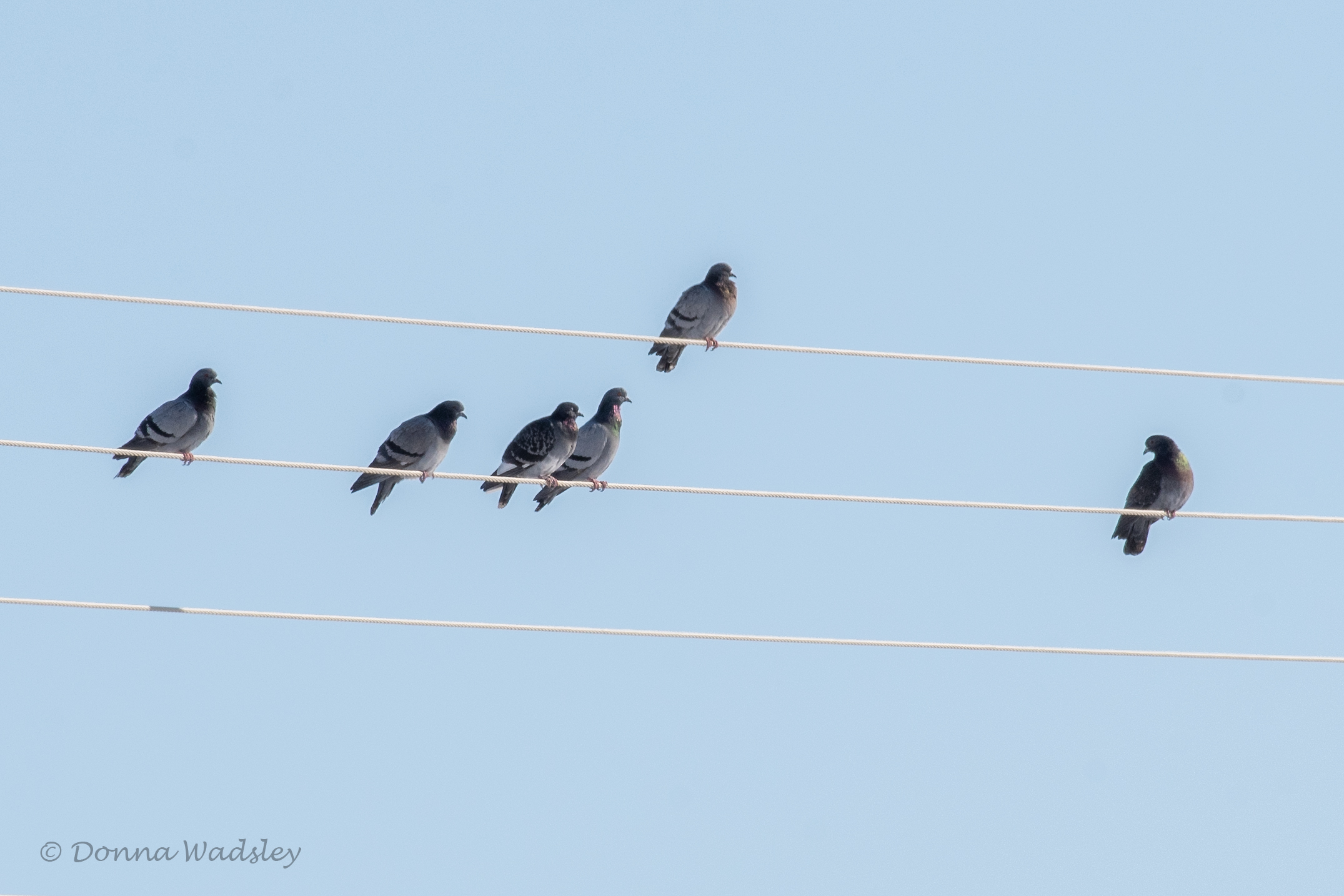
Rock Pigeons
.
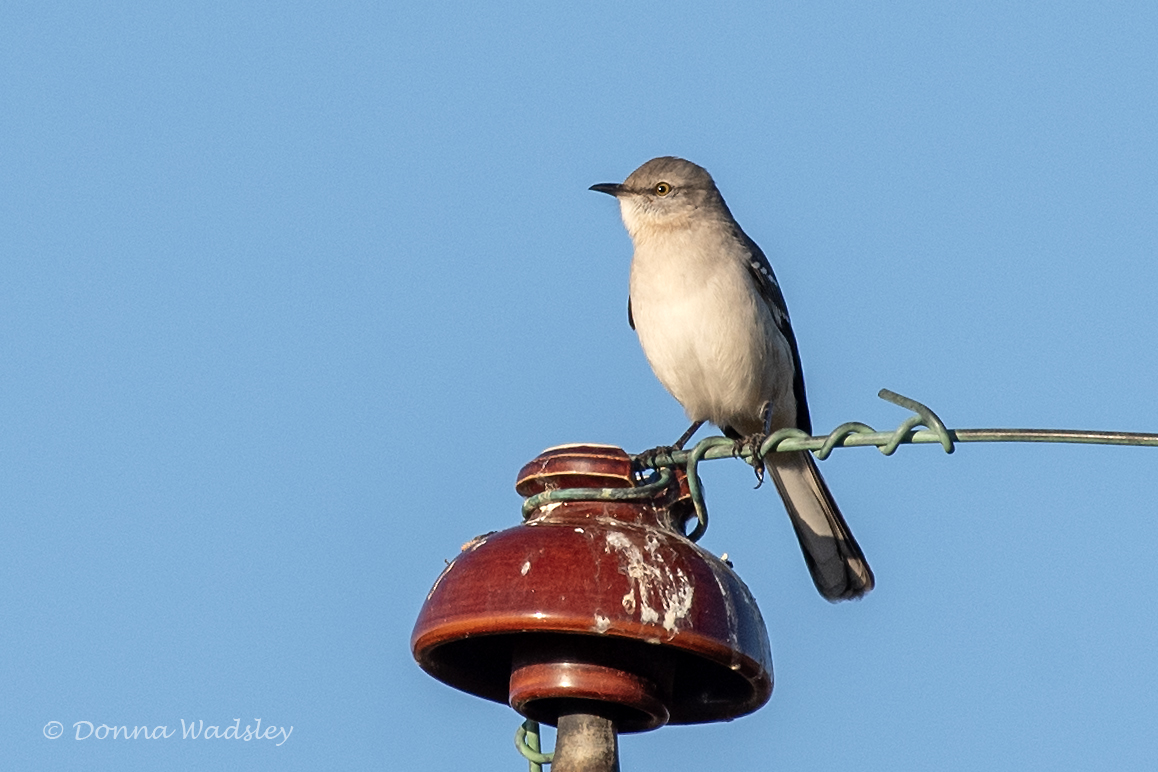
Northern Mockingbird
Looks like that last perch is liked a lot by the birds. 😁
.
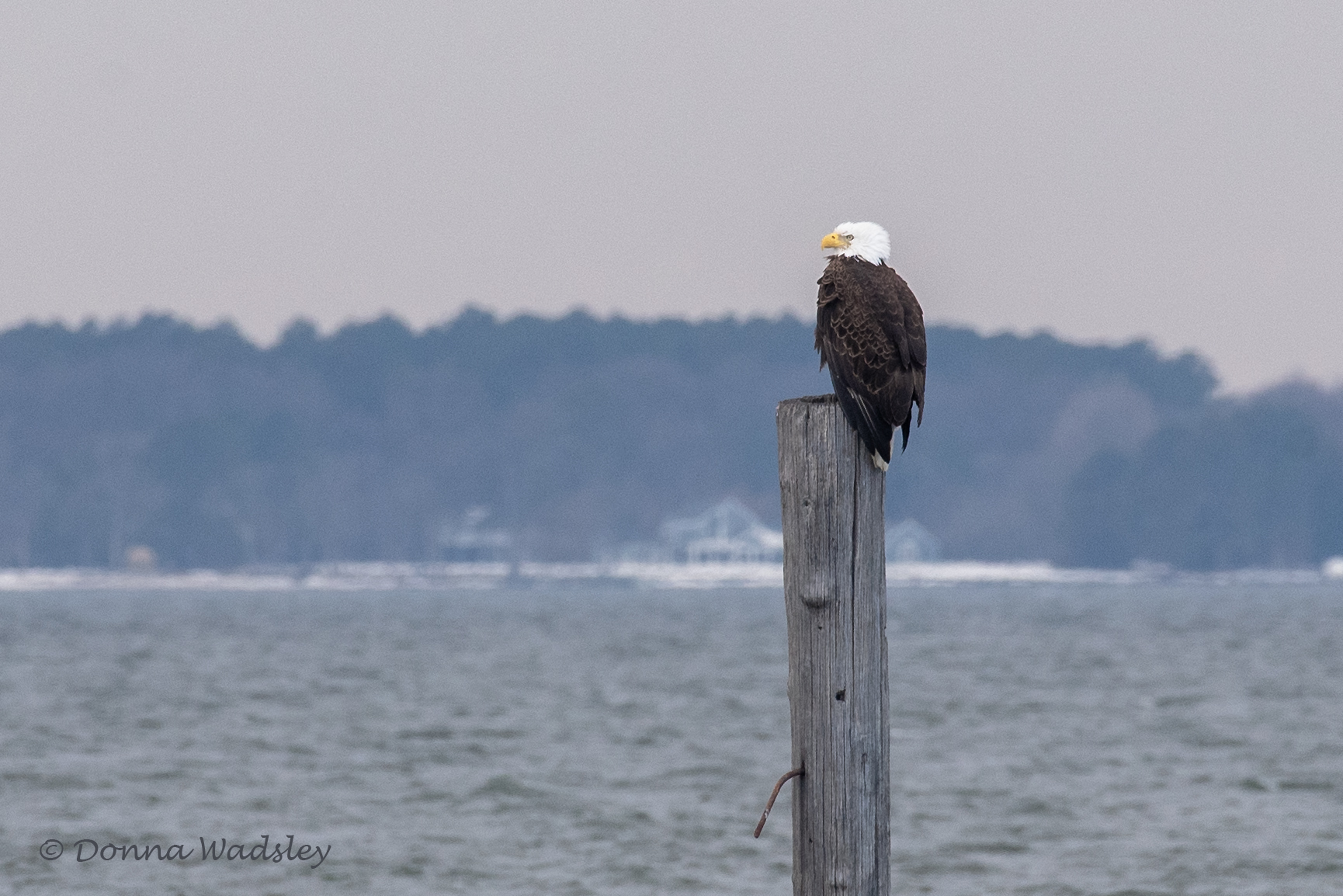
Bald Eagle at Claiborne Landing
Sittin’ in the mornin’ sunI’ll be sittin’ when the evenin’ comeWatching the ships roll inAnd then I watch ’em roll away again, yeah,
I’m sittin’ on the dock of the bayWatching the tide roll awayI’m just sittin’ on the dock of the bayWastin’ time…..
Lyrics from (Sittin’ On) The Dock On The Bay by Otis Redding

Bald Eagle on part of an old dock
Claiborne Landing overlooking the Chesapeake Bay
.
From 1890-1930, Claiborne Landing was used for passenger and automobile ferry services from Annapolis to the eastern shore of Maryland. In 1930, the service diminished when the primary route was diverted north to Kent Island.
In 1938, the bay crossing to this location terminated altogether, but a small shuttle service continued ferrying people to and from Kent Island. In 1952, the Chesapeake Bay Bridge opened and the Claiborne Landing ferry service closed.
The above photo shows a small portion of what is left of some of the old docks. Today, local watermen use nearby docks built at the landing. It is a great birding spot too.
Yeah….
I’m sittin’ on the dock of the bayWatching the tide roll awayI’m just sittin’ on the dock of the bayWastin’ time…..
.
Five On The Wing – #40
Soaring or on a mission, by now you know I love photographing raptors in flight. Here’s five more using those big wingspans!
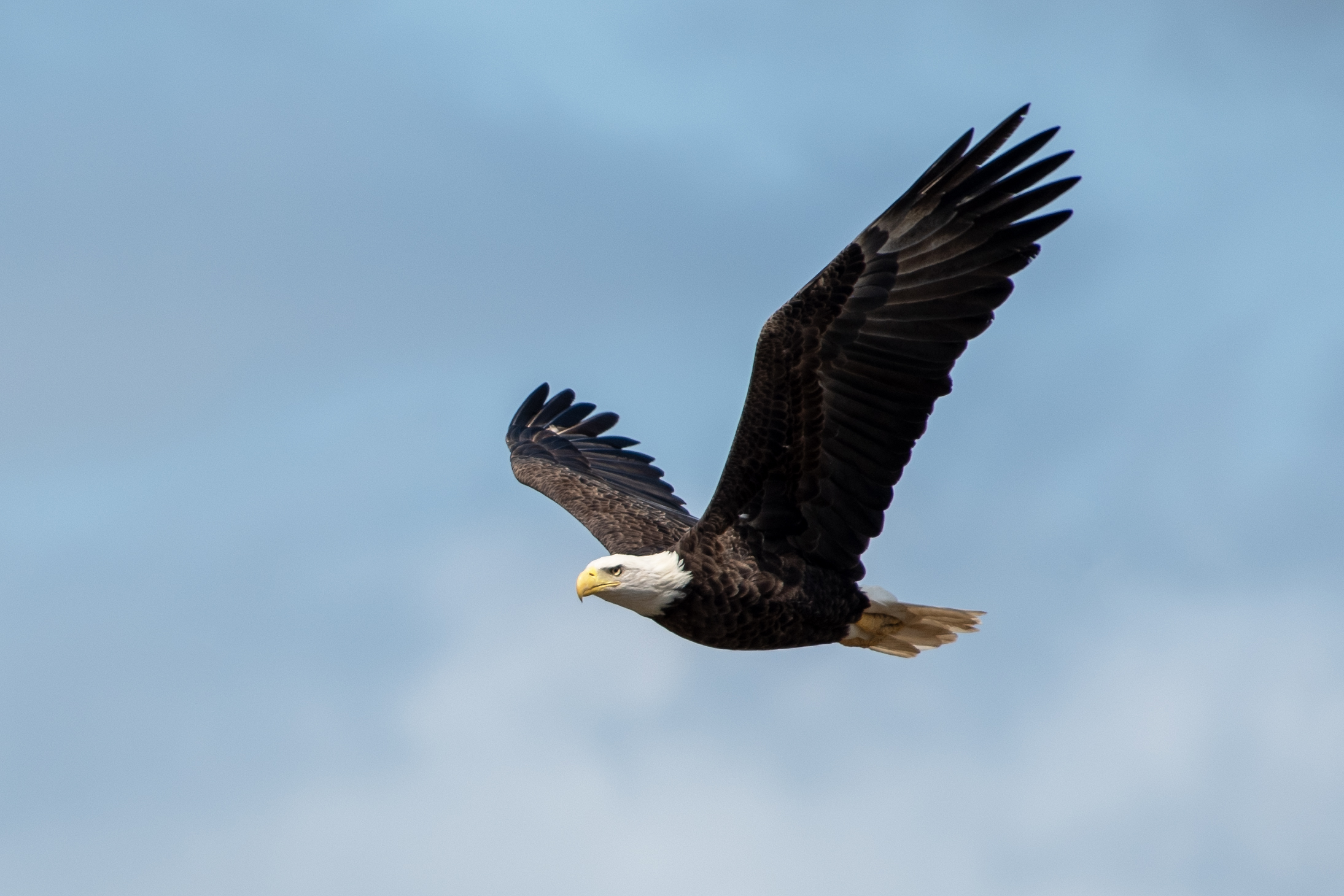
Bald Eagle
Wingspan: 6.5 feet (204 cm)
.
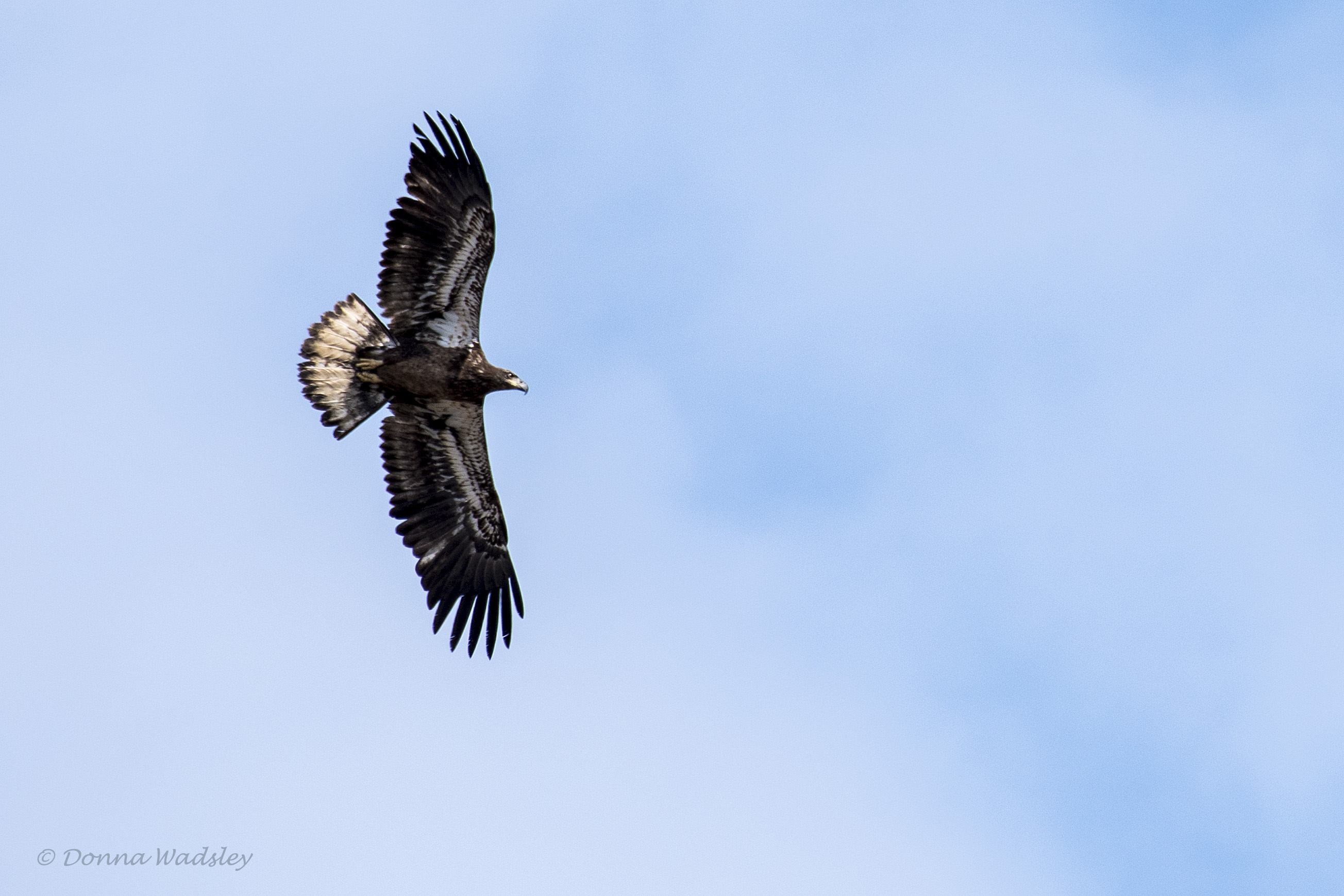
Bald Eagle (immature)
Wingspan: 6.5 feet (204 cm)
.

Northern Harrier (male)
Wingspan: 3-4 feet (102-118 cm)
.

Red-tailed Hawk
Wingspan: 3.5-4 feet (144-133 cm)
.

Cooper’s Hawk
Wingspan: 2-3 feet (62-90 cm)
.
Great Cormorants
Although I’ve seen a Great Cormorant through a scope atop a lighthouse in the Chesapeake Bay, and photographed it as a silhouetted dot for my records, having the luck and opportunity to see two at Indian River Inlet very close was very exciting!
Spotted by another club member, a pair was perched on a channel marker out in the ocean. As I went from scope to camera, one went in flight.
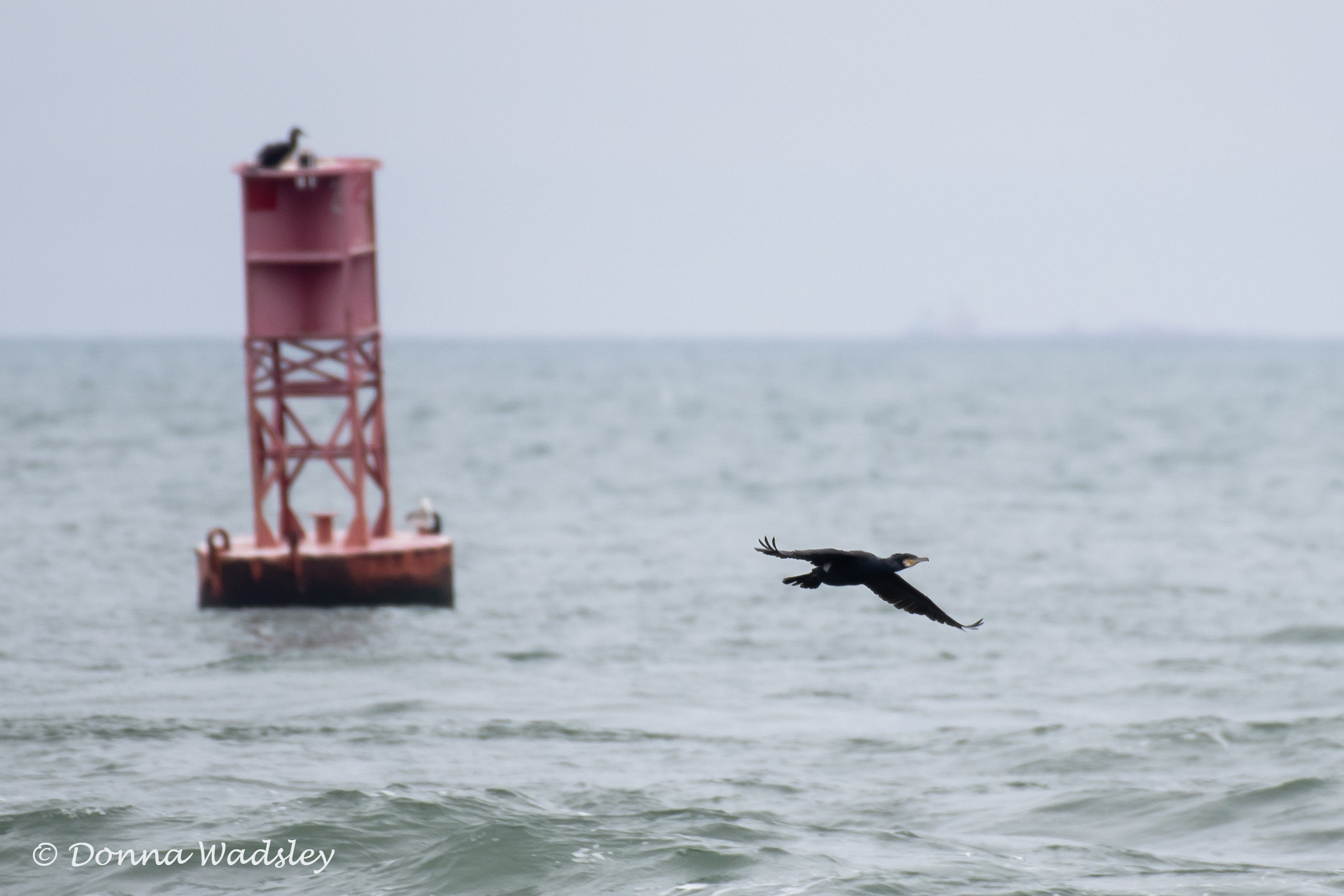
North American Great Cormorants
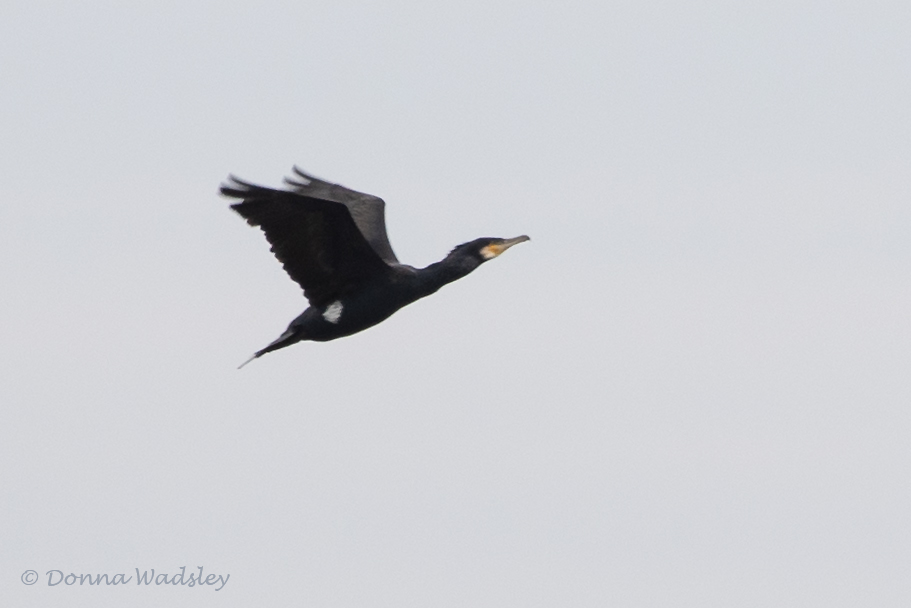
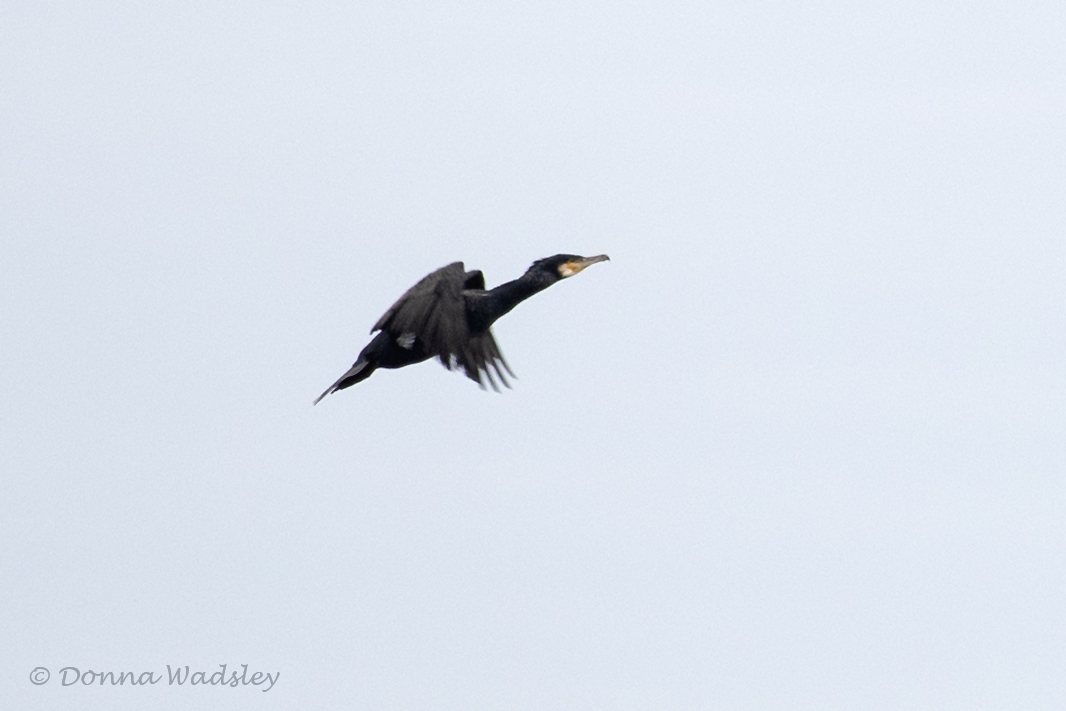
The Great Cormorant flew towards us to the top of the jetty watch tower at the inlet’s entrance and perched.
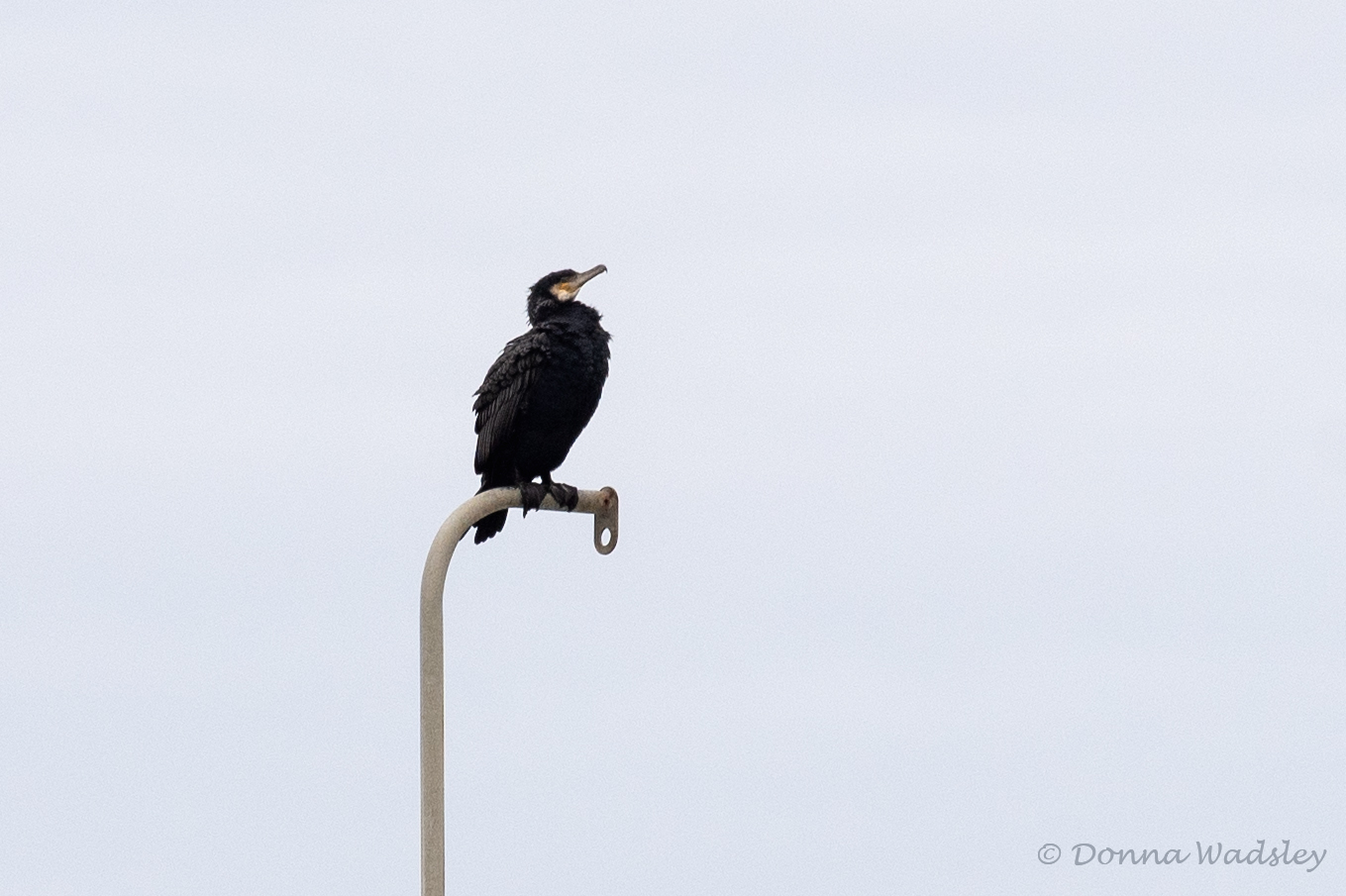
Great Cormorant
A couple minutes later, the second one followed. Once comfortably perched, it let out a call of confirmation.
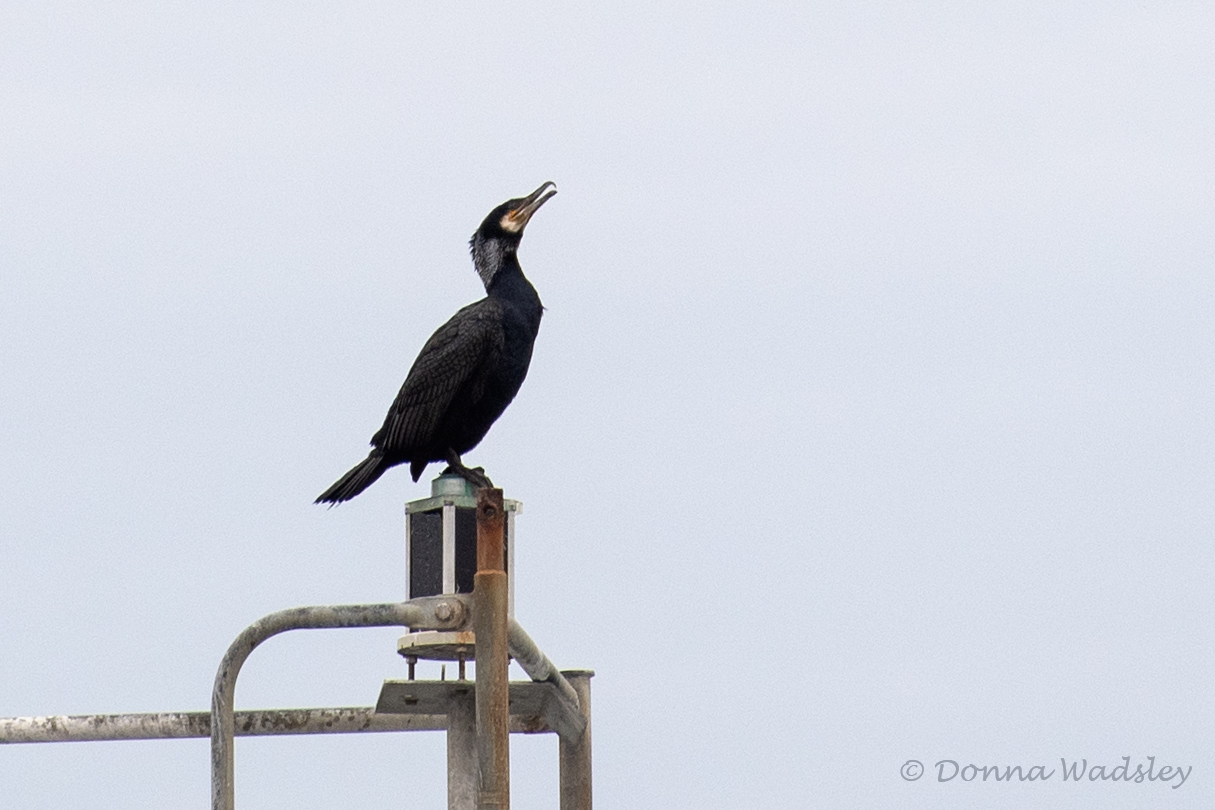
Great Cormorant

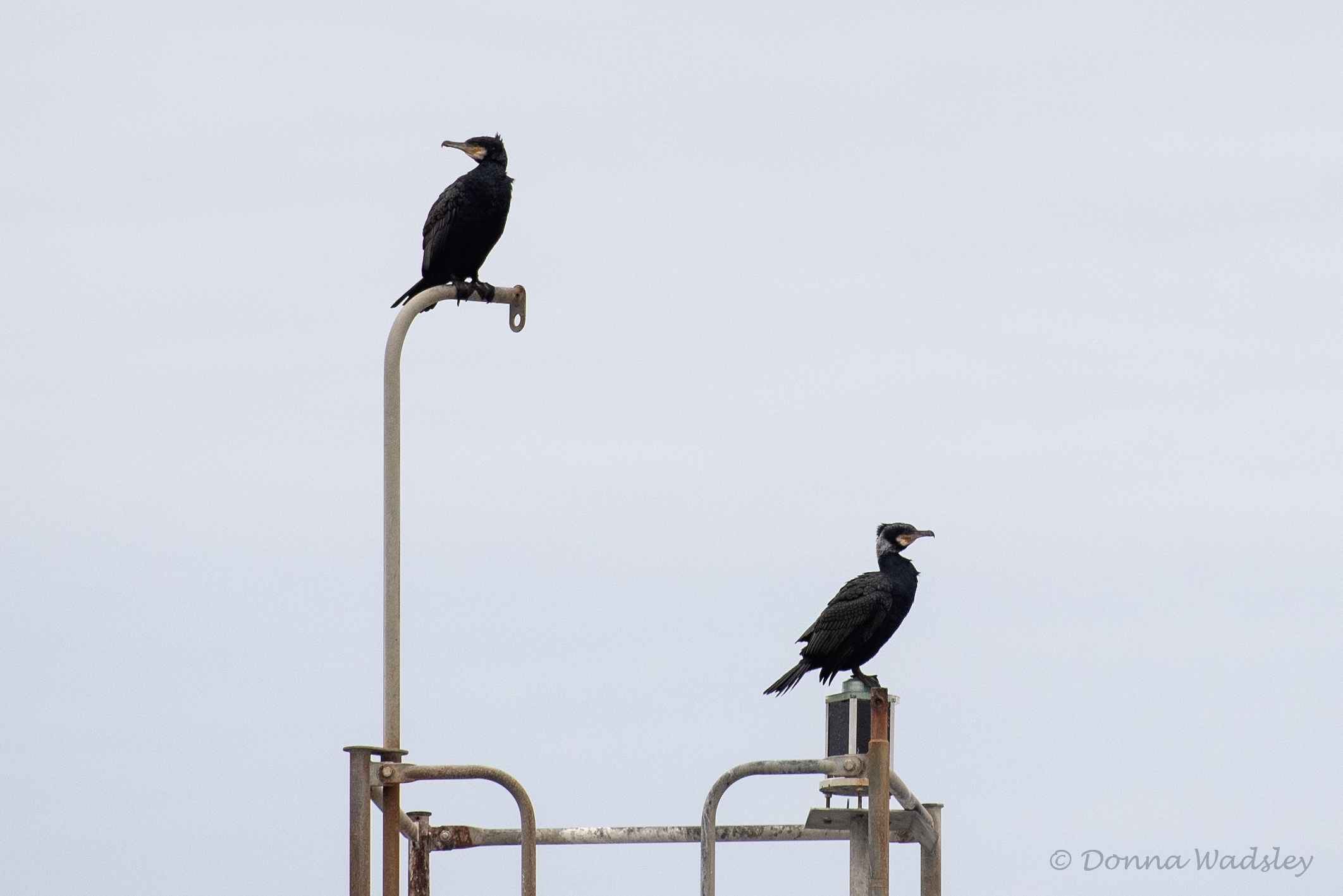
Our North American Great Cormorants primarily breed in the far northeast United States, Canada, and Greenland. They are a short distance migrant and show up along the Atlantic coastline during the winter.
Writing this post, I learned there are actually a total of seven subspecies of the Great Cormorant. Six other subspecies are in Eurasia, Africa, and Australia; they are smaller and differ in breeding plumage adornments, underparts pattern, and back sheen color to our North American version.
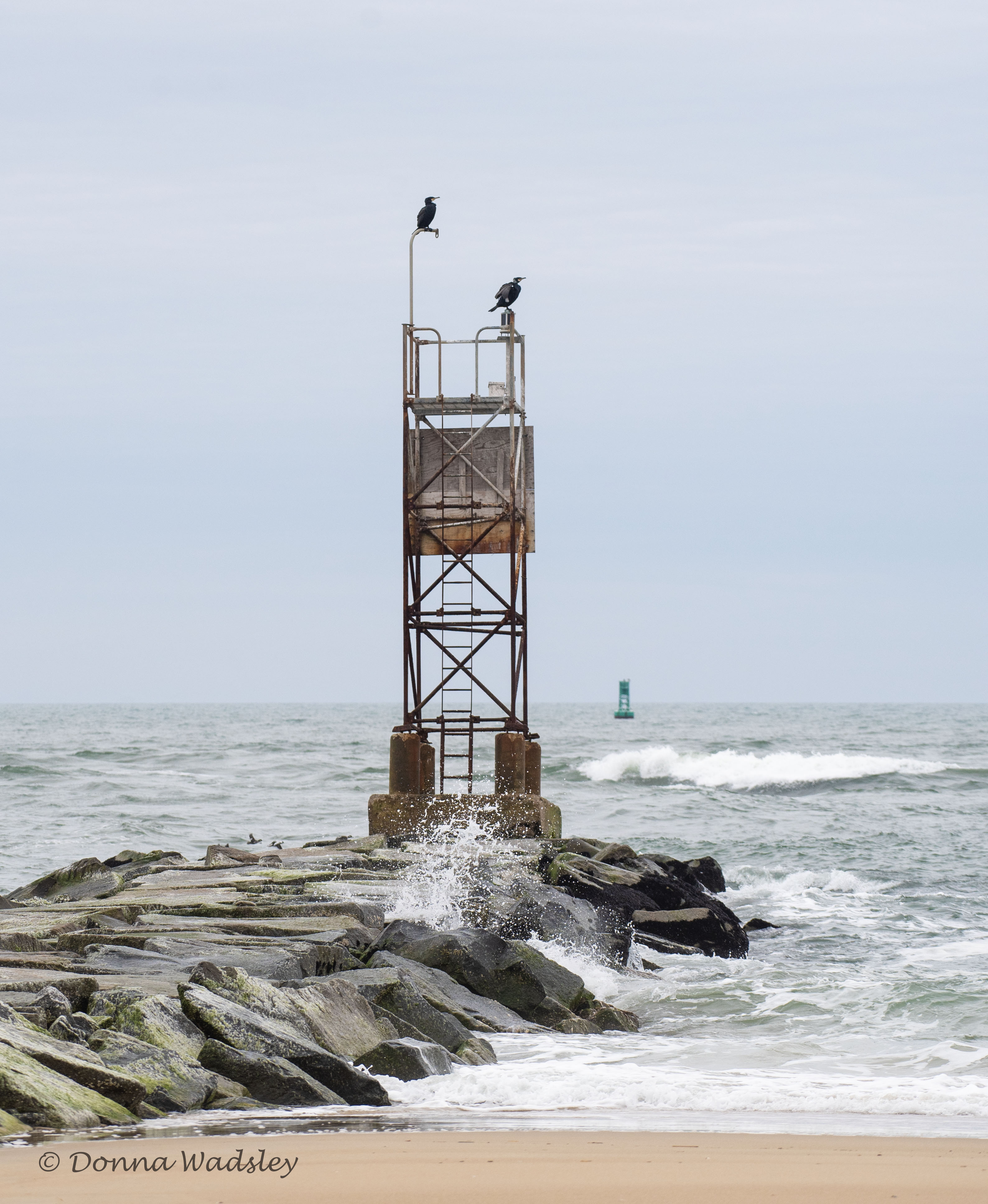
Great Cormorants – The Big Scene
.
Birding at Indian River Inlet
Continuing from my previous post on birding the Atlantic coast, the radar showed we had less than two hours before the rain would start. We still had to travel north from Maryland’s Ocean City Inlet to Delaware’s Indian River Inlet, and the drive itself was 20-30 minutes.
Arriving and setting up scopes, the sight was almost overwhelming, with ducks fishing in the inlet, as well as an estimated 1,200 Scoters bobbing up and down out in the Atlantic Ocean. 😲
But first, we couldn’t help but marvel at the many Scoters, Buffleheads, and 20+ Long-tailed Ducks right out in front of us. Those male Long-tails are such beauties! I got so many photos of them, here’s just three.
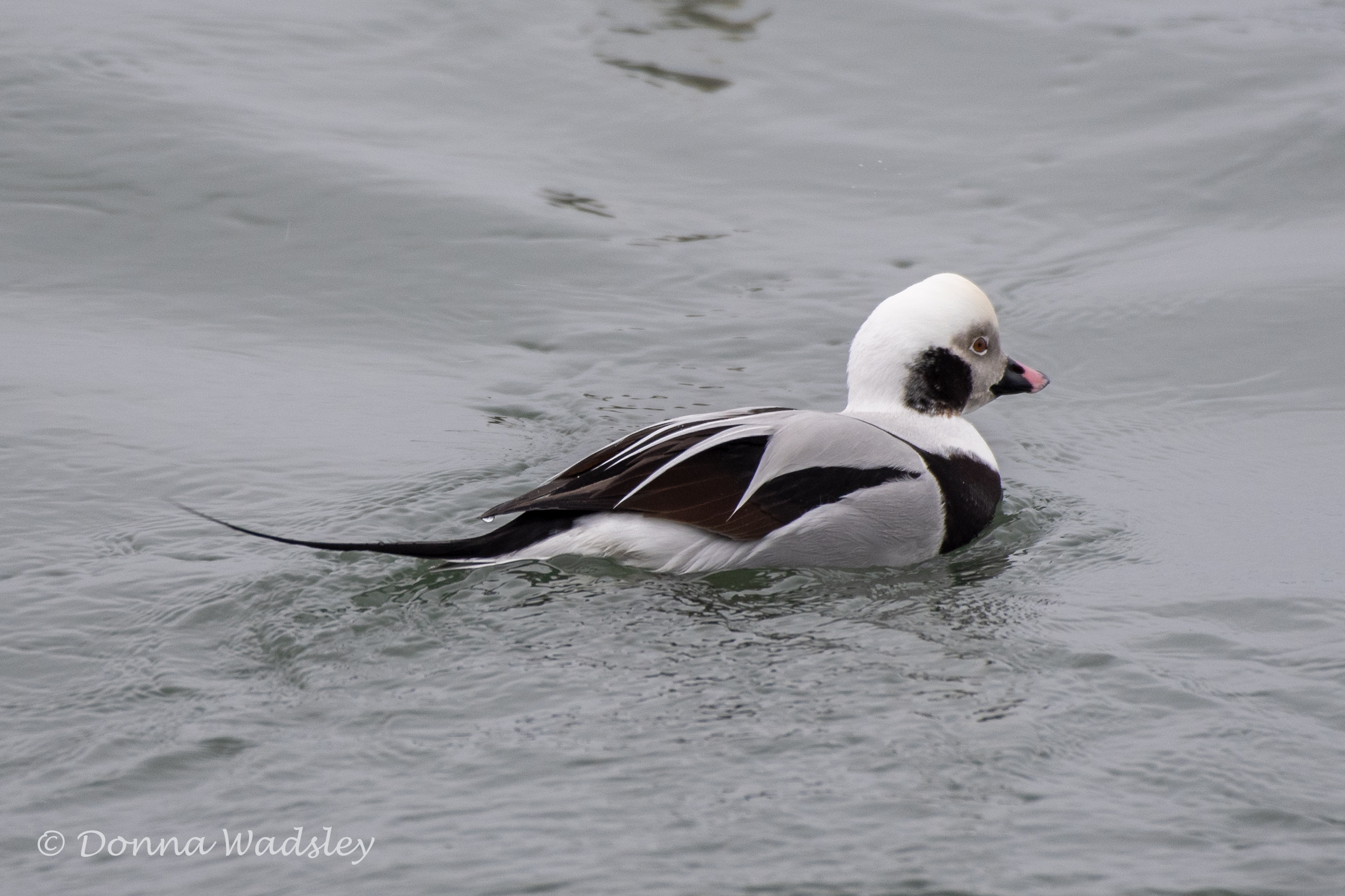
Long-tailed Duck (male)
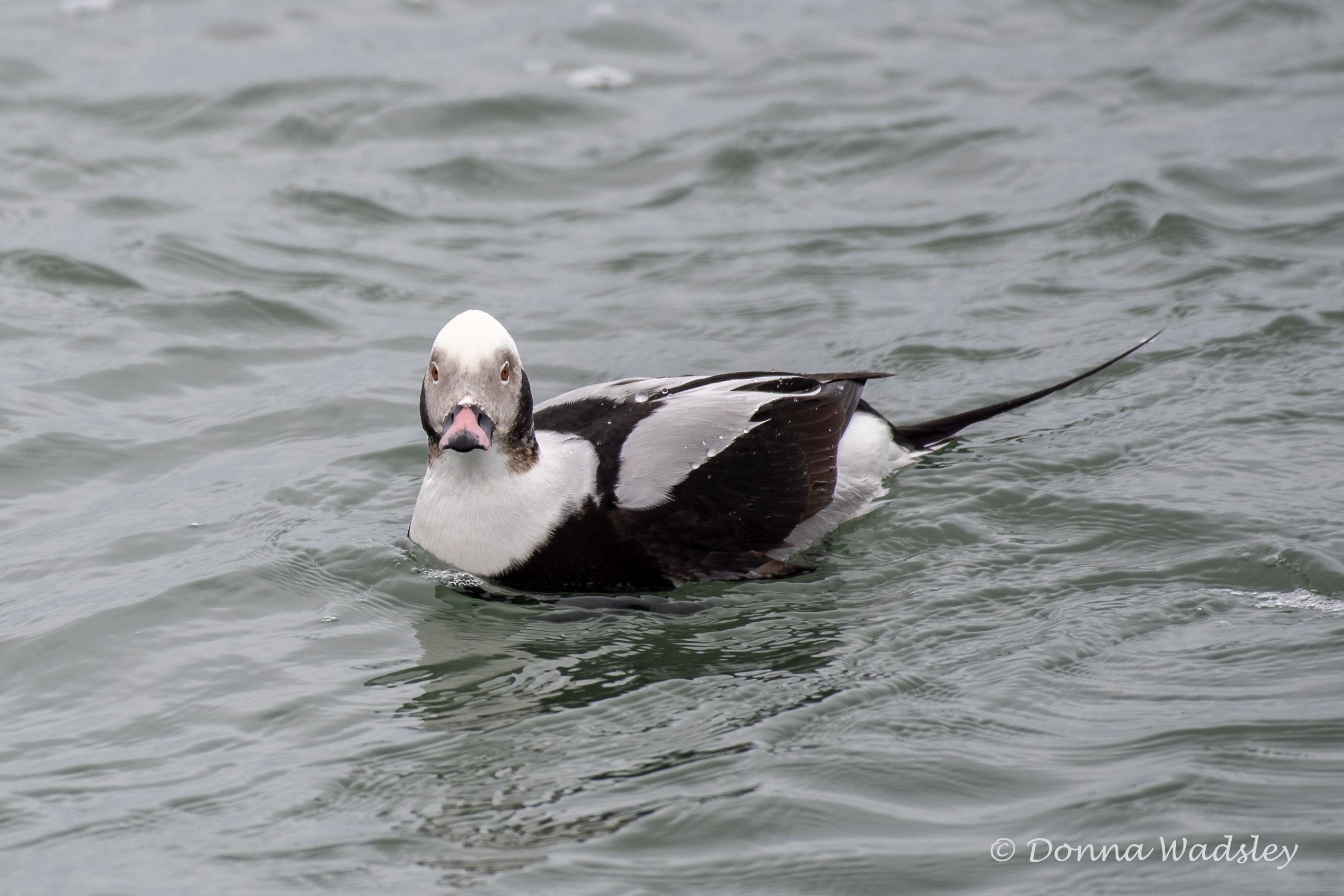

Long-tailed Duck (female)
Reminder to ourselves, the rain was coming. We stopped the marveling/counting and got busy with our scopes. Could there be another duck species out in the ocean, mixed in that long, thick raft of 1,200 Scoters?
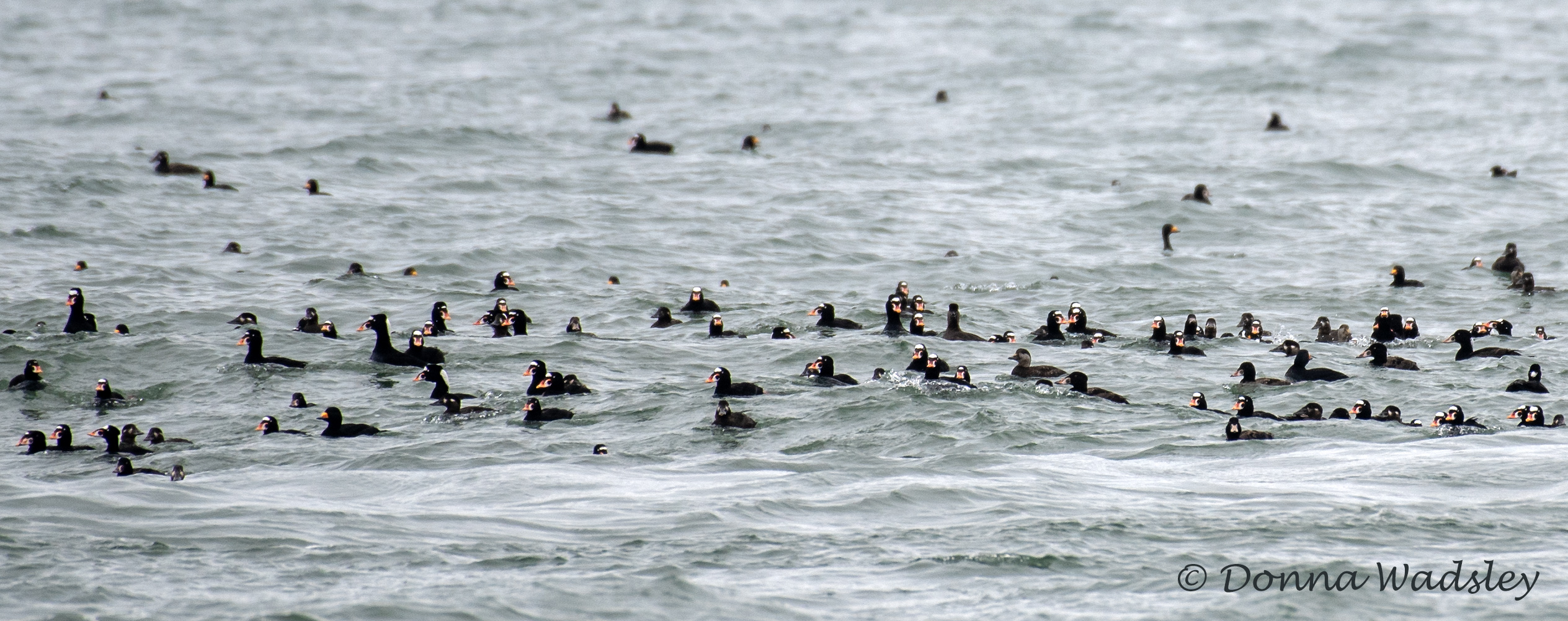
Surf Scoters

Black Scoters
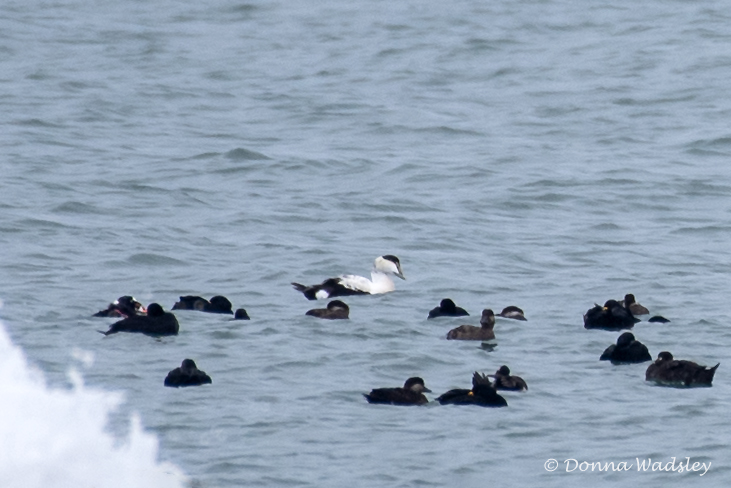
Yay, I spotted and called out a Common Eider, nice!
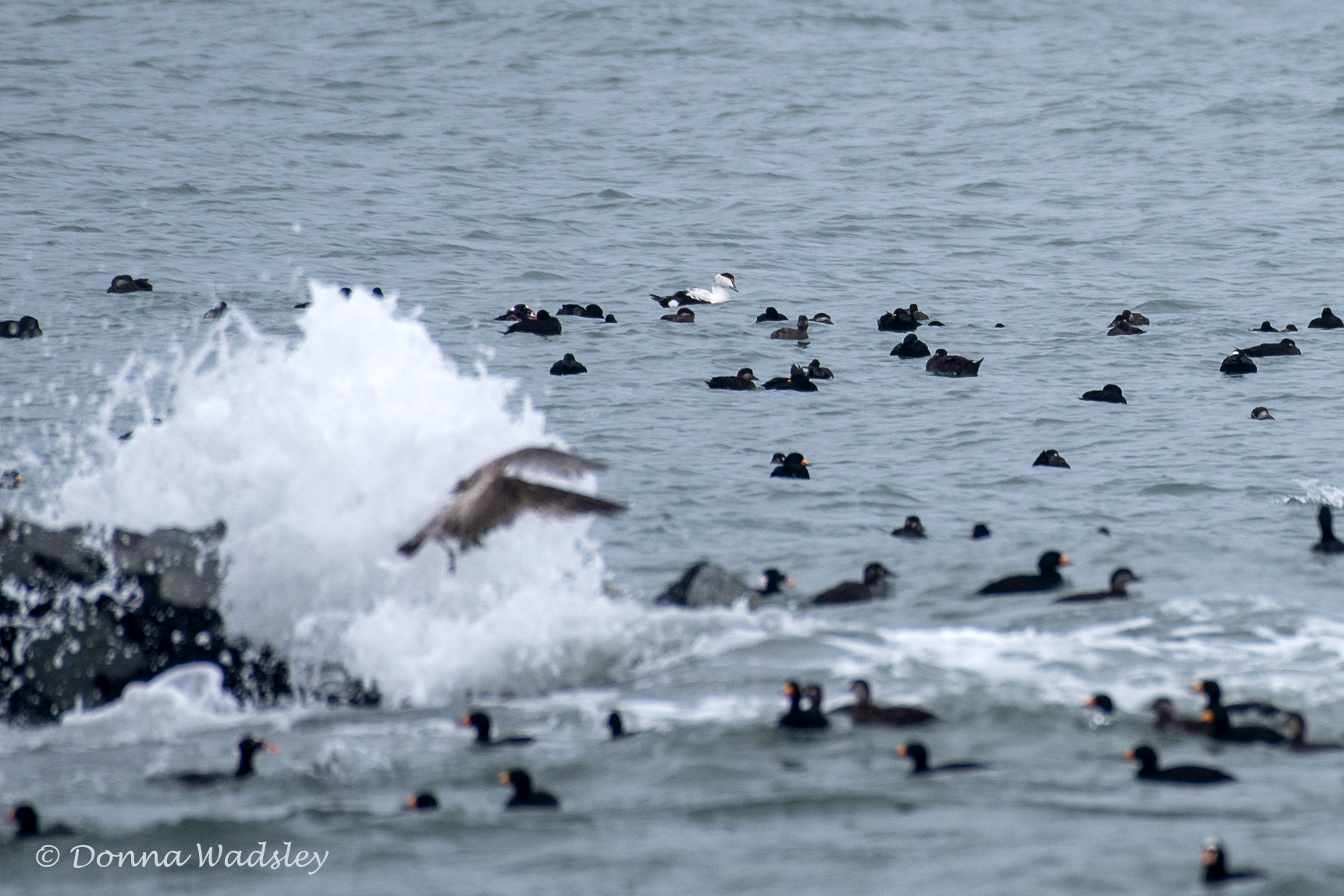
Common Eider resting in the back of the long raft of Scoters
Seeing nothing else, I started scoping the inlet’s entire length of rocks on the other side, looking for shorebirds.
Three Brants caught my eye, making their way across the inlet further inland. Click!
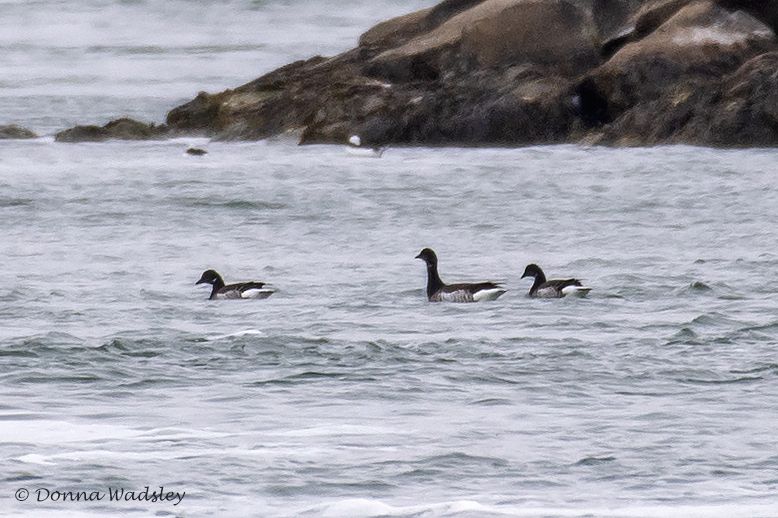
Brants
I continued scoping.
And then suddenly I spotted four Harlequin Ducks perched on those rocks. Woohoo a second lifer today! 🤗💃😊 The club members were excited too!
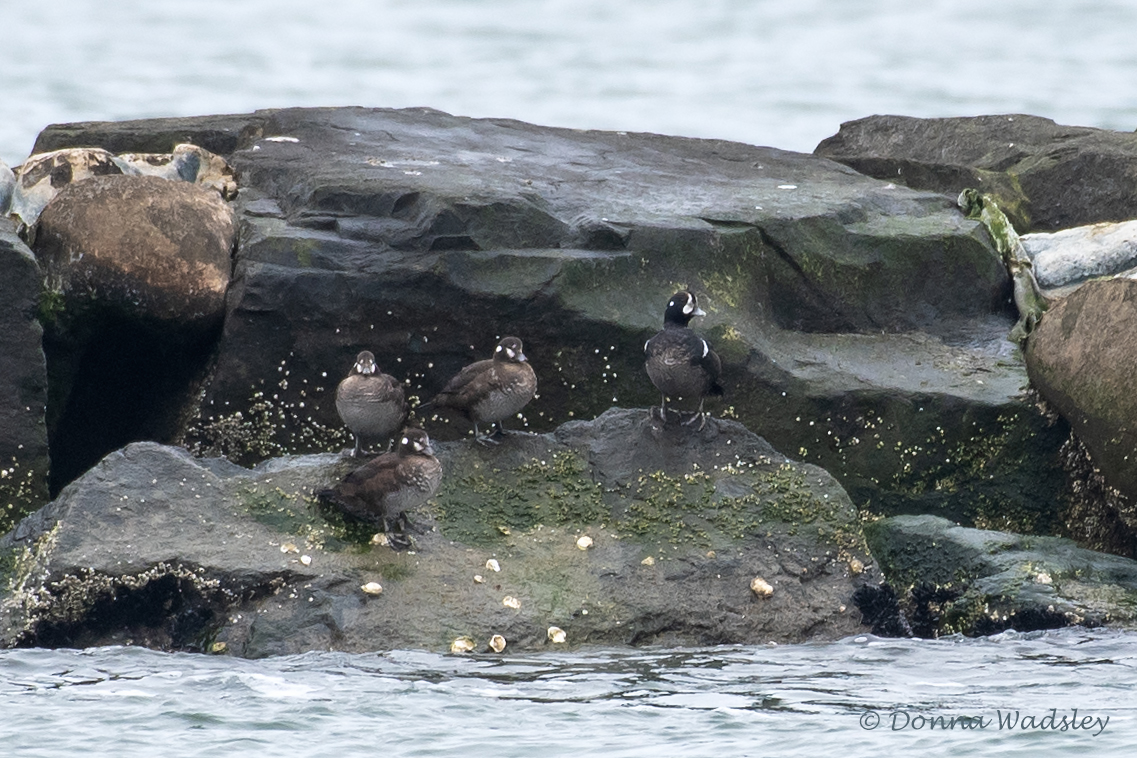
Harlequin Ducks – Lifer #318
(male on right with three females)
Alas, no shorebirds found, but I’ll take those Harlequins!!
The winds were picking up and it felt like rain was impending….. a few more photos.
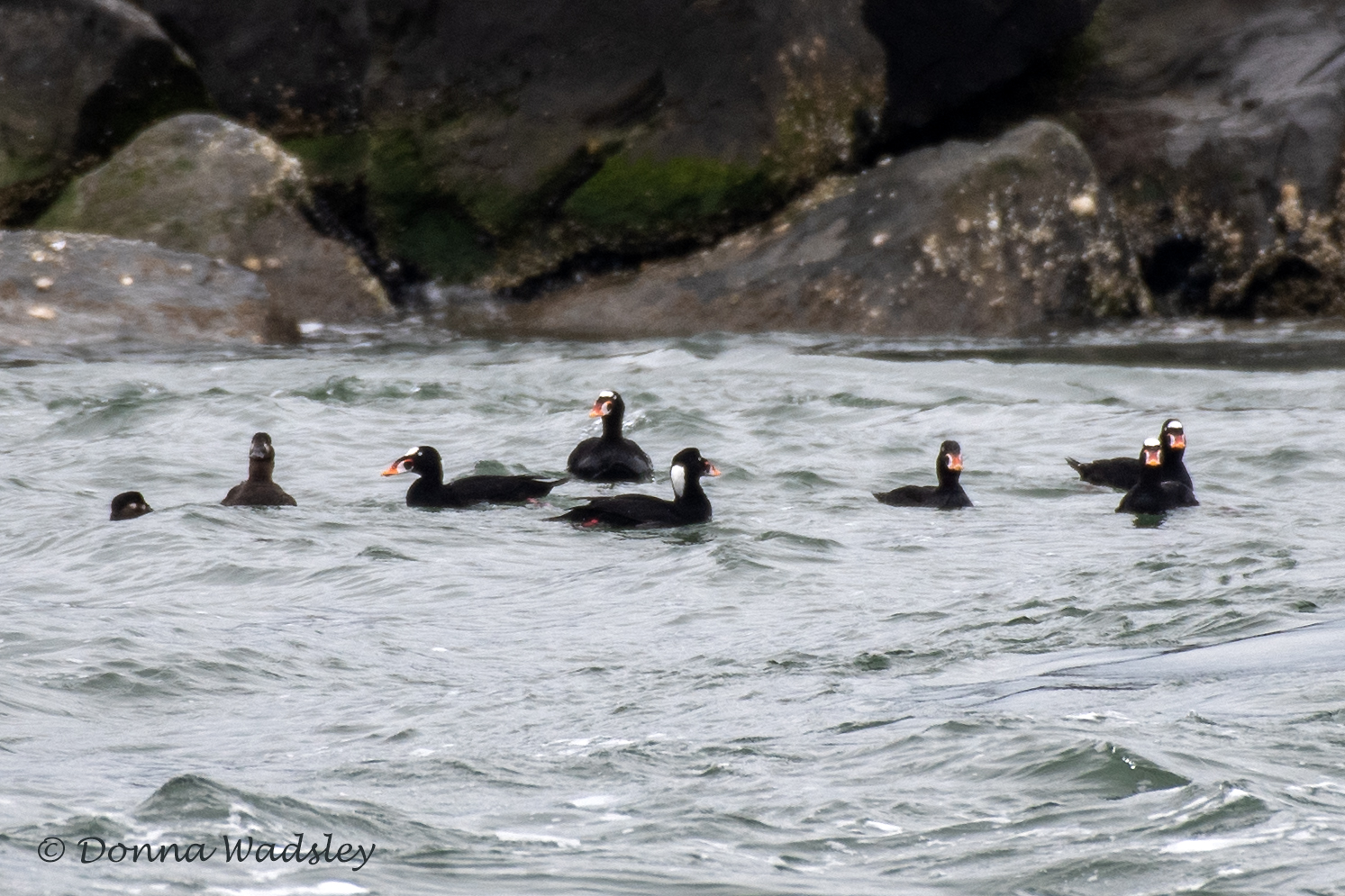
Surf Scoters
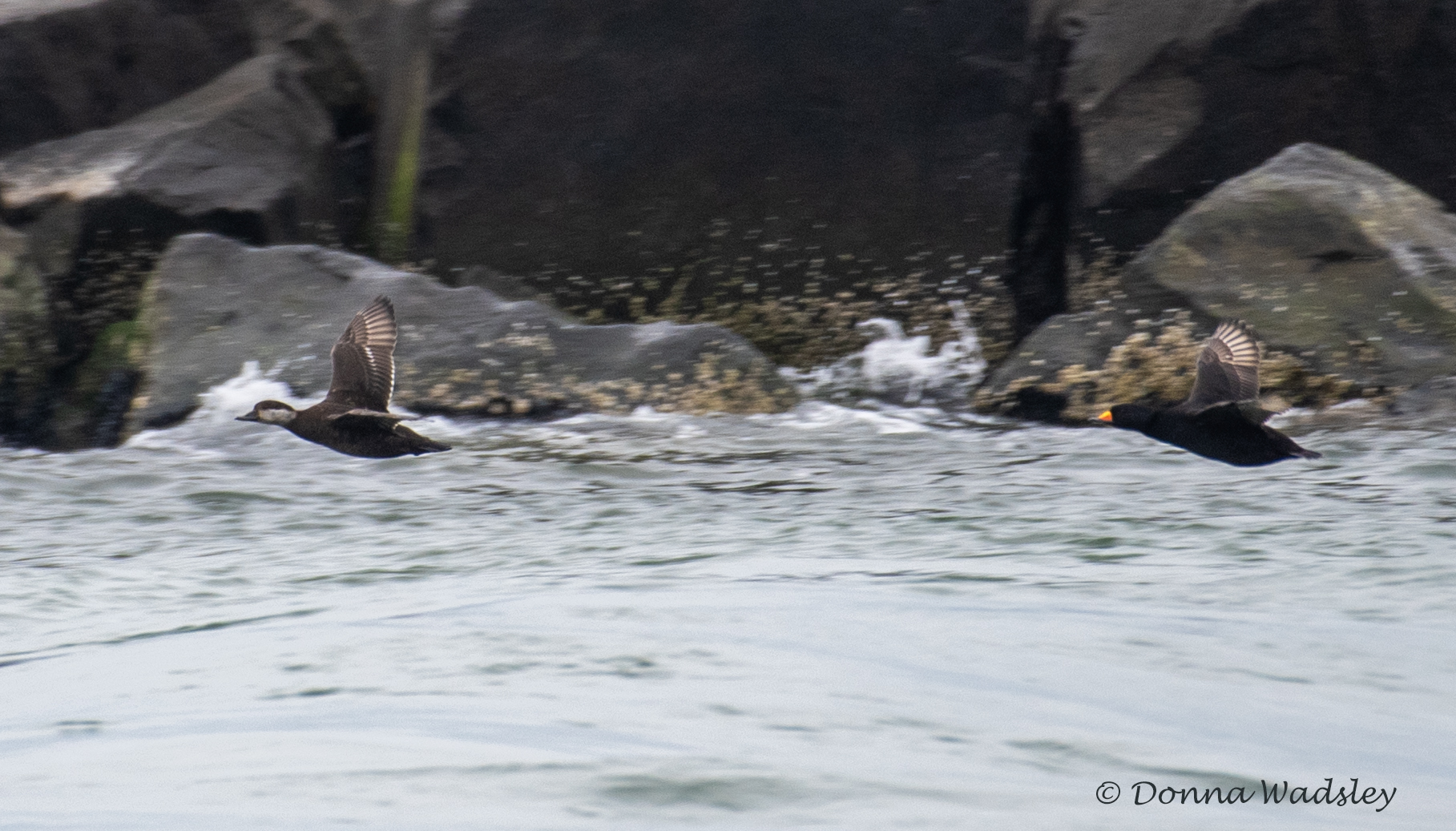
Black Scoters
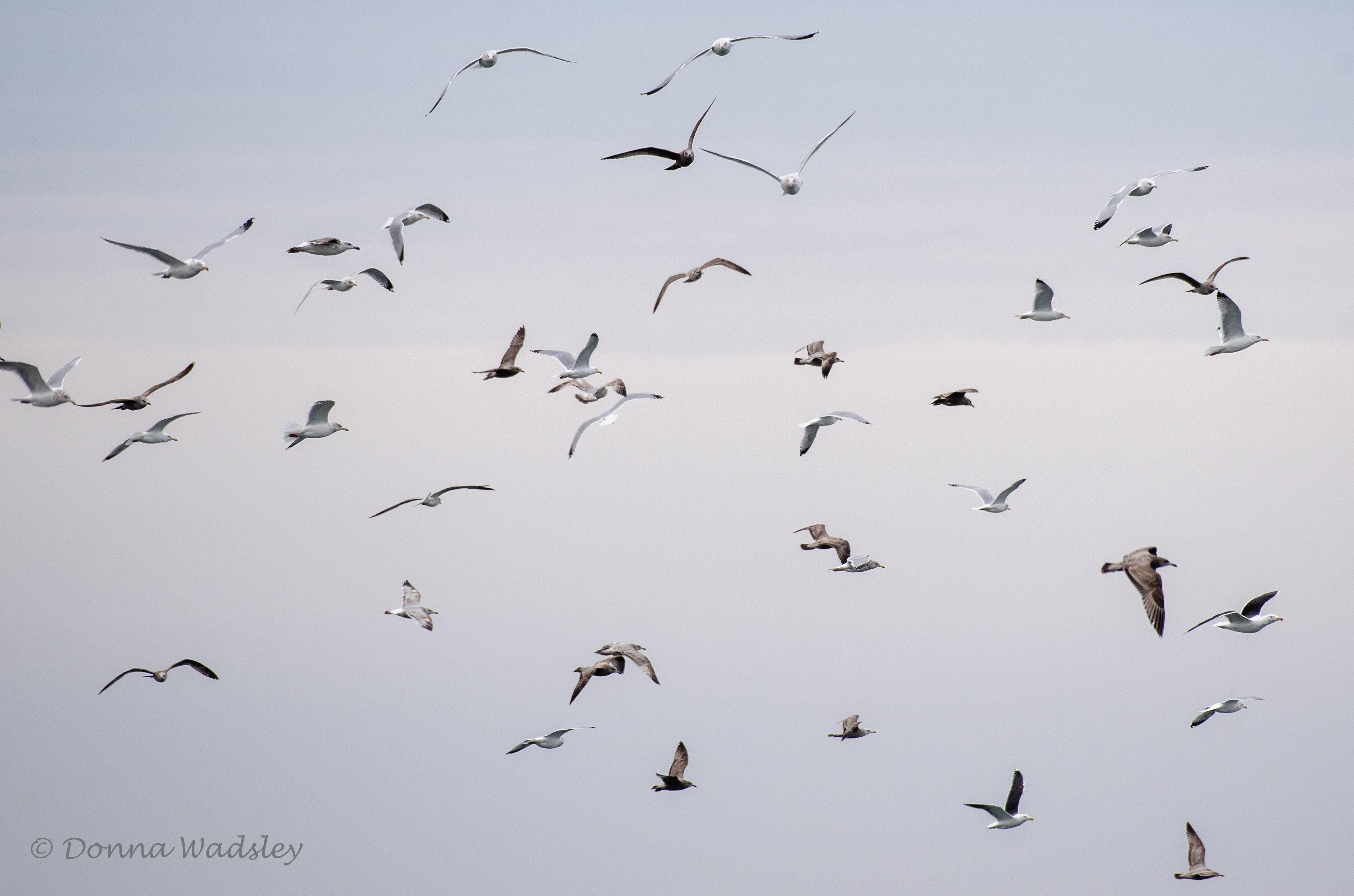
Ring-billed, American Herring, Great Black-backed, and Lesser-Black-backed Gulls
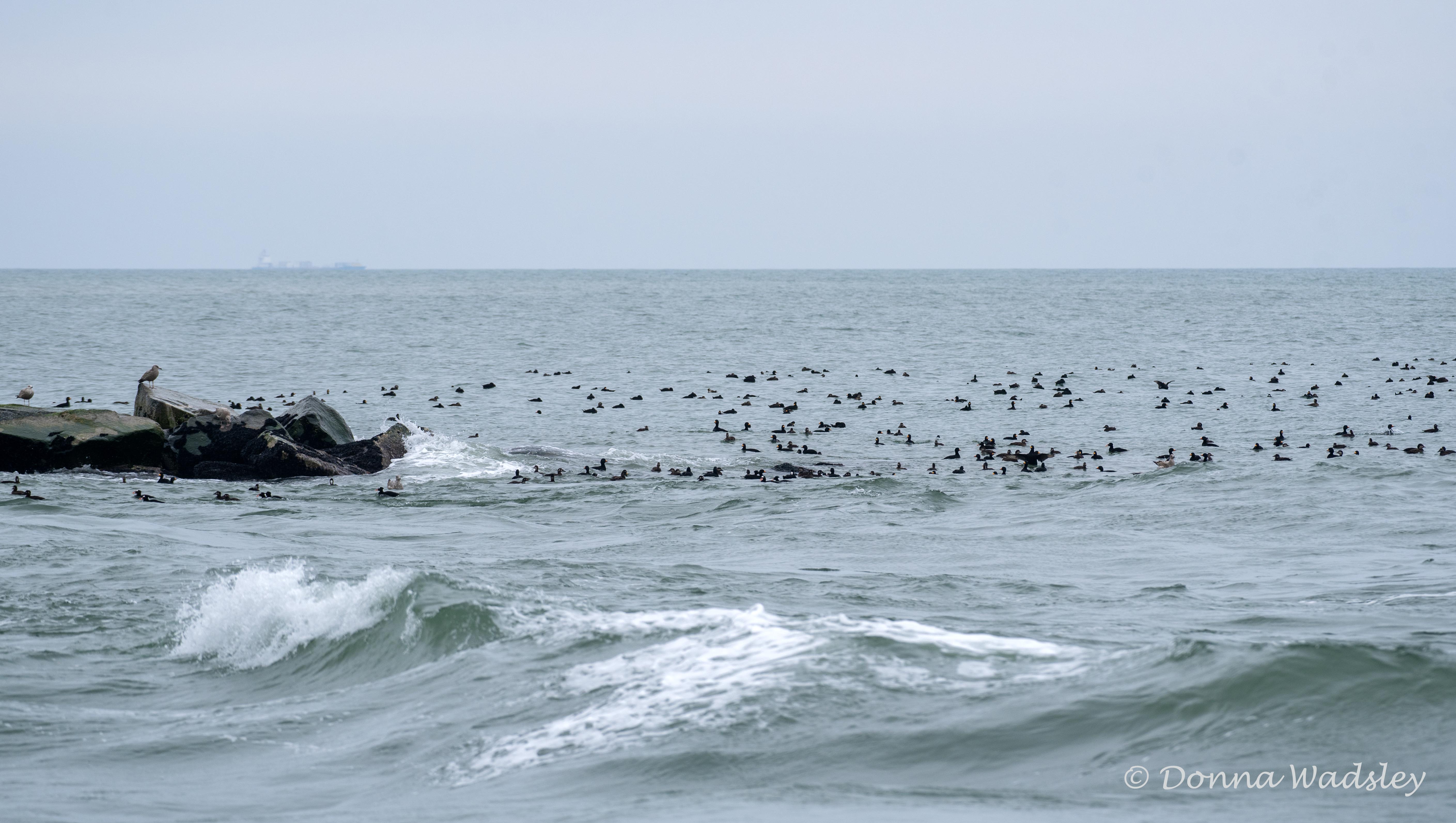
A portion of the big scene, looking out to the Atlantic Ocean
Can’t help myself….one more Long-tailed Duck!
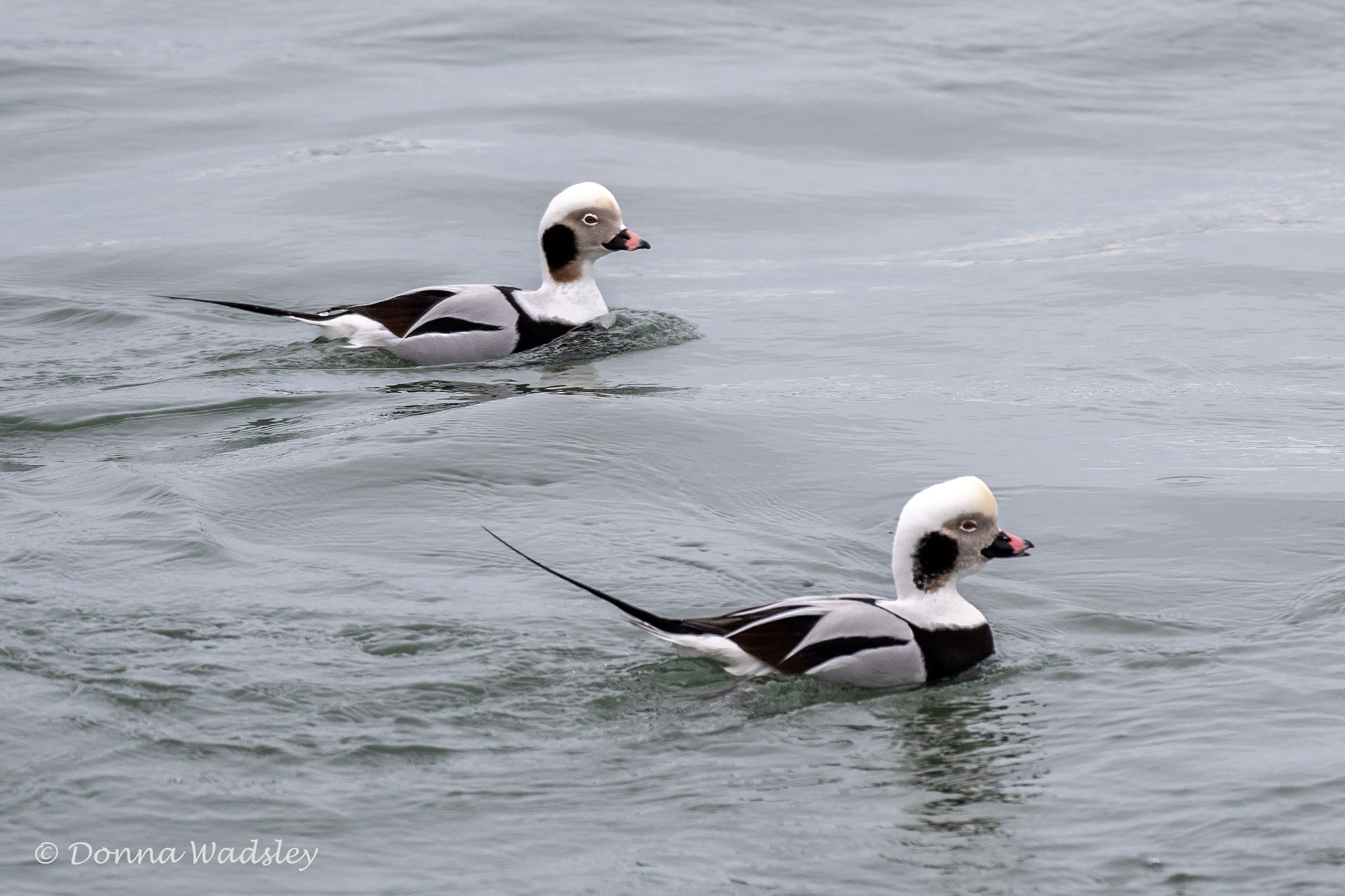
Long-tailed Ducks (males)
The grackle loudly announced, “It’s starting to rain!”
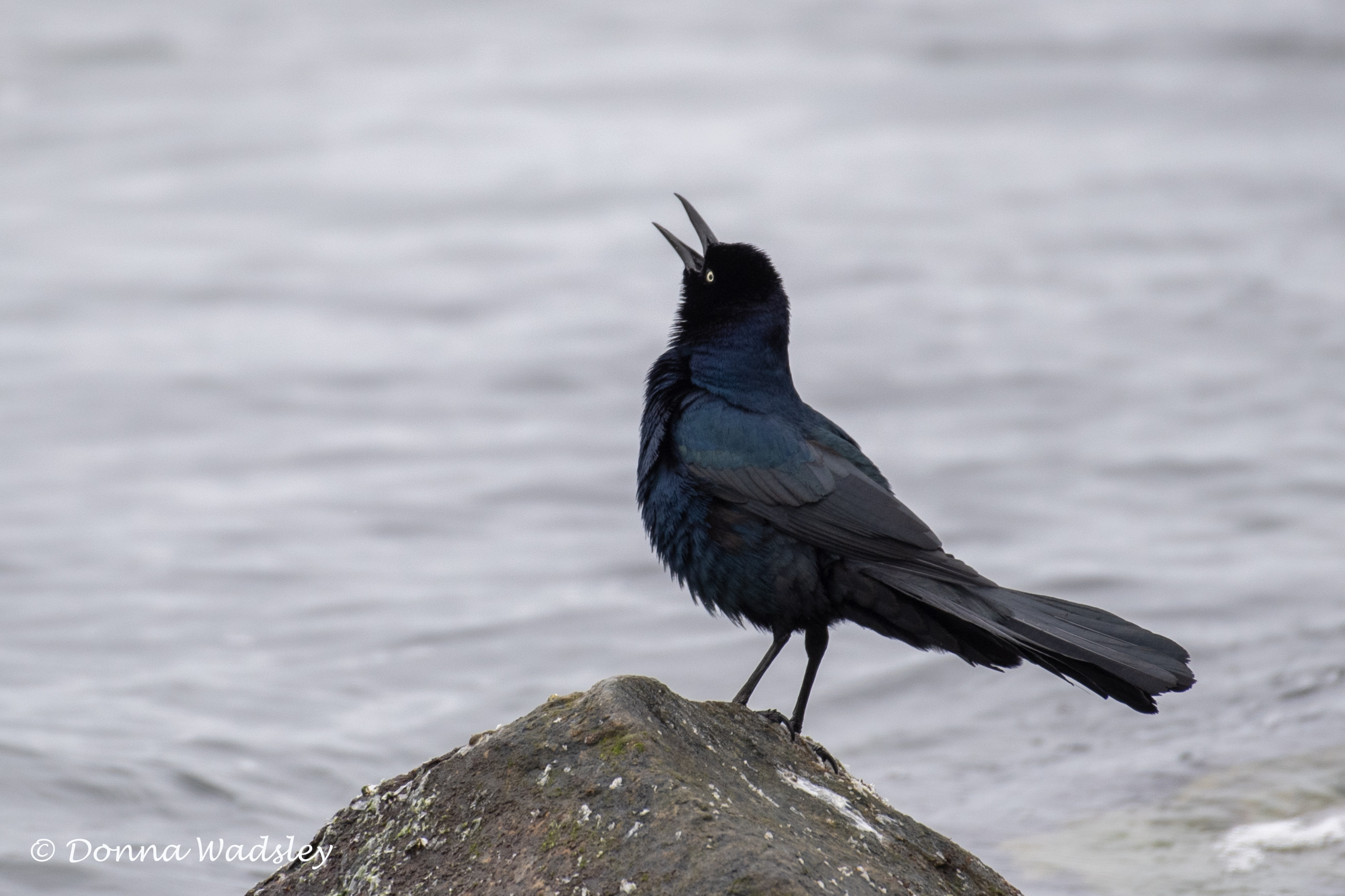
Boat-tailed Grackle (male)
We quickly packed up our gear and ran for our vehicles, all done with big smiles and a thank you to Mother Nature for holding off the rain just long enough for us to enjoy this birding bonanza!
Bird Alert – There is one bird I did not share in this post, the Great Cormorant. I’ve seen/photographed poor photos of one at a great distance atop a lighthouse; but the day’s opportunity at this inlet afforded much closer shots for my records, and I got quite a few. Next post!
.
Birding the Inlet at Ocean City, Maryland
I spent this past Saturday birding two Atlantic Ocean coastal inlets with the bird club. It was windy and cold, and rain was due by mid-afternoon.
We started at the inlet at Ocean City, Maryland. There we found small numbers of Scoters, Buffleheads, Common and Red-throated Loons, Red-breasted Mergansers, and Long-tailed Ducks. With our scopes, we could see the Razorbills, nice. We had hoped for a Dovekie sighting but no luck on that one.
Getting focused photos were difficult with the winds, but I did manage a few. This first photo was important…. a lifer!
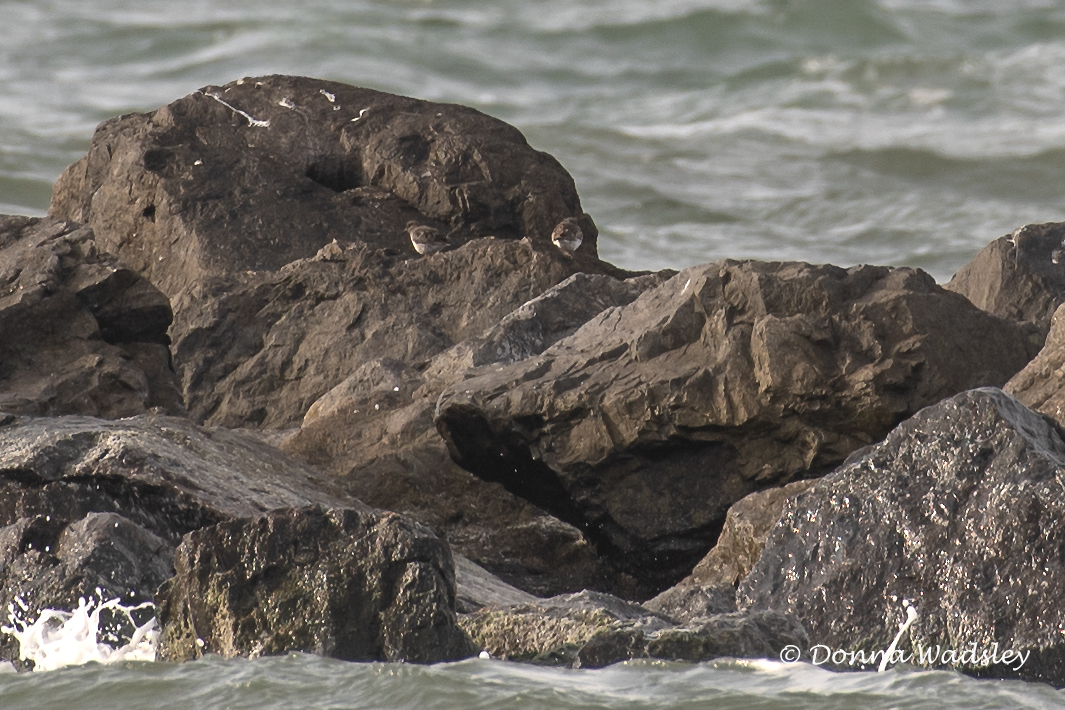
Purple Sandpipers, waaaay on the other side of the inlet, but there they are! – Lifer #317
.

Sanderling
.
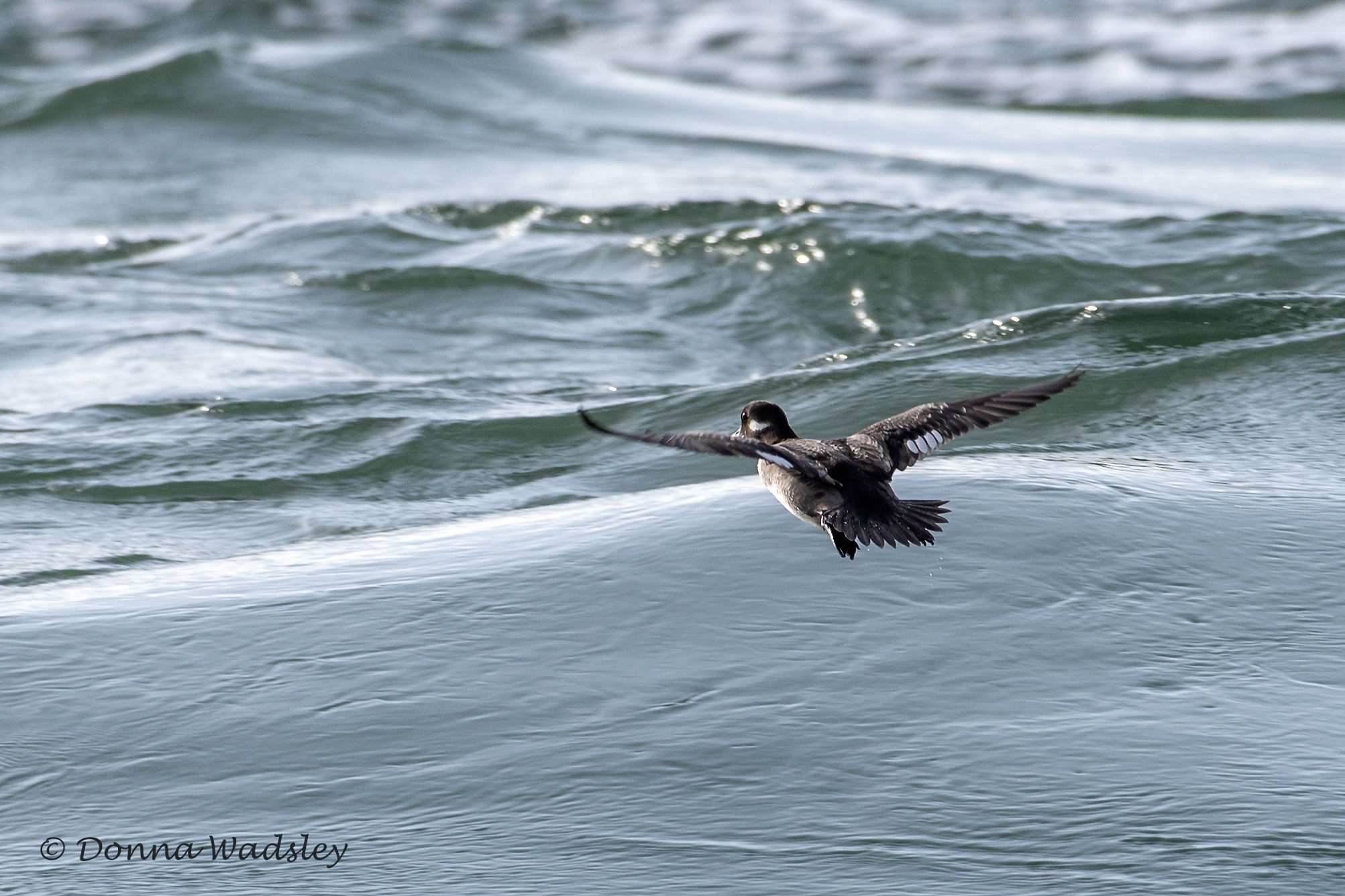
Bufflehead (female)
.

White-winged Scoters
.
We left the inlet and before heading to the second one, we made a stop at Ocean City’s Rt. 50W causeway, to scope Skimmer Island. I got a few shots there.
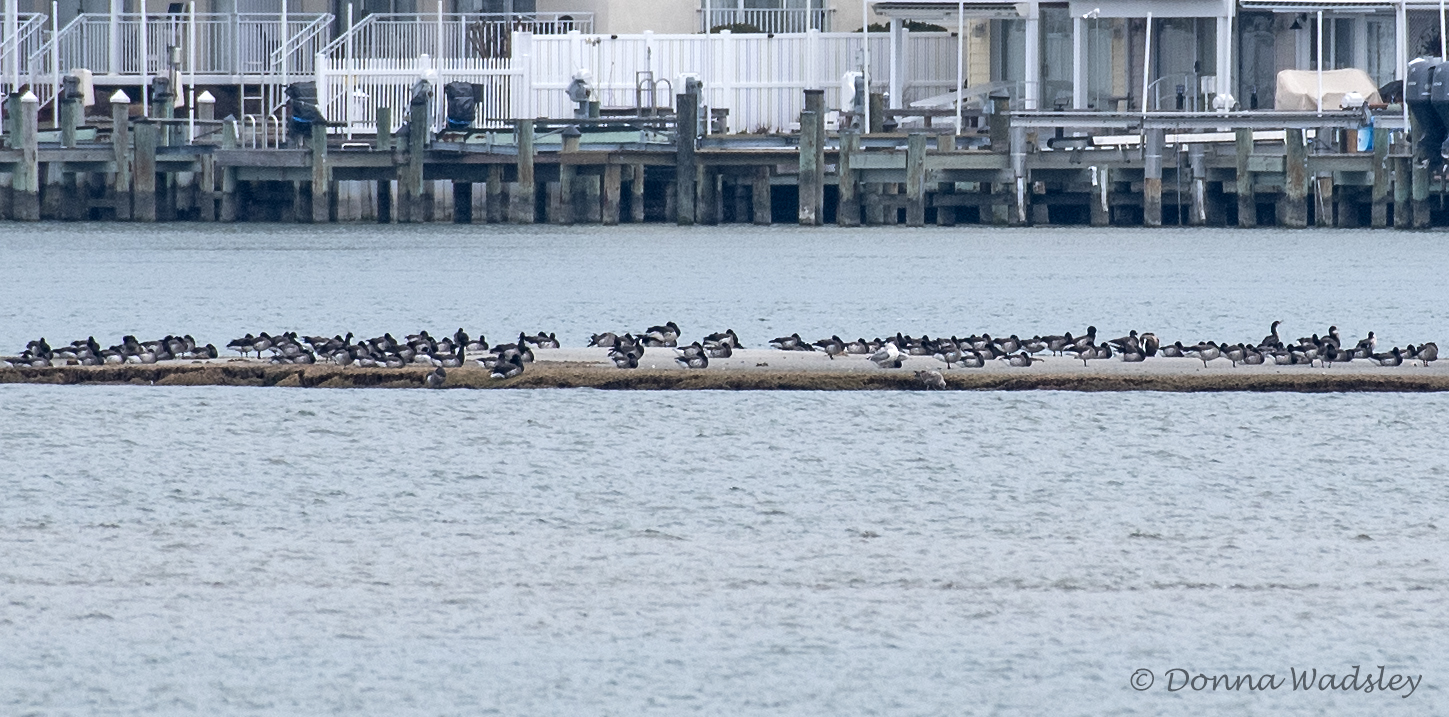
Brants (total was 150+)
.

Bufflehead (female)
.

Bald Eagle
.
And then we made a quick stop at a strip mall’s water management pond known for Black-Crowned Night Herons to see if they were there. They were, eight of them!
.

Black-crowned Night Heron (adult)
.
As one parent watched from the tree, others circled over us in flight. It was quite thrilling!
.

Black-crowned Night Heron (immature)
.
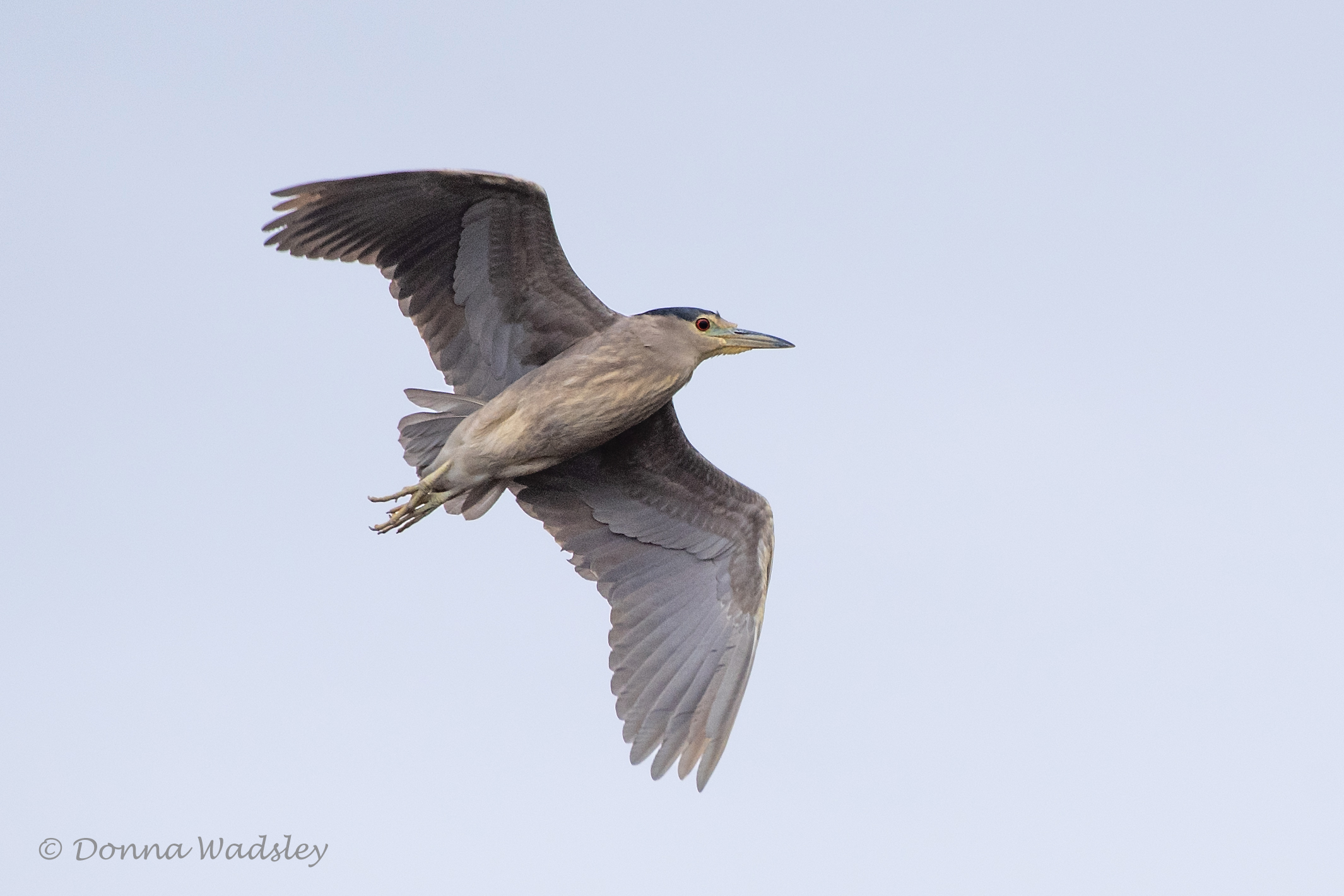
Black-crowned Night Heron (immature)
.

Black-crowned Night Heron (adult)
.
With Elliott’s Pond next door, we quickly finished up with all the ducks and birds there.
At this point and time, we had a half hour drive and rain to start in 2-3 hours. We jumped in our vehicles and got moving, heading to Indian River Inlet, for what was to be a thrilling birding bonanza! More to come….
.
Birds at Blackwater NWR
After leaving those gorgeous Great Blue Herons on Middle Hoopers Island last Sunday, heading back home luckily passes back through vast marsh remoteness that includes Blackwater National Wildlife Refuge. Although there wasn’t much in bird activity, I did manage to get a few photos I liked passing along the way.

Northern Pintail
.

Snow Geese (both white and blue morph) with a few Northern Pintails in the mix
.

Bald Eagle
.

Bald Eagle nest at the end of the auto wildlife drive
.

Bald Eagle
.

Northern Harrier
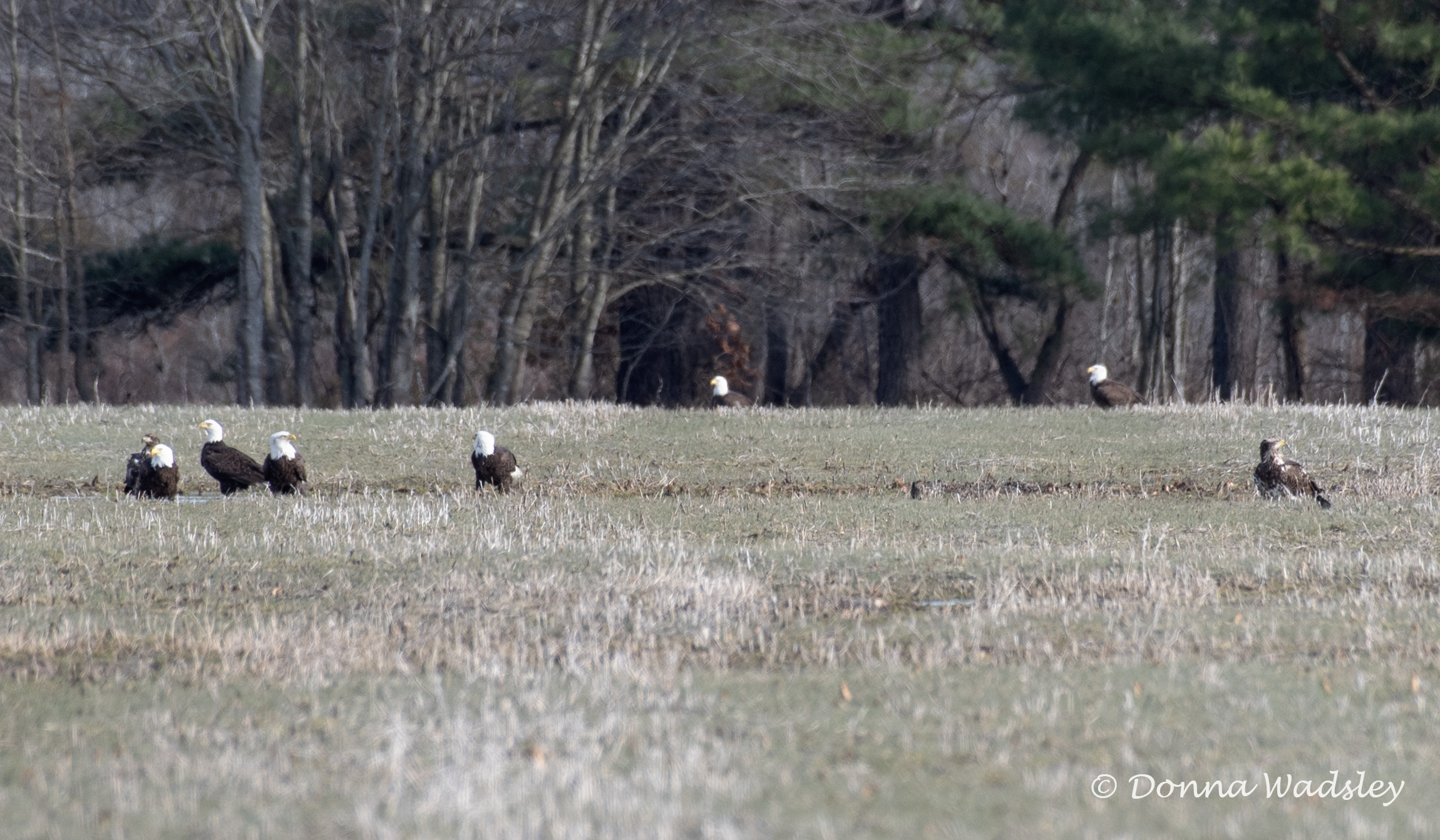
And I’ll end with this amazing encounter of eight Bald Eagles, grouped together at a field puddle.

 Bay Photos by Donna