
Comparing Bird Couples – #2
With some birds, it appears there’s almost no way of telling which is male and female by looks alone. Some may have just slight, maybe hardly noticeable differences. And for others, it’s quite obvious between the two sexes. The reasons for this are simple.
The male and female of a bird species that looks different (sexual dimorphism) is because of their mating, behavior, and survival pressures. The males develop bright plumage and songs to attract females and fight rivals, while females are drab for camouflage while nesting and brooding. These birds usually do not mate for life.
Bird species where both sexes look alike (monomorphism) often share high nesting duties with nest building, incubating eggs and protecting territory as well as hunting, making camouflage equally important for both sexes. They will also mate for life.
When birds sexes do look different, we often associate the bird with the male’s look and gorgeous coloring. Learning the females can be difficult sometimes as they look no way near like their mate. However, when they look alike, learning what is the slight difference that tells you it’s a female is the ID key.
Compare for yourself!


Northern Cardinals
(male left, female right)


Red-bellied Woodpeckers
(male has red on head/nape, female only on nape)
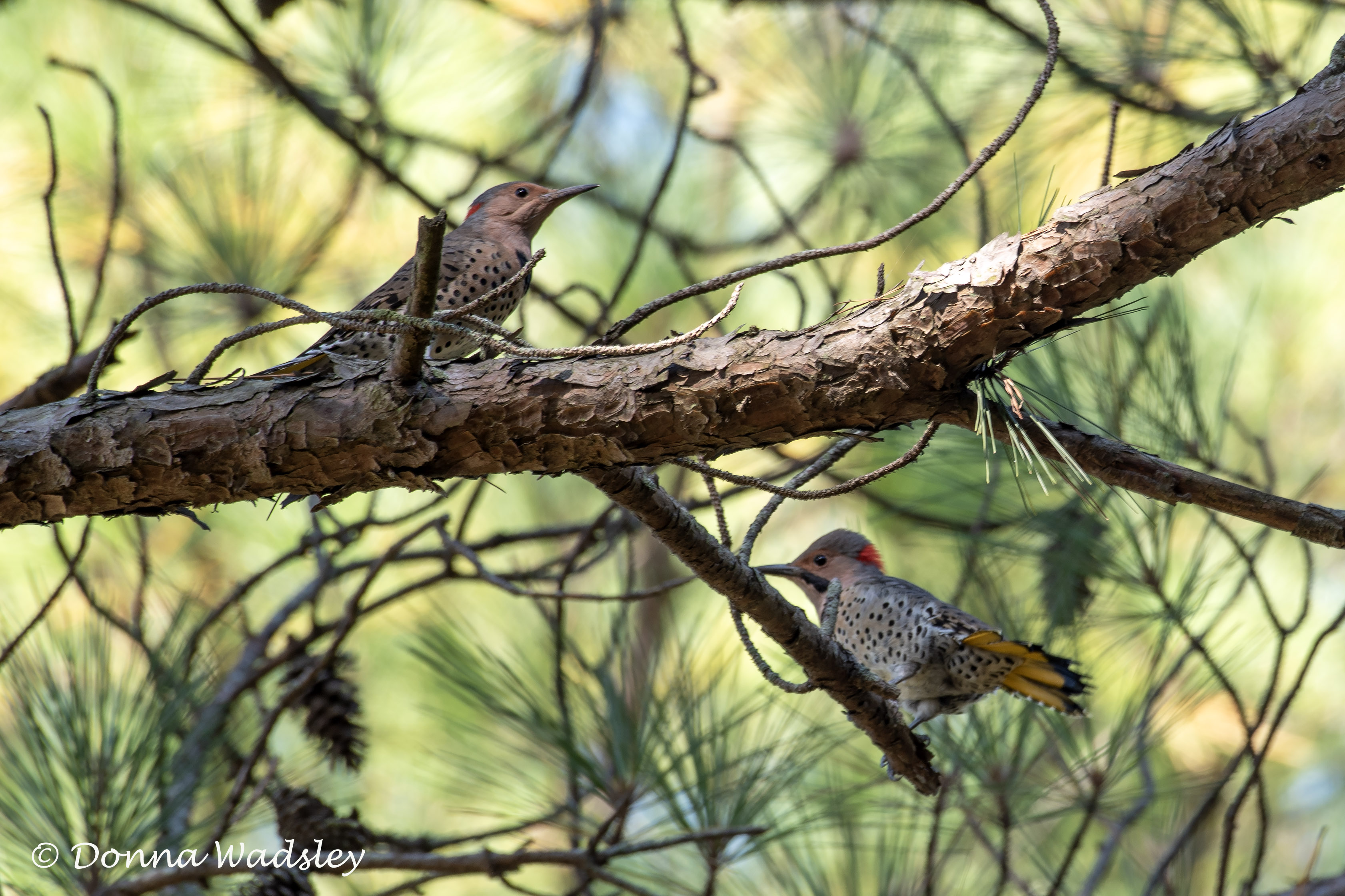
Northern Flickers, Yellow-shafted
(male has black ‘mustache’, female not)


Eastern Towhee, Red-eyed
(male on left, female on right)
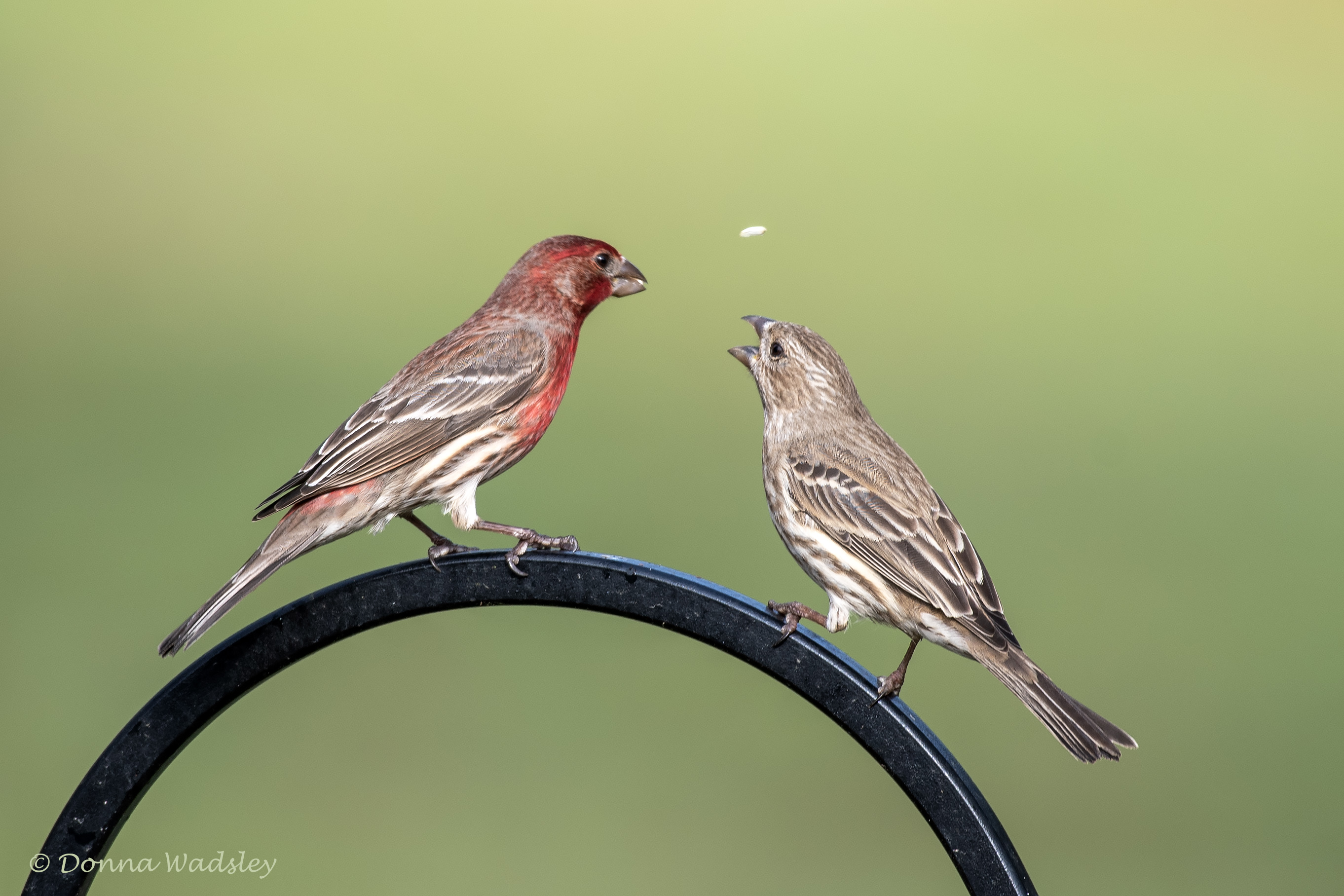
House Finches
(male on left, female on right)
 Bay Photos by Donna
Excellent comparisons, Donna!
Thank you, Bruce!
Great photos and info, Donna. I learned something new! 👍🏼
Thank you, Eliza! 🙌😊🙌
Interesting to learn that birds that look alike mate for life. Lovely comparison photos!
Thank you, Belinda! When I learned the bird look-alike/mate for life, I kept thinking, what about….then what about….and it works out as always true! 😊
Very beautiful
Thank you!
How fascinating that male and female birds who look different do not usually mate for life while the ones who do look alike are lifelong partners!
I’ve been reading An Immense World: How Animal Senses Reveal the Hidden Realms Around Us by Ed Yong. He notes that scientists have discovered that many male and female birds that look the same to us have ultra-violet light patterns in their feathers that make them look different to each other, including barn swallows and mockingbirds. Their eyes can see UV light.
PS – Love that house finch couple!
Are the House Finch couple so sweet, I was thrilled with that shot!! 😊 Thank you, Barbara!
It is fascinating! I’ve tried to think of all kinds of different birds and it is true.
That sounds like a very interesting book, Barbara! I read different things about how birds see UV light and their feathers with the UV reflecting. It is all fascinating for sure! I just wrote down the book/author to search for to buy, thank you for sharing it!
Very interesting post. The pictures are quite telling. I still struggle with the identification of female or juvenile as they can be so different from the male which is the one we normally see on the bird apps. You need to dig a bit more to find the image of the female or juvenile. (Suzanne)
Thank you, Suzanne! I learned my common bird sexes but the migrants that breeze through in the spring I find the females more harder to distinguish. And the fall is the worse, with the juveniles in the mix, I still struggle with them.
Interesting article. This closing photo is wonderful!
Thank you! The House Finch couple sharing a snack! 😊
Fabulous couple photos
Thank you, Sheree!
Thank you. I learned something new I never knew!
You’re welcome, Sandy! 😊
I enjoyed the last photo of the two house finches. I’m not sure if the female was about to snatch that white thing in the air or if she was chewing out the male just for fun. Ha!
😂 You made me giggle! The male had tossed her a seed and she did catch it! Now had I edited the photo and removed the seed, it would surely look like she was chewing him out!! 😂 Now I want to edit and save it that for a “funny” photo!
Nice series, Donna! Your Northern Flicker image is particularly striking!
Thank you, Ellen! The pair of flickers were courting, it was sweet!
An informative post Donna with some lovely avian images as examples.
Thank you, Ashley!
If this had been a test I would have failed but I am much more educated now. Thanks, Donna. 😉
You’re welcome, Pepper! 😉
I don’t see as many of these birds here in SE Michigan, so thank you for the tutorial Donna. I see a lot of Robins and Blue Jays and I can’t tell them apart except when if the female’s feathers are bedraggled from in the nest or going through shrubbery to get to the nest to feed them. I had Cardinals nest in my barberry bush one year and the nest was not well made and it was very cold that May s I thought she was still incubating the eggs, sinc I didn’t see when they first built the nest), but all the time, she was warming the chicks. Then during the day, she go in and out of that thorny bush with food – her feathers were so ragged by the time they fledge and they left for good. I enjoyed watching them (probably too much as they didn’t return the following year).
The past couple weeks I’ve been watching my cardinals in my yard, trying to figure where they are all nesting. There’s at least five pairs and they all have their fly direction to and from the feeders, so I’m close in figuring out the bush or thicket location! I hope a pair of them or another bird find your backyard perfect for their nesting this Spring!