
A Sandhill Crane and A Pair of Red-winged Blackbirds
.
Red-winged Blackbirds are fierce protectors of their territories. They will attack and chase all intruders, no matter their size. Here’s a post I’ve shared back in 2018 of a Red-winged Blackbird chasing an Eagle who perched too close to his area!
So now enters the Sandhill Crane that I shared at the end of my last post. It continued to walk around and feed, minding its own business. Too many steps in one direction and suddenly the Sandhill Crane was under attack by a pair of Red-winged Blackbirds.
.
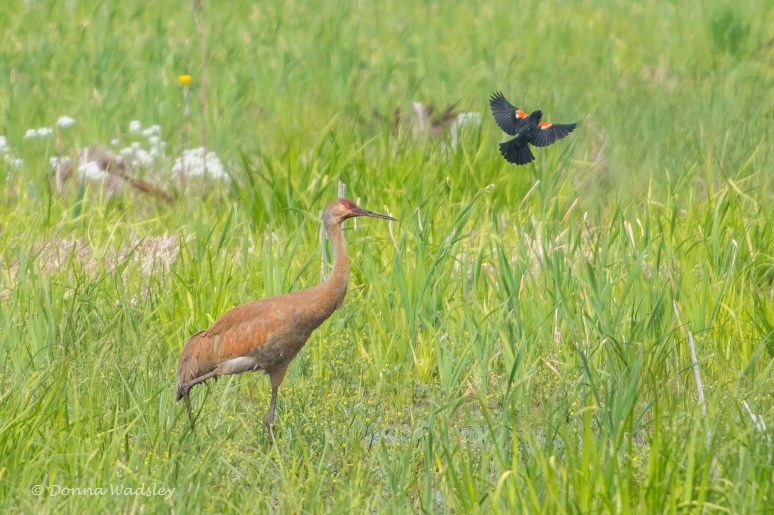
Red-winged Blackbird (male) swooping the Sandhill Crane
.

Red-winged Blackbird (female) sneaks up from behind for a hit
.

Red-winged Blackbird (male) getting ready to dive down again on the Sandhill Crane
.

Whoa, double attack!!
.
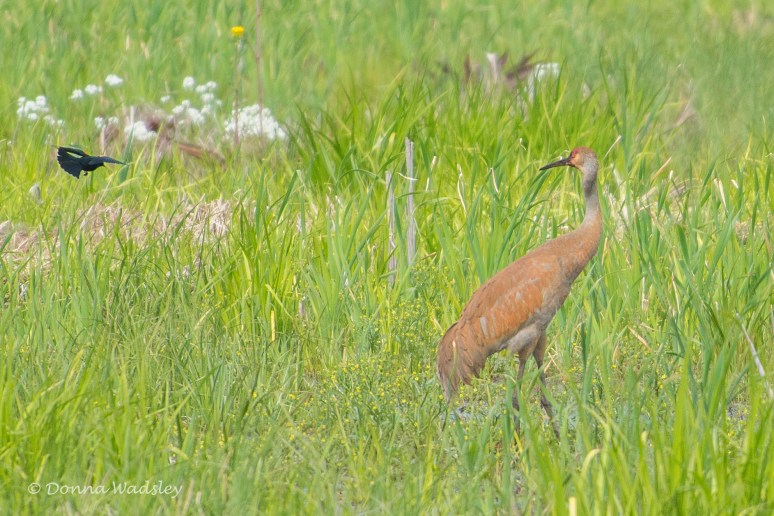
Sandhill Crane trying to keep its eye on the Red-winged Blackbird as he circles back
.

“Ouch!”
.
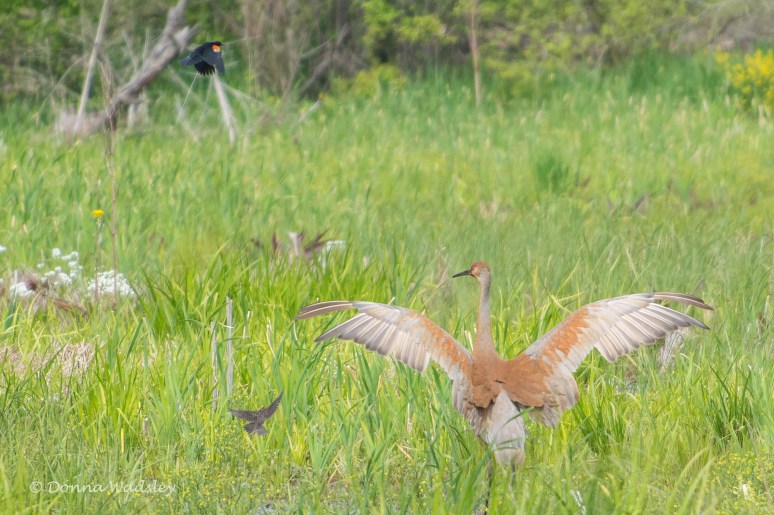
Sandhill Crane now aggravated and showing who is the biggest here
.

“I want no trouble. And, you know, I am bigger than you…”
.
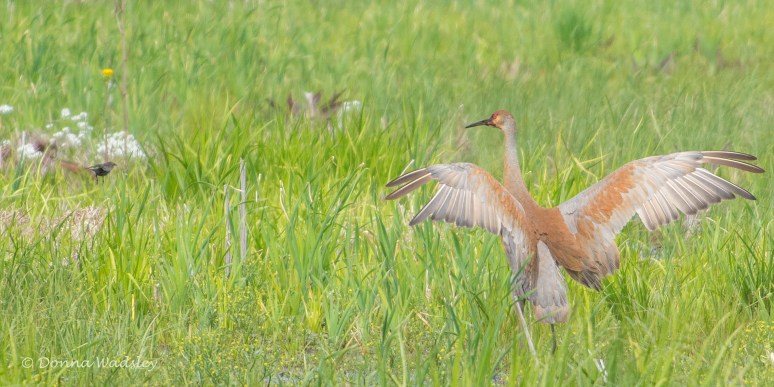
Eye to eye contact between the female Red-winged Blackbird and Sandhill Crane
.

Everyone beginning to relax, there’s no reason for all this commotion
.

One last menacing stance, doing it’s best Clint Eastwood – “Go ahead, make my day.”
.

The commotion ends and all is quiet again
.
I heard, turned, and redirected my focus on the Mute Swans to my left when out of the corner of my eye I saw the Sandhill Crane take flight. I guess it was taking the cue to leave. S/he flew right past me.
.
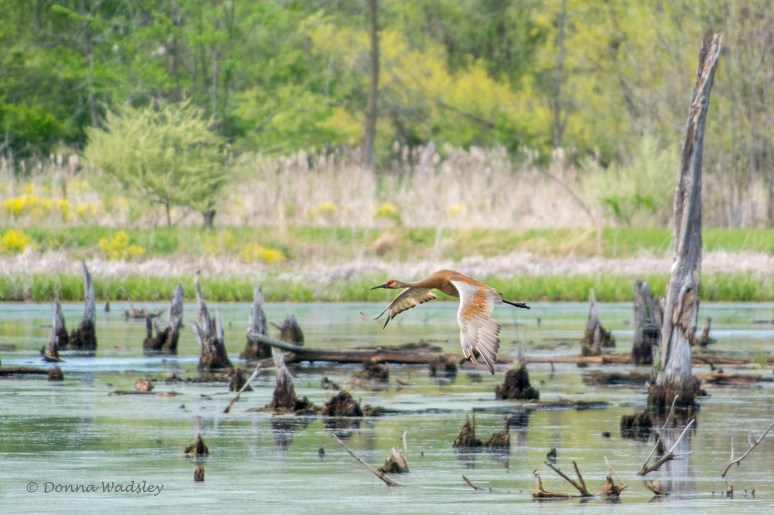
Sandhill Crane in flight
.

Sandhill Crane in flight
.
If you know the Sandhill Crane, you may have noticed this one had heavy rusty coloring. Normally more gray, some with a bit of tan, I looked into what might be up with this one.
And……During breeding season, Sandhill Cranes preen their feathers with iron-rich mud, dyeing them to a rusty coloring. Whether its to add color to their mating displays, or to help them camoflauge better in tall marsh reeds, the dyed feathers eventually molt after breeding season ends and grow back to their grayish color in time for migration.
Looks like this one loved the mud baths!
.
.
The Bigger Birds at Indiana Dunes NP
.
My previous two posts shared the smaller birds I recently captured on the Great Marsh Trail at Indiana Dunes NP. Here are the bigger birds from that same walk that are my favorites.
.

Red-winged Blackbird (male)
.
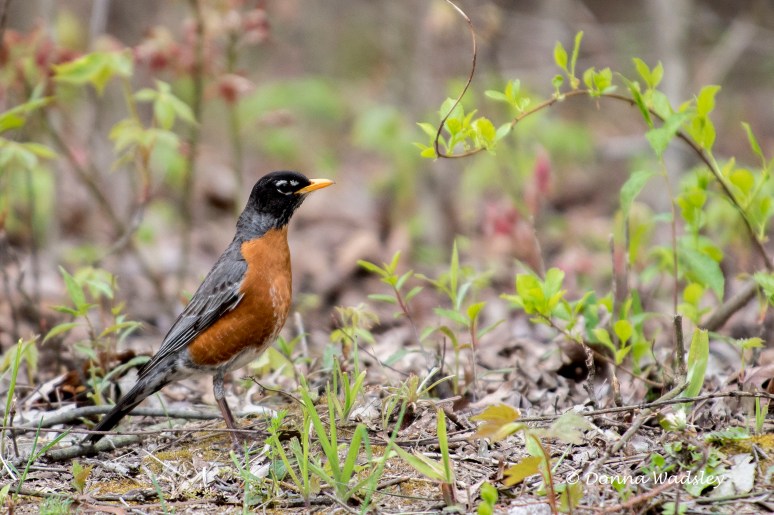
American Robin
.
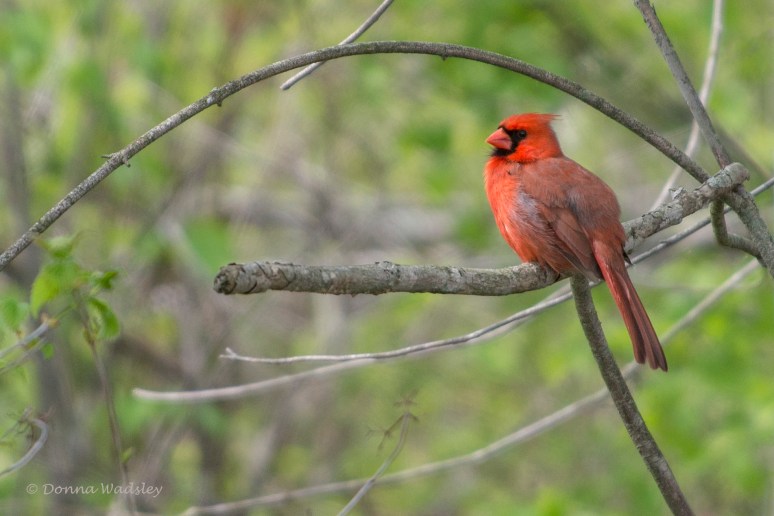
Northern Cardinal (male)
.

Mourning Dove
.
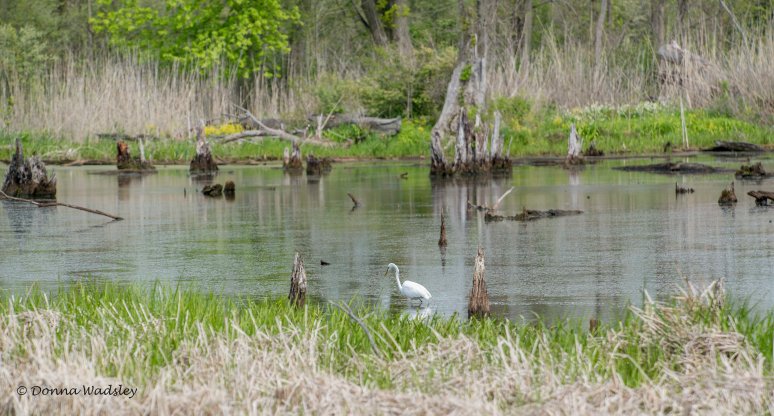
Great Egret
.
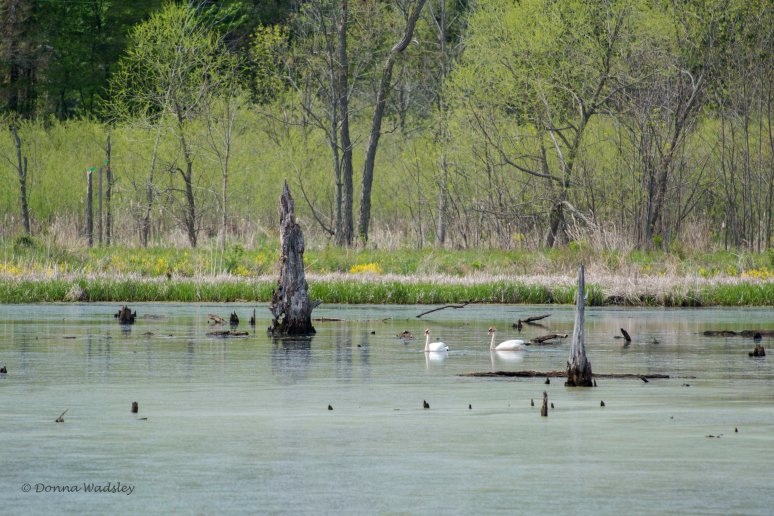
Mute Swans
.
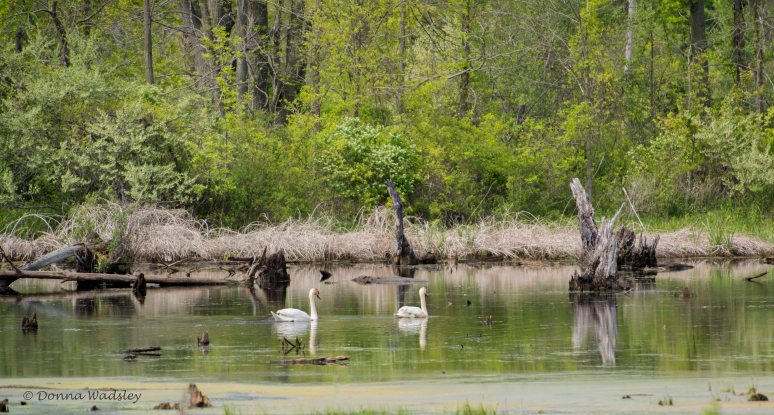
Mute Swans (same pair)
.
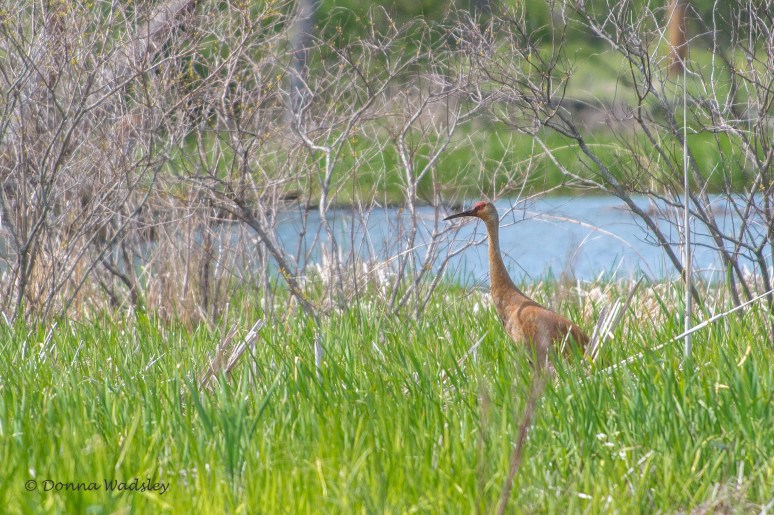
Sandhill Crane
.
Feeling already elated with more than I could have imagined and fingers crossed I accomplished some great shots, the Sandhill Crane was an awesome bonus as I was leaving. 😃
I will be sharing another action post with that Sandhill Crane who ventured around a little too close to the nesting area of a pair of Red-winged Blackbirds. And we all know Red-wings are territorial!
.
.
More Little Birds at Indiana Dunes NP
.
My goodness, those warblers I shared in my last post were a challenge. They don’t stay still! Here’s sharing more of the little birds I captured at Indiana Dunes NP on the Great Marsh Trail.
I’m starting off with another bird to add to my lifer list! 💃
.
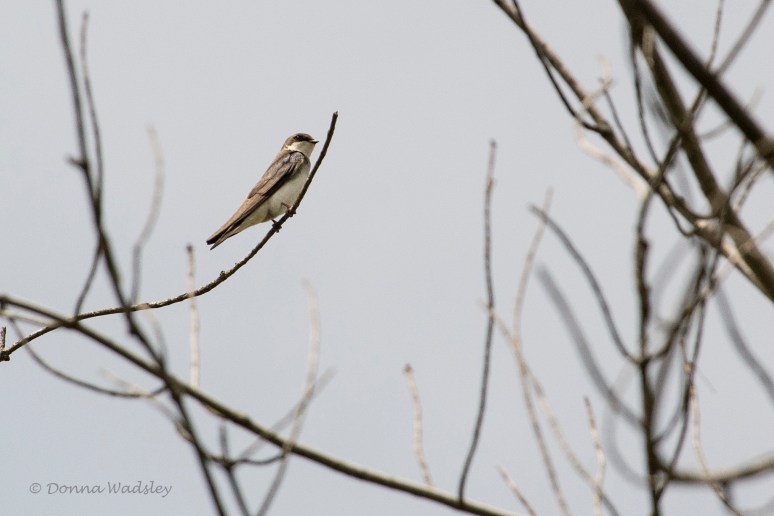
Northern Rough-winged Swallow – Lifer #223
.
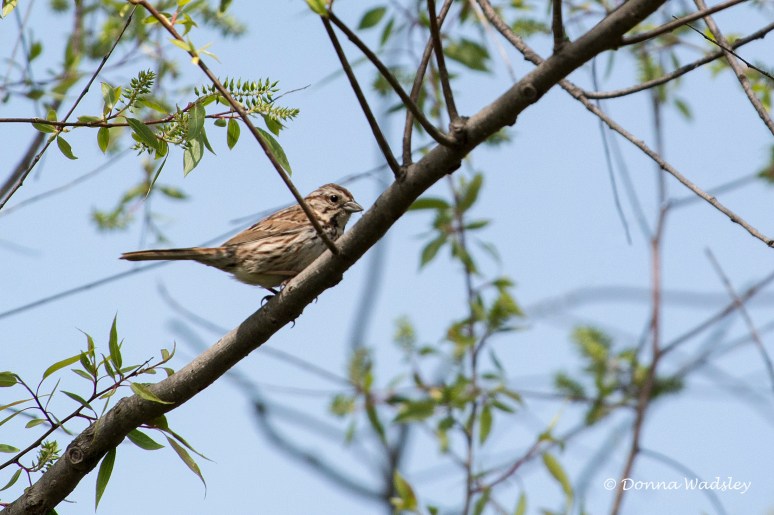
Song Sparrow
.
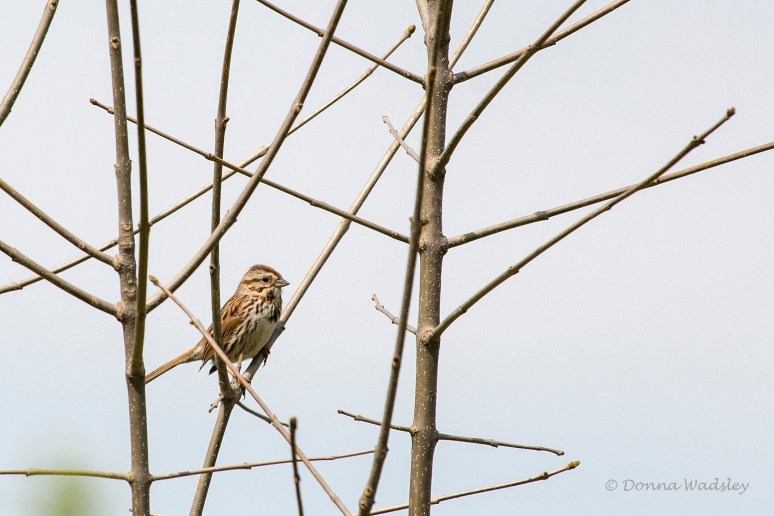
Song Sparrow
.
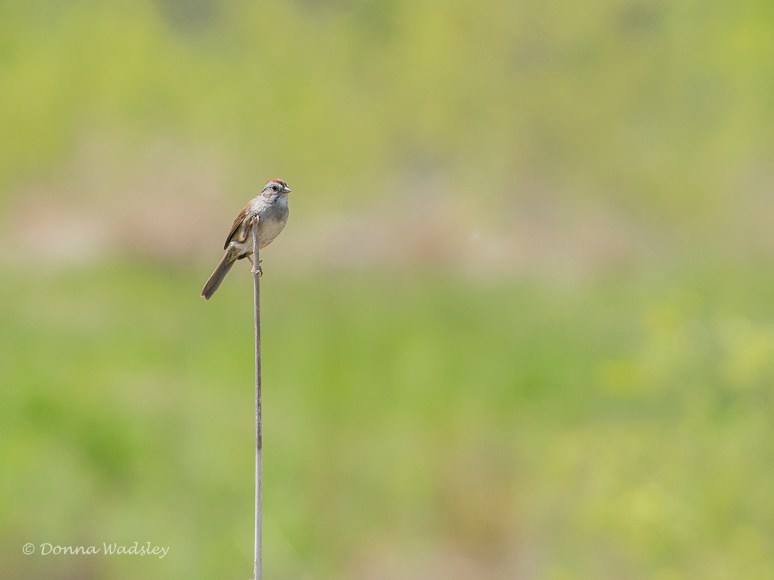
Chipping Sparrow
.
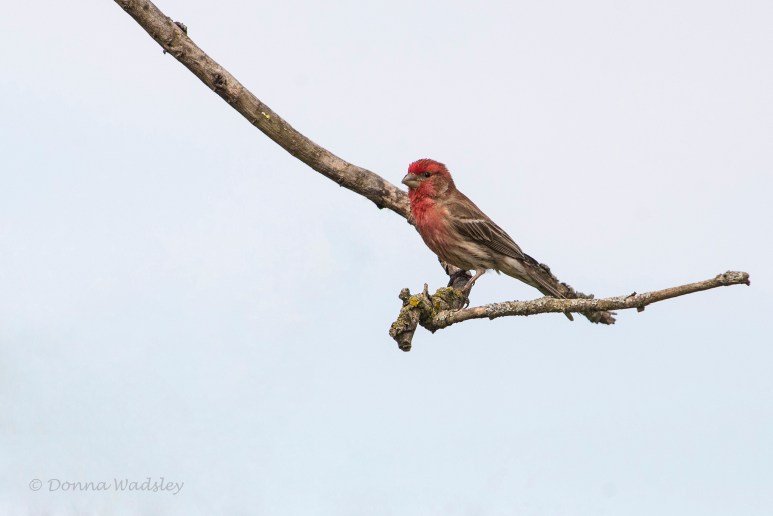
House Finch
.
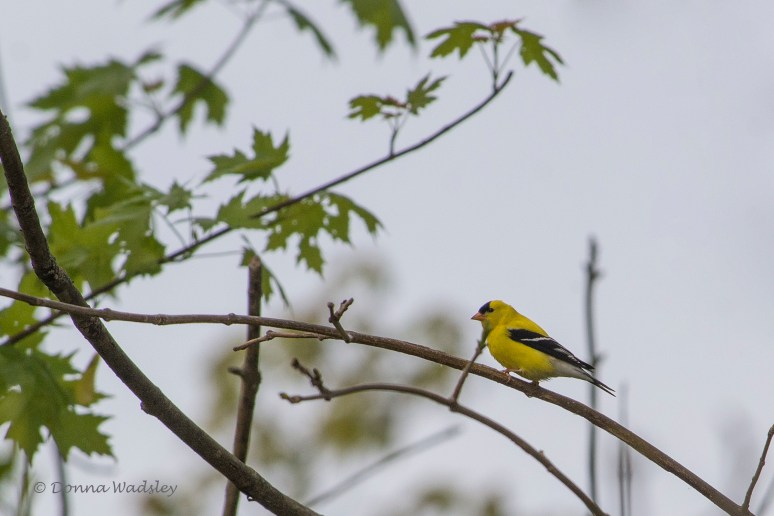
American Goldfinch
.
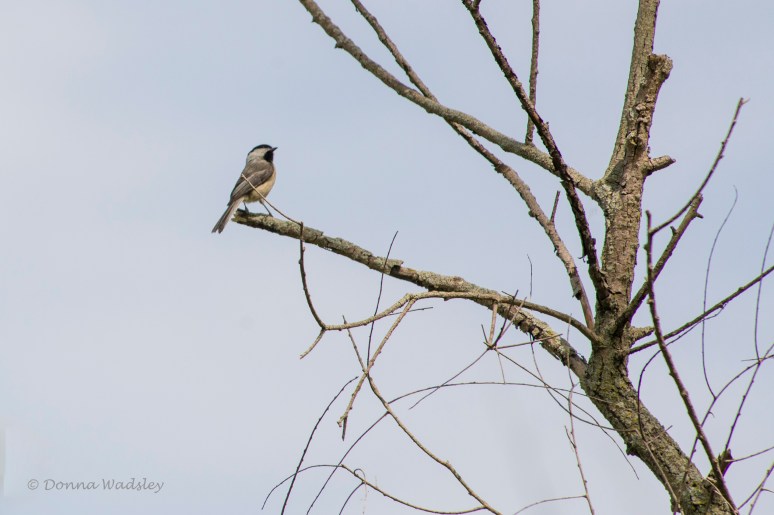
Black-capped Chickadee
.
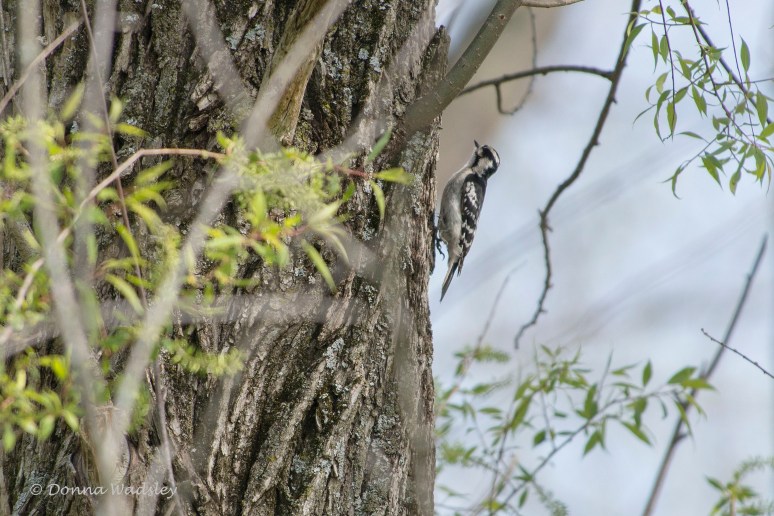
Downy Woodpecker
.
More of the bigger birds to come from Indiana Dunes NP….
.
.
Warblers – A Fab Four
.
We’ve left home for our summer mid-West adventure, with our first stop in Indiana. Leaving our motorhome for its scheduled warranty appointment, we headed north to the Indiana Dunes NP and southeast side of Lake Michigan to explore a few days.
Definitely on my list was to walk the Great Marsh Trail at the Indiana Dunes NP, a trail that I’ve enjoyed very much through featured posts in HeavensSunshine blog. Although we weren’t able to meet (I’m still bummed, Irene!), I felt like I was walking one of her post hikes with her. 🙂
I didn’t have quite two hours on that trail but was very happy with so many bird sightings and good photos. This post starts off with the four warbler species I captured, the first two that are bird lifers for me! Woohoo!! 💃 💃
.

Magnolia Warbler, Lifer #221
.

Common Yellowthroat, Lifer #222
.

American Redstart (male)
.
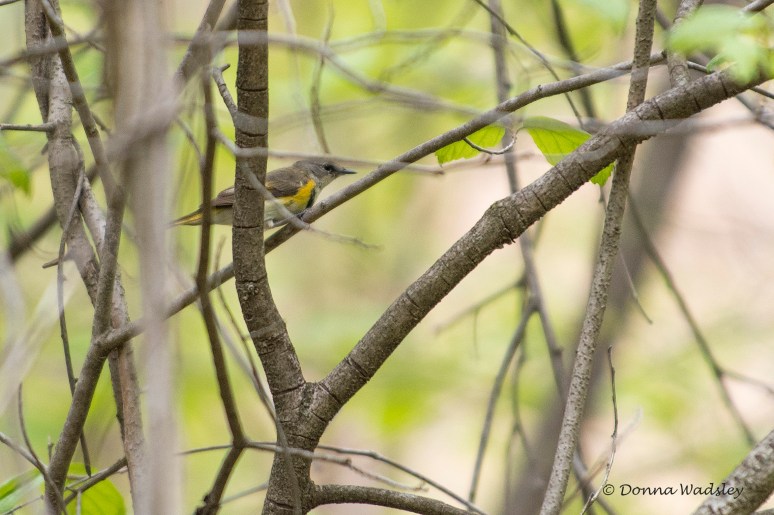
American Redstart (female)
.

Yellow Warbler
.
There were many Yellow Warblers, so here’s a few more of them in habitat. Such a gorgeous sunshiny yellow!

Yellow Warbler
.

Yellow Warblers snacking on the purple berries
.
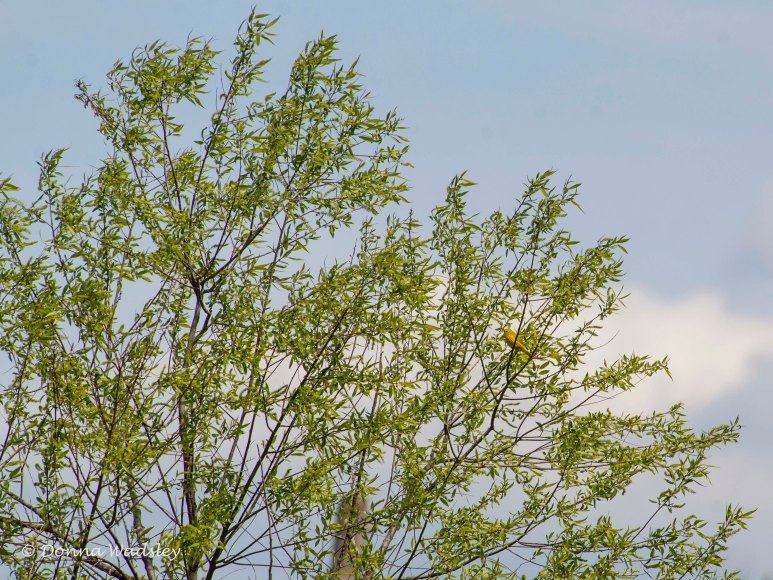
Find the Yellow Warbler 😃
.
More to come from Indiana Dunes NP…..
.
.
Glossy Ibis Gallery
.
These are the last of my favorites of the Glossy Ibis from this past winter. Such a gorgeous bird when the sunlight catches their feathers iridescent colors.
I have a fondness too of catching their water drips after a head dive for food.
.
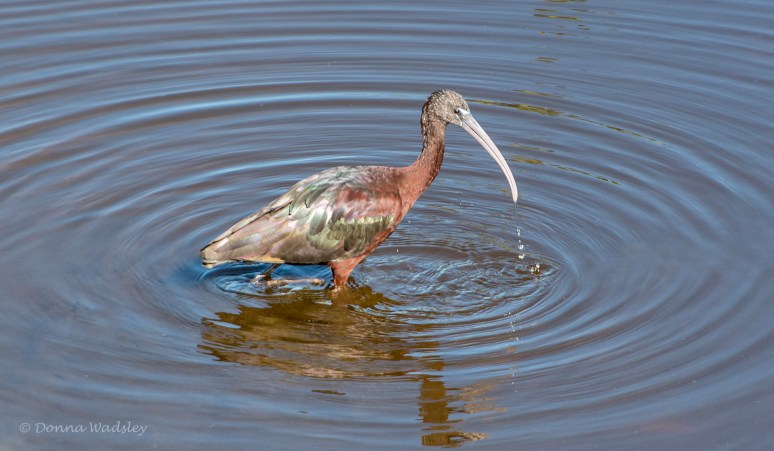
Glossy Ibis “Water Drips I”
.
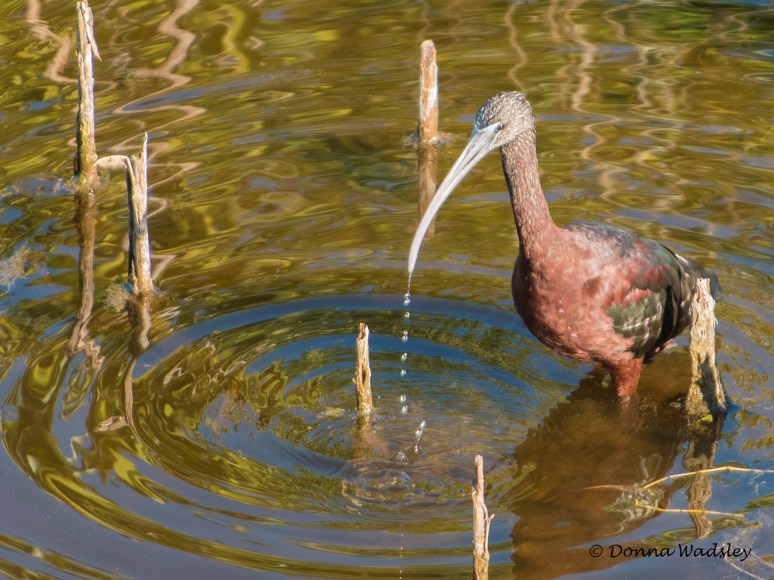
Glossy Ibis “Water Drips II”
.
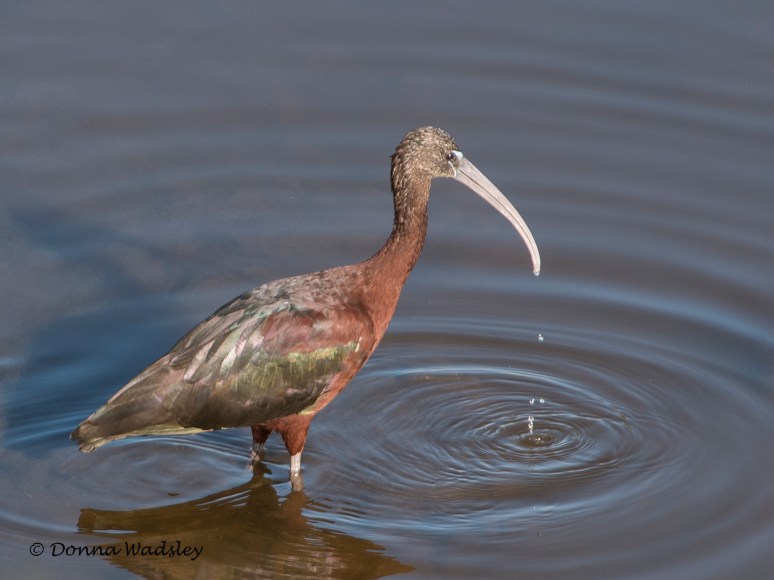
Glossy Ibis “Water Drips III”
.
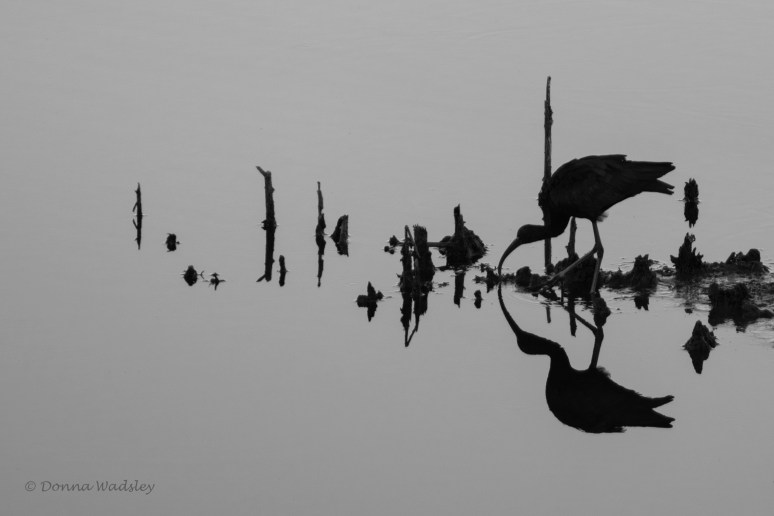
Glossy Ibis “Silhouette I”
.
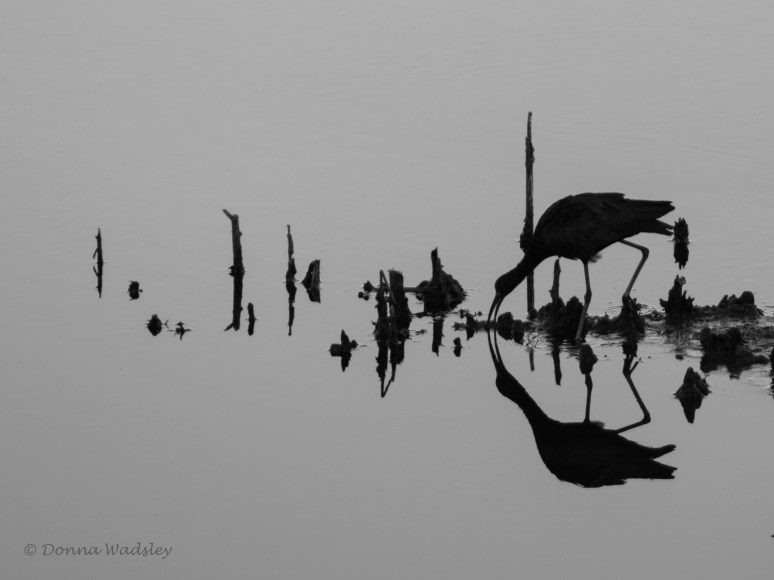
Glossy Ibis “Silhouette II”
.
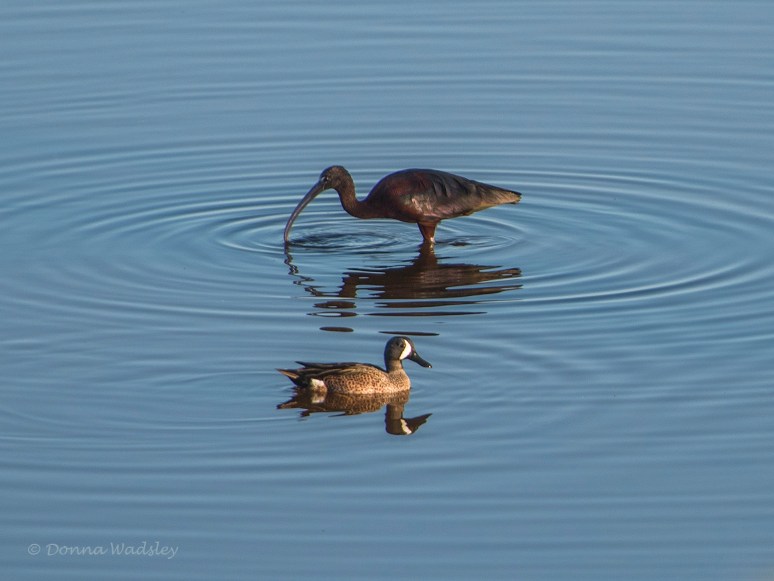
Glossy Ibis and Blue-winged Teal (male)
.
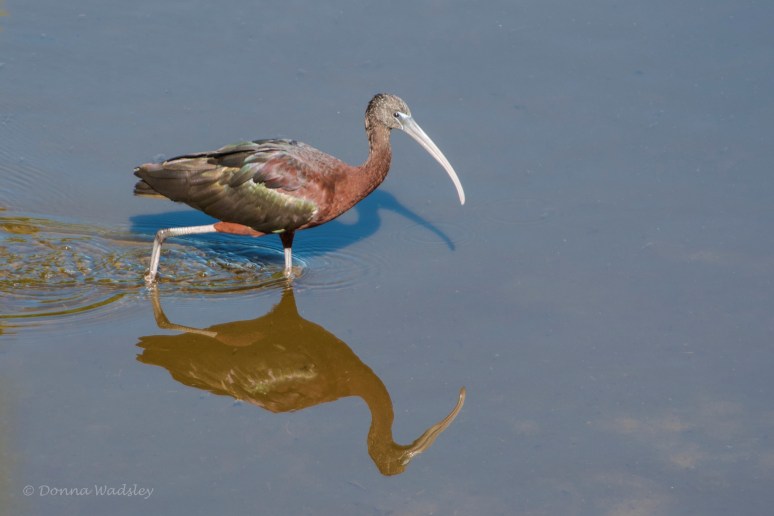
Glossy Ibis “Reflection”
.
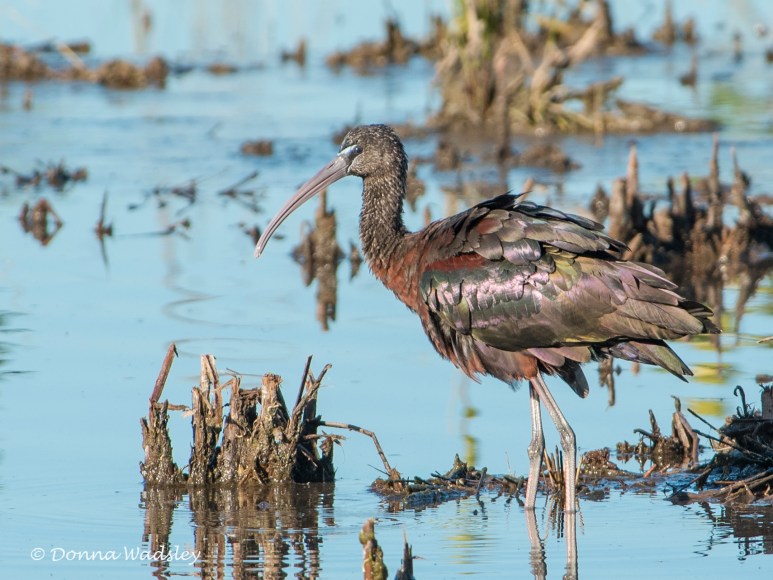
Glossy Ibis “All Shook Up”
.
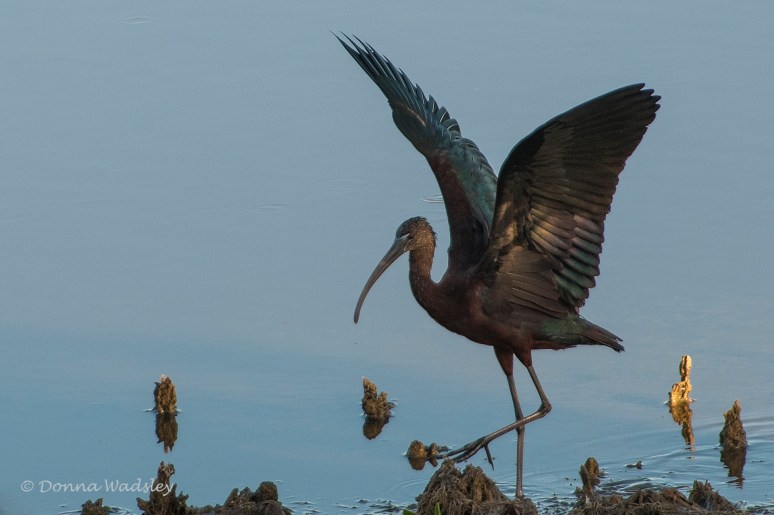
Glossy Ibis “In The Shade”
.
.
Banana Tree Blossom
.
Along my ‘birding route’ around Everglades City this past winter, there was a banana tree in a resident’s yard that fascinated me.
The banana tree had nice clusters of bananas growing, but what amazed me more was the purplish/red flower at the end of the stalk. I’d never seen this before. 🤔
Here’s what I learned along with a few photos….
.

Clusters of bananas and a blossom (late afternoon sun)
.
The purplish/red banana blossom actually started at the top of the stalk. The growth of a smaller group of flowers, called hands, forces the top petal to lift. These hands are tiny clusters of bananas.
Once the first banana clusters start to develop, the stalk will continue to elongate with the blossom, producing more bananas. One banana tree can produce 240 bananas if conditions are right!
By breaking off the hands and eventually cutting off the remainder of the flower at the right time, it’ll encourage the plant to put more energy into the already produced bananas for tastier, full-sized bananas.
.

Bananas and blossom, two weeks later, evening sun
.
The banana tree blossoms are also called banana hearts, and like bananas, are an edible delicacy, commonly used in southeast Asian and Indian recipes for salads, curries, and soups.
.

Blossom ‘hands’ close-up
.
A banana blossom does not taste like a banana though. Some people say they taste a bit like artichoke leaves, hearts of palm, or bamboo shoots. Some say it has a slightly nutty and fruity flavor.
The above photos were taken in the late afternoon and evening hours when the banana tree got the most sun. My next photo shot about two weeks later still, displays the much prettier purplish red coloring of the blossom.
.

Banana tree blossom
.
And here’s the banana tree in its glory, flanked by a bismarck palm from behind.
.
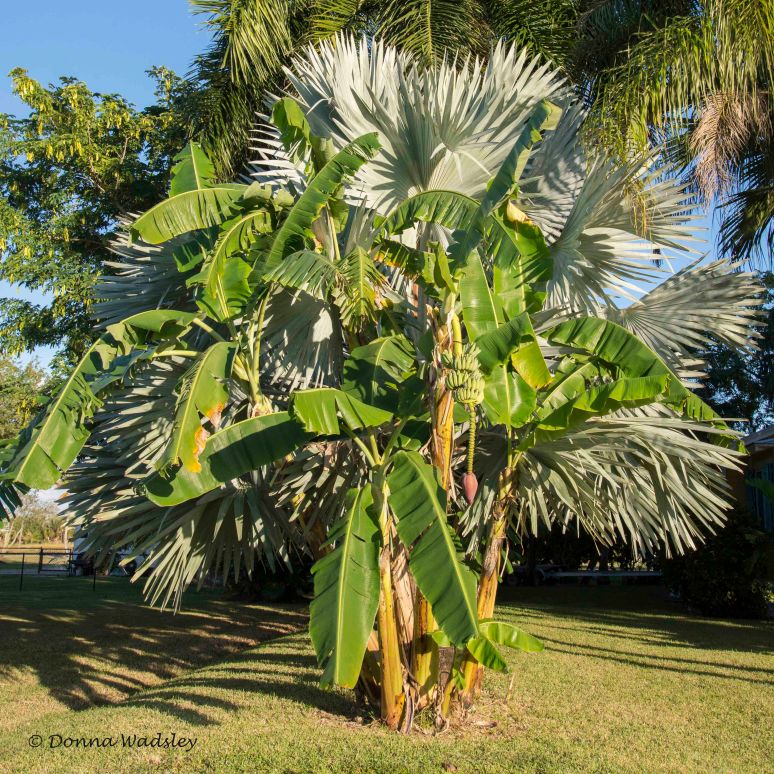
Banana tree with bananas and blossom
.
Shortly after my last photos taken, the blossom had been cut off; only the bananas above it remained, gathering more energy.
More info! Did you know a banana tree is not really a tree? It is actually a plant. And bananas are a fruit but not a fruit. While the banana plant is usually called a banana tree, it’s actually an herb distantly related to ginger, since the plant has a succulent tree stem, instead of a wood one. However, the yellow thing you peel and eat is, in fact, a fruit because it contains the seeds of the plant.
I only knew I loved bananas. Now I know more, and maybe you do too. 😉
That’s my teaching for today! 😁
.
.
Series: Take A Moment and Enjoy A Sunset
.
Time for another sunset photo! Here’s one from this past January in Florida.
.
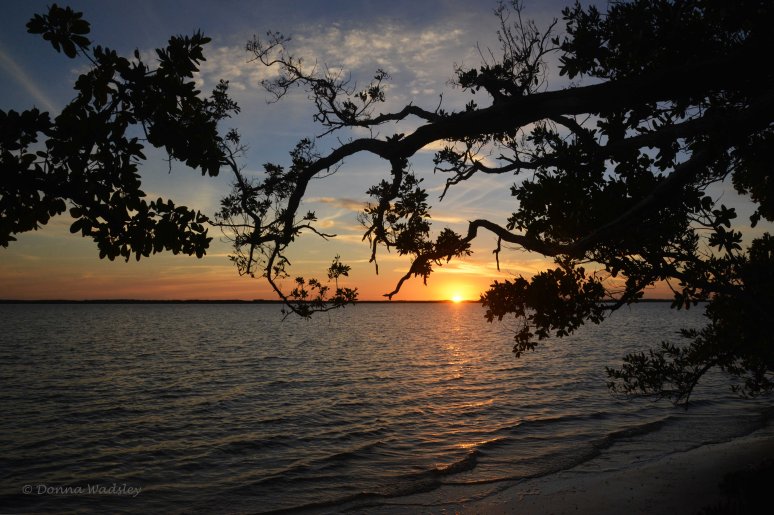
Sunset over Chokoloskee Bay
.
.
Blue-winged Teal Wing Stretch
.
After spending a little time preening, this male Blue-winged Teal did the wing flap/stretch.
It was as if he was thanking his audience….
.
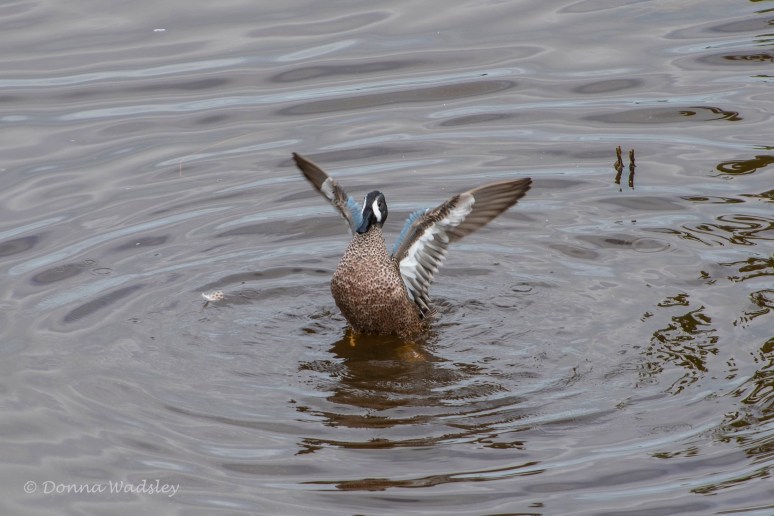
“Thank you!”
.
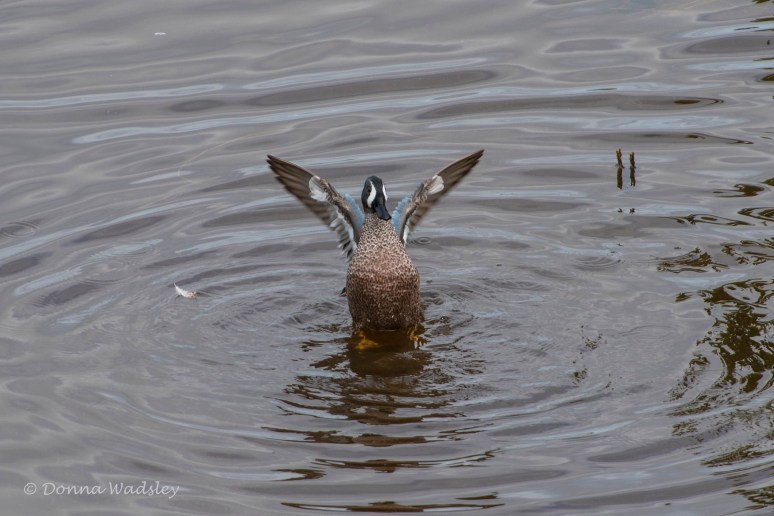
“Aw, thank you!”
.
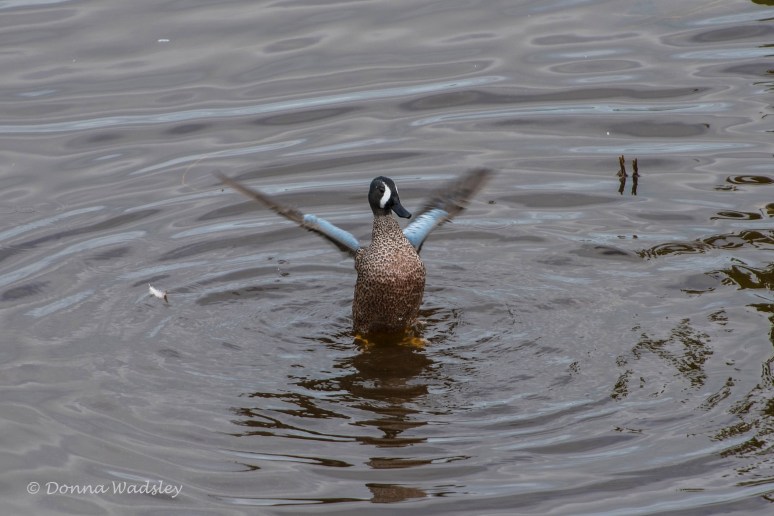
“Thank you so much!”
.
And then with a tucking of his wings…..
.
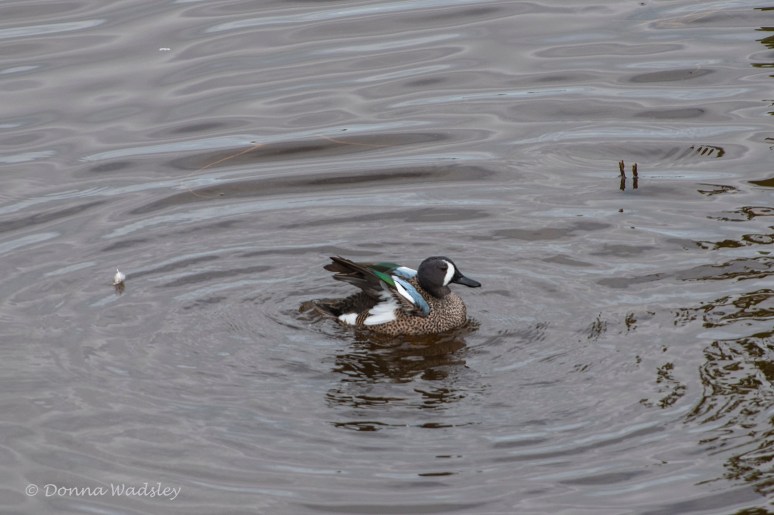
.
the Blue-winged Teal left the stage.
.
.
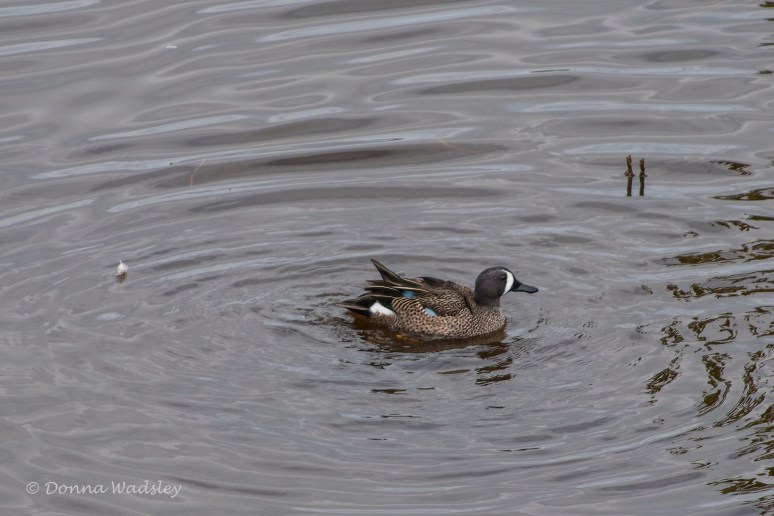
Such a pretty duck, even on a cloudy day!
.
.
Cloud Shapes
.
Do you ever see shapes or things in cloud formations?
Here are four clouds and what I ‘saw’. 😎
.

“Heart”
(Update – many see a horse/dragon/unicorn at the top of the cloud!)
.
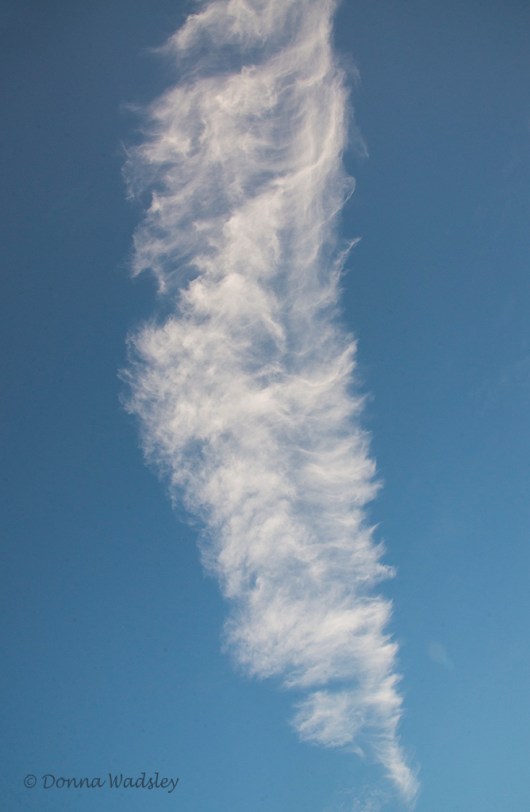
“Feather”
.



 Bay Photos by Donna