Tricolored Heron – Preening
Prior to this past winter vacation in Florida, I’ve not had many other opportunities in photographing Tricolored Herons; so any time I saw one in the past few months, I tried capturing as many photos as I could of this gorgeous heron.

Tricolored Heron
With the surrounding brown mangrove roots and reeds, it wasn’t the greatest to compose the Tricolored Heron’s profile with anything else in the frame. Darn. We always like a pretty scene or background.
But wait! After a little bit, my beautiful subject decided to do a little preening.
The Twist (song)
“Come on, baby
Let’s do the twist
Come on, baby
Let’s do the twist”
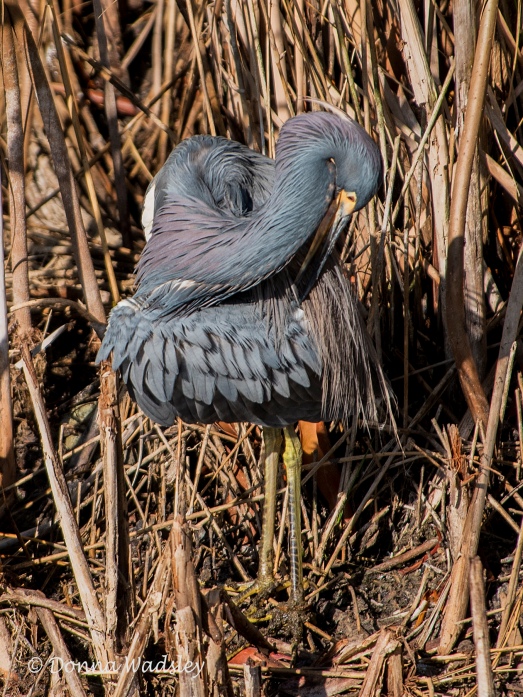
“Take me by my little hand
And go like this
E-yah, twist
Baby, baby, twist”
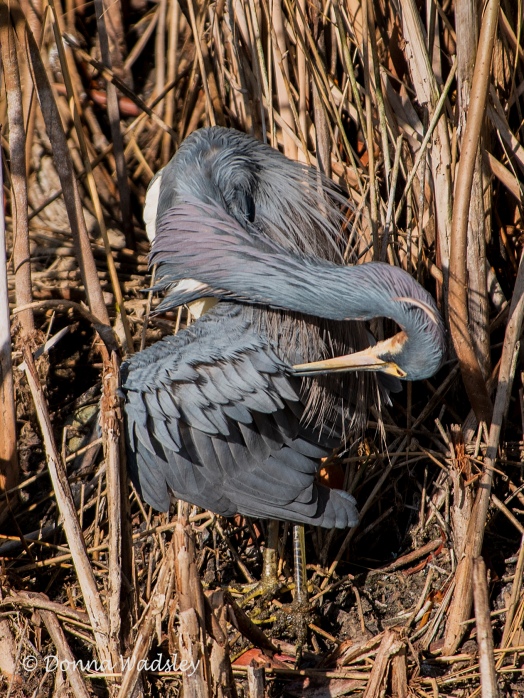
“Ooh yeah, just like this
Come on, little miss, and do the twist….”
Lyrics by Hank Ballard and the Midnighters 1959
(which gave birth to Chubby Checker’s Twist dance craze in 1960)

Tricolored Heron – “Doing The Twist”
A scene that seemed dull unfolded into a beautiful shoot with just a little patience on my part.
Three Butterflies and A Dragonfly
In the Florida insect world, I succeeded with just these three butterflies and a dragonfly while down there this past winter.
Kudos to you insect photographers, these are not easy subjects!

White Peacock

Zebra Longwing

Blue Dasher

Queen

Queen
Great Egret – Reflections
Another one of my favorite hangouts was in the Fakahatchee Strand Preserve State Park. The strand’s forested canopy and dark waters were perfect for mirror reflections.
This Great Egret was an incredible opportunity for me.
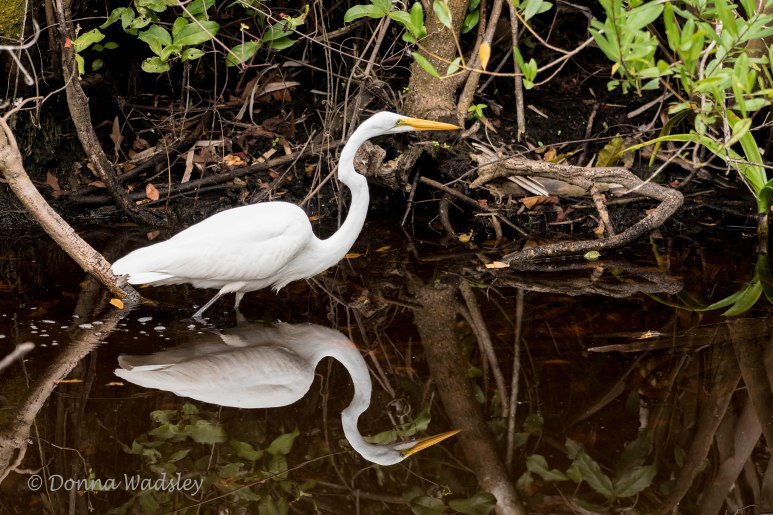
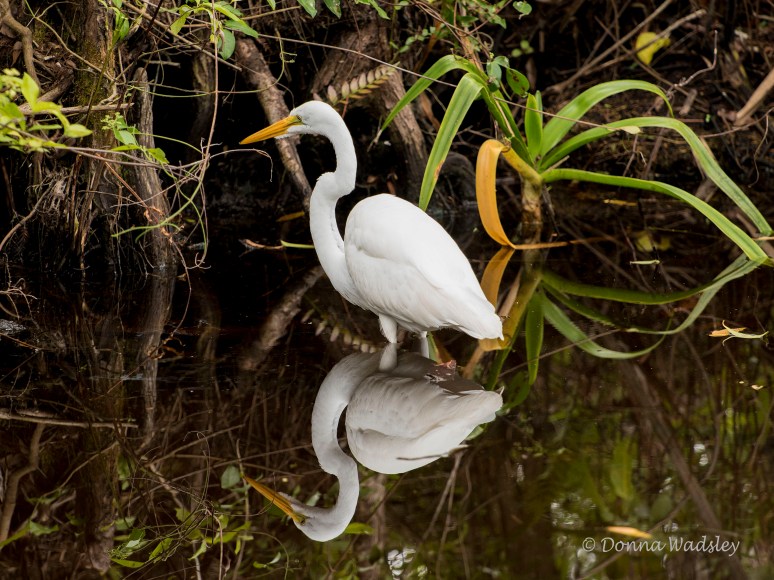
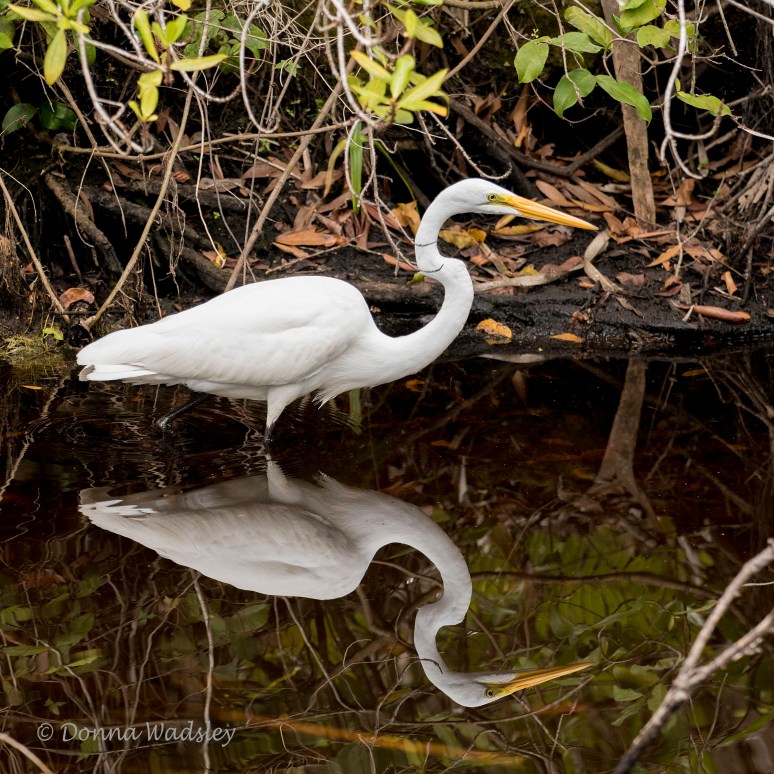

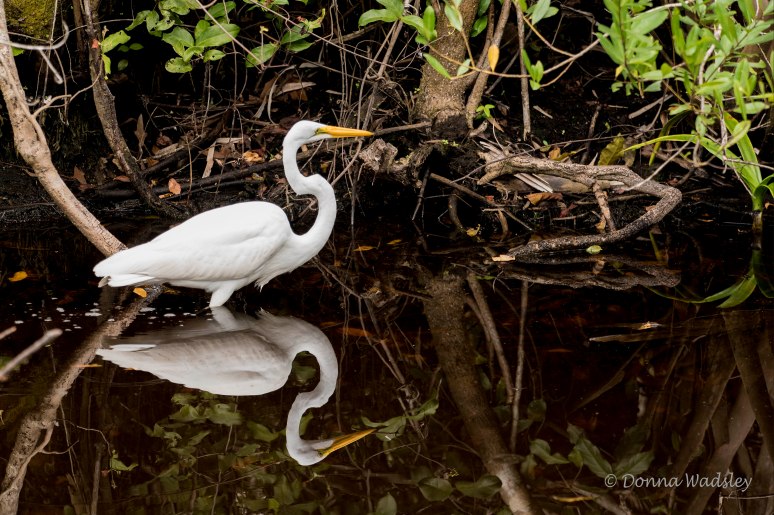

Great Egret Reflections
Everglades City
Situated between Everglades National Park and Big Cypress National Preserve along the Barron River, lies Everglades City, a remote fishing and crabbing town, with a resident population of approximately 400.

If I heard the fishing boats coming in to unload their catch before sunrise, I had opportunities to photograph pretty reflections. It would take them many hours to unload. You can see the net full of fish in a couple of the photos.

Arriving before sunrise with their catch

The sun begins to rise while unloading the fish

Unloaded at noon finally and heading back out of the river

Reflections at sunset

Removing fish from the net

Fish were removed for hours

Nice size fish

Before sunrise, preparing nets for departure

Before sunrise, preparing for departure

Before sunrise, preparing for departure
Everglades City is known as the Stone Crab Capital of the World.


Stone crab pots and a dinner of stone crab claws
In the center of this small town, standing tall and prominent, is their “lifeline to the world” communication tower surrounded by three 1920’s historical buildings still standing after the many hurricanes that plummeted this town over the years.
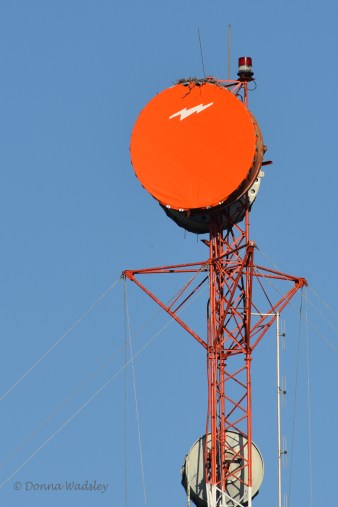

Bank of Everglades Building

Bank of Everglades Building

Bank of Everglades Building

Everglades Community Church

Everglades Community Church

Everglades City Hall
We fell in love with this endearing, quirky small town, reminding us of home along Maryland’s Eastern Shore that has its share of quaint Chesapeake Bay fishing towns.
A photo gallery of some other things that caught my fancy in Everglades City.

Historical boat lift

Kayak til your heart’s content

Just love the colors!

One of several air boat companies

Cabbage palm trees

Rusty truck

Rusty truck

Rusty truck

Floats

Remnants of bridge

Decor

Decor

Decor

This way to the beach bar

Cool VW Bug!

Northern Cardinal introducing home circa 1925
Of course, I ended with a bird!
Smallest Post Office in the United States
Located in Ochopee, Florida, in the midst of Big Cypress National Preserve is the smallest United States Post Office.
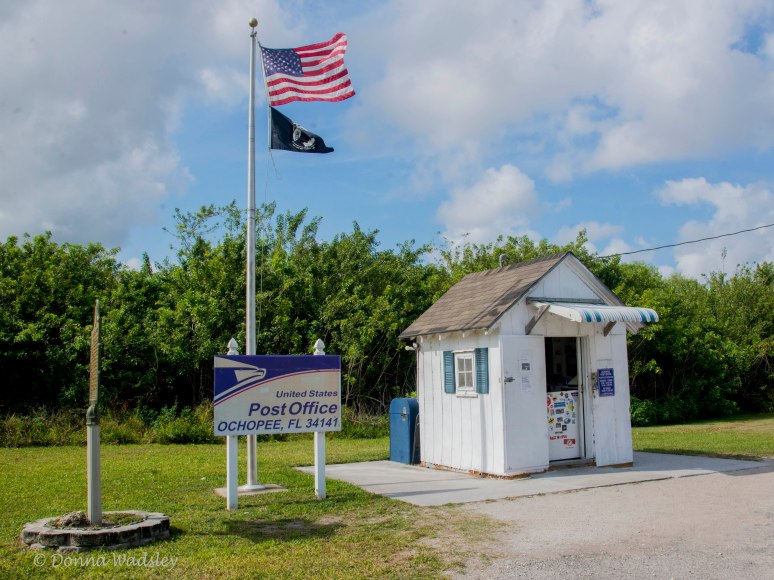
Smallest Post Office in the United States

Erected on the Post Office’s property
I spoke with the postmaster briefly, he was kind soul and obliged me with a quick photo. He also assured me he had air conditioning for the hot summer months.
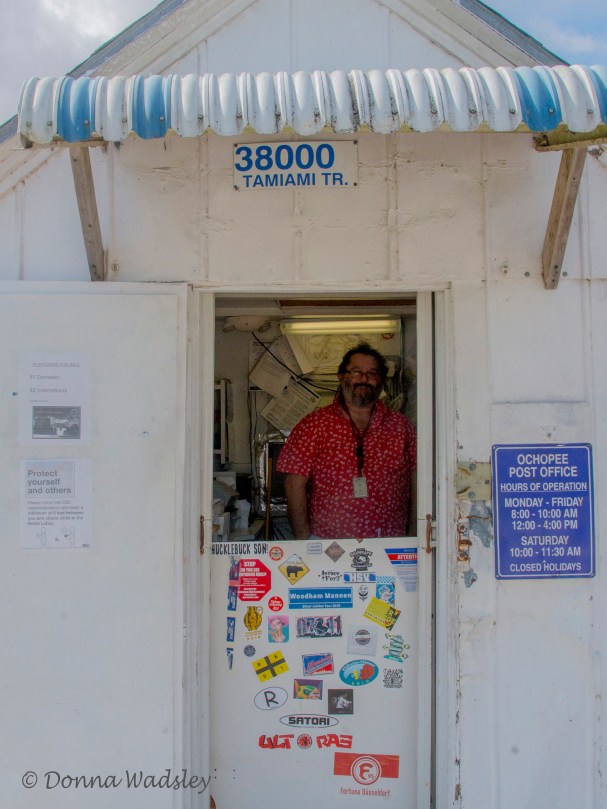
Postmaster of Ochopee Post Office
Series: Take A Moment and Enjoy A Sunset
Framed with mangroves, this sunset was taken back on March 1st from along the road at low tide, just a little tuck between those trees, down some secured rocks to a small, rough beach opening.
The rocks were perfect for sitting on. This became one of my favorite spots to watch the sun set this past winter. 😊

Sunset over Chokoloskee Bay, Florida
“Every sunset brings the promise of a new dawn.” — Ralph Waldo Emerson
Bird on a Wire
When photographing wildlife, we strive for all natural habitat shots.
But birds do love to perch on a wire.
So here’s a bird on a wire…..times 17!

American Kestrel

Purple Martin (female)

Red-shouldered Hawk

Purple Martins

Eastern Phoebe

White Ibis

Europeon Starling

Northern Mockingbird

Common Ground Dove

Loggerhead Shrikes

Double-crested Cormorant

Mourning Dove

Northern Cardinal (male)
The one that surprised me was the White Ibis. I’ve never seen one of them perched on a wire before or since.
Can you pick a favorite?
(all photos taken in Everglades City, Florida)
Brown Pelican – Rubbin’ Its Noggin
Even birds get an itch they need to scratch. But how?
Not a problem for this Brown Pelican!
(click on first photo to run through the action)

Brown Pelican – head scratching 01

Brown Pelican – head scratching 02

Brown Pelican – head scratching 03

Brown Pelican – head scratching 04

Brown Pelican – head scratching 05

Brown Pelican – head scratching 06

Brown Pelican – head scratching 07

Brown Pelican – head scratching 08

Brown Pelican – head scratching 09
Brown Pelican – Rubbing/Scratching Its Head
That had to feel good!
Out of that series, I’m sharing one of the photos again with a closer crop. It deserved a caption…..
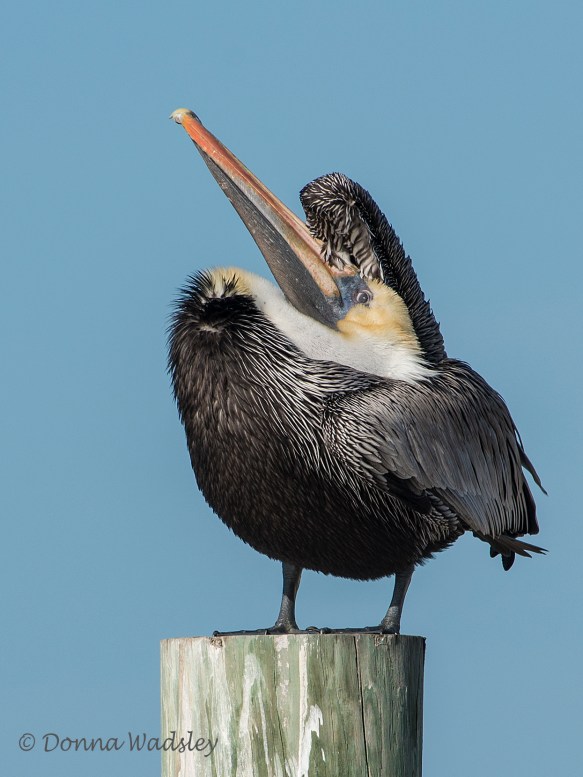
“Good Grief”
I’m sure there’s more captions perfect for this silly shot!
Red-bellied Woodpeckers Gathering and Stashing Berries
I spent many hours over the past couple months watching and photographing the huge number of Red-bellied Woodpeckers so easy to find in Everglades City. I’ve never in my life seen so many of them in one small area.

Red-bellied Woodpecker

Red-bellied Woodpecker
Red-bellied Woodpeckers
I’m not sure the species of palm tree that produces the black/blue/purple berries, but I do know the Red-bellied Woodpeckers know and love them. An area mid-town was superb for watching them. They cleaned off those area palm tree berries when they ripened in a couple of weeks.
Swoop in, hang from the berry branch, pluck the berry, then swiftly fly away to other nearby palm trees that hosted their nest and stash them all around it in the tree’s bark. Literally, pushing and pounding them into holes and crevices on their nest tree. Then fly back for another!


Red-Bellied Woodpeckers gathering and stashing berries
You ever take a photo with poor exposure results but just can’t trash it for one reason or another?
Here’s one of mine, shot in the shade with poor exposure. But it looked too adorable to trash. So I played a little with it in black and white and presto! It became worthy of saving!
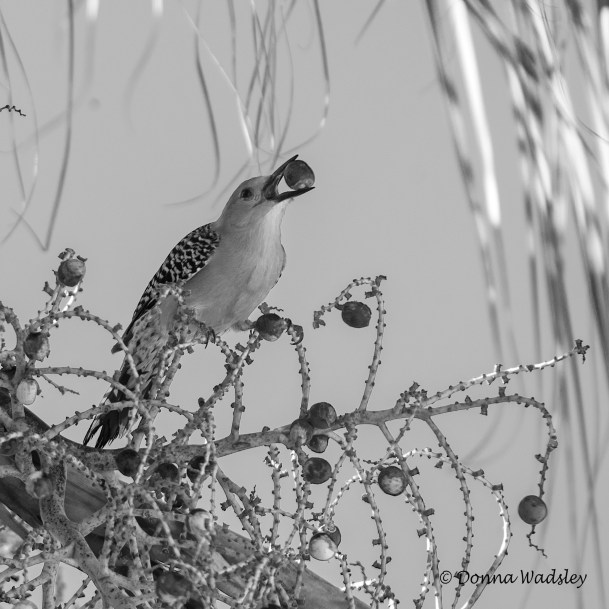
Red-bellied Woodpecker
For those curious on what the original photo looked like, here you go.
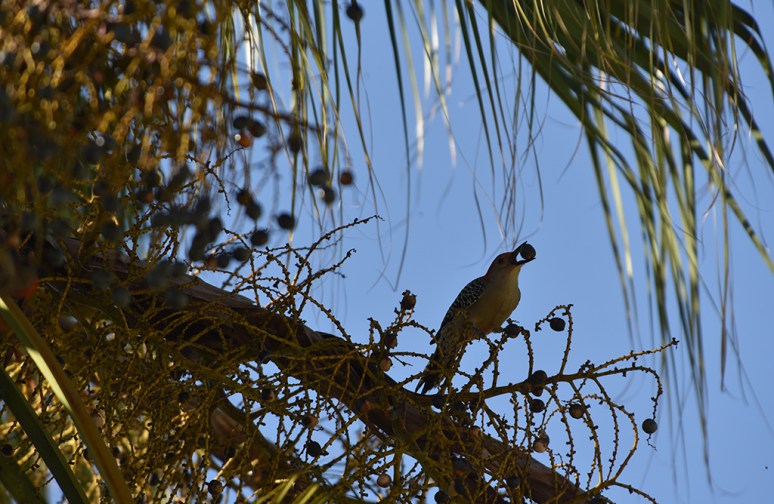
And to think, I almost deleted it…..
Great Egrets Pair
I loved this sighting of a pair of Great Egret atop a tree.
Maybe they’re deciding if this tree is the perfect location for their nest. 🙂

Great Egrets
Or maybe it’s a date with social distancing! 😉