Christmas Day Sightings
.
Enroute to our daughter’s home Christmas morning, there were two wonderful sightings we stopped for photos.
The first was this gorgeous rainbow!
.

Christmas Day Rainbow
.
A few minutes later, we could see ahead a beautiful sight of Snow Geese on my side right alongside the road. We were able to slow down quickly and pull over on the shoulder. It was perfect for me to shoot from my passenger window as my husband moved along slowly for different angles.
.

Snow Geese 01
.
Snow Geese are another excitedly anticipated migrant bird that winters over the mid-Atlantic region by the thousands. Delaware’s Bombay Hook NWR is seeing high numbers already.
.

Snow Geese 02
.

Snow Geese 03
.
The cloudy skies, faint sun rays, and close-to-me landings provided great composition set-ups. I went crazy with clicking…..
.
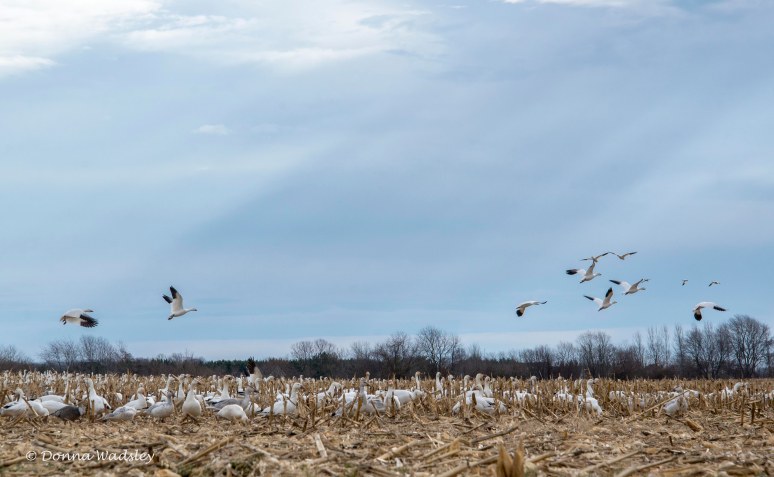
Snow Geese 04
.
And crazy here with sharing too many. 🙂
.

Snow Geese 05
.
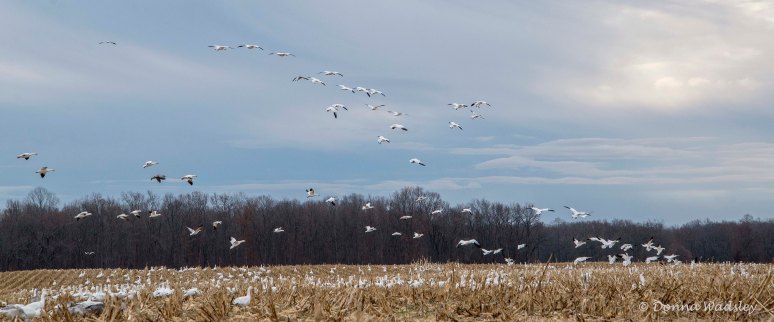
Snow Geese 06
.

Snow Geese 07
.
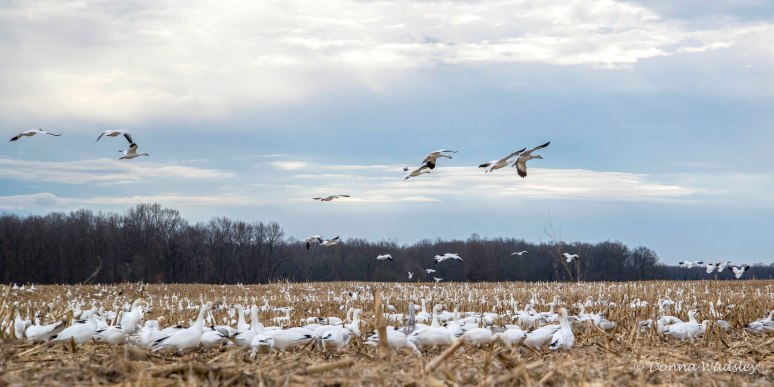
Snow Geese 08
.
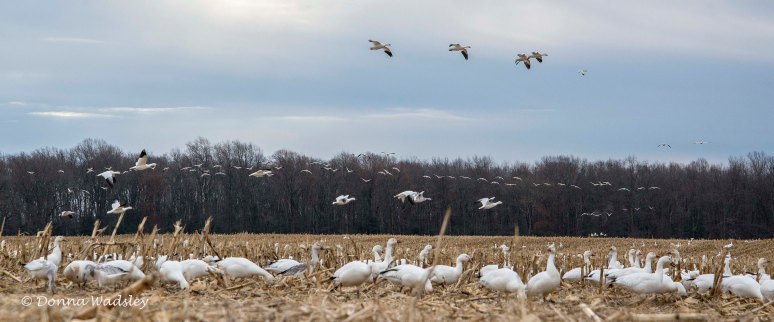
Snow Geese 09
.

Snow Geese 10
.

Snow Geese 11
.
Both the rainbow and Snow Geese were for definitely right place right time moments, and surely a delight to see that morning!
.
.
Merry Christmas
.
Merry Christmas to you!
.

Rock Hall, MD, Christmas Crab Basket Memorial Trees

Rock Hall Crab Basket Memorial Christmas Tree

My treasured ceramic Christmas tree that my grandmother made over 40 years ago.

My treasured hand-crafted carolers, a present from my grandparents 35+ years ago.

Our fireplace mantel

Our Christmas tree

My treasured Nativity scene, made by my Mom for me many Christmas’ ago. Dad made me the simple stable at the same time.

Our Christmas tree topper
.
Our grandboys (10, 5, 4) are beyond excited for Santa, and it truly is a delight to see their eyes widen with the sights and sounds of the magic of Christmas. We are fortunate to be able to have two Christmas Days in a row, going to each home for their day of fun and joy; and honestly, I cannot wait! 😊
.

.
Wishing you and yours a wonderful Christmas holiday season. May it be filled with the blessings of peace, love, good health, and many delights!
.
.
Tundra Swan Squabble
.
All was quiet with the few dozen Tundra Swans at the farm field when I pulled up to them one morning last week. They were stretched in a line, parallel with the road. I quickly saw an oddball in the mix and got my lens on a small Snow Goose.
.

Tundra Swans and a lone Snow Goose (center)
.
Just as quickly as I spotted the Snow Goose and got a couple shots, I lost track of it when I heard some action going on with the swans.
A pair of Tundra Swans to the far left of the line had started squawking and strutting down the line towards the center.
How another pair on the far right knew it was them being squawked at who knows, but that far right pair decided they had things to say as well and started their squawk strut to the center too.
And then the showdown began!
.

Two pairs of Tundra Swans meeting in the middle, starting a ruckus
.
Whether it was a verbal squabble or an excited greeting when they met in the middle, it was fun going through to pick a few photos to share the Tundra Swans’ communication expressions and body language.
.

Tundra Swans #01
(a fifth one got caught standing behind them as the four went at it)
.
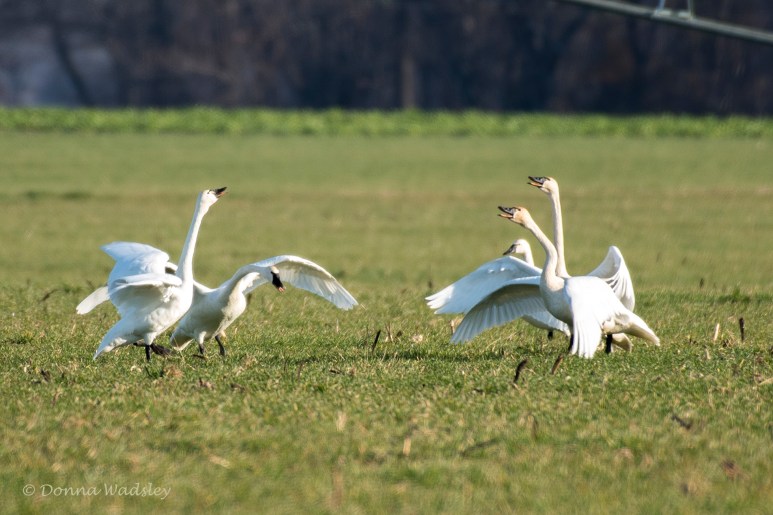
Tundra Swans #02
.

Tundra Swans #03
.

Tundra Swans #04
.
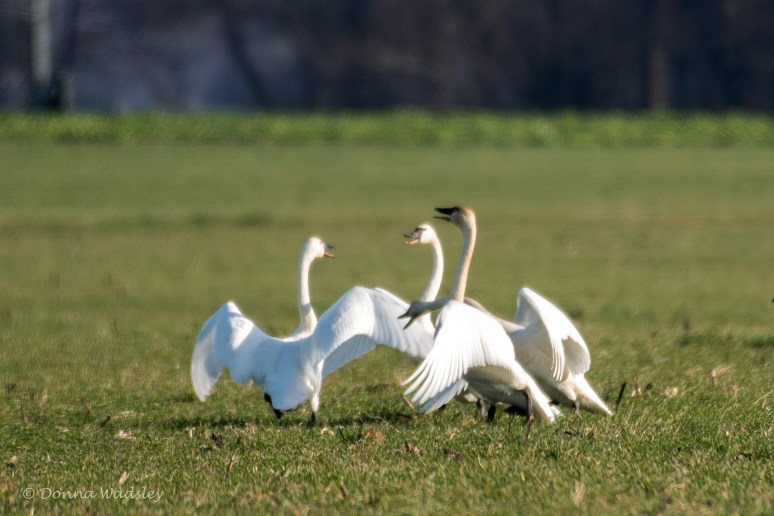
Tundra Swans #05
.
It looked like the pair on the right were larger and had the upper-hand, causing the other pair to retreat back. I needed to get going myself, so I left and missed the final outcome.
.
.
Tundra Swans
.
“We’re here!” Yes, the Tundra Swans have arrived to the Chesapeake Bay region!
.
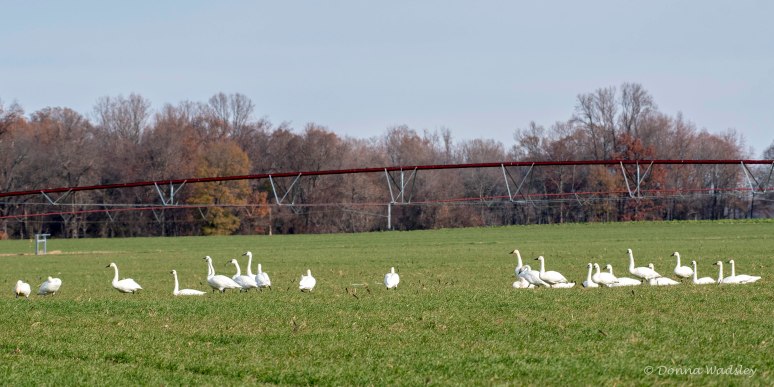
Tundra Swans
.
Typically, you would find them in the surrounding waterways and estuaries, but several weeks ago, I continued to find this small flock resting each day in a farm field for a few weeks before moving on.
.

Tundra Swans
.
Tundra Swans breed in the remote arctic tundra of North America and visit the U.S. during migration and winter. The majority of the Tundra Swan population that breeds in eastern Alaska (east of Point Hope) migrates 4,000 miles to winter here in the Chesapeake Bay and coastal mid-Atlantic region.
.

Tundra Swans ‘on alert’ stance as a farm tractor begins to pass between them and me
.
I captured these two pairs coming in for a landing one of my days’ stops alongside the road.
.
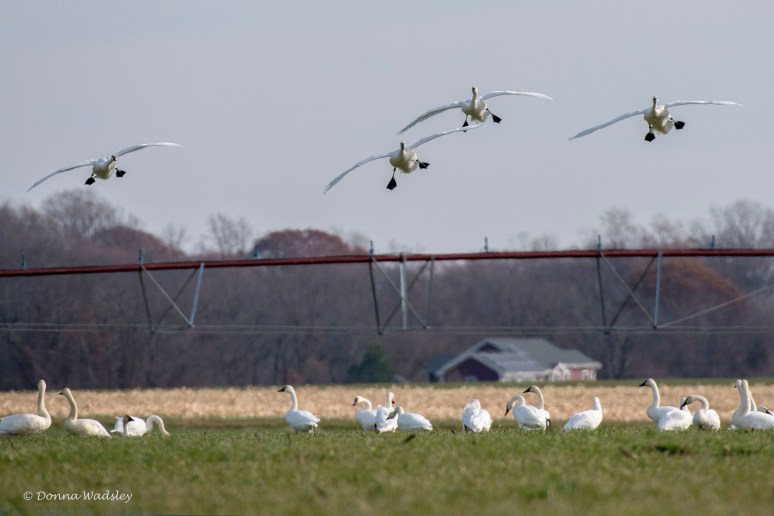
Watch Out!
.
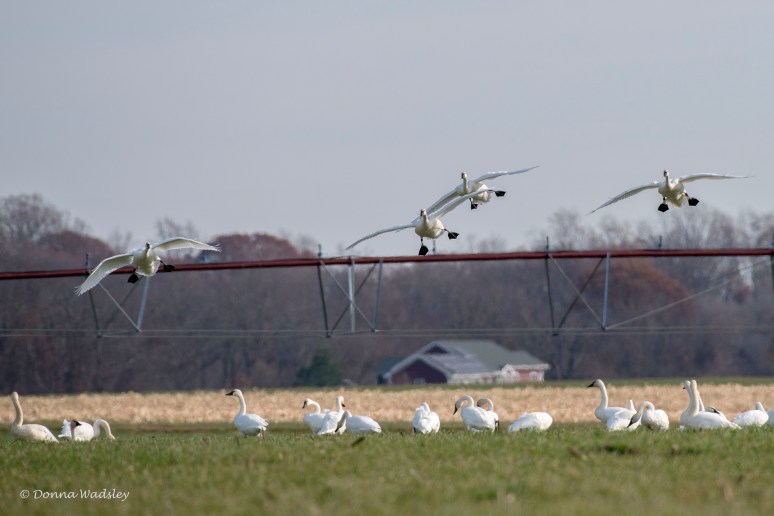
Incoming!
.

No one on the ground cares 😅
.

Steady…..steady…..
.

Landing gear down…..
.

Touchdown!
.
Another days’ stop I witnessed and photographed a squabble between two pairs. That post forthcoming!
Our local Eastern Neck NWR hosts over a thousand Tundra Swans each winter, and they’ve been continuously arriving for weeks. They come to feed almost exclusively on the delicacy of our clams that they dislodge from the mud. The swans can be found throughout the refuge’s waters, but the best place to view them is at the Tundra Swan Boardwalk. After the holidays, I’ll be making some trips over there!
.
.
1-2-3 Medium Bird Jubilee – #2
.
Continuing with my new series of three photos of three handsomely beautiful medium-sized birds posing so nicely for me!
.
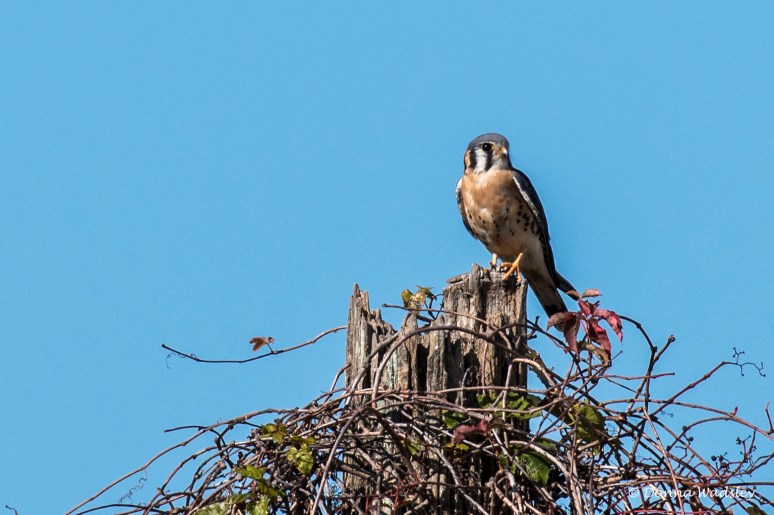
American Kestrel
Length: 8.7-12.2 inches (22-31 cm)
Weight: 2.8-5.8 oz (80-165 g)
Wingspan: 20.1-24.0 inches (51-61 cm)
.
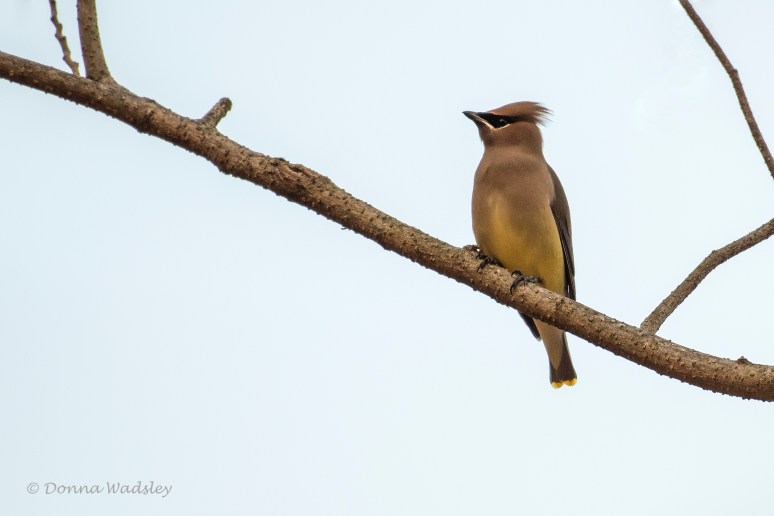
Cedar Waxwing
Length: 5.5-6.7 inches (14-17 cm)
Weight: 1.1 oz (32 g)
Wingspan: 8.7-11.8 inches (22-30 cm)
.
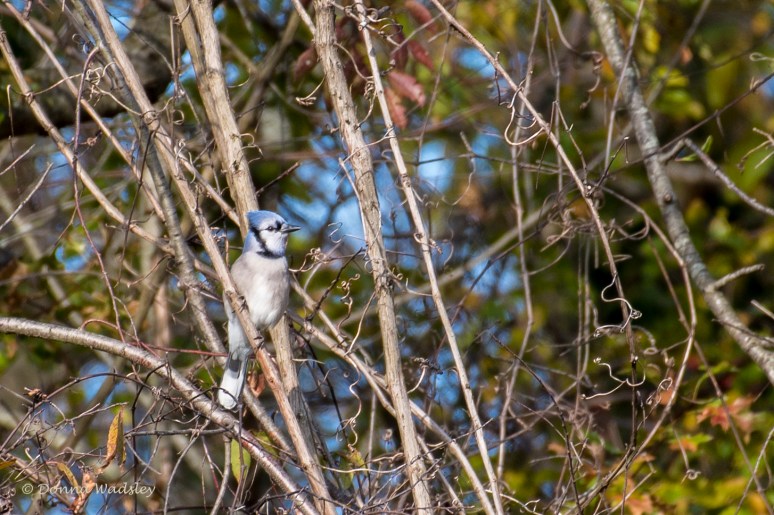
Blue Jay
Length: 9.8 inches (25-30 cm)
Weight: 2.5-3.5 oz (70-100 g)
Wingspan: 13.4-16.9 inches 34-43 cm)
.
.
1-2-3 Cute As Can Be – #8
.
Here’s my continuing series of three photos of three small bird species, being so adorably cute!
.
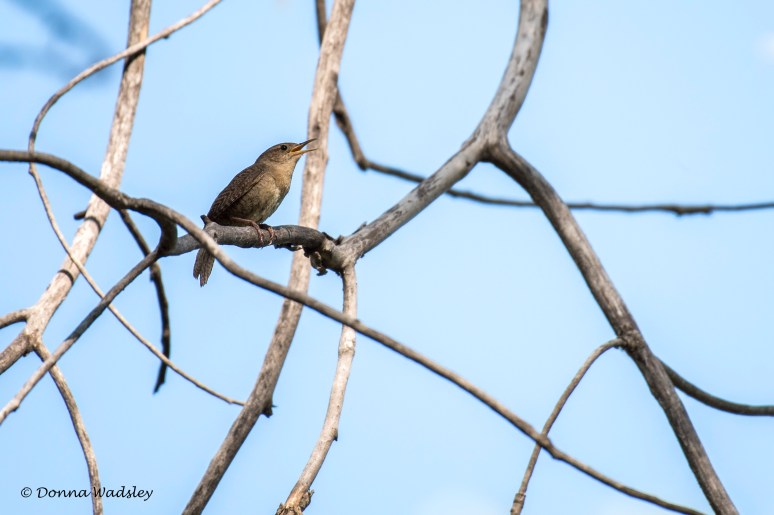
House Wren
Length: 4.3-5.1 inches (11-13 cm)
Weight: 0.3-0.4 oz (10-12 g)
Wingspan: 5.9 inches (15 cm)
.

Carolina Wren
Length: 4.7-5.5 inches (12-14 cm)
Weight: 0.6-0.8 oz (18-22 g)
Wingspan: 11.4 inches (29 cm)
.
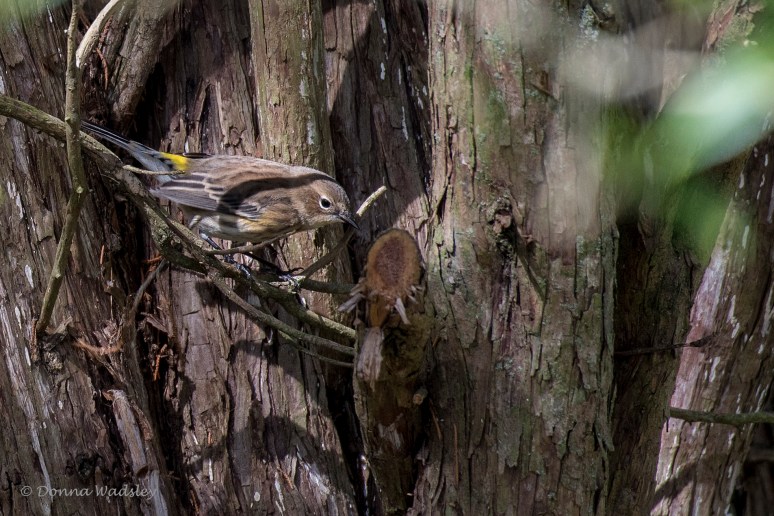
Yellow-rumped Warbler (female or immature)
Length: 4.7-5.5 inches (12-14 cm)
Weight: 0.4-0.5 oz (12-13 g)
Wingspan: 7.5-9.1 inches (19-23 cm)
.
.
1-2-3 Medium Bird Jubilee – #1
.
I take too many bird photos. There, I said. 😏 In case, you didn’t know. 😁
I’m enjoying doing my three-photo series that helps me share all my recent single favorites. So here’s starting another post series of sharing three bird species. This one is for those medium-sized birds that aren’t quite in the cute little birdie category. They fall into the more beautiful grouping with their striking markings and colors.
Starting off with the American Robin. I was trying for photos of them again this morning. They come in a flock, landing in my trees to take a break, calling out, making sure everyone’s accounted for. 😉 I must be a rest area. After a noisy bit, they’ll move on together, coming back another time and repeating above.
.
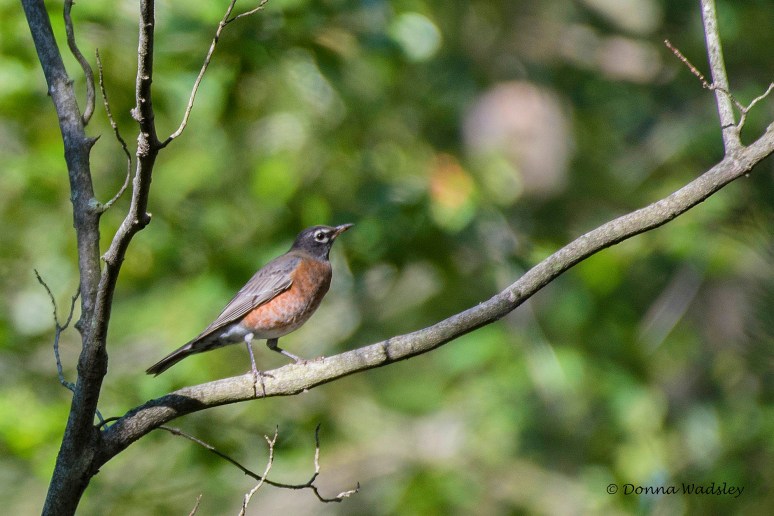
American Robin
Length: 7.9-11.0 inches (20-28 cm)
Weight: 2.7-3.0 oz (77-85 g)
Wingspan: 12.2-15.8 inches (31-40 cm)
.
Every single morning a flock of European Starlings arrive to my junipers and feast for a while before flocking off to their day’s next stop.
.
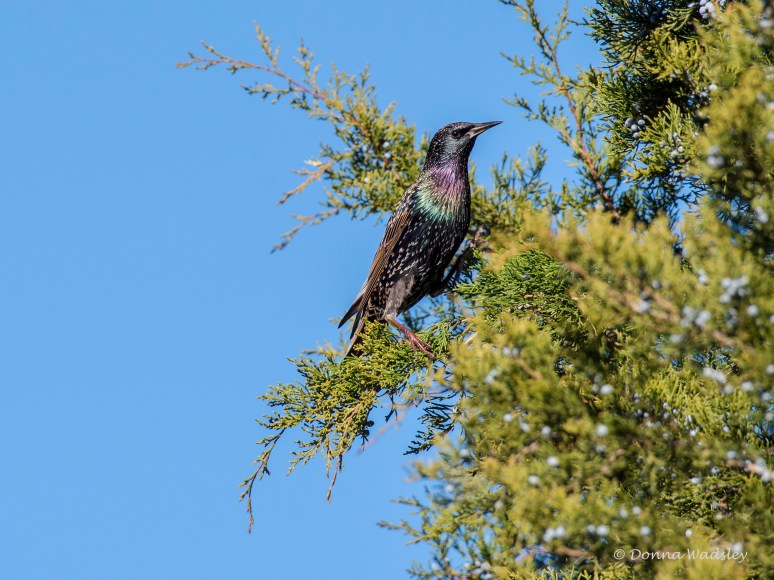
European Starling
Length: 7.9-9.1 inches (20-23 cm)
Weight: 2.1-3.4 oz (60-96 g)
Wingspan: 12.2-15.8 inches (31-40 cm)
.
It’s been a delight to still see the female Belted Kingfisher flying along or perched across our cove on a neighbor’s dock. She’s a cutie; but when you see her size, she’s not so little compared to the two above.
.
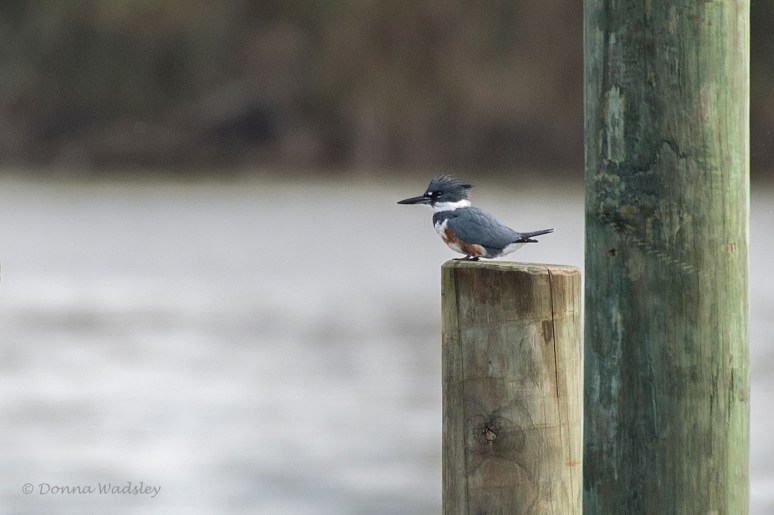
Belted Kingfisher (female, ID’d by the rusty belt)
Length: 11.0-13.8 inches (28-35 cm)
Weight: 4.9-6.0 oz (140-170 g)
Wingspan: 18.9-22.8 inches (48-58 cm)
.
.
Five On The Wing – #21
.
Five birds in flight showing off their beautiful wingspans.
Let’s fly with these big birds!
.

Double-breasted Cormorant
Wingspan 44.9-48.4 inches (114-123 cm)
.
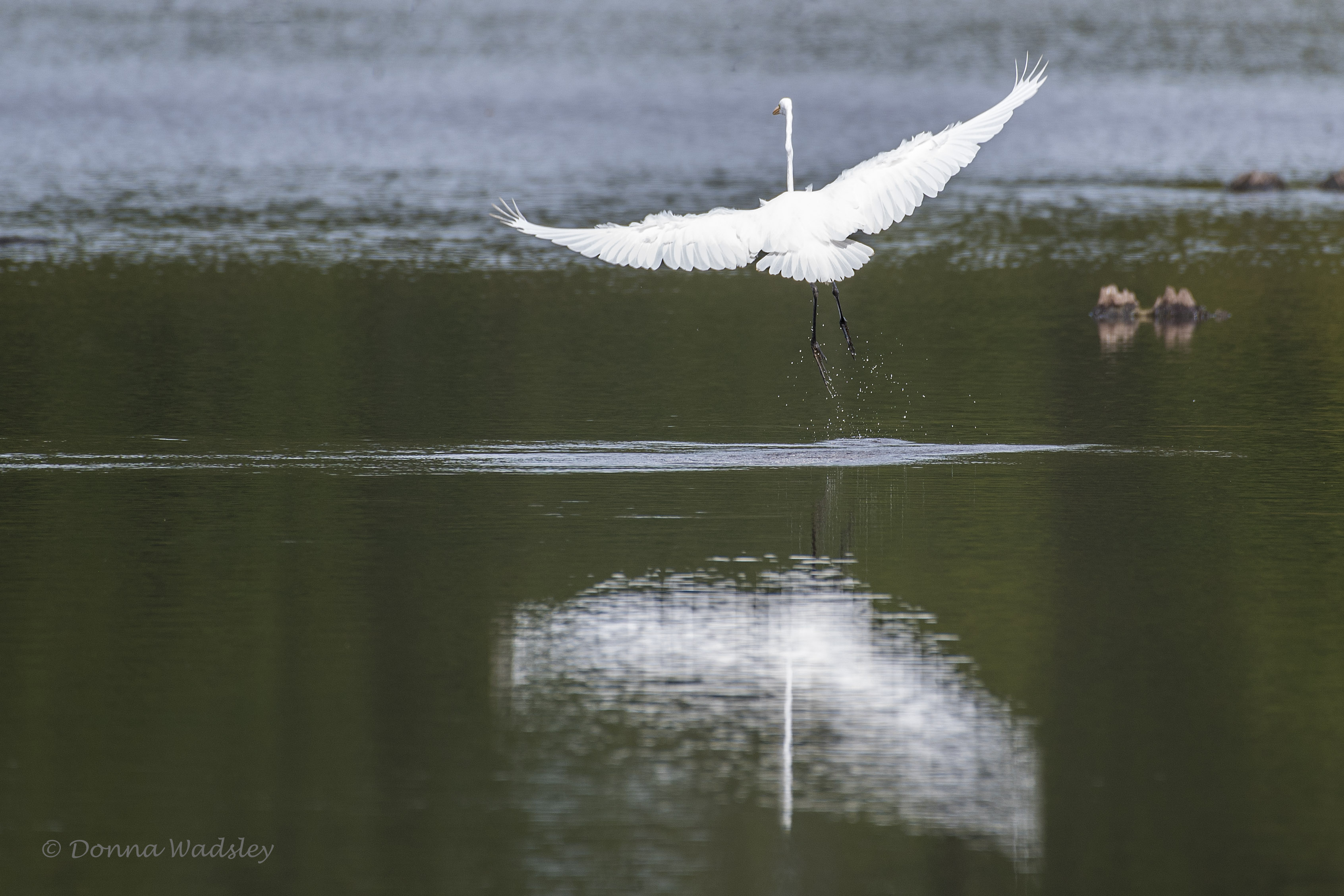
Great Egret
Wingspan 51.6-57.1 inches (131-145 cm)
.
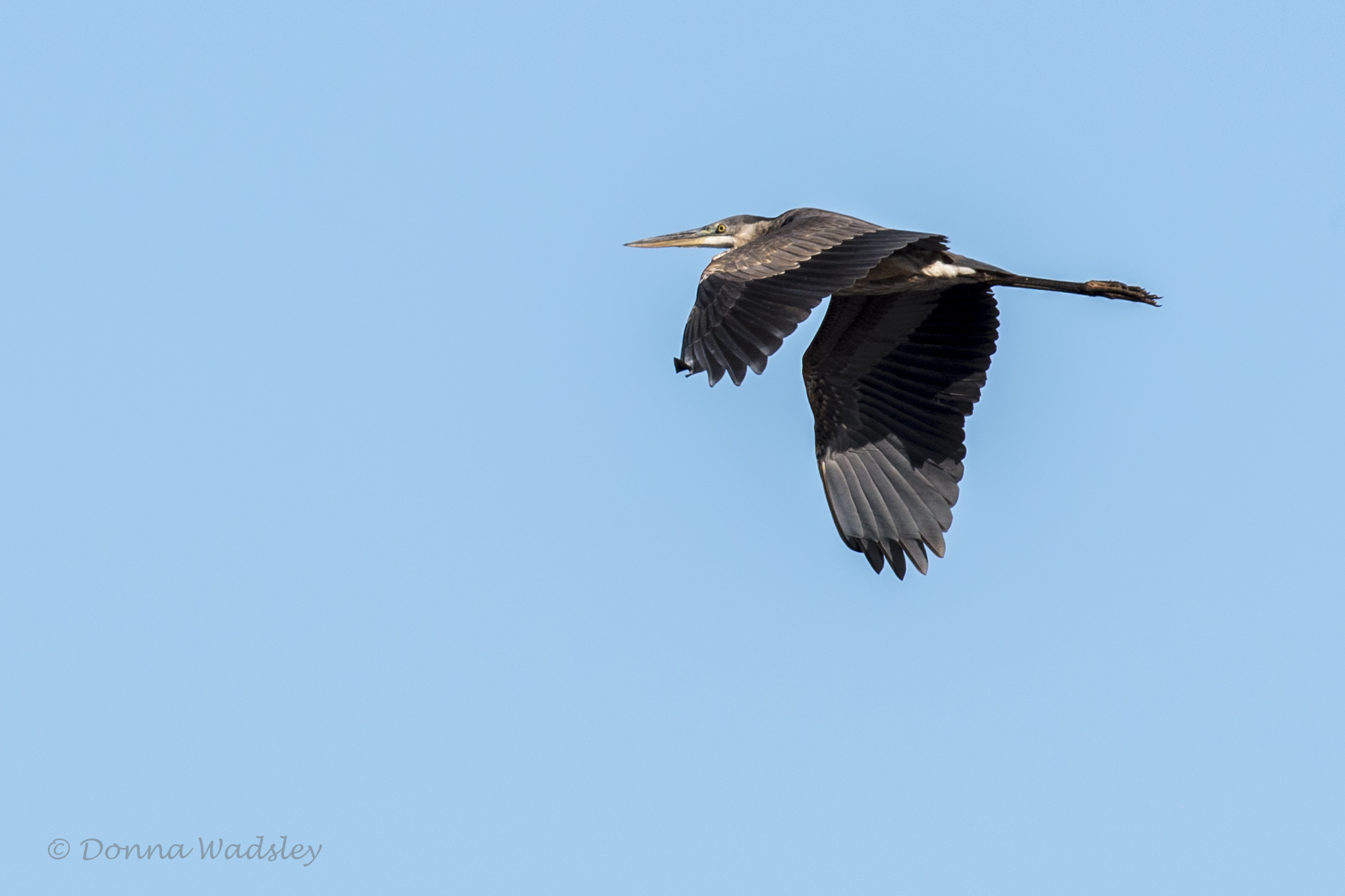
Great Blue Heron
Wingspan 65.8-79.1 inches (167-201 cm)
.
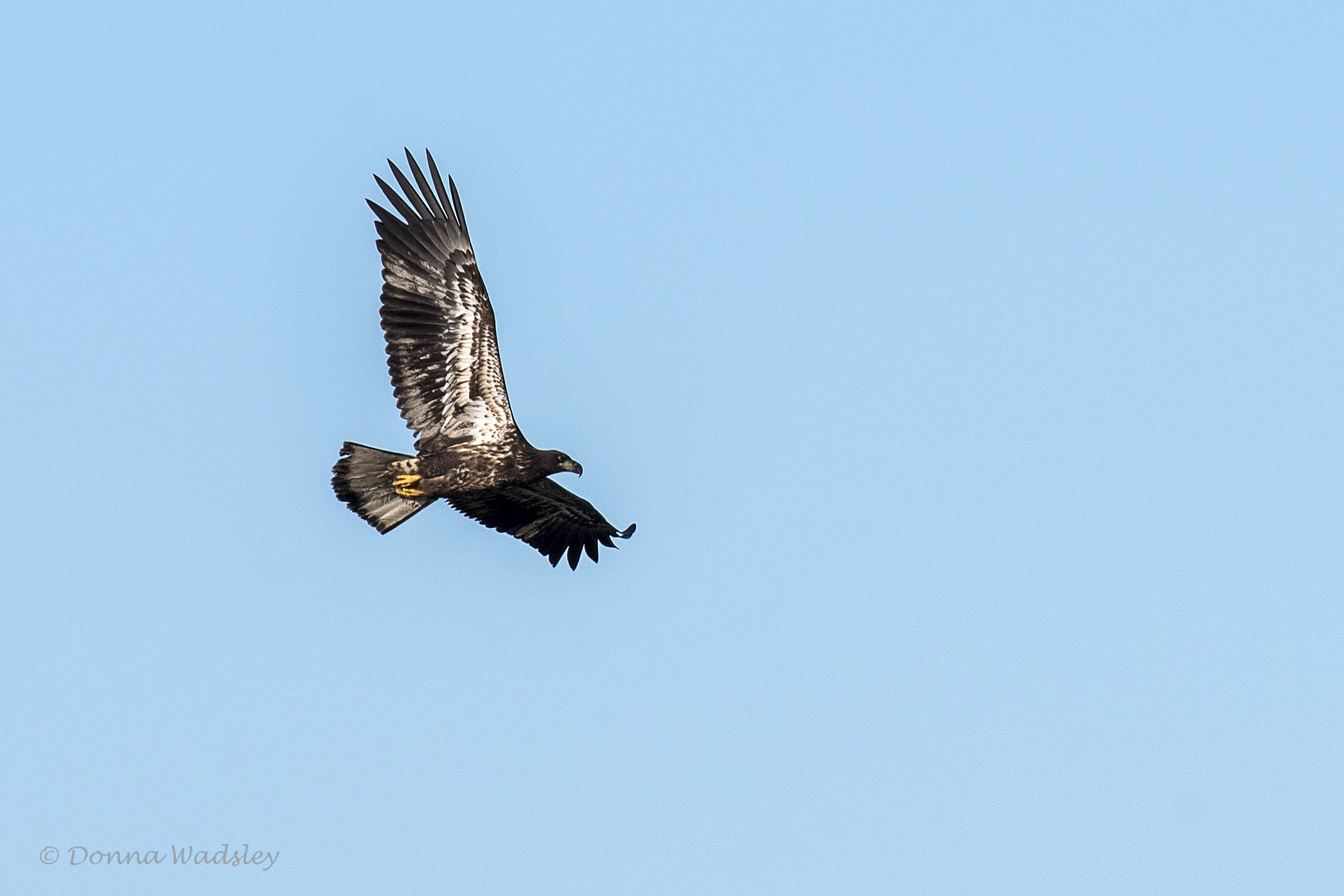
Bald Eagle (immature)
Wingspan 72-90 inches (182cm-229cm)
.

Bald Eagle (adult)
Wingspan 72-90 inches (182cm-229cm)
Airplane species and wingspan unknown
.
So sorry, quick note on me missing again, it has been a roller coaster past couple weeks; too difficult to think about blogging. Thankfully, Dad pulled through the sepsis but still has several hurdles. He’s been transferred to an acute rehab facility where he has a long road still ahead of him. I am thankful I’ve been able to visit him a few times. Your prayers for my Dad have been greatly appreciated, I told him I had friends around the world praying and thinking of him. He said to tell you, “thank you”; and I know he truly meant it. And I do too; thank you, my friends. 🙏
.
.
1-2-3 Cute As Can Be – #7
.
Ready for three more adorably cute birds? 😃 These have the added theme “sparrows” to show some comparisons.
.
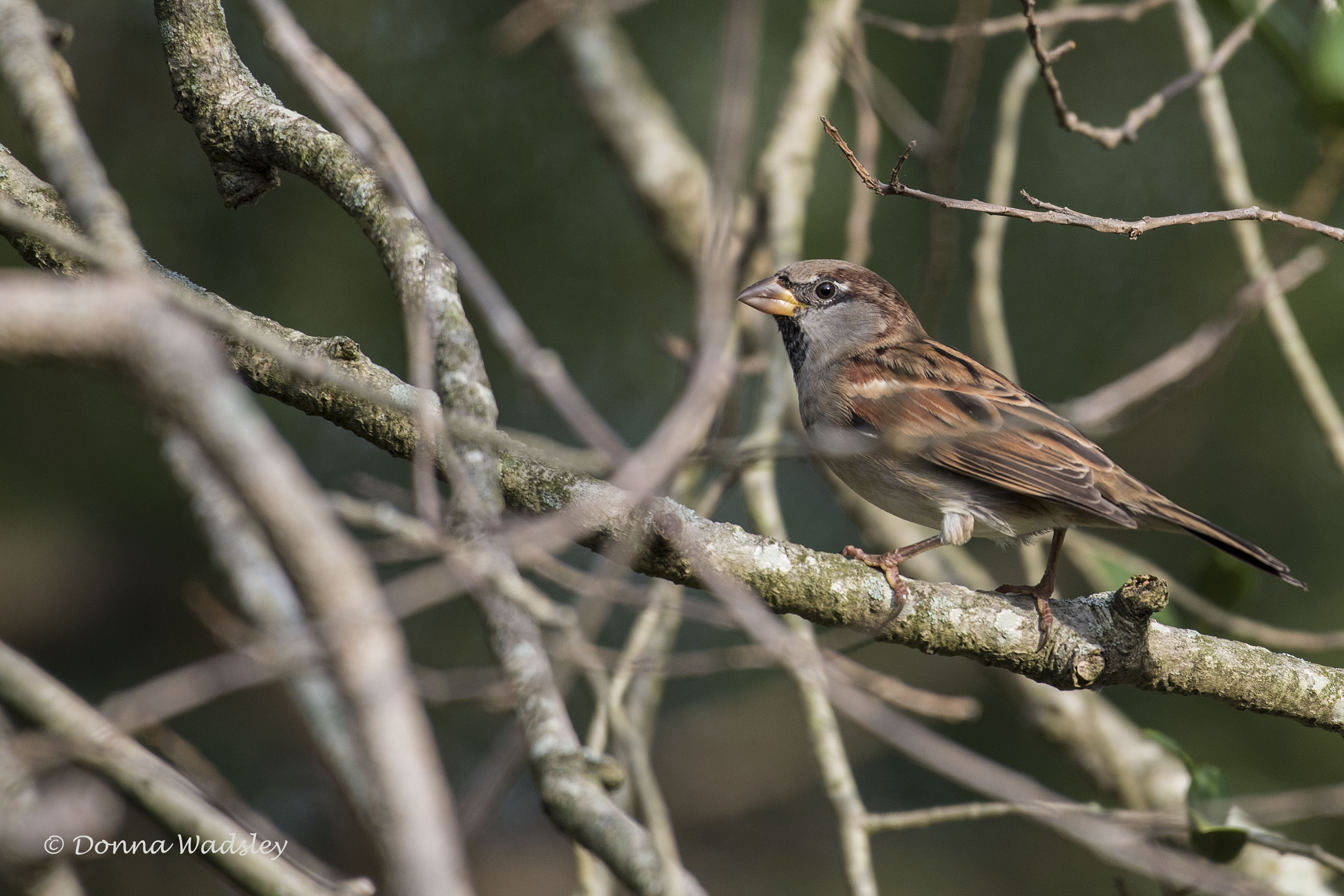
House Sparrow (male)
5.9-6.7 inches (15-17 cm)
.
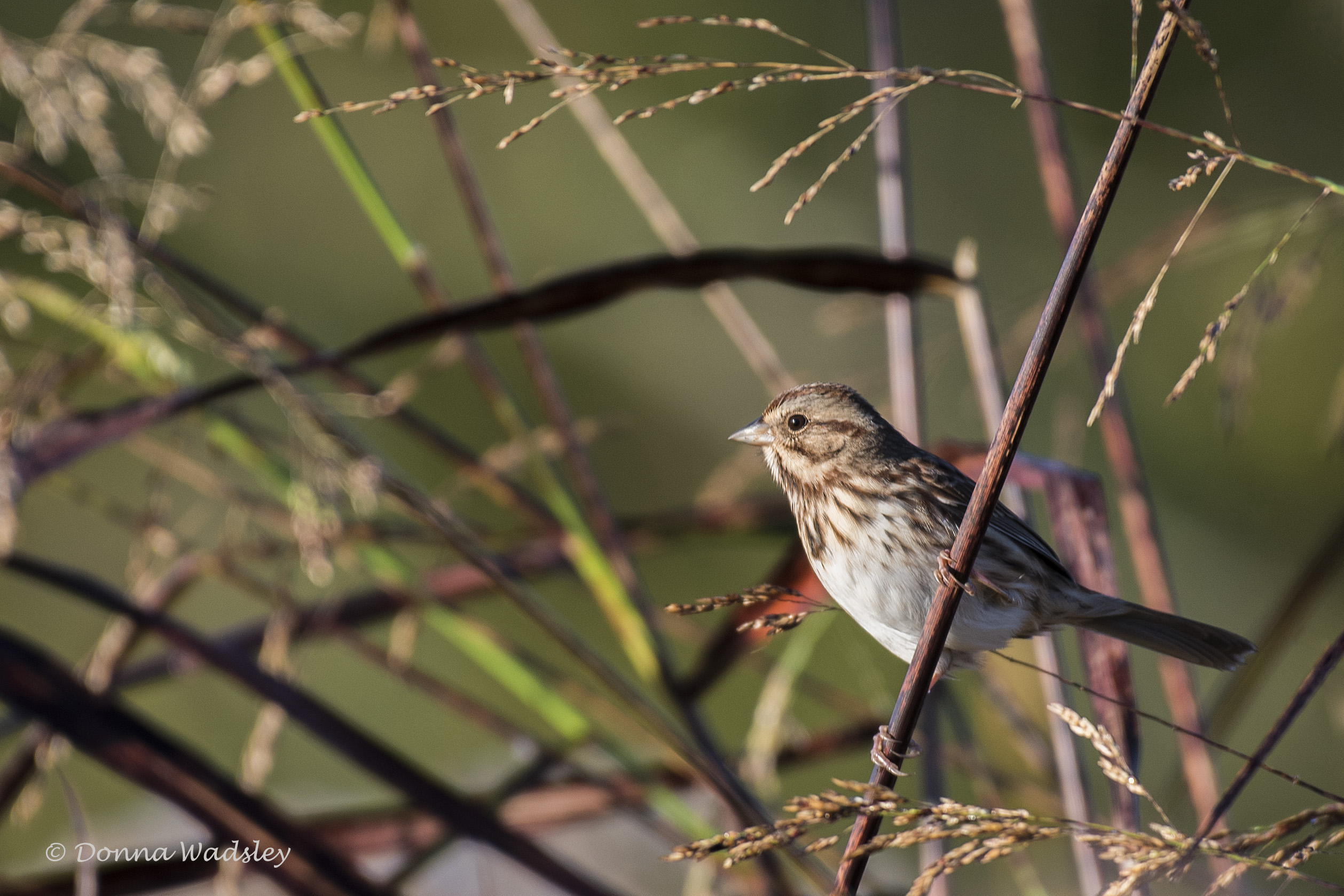
Song Sparrow
4.7-6.7 inches (12-17 cm)
.
How about a pair of playful sparrows!
.
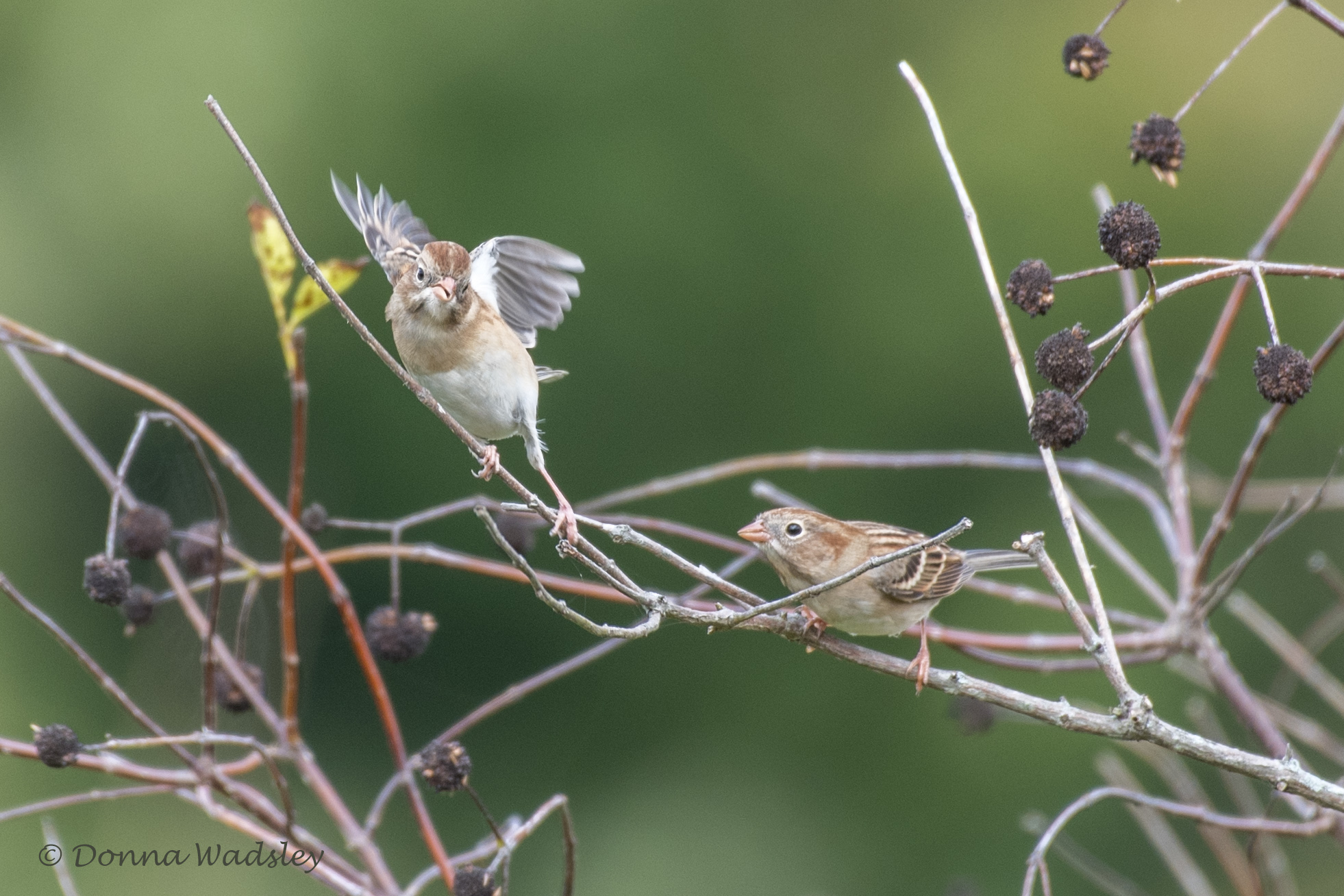
Field Sparrows
4.7-5.9 inches (12-15 cm)
.
.
Eagles & Sticks – It’s Nest Building Time!
.
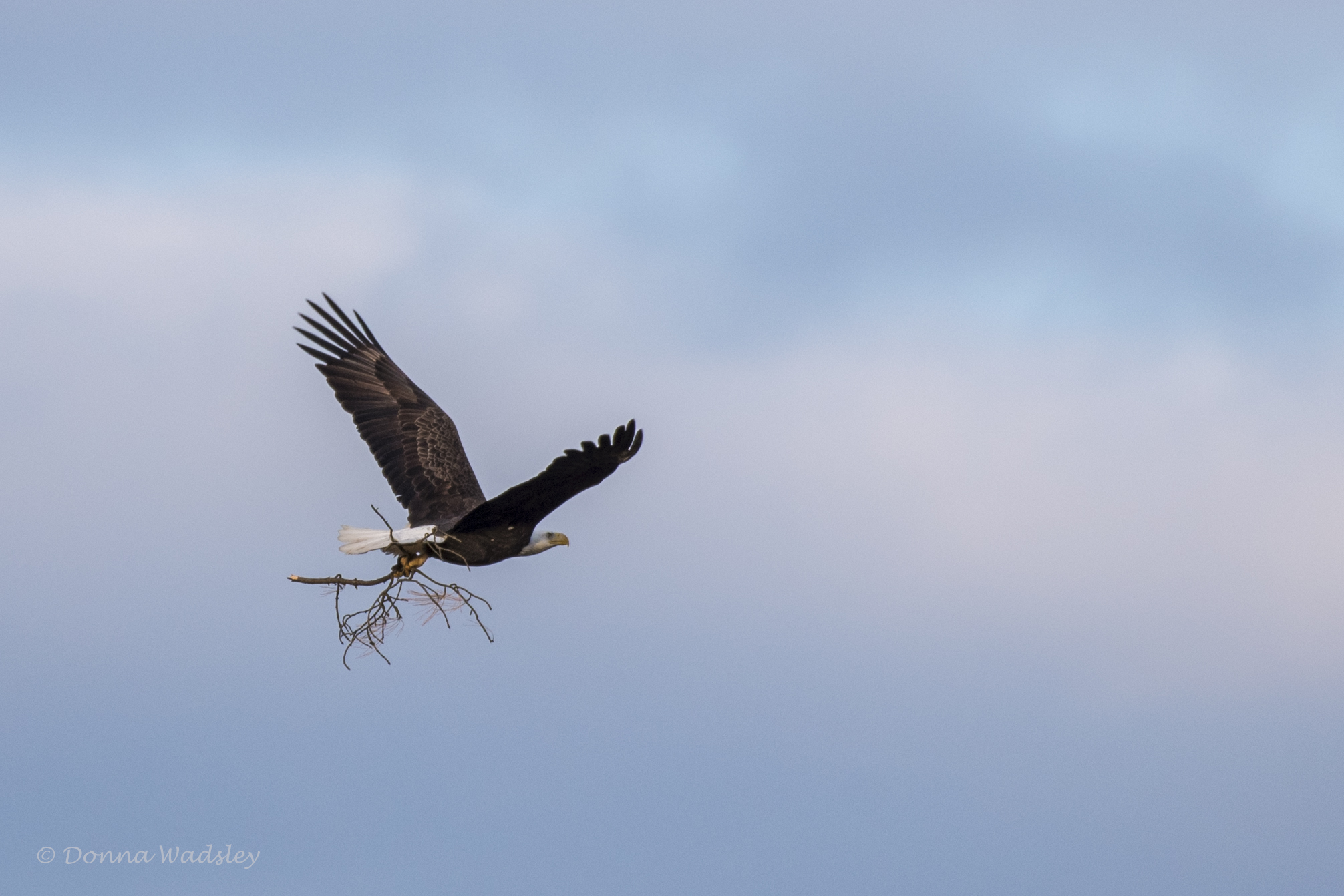
The beginning of Bald Eagle mating season also means it’s construction time on building or renovating their nest from last year.
These photos are from the past month of the Eagles that live across the cove from our property. I cannot see the nest, but I know what ‘clump’ of loblolly pine trees it is in.
.
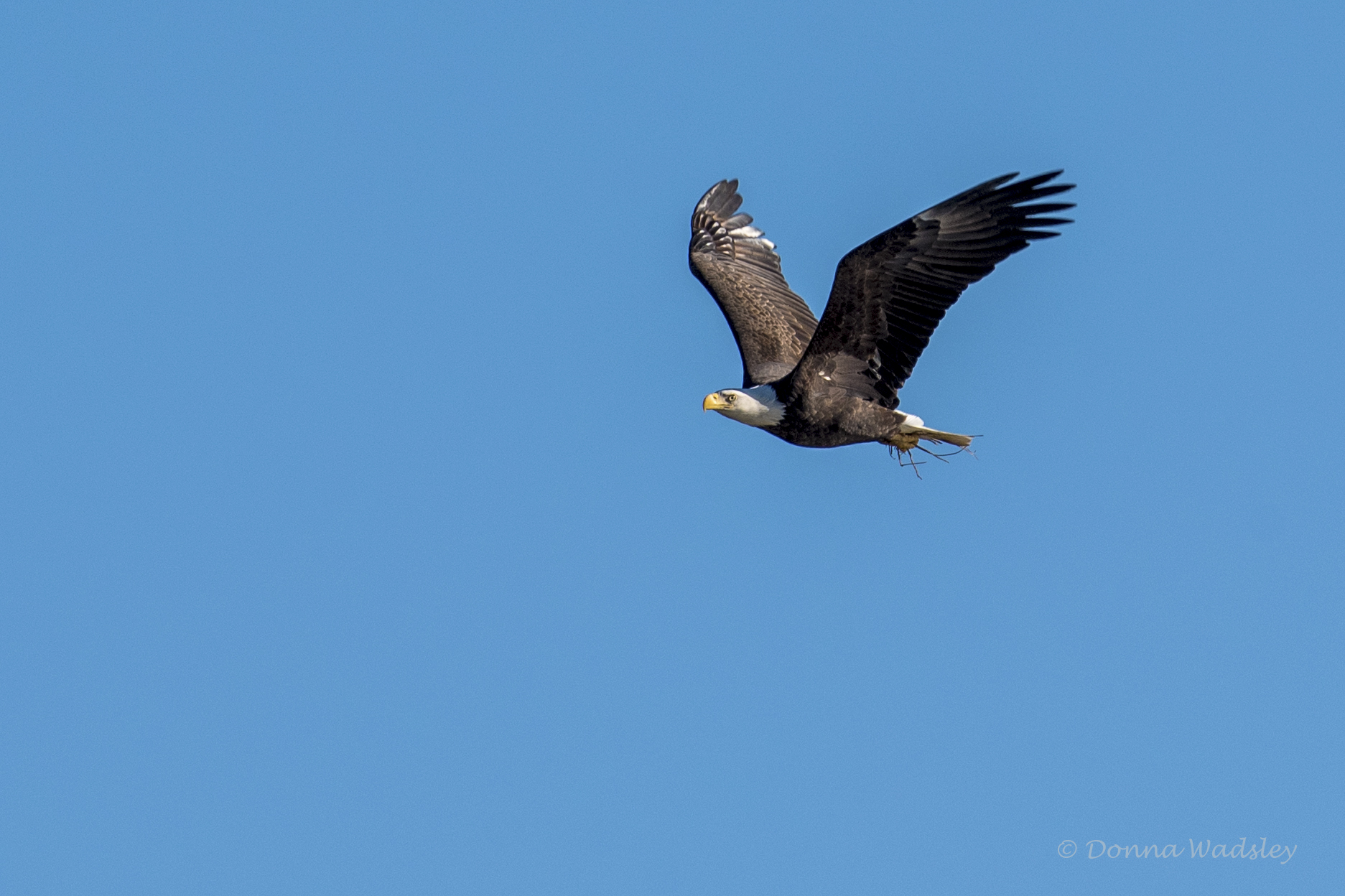
Bald Eagle carrying nesting material
.
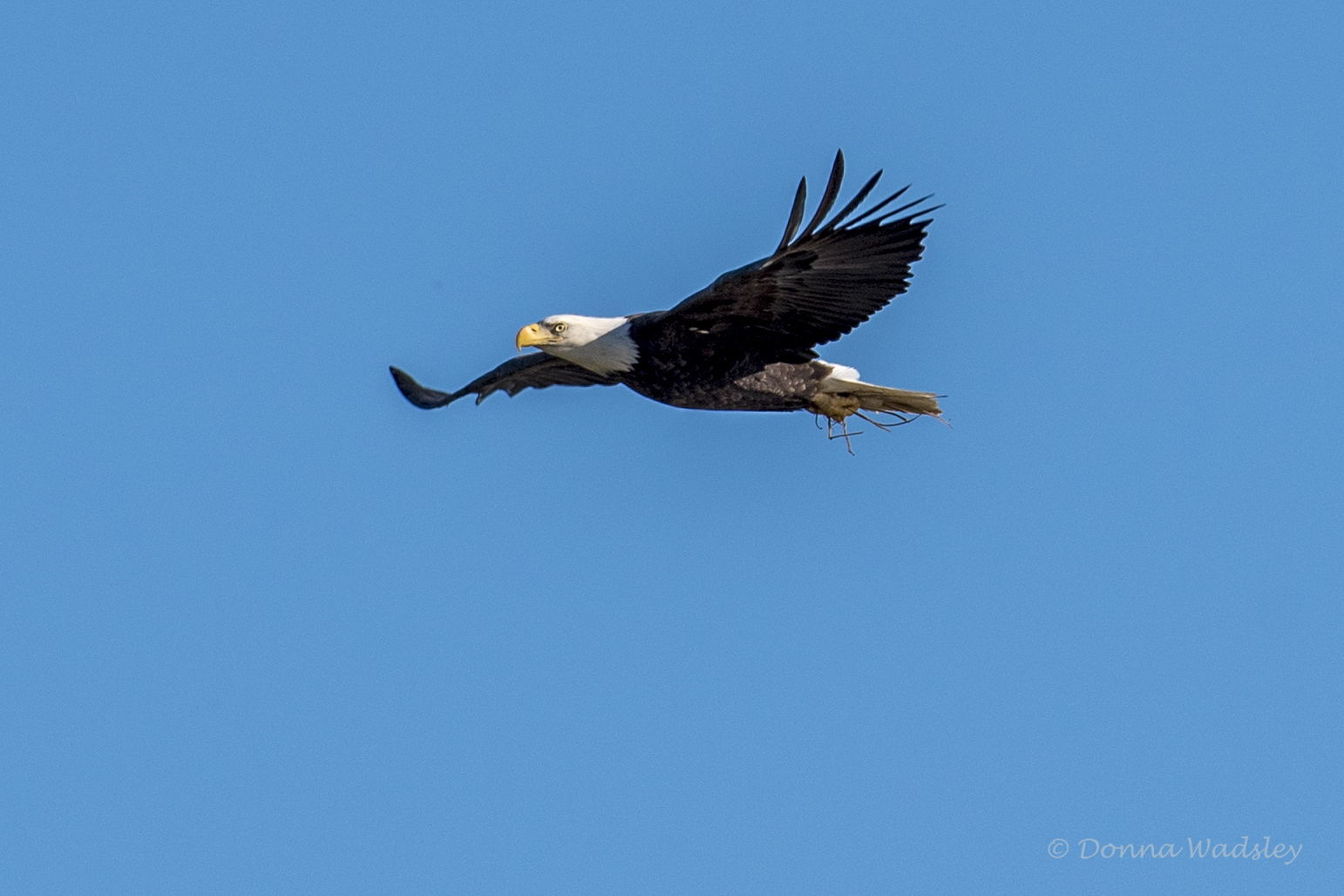
Bald Eagle doing a fly-by to give me a closer shot, thanks!
.
Another day, this time with a long stick. If this is the same male as the last photos, he was probably told to up his game on stick size, eh? 😉
.
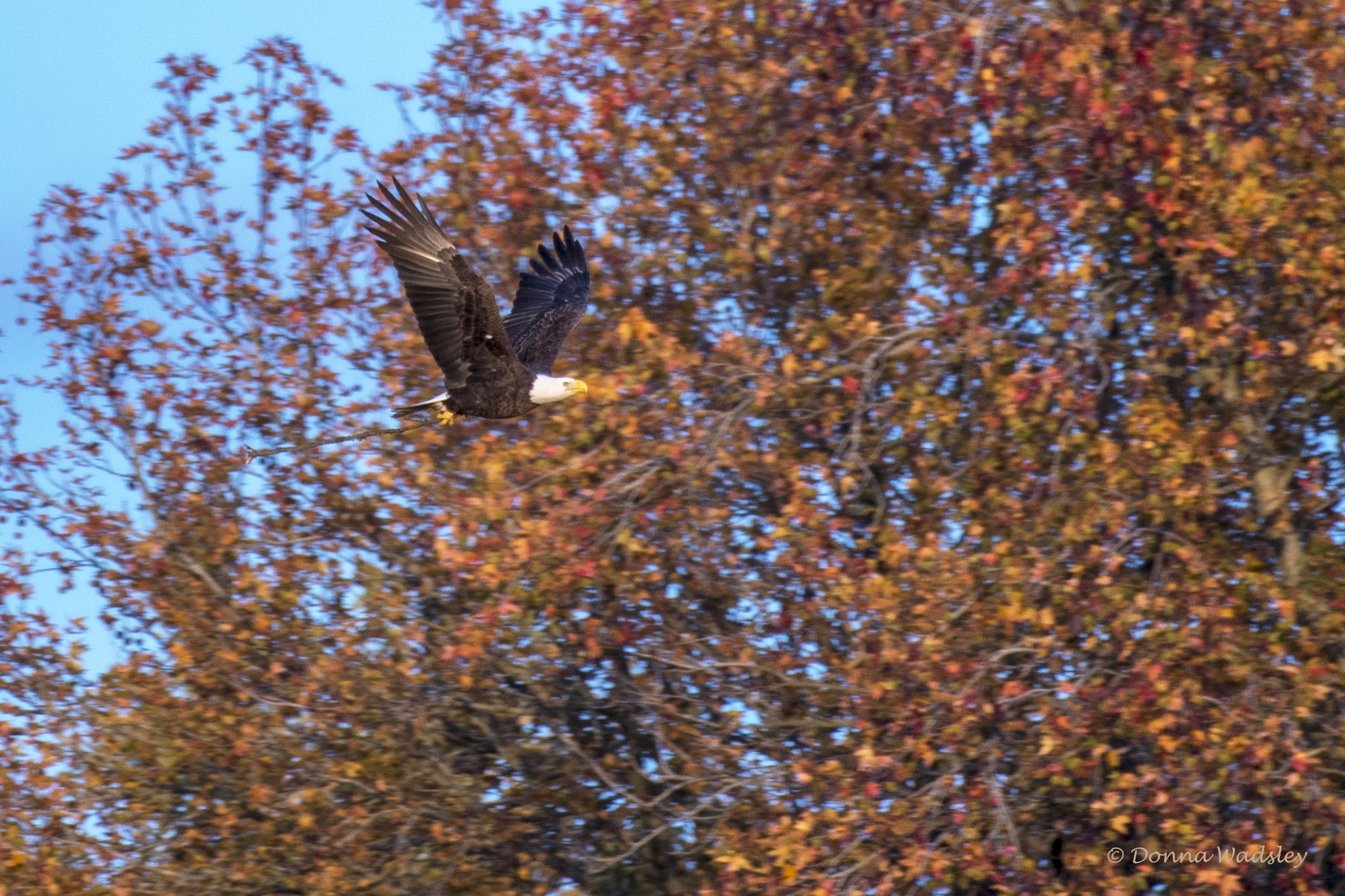
Bald Eagle carrying a long stick
.
And then there was the time, when one of them came up from behind, flying over and out in front of me, not only startling me but giving me a chance at these cool shots.
.
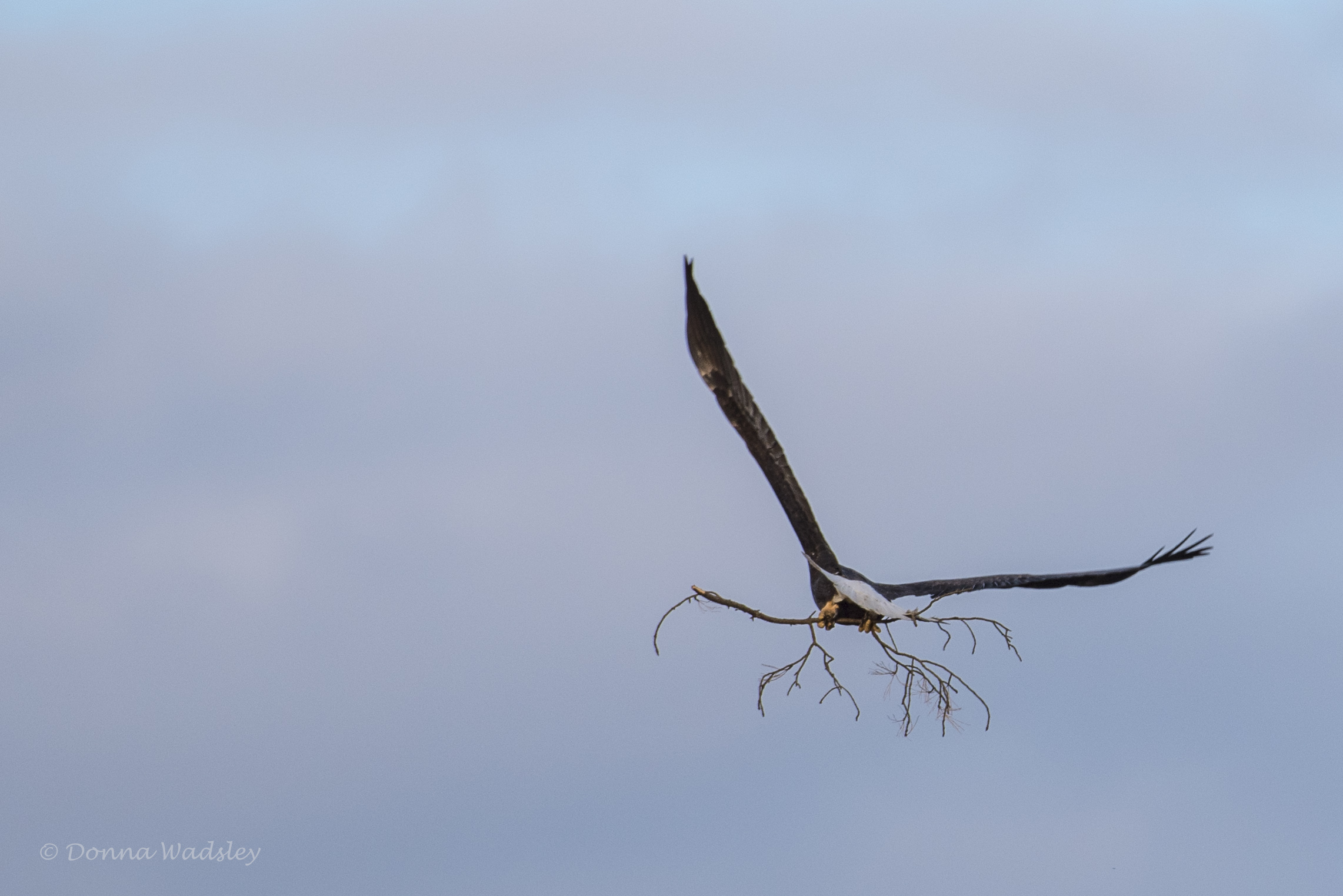
Bald Eagle passing over and out in front of me
.
Bald Eagle making the turn to head to the nest
.
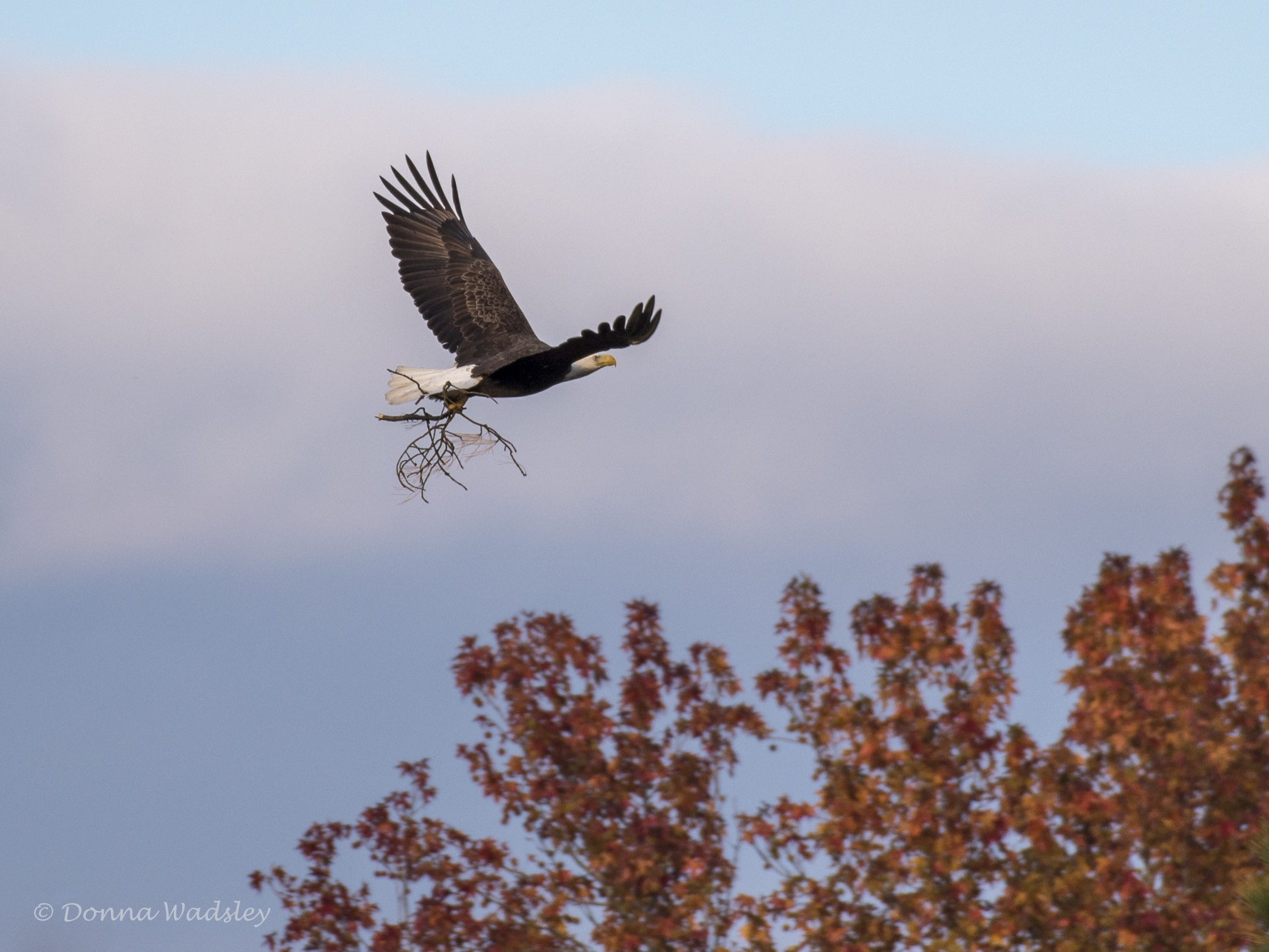
Bald Eagle climbing high over the trees to the tall loblolly pines where the nest is hidden
.
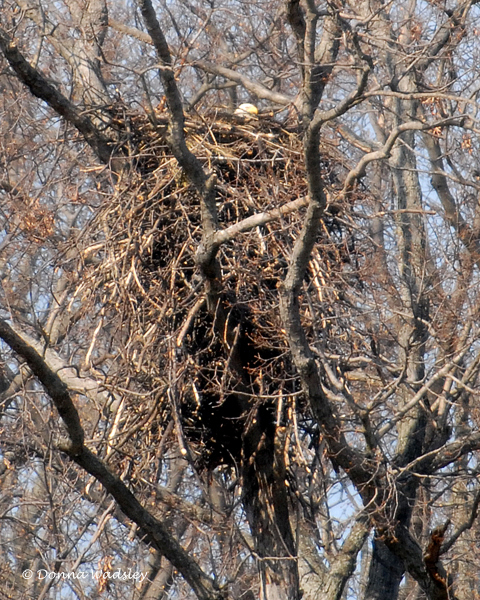
Bald Eagles mate for life and build some of the largest nests in the world in tall trees near rivers, bays, and wetland areas. About 60% of Eagle nests in the Chesapeake Bay region are located in mature loblolly pine trees at 80-110 feet above the ground. Nests are made of sticks but also contain grass, pine needles, and sometimes pieces of cornstalks. Eagles add to their nests each year, and after many years of successful nest building, their homes may grow to around 10 feet in diameter, 12 feet deep, with a weight of up to 2 tons.
Shot from a distance and heavily cropped, here’s one of the largest Eagle’s nests I’ve photographed, about 11 years ago on the Wye River on the Eastern Shore Maryland. Yes, they do get big!
.