
Visitors At The Osprey Platform
After Osprey depart for migration in our region, their nest platform likely becomes a handy perch here and there for someone else.
Not an unexpected visitor, a Fish Crow stopped by, just checking to be sure no food was there to snack on and take a short break before scavenging on.

Fish Crow

Fish Crow

Fish Crow
“Hmmmm…..anything to nibble on?” “Darn, no snack….but nice view!”
There’s been a Belted Kingfisher flying around the creek, perching on the sailboat mast lines to fish. I’ve been hoping he’d do a little perching on the platform.
Bingo!
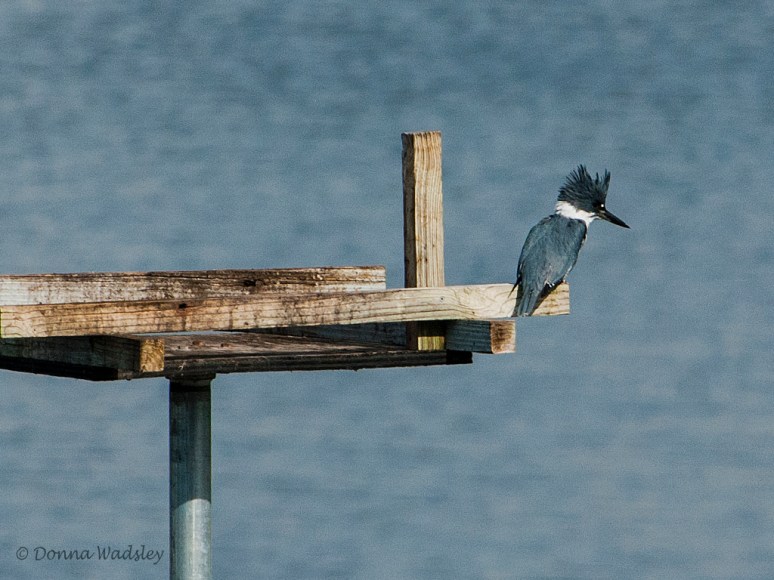
Belted Kingfisher
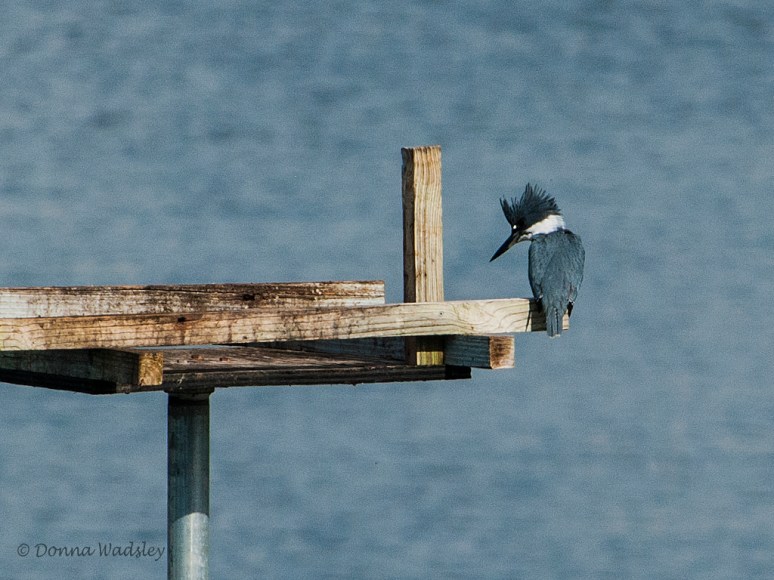
Belted Kingfisher
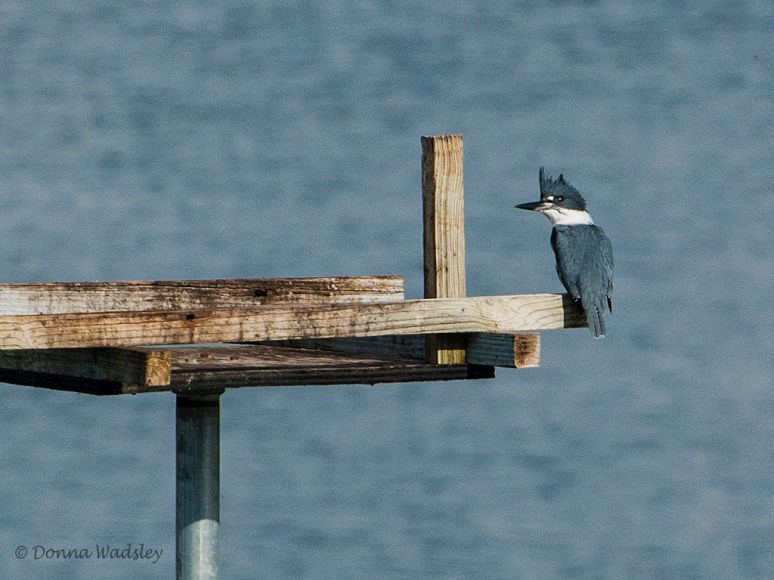
Belted Kingfisher
The Belted Kingfisher was focused on fishing and gave me a few more photo ops.

Belted Kingfisher spotting a fish.

Belted Kingfisher getting ready to dive for a fish.
“Hmmmm….I see you little fish.” Taking the plunge! Did he succeed?

Belted Kingfisher with his successful catch!

Belted Kingfisher in flight with fish.

Belted Kingfisher
Over the parking lot to perch on a light pole to gulp down the meal.

Belted Kingfisher

Belted Kingfisher
The Belted Kingfisher then quickly gets back in action to perch and fish some more.
This last captured visitor to date, a Merlin Falcon, was an exciting surprise!

Merlin Falcon


Look to the right. Look at Donna. Look to the left.
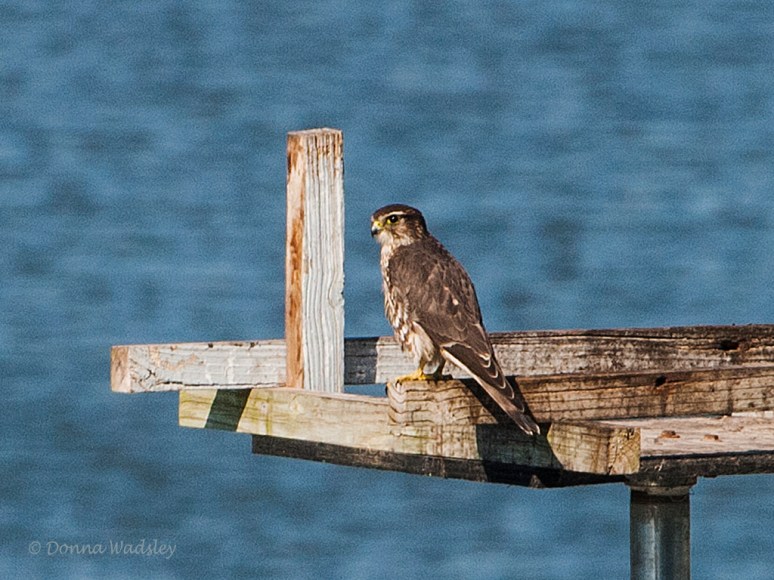
Merlin Falcon
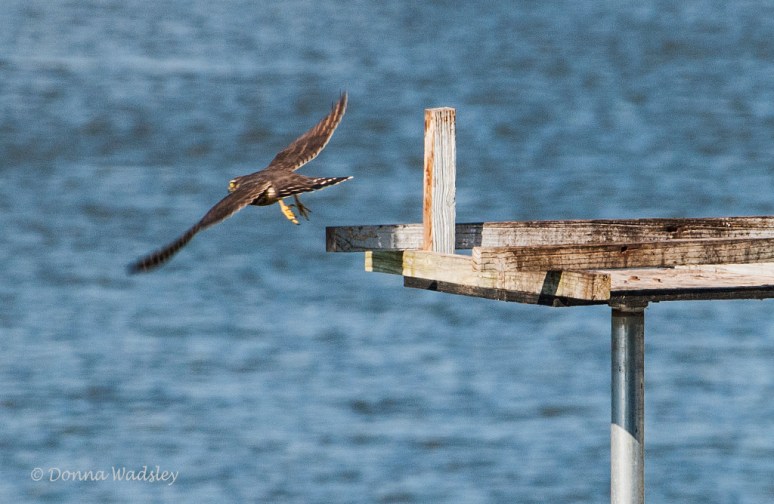
Merlin taking flight
Who knows what other visitors have already or might perch at any time. It’ll be interesting to keep watching and sharing throughout the fall and winter.
I do think we all know and agree that Bella, the Osprey Lady of the platform, would not approve of these trespasses!
American Robins in the Fall
When we see our “first Robin of Spring”, hopping and running, foraging for insects and worms, we get excited; we tell others “they’re back!” We see it as one of the first signs that Spring is finally here. Then by summer’s end, the American Robin disappears from our yards and parks, as many birds do.
Were you aware that the American Robin doesn’t migrate huge distances as many others? They will spend their entire fall & winter in their breeding range throughout the U.S., maybe only just miles away from their nesting areas, flocking with other American Robins at places where there are trees & bushes laden with autumn and winter berries & seed to eat.

American Robin snacking on berries

Down the hatch!
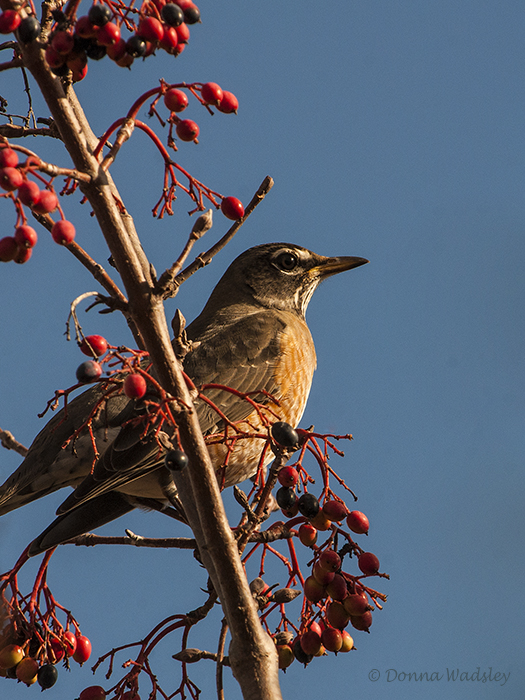
American Robin – An Autumn Profile
So if you need a “Robin fix” and cannot wait until Spring, you can find them now if you look in the right berry-licious places!
(Photos recently taken at Blackwater NWR, Cambridge, Maryland)
Great Blue Herons
Great Blue Herons are in abundance around the Chesapeake Bay area year-round. Lucky me! They are one of my favorite birds to photograph.
Here are more of my favorite shots from the past summer not previously shared.
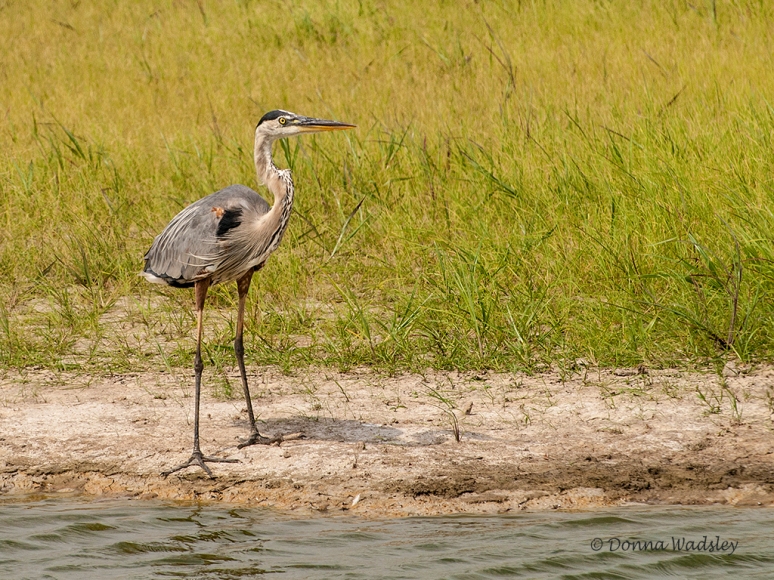
Great Blue Heron

Great Blue Heron
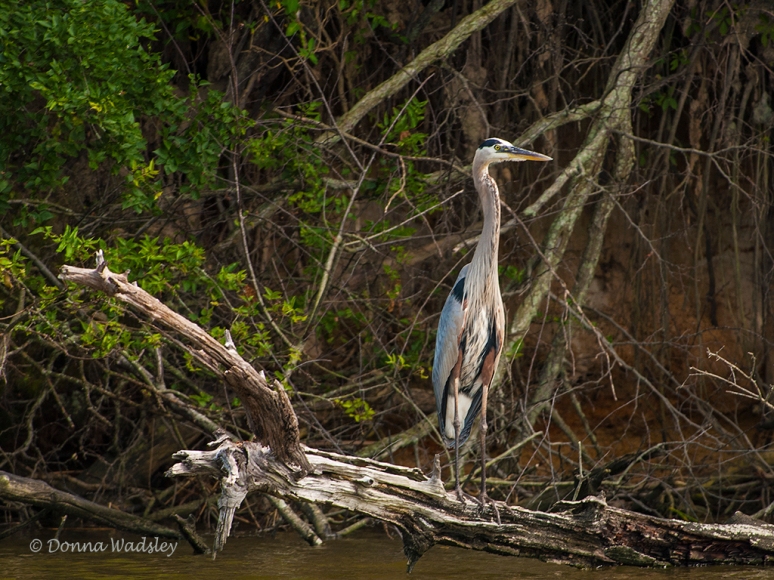
Great Blue Heron

Great Blue Heron

Great Blue Heron in landing mode

Great Blue Heron and his reflection

Great Blue Heron thru the marsh grasses

Great Blue Heron preening

Sometimes they tell a joke and we all have a good laugh!
🙂
Another Delmarva Fox Squirrel
I got a chance to slip over to Blackwater NWR again yesterday (yay!) and was rewarded with another sighting of the large yet elusive Delmarva Fox Squirrel. And finally in a tree and not scampering around on the ground!
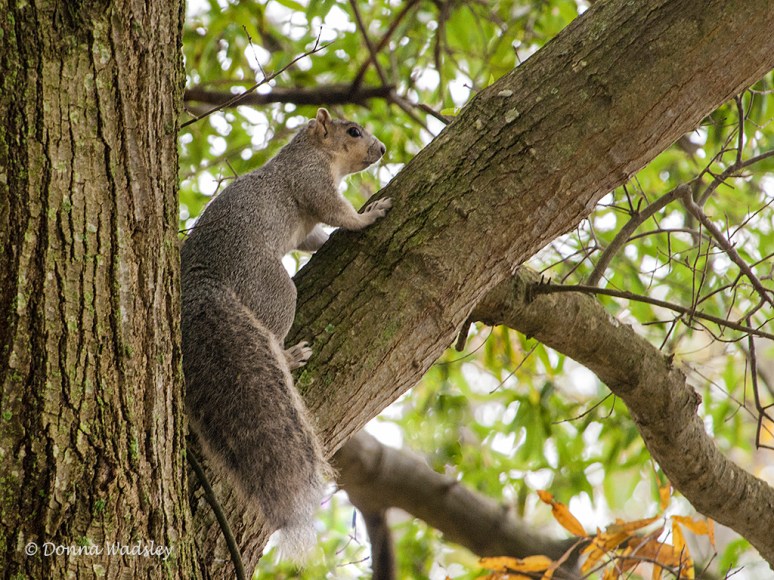
Delmarva Fox Squirrel
The Delmarva Fox Squirrel was listed as endangered in 1967. After a rigorous recovery plan and range expansion, the Delmarva Fox Squirrel was finally removed from the endangered species list in November 2015.

Their big, bushy tail grows to 15 inches long.
After many years looking for even just a glimpse of this very shy squirrel that is found only in the mid-Atlantic region, it wasn’t until this year I was able to sight and photograph them several times, for which I feel fortunate.
It is gratifying to the see the protective efforts of many has been a success for the significant growth in population of the Delmarva Fox Squirrel.
And, as squirrels go, they can’t help but look cute!
Tuckahoe Creek Rt. 328 Bridge Swallows
Head down to a boat marina around the Chesapeake Bay during the spring/summer season and you’ll likely find a colony of Barn Swallows, swooping the air and water for insects, or perched on the dock lines or boats lookin’ pretty.
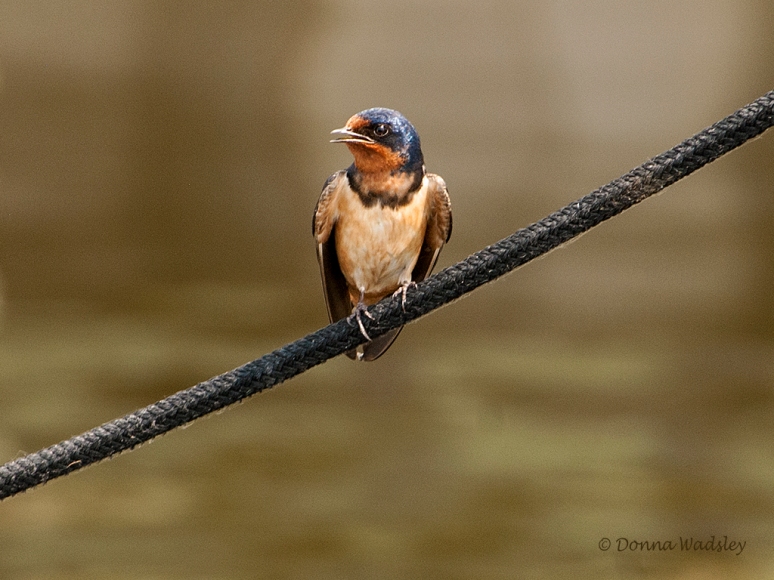
Barn Swallow (male)
I received an e-bird alert over the summer that there were Cliff Swallows under the Rt. 328 bridge crossing the Tuckahoe Creek, a tributary off the Choptank River near us. The Cliff Swallows would be a new addition to my bird lifer list if I could capture one.
After two trips by boat, hanging around/under that bridge and taking a bunch of photos, I was disappointed that I couldn’t ID any Cliff Swallows, even after pouring through my images later to make sure. Several times!
However, there was a large colony of Barn Swallows and I did note one male Tree Swallow.
The Cliff Swallow looks very similar to the Barn Swallow in coloring but has an added white patch on its forehead, the white patch that was missing in all my Swallow photos.
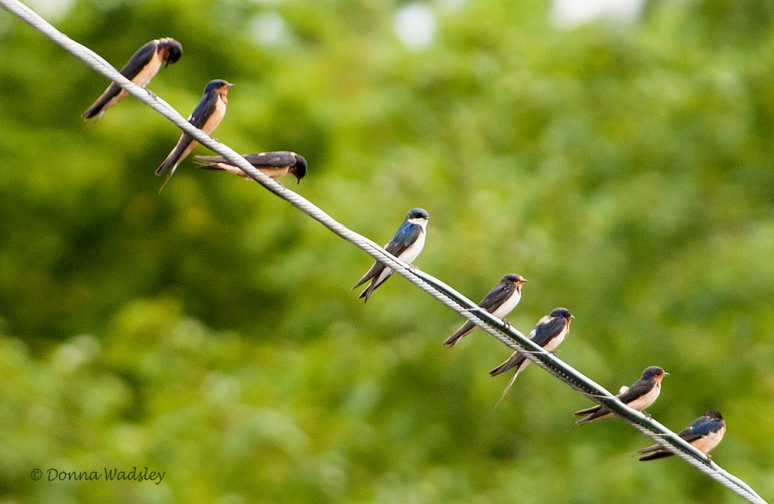
Barn Swallows surrounding a Tree Swallow (in the center)
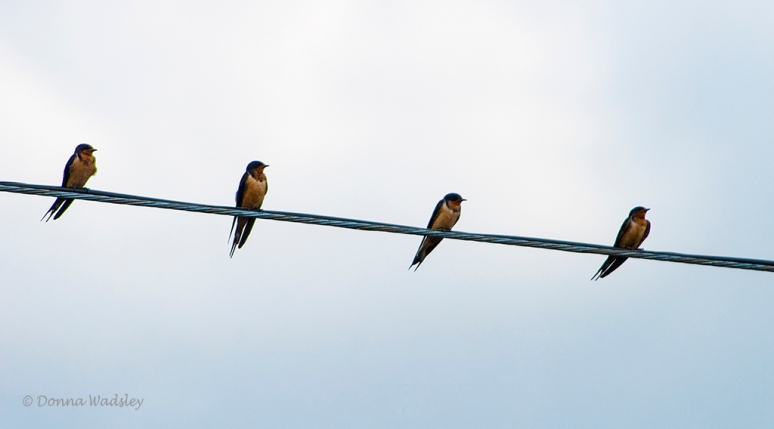
Barn Swallows chillin’
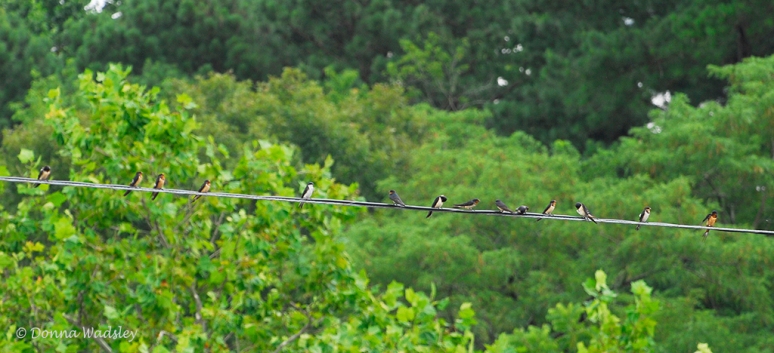
Barn Swallows and one Tree Swallow
What was neat was seeing the Barn Swallows’ nests as we passed under the bridge. Barn Swallows use mud to create their nest, mixing it with grass stems to make pellets.
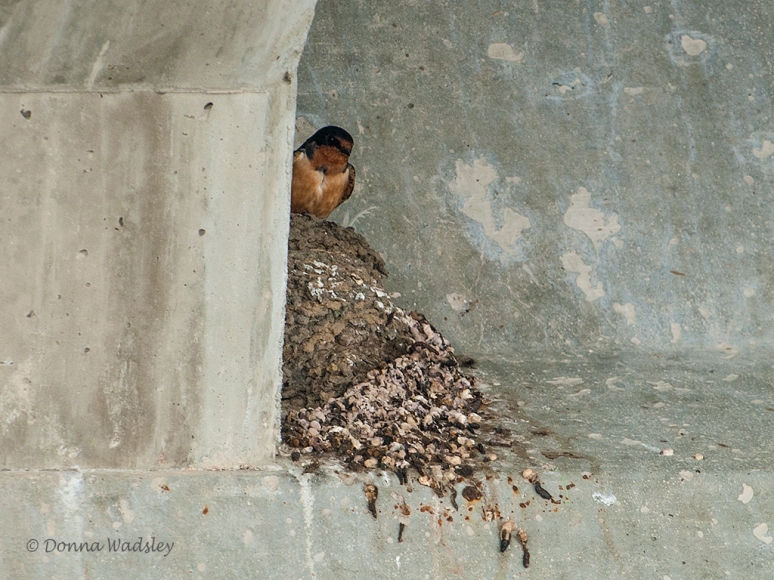
Barn Swallow nest under Tuckahoe Creek Rt. 328 bridge
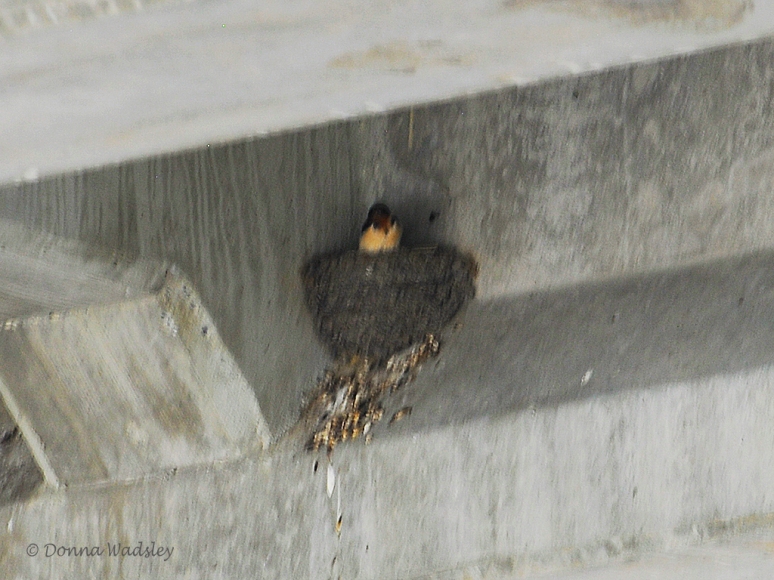
Barn Swallow nest under Tuckahoe Creek Rt. 328 bridge
(sorry bad photo, rocking boat)
I wish I could have gotten more/better photos of their nests but the current was always swift while maneuvering the boat.
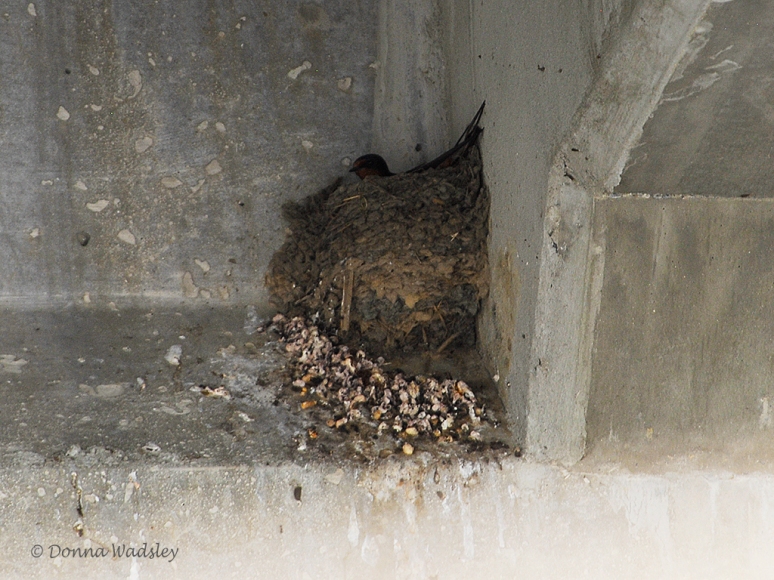
Barn Swallow nest under Tuckahoe Creek Rt. 328 bridge
Of course, I was bummed in not photographing the Cliff Swallow and getting to add them to my lifer list, but I did take notice and got this next photo of a Cliff Swallow’s nest amongst the Barn Swallow nests.
Notice how the Cliff Swallow adds a tube to their nest, making it look more like an enclosed gourd. Proof the Cliff Swallow was present here somewhere!
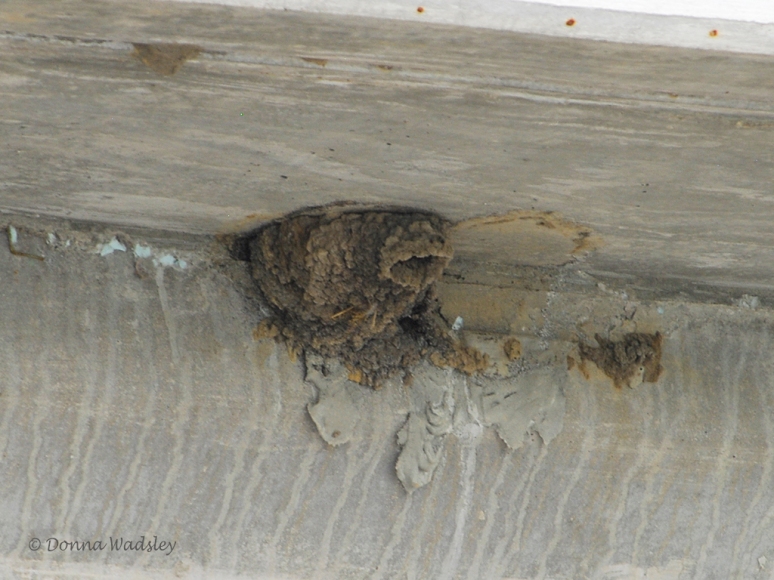
Cliff Swallow nest under Tuckahoe Creek Rt. 328 bridge
How pretty to see Swallows perch so elegantly on a line….
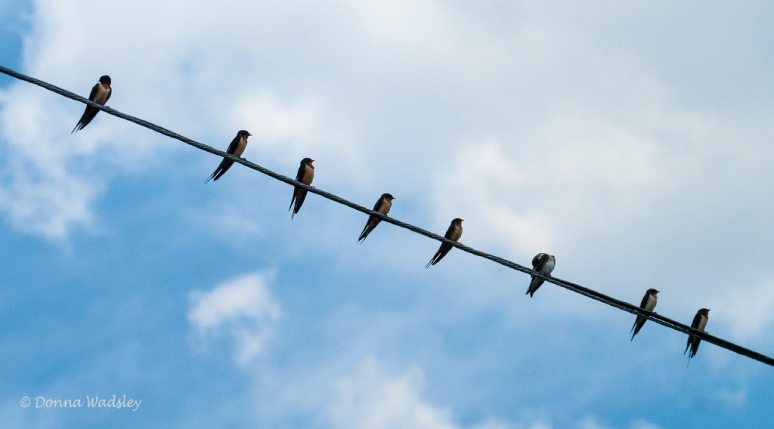
Barn Swallows
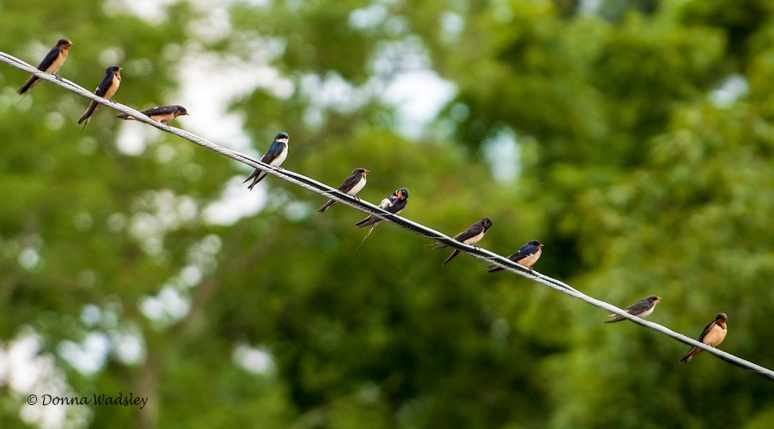
Barn Swallows and one Tree Swallow
The swallows have all since migrated from the area to their wintering grounds in Central and South America, so I missed my opportunity this year on the Cliff Swallow.
Hopefully next Spring the Cliff Swallows will return to the bridge…… and so will I if I’m able to. My lifer list awaits! 🙂
Late Afternoon at Blackwater NWR
I cannot believe it’s been over a month since my last post; it was not intended. Too many ups and downs and turn-arounds….
To try to get back in the swing of things, a much-needed fix with nature was back on the agenda. It finally happened a week ago on a warm, breezy late afternoon at Blackwater NWR.
On arrival, I was immediately rewarded with a small group of warblers, busily foraging the bushes for berries along the wildlife drive near the Marsh Edge Trail.

Yellow-rumped Warbler

Yellow-rumped Warbler
Yellow-rumped Warblers

Pine Warbler

Pine Warbler
Pine Warblers
Another little guy flew up to a snag and perched.

White-breasted Nuthatch
Many of the residents were soaking up the last of the afternoon’s warm sun rays.

Forster’s Terns

Northern Water Snake

Northern Water Snake
Northern Water Snake
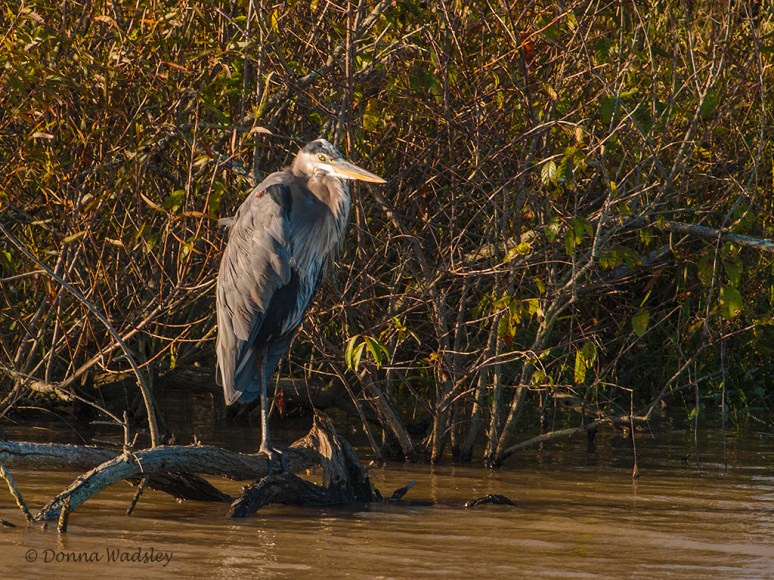
Great Blue Heron

Delmarva Fox Squirrel

Another Great Blue Heron
(who became an obliging photo subject when I passed him two more times)

He allowed me to get a bit closer for a brief moment.

Great Blue Heron

Great Blue Heron
Here he is again about an hour later at the same perch.
There were a lot of Mallard ducks arriving to the marshes for the evening.
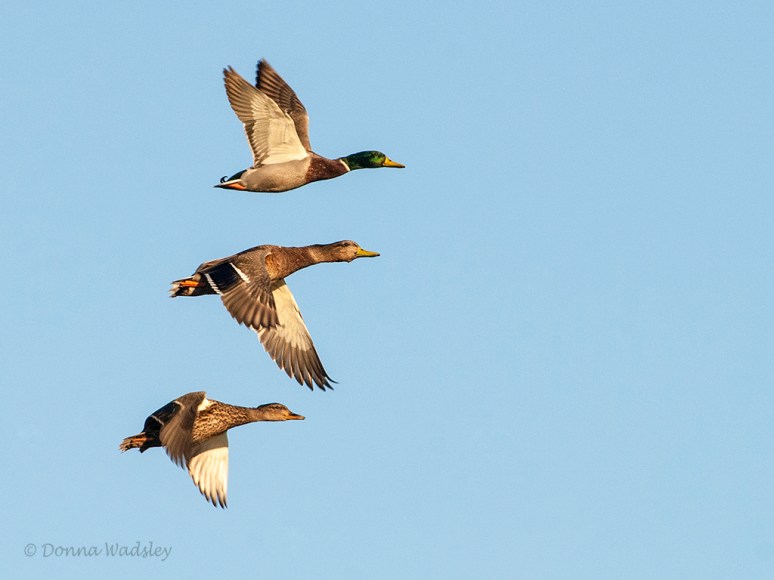
A male (top) and two female Mallards.
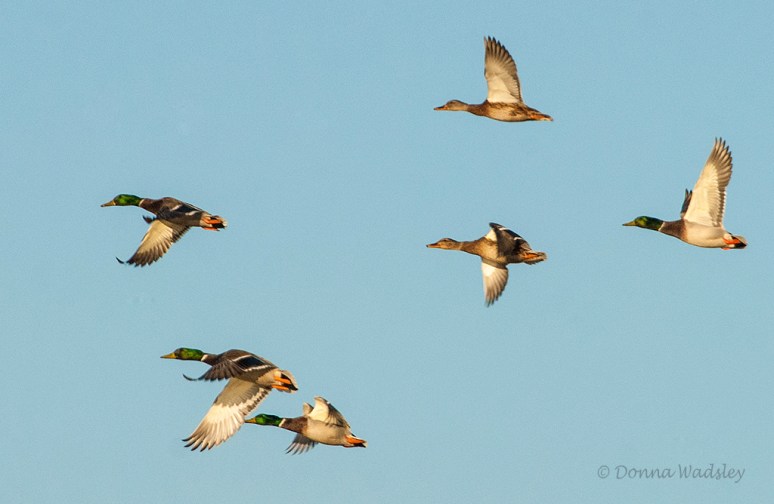
Mallard Ducks
Coming upon three Ruddy Ducks was exciting; the winter waterfowl migrants are beginning to arrive!
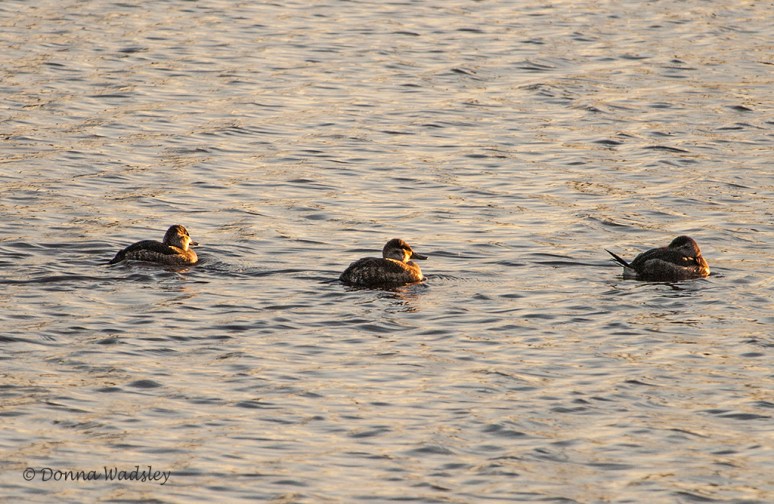
Ruddy Ducks
On a favorite tree perch, this Bald Eagle allowed me one photo before quickly taking flight.

Bald Eagle
I watched him as he flew over to the refuge’s Osprey platform set up with a live-stream camera that I had already passed.

Bald Eagle landing on Osprey platform set up with a live-stream camera.

Bald Eagle perched on Osprey platform set up with a live-stream camera.
Bald Eagle on an Osprey platform set up with a live-stream camera
As the sun began to set, I quickly did one more lap on the wildlife drive. The Bald Eagle was still perched on the Osprey platform, bathed in a golden glow.

Bald Eagle
Others were watching the sun’s descent as well.

Mallard Ducks

Belted Kingfisher

My Great Blue Heron buddy again

Bald Eagles
(the breeze is fluffing up their chest feathers)
It was a short and sweet visit, and it was most refreshing. Now to find time to do it again! 🙂
Bella & Beau 2018: Season Finale
(Osprey nest location: Cambridge, Maryland, USA)
September 23, 2018
After my last post and sightings of September 10, I still saw and photographed Beau on the towers on September 11, 12, and 13th. Here’s my clearest shots.


Beau eating a fish – September 11, 2018 @ 10:23 am

Beau – September 11, 2018 @ 12:06 pm
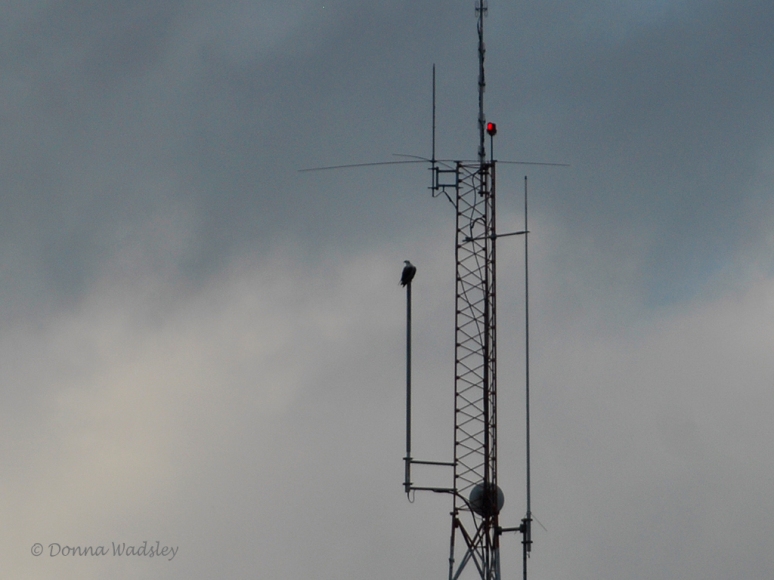
Beau – September 11, 2018 @ 5:18 pm

Beau – September 12, 2018 @ 7:46 pm

Beau – September 13, 2018 @ 9:53 am

Beau – September 13, 2018 @ 7:31 pm
And then *poof* gone! I have not seen Beau nor an Osprey Teen since.
Wow, it has been such a wonderful, entertaining season, full of excitement, challenges, and drama. All thanks to Bella and Beau’s commitment for success! And now here we are, 23 weeks later, to bid a final Bon Voyage to Bella, Beau & family from all of us!
Nature and wildlife certainly are amazing….. 🙂
~~~~~~~~
For those interested in a little background on my Bella & Beau series, here are a few facts:
This was a journal of an Osprey family’s season and behavior, so there were photos posted on purpose with bad lighting, focus, or weather conditions. Yes, I cringed at times posting some of them!
Unless noted, all photos were taken from my third-floor level balcony at a distance of approximately 120 feet to the Osprey nest platform.
The majority of photos were taken hand-held (my preference to be ready for action/flight shots), although I did at times use my tripod and Wimberley WH-200 head.
Unless I showed a wide-angle shot (the harbor or a sunset), all photos were taken with a Nikon D200 and a Nikon AF-S VR-Nikkor 70-200mm F2.8 lens & Nikon AF-S TC-17E III Teleconverter (1.7x magnification) combo. This set-up resulted in the below full zoom shot.

Remember? There was sort of a nest in the beginning! 🙂
I processed each shot in Adobe Photoshop CS6, then cropped in order to show close-ups. The same photo above is cropped below as an example.
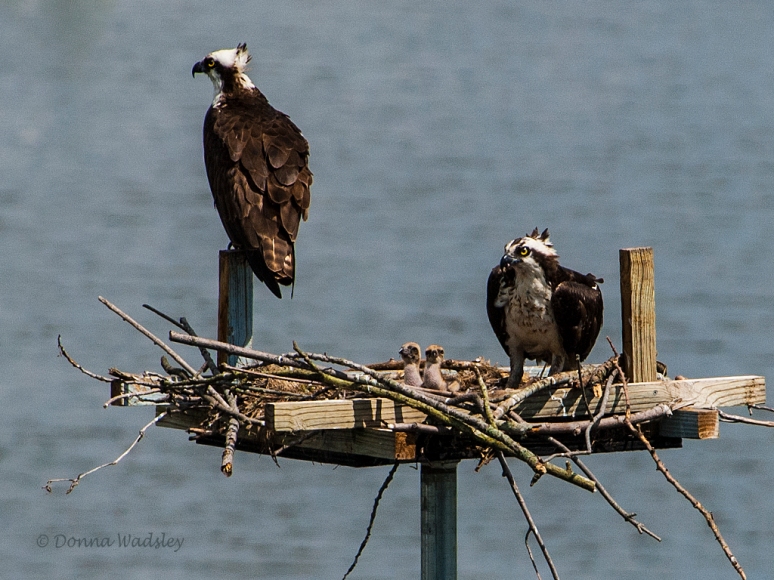
Bella, Beau and family
All wide-angles photos were shot with a Nikon D600 and Nikon AF-S VR-Nikkor 24-85mm f3.5-4.5G ED lens.
From April 13th until September 13th, I took over 15,000 photos, which includes bursts to capture action. Every photo was taken in both RAW and JPEG format. Most photos posted were processed with the RAW image.
Of the 15,000 photos, I have deleted about 5,000 for poor/unfocused quality but have retained the rest in a filing system that provides literally a journal in photos, making it easier to go back and look up any week and/or behavior. You can imagine how hard it was to pick photos every week to share! I could probably start over and post a whole new set of photos each week for this season. 😉
I want to sincerely thank all of you for your views, ‘likes’, and wonderful comments throughout the season. Each one made my day each and every time! I hope you learned a little something about the amazing, resilient Osprey too.
I also want to thank my husband for putting up with my Osprey passion and the dedicated hours put forth and for his assistance in helping to track and alert me of happenings. I couldn’t have done this series without his support!
As I mentioned, stay tuned for a photo rewind post, the best of the best from all the posts, hopefully within the next couple weeks.
(For all past posts on Bella & Beau’s 2018 season, you can click HERE.)
Liquid Gold Reflections
Back in May, a pair of Mallard ducks had landed in the creek at sunset. They and the sailboat masts silhouetted nicely against the water’s golden glow.

Pair Mallard Ducks
A third Mallard decided to try and join the golden swim.

“Mind if I join you?”
They let him join them for a spell.
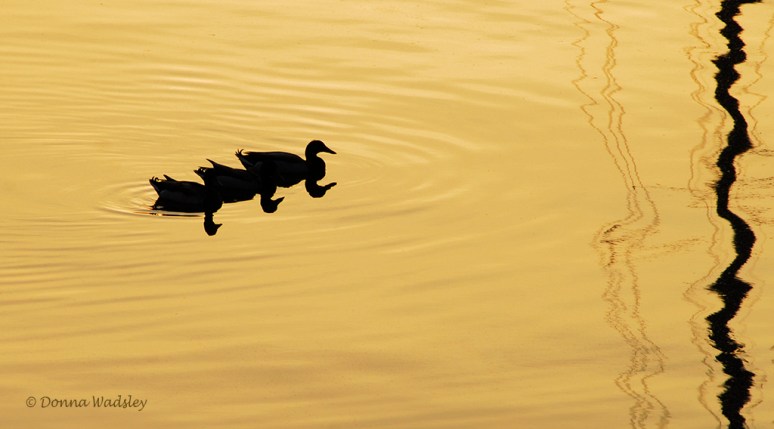
Mallard Ducks
The pair decided it was time to move on. Not sure what was said, but the third Mallard did not follow.
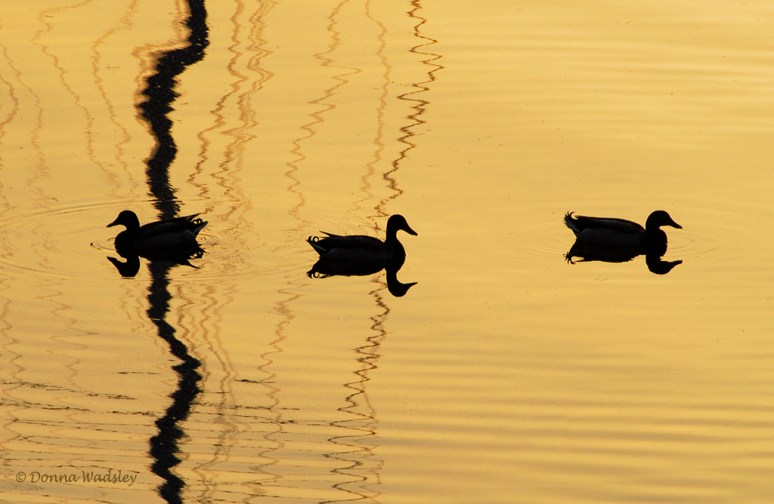
Mallard Ducks
His hanging back provided more silhouette reflections in the liquid gold for lucky me.

Mallard Duck

Mallard Duck
The sky broke like an egg into full sunset and the water caught fire.
~ Pamela Hansford Johnson
Cormorants In The Creek
The matte-black, prehistoric-looking Double-crested Cormorant sports yellow/orange facial skin at the base of their beak and is one of those birds that people don’t give much time to.

Double-crested Cormorant
Many don’t realize the Double-crested Cormorant possesses a gorgeous teal eye when the sunlight hits it just right.

Double-crested Cormorant
Double-crested Cormorants visit Cambridge Creek daily. Even with the past displeasure of Osprey Bella & Beau.

Double-crested Cormorant
The Cormorant’s landing is always a fun challenge to try to capture.

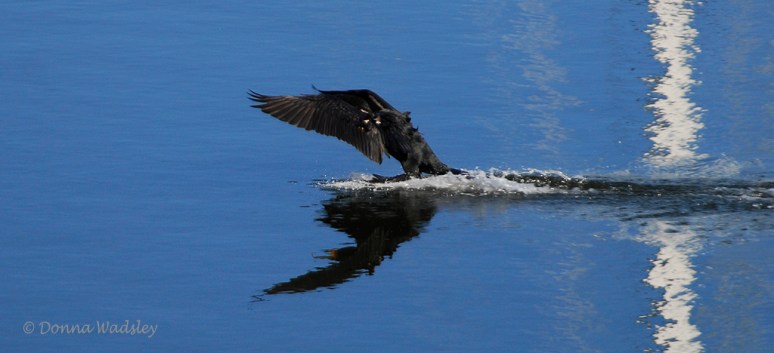


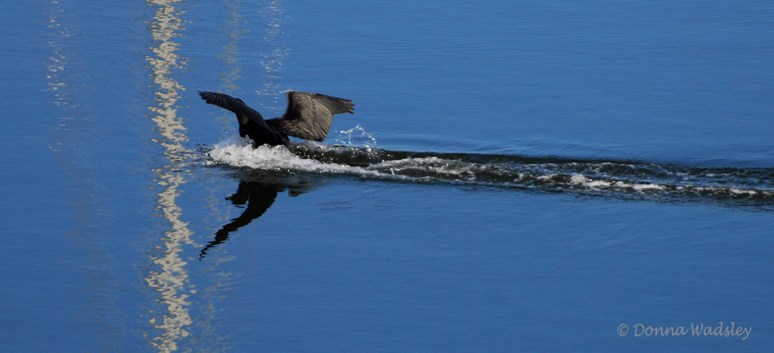
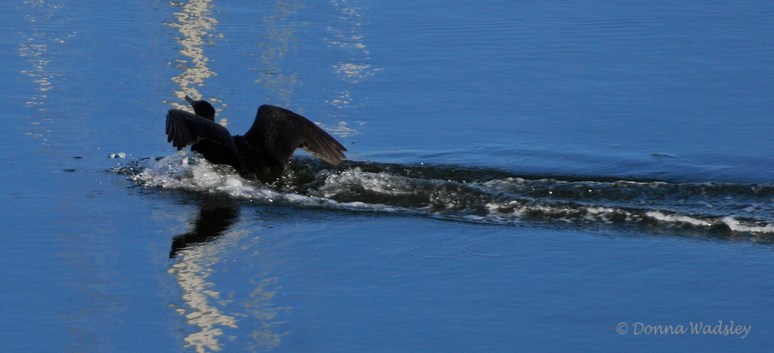
They skid in for a long time!
The fishing must be good here in the creek, they come here and dive time after time.


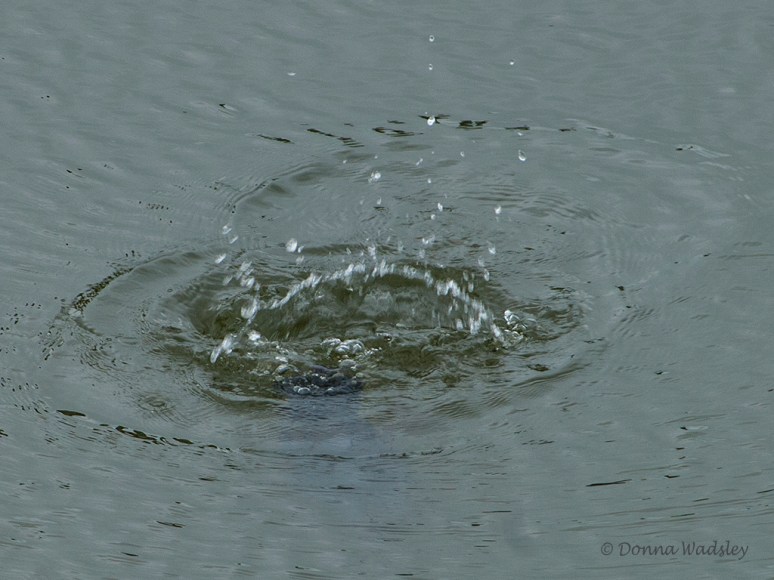
Another look at that beautiful teal eye….

Double-crested Cormorant

“Oops, sorry, ya’ll!”
From morning until sunset, they hunt the waters.
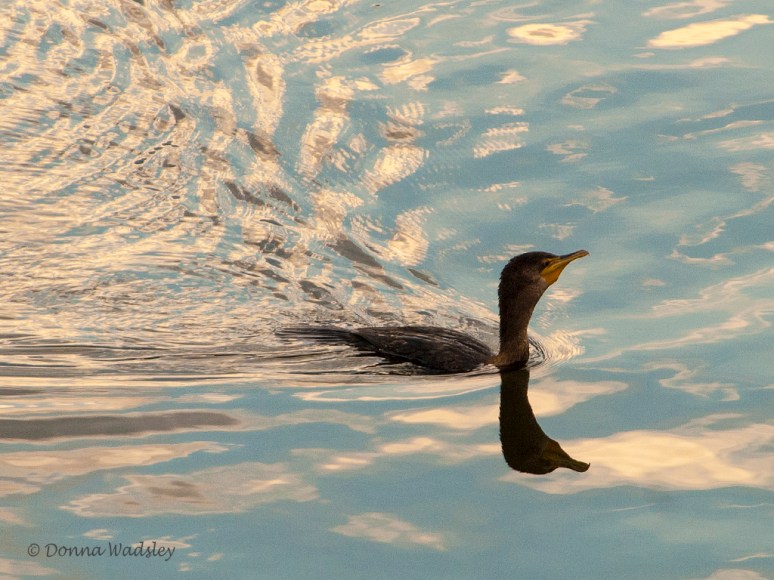
Double-crested Cormorant at sunset
And when the sun goes down, the Double-crested Cormorant may stay and find a perch to drip and dry off, in his “I’m Batman” stance.

Double-crested Cormorant’s “I’m Batman” drying stance
I enjoy and have a lot of fun with Double-crested Cormorants. 🙂
Bella & Beau 2018: Dad Beau Is Still Assisting
(Osprey nest location: Cambridge, Maryland, USA)
September 10, 2018
For the past week, I’ve continued to sight Dad Beau perched on one of the two towers overlooking the creek and nest platform. But it has become increasingly difficult to keep track of the OspreyTeens. My last sightings and photos of the two OspreyTeens together on the nest platform were on September 3rd.

OspreyTeens – September 3, 2018
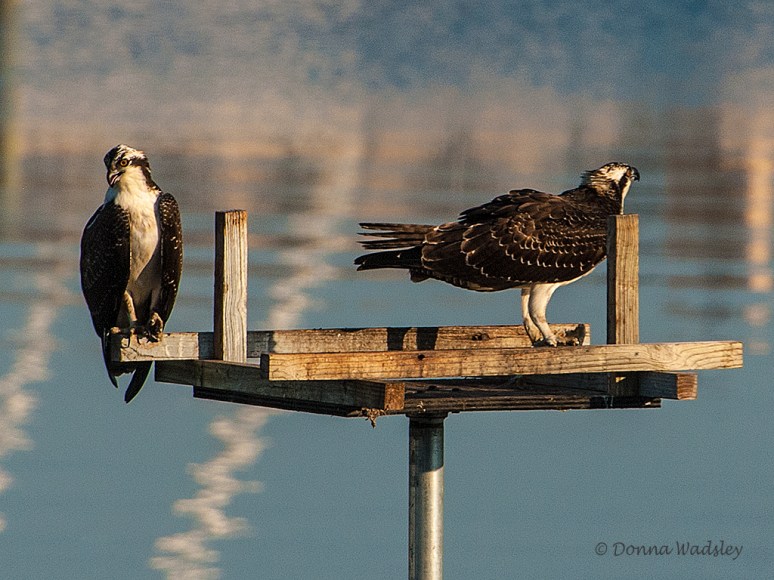
OspreyTeens – September 3, 2018
For the next two days, both early in the morning and late afternoon, only one OspreyTeen was visiting the nest platform, begging towards Beau’s direction who remained perched on the towers most of the day, ignoring the cries.

OspreyTeen 9/4/18

OspreyTeen 9/4/18
An OspreyTeen letting Dad Beau on the tower know he is hungry. (9/4/18)
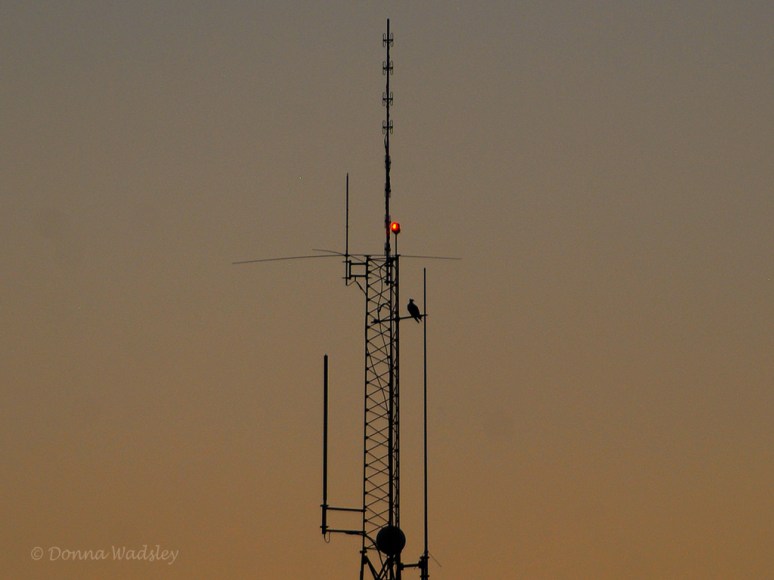
Dad Beau remains perched & ignores the begging OspreyTeen that evening. (9/4/18)

Either Dad Beau brought the early morning fish or the OspreyTeen did so itself. (9/5/18)
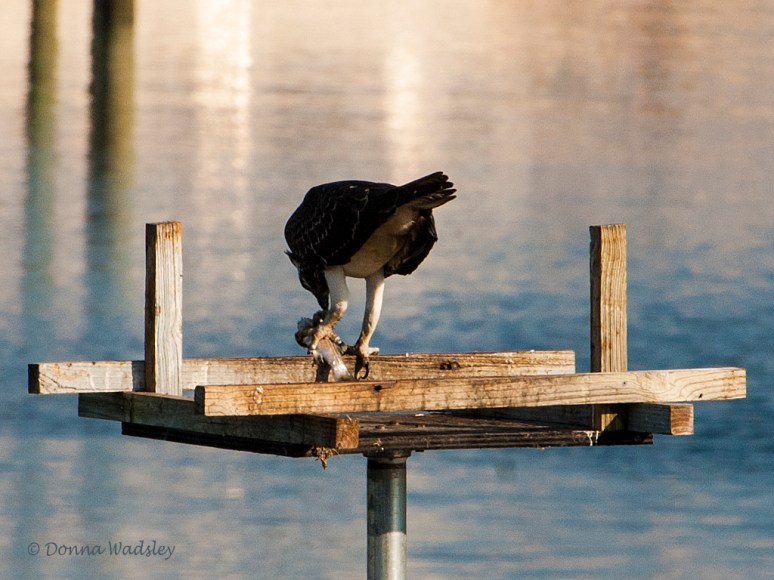
OspreyTeen devouring that fish! (9/5/18)

Beau 9/5/18 morning

Beau 9/5/18 evening
Beau’s morning and evening perches. (9/5/18)
Since September 6, I’ve not seen anyone visit the nest platform. It appears to have finished serving its purpose and is now no longer needed as a home port for this season. Maybe, too, Dad Beau has refused to deliver any fish to it to further enforce the OspreyTeens to feed themselves.
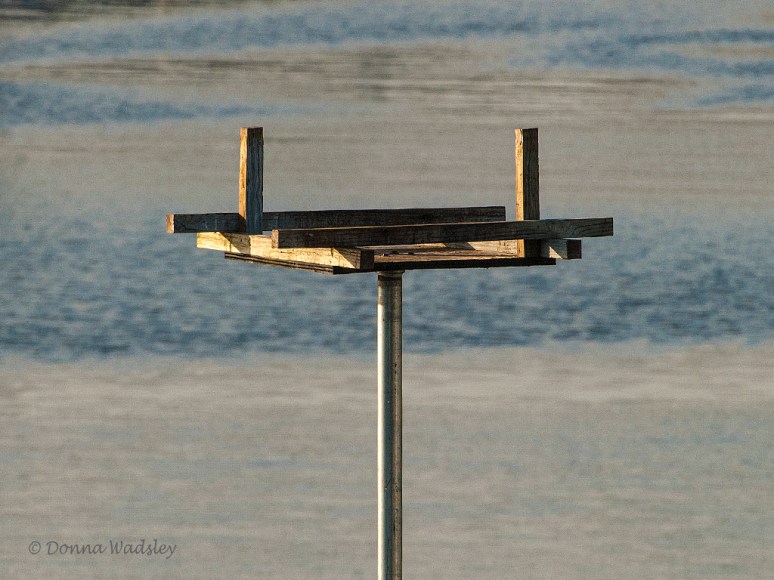
Bella & Beau nest platform – 9/10/18
It looks the same as it did the day they arrived in March, no nesting materials!
That’s one for the records!
It’s now increasingly difficult to determine if both OspreyTeens are still here since I’m sighting only one at a time. It seems an OspreyTeen is going to Beau now if it’s desperate to be fed. Which does appear to be infrequent, which is good!
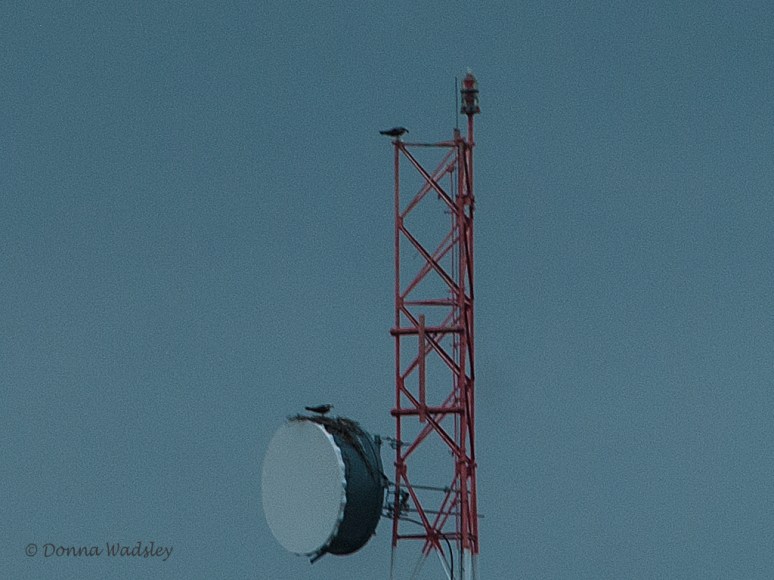
OspreyTeen below, begging to Beau on top of tower, September 8th late afternoon.

September 9th during the morning’s pouring rain, an OspreyTeen is waiting for Beau to appear, hopefully with a fish.
Today Beau spent from early morning until almost noon perched on the tower. There were no sightings of the OspreyTeens. Beau did reappear on the tower during the afternoon.

Beau 9/10/18 @ 5:10pm

Close-up
My last photo of Beau on the tower, September 10th at 5:10 pm
Can I positively ID these Osprey on the towers as Beau and one of the OspreyTeens? No. But I am basing my guesses from Bella & Beau’s past behavior on flying to & from and using these towers every day as their perch for the last few weeks.
What a Dad! Although Beau really wasn’t into nest building this year, I am proud of his commitment to Bella in staying behind, to finish teaching and to ensure their offspring have a chance at survival during their tough first migration.
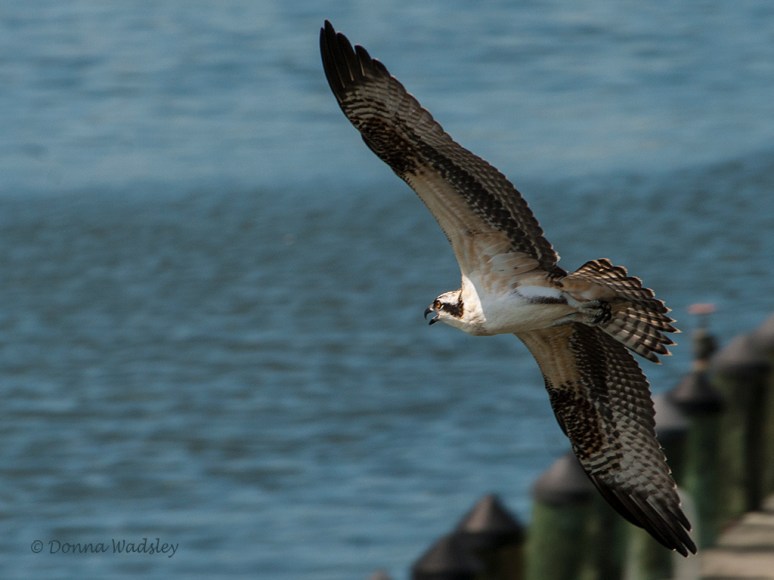
Beau in flight.
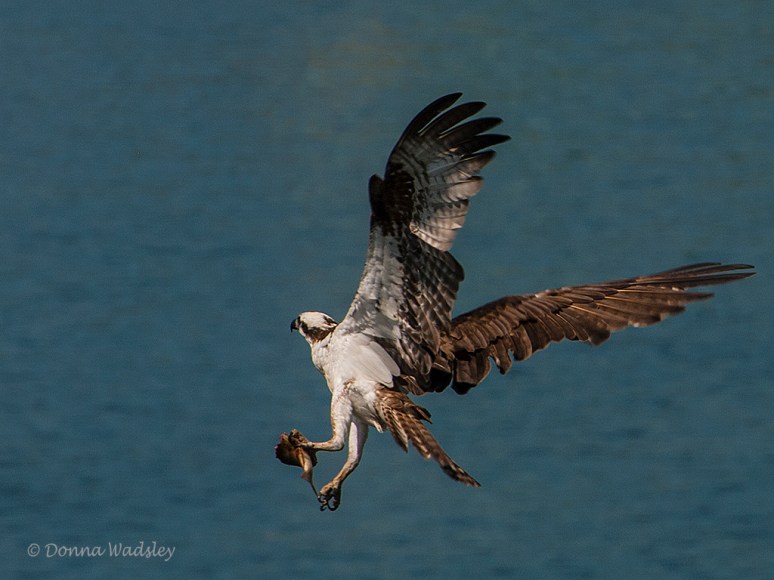
Beau in flight with a headless fish.
A series of Beau I didn’t previously share were these images of him skimming in the creek after delivering a fish to the nest platform.
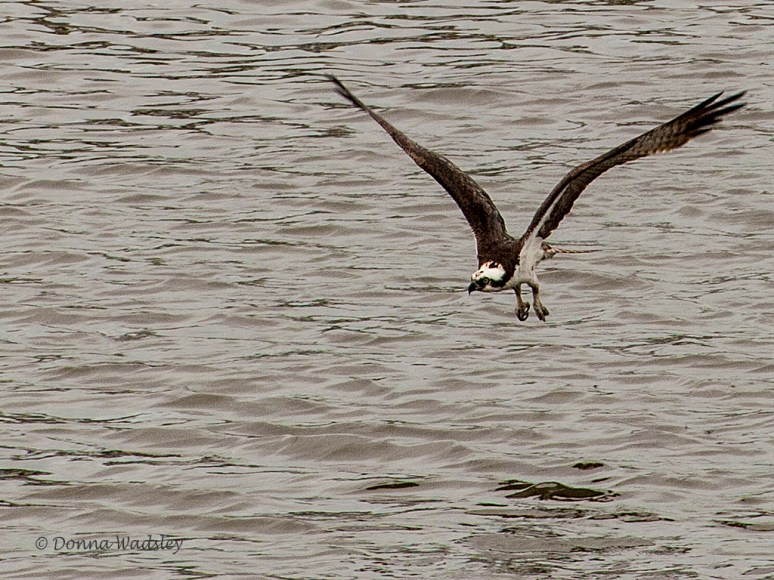
Beau preparing to skim the water.
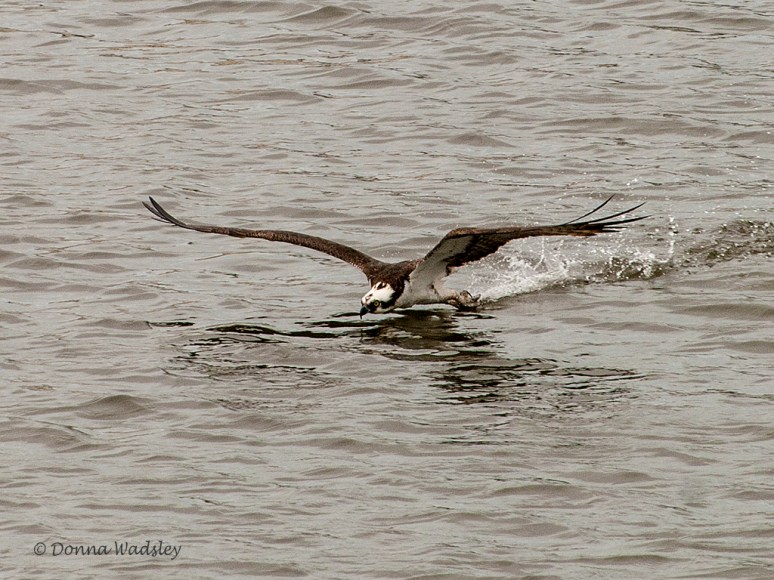
Beau makes contact with the water, dragging his feet, cleaning those talons.
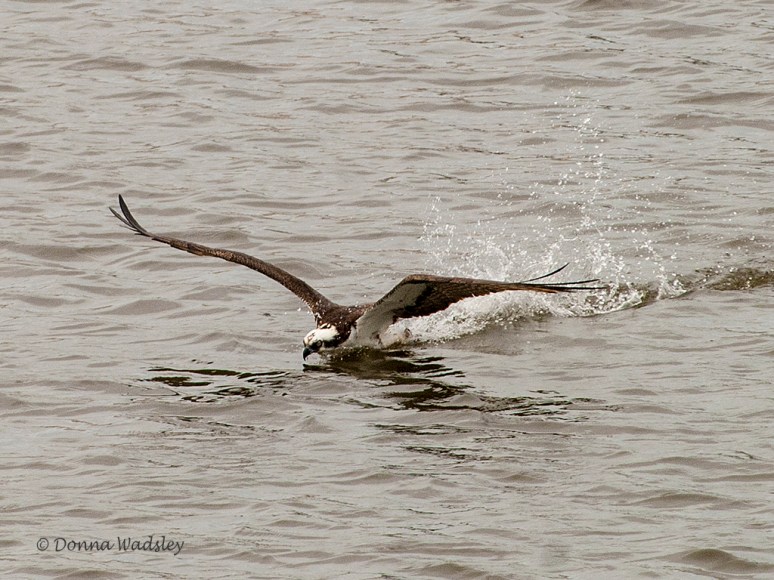
Look at that determination and drive!
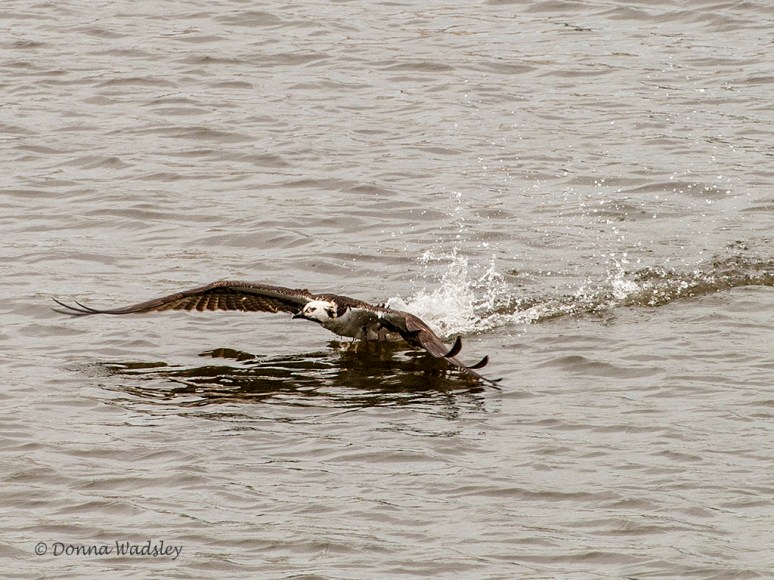
Beau shaking the water from his head while preparing to lift out of the water.

Lift-out! And feeling good!
Another series not previously shared of Beau defending his perch from an intruding Osprey on top of the crane several months’ back.

Beau defending his perch against an intruding area Osprey.

Beau defending his perch against an intruding area Osprey.

Beau defending his perch against an intruding area Osprey.

Beau defending his perch against an intruding area Osprey.
Beau defending his perch against an intruding Osprey.
As I mentioned in the recent “Osprey Migration” post, one of the major challenges Ospreys face during migration is weather, specifically hurricanes. This is true for so many wildlife species presently doing their migrations. We now have a dangerous Category 4 hurricane barreling towards the East Coast, to make landfall possibly Thursday. Please pray for both human life and wildlife. There is going to be devastation for all.
In the Bella & Beau series, I’ll post again to let you know if I’ve seen Beau and any OspreyTeens since today. Hopefully, he and all other remaining area Osprey have an instinct feeling to stay put for a while longer while the hurricane makes landfall, blows through, and diminishes. I think it’d be safer here than several hundred miles further south.
I also plan on doing a final Bella & Beau photo rewind post of their successful six-month season, showcasing some of the memorable and best captures of them and their beautiful offspring that I think you will enjoy.
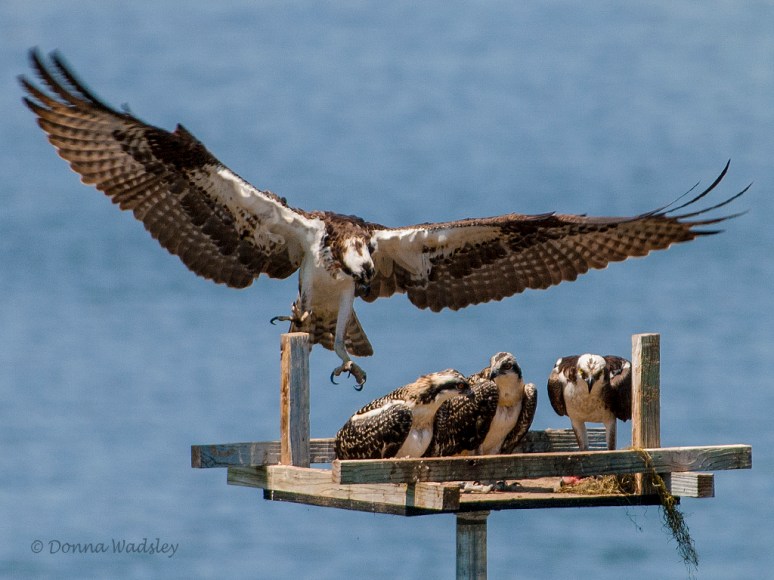
Bella, Beau and their offspring.
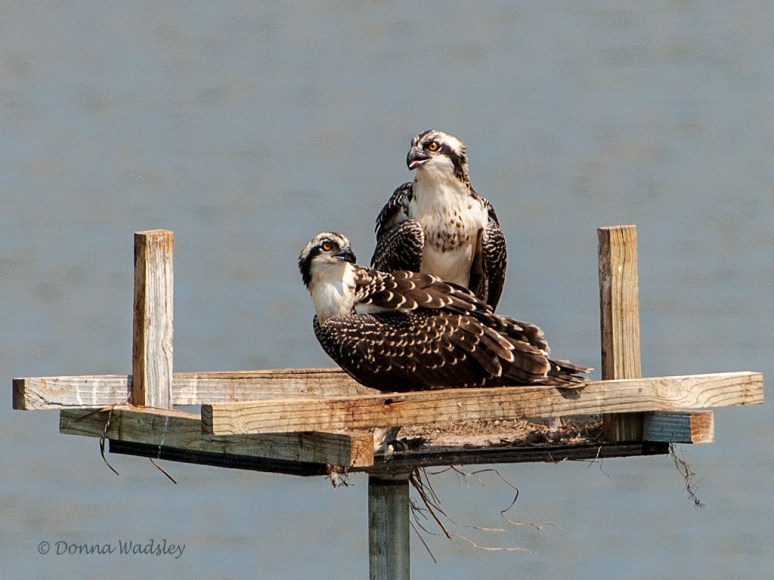
The offspring that developed into healthy, beautiful OspreyTeens.
Stay tuned for the final posts in the Bella & Beau series!
(For all past posts on Bella & Beau’s 2018 season, you can click HERE.)

 Bay Photos by Donna