
“Great” Buddies
I found these two fellas hanging out together, a Great Egret and a Great Blue Heron, soaking up some warm afternoon sunshine along a dock.
The Great Egret is almost as large as the Great Blue Heron. So to clarify, the Great Egret is standing in the mud and not on the dock, making him appear much shorter.
(Got your back, Mr. Egret!)
Does this mean they’re “Great” buddies?
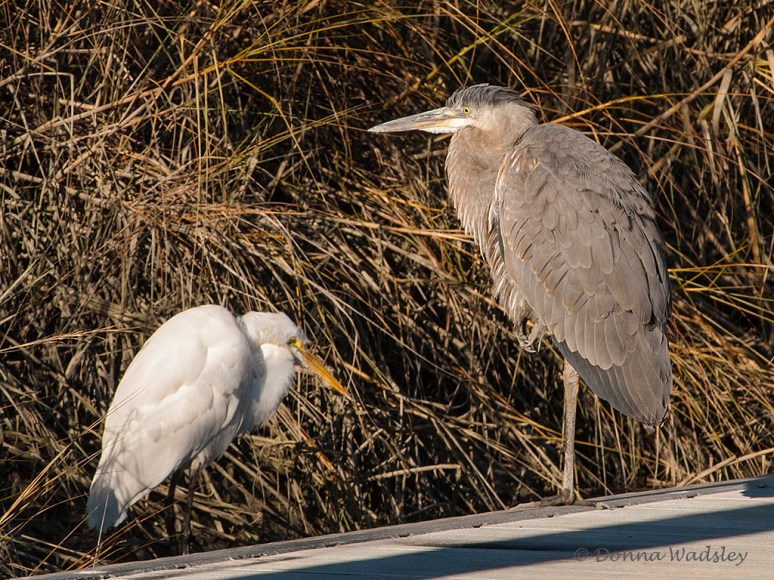
(Great Egret left, Great Blue Heron right)
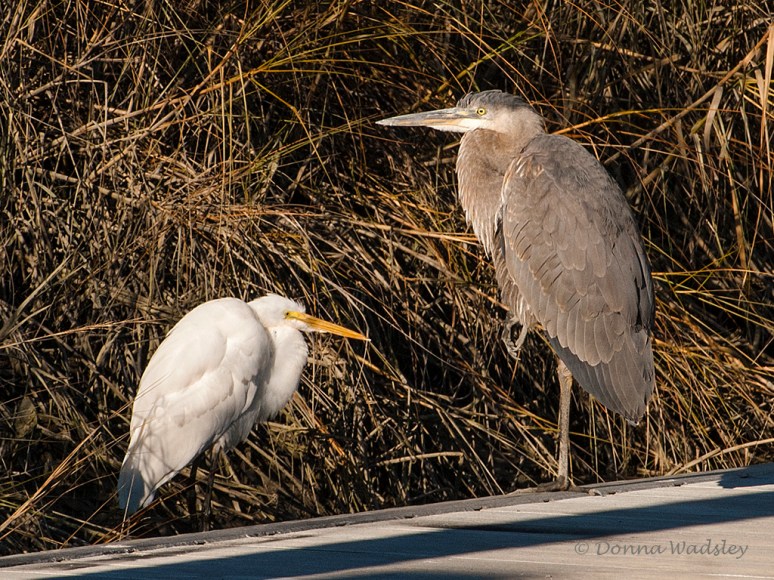
“Who? Us? You talking about us?”
They were this day!
A Pair of Ruddies
Along with the Pied-billed Grebes in my last post, I was also watching a pair of Ruddy Ducks. They were constantly diving for food, so they were a bit of a challenge to capture still enough before they’d take another dive.

Ruddy Duck (male)
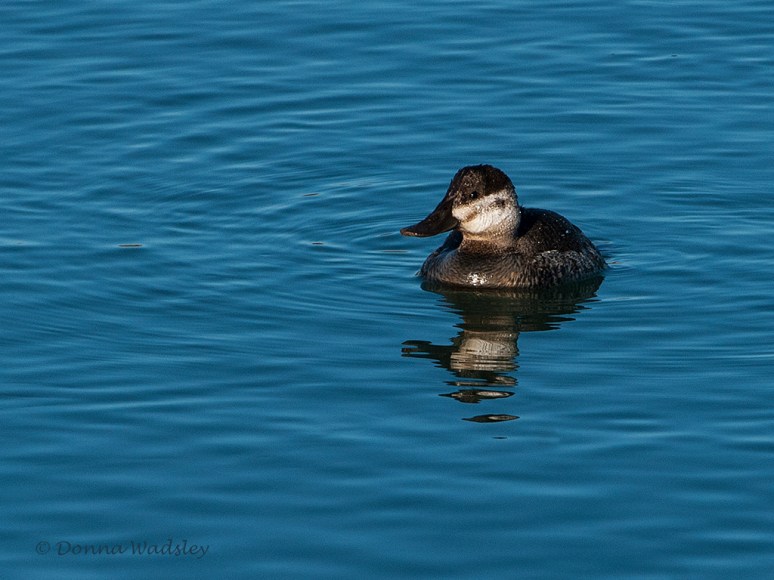
Ruddy Duck (female)
It has been a long while since I last saw a Ruddy Duck. I was thankful they each obliged me a capture!
Pied-billed Grebes
Happily sunning in the marshy waters along Murrell’s Inlet, I found three Pied-billed Grebes.
I never did get a decent shot of all three in one frame, but did of two.


A common Grebe throughout North America, these small birds are excellent divers. Although this late afternoon, they never once dived. They just floated around, enjoying the warm sunshine.
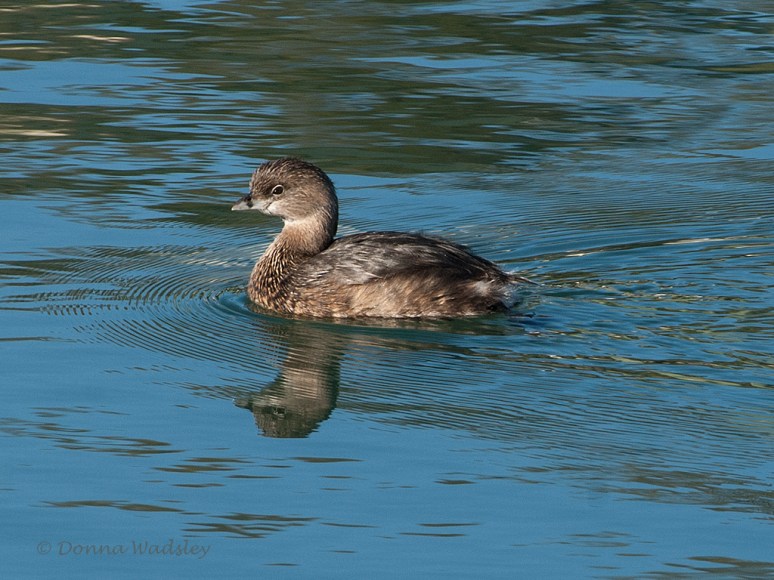
And I enjoyed the way the sun was lighting the waters around them.
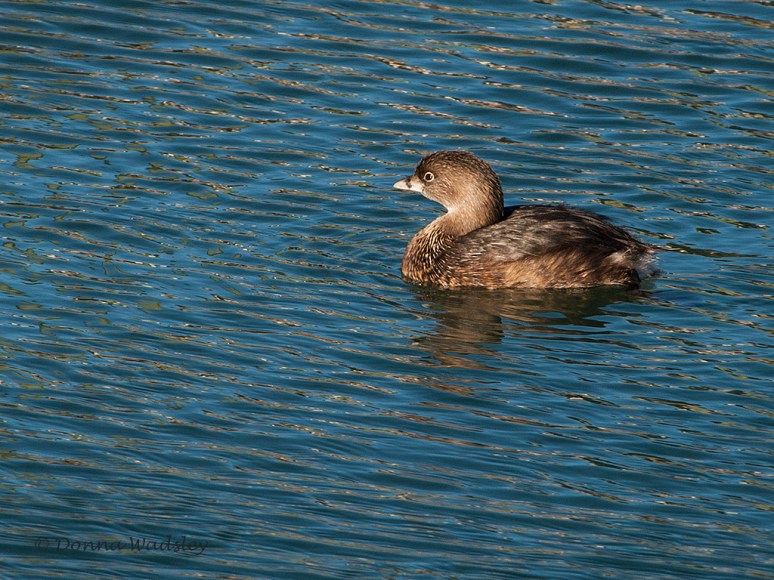
That being said, now you know why I posted so many photos of them. It was hard enough narrowing down to just these few.
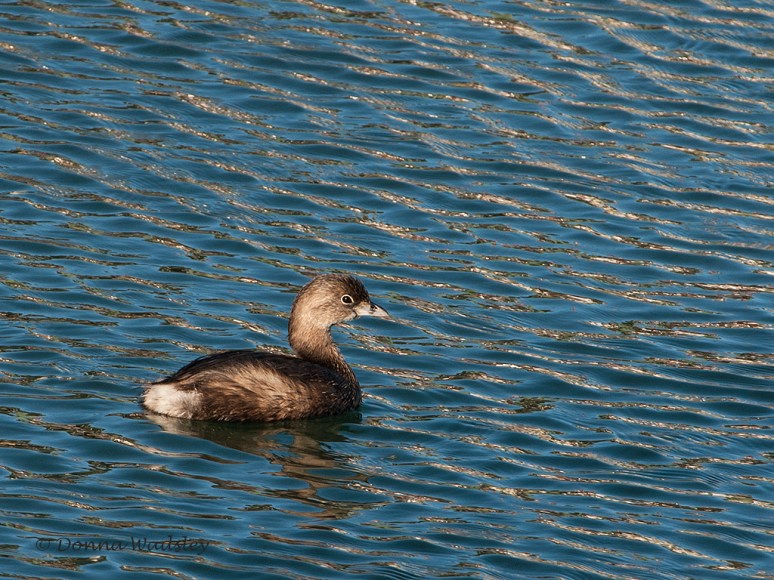
A little preening…..giving delightful water circles.


It was definitely a fun time with these little cuties!
Killdeer Fly-By
If it weren’t for the oncoming calls I heard saying over and over, “kill-deer, kill-deer, kill-deer”, I would have missed this small flock of birds doing a fly-by. This bird calls it’s own name, the Killdeer.
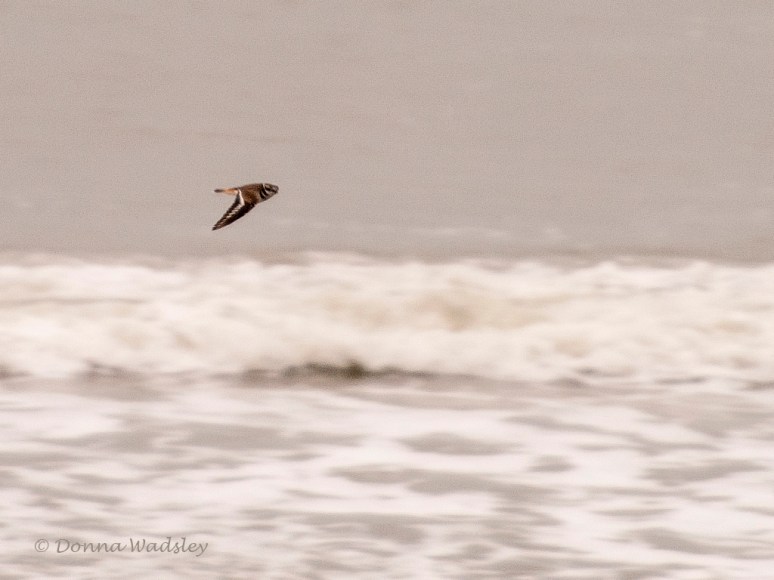
They kept calling as they passed by, about a couple dozen total.
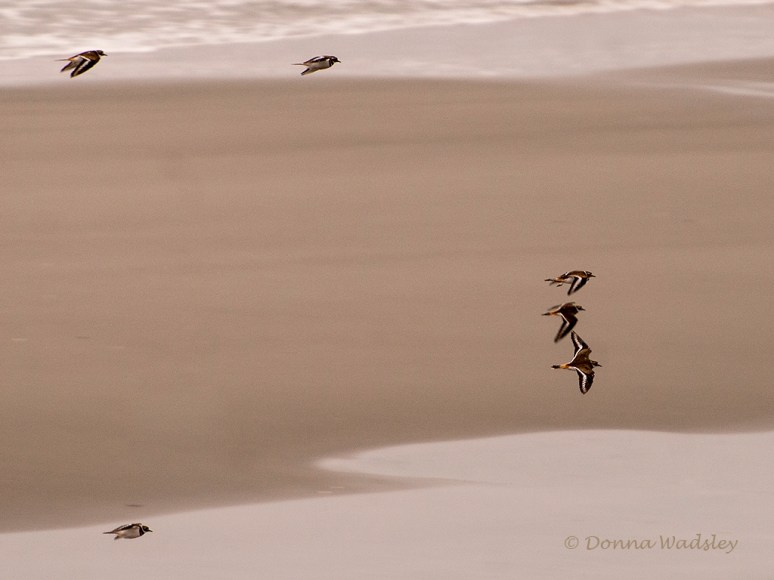
Below is a crop of above.

The Killdeer fly-by and sound were magical!

And then just like that, they were gone. Their continued calls fading in the distance.
Osprey Fishing
It wasn’t long after arriving to the South Carolina coast when I spotted a bird flying obviously familiar yet different from the gulls and pelicans.
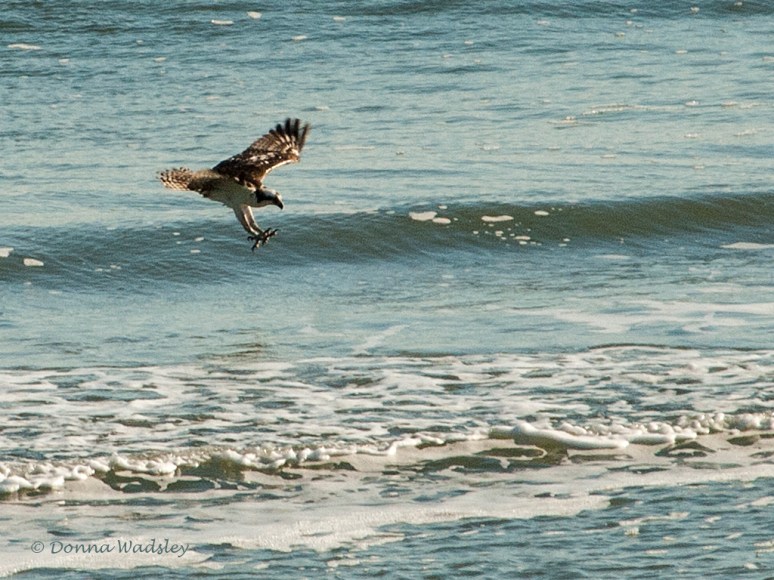
It was an easy ID sighting of my favorite bird, the Osprey. Since that first one, I’ve seen more. They fish along the shoreline daily.
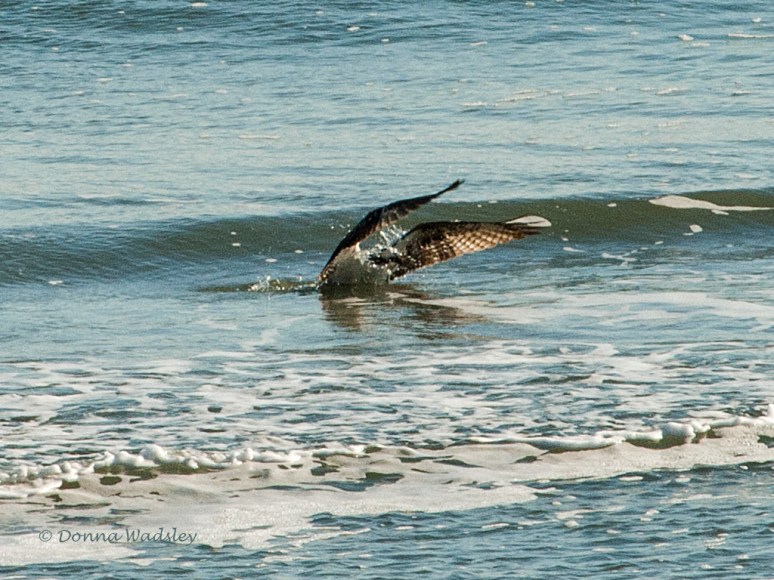
I’ve observed a few dive attacks, but so far have captured only one. Definitely not the best, but for those that haven’t seen the talons out front on attack of a fish, the first photo gives the example.
“Geez, I thought you were much bigger!”
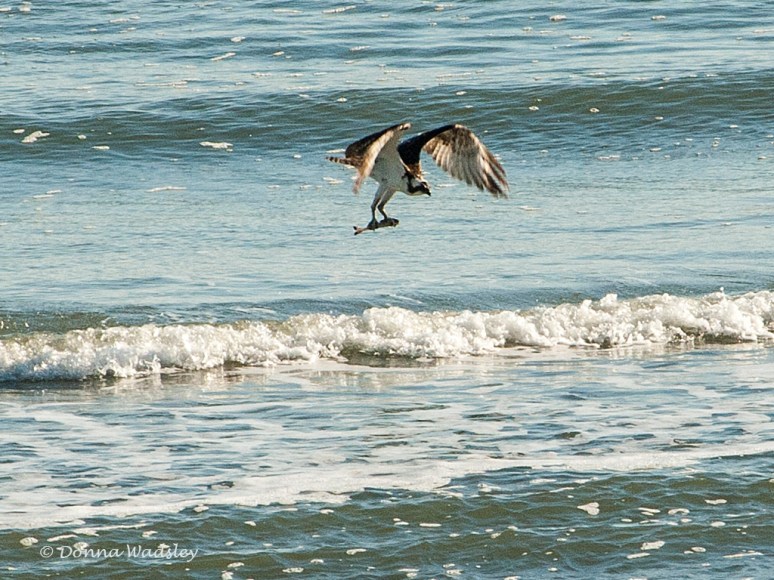
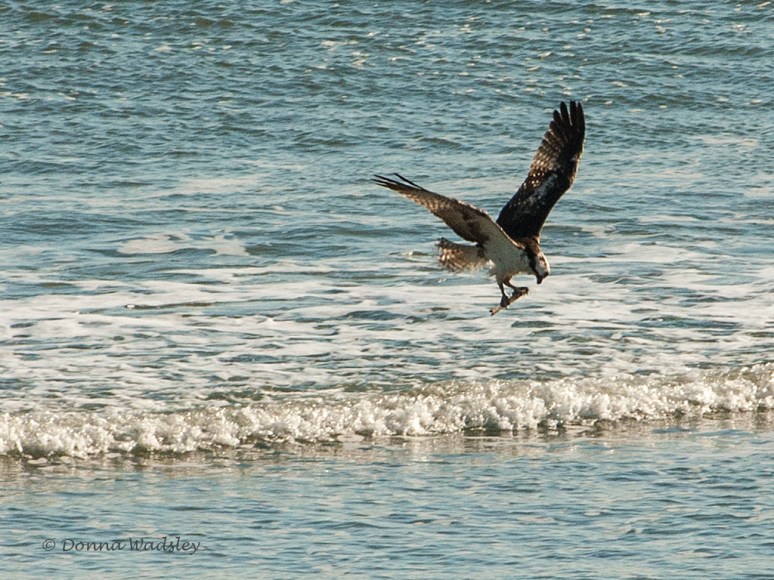
A couple days later, I didn’t even see the dive but shot much better photos of another Osprey with his catch as he flew by.
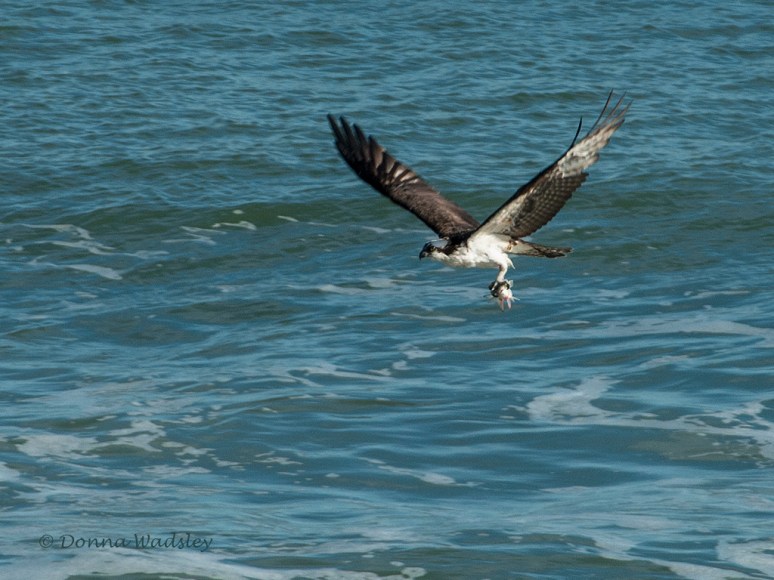
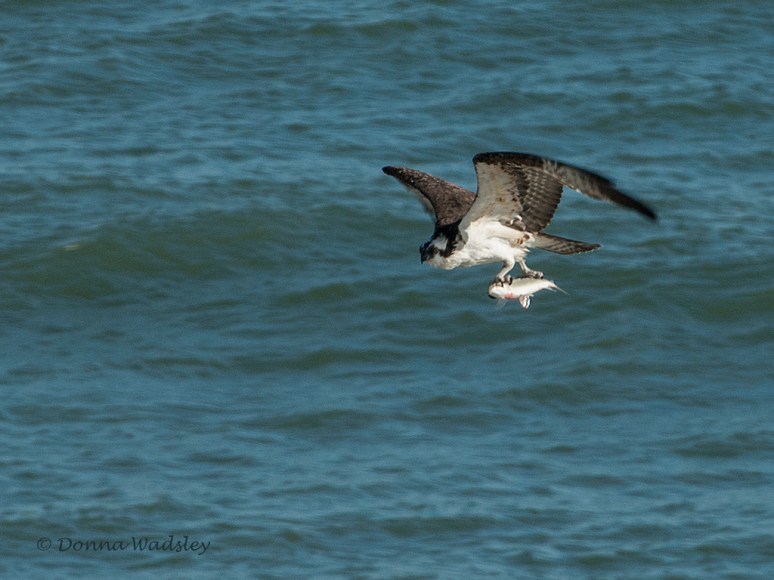
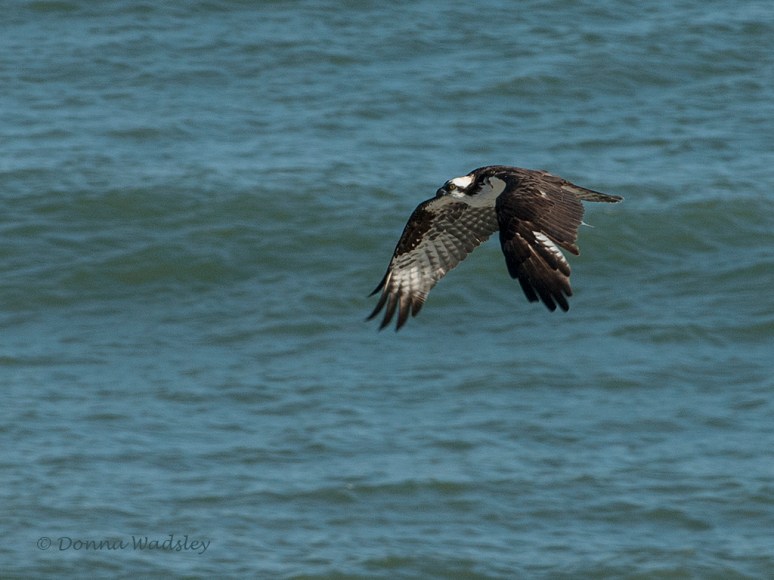
I used to observe an Osprey pair (Oliver & Olivia) daily for several years in my backyard along the Chesapeake Bay. Their devotion raised a family each summer. It was amazing to watch the family’s antics and growth. And it was sad when they left to migrate south for the winter. But then Spring returned to the Chesapeake Bay, and so did the Osprey!
Seeing Osprey during the winter here in South Carolina is surreal for me. But I love it!
Shrimp Boats & Gulls
Early January we observed two working South Carolina shrimp boats trawl up and down the coastline. January? I had to look that up to confirm.
South Carolina’s growing shrimp usually remain in estuaries inland until the water temperature falls to 60-65 degrees. At that time, they move into the lower reaches of sounds, bays, and river mouths where they gather in large numbers. Migration into the ocean then occurs during the large tides associated with the new and full moons.
I took these photos during the Supermoon days early January. The frigid cold air was arriving, water temperatures were falling. Maybe we observed when an anticipated shrimp migration was occurring.
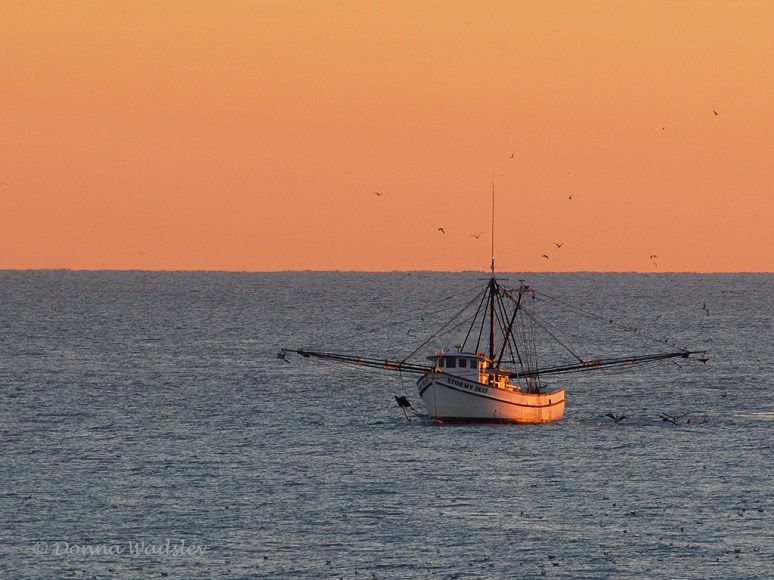
The shrimp boats worked all day…..

…..and they worked all night.

The shrimp boats even worked side by side.
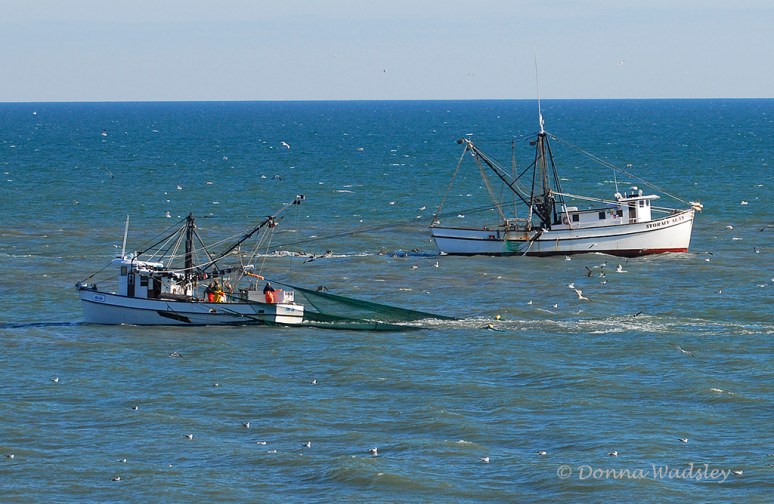
Where there were shrimp boats…..
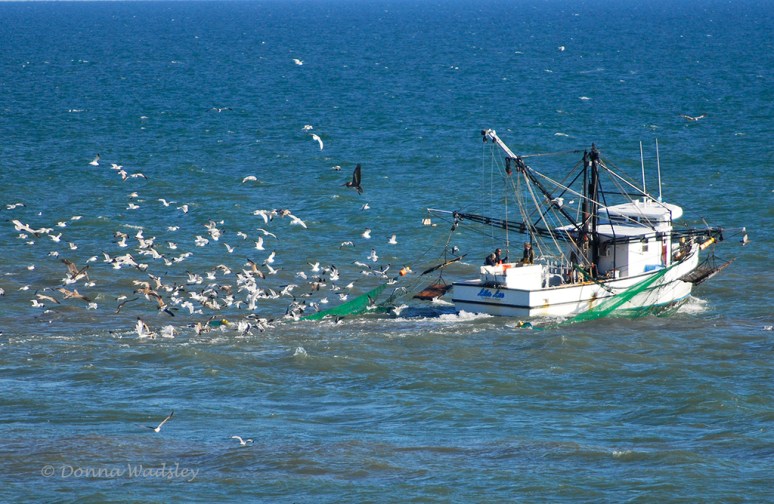
….there were birds. Primarily pelicans and gulls.
The next is my favorite photo of the shrimp boats. I enjoyed trying to compose captures of them.
The birds were smart. Fresh shrimp to eat. Those gulls wanting to eat alone and not be chased/bothered brought their catch to the shore.

Yes, there were shrimp out there.
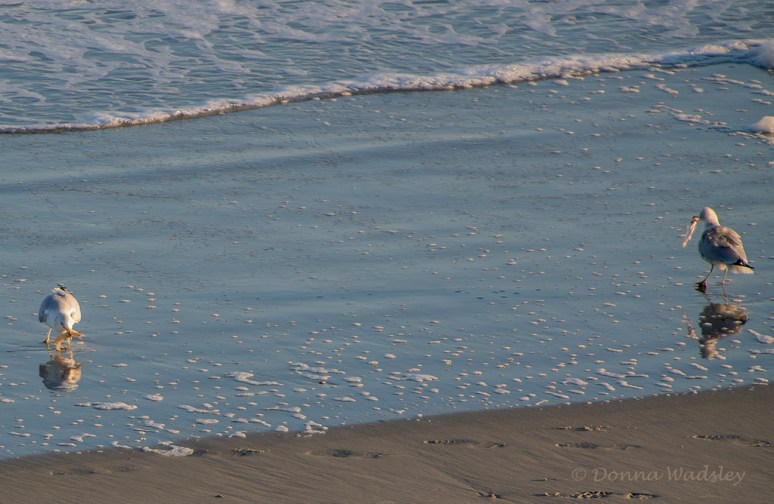
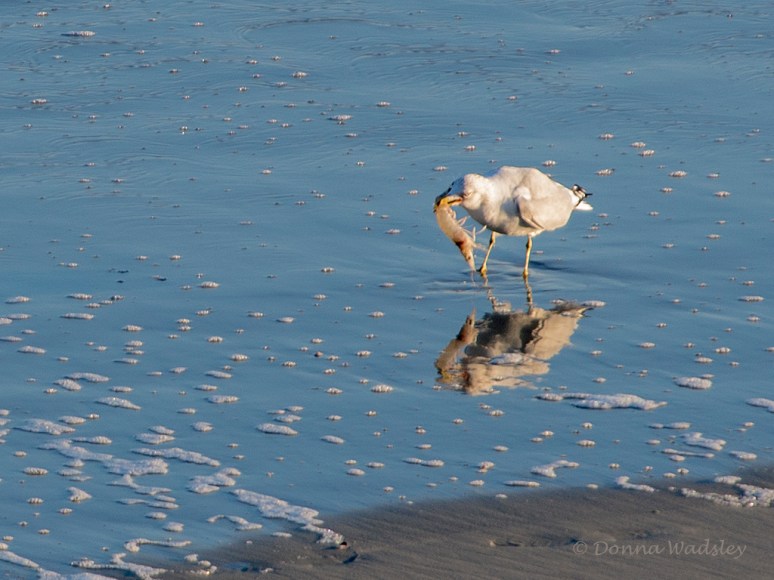
I love shrimp. You’d think they could have shared with me!
Brown Pelicans
Hubby and I have “flown the coop”, or “migrated”, from the mid-Atlantic Chesapeake Bay region for the winter. (Either pun works!)
We are now along South Carolina’s Atlantic coastline. The purpose was to escape the mid-Atlantic for a warmer winter a little further south. Well, that fell flat on it’s face at the start, we got to ride through the Nor’Eastern winter snow/ice storm that hit South Carolina hard.
Temps continue to improve. Today was 66 degrees and gorgeous. Yay!
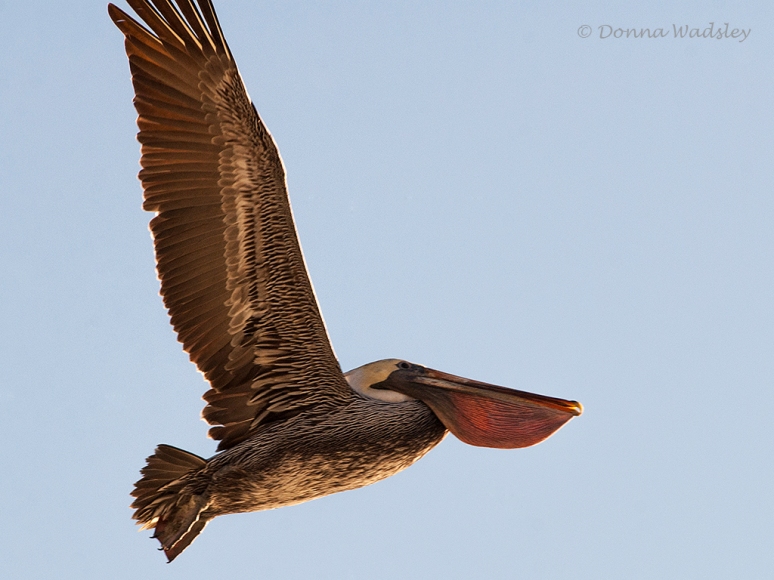
Probably one of the first birds everyone sees when they reach the SC coast is the huge, bulky, yet elegant, Brown Pelican in flight.
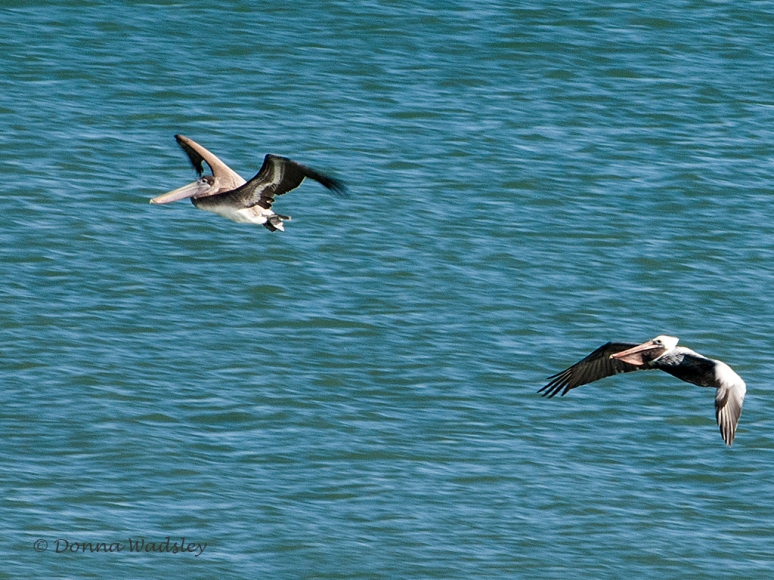
Brown Pelicans live along southern and western sea coasts. They are fairly common today—an excellent example of a species’ recovery from pesticide pollution that once placed them at the brink of extinction.
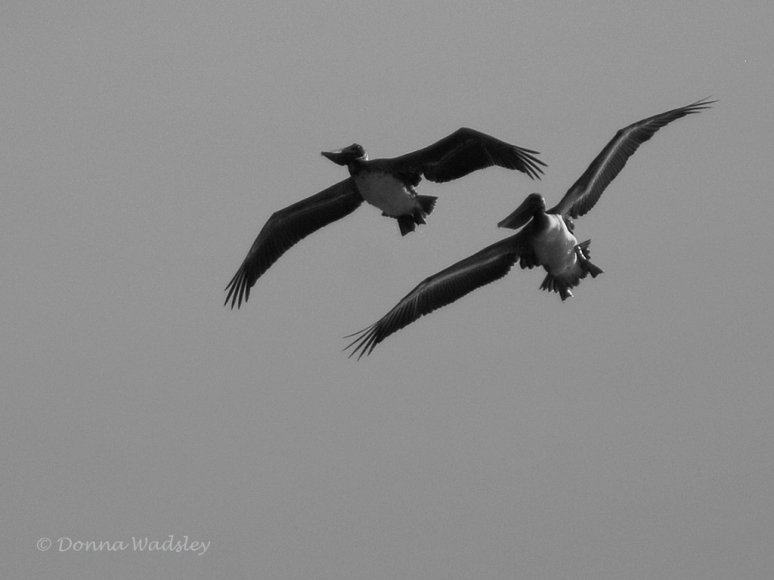
Their wingspan can reach over 6 feet (200 cm).
Flocks (or “Squadrons”) glide above the surf, rising and falling in a graceful echo of the waves.
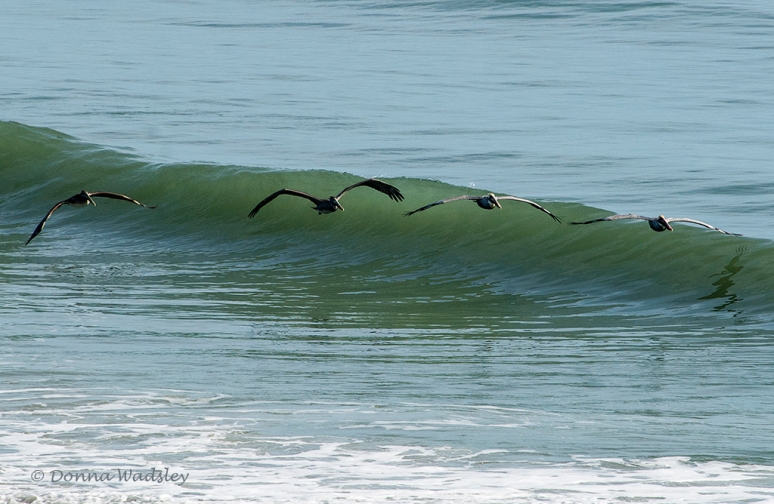
I took all of these photos from our balcony.
Well…..I cannot end without an ‘end’ of a Brown Pelican.
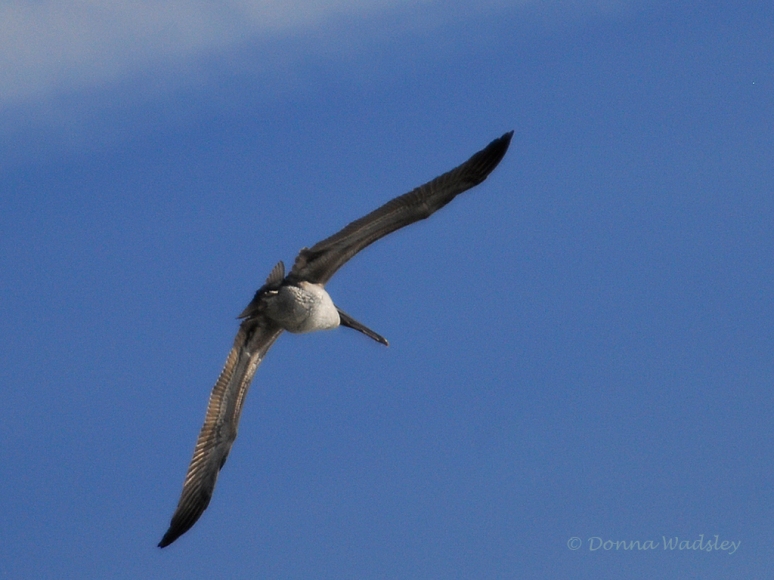
I hope to find these unique beauties perched somewhere while here for some profile shots to later share!
Great Blue at Bombay Hook NWR
One final bird from my visit to Bombay Hook NWR. A Great Blue Heron, and as some of you know, it is one of my favorites. I got out of the car for this one and perched myself along the water bank.
He was the perfect model. My challenge was the lighting. He was in the shade with some sunlight filtering through. Great practice, I thought.

A stopped car along the wildlife drive means others are going to stop. See what you are seeing and what they might be missing.
I heard that first car stopping behind me.
So before someone scared him off, I slowly moved a little closer.

He did not mind me. He did not mind the other photographer I could hear behind me now, clicking off some shots. His new interest became what caught his eye in the water below.
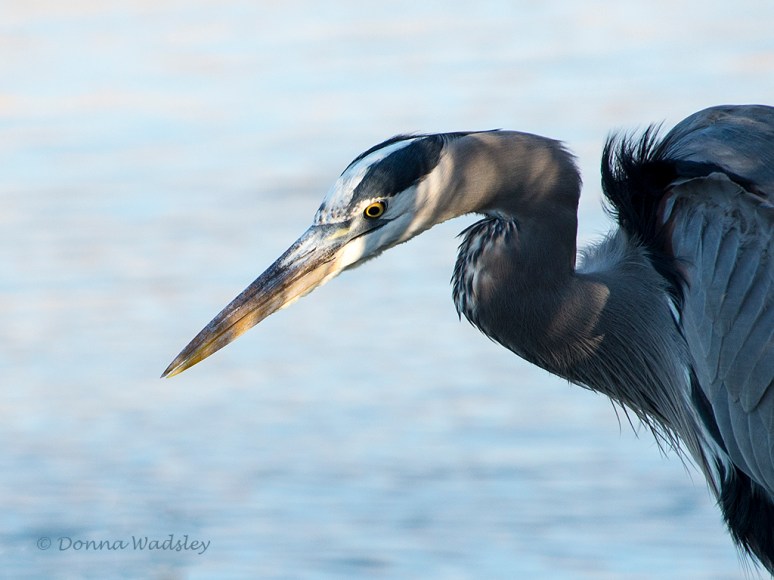
Well, he stayed in that pose a bit but never struck anything. Finally, he just curled himself back up and froze in time. He and I heard another car stopping.

And that was my cue to thank him and head back to my car, wondering how I had done. Didn’t matter, I enjoyed just being there, watching him for a while before I headed back out of the refuge and onto my errands.
Always fun though to do a little side trip for a little birding when you can sneak it in. This quick side trip netted two lifers. Awwww….life is good!
American Avocets and Dunlins
Continuing my bird sightings along the wildlife drive at Bombay Hook NWR end of last year, I drove up on two large migrating flocks of shorebirds. Both lifers!
(photos taken from my car)
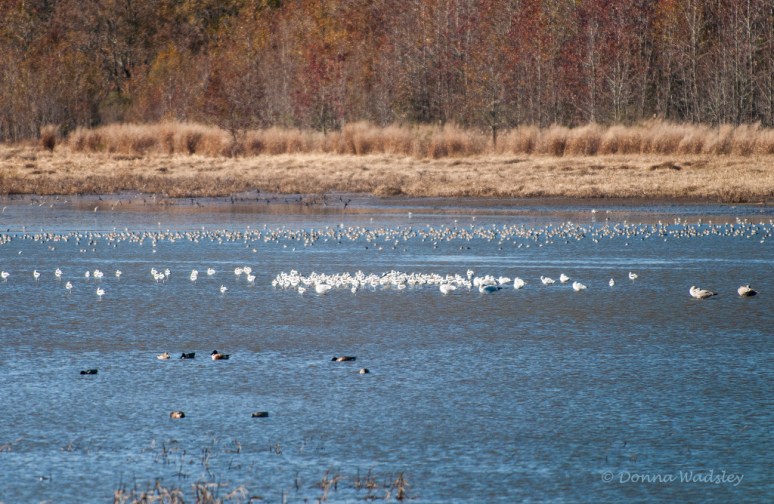
Flock of American Avocets in front of the Dunlins (eight Northern Shovelers in the foreground)
I have seen American Avocets before but never got a chance to photograph them.
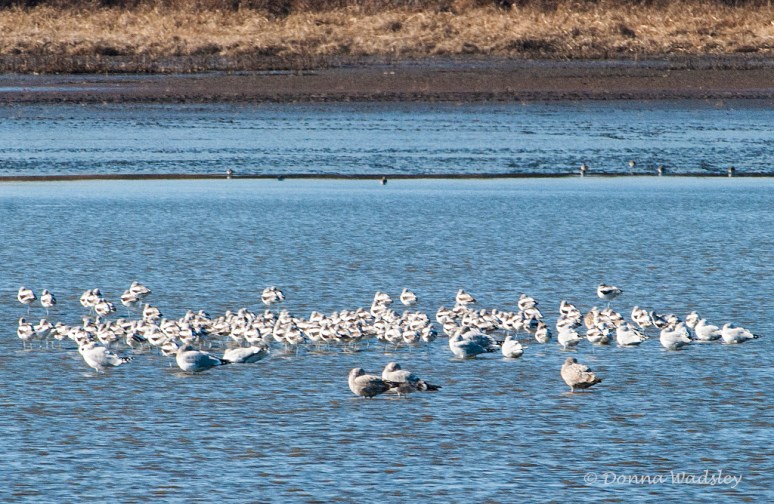 Gulls (foreground) napping with American Avocets
American Avocets have long, upturned bills that they sweep through the shallow water to catch small invertebrates. They also have blue legs. Love those blue legs.
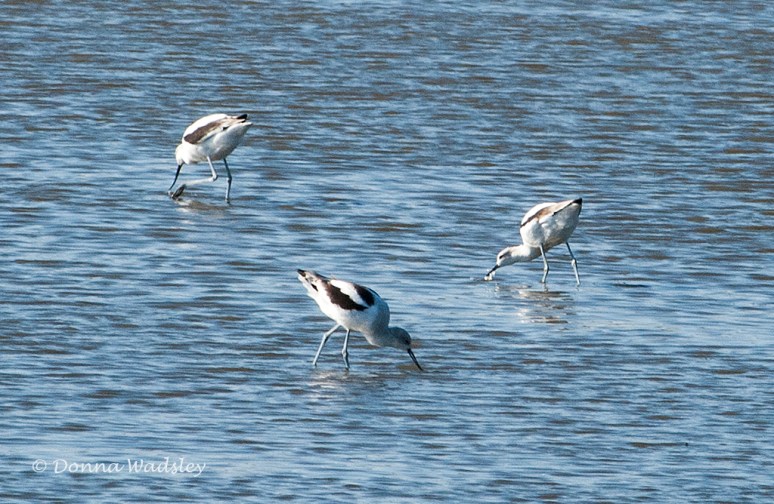
American Avocets are in the same family as Stilts.
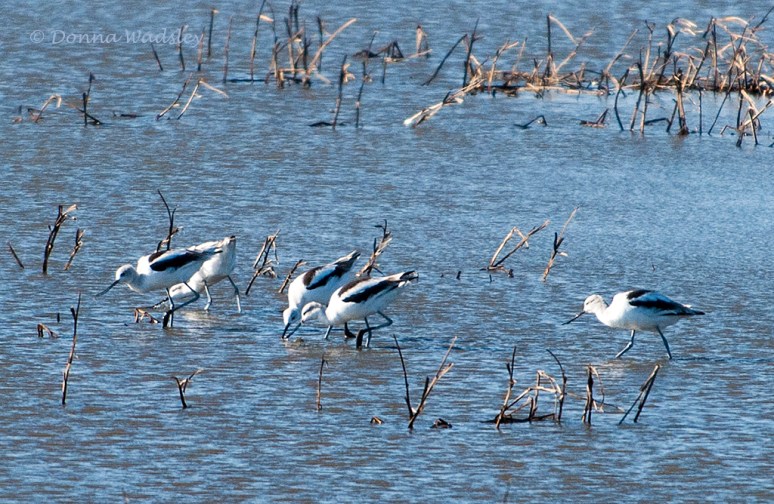
Not sure why, but the Avocets took flight. I didn’t see anything menacing in the sky. Even the Dunlins had stayed put.
 American Avocets in flight
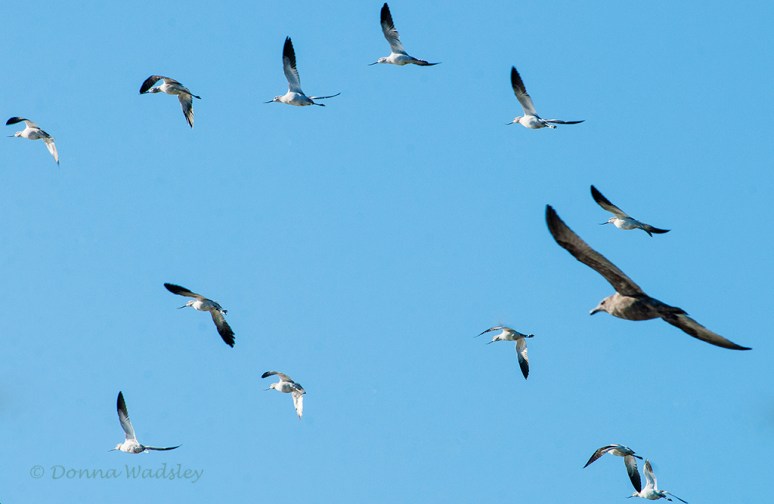 (photo-bombed by a gull….)
 (Looks like they’re on a mission….)
The American Avocet’s wingspan is an impressive 28″ (71 cm).
This next photo was taken along a canal at the refuge where I was standing and photographing another bird. I was very happy to have gotten this opportunity and capture as they quickly flew by!

While photographing the Avocets, I was also working on the Dunlins.
The Dunlin is a medium-sized sandpiper. There were thousands of them resting and foraging in the shallow waters.
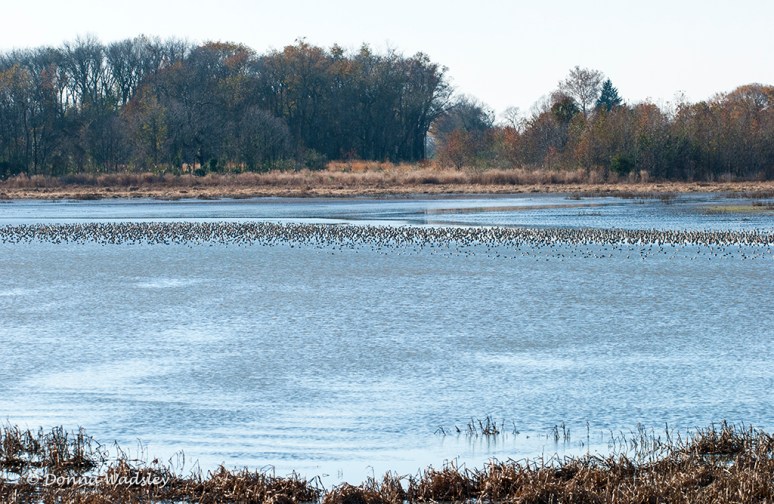
Luckily, a few Dunlins were foraging at the water’s edge early-on for me to get some close-ups.
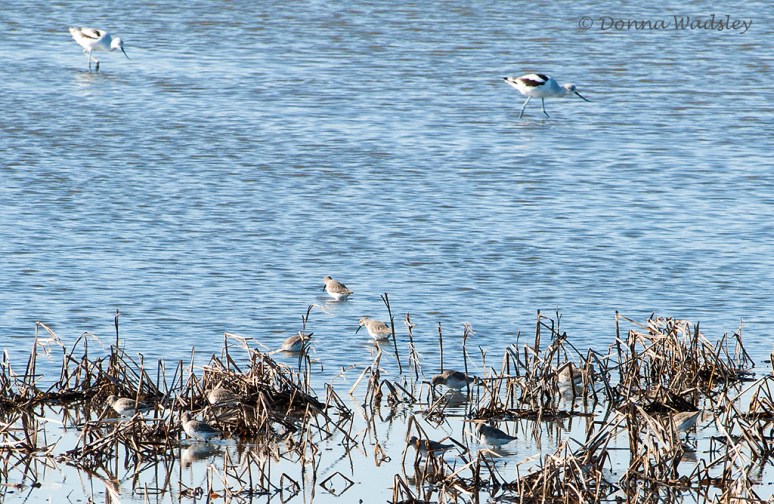 (Size comparison of the American Avocet to the Dunlin)

I moved on but looped the wildlife drive again. The Avocets were still gone but the Dunlins were there. Just watching and enjoying the scenery and telling myself I needed to get to my errands(!), the Dunlins quickly took flight and I snapped a few shots. Again, I didn’t see anything menacing in the sky.
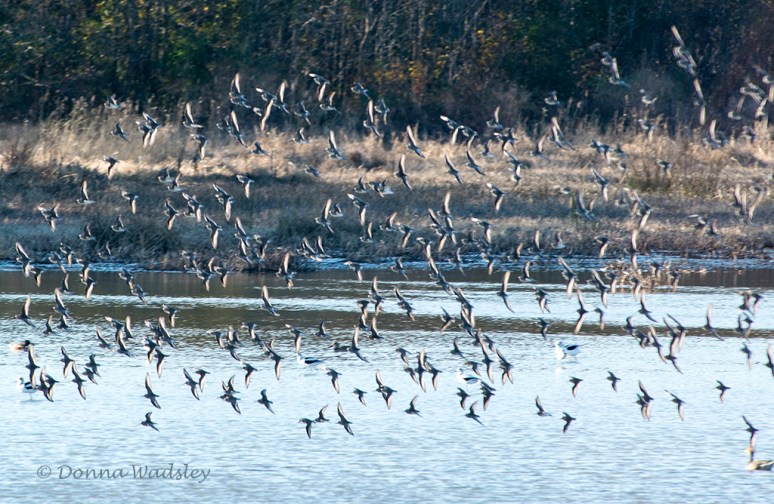 Dunlins in flight
Dunlins have a wingspan of 13-14″ (32-36 cm).

Both of these birds are gorgeous in breeding plumage (American Avocets breed in the U.S. mid-west; Dunlins breed along the northern coastlines of Alaska and Canada) which I would love to see and photograph; but for now adding them to my lifer list, I’ll take their winter-look here during their visit!
Supermoon – January 1, 2018
My capture of the Supermoon reflecting over the Atlantic Ocean through cloudy skies.
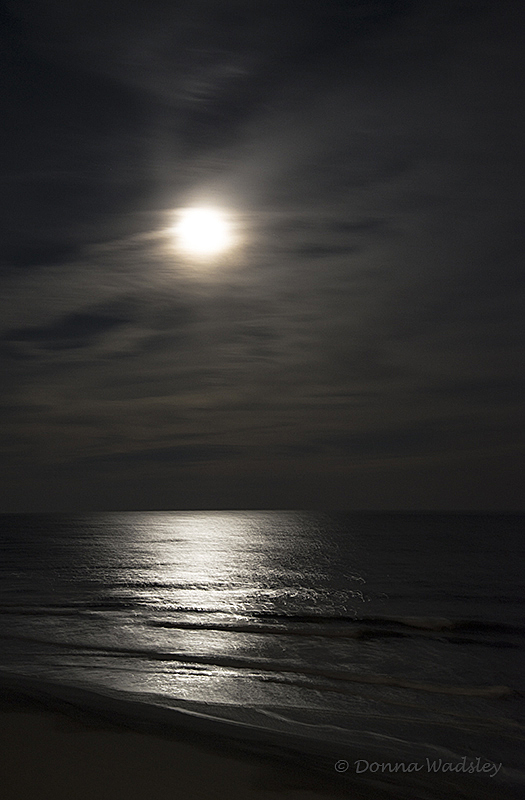
I was disappointed I wasn’t able to get ‘creative’, having come down with a head cold.
I am looking forward to fellow bloggers’ Supermoon captures and what creativity was accomplished!
 Bay Photos by Donna