
December Sunsets Over Kent Island
A couple posts back I showcased my sunrises for December. Here’s my December sunsets over Kent Island at the south-end of Kent Narrows.
No two are ever alike.

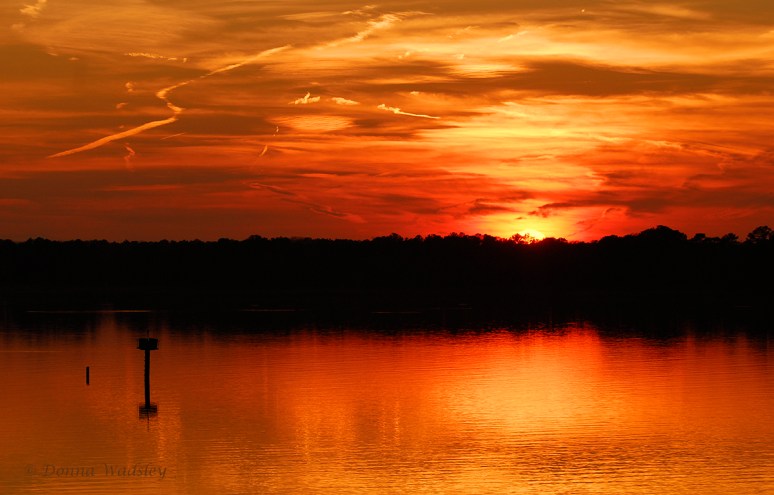


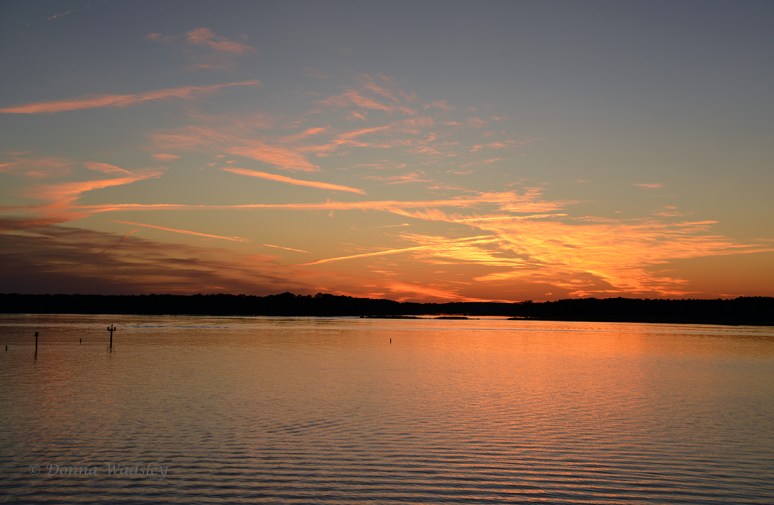
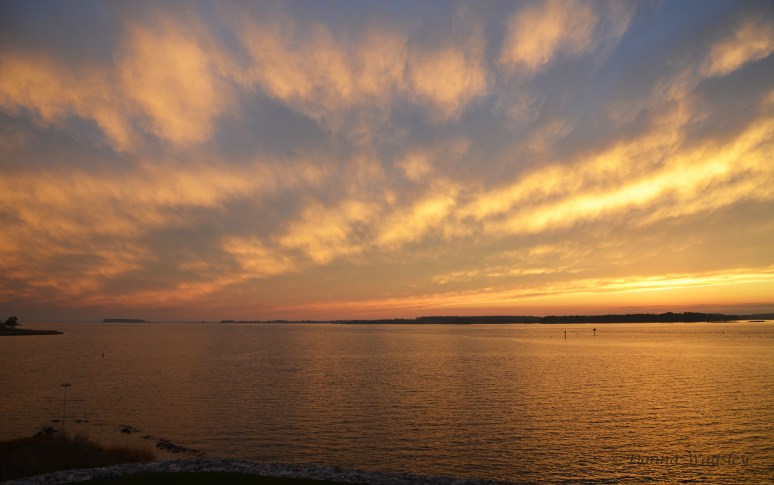
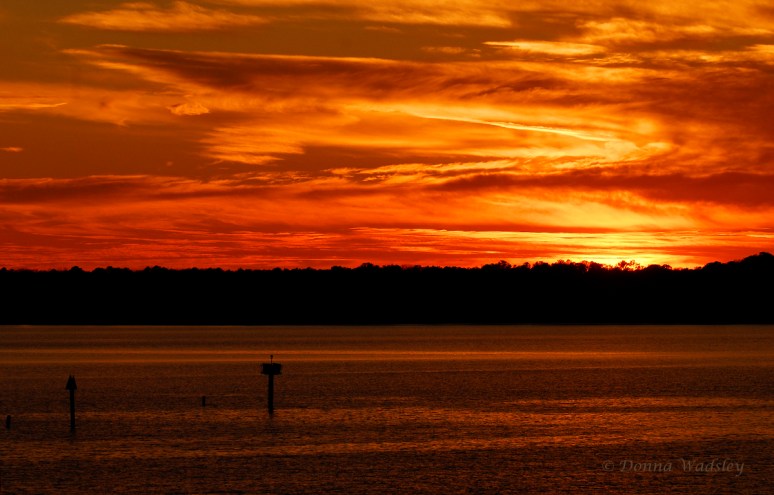


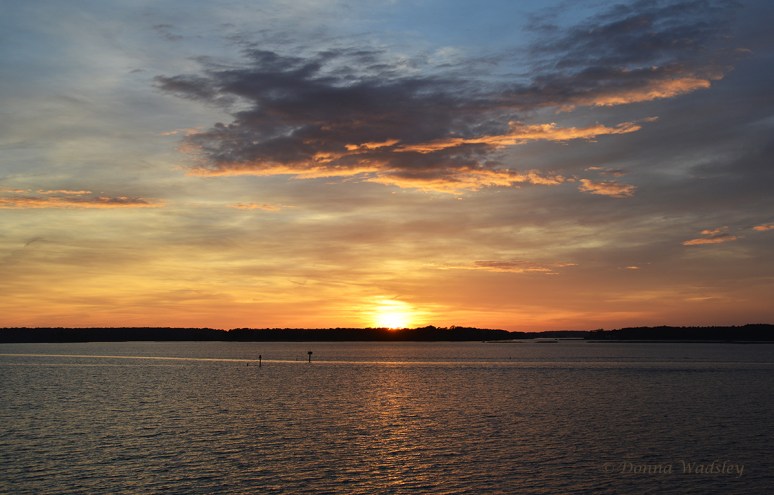


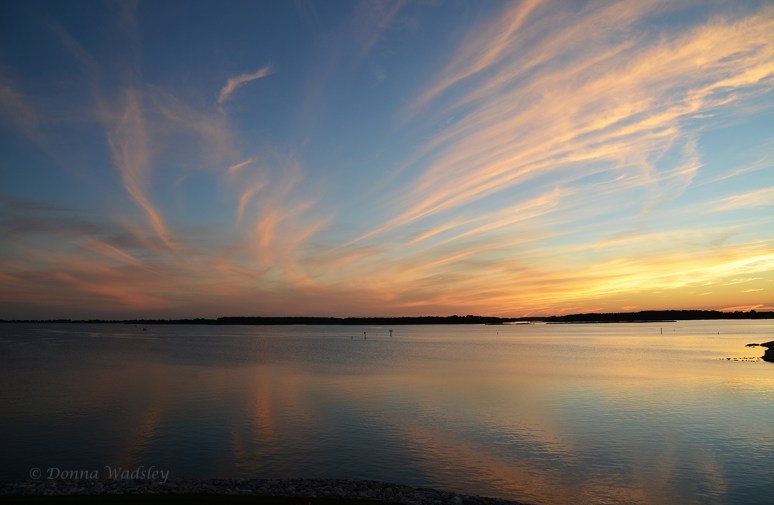
Although the winter temps of 30-40’s have finally arrived, a few weeks ago we were still experiencing temps in the 60’s. I bet the people in the dinghy in the next photo would like my capture from then!

“Every sunset brings the promise of a new dawn.”
— Ralph Waldo Emerson
🙂
Canada Geese
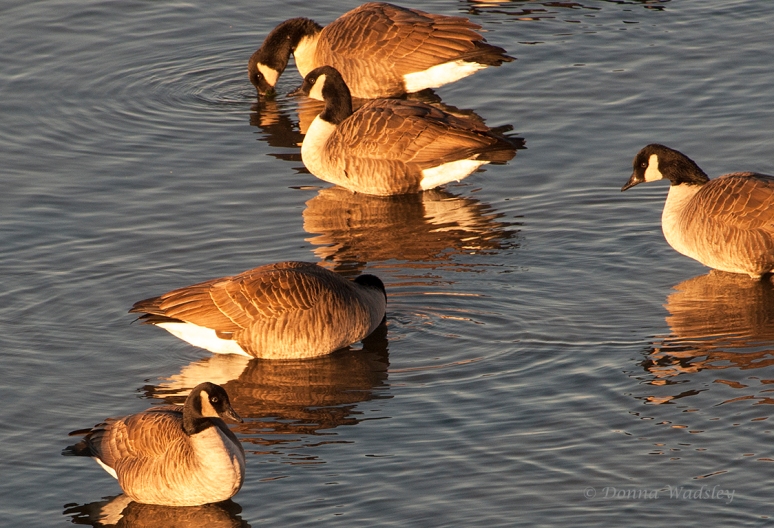
Canada Geese have been slowly arriving to our area for a couple months now. They frequently spend evenings up in Marshy Creek, feeding and sleeping overnight.
On occasion they will come up close around our Osprey nest platform and spend the night, which I love! I captured this flock coming in for an evening of rest.
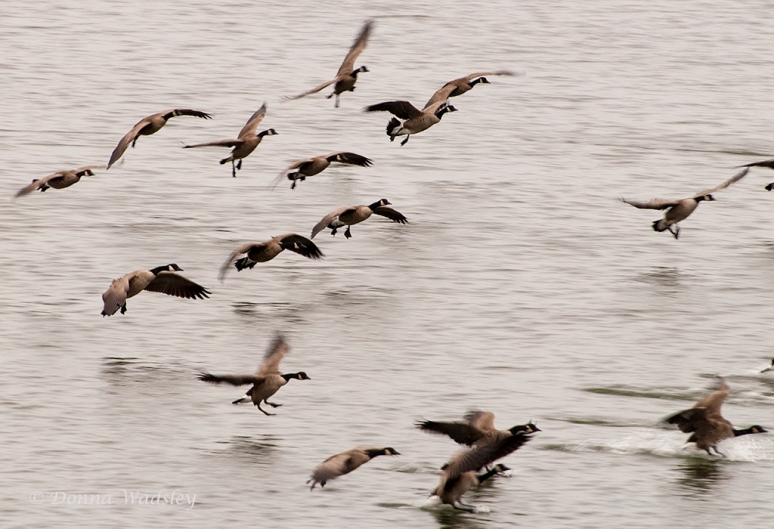

At dusk, the early risers will honk, feed, and preen while on alert until they are all awake and ready to take flight in unison for their day’s journey.
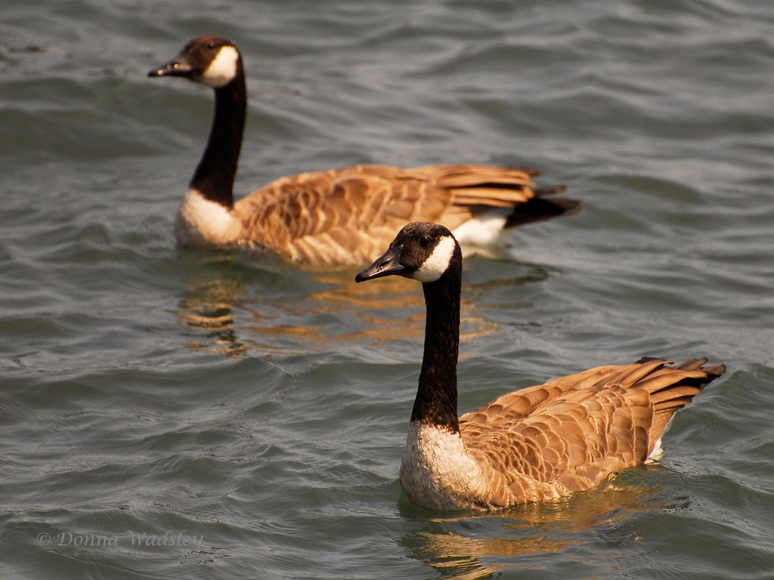
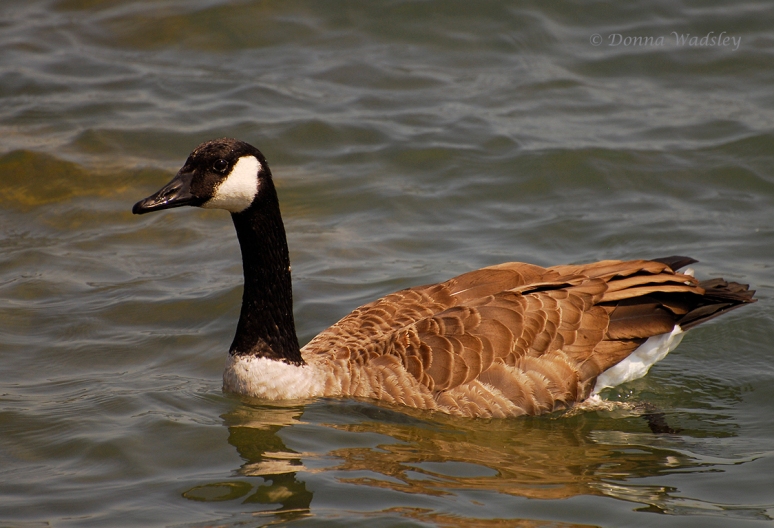
Always working on my flight photos, here’s a few taken as these Canada Geese do a fly-by of my balcony.


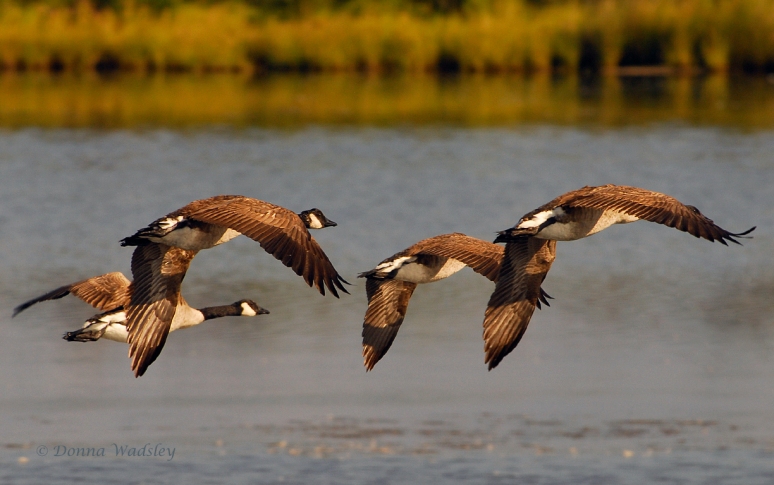

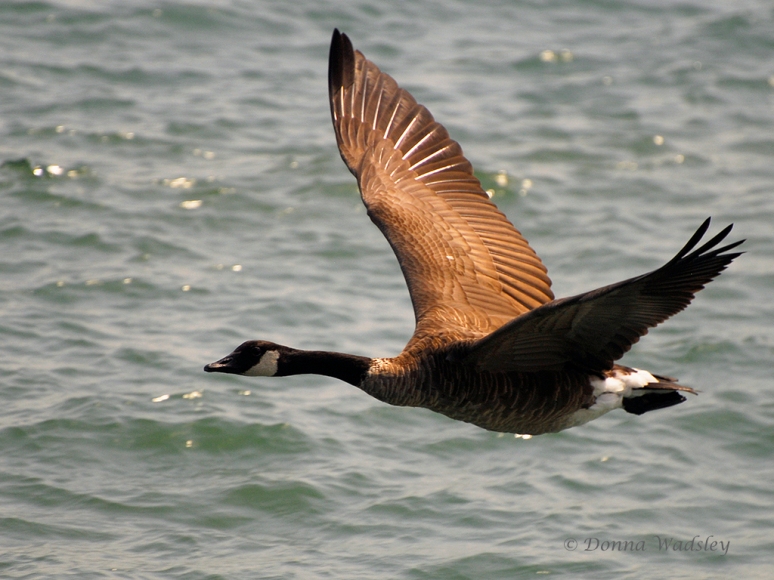
I captured this next Canada Goose at our marina dock, who was down low feeding off the bulkhead. I didn’t know he was there and almost fell backwards when he popped up!
He didn’t move, just locked that one eye on me. I stood still, thinking this fella is going to come up and out of the water and attack me, lol.
We both continued to stare without moving. So I told him, “Look, if it’s okay, I’m going to take your photo and then I will leave you be…..”
I think he gave me a slight nod of approval! <wink wink>
I took a quick photo and then hurriedly walked away. I looked back and he was still watching me….
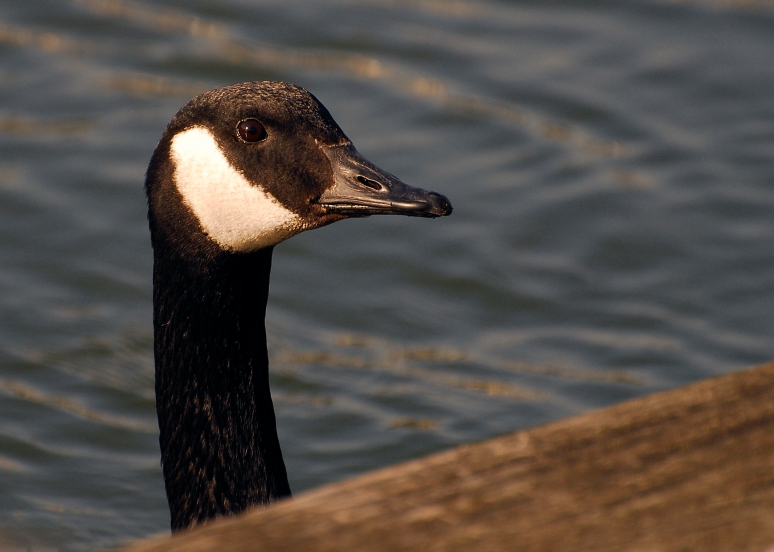
He then went back to feeding; as I walked away, trying to slow down my heartbeat and adrenaline!
I was very thankful I didn’t get goosed by this goose!
🙂
December Sunrises Over Marshy Creek
“Every sunset gives us one day less to LIVE
BUT every sunrise gives us one day more to HOPE.”
– Ritu Ghatourey
“With each sunrise, we start anew.”
– Author Unknown
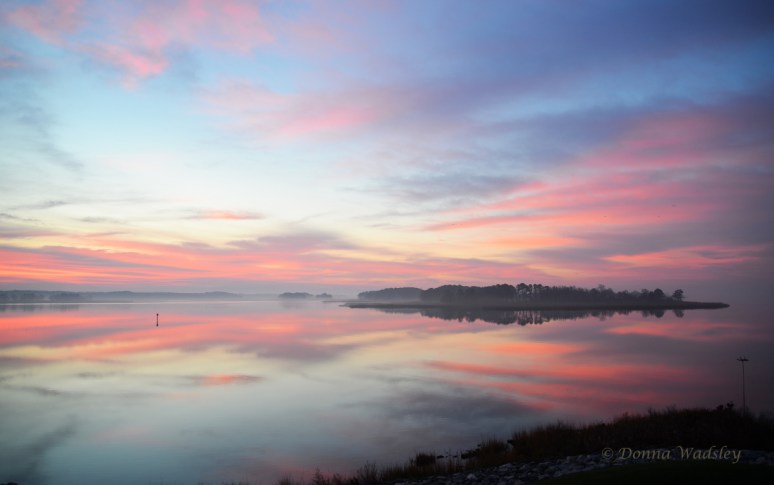
From my third floor balcony, I am lucky to see vast sunrises across Marshy Creek and vast sunsets across the south-end of the Kent Narrows Channel and Kent Island.
Clouds in winter months provide the most dramatic and breathtaking during our cold temps and low humidity, and the sun’s shift in the sky gives me the opportunity to capture them without a structure in the foreground. The reflections they create practically blow me away….
If you like sunrises, here’s six captures of mine from last month…..we had, unfortunately, many days of overcast, rain, and fog. And, most important, you gotta be up in time to see them! I’m working on that….
You will see our community Osprey nest platform in the right bottom corner that I photograph birds perched on my blog. 🙂
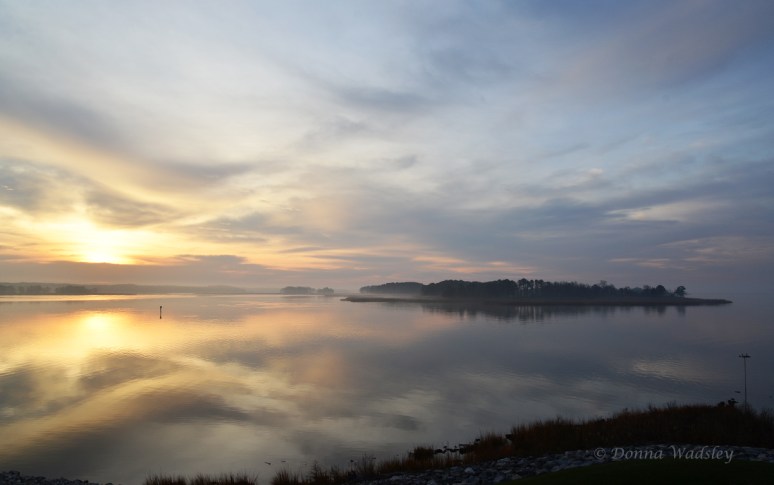


The next sunrise deserved to have two photos….

Three minutes later…..
Celebrate the sunrise
Toast the sunset
And
Enjoy everything in between!
– Author Unknown
A Heron of Greatness and Blue
Running out to do an errand, I cruised on past the marsh alongside our road; and that’s where I spotted this handsome Great Blue Heron. A quick & safe pull-over, I was able to snap a couple photos. He didn’t budge an inch.
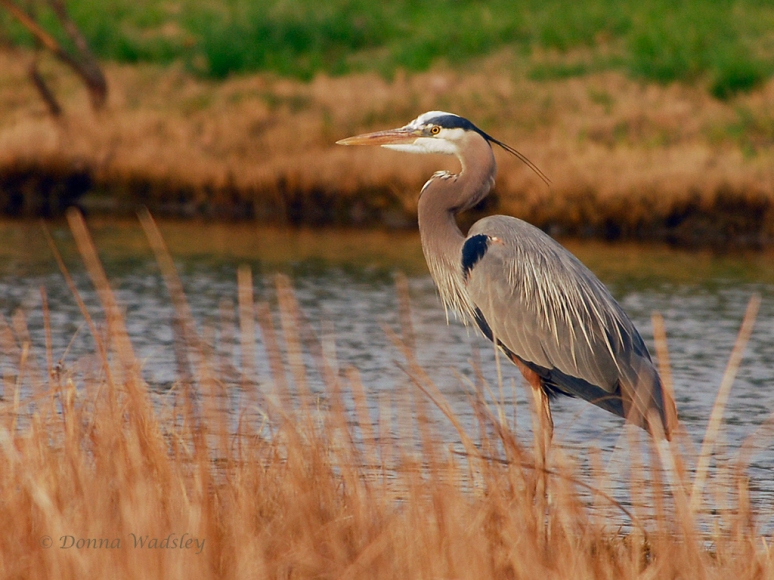
Always a pleasure to sight a great photo op when you least expect it.
And always a plus when you have your camera with you.
🙂
Double-crested Cormorant
Another year-round resident of the Chesapeake Bay, this lone Double-crested Cormorant was minding his own business, diving for food when I spotted him.

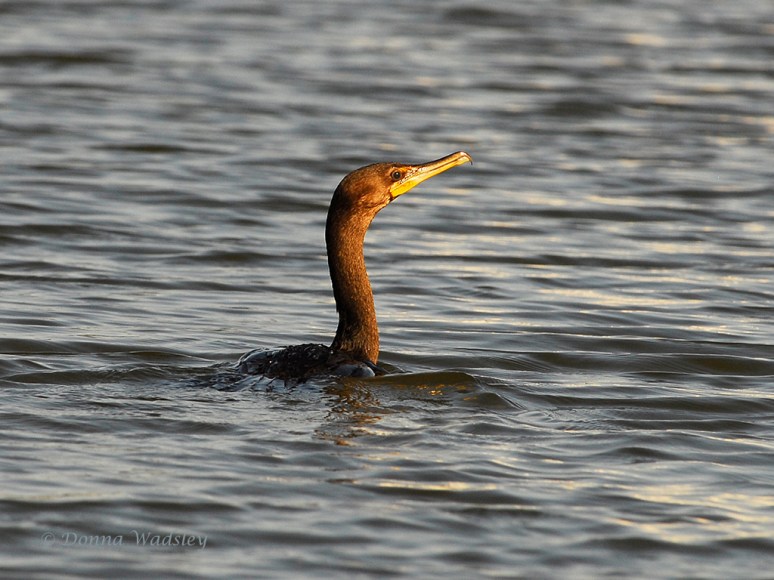
And he immediately spotted me up on my balcony.
And unfortunately decided he was no longer comfortable with his surroundings.
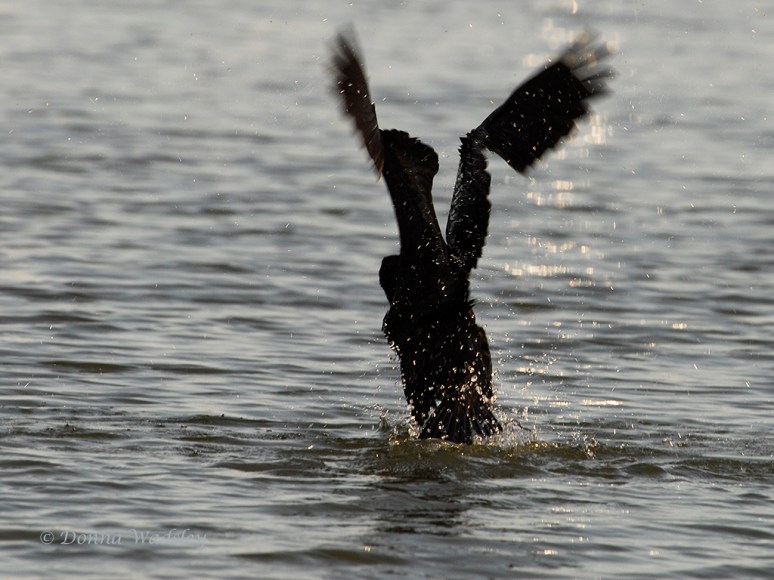


Geez, what’s a bird got to do to have some privacy while dining!
Sorry about that Mr. C! 😦
Belted Kingfisher Visits
The Belted Kingfisher is a stocky, large-headed bird that is a year-round resident around the Chesapeake Bay area. On occasion I’ll see one perched on a phone line alongside the road and marsh. You are lucky if you can stop the car and quickly snap a quality photo, they are so flighty!
So you can imagine why I think it is a real treat when a Belted Kingfisher visits our Osprey nest platform during the fall/winter months. They aren’t one to stay long, just a stop, do a little fishing, then move on. But they do seem to like the perch and come often. You just have to have a sharp eye to catch a sighting of these tiny birds a few hundred feet out on the platform.
Here’s a series from one recent morning, when I finally got lucky in capturing one doing a little fishing.

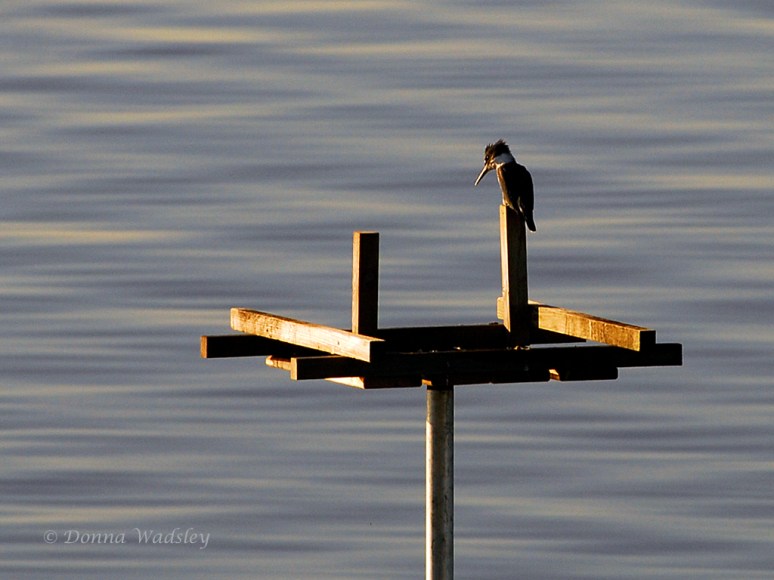
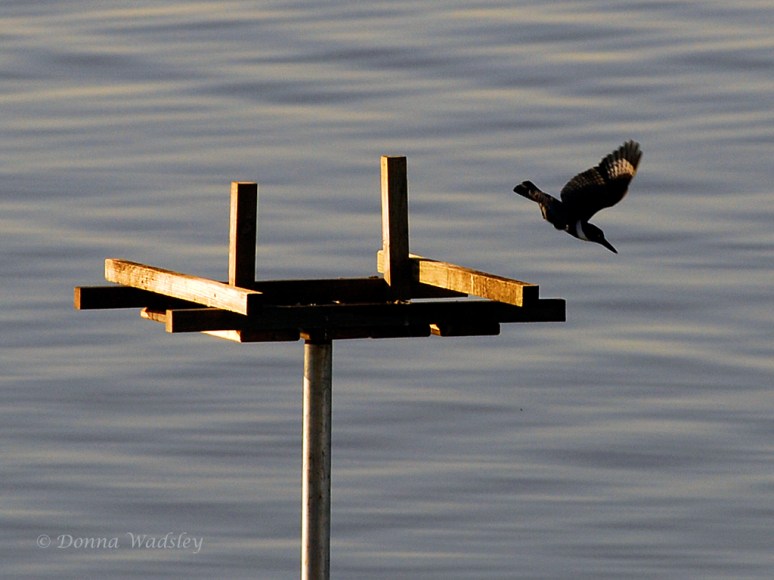

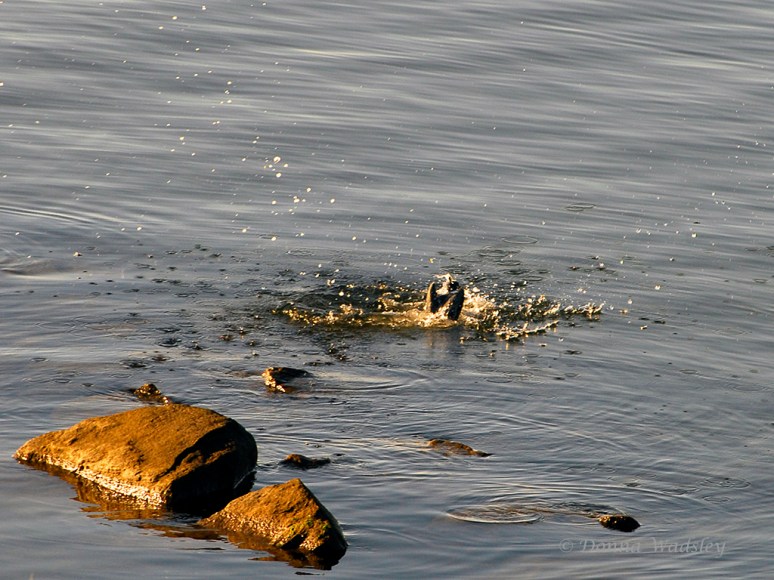
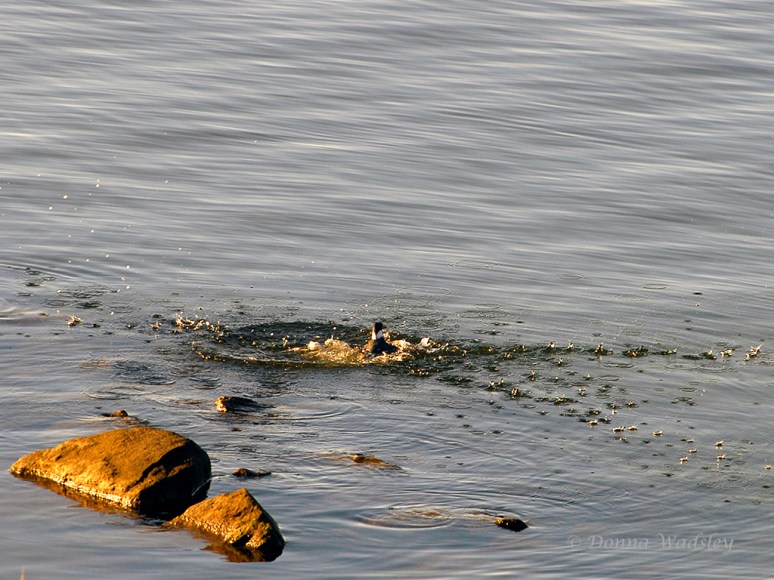
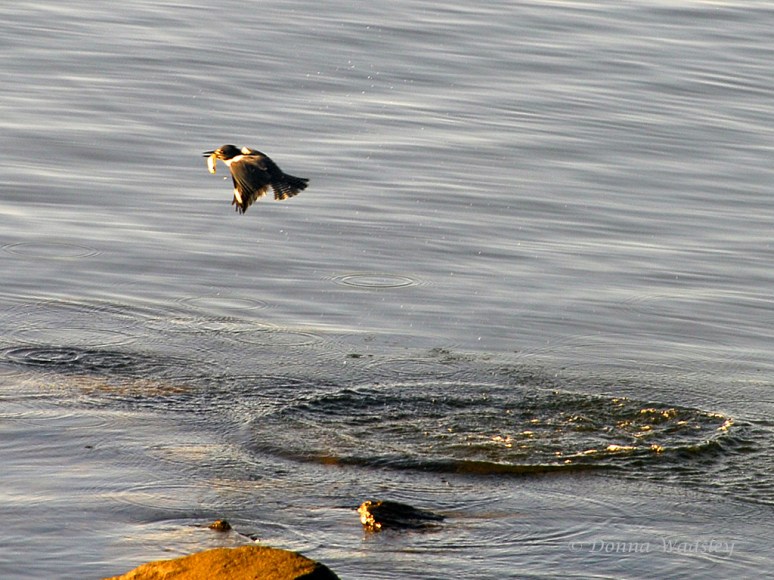


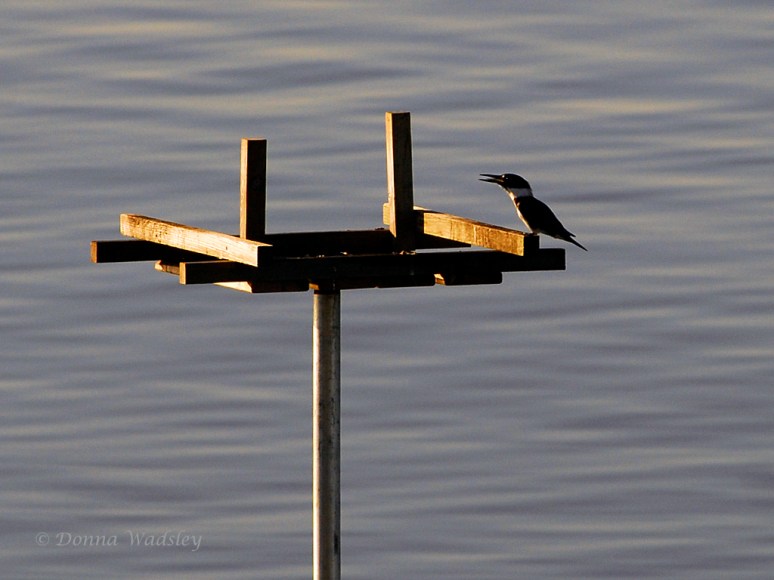
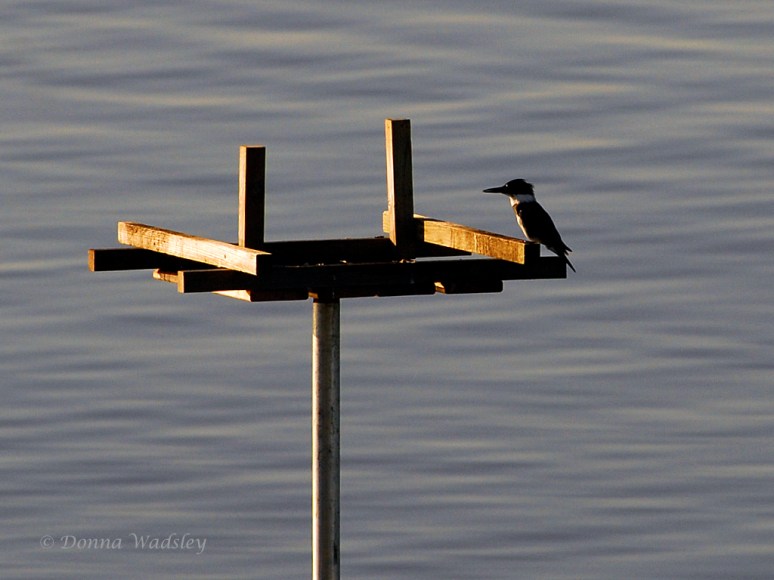
With the everlasting warm temps we have been experiencing this season, we’ve had a lot of fog around the water. Here’s another photo taken around the same time on another morning of heavy fog. The Belted Kingfisher only sat for a minute and was gone. I don’t think he could see down in the water to sight any fish. It was time to move on to find breakfast elsewhere!

With my distance, the photos did not do justice for such a pretty bird. To show what he looks like, the next two are my favorite captures of the Belted Kingfisher, taken at Chincoteague NWR, Virginia, a few years back.
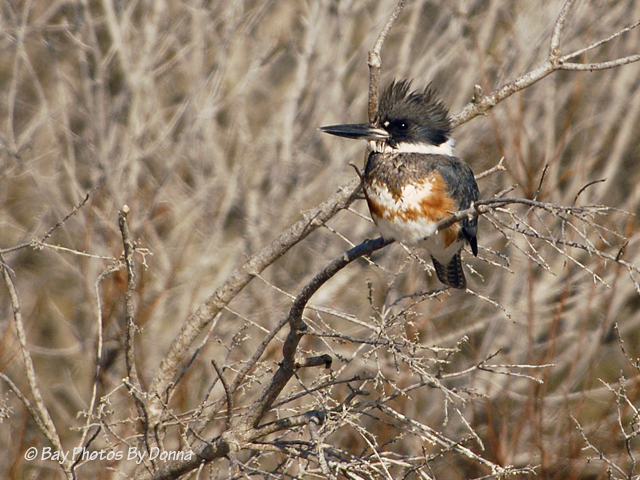

See? I told you he was a pretty bird! 🙂
I was contacted by Carol Bucklin, a local professional Maryland painter, requesting to paint the Belted Kingfisher from my last photo above. I, of course, said yes! Please go to Carol’s link to see her oil painting, which I am proud to add has sold! You won’t be disappointed.
http://carolbucklin.fineartstudioonline.com/works/1237398/kingfisher
Thanks for stopping by, enjoy your weekend!
Mallard Ducks
Happy New Year, Everyone!
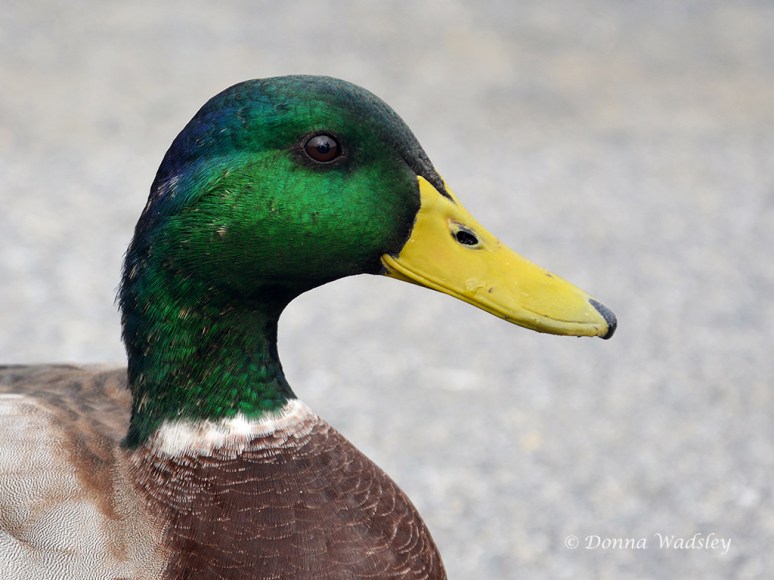
Being such a common year-round duck, we all probably see more Mallards than we think we need to, and so most times we ignore photographing them. I’m guilty! But on occasion especially in the early morning or late evening, you can’t ignore the male Mallard’s iridescent beauty. An evening a few weeks ago, one was resting along our riprap. The evening sun intensified his colors. So, okay…..I had to take a photograph. And I liked it!
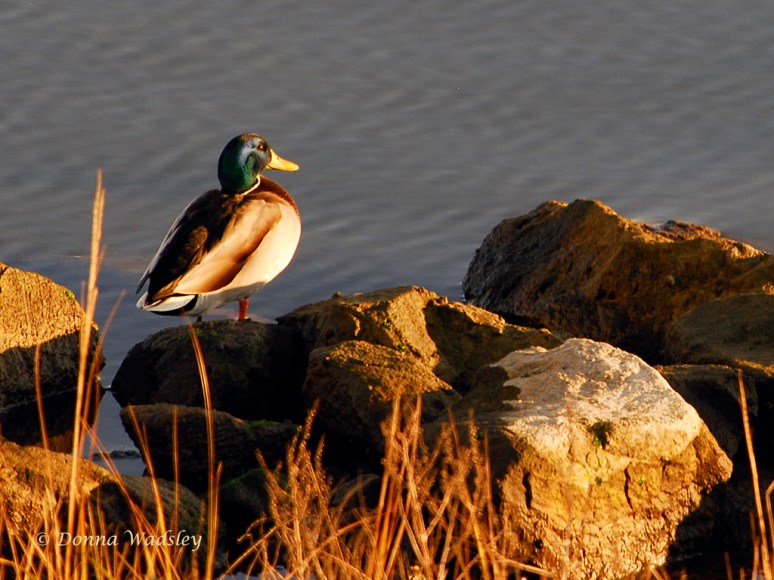
The Mallard Duck is my 4 1/2 year old grandson’s favorite bird, most likely because every time he visits us, he and I must go to see and feed the ducks at the duck pond at a local restaurant, Fisherman’s Inn and Crab Deck. We have been doing this together since he was two. Here’s a few photos from one of our recent visits. 🙂
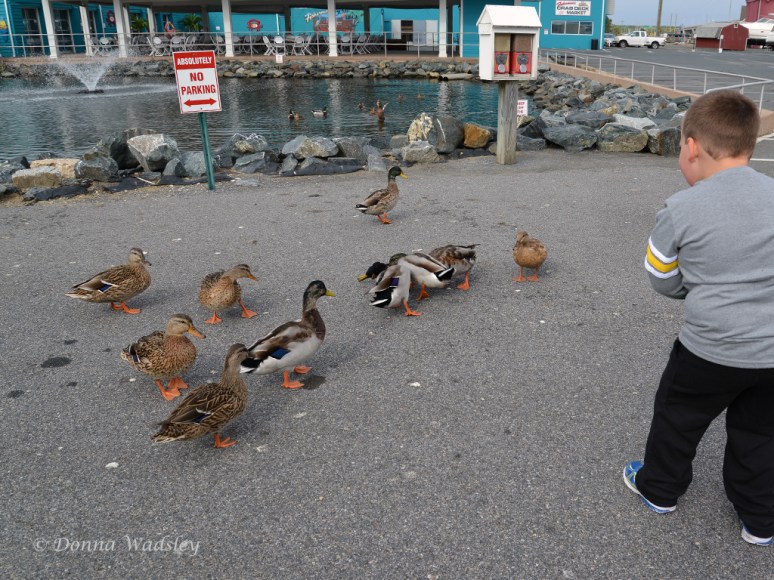
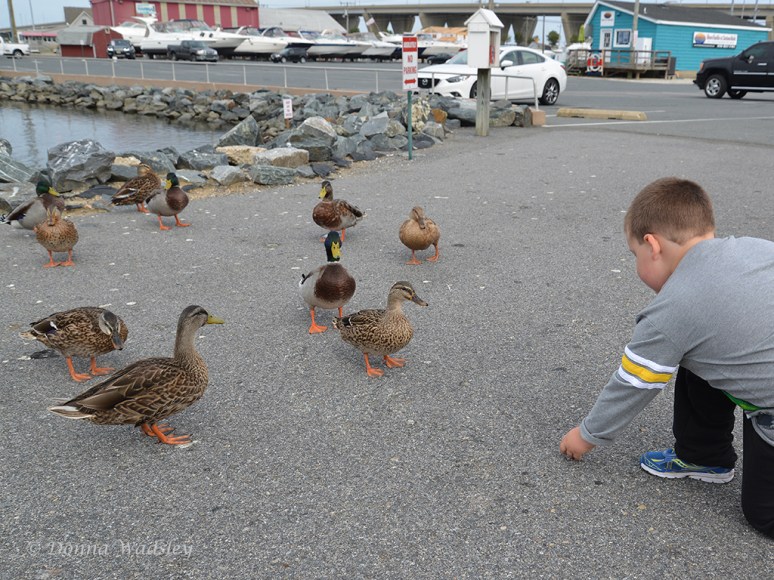
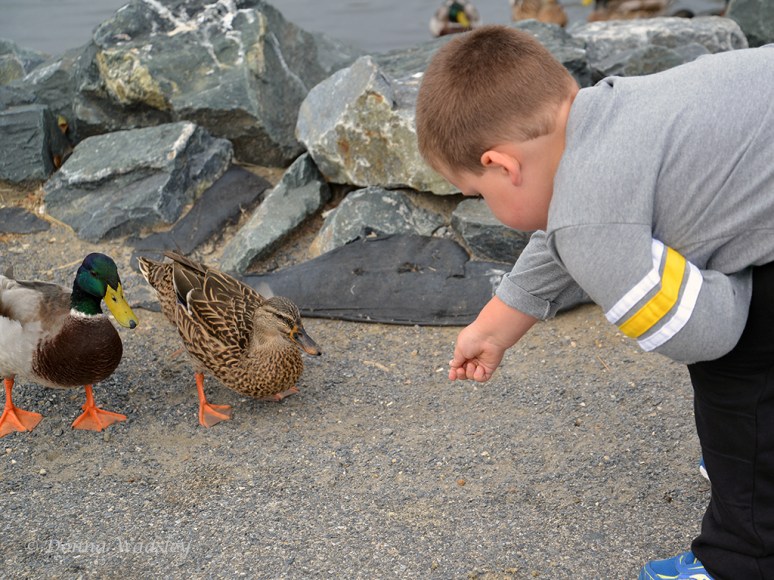
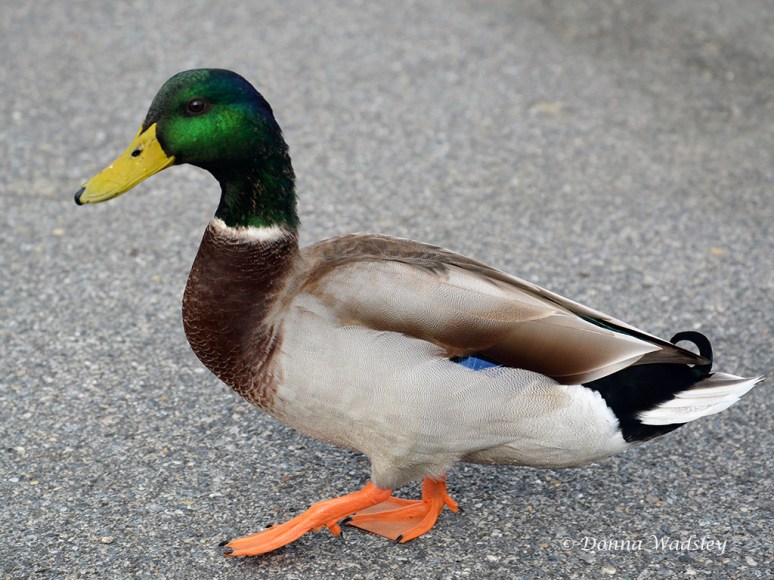
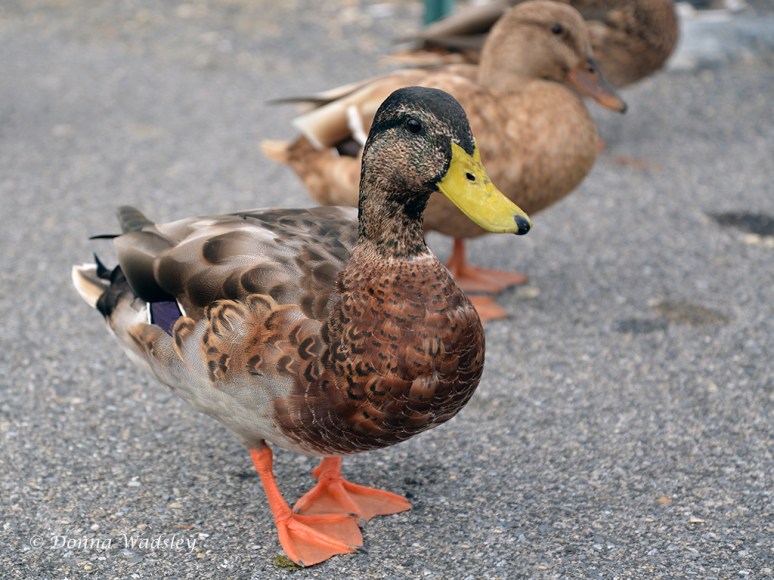
Benjamin and I think the Mallard Duck is always smiling. Seems so!
Benjamin and I always have a fun time with the ducks. The Mallard Duck is more important to me than I had originally thought. 🙂
Red-breasted Mergansers
Although we’ve been experiencing warmer temps, our winter birds continue to arrive into the Chesapeake Bay area. It was a thrill to sight two female Red-breasted Mergansers meandering around the rock base of our Osprey nest platform early one morning.

One even climbed up on a rock to preen for a bit.

When the two females decided it was time to move on, a third female joined them that I had not spotted.

As the three swam around the Osprey nest platform point, they passed off to my left into the early morning sunlight.
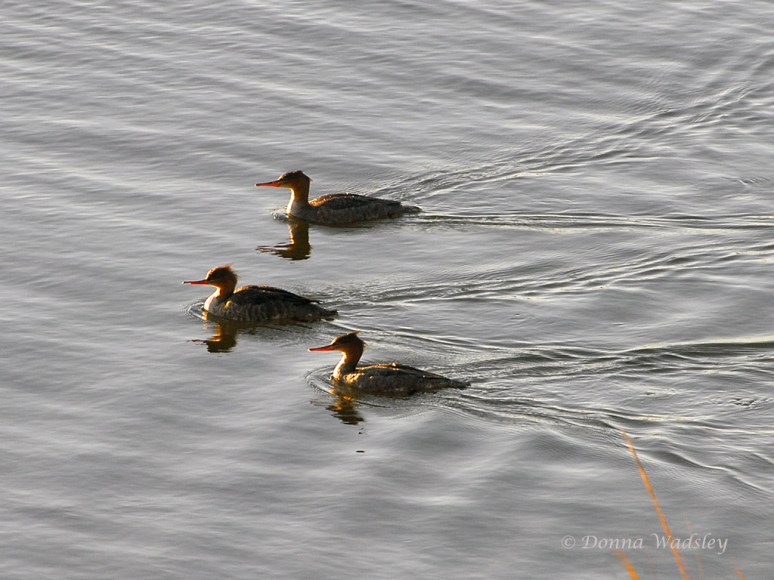
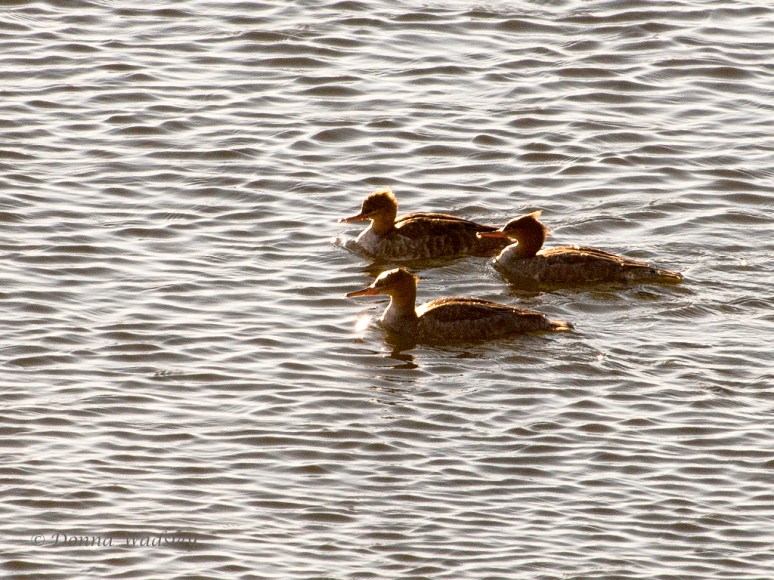
No seen very often around our riprap shoreline, these three female Red-breasted Mergansers were much enjoyed, even if only for a few minutes. 🙂
American Bald Eagle Activity
It occurs every fall/winter. Once the Osprey depart in August/September to migrate south, resident Eagles become more noticeable around the Chesapeake Bay. The nearby channel markers, buoys, and Osprey nest platforms quickly become Eagle perches that are now free of the Osprey and their harassment that occurs during the summer months.
Our resident Eagles are now bonding and mating. In addition, nests are being tidied up, in preparation for egg-laying in January, and eaglet-hatching in late February.
Almost daily I can spot a pair of Eagles across Marshy Creek in their perching tree….or on Lippincott’s channel marker….or on the Kent Narrows south end channel markers….or just flying above together, playing. By chance, I might hear them chatter to each other. Having a conversation. Pretty cool I think.


Eagle on Lipincott’s Channel Marker at Sunrise

There is another pair of Eagles that periodically arrive and perch on the Kent Narrows south end channel markers, that appear to come from Kirwan’s or Goodhand’s Creek.
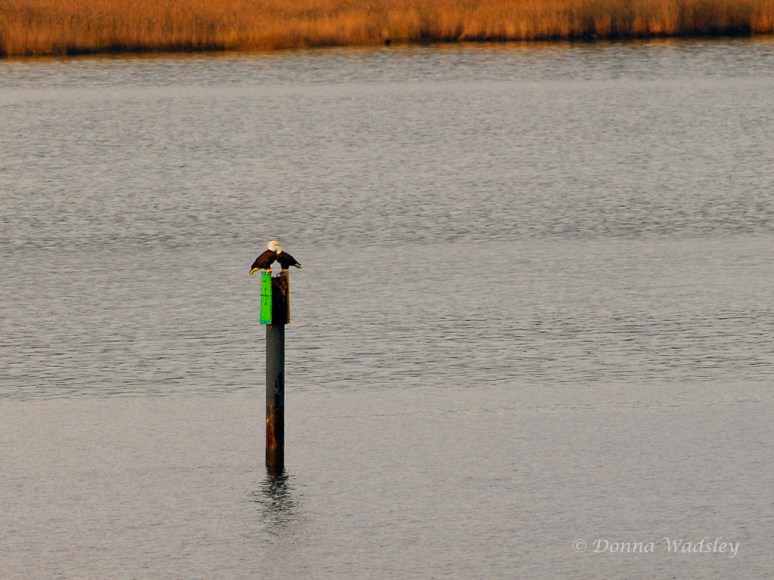
The ‘other’ Eagle pair trying to enjoy a Kent Narrows perch
When they appear, our Marshy Creek pair will take flight and go into attack-mode on the other pair. Aerial chasing occurs, with lots of vocal screaming.
It’s quite entertaining. Although they are at a distance, it still makes you want to grab your camera and take on the challenge of getting all four in one photo.

Two pairs of Eagles interacting for territory channel marker perch control
Once while watching them interact, it was interesting to see one of the Marshy Creek Eagles retreat from the ruckus and decide to perch on the small channel marker that directs the boats into Marshy Creek. A marker that is quite buoyant, which the Eagle quickly found out!

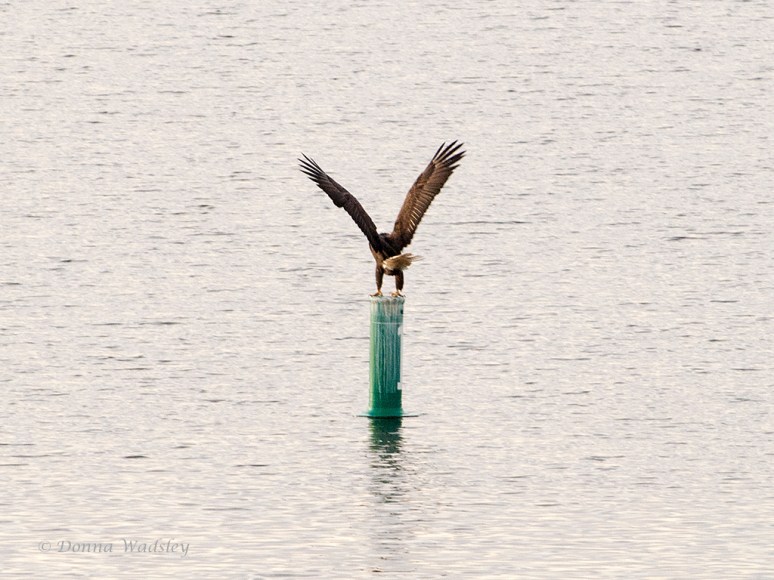
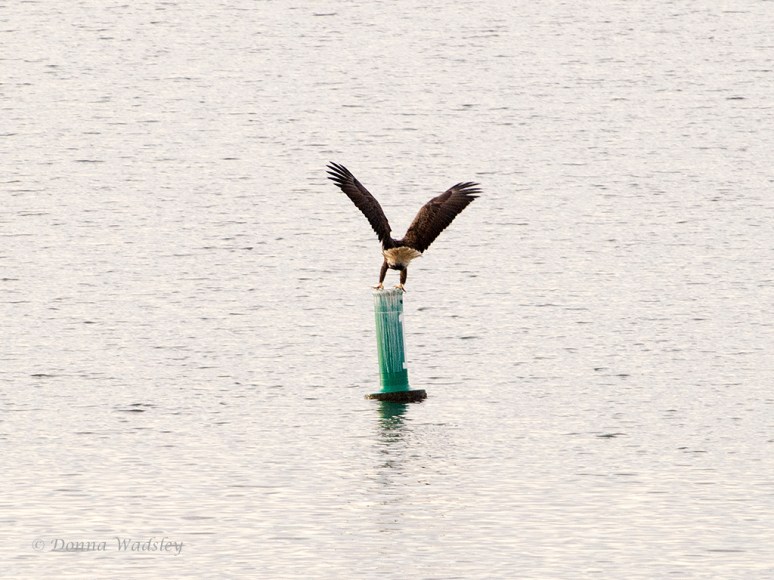


He/her quickly flew to the Marshy Creek tree. I don’t think they will try that perch again.
A final photo of one of the Marshy Creek Eagles doing a fly-by. Not a great photo, but the best I got out of the series I shot.

I love photographing all birds, but there is something about the American Bald Eagle that really gets the adrenaline pumping….. 🙂
Forever in My Heart……And The Great Blue Heron
A few weeks ago it was a year since Mom’s passing, and yesterday was her birthday. It’s been a struggle to carry on, and I miss her more than ever. During a low time weeks ago, I randomly came across a poem on a blog I follow. I felt I was meant to find it. I read it often and wanted to share it with the hope it will comfort someone else as it has me.

Since starting my blog over four years ago, noticeably it lacked posts this past year. Recapturing my birding and photography passion has been difficult. I went through a recent medical emergency and have recovered, but it was a huge “wake-up call” for me to start taking better care of myself and look to a brighter future. I vowed it was time to get back to the joy of life and happiness. Yesterday was heartening….
Out on my balcony, checking out the already increasing numbers of migratory birds rafting in Marshy Creek with my binoculars, I spotted a Great Blue Heron coming in for a landing to my right at our riprap. (Mom’s favorite bird on her birthday, how wonderful!) I was hand-held camera-ready. 🙂


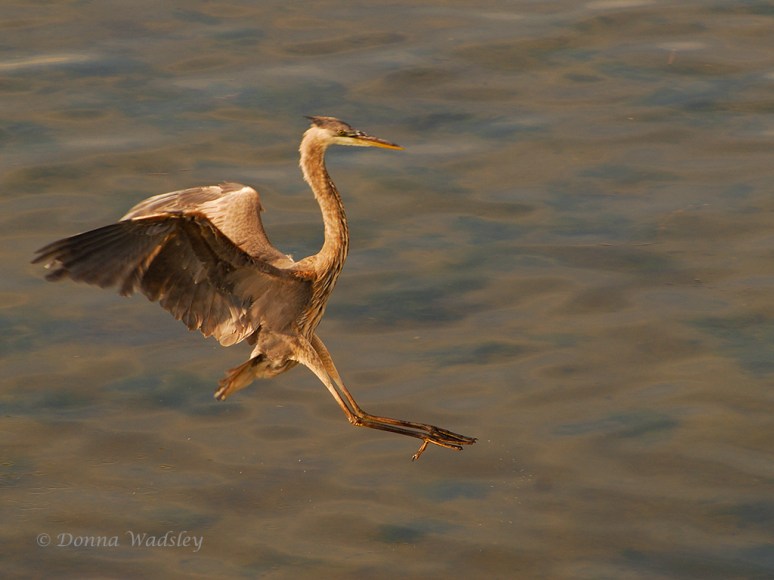


With a wingspan of 5-6 feet, that is a lot of bird coming in; but somehow they can still do it quite gracefully.
A few more random photos of other Great Blue Herons from the past week. Our Opsrey nest platform is a favorite perch late in the day.

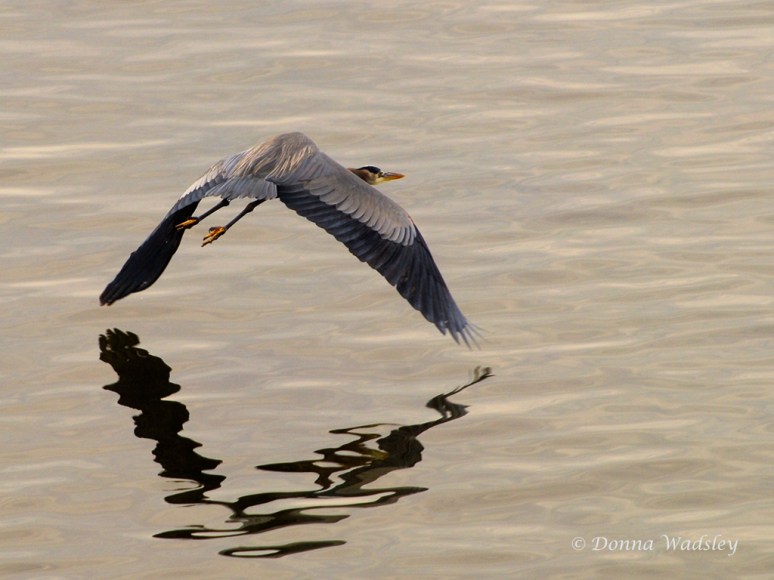

These next two were taken at separate sunsets, a Great Blue Heron heading home for the night.

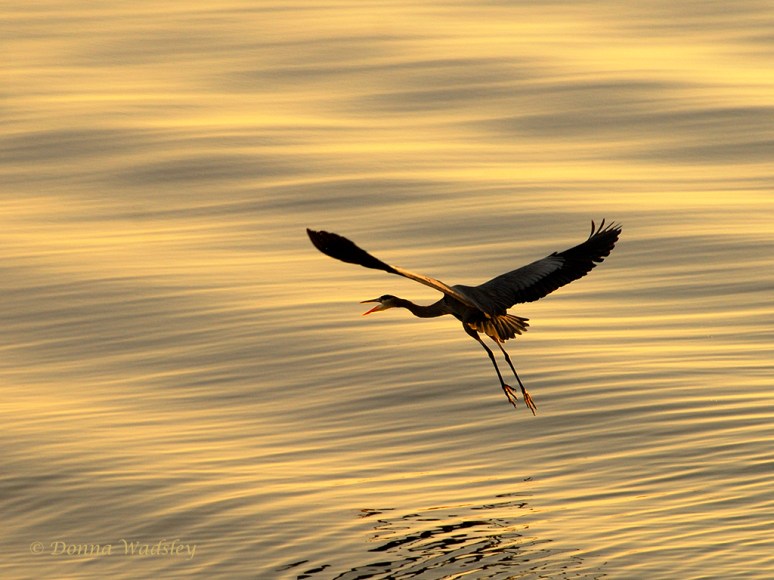
I love trying to capture the Great Blue Heron in flight, to show those gorgeous wings.
Thank you for stopping by, I appreciate it and hope you enjoyed!
 Bay Photos by Donna