Gray Catbird
There is an abundance of Gray Catbirds in the Everglades and Big Cypress area of Florida.

Gray Catbird collecting berries
Have you heard one to understand why they’re named a catbird? Take a listen…..
Gray Catbird ‘meowing’ call
(courtesy of Audubon.org)
The first time I heard one years ago, I honestly thought a kitten was hiding in the bushes. I searched and searched for that poor kitty that needed help. Suddenly a gray bird shot out of the bushes and was gone. So was the meowing!
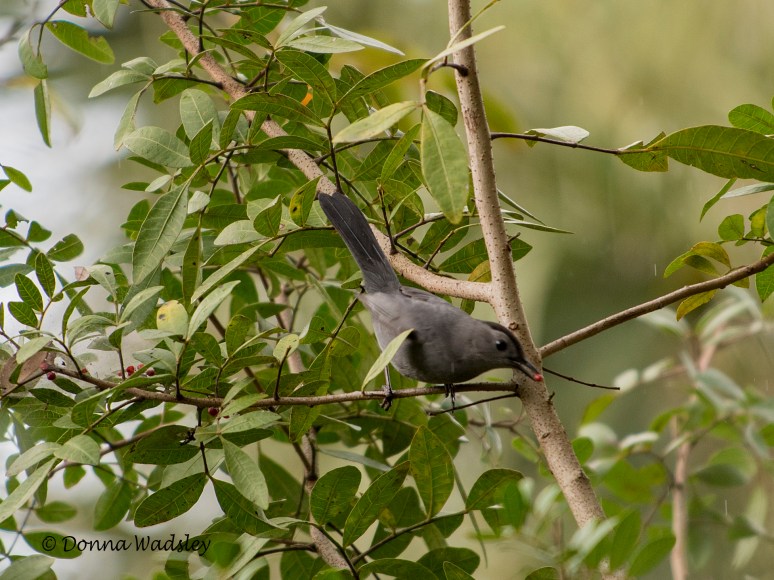
Gray Catbird collecting berries
This is a very secretive bird, always trying to hide from you in the thick of the leaves and branches.
Because I had been sitting still (in my bird mobile) for a while, watching and photographing this and several other bird species, a Gray Catbird brazenly landed in front of me on a fence. 😲

Curious Gray Catbird
When I see the Gray Catbird, I always think their ‘black cap’ looks like they have on a toupee. 😉
The Gray Catbird isn’t just black and gray. If you’re lucky, you’ll get a glimpse of its rusty-color feathers under its tail.
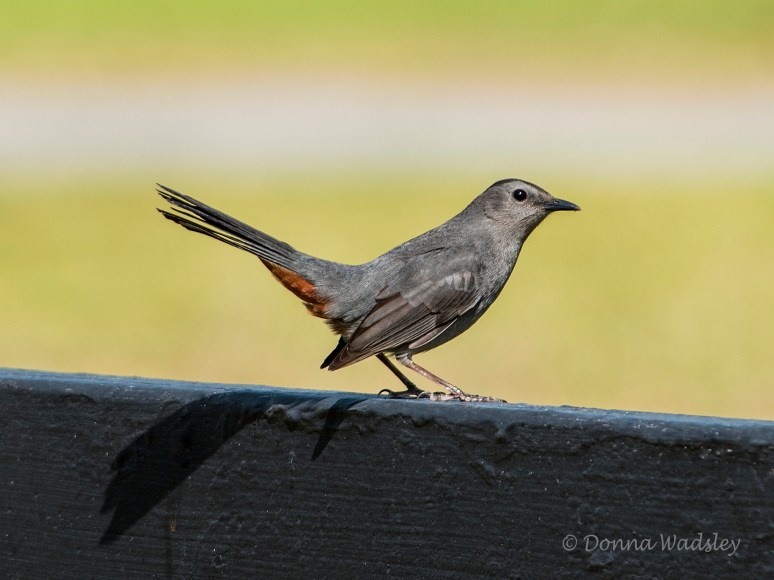
Gray Catbird displaying its rusty brown rump
I watched and photographed all the birds in that one sitting for almost an hour, hoping I’d capture this bird with some of the pink flowers of a Hong Kong orchid tree s/he was flying in and out.
Finally, a moment of its rest gave me the opportunity.
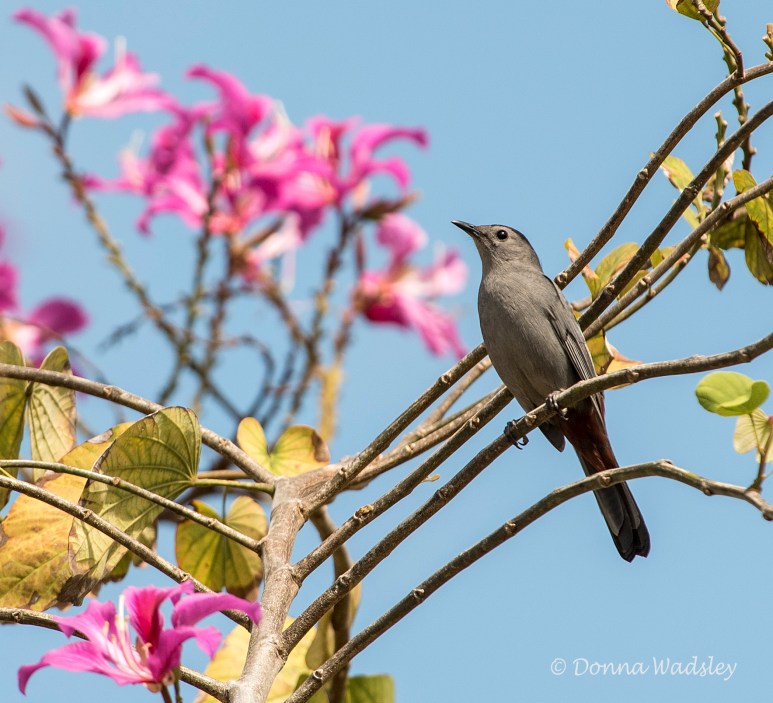
Gray Catbird in a Hong Kong Orchid Tree
There was another, much smaller bird I was trying to capture in this same tree. Next post!
American White Pelican Pair
I mentioned in my last post about a boat tour we took at low tide and being delighted with dolphins.
My primary reason for the boat ride was to hopefully see a large number of American White Pelicans known to use Indian Key as a resting place at low tide.
As we circled the island, we found just two. Along with a Double-crested Cormorant keeping them company.

American White Pelicans and Double-crested Cormorant
You can see a ‘horn’ beginning to protrude from the top of these pelicans’ beaks. When the horn is fully grown, it’s a sign to each other they are ready to breed.

American White Pelicans and Double-crested Cormorant
American White Pelicans and Double-crested Cormorants are an interesting mix often found together. And here I found proof! Cormorants even nest individually or in groups within pelican colonies.
No doubt, they must feel safe with these enormous white birds.
And although there were only two pelicans, I was happy with seeing them. It was later, inland, that I would see many more to my delight and of which I’ve already shared with you!
Bottlenose Dolphins Having Fun
A month ago we took the first morning boat tour out of Everglades National Park.
We were told we had a good chance on seeing Bottlenose dolphins feeding in a specific area, and sure enough the dolphins were there. Seeing them breach the water so close to the boat got very exciting.
The boat captain told us to hold on, we were going to see if the dolphins wanted to play.
Come along on a boat ride and watch Bottlenose dolphins having a blast jumping through our boat’s wake!
(click on the first photo and you can enlarge to run through the gallery sequence)


Bottlenose Dolphins having fun!
Dolphins are such a delight! I hope they made you feel good and smile….

Be smart, be safe, be well, my friends!
Yellow-throated Warbler
Sitting outside early this morning, sipping coffee and listening to my ‘coffee house morning jazz’, I was happily disrupted by the chirping of a Yellow-throated Warbler in the nearby palm tree.
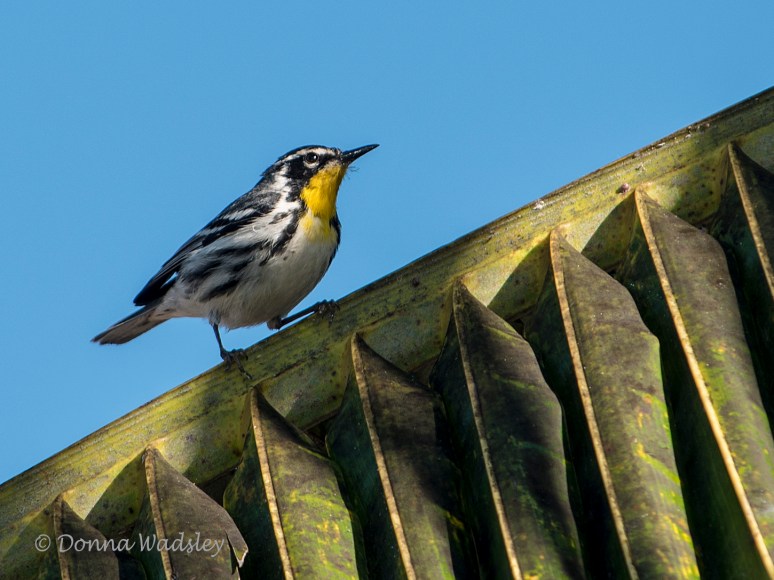
Yellow-throated Warbler
Of course, I had my camera alongside me, in preparation for this kind of moment.
The Yellow-throated Warbler was foraging above me on the old/dying palm fronds readying to fall.


Yellow-throated Warbler
I’ll take this kind of morning coffee interruption every day!
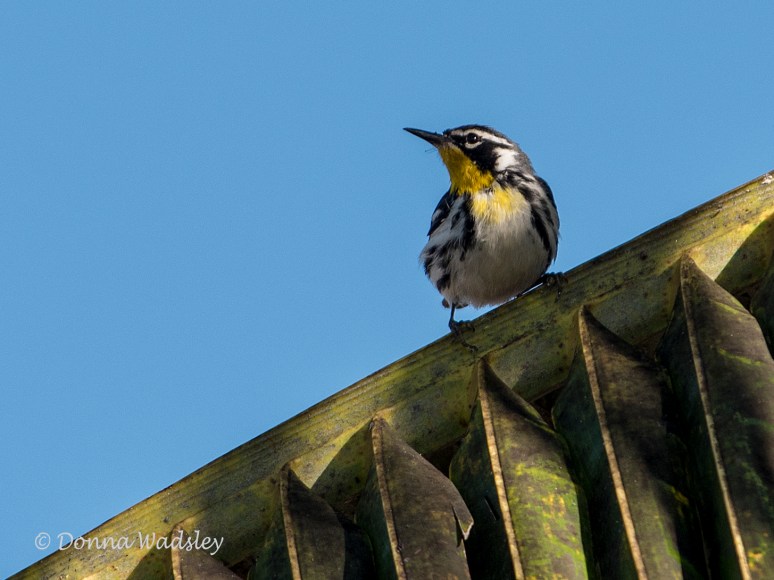
Yellow-throated Warbler
Black-necked Stilts
When birding, you just never know what surprises you might find, as in my sighting of a small group of Black-necked Stilts with those pretty long pink legs.

Black-necked Stilts


Black-necked Stilts
Passing by the area three days later, I saw a pair foraging there again. This time colorful reflections were special.

Black-necked Stilts
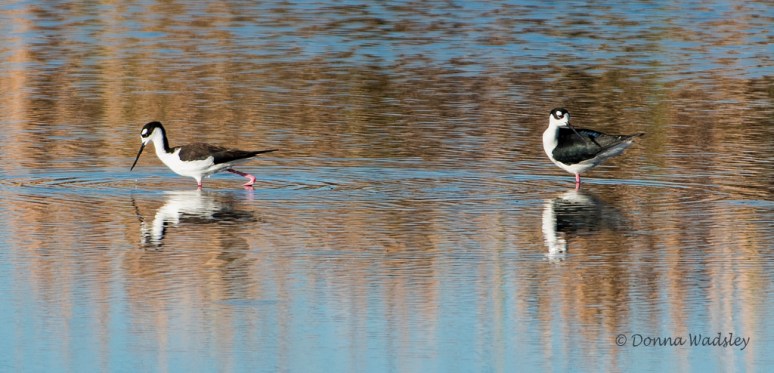
Black-necked Stilts
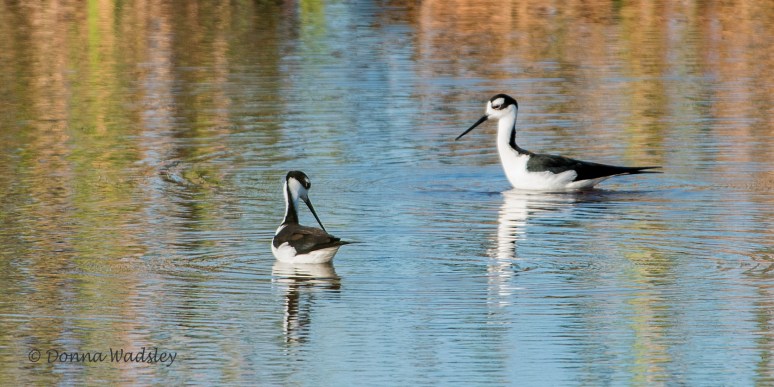
Black-necked Stilts
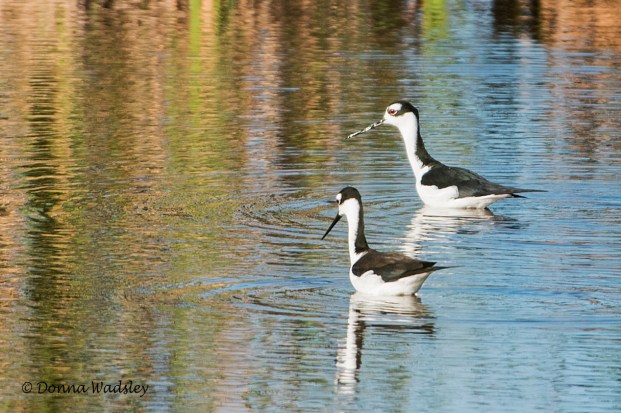
Black-necked Stilts – they have red eyes!
And those long legs…..better to wade the deeper waters!

Black-necked Stilt
Swallow-tailed Kite
My last post shared my added lifer, #202 the Burrowing Owl, from yesterday morning.
Would you believe I saw another lifer within a half hour of the Burrowing Owl? I did!! 😊
Welcome to my lifer list, #203 the Swallow-tailed Kite! I have seen these beautiful aerial acrobats in flight several times in the last couple months but was never able to stop and get a photograph.
This time a Swallow-tailed Kite wasn’t in flight, but perched right alongside the road for me to see AND where there was ample space to pull over. My adrenaline was a-pumping!
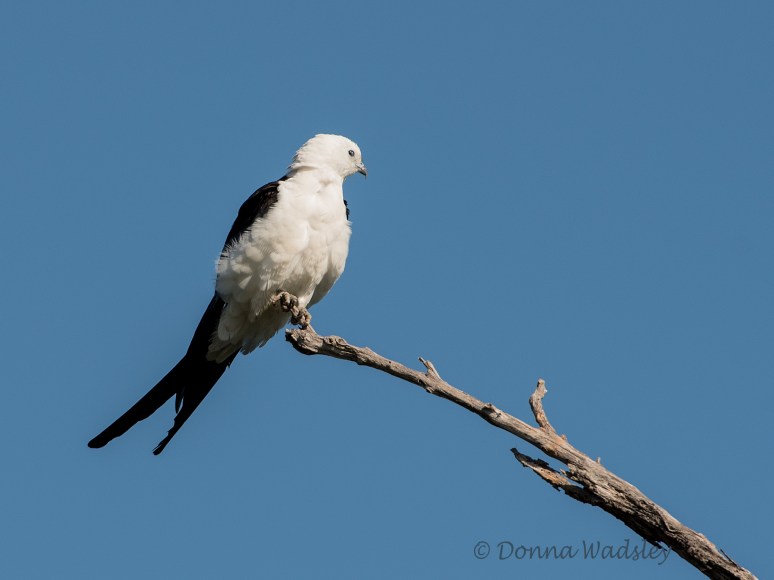
Swallow-tailed Kite
The kite was performing it’s morning yoga wing stretching……

Swallow-tailed Kite stretching

There’s that beautiful forked tail!

A glimpse of the underwing.
….fluffin’ up and tail stretching.


I departed with a big thank you and huge smile, leaving the Swallow-tailed Kite to its morning ritual.
Two new lifers within a half hour, what a great morning!
Burrowing Owl
Florida’s dwindling population of Burrowing Owls are having trouble finding homes. These pint-sized owls were listed as threatened in 2017 by the Florida Fish and Wildlife Conservation Commission.
Marco Island and Cape Coral on Florida’s Gulf Coast hosts Florida’s largest urban Burrowing Owl populations. Approximately 500 Burrowing Owls live on Marco Island with about 95% of them living on vacant lots.
In January 2020, the Marco Island City Council agreed to set aside $5,000 every year to pay residents $250 who agree to host burrows in their yard for these vulnerable birds. Wildlife crews will dig the holes, and then it’s up to the owls to move in. From 2017 to 2019, almost 100 burrows were dug with Burrowing Owl residency occurring in about 1/3 of them so far. How cool is that!
After my two previous visits and no sightings to one of their already established and protected grounds, this morning I was able to finally see and photograph my first Burrowing Owl.
Yes, another lifer for me; thank you #202, the Burrowing Owl!
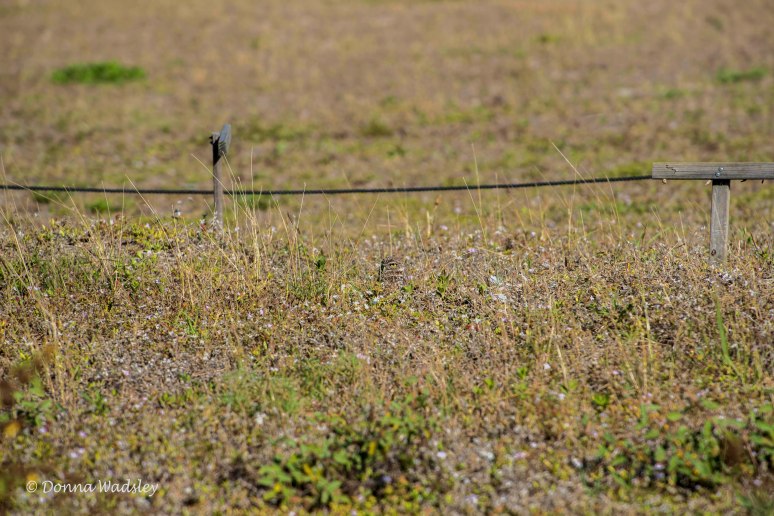
Burrowing Owl habitat – can you spot the single owl? (dead center)
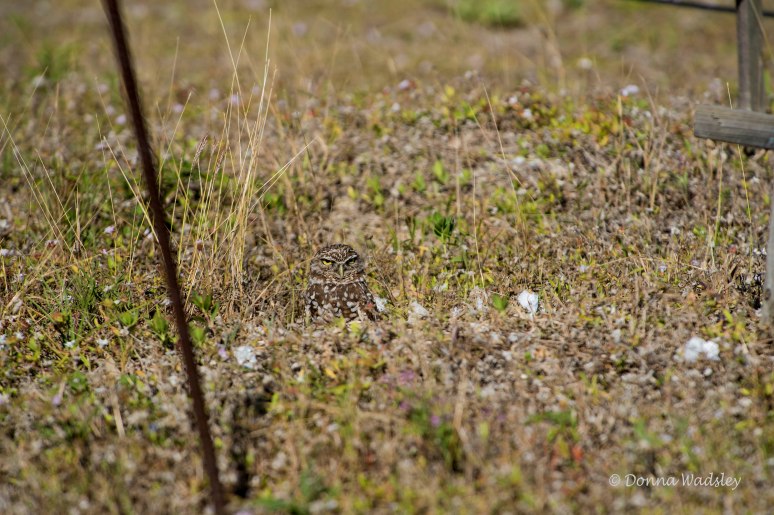
Burrowing Owl
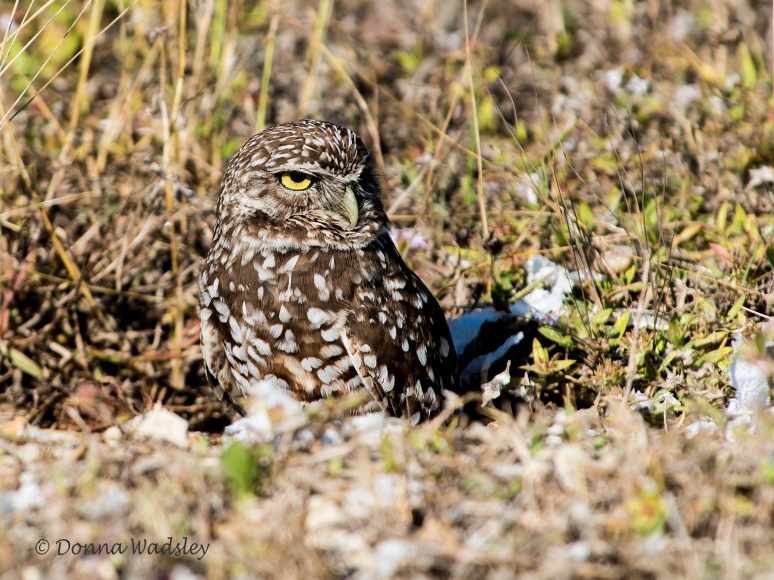
Burrowing Owl on guard at the entrance of its burrow
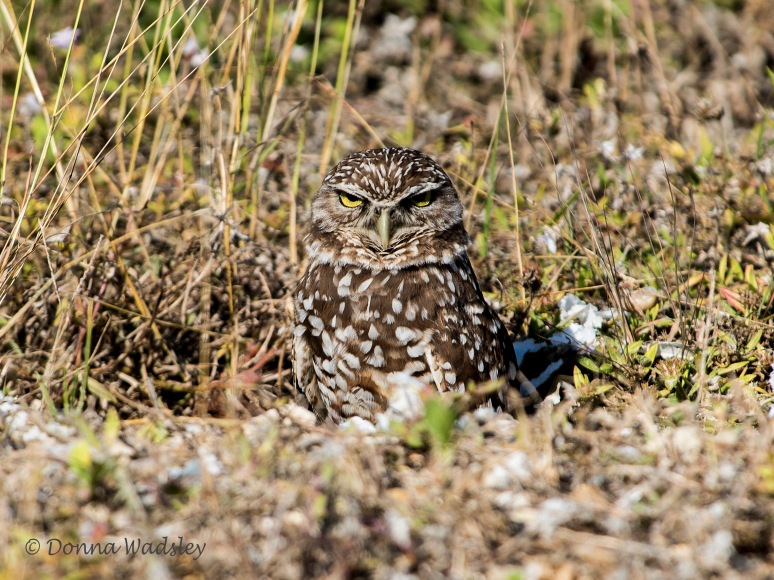
Burrowing Owl
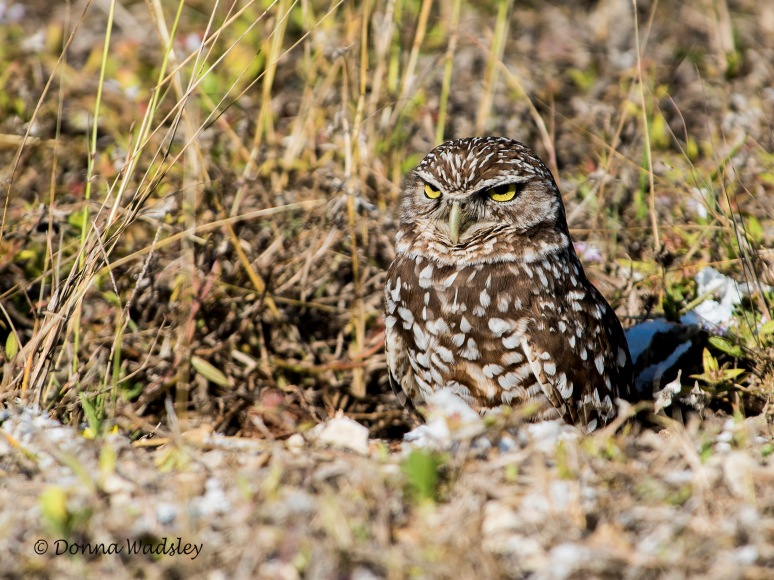
Burrowing Owl
See all the white spots around the owl’s burrow? It is shredded toilet paper!
Per “Owl Watch,” a volunteer-run group under the management of Audubon of the Western Everglades’ statement, “Looking for toilet paper? Ask the owls – looks like this pair has plenty! Burrowing owls decorate their burrows at the start of nesting season as part of their courtship, using whatever materials they can find around their burrows. This owl seems to have found a stockpile of toilet paper to shred and display!”
I hope that rose a chuckle from you in these trying, empty-shelf times. 😊
Series: Take A Moment and Enjoy A Sunset
Time to unwind from the day…..
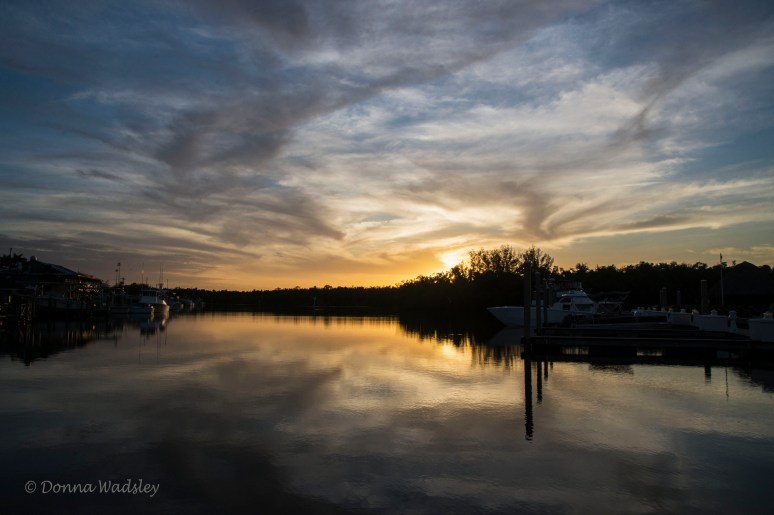
Sunset over the Barron River
“When your world moves too fast and you lose yourself in the chaos, introduce yourself to each color of the sunset.” – Christy Ann Martine
Black-crowned Night Heron
Not only did I get great opportunities with the Warblers I shared in my last post, I felt very lucky spotting this Black-crowned Night Heron hiding on the tree branch over the water.
I’ve never had one of these herons pose so nicely for me instead of jumping/flapping away!
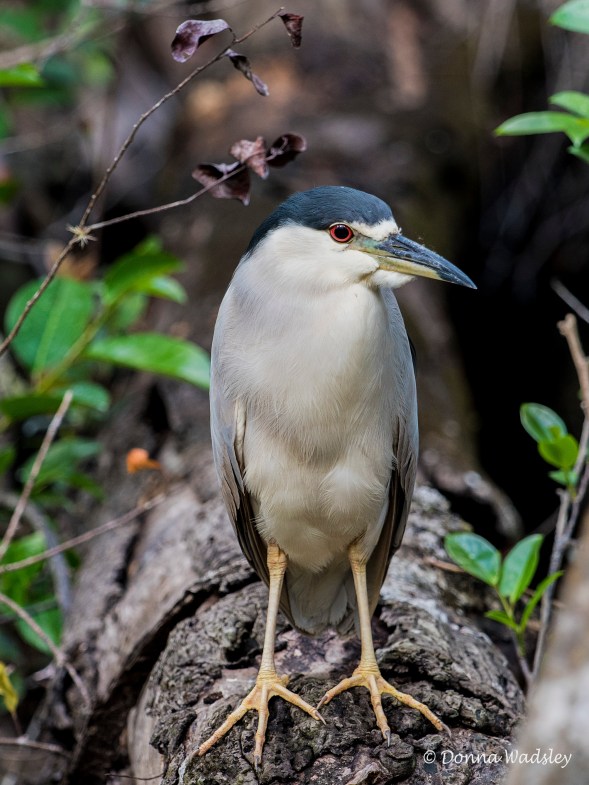
Black-crowned Night Heron
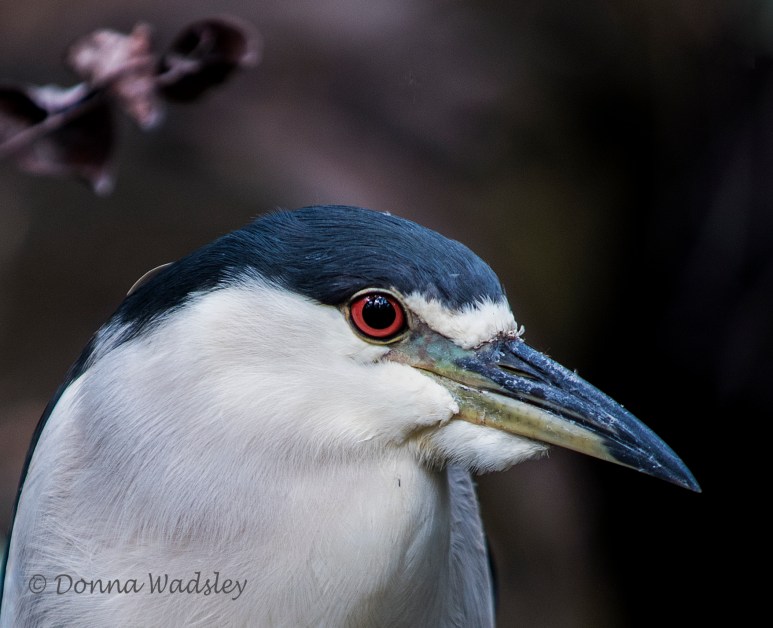
Black-crowned Night Heron – Closeup #1
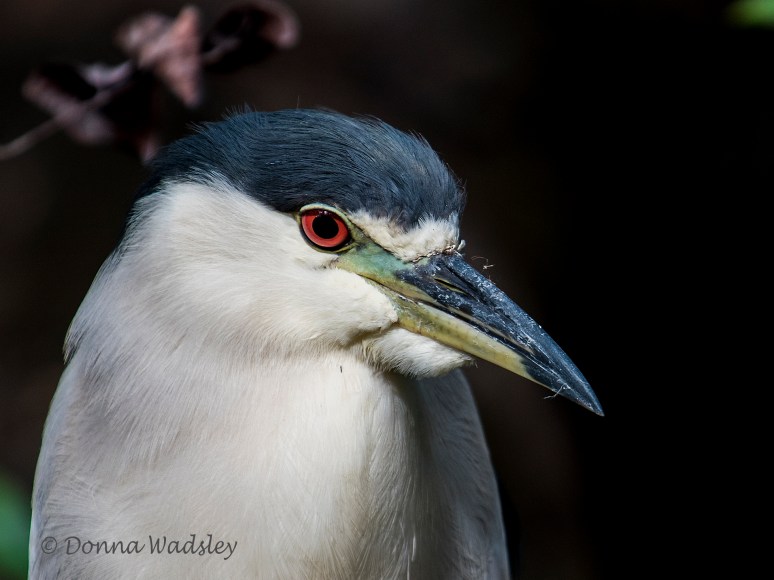
Black-crowned Night Heron – Closeup #2
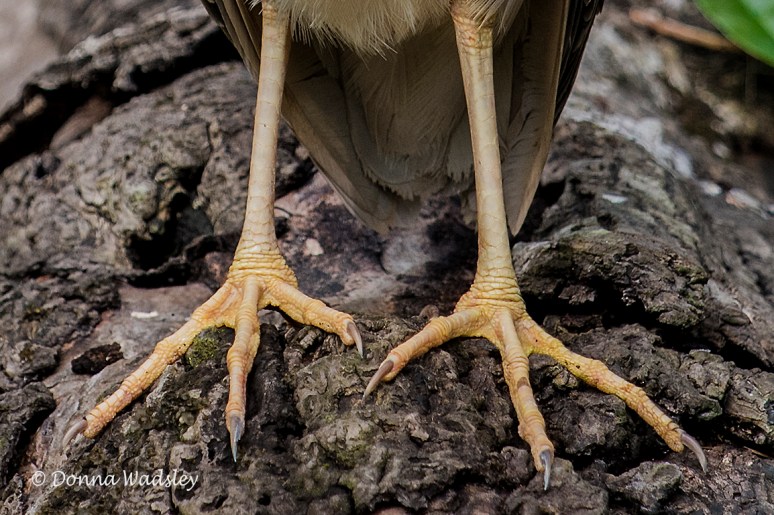
Black-crowned Night Heron’s feet
A nice view of their backside of feather coloring.
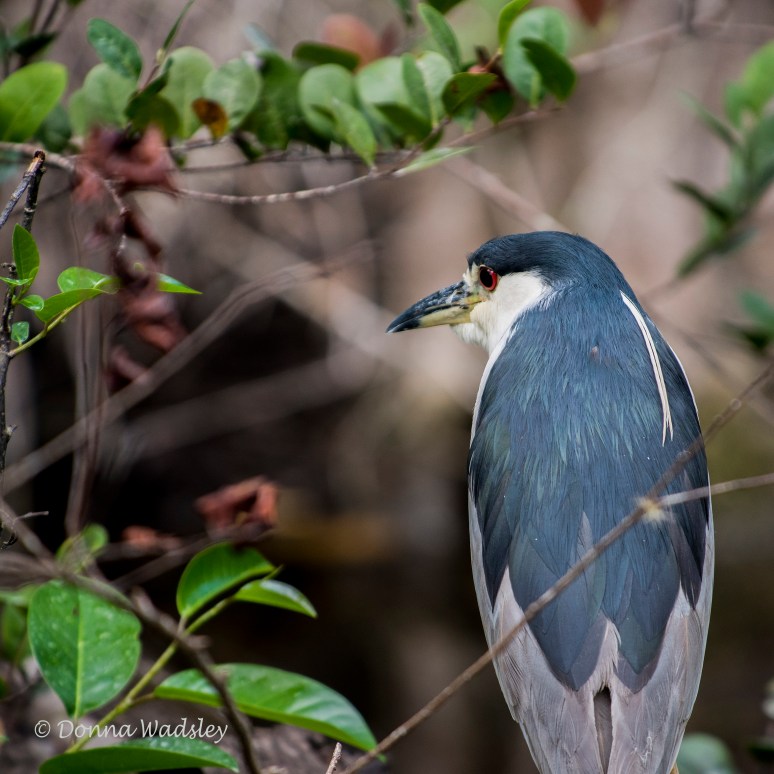
Black-crowned Night Heron’s backside
Some of my shots had him/her starting to droop its eyes for a nap. Mid-day….yep….nap time!
Three Warblers
I photographed these three warblers yesterday morning along a new location ventured, the scenic (dirt) Loop Road in Big Cypress National Preserve. The best part? One is another new bird for me. 😊
Welcome #201, the Black-and-white Warbler.

Black-and-white Warbler

Black-and-white Warbler
Black-and-white Warbler
My other two warblers aren’t newbies but both were a delight to hear and see.
A single Prairie Warbler; whew, I got lucky with just one good photo.

Prairie Warbler
Getting to experience again a flock of Northern Parulas moving high through a tree canopy, foraging and singing beautifully, was pretty awesome. Again, I got lucky as warblers do not stay still!
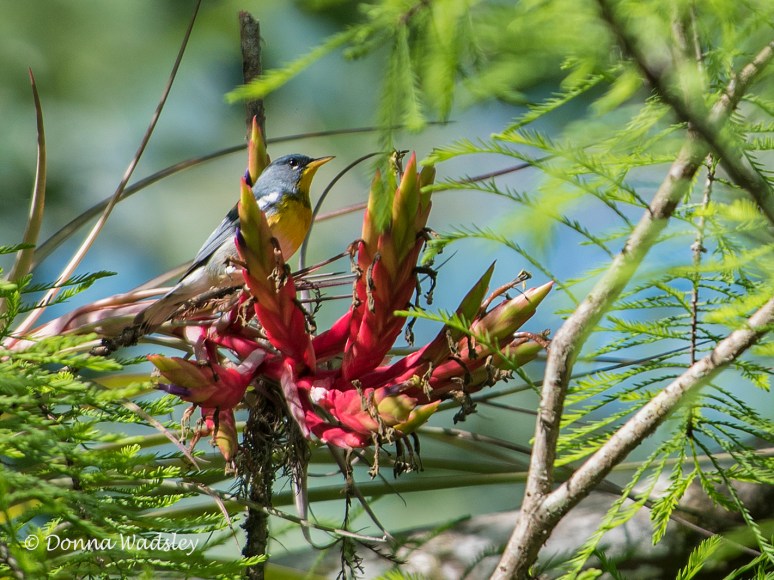
Northern Parula feeding on a Cardinal air plant

Northern Parula singing

Northern Parula singing
Northern Parula singing
Warblers are a delight!
And so wasn’t the Loop Road that had many more wonderful photo opportunities. 🙂