
Bella & Beau 2019: Welcome Home, Bonding, and an Eagle
Osprey nest location: Cambridge, Maryland, Chesapeake Bay Region, USA
(The majority of my photos for this series are shot from my balcony about 200+ feet away where I’ve got just enough advantage height to reach into the top of the platform. My equipment: Nikon D200 and D750, with a Nikon AF-S VR-Nikkor 70-200mm F2.8 lens combined with a Nikon Teleconverter (1.7x magnification), zooming all the way in. At photo processing, it is then necessary to crop at least 50% to share close-ups with you. The Bella & Beau series is not so much about high-quality photos (although I seriously strive to get the best, detailed shots for the storyline), as it is about the antics and adventures of an Osprey pair’s daily life. It is also my hope you will learn a little bit about the amazing Osprey and enjoy following along!)
As of March 23, 2019
If you followed along last year’s season, this is the return of my journal of the activities that I see and photograph of an Osprey pair’s life and season on an erected Osprey nest platform in a private, gated community on Cambridge Creek.
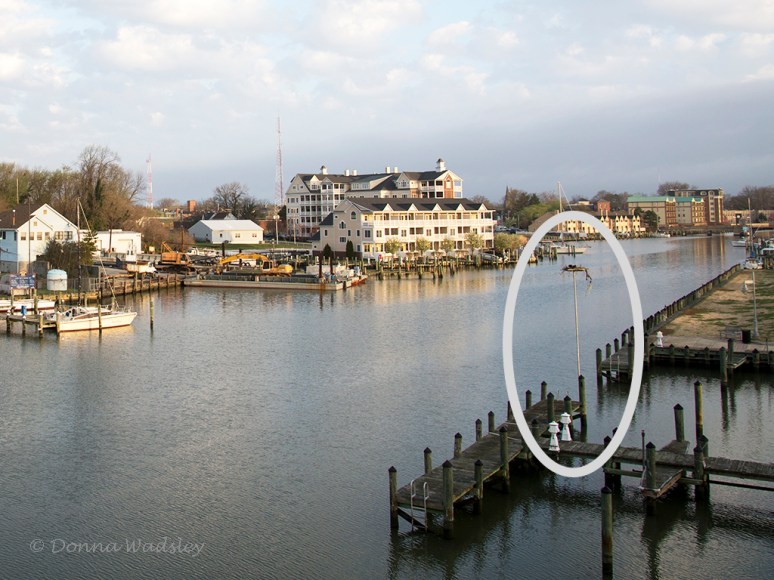
Osprey Nest Platform 2018
After welcoming a male Osprey on the nest platform March 15th, we were quickly surprised with a female alongside him on March 17th.
Welcome home, Bella & Beau!
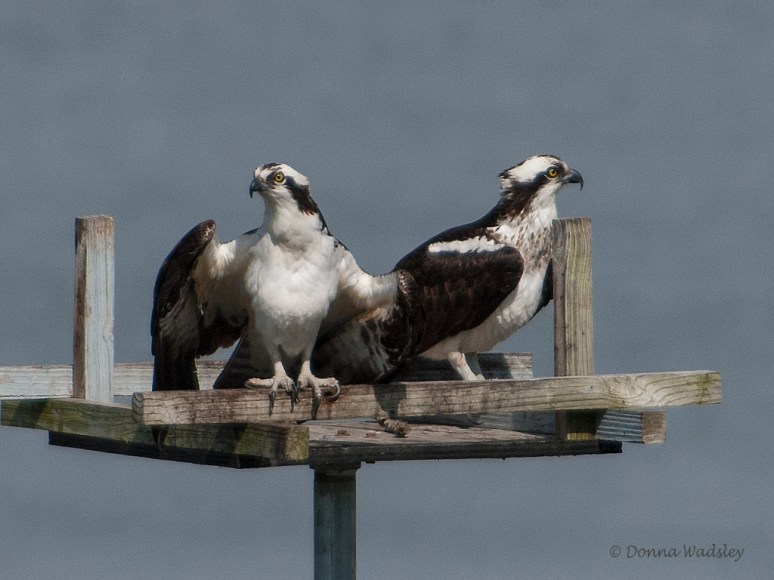
Beau (left) and Bella (right)
As they’ve tried to settle in, we’ve had several days of rain and wind.
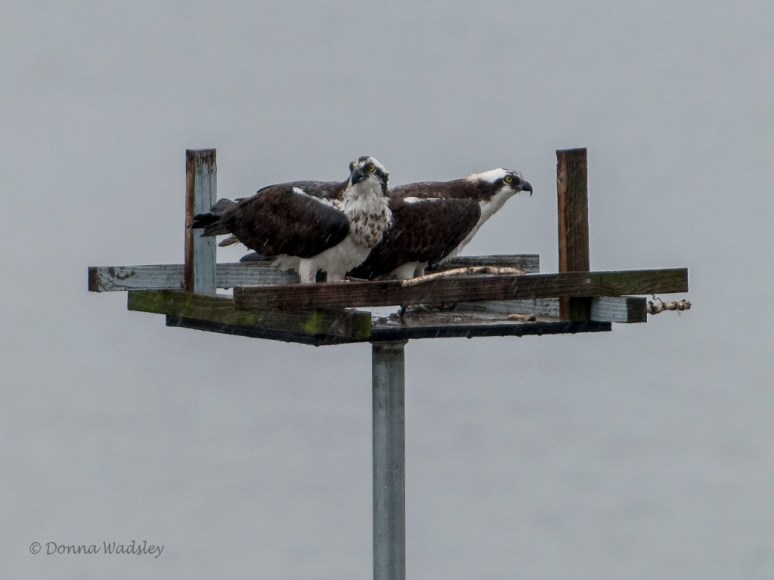
“Beau, why’d we leave our tropical winter vacation grounds for this?”
However, when it hasn’t been raining, the couple have been quick to rekindle their bond with aerial courtship flying and playing.

Bella & Beau bonding

Bella & Beau bonding
Bella & Beau
Attempts at mating have been non-stop. This series is just one attempt at mating. It certainly doesn’t look easy!


Bella & Beau – And this is how it all started….


Bella & Beau mating late March


Bella & Beau mating late march


Bella and Beau mating
Apparently Bella had something to say afterwards.


Bella’s got something to say after mating.
Impressively, Beau has gotten started bringing sticks, and works hard at arranging them and pleasing Bella.

Beau arranging sticks

“Where’s Bella to help?”

Beau adding and arranging.
“Architect” Beau
Beau has even brought gifts of fish to Bella.

Beau landing with a fish for Bella.

Bella enjoying that fish!
Beau delivering a gift
There was once instance where Beau had a fish and flew past Bella, flying over to the crane to perch with it.

Bella watching Beau head to the crane with a fish

Beau landing on the crane with the fish
Bella watching Beau with a fish, landing on the crane across the creek
Maybe Beau wasn’t finished eating the head before passing it on to Bella. Or maybe he was teasing her. Either way, Bella must have been hungry; she departed the platform and flew over to Beau.

Bella chases Beau for the fish

Beau isn’t so nice!
Bella chasing Beau for the fish he has in his talons
Beau was quick to depart and Bella took off to chase Beau. Suddenly, out of nowhere, appeared a Bald Eagle.
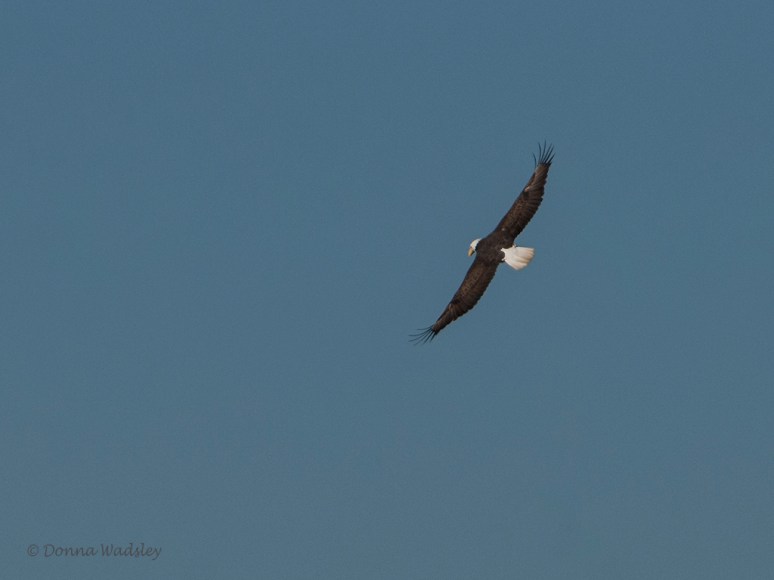
Bald Eagle
The Eagle decided he wanted Beau’s fish, too, and began his chase. Just as quickly, Bella began her chase after the Eagle. No one chases her guy! Or was it, “No you’re not, that’s my fish!”
(click on the first photo and a slideshow will begin to see the action unfold)


Yikes, Bella! Beau gets into the action, with the fish still clasped in his talons.

Eagle gives up and head away from the area.

Beau not giving up, even with the fish still in his talons!
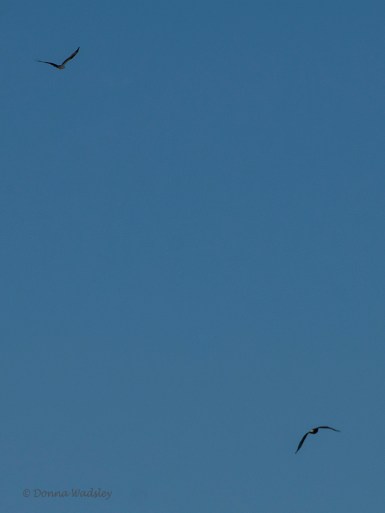
Beau chasing the Eagle further away
Beau was quick to return and reunite with Bella. He chased her to and behind the water tower; where I hope they perched, and he finally gave Bella that fish!

Beau chasing Bella with the fish that she truly deserved!
Unfortunately for Bella and Beau, their favorite near-by perch, atop the crane….


A favorite perch across the creek
was lowered today, I’m sure to avoid Osprey perching and any ideas of another pair building a nest on it.
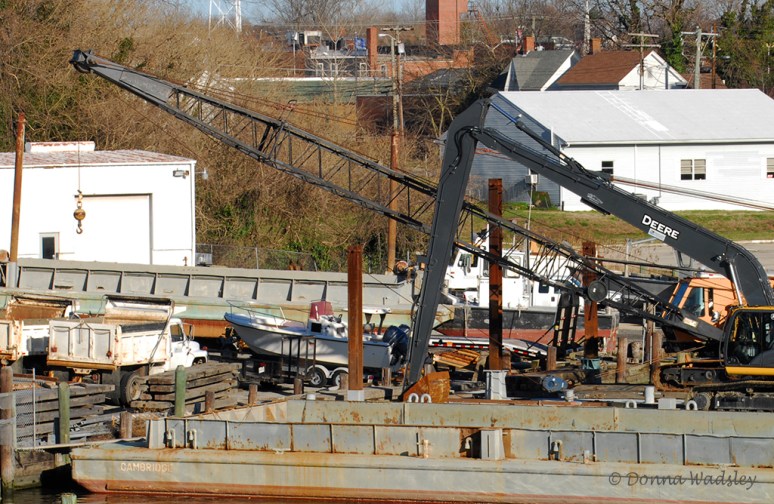
Crane lowered to avoid Osprey perching and nesting
Some flight shots of this beautiful Osprey pair.

Bella

Bella
Bella
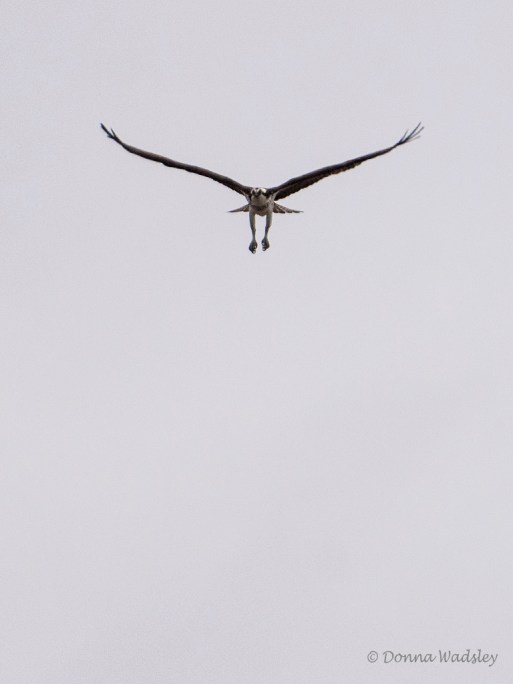
Bella

Beau

Beau

Beau
Beau
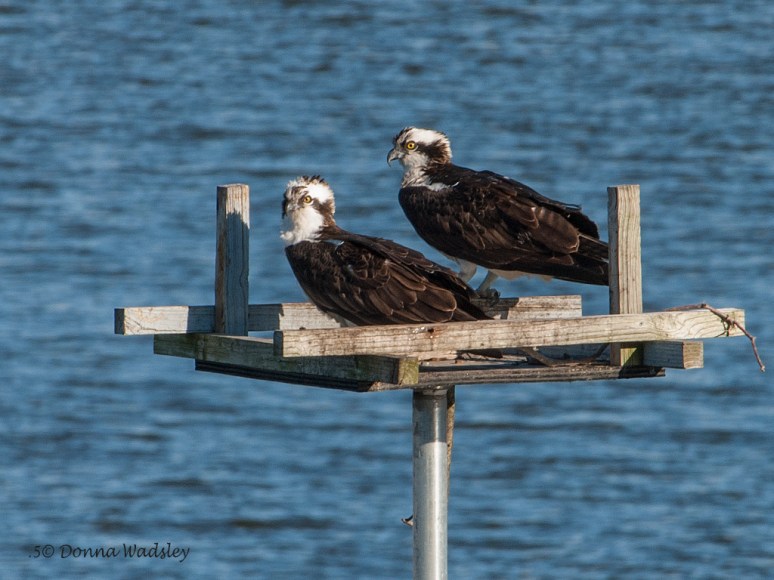
Bella (right) and Beau (left)
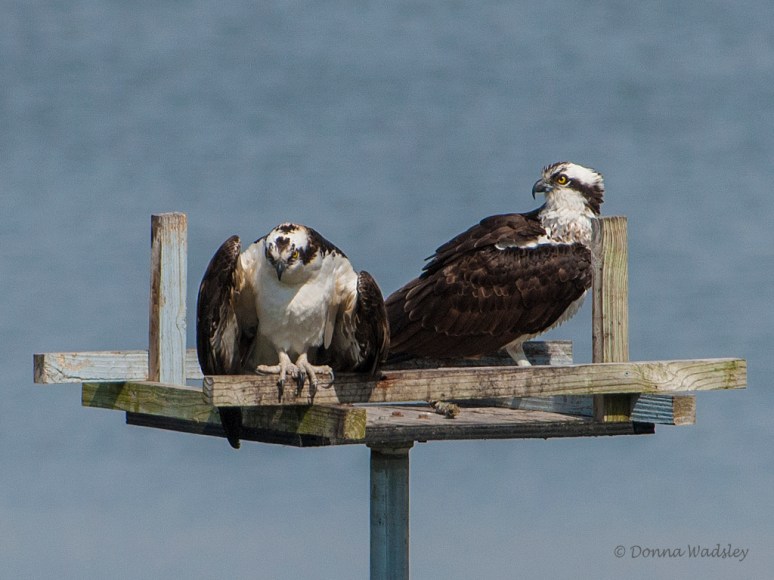
Beau showing his ‘heart’ marking on his crown
(I’ve not seen it since in a photo)
It looks to be a promising season!
Bella & Beau 2019: A Side Discussion on Individual ID’ing
(Osprey nest location: Cambridge, Maryland, USA)
March 23, 2019
Before we begin the 2019 season of Osprey pair, Bella and Beau, I wanted to first briefly discuss how I know that the 2019 arriving pair is Bella and Beau.
Unfortunately, I don’t know. But let’s discuss the possibilities.
There are some factors that point to “yes”, the arriving pair is Bella and Beau.
1. A male Osprey showed up on the nest platform on March 15th. I’ve read the “official” Osprey return date for the Chesapeake Bay region is March 17th. The earliest males are usually those that paired up the previous season, rushing back to secure last year’s nest ahead of his mate.
2. A female Osprey showed up alongside the same male on the nest platform March 17th. Another good sign. The female returning to her nest can be a week or two behind her mate. This gal was eager to get home!
3. Bonding was noticeable immediately between the pair, with courtship aerial flying, a gift of fish, and bringing nesting materials. They knew each other.
4. I haven’t witnessed any ‘fighting’ over the platform with any other Osprey.
Some factors that are “hmmmm”.
1. The male Osprey’s chest is very white, no speckling of brown. Last year’s male had a bit of speckling.
2. The female Osprey’s “necklace” on her chest seems to have a few more darker markings.
2018 and 2019 Photos

Bella & Beau 2018

Bella & Beau 2018 Bella & Beau 2019
3. Are there any distinct ‘markings’ on the Osprey’s head that match from last year to this year? I’ve poured through my photos already and any movement/change in the Osprey’s head, shoulder, body, flight, all of these slightly alter the look of the head markings and shapes. I give up.
Basically, the only way to confirm an individual Osprey’s ID is if the Osprey is banded or carrying a backpack transmitter and being tracked. However, I do want to point out that there has been some studies done where the patterns of black marks on the Osprey’s hard were recorded without handling the birds, possibly IDing based on size, shape, and number of them. From year to year, these patterns were recorded to have changed only slightly. I even found where one female Osprey was able to be confirmed by a noted dark mark on her iris.
4. Is there another local Osprey pair that would take the nest so quickly because theirs is ‘gone’? I have checked the nest location just up the creek from us across from J. M. Clayton’s Seafood where a nest was built on equipment last year. The equipment and nesting materials have been removed. That Osprey pair were not successful breeding and were a constant nuisance to Beau and Bella, including attacks and circling the platform. Could they be the occupants of the nest platform now?

2018 Osprey nest along Cambridge Creek not too far from Bella & Beau’s nest platform. This equipment and nest have been removed leaving an empty grass lot.
I’ll stop there. That way there are 4 yes’s and 4 hmmmm’s. No ‘bad’ wins. No more thinking….
AND with that being said, let’s all agree to assume the next post will be welcoming our Bella and Beau back home for the summer. After all, this is really a photo journal about the daily life of an Osprey pair and their devotion and commitment to each other.
I hope you enjoy the 2019 season of Bella and Beau. Keep your fingers crossed we have another year of babies hatching in May!
I would like to thank two bird expert friends, fellow wordpress blogger HJ at Avian101 and Lisa at Blackwater NWR, in helping me to fully understand individual Osprey identification and be able to share this with you.
Shoveler, Goldeneye, & Long-Tailed Ducks
Three more winter ducks that are departing the Chesapeake Bay region to head back to their summer breeding grounds are Northern Shovelers, Long-tailed Ducks, and Common Goldeneyes.
The Northern Shovelers will be heading back to the northern mid-West United States and Canada for their summer mating.

Northern Shovelers

Northern Shovelers

Northern Shovelers
Northern Shovelers at Blackwater NWR
As I mentioned in previous posts, we had the privilege of watching a male Common Goldeneye spend much of his winter on Cambridge Creek. He will be migrating back to Canada for his summer.

Common Goldeneye (male)

Common Goldeneye (male)
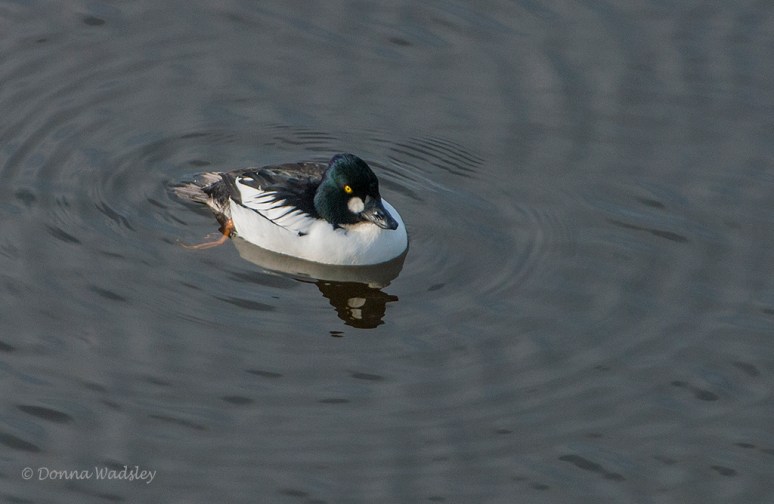
Common Goldeneye (male)
A drive down to Hoopers Island netted me this pair of Common Goldeneyes.
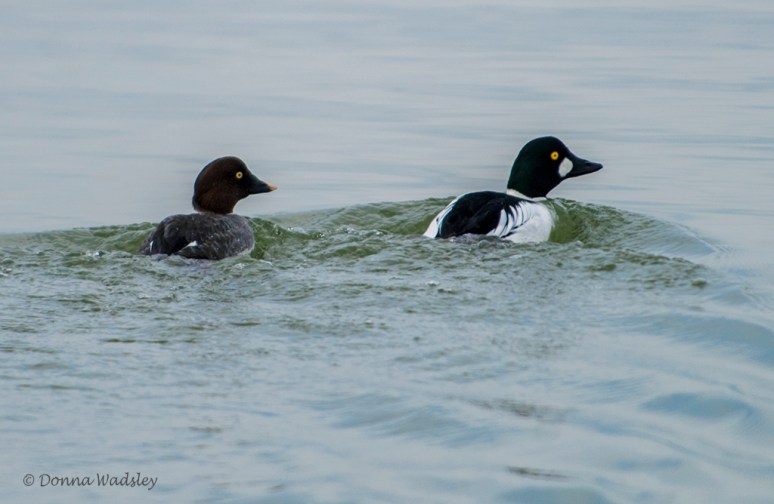
Common Goldeneyes (female & male)
And last for this post, but not least, is this handsome male Long-tailed Duck who also spent a lot of his winter on Cambridge Creek. His summer breeding grounds are in the Artic. He sure has a long way to go!

Long-tailed Duck

Long-Tailed Duck


Long-tailed Duck (male)

Long-tailed Duck diving
This post leaves me with the Lesser Scaup for my last ‘winter duck’ posts. Although most have already departed, we still have a few Scaup stragglers hanging out on the creek.
Along with a pair of new arrivals….. 😊
American Wigeons & Mallards
Two more winter ducks that have been gracing our area are American Wigeons and Mallards.
The American Wigeons will quickly be leaving us and heading back to their breeding grounds in the U.S. mid-West and Canada.

American Wigeon (male)

American Wigeon (female)
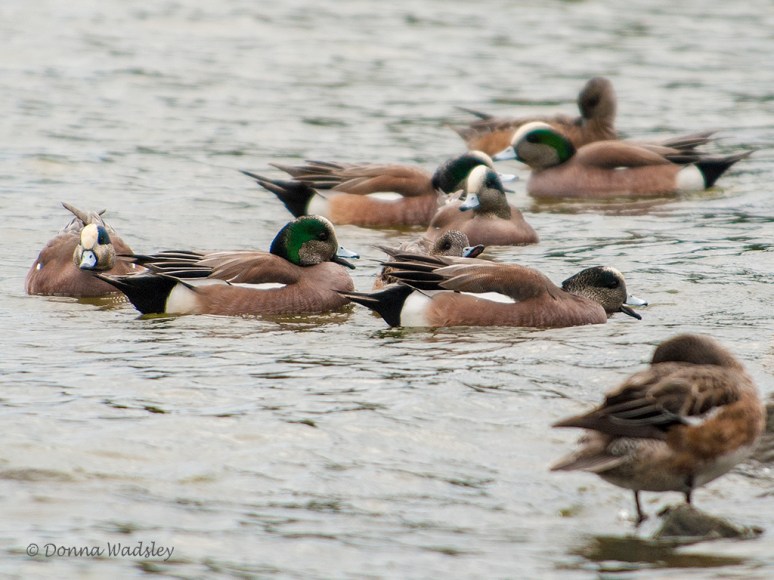
American Wigeons

American Wigeon (male)

American Wigeons (male & female)

American Wigeon (male)

American Wigeon (male)
The Chesapeake Bay region hosts Mallards year-round but some do venture a little further south where it’s a little warmer (who can blame them!). We may also receive winter migrants from Canada.
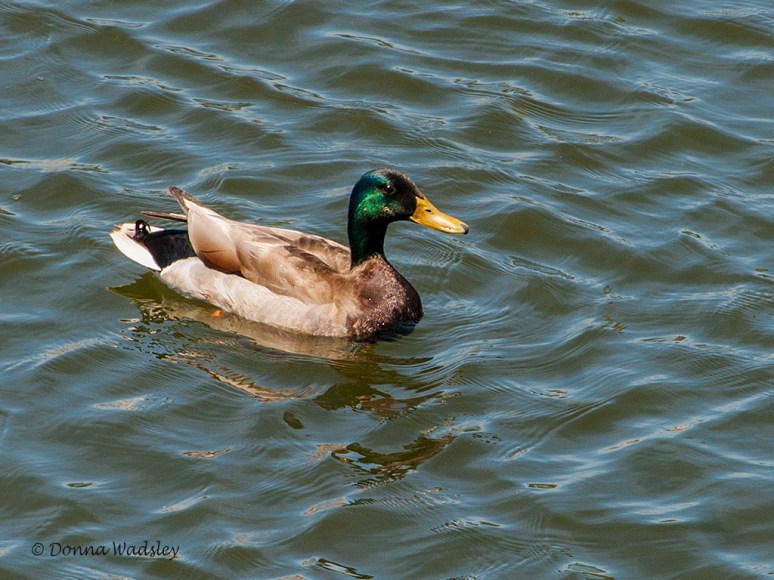
Mallard (male)


“Snoozin’ Time” “Dinner Time”

Male Mallards

Male Mallards

Male Mallards

Mallards (male & female)
Mallards in flight and landing

Mallard Profile
The winter ducks have been fun stuff! 😊
Canvasbacks and Redheads
The ducks that winter around the Chesapeake Bay region will soon be gone. Numbers seen are diminishing at different locations, including our creek.
It’s been a splendid season, with many photo opportunities, challenging fun, and a lot of lucky moments for me.
In my next few posts, I’ll finish up with some more of my favorite duck shots not already shared this season.
I’ll begin with the Canvasbacks and Redheads, both that sport a gorgeous ‘red’ head. These two ducks will be migrating back to the northern mid-West United States, Alaska, and Canada for their summer breeding.
Some get confused on the difference between these two ‘red-headed’ ducks. The easiest is to look for the color difference of the two ducks’ bills.

Redhead (center blue bill) surrounded by male and female Canvasbacks (black bills)

Redhead (male)

Canvasback (male)
Male Redhead (note the bill differences) Male Canvasback
Both are beautiful ducks!
More images of the Canvasbacks….


Canvasbacks (males)

Canvasbacks (males & female)

Canvasbacks (males & female)


Canvasbacks coming in for a water-landing
And more of the Redheads.


Redheads (male)
A final of the two, giving the double-eye stare.

Canvasback (male)

Redhead (male)
“Double-eye Stares”
We will miss these wintering ducks!
Bella & Beau 2019: An Osprey on the Platform
(Osprey nest location: Cambridge, Maryland, USA)
March 15, 2019
A passing glance out my window to the Osprey nest platform just before noon today.
And what did I see?

Osprey (male)
I’m a bit puzzled with the orangey/golden coloring on the back of the head/neck below the normal brown patch. It should be a white patch as was Beau’s.

Osprey (male)

Osprey (male)
Osprey with orangey/golden coloring on back of head/neck
I didn’t see the male Osprey depart but know he didn’t stay very long on the platform. I saw him again, flying over the creek later this afternoon.
When a bonded pair returns from migration, the male Osprey is usually first to arrive, going immediately to the nest location to secure it from another one taking it.
I drove over to look at last year’s other Osprey nest location close-by that was built on a piece of construction equipment, to see if I spotted an Osprey perched on it. The nest and equipment are completely gone. So if that male Osprey is back, he could be checking out this platform since he’s privy to it from last season.
We all know waterfront real estate is prime property!
Of course, it could also be an Osprey just passing through the area on his way home elsewhere.
And so the Osprey saga continues……
Welcome Home, Chesapeake Bay Osprey
My post of March 5th, “Watching For Osprey” discussed the impending return of the Osprey to the Chesapeake Bay area.
Osprey are returning! For me, March 12th was my first sighting of an Osprey. I saw it from my balcony across the creek on the utility tower. This tower was one of Bella and Beau’s perches (our community’s Osprey pair from last season).
Hmmmmmm….could this be Beau? Sorry, too soon to tell!
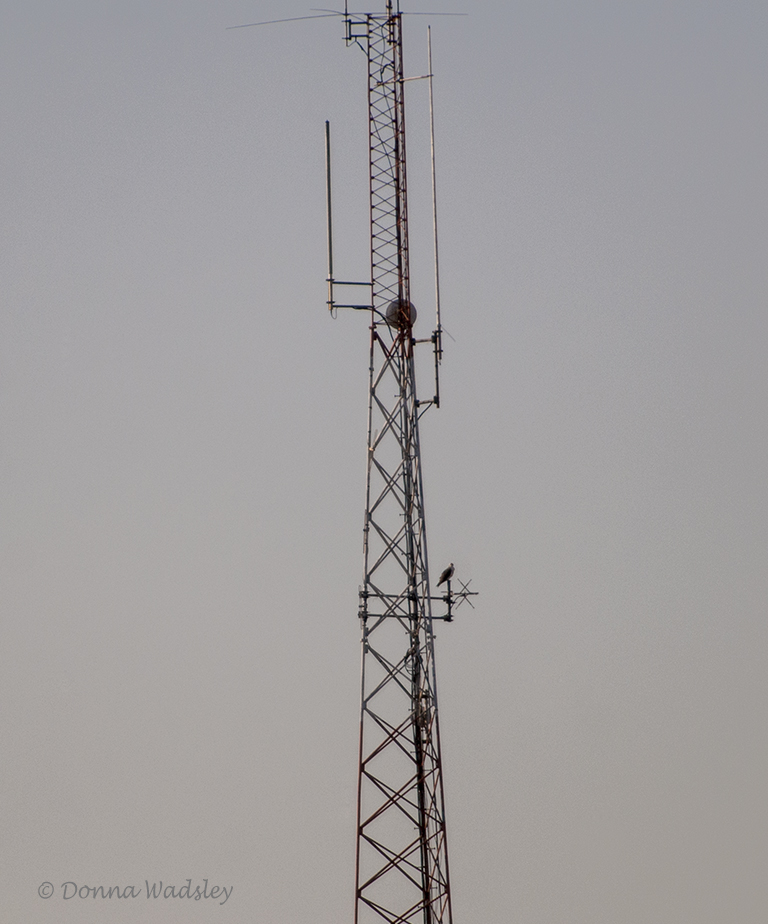
Osprey on utility tower

Osprey close-up
March 13th we passed through the Grasonville area (sighting of the Snowy Owl in my last post, no sighting again). There on Rt. 50 in Grasonville I saw my second Osprey on the Exit 44A sign as we started exiting for a planned fuel stop (Wawa station) just before the Osprey & its nest.
Perfect because that Wawa gas station provides very easy viewing and photo-taking opportunities of this nest and family. This has been an active Osprey nest for many years, and I’ve posted on in years’ past when I previously lived in this area.
The first photo I shot yesterday below gives you a view of this nest atop a pole which is directly in the center of a three-lane dual highway. Heavy traffic zooms pass this Osprey nest daily throughout the Osprey season (summer traffic is crazy-heavy). And yet they have prevailed here year after year. Amazing!
(sooooo terrible photo, don’t know why I took only one and assumed I focused…for shame…)
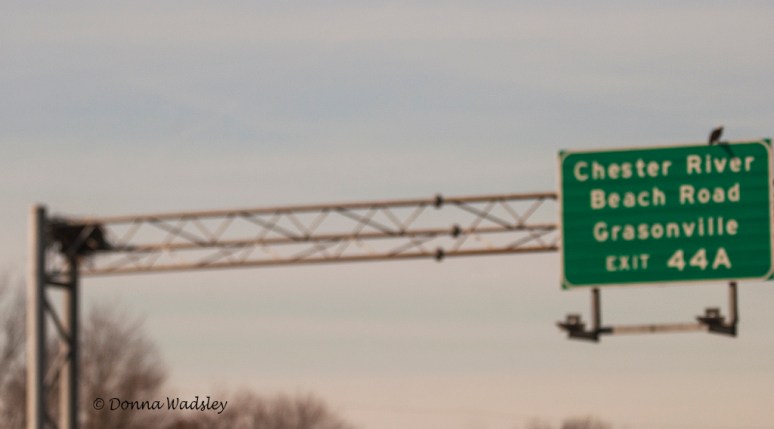
Osprey nest left, in the center of a heavily-traveled three-lane dual highway (poor shot)

Highway that gets quite heavy with traffic
(taken with my cell phone when getting back onto Rt. 50)
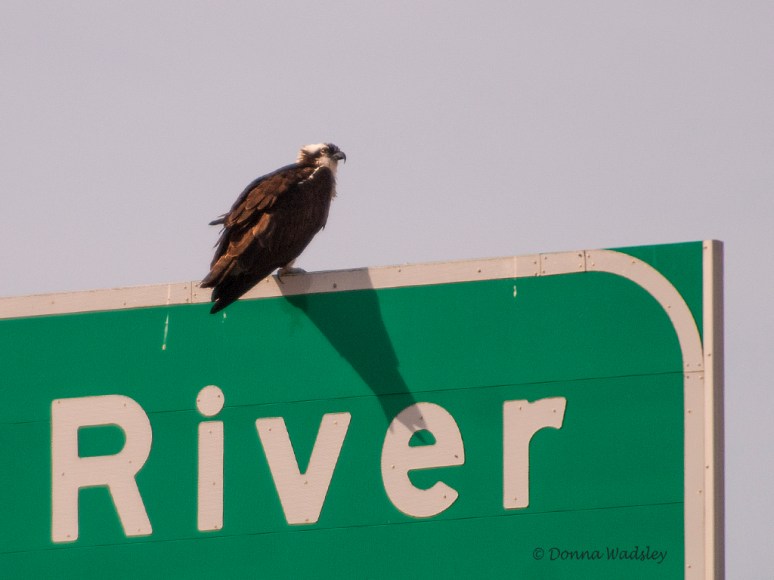
The Osprey that has returned on Rt. 50 Grasonville, MD (photo 3/13/19)
Passing over Kent Island, MD, today, I saw another Osprey gliding over Rt. 50 near the Chesapeake Bay Bridge; and then a little later another one flying over Rt. 50 just north of Easton, MD.
The Chesapeake Bay Osprey are returning, and they are right on schedule.
Welcome home, Osprey!
A Snowy Owl Sighting
A rare and thrilling opportunity to see an immature, female Snowy Owl hit the local area ‘bird’ news March 8th, sighted near Grasonville at Kent Narrows waterway channel in the Chesapeake Bay region.
Home is far north of the Artic Circle where Snowy Owls spend their summers hunting the vast, open tundra for lemmings, ptarmigan, and other prey in 24-hour daylight. Generally, Snowy Owls migrate in winter to southern Canada and the northern half of the United States.
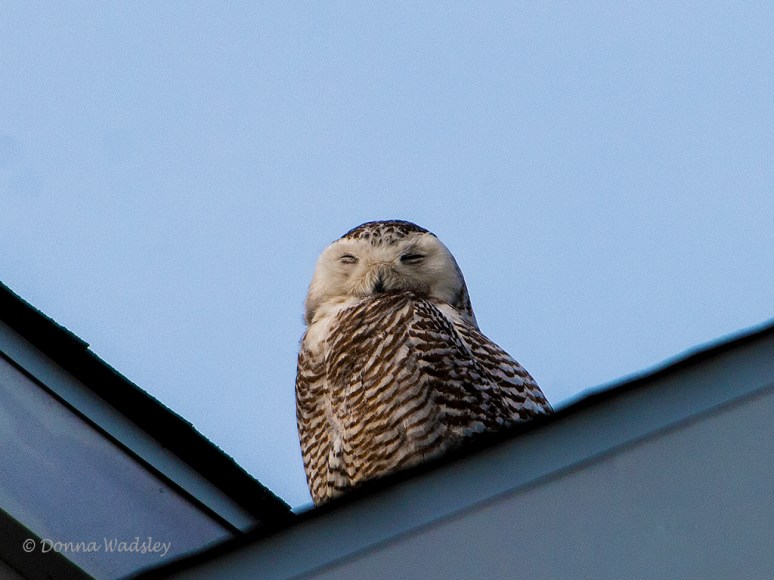
Snowy Owl (immature female)
This Snowy Owl has been leisurely sitting and sleeping atop the waterfront seafood restaurants’ roofs as well as townhouse rooftops across the creek at different times of the day.

Snowy Owl (immature female) looking towards a noise she heard
Her sighting was an hour away for me. My travels yesterday put me about 20 minutes of the vicinity so I gave it a shot to see if I could spot this rare beauty. I easily found her, napping. The lighting was hazy sunny and she hardly moved for the ten minutes I watched her.

“Sleeping Snowy”
No, she’s not sitting on a sandy beach or atop a dune or snow drift like so many others’ beautiful captures shared.
But I am still elated to have gotten so close with a Snowy Owl. It was one of those lifetime birding experiences.
Snow Geese
It is getting close to the time for the visiting winter Snow Geese to take flight to the skies for their migratory return to the Artic tundra for their breeding season.

Snow Goose
Always on the lookout for them, I witnessed distant local farm fields blanketed with Snow Geese many times. And it was always a beautiful sight when seen.


Fields blanketed with Snow Geese
Blackwater NWR had their share of Snow Geese, where they primarily stayed out on the water.
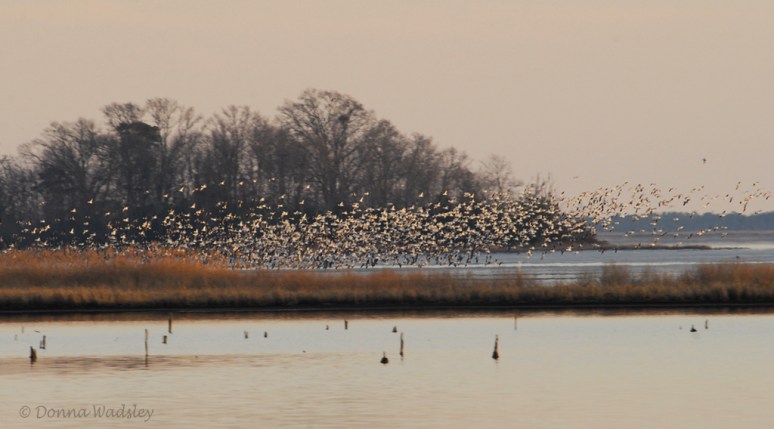
Snow Geese landing on the water late afternoon at Blackwater NWR
Late yesterday afternoon, lo and behold (and finally!), we happened upon a flock of Snow Geese foraging on a farm field alongside a back road.
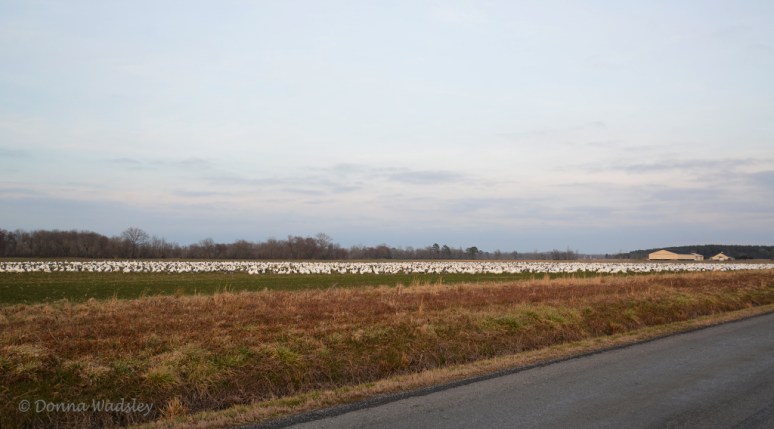
Snow Geese settled for the evening
It was exciting to finally get a chance to be closer to them. But it became even more exciting when I started viewing through my lens and noticed this flock included a large number of the Snow Goose’s dark morph color variant “Blue Goose”.
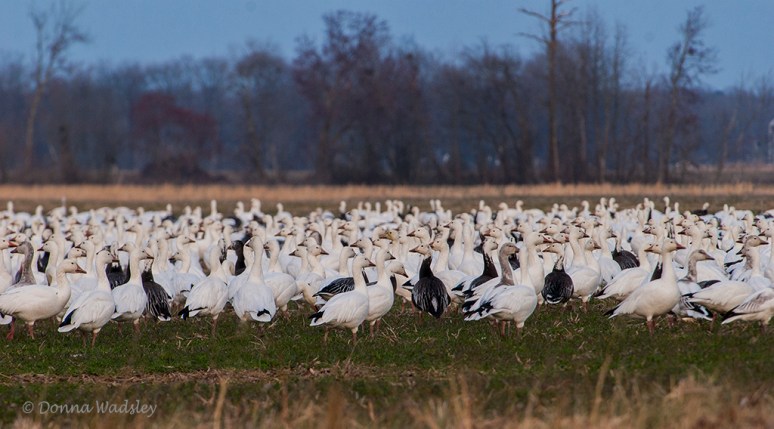
Snow and Blue Geese
The dark color of the blue morph Snow Goose is controlled by a single gene, with dark being partially dominant over white. If a pure dark goose mates with a white goose, the offspring will all be dark (possibly with white bellies).
If two white geese mate, they have only white offspring. If two dark geese mate, they will have mostly dark offspring, but might have a few white ones too.
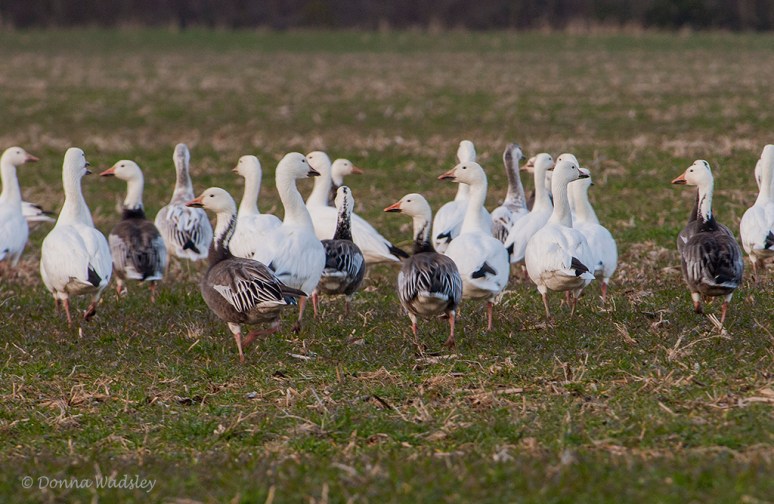
Snow and Blue Geese
These two colors of geese were once thought to be two separate species but are now considered two color phases of the same Snow Goose species.
We sat a bit to not alarm the geese further since they had already seen our car coming, and we just watched and listened. I love their sound! I then slowly got out of the passenger side and went to the back of our car and used it as a blind to take my shots of the beautiful color mixture.
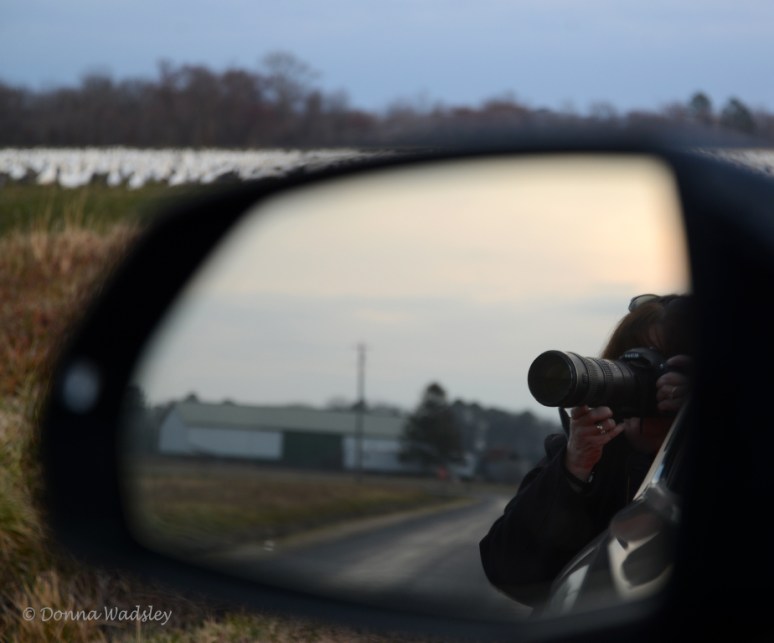
Donna caught photographing Snow Geese
The geese didn’t mind. Alas, there was no swirling ‘snow globe’ geese take-off/landing to capture, and we weren’t going to ‘create’ one.
As we slowly drove off, thankfully the Snow Geese remained grounded and were back to foraging and resting as if we’d never stopped.
Cuties of the Creek
We’ve had a wonderful mix of winter water birds here on Cambridge Creek these past few months.
It’s the three little ones that win the Cutie Contest! Here’s my latest favorite shots to share.
There’s the adorable, amusing Buffleheads….
Length – 12.6-15.8″ (32-40 cm)
Weight – 9.6-22.4 oz (272-635 g)
Wingspan – 21.6″ (55 cm)
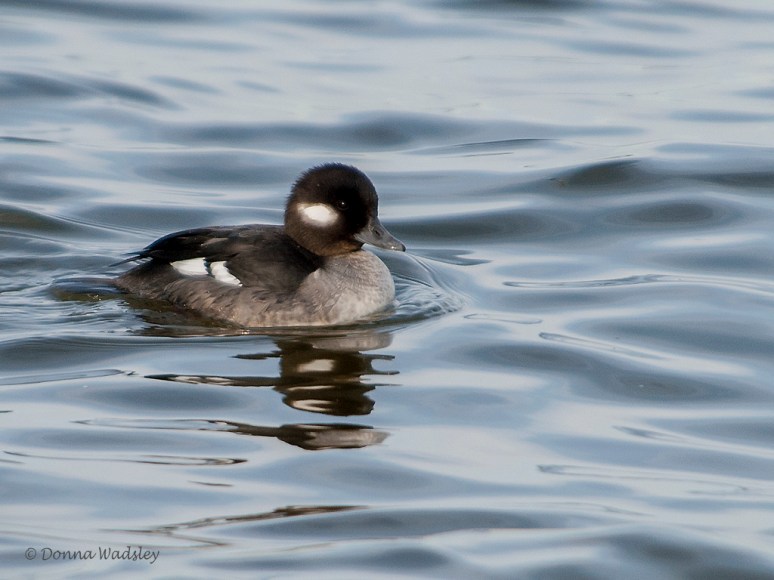
Bufflehead (female)
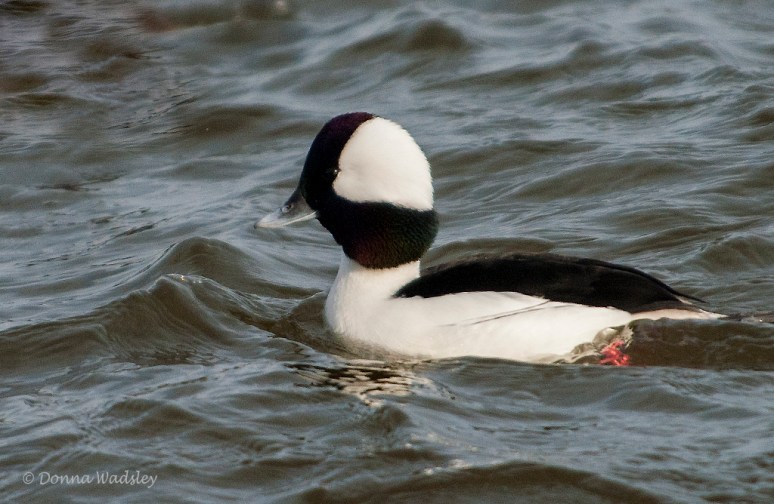
Bufflehead (male)
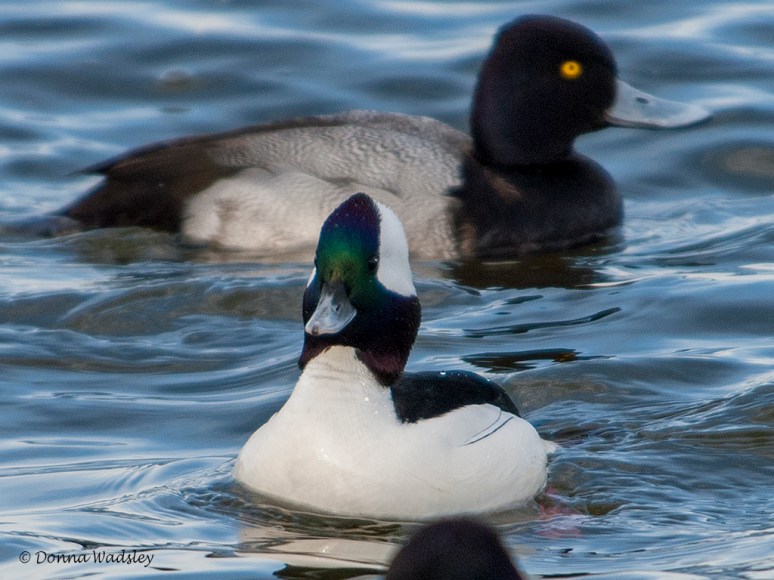
Bufflehead (male) with Lesser Scaup (male)
the charming Ruddy Ducks….
Length – 13.8-16.9″ (32-40 cm)
Weight – 10.6-30 oz (272-635 g)
Wingspan – 22.1-24.4″ (56-62 cm)
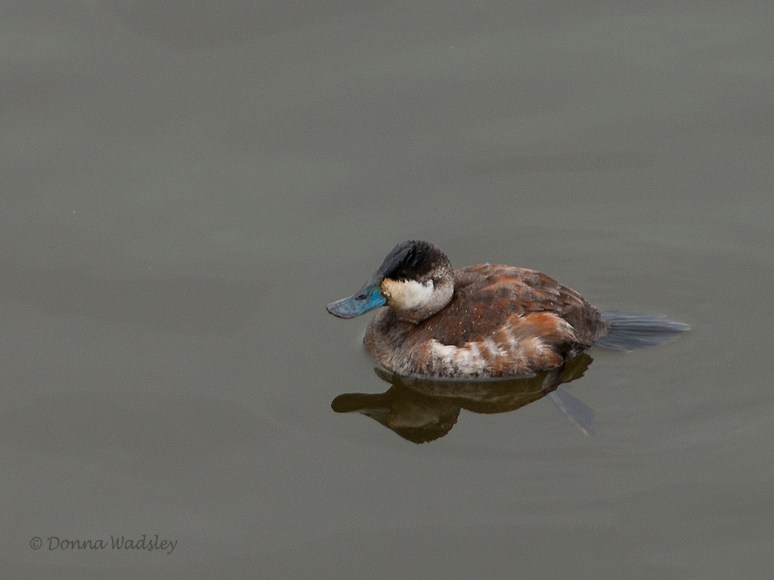
Ruddy Duck (male)
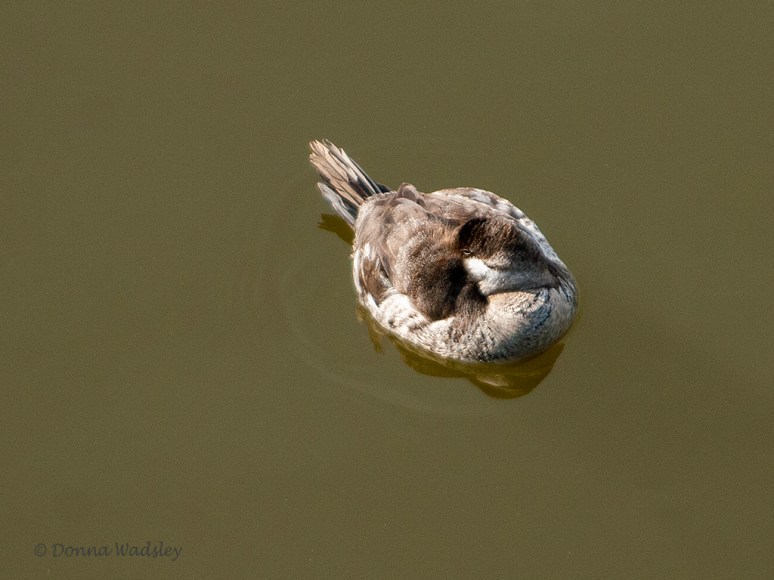
Ruddy Duck napping (female)

Female Ruddy Duck stretch

Female Ruddy Duck ‘smile’
Female Ruddy Duck stretching and smiling for the camera

“Paddlin’ During Nap Time”
and the delightful and smallest of the three, a Pied-Billed Grebe:
Length – 11.8-15″ (30-38 cm)
Weight – 8.9-20 oz (253-568 g)
Wingspan – 17.7-24.4″ (45-62 cm)
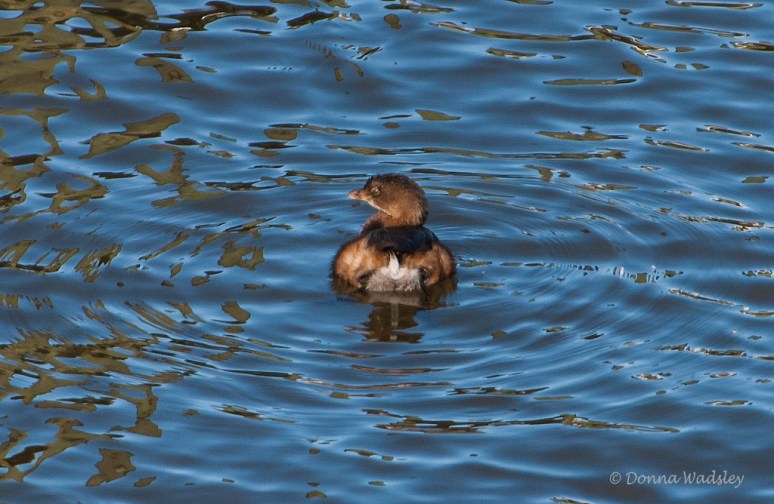
Pied-billed Grebe
I think you’ll agree with me on these three Cambridge Creek Cutie Contest winners! 😊

 Bay Photos by Donna