
Watching for Osprey
It is the first week of March and getting to be that time of year again.
Time for the return of the Chesapeake Bay Osprey!
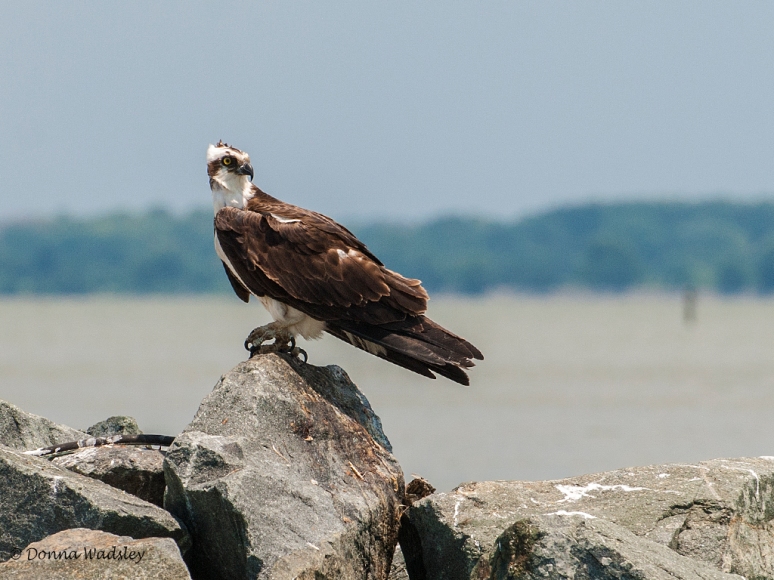
Osprey – Harris Creek jetty (July 2018)
The Chesapeake Bay Osprey departed August/September (some stragglers in October) last year and have been ‘vacationing’, each on their own, down in the Caribbean and South America.

Osprey – Tuckahoe Creek (July 2018)

Osprey – Choptank River (July 2018)
The adult Osprey should be heading back now, with an instinctive pull to return to their previous summer home grounds.
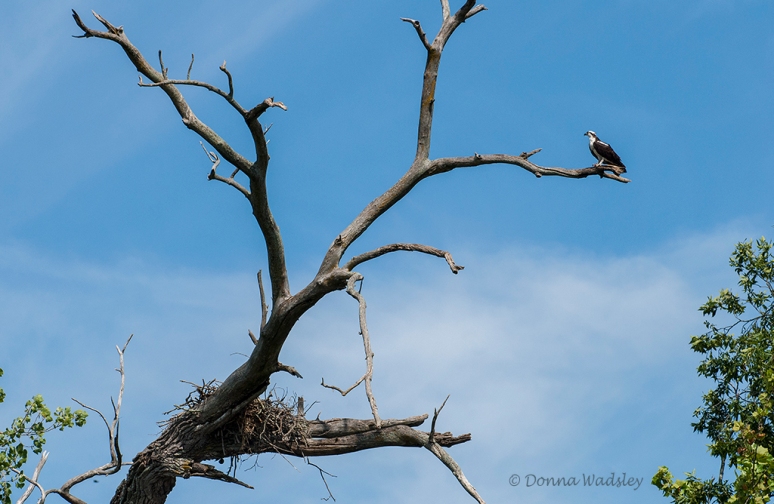
Osprey and nest – Tuckahoe Creek (July 2018)
So, if you were following me last summer, that means…….
Yes! If all went well during their separate migrations and winters, both Bella and Beau should be heading home now to Cambridge Creek!
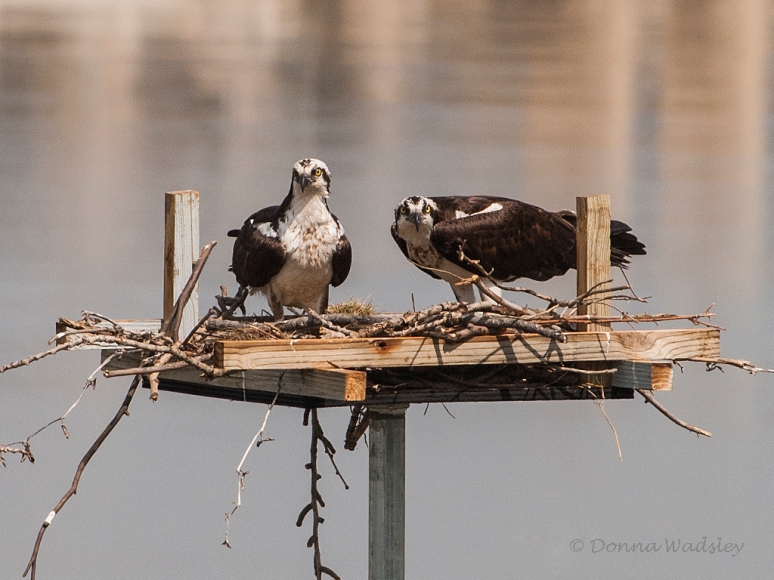
“You mean us?” 🙂
Bella and Beau (April 2018)
In general, the males return first, followed by the females usually within the following week. So we should see Beau first, by mid-March. He’ll hang around the platform, and wait/rest/feed. No home building or repairs will begin until the lady of the house is home.

Bella telling Beau to get more sticks or food (May 2018)
All Osprey chicks born in 2018 (including Bella & Beau’s two chicks) will not return but stay another full year down in the tropics, learning to take care of themselves and basically enjoy their new life before they return as an adult in 2020.
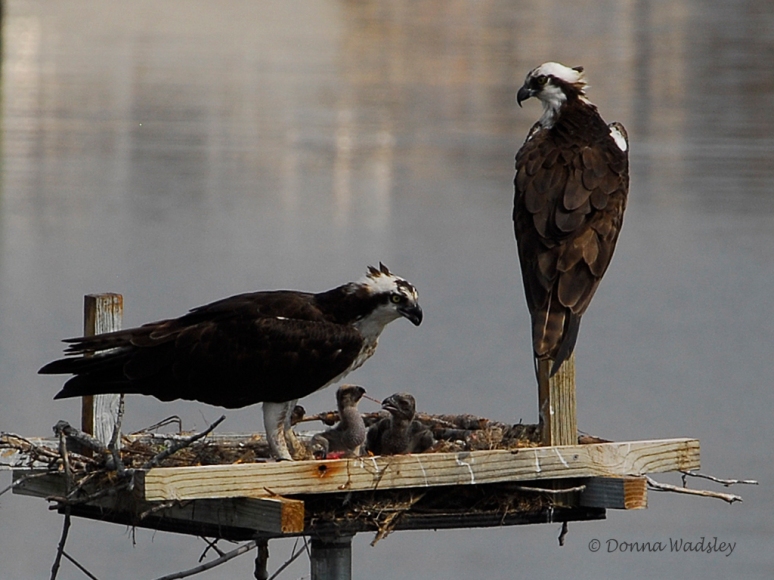
Bella, Beau and their chicks (June 2018)

Bella and her two chicks (July 2018)
I’ve seen my first Osprey in past years as early as today, March 5th. So I will not be surprised to see eBird and MD Birding pages start lighting up with shares of their ‘first’ Osprey sightings of the season and where any day.
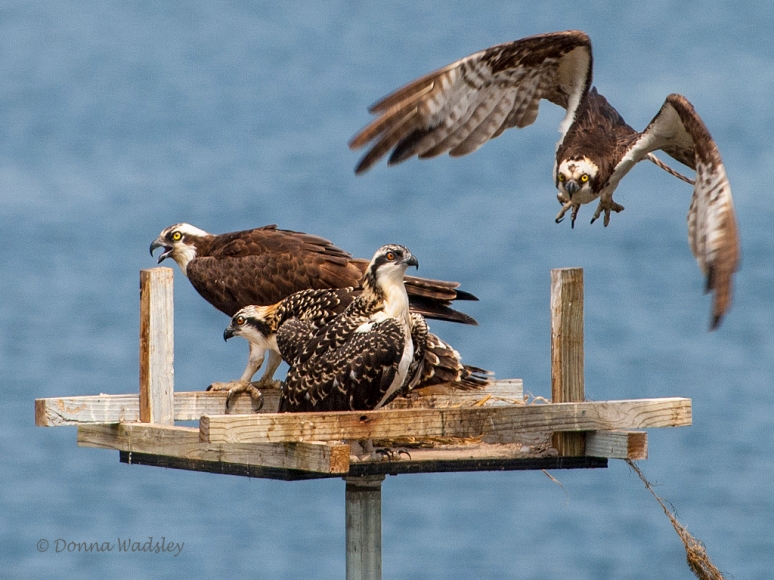
Bella, Beau and chicks (July 2018)
And so we wait. And watch. And listen.
You can bet, for us locals, it is an exciting time for the return of the Chesapeake Bay Osprey!
UPDATE: I saw my first Osprey on the distant cell tower across our creek on March 12th! Hmmmm….one of Beau’s and Bella’s perches. Could it be one of them? Time will tell!
Long-Tailed Ducks
One of the more exciting winter ducks to visit off and on this winter along Cambridge Creek has been a lone juvenile male Long-tailed Duck.
I’ve only once seen and photographed this duck in flight, so this winter’s chance of opportunity to get so many wonderful captures of this species was a thrill to say the least. I’ll try to ‘hold back’ on the number of photos!

Long-tailed Duck (male)
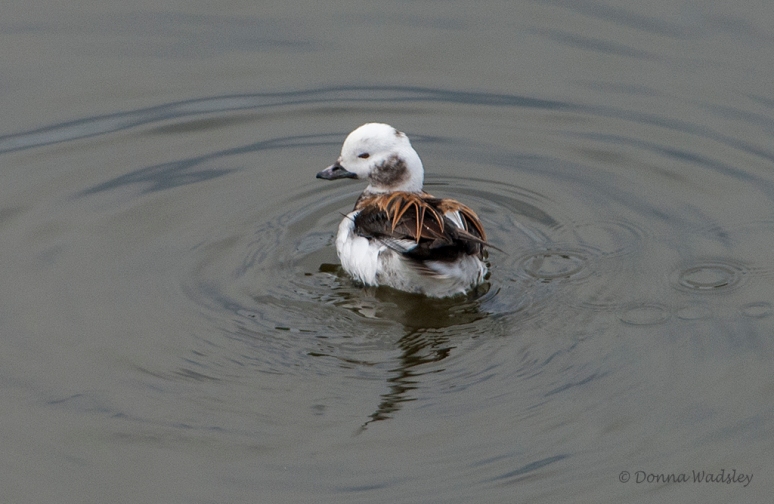
Long-tailed Duck (male)
Only the males have the long-tail plume. I watched him several times and finally caught our visitor flipping his ‘tail’. They do this as part of a courtship display. There are no females around, so maybe this young fella was practicing for his return in the Spring to find a mate. 🙂


Long-tailed Duck (male) flipping his ‘tail’
The Long-tailed Duck breeds in the Arctic and winters along both coasts of North America, usually in large flocks that raft often far out at sea. They also winter in the Bering Sea, Hudson Bay, and Great Lakes.
This duck is one of the deepest diving sea ducks, diving as deep as 200 feet (60 meters) to forage for mollusks, crustaceans, and a few small fish.

Going….

going….

gone!

Going….

going….

gone!

Taking the plunge…..

Submerging….

Do I go right? or

Do I go left?
Formerly known as the Oldsquaw duck, it was renamed in 2000 as the Long-tailed Duck because of it’s name’s sensitivity.

Long-tailed Duck (male)

Long-tailed Duck (male)

Stretching those wings!

Stretching those wings!
We took a trip down to Hoopers Island to dine at Old Salty’s Restaurant (BEST crab cakes in the area!) a few weeks ago; afterwards as always, we road to the end of the islands where it meets the Chesapeake Bay. (I highly recommend a road trip down to Hoopers Island.) I sighted both a male and a female Long-tailed Duck out in the open waters of the Bay. I could not believe it!
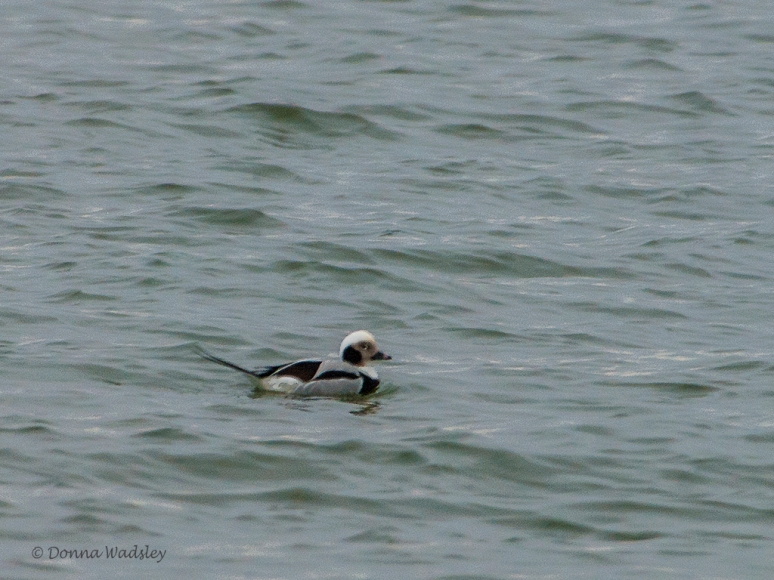
Adult Long-tailed Duck (male) shot at a long distance on the Chesapeake Bay


Long-tailed Duck (female) on the Chesapeake Bay

Long-tailed Duck (male) on Cambridge Creek
How lucky our community is to have this young male Long-tailed Duck hanging around Cambridge Creek this winter for our enjoyment!
Geese & Gulls Reflecting On Ice
Cambridge Creek has had a few thin-ice freeze-overs this past January and February. During those days, the visiting birds would dwindle down to just the gulls and geese.
Watching them rest, walk around, take-off, and land on the ice was interesting to watch. Sometimes they outweighed the ice’s strength.

Canada Geese walking on ice

Their weight begins to submerge the ice.

Bingo! We have water, guys!
Canada Geese slowly but surely collapsing the ice
The shining sun melting the ice sometimes produced a mirror-effect when the lighting and time of day were just right.
Some of my favorites…..
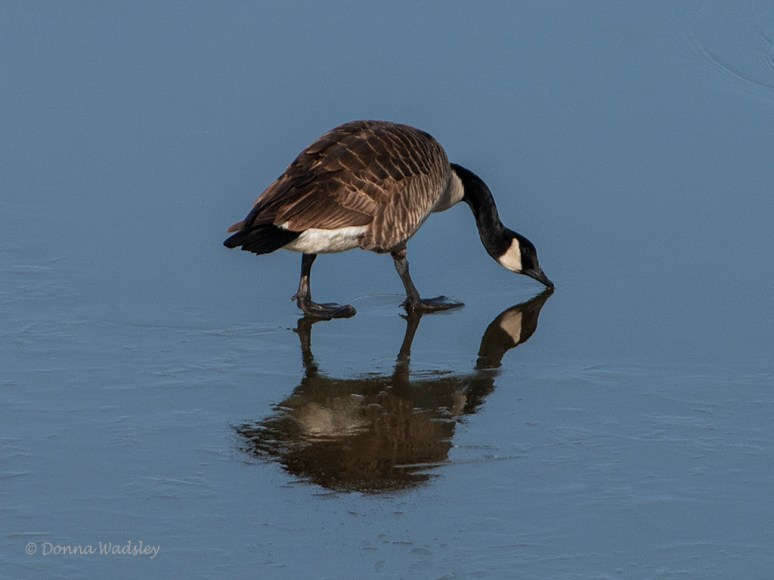
Canada Goose
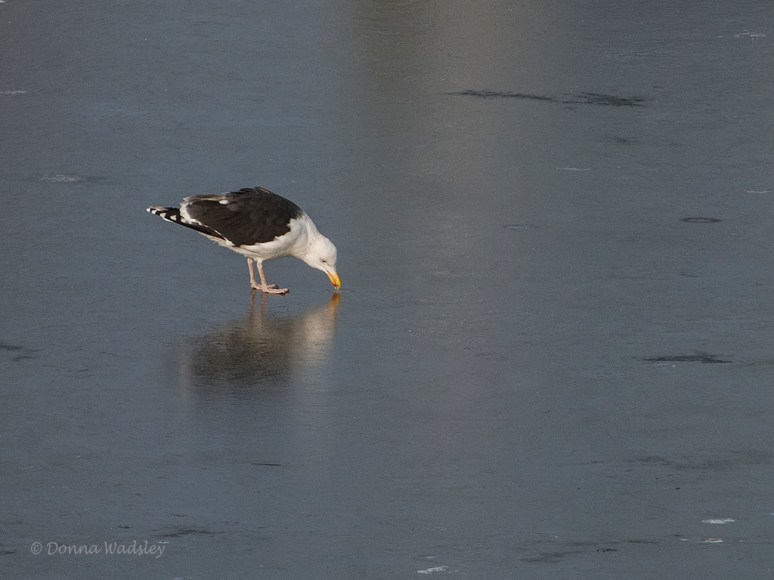
Great Black-backed Gull
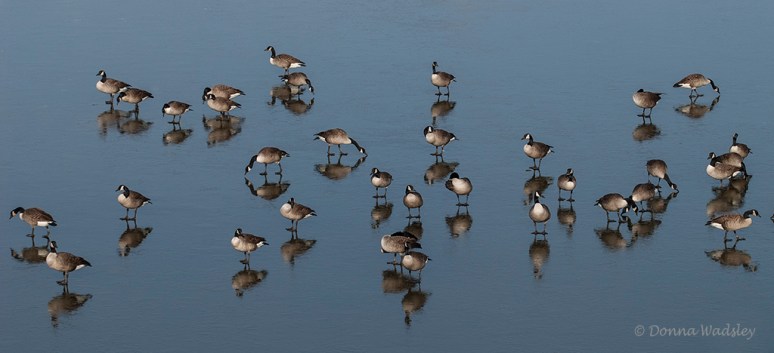
Canada Geese
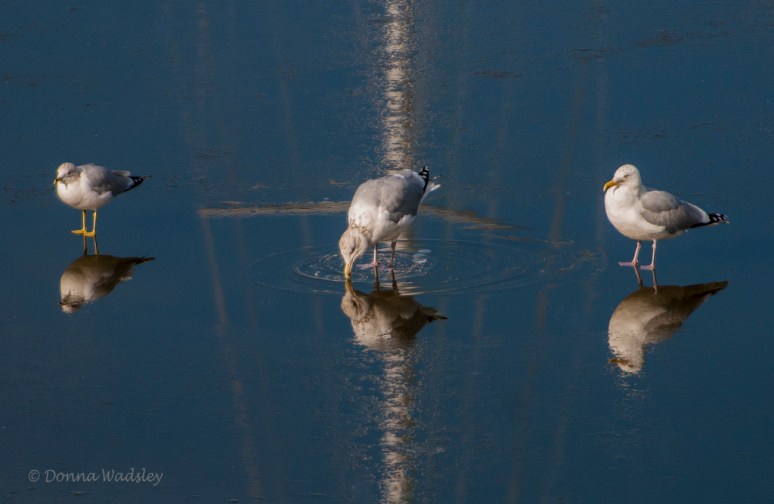
Ring-billed (left) and two Herring Gulls
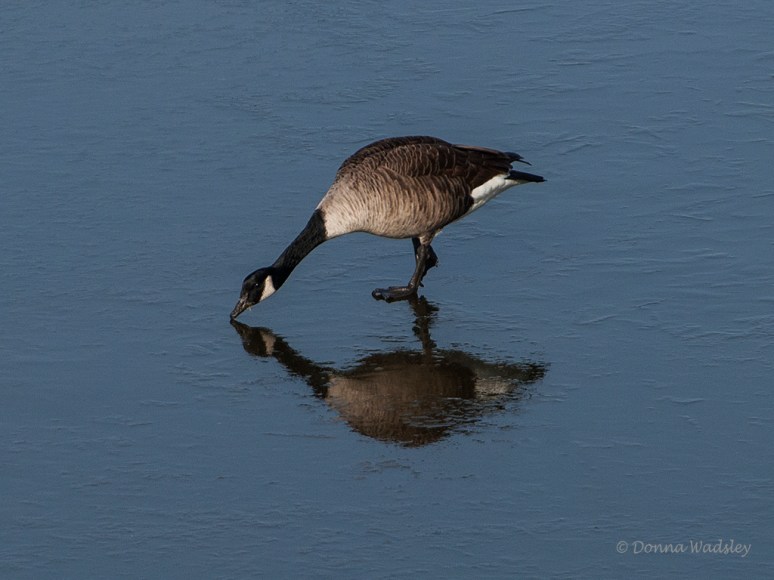
Canada Goose
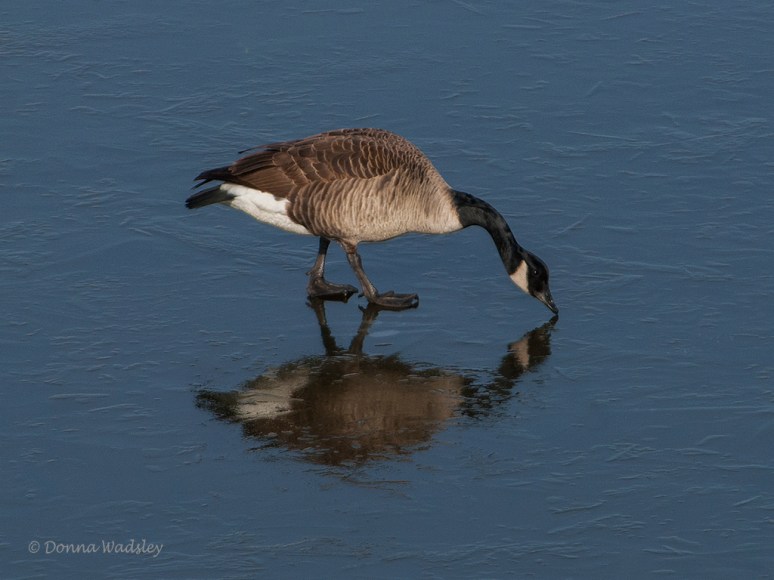
Canada Goose
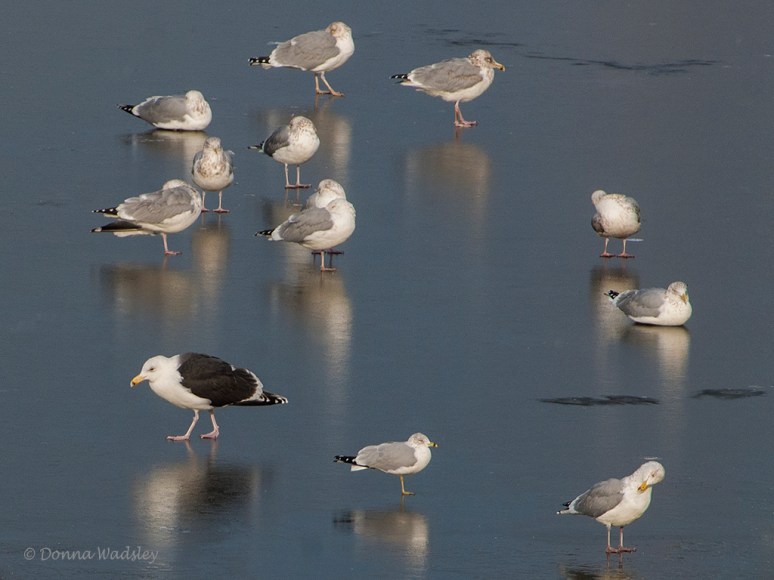
Great Black-backed, Ring-billed, and Herring Gulls
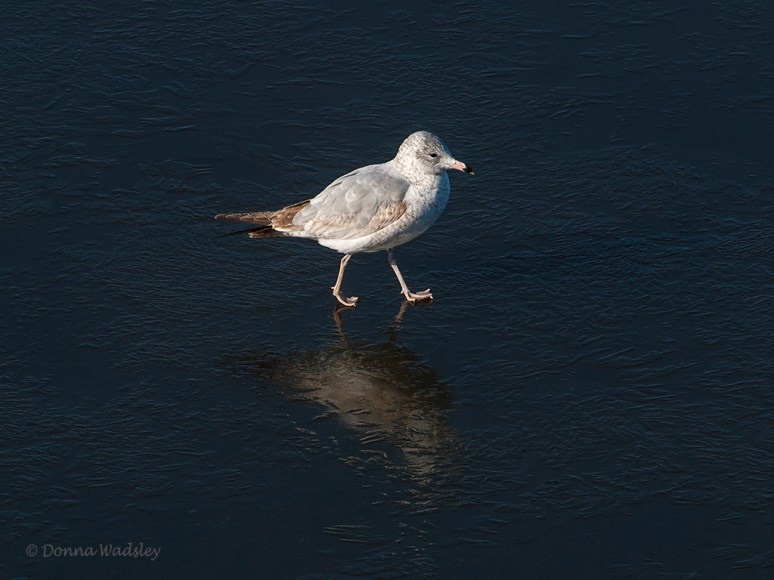
Ring-billed Gull (first winter)
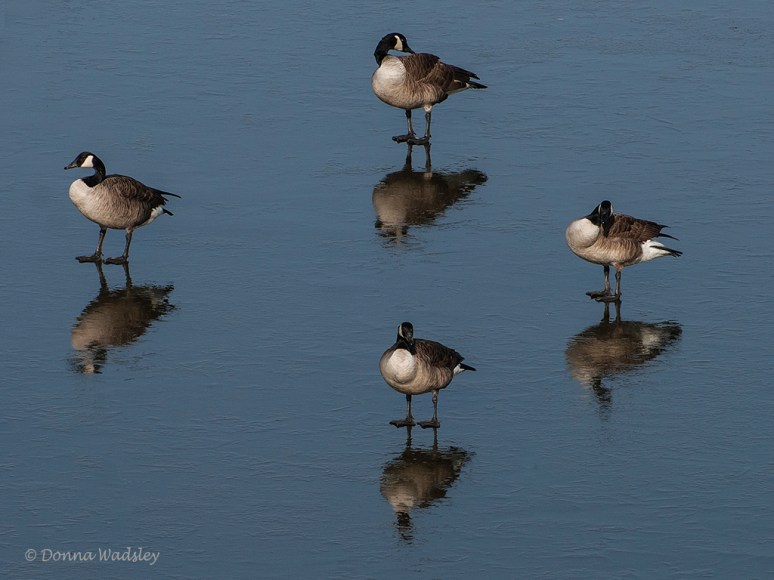
Canada Geese “Quad Squad”
As always, thank you for stopping by,
and have a wonderful, reflective weekend!
Tundra Swans
Tundra Swans breed during the summer on the northern Arctic tundra. During the winter, they migrate to the U.S. Atlantic and Pacific coastal regions and larger in-land lakes.
Our Chesapeake Bay region is fortunate to host a huge number of Tundra Swans, where they feed almost exclusively on clams that they dislodge from the mud.
Tundra Swans are usually congregated off in the distance, primarily on the water/ice where they also sleep.
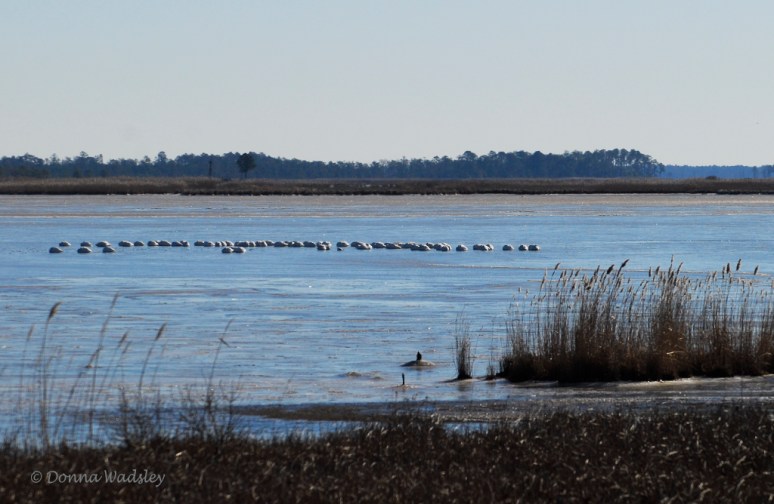
Tundra Swans sleeping on ice at Blackwater NWR (January)
Several days ago outside Cambridge, we were fortunate to come upon a small bank of Tundra Swans foraging in a farm field not too far from the road.
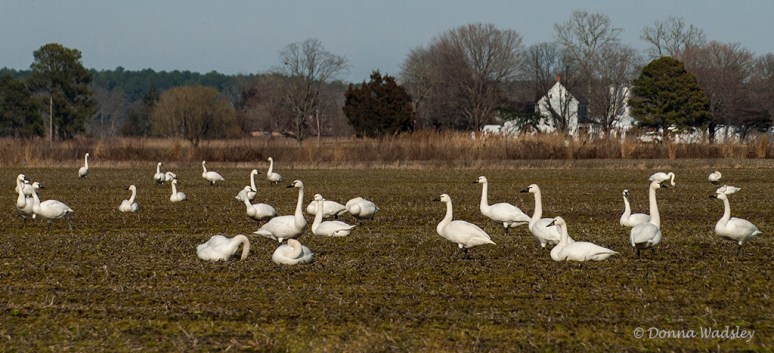
Tundra Swans
Tundra Swans pair up and bond for life when they reach 2-3 years old and remain together year-round.

Tundra Swans

Tundra Swans
There were a few juveniles in the herd, these three were more off to the side.

Three Tundra Swan juveniles in the foreground
Their parents kept a watchful eye on them.
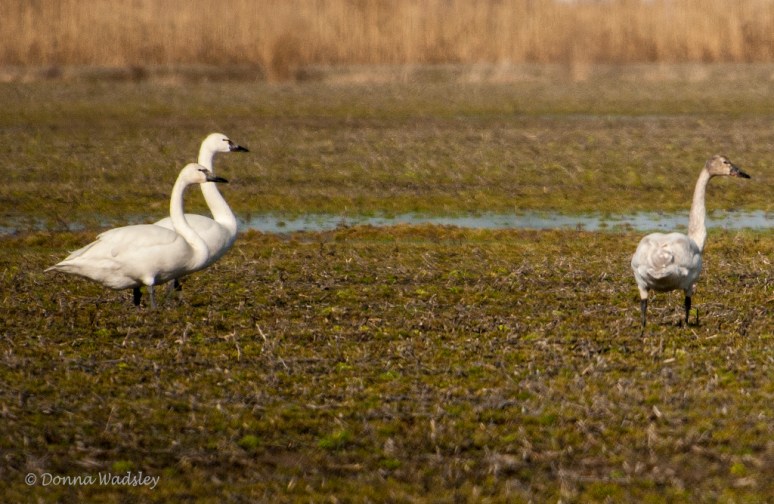
Tundra Swans parents and one of the juveniles
One more from Blackwater NWR a few weeks ago….

Tundra Swan at Blackwater NWR
Such an elegant bird!
King Goose of Cambridge Creek
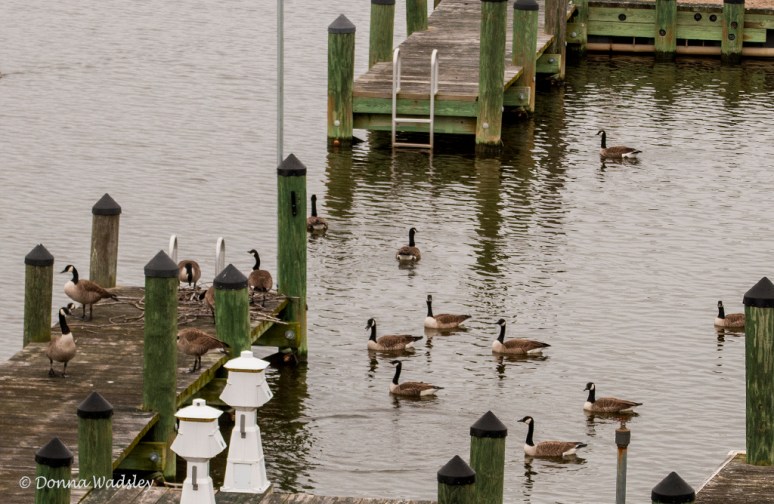
The Canada Geese continue to fly into Cambridge Creek for short periods of time almost daily. In addition to great photo ops, they also provide some hilarious entertainment.
Here’s one of those funny times.
Hearing a honking ruckus outside, I looked out and saw a Canada Goose perched on top of our community’s Osprey nest platform. (Bella would be horrified!)
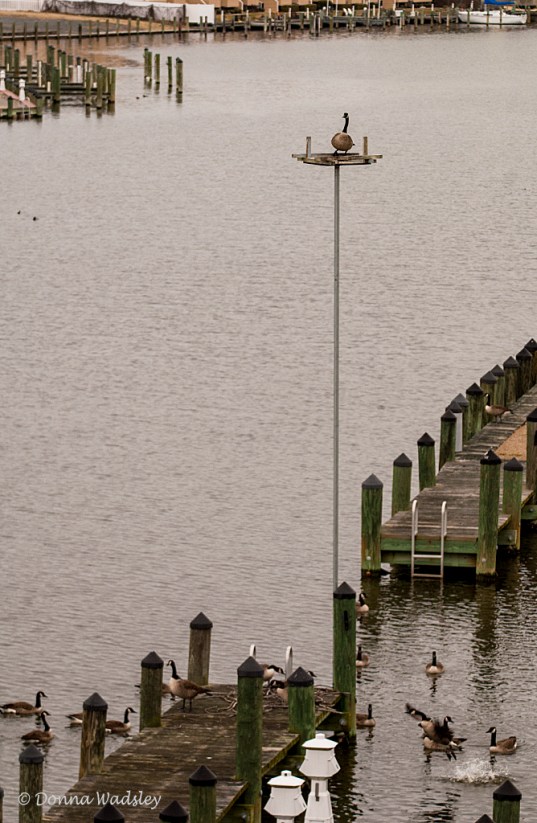
“Hey, guys, look at me! I am king of the creek! Woot Woot!”
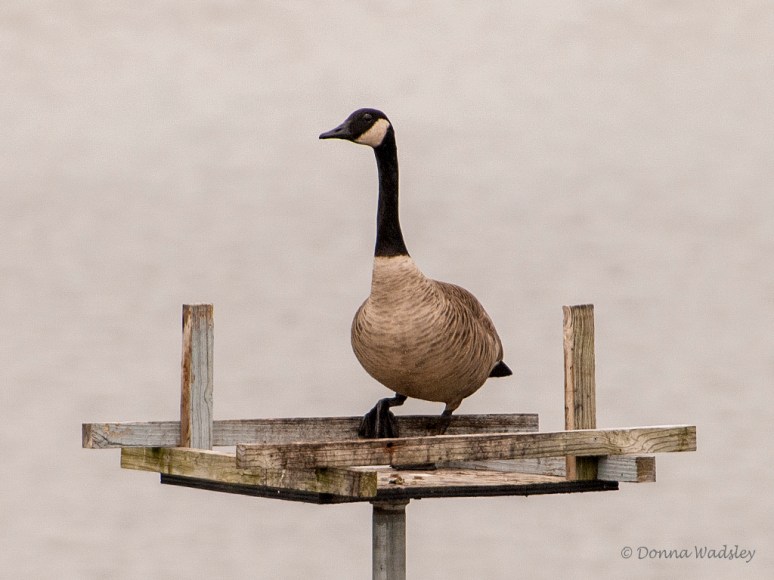
“Wow, there’s a pretty good view up here.”

“Whoa…..it’s still a long way down too.”
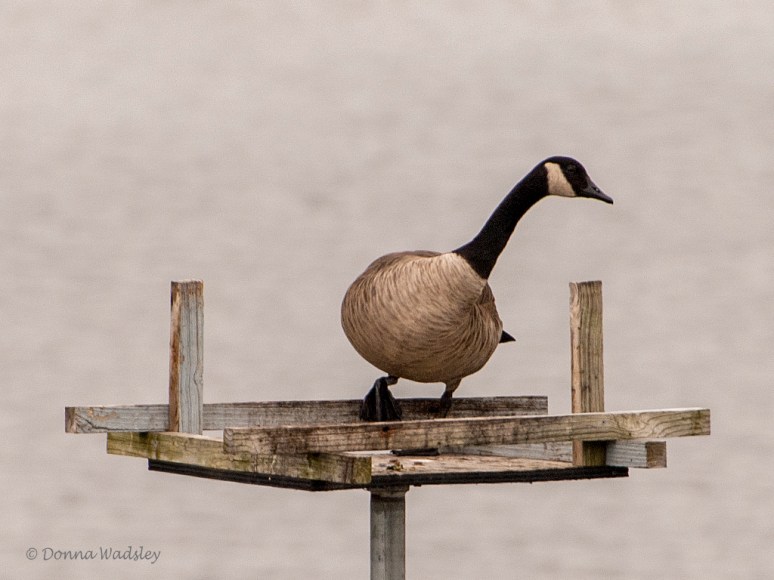
“Now what am I going to do….and where’s Gertie?”
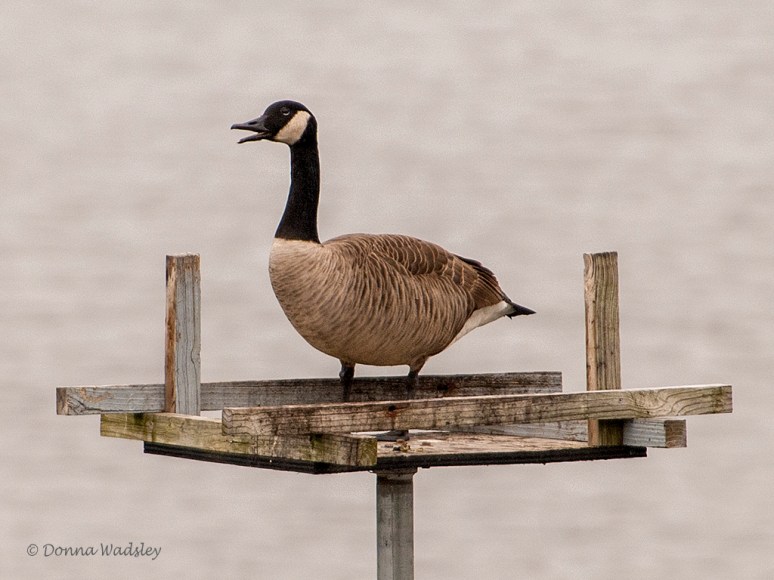
“I am King, yes I am!”
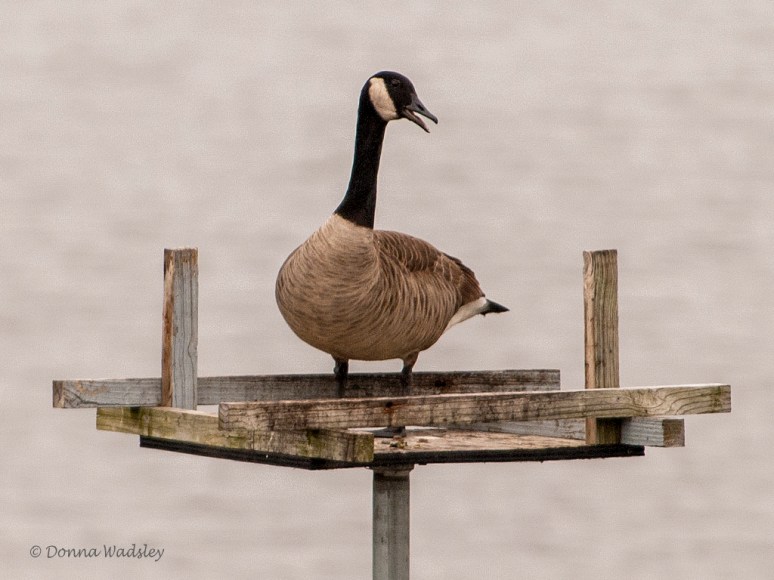
“Is anyone listening to me? Gertie?”
(some grumbled “no’s” and a few giggles could be heard…)

“Hey, what do you think you’re doing?” “Move, I want to be king of the creek!”
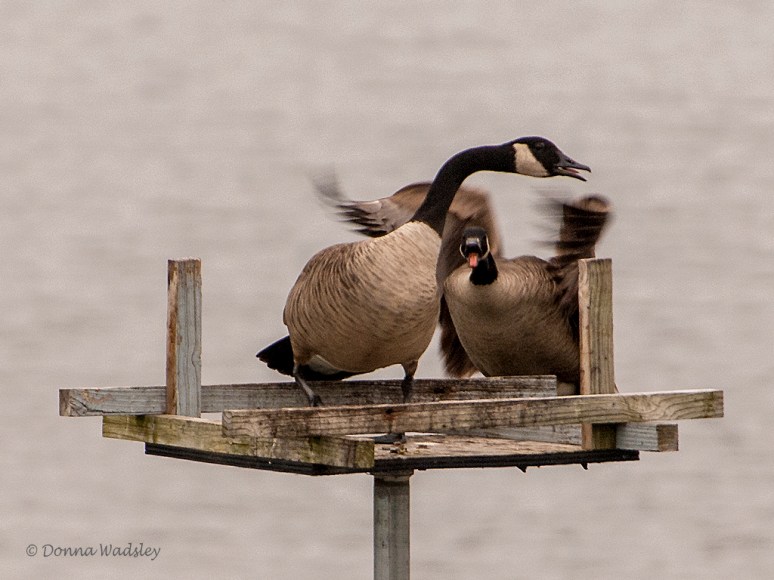
“No!” Yes!”
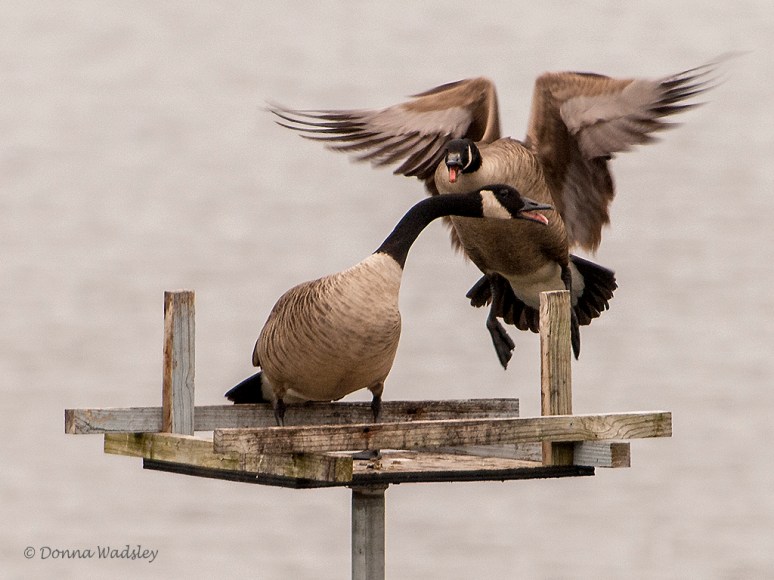
(extremely loud, heated words were further exchanged…)
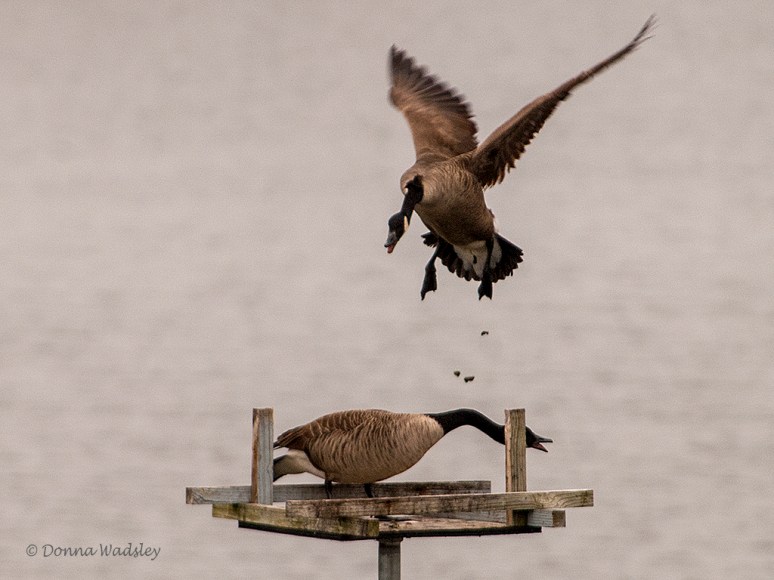
“I told you you are not landing…..hey, hey, what are you doing?” “hee hee hee hee”
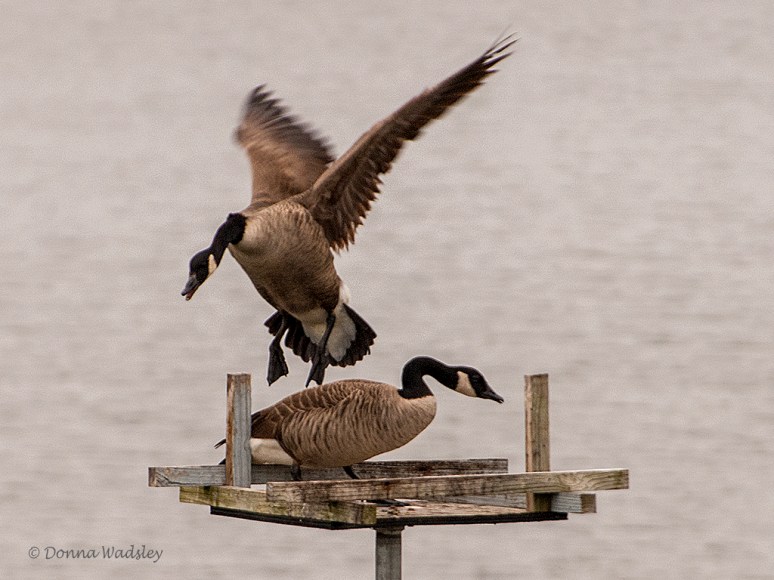
“Fine! You can have you’re so-called kingdom!” “That’s right, now be gone!”

“Huh. Who’d he think he was, trying to take my kingdom.”

“Hey, guys, wait. I’m just playing around! Where are you going?”
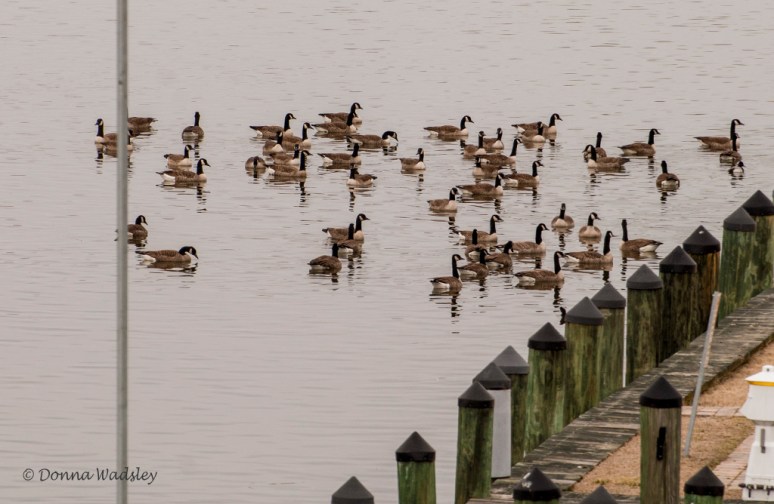
“I guess we should wait. Gus is such a goof, but he does make us laugh….”
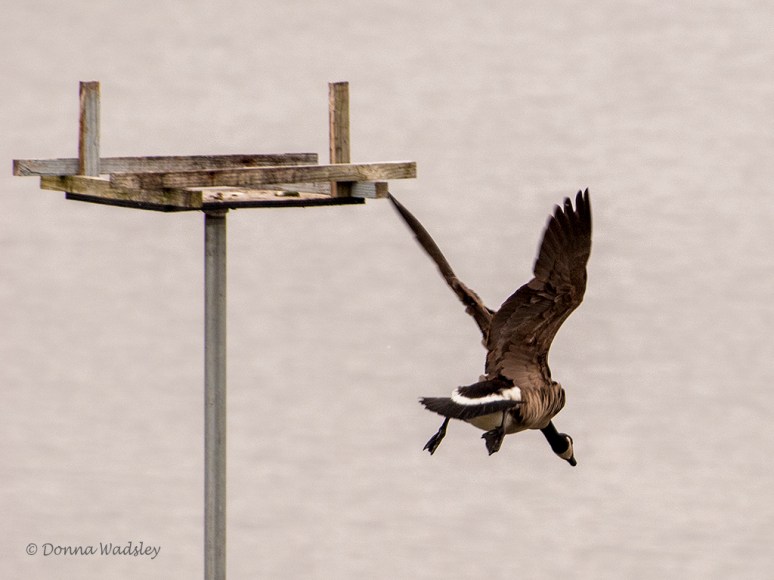
“Watch out, Gertie, here I come!”
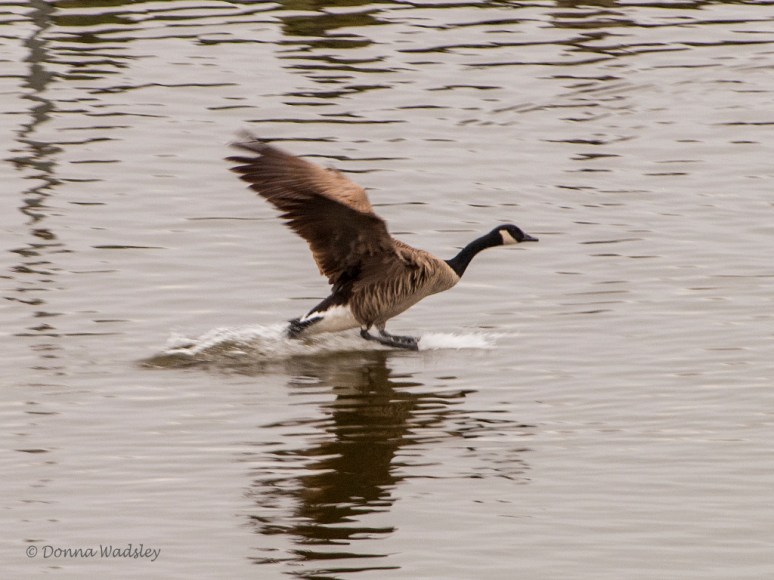
“Whoa…..”
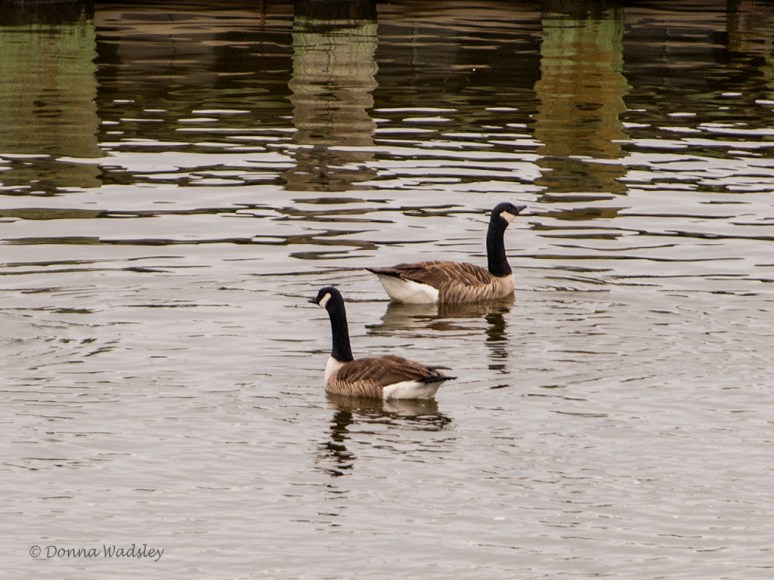
“Gus, when are you ever going to stop fooling around & grow up?!”
“Hopefully never, Gertie, hopefully never!”
And the king swam off with his queen, catching up with their royal family.
The End
Mallard Time
Mallards are a pretty dabbling duck, especially when nice lighting brightens up the males’ iridescent green heads and both the male/female’s white-bordered, blue speculum wing patch. They are an abundant, year-round resident in the Chesapeake Bay region.
Here are a few of my favorite images of our local Mallards since the first of the year.

“Mallards On Ice”
(41 total here!)

” Ice Steppin’ “


Male Mallard coming in for a landing

Male Mallard
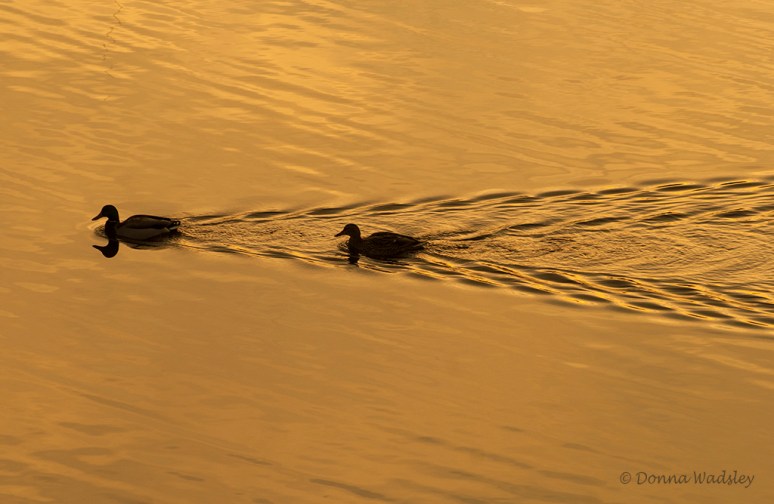
“Cruise at Sunset”
I wish I were more in focus on the male in this next photo of a Mallard Hybrid with a female Mallard. The male hybrid is a Mallard/Northern Pintail mix.
It looks quite different seeing a blue bill on a Mallard instead of bright yellow bill, doesn’t it?!!

Male Mallard/Northern Pintail Hybrid with a female Mallard
Here is a male Northern Pintail for comparison.
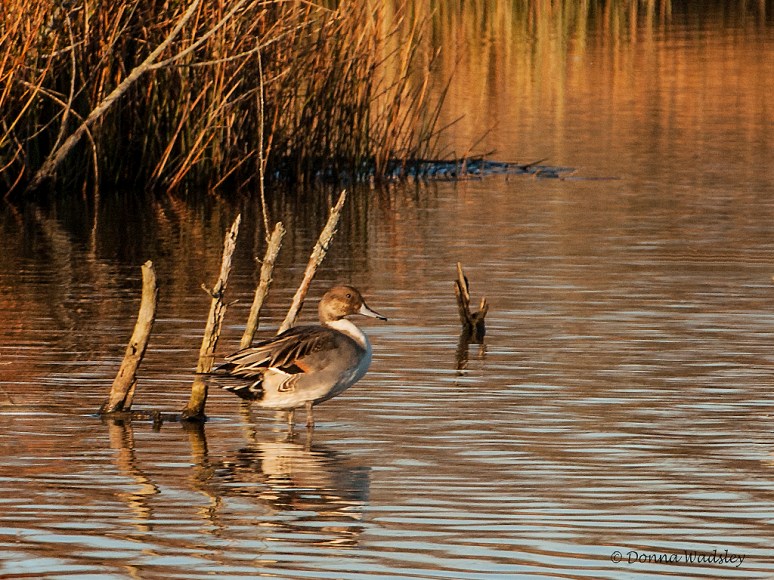
Male Northern Pintail (blue bill)
Finally, another flight series of a male Mallard coming in for a landing.


“Look out!”
Thankfully, there were no casualties when he landed! 🙂
February’s Full Moon
This month’s full moon officially occurred today, February 19th, at 10:53 a.m. EST.
Since we were to cloud over this afternoon for the incoming early morning snow, my plans looked thwarted for tonight’s rising of the Super Moon at sunset.
We did, however, have clear skies this morning, so instead I photographed the full moon setting at sunrise.
The setting moon still gave a nice show this morning as the sun began to rise.

Moon Setting at Sunrise – February 19, 2019

Moon Setting at Sunrise – February 19, 2019
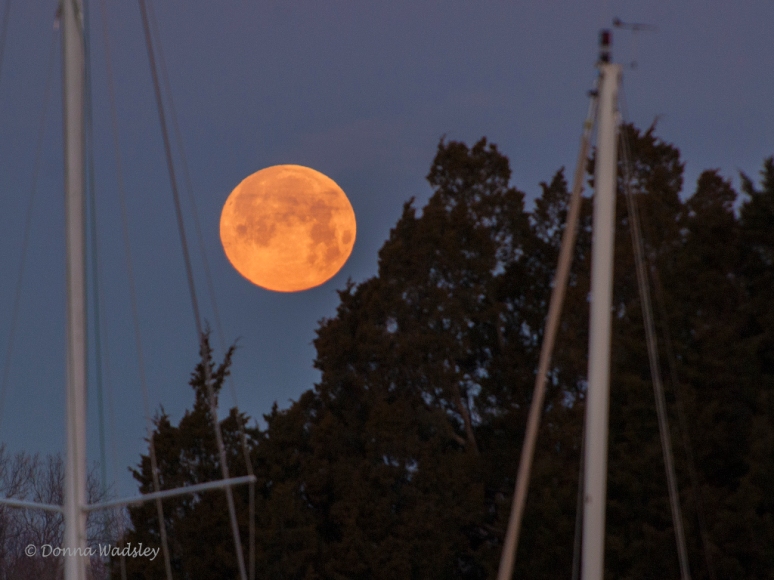
Moon Setting at Sunrise – February 19, 2019
I am looking forward to the photos those of you were able to take tonight!
Red-tailed Hawk
Just up the road prior to the Bald Eagle shared in my previous post, we first saw a Red-tailed Hawk perched on the power lines running along my side of the road.
We stopped and I photographed the hawk out my car window. The Bald Eagle may have given me its eagle-eye, but not this hawk. The Red-tailed Hawk never changed it’s stare to the field below.
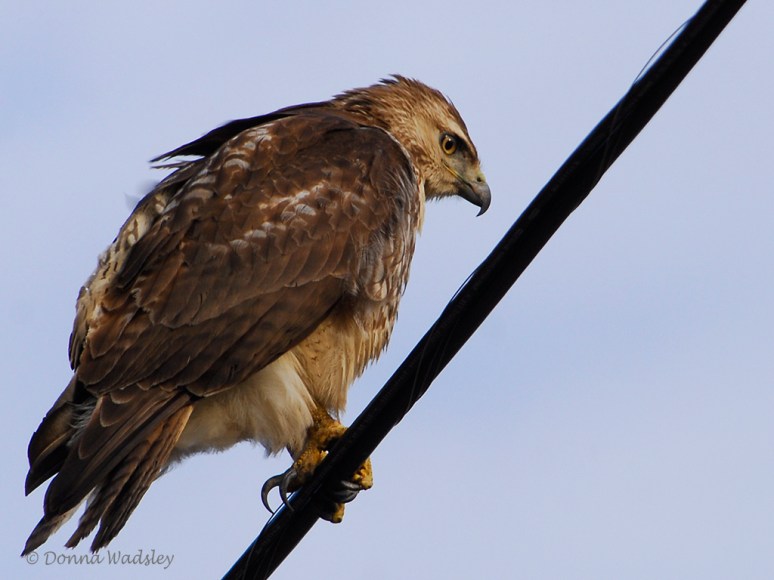
Red-tailed Hawk
That last photo and the previous Bald Eagle photo were taken a few days ago. Today, while riding down Key Wallace Drive again, we saw the Red-tailed Hawk perched in the same area on the power lines. And again, the hawk never broke its stare down to the field below while I took photos.
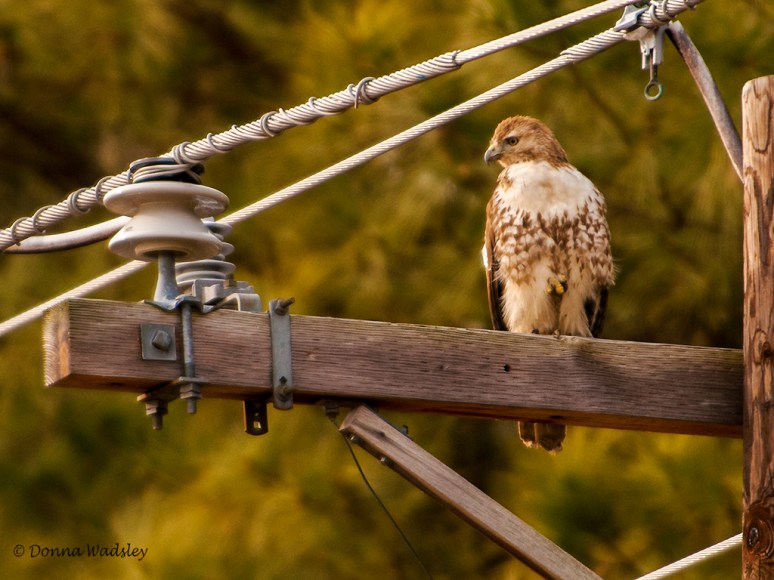
Red-tailed Hawk
I am sure it was watching something more interesting than me both times!
(photos taken along Key Wallace Drive, Blackwater NWR)
Eagle-Eye
We came up on a Bald Eagle sitting in a tree hanging over the road. Not another car in sight so my husband was able to stop underneath it. I shot this through our car’s sunroof, taking a quick half dozen photos.
With no time to be choosy to set up, these are the kind of opportunities that are all about luck with focus and how the branches play out on the face.
It is a shame I caught little branches across its face; but I still love this shot, the only one worth keeping.

Bald Eagle
He definitely locked his eagle-eye on us. Getting an opportunity to look down into our car, there’s no telling what this Bald Eagle was thinking as it watched us drive away.
Besides “crazy people”….
(photo taken along Key Wallace Drive, Blackwater NWR)
Canada Geese Taking Flight
Just after sunrise on Valentine’s Day, I watched a skein of Canada Geese fly into and land in the still-shaded waters of Cambridge Creek.
They slowly swam their way up to and past me, coming to the creek’s end. The sun was now high enough to lighten up the water, giving awesome reflection opportunities.
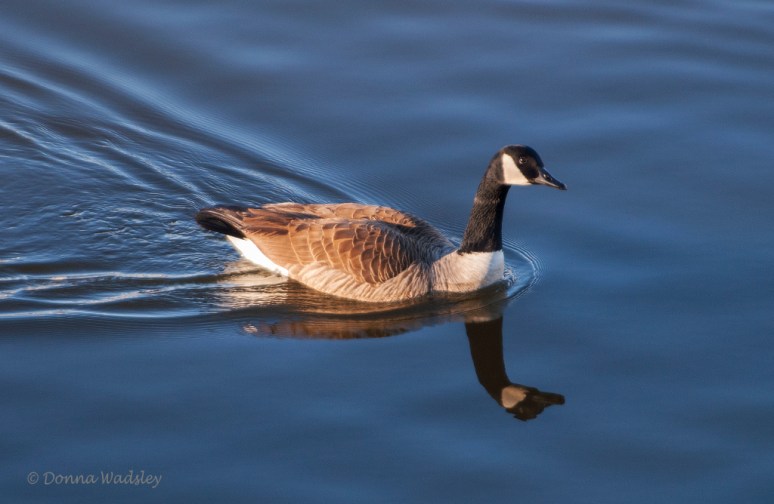
Canada Goose
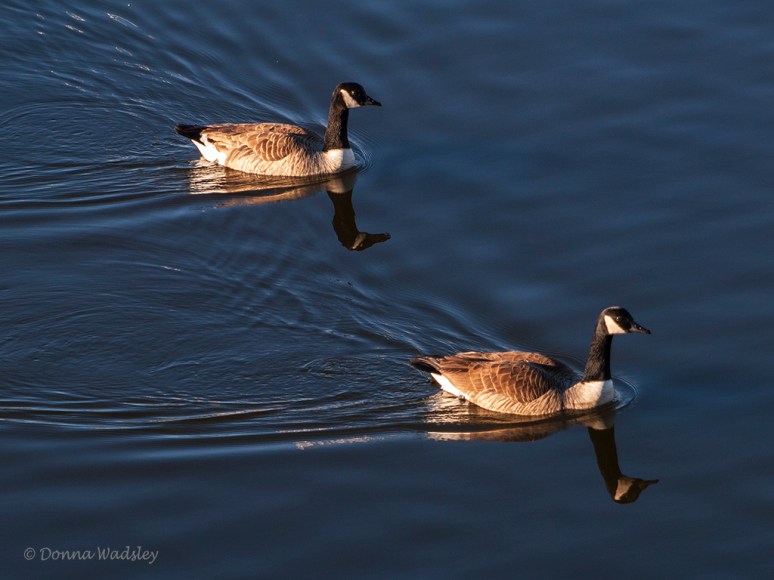
Canada Geese
The sail boat masts and piers were reflecting cool patterns around them as the water got brighter and a slight breeze kicked up.
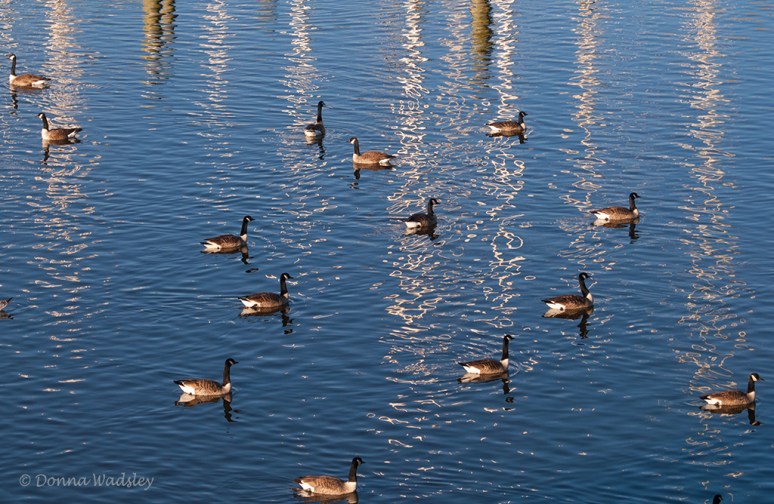
Canada Geese
Unable to go any further, the stopped geese looked around and at each other.
Then the loud honking began.
Plans were discussed.
An agreement was made.
And then their take-off started.
I’ve seen this scenario so many times. But this time, instead of locking on and following several as they took off, I stood camera-steady and held down my shutter button, surprisingly getting 14 images before my camera and battery said, “enough, we need to catch up!”
The Canada Geese efforts as well as their flight and water patterns that developed were pretty cool and I thought enjoyable to share.
To see these best, click on the first image to follow through the sequence.


Canada Geese taking flight
Did you notice the pair of Ruddy Ducks in the top left corner of the photos? Luckily, they didn’t get run over! 😊
 Bay Photos by Donna