
Florida Softshell Turtles
.
If you recall, I had taken and shared my mystery wildlife photo a couple months ago taken in Alabama that had me so curious to confirm what it was, I contacted a reptile group. I thought it was a huge snake!
.
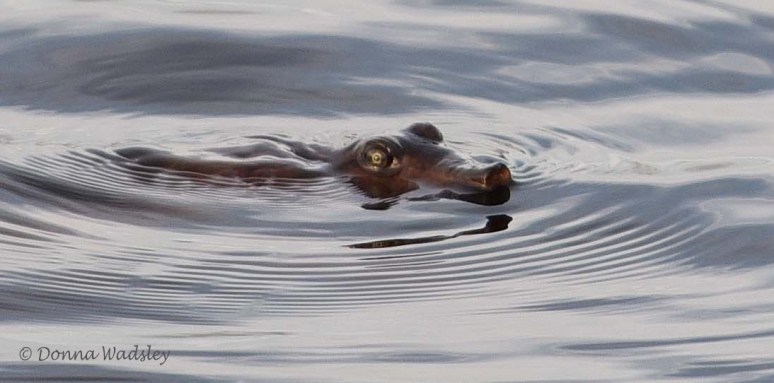
Mystery Wildlife – Softshell Turtle (a.k.a. baby hippo! hehe)
.
There are several species of softshell turtles in North America, the largest of them is the Florida softshell turtle. At our campground last month, there were several that basked in the sun each day around the ponds.
.
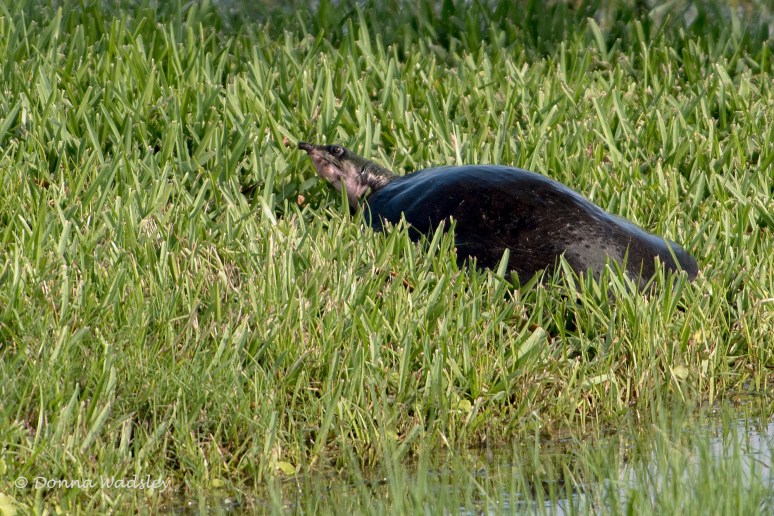
Florida softshell turtle
.
The Florida softshell turtle ranges from 6 to 30 inches (15 to 76 cm) in length. Adults females are often 3-5 times larger than males!
.
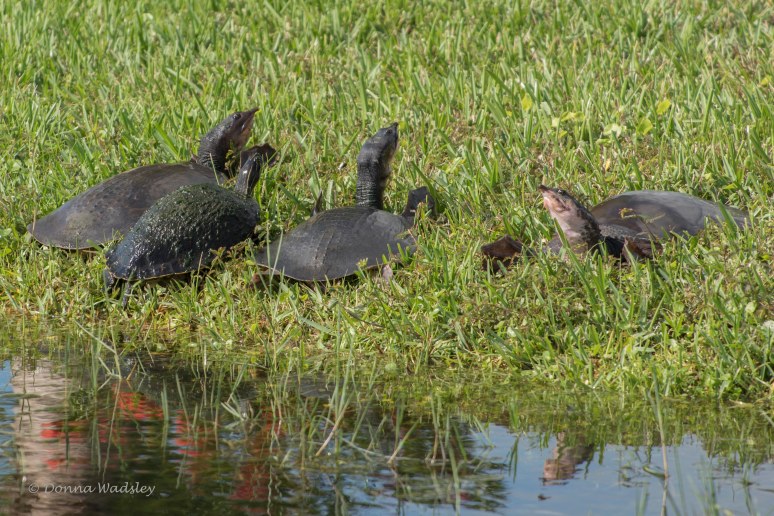
Florida softshell turtles along with another unidentified turtle
.
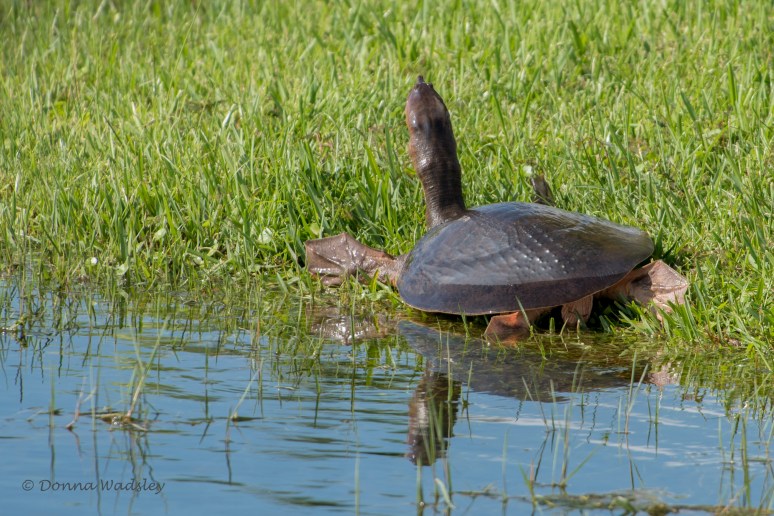
Florida softshell turtle
.
It was neat to actually get to view these turtles after having seen a glimpse of the one previously that had piqued my curiosity!
.
Wildlife Cohabiting Together — Killdeer and Least Sandpiper
.
I adored watching this Killdeer and a Least Sandpiper hanging together for several days at our campground. It appeared as if the Killdeer was the protector. When the Killdeer took flight to another spot, the tiny sandpiper followed. While the Killdeer kept guard, the tiny sandpiper crouched down and rested.
.
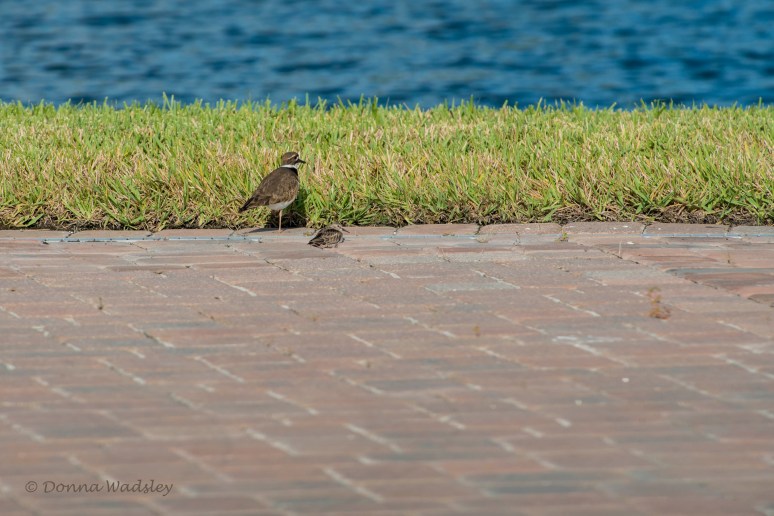
Killdeer and Least Sandpiper
.

Killdeer and Least Sandpiper
.
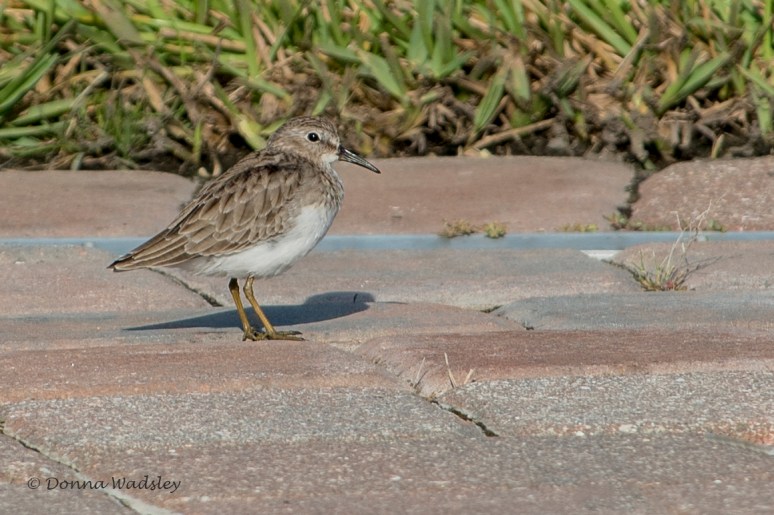
Least Sandpiper, the smallest shorebird in the world,
weighing about 1 ounce and measuring 5-6 inches long.
.
The Wood Stork’s Unique Beauty
.
Birds are mostly described as beautiful, adorable, majestic, gorgeous, to name a few. All those wonderful ‘pretty’ verbs.
There are some bird species, though, that are described with other not-so-pretty verbs. Odd, ugly, weird, only-a-mother-could-love. Add shy and prehistoric, and you’ve described the Wood Stork.
I hope these photos show you that they are beautiful too!
.

Wood Stork 01

Wood Stork 02

Wood Stork 03

Wood Stork 04

Wood Stork 05

Wood Stork 06
.
Birds Camping With Me – Part 2
.
My last post shared more of the smaller birds I photographed within our campground last month. This series is showcasing more of the impressive, larger birds. The draw for them were the three ponds the campsites surrounded. Fly-bys overhead were always welcomed!
I love to cruise around in my ‘birding mobile’, setting myself up to allow the birds to ignore me or work their way towards me, while I wait, not moving, not making eye contact. We all know vehicles make great ‘blinds’ when birding, can you believe a brightly colored golf cart would work too?! 🙂
.

My Fun “Birding Mobile”
.
And now on to my campground birds….
.

Little Blue Heron

Great Egret

Great Egret

Wood Stork

Great Blue Heron

Immature Bald Eagle

Brown Pelican

Anhinga

Great Egret

Tricolored Heron
.
I get a lot of smiles and love from people when they see me photographing from my birding mobile. And above, it looks like the birds all give a smile too. 😉
.
Birds Camping With Me – Part 1
.
This is a two-part series, sharing a gallery of birds, all captured within the campground we stayed at last month in Port Charlotte.
Part 1 is for the smaller ones. More on the cute and adorable side.
.

Blue Jay

Killdeer

Pied-billed Grebe

Mourning Dove

Palm Warbler (Western)

Killdeer
.
Birds Camping With Me – Part 2 will be the larger, majestic birds. 🙂
.
Babcock/Webb WMA, Punta Gorda
.
On a tip from a fellow blogger (thanks, Wally!), I researched the Babcock/Webb Wildlife Management Area in Punta Gorda, about 30 miles south from where we were camping last month.
With more than 65,000 acres of intermixed pine flatwoods and freshwater marsh, along with hardwood hammocks and dry prairie, I found Babcock/Webb WMA had plenty to offer!
.
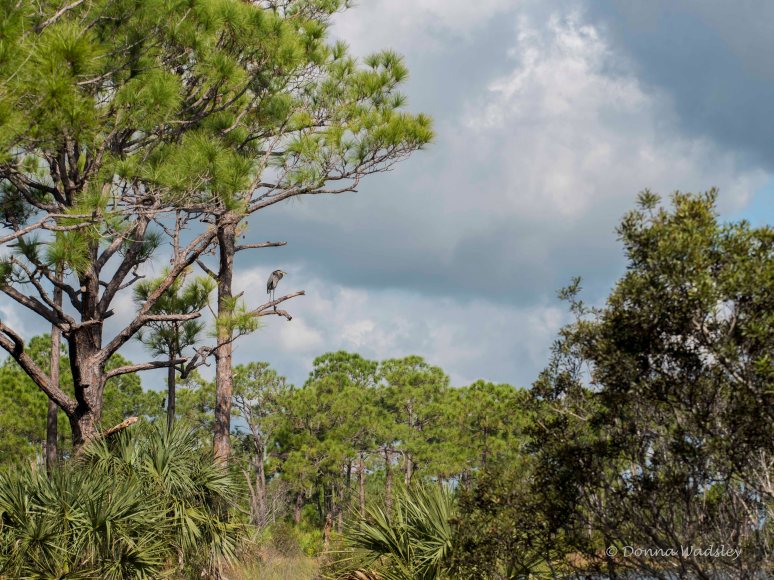
Great Blue Heron “With A View”
.
I was most excited in hopes of seeing and photographing the federally listed endangered Red-cockaded Woodpecker that lived in clusters 4-5 miles deep within. Accessed by one of the dirt roads, their cavity trees are clearly marked with white-painted rings to easily locate them for quiet observations.
Alas, I was not lucky. Controlled hunting season had just started five days prior, and I found the start of that access road closed to visitors.
I was still able to drive on a paved road along the freshwater lake and marshes for its five-mile length and back.
.
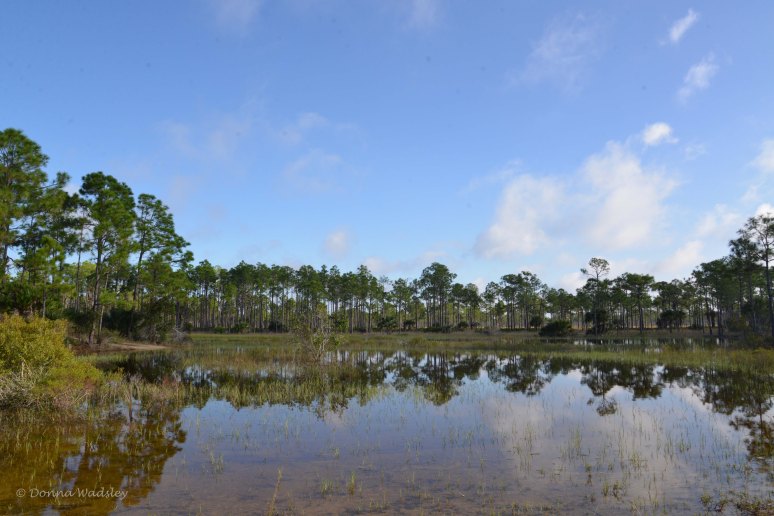
Babcock/Webb WMA
.
Here’s what I did get to enjoy and photograph. 🙂
.

Tricolored Heron

Northern Mockingbird

Osprey

Hairy Woodpecker

Tricolored Heron

Yellow-shafted Northern Flicker

Turkey Vulture

White Peacock

Great Egret

Little Blue Heron

Great Blue Heron

Turkey Vulture

American Alligator

Sandhill Cranes
.
“If you truly love nature, you will find beauty everywhere.” –Vincent Van Gogh
.
Little Blue Herons
Hello! My oh my, where has the time gone? Since my last post, we returned home for the Thanksgiving holiday, and there’s been so much to do, I haven’t had any time to blog nor read blogs. A new laptop was waiting for my return (yay!), but the transfer and incompatibility with some of my old programs has caused major headaches and lots of down time. Ugh.
So, finally, I think I’m back up and running for the most part. I hope everyone is continuing to do well during these still difficult times. To stay safe, we ended up canceling our big Thanksgiving family dinner and opted for a quiet one.
I didn’t have a chance to do any birding since arriving home, so I’m going to continue to share photos from last month in Florida.
These are Little Blue Herons. As an adult, they are a dark slate-blue with a purple/maroon head. However, as a juvenile, they are entirely white. They transform during their immature molting stage looking like a patchwork of white and blue. Little Blue Herons are excellent stalkers!

Little Blue Heron (immature in beginning stages of molting)

Little Blue Heron (juvenile)

Little Blue Heron (adult)

Little Blue Heron (adult)

Little Blue Heron (adult)

Little Blue Heron (adult)

Little Blue Heron (adult)

Little Blue Heron (juvenile)
Gray Gallery
.
They may be gray in coloring, but their beauty is still striking. Here’s a gallery of five gray birds I recently shot in Port Charlotte while out and about.
.

Loggerhead Shrike

Gray Catbird

Blue-gray Gnatcatcher

Northern Mockingbird

Eastern Phoebe
.
.
Red-bellied Woodpeckers
.
I heard a pair of Red-bellied Woodpeckers calling to each other from our camp site, and found the male at the top of a palm tree frond spike.
.
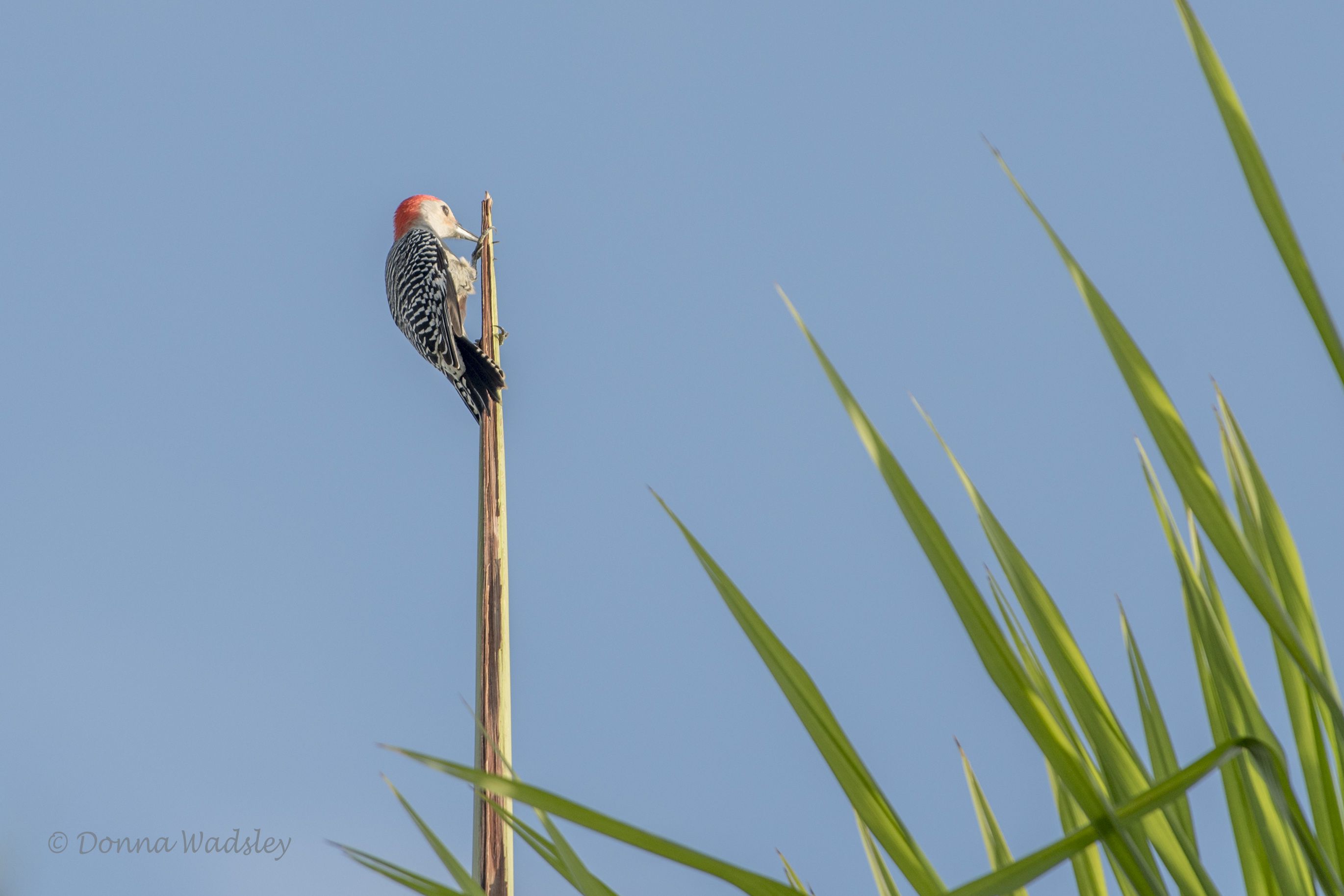
Red-bellied Woodpecker (male)
.
I heard the female in the old pine tree. It took a bit but I finally found his gal.
.
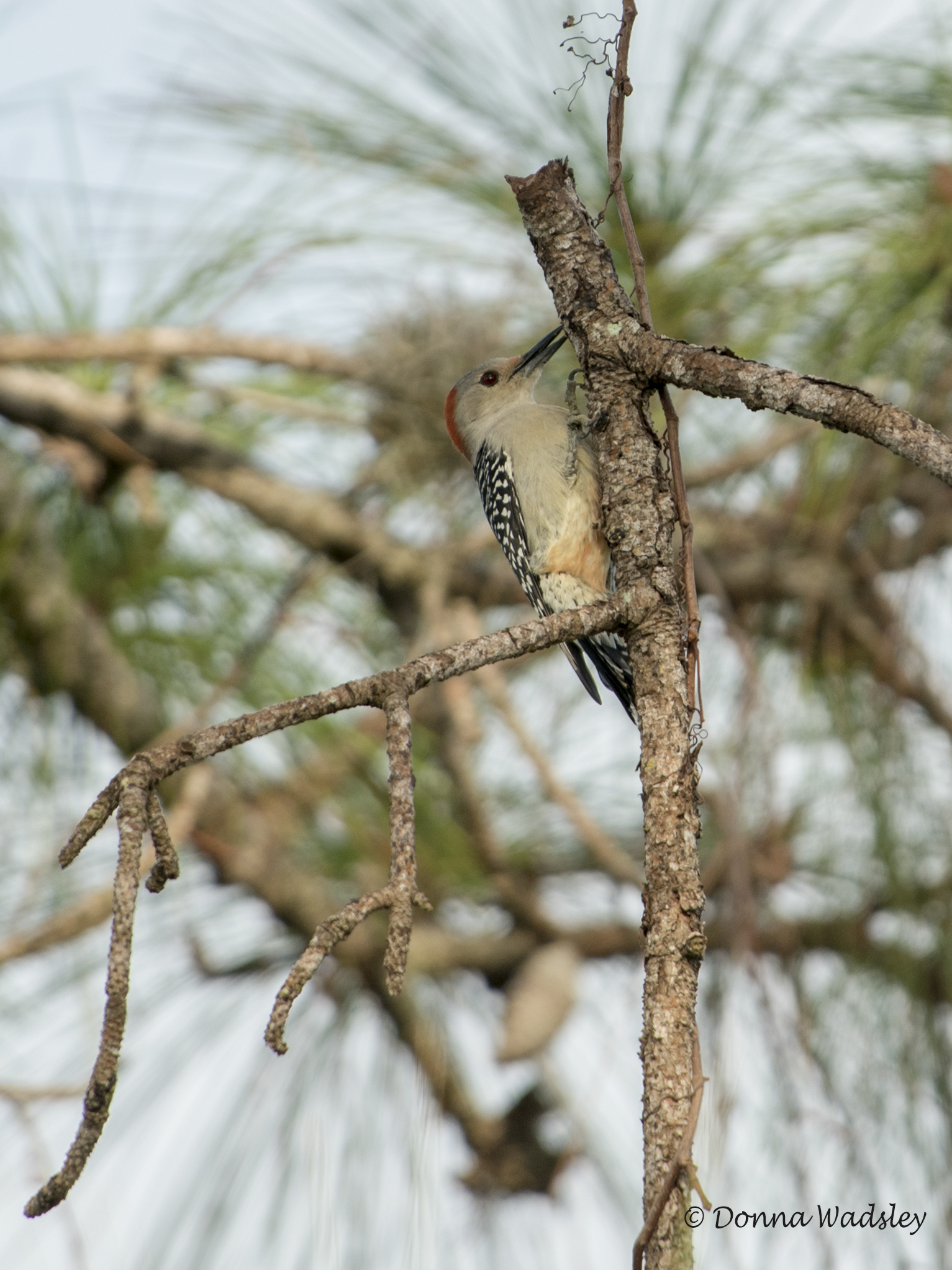
Red-bellied Woodpecker (female)
.
Both sexes have the red belly. The actual difference between the two, the male has a red crown and nape, the female has the red nape only.
.
Anhingas
.
The Anhinga is a waterbird found in the southeast United States.
However, unlike most waterbirds, the Anhinga doesn’t have waterproof feathers.
But this isn’t a disadvantage for them. Anhingas’ wet feathers and dense bones help them slowly submerge their bodies under the water so they can stalk fish with their dagger-like bill.
.
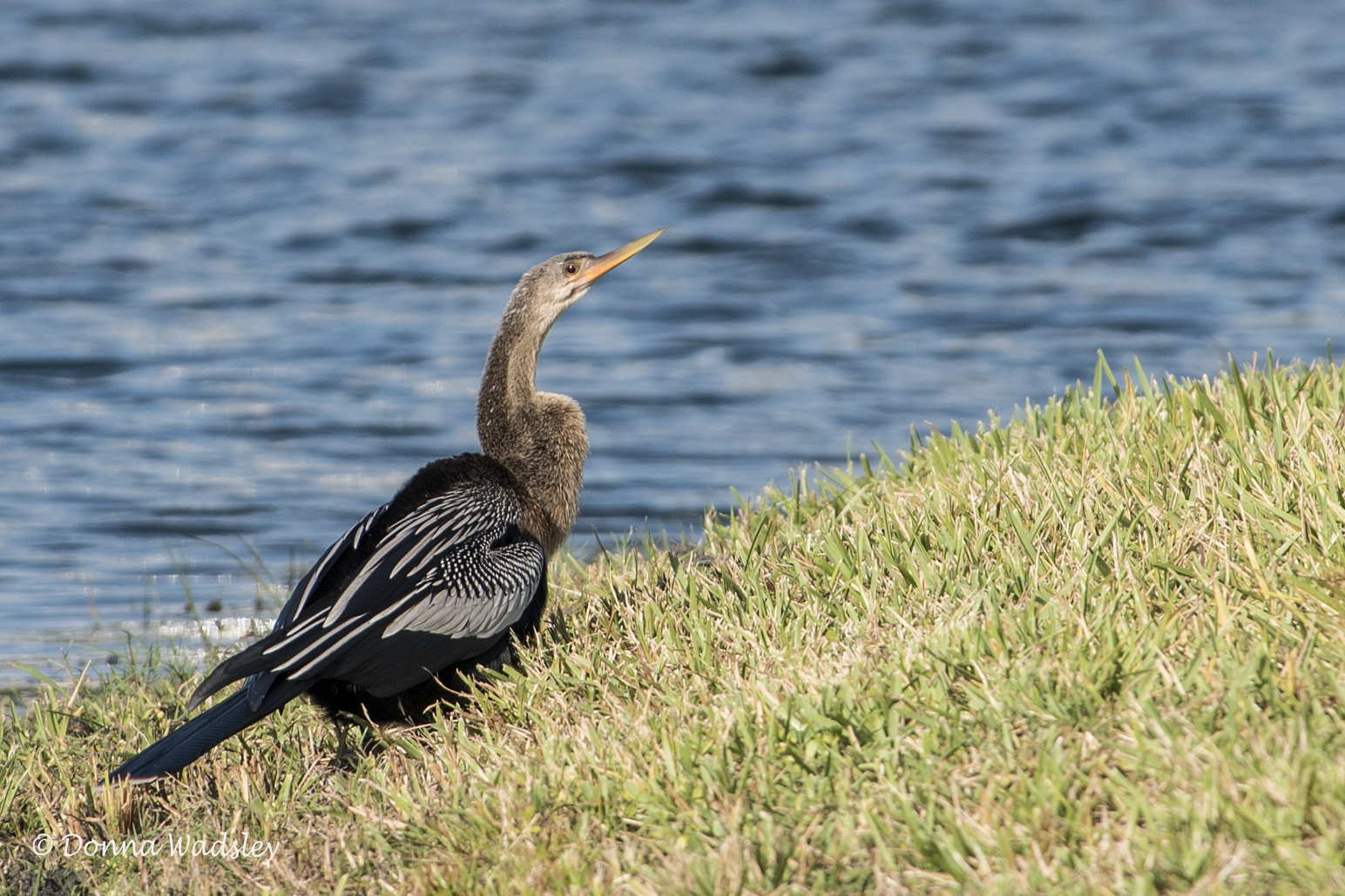
Anhinga
.
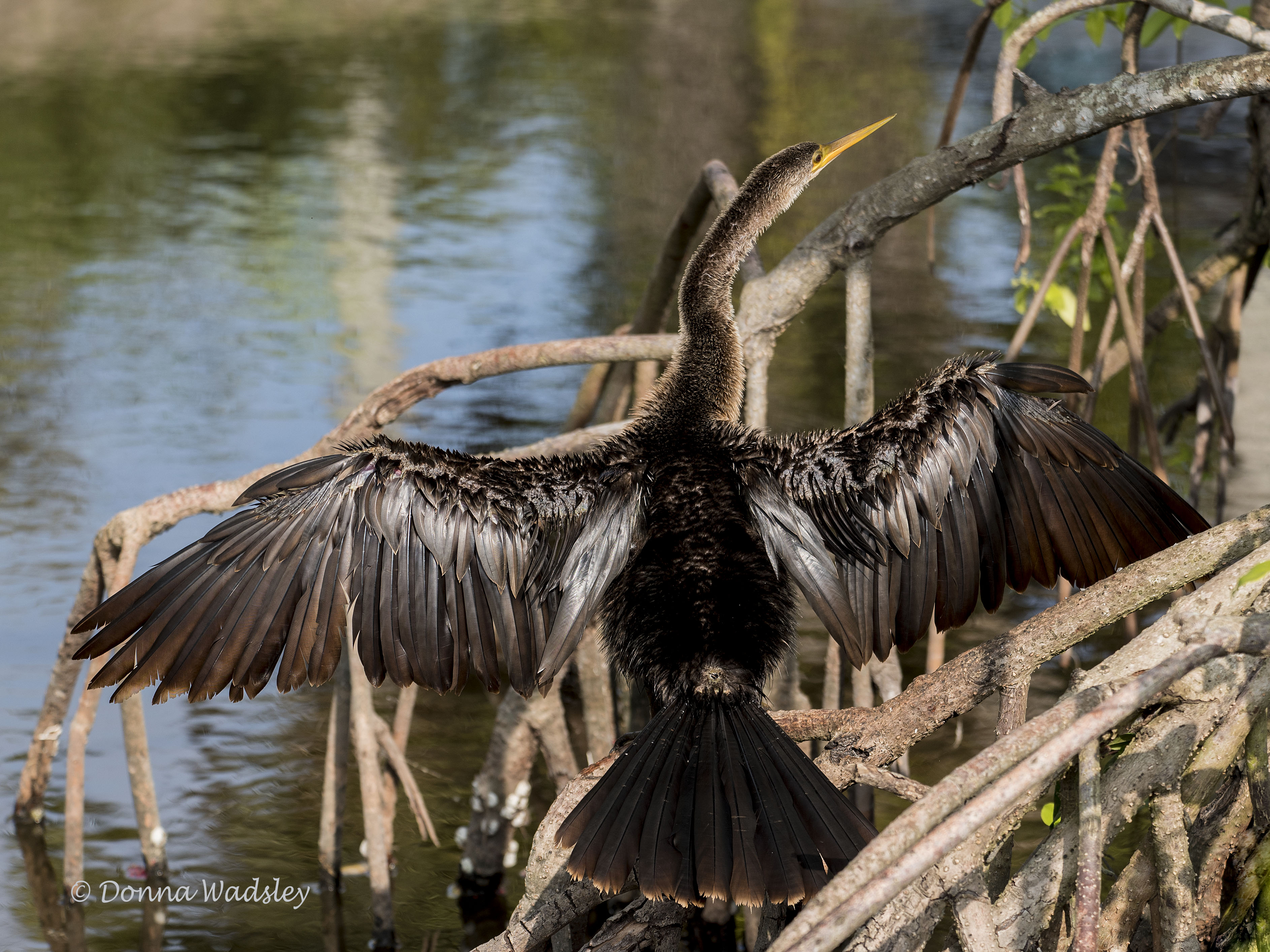
Anhinga drying its feathers
.
Anhingas have two nicknames, “water turkey” for its turkey-like tail and “snake bird” for its long, snake-like neck, both of which they hold partially out of the water while swimming with the rest of their body partly or mostly submerged.
.

Anhinga swimming (nicknamed “water turkey” or “snake bird”)
.
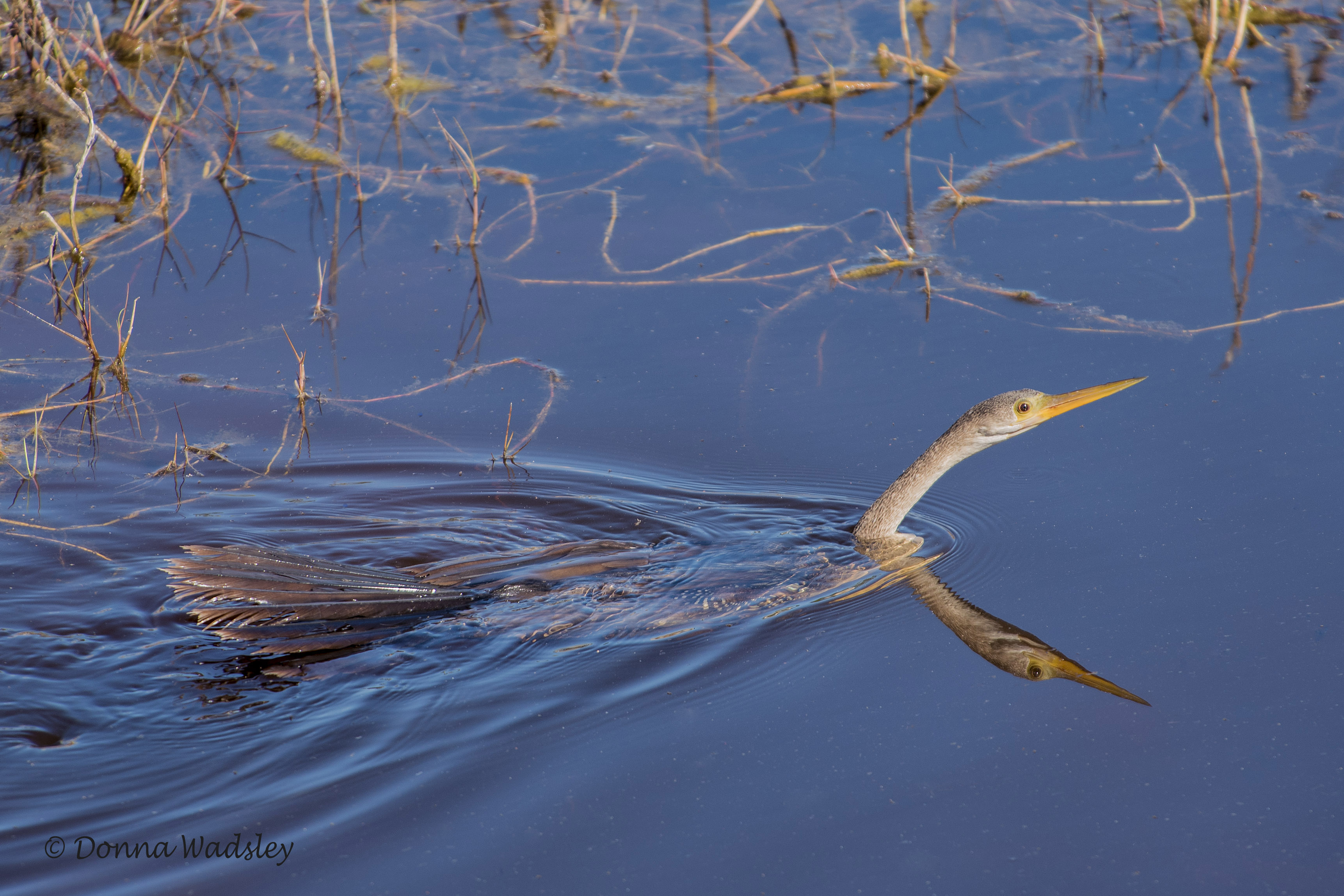
Anhinga swimming (nicknamed “water turkey” or “snake bird”)
.
How about a few head-shots?
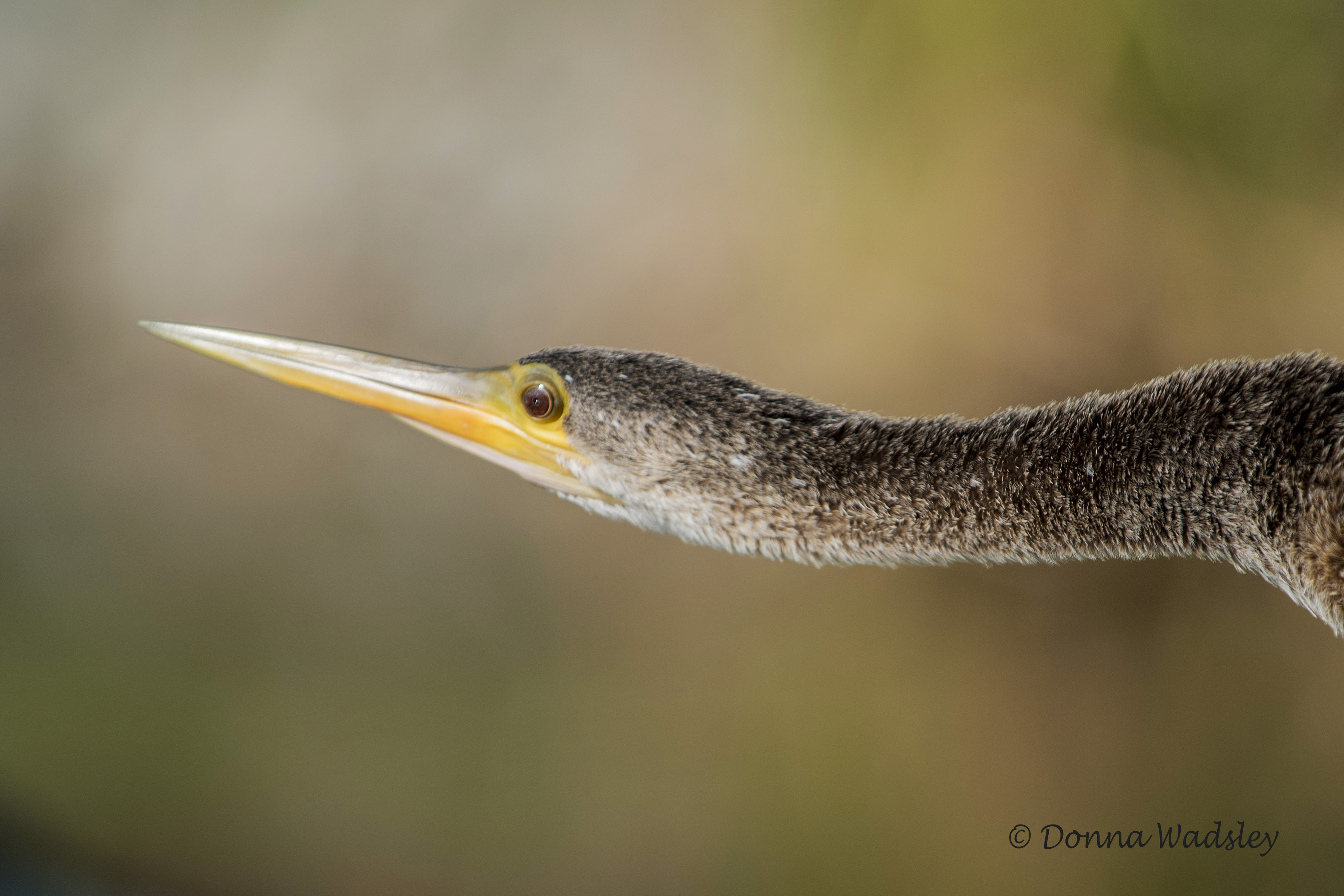
Anhinga
.

Anhinga
.

Anhinga
.
Did you notice the Anhinga’s beautiful maroon-red eye?
.

Anhinga
.
How about a close-up of their feet?
.

Anhinga’s golden feet
.

Anhinga preening
.
I hope you enjoyed getting up close and personal with the Anhinga!
.
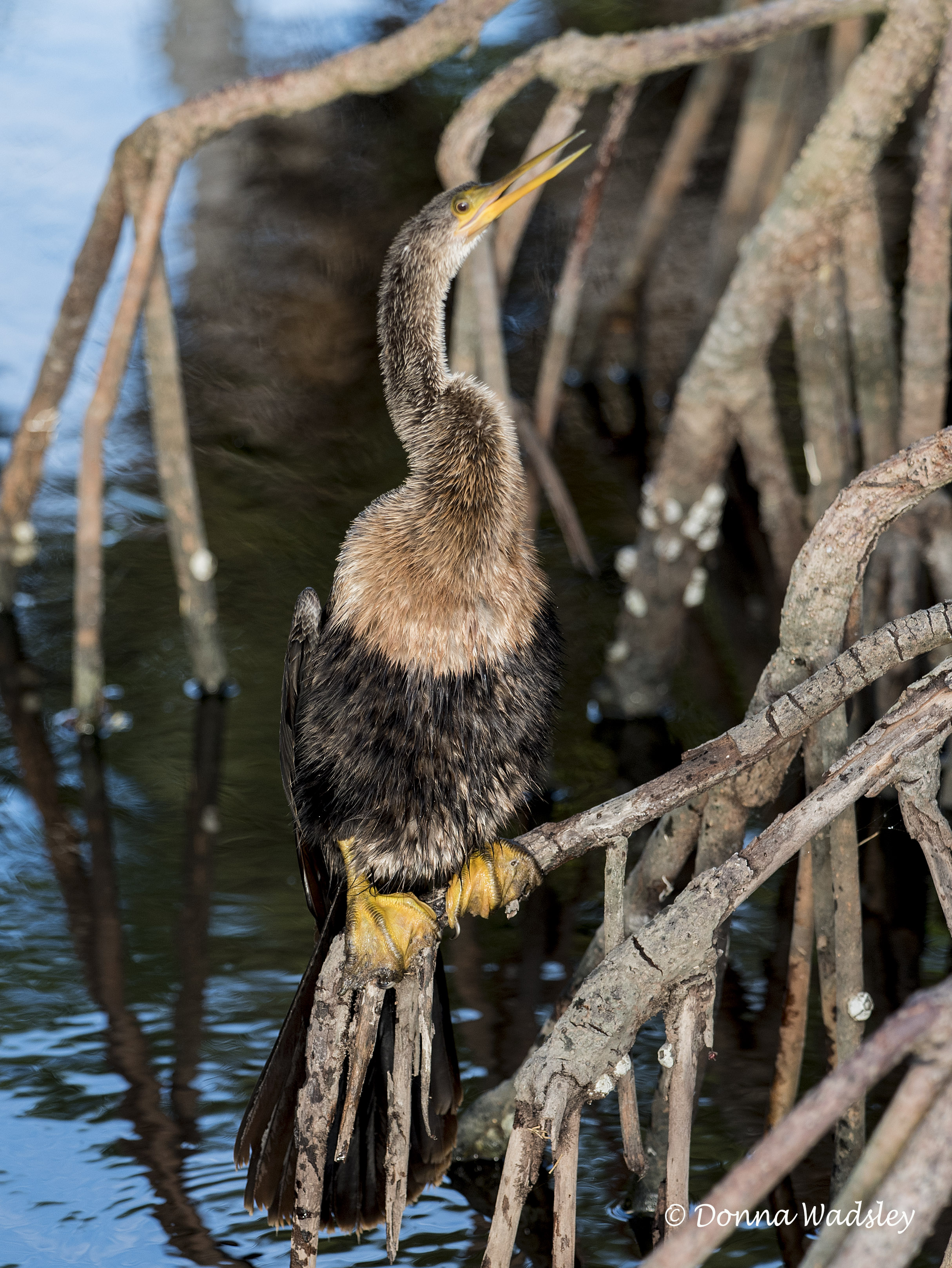
Anhinga looking happy!
.

 Bay Photos by Donna