Blue Buttons
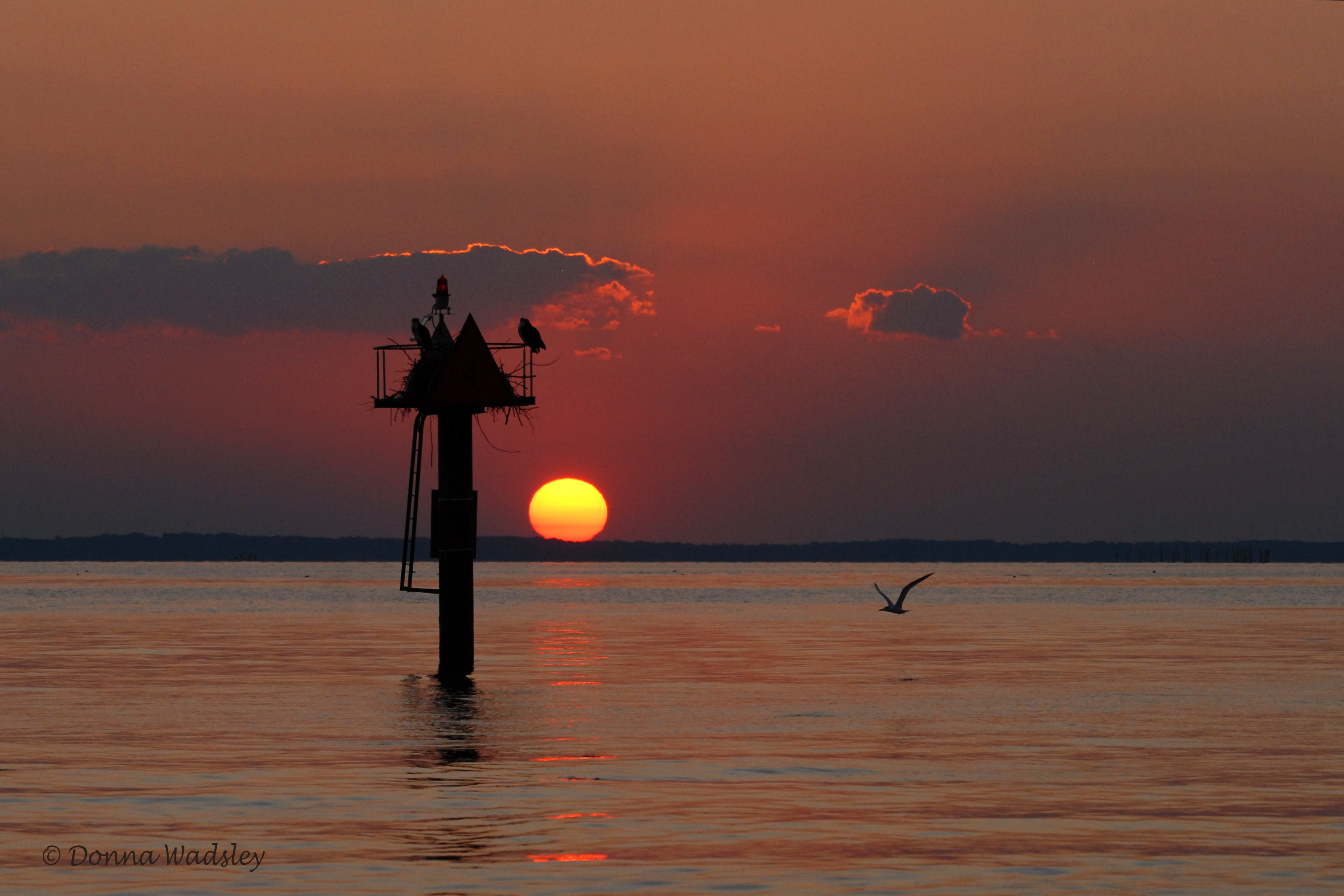
The remnants of Hurricane Delta blew across us and out to the Atlantic Ocean Sunday/Sunday night, with rain and 20-25 mph winds.
Walking the beach the next day, I saw something unusual wash up on the beach in front of me.

Blue Button
(white center is approx. one inch across)
And then another one washed up, even prettier……

Blue Button
(white center is approx. one inch across)
A few more waves and they were gone, washed back out to sea. Aren’t they gorgeous?
I had never these before and researched to ID them and learn some info.
The Blue Button is not a jellyfish but actually a species of siphonophore, a group of animals that are closely related to jellyfish. (A Portuguese Man O’ War is another siphonophore.)
A Blue Button is also known as a Blue Button Jelly, Disc Hydroid, Stinger, or Stinging Bluebottle.
Blue Buttons are found near the surface drifting in tropical and subtropical waters far out in the oceans, propelled by winds and ocean currents. During bad weather, they can be blown ashore. (That be Delta’s fault!)
A Blue Button is almost flat, with stinging strands of hydroid surrounding it’s white disc. Each strand has little branchlets off it that fatally stings its prey. To humans, they do not give a powerful sting, but more of an irritation.
Two Plover Species
This post I’m sharing photographs of two plovers.
The first three photos are of Black-bellied Plovers.
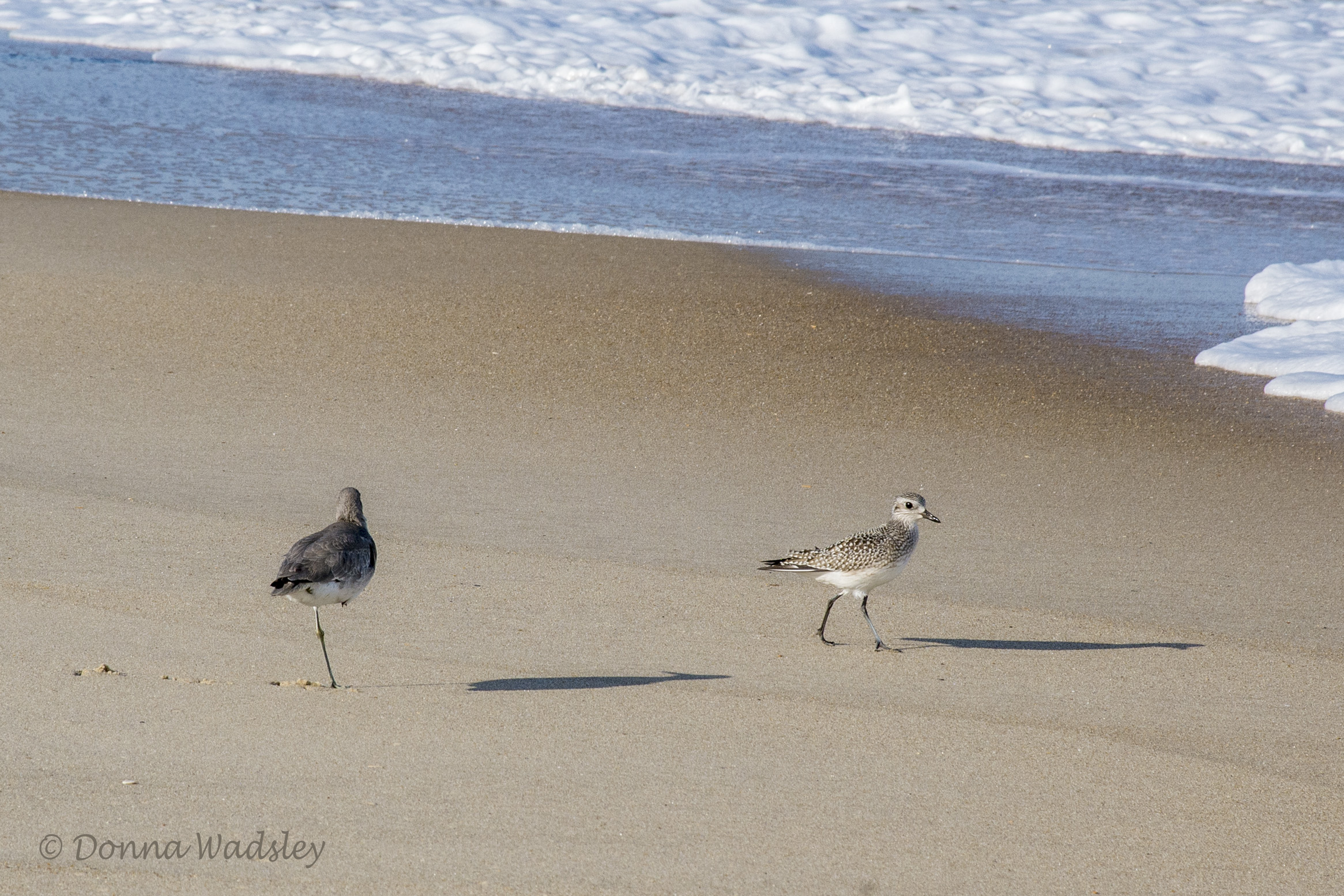
Black-bellied Plover looking at you (while a Willet refuses to)
Black-bellied Plovers are the largest and heaviest of the North American plovers. They are also the hardiest, breeding farthest north, all the way to the very top of the world.
After breeding season is over, the Black-bellied Plovers we see migrate down through Canada and the U.S. to their wintering grounds in the Caribbean and northern South America.
These here have already flown thousands of miles and still have a ways to go!
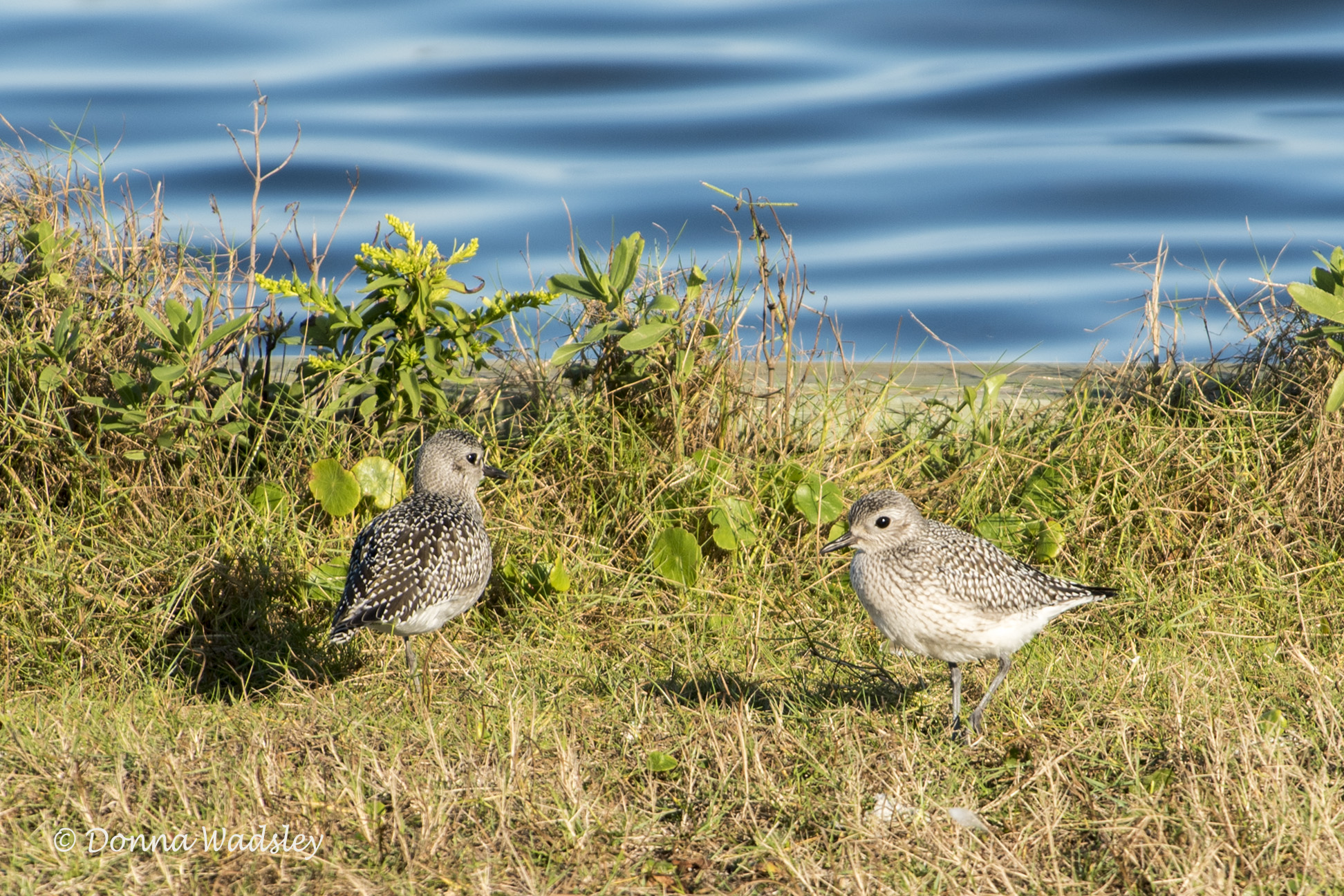
Black-bellied Plovers

Black-bellied Plovers
The next two photos are of another more familiar plover, the Killdeer.

Killdeer
Killdeer are found across much of the U.S. and Canada. Killdeer are graceful plovers common to lawns, golf courses, athletic fields, and parking lots.

Killdeer
A secret! I photographed the above Killdeer standing in a puddle of water in a marina parking lot. 😉
Northern Parula Finds A Caterpillar
All alone, slowly walking….I could hear a tap..tap..tap..tap. What is that?
I narrowed it down to the lower part of a bush, peering in with my lens.
Perched on a branch, a female Northern Parula was in possession of a tasty meal and slapping it back and forth against the branch. I couldn’t believe I heard that.
Here’s a six-photo sequence of the action before my battery stopped.
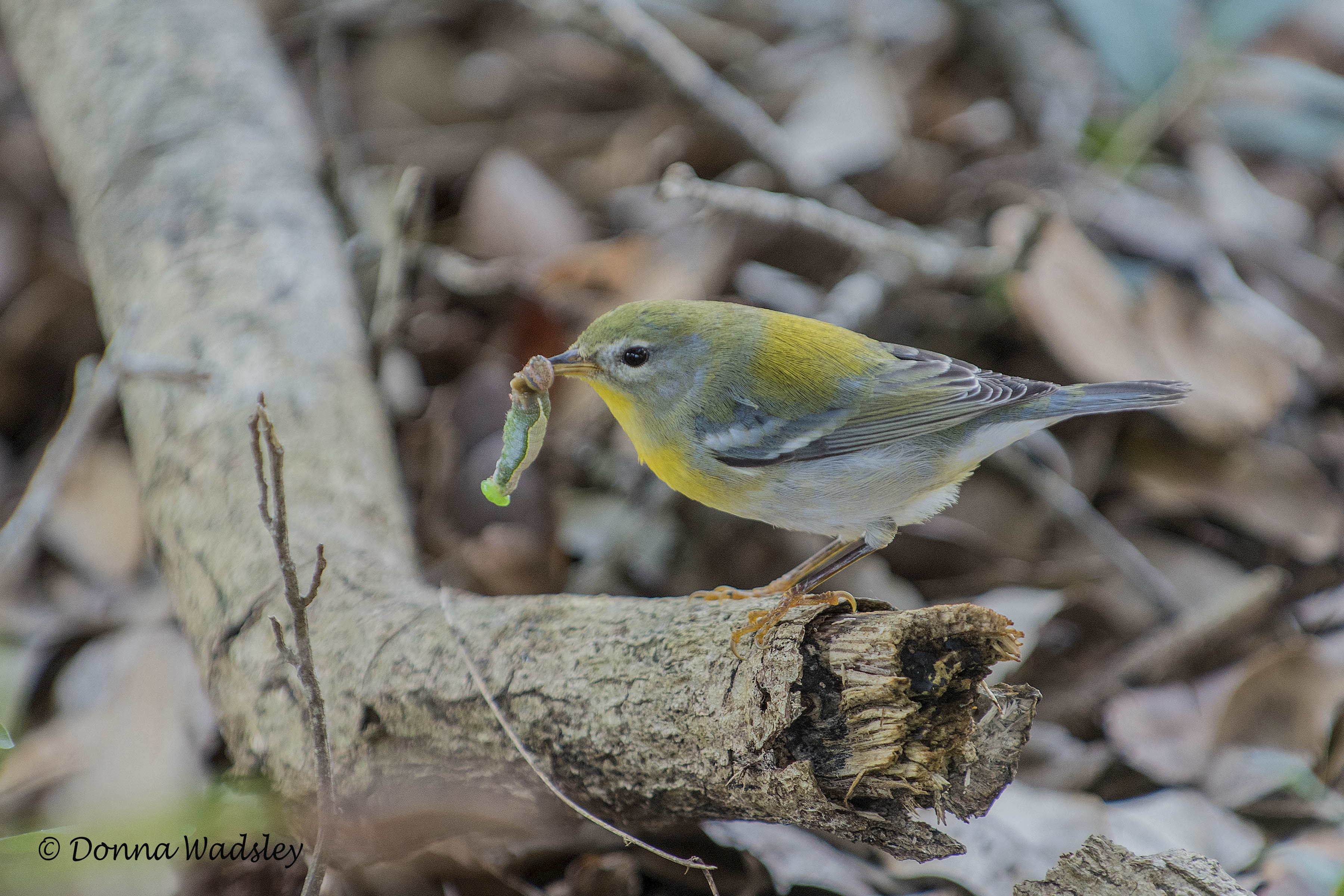
Northern Parula (female)

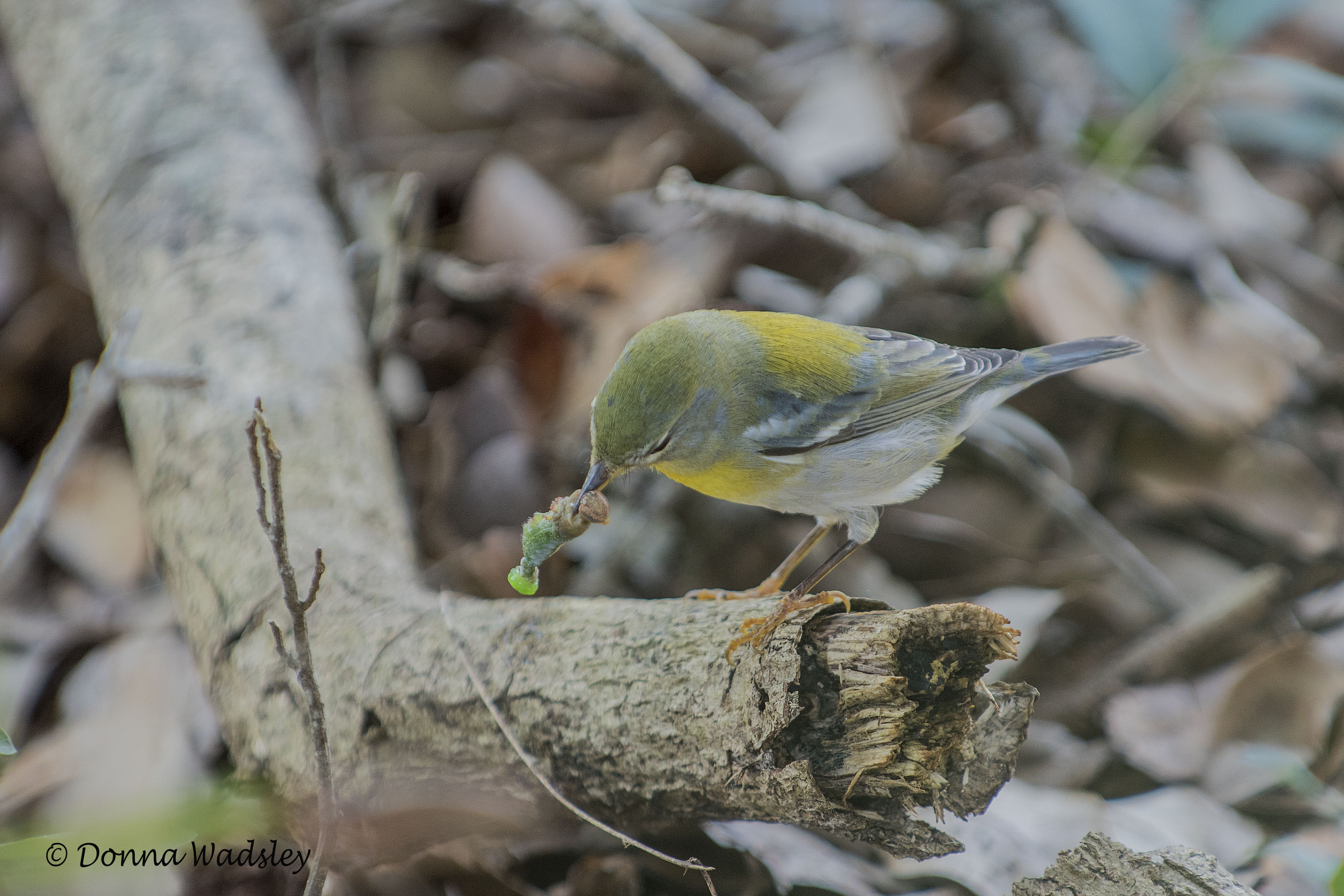
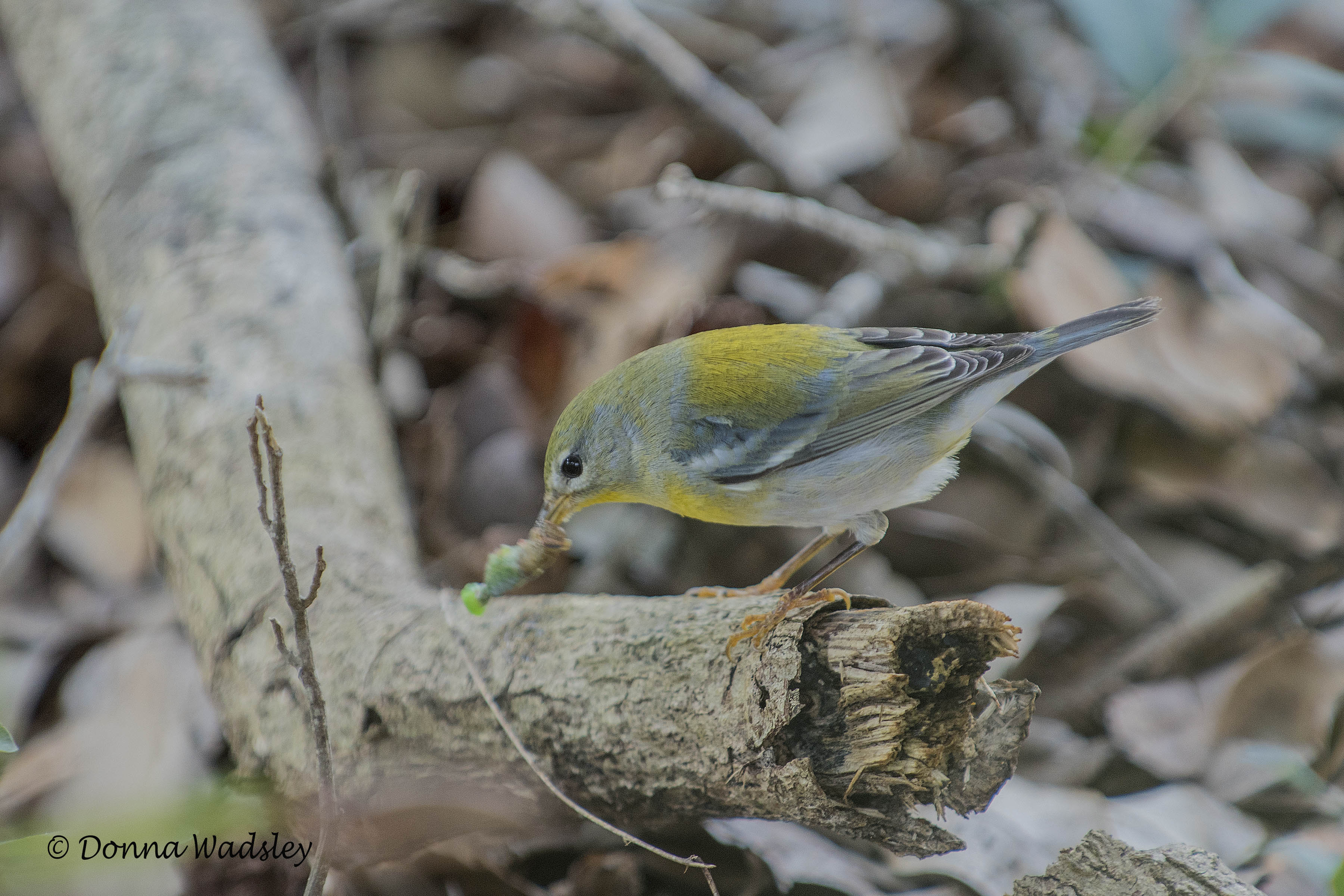
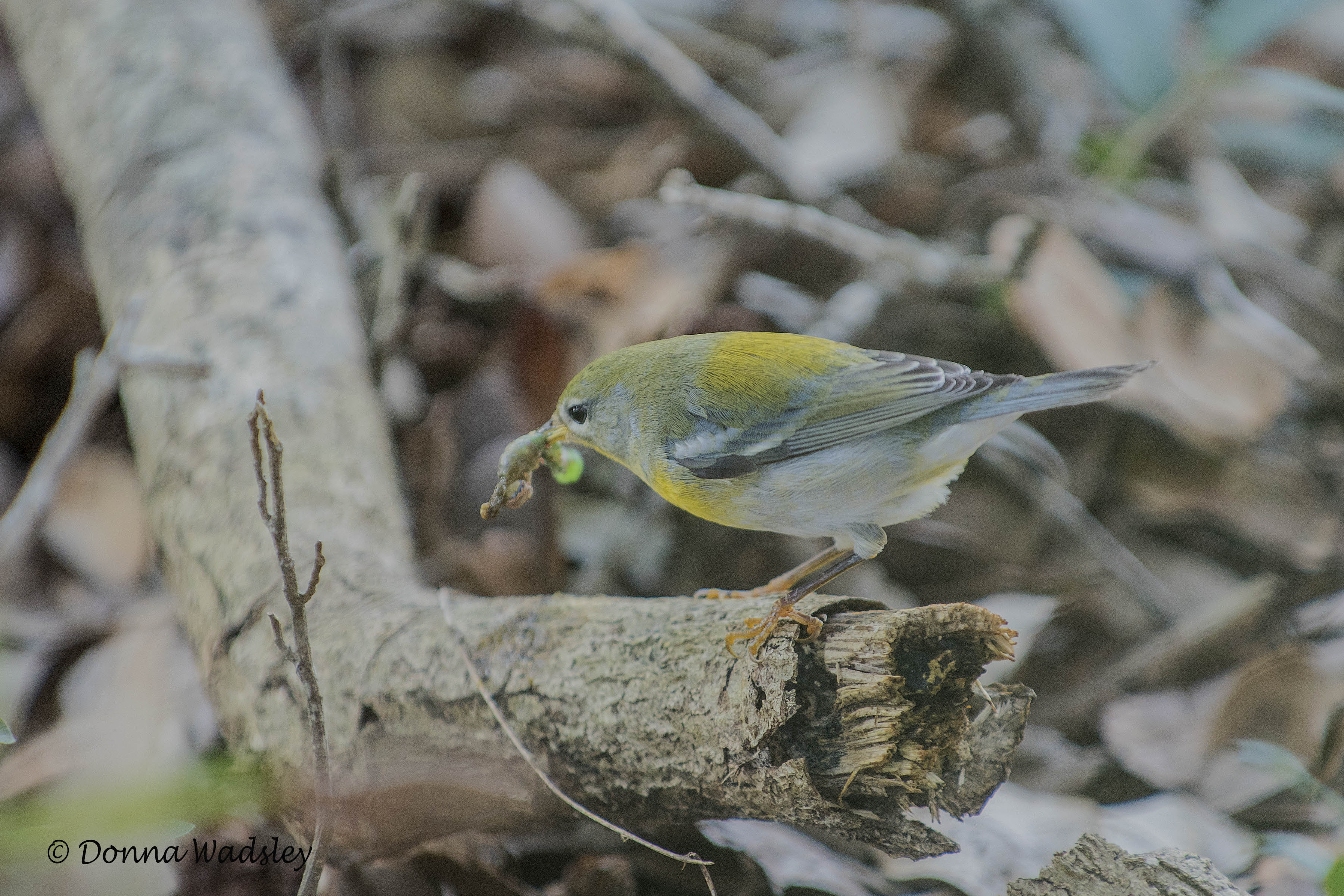

Giving my battery time to catch up, I missed the ‘down the hatch’ shot, but here are my final two with the caterpillar all but gone.

“Caterpillar All But Gone”

“Aaaack” or “Buuurp”
And just as quick, she was done and took flight to find another!
c
A Gallery Of Birds
Here’s a selection of eight more bird species captured in recent days at Pea Island NWR.

White Pelicans

Great Blue Heron

Red-winged Blackbird (male)

Northern Cardinals (male & female)

Canada Goose

Yellow-rumped Warbler
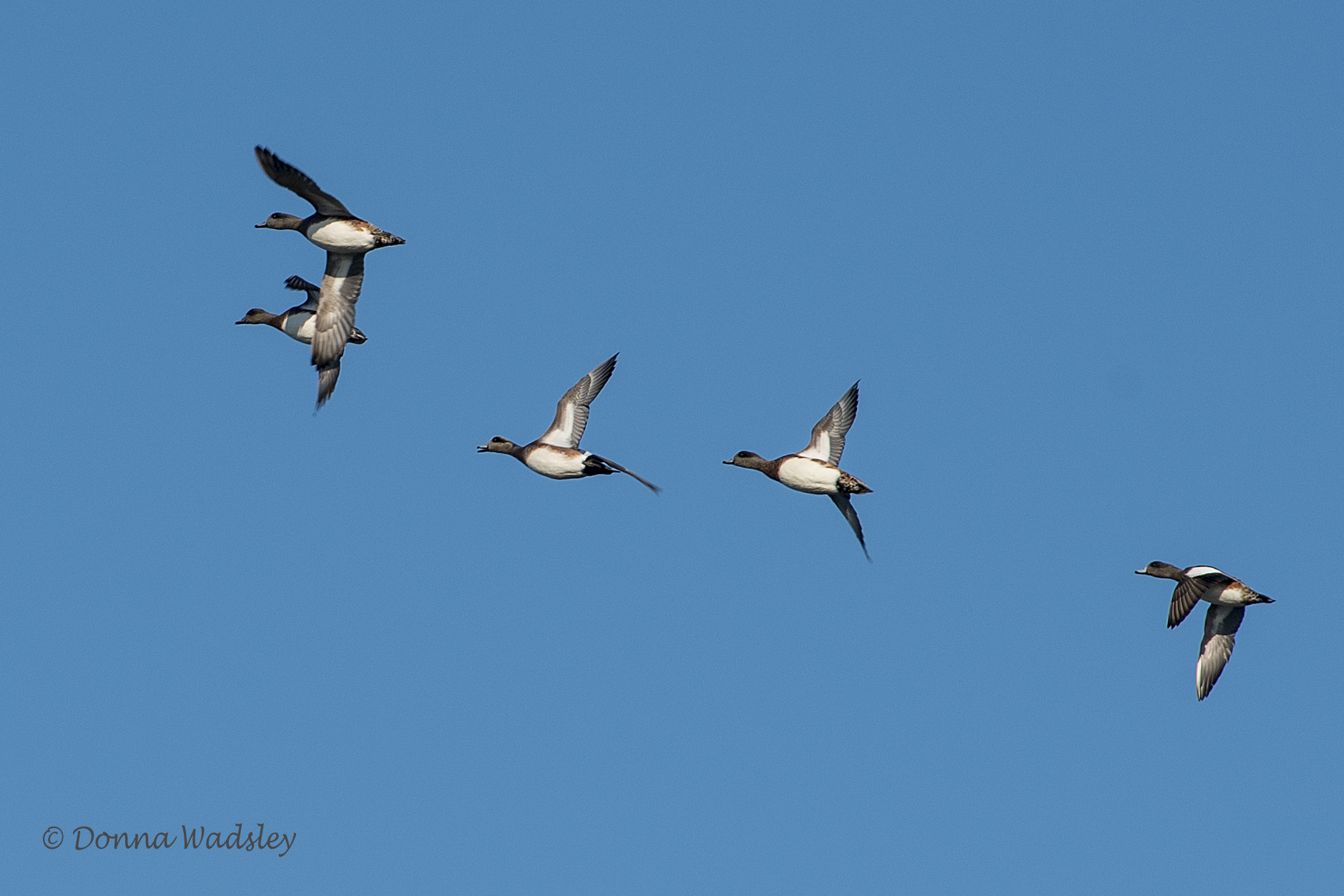
American Wigeons

Northern Mockingbird
More to come…… 🙂
A Couple of Warblers
A couple of warbler species that I spotted right in our campground, and one is another new lifer for me!
Welcome to my bird lifer list, #211 the Black-throated Blue Warbler! This is a female, and she is a beauty.
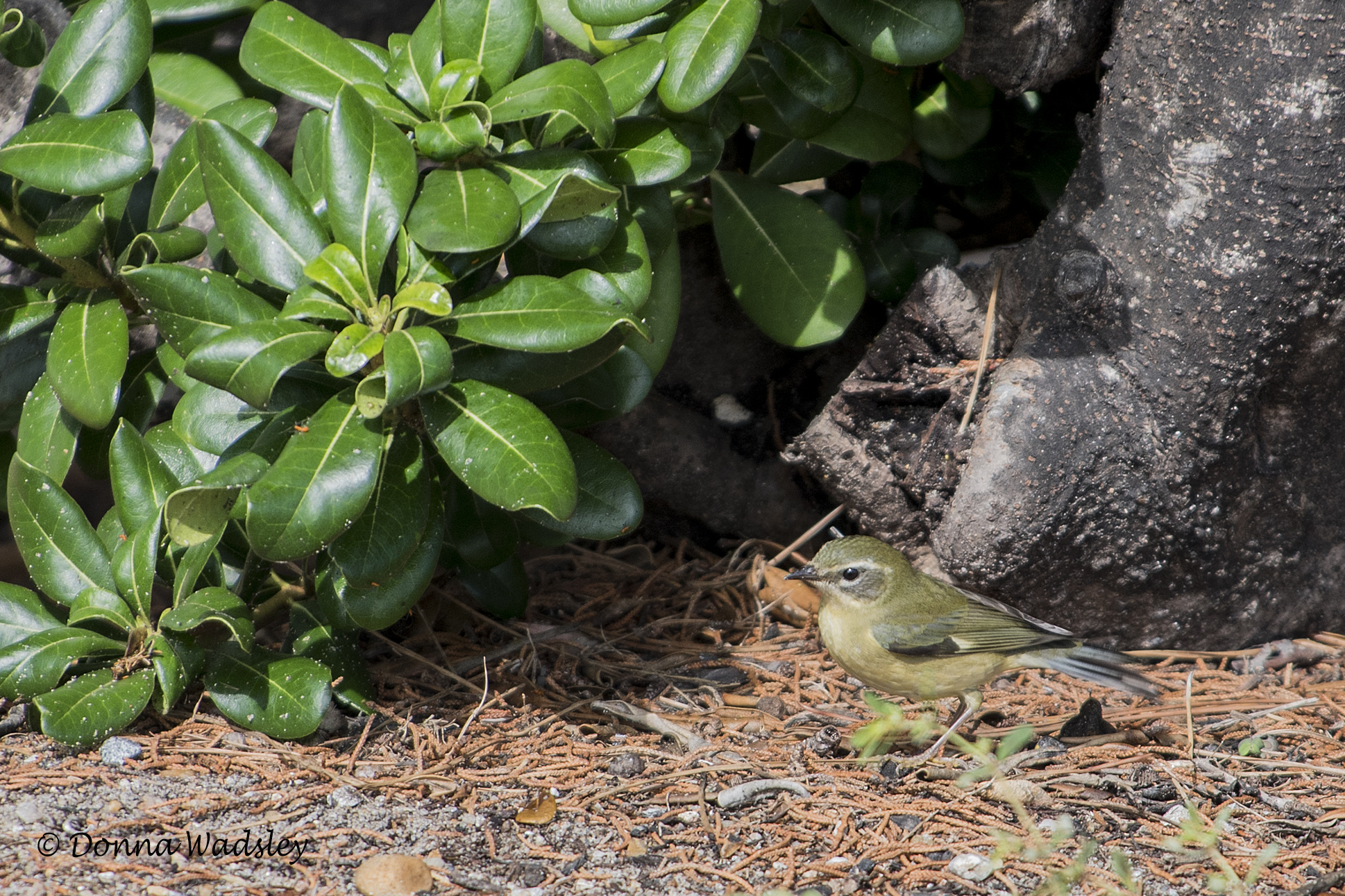
Black-throated Blue Warbler (female)
The Black-throated Blue Warbler breeds in eastern Canada, the upper northeast United States and down through the Appalachian Mountains, then migrates to the Caribbean for the winter.
The next warbler is the Yellow Warbler. I’m sharing three photos of several I watched foraging the bushes. They are either females and/or immatures. I didn’t see any adult males.

Yellow Warbler (female or immature)

Yellow Warbler (female or immature)

Yellow Warbler (female or immature)
Yellow Warblers (females and/or immatures)
Yellow Warblers are long distant migrants. They breed across central and northern North America and spend winters in Central America and northern South America.
These two species are on their way to their winter grounds!
Red-breasted Nuthatch
A common nuthatch, the Red-breasted Nuthatch is a short-distant migrant. Their northernmost populations migrate south each year within the United States, but many populations may not migrate at all.
Those Red-breasted Nuthatches that do migrate, leave as early as July and may reach their southernmost point by September or October.

Red-breasted Nuthatch

Red-breasted Nuthatch

Red-breasted Nuthatch
These were taken during the evening’s golden hour at Pea Island NWR.
It’s Been A Great (Red)Start So Far
The start of my birding in the Outer Banks has me already on cloud nine.
Not only did I see two Redstarts minutes apart, they were also both lifers for me.
I worked hard trying to stay with a female American Redstart foraging in the thicket. I thought I’d lost her and was about to give up, when she popped out of the thicket and posed for me.
Welcome to my bird lifer list, #209 American Redstart!
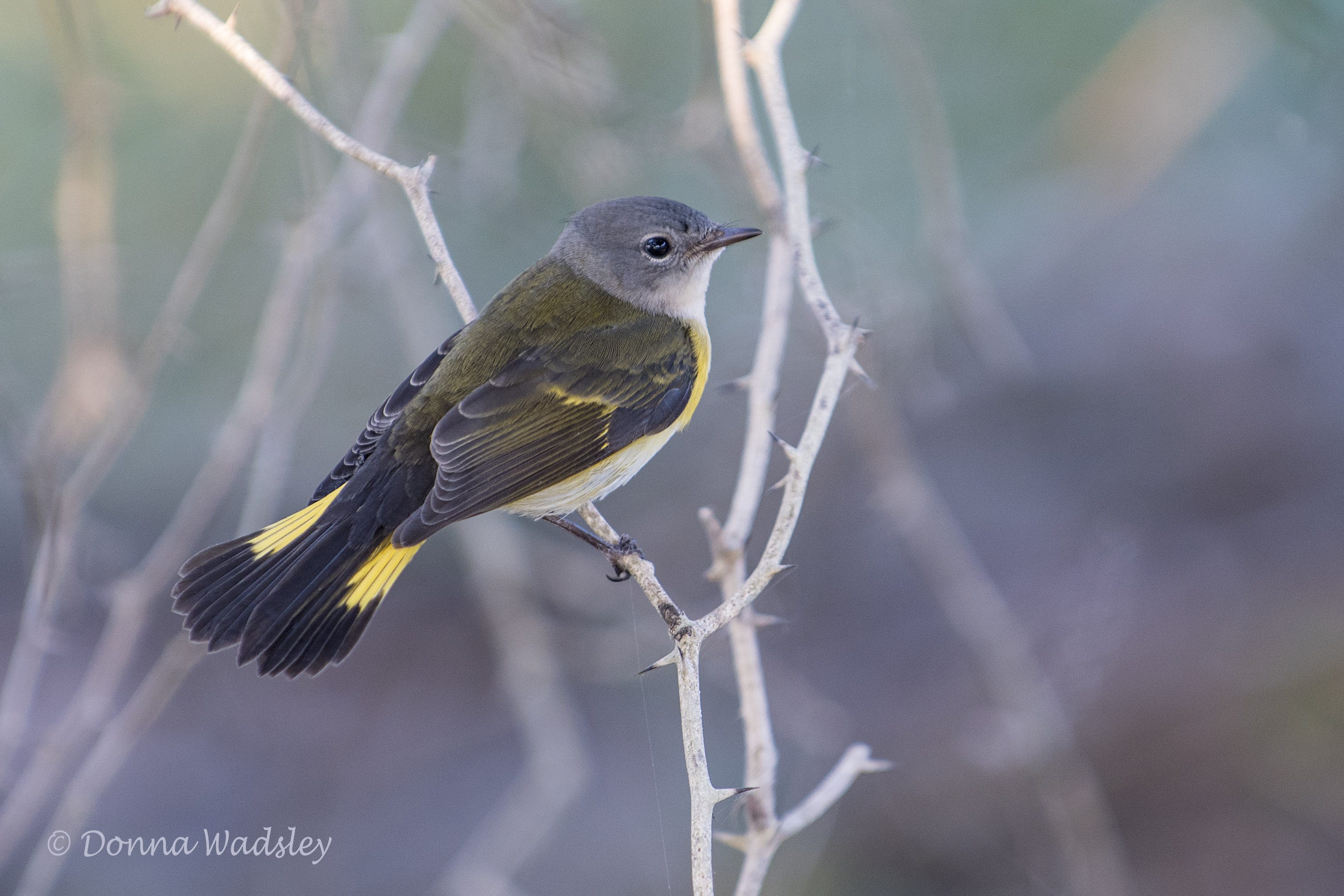
American Redstart (female)
Now let me back up a bit on my Redstart story.
Since arriving to the Outer Banks, my first place to explore for birds was at Pea Island NWR on Cape Hatteras National Seashore.
When I arrived and began walking the trail, I ran into a lady who asked if I was looking for the Redstart. I said I didn’t know what she was talking about and quickly learned a Painted Redstart was spotted just hours earlier but had since disappeared. She was hanging to see if it would come back. All the ‘other birders’ had given up and left.
What was the buzz with this bird? A bird that breeds in New Mexico, Arizona and Texas, before migrating to Mexico and Central America for the winter, the Painted Redstart would be an extremely rare sighting for North Carolina. The sighting of this lone fella had just made his species become bird #400 for the state!
Okay, so I quickly became game. 😊 I hung that area a bit, photographing other birds. After no sighting, I took off alone to seek more birds. I returned a half hour later, and the lady and three others were still looking and waiting, but no Painted Redstart.
It was then that I saw the American Redstart above. That in itself had me really excited with the new lifer. I had to laugh, the others didn’t seem so excited. But that was okay.
Minutes later walking a little further around the thickets as the others were, I saw a flash of red land on a branch. Lens on the bird to enlarge, and there he was. I shouted (I hope not too loud lol), “There he is! There he is!”
And so began an awesome 30-minute photo session of the Painted Redstart as he foraged for bugs, even flying within three feet of us. We were indeed five birders giddy over the show!
Welcome to my bird lifer list, #210 Painted Redstart!
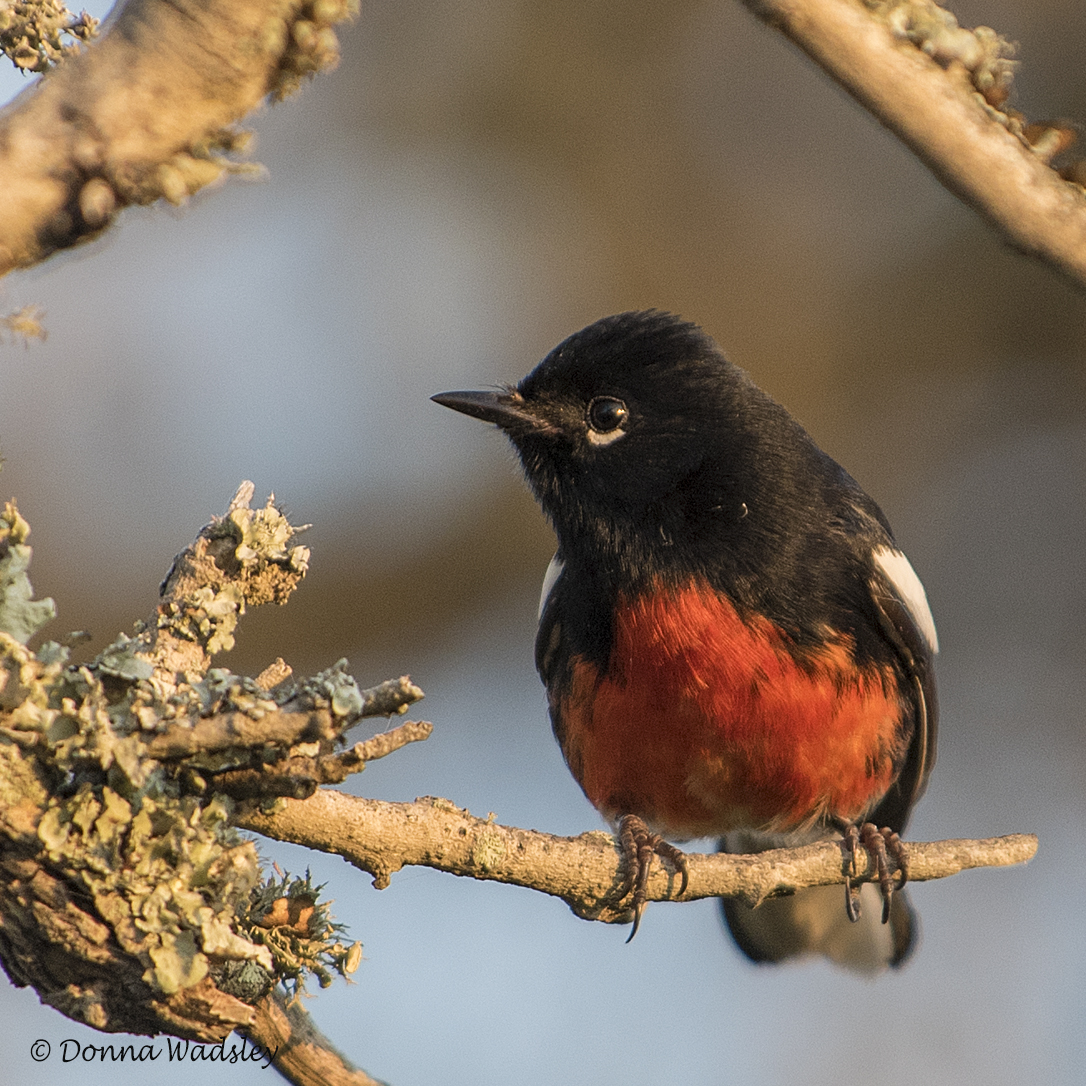
Painted Redstart (male)
I can’t help but share four more shots.


Painted Redstart (male)
What a cool, cool couple hours at Pea Island NWR.
And you can be sure, there are more birds to come….. 😊
Peregrine Falcon (Juvenile)
We’ve hit the road again for a few weeks and are now at the beautiful Outer Banks, the Atlantic Ocean barrier islands of North Carolina.
The northern half of the islands are highly populated and touristy. We opted to go down the lower half to stay on the Cape Hatteras National Seashore where it is more remote, with the ever-changing raw beauty to explore.


While setting up our campground site, I had the pleasure of capturing this gorgeous juvenile Peregrine Falcon fly overhead.

Peregrine Falcon (juvenile)
My Outer Banks birding fun has begun!
A Northern Parula and Chanterelles
My first captures of Northern Parulas were back in January in Florida’s Everglades. I had never seen this warbler in Maryland nor Delaware, although it does breed here. Well, lo and behold, I saw a colorful flash in flight while in Delaware a week ago.
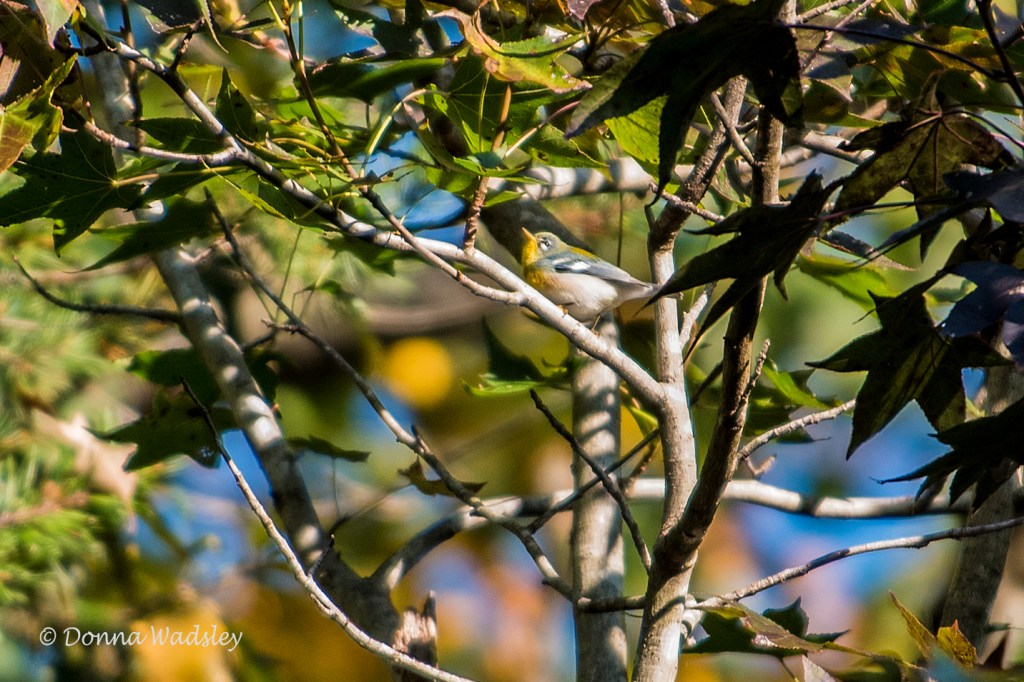
Northern Parula
The Northern Parula’s peak migration is September to mid-October; it spends the winter months in Florida’s Everglades, Mexico, Central America, and the Caribbean.
Another cool sighting were these three bright chanterelle mushrooms. Their texture and peppery flavor (some people describe as lightly fruity) makes them desirable by gourmet chefs. (I did not disturb their beauty.)


Chanterelle Mushrooms