Bella & Beau 2018: Dad Beau Is Still Assisting

(Osprey nest location:  Cambridge, Maryland, USA)

September 10, 2018

For the past week, I’ve continued to sight Dad Beau perched on one of the two towers overlooking the creek and nest platform.   But it has become increasingly difficult to keep track of the OspreyTeens.  My last sightings and photos of the two OspreyTeens together on the nest platform were on September 3rd.

_DSC0278-1 9318

OspreyTeens – September 3, 2018


_DSC0281-1 9318

OspreyTeens – September 3, 2018


For the next two days, both early in the morning and late afternoon, only one OspreyTeen was visiting the nest platform, begging towards Beau’s direction who remained perched on the towers most of the day, ignoring the cries.

An OspreyTeen letting Dad Beau on the tower know he is hungry.  (9/4/18)


_DSC0063-1 9418 756p

Dad Beau remains perched & ignores the begging OspreyTeen that evening. (9/4/18)


_DSC0090-1 9518 805a

Either Dad Beau brought the early morning fish or the OspreyTeen did so itself. (9/5/18)


_DSC0096-1 9518 908a

OspreyTeen devouring that fish! (9/5/18)


Beau’s morning and evening perches. (9/5/18)


Since September 6, I’ve not seen anyone visit the nest platform. It appears to have finished serving its purpose and is now no longer needed as a home port for this season.  Maybe, too, Dad Beau has refused to deliver any fish to it to further enforce the OspreyTeens to feed themselves.

_DSC0053-1 91018

Bella & Beau nest platform – 9/10/18
It looks the same as it did the day they arrived in March, no nesting materials!
That’s one for the records!


It’s now increasingly difficult to determine if both OspreyTeens are still here since I’m sighting only one at a time.  It seems an OspreyTeen is going to Beau now if it’s desperate to be fed.  Which does appear to be infrequent, which is good!

_DSC0067-1 9818 438pm

OspreyTeen below, begging to Beau on top of tower, September 8th late afternoon.


_DSC0073-1 9918 953am

September 9th during the morning’s pouring rain, an OspreyTeen is waiting for Beau to appear, hopefully with a fish.


Today Beau spent from early morning until almost noon perched on the tower.  There were no sightings of the OspreyTeens.  Beau did reappear on the tower during the afternoon.

My last photo of Beau on the tower, September 10th at 5:10 pm


Can I positively ID these Osprey on the towers as Beau and one of the OspreyTeens?  No.  But I am basing my guesses from Bella & Beau’s past behavior on flying to & from and using these towers every day as their perch for the last few weeks.

What a Dad!  Although Beau really wasn’t into nest building this year, I am proud of his commitment to Bella in staying behind, to finish teaching and to ensure their offspring have a chance at survival during their tough first migration.

_DSC0148-1 8418

Beau in flight.


_DSC0154-1 8418

Beau in flight with a headless fish.


A series of Beau I didn’t previously share were these images of him skimming in the creek after delivering a fish to the nest platform.

_DSC0569-1 83118

Beau preparing to skim the water.


_DSC0571-1 83118

Beau makes contact with the water, dragging his feet, cleaning those talons.


_DSC0572-1 83118

Look at that determination and drive!


_DSC0573-1 83118

Beau shaking the water from his head while preparing to lift out of the water.


_DSC0574-1 83118

Lift-out!  And feeling good!


Another series not previously shared of Beau defending his perch from an intruding Osprey on top of the crane several months’ back.

Beau defending his perch against an intruding Osprey.


As I mentioned in the recent “Osprey Migration” post, one of the major challenges Ospreys face during migration is weather, specifically hurricanes. This is true for so many wildlife species presently doing their migrations.   We now have a dangerous Category 4 hurricane barreling towards the East Coast, to make landfall possibly Thursday.  Please pray for both human life and wildlife.  There is going to be devastation for all.

In the Bella & Beau series, I’ll post again to let you know if I’ve seen Beau and any OspreyTeens since today.  Hopefully, he and all other remaining area Osprey have an instinct feeling to stay put for a while longer while the hurricane makes landfall, blows through, and diminishes.  I think it’d be safer here than several hundred miles further south. 

I also plan on doing a final Bella & Beau photo rewind post of their successful six-month season, showcasing some of the memorable and best captures of them and their beautiful offspring that I think you will enjoy.

_DSC0108-1 71518

Bella, Beau and their offspring.


_DSC0207-1 72718

The offspring that developed into healthy, beautiful OspreyTeens.


Stay tuned for the final posts in the Bella & Beau series!


(For all past posts on Bella & Beau’s 2018 season, you can click HERE.)


Other ‘Backyard’ Wildlife Residents

Besides Osprey Bella & Beau and family, as well as other birds I’ve shared, I thought I’d show some of my other ‘backyard’ wildlife residents around the creek that happened to catch my eye from my balcony.

Diamondback Terrapin turtles are everywhere and fun to capture.  I’ve taken WAY too many turtle photos, lol.

_DSC0024-1 81918

Diamondback Terrapin Turtle


_DSC0380-1 5718

Diamondback Terrapin Turtle


When not swimming around, they will find a perch to sun themselves.

_DSC0120-1 62918

Diamondback Terrapin Turtles


_DSC0026-1 62918.jpg

Diamondback Terrapin Turtle


_DSC0045-1 61518

Diamondback Terrapin Turtle


I love photographing turtles, they can be quite comical at times.

_DSC0193-1 6618

“I….can….almost….make….it….”


_DSC0203-1 6618

“Ha!  Did you doubt I would?”


We even get Snapping Turtles.

_DSC0152-1 62918

Snapping Turtle


It has been exciting to see Cownose Rays gliding just under the surface many times.

_DSC0116-1 62918

Cownose Ray


_DSC0324-1 73118

Cownose Rays


_DSC0352-1 73118

Cownose Rays


_DSC0539-1 81818

Cownose Ray


_DSC0546-1 81818

Cownose Ray


How about a muskrat?  He quickly disappeared as soon as I saw him.


Muskrat


Weeks later, I saw him again or one of his relatives.

_DSC0073-1 82018

Muskrat


And then there was this snake…..I was glad I was on my balcony.

_DSC0248-1 6818.jpg

Unidentified Snake


Trying to exit to the balcony through my slider one day, this Praying Mantis was watching me through the glass.

DSC_0761-1 82818

Praying Mantis


DSC_0767-1 82818

“Hello, may I come in?”


I’ll share a couple more faves I took of the Diamondback Terrapin turtles….

_DSC0014-1 52118

Diamondback Terrapin Turtles


_DSC0253-1 61418

“Hello there!”


I don’t think I could ever get bored being on my balcony.   🙂


The Fish That Got Away

About a month ago while watching the Osprey, a Green Heron landed on the dock below their nest platform with a fish he had just caught.

He immediately decided to swallow it.

_DSC0363-1 73118

Green Heron preparing to swallow his catch.


_DSC0368-1 73118

Green Heron working the wiggly fish.


_DSC0370-1 73118

Down the hatch!


_DSC0372-1 73118

The wiggly fish pops back out of the Green Heron’s throat.


_DSC0373-1 73118

The fish that got away!


 _DSC0374-1 73118

Splash!


_DSC0380-1 73118

“How’d that happen?”


The Green Heron just stood there bewildered.

After all that hard work catching that fish, I would be too.


Bald Eagles on the Choptank River

Wildlife and nature abounds up the quiet 71-mile Choptank River and its tributaries that feed off the Chesapeake Bay.

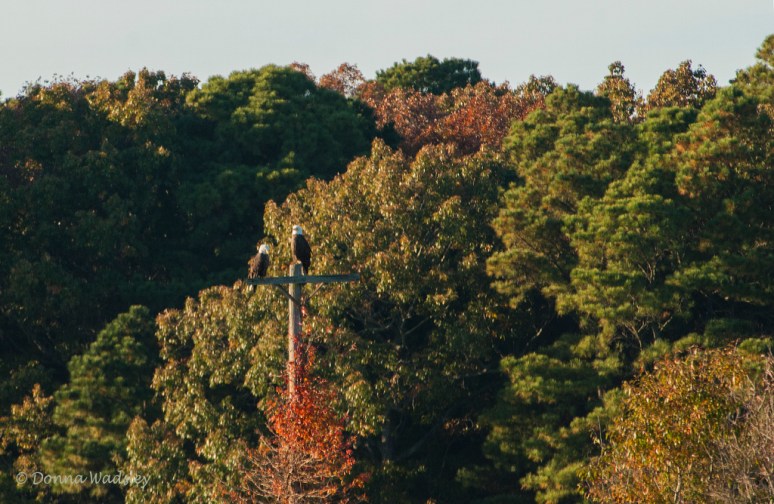
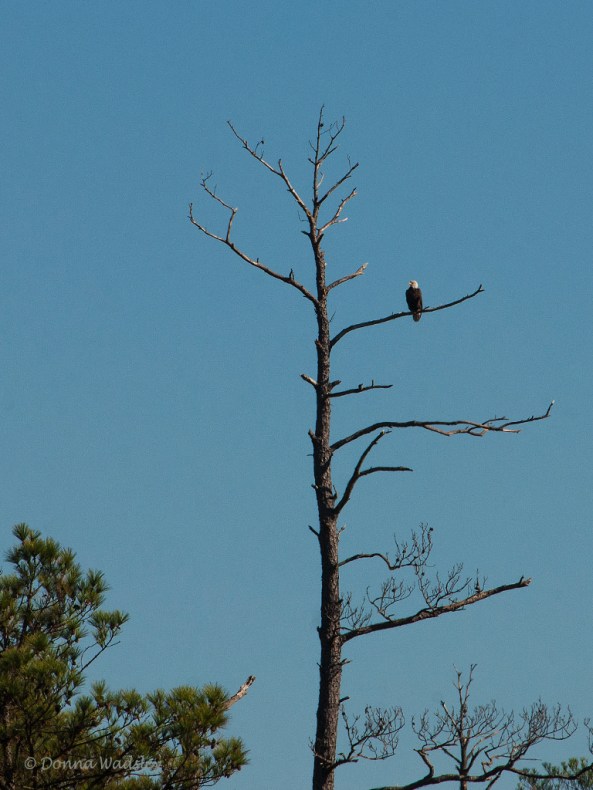
The wildlife includes Bald Eagles.  While boating up the river, we’ve seen several pairs perched along different stretches almost every time.  I’m pretty positive there are nests hiding in those trees, for me to locate later when the leaves fall.

_DSC0286-2 72018

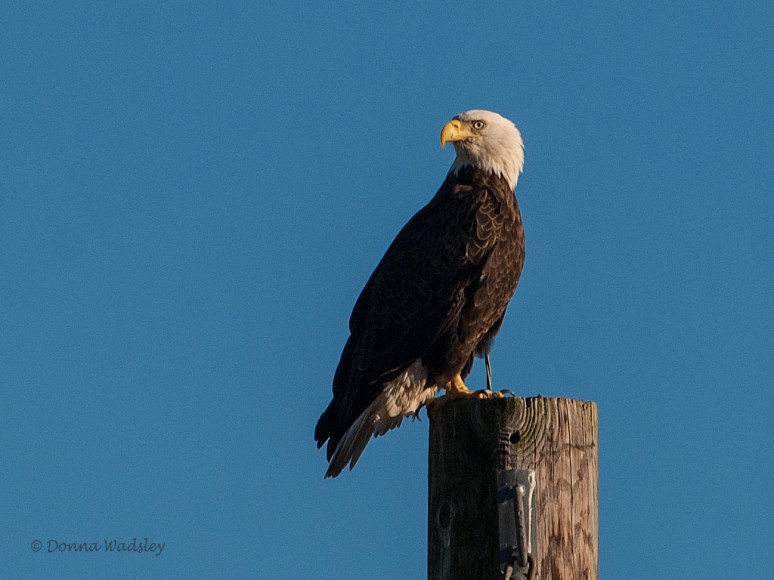
Bald Eagle


_DSC0291-1 72018

Bald Eagle


_DSC0234-1 72018

Bald Eagle


Bald Eagles are year-round residents of the Chesapeake Bay.


_DSC0369-3 71718

Young adult Bald Eagle, still attaining its white head and tail


_DSC0267-1 72018

Juvenile Bald Eagle


_DSC0268-1 72018

Juvenile Bald Eagle


_DSC0269-1 72018

Juvenile Bald Eagle


_DSC0270-1 72018

Juvenile Bald Eagle


_DSC0235-1 62518

Bald Eagle cruising by!


These were just a few of the many I’ve photographed.  I’ll share more another time!


Bella & Beau 2018: Bella Is Gone, Leaving Beau With His Talons Full

(Osprey nest location:  Cambridge, Maryland, USA)

September 3, 2018

As is customary in mid to late August with the female adult Osprey breeders in our area, Bella has left for her tropical winter vacation in South America!  Bon voyage, Bella!

_DSC0269-1 72418

Bella in flight.


My last sightings and photos of Bella were those shared in my previous post.  Unfortunately, I had to be gone most of the next day.  As soon as I returned, I kept an eye on all of her favorite perches and have not seen her since.

As a tribute to beautiful Bella and her determination, strong-will, love, and devotion to her mate, Beau, and two healthy chicks, I do have a series of photos from the past weeks I didn’t get to previously share.

_DSC0029-1 7618

Bella enroute to the nest platform with a fish.


_DSC0251-1 72418

Bella’s beautiful wings.


_DSC0131-1 61618

Bella enroute to the nest platform with another fish.


_DSC0050-1 71418

Bella departs with a fish because she is worried about an overhead intruder Osprey.


_DSC0031-1 7618

Another Bella with a fish!


_DSC0030-1 7618

Bella was a great fish provider!


_DSC0257-1 71918

Bella giving me a stare down while those talons twitch.  Yikes!


_DSC0097-1 72918

Bella enjoying her home alone after the chicks had fledged.


It was always a joy to see Bella dive and take a bath.

_DSC0272-1 6818

Bella diving for the bath.


_DSC0273-1 6818

Splash!


_DSC0281-1 6818

Splish, splash, Bella takes a bath!


_DSC0282-1 6818

Bella bathing.


_DSC0284-1 6818

Bella bathing.


_DSC0286-1 6818

Bella bathing.


_DSC0288-1 6818

After the bath is done, Bella pulls herself up out of the water.


_DSC0290-1 6818

A refreshed, clean Bella!


_DSC0072-1 71218

Bella protecting her chicks.


_DSC0316-1 72718

Bella and her two chicks.


Dad Beau is still here for possibly another 2-3 weeks, remaining until the last of the two OspreyTeens leaves for migration.  He’s left with keeping an eye on the OspreyTeens and supplying them fish until they’ve mastered the skill of catching their own fish.  I’m still repeating that as those OspreyTeens are still great at begging.  They best get to the task of learning to catch for themselves!

_DSC0155-1 8118

Beau in flight.


_DSC0082-1 83118

Beau delivering a fish at sunrise.


The OspreyTeens aggressively trying to grab the fish from Beau.


_DSC0094-1 83118

Beau saying, “Argh, Teenagers!”


_DSC0146-1 83118

Sunrise begging (and Donna’s alarm clock).


_DSC0125-1 83118

One OspreyTeen still begging while the other OspreyTeen enjoys its meal.


Sunset begging.


OspreyTeen protecting his meal while keeping watch on an overhead intruder.


Poor Beau, I see him perched on the crane or tower alone for hours.  I wonder if Beau feels a loss with Bella’s departure.  Do they communicate a goodbye before the split?  Beau will not see Bella again until March 2019.  Osprey mate for life, but they do not migrate or winter together.

_DSC0152-1 83118

Beau perched on the crane, looking off into the distance.


_DSC0145-2 83118

Beau perched on the tower.


Did you know that the Osprey species underwent a massive decline years ago and could have been wiped out of existence?  The United States Osprey populations are still slowly recovering since the 1960-70’s, when widespread use of the pesticide DDT caused the species to decline.

“Like many birds of prey, the Osprey suffered during the 60s and 70s due to the rampant use of DDT and other dangerous pesticides. Research done at Maryland’s Patuxent Research Refuge was used in Rachel Carson’s classic “Silent Spring,” and alerted citizens, scientists, and politicians to the fact that DDT was harming bird populations. Patuxent’s scientists discovered that DDT was working its way up the food chain and thinning the eggshells of raptors. Fortunately, DDT was banned in the U.S. in 1972, and thanks to the hard work of many dedicated people, birds of prey are beginning to rebound.”  Courtesy of Friends of Blackwater NWR website

Today the Chesapeake Bay region provides nesting to approximately 25% of all the Osprey in the United States.  Bella, Beau and the OspreyTeens are part of that percent!

I’m hoping the next week brings photos of the OspreyTeens arriving at the nest platform, with wet feathers and a fish in their talons.

Have a great week and wish Bella a safe journey to South America!


_DSC0108-1 6518

“I’ll see you again in March!” (Bella)


(For all the posts on Bella & Beau’s 2018 season, you can click HERE.)


Red-headed Woodpeckers at Blackwater NWR

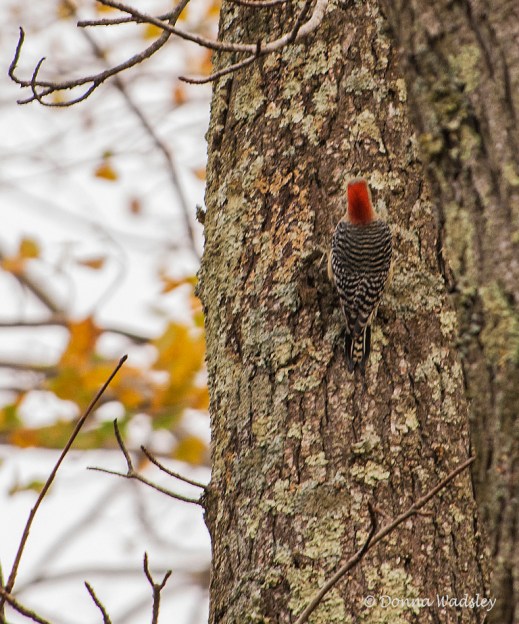
Going back through my photos taken at Blackwater National Wildlife Refuge the last few months, I found these to share of a Red-headed Woodpecker, this first one making his way up a dead tree.

_DSC0076-2 52418

Red-headed Woodpecker


Arriving at the top, he checked his surroundings.

_DSC0090-1 52418

Red-headed Woodpecker


He then  proceeded to snatch up the insects from the decaying snag.

_DSC0091-1 52418

Red-headed Woodpecker with insect


Another Red-headed Woodpecker who appears to be deep in thought.

_DSC0098-1 52018

Red-headed Woodpecker


The background in the last photo shows just a few of the numerous dead trees still standing in an area on the Wildlife Drive that is home to a large population of these beautiful birds.


Bella & Beau 2018: Bella Is Still Here

(Osprey nest location:  Cambridge, Maryland, USA)

August 28, 2018

As mentioned in Bella & Beau’s last post on Osprey migration, the female adult Osprey is the first to leave for migration; and it usually occurs during the month of August, with female breeders leaving late in the month.

It was nice to see Bella is still around as of today.  Until she leaves for her tropical winter vacation to South America, she is continuing to provide and protect her OspreyTeens.

_DSC0292-2 72418 bella

Bella in flight


As in past weeks, it continued to be hot and humid.  The OspreyTeens are out and about much of the day, flying and learning to fish, maybe even perched somewhere in the shade.  Yet they still return to the nest platform to beg for food.  And so both Bella and Beau continue to deliver fish after fish.

_DSC0015-1 82218

Beau delivers a fish to a hungry OspreyTeen.


Beau quickly left the nest while the OspreyTeen checks out its meal.


The next two photos with both OspreyTeens eating on the nest platform are getting more rare.


OspreyTeens briefly together, sharing the platform with a fish delivery each.


Just as quick as a second OspreyTeen gets a meal delivered, one of them will leave the platform and head over to a telephone pole across the creek to eat alone.  No fighting or sharing any more!


OspreyTeen leaving the nest platform with its meal.


Twice in the last few days I’ve seen Bella bringing a fish to the nest platform where an OspreyTeen already had one from Beau.

_DSC0067-1 82218

Bella sees the OspreyTeen has a fish and does a fly-by and heads over to the other OspreyTeen on the telephone pole.


_DSC0070-1 82218

Bella goes and finds the second OspreyTeen also has a fish.


Bella returns to the platform.  Hmmm….neither OspreyTeen needs a fish meal from her.


So Bella took the fish she had and went to the crane and ate it herself.


Here’s the other attempt with Bella trying to deliver a fish.  The OspreyTeen on the platform had one already, so Bella flies to the second OspreyTeen on the telephone pole, where she finds it has one too.


Another attempt by Bella trying to give one of her OspreyTeens a meal.  Neither is in need of a meal so Bella flies up past Beau on the crane and into the tree behind him where I’m sure she devoured the fish herself.


I took photos throughout today of parents, Bella & Beau, perched on the tower, keeping an eye on the empty, quiet nest platform.  They had to love the quietness!


Bella & Beau perched most of the day on tower, overlooking their nest platform.


It wasn’t until late afternoon when an OspreyTeen arrived at the nest.  Shortly thereafter, the second OspreyTeen arrived, and this one was wet.  No sooner than it landed, it began to beg quite loud.  I wondered if it had been out trying to catch a fish but was unsuccessful and gave up.  The first OspreyTeen joined in with chorus.


Hungry OspreyTeens


Bella & Beau stayed perched on the tower ignoring the cries, but not for long.  After only five minutes one of the parents took off, I’m guessing to go catch a fish.  I had to leave home and wasn’t able to wait for a fish delivery that I am sure came shortly thereafter.

_DSC0083-1 82818

Either Bella or Beau in flight from the tower to go catch a fish for the OspreyTeens.


With Bella’s fish deliveries becoming less needed by the OspreyTeens (whether it’s because Beau is keeping pace and/or the OspreyTeens are starting to fish for themselves), it makes sense this might be one of the signs the female adult Osprey gets that it’s time for her to migrate.  Her care and duties are no longer needed.

Here’s my latest (and maybe final shot) of Bella with her precious babies taken this past week.  Doesn’t it look as if Bella is talking to her chicks?  Wonder what she’s saying?

_DSC0102-1 82018 (2)

Bella having a talk with her chicks before she leaves for migration.


We’ll see what the next week brings with any sightings of Bella and the rest of her family…..


(For all the posts on Bella & Beau’s 2018 season, you can click HERE.)


Bella & Beau 2018: Osprey Migration

(Osprey nest location:  Cambridge, Maryland, USA)

August 21, 2018

As is usual with our Chesapeake Bay Osprey, the adult female Osprey is the first to migrate, leaving during the month of August, with nonbreeders leaving sooner and breeders leaving later in the month.  Bella’s final days with Cambridge are numbered.  My goal is to keep an eye out for Bella when I can to know whether she is still around.

I actually saw Bella, Beau and both OspreyTeens all at the same time shortly after 7 pm today.  She is still busy chasing intruders away from the nest platform….

_DSC0306-1 81518

Bella pursuing a Turkey Vulture flying around the nest platform (and out of my shot).


_DSC0308-1 81518

Bella chasing a Turkey Vulture away from the nest platform.


_DSC0312-1 81518

Bella has her talons extended as she neared the Turkey Vulture and they disappeared behind the trees.  I hope the Turkey Vulture is okay!


….and delivering fish to begging OspreyTeens on the nest platform.  In this next series, the other OspreyTeen already has a fish when Bella drops in.

Bella drops in with a fish and tries to give it to the begging OspreyTeen.


Surprisingly, Bella decides to not release the fish and instead feed the OspreyTeen.


The male Osprey will stay on for up to another month after the female leaves to continue to assist the chicks with mastering their fishing skills and feed them as needed. Once the fishing skills are acquired, each Osprey chick will get an instinct to leave and will go.  Once the last chick has left, the adult male’s final duties are done, and he will head south as well.

There is still a lot of begging from the OspreyTeens while perched on the nest platform, you should hear the commotion at sunrise now.  I no longer need to set our alarm clock.  Beau also has been keeping up with fish deliveries.  To date, I have not seen a wet OspreyTeen arriving or eating a fish, a sign it might have caught it itself.


Beau delivering a fish to an aggressive OspreyTeen.


An OspreyTeen spending over 20 minutes watching the water below, seeing small fish perhaps?


The OspreyTeens are still actively flying around, chasing each other for fun, and chasing the gulls.  They still leave other intruders to Bella & Beau.

_DSC0005-1 82118

Terrible photo of OspreyTeen after a gull today.


Just days ago, one of the OspreyTeens left the nest platform and swooped down to the water (to my horror!) at precious little Cassie Canvasback.  I screamed, “NOOOOO, that’s Cassie!”

Cassie dove under the water and popped back up while the OspreyTeen turned and flew off (maybe it heard my scream, lol).  Cassie looked shaken and quickly swam to the safety of the docks.  My photos show how shaken I was with the poor shots, lol.

First time I got mad at one of the Osprey.  😉


So where do Osprey migrate?

U.S. Northeast/Chesapeake Bay Osprey – migrate to South America, some to the Caribbean
U.S. Midwestern Osprey – migrate to Mexico, Central & South America, some to the Caribbean
U.S. Northwest Osprey – migrate to south Texas, Mexico and Central America
Australasian Ospreys – most do not tend to migrate
Europe and northern Asia – migrate to Africa, India and southeast Asia

In the U.S., there are scattered numbers of Osprey along the Pacific coast of Washington, Oregon, and California, as well as Arizona that do not migrate, nor do the Osprey along the entire Gulf Coast, Florida, and the Atlantic coast of Georgia, South Carolina, North Carolina, and Virginia.

Migrating adult Osprey will usually return to their previous wintering grounds.  They will typically fly alone, although there have been flock sightings of up to 92 Osprey in the Cuba and Haiti regions.  Osprey will fly day and night, instinctively following their repeated migration routes, stopping to fish, eat, and rest as needed and if they can.

Unlike many raptors, Ospreys do not use updrafts and thermals to fly.  It is thought that Osprey use a variety of techniques for navigation, including the stars and the changes in the earth’s magnetic field.  Their average distance per day ranges from approximately 60 to 235 miles/day (95 to 380 km/day).

As with Bella & Beau and the OspreyTeens, the U.S. Northeast Osprey will inevitably be making 12+ hour-long flights at night over water to South America, which is possible because of the Osprey’s wing morphology and wing-loading characteristics.

Osprey chicks’ first migration is tricky.  They sometimes wander in wrong directions, hang out in areas too long, and can even get lost.  These mistakes can be detrimental.  The mission is to get to the Caribbean or South America and hang out there for another year and a half, then returning usually back to their birth area, ready to find a mate and begin their adult breeding lives.

Unfortunately, the survival rate of an Osprey chick’s first migration is less than 50%.  If they do survive and reach 3+ years old, they have an increased 80-90% survival rate.  Alan Poole summarized this as:  “On average, out of 100 young fledged in any year, 37 will be alive 4 years after fledging, 17 eight years after, and only 6–8 twelve years after.”

On a happier note, the following is a successful, amazing recount of a 2008’s Osprey chick’s first migration journey, learned through data obtained from a small, lightweight backpack containing a satellite tracking device (GPS) that was attached to her back.

“On a clear morning in early September 2008, a three-month-old female Osprey named Penelope pushed off from Martha’s Vineyard, Massachusetts, and flew, alone, 2,700 miles to French Guiana in 13 days.  She touched down in coastal Maryland and North Carolina for three days, lazed along the Bahamas for four, then blew through the Dominican Republic in 29 hours. At dusk she launched out over the Caribbean, flying all night and the next day to a tiny island off the coast of Venezuela. A week later she was exploring rainforest rivers in French Guiana, her home for the next 18 months.”  Written by Alan Poole, Osprey expert

Here’s a map showing Penelope’s first migration journey from Massachusetts to French Guiana, South America, in 13 days.  Amazing!

OspreyMap

Copyright © Cornell University, The Cornell Lab of Ornithology All About Birds


Today, there are many groups around the world involved with tracking Osprey, using banding and satellite backpacks, gaining data to help focus on conservation efforts and migrational differences within their species.

Now back to a few more images of Bella, Beau, and those wonderful OspreyTeens while they are all still here with us to enjoy!


_DSC0112-2 81418 beau

Beau in flight


_DSC0160-1 81418

Bella in flight


_DSC0167-1 81818

Bella and her OspreyTeens


_DSC0089-1 8418

Beautiful OspreyTeen wings


OspreyTeen begging because it doesn’t have a fish.  A few minutes later another fish was delivered.


_DSC0025-1 8618

OspreyTeen home alone


_DSC0102-1 82018

“Sorry, but you look delicious!”


_DSC0172-1 81418

OspreyTeen’s defense stance, protecting it’s nest platform.


_DSC0173-1 81418

OspreyTeen getting a louder, as an intruder flies overhead.


_DSC0174-1 81418

OspreyTeen staying with eye-contact on the intruder, and louder still.  The intruder flew off.


_DSC0163-1 82118

“Who’s leaning, us or you?”


For an Osprey to survive their migration’s physical and mental challenges of extreme weather, crossing large bodies of water, finding food, avoiding predators, AND not get shot by fish-farmers seems like a small miracle.

Maybe when you see an Osprey return next Spring (usually March), a smile will cross your face, knowing the miracle of migration you are witnessing.  🙂

Fingers crossed Bella is here with us a few more weeks!


(For all the posts on Bella & Beau’s 2018 season, you can click HERE.)


A Black-crowned Night Heron in the Morning

With a cup of coffee alongside my camera, the quiet early mornings are a favorite time on my balcony, watching the antics of Osprey Bella & Beau and their chicks as they start their day, while the creek itself begins to awaken with activity.  You know me, I also keep a keen eye open, never knowing what else might appear.

_DSC0156-1 73118

Black-crowned Night Heron (adult)


On one of those cloudy mornings a couple weeks ago, I was pleased with an appearance by a Black-crowned Night Heron walking along the dock, stalking the waters that were well below.

_DSC0174-1 73118

Black-crowned Night Heron (adult)


True to its name, the Black-crowned Night Heron normally feeds between evening and early morning.

_DSC0179-1 73118

Black-crowned Night Heron (adult)


I wasn’t sure how the Black-crowned Night Heron thought he was going to reach the water if he did see something to snatch, so I stayed with the him to see what would happen.

Nothing happened, of course.  After a few more minutes, he suddenly took flight.

_DSC0181-1 73118

Black-crowned Night Heron in flight


_DSC0182-1 73118

Black-crowned Night Heron in flight


_DSC0183-1 73118

Black-crowned Night Heron in flight


This time he was smart.  The Black-crowned Night Heron landed underneath another dock where fishing opportunities had to be much better than on top.

I could no longer see him but I wished him success!


Bella & Beau 2018: The Nest Platform is Still Home Base

(Osprey nest location:  Cambridge, Maryland, USA)

August 12, 2018

Bella & Beau’s two OspreyTeens have been another week ‘on the wing’, mastering their flight maneuvers, water skimming and lift-outs, and disappearing for long periods of time, most likely out exploring the open waters of the Choptank River and Chesapeake Bay, observing and learning this wide-open new world to them.

_DSC0056-1 8218

OspreyTeen (chick) in flight.


I’ve even seen the OspreyTeens practicing by chasing each other.  Practice makes perfect!

The OspreyTeens are also probably getting fishing lessons from Bella & Beau, who still stay nearby and follow their wandering chicks.

_DSC0019-1 8618

Bella perched close by the nest platform, keeping an eye on the OspreyTeens.


To date, I have not seen an OspreyTeen return to the nest platform or a nearby perch with a fish.  Both Bella & Beau are still delivering fish to the nest platform, usually to find one if not both OspreyTeens waiting.

_DSC0113-1 8718

Bella bringing in the early morning breakfast to two hungry chicks.


_DSC0124-1 8718

Both OspreyTeens patiently wait to see who is fed first as Bella lands on the perch.


Even in this past week’s heavy rain, the OspreyTeens waited for food at home base.

OspreyTeens waiting for a parent to bring them food in the heavy rain.


Protecting the OspreyTeens, nest platform, and their surrounding territory has never ceased for Bella and Beau.  Although not mentioned much in the most recent posts, there has still been constant chases and attacks on intruders who enter the nest platform territory.

Bella & Beau’s list still includes other Osprey….

Bella chasing another Osprey who flew too close to the nest platform.


Eagles…..

Beau in pursuit of a Bald Eagle passing through the area.


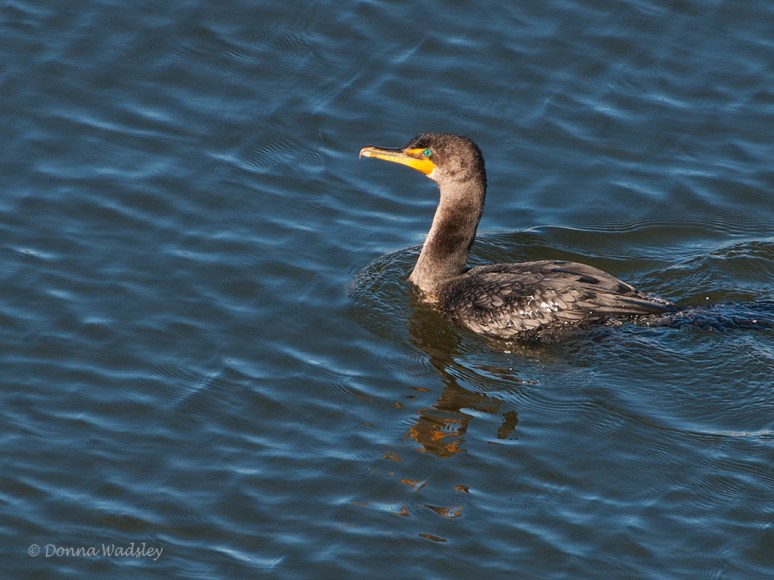
Double-crested Cormorants…..


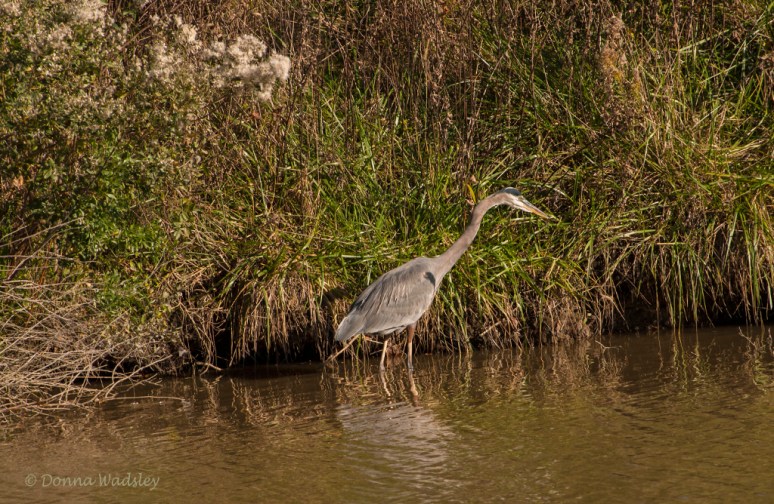
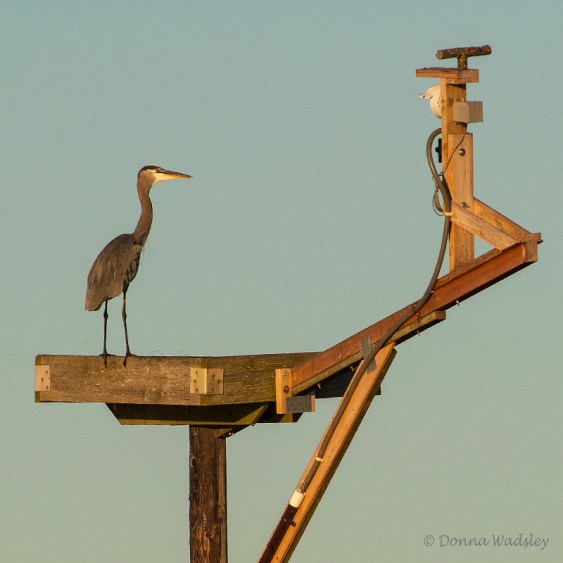
and Great Blue Herons.

Bella chasing and attacking a Great Blue Heron.


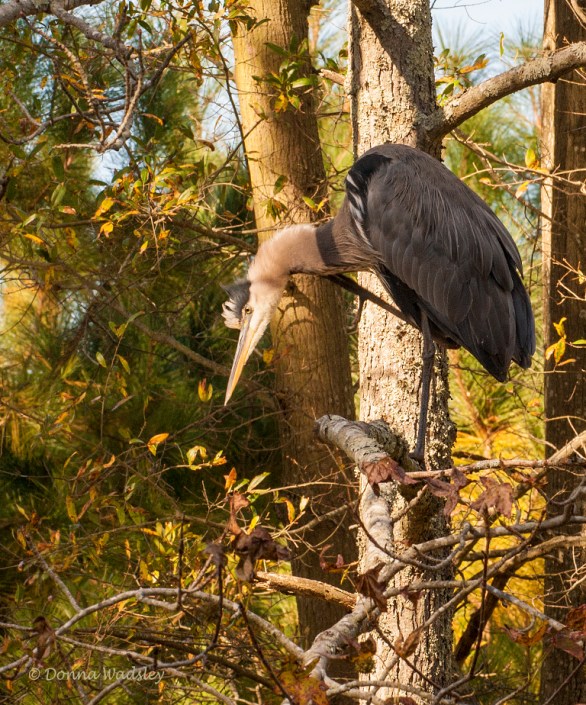
Another day, another Bella attack on a Great Blue Heron.  This is just 4 of 27 swoop attacks I photographed.  This ‘attack’ lasted seven minutes before the Great Blue Heron gave up his perch and flew away.


A Great Blue Heron quite agitated by Bella’s attack.


I’ve even noticed recently that warning calls are sent out to Vultures that pass over, which is unusual.

The OspreyTeens are still practicing the need to protect themselves as well, but I’m still seeing only gull chases.


The OspreyTeens do keep their eye on overhead Osprey and the Great Blue Herons and Cormorants below them but leave that scare attack to Bella & Beau for now.

_DSC0054-2 71618

Bella alarming at overhead Vultures but doesn’t pursue a chase.


If an OspreyTeen belly isn’t hungry, the nest platform sits empty most of the time now.  On occasion Bella herself will perch on the home she established, enjoying the quiet solitude.

_DSC0165-1 8718

Bella “home alone”.


September is quickly nearing, which means Bella, Beau, and the OspreyTeens will soon get their instinct to fly south, each alone, as far as Central or South America for the winter.

I’ll discuss more in detail about this upcoming migration in my next Bella & Beau series post.

In the meantime, let’s hope the OspreyTeens master their fishing skills!

(For all the posts on Bella & Beau’s 2018 season, you can click HERE.)