
Loons Times Two and Razorbills
I got to do a little birding during a recent visit to Ocean City, Maryland. There were about a dozen or so Common Loons quite busy diving for food at the Inlet. I got lucky that a few came close enough for me to get some close-ups.
 Common Loon
 Common Loon
 Common Loon
A gentlemen with an exceptional scope was watching me photograph the Common Loons and came over to ask if I saw the lone Red-throated Loon out in the distance. I hadn’t and was quite thankful as it was a lifer for me! Of course, I took some photos, all the while hoping he’d come nearer. He eventually surfaced close enough for me to snap a few close-ups.

Red-throated Loon
The gentleman was also excited to show me a rare sighting of a pair of Razorbills out in the distance at the point of the Inlet’s jetty. Wow, another lifer! Here’s where we all say, “Now if only I had had a bigger lens!” Both heavily cropped and exposure-edited to share with you, and still not the greatest, but I did see them through the gentleman’s scope for confirmation.
 Razorbills
Razorbills are Artic diving birds, wintering only as far south as Virginia. I felt extremely lucky to see this rare sighting.
And boy, was I ever thankful to have met this gentleman!
Northern Pintails
Thank you everyone for the congrats and well wishes on my last post, I am still on cloud nine! 🙂
Now back to birds!
Another one of my top favorite birds is the Northern Pintail. I love the male’s gorgeous, distinct browns, black, and white contrasts, and that long tail. I was super-excited when I saw a large number of them at my Bombay Hook NWR visit last month. Many were off in the distance, but a few hung close to the shorelines along the wildlife drive.
 Male and Female Northern Pintail
I had no idea they could stretch their neck as much as this male did. He stayed in this position for a while, keeping his eye on something off in the distance. I imagine he was looking out for his gal and the other Pintails hiding in the grasses.

It was at this Bombay Hook visit that I photographed my best Northern Pintails in flight to date. The skies were beautiful and this pair flew right past me. I was able to stay with them and fire off eight shots, here’s two of them.
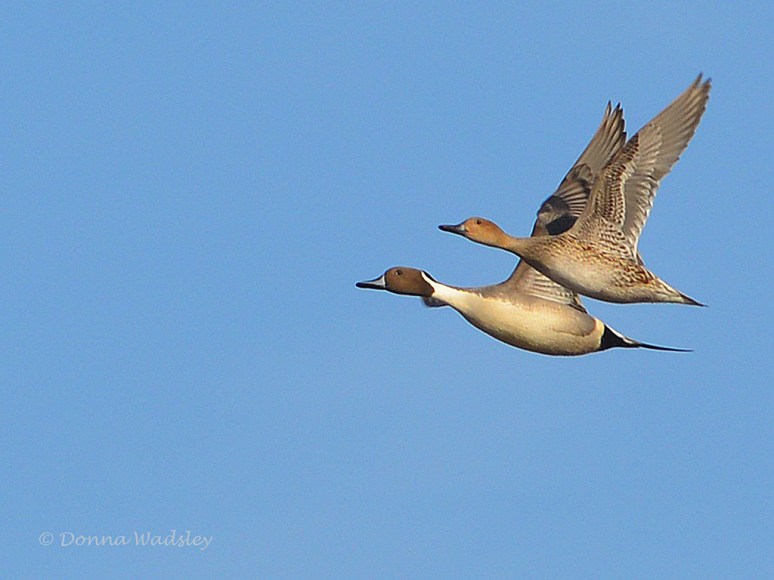

When I get captures like these, I can’t help but get giddy with delight!
Welcome Jaxon!
Not a bird photo; but can’t help myself, just wanted to share my joy and thrill in welcoming Grandson #3 born late yesterday!
 Two hours old
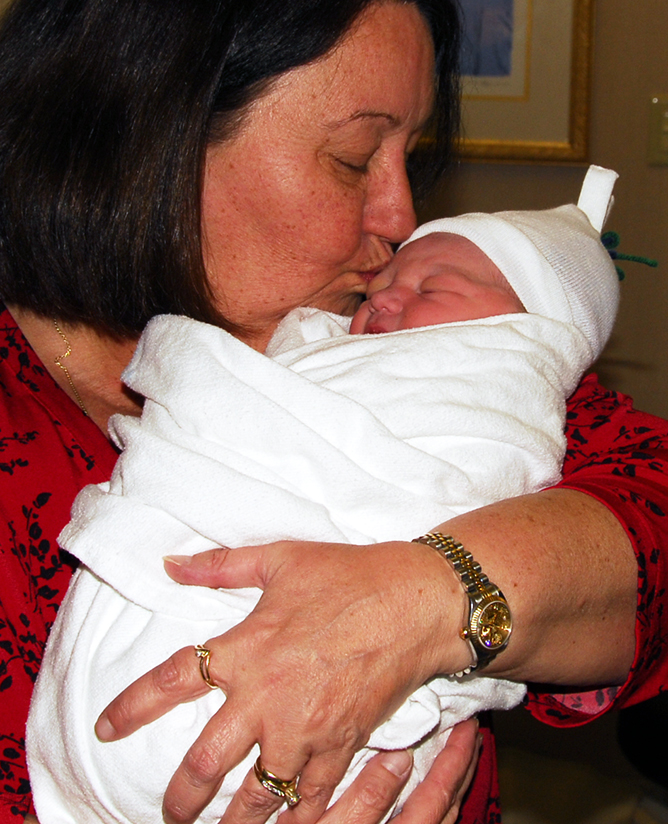
Me & Jaxon
Mommy and baby are doing wonderful. Can’t wait to get back to the hospital today to love and hold you some more, little Jaxon! ❤
I’ll get back to the birds real soon! 🙂
Red-tailed Hawk in Flight
Riding through Cedar Swamp (just north of Bombay Hook NWR), a Red-tailed Hawk came out of nowhere and literally into the path of our truck, then flew up to a distant tree snag. As my son-in-law maneuvered his truck angle, even at the distance, you could tell the hawk was already suspicious of us. We quickly stopped; and as I shot out my window, the hawk took flight again and went over the marsh.
I fretted I didn’t get him in focus in time so was pleasantly surprised that a couple of my shots weren’t so bad.
 Red-tailed Hawk
The Red-tailed Hawk is probably the most common hawk in North America.
 Red-tailed Hawk
Goes to show, you just never know for sure on what you got until you get back to your computer to review them on the ‘big’ screen! 🙂
FMTM52Week Challenge – Week 7 – Red
This week’s FMTM52Week Challenge is “Red”.
First some brief, interesting information about the location of my photo….
The Chesapeake & Delaware Canal (C&D Canal) was first cut through Delaware & Maryland privately in the 1820’s to connect the Delaware River with the Chesapeake Bay at 10 foot wide with four locks, for use with teams of mules & horses to pull barges and vessels. It was then purchased by the U.S. Government who over the years performed several expansions.
Today the C&D Canal is 14 miles long (22.5 km), 450 feet wide (137.2 m), and 35 feet deep (10.7 m).
It provides a shortcut of about 300 miles for ship traffic between the Port of Baltimore and the northeastern United States cities & Europe. It is the only major commercial canal in the U.S. that is still in use and is adequate for two-way traffic for most oceangoing ships.
The C&D Canal is owned and operated by the U.S. Army Corps of Engineers, Philadelphia District. Their project office is on the canal in Chesapeake City, Maryland. This is also the location where a “changing of the pilots” takes place for both directions of ship traffic.
As a ship passes through this area without stopping, a Maryland pilot boat launches & maneuvers alongside the ship while a United States Coast Guard certified pilot boards and the other leaves the ship using the ship’s pilot ladder. Dangerous in itself, bad weather and strong currents can add to the risks. Maritime skills are a must!
Alongside where the pilot boat launches is the famous Schaefer’s Canal House restaurant that opened in 1935. We have dined at this restaurant numerous times over the last 30 years, their food and atmosphere are both awesome. There is also hope each time to see the changing of the pilots. We’ve seen it many times, including a few weeks ago when we went to dinner there where we had window seating. 🙂
Lo, and behold, a red ship and red pilot boat! Shame on me for only having my cell phone camera, as my brain was thinking, oh boy, my “Red” challenge. 🙂
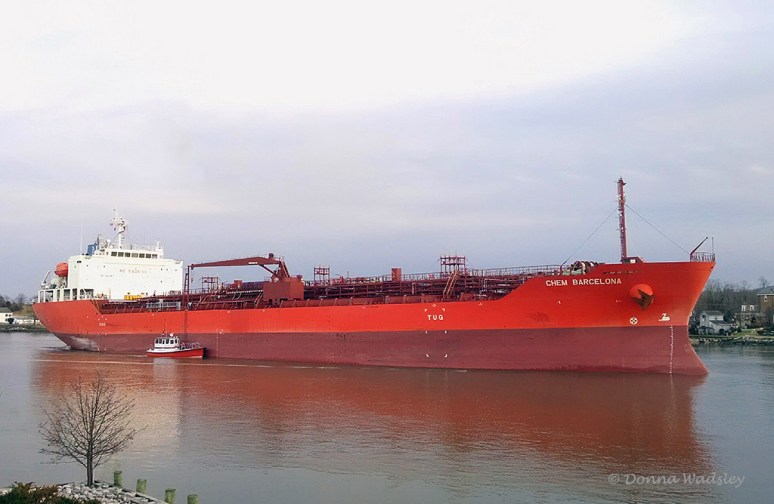
For those who have interest in ship particulars, this 2016 vessel, the Chem Barcelona, is an oil/chemical tanker that is approximately 476 feet (145 m) long and 79 feet (24 m) wide, and draws 22 feet (6.7 m). It flies the Liberia flag and it’s homeport is Monrovia. I just checked on the location of this ship, it just departed the Port of Houston, Texas, and is headed out into the Gulf of Mexico.
A last photo, here’s Schaefer’s restaurant from the other side of the canal I took in 2002 at sunset. See the pilot boat in the bottom right corner waiting for the next ship to pass through.

You can see it’s pretty awesome to have this type of entertainment during dinner!
Mallards And A Surprise
A year-round resident of the Mid-Atlantic, Mallards can easily be found in many parks, ponds, wetlands, and estuaries. Bombay Hook NWR is no exception. At my last visit, they were the predominant duck to see. In the distance, there were hundreds.
When the sun is shining, the male Mallard’s beautiful green head lights up. Sometimes giving up their hiding spots.
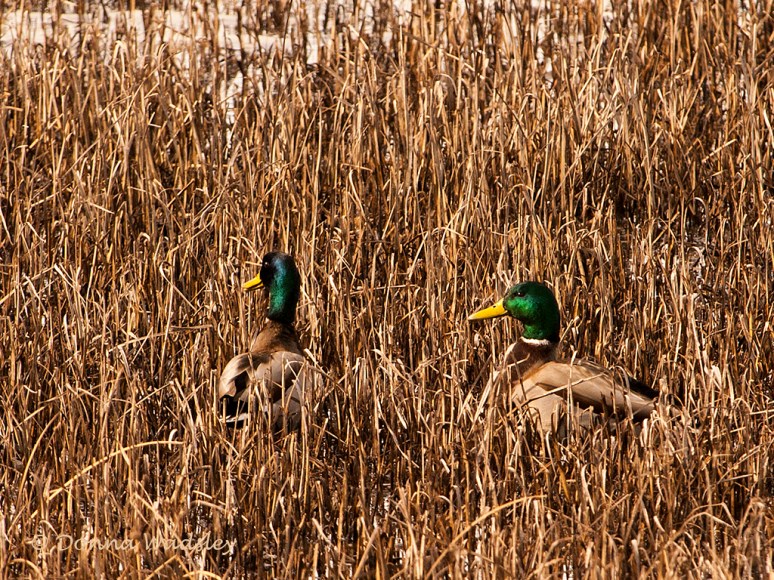 Male Mallards
Mallards are one of the most recognized of all ducks and is the ancestor of several domestic breeds.
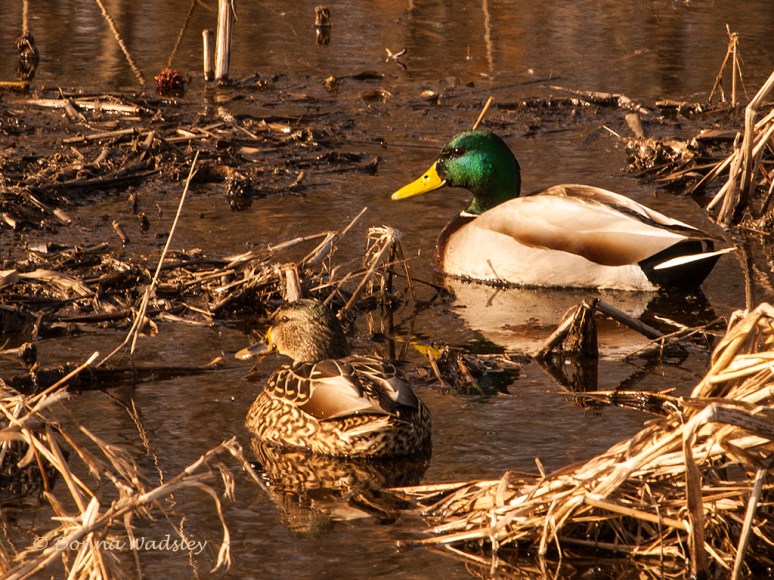 Male & Female Mallards
Mallards are “dabbling ducks”—they feed in the water by tipping forward and grazing on underwater plants. They almost never dive.
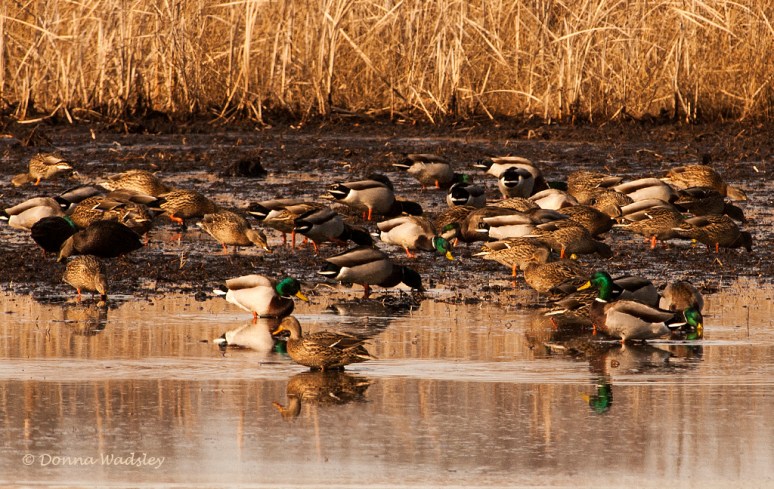 Male & Female Mallards with two American Black Ducks at the far left
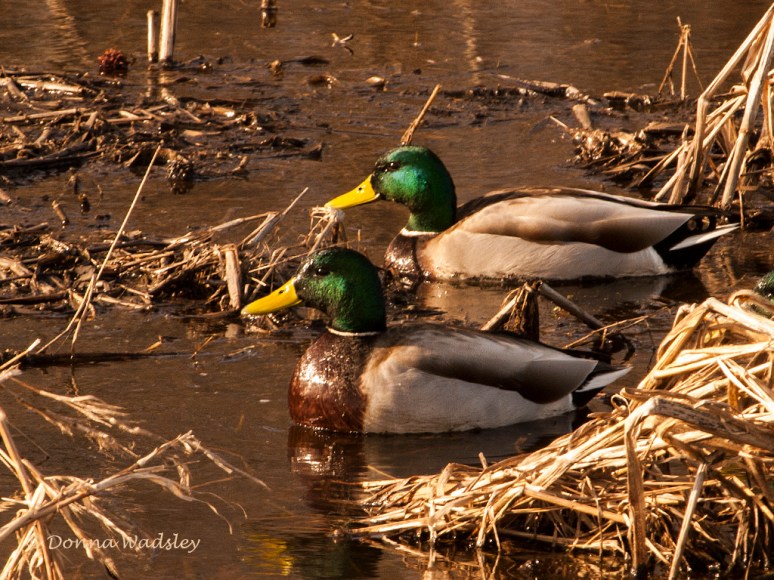 Male Mallards
While photographing the Mallards, a surprise flew into the group, a Greater Yellowlegs.
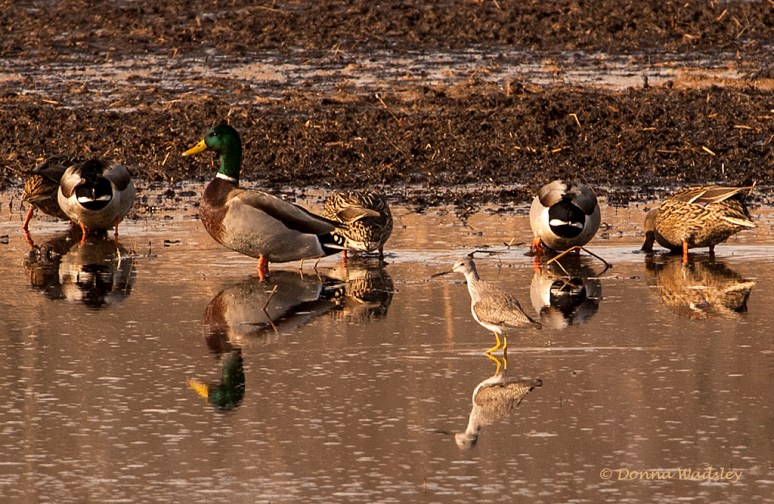 A Greater Yellowlegs among the Mallards
I thought maybe I was seeing a rarity with the Greater Yellowlegs but learned that some may reside year-round the area as well. E-bird had been showing the sightings of the Greater Yellowlegs at Bombay Hook throughout this winter. I still felt lucky to see him at my visit!
Another Great Blue Heron At Bombay Hook NWR
My last ‘bird’ post showcased a beautiful Great Blue Heron, busily fishing, without a care of the vehicles of people watching and photographing him. It was time to eat and he was on a mission!
I happened upon another Great Blue Heron that same day who was just chilling, taking in the warm sun rays that came through the partly cloudy skies on that chilly day. I slowly approached, stopped, and starting photographing him through my passenger window, trying to get my exposure right in the mid-day light.

He had a leery eye on me, giving me the vibe I had interrupted his alone time. And just as quickly he took flight.

Those wings! Their slow, deep wing-beats move with grace and strength allowing the Great Blue Heron to cruise with ease.
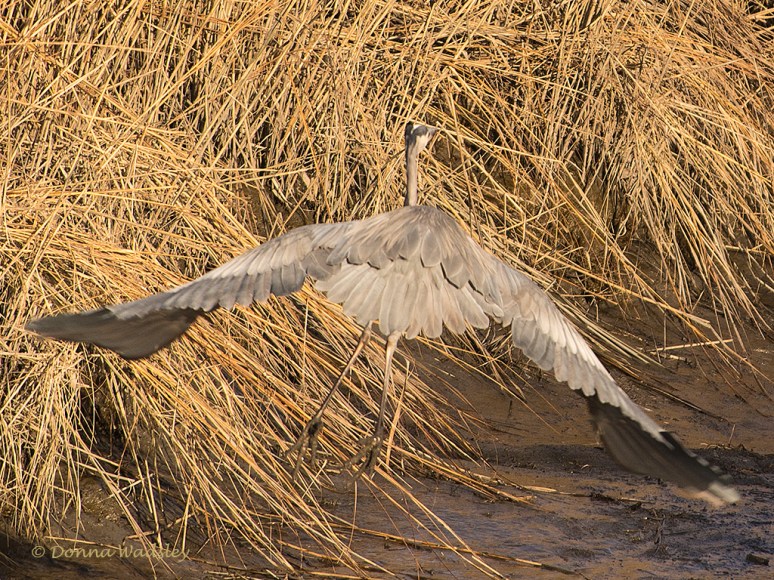
The Great Blue Heron’s adult wingspan ranges 5 1/2 to 6 1/2 feet. That is wider than I am tall!
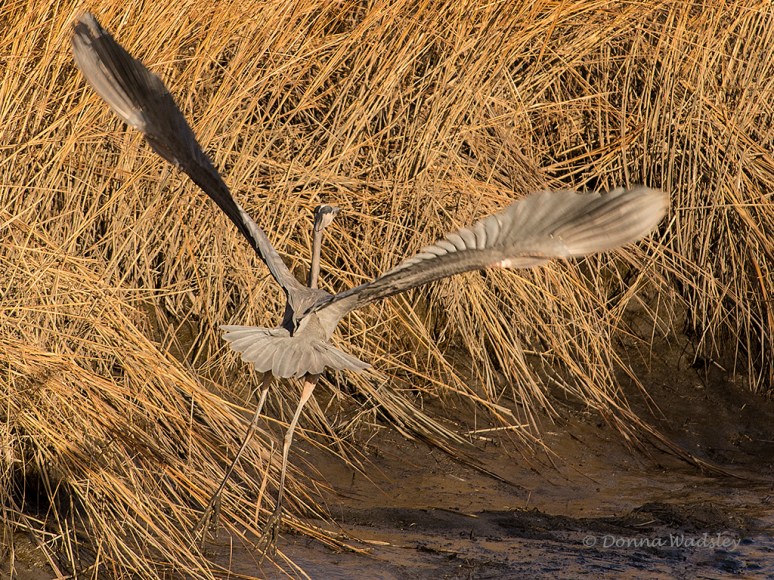
Despite their overall impressive size, the Great Blue Heron weighs only 5 to 6 pounds.

He flew low over and dropped down within the marsh grass. And outta sight. “That’ll teach you,” I could almost hear him saying.
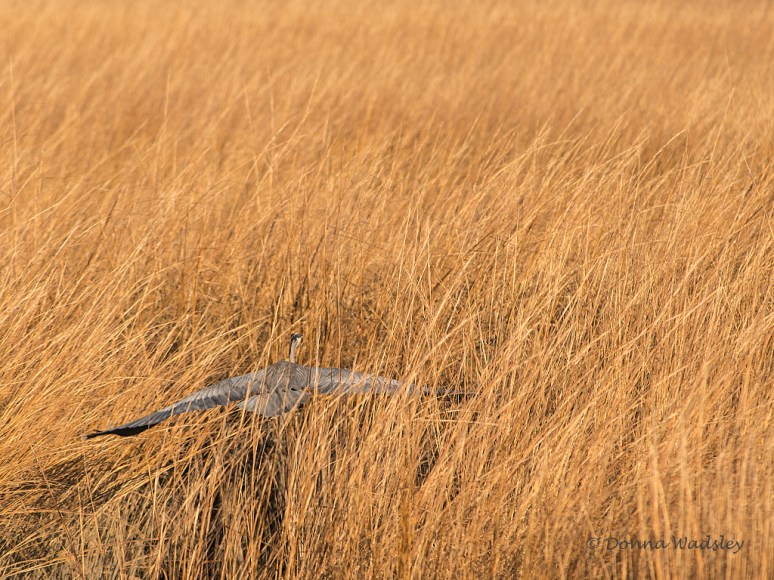
I always fret when causing a bird to fly off, as I don’t mean to scare them. But I am always in awe of the Great Blue Heron’s beautiful flight. And those wings!
FMTM52Week Challenge – Week 6 – Lazy Days
This week’s FMTM52Week Challenge is titled “Lazy Days”.
Having the challenge in the back of my mind all weekend, I saw and took this photo of my ‘granddog’, Rocky, in his stretched out, lazy-style position.
Ahhhhh, to have the lazy-day life of this dog. Happy. Sweet. Lovable. Funny. And spoiled!
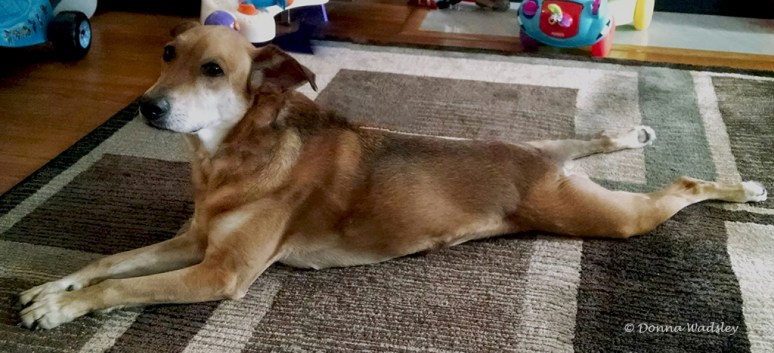
Rocky plays second-fiddle now in the household to the two grandsons, but I still give him as much attention as I can. He is great with the boys, and I enjoy being around him. When he plays with me or stretches out like this, he definitely makes me laugh!
Great Blue Heron at Bombay Hook NWR
During my visit to Bombay Hook NWR last month, I sighted several Great Blue Herons throughout the refuge. Sometimes they are too busy to care about the birders watching them or the photographers photographing them from vehicles along the wildlife drive.
Here was one of those Great Blue Herons. He was too busy fishing in the icy waters to care.

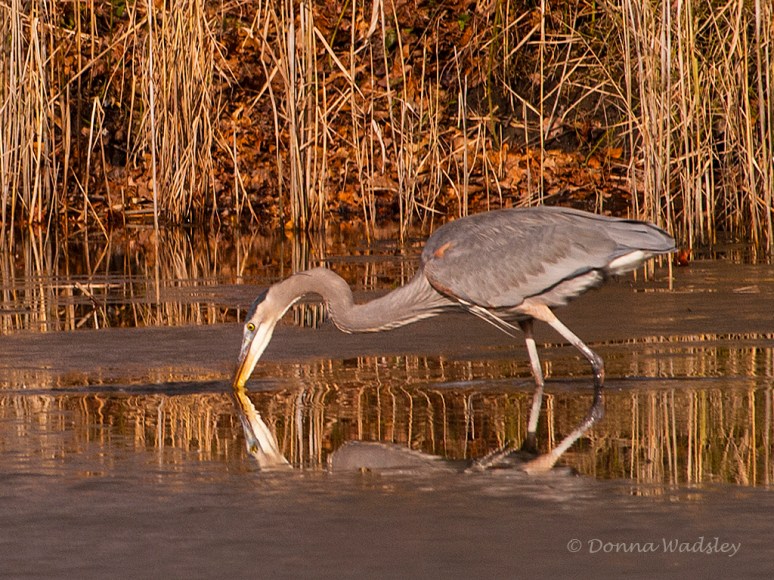

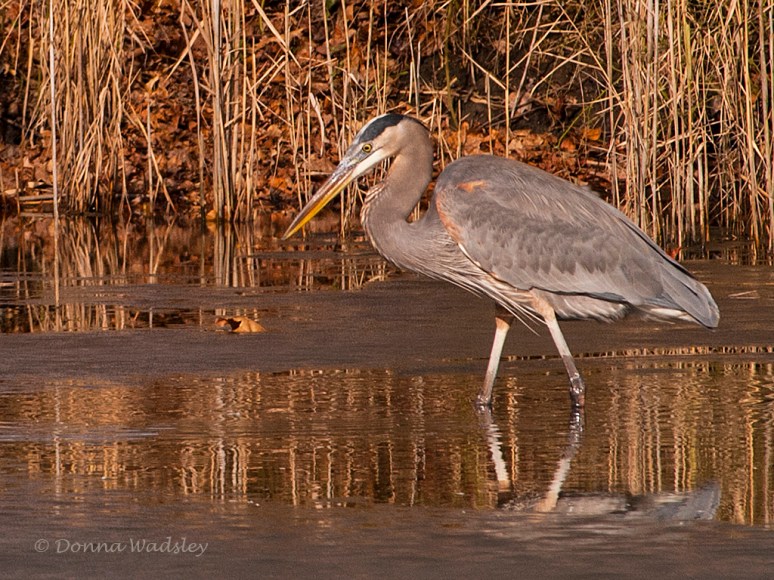
I left this one to his fishing while two other vehicles continued to watch and photograph away. Thanks, Mr. GBH for the photo op session, it was much appreciated!
FMTM52Week Challenge – Week 5 – Wide Angle
This week’s FMTM52Week 5 challenge is “Wide Angle”. Our adventures last summer included a week staying at a campground at the entrance of Bryce Canyon National Park. Having seen posts and photos prior to our visit, I was still beyond awe of the astounding beauty of Bryce Canyon.
At 8,000-9,000 feet altitude, you could see for miles and miles. It was jaw-dropping! Here is one of my many wide-angle shots to prove it.

Bryce Canyon National Park, Utah
But too really appreciate Bryce Canyon NP, you need to visit to see it for yourself. It’ll blow you mind away, promise!
 Bay Photos by Donna