
Royal Terns
I’ve captured the Royal Tern before in past years, but found I hadn’t listed it on my lifer list. Bad slip on my part!
This time I’m not missing the chance, adding the Royal Tern as #197.
I found Royal Terns in their non-breeding plumage around the Everglades NP Gulf Coast location. They favored the channel markers.
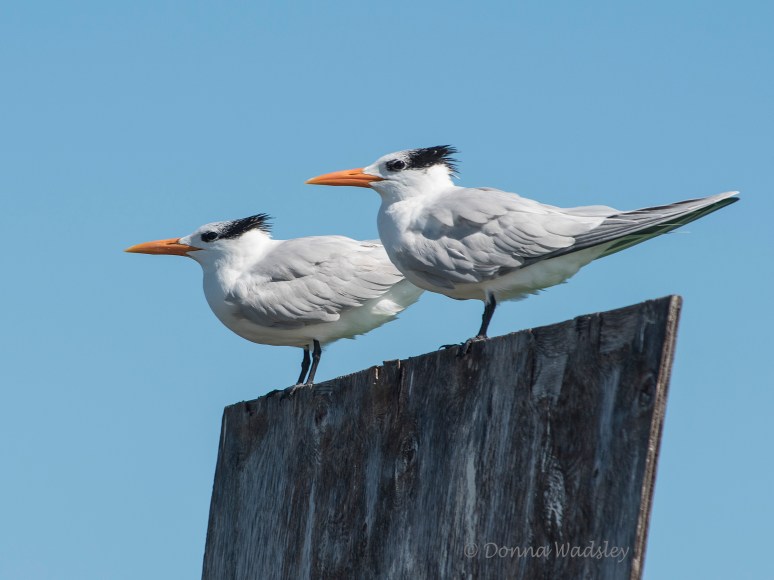
Royal Terns
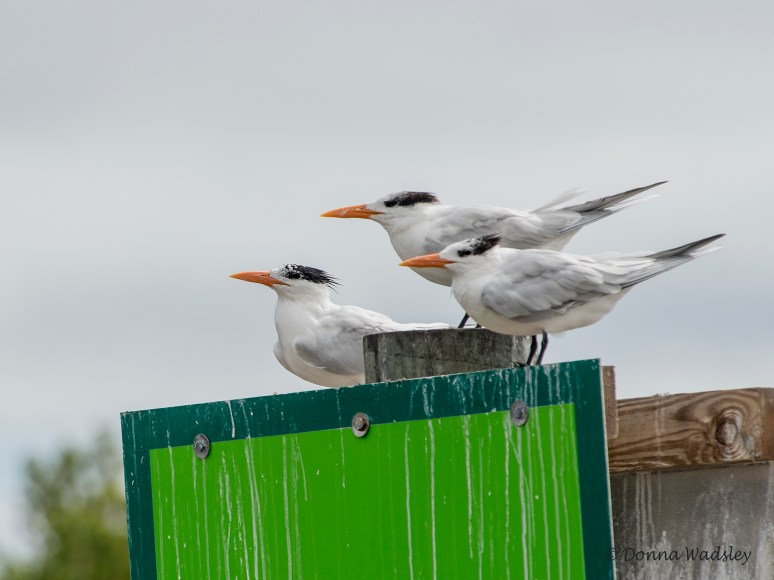
Royal Terns
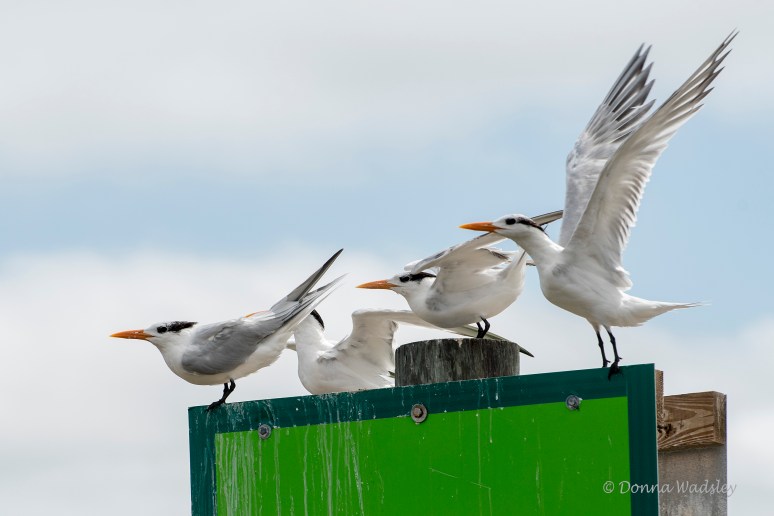
Royal Terns
Royal Terns are graceful flyers and reside along warm saltwater coasts.

Royal Tern

Royal Tern

Royal Tern
Royal Tern in flight

Royal Terns Close-up
Don’t you just love those shaggy crests?!! 🙂
Tricolored Heron
The Tricolored Heron is a medium-sized and strikingly slim heron with a long, daggerlike bill.
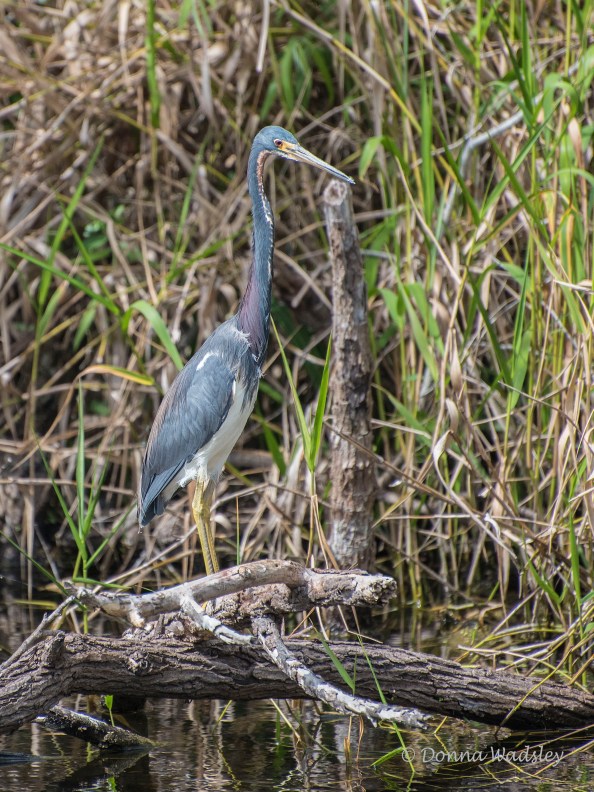
Tricolored Heron


Tricolored Herons in mangroves at sunset
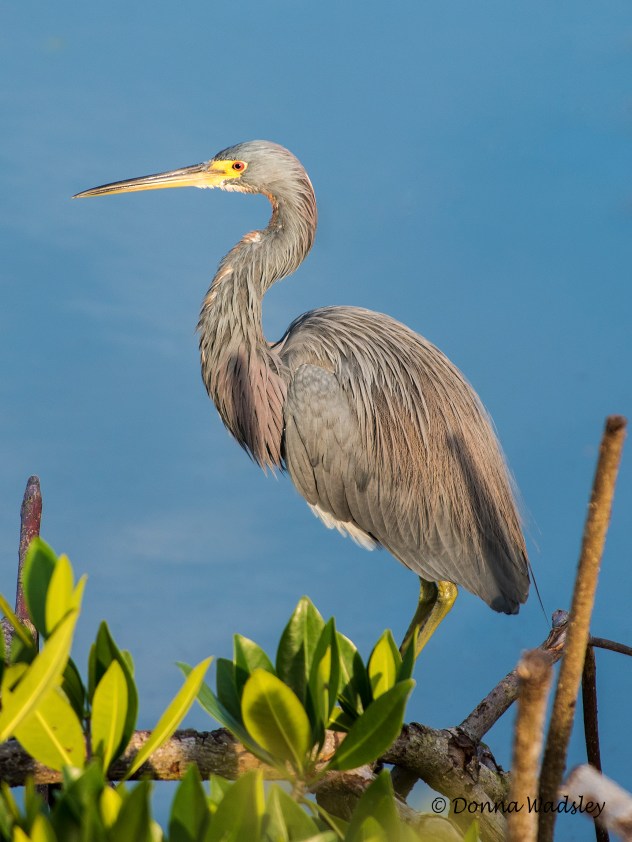
Tricolored Heron at sunrise
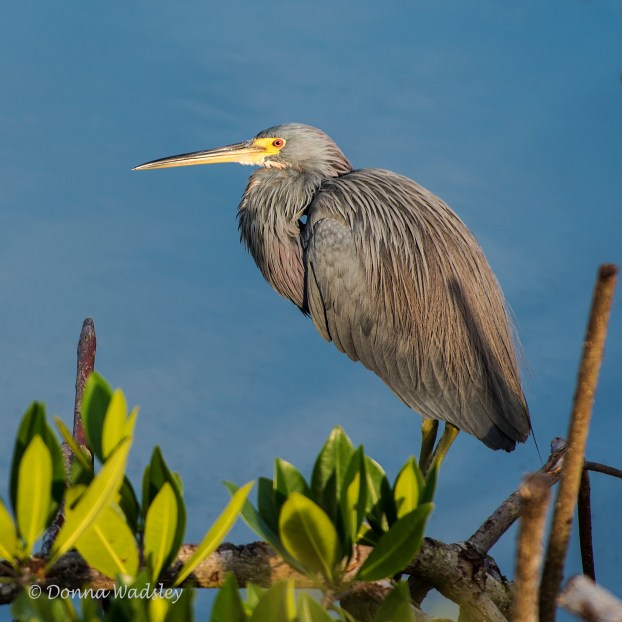
Tricolored Heron at sunrise
The Tricolored Heron is elegant in its blue-gray, lavender and white plumage. And what a beautiful red eye.
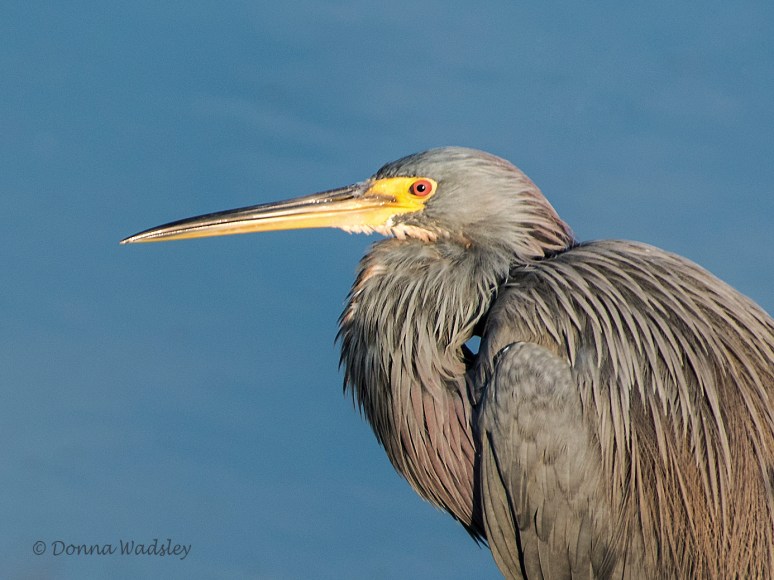
Tricolored Heron closeup
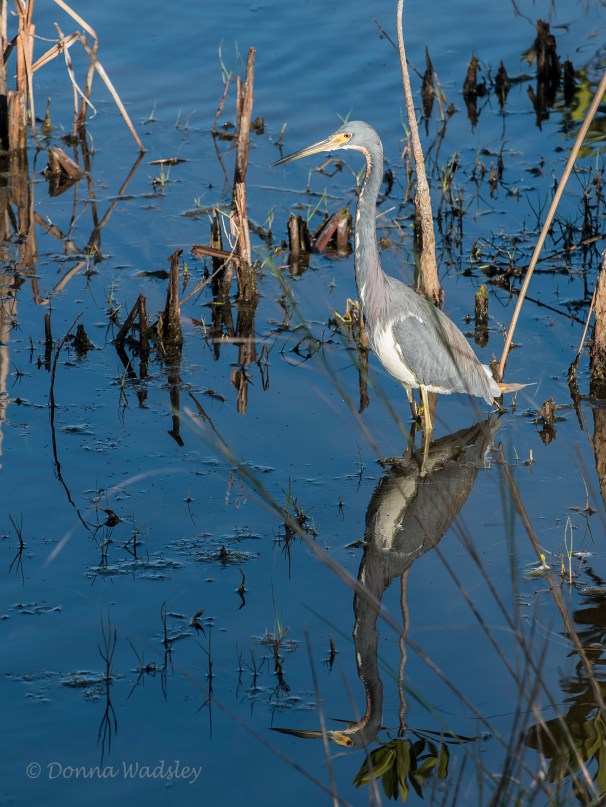
Tricolored Heron Reflection

Tricolored Heron getting excited for another one landing nearby
Ah, bird love is in the air in the Everglades!
Snowy Egret With The Golden Slippers
Another Egret plentiful in Florida is the elegant Snowy Egret. They are easily identifiable with their bright yellow feet or “golden slippers”.
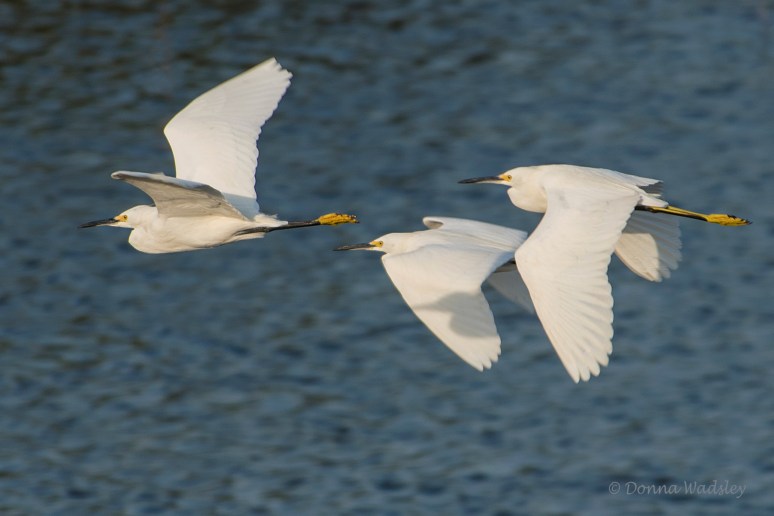
Snowy Egret in flight
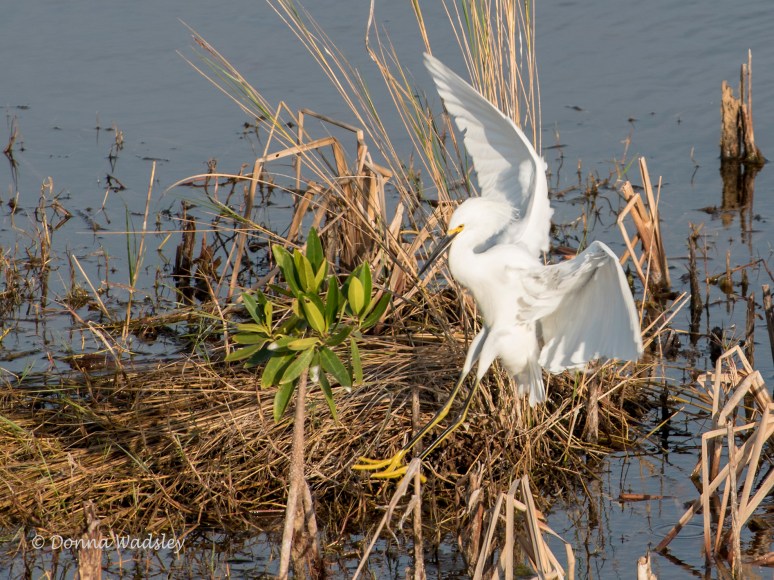
Snowy Egret landing

Snowy Egret Portrait
Snowy Egrets use their bright yellow feet to stir up or probe in the mud, rounding up prey to strike with its bill.
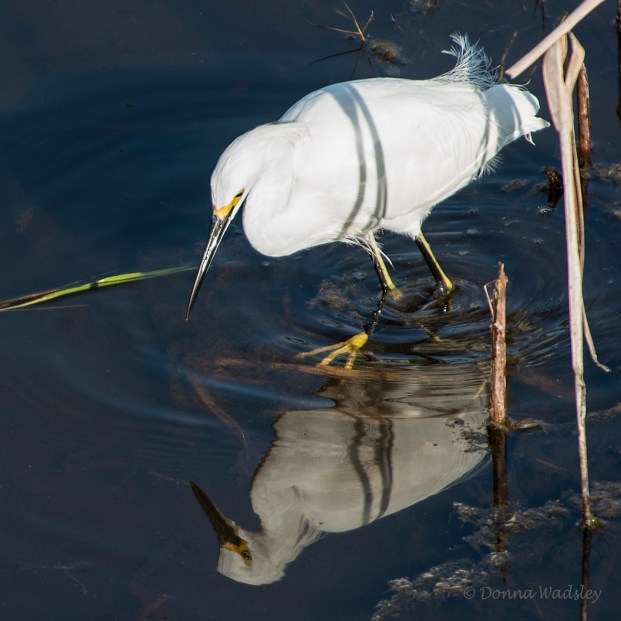
Snowy Egret stirring its feet while stalking for prey

Snowy Egret with a snack
Although the front of their legs are black, the back of the Snowy Egrets’ legs are yellow like their feet as seen in the next photo.
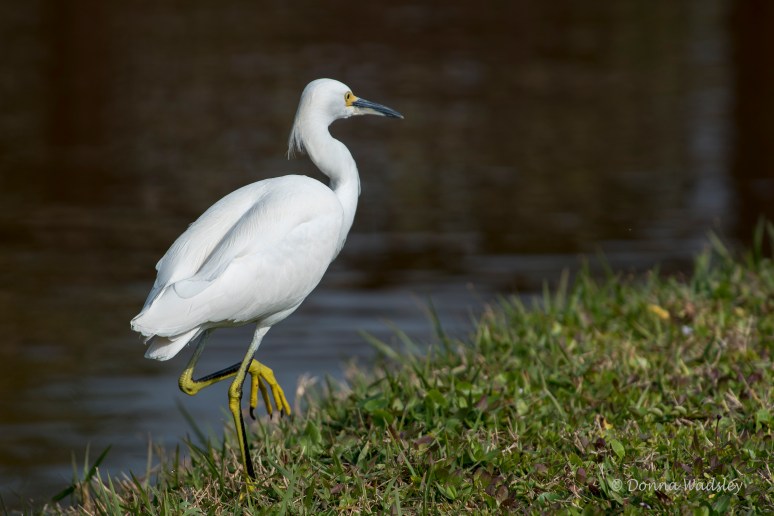
Snowy Egret
So stylish with those “golden slippers”….

Snowy Egret going down an embankment to the water
Want to see those “golden slippers” up close?
(click on photos to enlarge)

Snowy Egret feet

Snowy Egret feet

Snowy Egret feet

Snowy Egret feet
Snowy Egret’s yellow feet or “golden slippers”
With the breeding season beginning, those feet will brighten even more!

A Snowy Egret spots another Snowy Egret – it’s breeding time!
Blue-winged Teal
I’ve photographed Blue-winged Teal before, but only at a great distance.
So it was exciting to find them closer to the shoreline at the 10,000 Islands NWR in the Everglades NP.
Warning…..photo overload!

Blue-winged Teal among the mangroves at 10,000 Islands NWR
The ops got even better when a few pairs would break away from the group and come in closer.
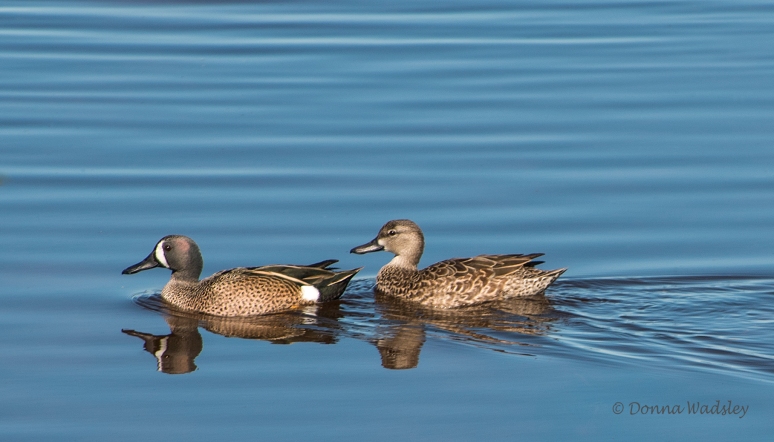
Blue-winged Teal (male leading female)

Blue-wing Teal

Blue-winged Teal
During one of my morning visits, the entire flock took flight, one group after another.
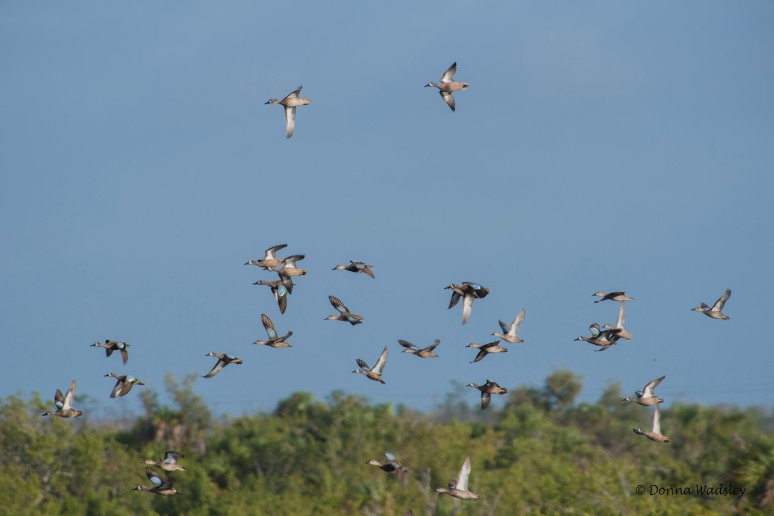
Blue-winged Teal in flight

They turned their flight slightly more to the left, and flew on by me.

Blue -winged Teal

Blue-winged Teal

Blue-winged Teal

Blue-winged Teal
I stayed with them as much as I could. It is always exciting to get a flock in flight!
Sorry, too many favorites, just two more of the male.

Blue-winged Teal (male)

Blue-winged Teal
P.S. I’ll be absent from the internet for a few days, I’ll catch up soon as I can when I return!
Limpkin
I almost missed this tropical bird, a Limpkin, foraging a freshwater swamp.
Although it resembles herons and ibises in general form, the Limpkin is generally considered to be more closely related to rails and cranes.
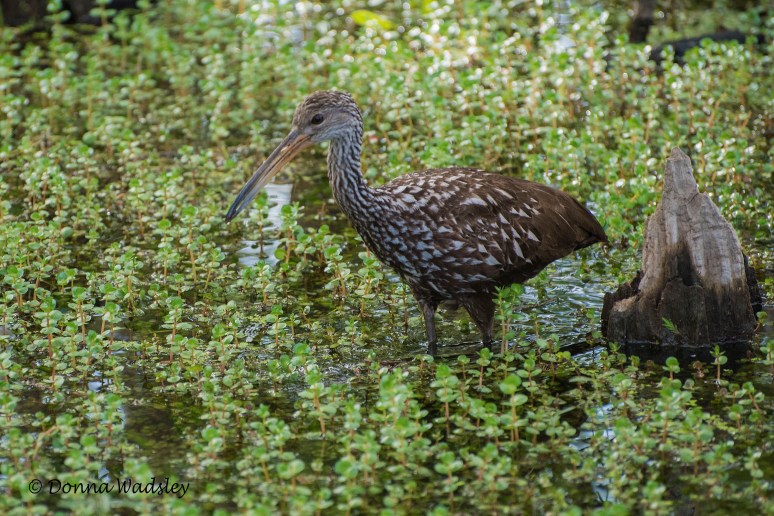
Limpkin
The Limpkin was hunting for apple snails (its favorite), frogs, lizards, and crustaceans.

Limpkin with snack

Limpkin foraging

Limpkin foraging
Limpkin foraging
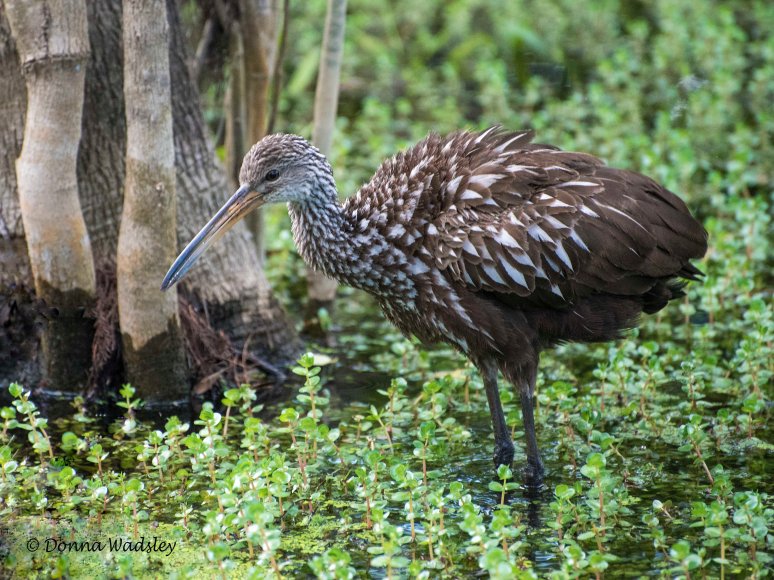
“Fluffin’ the Feathers”
Although it resembles herons and ibises in general form, the Limpkin is generally considered to be more closely related to rails and cranes.
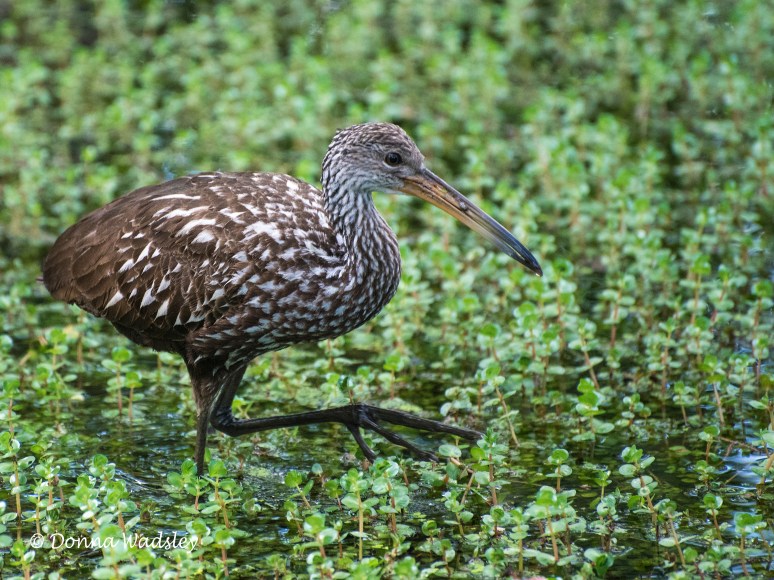
Limpkin
— Photos taken in Big Cypress National Preserve.
(An update, I have taken photos before of this beautiful, tropical bird but found out that the Limpkin was still not on my lifer list. Sooooo…..the Limpkin now is my #196.)
Bald Eagle
Honestly, I was expecting to see a lot of Bald Eagles in Florida, but that hasn’t been the case. I had only seen one immature Eagle in flight and it was at a distance so my photo wasn’t the greatest.
Finally, last week luck was on my side. Hiking alone, I heard an Eagle call out. Scanning the sky and trees, I sighted a nest with the Eagle inside.
It wasn’t an easy photo to get in position with all the trees; this was the best I could do.

Bald Eagle Nest with Eagle inside feeding young
The Bald Eagle never stood up tall enough for me to get a good photo of it. Needing a walking break, I decided to hang around for a bit to see if the Eagle became more visible, while enjoying the solitude and tropical beauty surrounding me.
My break paid off. Twelve minutes later, the Bald Eagle left the nest and perched on one of the outer branches in the same tree.

Bald Eagle
“In order to see birds, it is necessary to become part of the silence.” ~ Robert Lynd
More Florida Birds – A Gallery
Some pretty shots of several more birds I’ve encountered in Florida.

Semipalmated Plovers

American Oystercatcher

Cattle Egret

Red-bellied Woodpecker

Roseate Spoonbill

Black Vulture

American Crow

Eurasian Collared-Dove

Caspian Tern (immature)

Double-crested Cormorants
This brings the total to 36 species of birds to date I’ve shared here with you since my arriving in Florida in January.
And I’m not done yet….. 🙂
Common Gallinule
The Common Gallinule is charcoal black with a white stripe, sports a bright red ‘shield’ on its forehead, and a red bill tipped in yellow.

Common Gallinule
This bird is in the rail family and was formerly known as the Common Moorhen.

Common Gallinule
I always think of candy corn when I see their beak. 🙂
Series: Take A Moment and Enjoy A Sunset
When a bright sun is setting and clouds are involved, we are blessed with a chance to watch a masterpiece unfold before our eyes.
This is one sunset, shot several minutes apart, creating one of those masterpieces.

Sunset over Chokoloskee Bay, Everglades
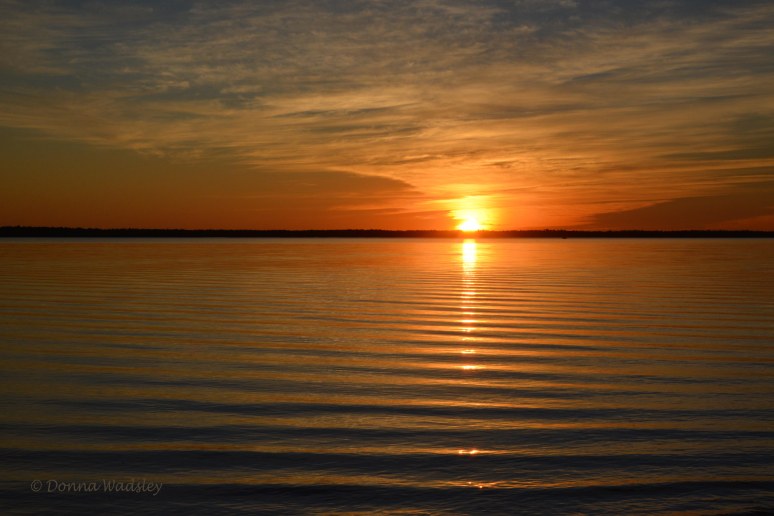
Sunset over Chokoloskee Bay, Everglades
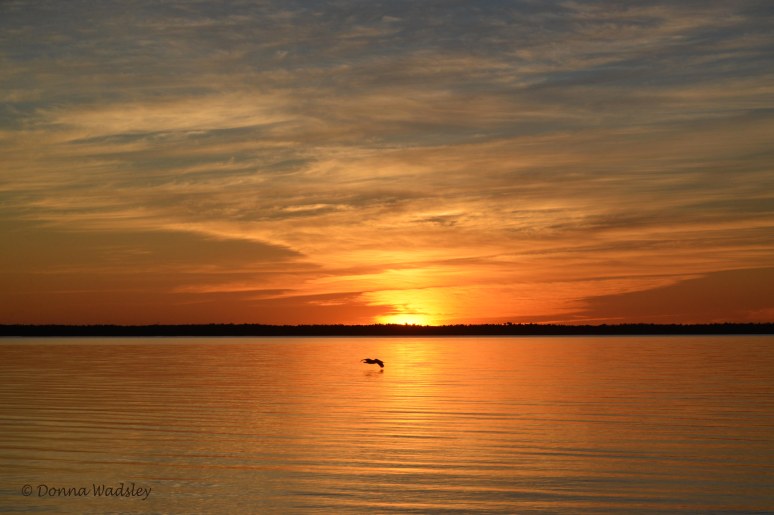
A Brown Pelican flies over Chokoloskee Bay into the sunset
“The sun ignites the clouds below it as if they, and the water, itself, were on fire.”
― Anthony T. Hincks
Glossy Ibis
Glossy Ibises appear to look dark at a distance; but upon closer range and good light, they reveal beautiful colors of deep maroon, emerald, bronze, and violet.
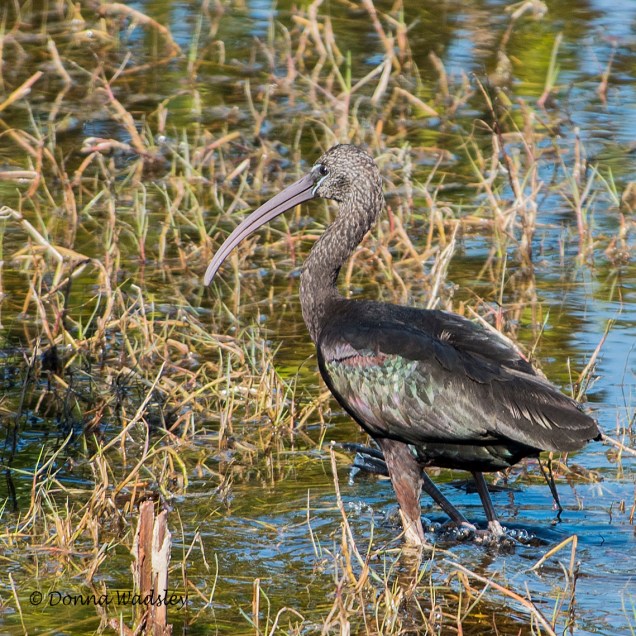
Glossy Ibis
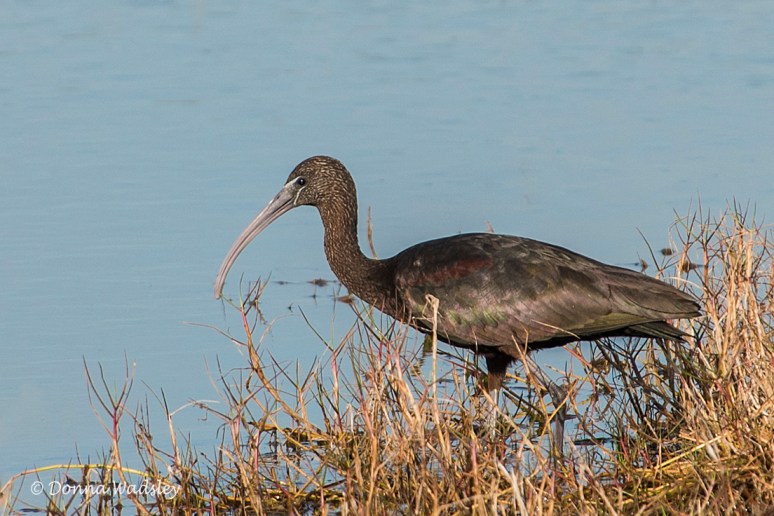
Glossy Ibis
While watching that last Glossy Ibis, it took flight.

Glossy Ibis taking flight

Glossy Ibis taking flight
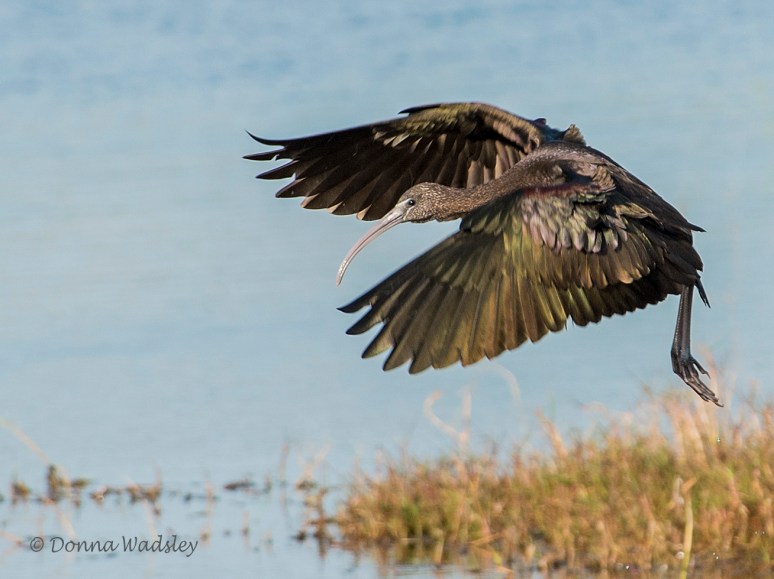
Glossy Ibis taking flight
The flight was more of an airborne jump crossover to another area of grasses to continue on with foraging for food, providing even more wonderful photo ops for me. 🙂
(Photos taken at 10,000 Islands NWR within the Everglades NP)

 Bay Photos by Donna