
Common Ground Doves and Magnificent Frigatebirds – Two New Lifers
What fun to get to share two new lifers #198 and #199 to my photographed bird list. 😊
Lucky #198 is the Common Ground Dove, one of the smallest doves in North America. It is about the same size as a Song Sparrow and is common across the southernmost parts of the United States from California to Florida. We have a pair visiting our RV resort daily; all along I thought it was a sparrow, finally paid a little more attention, and here it was a lifer. Geez Donna! I got it now!! 😉

Common Ground Doves (female foreground, male in back))

Male Common Ground Dove

Female Common Ground Dove
Common Ground Doves
Reaching the last of the climb to 200 is #199, the Magnificent Frigatebird, a large, black pterodactyl-like bird that spends most of its life flying effortlessly over the ocean, using its deeply forked tail to steer. It is also sometimes called the “man-o-war bird” as they steal food from other birds in midair.
We escaped the past week to Key West for some fun, and it was a delight to watch the Magnificent Frigatebirds soar daily over Sunset Key. Sigh, if only I had my long lens, that had to be nixed due to packing light…..never again.

Magnificent Frigatebird (female)

Magnificent Frigatebird (female)

Magnificent Frigatebird (female)

Magnificent Frigatebird (male)
Magnificent Frigatebirds
Hey, two lifers, ching ching! Bringing me finally to that magical 200 mark that seems to have taken forever to achieve.
But no need to wish me luck…..wink-wink. Next post!
American White Pelicans
My last post shared those pink-a-licious Roseate Spoonbills found, but they weren’t the only wonderful surprise at that location.
Lots of American White Pelicans were also there right alongside those Rosies! What a treat to see both of these at the same time!

Roseate Spoonbills, American White Pelicans (and more)

Roseate Spoonbills and American White Pelicans
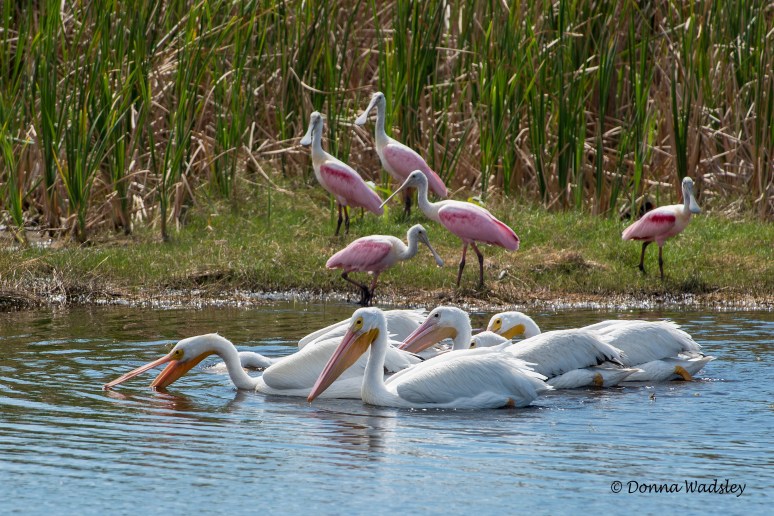
Roseate Spoonbills and American White Pelicans
What a treat to see both of these at the same time!
The American White Pelican is twice the size of the native Brown Pelican. Unlike the Brown Pelican, the American White Pelican does not dive for food but instead scoops the water for fish.

American White Pelicans foraging for fish
They work together to herd fish for easy feeding.

American White Pelicans
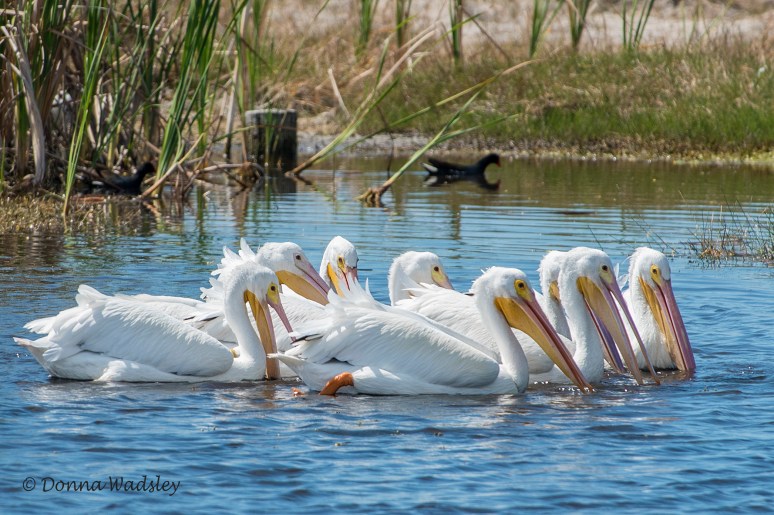
American White Pelicans

American White Pelicans
A final wide shot to show all the birds habituating together during this photo shoot.
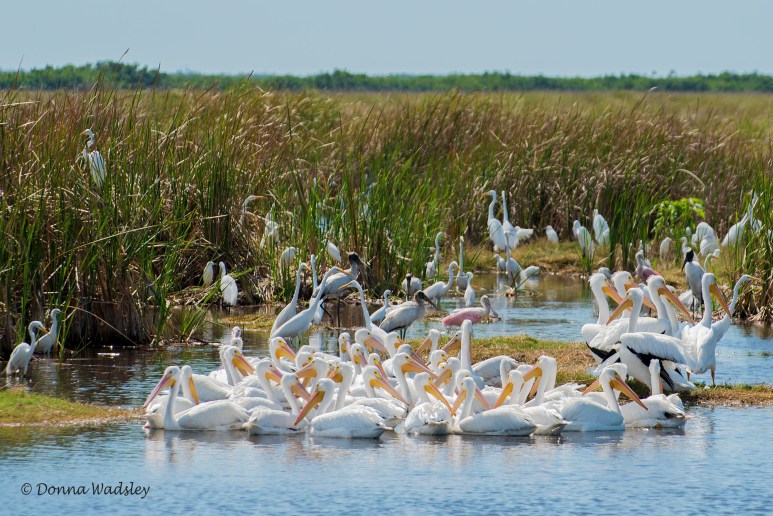
American White Pelicans, Roseate Spoonbills, Great Egrets, Wood Storks & Snowy Egrets
Florida during the winter months is indeed a birder’s paradise!
Roseate Spoonbill in Flight
Many thanks to new birding friend, Ed, who showed me a location in the Big Cypress National Preserve where he had seen Roseate Spoonbills a few times. With it being early afternoon, we didn’t expect them to be there; but lo and behold, there were more than a dozen of those pinkalicious Rosies!
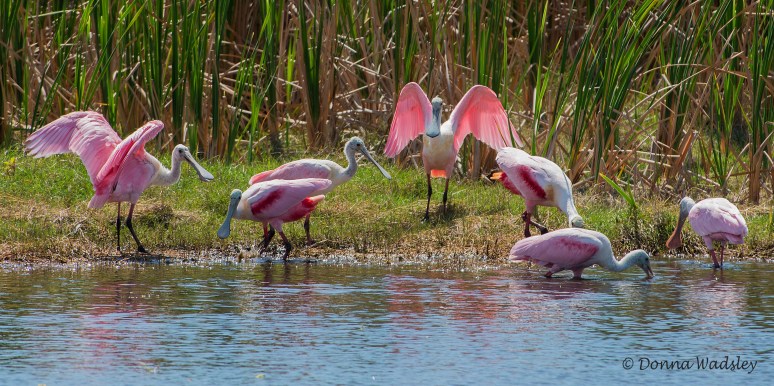
Roseate Spoonbills
Oh my, I took a lot of photos. With their distance and the high bright sun, I struggled some but felt real pleased with this photo series of a juvenile Roseate Spoonbill coming in for a landing.


Roseate Spoonbill in flight (juvenile)
Ahhhhh……those gorgeous pink wings!
Series: Take A Moment and Enjoy A Sunset
Let’s escape away, down to Key Largo…..

Sunset over Blackwater Sound, Key Largo

Sunset over Blackwater Sound, Key Largo

Sunset over Blackwater Sound, Key Largo
(next night)
“Enjoy the beauty of a sunset nature’s farewell kiss for the night.” – Sharon Rene
Wood Storks
A gallery sharing more of my recent favorite images of the Wood Stork.
Check out those pink feet!
(to view larger, click on an image to begin a slideshow)

Wood Stork “Balancing Act”

Wood Stork “Steppin’ Out”

Wood Stork “Preening”

Wood Stork “Reflections”

Wood Stork “Flight 1”

Wood Stork “Flight 2”
Wood Storks
Osprey Hanging Out To Dry
There are several established Osprey nests in Everglades City. Incubating is in full swing at each of them.
Near one of the nests, I found the incubating Osprey’s mate perched nearby on guard duty and air-drying.
Someone got a bath or hopefully had just caught and delivered a fish to it’s mate in the nest!
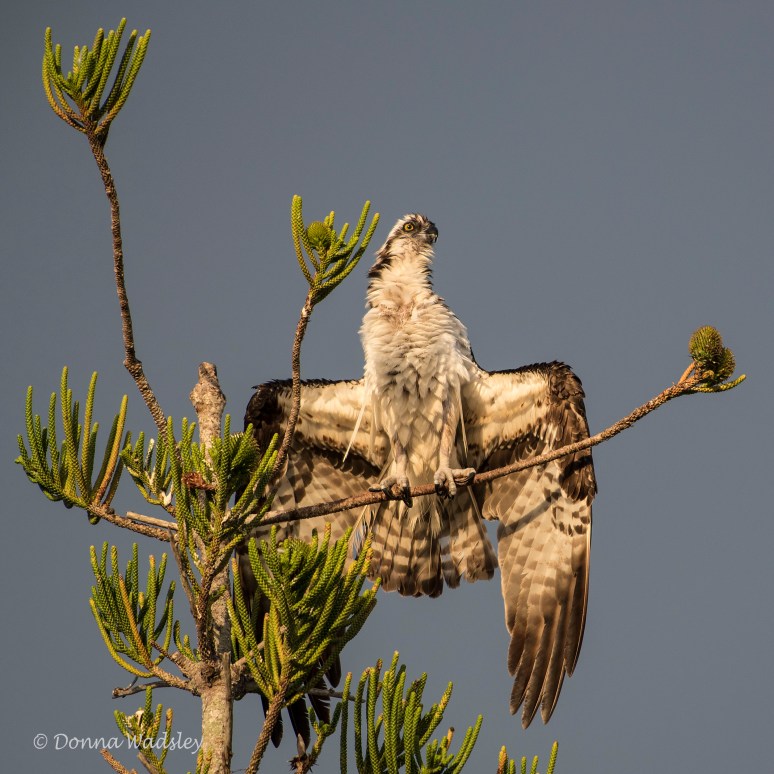
Osprey Drying
A little flapping to help speed up the drying….
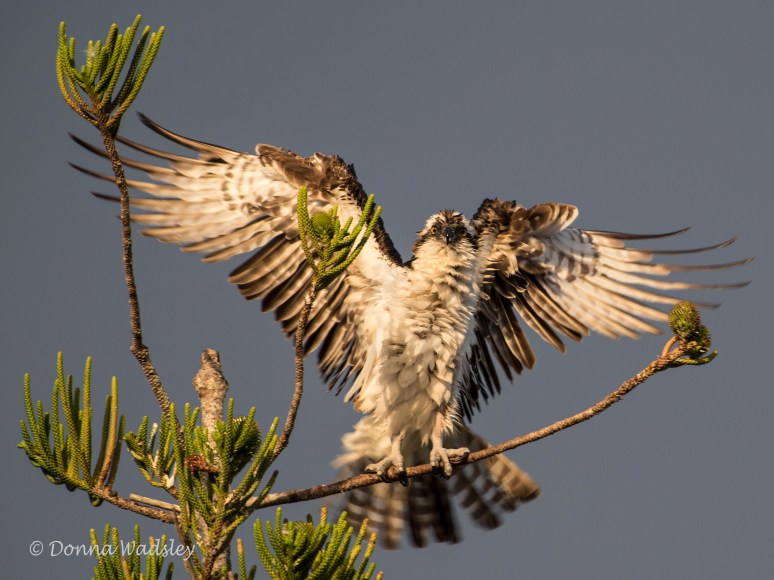
Osprey Flapping Wings to Dry
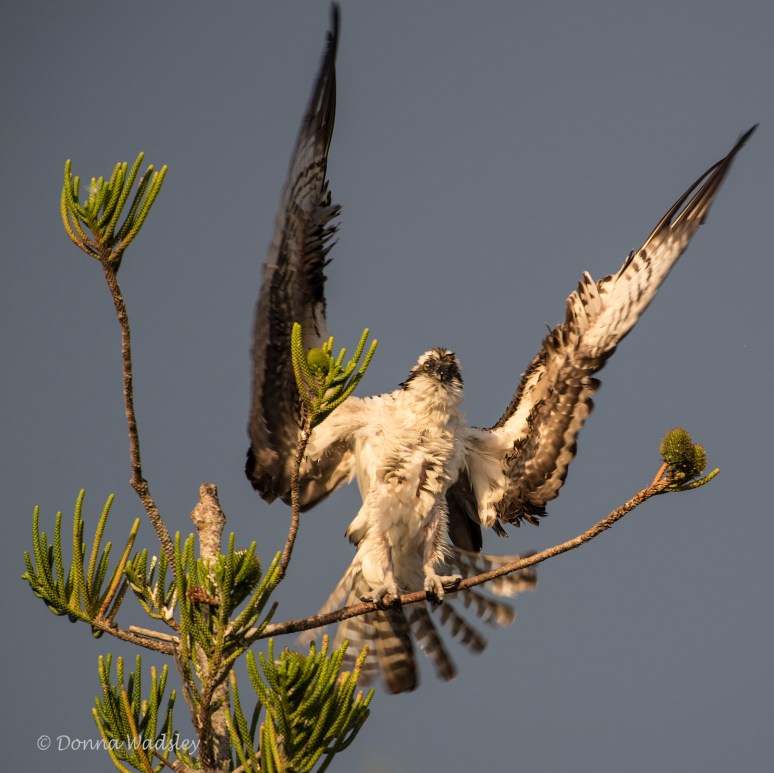
“Touchdown!”
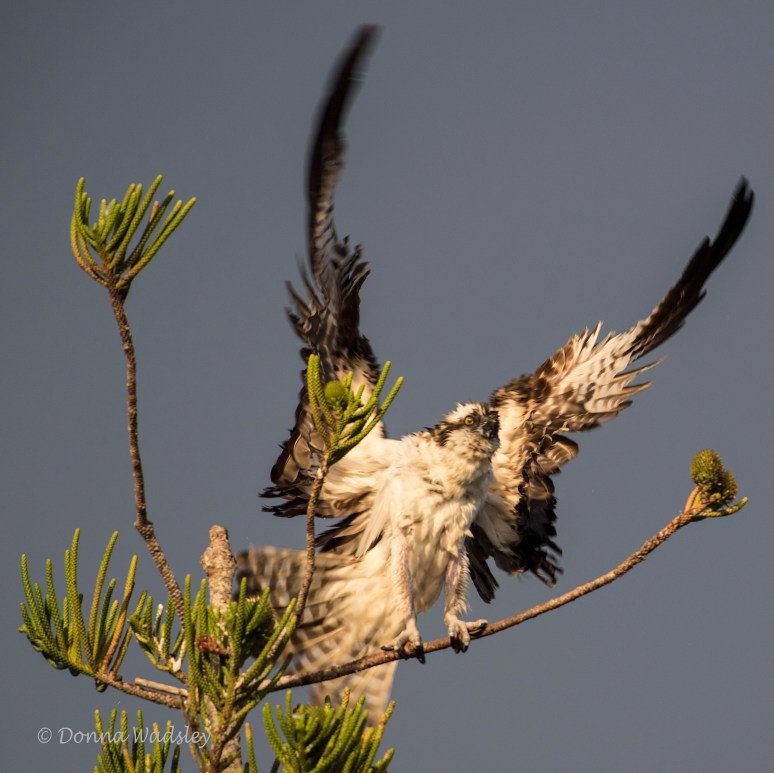
Osprey Flapping Wings to Dry
After all the flapping, it was back to guard duty and sunning.
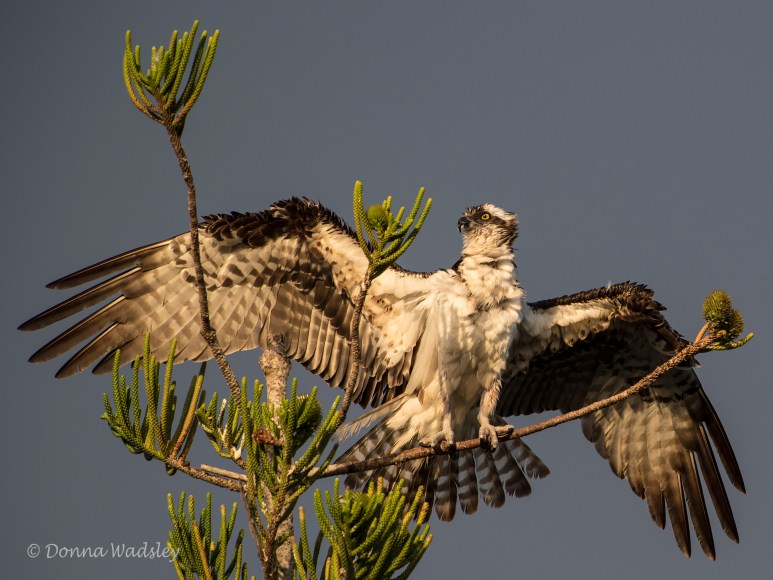
Beautiful & Refreshed
(Osprey looking over to its mate and nest)
Great Egret Stalks A Lizard
A stalking Great Egret was quicker than I. I saw it focused, but the egret was looking straight ahead and not down at the water’s edge.
What was he focused on?
A couple more steps, and the Great Egret reached out with that long neck and grabbed a lizard off a palm tree trunk.
The Great Egret had the lizard before I got my first shot.

Great Egret with a lizard for a meal
I took over 30 photos and selected six more from them to show how the egret handled his meal, holding it tight and then shifting it.


Great Egret eating a lizard
And down the hatch the poor little lizard went….
Series: Take A Moment and Enjoy A Sunset
One sunset, three phases, from three locations…..

Sunset over Barron River
Five minutes later, further down the river….

Sunset over Barron River
Another eight minutes, just a little further down the river.
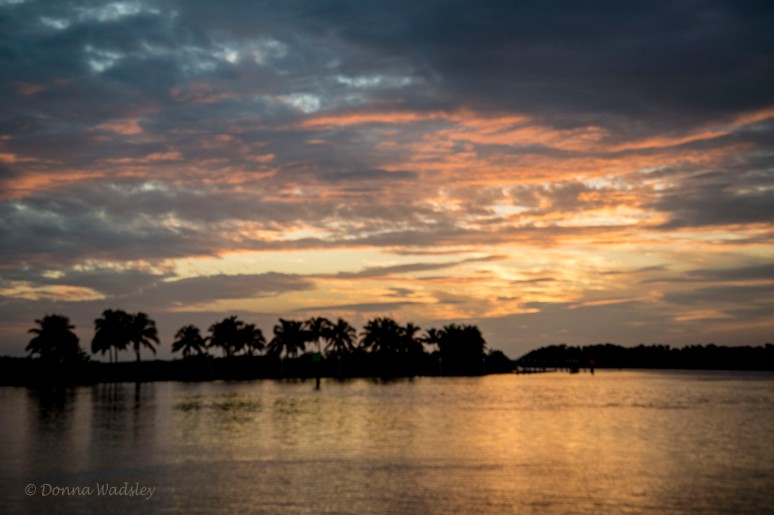
Sunset over Barron River
“My joy is the golden sunset giving thanks for another day.” – Jonathan Lockwood
Royal Terns
I’ve captured the Royal Tern before in past years, but found I hadn’t listed it on my lifer list. Bad slip on my part!
This time I’m not missing the chance, adding the Royal Tern as #197.
I found Royal Terns in their non-breeding plumage around the Everglades NP Gulf Coast location. They favored the channel markers.
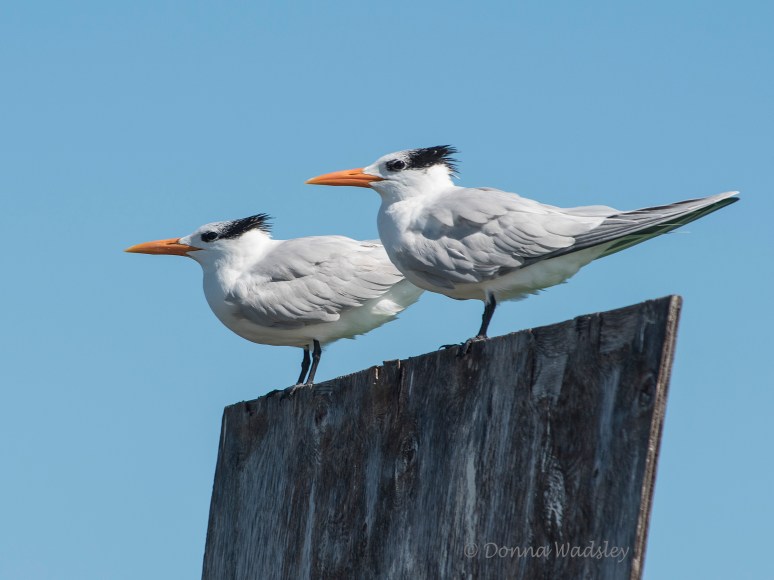
Royal Terns
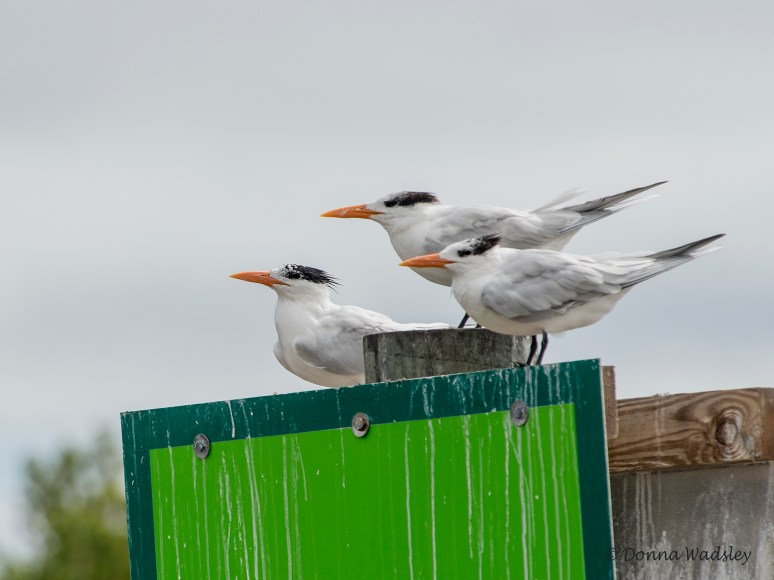
Royal Terns
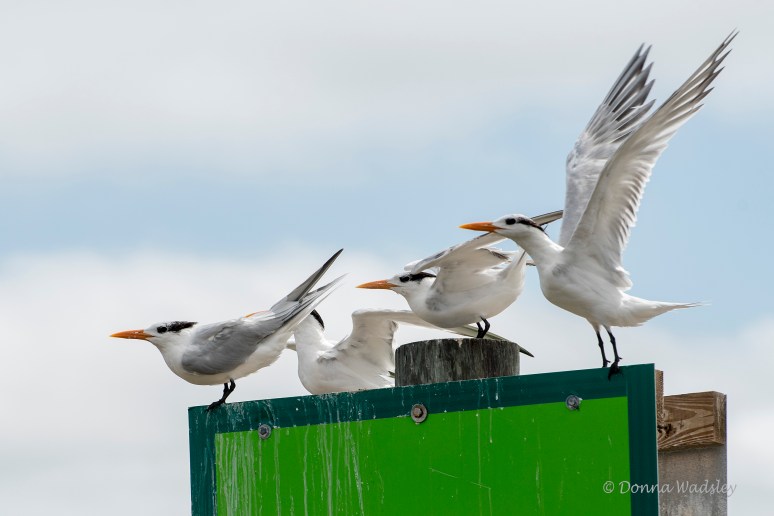
Royal Terns
Royal Terns are graceful flyers and reside along warm saltwater coasts.

Royal Tern

Royal Tern

Royal Tern
Royal Tern in flight

Royal Terns Close-up
Don’t you just love those shaggy crests?!! 🙂
Tricolored Heron
The Tricolored Heron is a medium-sized and strikingly slim heron with a long, daggerlike bill.
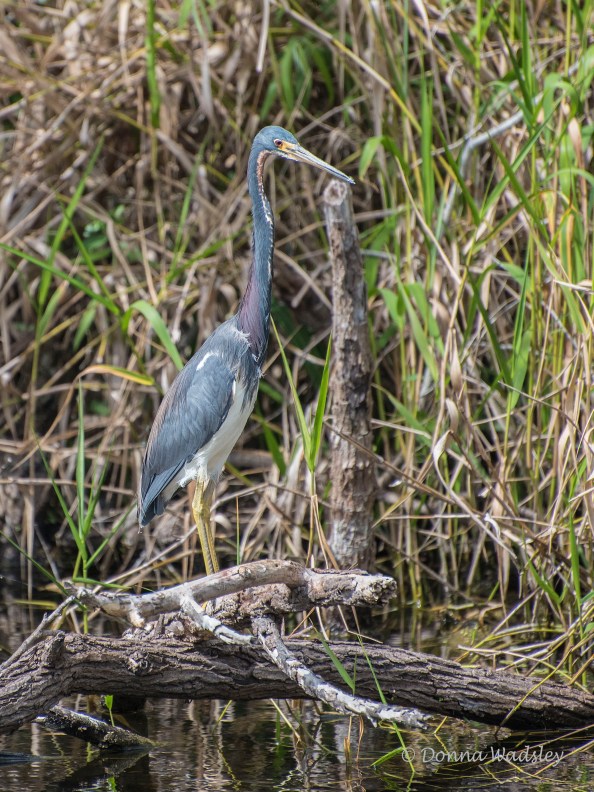
Tricolored Heron


Tricolored Herons in mangroves at sunset
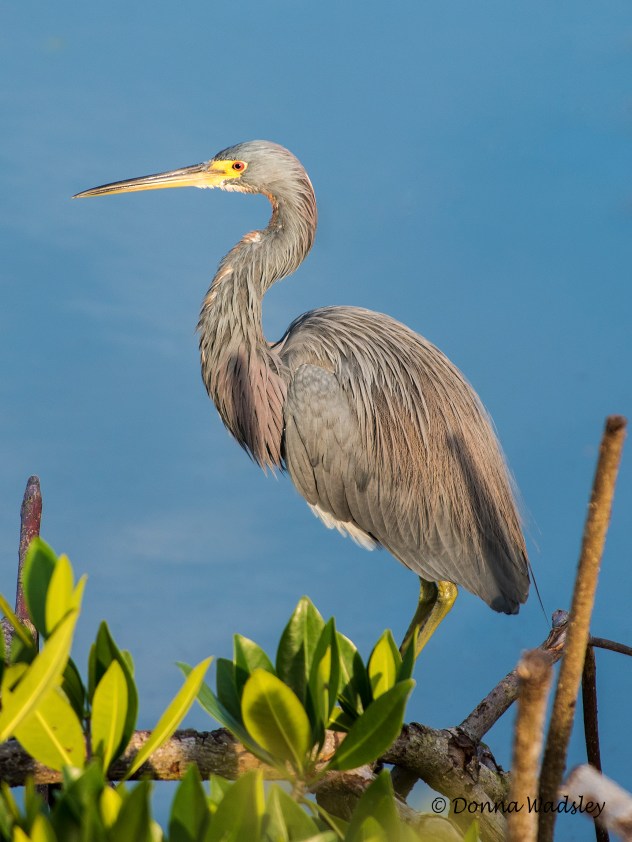
Tricolored Heron at sunrise
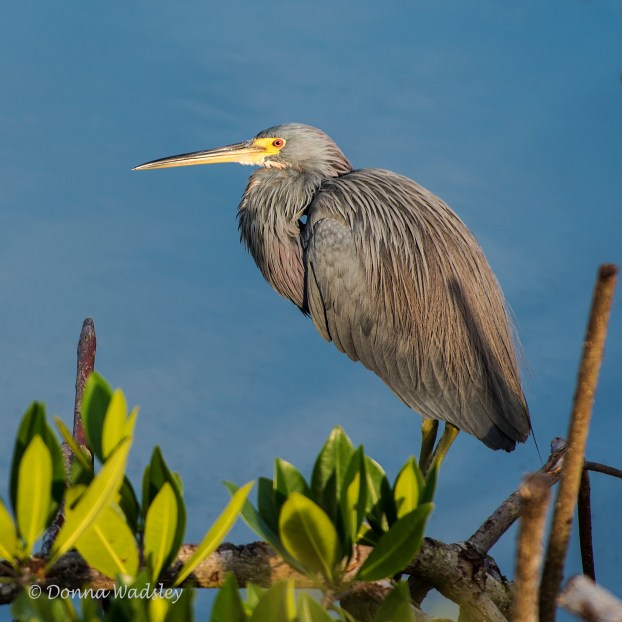
Tricolored Heron at sunrise
The Tricolored Heron is elegant in its blue-gray, lavender and white plumage. And what a beautiful red eye.
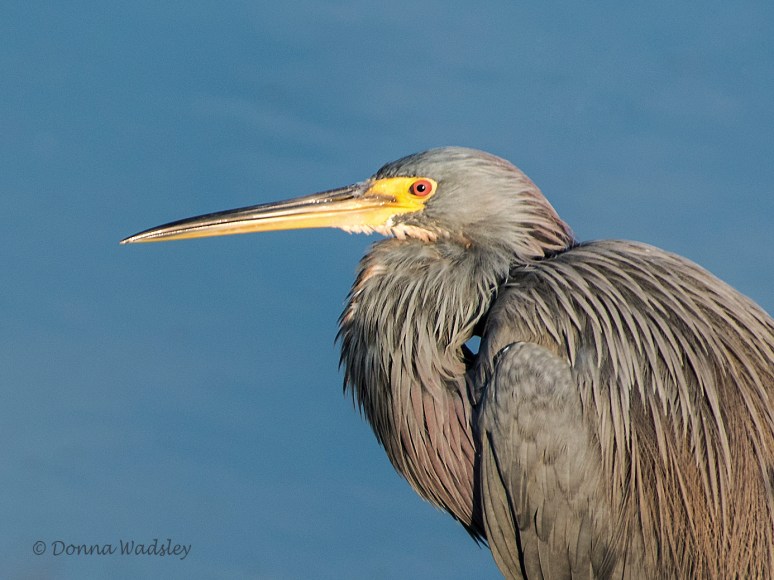
Tricolored Heron closeup
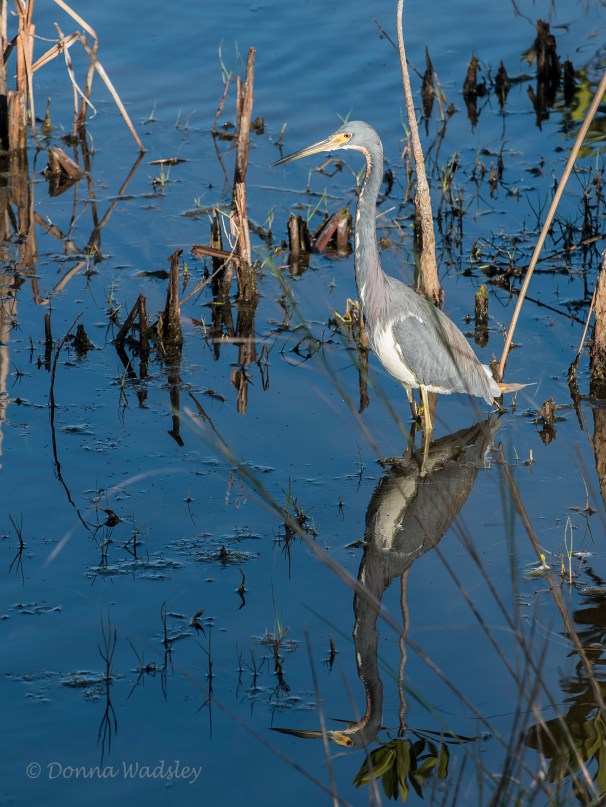
Tricolored Heron Reflection

Tricolored Heron getting excited for another one landing nearby
Ah, bird love is in the air in the Everglades!

 Bay Photos by Donna