
Pied-billed Grebe
With alligators, snakes, and other critters slithering around in the swamp, I was surprised and a bit worried to see this little Pied-billed Grebe diving for food.
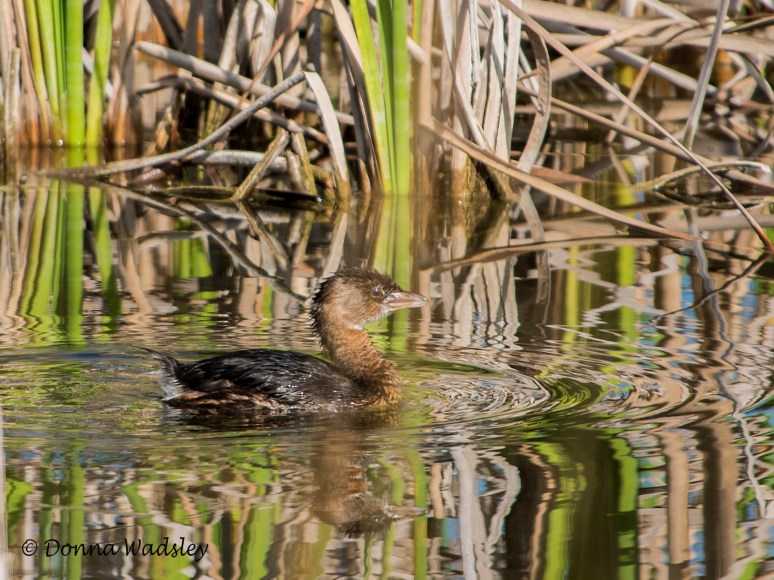
Pied-billed Grebe
I always enjoy seeing this adorable water bird.
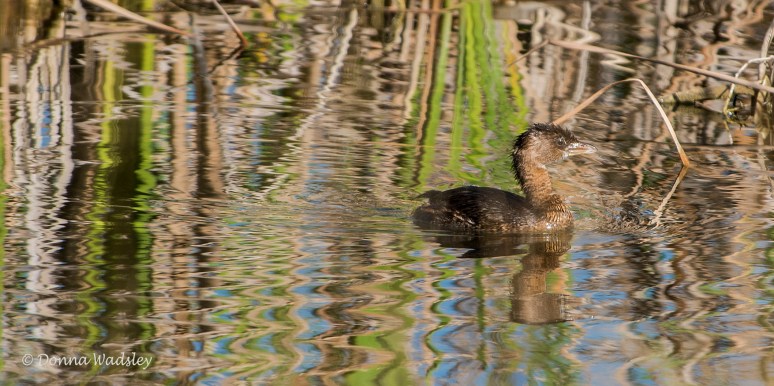
Pied-billed Grebe
— Photos taken in Big Cypress Swamp National Preserve
Big Gators and Little Gators
There are roughly 1.25 million alligators living in Florida.
If you’re out exploring nature for wildlife in south/southwest Florida, you’re going to see alligators lurking in the wild.

Alligator – “Swamp Skimming”

Alligator – “Big Boy” or “Voluptuous Gal”

Alligator – “Toothy Grin”

Alligator – “I think I’ve outgrown my log couch”
A different day, I found three juvenile alligators sunning in the early afternoon. They were about two feet long.
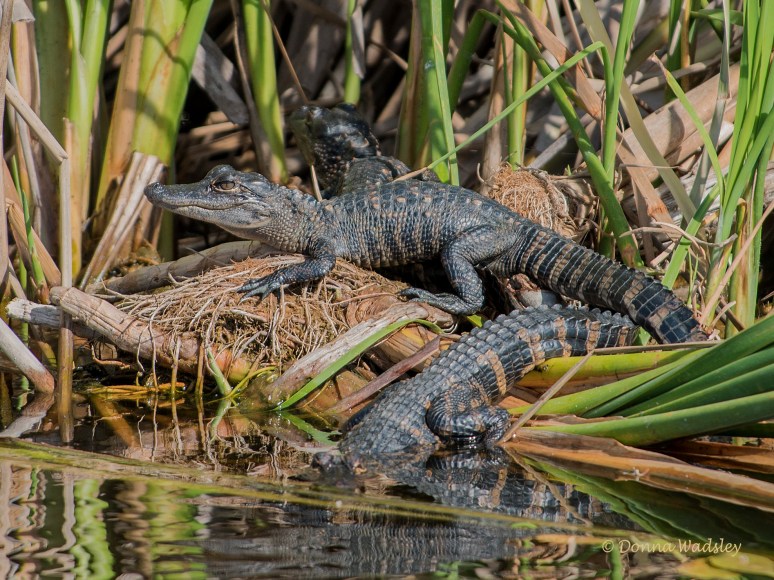
Little Alligators – see all three?
I spotted Momma Alligator hiding across the swamp about 60-70 feet away…..just her eyes above the water…..looking my way.
I couldn’t get a decent photo of her from where I was standing and decided it wasn’t a good idea to hang around for one.
I looked back at the juveniles and snapped a couple more shots, as they went on with their afternoon nap.
Those little alligators knew they were safe. 😉

Juvenile Alligator – “Snoozin’ with a smile”
— Adult alligator photos taken at Big Cypress Swamp National Preserve
— Juvenile alligator photos taken at Fakahatchee Strand Preserve State Park
Northern Parulas
I’ve seen several new bird lifers since arriving to Florida, but they’re in a fleeting moment, winging by me. No time to even think about putting a lens on them. So ‘for me’, they don’t count towards my ‘number’. A lifer seen can only be counted if I score a photo to prove it. 🙂
Sooooo…..I finally got a photo of a new lifer, yay! A small warbler called the Northern Parula.
I had no idea what the flock of unfamiliar birds were, creating a lovely, exciting noise above me.
They came with a burst through the forest, making quick stops on branches, then taking off again. I tried my best with hopes of luck to lock on at least one hopefully.

Northern Parula

Northern Parula
One Northern Parula, two angles

Another Northern Parula
Northern Parulas are considered an eastern warbler, but they occasionally breed along California’s coast as well as in New Mexico and Arizona. The key to their presence is moss; Spanish moss in the south and beard moss in the boreal forest farther north.

And another Northern Parula, with a small worm
They continued their burst through the overhead tree canopy and were gone, both in sight and sound, in less than a minute.
Welcome to my lifer list, Northern Parula #194!
— Photos taken along the Big Cypress Bend Boardwalk at the Fakahatchee Strand State Preserve.
Palm Warblers
After summer breeding in Canada where there are no palm trees, Palm Warblers migrate to southern Florida and the Caribbean region for the winter season.
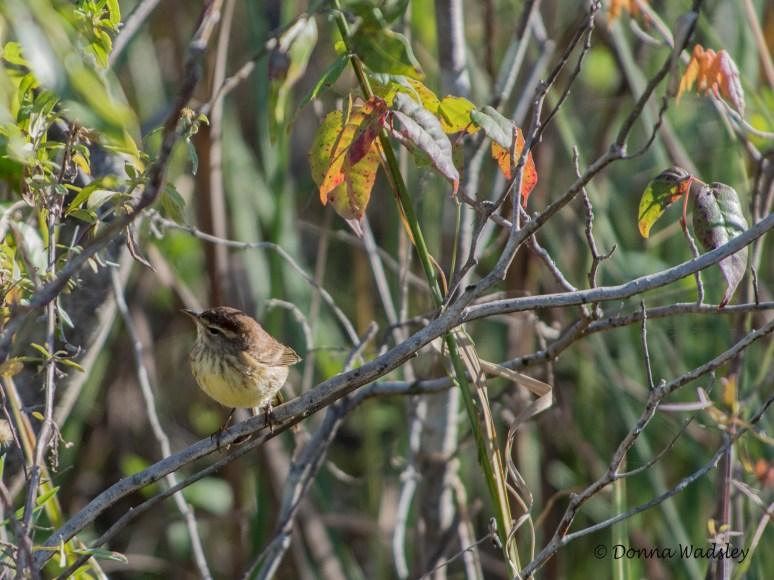
Palm Warbler – “No, I won’t look at you”
Big Cypress National Preserve
Though the Palm Warbler’s name might imply it is a tropical bird, it’s actually one of the northernmost breeding of all warblers (except for the Blackpoll Warbler).
They were named when the first specimen was collected on Hispaniola, a Caribbean island that happen to have a lot of palm trees.
In Florida, however, you’re more likely to find the Palm Warbler foraging in low shrubs and isolated trees.

Palm Warbler
Big Cypress National Preserve
I’ve fallen in love with my next close-up photo, with the soft colors framing the Palm Warbler.
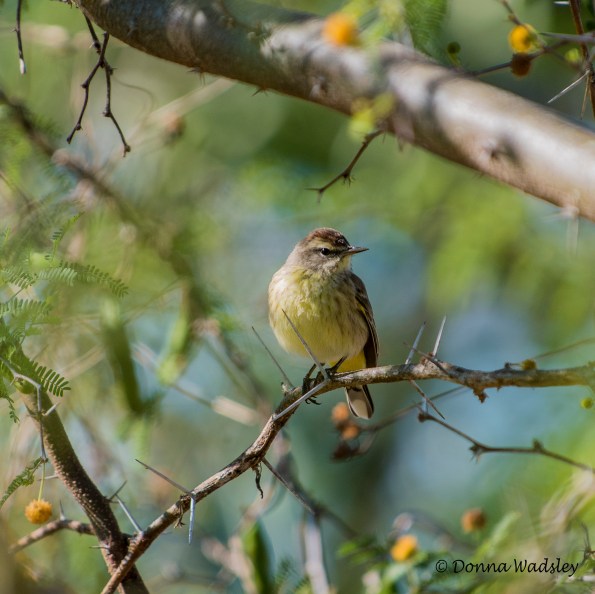
Palm Warbler
Everglades National Park – Gulf Coast
Green Herons
My last post shared two ‘blue’ herons. Here is the Green Heron, the smallest of all herons in the United States, in both habitat and close-up shots.

Green Heron

Green Heron
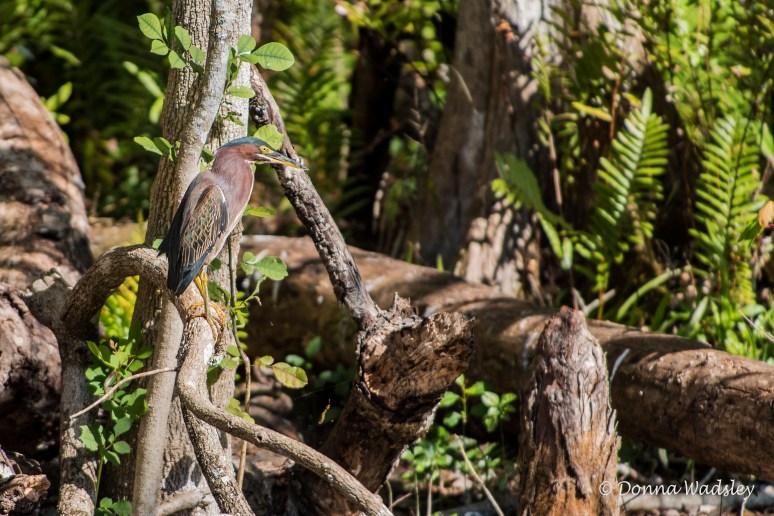
Green Heron
— Photos taken at Big Cypress National Preserve
Herons – Great Blue & Little Blue
A Great Blue Heron arrived to fish alongside a Little Blue Heron.
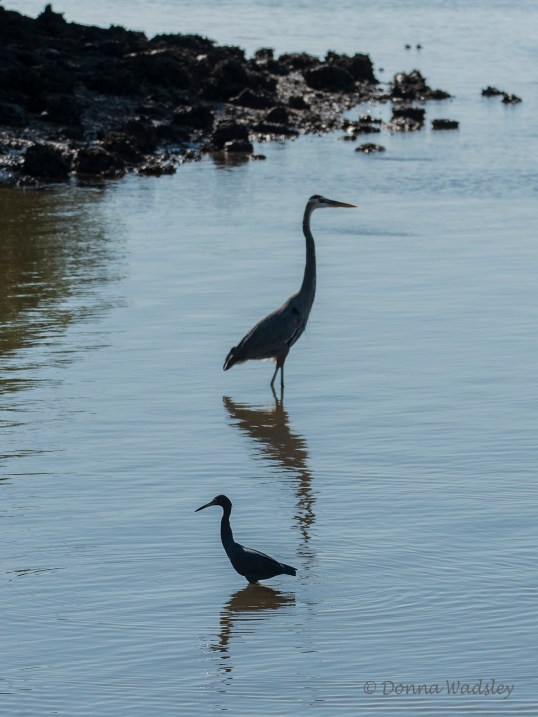
Silhouetted size comparison
Great Blue Heron (background), Little Blue Heron (foreground)
As I walked slowly down the trail to the left, both herons began walking to my right, just as I had hoped, continuing their fishing.
Here’s my favorite shot of each heron once I got positioned between the sunlight and them.

Great Blue Heron
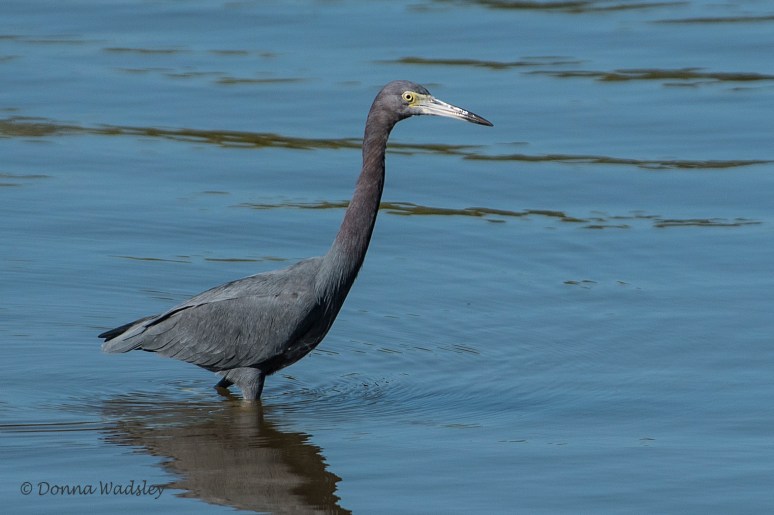
Little Blue Heron
— Photos taken at Everglades NP, Gulf Coast
A Friendly Feathered Face – Osprey
I knew I’d be back in the loop with my favorite bird, the Osprey, once we settled in Florida. 😊
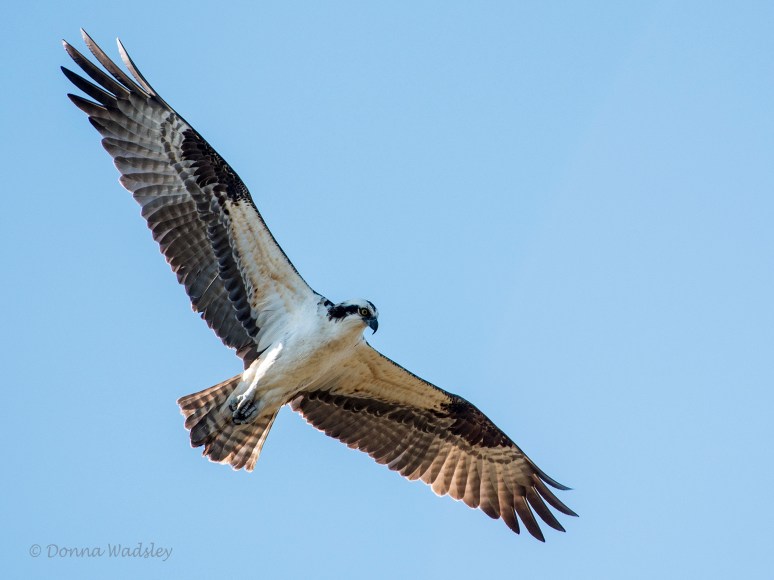
Osprey
Our Chesapeake Bay region Osprey arrive in March and then migrate August/September to the South America region for the winter.
Here in Florida, Osprey are year-round residents. Mated pairs are rebonding and building nests here already.
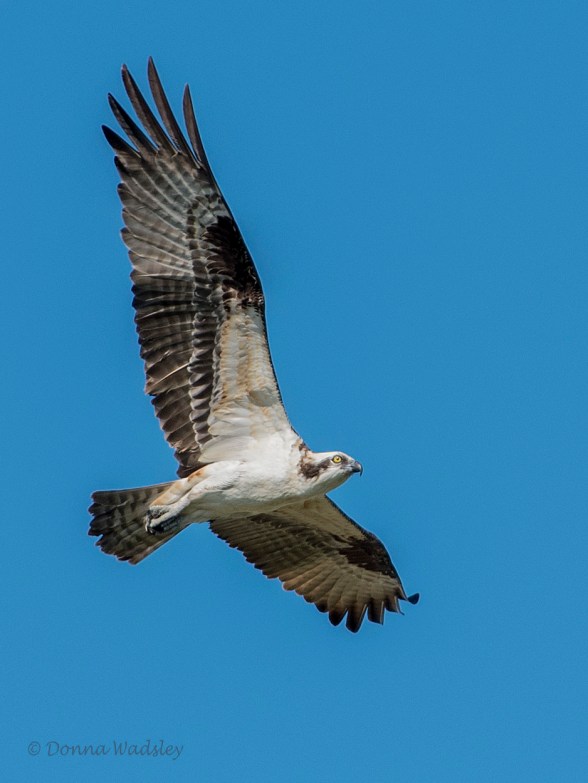
Osprey
I’m guessing you know you’ll be seeing more of this bird in my future posts. 😉
Florida’s Pelicans
After years of wanting to visit Florida’s remote Everglades National Park and surrounding areas, we’ve finally made it this winter, setting up camp alongside the Barron River in Everglades City.

Brown Pelican
Everglades City is a total of 1.2 square miles (3.1 km) with a resident population of less than 500. No main stores, no fast food, just a small, resilient fishing community that has endured hurricane after hurricane, their last major devastation occurring with Irma in September 2017.

Brown Pelican

Brown Pelican
We picked Everglades City for its laid-back/no crowds atmosphere and as an excellent nature/wildlife pivot point to the surrounding nature areas. No traffic congestion here.

White Pelicans
When I would think of Florida as a kid, I would think Pelicans. They were cool with their awkwardness and prehistoric looks.
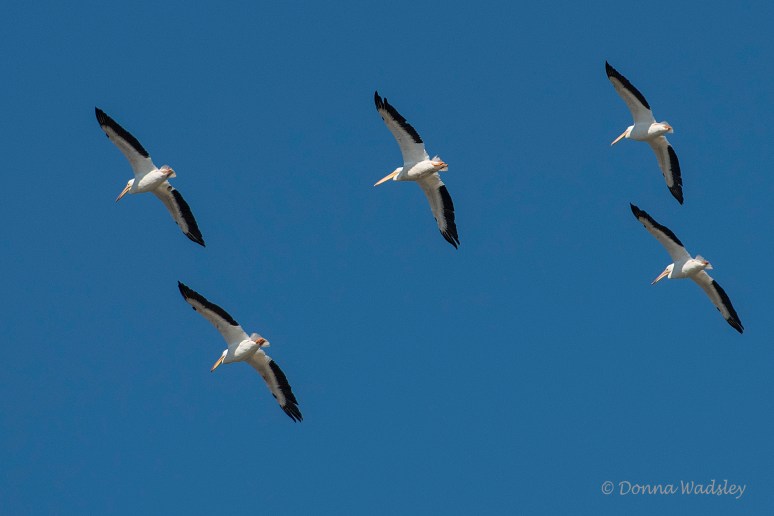
White Pelicans
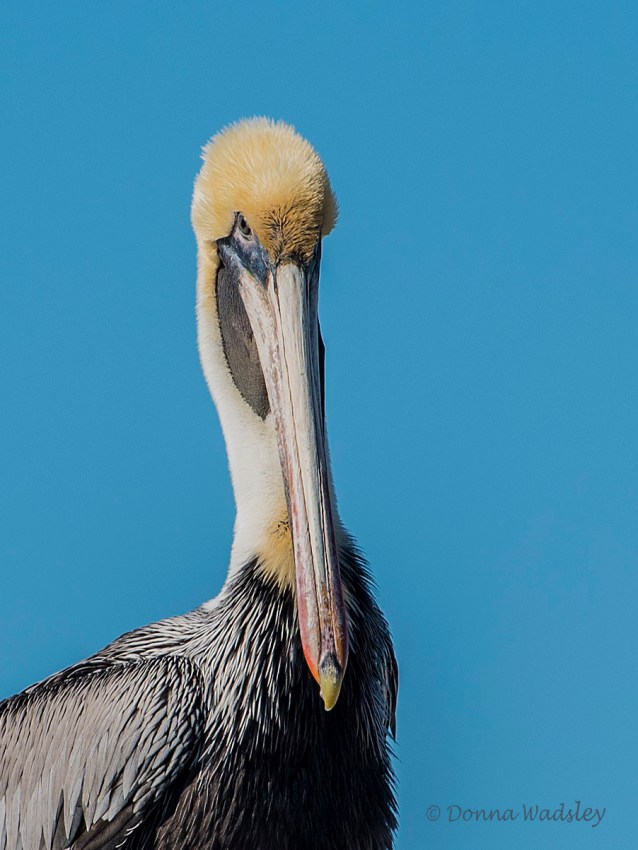
Brown Pelican – “Why The Long Face?”
I will enjoy my Pelican opportunities!
Squirreling Around
Happy New Year to all of you! I wish you a year full of good health, much joy, and lasting prosperity!
With the holidays behind us, my husband and I have taken off on an adventure for warmer weather to visit new places and search for its promised amazing wildlife. I’ll reveal that exciting location in my next post.
For now, I’ll share this adorable squirrel who posed nicely for me while scampering around the woods behind our overnight campsite in Lumberton, North Carolina.
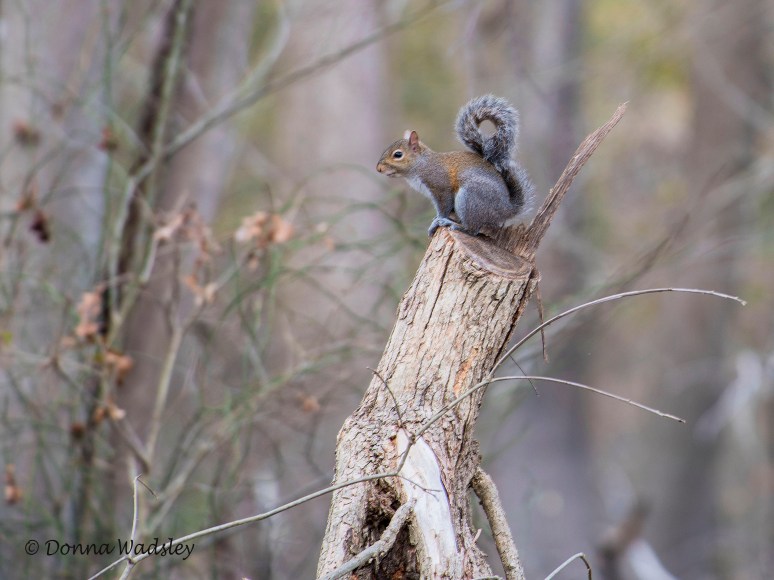
Squirrel – Sittin’ Pretty
“The beauty and charm of the wilderness are his for the asking,
for the edges of the wilderness lie close beside the beaten roads of the present travel.”
— Theodore Roosevelt
Red-bellied Woodpecker
There are several species of resident woodpeckers around Lake Greenwood.
One of those is the Red-bellied Woodpecker.
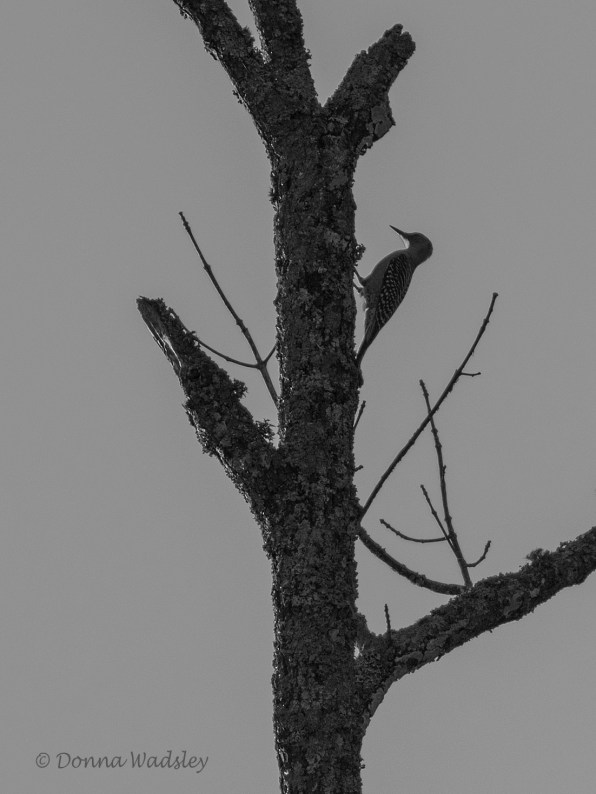
Red-bellied Woodpecker at sunset
I stood still and followed this one, as (s)he darted from tree to tree at sunset.
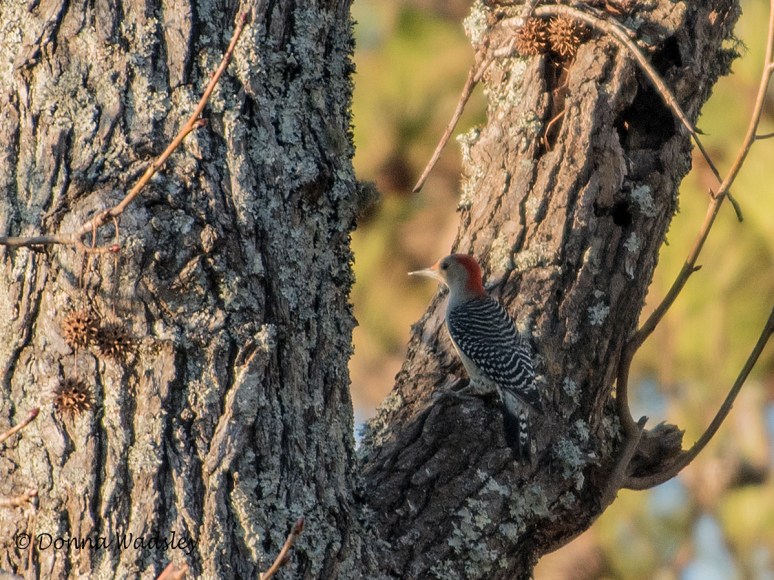
Red-bellied Woodpecker
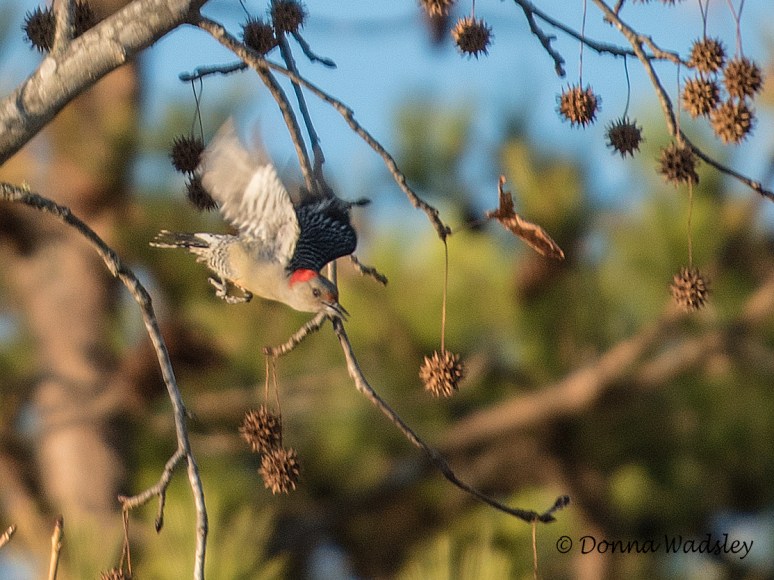
Red-bellied Woodpecker
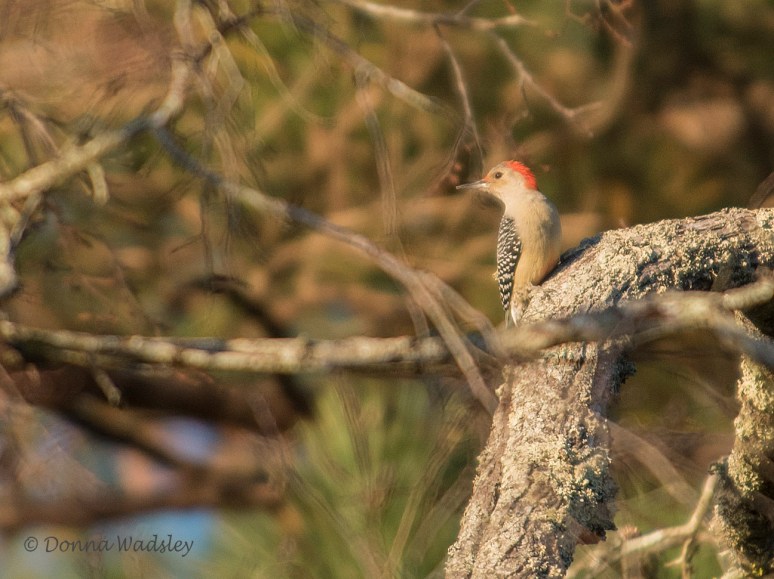
Red-Bellied Woodpecker
 Bay Photos by Donna