Glossy Ibis
Glossy Ibises appear to look dark at a distance; but upon closer range and good light, they reveal beautiful colors of deep maroon, emerald, bronze, and violet.
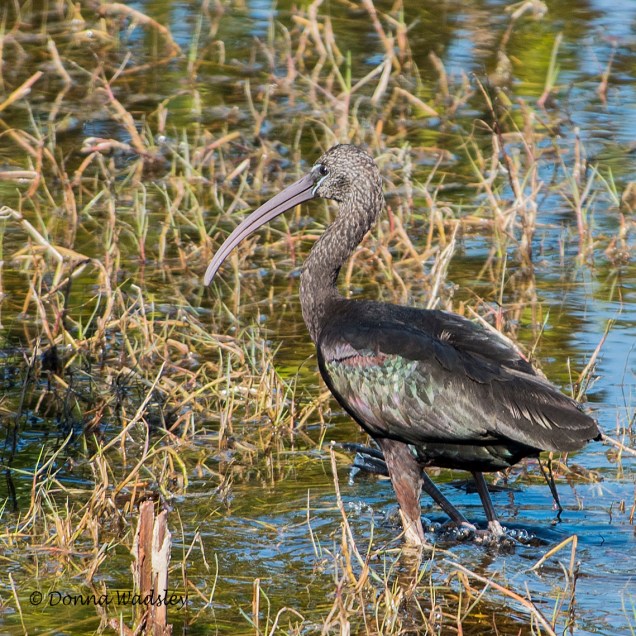
Glossy Ibis
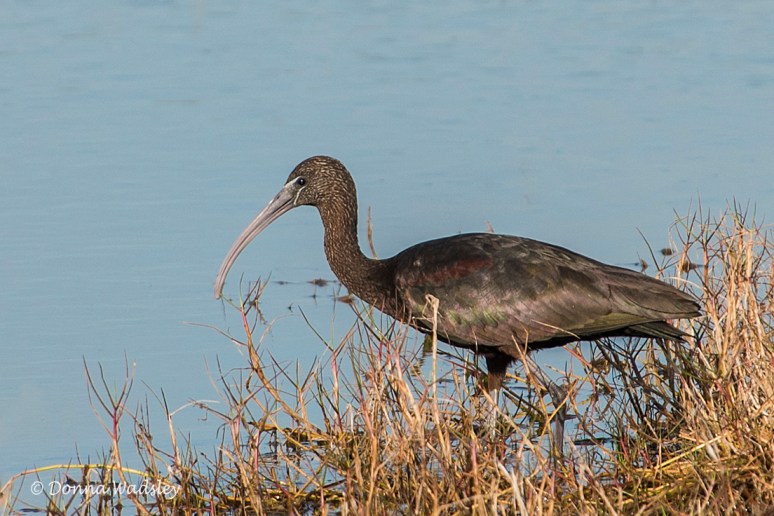
Glossy Ibis
While watching that last Glossy Ibis, it took flight.

Glossy Ibis taking flight

Glossy Ibis taking flight
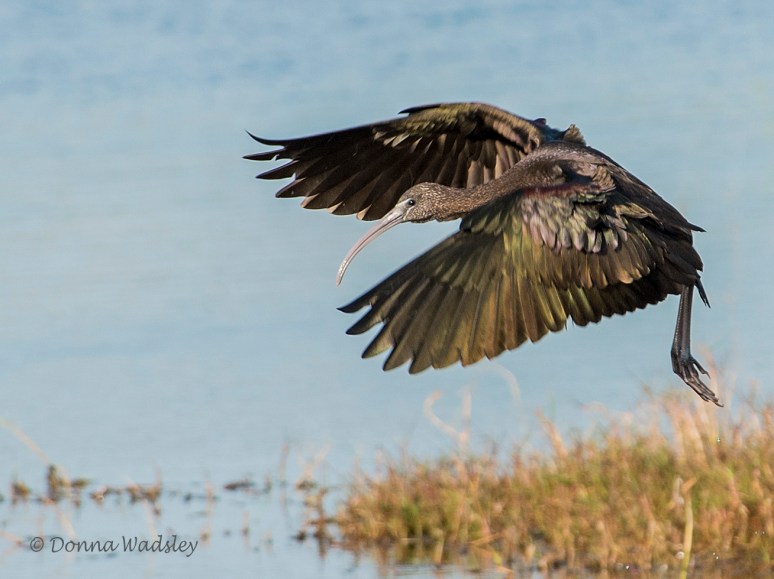
Glossy Ibis taking flight
The flight was more of an airborne jump crossover to another area of grasses to continue on with foraging for food, providing even more wonderful photo ops for me. 🙂
(Photos taken at 10,000 Islands NWR within the Everglades NP)
White-eyed Vireo
I heard this bird singing its heart out and I didn’t know the song. So I stayed with it for a while as it sang and flitted within the tree.
Patience paid off! Here’s my lifer #195, the White-eyed Vireo.

White-eyed Vireo
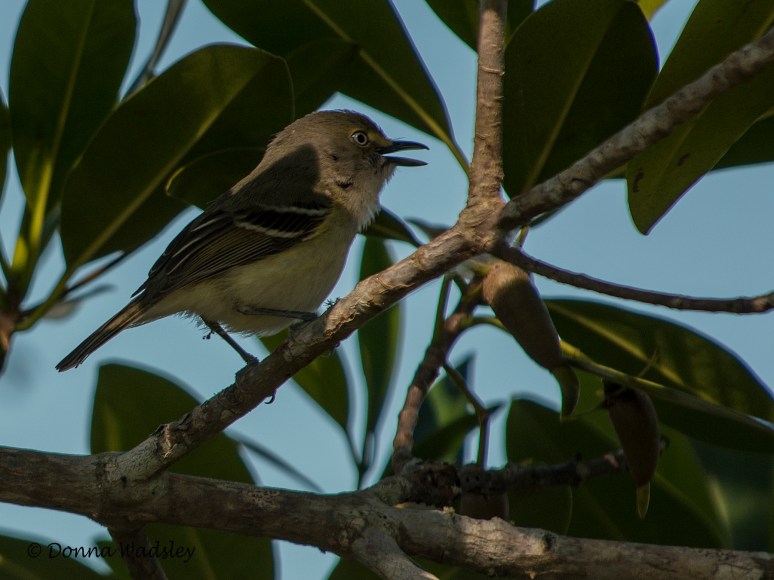
White-eyed Vireo
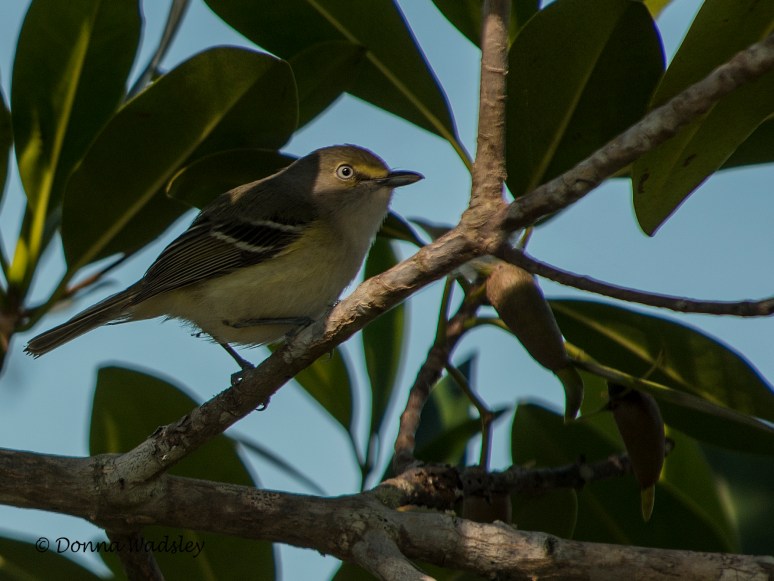
White-eyed Vireo
Thank you, Mr/Ms Vireo, you made my day!
A cool fact: The White-eyed Vireo bathes by rubbing its body against dewy foliage in the morning.
Spotted Sandpipers
The Spotted Sandpiper is the most widespread breeding sandpiper in North America. They migrate to the entire lower portion across the United States for the winter.
Spotted Sandpipers visit daily right in front of our camp site on the boat docks along the Barron River at dawn and dusk.
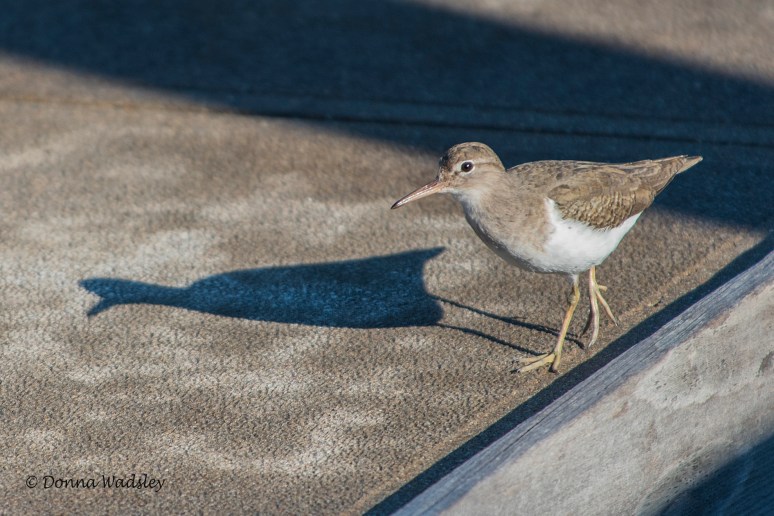
Spotted Sandpiper
The Spotted Sandpipers presently lack their bold spots that appear during breeding season.

Spotted Sandpiper

Spotted Sandpiper

Spotted Sandpipers

Spotted Sandpipers

Spotted Sandpiper

Spotted Sandpiper

Spotted Sandpiper in flight
Spotted Sandpipers
These medium-sized shorebirds will soon be migrating back north. Until then, I’ll continue to enjoy watching them, scurrying along, bobbing those tails!
Fish Crow Goes Fishing
A Fish Crow goes fishing.
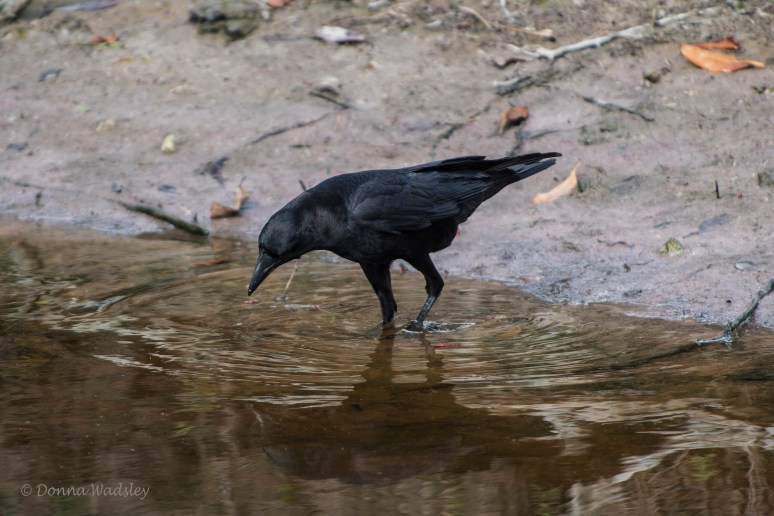
“The Stalk”

“Dive”

“Score!”

“Fish for Dinner”

“Just Before The Gulp”
Fish Crows are highly intelligent. And they will eat just about anything they can find or steal.
And, yes, they fish too. It is thought that Fish Crows learn to fish by watching other wading birds or gulls, or maybe with their smartness, they just figure it out themselves.
Blue-eyed Water Snake
(UPDATE: I have made corrections to my original post below to correct my ID. Experts have determined these photos are indeed a water snake but not a Cottonmouth as I originally ID’d. The information on the blue eyes is still true to fact. It is my intent to always provide correct ID’s and facts through my research before posting. I appreciate any comments and corrections to my posts. Thank you William!)
There are more than alligators lurking in Florida’s swamps and wetlands.
Everywhere I walk, I am diligent in paying attention on where I am stepping along my path.
Oh boy, was I ever so thankful I saw this water snake curled up beneath a clump of green before a few more steps.
I am not fond of snakes. Period.
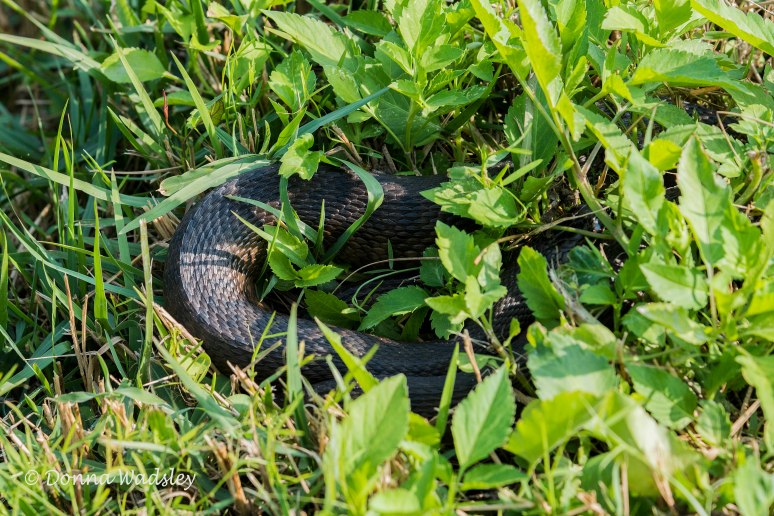
Water Snake
I took some close-ups with my long lens 70-200mm with a 1.7x teleconverter. I was safe!
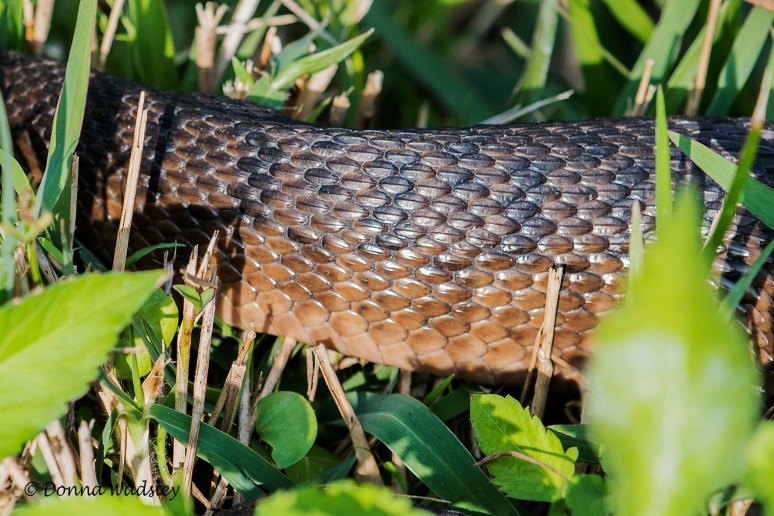
Water Snake Close-up

Water Snake Close-up
Some movement began as I kept looking for the water snake’s head.
And then it emerged.
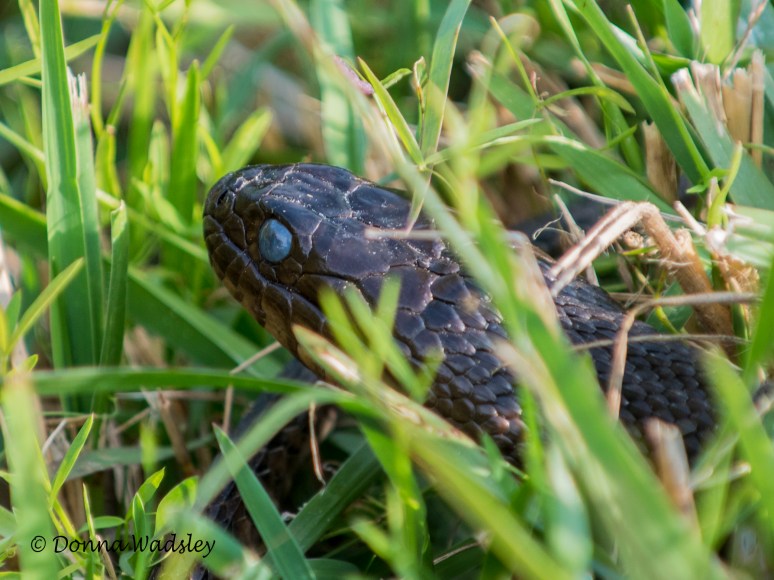
Water snake with blue eyes
Blue eyes?? I had to google this myself.
A snake with blue eyes is getting ready to shed. This eye color change occurs as a result of skin loosening and fluid building up between the old and new skin layers. At the peak of this transformation, the snake’s eyes take on a milky blue or blue-gray color for 2-4 days. At this time, their vision is blurry. It should be shedding its skin in another week or so.
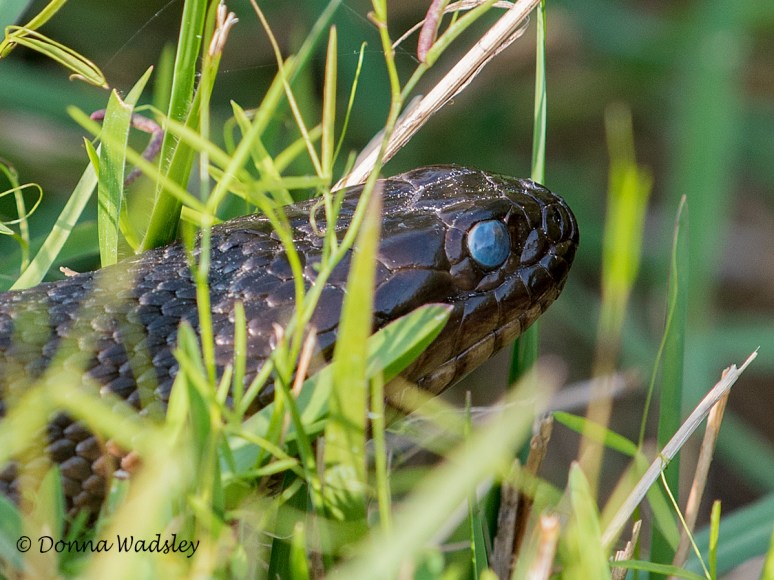
Water snake with blue eyes, a sign it is preparing to shed its skin
I felt I was now agitating the water snake so I backed away to leave. As I moved, it slithered down the grassy embankment and disappeared.
(Photos taken at Fakahatchee Strand Preserve State Park)
Another Cardinal, But This One’s Not A Bird
My last post featured a Northern Cardinal, one of my favorite birds.
This post features another Cardinal, a bromeliad called the Cardinal Airplant.
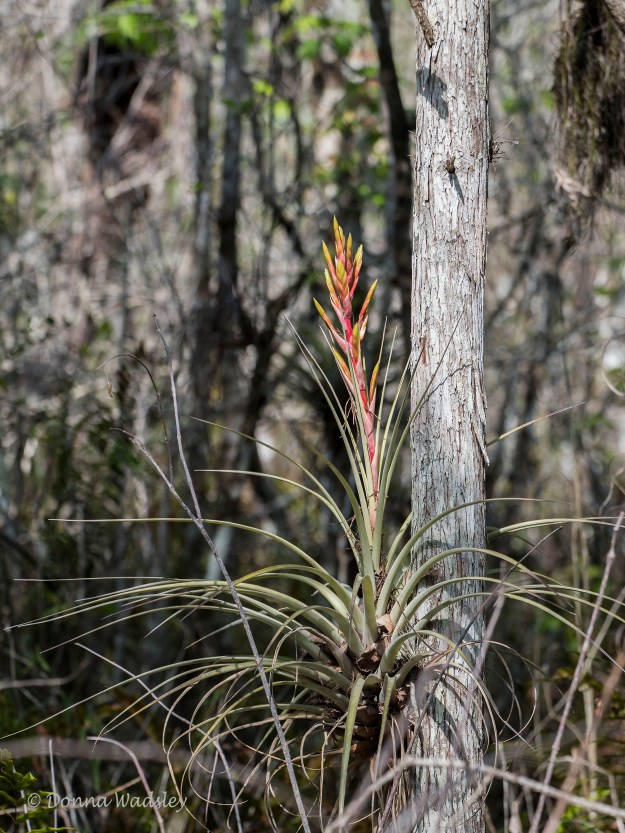
Cardinal Airplant
Cardinal Airplants are one of 16 native bromeliads in Florida that are almost exclusively tropical and grow on woody hosts high in the canopy.


Cardinal Airplants


The Cardinal’s red stalks or “tanks” grow throughout the year. In January/February, they produce small purple flowers on the tips. No blooming purple flowers were seen on this trail a few days ago.
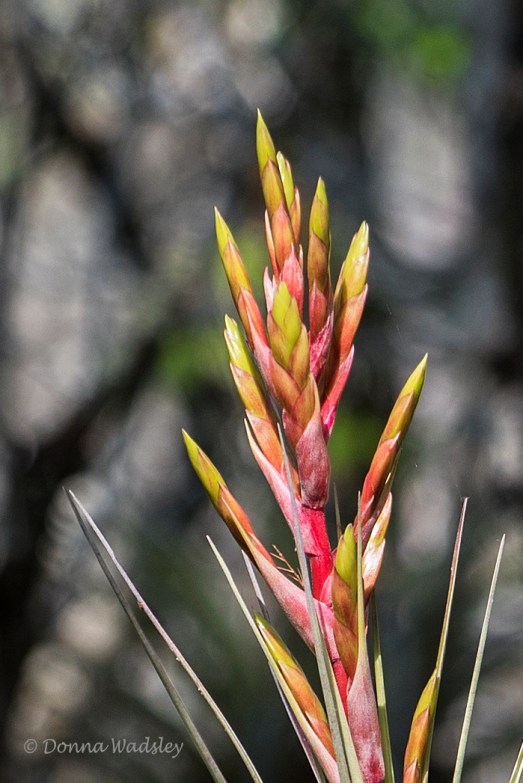
Cardinal Airplant
The Cardinal Airplant is listed as Endangered in Florida due to the Mexican bromeliad-eating weevil. In addition, it is threatened by illegal collecting and habitat destruction.
(Photos taken along Janes Scenic Drive in the Fakahatchee Strand Preserve State Park. The drive is an 11-mile long unimproved, narrow dirt road that dead-ends, giving you access to a portion of Florida’s remaining subtropical wilderness.)
A Northern Cardinal In The Swamp
While I was hanging out in Big Cypress Swamp Preserve, look who else was too.
One of my favorites, the Northern Cardinal.

Northern Cardinal (male)
Great Crested Flycatcher
High atop a tree, I heard the calling of the Great Crested Flycatcher.
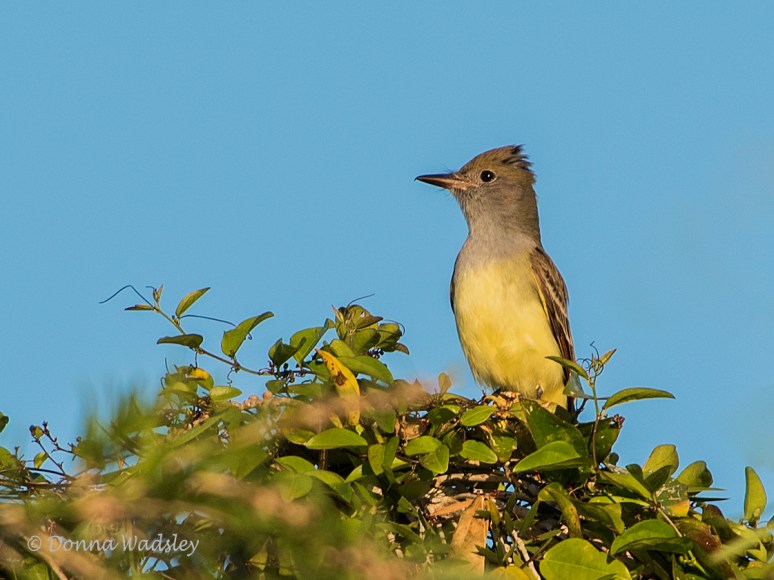
Great Crested Flycatcher
After realizing I was watching it, the flycatcher flew to a different tree.

Great Crested Flycatcher
The above photo was cropped from the below photo.

Great Crested Flycatcher
I couldn’t help playing with that last photo doing the two composition crops, it was so colorful. 🙂
— Photo taken in a residential area in Everglades City, Florida
American Kestrel
The American Kestrel is North America’s littlest falcon and also one of the most colorful of all raptors.

American Kestrel

American Kestrel
I’ve found this beauty a few times perched in one of the trees in an open, uncut grassy area in Everglades City.
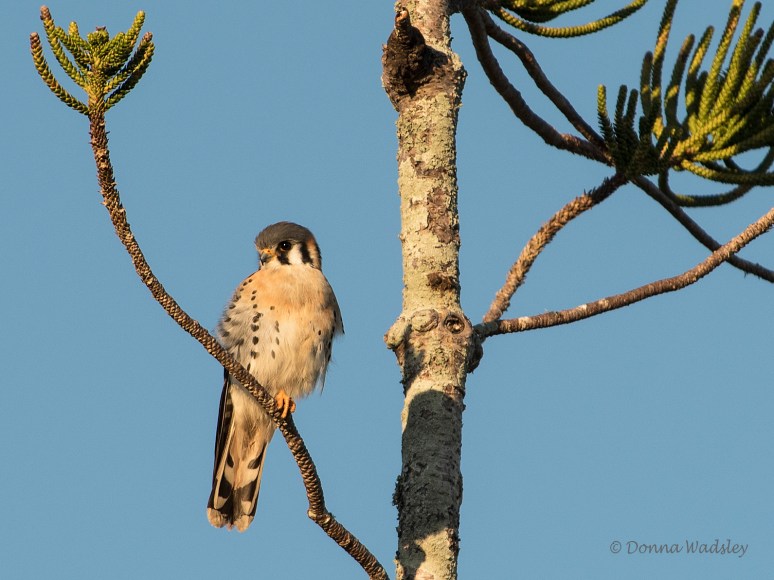
American Kestrel


American Kestrel in flight
The little area is an ideal hunting spot for it, and for me some nice photo opportunities. Yay!
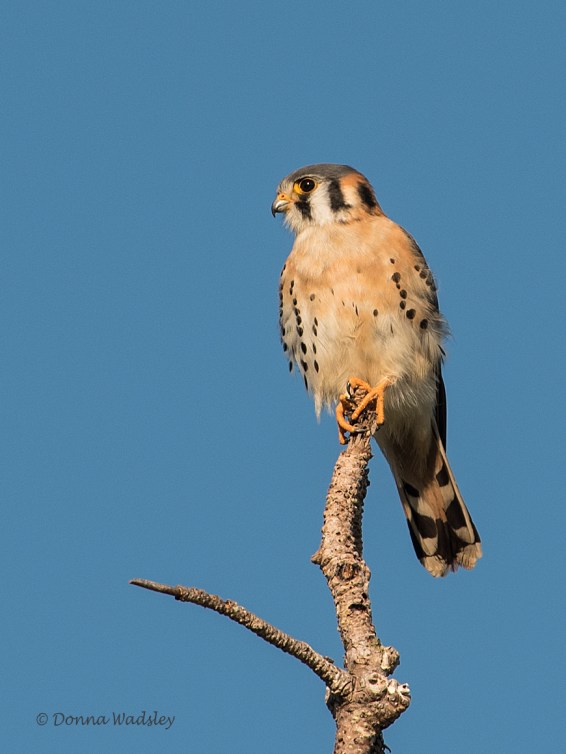
American Kestrel
Killdeers
I’ve seen and heard Killdeers fly by in pairs and small flocks several times in past weeks. I finally sighted a pair of these pretty plovers on the ground.

Killdeer
Their bold red eye-ring is quite stunning.

Killdeer
While the above one foraged away from me, I captured the other Killdeer preening, giving a glimpse of its bright orange-buff rump that is usually only visible during flight.


Killdeer preening, giving a glimpse of their bright orange-buff rump

“I’m all done my preening, how do I look?” 🙂