More American White Pelicans
.
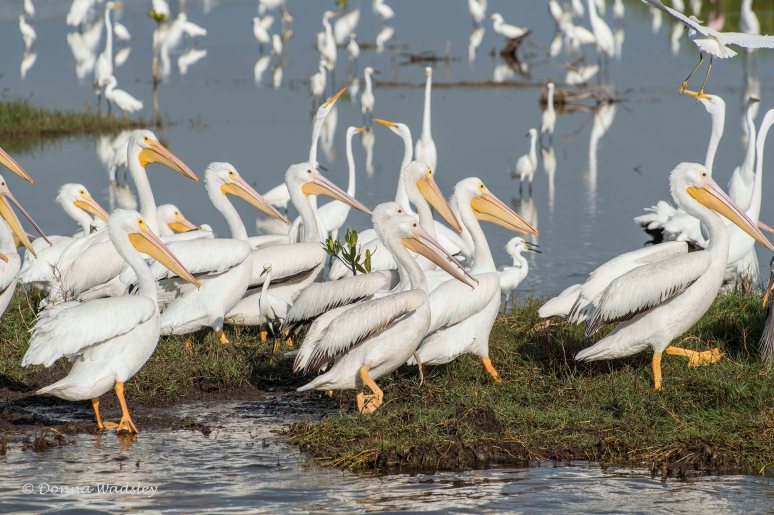
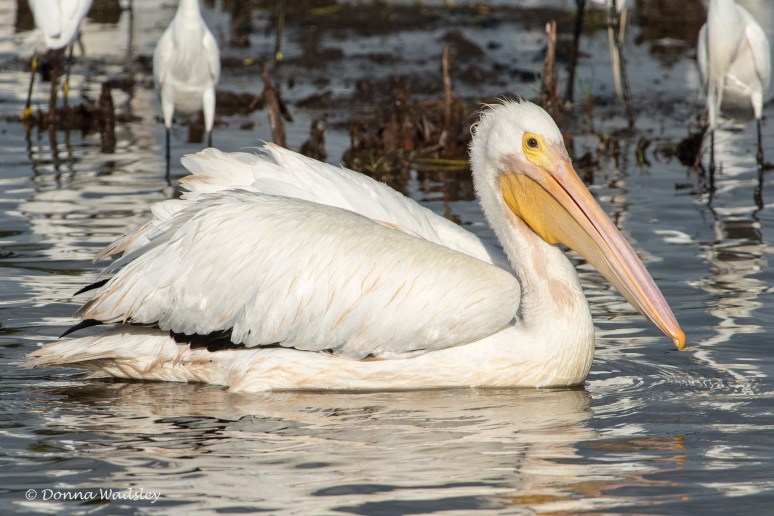
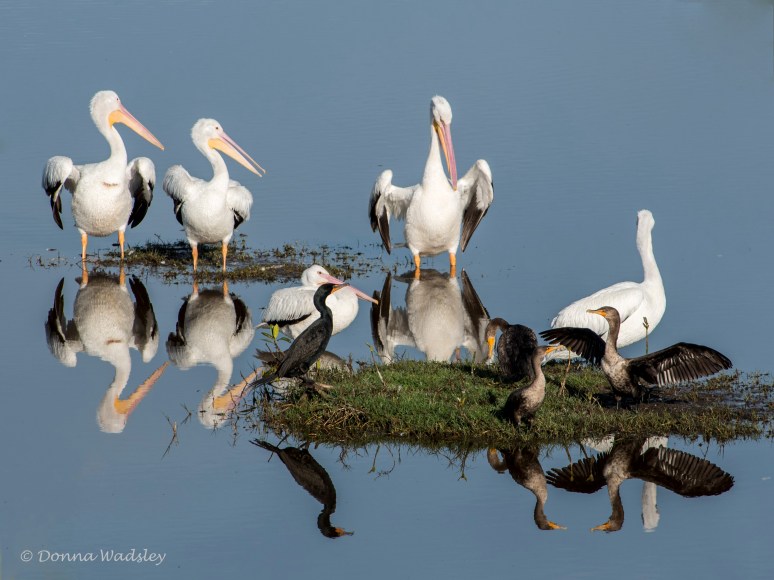
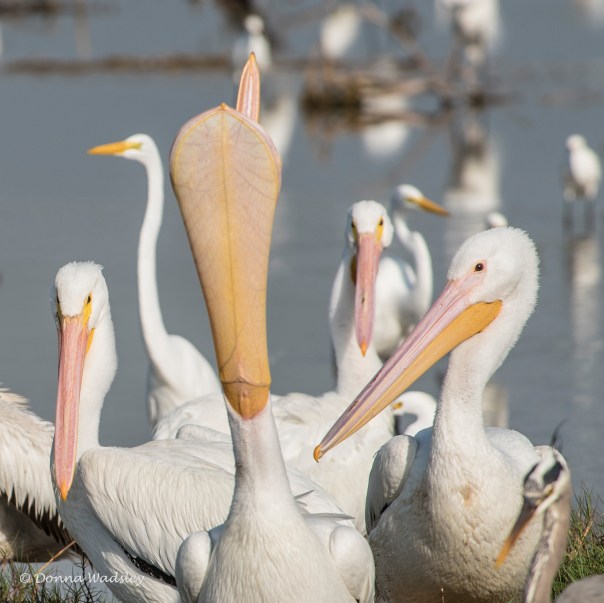
Here is another series of photos of the beautiful American White Pelican from two weeks ago. I hope you enjoy!
.

.
.
.

.
.

.

.
.

.
.
Red-shouldered Hawks – Mating Behavior
.
Yesterday early morning while golf cart birding, I spotted a pair of Red-shouldered Hawks in a pine tree. I stopped for this shot, including seeing the power lines crossing my ‘scene’ as I took the photo. Ugh. Must get better shot, I thought!
.
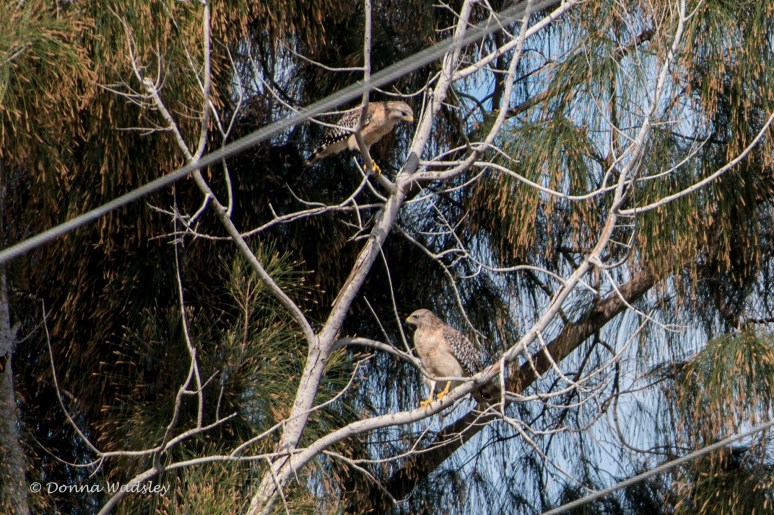
Red-shouldered Hawks (male top, female bottom)
.
I quickly moved while trying to get my lens back on the scene. At the same time, the male dropped down to the female and began mating!
.
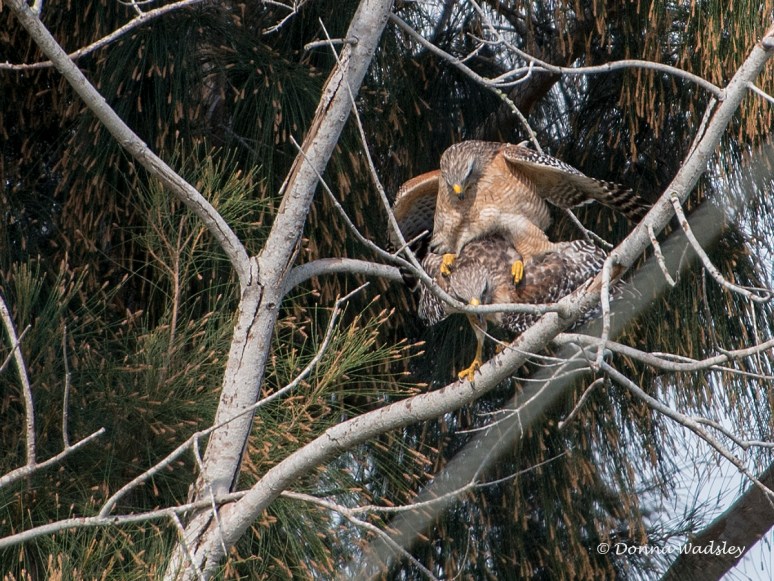
Red-shouldered Hawks mating
.
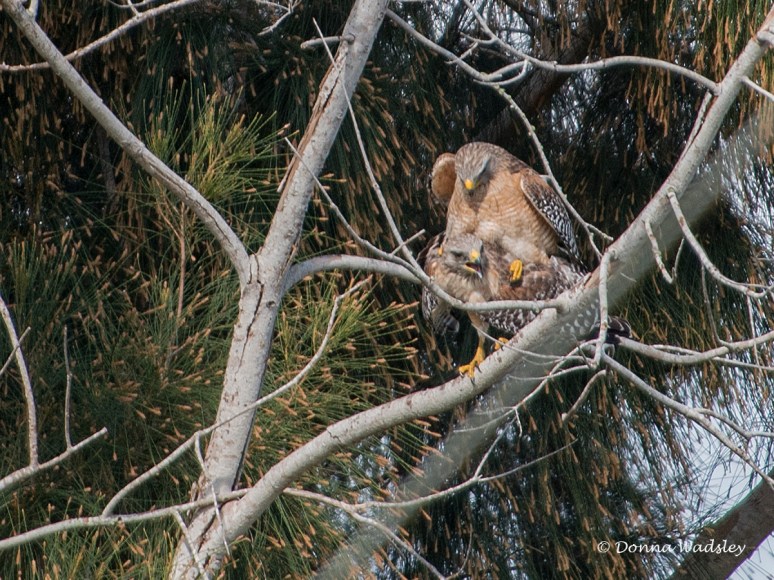
Red-shouldered Hawks mating
.
As is with birds, it was over just as quick as it started. But what followed I had not seen before. The female immediately began to nip at the male’s feathers. Bonding bites?
.

Female nipping male
.

Female nipping male as he edges away
.
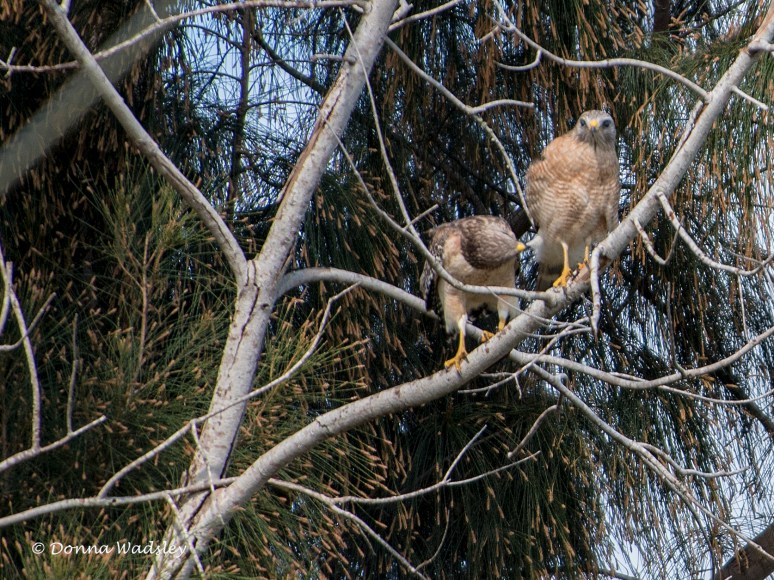
Female continues the bonding nips
.
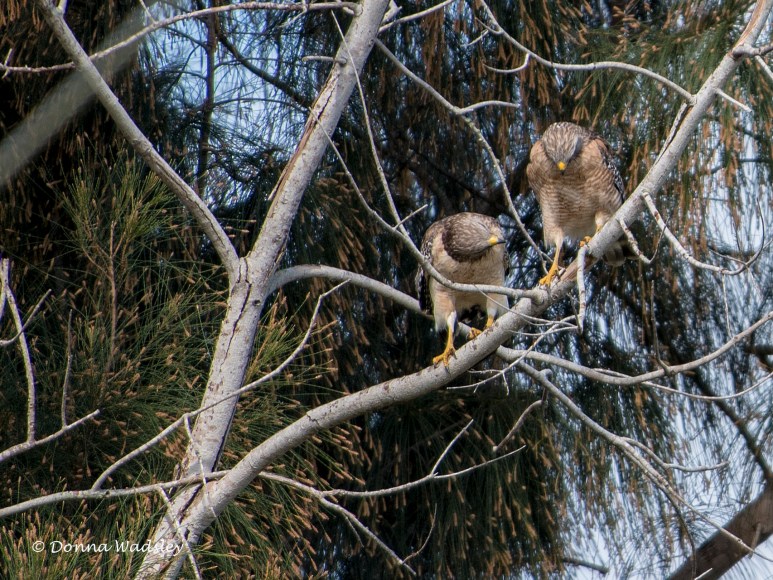
Female is saying something?
.
Just then some sunshine popped through the clouds, perfect timing for this next funny shot.
.
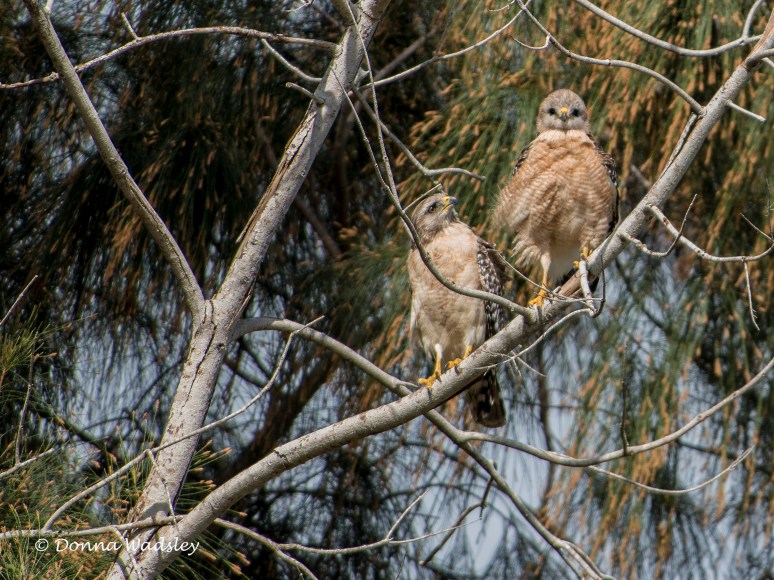
“Ooooh, Baby!”
(male gets excited/fluffs up, as the female watches)
.
She must have said something pretty good, you think? 😏
(Fact: Red-shouldered Hawks are monogamous and usually mate for life.)
.
.
A Day in the Life of a Great Blue Heron
.
It’s morning, time to wake up, Great Blue Heron.
You’ve got a lot to do today….
.

.
Standing on those nice long legs….
.

.
Fishing all day….
.

.
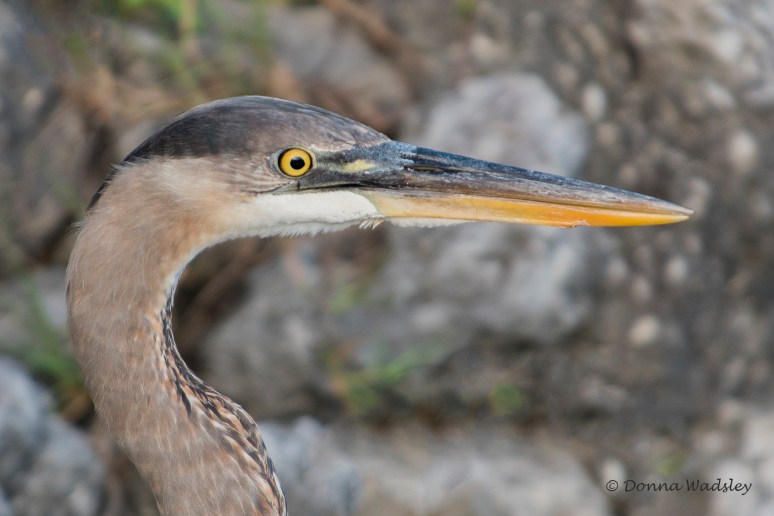
With a dagger beak…
.
.
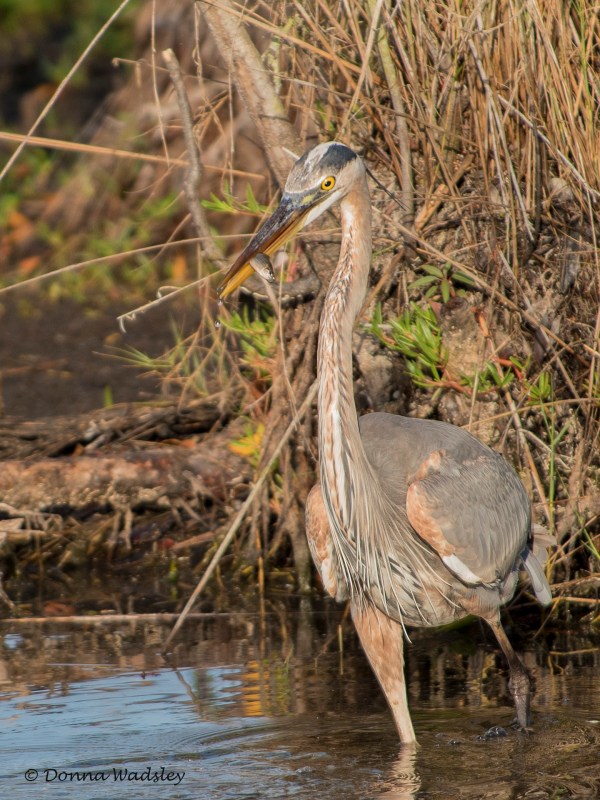
Successfully…
.
.
While protecting your fishing territory….
.

.
Or maybe some courtship….
.

.
Got to stay clean with an occasional bath….
.

.
And preen those gorgeous feathers….
.

.
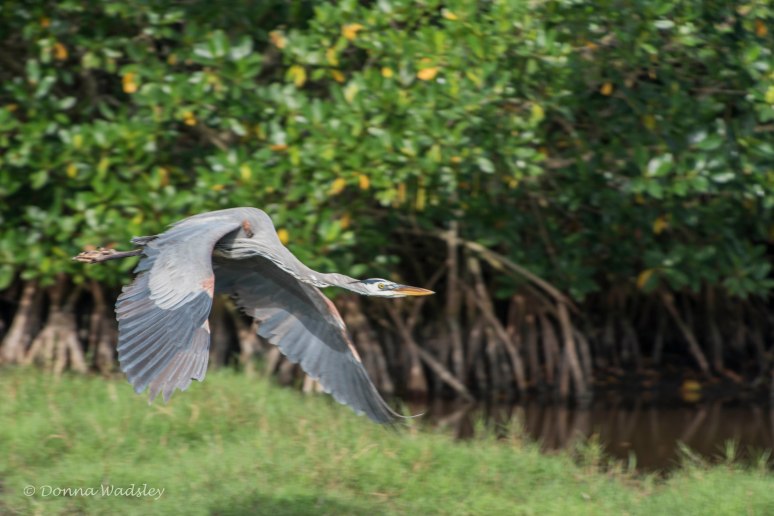
While flying around from favorite spot to favorite spot…..
.
.
Or sometimes just resting and enjoying the big view….
.

.
And as the busy day comes to an end, feeling sleepy and ready for the night’s rest….
.

.
A lot goes on in the day of the life of the Great Blue Heron.
(All photos taken in Florida in recent weeks.)
.
.
Common Myna
.
What a great surprise to spot a pair of birds that I recognized their ID from blogging friends’ posts in other countries.
Welcome to my bird lifer list #220, the Common Myna! Native to southern Asia where it is among the most common species, the Common Myna has been widely introduced elsewhere in the world, including Australia, New Zealand, Hawaii, and Florida.
.

Common Myna
.

Common Myna
.

Common Myna
.
Between these two birds, they gave perfect ops for profiles and flight. It can’t get any better than that with a new lifer! 😊
.
.
Five On The Wire – #2
.
Continuing with my series of five bird species perched on those not-so-pretty communication wires, that have those awesome 360° views they love.
.
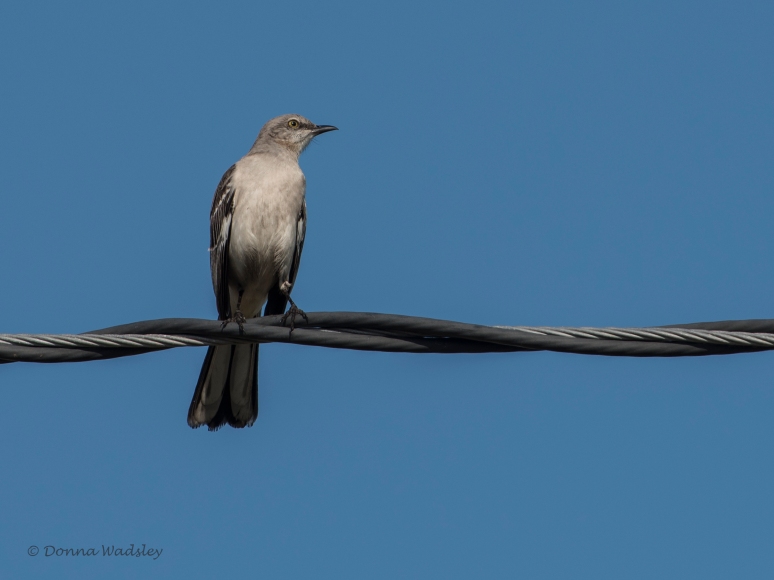
Northern Mockingbird
.
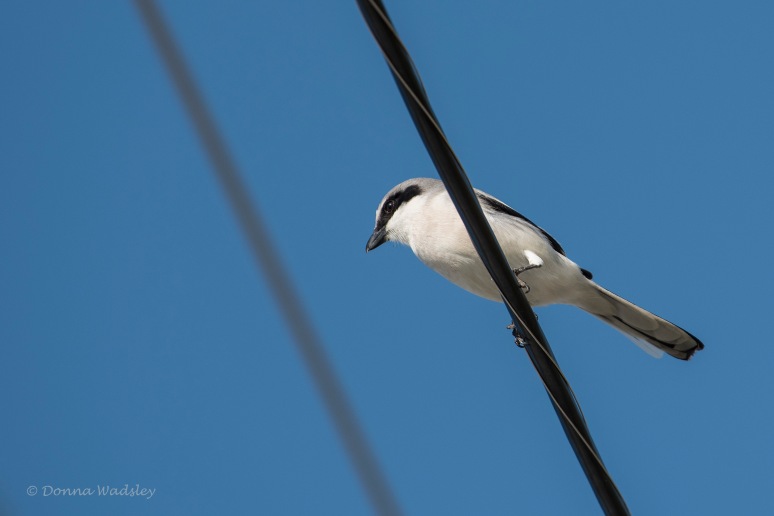
Loggerhead Shrike
.
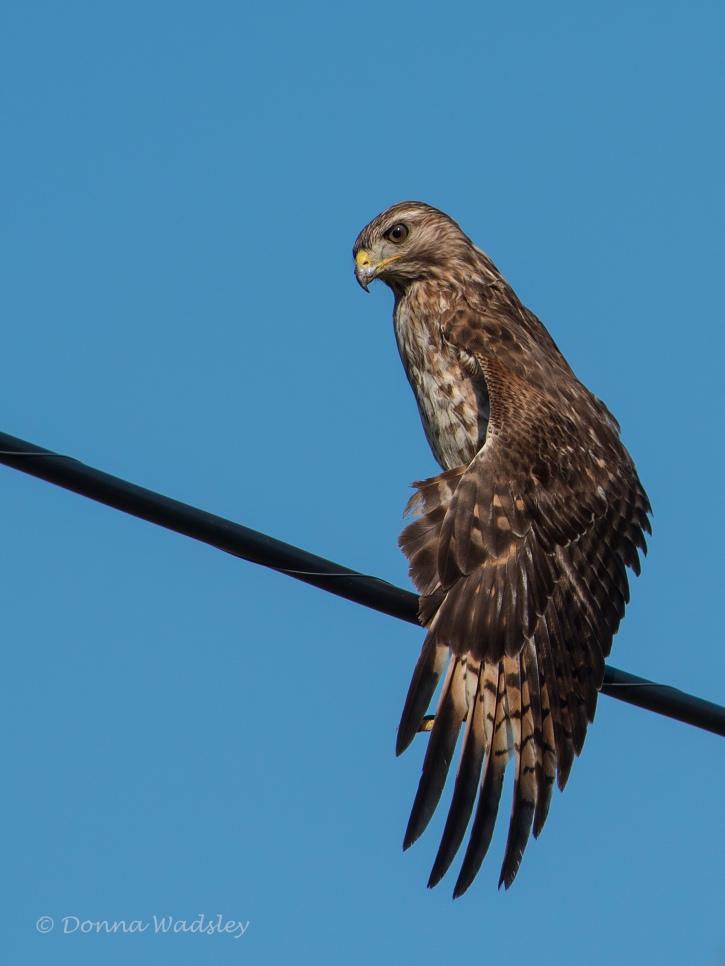
Red-shouldered Hawk
.
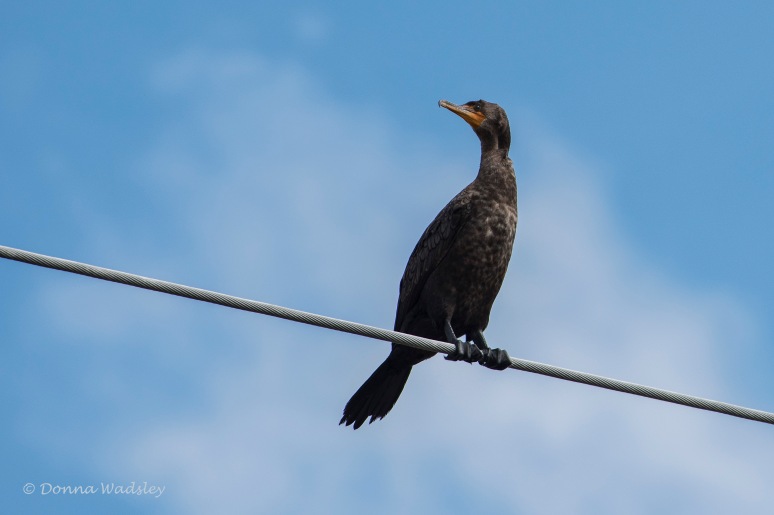
Double-crested Cormorant
.
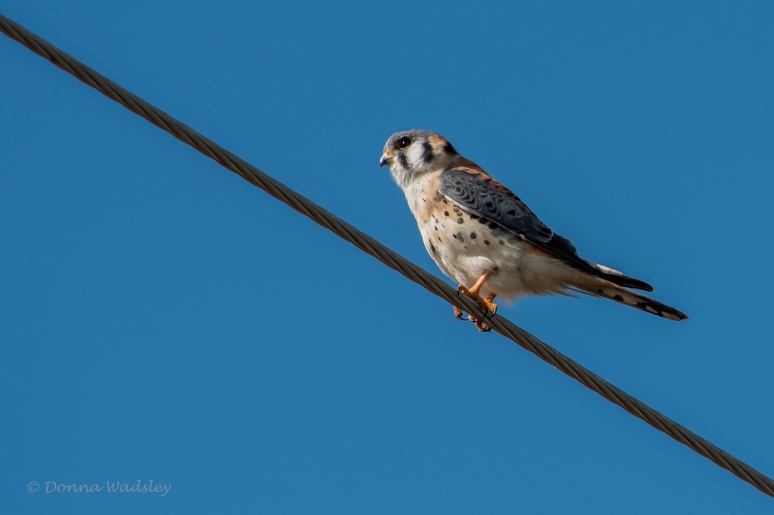
American Kestrel
.
.
Crab Abstract
.
I got distracted while birding yesterday. It happens! 😏
I took this photo from the Briggs Boardwalk, shooting down into the orange-colored water below me. Everything in the water looked orange. Including this Blue Crab who should really be blue/green.
This is the actual photo. I did not do any editing other than darken the exposure a bit to see the crab better. There are no filters applied. With the water’s dancing movement, the reflections of the marsh grasses directly behind the crab and the blue sky created an abstract of interesting lines and colors.
.

Blue Crab (orange in color)
.
There were several ‘orange’ Blue Crabs running around in the foot of water. With everything laying in the water looking the color orange, I’m guessing there was a high concentration of iron in that specific area. Along the rest of the boardwalk and other water/wetland areas, the rest was the normal dark brown/black, brackish coloring.
I have a fondness for blue crab decor, so I totally love this cool, nature-created abstract!
.
.
Northern Cardinal
.
A top favorite of mine, the Northern Cardinal. This one landed off to my left while I was photographing all those egrets at the refuge last week.
Cardinals are my favorite color, and they are a spiritual comfort to me. (post) It was a special moment! ❤️
.

Northern Cardinal (male)
“Cardinals appear when angels are near.”
.
.
Five On The Wing – #5
.
Here’s another set of five photos to my series of five bird species in flight.
To keep with five photos, there’s actually a bonus of two additional species, we’ve got a flock theme here!
.

Roseate Spoonbills
.
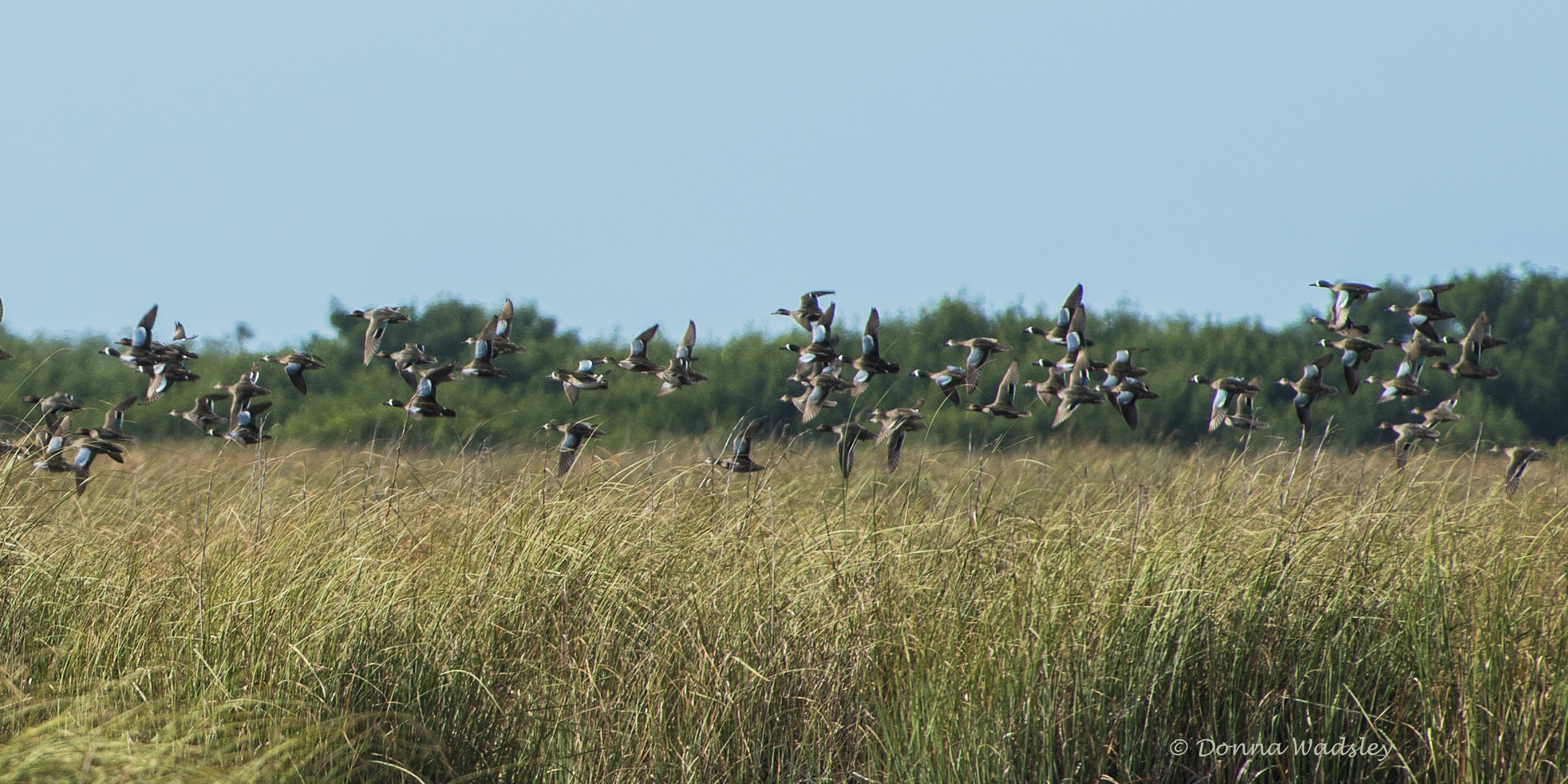
Blue-winged and Green-winged Teal
.

Least Sandpipers (short-billed) and Stilt Sandpipers (long-billed)
(Thank you, HJ, for help with these IDs!)
.

White Ibis in fog
.

American White Pelicans
“The Square Squadron” 🙂
.
.
Female Pileated Woodpecker
.
I pulled up to this beautiful gal in my birding mobile (golf cart) while cruising around Everglades City. I had seen a male here at this pole before. They’ve both been busy excavating a new nest hole.
.

Pileated Woodpecker (female)
.
The male Pileated Woodpecker is the first to begin excavating a nest cavity and does most of the work, but the female will help as it nears completion.
Their entrance hole is oblong rather than round like most other woodpecker holes, and they don’t line their nests with any material except for leftover wood chips.
The nest construction usually takes 3-6 weeks, and nests are rarely reused in later years. Cavity depth can range from 10-24 inches.
.
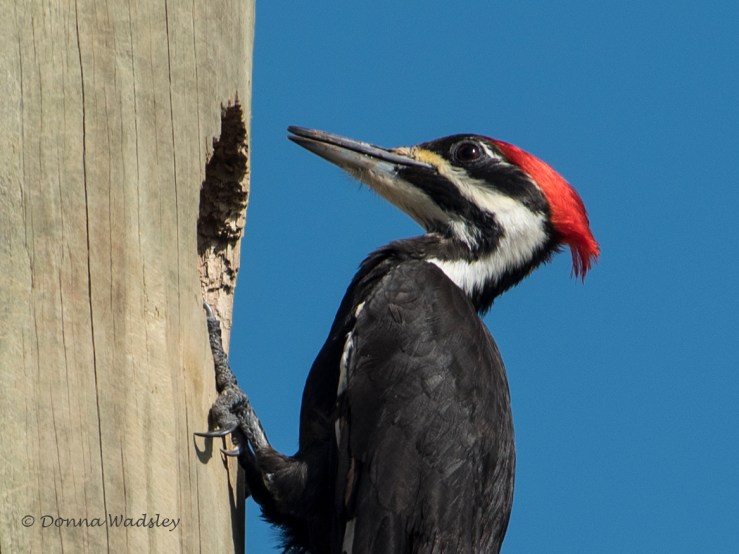
Pileated Woodpecker (female)
.
Hmmmm….she looks up. Maybe her neighbor is saying something?
.

Pileated Woodpecker (female)
.
This pole is also someone else’s home.
.

Osprey nest using recycled satellite dish on same pole
.
I wonder if the Osprey are tired of the pound, pound, pound of the woodpecker’s beak. 😉
.
.
American White Pelicans
.
Not only having at least 15 bird species in one wetland area at the same time, it was awesome to have one of them in numbers to be the American White Pelican.
.

.
The American White Pelican is the second largest North American bird (after the California Condor).
.

American White Pelicans with Great Egrets and Snowy Egrets in the mix
.

American White Pelicans foraging
.

American White Pelicans with a Great Egret and Snowy Egret
.
The American White Pelican’s wingspan is an impressive 95″-120″ (8′-10′ or 241cm-305cm) wide.
.
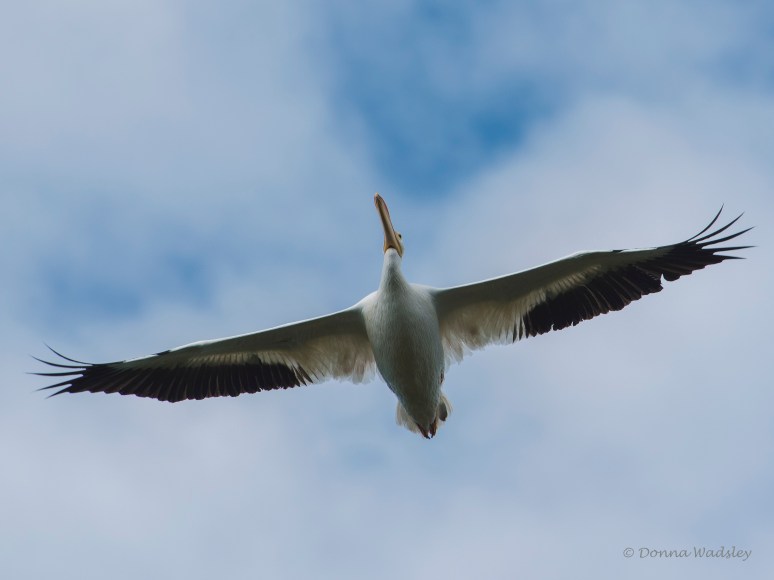
American White Pelican
.
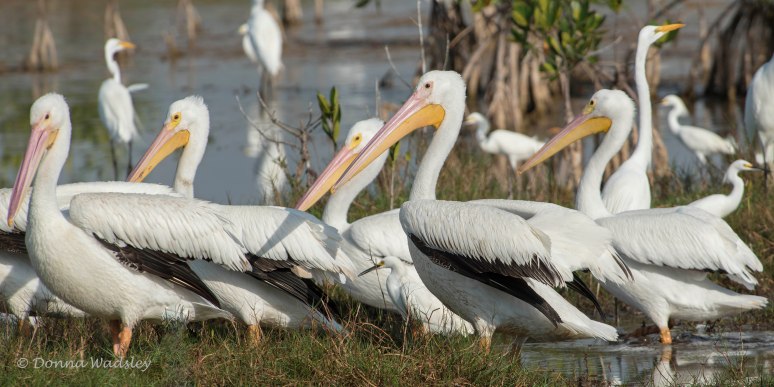
American White Pelicans
.
Certainly the king of the birds here, as the other birds made sure to get out of those big pelicans’ way!
.
.